

Master Storytelling With Mark Carpenter
Posted by John Livesay in podcast | 0 comments

Storytelling is about painting a picture that people can see themselves in. It has to be relatable, and it needs to have a purpose. If your story has no point, you’re just wasting the listener’s time. Storytelling is about being vulnerable and building trust. If you’re listening to a story and you can relate to it, you feel like you can trust the storyteller even more. That is the power of storytelling and why you need to master it.
Join John Livesay as he talks to Mark Carpenter about how to tell an effective and relatable story. Mark Carpenter is a serial storyteller. He is also an author, speaker, and the owner of the Mindset Strategic Leadership. Learn why your story needs a point and an emotional reaction. Find out more about the trust hormone, oxytocin. Discover how you can paint a picture for people when telling stories. Master the art of storytelling today!
—
Listen to the podcast here
Master Storytelling With Mark Carpenter
Our guest on the show is Mark Carpenter, the author of Master Storytelling. We talk about how important it is to give enough detail in a story that people see themselves in it, the importance of showing vulnerability and how that builds trust. Enjoy the episode.
—
I don’t know if it was first a passion for storytelling. For me, it was my survival instinct. I was the fourth of five children. This was my way to get attention but I also grew up in a family of teachers. I realized that the best teachers that I ever had were those that taught in stories. I’ve had history teachers who gave you facts, figures, dates and information. It was hard to stay awake but the teachers who told the story of history were who I could pay attention to.
I started my career in public relations and marketing communications, where I was doing a lot of writing and communicating. I realized it’s the story that gets people’s attention. That transitioned into my career, which is more around facilitation, speaking, coaching and consulting. It’s the stories that make the impact. The stories help people remember and relate to you better.
I wouldn’t go so much as in the industry as I would categories within the industry. People in sales are an audience I know that you work with regularly, emerging leaders and entrepreneurs. Particularly first-time leaders feel like, “I have to show I’m the boss, get up here and give the corporate pitch line.” If they can make themselves more relatable to their teams, they’re going to be a more effective leader.
I love that you use the words know, trust and like. This is one of the pushbacks I get all the time. People in leadership positions want to be the hero of their stories. That makes them less relatable. As we put a little bit of vulnerability up there, show times that we stumbled and how we recover from that stumble, we’re more relatable.
Part of the reason it makes it relatable is if I can be vulnerable to my audience, it shows that I trust them to accept my vulnerability and learn with me the things that I learned in those times that I made mistakes. When you tell a story that people can relate to, that increases oxytocin in the listener’s brain. This is based on research done by Dr. Paul Zak at Claremont Graduate College. Oxytocin is known as the trust hormone. If I’m listening to you and I can relate to the experience you’re telling, suddenly I trust you more. Why do I trust you more? There’s that increase in the brain chemistry of oxytocin in our brains that helps me feel like, “This is someone I can trust and relate to.”
Isn’t that also some of the chemicals that get released when you’re falling in love, eat chocolate or things like that? That’s why those dating shows have these people do all these crazy things like, “Let’s bungee jump together.” All these chemicals will be released. You’ll assume you’re falling in love with the person where it’s your body going, “This is new. I’m excited about the experience or being with you.” You’d tie the two together. Is that accurate?
Maybe lollipops aren’t your thing. Maybe it’s a lender truffle or something like that but it gives you that same satisfying feeling.
[bctt tweet=”Paint a picture people see themselves in.” username=”John_Livesay”]
Storytelling is the lollipop for the brain. I like that so much because it’s visual. We use an analogy and a metaphor and give people a visual to associate with. I was working with a client and I said, “It sounds to me like you’re the air traffic controller of this project. You’re preventing a lot of mistakes from happening before they happen.” They go, “I guess I am.” I said, “Let’s say that in the presentation so that people have a hook to think of you in terms of the whole project, ‘I know what you do.’” That’s what the lollipop does.
I was talking to somebody and they said, “How about visuals? Pictures are worth 1,000 words. Shouldn’t you use visuals with your stories to tell them?” This is sometimes why when we’re trying to share information, we use charts and graphs because we think those visuals are going to tell the story. A well-told story allows people to create images in their heads. If we can give enough vivid details, they’re painting their picture. That’s more powerful than an image that we can project to them.
Let’s pause, underline, circle, double click and whatever else we have to know. There’s one thing to get people to tell a story in the first place where you’re painting a picture. What I hear you saying is when you use a visual image, that is people’s starting point to create the rest of the picture for themselves.
They will focus on the image because the image is easier. The image is going to create other information in their heads. It’s going to connect back to things that have happened in their life. If you can paint that word picture for them, all of a sudden, they put themselves in the seat that you were in.
Yes, because our brain likes closure. Open loops are so good for a story. Even when you see somebody’s head cut off in a picture, our brain completes the picture. If you give us a starting point of a picture with an image like a lollipop, it was like, “It’s sweet. I remember when I had a lollipop.” It pulls people in. There are so many things that we could start making up around that. Let’s talk about an open-loop technique in a story. You have three mistakes that you can give us. I’m wondering if 1 of those 3 mistakes is not having an open loop but I’ll let you take it from there.
This ties to what we’re talking about in terms of helping people paint a picture in their brains. One of the first mistakes is we forget that the story is not about you as the teller. It’s about your audience as the listeners and the lesson that you’re teaching from this story. We get so caught up in telling the story about us and that’s not necessarily what people can relate to. The first mistake is we don’t use language or paint that verbal picture in a way that other people can relate to it.
For example, I was telling a story about being on a small airplane. The detail I didn’t put in there was that means 2 seats on each side of the aisle in about 20 rows. The person that was listening to me when I got to the end of the story said, “I thought you were talking smaller than that where there are 4 seats on the entire plane and 2 of them are for the pilot and the co-pilot.” I didn’t help paint the right verbal picture for my listener in that case. We need to understand who our listeners are. The second one is related to that and that is we don’t get clear on what the purpose of the story is.

Storytelling: There are teachers who just give you facts, figures, dates, and information. It’s hard to stay awake. The best teachers are those that teach through stories.
There’s no outcome. It’s a rambling story. People often say, “I’m a pretty good storyteller.” Their friends are going, “I don’t know. Is there ever a point to it? Do I remember it?” It goes on and on.
1 of 2 things can happen if we’re not clear on what the point is we’re trying to make to the example you gave. We give every single detail. Try to engage people and make it fun and interesting. If there’s no point, they get to the end and say, “So what? You’ve wasted five minutes of my life telling this story.”
Here’s a line, “Just because you tell a story doesn’t mean you’re good at it.”
Intentionality is important. I am telling this story to make this point. That is going to help you edit the story, take the experience and turn it into a viable story with the point that we want to teach, lead, sell and inspire.
What is the third mistake?
The third mistake is similar to that. I call it, “We don’t land the plane.”
I tell the story of when I fly from LA to New York. They come on and say, “We’re landing in New York.” One person stands up and says, “We’re landing? I thought we were going to fly around forever.” Yet, many sales conversations never land. They keep talking with more features. “We’ll get back to you next time with another set of facts.” You got to land the plane.
[bctt tweet=”Have a clear intention about what your story is about.” username=”John_Livesay”]
That’s related to not knowing your purpose and not being intentional about what you’re telling the story for. Sometimes people wander around their story, trying to find the point.
I talk about being a co-pilot with your buyer. Pilots have a checklist before they get on that plane. Most salespeople jump into the call without any prep. A pilot would never do that. Here’s the situation I have come up with fairly often, no matter how sophisticated, newer or seasoned someone is. When I’m working with them, practicing what they’re going to say in front of a client, they go, “I’m much better when I’m in front of the real client than I am in these rehearsals.”
I say, “Do you think an athlete says that to his coach? ‘When the crowd gets here in the stadium, I’ll hit the ball.’ An actor on Broadway goes, ‘When the crowd’s here, I’ll hit that note.’ No, you got to hit the note in practice.” How do you handle people if they’re nervous in front of their peers? What causes that thinking?
It goes back to that vulnerability. We get nervous about, “I’m a little vulnerable here.” I loved your analogy that if we don’t practice it before, those nerves are still going to be there in front of your audience, probably exacerbated by a tenfold. You have to practice intentionally doing this. Sometimes people say, “I don’t have somebody to coach me all the time.”
Certainly, they could hire you or me to coach them. They could also record it on their phone, particularly in video. You’ll see all your little glitches in there. You’ll pick out, “That’s an extraneous detail I didn’t need. I missed a detail there that would be important, the number of seats on the plane.” Those things will come out if you will do that with intentionality and trying to get yourself better. It’s like any skill. You’re not going to say to somebody who’s teaching you how to ride a bike, “Tell me how to do it. I’ll get on and I’ll be fine.”
Piggybacking on your story about the airplane and the detail of exposition of what makes something memorable and/or funny or interesting. I tell the story years ago when my dad got remarried and my sisters and I had flown from Atlanta. We were going to this small town in Virginia and it was a small commercial plane.
It was 1 seat on one side, 2 on the other and maybe 10 rows. We were the last plane to leave on a winter stormy night on Thanksgiving. It was a lot of turbulence that you feel on those small little planes. One flight, you feel like you’re on the plane with my sisters and me. That’s what brings that to life. It exasperates the feeling of turbulence. Even the last plane to leave the airport before they shut it down, all that contributes to, “I’m in the plane with you.”

Storytelling: When you tell a story that people can relate to, that increases oxytocin in the listener’s brain. Oxytocin is known as the trust hormone. So, relating to a story creates trust.
You’re tying into some more of the brain chemistry that Dr. Zak talks about. Building all those details around, “It was a winter day. We were the last plane to take off. It was exactly this small. We were feeling a bunch of turbulence.” All of a sudden, I’m in that plane bouncing around with you. I’m feeling a little stressed. That increases in my brain the hormone cortisol. The effect of cortisol is it makes me pay attention because I want to know, “Are they going to crash? Are they going to get there safely? What’s going to happen?”
When you throw your sister’s comment in there about, “Wouldn’t mom be mad if we all died in the plane on the way to dad’s wedding,” that gives me a little closure around that. I feel the neurotransmitter dopamine, which gives me a sense of surprise and delight. That’s the end-point. There’s where the lollipop comes in too. I get this satisfying ending to it that maybe makes me laugh, think or realize, “I’m glad that didn’t happen to me.”
I’m here to tell the story so we made it.
All those details provide that connection to the brain chemistry that makes storytelling effective.
I want to ask you about impactful. How do you help people take a moment in their everyday life and figure out whether that’s a story worth telling or not?
I get this objection from people all the time too, “My life’s too boring. There’s nothing that happens to me.” I had a participant in one of my workshops. They were going to have to come back the next day and tell a real story. She said, “Can I make one up?” I said, “No, you have to have this real story.” She goes, “All the time, I used to tell stories about my crazy Uncle Ned. I didn’t even have a crazy Uncle Ned. I make up these stories.” Going back to vulnerability and authenticity, that flies in the face of that. I challenged her. “You need to come up with your story. She said, “Nothing happens to me.”
Here’s the cool ending to that story. She came back the next day and delivered this great story based on an experience that she’d had on the elevator in the hotel the night before. I asked her, “Where did you come up with that story?” She said, “I was in my hotel room stressing about how I was going to do this delivery. I needed a break. I was thinking I need a story to illustrate this point.”
[bctt tweet=”People in leadership positions want to be the hero of their own stories. And that actually makes them less relatable.” username=”John_Livesay”]
She got on the elevator. She had an interaction with the person on the elevator that gave her an emotional reaction. This is a tip that I give people. If you have an experience that gives you an emotional reaction, there is likely a story there that’s going to teach a principal to make a point. This lady got off the elevator, started walking around the hotel to clear her mind and went, “That’s it. That’s my experience.” In addition to looking for those moments of emotional reaction, pay attention in your life to the things that happen that could be moments that can turn into stories to teach, lead, sell and inspire.
An emotional reaction could be surprise, delight, sadness, anger, happiness, humor or amusement. It doesn’t have to be this huge emotion. It can be anything that causes you to pay, “I’m feeling something.” How do I get the audience to who I’m telling the story to feel something and be in the story with me so that they can relate to it? That’s why comics talk about airplanes so much because it’s a common shared experience.
The best comics, what do they do? They take real life and exaggerate it a little bit to make it funny. I’m not suggesting that we exaggerate because our purpose isn’t just humor. The best comic lines are based on real-life experiences.
I interviewed a humorist on my show and he said that comics’ humor creates a world. Once you’ve created that world, they ask themselves this question, “If this is true, what else is true?” I saw research that said, “If you take a cold shower, it burns fat, fights depression and reduces inflammation.” It had me, it burns fat and that usually gets a laugh. He said, “If that is true, what else is true?”
He said, “I’ve decided to stop working out together and take cold showers three times a day.” I thought, “That’s that second laugh.” That’s part of what you’re teaching too. Once you were in that story, take a beat and ask yourself what else happened? What could make this either more amusing or exaggerated?
As a comic, they would test that joke out and say it in three different ways. I opened with it burns fat as the first benefit and the other two. He said, “We would test it, try it again and say, ‘It fights depression and burns fat.’” The third way would be, “It reduces inflammation and burns fat.” Is that funnier with the burn fat 1st, 2nd or 3rd to get the data to see how somebody’s brain processes where that’s funniest? Is this at the end or beginning? I thought, “There is such a science to telling a joke and a story.”
This goes back to the conversation we were having about practicing. This is why that’s so important. I always encourage people. Don’t pay attention to what you are saying. Pay attention to how people are reacting to it. What we encourage people as they’re first starting in storytelling is to practice with a friend. At the end of their story, ask two questions. “What did you like about this? What did you think the point was?” That’s going to get them to, “Am I making the right point? Am I making the point that I’m intending to make here?”

Storytelling: You can tell a story that is fun and interesting but if there’s no point, you’ve just wasted the listener’s time. You need to be clear on the purpose of your story.
Sometimes I’ve done that. I told a story to my wife. I said, “What did you think the point was?” She said, “I thought the point was this.” I went, “That’s not the point I’m trying to make. I’m trying to make this point.” She goes, “See how you were trying to get there.” We have a discussion around, “What could I change to make sure that that’s the primary point that comes out?”
Here’s the joy for everybody. This won’t only help you in your career. It will help you in your personal relationships. Where so much conflict comes from is the lack of communication. “I’m not a mind reader. How am I supposed to know you’re unhappy? You didn’t get what I was saying. You took it too personally.” I love that once we help people become better storytellers, it’s a dual-purpose outcome.
Even in terms of your advancements in your career. Think about job interviews. Everybody in a job interview gets asked the same questions. You pretty much know what questions are going to be asked. “What’s your biggest weakness?” That’s the one that everybody hates. If I can tell a story that illustrates that point, I’m going to be more memorable.
My daughter, when she was a senior in college, was interviewing for a highly competitive internship. She was practicing with me on the interview. She gave me the questions she expected to get asked. She answered them fairly well but we stopped and said, “Is there a story you can tell to illustrate this point?” She thought about it and said, “I could tell this story.” I said, “Tell that story.”
We had her practice telling that story. She left the interview and got a call on the way home, offering her the internship. Here’s the other cool thing that jumped out to me. Six months into her internship, the person who had hired her, they were in a meeting, turned to Ali and said, “Could you tell the story that you told in your interview about this because that’s going to help make this point here?” Think about how memorable that is.
Memorable and repeatable, that’s the goal. I talk about that because after you pitch yourself to get hired or hire us as an architect or by my product, they listen to all the pitches and go, “That’s the meeting after the meeting. What do you think?” They say, “They all sound the same. Let’s go with the cheapest,” or they say, “One of them told a story that made me feel like that’s the right fit for us.”
That goes back to what we’re talking about making it connect. Not only do they remember the story but they remember you as the person because there was that little oxytocin increase where suddenly we are connected. “Now, I trust and like you more.” That’s why you’re going to stand out as more memorable.
[bctt tweet=”Storytelling is the lollipop for the brain. There always needs to be a sweet and satisfying ending.” username=”John_Livesay”]
Mark, I understand you have a gift for the readers. Would you share what that is?
If you would go to our website and it’s Master-Storytelling.com/PodcastGift, it will take you to a page where you can get a free copy of our eBook Master Storytelling.
If someone wants to explore having you come and speak or consult, where should they go?
The best space is probably that website, Master-Storytelling.com. We’ve got a response section there where you can send us those requests. You can contact me directly at [email protected]. You can also find me on LinkedIn, Facebook and YouTube. If you search for Master Storytelling, you’ll find me. If you search for Mark Carpenter, you’ll come up with a bazillion of those names because that’s a fairly common name. Look for the one that has Master Storytelling connected to it.
Any last thought or quote you want to leave us with before we let you go?
This has come up a couple of times in our conversation but the one that I always come back to is, “Be intentional.” That fits not just with storytelling but what you do in your day-to-day life. When I find myself drifting a little bit in my day, I’m like, “I’m not being productive.” I try to stop and say, “Be intentional. What do I want to accomplish here?” That’s a phrase that I use a lot.
It sets the tone for everything and you’re not reacting. It helps you be more productive and focused. Mark, thanks for sharing many great tips on how we can all take everyday experiences and turn them into stories that people are going to remember and want to repeat.
John, this has been wonderful talking to you. Thanks for having me on.
Important Links
- Master Storytelling
- Master-Storytelling.com/PodcastGift
- [email protected]
- LinkedIn – Mark Carpenter
- Facebook – Master Storytelling
- YouTube – Master Storytelling
- Better Selling Through Storytelling Method Online Course
Wanna Host Your Own Podcast?
Click here to see how my friends at Podetize can help
Purchase John’s new book
John Livesay, The Pitch Whisperer
Share The Show
Did you enjoy the show? I’d love it if you subscribed today and left us a 5-star review!
- Click this link
- Click on the ‘Subscribe’ button below the artwork
- Go to the ‘Ratings and Reviews’ section
- Click on ‘Write a Review’
Love the show? Subscribe, rate, review, and share!
Join The Successful Pitch community today:
- JohnLivesay.com
- John Livesay Facebook
- John Livesay Twitter
- John Livesay LinkedIn
- John Livesay YouTube
Holding The Calm With Hesha Abrams
Posted by John Livesay in podcast | 0 comments


Few people master being calm when arguments and conflicts surround everything. Our guest in this episode found the secret to resolving conflict and diffusing the tension in her book, Holding the Calm. Master mediator Hesha Abrams joins host John Livesay to share some inputs that will help you handle these tough situations. What do you do when people are angry or hysterical at you? How do you best deal with a situation where someone is crying? Hesha answers these questions and more while offering pragmatic ways to understand and resolve conflict. Plus, get to know a technique you can use to your advantage. Be the calm between the storm. Learn from Hesha and see its power in business and in life.
—
Listen to the podcast here
Holding The Calm With Hesha Abrams
Our guest in this episode is Hesha Abrams, the Author of Holding the Calm. Have you ever wondered what you should do when someone’s yelling at you? Do you know what to do when someone’s crying? Do you know what to do when someone doesn’t say anything? Find out the answers to all of those questions and more in this episode.
—
Our guest is Hesha Abrams, who is a master mediator who’s written and spoken widely to audiences around the globe who are seeking a better understanding of conflict and pragmatic ways to resolve it. Most people are so afraid of conflict. It raises their blood pressure. It makes them nervous, afraid, and aggressive when that is our only tool. Diffusing this tension and helping create harmony where once there was discord is Hesha’s life’s work.
She wrote Holding the Calm as a way to share real tools that work so that other people can benefit from her experience, resolve conflict, and diffuse tension in their corner of the world. She’s worked all over the world with parties around the globe in complex commercial business and patent licensing deals. She’s taught mediation and negotiation around the world. She was on a panel and the Chair of the Texas Bar Intellectual Property and ADR Committee. She has so many awards, but let’s get to her.
We met through a mutual friend, who’s also been a guest on the show, Dr. Benjamin. He is an amazing person in his own right, helping people with their careers. That is how I like to meet people. I always talk about the trust is transferred. When we get a warm introduction as you and I did, you suddenly go, ”All the defenses go down,” and that is a big part of what you’re doing. It’s a big part of what Dr. Ben Ritter’s work is about as well.
We’re all in the same boat. Each of us has a different oar that we’re rowing to help move people along on their journey. Let’s hear more about your own little story of origin, where you grew up. You can go back to childhood, law school, wherever you want. She went, “I’m pretty good at getting my parents or my friends to stop arguing.” When did you discover you had this gift?
It’s interesting. It’s the exact opposite of what you said. I grew up in a household filled with conflict, fighting, and arguing. I handled it the way most people handle it. You either fight back or run away. Those are the only two tools you’ve got. I learned to be very aggressive and fight. It wasn’t healthy and good. I didn’t learn good skills. I had to do that. I was a good arguer so what did I become? A lawyer. That’s what you do. I found it very challenging and unsatisfying to win cases that you should lose or lose cases that you should win. Nothing was right.
I met this woman who was a mediator and did family law stuff. I listened to her and I went, “Do you talk to people for a living and solve problems? How do I learn more about that?” This was many years ago when there wasn’t mediation. Mediation was in the family and some labor stuff. It was limited. I was a business lawyer. I went to a federal judge that I knew, and said, “I don’t know if this new-fangled stuff will work. Let me have five little nothing cases and let me try.” I settled every one of them.
He was shocked. I was shocked and hooked. I said, “This is what I want to do for the rest of my life.” The key is those five cases, I did everything wrong. I didn’t know what I was doing. I was making it up as I went along. That started lifelong learning and reading. I don’t want to say I’ve read every neuroscience book out there, but I should’ve made a big dent in them. How do people think? How do they make decisions? Why is this important? How do we do that? I want to be effective.
[bctt tweet=”Conflict is behind interactions.” username=”John_Livesay”]
I’ve done from small little, “Whose roommate cat peed on the rug?” up to multibillion-dollar behemoth cases. Sometimes the roommate’s cat peeing on the rug is harder than a $1 billion licensing deal overseas because it’s all ego. We all have bumper car ego bashing into each other. We don’t have skills. I didn’t have skills.
I did lots and lots of therapy in my life to get healthy and say, “I am going to choose to not negotiate or fight or interact the way my family did.” It wasn’t healthy. I didn’t like it, and that dysfunction is going to stop with me. I’m going to clean up my ancestry align downstream of me, which I’ve done. I’ve got great kids that are adults. I’ve got grandkids now. I’m 63 now in 2022. My philosophy is, “I better be better at 73 than I am at 63.”
That’s the joy of getting a little older. One of my other guests on the show is Chip Conley. He has a Modern Elder Academy down in Baja, California, celebrating people our age and the wisdom we’ve gotten so far this life that we go, “I have learned some things that I might be able to help other people not stay stuck or separating about an issue.”
I would love to meet him. That sounds so important to do. When people say, “What’s the meaning of life?” It’s to be a wise person when you’re old. If you’re old and are not wise, you missed the boat. Your job is to be wise and learn something. We have flat foreheads. We bash our heads against the wall. That’s why they’re flat. Instead of doing the same thing and expecting a different outcome, do something different.
A lot of people go back for holidays, especially with our families. You revert back to your childhood roles and somehow, everyone’s going to get balls that they don’t suddenly have. Let’s go to the question of how do we handle when someone’s yelling at us without shutting down during the fight or flight, fighting back, yelling back, or getting so calm? Sometimes people are doing it because they have uncontrollable anger issues, whether it’s a boss or a friend. Sometimes that even makes them angrier when you don’t get angry. When someone is yelling at you, what do you do?
Let me give you a little background first. Every single conflict comes from powerlessness. Either you are trying to make me do or believe something that I don’t want, or I am trying to make you do or believe something that you don’t want. In every instance, that is the common denominator. I don’t care whatever the conflict is. Childhood home stuff, a fight with a neighbor or a boss, and billionaires fighting over their rocket ships, all deal with power and powerlessness and an attempt to grab or get power. We do it in very ineffective ways.
The analogy and the story that I want to make sure I start with is you drop spaghetti sauce on the counter. It’s wet. You wipe it up with the sponge. You wait overnight. You’re scraping it off with a spatula. Wait a couple of weeks, it’s moldy, old, and gross. That’s why I called the book, The Secret to Resolving Conflict and Diffusing Tension. All conflict starts with tension, but we don’t handle the tension. We don’t deal with it.
Holding The Calm: All conflict comes from powerlessness.
That person that is yelling and angry did something before they started getting angry. We ignored it and didn’t deal with it because, “I don’t know how to deal with it. I don’t want to deal with it. I’m tired. He’s an idiot. I don’t want to do this. She’s difficult.” It doesn’t go away. It grows. The first thing I would say with that introduction is that when someone is angry, what they are saying is, “I’m feeling powerless here. I am trying to grab some power. The way I’m choosing to grab power is not an effective way, but it’s the only way I got, so I’m going to scream and yell.”
I can choose to match them. I don’t think that would be a wise choice, but it would be a choice. I can say to myself, “I’m going to grab some power because your yelling has triggered me. I want to yell back or I want to run away. I want to stay fake calm.” That fake calm is even worse because it’s almost judgmental. The reason I titled the book, Holding the Calm, is that I wanted people to have a mantra, a talisman, a rabbit’s foot that they could have now.
I don’t need to take some certificate, some course, or some class, or do some big mind change something. What can I do when I’m in trouble? You say to yourself, “The first thing I got to do is I got to grab power back.” I say, “I’m holding the calm,” repeatedly. It takes 6 or 7 seconds. I have told my amygdala in my brain, “I’m not powerless. I got power. What am I going to choose to do with this power?”
What I put in the book are twenty tools. Each tool has chapters, stories, and anecdotes. What do you do? How do you do it? I’m going to say, “I’m holding the calm first to myself.” I’m not saying to myself, “Calm down,” that doesn’t work. It doesn’t make the amygdala work. It makes the amygdala more frightened and aggravated. When I say I am holding the calm, that’s an active power. I am doing something. What do I choose to do?
I’m going to look at that person. What does that person need? I’m not going to look at the symptom. I’m going to diagnose. The symptom is yelling. The diagnostic is, “Why are they yelling? What’s going on? Why are they so out of control that they can’t control themselves and they’re yelling?” I’m going to diagnose it like a bomb detector. That guy waddles out in his Michelin suit. He doesn’t just start cutting wires. He looks at it. He diagnoses it. Is there a pressure switch? Is there a chemical reaction? What is happening before I start snipping wires?
When someone’s screaming and yelling, that’s a bit of a bomb, isn’t it? I’m going to look at them. What is happening here? Let’s say I can figure it out. I’m going to address it that way. Let’s say I can’t. Let’s make it hard. “I have no idea why you’ve lost your stuff.” You’re going crazy on me. I have a technique that I called VUCS, Validate, Understand, Clarify, Summarize. The reason I called it VUCS for our dear readers is it sounds like a curse word in English.
Those of you who know English curse words know what that curse word is. You’re not going to forget VUCS because instead of saying something else to them, you’re going to VUCS them. The first thing you do with the V is validate. If I can validate, I would be angry, too. That sucks. That’s terrible. That was wrong and unfair. Let’s say I can’t validate. Let’s make it hard. I can’t validate because I think you’re an idiot or you’re ridiculous. I don’t understand why you’re getting so angry. I’m going to name the emotion. “You’re angry.” “I’m not angry. I’m frustrated. Okay?” I got another diagnostic, didn’t I? “You’re frustrated. What’s going on? Tell me more. I want to understand it.” It seems miserable.
[bctt tweet=”I am holding the calm.” username=”John_Livesay”]
They don’t expect you to say, “Tell me more.” They are so explosive that they feel like they have to keep screaming and yelling to even be heard. Let alone tell me more. Validate, clarify, what are the other two?
VUCS is Validate, Understand, Clarify, which is asking questions, and Summarize, which is getting to problem-solving. When the person is yelling, they are feeling powerless. When you name the emotion and ask a legitimate question, you’re trying to help. You’ve given them power back. You have drained 50% of the poison like that, gone.
Let’s say someone’s angry. You might have to do it a couple of times. It depends on the person and how habituated they are to anger. You’re not judging and arguing with them. What do we normally do? You’re an idiot. You’re stupid. I’m going to educate you and give you facts, figures, and reasons why you’re so stupid. You’re going to listen to me and change your mind. Let me know how that’s working out.
You said so many wonderful things here. I want to circle back on a couple of them to underline and let people digest this. The first one that jumped out at me was the spaghetti sauce. I love an analogy, the visual of that, the time of how long it sticks, and the harder it is to deal with unresolved conflict, as opposed to dealing with it at the moment. That has been a challenge for me my whole life. It would come out like a fire hydrant because I never expressed the frustration that built and built.
I had some friends staying with me who are chefs and I’m not. They said, “I learned this at a restaurant. After I make eggs, I hold them under the water at the sink, put some soap in them, and put it back on the oven or the stove. There is a chemical reaction because of that heat and the water.” It was like, “How amazing that there’s a chemical reaction that can make it less sticky without me having to scrub.”
I never knew that. It’s almost counterintuitive to put something hot back on hot. That’s what that spaghetti story reminds me of. There are many ways to solve a problem, whether it’s spaghetti or that analogy of our own rusty crusty stuff. Sometimes it requires going back into the fire and looking at what’s going on.
I like it because it’s the redheaded stepchild of your 555. It’s a lovely corollary to say, “With the 555 I’m angry and upset. Where am I going to be?” With conflict, you’re better if you do it earlier. If you don’t, don’t worry about it. You’ll have to do it later. It’s going to be harder.

Holding The Calm: It is medicine on a wound for someone to be seen and heard and not argued with, not challenged, and not told to stop or they’re wrong.
For those readers who don’t know, my 555 is, “Will this matter in 5 minutes, 5 hours, 5 days from now?” It’s to help you let go of something sooner. You’re not stuck on rejection. You can be completely present. The other thing you said that I love is this mantra you have given yourself when someone is yelling, “I am holding the calm.”
You and I are kindred spirits on a lot of levels. One of the things I came up with several years ago was when I would ask someone, “Do you want to buy?” The old way of selling is whoever speaks first loses. It’s like you referring to the fake calm. I thought, “Most salespeople are not comfortable with silence.”
I told people, “After you say, ‘Would you like to buy a car, a house, or whatever it is?’ say to yourself, ‘I am patient and calm,’ three times.” It’s the same thing, 3 times, and that extra 5 or 10 seconds of silence that the person feels energetical, your patient and calm gives them the time to say yes or no without you going into a whole other negotiation. This is another tool in the toolbox.
Let’s go to the opposite. How do you respond when someone’s crying? I certainly have this situation with my mom. I want to jump into standard male behavior of, “Let me fix it. What do I have to do to make you stop crying?” Sometimes, she needs to cry. Sometimes it can be manipulated. Sometimes it’s not authentic or you feel like you’ve come across too hard.
There are so many things that can cause someone to cry. You have this amazing story that I want to get to about the postman. That situation would make anybody cry. In storytelling, that’s what we call an open loop that we’re going to get back to. What’s 1 of the 20-some solutions that you have here when someone’s crying? What do you recommend?
In that one, I would do VUCS because VUCS is good for all big emotions. The first thing is to see them and not to run away from them. If someone’s crying and you’re like, “I got to fix it,” or “I don’t want to deal with it.” All you do is make the person feel powerless and weak. That’s why they’re crying, to begin with. If you stand there and say, “You’re sad. You’re crying.” It sounds a little idiotic. They’re crying for you to say, “You’re crying.” I cannot tell you it is medicine on a wound for someone to be seen, heard, not argued with, not challenged, not told to stop and they’re wrong, to just be seen and say, “You’re crunched.” “I am.” “What is so upsetting? Help me to understand.”
I’m telling you, 50% of the pain and misery comes out. In the end, you’re going to have people laughing, crying, and trying to hug you. Let’s make it hard. Let’s make it not your mom. Let’s make it a coworker or a customer. You offended them or said something. You don’t even know what you did. They start crying. You are like, “God, what do I do?” It works beautifully there to say, “Why are you crying? You’re crying.” You would see it. “What happened? Why are you so upset? What can I do?”
[bctt tweet=”All conflict starts with tension.” username=”John_Livesay”]
Notice what happened in that interaction. Where did the power go? You said, “I have power and I’m going to give it to you.” A person that was powerless got the gift of power. It’s the best gift you can ever give somebody. It’s amazing. Now the person will share whatever they choose to share or not. “What can I do?” Do you know what you can do? That’s obvious.
If you don’t know what you can do, it’s just sometimes being there and acknowledging whatever is happening. Think about this. This is a crazy analogy to use. When people die, people say the worst things to the mourners, “I know how you feel.” You don’t. “You’ll get over this soon.” I won’t. “They were old. They lived a good life.” Screw you. It’s the best thing to say, but we don’t know what to say.
We give these platitudes to make ourselves feel better. If I were trying to make you feel better, I would VUCS you. Name the emotion, acknowledge whatever’s going on for you without needing to fix it, change it, grow it, or be the hero for you. I’m letting you have power. I don’t care if you’re dealing with a kid, a teenager, a neighbor, a parent, or a client. I do multibillion-dollar companies with each other. All that would be the same. It’s human beings doing bumper car ego.
Let’s go to the third option. We have extreme anger and sadness. There are people who won’t give you any indication of what they’re feeling or thinking. They won’t answer any of your questions or you get one-word answers. Do we VUCS them? It’s hard to VUCS if they don’t want to say anything. Where would we start with that one?
It’s the same concept of power. If they don’t want to say anything, they’re feeling powerless. How are they taking power? It’s by shutting down. “I’m not going to give you anything. I don’t know if you’re going to use it against me. I’m not feeling safe. I don’t know what I want to do. I’m feeling confused. I don’t have authority. I’ve gotten myself into something that I don’t know how to get out of. The best answer is to shut my mouth and not say anything.”
As you try to force them to talk, you’re taking power away from them. Don’t do that. You say, “We don’t have to have a big, long discussion about this. If you don’t want to do that, how would you like to proceed? What would be most beneficial for you? Would you like an adjournment? Would you like us to move to a different topic? What would you like?” You give them power. You will see that they will either open up then because you became safe and trusting or they won’t, but later it will circle back around to something good because you are a person that was worthy of their boundaries.
I have a whole chapter in the book called Creating Small Winnable Victories because we always think of the goals as big. “You’re going to make the big sale. You’re going to solve the big thing. You’re going to fix the big problem.” That’s not how things are done. Conflict is eroded from the outside and it melts. It’s the same way that like you would do a sale. You build the relationship from the outside in.

Holding The Calm: Conflict is eroded from the outside.
You erode conflict from the outside in and do it in small little ways. “Where would you like to meet? What restaurant would you like to go to? Is the temperature okay for you? What music would you like to play? Who would you like to attend? How do you think we should proceed?” Those are small little, nothing gifts of power that let the other person open up to you.
You have one of the most amazing stories in the book, grabbing me by the heart. The story is based on this. You either think that the world, as Einstein said, is a friendly safe place, and you make all your decisions based on that or you don’t. That’s what this story reminds me of. I’m going to get the highlights and ask you to get us to the conflict, the drama part.
A truck hit a young boy. The boy became brain damaged from that. They’re not allowed to pass out candy to kids because they don’t want them running. This rural postal driver said, “I can give a little candy and give some happiness out.” His intentions could not have been purer. One day, he was sick and the other postal worker taking over didn’t know or it was a woman that was the driver. The substitute driver gently hit this little boy and was brain-damaged. The family sued the post office and they didn’t have money.
Here’s the thing that gets me. The father of that little boy was a truck driver. The mom was a waitress and she was so nervous. She took extra sleeping pills and the husband woke up to find a dead wife. Not only is his son killed. His wife has been killed because of overdosing on sleeping pills because she was so stressed out by the situation. Enter you. I’d be so burdened with the overall feeling of empathy. In that situation, are you representing the father or the post office?
I’m not representing either. I’m a mediator. I am a neutral third party in the middle that meets both the government and the family. I try to work out a deal. I can’t allow myself to feel so emotional and so empathetic because that would affect my neutrality. It would be hard for me to do the job I’ve been tasked to do, which is to create peace or make a deal. I can create peace in trade union fights or in wars between countries, companies, or family members. It’s all exactly the same. I take a servant leadership viewpoint because that’s what helps me stay healthy and sane. I walk in and say, “How can I be of service here? What can I do? It’s great for a salesperson, quite frankly.
I had strong feelings. I’m a human being, too. I thought to myself in the car driving there, in the law firm before I’m outside the door, “What am I saying to this guy? How am I going to empathize with him? How am I going to mirror him? Will he be angry? Will he be shut down? What will I get?” I walked into the room and like the bomb detector, I diagnose. I don’t just start talking. I walk in and introduce myself. I look at him. Body language is not that hard to read if you pay attention.
When he’s sitting slumped into a chair, the hat pulled low over his mouth. He had a big wad of chewing tobacco in his mouth. His face was in a snarl. He looked at me. He was filled with hatred, anger, pain, and grief. It radiated off of him like the sun. I could tell that his lawyer couldn’t handle him because the lawyer didn’t know what to say and do. The lawyer is just handling the legal stuff. He’s sitting there, looking at me, and they weren’t near each other. There was not even any body language. I thought, “What this man need is truth. He needs someone to see the truth of how horrible this was.” Can I tell the story of what I did?
[bctt tweet=”A mediator is a neutral third party in the middle. You can’t allow yourself to feel so emotional and empathetic because that would affect your neutrality.” username=”John_Livesay”]
Please.
I didn’t think this beforehand. When you’re in servant leadership, trying to help people, and holding the calm, stuff will come to you. That’s the beauty of it. I looked at him and spoke the truth. I said, “How are you handling this?” He looked at me and goes, “I read the Bible,” and he snarled at me. I matched him. I snarled back because I wanted to meet him to his face. I went, “What part?” He said, “Job,” and I said, “You are Job.” He slid off the chair onto the floor and sat down. I sat down on the floor next to him. I looked at the lawyer with a look like, “Don’t talk.” I sat there on the floor. I didn’t touch him or say a word.
It must have been twenty minutes. I don’t even know, but it felt like forever. It felt like somehow something shifted. I looked at him and said, “Let’s be done with this.” I looked at the lawyer and talked to him about a few little lawyerly things. I went over to the postal service people who were looking at this like a file. They were insurance. It was a case and a file. They have to value it appropriately. The dead wife was not their responsibility. They weren’t going to add any money to that.
If I had started with that, they would have gotten defensive. I walked in and I told them the story of what happened. They were shocked and speechless. I said, “Let’s not even talk about the facts of the case. We know him. Let’s talk money. What can we do to make this over for this man?” Within like 1 or 2, we got to a settlement number, wrote it up, and we were done. That was it. It was the right way to diffuse that bomb in that situation. You may have another situation where somebody needs to vent and vomit over and over again. Handle that one differently. That’s why I have twenty tools in Holding the Calm because one is not going to work for everybody.
I tell people, “Think of your brain like a jukebox or a playlist, depending on your age. You need different stories. You have different tools depending on the situation.” The book has so many great stories of you negotiating big deals or something regarding Pepsi. I’m going to leave that in the air for people to be curious enough to want to buy the book and get it.
You can tell them, “It’s the secret recipe over Pepsi.” That even makes it more interesting.
You also are a speaker. People bring you in not for mediation, but to speak. Tell us who your ideal audience is and what people are all about in that world.
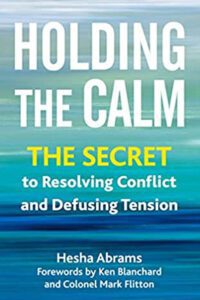
Holding the Calm: The Secret to Resolving Conflict and Defusing Tension
It’s interesting. I’m a business lawyer and I’m a business mediator. I started doing a few family law cases or divorce cases because lawyers would call me and say, “I need someone who can handle the business and the emotional part.” I could do that. What I found is that, late at night, big fancy lawyers or CEOs of companies would start talking to me about marital problems or problems with their teenagers, their kids, teacher, or coach being stupid and that being a problem. How would they handle that?
I started giving ideas and suggestions on how to handle that. I find big businesses, trade groups, and organizations bring me in as keynote speaker to do this stuff. I was on compassionate parenting. I’m on Power Your Parenting Podcast. I did Compassionate Parenting Podcast a few weeks ago. People want this in all elements of their life because conflict is the DNA behind and below every single interaction we have. No matter what you do, you can unravel it by allowing the spaghetti sauce to get molding and gunky.
It is behind all the interactions and the need for power and the need to be right. I remember years ago, someone saying, “Your big choice here is, do you want to be right or do you want to be happy?” Most people can’t put their ego aside, “I need to be right all the time. I’m this and that.”
I would give you a corollary to that. There are times when you want to say, “Do you want to be right or be happy?” is an evolved way of thinking. When we’re in conflict, quite frankly, we are not evolved. We are angry. We have ocular occlusion and auditory exclusion. Our ears stopped hearing and our eyes stopped seeing. I can’t think about being happy. I’m too pissed off. I’m too right and you’re too wrong. What I change it to is, “Do you want to be right or do you want to win?”
The reason why that works is that the amygdala is triggered. The amygdala isn’t thinking about being happy. It’s the fear and negativity center of the brain, but it is wanting to win. You can be right. Do you want to convince them you’re right or do you want to win? Do you want to get what you want? It is not as elevated as being a happy one. I agree. This book is and I am all about being pragmatic, real human beings in real situations with what works.
It’s so good because you might have to let go. You want to win more than you want to be right. Happy is more evolved. You set up Maslow’s hierarchy. This is part of our brain where we get so overwhelmed. I hope everyone starts using the entre, “I am holding the calm to take back the power,” especially when someone’s yelling at you. I hope everyone gets the book. I hope people call and book you as a speaker because the more people who hear you and read your message, the calmer the world might be. That’s all we can do. Light a candle in the darkness. You’ve given us lots of matches and lots of candles with your wonderful presence.
Thank you for saying that. I have a day job. It’s my work, but I wanted to get this out there because look at what’s happening in our society now. We can’t talk to anybody about anything. If you think differently than me, you’re stupid. This is the caution I want to end with. I tell people, “You’re talking to somebody and think they’re ridiculous. They’re stupid. Think to yourself, ‘Would they pull my kid out of a burning car?’ The answer to that is, ‘Yes,’ which is 95% of the time, maybe they’re not stupid. Maybe there is something redemptive about them. If I’m a little curious and I try to VUCS them and understand a little more, maybe I’ll find something a tiny bit redeeming. You can have a conversation.”
The book again is called Holding the Calm. If people want to reach out to you, they go to your website, which is HoldingTheCalm.com.
It’s on Amazon and anywhere books are sold.
Thank you, Hesha, so much for sharing your calmness, your wisdom, and your incredible gifts.
I appreciate it very much. Thank you for having me on.
Important Links
- Holding the Calm
- Dr. Benjamin – Past Episode
- Chip Conley – Past Episode
- Power Your Parenting Podcast
- Amazon – Holding the Calm
- Better Selling Through Storytelling Method Online Course
Wanna Host Your Own Podcast?
Click here to see how my friends at Podetize can help
Purchase John’s new book
John Livesay, The Pitch Whisperer
Share The Show
Did you enjoy the show? I’d love it if you subscribed today and left us a 5-star review!
- Click this link
- Click on the ‘Subscribe’ button below the artwork
- Go to the ‘Ratings and Reviews’ section
- Click on ‘Write a Review’
Love the show? Subscribe, rate, review, and share!
Join The Successful Pitch community today:
- JohnLivesay.com
- John Livesay Facebook
- John Livesay Twitter
- John Livesay LinkedIn
- John Livesay YouTube
Closers Are Losers With Jeremy Miner
Posted by John Livesay in podcast | 0 comments

Failing to close a deal as a salesperson is one of the most upsetting things that can happen to you. But what if I told you that it was actually your fault that you didn’t get the sale. Selling is about change and most salespeople sell the product, not what the product can do for the customer. Join John Livesay as he talks to Jeremy Miner about integrating human behavior into the sales process. Jeremy has been in sales for 7 years! He is the founder of 7th Level. He is the co-author of The New Model of Selling and is the host of the Closers are Losers podcast. Learn how human behavior affects your customer’s sales objections. Find out how to get people into your products with some of Jeremy’s modes of communication. Start closing all your deals today!
—
Listen to the podcast here
Closers Are Losers With Jeremy Miner
Our guest on the show is Jeremy Miner, who has a book out on selling. He said, “Be a problem solver, not a product pusher.” He talks about how objections are preventable. Finally, the whole premise of selling is about change and that you need to learn how to disarm people so that they are less resistant to it. Enjoy the episode.
—
Welcome to the show. Our guest is Jeremy Miner, who is Chairman of 7th Level, a global sales training company that was ranked very highly by Inc. Magazine. He is also a contributor to Inc. and has been featured in The Wall Street Journal, Forbes, and many others. He says this great quote, “The single most effective way to sell anything to anybody is to be a problem solver, not a product pusher.” For Jeremy, the embodiment of this philosophy has made him one of the world’s wealthiest sales professionals. Not just America, the whole planet.
In his sales career, he was recognized by Direct Selling Association. His earnings as a commission-only salesperson were in the multiple seven figures every year. Clearly, he is doing something right. He is the host of the podcast, Closers Are Losers. His new book, The New Model of Selling: Selling to an Unsellable Generation, is out now. Welcome, Jeremy.
My co-author there is Mr. Jerry Acuff, a good friend of mine. He is the CEO of Delta Point Consulting, a large sales training company on the East Coast. We wrote that together. It will be fun and games for the kiddos to read on the bookshelf. We are excited about it.
You are a big reader, but before we get into your passion for reading, take us back to your own story of origin. How did you get into the world of sales?
I was not born out of my mother’s womb with advanced questioning skills or tonality training. That is something that you have to acquire if you want to be great at what you do. I got into sales many years ago as a broke, burned-out college kid. I got my first job selling home security systems door-to-door. I was one of those guys you feel sorry for coming around in your door. I did not know what I was doing.
Eventually, when I knew what I was doing, do not feel sorry for me at that point. I was making a lot of money as a college student. I felt like I was Jeff Bezos. I was this little punk college kid. I got in. The company recruits everybody. It was a straight commission. They see who makes it. Most don’t. Eighty-nine percent do not make it. They give you a script, give you a couple of books by the sales gurus, take you out in the van, and drop you off in a neighborhood. Usually, a not so safe neighborhood
Hence, the need for security systems.
“Go make some sales, tiger. We will pick you up after dark.” That is pretty much what it was. I thought selling was going to be easy because that is what everybody in the office told me. I remember my sales manager saying, “When they open the door, be excited. Talk about how great the product is. People are going to love it.” I am like, “I will do that.” I was excited. I was telling about the features, the benefits, and all this great stuff that it was going to do, but I noticed that I started getting a lot of objections at every single door, “We cannot afford it. We do not need it. We already have somebody for that. Your price is too high. I have already talked with somebody else last year. I need to talk to my spouse. I need to think it over. Can you call me back in a week, a month, a year later?”
[bctt tweet=”Be a problem solver, not a product pusher.” username=”John_Livesay”]
I am like, “This is going to be harder than what I was told.” I remember about 7 or 8 weeks into all that rejection, barely making any sales. When you are paid straight commission, if you do not make any sales, you might as well work for minimum wage. You are going to make more money minimum wage. I remember one night in particular. I was standing on the curb. The sales manager was about to pick me up. If you have ever done door-to-door, you are walking around 10 or 12 hours, so your legs get tired. In the summer, you are sweating all the way down. I remember sitting there. I had not made any sales for the day. I had worked for twelve hours. That whole week, I had worked 60-plus hours and I made zero sales.
This is the end of the week. I had $0. I was newly married and I had a kid on the way. I barely turned 22. I was still in college. At that point, I felt broken. How am I going to go home and tell my wife at the time that we do not have enough money to pay rent? “We are going to have to move in with your parents and live in the basement.” That was going to be one of those. I thought that maybe selling was not for me. I remember that night, especially. When the manager picked me up, he plugged in a Tony Robbins CD.
This was back in the old days. I love Tony. Tony said something like this, “Most people fail for the simple reason, they do not learn the right skills that are necessary to succeed.” He went on to say that everybody is taught skills for the most part. He said, “People who fail are the ones who do not learn the right ones.” I am like, “Maybe I am not learning the right skills.” This light bulb went off like, “Maybe the company was training me and what I was learning from the gurus at the time, maybe they were not the right skills. Maybe they did not work very well anymore.”
I had this major dilemma because the company would give us all these books. They were teaching us that the most persuasive way to sell was here, but at the same time, I was in school. My degree was in Behavioral Science and Human Psychology. My professors and all the works I was reading were saying that the best way to persuade and communicate was on the other end. It was completely opposite of each other. The gurus were saying it was here. Behavioral Science and Psychology was saying it was on the other.
I am like, “What am I supposed to do? The theory with Behavioral Science and a bunch of other things with Psychology, how do I bring that into the sales process?” Once I started to do that and learn how to work with human behavior, instead of pushing like most salespeople, I learned how to get prospects to pull me in. Once I started to discover that way of communicating, selling became very easy and profitable. That is my boring background.

Closers Are Losers: Bring the theory of behavioral science and merge it into the sales process. Once you learn how to work with human behavior, instead of pushing like most salespeople, you’ll get prospects that’ll pull you in.
Is that connected to your methodology, the NEPQ?
That is where it started, Neuro-Emotional Persuasion Questioning. That methodology developed from my background in Behavioral Science and Human Psychology.
For those who are not familiar with Neuro-Linguistic Programming, most people are aware of what EQ is, but you have got the letters in a unique way. Can you tell us what that is and how somebody could start to use it?
It is much different than NLP. I like NLP. There are some things that are good in NLP, but typically, if you are using some of it in a one-to-one selling environment. It is not quite as effective, in my mind than selling one to many. It is a little bit different there. When I was in college studying Behavioral Science, it was broken down into three main categories. I am not going to give everybody the scientific terms. I am going to give you something that everybody would know on here.
Sales and communications are broken down into three forms. All of you reading this right now, once you understand where you are in these three forms, where your current sales ability is compared to where it could be, it will completely change everything for you. I do not care if you are already making $10,000, $15,000 or $20,000 a month. There are ways you can make a lot more selling the exact product or service you are now. The first mode of communication, we would call this arrow one type of sales. Think boiler room selling. What is the first image that comes to your mind when I say boiler room selling?
[bctt tweet=”Most people fail for the simple reason that they don’t learn the right skills that are necessary to succeed. ” username=”John_Livesay”]
That movie and they are all, “Coffee is for closers.”
We are the least persuasive when we tell people things or we attempt to dominate them, posture them, manipulate them or push them into doing something we want to. As you said, Wolf of Wall Street. I am assuming Jordan Belfort. They portray him that way. I do not know if he was that way. That is how he is portrayed in Hollywood. Who knows? He is like, “I have got a great opportunity for you.” We talk about the features and benefits of what we do. We push them, tell them why they need to buy, and why we are the best. It is like telling your spouse that they need to do something for you and then you keep pushing them. What do they typically do back? They push back. It is human behavior 101.
If you push, people resist more. Most of the time, they push back. I will give you a few examples of the least persuasive way to sell because so many salespeople are still taught this way. Presenting. We are all taught that you have to have a great presentation. We have to show them how great our services and products are. We have to have an hour and a half pitch deck. We have got the best this. We have got the best that. Does not every single salesperson say that they have the best product and service? It is like watching The Bachelor. I do not know if you have watched The Bachelor, but they come out the host every year. They say, “This is the most dramatic Bachelor of all time.”
I am like, “You said that last year and the year before and the year before.” You stop believing it after a while. There is not going to be any salesperson who will say, “John, our service is fifth-best in the market.” Everybody says they are the best. When we hear things like that as a consumer, it goes in one ear out the other. We do not trust that. We trust people less when they say things like that or they talk down their competitors because we are used to everybody doing it.
According to the data, it is not very persuasive if your presentation is more than 10% of your entire sales process and/or conversation. The average salesperson is about 50%. That is a massive problem. “Telling is not selling.” We have all heard that saying. Telling your story is important like we talked about when I was on your show, but it has to be a structured story, not a winged story that does not have any relevance in a sales pitch. We have all been taught that we have got to give a great pitch.

Closers Are Losers: Sales and communications are broken down in three forms. And, once you understand where you currently are in these forms, everything will change for you.
According to the science, it is not a very persuasive way to do it. It is how you pitch. Do you ever watch Shark Tank on CNBC? When the entrepreneurs come out, they are excited. They are going to pitch the sharks. Watch the body language of Mark Cuban, Barbara, Mr. Wonderful, Kevin, and Daymond John. It is because of the way they are presenting that.
The big one is assuming the sale. According to the data, very low on the persuasion poll, especially if you are more of a complex selling environment that requires multiple calls and touches. I think me and you talked about that. That is the first form. The second form of communication, I will boil that down to this. I will call it consultative selling. Everybody knows what that is. We are more persuasive when we attempt to have a real discussion with the prospect.
Consultative selling, for the most part, would be known in books like SPIN Selling by Neil Rackham. The professor that came out in the mid-’80s taught that you need to ask logical based questions to find out the client’s needs. What is a potential downfall of the approach when you are only asking logical-based questions? We call those surface-level questions.
The prospect is going to give you logical-based answers in return. As you and I talked about, do people buy on emotion or logic? One hundred percent on emotion. Brain studies show that. We are more persuasive than boiler room selling, manipulating, and trying to pressure them, but you are still going to play the numbers game because you are not bringing up very much emotion by asking the same old questions. “John, what is keeping you awake at night?”
You cannot use those types of classic questions because your prospect hears them all the time or, “Who, besides you, would be involved in the decision?” It is boring surface level. Instead, re-language that. You can say this, “Sally, can you walk me through your company’s decision-making process to solve challenges like this? Walk me through.”
[bctt tweet=”It’s not very persuasive if your presentation is more than 10% of your entire sales process. Telling is not selling.” username=”John_Livesay”]
She is going to start thinking in her mind about what the decision-making process is. It causes their brain to go in a different range. The third mode of communication, everyone might know as dialogue. That is arrow three. We are the most persuasive when we allow others to persuade themselves. That is where we come in with Neuro-Emotional Persuasion Questioning. The key is where we ask certain questions and techniques that work with human behavior that get that prospect to want to open up, to want to engage and pull us in rather than us push them forward.
That is the question that everybody asks me, “How do I get somebody to persuade themselves? Can I show up and say, “Mr. Prospect, persuade yourself? By the way, here are the wiring details.” No. You have to learn the right questions to ask at the right time in a structured situation. We talked about storytelling as a structured process that gets the prospect to sell themselves and pull you in. Those are the three.
Do you think that the main reason there is such a delay and people’s sales cycles keep getting longer and longer is that everyone’s got a different reason for making a decision? What are some questions that people can ask to create some urgency?
I am always brutal in telling people what I think. When we go in and do audits with companies, it is all the same. Buying decisions only stall for the most part because sales teams are still being taught sales techniques that work against human behavior that trigger sales resistance and create uncertainty and doubt in your prospect’s mind. When your prospects have doubt and uncertainty, what are they going to do? They put on the brakes because they are uncertain. That is triggered by what we are saying and/or not asking.
I had somebody ask me at an event one time, “If you could describe selling in one word, what would that be?” It took me a few seconds and I am like, “It would be change.” That’s all that selling is. It is how good you are at getting your prospect to view, in their mind, that by changing their situation, that means purchasing your product, service, or whatever your solution is. By them doing that, that is far less risky for them than doing nothing at all. Staying in the status quo, the problem stays the same and nothing ever changes, which is more risky for them.

Closers Are Losers: You have to realize as a sales professional or as a business owner, you’re not selling the thing. Instead, you have to sell them the results of what that thing does for them.
Whether you want something better or the prospect is trying to get away from pain, it is about change. If selling is about change, here is your massive problem. Human beings do not like change. Selling is all about change, but human beings, the way we are wired, we do not like change even though we say we do. Why do we not like it? We feel unsettled. We feel a bit uncomfortable, especially when it is initiated by some pushy salesperson that is ready to pitch us in the first twenty seconds of a conversation.
Human behavior shows that we value something that is more known to us or something that is more consistent in our lives over something that is unknown. Think the battered spouse syndrome. The spouse keeps coming back and we are like, “Why do they keep coming back?” It’s because they fear the unknown over coming back to what they know even though they do not like it. Isn’t that crazy?
A lot of people are like, “Why does the wife or husband keep coming back for the verbal abuse?” You are like, “They fear the unknown, even over something that they hate.” We have to realize as a sales professional or as a business owner, you are not selling the thing. We have companies that come in and they are like, “I am in HVAC. I am competing on price because they can get the same HVAC XYZ system.” I am like, “Stop. All you are talking about is selling them the thing. You have to sell them the results of what that thing does for them. That is what you are selling.”
If you are a real estate agent, you are not selling them a home. You are selling them the results of that home and what that home will do for them. Maybe it is to get them out of a bad neighborhood into a safer neighborhood. If it is a multimillion-dollar home, you are selling them on the thing on that home that is going to give them the status in their brain to fulfill an emotional need. If you sell an insurance policy, you are not selling them a policy. You are selling them financial protection when the spouse passes away and the other spouse does not have to worry financially. That is what you are selling.
If you are selling cyber security to Wells Fargo, you are not selling the software. You are selling the results of what that does, which is going to protect their customers from fraud. We have to start thinking, “We are not selling the thing. We are selling the results of what that thing does.” You asked me a few good questions. One thing that we can do is, let’s say, we get through a first call of discovery call. Let’s say you sell B2B. You are talking to a company. Your next step would be to schedule a demo. Before you do that, let’s say you are three-fourths of the way in that conversation. You have helped them find out what their situation is. We call that their current state.
[bctt tweet=”Selling is change.” username=”John_Livesay”]
You have also found out where they want to be. We call that their objective state, like what their future looks like. What is the gap between all these problems your questions have allowed them to see and did not know they had? What I want to do is when they see what their future looks like, and they start to feel what it is going to feel like once all these problems are solved, we want to rip that feeling away from them where they emotionally have to defend themselves on why they have to change now, not later. When you start to become good at this, you hardly ever get, “We need to keep looking around. I want to think this through.” That is a trigger response.
I might ask them, “What are the possible ramifications if your company does not do anything about solving this and it keeps getting worse? What happens to you guys, then? Have you thought about what would happen if your company does not do anything about this?” Those are generic consequence questions. Whatever you sell, you would supply that in. Let’s say I sold lead generation. I am selling leads to like SMB companies that need a higher quality lead. Let’s say their problem is their salespeople are speaking to lower quality leads, they are overspending on leads, leads are stagnating, and they keep going down.
I might say something like this, “Hold on. What happens if you guys do not do anything about this? You keep getting these lower quality leads to your sales teams and your sales keep stagnating another 3, 6, even 12 months from now. What happens at that point?” That gets them to think of the consequences of what happens if they do not do anything about solving that problem now.
You started your story about talking about all the objections you got when you were doing door-to-door. You also say that there is a way to overcome objections and prevent them from ever happening.
I think people think I am crazy when I say that. They are like, “What? How do you prevent objections from happening in their mind?” It is easy. I would rather focus on preventing objections from happening and have way more laid out sales. I am assuming you are the same way, John. That is why you have structured stories because here is the thing. I am always like, “Where is the science behind where that came from? That guy is an ass.”

Closers Are Losers: Most sales objections are triggered by you, the salesperson in what you’re saying. You’re triggering uncertainty and doubt in their mind. So instead of saying “sign the contract”, say “authorize the agreement”.
When sales trainers say, “The more objections you get, the more interested they are.” What study shows that? The more objections you get, the less likely they are going to buy. If that was the case, you would not have any lay-down sales. What about the lay-down sales that had zero objections? Where does that come in? It does not make any sense.
I want to prevent the objections from happening. If they do, I know how to handle them. We call that objection prevention. Salespeople do not like it when I say this. Most objections are triggered by you, the salesperson and what you are saying. Not asking is triggering uncertainty and doubt in their mind. A lot of salespeople, and I still cannot believe they are still saying this, but they will be like, “John, I need you to go ahead and sign the contract.”
Sign and contract are two words that typically trigger sales resistance in a lot of people because no one wants to sign a contract that walks them into something they might not want down the road. If I make that languaging more neutral, I do not trigger that. If I say, “John, the next step is to authorize the agreement.” It means the same exact thing. Sign the contract, but if I say, “Authorize the agreement,” it is the same thing, but it is far more neutral.
With this concept of getting in our own way, as a sales keynote speaker, I find that audiences do not take responsibility for the reaction they get from someone. If you show some empathy and anticipate an objection, keeping in mind that most people are wondering, “Will this work for me?” If you say, “You might be wondering now if this is going to work for you,” and then you give them an answer, you have shot that objection down before they even say it.
It is exactly that. We train a lot of car dealerships too, and retail stores. What does every salesperson do when somebody walks into the store? “How can I help you?” What type of reaction did they get 95% of the time?
[bctt tweet=”Buying decisions only stall because sales teams are still being taught sales techniques that work against human behavior. ” username=”John_Livesay”]
“No, thanks. I am just looking.”
If you already know that you are going to get that, do not say, “How can I help you?” You are going to cut that objection off like you did on that stage. What you did is brilliant. You simply go into the objection and say, “Thanks for coming into the dealership today. Are you guys out looking around?” They are like, “Yes.” They say, “Do you know what you are looking for?” You are right into the conversation. It is their objection. They cannot say, “I am looking around now.” I just said, “Are you guys out looking around today?” “Yes. For sure.” “Do you know what you are looking for?” You are right into it. It is so simple. What you did there was brilliant on stage.
Let’s talk about closing. This concept of ABC, we joked about it a little bit with the boiler room mindset. I have replaced that with ABK, Always Be Kind, in the way you talk to yourself and other people because you cannot give that out. What is your alternative to the old way of Always Be Closing?
We use the ABDs. Always Be Disarming. What do I mean by disarming? Throughout all of that presentation, you do the same thing when you are on stage, John. You are disarming throughout the whole presentation. You know what objections the audience has. You know how to prevent them from the beginning of what you say on stage, all the way to the end. You are continually telling stories to disarm them to become open to what you are offering at the end. That is all you are doing.
If you are in a one-on-one sales situation, whether you sell business-to-business or business-to-consumer, your ultimate goal is to get that person to purchase what you are offering to solve their problems. You are doing them a favor by paying you to solve their problems. You have to look at yourself as that salesperson that does that.
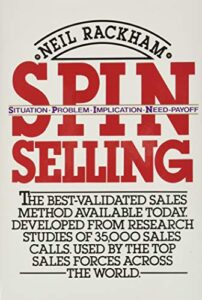
SPIN Selling
You are continually asking the right questions in that process that continually disarms the prospect where they want to keep engaging and opening up to you. One good way to do that is if you have somebody that is closed off, let’s say that you finally weed your way throughout the organization of the company. You are selling to a Fortune 1000 company. You are talking to the division head, the main person. That is your sixth appointment. You have finally figured out how to get through.
Let’s say that person is hard as nails. They do not want to open up to any of your questions. You are going to stop that conversation halfway through. Let’s say you are on Zoom or even in person, you can lean in and say, “Me and you here, off the record, what is holding you back from being able to X, Y, and Z?”
You cannot do that in the first ten seconds because there is no trust. You cannot force your way into that conversation. You know they are not opening up. They are staying surface level with you. You simply stop. You lean in and say, “Between me and you, off the record.” People open up. You do not use it every time. You’ve got to know when to use it. You cannot use it in the first two minutes because there is no trust throughout that conversation. That is a way to disarm a prospect to get them to open up.
We have gone full circle because you talk about selling is all about change. You are disarming people. You are mitigating the risk to do that change. That is a great summary of your skillset and the training you offer and your new book that is co-authored. It is going to be something that people are going to want to run and get The New Model of Selling: Selling to an Unsellable Generation. If people want to reach you, Jeremy, where should they go?
If they want to learn about what we do or even get some free resources from us, they can join one of our free Facebook groups. Send them to www.SalesRevolution.pro. We got about 18,000 C-level executives, salespeople, and entrepreneurs in there that want to get better and sell. Right when they join, check your Facebook Messenger because somebody on my team will message you over a free training called the NEPQ 101 Mini-Course. It is with my CEO, Matt.
Matt will break down different questions that you can use for different sales situations we know that you are going to be in on a day-to-day basis that will help you sell more. We go live in that Facebook group 3 or 4 times a week with different Q&As and different trainings for B2C and B2B. They are welcome to join that if they want to get some sources to sell more.
Thank you so much for telling us about your own story of origin and how you have learned to be prepared and even prevent objections and closing by making people feel safe to open up with, “This is off the record.” Thanks again, Jeremy.
Thanks, John, for having me on.
Important Links
- Jeremy Miner
- 7th Level
- Closers Are Losers
- SPIN Selling
- www.SalesRevolution.pro
- https://SalesTraining.ClickFunnels.com/optin164548828699
- Better Selling Through Storytelling Method Online Course
Wanna Host Your Own Podcast?
Click here to see how my friends at Podetize can help
Purchase John’s new book
John Livesay, The Pitch Whisperer
Share The Show
Did you enjoy the show? I’d love it if you subscribed today and left us a 5-star review!
- Click this link
- Click on the ‘Subscribe’ button below the artwork
- Go to the ‘Ratings and Reviews’ section
- Click on ‘Write a Review’
Love the show? Subscribe, rate, review, and share!
Join The Successful Pitch community today:
- JohnLivesay.com
- John Livesay Facebook
- John Livesay Twitter
- John Livesay LinkedIn
- John Livesay YouTube