




Sell Without Selling Out With Andy Paul
Posted by John Livesay in podcast | 0 comments

Sales isn’t a simple job; it takes a lot of skill to earn a buyer’s trust. So how do you sell without selling out? How do you earn that trust? John Livesay dives into sales with help from Andy Paul. With over three decades of experience under his belt, Andy gives us a glimpse at his sales insights. From building trust and communication to training and avoiding persuasion, this episode is one you can’t miss.
—
Listen to the podcast here
Sell Without Selling Out With Andy Paul
Our guest is Andy Paul, the author of Sell Without Selling Out. He talks about how influence rules and persuasion drools and that you are either a sales boss that is commanding people or a sales leader that inspires them. Find out how to be a learn-it-all instead of a know-it-all. Enjoy the episode.
—
Our guest on the show is Andy Paul, who is a leading global sales expert. He has over 180,000 people following his daily posts on LinkedIn. He is the host of the top-rated sales podcast Sales Enablement with Andy Paul, with more than over 1,000 episodes and millions of downloads. His podcast is a go-to resource for sales leaders and producers. He is the author of the Amazon best-selling book Sell Without Selling Out: A Guide to Success on Your Own Terms. He has also written other books and he is the Founder of Zero-Time Selling, which is an advisory firm. Prior to that, he had a successful sales career himself in tech startups, where he sold over $600 million of complex systems and services. Andy, welcome to the show.
John, thanks for having me.
Let’s go back in time to when you knew you wanted to get into sales. Maybe you had a paper out or you sold something and you went, “I am good at this. This might be my career.”
I did not know I wanted to be in sales after I had been in it for a couple of years. Up until that, I was not too sure that I wanted to be in sales. Like a lot of people, I fell into sales. I graduated from university and did not have any concrete plans about what I wanted to do. I worked at the college I graduated from during the summer. Fall came around and my parents were urging me to get more serious about things. I went to the career placement center around campus and the jobs that were available were all the major tech companies. They were trying to recruit people into what turned out to be sales. Interestingly, none of them called it sales positions. They are all marketing management training programs, but they were nothing about marketing. They are all about sales.
Marketing people do not have quotas. That is the big distinction I tell people.
It is this whole idea that sales is dirty and, “Who wants to be a salesperson?” It was evident even then. I fell into it and as I described in my book, I was not too comfortable with what I was being taught and how I was being taught how to sell. I reached the point about year two where it started making sense to me and I started to describe or define a way to sell that worked for me. I could start to see a future in it at that point.
[bctt tweet=”A sales boss commands, and a sales leader inspires. ” username=”John_Livesay”]
You and I both have a similar background in that we sold multimillion-dollar tech pieces of equipment. Tell us about that. What was that like in the ‘90s?
I started off selling roomfuls of computer equipment back in the day. They take a lot of space and a fraction of the computing power of our phones these days that major corporations are running their companies on. I swerved into the personal computer industry for a while and worked at Apple in the early days of Apple and a couple of others what we thought was going to be an interesting startup. I worked for a company that made the first battery-powered notebook computer. That was a glorious failure.
Somehow ended up, by default, I was looking for a job after the last company had been with that imploded. I saw a news article in Fortune Magazine about a company that was revolutionizing the satellite communications business with very small aperture satellite dishes for data communications. I cold-called them. That was a Friday. I called them on Monday. I did not have a job in sales. I was an account manager as a customer success person for about the first six months before I moved back over into sales. That was my introduction to the enterprise of selling large complex systems.
What would you say was your biggest challenge as a salesperson? Was it handling rejection, overcoming objections or getting the appointment? What was one challenge that you thought and you saw all the people struggling with?
I spent a big chunk of time in the satellite communications business and the wireless business and did not have a technical background. I was selling to very technical customers.
It was a different language, was it not?
For me, the challenge was internal sales. How did I rally people to support me and help make up for my deficits in a way that was still valuable for the buyer? I got pretty good at that after a while. It was matching the internal selling as well as the external selling. As in any startup, there are tons of competing priorities and people are ultra-busy doing multiple things and it is like, “How do I get this person to invest some of their time and attention in what is important to me?” That was the key for me to be able to rally support internally for big deals I was working on.
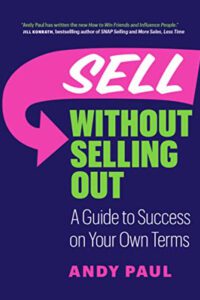
Sell Without Selling Out: A Guide to Success on Your Own Terms
How did you do that? Do you have any tips for someone who is thinking, “That sounds like my challenge, but I do not know where to start.”?
It is the same challenge you have with customers. I write about it in my book. You have to be able to connect with people on an authentic human level. You need to be able to use your curiosity and understand the most important things to them and how you can help them achieve that by working with you.
It is fascinating because you had said originally that people were like, “I am not so sure you will be good in sales because you are an introvert and an intellectual.” There are a lot of people who might identify as, “I am not extroverted. I cannot be the life of the party and entertain clients nonstop. I should not pursue this career.”
As I tell people that in the course of the first 24 years of my career when I was outselling the large 2/3 of billion dollars, I had dinner half a dozen times with clients. The opportunity presented itself. I was all over the world selling. For the most part, I had great relationships with my clients, but we did not feel like we had to have dinner with each other. It was not going to cement the relationship in a way that we were not doing in the office when we were talking with each other because their ability to trust me was based on what I was doing in the context of work more than anything else. Once I established that personal bond and rapport, I had to prove it every time I interacted with them.
How did you come up with the title of your book, Selling Without Selling Out? Do you feel like a lot of people feel like they do have to sell out in order to be successful?
They do. The simplest way to consider selling out is when you put your interests ahead of those of your customers. That is an external customer buying something from you or your internal customer. Whether you are working as part of a team or collaborating with people on things when you put yourself first, you start to sell out.
Do you have a story or example of that?
[bctt tweet=”Be a learn it all, not a know it all.” username=”John_Livesay”]
Think about it from a salesperson’s perspective. You go out at the start of the month or at some point when you start a relationship with a potential customer or client. You convince them through your actions that you are there to help them. They think you are there to help them, but then you get to that last week of the month and your boss says, “We need to bring this order in order to hit our month.” Early in my career, I was forced to go out and try to accelerate decisions that buyers were not prepared to make.
You start offering discounts and other inducements, delayed payment terms, or whatever the company does. In the mind of the buyer, suddenly, you went from being somebody that is there to help them to be purely transactional. It does not mean they will not buy from you, but they are under no illusion anymore that you are there to help them.
Once that trust is broken, it is almost impossible to get it back.
It is very difficult to get it back. They will stick with you as long as you are handy and convenient for them, but as soon as something better comes along, somebody they trust more or a product that is roughly equivalent to yours, odds are pretty high that you are going to be gone.
You talk about the difference between being a sales leader versus a sales boss. Can you give us that distinction?
A conversation that I had on my show with Stephen M.R. Covey, a great author who wrote the Speed of Trust. He has got a new book out called Trust and Inspire. It is about leadership modes. As he draws, the contrast is there are two dominant modes of leadership. There is the command and control, which we are all very familiar with because we have all been victims of it and then there is trust and inspire. That sums up the difference.
As a sales boss, it is all about command and control. Conformity and compliance are most important to me. Trust and inspire is, as a sales leader, you are going to sell to your person, “Here is your patch and territory. This could be your list of accounts of geographic territory.” I am going to support you the best way I can, but you decide the best way to get this business done in your territory. How can I help you achieve that? Trust people to continue to develop, expand, grow and learn with your support. The other is, “I know best. Do what I want you to do.”
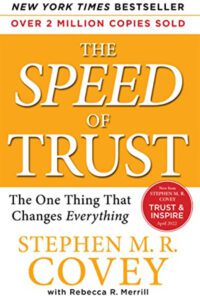
Speed of Trust: The One Thing That Changes Everything
One of the things both of you and I witnessed and experienced is a top producer is getting promoted into sales leadership without any real training and failing miserably as a leader versus a salesperson because they are different skills. Can you describe what someone should do to prepare to make that transition if they are not getting the training internally?
From my experience, I did a couple of things. I read what I could that was available about managing and leadership. I did not hesitate to ask people for guidance and mentors, internally, people that were more experienced in the role to give me some perspective on what they were doing. I asked the people that I was leading how I was doing.
It is part of your personality and it is not part of most people’s personality, the humbleness to ask for feedback, as opposed to, “I am going to pretend like I have it all together even though I had never done this before.” It is a completely different mindset to approach something with. In order to get feedback from people you are managing and/or your customers, you have to be willing to listen and not think you have all the answers all the time.
This is what I started pointing out in the book in terms of the contrast between a sales boss and a sales leader. One is a know-it-all versus one that is a learn-it-all. That is what you want to be. You want to be a learn-it-all. The humility you talk about is not just being modest and self-effacing, but it is about being intellectually humble. It is acknowledged that you do not know everything.
We put sales leaders, especially people who do not work in big companies that do not know very formal training programs and development programs, which the majority of companies out there put in tough positions. We promote them and then we do not enable them with the tools, the knowledge, and the training to have a better idea about what they are doing.
The thing that is ironic about that is that if you run polls, you look at the polls, surveys and research data, who is the single most influential in the life of an up-and-coming salesperson? It is their immediate manager. The people we should be investing in the most, we do not. According to LinkedIn, we spent roughly about $15 billion a year on sales training in the United States, of which 10% is spent on sales leaders and sales managers.
At least half of it should not be spent on sales managers. If they are the people having the most influence on the development of individual sellers, we cannot invest in them enough. Stop providing that training to sellers because they are going to get the guidance and knowledge they need from watching their sales managers.
[bctt tweet=”We are the sum of all the influences that are out there—our peers, our managers, the things we read, and the other information we absorb.” username=”John_Livesay”]
One of the things you talk about is people who say, “Let’s model what the top producer is doing. Let’s all march to that drum and say exactly what they are saying and try to be a clone.” You are saying, “That is the kiss of death. It is counterproductive.”
It is not like I was the best salesperson in the world, but no one sold like me because it was me. No one sells it like you. People did it better. That is great. I tried to learn from those people, but I had my own unique way of doing it. That has developed because we are the sum total of all the influences that are out there, our peers, our managers, the things we read, and the other information we absorb.
To force everybody into a single niche about how to sell is self-defeating. You have frameworks, you set up and you have expectations, “This is how we conduct business,” but within that framework, as a sales manager, I want to give you the freedom and the flexibility to go experiment and find out things that will work for you based on your unique strengths as a human being.
If you are going on a sales call with a boss and that boss is hyper-critical and expects you to be perfect, you do not have any room for failure trying something on your own, and then you are shutting down someone’s creativity and authenticity.
Selling is one of the most creative professions you can be in. To me, that was the one thing that has kept me in this, that in every situation, your approach is different. The way you present the solution and how you interact with the people will be necessarily different because they are also different if they are buying the same product. It is a fresh problem to solve, not solving the same problem over and over again.
I think of that as a doctor or a dentist. I thought, “How do they not get bored doing the same surgeries and over again?” I realized, much like a salesperson, in every patient and every situation, “We are putting a crown in your mouth,” or “We are removing your appendix.” Whatever it is, the outcome is the same, but there are so many unique things that require you to think, “I have never had to do it quite this way before.”
There are no small things to your customer. To your point, this is not to a patient. There are no small things when it comes to people’s health. As a seller, there are no small things in the buyer’s mind. If you try to serve to glom over those, assuming that they are like everybody else, you damage that relationship and the trust you have built.
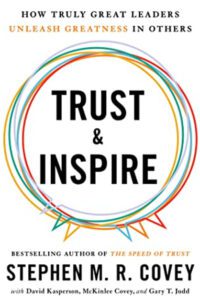
Trust and Inspire: How Truly Great Leaders Unleash Greatness in Others
One of the biggest reasons people are buying your book is that you have provided a guide on how to be successful on their own terms without having to fit into this mold of, “You have to be an extrovert. You have to do XYZ. You have to play golf.” All those stereotypical things of what salespeople used to have to do or would do and it is like, “I know what my terms are. This is how I entertain clients or not. This is how I sell. This is how I build rapport that might be different than you.”
It is becoming more essential because we are becoming more diverse in the people we are recruiting into sales. We are not doing enough. We could do more, but they all have different lived experiences. The perspectives people bring are what we need. We need more different perspectives. There is no one way.
You have so many great soundbites. One of my favorites is, “Influence rules, persuasion drools.” The visual on that is great. Tell us what you mean. A lot of people think, “I am going into sales. I am going to persuade you to buy this for this price.”
If you are persuasion-driven, you are putting your own interest ahead of those of the buyers. By definition, that is what you are trying to do. You are trying to persuade somebody to buy your product irrespective of their requirements, their needs and the things they want to achieve because you are in that mode where you are selling hammers and everybody is the nail. Even when you look at the definition of the word persuasion, it talks about prevailing or trying to prevail through force. In the wrong hands, persuasion is meant to be coercive and a little bit manipulative. Unfortunately, a lot of sellers are the wrong hands. That is not how buyers want to deal with the salesperson.
This is a big a-ha moment. I want to take a pause, circle it, underline it and highlight it. I am not in the persuasion business. Nothing against all the wonderful books about how to be persuasive, but let’s reshift this and start reframing how we think of ourselves.
Influence is all about having an effect on the thoughts and actions of others without the apparent use of force. That is what influence is and that is what position we are trying to get into. We are trying to build this connection with a buyer built on some level of trust that when the trust exists, they open up to us. When we bring our curiosity to bear, they will share information with us, perhaps at a deeper level than they would with someone where that trust and connection did not exist. Suddenly, we have more insight into the most important things to them in terms of the challenges they face and the outcomes they are trying to achieve by addressing those challenges.
When we have that understanding, we can work with the buyer to help shape this vision of success of what it will be like to get the value from the product or service you are selling. If you reach that point, that is something you do collaboratively with the buyer. It is not something you impose on them by trying to persuade them about it.
[bctt tweet=”Humility is not just being modest and self-effacing, but it is about being intellectually humble. It is acknowledging that you do not know everything.” username=”John_Livesay”]
I love that your definition of persuasion is, “I know better than you. I am right. You are wrong.” That is selling out. That is what this book is helping people not do. The opposite is the concept of selling which I have never heard of before. Therefore, there are no assumptions that you know more than they do or even vice versa. Think of it in terms of being a copilot with the buyer and this concept of, “Let’s make sure people feel heard and understood first before we jump into what we think they need.” It’s like when you go to a therapist, sometimes there is something called the presenting problem, which is a couple comes in and they say, “Our love life is not where we want it. That is why we are here.”
The therapist will go, “That is the presenting problem. I bet there are some reasons behind that.” As salespeople, we need to start thinking of ourselves as, “Whatever they tell you upfront, this is why we are changing, looking, upgrading or whatever the reason is for doing a proposal in the first place.” There might be other reasons they are unwilling to share yet, or maybe they do not even know yet. If you can help them discover that, then your trust factor has zoomed up.
Sometimes sellers are a little taken aback when I say this. I said, “You cannot take anything at face value that the buyer tells you.” They are not lying to you. They are not, not telling you the truth, but there is always more to it. If you accept what they tell you, you will hop down one path that is not the path the buyer wants to go down.
Building this level of trust so that they open up to you, as I write about in the book, then they give you permission to stick your nose into their business. What you are trying to get to is deeper level information that they do not readily share with everybody. I was in a conversation with someone on another podcast and they are talking about, “If you ask buyers scripted questions, you get scripted answers.”
If you are a robot, then they are going to give you robot answers.
You have trained them, not you, but sellers in general. Be the difference. This is the thing that I stress in the book. In the majority of instances, buyers oftentimes decide to buy from a seller despite the seller, not because of them.
If we flip that around and make it not in spite of but because we have a new tool in our box.

Sell Without Selling Out: In the majority of instances, buyers oftentimes decide to buy from a seller despite the seller, not because of them. In the majority of instances, buyers oftentimes decide to buy from a seller despite the seller, not because of them.
That is what you are trying to achieve. You become the reason they buy from your company. You, the individual. From supporting data from Gartner, Challenger and Forrester, we know that when customers make their decision, the majority of the criteria or factors in their minds are the experience with the salesperson.
That is everything from a home or the broker you pick to, if you are in Corporate America, deciding what vendor to make your equipment purchase from. People are buying your energy, your passion and your empathy.
How they experience you. Your understanding.
If people want to reach out to you and figure out how to get more coaching, more information and get on your email list, where should they go?
They can email me if they want to at [email protected]. They can connect with me on LinkedIn. Direct message me there. I would love to connect with people that are reading this.
Do you also have programs that you offer on your website?
If you go to AndyPaul.com and learn about the programs that I offer. You can download a free chapter of the book if you wish. We have an assessment that you can take there if you assume that selling out and selling in are polar opposite ends of a spectrum. You can start to determine where in that spectrum you sit. Are you leaning more towards selling out or selling in? It is not super scientific, but it is a fun quiz. Come buy the book on Amazon or wherever you purchase books.
[bctt tweet=”You cannot take anything at face value that the buyer tells you. They are not lying to you. They are not telling you the truth, but there is always more to it.” username=”John_Livesay”]
Thank you so much for sharing your insight. We are going to all become people who learn-it-all not a know-it-all. Any last thought or a quote you want to leave us with?
One of my favorite quotes is right at the beginning of the book from Ralph Waldo Emerson, “Insist on yourself. Never imitate.”
Most people think they have to become a clone in order to be successful. That is not the case at all. Thank you so much for getting us this new awareness and this new ability so that we can be ourselves and be successful at the same time. Who does not want that? Let’s go get the book, everybody. Thanks, Andy.
Thanks, John.
Important Links
- Andy Paul
- Sell Without Selling Out
- Sales Enablement with Andy Paul
- Stephen M.R. Covey – Sales Enablement with Andy Paul Episode
- Speed of Trust
- Trust and Inspire
- [email protected]
- LinkedIn – Andy Paul
- Better Selling Through Storytelling Method Online Course
Wanna Host Your Own Podcast?
Click here to see how my friends at Podetize can help
Purchase John’s new book
John Livesay, The Pitch Whisperer
Share The Show
Did you enjoy the show? I’d love it if you subscribed today and left us a 5-star review!
- Click this link
- Click on the ‘Subscribe’ button below the artwork
- Go to the ‘Ratings and Reviews’ section
- Click on ‘Write a Review’
Love the show? Subscribe, rate, review, and share!
Join The Successful Pitch community today:
- JohnLivesay.com
- John Livesay Facebook
- John Livesay Twitter
- John Livesay LinkedIn
- John Livesay YouTube
CEO Secrets: The Strategies And Tips Of Being A CEO With Christy Budnick
Posted by John Livesay in podcast | 0 comments
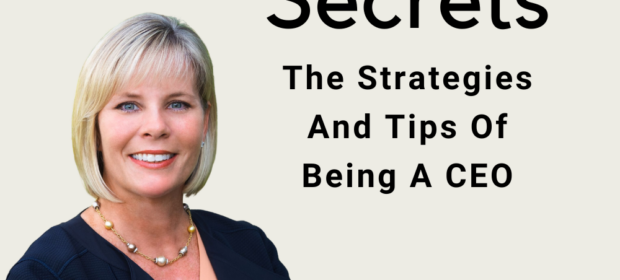
Being a CEO of a company requires great responsibility. It demands excellent leadership skills and strategies to help the company grow. In this episode, the CEO of Berkshire Hathaway HomeServices, Christy Budnick, shares her secrets about being a CEO. She provides insights about her strategy in leading her agents and staying aligned with the company’s growth. Tune in to this episode as Christy shows how culture, diversity, and inclusion play a role in leading her company towards success.
—
Listen to the podcast here
CEO Secrets: The Strategies And Tips Of Being A CEO With Christy Budnick
Our guest is Christy Budnick, the CEO of Berkshire Hathaway HomeServices. We talk about how they are not only a forever agent and a forever brand, but for everyone and how important it is to paint a picture when describing something to someone. She believes that nose-to-nose and toes-to-toes is the best way to connect. Find out what her biggest surprise was becoming the CEO. Enjoy the episode.
—
Our guest is Christy Budnick, who serves as the CEO of Berkshire Hathaway HomeServices, a global residential real estate brokerage franchise network. In her role, Christy oversees the global real estate brokerage franchise network, which is made up of more than 50,000 real estate professionals and nearly 1,500 offices throughout the US, Canada, Mexico, Europe, the Middle East, India, and The Bahamas.
The network, among the few organizations entrusted to use the world-renowned Berkshire Hathaway name, brings us to the real estate market, a definitive mark of trust, integrity, stability, and longevity. Christy is listed among the Swanepoel Power 200, which ranks 1 of the 200 most powerful and influential executives and leaders in the residential real estate brokerage industry. I’ve had the privilege and honor of speaking at two of her events.
—
Christy, it is an honor. Thank you for sharing your wisdom and joining me on the show.
Thank you, John. It is so good to see you again, and I appreciate you inviting me.
It’s great. We’re going to have a lot of fun. I touched on the surface of your incredible background, but I would love you to take us back to your own story of origin of when you got interested in real estate and how that all happened.
First of all, I love your phrases “your story of origin.” It paints a picture in my head. Our family was a Navy family, and we lived overseas, among many other places. For the first 10 years of my life, we lived in 17 different places. When we moved back from Japan in 1979, my mother decided to divorce my father at that time. At the same time, she earned her real estate license. It was something she’d wanted to do, but because we moved around so much, she hadn’t been able to do it up until that point. As a single mother of two young girls, my career was born out of necessity.
She needed help with marketing, walking flyers around the neighborhood, the open houses, measuring houses, and all of the things that you do as a real estate agent. At the age of 11, I began my career in real estate. I have told the story a few times. I did not intend to stay in real estate. As a matter of fact, in 1988, my mother opened our family’s company, which was Prudential Network Realty at that time. That was the same year that I went to college.
I had decided that I was retired from real estate at that point, and I was going to do anything except real estate. It’s funny that it has a way of getting in your blood and staying there because, post-graduation, I did do some other things. What I found was every time I’d get together with my mom, which was real frequently, we were talking about real estate, like how things were going in the market, challenges she was having, successes, etc. I was getting drawn in more and more every time. I joined the company many years ago and have never looked back since. I love it almost every single day.
There’s a term when you’re a daughter of a real estate agent. What’s that term called? Isn’t it an acronym?

Being A CEO: The top agents look toward the future, and they plan for the future.
I’m trying to think of what it is.
It is DOR or DAM or something.
Something like that. We never use that, but I’ve heard others use it.
It’s more common than people realize.
It is interesting to see. As a matter of fact, when I would bring on new agents to our company, I’d always ask the question, “What made you decide to get into real estate?” If we brought on 10 to 15 people, both experienced and inexperienced, to the company each month, we found about 1/3 or more had family ties to real estate, like mother, father, grandparent, or something very close.
What that does for you when you’re evaluating if someone’s going to be a good fit for Berkshire Hathaway HomeServices is they know what they’re getting into. Firsthand, this is not like, “I might want to try this,” but, “I’ve lived with it, and I know what I’m getting into.” I love it because what I have seen with the friends that I have that are successful is, for them, it’s like a childhood birthday. They love seeing open houses, even if it’s not their listing. That passion is you’re in the right job.
The one thing I’ll say about real estate compared to my prior career is every day is completely different for every client and their needs, desires, and emotions. That, to me, is what I love. The other part of it is it doesn’t ever shut down. You’re running. I love the challenge, it’s fast-paced, and every day is so different. I never think to myself, “I wish I could shut this off because I love what I do.”
Take us to the moment in your career where you’re running this successful business and managing some people in the Florida region, and then you’ll get the phone call or the tap on the shoulder, “We’d like to promote you to be the CEO.” What did that feel like? What do you think made them pick you?
I was running our family’s company. I was President and CEO, and it’s a fairly sizable company. I will tell you, becoming the CEO of the franchise was never on my radar. I thoroughly enjoyed what I was doing. I loved being a part of the franchise. I believe in the Berkshire Hathaway HomeServices name and all that we stand for.
That day, I got the call from Gino Blefari, our chairman. He said, “Do you have a moment?” It was a Saturday morning. I said, “Sure.” It wasn’t that uncommon for him to call me on a Saturday morning, so that part didn’t surprise me. He said, “I’d like to talk with you about something confidential. We’re going to have an opening in the CEO role. I’d like you to consider putting your name in the hat.” My daughter was sitting right next to me. She didn’t know what was going on, but she could see me. She was looking at me, and she said, “Are you okay?”
[bctt tweet=”Raise your level of professionalism by going the extra mile. ” username=”John_Livesay”]
You could have blown me over. I truly wasn’t expecting it. The emotions I was feeling were I was proud that Gino would even consider me for the role because we have some talented people that make up the franchise network. It would be very easy to select several people from the network. Pride was the 1st thing and then the 2nd thing was, what in the world does the CEO of a network do? It was funny. That was the question I asked. I said, “I’m thrilled that you’ve made this call and I’m very honored, but I have to ask you, what does the position entail?”
His response, I will never forget this, “It’s pretty much everything that you do now except you’re over 500 agents, mortgage company, a title company, insurance company, relocation, builder, etc. Now, you’ll be over 50,000 agents globally.” I thought I’d never been one to back down from a challenge, so I said, “Let me talk with my family and I’ll get back to you.” I did, and I called him back the next day. I said, “I want to throw my name in.” He said, “You’re my first choice. I would love to have you take the position.” It was a complete whirlwind. I was static.
From 500 people to 50,000 is almost like you’re looking at a home. You’re like, “Add a bunch of zeros.”
I’ve been a part of the network for so long. The other franchise network members and all of the CEOs that make up, particularly the top companies, are like family to me. I’ve grown up with them. That part was special because they wanted to see me succeed and they took great pride that one of their own had taken the helm. It was the right move at the right time. I’m so grateful to Gino.
When I was your sales keynote speaker, I saw you meeting some of your team for the first time after the pandemic in person. One of the things that stood out to me consistently at both events was you’ve been in our shoes and understand our challenges, so respect is there. You then did something you and I are so in sync on, which is everyone has to figure out how they’re not going to drown and what I call a sea of sameness. You have a clever, unique way to do that. That reef solves a bit of a problem of drowning in a sea of sameness, but you do it in a way that elevates your team that other people aren’t doing. Would you share that strategy with us in terms of perception and becoming not a transaction but a forever agent?
At my former company, Berkshire Hathaway HomeServices Florida Network Realty, we were big on real estate portfolio reviews and serving our clients. We’ve never been a lead generation type of company or anything like that. We’ve always been about relationships. As a part of our service, one of the things that the agents do is a real estate portfolio review. What that consists of is, in the world of real estate, we scratch our heads and wonder why in the world we are looked at in the realm of ambulance chasing attorneys and used car salespeople. Good agents are some of the hardest-working people I’ve ever met. They provide an incredible service and deal in people’s largest asset. For us to be considered in that realm bothers me to my core.
Everything I do is to raise the level of professionalism, as my mother would say, in real estate. If we want to be seen as similar roles as financial planners, CPAs, and things like that who provide those financial services, we have to do similar activities. Anybody that works with a CPA or a financial planner sits down with their clients at least once a year and reviews their portfolio and financial situation. They consult with them to see how they’re doing. Are they on target to reach goals? I believe in portfolio reviews for that reason. Basically, the crux of it is an agent reaches out to their client. You do this for about 50 clients a year to start because it does take time and it is a commitment.
You reach out to your client and let them know that one of the services you’re going to be offering for your best clients is a realistic portfolio review. That takes into account the value of not only the home they live in your local area but also any other home they may own, whether it’s abroad outside of the United States or in another state. Because we have such a big network, we’re able to work with agents across the globe and this needs to be a sit-down, face-to-face meeting.
It is not intended for a sales pitch or anything like that. It is truly to review that person’s value of their properties so that the next time they meet with their CPA or their financial planner, they’re able to take them. I strongly suggest that the agent bring two extra copies of the review, one for the CPA and one for the financial planner. That person is then able to update their financial outlook with the true value of their real estate portfolio. Doing things like that is very client-centric and client-oriented. Again, it raises us in the eyes in terms of professionalism.
Two things you said there that stand out for me is you asked your team to start with 50. One a week and take two weeks off. It’s not overwhelming. It is a very bite-size action item workweek. It makes them think, “Who are my top 50 clients?” You’re then providing a level of service without trying to sell something. You’re showing empathy. What you and I love is the storytelling part, which is you then have a story of, “Here’s a story of somebody in Florida who started with 50, went to 100, went even higher of doing this multiple times, and the results are astounding.”

Being A CEO: 100% of top agents do an outstanding job of staying connected to their clients, and there’s something to be said about the human voice and that connection it creates.
It’s off the charts. If you do that alone and focus on your client’s needs, you won’t have to do anything else to succeed in real estate. That is my true belief of how powerful this one thing is.
When you were talking about a client that has a high net worth and owns homes literally around the world, of course, that’s very lucrative as a real estate agent to have that client, they need that VIP service. My favorite definition of luxury is anticipating a need before somebody knows they need it. That’s what this program is.
I love it because if I have multiple homes, the fact that Berkshire Hathaway HomeServices has multiple offices around the world is no longer a feature to me but a benefit to me because you’re going to give me multiple reports of what my current home is worth everywhere. I can make a decision with my financial planner about, “Is it time to sell one,” or whatever the issue is.
I’m no longer guessing of the Zillow estimate that is not that accurate, or I’m going to say what I think it’s worth if it’s gone up. I have a finger on the pulse and the consistency that you tell your team to do this. Whether they sell anything or buy anything from you or not, they know what’s going to happen. Those people are going to talk about you. They’re wealthy high net friends, and they’re going to be like, “My agent is not doing that. I don’t even remember the last time I talked to them.”
The CPAs and the financial planners, too, have people that want to buy and sell real estate. I guarantee they don’t see people that provide that service. It doesn’t need to be for high net worth. It’s for any client period that you consider your top clients. Frankly, if you can ultimately extend that to all of your clients, that’s even better.
What a great story of standing out in a sea of sameness when the competitors are not doing that. Do you have a big surprise now that you’ve been the CEO for a few years? Is there a happy surprise to being the CEO you hadn’t expected?
The thing that I’ve enjoyed about it is getting out, spending time with the network, getting to meet the agents, and hearing their stories. Every time I go out and spend time with any company, I love to be able to sit down with a group of agents and say, “What are you doing that’s working? What are you doing that’s not working? Where are your struggles?” The amount of information they share and share with one another, which I love, is so tremendous. That truly has been my favorite thing. Certainly, working with the CEOs as well. I have to say working with the one-on-one with the agents. I absolutely love that.
You’re traveling and you’re opening up offices. I believe Rome was a recent one, correct?
We did. We opened up in Rome and they have three offices there already. We’ve got some additional non-US locations opening up. We’re rocking and rolling and very excited about the future.
The other thing that impressed me was your marketing team. Let’s give a shout-out to them. They came out with this adorable, clever concept called Pawfect. It is a little video of the house and then it’s how many square feet. It seemed small to me and then no bathrooms. I’m like, “What in the world? Tell us what that is. It’s finished executing now and how it’s successful.
[bctt tweet=”Have a plan and execute it daily.” username=”John_Livesay”]
That was so much fun. John and BBDO are the marketing firm we worked with that helped bring that whole idea to life. They are incredible, but our marketing team did execute it beautifully. The inspiration for it was in 2021. When we were first talking about it, COVID was still weighing people down, and it felt like everything was heavy. We said, “We need to do something that’s fun and brings joy.” One of the things that we all realize is during the COVID time, so many people adopted pets.
Dogs, in particular, but there were cats, birds, reptiles, and all different sorts of pets, and home became more important than ever. We thought, “Why not do a sweepstake that is a lot of fun and silly, but it speaks to people’s hearts?” It is because that’s where their hearts are. It’s with their pets. We had an overwhelming response to it and we have already selected the sweepstakes. People have selected three of the winners so far. I believe we still have two more that were vetting the process. I’m really excited. Those folks are over the moon. They are so excited that they were selected.
What you do is if you win, Berkshire Hathaway HomeServices will create a replica of your actual house for your dog. That’s why there’s no bathroom in the house.
Not even just for the dog. Let’s say you have an iguana. We didn’t exclude it. It’s for everyone. Back to our forever agent, forever brand, for everyone. It could be a bird cage or for a fish. So far, I believe the winner does have dogs, but you’re exactly right. It’s a replica of their home. It’s pet size and pretty special.
Let’s double-click on that. Before the show started, we had a little pre-chat about you’re not a forever agent and forever brand. You are for everyone, which includes a real culture, brand of diversity, and inclusion for who you want to work with and who you want to talk with. That’s a very important criterion for so many people.
In addition to this amazing program you’ve discussed where you’re giving clients this analysis of all their homes, is there something that successful agents are doing? Maybe it has to do with a mindset or resilience that other people who aren’t in real estate that couldn’t say, “I could take that and use that to make my career more successful.” The people I met winning consistently year-after-year top awards. Is there something you see them doing that would be useful for everybody, whether they’re in real estate or not?
For the top people in the business, one of the things that they do is you typically find top agents working from some sort of a plan. It may not be a formalized business plan, but they know exactly what they’re going to do the next day before they go to bed the day before. They’ve got it planned out. Most of them will work from an office at some point because you do get energy and inspiration from others. There are also so many learning opportunities and even referrals that come out of being in the office. The top agents I’ve worked with over the years, the biggest thing I would say they do is look toward and plan for the future. That’s important. A lot of people get into this business.
One of the things that can be very difficult is you’re an independent contractor. There isn’t a set plan that you have to work from. As a matter of fact, the broker is not allowed to tell you that you must do this, clock in at this time, or anything that. For somebody who has been an employee and is used to a very rigid schedule, that can be a real difficult change.
Make sure you’re not shooting from the hip, working from a plan, and having a morning routine so that you’re hitting the ground with the right mindset every single day. Going back and evaluating yourself, how did you do on your day? What went well? What didn’t go well? What do you need to do differently next time? Those are some of the things that I see top agents doing very regularly.
It’s the old make your plan and work your plan. That’s as smart as driving all over the place if you’re going to start somewhere. Make sure that you’re driving, especially with the price of gas. When you think of professional athletes who practice or actors who rehearse before they get on set or on stage, yet a lot of us feel we don’t have to practice or rehearse what we’re going to say, what our stories are going to be, or what we’re going to share. I’ll just make it up. As you said, from the hip or wing it in the moment, yet nobody does that getting ready for the Olympics.

Being A CEO: There’s no such thing as a shortcut to doing the hard work to get the results.
Here we are dealing with people’s largest asset in most cases and people that wing it makes me wacko, actually.
One of my favorite quotes is from Arthur Ashe, the famous tennis pro. That is, “The key to confidence is preparation.” It seems to me that’s right on target with your philosophy here.
The other thing that I would say that top agents do is they do a good job of staying connected to their clients. Whether it’s through lunches, coffees, networking events, charitable activities, or whatever it is, they stay very connected, face-to-face, nose-to-nose, toes-to-toes with your clients. They’re not afraid of picking up the phone too. It seems that’s somewhat of a lost art. People are trying to use texting as a replacement. There’s something to be said about the human voice and the connection that it creates. Those are some simple things, but they’re very important.
I tell people your voice is a musical instrument. The volume, the pauses you take, and the intonation create an emotional feeling because we know everyone makes their decisions on what broker to use and what house to pick. Emotionally, they back it up with logic. If you’re the one that has those tones, as you said, nose-to-nose, toes-to-toes interactions and that emotional connection are there, that’s what’s going to separate you.
You touched on something that I know is near and dear to your heart, and it certainly is to mine, which is a charitable part. Let’s describe what Berkshire Hathaway HomeServices is doing around charity that makes people feel like, “That’s something I want to make some of my choice and support.” What is one charity that Berkshire Hathaway HomeServices is focusing on?
The Sunshine Kids is the charity that the network as a whole focuses on and that charity helps families who have children that are battling cancer. To listen to these children tell their stories and then the parents as well tugs at your heart and you want to do anything you can to help them. We give them all sorts of different experiences, whether it’s trips or help in terms of financial help. Many of our brokerages participate very heavily in that.
We have a number of different things, too, besides making donations. When we did the Pawfect campaign, we also had a day where you could take your dogs for a walk and make a donation to the Sunshine Kids, where you got a little bandana for the dog, a water bowl, and that sort of thing. It’s a great way to make it fun and make a difference, as well as closing gifts and things like that. The thing that tugs on my heart strings is to hear those children tell their stories and the strength they have at such a young age. What they’ve been through is chilling, but it makes a big difference in their lives and their families.
It also gives us a perspective of we’re having a tough daw, somebody went with a different agent, or whatever, and you’re like, “In the scheme of things, I don’t have any problems. I need to focus on what I do have and be grateful for that.” This thing you said about tugging at the heartstrings is what stories do. When we have the ability to share a story of a child or the client that we’ve helped, or we talk on those heartstrings, people open the purse strings because it’s an emotional connection that that’s where you want to put your investments, time, and money with someone.
You made me think of a story. In 2022, we have the Sunshine Kids front and center as we do every year. Our entertainment was Lenny Kravitz, who I am crazy over. One of the things that we did is we had the kids perform some of his songs because it so happened that the kids that are the spokespeople in 2022 are very musically and theatrically talented. The night of Lenny’s performance, the kids got to be right upfront at the base of the stage. and they were so excited. After the event, Lenny invited a couple of us, the Sunshine Kids, and their parents backstage for a meet and greet. To watch him talk to the children, listen to them, and draw stories out of them was so special.
It’s something I’ll never forget. One thing that was neat was one of the young ladies named Maya, when we were about to wrap up, Lenny was asking, “What do you all have going on coming up here soon?” She was going to star in an off-Broadway production, and she didn’t tell him that. Lenny’s daughter is an actress, so I knew that this was something that he’d be very interested in. I said, “Maya, you’ve got to tell Lenny about your off-Broadway performance that’s coming up.”
[bctt tweet=”So the top people in the business typically find top agents working from a plan that knows what they will do the next day.” username=”John_Livesay”]
Here it was, it was going to be at the end of May 2022 and Lenny was like, “What? You’re staring in an off-Broadway production. That is so cool.” She was like, “I’m so excited. I don’t even know Legally Blonde.” He said, “When is it?” She said, “it’s at the end of May. I don’t remember the dates offhand.” He said, “Isn’t it in New York City?” She said, “Yeah.” He goes, “I’m going to be in New York at the end of May. If it works out, I would love to come and see it.” Here’s the superstar who immediately made this connection with these kids. It was so special.
That’s why you’re such a great CEO. You connect the dots for people. Without you having heard and shared that story, that would never have happened. He then gave the gift of being completely and fully present with each and every child and you as well. That is a gift that we can all eat. We don’t have to be a superstar to give the gift of being completely present with people. You also do that.
I saw when someone’s speaking to you, or you’re meeting somebody for the first time, you are 100% present with them. That is a gift that makes them want to have their picture taken with you and makes you memorable. That is how we all stand out from the sea of sameness. Christy, what a joy it’s been to catch up with you again and hear all your words of wisdom. Is there any last thought or a quote that you’d want to leave us with?
One of my favorite quotes is from a former business partner and a dear friend of mine. He’s been a very successful career person. He’s always given me sage advice over the years. His name is Tom Petway. The thing that always resonates with me, whether it’s personally or professionally, he would tell me from a young age, “There’s no such thing as a shortcut. You have to do the hard work in order to get the results.” That is in business as well as personally. Anytime I’m thinking about, “I could do this, and we’ll get this result. What does Tom say?”
It’s sage advice for all of us. Christy, if somebody wants to follow you on social media or find out more about Berkshire Hathaway HomeServices, where should they go?
I’m on Facebook and Instagram. Of course, BerkshireHathawayHomeServices.com or BHHS.com is our web address.
Christy, thanks again. It’s been a pleasure to catch up. I am so excited to watch you as you continue to make a difference and help the company grow.
Thank you so much, John. It is such a joy talking with you. I appreciate you.
I sure appreciate you as well.
Take care.
Important Links
- Berkshire Hathaway Home Services
- Holding The Calm
- Pawfect
- Sunshine Kids
- Facebook – Christy Budnick
- Instagram – Christy Budnick
- Better Selling Through Storytelling Method Online Course
Wanna Host Your Own Podcast?
Click here to see how my friends at Podetize can help
Purchase John’s new book
John Livesay, The Pitch Whisperer
Share The Show
Did you enjoy the show? I’d love it if you subscribed today and left us a 5-star review!
- Click this link
- Click on the ‘Subscribe’ button below the artwork
- Go to the ‘Ratings and Reviews’ section
- Click on ‘Write a Review’
Love the show? Subscribe, rate, review, and share!
Join The Successful Pitch community today:
- JohnLivesay.com
- John Livesay Facebook
- John Livesay Twitter
- John Livesay LinkedIn
- John Livesay YouTube