

How Diverse Voices Are Changing The Narrative With Blair Bryant Nichols
Posted by John Livesay in podcast | 0 comments


For years, the dominant voices in the business world were white, male, and straight. But that is no longer the case. Diverse voices are starting to change the narrative. Increasingly, businesses are recognizing the value of diversity in all forms and actively seeking out diverse voices to help them tell their story. When companies embrace diversity, they send a powerful message that everyone is welcome and that all voices matter. We talk about all this with Blair Bryant Nichols, owner of BBN Creative Management. Blair is an expert on developing speakers for corporate events, conferences, and other thought leadership opportunities, including internal and external communications. Join in as he talks about unconscious bias, diversity, and how the right mission and purpose drive success.
—
Listen to the podcast here
How Diverse Voices Are Changing The Narrative With Blair Bryant Nichols
Our guest is Blair Bryant Nichols who manages speakers, authors, and other people who are all about diversity. He is a champion for getting diverse voices heard. We also talk about unconscious bias and how, when you have a mission, that’s what drives success. Enjoy the episode.
—
Our guest is Blair Bryant Nichols. After beginning his career representing hundreds of authors from top six publishers, he moved into the management of founders, entrepreneurs, executives, authors, and celebrities with various work streams, projects, and personal interests acting as a chief-of-staff, manager, or agent. He has deep expertise in developing speakers for corporate events, conferences, and other thought leadership opportunities, including internal and external communications.
As a manager, coach, and consultant, he helps diverse individuals and/or socially-driven companies foster new strategies for operations, communications, business development, and partnerships across all appropriate areas to further develop and enhance their bottom line and brand. Blair is the author of Before You Fall In Love, a series of personal essays on Medium.
He is a former Co-Host of Inside The Greenroom podcast, which is a behind-the-scenes look at the ever-changing landscape of live events and the speaking business. He got his MBA from UCLA Anderson with a specialization in Entertainment Management. He is my particular speaker manager, I’m happy to say. Welcome to the show, Blair.
Thank you, John. I’m constantly reminded I need to shorten my bio but thank you for sharing.
It’s quite a list of accomplishments. I always like to ask my guests to take us to their own story of origin because we love storytelling here on the show. You can go back to childhood, high school, college, or wherever you first felt like, “I like communications. I like connecting with people.” A show you were on in high school that you were like, “I’m going to be in the entertainment business in some way, shape, or form.”
I was a Literature major as an undergrad because I loved books. I thought I wanted to work in government. I realized that law and government didn’t excite me as much. With Literature, I felt like I could explore something that I was passionate about, all while having no idea even that the publishing world existed. Even though I was reading my entire life, I never thought about the business behind it. I set my sights on that and landed at the HarperCollins Speakers Bureau.
My journey, as I’ve started to reflect on it more and more in my career, certainly began much earlier. I went to a Catholic high school in South Carolina. The day before I graduated high school, we were at the church that we were using for our baccalaureate mass, the traditional mass the day before our graduation. It was going to be the time when they were announcing all of the honors for the senior graduating class. There were only 33 of us. It was a pretty small newish school in the area so it was a pretty intimate setting.
The big awards of the night were salutatorian and valedictorian and officially announced those to the community there. I grew up gay. I was in the theater. I was a nerd. I was not an athlete. For me, the imagination, the culmination of my adolescence was going to be this graduation, and being the valedictorian and giving that speech felt like my Oscar moment. You’re giving that speech. You fantasize about finally feeling some validation and reward for a lifetime of anxiety and sometimes bullying. Especially in a Catholic school, questions about your identity, and everything else that’s going on.
[bctt tweet=”The right mission and purpose drive success. ” username=”John_Livesay”]
I like the combination thereof valedictorian and feeling validated. That’s a clever play on words there.
Maybe there’s a connection there. As they got closer to announcing these top two positions, they got ready and they announced, “Salutatorian Blair Bryant Nichols.” I was a salutatorian and everyone clapped. It was a nice moment and then they announced who would be valedictorian and my entire class stood up. I can’t tell you what it felt like at that moment to feel ultimately defeated. It wasn’t just that this classmate had beat me in my GPA, had outperformed me on tests, and we went head-to-head.
What had happened a few months earlier as we were gearing up for the end of the year and there were about four of us with very similar GPAs all taking multiple APs and finishing up with finals. They said that they needed a little bit more time to determine who ultimately would be the valedictorian. What was going on behind the scenes in my conservative Catholic high school was that my headmaster went to the drama teacher, someone I was very close with, and asked if I was going to come out during my graduation speech because that was the rumor.
I wasn’t publicly out. I had told a couple of my friends. I was out to my family who was supportive. My mom was a teacher at the school. She had heard what was going on behind the scenes. Ultimately, what they decided to do was not reward it to the person who had slightly the highest GPA. They decided to let the faculty vote. Now, imagine being my mother and watching her son who should have been rewarded with this top honor, see her peers, colleagues, and boss decide to hold an arbitrary vote. They selected the person who is much more aligned with their faith, who had demonstrably done more in the church, is more involved, and in their eyes, is a better example.
The funny thing is they still let me give a speech. I’m not sure why this was big prevention, but it prevented me from receiving something that I felt like I had earned. As privileged as my life has been and was to that point, it gave me that first taste of discrimination that didn’t sit well. It planted a seed in me that made me want to rebel against society, organizations, and systems that held people back for racist, bigoted reasons and be a champion for diverse voices.
I landed in this industry because I love publishing. It was a great opportunity to get into this world. It took me from HarperCollins to Hachette, Simon & Schuster, GTN, and bigger agencies. It took me from New York to LA and where I still live. Ultimately, it took me to where I’m at now, starting my own business that’s devoted to diverse voices and championing people who are not White straight men.
There are a lot of speakers that I first worked with in this industry that fit that description. In fact, most of the highest-paid speakers ever heard of in that description aren’t celebrities. They’re former CEOs and presidents. They’re the people who you would expect to be receiving these types of paychecks. The people who were getting booked for diversity talks were always the low man on the totem pole. We’re always getting the least amount of fees and we’re considered not as important or valuable as these other speakers.
I’ve come to see and research shows, again and again, the value of diversity, innovation, creativity, and all these different things. I don’t offer speakers of the world who just speak about diversity. You’re not an expert in diversity. You’re an expert in storytelling and sales. You’re a master at it. You just happen to be diverse. That’s what the marketplace wants. They want new perspectives. They want people that represent all sides of the industry, all silos, or whatever it may be, but they want them to also represent different parts of their population of their employees.

Diverse Voices: Nobody wants to be the recipient of stereotypes or prejudices, and yet we all are programmed with it.
Hopefully, by working with people that don’t always look exactly like them, they’re getting what they’re investing in, new perspectives, and ideas. They’re getting something more from that talk, workshop, or whatever it may be because if they just brought in someone that looked and thought like them that reinforced what they already knew, there’s not going to be a lot of change. I’m sure you’ve experienced that in organizations and seen when it goes well and when it doesn’t go as well.
You’re 100% correct because the assumption that everyone is a White, straight male just because you happen to be White and male is consistently surprising to me. You always have a choice on how you come out and let someone know you’re gay. It could be, “My husband and I,” or, “My ex-husband,” in my case, whatever you say that lets people know without having to say I am gay.
It lets people know that the assumption of this is not accurate. Everyone I know who has gone through that process of coming out has faced some level of pushback. “We’re not so comfortable with you.” Especially the hiring process often is, “I want to be able to go have a beer with this person,” and stereotypes that go around that if someone’s gay, they’re not into sports, this, or that.
They can’t possibly relate to my life. There’s way more that we have in common than we have not. If you’re not able to find the connection points with people because of your sexuality, then that’s on you. The perception is a lot of people are like, “I don’t even want to try. I don’t want to take the risk of having it be awkward for me.” You don’t make anybody feel awkward, but they need to understand. What you said is that the different perspectives of diversity, whether it’s gay, a different race, gender, or whatever the issue is, diverse ideas create diverse concepts and creativity.
If you keep listening to your own bubble to get your news, then you never have other perspectives. That’s not where any growth comes from. Your management company is BBN Creative Management. You only manage people who are diverse in some way. I thought that was a fascinating niche. I love the story of where you got your own sense of, “This isn’t fair. This isn’t right. I can’t be the only person experiencing this so I’m going to figure that out.”
Just because someone is diverse, again, the stereotype was, “That must be your topic.” There are so many assumptions that everybody makes about things that they don’t know about. Ironically, it’s the same problem in business that I see a lot. They go, “This is a big company, therefore,” and then they put all the stereotypes about them, “They’re not flexible. They’re not nimble. They treat people like numbers.” That’s not the case in every big company. Nobody wants to be the recipient of stereotypes or prejudices, yet we all are programmed with it. Can you speak a little bit about what people can do besides bringing in people, whether it’s a speaker or employees to make people feel welcome?
I want to comment on some of the things that you said because that idea of having someone that’s like us, that fits our culture, and is going to be a good cultural fit, you hear that a lot. That’s code language for, “They’re like us. They look like us. They think like us. They’re going to fit in. They’re not going to rub anyone the wrong way.”
You want people with diverse ideas. You want people that differ in size, age, and everything. The most successful teams are ones that are diverse and it’s a flat egalitarian-type model rather than hierarchical. You want people that can work together from all different perspectives, but not with one person, the appointed leader in some structure that makes anyone feel less than. That’s just a little bit about teams.
[bctt tweet=”Diversity creates innovation.” username=”John_Livesay”]
One of the things that I love most about working in this industry with people like yourself and getting to meet so many amazing, smart people in their areas of focus is now I’m working with a woman named Vivienne Ming who’s a transwoman married to another woman. It is pretty diverse. She has talked about the neuroscience of trust. She’s been one of those speakers talking about diversity for many years.
Businesses keep inviting her back to make the case for diversity and the case has been made. There’s data and research in reams to support what I mentioned around creativity, innovation, engagement, and pay equity. All of those things that especially my generation and others care so much about now in our workplace. She got interested in why it is so difficult for people to put these changes in place.
Pragmatically, they know what the benefits of diversity are, yet a lot of these trends continue. A lot of these things happened in corporations or small companies or whatever the case may be. She did further research and found that it’s back to our biology. You and I have a sense that we’re similar. We have similar backgrounds. We both grew up in a similar part of the country. We’re White, we’re gay, we’re male, but it’s even down to if your intestinal flora is the same as someone because you live in the same thing. You have a similar diet. It comes down to so many factors that are completely innate that it makes meeting someone else risky.
It’s a risk. It’s effortful. When you go out, you meet someone, and you click, that’s how we all judge whether or not they’re a good match. We’re like, “We’re going to get along well. I didn’t vibe with that person if you’re in LA because that’s your first impression. Oftentimes, that’s the person that’s going to help you grow and change the most, expose you to new perspectives, and make you uncomfortable.
It’s the same thing in hiring, but you’ve resisted that. It seems like, “This is going to be unproductive. This is not going to make things efficient. This is going to make things harder and it’s true. It will. It is effortful to integrate someone different, but the results speak for themselves. This resistance to it is not something that comes down to policy and practice. It comes back to even our own biology.
To answer your question finally, “What can people do?” you have to make that effort. You have to understand and know that psychology, the neuroscience are going to tell you to resist. Think that this person isn’t the right one, but maybe you need to dig a little deeper. Check your own assumptions and biases. Understand, if maybe this is going to be the value add that you need because there’s going to be some friction. There’s going to be something different.
That’s fascinating to think about, “We can take it from a business angle. I can talk to you all day long about the bottom line impact,” but it hasn’t made a bunch of changes. We have to be aware of what’s going on in our minds and our bodies to then be able to overcome that and create the change which will create the organizations that you and I would love to see.
You touched on so many great things there. Let’s unpack that a little bit for the listeners. The first step is the awareness that we all have some bias. The concept is during hiring, in particular, it’s an unconscious bias. I have a little story about that shocker. When I started working at Condé Nast, I worked for a woman publisher who was a brunette.

Diverse Voices: Speaking is not a vocation. It’s an advocation.
I didn’t notice it until after I’d been there a few months that all the women in the New York office that reported to her were also brunettes. I’m like, “That’s interesting.” It wasn’t until she left and then they hired another woman to be the Publisher of W Magazine and she was blonde. Little by little, everyone that was replaced or left was also blonde.
I was the only one that had been there consistently to notice that and I was like, “This is fascinating. Your unconscious bias, even on hair color, let alone anything else, sexuality or race, is influencing who you hire.” Once we realize that it is unconscious, we have to fight because that’s staying in our comfort zone. I like to work with people who in some way look like me literally, in the hair color case. They may be not even aware of it. If I want to have some diverse opinions and override that, I might have to get out of my comfort zone.
As we know in business, if you stay in your comfort zone, that’s the beginning of the end of your business. You’ve got to constantly be stretching, learning, and trying new things. Certainly, this is one area that a lot of people are not instantly thinking of. “This is a way to bring in a new idea from someone who has a completely different perspective than I may have, but certainly some of our employees have it. We want to make this a friendly place for everyone so let’s mix it up a little bit.” That awareness is so valuable.
Let’s talk about some of the other people you represent because there’s a wide variety. I tell people about Bethany Hamilton who is famous for losing her left arm to a shark. People have seen the movie and the book. They say that it is a fascinating level of awareness that someone like that has. You’re not quite as well-known as Oprah, but she has an evergreen message that could have gone the opposite way.
She’s this beautiful woman. She doesn’t have her arm. A lot of people would say, “I’m just going to be a hermit.” She did the opposite. I would imagine that we all have flaws, whether they’re visible or not, disabilities, whatever you want to call that, something that we’re embarrassed about, or that’s not the norm. Someone like Bethany is showing us, “Why don’t I make the most of this?” It makes you grateful you have all your limbs. That is a starting place. I speak to what people love about her.
She’s so unique because a lot of times when you have someone like her who’s an athlete, often they’re well known. They have won the Superbowl or been very popular. I wouldn’t say surfing is the most popular sport by a stretch in the US or anywhere around the world. Her story of perseverance is so unique, at thirteen years old, getting back in the water, and wanting to continue to do the thing that she loved. This traumatic experience could have easily set her back for the rest of her life, and maybe would have heard the story of her survival and that would have been it.
It would have been a news story, but what’s so interesting is that her story has permeated society so much that almost every elementary school includes her story in one of their books by 3rd or 4th grade. My niece in Indiana brought home a book and my sisters called me, “You’re not going to believe this, but Megan is reading a book about Bethany Hamilton right now. I told her that you work with her and she was so impressed.”
I get so many requests from people from big companies and organizations. The reason they’re interested in her is that the kids love her. Whether they’ve talked about it or watched the movie. She’s got her documentary, Unstoppable, on Netflix, too. That’s something so unique. You don’t hear about that often with speakers. That’s not a groundswell coming from the children of the potential meeting planners and organizers. She has that personality, message, and that lightness about her. She’s apolitical. She doesn’t want to choose sides. She is all about health and living a wonderful unstoppable life. She’s been successful for so long at this because she’s not the best speaker.
[bctt tweet=”The most successful teams are very diverse, a very flat egalitarian type model rather than hierarchical.” username=”John_Livesay”]
She’s not in it to be out there like Tony Robbins. She just enjoys sharing her story, helping others, and inspiring, especially young people. That’s something interesting to me. I haven’t worked with a lot of speakers where I felt like so much of what’s continued to carry their story and their everything forward has come from such a young audience. I’ve started to think about how to diversify some of my client’s offerings with children’s books or YA books and start to plant those seeds early because I’ve seen what effect it has on someone like her even her speaking to big companies.
My book, The Sale is in the Tale, is a business fable about someone who’s 30-something. When I was speaking to a client, the guy said, “I saw my son in your story.” That was never my intention, but it made me happy that when you have a story that’s so strong, people younger and older than whatever that person is going through at that moment can relate to it. Speaking of story, let’s talk about Michael Anthony, AKA Michael Unbroken. I am like, “ I’m the Pitch Whisperer. He’s Michael Unbroken.” I loved that. He is all about being the hero of his own story. Tell us a little bit about what Michael Unbroken is doing.
It’s another great case study of how this crazy-speaking world can work. He was at a speaking competition. He won a pitch contest. Someone was there that I used to work with and unrelated. His team reached out to me to be on the podcast that I was previously recording. One of my other clients was at that competition. We started talking. We had a great conversation on the podcast.
He ended up becoming a client and working together more fully. He just has an incredible story about the trauma he endured as a child, how he escaped and rebuilt his life from addiction being massively obese and on his own after, horrific things happen to him. He has made it his mission to end childhood abuse and trauma in the future.
A lot of speakers, especially ones that I align with, have a massive purpose and vision. One of my old bosses used to say, “Speaking’s not a vocation. It’s an advocation.” It’s best when it’s not just there for people who want to sell, who want to make money, who figured out they’ve got a thing that they can offer. There are budgets and we’re just going to keep pitching.
It’s people who are driven about getting out there and sharing a message who have a deeper purpose. It doesn’t matter if they’re speaking to corporate audiences. At the end of the day, they are driven by something higher and bigger and that is him. He’s been driving up the charts on his own podcast and self-publishing books, getting the word out, and completely hustling his way into very influential places with influential people. Hopefully, you’ll be hearing a lot more about him in the future because he hasn’t quite broken through to the general masses, but that’s where he’s headed.
You said something I want to double-click on for everyone reading, which is the importance of having a mission bigger than making money. It’s something that we’ve heard before, but a lot of us forget, we don’t think it’s important, or a company might have it written somewhere on a wall, but nobody visits it and lives it every day.
I know from my own journey when I came up with the mission of helping as many people as possible get off the self-esteem rollercoaster, where you only feel good if things are going well or your numbers are up and bad if they’re not, I, myself, was on that roller coaster many times, up and down. We don’t celebrate the good. You’re already back to worrying about, “How am I going to hit my next goal? What if something bad happens to me if I’m not making my quota, getting laid off, or whatever else?”

Diverse Voices: Generosity leads to intimacy, which leads to candor, which leads to accountability.
I got from a client that you are on this rote which is exhausting. If I can show people through the stories they’re telling themselves in their head, how to step out of that so that any one event doesn’t devastate or elevate your self-esteem. That it stays fairly consistent regardless of outcomes so you’re not seeking. That is a huge takeaway for a lot of people.
They usually engage me to help them win more sales, but then when the message and the mission are coming out, that’s one of the biggest things that people say to me. It becomes awareness that I’m on it. I didn’t ever label it before and you’ve shown me a way to get off of it. That’s when you feel you’re making an impact. That’s what all of us want to do in whatever job we’re doing.
When you think of having that mission and purpose, when you’re sharing that, whether it’s in a sales context or in meeting someone, it gives them more of an emotional connection to you as a person. Even if you tell a great story and make it emotional, if they also know what you’re now, what your purpose is and everything, it sticks with them. I get so many people who find me because they’re excited about my mission or they liked the copy on my website. If you put it out there, people are going to remember you.
People are going to find you. They are going to refer people to you because they’re going to remember, “You need to go talk to Blair. He’s similar. You guys have similar ideas. You guys would align.” The magic is when you’re not just making a nice connection, closing the sale, and keeping it warm and friendly. They’re actively referring people to you. John, how did you turn people into evangelists for you? You’ve done such an amazing job with sales. That has to come through some referrals and word of mouth as well.
The number one thing I do is figure out what the expectations are and challenge myself every time to what can I do to exceed those expectations and go above and beyond. That’s what people remember. “We got some nice feedback or what have you.” I remember giving a talk and the client came up to me. He said, “We never have the same speaker back next year. Do you have any recommendations?”
I said yes and I gave the recommendation. I looped it back to the speaking bureau that had booked me for the job. I said, “I know they also happened to represent the speaker.” That bureau raved about me because I was going above and beyond by giving a great talk and making the client happy but I was pre-setting up for the next one a year out without him having to start from scratch all over again. That’s one thing I do.
It’s challenging ourselves, “What can we do to be irresistible to someone that they remember us and want to do something that makes it special?” I love making introductions. We met through our mutual friend, Sterling Hawkins. If you want to build relationships with people, do that. Think about somebody else and help them. That builds so much goodwill that it energetically comes back to you.
I agree with that. I love making connections. I’m not a matchmaker. I wouldn’t even know where to begin on that. Professionally, I’m the guy who knows a guy, generally, or in most cases, a gal who can help you out. Generosity is exactly the key. I worked for Keith Ferrazzi for three years as his Chief of Staff and his book, Never Eat Alone, is pretty much a guidebook to building relationships.
[bctt tweet=”You want people that can work together from all different perspectives, not with one person, the appointed leader, and some structure that makes anyone feel less than that’s just a little about teams.” username=”John_Livesay”]
There were four points in a circle that is the general framework. Generosity leads to intimacy, which leads to candor, which leads to accountability. It works across the board. If you lead with generosity and actual generosity, not, “I know exactly what I want to ask for once I give them this thing.” You know so often when people are being generous with an ultimatum or an ulterior motive is the appropriate thing.
When you’re truly generous, follow up, make that connection, and help someone with what they’re doing, that’s going to lead to a relationship. You’re going to get real candor and hopefully, the accountability whether it’s an employee or whatever also comes through with these types of relationships. That bureau is going to feel some responsibility to continue to promote you. They want you. You’ve done a great job. You bring the business back.
That’s the accountability on your part. You’re bringing business back to them that you easily could have spun off for yourself and have taken and run with it, which is what a lot of speakers do. They think in the short term and those are the types of people, whether they’re in Hollywood or all over the world, as speakers. They don’t have as long of careers because these people, the ones that you’ve worked with, the ones that I’ve worked with, have been around for a long time. These are long-standing agencies and bureaus. Maybe some of the people will change and go but a lot of the major players are still the major players in this business. It hasn’t completely exploded and consolidated either.
It’s a smart way that you navigate these relationships and how generous you’ve already been with me, how I’ve seen your relationships that you’ve built with the other agencies, and things like that. That’s what excites me about working with you and with others who understand the value of partnership and that this is a long-term strategy.
This is not a get-rich-quick thing that you can maximize in one year and walk away from if you want to get the most value out of it. It’s thinking in the long-term, creating that plan, and being intentional about that. It’s okay to be generous to people that you want to have a relationship with because you want to do business with them. You just have to provide value if you think they’re going to want to have any exchange with you.
Before I say goodbye to you on this episode, I wanted to ask you. AJ is the Founder of the concept of Get Your Shine, which is a personality quiz. Everybody loves a quiz so good for him for creating a quiz. Tell us a little bit about what that is.
AJ, similar to you, he and his partner moved from LA to Dallas during the pandemic. They’ve been living that Texas life out on a ranch there in Granbury. It is not the same as Austin. He’s an incredibly energetic speaker. He used to be the Head of Mojo when Verizon and AOL merged and Yahoo was mixed in there, too. He was traveling the world, speaking to different teams, and getting them excited.
He’s done a lot of coaching with executives on communication and a lot around internal culture and things like that. He created the Shine Scale as a way to talk about the different attributes that help bring you to life. In the same sense of building your confidence, putting your best foot forward, and understanding the areas where you could use some improvement, the scale helps break down some of the things where you’re maybe more heart-focused and where you’re more head-focused. It splits between the two. We need both.
[bctt tweet=”Having your sense of purpose and meaning and why you do what you do can create much more excitement, engagement, and purpose in your life.” username=”John_Livesay”]
Oftentimes in sales, sometimes people are head-focused. They focus on the numbers, the data, and the pragmatic side. They ignore the heart. They don’t make that emotional connection. They don’t tell a great story. They don’t bring out the qualities that make people like and trust you, which is how they buy and make decisions. There are those times and there are times when people are too heart-focused and don’t ever get around to the salient details and the other things. They think the relationship will carry them into that conversation.
You need both. He talks about both sides of that. We’ve done some really interesting workshops for Univision and Verizon, even virtual during the pandemic, and getting their teams to think about their own personal mission statement. Even when you work for a major company, having your own sense of purpose, meaning, and why you do the thing you do can create so much more excitement, engagement, and purpose in your own life.
We’re helping people do that, who were not usually in an environment to participate in those conversations, and who hasn’t been asked to share their origin story ever before. By the end of the session, we’re getting them all to do that. You can tell the shift that comes over them as a team and as an individual, getting to start to look at themselves, and define their work as a part of their identity, rather than just, “This is my function. This is my story over here.”
You’re singing my song because I love working with clients and helping them figure out their stories of origin. Why did you get into healthcare? Why did you become an architect? I’ve had people who’ve worked with people for years, not knowing that story of origin, and suddenly feel closer to them. It’s because stories make us feel connected and bonded. More importantly, they make us memorable. That’s the a-ha factor when you’re meeting so many people. If you have a little story that has a twist to it that does it. If people want to reach out to you, they can go to BBNCreativeManagement.com. Before we say goodbye, do you have a final quote or a book you want to recommend?
I wanted to conclude a little bit more about my story and then I’ll share some recommendations there, too. I thought back to high school graduation when I’ve been examining my origin story as I launched my company and have been speaking to clients and potential clients. It got me thinking even further back and I realized that the salutatorian speech wasn’t the first time I had the opportunity to get up and speak in front of an audience.
I lived in Pennsylvania when I was in middle school. We had moved there when I was starting sixth grade and we moved back to the same town where I’d left in eighth grade. Middle school is not the best time in anyone’s life. It wasn’t the best time in my life. I didn’t make a ton of friends. I didn’t have overall the best experience. I was getting ready to leave at the beginning of eighth grade. We had written essays and submitted them. That was the only assignment, but my teacher decided that she thought I should read my essay aloud.
The irony or the coincidence was I was Bethany Hamilton’s age. The essay was about sink or swim. I went on to describe as a thirteen-year-old male in front of an entire class of other eighth graders that I felt like I had sunk there. I had given a moral about when people are struggling, help them swim instead of sink. Hopefully, I’ve gotten stronger. I do remember the feeling of being recognized, supported, and told that your story is important. Your peers need to hear it.
Rather than my story being about getting back at the people who discriminated against me and there’s been many more than that one high school principal, it’s about the people who lift other people’s voices. Being one of those people, being the support, the love, and the care, not to knock anyone else down or displace anyone, but to help give more room for those types of voices. That is what I’d like to think about more than some of the other more traumatic parts of the origin story. There are a lot of great, amazing books out there. I’d recommend yours. It depends on what you’re looking for.
You guys can reach out to me on LinkedIn, as well as BBN Creative Management. I’m always happy to have a chat wherever you’re at in your business, speaking, or whatever it may be. I’m always happy to meet new people and give my two cents. Feel free to define me online. We can chat more about book recs, too. You can follow me on Instagram. For the first year, I’m finally posting books that I’m reading. I’m trying to be more intentional about that so you can see what I’ve been up to and what else I’m reading the rest of the year.
Thanks so much, Blair, for coming on the show, for becoming my speaking manager, and for sharing your wisdom on how important it is that all of us realize that we can join this mission to be champions for diverse voices, whether it’s ours or anyone else’s. When someone’s down, reach out a hand, and help. If we all start doing that a little bit more, things will change.
Important Links
- Blair Bryant Nichols
- Before You Fall In Love
- The Sale is in the Tale
- Never Eat Alone
- Get Your Shine
- LinkedIn – Blair Bryant Nichols
- Instagram – Blair Bryant Nichols
Wanna Host Your Own Podcast?
Click here to see how my friends at Podetize can help
Purchase John’s new book
John Livesay, The Pitch Whisperer
Share The Show
Did you enjoy the show? I’d love it if you subscribed today and left us a 5-star review!
- Click this link
- Click on the ‘Subscribe’ button below the artwork
- Go to the ‘Ratings and Reviews’ section
- Click on ‘Write a Review’
Love the show? Subscribe, rate, review, and share!
Join The Successful Pitch community today:
- JohnLivesay.com
- John Livesay Facebook
- John Livesay Twitter
- John Livesay LinkedIn
- John Livesay YouTube
Human Factor Media With Zack Slingsby
Posted by John Livesay in podcast | 0 comments

Storytelling is an effective way of getting people to buy into what you are selling. As long as you can harness the human factor in your story, you will always find someone interested in your brand. In this episode, John Livesay teams up with Zack Slingsby, the Founder of Human Factor Media. Zack discusses using literary techniques to gain attention and how to effectively leverage story-telling. Full of great insights, tune in and learn how to use story-telling to create the perfect pitch.
—
Listen to the podcast here
Human Factor Media With Zack Slingsby
My guest on the show is Zack Slingsby, who created an agency that does amazing videos using storytelling. He said, “When you create wonder and awe with stories, you pull people in.” Find out what he means. Enjoy the episode.
—
My guest is Zack Slingsby, who is the Founder of Human Factor Media, focusing on redefining branded storytelling. Zack is a writer, Short Film Creator, and Founder of Human Factor Media, which is an award-winning branded storytelling company that has worked with leading brands and publishers to create videos people want to watch. He graduated from Fordham University, received his MFA from the New School, and published in over a dozen creative and industry publications. He believes the ingredient that makes a literary story great is the same that makes for a great video. Zack, welcome to the show.
John, how are you?
I’m great. It is nice to have someone so creative as you on the show. Let’s go back to your own story of origin. You can go back to childhood, college, wherever you want. Were you someone who loved to read? Obviously, you have a lot of books in your background here. I’m curious as to your own interest and passion for where storytelling got.
My love of reading came a little bit later like early college. Growing up, I loved shows. The emergence of basically TV shows had literary qualities, starting with the West Wing and Sopranos. Everything from the late ’90s through 2010. It was such a great time for television. That got me obsessed with storytelling. I would write the scripts for my favorite shows. Growing up, I would write my own versions of them alone for many hours while my friends were out doing more normal things at that time.
When I’ve got the MFA program after college, which is called the Master of Fine Arts, for those whose background may not be creative, I had been very obsessed with the traditional path for a creative, which is, do great work and try to find an avenue that already existed to push that work out there. In my case, it was literature. Everyone in the MFA is pretty sure that within a year or so, they will be Hemingway. They are pretty positive that it is common. You need to get discovered and write a perfect paragraph. You are side by side with these people. You build each other up and think, “It is not good. It is going to be me. It won’t be these other 30 guys. It will be me.”
Very quickly, that gets deflated. I had a good amount of early success. I finished a book, got an agent, and published some short stories. My book went out to press to be sold to a publisher. We went to all the big guys, and you have to get unanimous consent from an acquisitions board. With some of the big ones, Random House, Picador, and these guys, we had 9 out of 10 people say yes or it is 8 out of 12. It is short of where you want to be. At that time, it was in my early twenties and crushing. As I’ve got older, I went to Washington and started writing.
I saw the way branded content was going. It was a vehicle for storytelling. I thought that I would be very happy to have a career like that. Some friends and I started this thing where we tried to make creative and funny videos, and over time it evolved. We are this group of creatives who make story-driven videos for brands. I do not know if that was a longer answer than perhaps you intended.
[bctt tweet=”Fear kills creativity. ” username=”John_Livesay”]
Everyone’s story is not usually linear. You took your love of literature and created something that pulls people in. That is what a good story does, whether you are watching it as a video or listening to someone tell you a story. What are some of the mistakes that you see people making when they create branded videos these days? Is it that they are trying to make it like a commercial? Is it they are making it too long or they are trying to be funny, and they are not? What are some of the things that you see entrepreneurs do that aren’t working?
There are different tiers to this. There is a startup, a brand, and obviously, the established brands. We have gotten worked for both kinds and done a lot of work with nonprofits and startups. We have also gotten to work with some bigger brands like LG, Planet Fitness, and New York Post. Let’s say on the startup front. There is this need to focus on the product because you feel this is your one chance. You have this certain amount of money and are going to do a blast. You have to get home the differentiating features of your product or service very quickly.
I am totally sympathetic to that and understand how that could happen. It is not always the wrong strategy either. Maybe that is where you are but at a certain point, that brands have to ask themselves if they see value in being even tangentially entertaining and some scale going into the entertainment business. The age of the traditional ad, we all agree, is behind us. We need to find a way to access a wonder and awe in the people we want to reach.
Teaming up with actual storytellers to do this tends to be a strategy that is rewarded by the market. Laughter is older than language. Music is older than human speech. When you only appeal to the rational side of consumers, you are leaving all these other things on the table. The new trends are bearing this out more and more.
How did you come up with the name of your company, Human Factor Media?
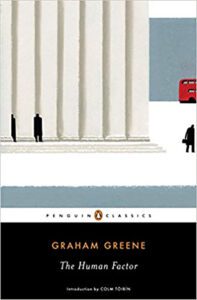
I do not know. There is a novel by Graham Greene called The Human Factor, which is about spies. There was one passage in that where he said that he could empathize too much with both sides. He can empathize with the communist and the capitalist. It drove him crazy because he could see the human factor in both camps. More to the point is we are trying to find something resonating about a story that moves beyond the product. Those are the stories you could eventually find on a streaming platform.

Human Factor: We are this group of creatives who make story-driven videos for brands
We are trying to find something that relates to people as people. There is an old definition of commerce that you want to lower uncertainty about one another so that we can exchange value. I thought that is what great branded content does is lowers the scale. I know this is primarily an audience of entrepreneurs. I’m sure you know more than I do but the great salespeople I have met were not even doing sales anymore. They found something else to do that simulates the effect of sales. They are not saying over and over, “Can I have five minutes of your time?” They found some creative way to lower the skepticism of the prospect. Narrative video is simply a way to scale that strategy.
It is interesting because, in the core startup world around trying to get investors, the phrase is, “How do you mitigate the risk for an investment?” You are saying the same thing needs to happen even at the consumer level and the B2B level when you are selling a product. Are there certain things that you think a story needs to have so that it, in fact, resonates?
It has to be motivated the way the story is motivated, which is to say that it is not motivated to manipulate an end product. It has to be motivated by a genuine desire to tell that story or create that piece of art, for lack of a better word. That won’t be the priority of every brand out there and fair enough but it will have to be something where you say, “We are telling the story of this woman or this man on this journey.” That has to be all we are in this for and the whole point of this video. It can’t be that 2/3 of the way through, and we give you a list of the reasons why this razor is better than the razor that you are currently using.
Are there any rules about how long a video should be? Thirty seconds is too short. Ten minutes is too long. Anything like that?
I do not think so. I think that people say that maybe. When we do a campaign now, we do long videos, sometimes five minutes. We did a documentary that was 30 minutes. Sometimes they are long but we always break down tons of small content from that. You can take 15 to 30-second clips out of everything. We try to cover the scorcher of the content strategy. I do not know. It is a weird time. TikTok is 15 seconds but Joe Rogan’s got 4 hours and he is the most popular media figure out there. It is so bizarre. What do you think about that, John? Have you had any experiences?
A good story pulls you in and keeps your attention if there are open loops, hooks, and something unexpected. It depends on what platform the story is but in terms of businesses that have hired you, as you mentioned, Planet Fitness and LG, can you tell us a story of what the scope of work was or what problem they were trying to solve, and how were you able to use storytelling to solve that problem?
[bctt tweet=”Lower the risk so you can share value.” username=”John_Livesay”]
Let’s say Planet Fitness was integrating a new product into several locations. That was more along the lines of traditional branded storytelling, and they had something they wanted to impart to an audience. It had something to do with the brand itself. It wasn’t a documentary or comedy series as we have done for other companies. In that case, in terms of content length, we did, once again, everything that was the long stuff, 3 to 4 minutes stuff. For the short content for LG, we were brought in similarly to do a product integration video. We’ve got to talk them into letting us do a 90-second to 2-minute vignette to go along with it.
A common pattern is we will start the conversation on the level of traditional branded videos and we will say, “Give us some percentage of the budget over here to do something that is a little more experimental, run that through your channels, and see if there is any value to this.” Oftentimes, the client is surprised and wants to experiment more.
We have case studies on a ride-hailing app that did a comedy music video side by side of a product video. We did this with a couple of nonprofits, a water company that we are doing a documentary for now, and a jewelry brand that did a series of funny videos. In some sense, this is a trend but also, by and large, most companies are still making ads. The market is wide open for these experiments.
Are these videos living on their website and their social media platforms, and that is it or where do they go?
It is everywhere. We are engaged now pretty much ends at the content creation. We do not oversee the distribution generally. Sometimes occasionally, we do, but they are ad assets, social videos, and sometimes website videos. Sometimes, they are sales videos. How weird is that? We are working with one company now in the tree-free paper product space, which is a very niche space. We want to use these to strengthen our prospects or leads because what is better a sales intro than some content that seeks to lower the guard. It is not coming in with five reasons why you should book a meeting with us.
That brings up the point. We briefly discussed the relationship between sales and marketing. That has been a theme that comes up a lot in our conversations lately. You have this strategy for creative content. You live in the clouds, which is fair enough as a lot of us do. How do we connect that to our actual sales strategy? I do not know. Have you experienced that at all?
The Human Factor
Yes. As a storytelling speaker, I often get brought in because they realize that they are not telling stories in the marketing materials or what is coming out of the salespeople’s mouths. Especially in medical tech sales, they love to get stuck into the percentages. This makes this surgery go 30% faster. Speeds and feeds, as I call it, in the tech world. When did you start to get them to tell a story of what is 30% faster means, and who cares about that? Is it strictly an ROI? In one case, I helped them tell a story of how it made a patient’s family not have to wait an extra hour to find out if somebody was going to have cancer or not.
You start going, “It never occurred to us to tell a story and let alone make the patient’s family a character in this story.” Part of what I do is take these facts and figures or even basic case studies and turn them into case stories, and then they start using that as their marketing material. As opposed to listing features, they start having little 2 or 3 sentence case stories about how happy the family was. The doctor, who was the hero of the story, came out an hour earlier than expected and put them out of their waiting misery.
You are doing the human factor the same way we are.
When I start to work with sales teams, sometimes they think, “If I’m going to tell a story, surely I’m the hero of the story.” I go, “No, the goal is to make a potential buyer.” If you are telling a story about a doctor, the doctor is the hero. Another doctor sees himself in the story and wants to go on the journey. People are like, “I thought I was a pretty good storyteller but I have never thought about how to make people see themselves in that story.” When that happens, we are all in.
My ad week about what Super Bowl commercials I think are the best, and it is fascinating to put it through the lens of, “Was it entertaining? Yes. Is it memorable? Yes. Do I remember the product? Whoops, no.” There are a lot of boxes to be checked off besides that was great content but I have no idea who or why that brand should be part of that content.
That is a common thing that we come up against, and it is a fair objection. What do you think is the difference, though, between storytelling on TV and digitally?
For certainly like the Super Bowl that is appointment viewing and what is fascinating about that is the commercials now are released before the Super Bowl. People are literally interested in watching your commercial and seeking it out. Not just the trades are covering it. The Today Show was revealing a new Super Bowl commercial every day before the countdown.
[bctt tweet=”The most coveted real estate now in media is the subscriber base on social channels.” username=”John_Livesay”]
Do you think we have a long time left to do that? Do you think that is dated or that it is going to expire? Do you think we will always do that?
Obviously, the award shows are struggling for viewers but in sports, when people get together, it is a whole experience and eating good foods. It is almost like an American tradition. There is still that window. I saw a brand using storytelling, and they weren’t paying to be on the Super Bowl yet. They were part of the Super Bowl buzz.
I would love your opinion on this. It is called Enfamil, and they work with babies that are premature. They started showing commercials, “This baby was due on February 13th, which is when the Super Bowl was airing but it came two weeks early. We are taking good care of it.” It was very clever marketing on a lot of different levels to get part of that buzz without having to pay the fee to run it on that.
Much of marketing is cleverness like that. I do not think that is our core competency. I wouldn’t have thought of that. I had to leverage what is going on in the country to get attention, for what you are working on is a special skillset. It is not ours. We have an ability to tell stories that will be as impactful as they will be in five years. They can transcend what we do. That is our goal for what we are making and to try to appeal to people the same way your favorite show would appeal to you.
Can you give an example of that jewelry one you said that had some humor in it?
In that case, what we were doing was how can you compete as a jewelry brand. You have Diamonds Are Forever. Kate Spade had a web series. I remember they brought in Tina Fey or Amy Poehler or somebody but products like that are CPG products or luxury products. They only can compete on the story that they are going to tell. The commodity itself is too ubiquitous. We are too used to it as consumers and too commonplace. To me, it is crazy that when you are in a highly competitive market like that, you are not figuring out ways to make the coolest web series.

Human Factor: It is crazy that when you are in a highly competitive market like that, you are not figuring out ways to make the coolest web series. That is the greatest tool you are not using if you are in that space.
That is the greatest tool that you are not using if you are in that space. We tried to do some very small versions of that. You could see how these things can be scaled up or down based on resources and the size of the brand. In that case, it was a smaller one. It is accessible to everyone. To try to use the power of entertainment, you do not have to be Prada or Kate Spade to do that. It is so strange what is happening when you touch on it with the television medium. Movie stars are trying to find television shows to go on or TV series. The TV stars are going to YouTube.
The YouTube stars do not care about anything. Those people who have 5 million to 10 million people do not care. They do not want anything else. They feel they are the kingpins of entertainment. They are right. The most coveted real estate now in media is the subscriber base on these social channels. It has happened very quickly and is bizarre but anybody can try to do that. They won’t all succeed but their barriers to entry are gone. You have to make a commitment to recurring storytelling and genuine entertainment value. We think that, in our humble way, literary style can have someplace in that.
Let’s say you have got this amazing web series you have created for this diamond company. If the salespeople at the retail stores are not aware of that and someone comes in and references it, all that creativity and momentum has gone. If, on the other hand, there are images in the store reminding people of it or maybe they didn’t see it and go to a QR code and download, or the salesperson brings it up, now that is when sales and marketing are working well together. That is what I love to see.
Your whole goal is to get someone to put something on their shortlist of things they are considering and break through the clutter. That is what you are doing. For me, as a speaker, there are some similarities in what you are doing as an agency because every agency I have ever worked with is usually asked to come in and pitch or present. It is between you and 2 or 3 other agencies or other people who do something similar to what you do. We all have to sell ourselves, our company, and what makes us unique.
I certainly have to do that as a speaker. We will tell a story about another talk I gave and the outcomes that happened that people say, “That is what we want.” Do you have any tips for someone? We are all in that. If we do not have stories, my whole line is we are drowning in a sea of sameness. I do not think it is good enough for anybody to go, “Let my work speak for myself.” I have had people hire me from watching my demo videos, my TEDx, which is lovely but we still need the skill to sell ourselves to get picked. People could watch your amazing videos and go, “We want that,” but I’m still guessing you might need to quote, pitch, interview, whatever you want to call it.
We do that every week. We generally get hired through making presentations on spec. We think that we haven’t been an idea. We want to present them and try to get the attention of a brand manager, a CMO or a business owner. I have an incredibly deep respect for salespeople after starting this business that I lacked beforehand. The answer is definitely, yes.
[bctt tweet=”Everything about the creative mindset is in opposition to the act of creation itself.” username=”John_Livesay”]
What is it that you say in those presentations without giving away any of your intellectual property secrets? My belief is that people buy your energy. I think because you are so likable and approachable, they think that this guy has the skills to do it. Probably another agency we are looking at might have the same skills.
At the end of the day, is he going to be easy to work with? Is he going to take our feedback? Is he accessible? Those are some skills and unique selling benefits that we sometimes might overlook. I have literally had given a presentation, an interview by a potential client to hire me, and knew they were looking at 1 or 2 other speakers.
My bureau agent calls me, “Congrats. They picked you. They liked your energy.” Rarely is it that spelled out. I spoke to the client later and said, “That was so nice of you to say shit.” I felt bad. I am better about myself. I felt energized about the possibilities of what you could do at our meeting. I figured, “If you make me feel like this, you will make the hundreds of people that are coming to the ballroom feel the same way.”
All that other stuff gets us to that interview. We have got a referral. They have seen your video. They did not see it at all or whatever it is, then we need to have storytelling. My latest book is The Sale Is in the Tale, which is a business fable. It is a story about storytelling. Your presentations are hiring us. We are going to tell you a story of why we are the best people to create your stories. It is very parallel.
We will have a couple of slides that our accolades, awards, and some brands that we have worked with him. We try to rush through that because it is important to say but it is not something we want to be overly self-conscious about or reference about. We get to a couple of slides on where content is going, how we move from the idea of commercials to the idea of the content, and the skip rate for, let’s say, traditional ads or the amount of money wasted every year on interruption marketing, which we become geniuses at obfuscating as consumers.
We get to the ideas themselves and usually have 2 or 3 ideas. To your point about the energy, I agree, and it is hard to articulate that and even talk about it because it is such a nebulous force. It doesn’t always work in your favor. You almost go through a prism of insincerity before you come out yourself again. You have to go through all these things to go back to who you normally are in your life. When that person comes through again, you are like, “Now I can talk to these people genuinely.” When we first started out, it was very hard for me to feel like I could be myself in those situations. That worked against us. I do not know if you have ever experienced that.

Human Factor: Creatives generally are hostile to routine and discipline. They do not want to be put in a category or a box.
I tell people the gateway to the Imposter syndrome is to start comparing yourself to other people. The minute when you start that, you are down that rabbit hole. If I start to find myself doing that, I go pull up like an airplane. We do not want to go down that path. It is a conscious decision, and it goes back to some core beliefs of who I am is enough. This is what I have to offer, and not needing it. It is like dating. Nobody wants to date anybody desperate and wants to work with somebody who’s desperate.
Sometimes when we pull back a little bit and say, “I may not be the right speaker for you but I probably know somebody who is.” Those kinds of comments as go back to mitigate the risk of working with you because we do not feel like you are being pushy. That goes full circle to why I love storytelling, and I like talking to people like you who make wonderful stories. Stories pull us in. We are not being pushed out a bunch of facts, figures, bells, and whistles to look at this price. “It is 20% off, this weekend only.” You are not creating that content.
That is self-consciousness that gets you into trouble. It is incredibly inherent to the creative mindset. It is a very weird and cruel trick of nature. Everything about the creative mindset is in opposition to the act of creation itself. Creatives generally are open to so many possibilities. It is hard to marry themselves to anyone. They become hyper-aware of cliché. They would rather die than repeat a cliché. They want to try new things but they think most of them won’t work. They generally are hostile to routine and discipline. They do not want to be put in a category or a box.
All these instincts could generally make you a good storyteller. They also can be paralyzing when it comes to something concrete and important like growing a business. It is like you try to convince someone that you have something to offer them. You have to go through that ring of fire to be able to come out of the other side and say, “I can help you here.”
What I heard you say is fear is the killer of creativity, and so you cannot be afraid of whether you get the business or not because then you can’t be creative at the moment. A friend of mine asked me to read the draft of something they are working on. He literally wrote, “That family made lemons out of lemonade.” Please do not say that. There’s got to be a better way to say that. We all need editors. Zack, if people want to find out more about the Human Factor Media, where should they go?
They can go to our website, HumanFactorMedia.co. We have got a portfolio on there as well as a form to contact us. You can also get in touch with me directly at [email protected].
Thanks so much for sharing your insights into what is going on that will continue to grow. I think you are in a good niche there. Congratulations.
Thank you. I appreciate this. It was good to talk to you.
Important Links
- Human Factor Media
- The Sale Is in the Tale
- [email protected]
- The Human Factor
- Better Selling Through Storytelling Method Online Course
Wanna Host Your Own Podcast?
Click here to see how my friends at Podetize can help
Purchase John’s new book
John Livesay, The Pitch Whisperer
Share The Show
Did you enjoy the show? I’d love it if you subscribed today and left us a 5-star review!
- Click this link
- Click on the ‘Subscribe’ button below the artwork
- Go to the ‘Ratings and Reviews’ section
- Click on ‘Write a Review’
Love the show? Subscribe, rate, review, and share!
Join The Successful Pitch community today:
- JohnLivesay.com
- John Livesay Facebook
- John Livesay Twitter
- John Livesay LinkedIn
- John Livesay YouTube
I Am No Limits With Brian Bogert
Posted by John Livesay in podcast | 0 comments

There’s a sleeping giant in every human. To awaken this giant, we need to help them grab what they believe is out of their grasp. Brian Bogert is the person that does just this. Brian is a passionate performance coach on a mission to help people prevail over the limits they’ve set for themselves. Brian disrupts the normative approach on how to create sustainable growth personally and professionally. He joins John Livesay in this episode to talk about his philosophies on how to embrace the pain to avoid suffering. Listen in as Brian shares his own story and how overcoming his triggers helped him acknowledge his limitless potential.
—
Listen to the podcast here
I Am No Limits With Brian Bogert
Our guest on the show is Brian Bogert, who talks about how we need to get unstuck by moving and that moved people move people and when you embrace pain, you avoid suffering. Find out what he means. Enjoy the episode.
—
Our guest is Brian Bogert. There’s a sleeping giant in every human. Brian’s purpose in life is to awaken giants within and turn them into legends by helping them grab what they believe is out of their grasp. Brian is a heart surgeon without a blade. He does not start outside with what you need to do. He instead starts inside with who you are. In a world that is disconnected, Brian is revolutionizing how individuals, leaders and entrepreneurs deeply connect with their authentic selves to achieve the best version of themselves.
As a human behavior and performance coach speaker and business strategist, Brian disrupts the normative approach on how to create sustainable growth and lasting change personally and professionally. His philosophies on how to embrace the pain to avoid suffering, people before profits and who before what has helped individuals and companies discover and activate their limitless potential. Brian’s team have in led with intentionality as they are driven by their vision to impact one billion lies by 2045. We better hurry up and help him do that. Brian, welcome to the show.
I need all that I can get, so yes, please. Let’s hurry up. We got to do that impact quickly. I’m happy to be here with you, John. Thank you.
We had the pleasure of hearing you speak at an event virtually. I was so compelled by your story. Let’s go back to your story of origin before you had this intense inciting incident as we describe it in the world of storytelling on our hero’s journey. Did you know you wanted to be different, make an impact or get into the world of helping people perform better? How did all that start?
I have always had a deep desire to serve and impact people, but I didn’t necessarily know the vehicle that was going to get me there. As with anybody, I have done a variety of different things, thinking that what I wanted and chasing was going to be the path to realize later in life that it was who I was that was going to be that vehicle.
It’s there that I’ve realized that I’ve got greater power to influence others by allowing my truth to give them permission to live theirs. I have always had a deep intellectual curiosity for people, human connection and human behavior. Though I did not start out saying, “I’m going to be a speaker, coach and entrepreneur to do these things,” I always had that drive and desire. I just didn’t know how I was going to get there.
Sometimes we hear a speaker, read a book, or someone introduces us to a concept of professional growth or have a wake-up call. For some people, it’s a health challenge. Your situation is a little different. Why don’t you take us right to that part in your story?

No Limits: Storytelling is a way to connect with people and get them to be in their bodies, experiencing it as their own story. That’s when you most effectively move people.
When I was seven, my mom, brother and I went to our local Walmart to get a 1-inch paintbrush. As we were heading back to the car, getting to go on with our day, I had to wait for my mom and brother to catch up to the car so she could unlock the doors. This was back in the day before there were key fobs. She had to put that physical key in the door and turn it so that we could get on and go with our day.
As I was standing there waiting, a truck pulled up in front of the store. The driver and middle passenger get out. The passenger to the right felt the truck moving backward. He did what any one of us would do and scooted over to his foot on the brake. I always imagined in my head that he scooted it over and gingerly, put his foot down calmly.
In reality, when you’re in a vehicle moving and there’s no driver in the seat, there’s probably panic setting in. He probably had his knee way up to slam it down on the brake pedal, but he missed. He hit the gas pedal. All that force went right into the gas. He threw himself up on the steering wheel and dashboard. Before you know it, he’s catapulting 40 miles an hour across the parking lot, right at us with no time to react.
Fortunately, my mom and brother were still a few feet behind me. By the time he got there, I was holding onto the handle. The truck went up and over the tree in the median, hit our car, knocked me down, ran over me diagonally, leaving a tire track scar on my stomach, tearing my spleen and continued to sever my left arm from my body. It was August 10th, 1992, 115-degree day, 6:10 PM. I’m, all of a sudden, laying in the parking lot. My mom and brother look up and see my arm lying 10 feet away.
Fortunately for me, my guardian angel also saw the whole thing happen. I always have to tell this story and she always has to be a part of it because I’m forever indebted to this woman for choosing to go into action versus go on with her day. When she walked out of the store, she saw the literal life and limb scenario in front of her. She rushed immediately over to stop the bleeding on the main wound and save my life.
She also instructed some innocent bystanders to run inside, grab a cooler and fill it with ice to get my attached limb on ice within minutes. If that did not happen, I either wouldn’t be here with you or I certainly wouldn’t have an arm be reattached because that arm was cooking like hamburger on a 115-degree day on the parking lot.
What I know in all this time, John, is that I’ve got a unique story. It’s not one you hear every day. What I realized through everything we’ve done, the more I’ve done it, is that every single one of us all has unique stories. What’s important is not to look at the extremity of anyone else’s stories but to start with your own and realize, “How do we become aware of the lessons we can extract from our stories? How do we become intentional with how do we apply them in our lives?” We all can do that and tap into the collective wisdom of other people’s lessons to shorten our curve to learning. I’ll share with you two quick lessons and we’re going to go from there.
The first one is I learned very early not to get stuck by what has happened to me but instead get moved by what I can do with it. What I’ve realized through many years of seeing this is that when you get moved, moved people moved people. That approach to impacting one billion lives is only going to happen with several moved people pulling in the same direction. That’s what I call collective impact.
[bctt tweet=”If we don’t feel, we don’t heal.” username=”John_Livesay”]
The second lesson is this concept that I didn’t quite understand until later in life. At 7, 8, 9, 10, 11, 12 years old, I was in a fog. Although I was the one having surgeries done to me and all these years of therapy, I was being guided through the process. My parents, however, were not. They were intimately aware of the unceasing medical treatments, years of physical therapy.
The idea of seeing their seven-year-old son grow up without the use of his left arm was a source of great potential suffering for them. They willed themselves day in and day out to do what was necessary, what was tough and embrace the pains required to ultimately strengthen and heal me. What they did, whether intentional or not, was ingraining me in this philosophy and way of living, which is to embrace the pain to avoid suffering. When this is done correctly, it’s also where we gain freedom.
Let’s unpack some of these things. I first want to go back to why you’re a good storyteller for people who might want to think about improving their storytelling skills. My mission is to help as many people as possible to embrace storytelling and get better at it. When I have a master like you here, I like to take them behind the curtain a little bit.
Part of what you did so well was the descriptiveness of it. We know exactly where you are, how hot it is, how old you are, how a few seconds, one way or the other, would’ve changed everything. Your whole intent of going on that trip was for something as insignificant as a 1-inch paintbrush. I thought to myself, “It doesn’t get smaller than that.”
Suddenly, the three of you are on that trip that’s seemingly an innocent everyday experience. The other thing you said that was so clever is about losing an arm and extremity. Then you talked about, “Everyone’s got stories, but let’s not look at the extremities of those stories.” It’s a clever play on words. Was it intentional or is that something that I’m the only one to notice?
There are not many things I do at this point in life that aren’t somewhat intentional. That was intentional. I’ll tell you that part of that is I’ve had to learn to normalize my story because it is so extreme. Extremities and the play on words connect with people because that’s the truth.
It’s clever.
Thank you. I’m impressed at the little elements that you picked up on that I have learned to embed in storytelling, which are ways to root and connect with people and get them to be in their bodies, experiencing it as their story. When we do that, that’s when we move people the most effectively.

No Limits: The things that keep us stuck are either stuff that’s in the past or fear of a fabricated future that hasn’t happened yet.
There’s a craft to this, honing of words, editing out and consciously choosing things. When it lands to the audience, that’s true artistry. “Was that intentional? It seems so spontaneous, yet that’s the cleverest thing.” I never thought of the clever use of that word on that. That’s a childhood incident that is going to either inspire you or take you down. It’s one or the other. It’s not going to be like, “I forgot about it a few years later.”
In this first lesson you talked about, we need to keep moving and not stay stuck in the past is so challenging for so many people or they get paralyzed by a fear of the future that gets them stuck. They don’t know what to do in their business, career or personal life. Either something happened in the past that is so terrifying, horrifying and traumatic, I can’t get past it like, divorce, death of a loved one or I’m playing out a horror movie in my head of what this future’s going to be either in my career or the world.
Therefore, I’m not even sure I want to bring a child into the world. All of these are things that cause people to not take action. I’ve seen it where people were like,” I was so devastated by the death of my pet. I will never have another pet.” I thought to myself, “That is a big choice to not be willing to feel that pain again because it was too traumatic the first time.”
I remember when my dog died, I was devastated and extremely sad. A friend of mine said to me, “Knowing this amount of pain, would you still choose to have a dog?” For me, the answer was yes. There were years of joy and all that. I was shocked that that’s not the choice everybody makes. You seem to be a real expert in this concept of, “Move again, get another dog, get up from the life knocking you down and embrace the pain to avoid struggling.”
That phrase alone, people go, “What? It’s like putting my hand on a hot stove and taking my hand off the stove to prevent the pain. What are you saying, ‘Embrace the pain?’ How does that help me avoid suffering?” Our brain makes you stop and think because your brain’s going, “They seem like opposites. I want to avoid both pain and suffering. How can I embrace one and avoid the other?” Can you give us an example of that maybe not tied to the accident that you help people look at that?
I can. You did a very solid job of articulating the things that keep us stuck. It’s either stuff in the past or a fear of a fabricated future that hasn’t happened yet. At the root of both of those are the things that keep us stuck. Those are situations or timelines that allow us to experience the world in a different way, either in the past or in the future, both are existing in a way that’s not right here. One of the things that I want to talk about is that so many people think that they are stuck and seek strategies and tactics to solve the problem.
If I get a new program, a new leader, switch companies, make more money, buy that car, that house, remove this spouse or whatever the case may be, then all of a sudden, I’m going to be free of either the confines of the past or the fear of the fabricated future. What we’ve learned in working with some of the world’s highest performers is that it’s not the stretching tactics to keep us stuck. It’s a combination of emotional triggers, behavioral patterns and environmental conditioning that keeps us perpetually repeating the same patterns in our lives.
That feeling of being stuck is because we haven’t unrooted and dealt with the emotional trigger that’s tied to it. You talked about the dog example. Being around other dogs and the idea of having another dog is triggering a person into a place of pain and not allowing them to see everything else that’s right in front of them, all the joy, freedom and fulfillment that comes through that experience. It’s the singular trigger.
[bctt tweet=”Moved people move people.” username=”John_Livesay”]
If we pull out that root that’s connected to that trigger, that’s when people can move. I had to hit on that point because you articulated it so well. It’s important to understand that it’s not about putting yourself into pain intentionally. I will break down and answer that question. It’s about understanding the dynamics that keep us stuck are not what we think they are.
It’s the emotional triggers that cause a certain behavior, then there’s a third element to that?
Environmental conditioning is also a dynamic of that. It’s these things that get so deeply ingrained in us. An example of the triggers is when your spouse gets on you about loading the dishwasher incorrectly. It has nothing to do with your spouse or the dishwasher. It has everything to do with how your grandma looked at you when you were four. That’s a point I had to hit on because of this idea of move, we have to understand the only way we can move is to uproot those triggers so we can see ourselves and the current situation more clearly.
Does it help people get over their addictions, whether it’s an addiction to food, smoking, money or getting likes on social media? Some of that seems to all be trigger, especially in young people, an addiction to getting people’s approval of how many likes and shares.
Validation, worth and all those things are tied to this thing. Those are all triggers that create these types of patterns that we tend to numb ourselves through so that we can experience the world or seek to connect more deeply either with ourselves or the outside world in some form or fashion. It’s not the things that fill us. You’re spot on, but this is an important place to say, “What is the difference between pain and suffering?” Often we’re seeking validation to fill a void. We have to understand in pain and suffering the definition of both.
First, we have to understand the narratives of the world, which is to reduce, eliminate or avoid pain at all costs. We see seek comfort, safety and protection. The world is wrong. It makes sense why we have this tendency because it’s a natural evolutionary response to survival. You cut your leg 100 years ago, you could die. That’s not the reality that most people in the world live in.
If we understand that pain is defined as short-term, intermittent, a direct cause from something and alleviated once that direct cause is removed, what do we do as human beings? We tend to screw it up by throwing other adjectives in front of it like we screw up so many other things. We say, “Acute pain and chronic pain.” Acute maintains the definition inherently, but chronic changes it because it implies that it’s no longer short-term and doesn’t heal after that direct cause is removed.
Let’s stop calling that chronic pain because it changes the definition of pain and call it what it is, suffering. We don’t want to admit suffering exists, particularly when it’s a direct result of our choices. Often we are blind to the fact that it’s even there because it creeps up on us so much so that we don’t even notice the effects of it sometimes until the point, it’s irreversible, whereas pain gets lots of attention because we feel it, so we want to react to it and eliminate it at all costs.

A Course in Miracles
Let’s use an example. Let’s say someone’s parent dies and they get addicted to either drinking or eating too much to eliminate that pain. They can’t imagine a life where they are not in that much pain. They can’t zoom out and say, “Years from now, I’m going to still miss my parent, but I won’t be this sad. This is going to be this much pain or forever. I’m numbing myself whenever I’m at.”
There are consequences to that behavior. You get diabetes. It’s not like some genetic diabetes. This is years of eating too much sugar and then you’re in this endless circle. Your premise for all of us is if you embrace this pain of, “I’m so sad. I feel so lonely and rejected,” whatever the feeling is that you don’t want to sit with, that causes you to numb it. If you can embrace it, you will avoid the long-term suffering as the consequences of acting out in a way.
If we don’t feel, we don’t heal. To give you a couple of other examples, we can embrace the pain of hitting the gym for 30 minutes a day to avoid the suffering of aches and pains of a sedentary lifestyle. We can embrace the pain of difficult conversations with a spouse or loved one to avoid the suffering of being stuck in a loveless marriage that’s going to end in divorce or wanting a divorce and not being able to escape that dynamic.
We can embrace the pain of the fit our kids are sure to throw by having them put down their mobile devices at the dinner table to avoid the suffering of years of lost connection and conversation that will never get back. As business owners, we can embrace the pain of firing our top salesperson who’s contributing the most to top-line growth to avoid the suffering of losing all our other top talent because they were the greatest cancer in our culture.
The list goes on in every category of life. It’s important that we have to acknowledge the suffering we wish to avoid. We can identify the pains we tend to avoid and learn to embrace them to establish them as a habit in all areas of our lives. You had heard this, “Get comfortable being in the discomfort.” What I’m suggesting is discomfort is the 5K to pains marathon.
It goes deeper than that. If we need to truly avoid suffering and have joy and freedom and film it holistically in our lives, we must understand that the small decisions that compound over time leads to suffering. Seeking validation externally online is filling a void and worth that likely was the inability to give or receive love effectively as a kid to know how to connect at that deepest level. When we tend to numb ourselves, it makes sense as well.
One of the first things we want to do is feel safe. The human experience is rooted in four areas. We all seek the desire to feel safe, protected, seen, understood and connected. Seen, understood and connected don’t happen unless the first two do. When we don’t feel safe, we put protect ourselves. Our armor goes up. We guarantee at that moment that that impenetrable force, nobody’s going to see and understand us through that.
On one side, we can’t project who we are clearly, nor can they see through it, which means we won’t connect. We’ve got to embrace the pain of lowering our armor and convincing ourselves that we’re safe, wrapping an element of protection around either who we’re with or the environment we’re in so that everyone can feel safe, protected, seen, understood connected. That’s what effective leaders do.
[bctt tweet=”To have the power to influence others, you have to allow your truth and give them permission to live theirs.” username=”John_Livesay”]
It reminds me of a quote from A Course in Miracles which says, “In my defenselessness lies my safety.” Most people go, “What? I’m going to lower my defenses and put my weapon down?” You’re like, “If you’re thinking you need to be in fight or flight mode all the time, you’ll burn out.”
True strength hides behind vulnerability.
With this concept of the outcomes of feeling a little bit of pain, years ago, the trainer I was working with said, “I want you to do some deadlifts.” I said, “Who cares what the back of my legs looks like?” He calmly said, “Have you ever seen some elderly men in their 80s who may be in the shower? They don’t have any muscles in the back of their legs, so their butt has dropped.” I go, “Yes.” He goes, “If they had done deadlifts, that wouldn’t have happened.” I’m like, “How many do you want me to do?”
It’s true. When you understand what you want to avoid, it’s much easier to embrace the pains in real-time.
I’m like, “I don’t see the back of my legs. Who cares?”
You’re like, “There’s no way an 80 is having no butt that hangs.”
I didn’t even know that was preventable. I’m in. I thought that’s gravity. That’s sad. I wanted to lighten it up a little and then we’ll go back into the intensity of this. We need to ease it people and out a bit. When I was working in media sales, some personalities were running certain publications that were tyrants. They were top producers, so they got away with horrible behavior. They were making so much money and getting away with anything. There were drugs involved. There’s all that drug behavior that causes people to scream, yell and be horrible.
I’m so happy to see people saying, “The culture’s more important than one person’s bottom-line performance.” If you are afraid of losing a top performer or a top client and you put up with the abusive behavior or you’re in an abusive relationship, that’s not coming from a place of abundance. When your message is, “No, let’s shift. The ends do not justify the means.” Therefore, if we create a wonderful culture, we’ll attract the right clients and people who can perform.

No Limits: People don’t want to admit that suffering exists, especially when it’s a direct result of their choices.
There are 2 dynamics to what you said that hit on 2 very strong elements. You focused on the pain piece. We need to embrace the pain because the culture is going to supersede any individual. Recognize that what you said is, “If you are afraid to get rid of a top performer or an abusive spouse, the individual and the leader that can remove that person, the one to embrace the pain also has to recognize that their hesitancy is rooted in an emotional trigger. If they’re afraid to lose it, that scarcity is tied to something deeper.”
There are two things to pay attention to. If you’re in a position where you are not able to freely move when things are out of alignment in your world, pay attention to, “What do I need to address internally?” A guy by the name of Alex Charfen has one of the greatest quotes that I’ve heard. I’ve always said for a long time that everything begins and ends with you.
He says, “If you’re constantly putting out fires in your life and business, there’s a good chance you’re the arsonist.” Not only do you have to learn how to embrace the pain to avoid the suffering and protect the people in your environment and your culture but recognize that if you have any hesitancy to do that when something’s out of alignment in your culture, it’s probably something you need to deal with first.
This is so valuable for entrepreneurs who are reading, who maybe are in the first few years of their new business. They have a client who is not paying on time, never happy, never going to give them a referral, and making their lives miserable. There are no boundaries. If you need every dime for your cashflow needs, it’s hard to fire that client or even to say no at the beginning. My whole thing is, “Who you say no to is more important than who you say yes to.” Ironically, the more you keep your boundaries of, “I don’t do that for that price. This isn’t working out,” we’re always teaching people how to treat us in our personal and business lives, but if we have these emotional triggers still there, then we’re reacting and not coming from a place of choice.
That’s one of the things that we talk about around emotional triggers. Triggers cause you to react versus respond. When you react, you create damage. When there’s damage, you need to create repair to neutralize and diffuse the energy and connection with everybody involved. Whereas if you respond, you can realize that what you’re reacting to internally likely has nothing to do with the situation right in front of you. You can move through it without creating damage and eliminating the need to create repair, which takes more energy, time and attention.
People are always focused on speed. How many things are slowing you down? When you have resistance and energy drain because of a bad relationship, a bad client, somebody who’s not paying on time or you’ve created damage that you’ve got to create repair, how much energy does it take to move through that? If you’ve responded in the first place and seen it clearly, you would’ve eliminated 75% of the drain from that experience.
When people hire you to be a speaker, who’s your ideal audience? Is it sometimes salespeople need some insights on resilience? Is it more of a leadership people looking for ways to become a better leader or both?
I would say both because of the direction in which we take things. We will do very strong leadership and culture development-type themed talks. We will do one to be able to help people move through those blocks that are limiting them from living at the level they’re capable of living. People with variable incomes identify on that side very deeply. They start to recognize when there’s hope and desire that they can lean into if they address the stuff they need to. Their performance, their teams’ performance and the organizations are raised.
[bctt tweet=”Do not get stuck by what has happened to you, but instead, get moved by what you can do with it.” username=”John_Livesay”]
As a speaker, generally, individual organizations hire me to fit into 1 of those 2 buckets. I also speak at a lot of conferences, though. My ideal audience in that space is on the entrepreneurial side because where we engage with organizations typically beyond the stage is at the top level of leadership. These are large organizations we’re working with C-Suite and executives, mid to small-sized organizations and even large ones that are true entrepreneurs. We hit on two different areas. It only depends on the way that we enter the world.
Tying back to your goal on your mission to impact one billion lives by 2045, how are you tracking that? What can people do to assist that?
It’s being tracked in a couple of different ways. What I largely recognize is it’s going to be untrackable to a large degree. I have a genuine belief that if I chase impact, income always follows and everybody else gets to be moved so they can move other people. Collective impact is something that we talk about. If you hear one thing for me that you’re like, “That’s in my life,” whether you pass it on or not, you’re part of the billion.
What often happens when people hear something that moves them is they move it through the world. They’ll pass it on to somebody else or say, “I heard this great quote,” as I did with Alex Charfen. The ripple effective impact is significant but that’s also why for myself. I typically am working with the leaders of these organizations. If we permeate them, there’s also a trickle-down effect through the culture and everybody in that organization can have an impact if the leaders change.
That is a philosophy, at least in the speaking and coaching stuff. We’re in four different businesses, all rooted in the who, helping people discover who they are, who they’re doing this for, who they’re doing this with and who they’re going to impact. Each one of our entities has different ways that we’re tracking impact and how that is translating.
We’ve got a movement over on the side that’s going to be launched. There have been months of foundational stuff, but the movement is called I am One Billion. It’s going to be something that we’re going to have as collective energy to move things forward. I’m less concerned about tracking and more concerned about focusing on the day-to-day individual or mass aggregate impact we can have. Over the next years, if that happens and we stay regular and consistent in it, one billion’s going to be behind us before we know it. I don’t say that arrogantly. I just believe in the added benefit of the compound effect and collective impact of people.
We’ve seen things go viral. Once you start going global, it goes fast. Brian, if people want to find out more about how they can discover to let go of these emotional triggers and embrace some pain so they don’t have to suffer, where should they go?
If you’re on social media, it’s @BogertBrian on any channel. If you are perusing the web, go to BrianBogert.com. Those will both be great entry points. We realized to impact 1 billion lives that 99.99% are never going to pay us $1. We are very okay with that. We do have a free resource as well that we put a lot of time, energy and attention into. It’s a free course with over 30 minutes of video dialogue to help individuals evaluate these concepts themselves.
If you go to NoLimitsPrelude.com, that’s a place where you can get that. I always get full disclosure here. Do you exchange an email to get it? You do. Will you get some emails throughout the experience? You will. Will you get four emails after you’re done with it? You will because we want you to have other opportunities to do so but there are big unsubscribe buttons on there every single way. This is not a way to funnel you. This is a tool and a gift we want to give you to hopefully elevate and empower you.
Thank you for that gift and for being you. I am so grateful to be able to know you and help in some small way, get your message out through this show and share what you do on social media. I love it. It’s needed and you’re the right person to be doing it.
Thank you so much for building a platform to give me the ability to serve your audience and pour my soul into the world. You are a part of the collective impact. It’s not lost on me who you are in this world and I’m grateful as well.
Thanks so much.
Important Links
- Brian Bogert
- A Course in Miracles
- @BogertBrian – Instagram
- NoLimitsPrelude.com
- Better Selling Through Storytelling Method Online Course
Wanna Host Your Own Podcast?
Click here to see how my friends at Podetize can help
Purchase John’s new book
John Livesay, The Pitch Whisperer
Share The Show
Did you enjoy the show? I’d love it if you subscribed today and left us a 5-star review!
- Click this link
- Click on the ‘Subscribe’ button below the artwork
- Go to the ‘Ratings and Reviews’ section
- Click on ‘Write a Review’
Love the show? Subscribe, rate, review, and share!
Join The Successful Pitch community today:
- JohnLivesay.com
- John Livesay Facebook
- John Livesay Twitter
- John Livesay LinkedIn
- John Livesay YouTube