

The Power Of Reading Books: Read More And Move More With Matt Karamazov
Posted by John Livesay in podcast | 0 comments

It’s always inspiring how individuals can find motivation and guidance through literature. Matt Karamazov, a fitness model, shares his perspective on reading books as a personal journey and its influence on his life. The books “How to Fail at Almost Everything and Still Win Big” and “Purple Cow” resonated with Matt, helping him develop a resilient mindset and approach life with a growth-oriented attitude in creating a unique identity for himself as a fitness model. He integrated his love for reading books and dedication to staying fit, and he developed a distinctive personal brand that sets him apart from others in the fitness industry. This combination of intellectual and physical pursuits can provide a compelling story and potentially open doors to new opportunities for him. His story serves as a reminder of the transformative impact that books can have on individuals and their ability to shape their paths. Tune in and see how Matt used the power of reading and his journey to design a fulfilling life.
—
Listen to the podcast here
The Power Of Reading Books: Read More And Move More With Matt Karamazov
Imagine the knowledge you’d have if you read over 1,000 books. That’s what our guest, Matt, has done. He’s going to share with you how he became such a fanatic almost about reading and why he loves it so much then wants to encourage everyone else to start reading as well as moving more. He’s also a fitness model. Enjoy the episode and find out how he combines his two passions.
—
Our guest is Matt Karamazov. He’s an enthusiastic, lifelong reader, a business owner, and a fitness model who’s taken to the internet to inspire people to read more and move more. Every day on social media, he shares with more than 100,000 of his followers the magic and power of books and reading, the transformational benefits of fitness and being healthy inside and out, and the once-in-a-universe miracle of being alive at all.
He also teaches self-discipline and the supreme importance of laying out a vision of where you want to go in life and the profound truth of the fact that where you start off doesn’t have to be where you end up. He’s gone through it all from earning minimum wage as a hospital security guard to starting his own record label back to the bottom and now to his level of business success and life satisfaction. He never stopped working, never stopped getting back up, and never stopped reading. Welcome to the show, Matt.
John, thanks very much for having me. I’ve been looking forward to this for a long time.
Likewise. I’m very impressed with your Instagram creation and the success you have. Let’s not make anybody wait one second longer. I usually save this for the end, but if somebody’s curious and they need to know, give us your handle on Instagram.
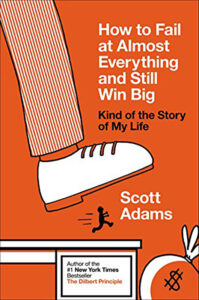
How to Fail at Almost Everything and Still Win Big: Kind of the Story of My Life
It’s @TheMattKaramazov. It’s fairly simple to find. Just look for the guy in the library holding the stack of books. That will be my profile picture.
What started first, the passion for reading or the passion for working out?
I would have to say reading. I can’t claim 100% credit for that either because my parents and my early influences are a huge part of the reader that I eventually became. I started off well, as most kids do with parents who are committed readers and learners themselves. Our house was always full of books and they took my education seriously. They took my questions seriously and they took me seriously.
They encouraged me to read. They read to me, which is probably the first book that I ever read was read to me. It was just swimming in that water that was how I came to love it. I’m certain that came first, then my father continues to be supportive of fitness and health and all that. He was an excellent hockey player in the ‘60s. We’ve always been active in our house and my mother too. I’ve had both of those things.
You had both reading and fitness modeled for you.
Yes. I’m a big believer in surrounding yourself with the people that you most like to be like or to become. If you spend time with non-readers, you’re going to become a non-reader even if you do read quite a bit already.
There’s been research about fitness and hanging out with people who are fit or people who are fat. The same thing is true. It’s interesting because I noticed once, I was with a group of people who wanted to go out and go grab fast food at 2:00 in the morning. I’m like, “I haven’t done that since college.” People still do that into their 40s or whatever or longer. If you’re likewise with people who are fit, they’re like, “We’re going on a bike ride, want to come?” You maybe wouldn’t have gone on a bike ride without that encouragement. One way or the other, peer pressure influences how fit we are, which is bizarre when you think about it.
[bctt tweet=”Read and move every day.” username=”John_Livesay”]
We don’t rise to the level of our bowls or whatever. We fall to the level of our systems, habits, support group, and peer network, which is important. There’s a somewhat tragic fact that I read in an excellent book by Maryanne Wolf. Her books are phenomenal. They’re all about the neuroscience of reading and how reading develops in the brain or doesn’t. She talks about dyslexia and all that.
In one of her books, Reader, Come Home, which is one I highly recommend, she mentions that in the United States, the National Bureau of Prisons uses 4th-grade reading statistics to predict how many prison beds they’re likely to need in the future. They’re able to take that information and predict how many criminals they will have because of the lack of reading education that someone has.
I also remember the first time I heard somebody say, “If you know how to read and write and you stop doing it after school, you might as well be illiterate.” I went, “Wow.”
The word or the term I’ve heard is functionally illiterate. You can read but you don’t. What’s the difference?
Do you think it comes down to a lack of curiosity for some people?
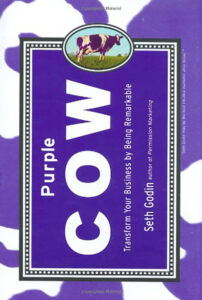
Purple Cow, New Edition: Transform Your Business by Being Remarkable
I think so. There are influences, for sure. We live in an attention economy. Attention is the new oil, essentially. You wanted to get rich in the last century. You owned oil companies. The century before that, it was railroads, but in this century, if you want to get rich, you have to command attention. Big businesses now are fighting for your attention, pulling you away.
Whenever you’re trying to pull yourself away from your phone, there are 1,000 software engineers on the other side of your screen trying to stop you. There are incentives that people have, big ones to prevent you from reading. You have to fight against that, and how do you even do that? There’s a lot of stuff working against you.
We were joking, but it’s true. Part of what you do, because it’s one of your assets, is showing yourself with your shirt off because you’re a fitness model. Tell us about that journey. How did that happen? Did you find a lot of other models reading, or did they think it was odd that you were into reading?
It’s never been negative. Not surprisingly, I’m going to mention two books to answer your question. One is by Scott Adams, the creator of Dilbert, who turns out to be a brilliant businessperson. He’s doing well. His book is called How to Fail at Almost Everything and Still Win Big. I listened to the audio version years ago. What he says is, “It’s so much harder to become the top 1% in one thing, but it’s a lot easier to become top 10% in two things and build your career at the intersection of those two things.”
What he said is that there are plenty of people who are funnier than he is, but he’s pretty funny. There are plenty of people that are better artists and cartoonists than he is, but he’s pretty good at drawing. He combined those two things and now he is an exceptionally lucrative and rewarding career in every sense of that term by being 10% in two things and combining them.
The other book is Seth Godin. He’s excellent as well. It’s called Purple Cow. The whole idea is standing out. You’re not going to mention to a friend of yours that you saw a white cow or brown cow. Everybody sees those, but if you see a purple cow standing in the field, you’re going to mention that and you’re going to tell some people. If you’re building a product, designing a career, and if you want people to pay attention to you, which is more important now than ever in a business sense, you’re going to want to be remarkable. You want to be a purple cow. I found combining books and fitness to make yourself into a purple cow.
Those two things don’t usually go together. A bookworm is not usually a fitness model.
[bctt tweet=”Attention is the new oil.” username=”John_Livesay”]
It’s a scroll stopper. You scroll down, it’s the same different, and that gets people to stop.
I love it. This concept also that your promise on your Instagram is to gain wisdom and strength. You mean it in the little word of strength. Also, there’s a stoic character strength implied there, I believe.
Correct. My reading has informed everything that I do, all the decisions that I make, and my ability to empathize with people. That’s a scientific fact. There’s so much involved in using books to design the life that you want to live. The world is more confusing than ever. It’s moving faster than ever. I’m still coming to terms with AI and incorporating that into my business. However, I’m behind that. It’s almost impossible to keep up. How do you do that? Wisdom, you can’t be dragged along with the current. You have to take a step back. Holding a book is like holding a handful of silence. You need those spaces within the day to make sense of things and where you’re going. It’s so critically important.
That’s a great soundbite, holding a book is like holding a handful of silence. I’ve never heard anybody say that before.
I can’t take credit for it, but it is something that I say a lot.
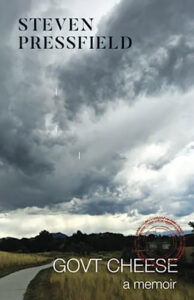
Govt Cheese a memoir
The irony is you’re making a career and a business out of having a huge following on Instagram, but you turn it off and read a book.
You have to. There’s no other way. I’m not always successful at this. Who is? After posting something on Instagram, I try to pull myself away and do something else because you can get it.
As you said, the algorithms. It’s so funny you were talking about AI. I saw a post you made about using AI to create art, which a lot of people I don’t think are aware of. You and I were talking about the respective libraries in Austin and Halifax and how beautiful they are as a piece of architecture. When I was growing up in the suburbs of Chicago, it was another building. There was no design to it. Now, to see it become this place of awe almost, that translates to the feeling of all the knowledge that’s in all those books in one place.
I stayed at a Library Boutique Hotel in Manhattan. In each hotel room is a bookshelf with books all color coded. You’re in room 405 and they give you the code. It’s a Dewey decimal system as if you’re going to an old school library. That retro, everything old is new again. It’s quite interesting to see that concept of, “How do you feel about people consuming books audible versus reading them?”
I listen to a fair amount of audiobooks. Brian Tracy, the personal development legend, I don’t even think this is his term. I think he’s borrowing from Jim Rohn or something. He says, “You can turn your car into a university on wheels.” I still remember that. I started off reading Brian Tracy years ago. You can do that with anything. There’s value in pulling away from everything like doing the dishes with no music. Nothing, just you and yourself. There’s value.
At the same time, sometimes you can do certain things and combine them. Multitasking is usually a horrible idea. It doesn’t work. You’re switching from one thing to another. There are switching costs involved in that. It diminishes your brain power, but you can do certain things. You can wash dishes or go for a walk around the block. You can do all these things and listen to books at the same time, especially if it’s read by the author. In some of my best reading experiences, I read Steven Pressfield’s memoir, Govt Cheese, which is a phenomenal book. The title makes sense. He explains it in the book.
David Goggins narrates his own books. He had in that chapter nine of his book, Never Finished, which is another fantastic one, just sold a million copies. His mother joins him on the audio version. They were in an interview in chapter nine, I believe. In the print version, it doesn’t show up. You’d have that portion of it. I read or listened to a bunch of Eric Thomas, the speaker or the motivational speaker. I love him. I’m listening to one of his books now. It can be a completely different listening versus reading experience. I take notes on every single book that I read.
[bctt tweet=”Audiobooks are real books.” username=”John_Livesay”]
How do you store those books? Are they in a journal or are they digitally taken notes?
They’re digitally stored. I have them on my Patreon. They’re all in Google Drive and they’re searchable too. It makes me nervous. There’s nothing wrong with this, but when they write in the margins of their books and highlight passages, what if there’s a fire? You move and the moving company misplaces the box and you’ve lost all of these notes.
You can do that if you like but, as I said, that makes me a little bit nervous. I take notes on everything. Speaking of audiobooks, I find it a little bit harder to take notes on audiobooks because I’d have to pause the book and rewind it or pause it every few words to take down the notes. It’s a little bit harder. If I expect to take a tremendous amount of notes on a book, I’m more likely to read the physical book as opposed to listening to the audio. That’s one of the things that I would mention. I believe the audiobooks are real books.
How many total books have you consumed, whether it’s Audible or reading in your lifetime, or since you started taking notes on them?
I know exactly. Since 2014, 1,179. One thing to say about that, and I will be the first to say this. The number that you’ve read doesn’t necessarily mean all that much. It’s a vanity metric through and through. I’ll be the first to admit that. One of the things that I find is it is very motivating to track, especially because I keep a list of all these finished books. That list is about 25 or 26 pages long. I can look back on that list and scroll. It’s a huge sense of accomplishment. I read all those books and I’ve got these thousands of pages of notes on all these thousand-plus books.
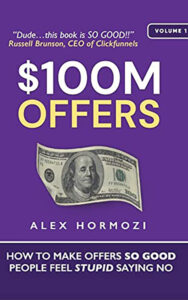
$100M Offers: How To Make Offers So Good People Feel Stupid Saying No
Your brain becomes almost like an AI because if you can retain it, you can start recommending a title in a book and give a quick sound bite from the book or something you’ve learned. Do you find one author that entices you to want to read all their books or at least look at other ones?
That’s how I find out about an awful lot of books as well, especially in the beginning when you don’t know what books are out there. You’ll find a book that you love and you’ll see an author mentions somebody else in their book. I used to read and listen to a lot of Wayne Dyer years ago. I love Wayne. He’s fantastic. He mentioned Alan Watts a lot. He referenced Tao Te Ching and all these books. I started reading them a lot based on his recommendation.
Alan Watts is phenomenal. He is one of my favorite writers ever. You go from Alan Watts, then you realize that he was friends with Christian Murdy. Christian Murdy is one of my absolute favorites, then you move on to him and it builds on itself. You had no idea when you started reading Wayne Dyer that this other guy, Christian Murdy, existed and you built that network of associations in your mind.
Do you have specific genres when you have read this many books? Do you read horror movies? Do you read comic books? Is it metaphysical, self-help, business, or I-don’t-read-finance books? Do you find yourself specializing in the genres of books?
Not really. I have certain go-to favorites. The way I usually choose what to read is by whatever problem that I currently have or whatever I’m trying to get better at. That’s a good filter for reading. If you run a business and you’re having trouble converting leads into customers, read something like $100M Offers by Alex Hormozi, which is one of the best books on offer creation that I’ve ever read.
If you’re having that problem, that book is going to solve it. If you’re trying to improve your relationships or whatever, there’s a book for that. There’s a book for every single problem. No matter what problem you ever faced in your entire life, there’s someone else who has solved or faced a similar problem and has come at least a little bit of a way towards solving it and they’ve written about their experiences in a book that you can read almost literally for free, which is astonishing on a level that’s stupid.
Now I imagine you read a lot of fitness books.
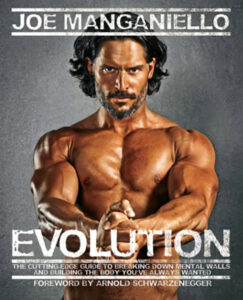
Evolution: The Cutting Edge Guide to Breaking Down Mental Walls and Building the Body You’ve Always Wanted
One of a guy named, Joe Manganiello, the actor. He was in not Twilight. He was in something. It’s something vampire related. Possibly True Blood. Anyway, he’s got an excellent book that I read years ago called Evolution and he inspired me quite a bit in terms of what fitness, health, and being in excellent shape can do for you. I haven’t even looked at my notes from that book in years, but one of the things that he said in the book is, “Earn your sleep each night.” I try to go to bed completely exhausted in every sense. You can twist that a little bit in a negative sense. I don’t mean wearing yourself to the bone every day.
I’ve read a lot of books on insomnia and things like that. They all talk that sleep is about recovery. If there’s nothing to recover from, no wonder you’re having trouble sleeping. I love that idea. I see the connection that there are a lot of mental health reasons to stay fit or, as you said, move. Get outside and take a walk. It doesn’t have to be this marathon where you’re sweating to death.
You have different fitness goals depending on your marital status. That’s a real thing. Also, your business goals. This is more superficial, but it’s a social reality. People will take a look at you and they’ll make certain snap judgments about you if you have this baseline level of physical competence that you display. This confidence comes with being healthy. That’s an energy that speaks for you as well.
It’s very interesting because a lot of people over-index in one area versus another. A lot of fitness instructors don’t have any money and are struggling. There are a lot of successful business people who are out of shape and they look like they’re one heart attack away. The ability to combine both gives people a sense of, “It’s not leaking out. It’s not visible.” If you’re overweight, it’s like a first impression thing.
There’s all the prejudice that goes along with it and a lot of self-loathing that goes with it. My weight’s gone up and down in my life. I know what that feels like. I remember a friend of mine getting gastric bypass surgery and losing weight from it. I said, “How do you feel now?” She wasn’t thin, but she was thinner than she was. She goes, “I hate myself a little less.” I was like, “How sad.”
My feeling is that you shouldn’t work out because you hate yourself. I say you shouldn’t. Feelings aren’t wrong. You might feel that way, but ideally, you wouldn’t feel that way. Ideally, you would work out because you know how good it makes you feel. You do it because you love yourself. You want to take care of yourself.
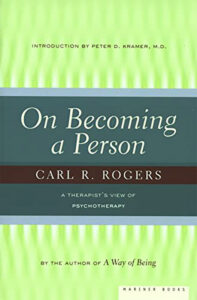
On Becoming A Person: A Therapist’s View of Psychotherapy
That brings up an interesting concept, which is the difference between internally motivated and externally motivated. When I was working with Lexus, when they were launching their car in the US, they said, “We’re competing against BMW and Mercedes.” Those brands have been in the US for decades longer than us. We don’t have any brand awareness at this point, yet we’re trying to get people to buy our car instead of those.
We have to go after internally motivated people. You could drive a BMW because you’re an agent in Hollywood and you have to wear an Armani suit and drive a BMW. That’s what the part of the package. That’s external, but there are all people who drive BMWs because they like the way it feels. They appreciate the workmanship and whatever. They’re not trying to impress anybody with it.
I thought, “That’s so true on so many different things.” You can be working out to try and compensate for self-loathing, “I’m never good enough.” You look at your own body. Even Arnold Schwarzenegger, we were talking about that before the show, admits that he never was ever satisfied with his body. Some people go, “I kept trying to work on it.” I’ve watched documentaries on models having worked in the fashion business. The same thing is true. You look at this gorgeous picture and everything is perfect.
They say something wrong that you don’t.
They remember they felt fat that day or whatever. I’m like, “My God,” or they can’t live up to that. They feel, “If I’m not at this perfect age anymore, I’m no longer lovable or attractive.” Moving through all of that, going back to Wayne Dyer, it’s not letting anything outside of ourselves define our self-worth.
It is hugely important. It is something I steadfastly believe, I don’t think you have to do anything extra in order to be valuable as a human being like infinitely so. There’s nothing you have to do or achieve or become other than yourself. There’s another excellent book. I can’t help myself from dropping these recommendations. It’s On Becoming A Person by Carl Rogers, the depth psychologist. He’s a brilliant man. His idea of unconditional positive regard and that’s how he approached all his clients. That’s how I try to approach everyone as well. You don’t have to do anything. It’s unconditional that you regard people in a positive light. It’s such a better way of moving through life.
We want that from our partners, friends, and coworkers. How can we give it if we haven’t given it to ourselves first? You help authors who have a new book coming out. My first question is, how do you help authors get the word out and get this attention as oil for their new book? It’s a crowded field. Every book is competing with everything from TikTok. Not to mention the other books. Unless you’re Michelle Obama coming out with a new book, you may have a little trouble breaking through it. You have figured out a nice formula. You were kind enough to do it for my book, The Sale Is in the Tale. Tell us what you do and some of the outcomes. If you have a little story about that, that would be great.
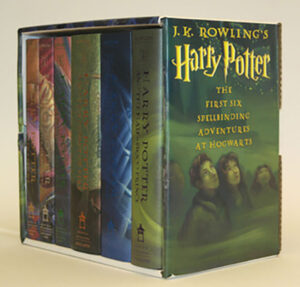
Harry Potter Series
Your book was easy because it’s good. I felt good about sharing it. That’s a big thing for me. I can make a lot more money than I do now.
You’re staying your own integrity and your brand. You’ve built up trust with your followers for that.
They’re not stupid. If you recommend a bad book, they’re not going to trust you. Trust is hugely important. It will be even more important in the future than it is now. It’s everything now. Trust is big. The authors that I work with already know quite a bit of this stuff. It’s not even my nature to condescend to people who assume that they don’t know what I know. What I do is share what I know about positioning yourself in a remarkable way to avoid being lost in the noise.
There are so many books being published every day. A lot of them are marketed in a lazy unoriginal way as well. It’s fantastic news for authors because it’s incredibly difficult to stand out. It’s not going to happen just because you wrote a book. Nobody cares. At the same time, you’re competing against this level of average. It’s a pretty low bar. When people’s attention spans are going down, they’re not willing to put in this extra level of work.
A dumb phrase that I say a lot is it’s never crowded along the extra mile. That’s from Brian Tracy. It’s true. You don’t have to do much to separate yourself a little bit. If you make that extra effort, things can happen. It’s not about doing the hard work and the creative work, but it’s about doing it every single day for a long enough period of time, extending your time horizon as well.
On a long enough time scale, everyone gives up. Most people give up. As unflashy as it is, one of the easiest but best ways to succeed is don’t stop. I’ve been hosting and getting better and consciously improving my craft every single day for years before anybody ever heard of me. It all compounds and you don’t stop. You keep iterating and trying to improve and evolve. Things will happen. I try to teach authors that and share that with them.
The Catcher in the Rye
What a great resilience level. It applies to fitness, writing a book, and life.
It also goes back to what we were talking about before about your pure network. Some of my posts are better than others. People like them. There are so many people who are doing fantastic, original, wildly innovative things online. I’m like, “I wish that I could do that or I wish I thought of that.” Some people would think that’s a bad thing. There are already people doing this. They’re inspiring you with their example. They’re showing you what’s possible. You can’t steal that from what they’re doing or steal their exact thing but you can use it. You can take what they’re doing well, improve what you’re doing, and create your own signature style over time.
I noticed even myself running my books on storytelling in sales that there have been a lot of people who’ve written books on sales, but no one has my story and my experience. Everyone has their own take on something. It doesn’t have to reinvent the mouse trap. It can be 10% different that will appeal to you and somebody will resonate with the way you’re saying it versus somebody else. Don’t be so obsessed about worrying about how many books you sell. Instead, worry about why you want to do this in the first place because it’s going to be more work than you anticipate usually.
Someone said, if it’s easy, everybody would do it. Many people have a dream of being an author like they have a dream of having a six-pack if you’re a guy. All of those dreams come true. At the end of the day, you go, “I’m still me. I wrote a book. I have a six-pack. Do I love myself anymore? Am I any happier? Did something magically happen?” Probably not.
Wherever you go, there you are.
That journey concept as opposed to the destination is the process. Any last thought, quote, or book you want to recommend before we say goodbye?
I’ll lead in with a Naval Ravikant quote. The quote itself is, “Read what you love until you love to read,” which is against the idea that there’s a specific reading list of books you must read before you turn 40 or whatever. There’s no list. Nobody can tell you what to read or what’s going to be good for you. You have to make your own decisions, and you can. Read what you love until you love to read. There are no wrong answers. There’s another quote too like, “The child who reads Harry Potter will grow into the teenager who reads The Catcher in the Rye and he’ll become an adult who reads Crime and Punishment.” There’s no judgment. Another quote I love goes, “If you didn’t come from a family of readers, make sure that a family of readers comes from you.”

Crime and Punishment (Dover Thrift Editions: Classic Novels)
I love that one. That’s one of my favorites. I have a bunch. On my website, I’ve got my reading list. All the list of books that I told you about, it’s all there. It’s listed with a few of my favorites. There are people you can draw from. As we said earlier, choose what you read based on the current problem that you’re facing. That’s an excellent filter.
Also, someone you admire. Most of the people who have done things of consequence, who are out there inspiring people, they’re readers. It’s no coincidence. A lot of them have spoken publicly about the books that have formed them and shaped their own lives. You take someone that you admire and you find out what books they’ve read, then you maybe start there.
Also, if people want to work with you one-on-one, you have a very limited space for that where you’re helping them either both get in shape mentally and physically and get their goals to come true. You certainly have modeled that. Anybody that’s going to be a good Sherpa, it’s you. I highly recommend people check that out if that’s of service to them.
Thank you so much, John. I appreciate that.
Give us the handle for your Instagram and we’ll send as many people there as we can.
It’s @TheMattKaramazov on Instagram, Twitter, YouTube, and all that. My website has my reading list, my recommended books, and all of that. I also have a newsletter that I send out each week. It’s called The Reading Life. About 2,000 people get it. All of my best book recommendations as I read them are there, including books that not a whole lot of people know about. I try and mention it first.
You’re curating everything for us. It’s fantastic. Your website is your name?
Yes, MattKaramazov.com.
Thanks, Matt. You’ve been a great guest.
Thanks, John.
Important Links
- Matt Karamazov
- @TheMattKaramazov – Instagram
- Reader, Come Home
- How to Fail at Almost Everything and Still Win Big
- Purple Cow
- Govt Cheese
- Never Finished
- $100M Offers
- Evolution
- On Becoming A Person
- The Sale Is in the Tale
- Twitter – Matt Karamazov
- YouTube – Matt Karamazov
- Better Selling Through Storytelling Method Online Course
Wanna Host Your Own Podcast?
Click here to see how my friends at Podetize can help
Purchase John’s new book
John Livesay, The Pitch Whisperer
Share The Show
Did you enjoy the show? I’d love it if you subscribed today and left us a 5-star review!
- Click this link
- Click on the ‘Subscribe’ button below the artwork
- Go to the ‘Ratings and Reviews’ section
- Click on ‘Write a Review’
Love the show? Subscribe, rate, review, and share!
Join The Successful Pitch community today:
Connectable With Steven Van Cohen
Posted by John Livesay in podcast | 0 comments


Loneliness and isolation have become significant challenges for workers in recent years. Isolation contributes to the growing mental health problem affecting everyone. In this episode, we have a special guest, Steven Van Cohen, author of “Connectable,” who will shed light on the alarming issue of loneliness among workers worldwide. He also shows how inclusion plays a role in solving today’s loneliness. Steven also provides value in increasing belonging, engagement, and performance with employees. Tune in to this episode and be a connectable leader today!
—
Listen to the podcast here
Connectable With Steven Van Cohen
Have you ever felt lonely at work? This episode is for you. Steven Van Cohen talks about how loneliness is the absence of connection and that loneliness is depleting and solitude is restoring. Enjoy the episode.
—
Our guest is Steven Van Cohen, who has a Master’s of Science and Organizational Development. He’s also a graduate of the University of Illinois in Champaign, Urbana, where I went to school. He’s much younger than I am, but he is a global leadership consultant and executive coach, and author of a wonderful book called Connectable: How Leaders Can Move Teams From Isolated to All In. Steven has spent twelve years working with hundreds of leaders from organizations like Salesforce, The Home Depot, and Bridgestone, helping them improve worker well-being, reducing employee isolation, and boosting team belonging. He’s also a Cofounder of LessLonely.com. Steven, welcome.
I always have to preface, it is not a dating site, even though it does sound very much like so, but you just go to LessLonely.com and all of your loneliness troubles will fall away.
Let’s start with your own story of origin. You can go back to your days at Champaign, Urbana since we share that or even earlier. What made you decide you wanted to get into this whole world of communications and connections?
Like a lot of origin stories, it wasn’t something I planned. I learned early on that I had a knack for coaching. My youngest brother is seven years younger than me and I was really into soccer and I played competitive travel soccer most of my life. When I was 14 or 15, none of the parents wanted to coach his soccer team. I said, “I’m happy to do it.” I rode my bike to the soccer field and ran in through drills. I was there on the sideline coaching them every Saturday. I loved every second of that experience. Fast forward to where I’m at now as an entrepreneur, most of my work is coaching-related and helping people see things in themselves that they don’t see that I see.
I get to do a lot of amazing work around leadership development. It’s super fun. I think back in my teenage years that was the spark that subconsciously took me to where I’m at now. I got a random job as a consultant working for the largest international gold mining company and doing a bunch of leadership work. People left that company to go work for other companies and they would call me and say, “Can you come do that same stuff over here?” That was many years ago, and I’ve been doing it ever since.
Let’s talk about your book. You have a coauthor. How did you guys come up with the title?
The book is all about loneliness, specifically the impact of loneliness at work, why it shows up, and essentially what leaders can do to help solve the problem. We wanted to call the book Rescuing a Lonely Workforce. We thought that was pretty catchy. John, there you go. You thought that was good too?
I love analogies with lifeguard stuff. I have a life buoy on the cover of my book, so anything with rescuing grabs me.
[bctt tweet=”Texting is transactional, not connecting.” username=”John_Livesay”]
You weren’t our editor. I wish you would’ve been because our editor at McGraw Hill said we cannot use the word lonely in the title or subtitle of the book, even though that’s what the book is about. We were proud of the fact that we wrote the first book to ever address loneliness specifically at work. She said, “People will be too embarrassed to read a book about loneliness because it’s such a shameful, stigmatized, charged topic.” They came up with the term connectable, which fits the book nicely, but that’s how it came about.
You have this great visual of a puzzle, a piece missing, and completing the whole look of that. I like the subhead, From Isolated to All In. You talk about loneliness as a silent, sweeping epidemic and we just all got out of a pandemic that triggered that more than ever, whether it was work-related or personal. Let’s talk about the timing of this because people don’t realize how much work goes into a book and how many years you think of it and write it before it comes out. What about the timing of what you’ve done? How does that feel?
The book was written in 2019, so this was all before the pandemic hit. The genesis of the book came compliments of my coauthor and business partner Ryan. He’s an expert in emerging generations in the future of work. He wrote a book called The Generation Z Guide. When he wrote that book, he came across a statistic that 79% of Gen Zers sometimes always feel alone, which is crazy. Almost 80% of an entire generation is feeling that way. As a consultant, a speaker, and a thought leader, he started to do a lot of work with these clients to understand that, “If you’re going to recruit, engage, develop, and retain a lonely workforce, here’s what you need to know and here’s what you need to do.”
We had all of this material and research and stuff built out, and then when the pandemic hit, we went to our clients like Home Depot and Liberty Mutual Insurance and said, “Do you want to talk about loneliness? Is this something that’s of interest?” Client after client said, “Yes, we do.” We got an agent to represent our book. McGraw Hill was one of several publishers who came to the table and wanted to publish it, and the rest is history. That’s how it started in March 2022. We were fortunate enough to have it hit the Wall Street Journal bestseller list and we’ve been going gangbusters ever since.
Everyone experienced a sense of loneliness by being isolated during the pandemic. The effects of that are probably still echoing through people’s lives. I don’t think it’s something you go, “Now I’m with people. I’m no longer lonely.” I remember in school myself the concept of, “You’re at a party. How could you possibly feel lonely?” The anxiety of that sometimes was so great that I was like, “I just got to get out of here.” I feel more lonely being in a room full of people I’m not connecting with than I do when I’m by myself. It amplified it.
Can you speak a little bit about what causes loneliness and then we’ll get into what causes loneliness in the workplace? How can you be lonely? You’re in a dorm, at a party, or you’re in a big office with a bunch of coworkers and you’re lonely at work. If we zoom out and go over what even causes loneliness no matter where you are at work or not, that might be a good starting point because you have this great visual here of starting with, “I feel lonely,” which then leads into all of these being hyper-vigilant of all your emotions. The irony is you start avoiding people according to your book, which is bizarre. It’s counterintuitive.
As I’ve dived into understanding loneliness, it is very bizarre. Let’s start with a definition because you mentioned a couple of things that are very important. The definition of loneliness is interesting because loneliness is not defined by the absence of people. It’s defined by the absence of connection. It’s essentially how that person makes us feel when we’re in their presence. The late great Robin Williams came up with one of the most heartbreaking quotes I’ve ever heard in my entire life when he said, “I used to think the worst thing in life was to die all alone. It isn’t. The worst thing in life is to be surrounded by people who make you feel all alone.” That’s loneliness.
It’s like you mentioned, “How can you feel this way if you’re surrounded by people?” It’s like, “These people don’t give me a spark. They see through me. They don’t see me. They’re not interested in me. They’re not listening to me. They’re not showing concern about whatever I’m talking about.” There are all of these things that happen when people are together that either cultivate that feeling of connectedness or inadvertently push us far away and make us feel isolated and reclusive. Yes, you can very much feel lonely and surrounded by people. I’ll validate that you are not some rare out-there example of someone who felt that way, John, in the past. It’s quite normal.
When you look at why loneliness has been ascending, which is one of the questions you asked, there are lots of reasons. Busyness is one of the big reasons we have less margin to spend quality time with others. Also, remote work. We’re just not spending enough quality time in person. We have seen a massive dependency shift. Many years ago, especially at work, if I needed answers to questions, I had to find a person, and that person had to show me, teach me, guide me, or give me wisdom. Now I just go to YouTube, Google, or an online learning platform. When you look at Gen Z, this young generation never had to rely on other humans because all of the world’s answers have been curated into their mobile and smartphones. That’s created separation in how we interact.
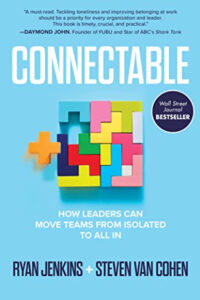
Connectable: How Leaders Can Move Teams From Isolated to All In
It even impacts how they date. They go on group dates. They’re not even dating one-on-one because they don’t have any social skills to do that. It’s so bizarre to me.
It’s just a different way of navigating through the world. Here’s what’s something that’s important to understand. When you talk about technology and how we engage with it from a communication standpoint, most of our conversations that happen through technology are transactional, and communication is not connection. If we’re communicating, especially via text, email, or DMs on social media, those tend to be transactional conversations.
That’s all frontal lobe processes. That’s data and information. The feeling of connectedness like the sensation of, “This person sees me and gets me,” happens in the back part of our brain in a totally different region. That connectedness is most likely to occur when we’re together in person where I can see your face, hear the intonation of the tone of your voice, and I could get that sense of how you’re reacting to what I’m saying. That just doesn’t become possible when we’re communicating over devices.
I hear a lot of people in management getting so frustrated with the younger people not ever wanting to pick up the phone and call a client, “I just texted them to see if they want to buy.” When you just said there, I love that texting is transactional because it’s not a connection. For most young people, they’re like, “I text my best friends all the time. What do you mean that’s not a connection? That’s my preferred way of connecting. I don’t want to everyone pick up the phone. I don’t ever want anyone to call me ever.” It’s considered rude.
“How dare you call me and leave me a voicemail. Are you insane? You’re going to actually record something that I have to push a button to listen to? Come on.”
I get amused when people will leave me a voicemail text. I’m like, “How is that any different? I got to listen to you now.” We talked about my own experience when I moved from LA after being there many years to Austin, Texas, on March 1st, 2020, and had all the great plans of discovering a new city and meeting friends of friends. Like you, I go traveling and speak at live events as a sales keynote speaker on storytelling. All that came to a screeching halt at the same time within two weeks. The disorientation of your business, as you know, is changed. Everything’s going to be virtual. Most people can remember there was a shortage of everything. Not just toilet paper. You’re like, “You want to set up a home office with some nice lights and a microphone? Good luck. That’s going to be months back order.”
You got the sense of, “The swimming pools are closed. Going to a Broadway show is not possible. Restaurants are closed. I got to go back to what else I want to do that brings me joy if I can’t be around someone.” We all know moving is a stress. Anybody who has their business disrupted and everything has to go virtual is stressed. The combination was isolating. How long it’s going to last? That’s what I want your opinion on because, to me, that was the hardest part. I heard eighteen months, and I’m like, “No, it’s two weeks. Come on. Eighteen months?” That unknown, is that factor sometimes into loneliness, do you think?
Loneliness has a lot of components to it. When you think about why people feel disconnected, it could be because they’re disconnected from themselves, so that could create loneliness. It could be a disconnection to my strong-tie relationships. It could be a disconnection to my weak tie relationship. It could be my connectedness to how my work makes me feel because that value and impact is a connectedness level.
Yes, that adrenaline rush when you’re on stage.
[bctt tweet=”Loneliness is depleting. Solitude is restoring.” username=”John_Livesay”]
It’s the connection to the community. There are all of these connection components. When the pandemic hit, what people started to feel and understand is the gravity of how important human connection is and how awful it feels when it’s been ripped away from you. We grossly underestimate how badly we need one another. The pandemic shed light on the importance of making more time to connect and be pro-socially active. Even now in 2023, we’re still starting to see some of the residual impacts of this play.
One of my favorite quotes in your book is, “Loneliness is depleting, and solitude is restoring.” I have to say I didn’t feel that during the pandemic at the beginning. I didn’t feel enough solitude already. I need to be restored and I’m not feeling it at all, but I’m like, “I can’t even get a haircut.” I didn’t realize how much I’d miss talking to the guy who cuts my hair, yet that’s a form of connection. Somebody’s touching you and you’re talking to them, you see them on a regular basis. When that gets cut off, you are like, “Alright.” The stories of all these people having to be together in a small space, they would beg for solitude.
They’re like, “You don’t know how lucky it is? At least you’re not with your ex.” Imagine having to stay at home with somebody you weren’t getting along with and the stress that calls on. The question that all leads me to is what can someone do who does feel lonely at work? What can someone do who’s a leader of people that sees it? I’m guessing they’re two different things. One, how do you take care of yourself if you’re feeling lonely and you maybe feel embarrassed? Also, if you’re managing people and you go, “I know that person’s struggling. I don’t know that they would even label it loneliness, but I’m guessing that’s what it is.” I know that’s two questions at once, but I want to give the perspective because it’s an interesting range there.
Let’s start with what you can do as an individual at work who’s feeling this way. The framework and the title of the book, Connectable, is a great way to think about how to operate. When someone’s likable, they’re easy to get along with. When someone’s connectable, they’re easy to connect with. There are things we can do to make us more connectable. One of the first things that we can do that allows us to feel way more connected is to be very grateful to others. Gratitude, demonstrating gratitude, and making somebody else feel important, valued, desired, and impactful makes us feel good and boosts connection in a very powerful way. That’s one way to be more connectable.
Another is to channel this idea of interruptibility. We are so bogged down every second of the day with items on our to-do list and our meetings back to back. What we have to do is try to build a social regimen. We have to be mindful of how to create routines that are on our calendars and defended with some vigilance so we can make time to do the social connecting activities that make us feel connected to others or else we just get bogged down with too many things that happen in a given day.
The other thing we can do is we can leverage what is called weak tie connections. We all know strong tie connections, like friends, family, and children if you have children. Weak tie connections are the baristas at the coffee shops that you bump into on a regular basis. It is the person on the train that you’re sitting next to. It’s all of these people that we rub shoulders with in the wild but don’t engage with.
Some research out of Harvard found that the quantity and the diversity of your weak tie connections are almost as important to your happiness, your connectivity levels, and your health and well-being as the strength of your strong tie connections. All those people that you’re standing next to in line while you’re on your cell phone, checking on your email, are great people to just smile at. “What are you up to? What’s going on? How are you?” All of those moments are very restorative and we take them for granted.
It is gratefulness, being somewhat interruptible, and not making yourself seem like you get angry anytime. You talk about it in the book, “These days, few things in life strike as much dread as the doorbell ring.” It made me laugh because, during the height of the pandemic, Amazon would come and they’d ring the doorbell and then they’d leave. I’d be running to the door just to yell out to somebody thank you from a mile away. “We made eye contact. I feel better.” It is these weak connections that we underestimate.
That’s why I was reading that with Amazon creating these stores where you don’t ever check out with a person. Even Whole Foods now has a thing. You don’t want to talk to a person you can self-checkout. It goes, “This deja vu of when you had to start pumping your own gas. It’s not enough. I got to pay these prices, and now I got to bag my own groceries.”

Connectable: Busyness is one of the big reasons we have less margin to spend quality time with others. In remote work, we’re not spending enough quality time in person.
It’s true. The frontman for Talking Heads, David Byrne, wrote a cool article called Eliminating the Human. The whole idea of eliminating the human is what you’re talking about. We’re taking away the social fabric of our society. That’s a problem because it allows us to not do what we need to do, which is to be around other people, to find connectivity, to be seen, and to smile. One of my favorite memories as a kid growing up was riding my bike to tower records to listen to a piece of music. I would go and talk to the person behind the stand to play the CD, I would talk to the cashier, and then I would’ve to go to a friend’s house to listen to that CD or cassette tape with another human. Listening to a song you wanted to listen to was a very collaborative and connective experience.
Making mixed tapes for people and all that. It’s a customized gift.
Now it’s, “Alexa, play. Go to Spotify.” All of those touchpoints have been eliminated. As we get things to be more convenient, it is destroying the opportunities that we need for connectedness. Without a counterbalance and awareness and some proactivity, we’re just going to continue to be wandering around solo without having to ever talk to another human again, which is very problematic.
The great things you gave us about how we can deal with our own loneliness, are they the same three for a leader who sees somebody with a leader go up to someone and say, “I’m grateful you’re doing such a great job here. I’m grateful you went the extra effort.” Does that help that person not feel so lonely? Can you use those three things that way?
As a leader, yes, they are transferable, but there are some other things that leaders specifically need to keep in mind. One of the biggest areas of loneliness at work is due to feeling lost. As you could imagine I’m alone in the wilderness, with no map, don’t know where I’m going, don’t have anybody to turn to, and am not sure if I’m going to get attacked by a wolf. That creates a very lonely sensation. At work, it’s no different.
Onboarding the first 90 days, I imagine it’s at the peak.
Also, depending on the leader if that leader’s not giving clarity, clear expectations, clear direction, and the right resources to tap into. If I don’t get the sense that there’s someone there to help guide me, I’m going to feel disconnected and lonely. Leaders need to be very mindful of creating clarity with the work that their teams are doing. That’s a big piece to fostering more connectedness. The second thing that leaders need to be aware of is that connection doesn’t take a very long time to create.
It takes 40 seconds for two people to have what’s called a restorative exchange. What leaders tend to do is think, “Let’s just go to a happy hour. Let’s do an offsite once a year. Let’s have fun together on a periodic schedule and we’re all going to have bonding, connectedness, and belonging.” It’s not how it works. Go to one event one time with one person, and be like, “We’re connected forever.” That’s just not a sustainable or solid strategy. What has to happen is leaders need to find ways to make sure that people can see and understand each other on a regular basis.
One of the activities I do with a lot of my leaders is, every Friday, before the team concludes for the week, they do a huddle and each person just shares what was the week like from A to F. A was a great week, and F was a terrible week, give a grade, and then you give some context. “This was a C week, and here’s why.” Someone might say, “Actually it was a B-plus week for me, and here’s why.” What leaders can do is they can start to figure out other patterns. Are we consistently having good weeks for bad weeks? Which team members consistently have good weeks or bad weeks? Having everybody understand the perspective of each team member, that’s connective. It is another way to get people to share and feel seen. There are a lot of these things that leaders need to do more explicitly with their team members.
[bctt tweet=”Leaders must find ways to ensure that people can see and understand each other regularly.” username=”John_Livesay”]
I love the huddle. There are so many questions I have. I loved your book by the way. I highly recommend everyone get it. You talk about the past, be at work, and there will be some commute time, which a lot of people love that commute time. There’s the only time of solace or solitude, and now it’s this hybrid thing. You come back 3 or 4 days a week and you have a choice of which day week you’re working from home, so it’s very inconsistent. They’re not trying to make everybody work the same days off because they don’t want every Friday to be a ghost town. Is the hybrid work creating more loneliness, or is it just a contrast to the pandemic when you were not at the office at all and it’s better than nothing?
Is it creating more loneliness? One hundred percent. There’s a little bit of an asterisk next to that statement. Is it possible to have strongly connected teams in a remote environment? One hundred percent. Is it a catalyst, and are we seeing loneliness levels increase because of the way we’re working remotely? Yes, it’s a lot harder to build in connectivity when we’re remote and we’re doing what we’re doing now over Zoom, but it’s possible. It just takes intentionality, effort, awareness, and commitment in order to make it come to life.
I laughed out loud when I was reading your non-helpful guide to helping a lonely person. First of all, I love everything. If you’ve ever heard, and God forbid you’ve said it to someone, “For God’s sake, just go outside, John. Take a walk, call somebody, and get a pet.” I’m like, “I have a dog already and I’m still lonely. I can’t imagine what it would be like without a dog.” “You’re too much in your head. You’re overthinking everything.” Almost everything that you have in here I’ve either said to myself or have heard and go, “Maybe I’m depressed and it’s not loneliness because this walk didn’t make me feel any less lonely.” Is there one thing you would say that is helpful to say either to yourself or somebody else since we have this great guide on what not to do?
One thing that’s important for people to understand is it’s not like feeling hungry and getting an apple. It’s a similar pattern. Hunger is our biological cue that we need to eat. Feeling lonely is our biological cue that we need to connect. What happens when people feel lonely is they retreat further inward. The reason is, if I’m already dissatisfied with my level of connectedness, it’s very risky for me to continuously put myself out there. It’s a lot easier just to continue to wallow in my own sorrow by myself behind the curtain.
When people make those kinds of statements, “Go walk your dog, go make a friend, call someone,” it’s really hard for that person to do, which is why it’s bad advice. One of the quickest ways to get somebody to feel more connected is to make them feel important. It is different than showing gratitude and thanking somebody for their efforts.
If I feel like you’re lonely and isolated, John, I would come to you and say, “John, I have this really big problem. I don’t know what to do. I want your advice. If you were me, how would you approach X, Y, Z?” By making somebody feel like, “This person is asking me for advice, they want my perspective, they care about my opinion,” that’s a really powerful way to get them to feel that sense of connectedness.
It gets them out of their own head.
It’s a lot easier a way to approach someone without saying, “John, you look lonely.”
It’s way too aggressive. Apple came out with their new video on their new version of VR. You wear this while you’re having FaceTime with somebody, and it creates an avatar of the other person. You don’t see somebody wearing the glasses but it’s still not really them, and you would wear this on an airplane to watch a movie. You have a lot of examples in the book about technology at home and technology at work. You’re constantly addicted and isolated. We used to look at the newspapers you said, and now we’re on our phones all the time. It’s still avoidance. What do you think VR is going to do to loneliness?

Connectable: One of the biggest areas of loneliness at work is feeling lost.
It depends on how it’s being leveraged and used. I get nervous that people are going to inadvertently become tied to their virtual selves. If that’s the case, the real self is going to be devoid of what they need to feel connected and a sense of belonging, importance, and significance. There are scenarios where VR is going to be very problematic. However, there’s some interesting research from the University of Wollongong in Australia. They found that social media and technology can be very good for building strong connectedness if the platform is a means to connect away from it in real life.
John, if I see you just went on vacation and I call you like, “How was Bailey? I want to know all about it,” that’s powerful because I got cued to talk to you about something, but then I made an effort to connect in a more meaningful way. If VR is allowing us to have those opportunities to further connect away from the space, it’s a great way to start to spark connectedness. If we’re only living in the VR, that’s no Bueno, in my opinion.
It’s one extremely the other. The book is Connectable. We can get it anywhere. If somebody wants to bring you in to coach their teams, what’s the best place to send them?
The website is SyncLX.com or message me on LinkedIn. I’m pretty active on that social network, Steven Van Cohen. I’d be happy to get in touch and explore how to collaborate.
Thank you so much for sharing your wisdom and making us all feel a little less lonely.
Thank you, John.
Important Links
- Steven Van Cohen
- Connectable: How Leaders Can Move Teams From Isolated to All In
- The Generation Z Guide
- Eliminating the Human – Article
- SyncLX.com
- Steven Van Cohen – LinkedIn
- Better Selling Through Storytelling Method Online Course
Wanna Host Your Own Podcast?
Click here to see how my friends at Podetize can help
Purchase John’s new book
John Livesay, The Pitch Whisperer
Share The Show
Did you enjoy the show? I’d love it if you subscribed today and left us a 5-star review!
- Click this link
- Click on the ‘Subscribe’ button below the artwork
- Go to the ‘Ratings and Reviews’ section
- Click on ‘Write a Review’
Love the show? Subscribe, rate, review, and share!
Join The Successful Pitch community today:
The People Side Of Performance With Brad Montgomery
Posted by John Livesay in podcast | 0 comments

You will bring people around when you make them feel happy. Brad Montgomery, a motivational keynote speaker, dives into getting more of yourself and the people around you through Laugh-O-Nomics. Although humor is a tool to create a connection with others in your business, a simple smile, laugh, or being open is the easiest way to connect. It affects the business when we lose our human touch and enclose ourselves in the cage of sales techniques. Find value in your soft skills in this episode with Brad Montgomery now.
—
Listen to the podcast here
The People Side Of Performance With Brad Montgomery
Our guest is Brad Montgomery who is a keynote speaker. He brings humor to the workplace and shows how humor is a great way to build connections. He said, “The secret is not trying to be funny.” Enjoy the episode.
—
Our guest is Brad Montgomery who is a motivational keynote speaker for business, healthcare, and association audiences. He speaks on the people side of performance, and how to get more out of yourself and the people around you. He has spoken in all 50 states and 4 continents, and is a member of the Speaker Hall of Fame. Microsoft called his presentation, “A hilarious boost to the bottom line.” If you’re looking for an award-winning funny and fresh keynoter with a message connecting soft skills to bottom-line growth, then Brad is the guy. Welcome to the show, Brad.
What’s up, John? I’m glad to be here. When you hear someone else read the bio that I wrote, it sounds so boring.
I love the hilarious boost to the bottom line. That’s a great sound bite. Having come from an advertising background, I am always looking for some hook like that. Let’s make it come to life a little bit. Tell me your story of origin. Where did you grow up? You can go back to childhood.
I was born in a log cabin or a manger. I can’t remember one of those. The real deal is I was a magician since seventh grade. That led to doing magic through college at a Renaissance fair. After college, I thought, “I’m going to be a magician for one year, and then I’ll be a lawyer. I’ll go to law school.” Law school never happened because it turned out you can’t learn magic in a year. What are we thinking? The magic went better than I thought. It led to more stuff. It led to another thing. I didn’t go to law school. I always assumed I would but my journey has not been this thing where I say, “I’m going to get this thing and do it.” Instead, I did this and then it led to the next thing. I did that. I feel like I’ve got a nail and I keep hammering at that thing. That is the secret to my success. As opposed to vision or creativity, I keep working.
First of all, the concept is that you can be happy at work. For a lot of people, that used to be, “I only am happy when I’m off work.” The concept of being happy at work seemed like an oxymoron almost. Let’s talk about that particular topic because now more than ever, some people are coming back full-time, some people still working from home full-time, and there’s a hybrid of all that going on. What do you talk to audiences about that can be taught from a standpoint of happiness? A lot of people think they already are happy. How can you teach it?
This is my favorite question. I used to cover happiness as a business skill generally. The problem with that is some of our happiness we cannot control because we have a gene pool. There’s a huge portion we can control. What turned me on is when I discovered a subset of one of those things that we control, and how powerful and how easy it is. That is the best place to start with happiness. I’m talking about social and emotional support, which is a boring phrase. What it means is acknowledgment, encouragement, making people feel important, connecting them to their vision and purpose, and generally being an encourager. It turns out that stuff our grandma did by accident is good in the workplace.
You talk about how there’s some actual science behind happiness. Can you give us a hint of what that is?
Who knows that they would study all this? It does seem like common sense. Surround yourself with good people. Have long-term relationships. Focus on the positive and not the negative. It seems like common sense but they have studied it to death. Here’s a quick aside. Those studies are boring to read and do not make you happy. The science is clear, especially for example, when we talk about encouraging people, building up others, mentoring them, or motivating them.
It benefits the person who is the target of that effort, but it turns out the giver of that encouragement gains much more. One of those things they gain is happiness. If you want to prove it, wait until you’re having a crappy day, and then think of somebody who’s having a crappier day. Send them a text and say, “I’m thinking of you. How’s the chemo going?” It’s common sense but there is study after study that tells us that focusing on others makes us happier.
That’s why a lot of people get a lot out of volunteering. You think you’re helping the person. I see people who rescue dogs. They say, “That dog rescued me.” It’s getting your focus off of yourself a little bit.
Is it story time, John?
It’s always story time here.
[bctt tweet=”It is not about laughter. It is about connection.” username=”John_Livesay”]
When the pandemic hit, you and I are in the same business. Our calendar dried up. I’m a motivational speaker. I should not wallow but I was wallowing. It hit me. I’m embarrassed to tell you what pulled me out, which was when I started volunteering for a food bank and loading boxes of food in cars for contactless delivery. Thousands of cars would line up in a Denver shopping mall parking lot. We would load food in their cars. What I craved was talking to the drivers and saying, “Are you okay? We’re going to be here next week. Do you need anything else? How can I help?” Chatting with them and looking at them in the eyes is what got me out of it. Volunteering is massive. It seems like a motivational speaker should know that. I should have discovered that a little quicker than I did but there you go.
You talk about this blog you have about Awesome versus Chase Bank. I love a tale of anything, A Tale of Two Cities, or a tale of someone. One experience was great and one was not. Can you give us a quick summary of what that experience is? Everyone had great customer service experiences and not so great.
This is also a great lesson in sales, social and emotional support, and making people feel important. It goes like this. I was getting some blood drawn as part of a physical with no big deals in the doctor’s office. I’m a magician. I mentioned that. I was playing with a poker chip, and I lost it. They see me looking around the waiting room. It’s super embarrassing to have an adult look around under the chairs. This kid behind the counter said, “What’s up?”
I sheepishly told him, “I have a poker chip. I lost it.” That guy got up from his desk and was all smiley and nice. He ended up looking through the trash in the blood draw room. He had the gloves on. He found my poker chip. He came out. He had a big smile. I was thrilled. It had this feel-good experience. Let’s be clear. He was happy because he knew how much I appreciated him. I was thrilled but this also was not his job. His job was not to look for some chucklehead’s poker chip.
Let’s contrast that with Chase Bank. To shorten the story, there were a lot of complexities with opening an account for my dad who has a lot of memory problems. I’m opening an account. I said, “You can’t email him.” He said, “No problem.” Sure enough, they email them. I go in there. I ended up getting escalated to a branch manager. All that guy would do was push me onto the 800 number saying, “For emails you have to call 800.” “I’ve tried that. Don’t make me do it. I need a Chase person.” “Call this and do it.” It didn’t work. I call him back. He’s like, “Sorry, it’s our policy.”
Meaning, I’m not the cute kid with the poker chip who was probably a new hire who loved his job and was willing to help me even though it wasn’t part of his job. The branch manager had a genuine customer there. We have our businesses there. There were some high dollars in there at the time. He thought, “I’m not taking ownership.” He didn’t make me feel like I was important and cared for. I love that story because the more experienced and educated person is a branch manager but the guy who’s great at business is some guy who used common sense and said, “I can help.”
For me, the contrast is one is well–paid, and one is probably the starting salary. You’ve got the reverse experience from the entry–level person. Just because you’re paid well doesn’t mean you’re good at that.
Doesn’t it make you wonder what the rest of Chase is doing with their culture? If that’s their culture at that one tiny branch, then they’re not dropping the ball in making their managers care about their customers.
You also have trademarked something. I‘ve trademarked The Pitch Whisperer™ for myself. You trademarked Laugh-O-Nomics™. I know what goes into trademarking something. How did you come up with that name? What does it mean?
To be fair, I still use that name a lot but not as much as I used to. Like all of my best ideas, it came from a smarter person who advised me. I was in a mastermind group. It was 2008. Remember that? Those were happy times for speaking. I was mostly a funny guy. Mostly people were hiring me to do a very funny keynote with a whiff of a topic. This buddy of mine said, “You need to business up.”
“Use an ROI here.”
“Let’s get on this. You are not a funny person anymore.” He came up with Laugh-O-Nomics™. I used it for years but oddly, my business went way up in that recession. Well done to my buddy Jay Arthur. Even now, there’s a problem with that name. If I use Laugh-O-Nomics™ with a lot of my clients and say, “I can come and speak to your leaders, your team, your frontline staff, or whomever. We can talk about Laugh-O-Nomics™,” they tune out because they’re like, “I got to have value and takeaways. Our people need to be better.” Even though we have the science behind it and that name is great, who knew that’s a turnoff for a lot of buyers?
You don’t know until you test it. Let’s talk about how humor does have business value. My premise is whoever tells the best story is the one that people hire, whether it’s a speaker, or you’re pitching a product. Whoever makes people feel happy or bring some humor to the presentation is the one that people want to engage with. A lot of people go, “I‘m not a comedian. I should open I open my presentation to my sales team with a joke every week.” They’re usually bad jokes. Please, don’t try. Do you have any tips for somebody who wants to have some humor in their workplace but doesn’t know where to start?

Laugh-O-Nomics: Focusing on others makes us happier.
No one has asked me that question for such a long time. The secret isn’t trying to be funny. The secret is trying to set up a culture even if it’s a one-on-one culture where humor is welcome. I don’t think it’s about making people laugh. It’s about connections. When we change that vocabulary by saying, “Your goal in this sales call is a connection,” one tool is to make them laugh. Suddenly, the stakes are much lower because there are other tools you can rely on, including smiling. If you’re on a sales call, and your prospective buyer says a joke and you don’t laugh, you’re an idiot. You’re not connecting. The easiest way to do it sounds so crazy. It’s easy to dismiss but smile, laugh, and be open to, “We’re having a good time here.”
Sometimes I find that I am at my funniest when I’m not trying to be funny. I remember talking to a friend. I go, “I read this research that if you take a cold shower, it burns fat, fights depression, and reduces inflammation. It had me at burns fat. I‘m trying it.” He laughed as you did. I wasn’t even trying to be funny. I was just being me. I didn’t think it will burn fat.
I was talking with someone who is a professional comedian. He goes, “In the world of comedy, we say that if this is true, what else is true?” You could say something like, “I‘ve given up working out altogether. All I do is take three cold showers a day now.” I thought, “There’s a technique to this as there’s a technique to telling stories.” I wanted to get your thoughts on that world of magic and comedy where there are some rules that if this is true, what else is true to get the second laugh?
Your comic buddy is right. There’s another corollary or a rule. If you can give voice to what other people are thinking, you get credit for being funny. Let’s say the most basic thing. If you walk into a room and it’s freezing, and everyone says it’s freezing but no one is talking about it, you say, “What is this, an igloo?” If you write that down, that is not a funny joke but because you’re putting voice to the fact that everyone is going, “I’m freezing. The air conditioning is too high,” then people are like, “That guy is so funny.”
Use a little metaphor or analogy. I often say that as a salesperson if you can describe someone’s problem and show empathy, they think you’re in their heads. They think, “If you understand my problem that well, you must have my solution.” It builds that connection you’re talking about.
You and I are talking about the same thing with different words because whether or not you’re building empathy or you’re reading your mind by saying, “I bet you’re cold like me,” then that’s a connection. We’re both humans in this room, which is the emphasis of where I am now, especially when I’m talking with sales teams, which I do a ton. Often salespeople get wrapped up in sales techniques. They’re like, “It’s time for the close. I’m going to overcome objections.” They forget. “If I am a human being in front of another human being right now, most of that other stuff takes care of stuff.” You got to know some techniques but most of it seems to be handled when you say, “I care about you. I’m listening.”
I‘ve had event planners email a speaking guru and say, “We liked his energy when we interviewed him. We’re going to hire him.” I thought, “Rarely is it that blatant.” I believe money is energy. Later, I asked her about that comment. She said, “You made me feel good interviewing you. I figured we could probably do that to a ballroom full of people too.” At the end of the day, we’re selling how we make people feel and not selling ourselves like, “I‘m the best.”
“Do I have a connection with you?” I‘m asking questions and am showing interest in ideas to customize my talk. Therefore, that might make your audience feel listened to and heard even though I can’t speak to 500 people at a time as I’m doing with you one-on-one. It’s that concept of, “I don’t want to be pushy.” Selling yourself doesn’t necessarily mean you’re pushing yourself. It means your soft skills are strong. It’s listening, empathy, storytelling, or in your case, humor.
Stories are often funny.
Especially if they’re self-deprecating.
What you said is so true but I missed that when I was younger. Right out of college, I was in front of an audience. I thought, “I’m a businessman.” I would dress a little stiff and act a little stiff during the sales process. It took me a while to realize, “Are you kidding me, Brad? Your brand is off. You’re telling them you’re lighthearted and funny, and then you’re not in the sales call. Why are you being so weird? You’re trusting yourself to relax into it.”
Some of my favorite speakers or comedians are the ones that show some vulnerability.
That’s a trend right now.
[bctt tweet=”Give voice to what others are thinking.” username=”John_Livesay”]
We’re assuming you’re an expert, or you wouldn’t be in the final three or whatever, but you can make it somewhat relatable, “I would like to be a funny speaker.” If you make it seem like you were natural at it and didn’t have to work at it, never had a bad experience, and never had a joke bomb, then I can’t relate to anything you’re telling me. You’re laughing. I‘m guessing you had a joke bomb or two. We all have.
My question is this. Have you had an experience, because I sure have, where you say something that usually gets a laugh, and then you’re in front of a different audience, and it‘s crickets? You’re thinking, “Is it me? Is the joke no longer funny?” The next audience loves it. It’s the same time of day. It’s not like this is a Canadian audience versus an American audience. None of that observable like, “This is why,” is there. What are your thoughts on that?
Welcome to the club. You and me both, buddy. That happens all the time. It’s so weird, especially if you’ve told the joke 90 times, and it has done well 90 times, and then 91 and 92 are not good. You get in your head and then in 93, you’re back. I remember working at clubs. That was less lonely in many ways than being a keynote speaker because you’re with other comics. You could say, “How is the room?” They would say, “The early show was on fire. These guys are sitting there at the late show.” That gave me some comfort, “When I walk out there, they’re not going to laugh as much.”
It’s a thing. We don’t know why. It could be the weather because teachers swear that the weather changes their students. It could be some weird thing about what was in the news or what they were told beforehand. It could be that there’s a grumpy section right up front that is infecting the audience because they’re not laughing, and people can see them. It’s so random.
I‘ve heard these stories of speakers saying right before they go on, “We announced some layoffs. They’re not going to go up there. Good luck.”
I’ve had that happen twice.
You’re like, “Do I acknowledge the elephant in the room? How do I make that funny? It’s not funny. People are scared and upset.” The other part is, “We’re running late to the last week of the day. It’s between you and cocktails, or people have planes to catch. Could you shorten your talk to 45 minutes instead of an hour?” There’s no time to adjust your slides. You’ve got to be agile, think on your feet, and smile, “I can. No problem.” Nobody wants a diva.
That gets easier as we do this but there is a weird psychological thing where you’re thinking, “I got my plan. I’m ready.” You’re prepping for an athletic thing. You’re in your zone. They’re like, “I changed my mind. We’re not going to have a fourth quarter.” “I had my good stuff planned for the fourth quarter. Hold on.”
People underestimate being easy to work with, whether you’re a salesperson or a speaker. It can be a competitive advantage. I saw that on your website. You got called back by Boeing. I‘ve been fortunate enough to get called back by companies myself. Part of it is, “You were easy to work with. We had fun. The audience had fun.”
When I first got started, I was doing colleges. Right out of college, I started working at colleges, and performing at colleges. One time, I got a gig where the buyers are college students. It’s not always, but often. They’re the most unsophisticated buyers ever. I talked to this young woman who was an oboe player and mentioned the Mozart Oboe Concerto. She was working on that concerto. I got booked. I’m telling you. Between you and me, I was not good. I was young. I hadn’t figured it out yet but it was because I knew the Oboe Concerto by Mozart. Who knew? It’s so random.
If people want to book you as a speaker, they can go to your website, BradMontgomery.com. Before I let you go, is there any last thought, a quote, or maybe even a joke you want to leave us with?
“No pressure but could you make us laugh, Brad?” Did you just do that?
I figured I didn’t want to restrain you to a quote. It could be a funny quote. There are all kinds of funny quotes.

Laugh-O-Nomics: Whoever makes people feel happy or brings some humor to the presentation is the one that people want to engage with.
It’s not going to be funny, so calm down but it’s going to be awesome. I’m sure you feel the same. Everyone feels like at this time in the history of our planet, we’re all pooped. We’re overwhelmed. We have been told COVID is over but we all have friends who have it. Work is supposed to be easy because it’s hybrid but it’s not. There’s a war in Europe. There’s economics. It’s a divided country.
There is a technique that we can all use starting this instant that’s easy. You already know how to do it. Focus on the person in front of you, help them feel safe and cared for, help them get what they need, and watch how that trickles to feeling less overwhelmed, improving your business, raising your scientific measurable of happiness, and generally killing things in a good way.
I love it. What a great way to end. Thank you, Brad, for bringing a little bit of humor, joy, and wisdom to all of us.
I feel like I have a new friend, John.
Likewise. Thanks.
Important Links
- Brad Montgomery
- Awesome versus Chase Bank
- A Tale of Two Cities
- The Pitch Whisperer™
- Laugh-O-Nomics™
- Better Selling Through Storytelling Method Online Course
Wanna Host Your Own Podcast?
Click here to see how my friends at Podetize can help
Purchase John’s new book
John Livesay, The Pitch Whisperer
Share The Show
Did you enjoy the show? I’d love it if you subscribed today and left us a 5-star review!
- Click this link
- Click on the ‘Subscribe’ button below the artwork
- Go to the ‘Ratings and Reviews’ section
- Click on ‘Write a Review’
Love the show? Subscribe, rate, review, and share!
Join The Successful Pitch community today:
- JohnLivesay.com
- John Livesay Facebook
- John Livesay Twitter
- John Livesay LinkedIn
- John Livesay YouTube