

Social Selling With Tim Hughes
Posted by John Livesay in podcast | 0 comments

Do you have a hard time driving more leads from your LinkedIn account? Are you spending most of your time on your social media accounts? In this episode, Tim Hughes, the co-founder and CEO of DLA Ignite, discusses the social selling strategy to influence buyers and change makers. People are looking for experts that can help them. Tim Hughes suggests three things to attract leads: Build a Buyer Centric Profile, Network, and Content. Learn more from these three things to attract leads for your business. Tune in to this episode now.
—
Listen to the podcast here
Social Selling With Tim Hughes
Our guest on the show is Tim Hughes, the author of Social Selling. We talked about how to build trust, how to use social media, and most importantly, how to create a buyer-centric profile. Enjoy the episode.
—
Our guest is Tim Hughes, who is universally recognized as the world leading pioneer and innovator of social selling. He’s ranked number one by Onalytica as the most influential social selling person in the world. In 2021, LinkedIn said he was one of the top eight sales experts globally to follow. Brand24 announced that he was the sixteenth most influential person in marketing globally based on measured social media influence.
He’s also the Cofounder and CEO of DLA Ignite, and the co-author of bestselling books, Social Selling: Techniques to Influence Buyers and Changemakers and Smarketing: How to Achieve Competitive Advantage through Blended Sales and Marketing. He has launched a second edition of Social Selling: Techniques to Influence Buyers and Changemakers, which that’s been completely updated. Welcome to the show, Tim.
Thanks for having me on and spending time with me. I’m really excited.
I think this topic of influence is always something someone’s so interested in. More brands now are saying these earned impressions, people’s recommendations, and word of mouth, coming from someone that people trust are even more valuable than paid impressions. Before we get into all of this and how you became this influential social selling person, I want to hear your own personal story of origin. Did you grow up going, even before the internet was created, “I’m going to conquer this world,” or were you just the young boy at college that you could convince everyone to go to your restaurant of choice versus others? How did that all begin?
I’m a salesperson. I didn’t actually even know what sales was until I was in my twenties. I got into a graduate program at a company like many computer companies that were around in those days. It doesn’t exist anymore. I was in a technical role because I did Electronic Engineering. I made the mistake that a lot of young people make, which is I saw these technical people who were amazing and I thought, “I’m never going to be like that because it’s going to take me so long.” What we always do is measure things by 0 to 100, and we see the experts who are 100, and what we need to do is go from 0 to 1.
I was looking around for something else, and I could see these people out in the car park who had company cars. In those days, they just had started having mobile phones. There were these massive big brick phones. I thought, “I quite fancy some of that.” I went and started working. I got a job working with sales teams. When I was doing that, I really enjoyed it. I then moved into sales. I have now been in sales for several years. That’s my background, new business sales. I’m always the person that goes out and finds new customers and builds trust really quickly.
Let’s dive into that. I have worked as a sales keynote speaker with lots of different companies. I usually get involved. When they are already invited, they have done the RFP, they are in the door, and it’s between them and a competitor. This building trust quickly, especially for those people who have to cold call, I don’t think a lot of people think about cold calling as still a thing. Whether it’s somebody knocking on your door saying, do you want solar panels on your home, to all the medical sales teams that have to cold call on doctors and dentists, to try and get their attention? Let’s start with that because that’s one way of getting new business, and then there’s the other way of getting new business where you fill out a proposal, and you are invited to present. You cover both, I’m guessing.
In the past, I have sold to government organizations where you fill in RFPs. What you are trying to do is actually influence that early, so you are going out and you are contacting people. I started selling back in the ’80s when there was no internet and mobile, and you are just given a printout and said, “Go and call these.” That’s how I started. It was about making sure what you are doing is being able to come across as being the expert.
I started off selling payroll systems. I didn’t know anything about payroll and its technicalities. What you start doing, you start learning about it. You start learning about the verticals that you are selling into and stuff. What you do is feed off one conversation and take it to the next one. You take one conversation and use that as a way of asking questions. It’s that organic thing that takes place.
[bctt tweet=”Make your profile buyer-centric. Social selling is not about you.” username=”John_Livesay”]
What do you think is the biggest mistake people make when they are trying to build trust?
I wanted to set the record straight. As an organization, we have never cold-called ever. We have not ever made one cold call. We have never ever sent a spam email. We don’t have an email database. We deleted it in 2018 to be GDPR compliance. We have never placed an advert. What we do is we are an organization that teaches social selling, and therefore we see ourselves as the highest watermark in the industry. People want to see what good social selling is. They come to people who work for DLA Ignite because we are the high watermark of that. What we are doing is, if you think about what I did in the ’80s, going out and having conversations with people, but I’m doing that on social media rather than necessarily using the telephone to get it.
That doesn’t mean that we are anti-telephone. Sometimes people think and say, “It doesn’t work for us because we can’t do all of our business on social media.” I totally understand that. This is about using social media as a platform for you to get conversations. In the past, I used a telephone as a way to get through to people and start conversations. What I sell and what most people reading this sell, require us to have a conversation. What I’m doing is I’m using social media, and that allows me to have conversations at scale rather than doing it what I did way back in the ’80s.
Let’s loop back to my question because I think it still is relevant, your social selling and reaching out to people of let’s say, LinkedIn. I see one of the big mistakes people make is they ask people to connect, and then they try to sell them something in the same conversation. I’m sure you have examples of other mistakes like that.
The issue that we have now is way back from the 1980s, what we have always done is that we have used interruption as a way of selling. To make a cold call, I interrupt you and pitch. When I send you a spam email, I interrupt you and pitch. When I place an advert, what I do is I’m interrupting your day and basically pitching. Everybody thinks, “Therefore, that’s what you do in sales, you interrupt people.” They go to social media, and what they miss is in the title, social media, which it’s media where you are social. What you will find is that you have got a lot of people, for example, posting brochures. You research shows that nobody comes to social media to read brochures.
Everybody I talk to, I say, “Do you ever do this with your LinkedIn timeline? Boring.” “That’s interesting. I love John’s podcast.” “What’s he doing in that?” Everybody says, “I do that all the time. Don’t the organization do boring?” What you are doing is that this is not about going to social media and posting, this is about going to social media and posting to get a conversation. That’s fundamentally different. In this show, you introduced me before you started recording, and showed me your website and what you do. All of what you do there is a mechanism to create conversations.
That’s probably the best way to build trust, which is to have conversations.
One of the things about trust, what happens is that you like people who are like you. The other mistake that people make on social media is they think it’s about them, it’s about their company. The thing is, I don’t know anything about you or your company. What happens is I’m actually not interested. I’m not interested in what you are selling until I actually know you, maybe like you, trust you, and at that point when I understand that I have a need. Right now, all you have is you. Everybody goes to the market exactly the same way. What they do is that they say, buy my product because I’m great.
My background is in selling accounting systems in IT. All of the accounting system vendors go to market in exactly the same way. SAP, Oracle, Sage, and Xero all say the same thing. As a buyer, you cannot differentiate. What you can do, because we are really clever at this as humans, I can differentiate and say, “I just spent three minutes with John before I came onto this show. I think that John’s a really nice person. If I went out for dinner, I think he would be really interesting to talk to.” We were talking for 3 to 5 minutes, and I came to the conclusion that you would be interesting to talk to during dinner. That’s because as humans, we are really good at that.
Social Selling: Social Selling is not about understanding LinkedIn. It’s about understanding social media and what it’s like to be social.
I was going to elaborate on that and say trust is transferred. The fact that Hesha Abrams, who’s been on this show before, introduced us that trust gets transferred, “I think this is someone that would be a good guest on your show.” I read your book and bio, and I go, “Yes,” and then we start bonding. That concept of trust being transferred is something I wanted the audience to take away from this interview because you are big on that. Those warm introductions cannot be beaten in terms of social selling. If somebody is liking and comments on a post that you have made and you happen to know that person who liked and commented, there’s an example of social selling in action.
It’s about building trust and building it at scale. One of the things that you get a lot of people saying that they don’t do or they don’t like is, for example, posting something personal. Now, if you think about sales and the way that we have solved it for years, you say to a salesperson. How is it that you get the salesperson to trust you? You say, “I took them to the Super Bowl. We went out for a meal.” I said, “Did you take some brochures?” They say, “Don’t be so stupid. Of course, I didn’t do that.” I said, “What did you talk about?” “I talked about the fact that we like barbecues. We go to France.” “You are talking about yourselves?” “Yeah.” That’s how we bond, we learn about each other.
LinkedIn is a platform where you can learn about each other. One of the sales guys that work for me basically has just posted the fact that he’s taken his dogs for a walk. He’s English, but he lives in France. Now, if you have got dogs that are similar to that, you are going to look at that and go, “That looks fantastic. I can see it’s French the way it looks. I love France.” All of a sudden what you are doing is that you are bonding with that person. I won’t bond with someone posting a brochure or some brochure warehouse, or saying how great their company is. What I do is bond with you because I see that you are a human being.
I have a story about that in action, and then I’m going to ask you to share a story either from the book or what you worked with companies on. I was up for speaking at the Olympus medical sales convention, their kickoff meeting, and it was between me and another speaker. During that process, I saw that one of their VPs at a division had reached out to connect with me on LinkedIn. I accepted the request, and then I started looking at some of the posts he’s made. I instinctively just started liking and commenting on a couple of things I resonated with.
Later he told me that when they had the big meeting and they looked at my book and the other speaker’s book, our videos, and all the other things that he raised his hand, and this is always what you want is somebody to be your inside brand ambassador saying, “I really think we should pick John because I’m trying to teach my sales team to like and comment on the doctor’s social media posts. He did it to me. He walks his talk if he comes in, and encourages our team to do that.” I thought, what an amazing story of social selling in action that got me a speaking job. I’m sure there are other examples of that human connection that you might have to share.
We have got lots of examples. One of those is one of my sales team posts a picture of him and his son on the beach. It happened to be during COVID. It was his son’s sixteenth birthday. There was a lockdown. His son wanted to be out with his mates getting drunk, but he, unfortunately, had to go with his boring dad and they live by the sea and he took some photos. I just wanted to get the figures right. Off that post that he posted, he got 165 likes, 37 comments, and 18,000 views, which is pretty okay, and you would have seen lots of things like that on LinkedIn, but the thing is that behind it is a methodology.
That methodology allowed him to harvest that post to get 124 leads, 6 C-level meetings, 2 proposals, and 1 purchase order, and it took him 10 minutes to do that. Now, there’s not one single piece of demand gen out there that allows you to get that level of traction and results by doing something in that shorter time. That’s just an example of where people are using social media as a mechanism to get meetings and conversations that turn into commercial interactions, so sales.
Now, I think a lot of people reading are going to be wondering, is that post on LinkedIn or Instagram, or does it matter?
That particular post was on LinkedIn. One of the things that we talk about is the need nowadays to understand how to walk digital corridors and have digital conversations. What you will find is that a lot of people will teach you about LinkedIn. It’s not about understanding LinkedIn, it’s about understanding social media and what it’s like to be social. What that allows you to do is to pick up that skill and say, “I need to get in contact with the head of human resources. They are not active on LinkedIn, but they walk their dogs, and they have got two Labradors, and I know that they are on Instagram.”
[bctt tweet=”It’s about building trust and building it at scale.” username=”John_Livesay”]
How do I go across to Instagram, and basically enable me to have a conversation, so I don’t go to the person and say, “Buy my product because we are great.” Everybody says that. It doesn’t differentiate you. What you need to do is to do something different. It doesn’t matter whether it’s Twitter, TikTok, or Instagram, it allows you to walk that digital corridor and have that digital conversation. That’s fundamentally different from, “How do I hack the algorithm on LinkedIn,” which actually doesn’t help you.
What I’m hearing you say is it doesn’t matter what platform you are using, be yourself on all of them. Would that be accurate?
What you are looking for is to be your authentic self. In a world where everybody goes to a market and says exactly the same thing. The only thing that differentiates you is your experience, who you are, and what you believe in. That’s the thing that differentiates you as a salesperson.
In our pre-chat, I was talking about you being in England and I have a King Charles Cavalier Spaniel. I shot a short video of me with a baseball cap on taking my dog out for a morning walk. As I was narrating that, I said, when I took my dog to dog training, the trainer asked me, “Are you walking out the door first or is the dog?” I said, “I guess he walks out first and I follow.” He said, “No, you are making a mistake. Dogs are pack animals. You must be the first person out the door to be the leader of the pack” I just had this thought of, “How gay am I, as an openly gay man, that my little King Charles dog is butcher than I am?” That was me being authentically myself.
Dogs actually like hierarchy. You going to need to be a butch, John.
This dog is butcher than I am because he’s walking out the door fast. That was two minutes, and it was a cute little video. That got so many other fellow dog lovers to comment and connect with me. There are lots of ways to be authentic. I thought you’d like that story.
For those that are reading this to understand, if you post pictures or videos about your King Charles Spaniel all the time, they are going to assume that you are a dog walker. The same as if you are posting pictures of yourself on the beach, they are just going to assume that you spend all the time on the beach. When someone comes to your LinkedIn profile, what they need to see is what you stand for. In the B2B space where I work, what they are looking for is an expert.
You may have read the Matthew Dixon book on The JOLT Effect. What people are looking for is an expert. They are looking for somebody that can help them. When they do that, they are looking to see, does that person have that experience. Also, they are looking to see that if they are going to buy something, they are going to build a relationship with you. How do they do that? There are three things that you need to look at, and this is what we do in terms of helping people. The first thing you need is a buyer-centric profile.
What do you mean by the word, buyer-centric?

Social Selling: HubSpot says that the average person spends 2 to 4 minutes on a website.
A buyer-centric profile is a profile that is attractive to your buyer. The mistake that we all make is that, especially in sales, we think it’s about ourselves, and we think, “We are great relationship builders. I have been to President’s Club 5 out of 6 times.” That isn’t what buyers want. What buyers want is, does that person understand my business? Does that person understand my business needs? Will that person sell something, and then disappear? What we are looking for is someone that’s going to help us. What we need to do is come across as that. Now, the more you share about yourself, and we have done research on this, the more people will walk toward you. This is transformation.
When you look over at LinkedIn and you see salespeople, the first thing you think is, “I don’t like you. I don’t believe a word you say. You are just going to try and sell me something I don’t want.” That’s what buyers are thinking. By becoming buyer-centric, people are going, “I think that person can help me.” We know now, because the research shows this, that people under 30 search more on social media than they do on Google. We actually do it at the same time.
Quite often though, we use Google because we know what we want. Give me the capital of Nigeria. Tell me about the best Italian restaurants in London. The problem with Google is if you go to Google now and put in, what is the best CRM system, it won’t tell you. What will happen is there will be loads of people buying that search.
What happens is that people come to social. Quite often, they don’t know what they want. It’s called discovery rather than search. What’s happening is that they come, and make that discovery. They are looking for people again. It’s about thinking about, how can I get people to come and find me. Now, I’m not saying that you sit at home hoping that people are going to find you. We are going to talk about prospects at the moment. For example, for one of our clients, Namos Consulting, we have taught them how to have buyer-centric profiles. The other thing that we taught them is about building a network. What you need is a wide and varied network as you can.
This is about connecting into the account, so not going to them and saying, “Buy my product because we are great,” actually, going to them and saying, “I’m really interested in what you are doing. I’d love to connect with you because I’d like to learn from you.” This is switching it around from me trying to pitch to you. If anyone comes to you and basically flatters you, you fall for it. What you are able to do is then turn that into conversations.
The way that LinkedIn works is as you build up that network, what you are trying to do is getting the people that you are trying to influence, the customers that you are trying to sell to into that network, and all the people that it may influence them. You are doing that because the way that search works on LinkedIn is that it’s based on your network.
You need to get people in that network so that when they start searching, they will find you. For example, Namos Consulting. We taught them 2 of those 3 things. What happened was that one of the buyers was online looking for what it is that they sell, which is Oracle Consulting. The buyer said, “You look like a person that’s interesting.” He walks towards the salesperson, and you just don’t get that. What happened was that turned into a $2.6 million deal. They have subsequently taken another $500,000 out of that customer. This is what I’m saying, this is where people are using social as a mechanism to get conversations, doing it at scale, and making significant money from it.
You said there are three things, have a buyer-centric profile, build a network, and the third one is?
The third thing is content. Content is important because one of the things that we do when we are buying is that we are looking for content and insight. We are looking to be told things that we don’t know. We are not looking for brochures. Brochures and brochureware sit on the website. If I want to see whether you exist as a company, I will go to your website. HubSpot says that the average person spends 2 to 4 minutes on a website. That’s it. “Okay, they exist. I’m back.” I’m looking for a solution to my problem. I know I have got to talk to a salesperson. What I’m looking for is someone that can help you.
[bctt tweet=”A buyer-centric profile is a profile that is attractive to your buyer.” username=”John_Livesay”]
If people are posting authentic content about themselves, in accounting, for example. I think that the top three things impacting telco companies are the three things. For example, I met the chief financial officer of Vodafone, which is our biggest mobile company. I met that person and said to him, “What are the 3 to 5 things that are impacting telcos?” He told me, “You could walk out of that meeting, and turn that into the content.”
You wouldn’t necessarily mention the person or the company, but you could say, “This is insight.” As people say, what do you think? That would create a discussion. What happens is that would then go through people’s networks. You would then find people finding you go, “This person seems to know about accounting in telcos. I think I need to talk to them.” They then start inviting you in.
As a storytelling keynote speaker, I’m constantly posting clips of my talks on my LinkedIn profile. Part of your job as a speaker is to get through the clutter of all the other speakers out there and get bureaus to want to represent you, so you have all ways to build relationships and all that good stuff. You hear occasionally these, what I was calling urban myths, like an actor being discovered at the Schwab’s Drugstore.
Every once in a while, someone will say, “Somebody reached out to me and wanted to represent me, or they heard me speak,” and I thought that would be amazing. I thought that was just for a very few people that I couldn’t imagine that ever happening. A-Speakers Bureau based in Denmark reached out to me on LinkedIn and said, “We have been following you on LinkedIn. We see your clips, and we think we would like to represent you.” I was surprised.
I can believe that story. We get inbound all of the time. Part of that is you set it up. For example, I spoke at one of Hewlett-Packard’s kickoffs. I had basically decided that Hewlett-Packard was one of my key targets, so I connected to a whole bunch of people at Hewlett-Packard. It’s like a source sitting there simmering on great visuals. They then come and contact you. Someone says, “I don’t believe this social selling works.” You say, “How do you think I have got this speaker gig?”
People forget speakers have to sell themselves.
I have sat in front of so many CEOs. They fold their arms and say, “I don’t believe this works.” I say, “How do you think I got this meeting?”
One of the things I want to ask you about your wonderful book, Social Selling: Techniques to Influence Buyers and Changemakers, is the future of personal branding. Everyone always is interested in the future. Since you have your pulse on the zeitgeist, what do you think the future of personal branding is?
I think personal branding is so important. The thing quite often with personal branding is that people see it as being, I see Kim Kardashian, Brian Solis, and these influencers, and think, “I could never be like that.” This is about them thinking I have got to go from 0 to 100, where really where they need to go is from 0 to 1.
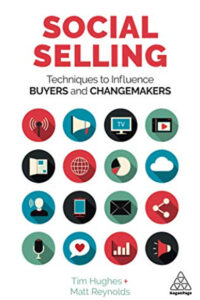
Social Selling: Techniques to Influence Buyers and Changemakers is the future of personal branding
Part of that is saying, “First and foremost, I need to have a buyer-centric profile. I need to do the basics out there to have a profile that is at least attractive to my bias.” Quite often, people don’t understand how to create content. Again, it’s about going to the gym. When I first went to the gym, I thought all the weights were really heavy. After you have been there six months, you go, “These weights aren’t heavy enough.”
Creating content is like a muscle, you just get used to doing it. One of the things that we are still going through a process is getting leaders to understand that this is how you prospect now. Quite often, people think of going onto LinkedIn, changing their profile, and creating content and a network. I can’t be bothered to do it because I have got all these other things to do. This is how we prospect. This is how we as a business run. What people need to do is make that switch to say, “In 2023, we need to stop using 1980s sales methods, and we need to start using 2023 sales methods.” It’s making sure that leaders understand that switch.
I think what you are saying is exactly what I say the old way of doing it is to push out information, as you said, brochures. The new way is to tell stories, which I love to teach people how to tell stories, and you are teaching people how to use social selling. Both of those things pull people in. If your content is story, people remember it, repeat it, and share it. I think that’s really the secret to all of this new way of being magnetic instead of repulsing. You pull people in with social selling and storytelling. Thank you so much. If people want to reach out to you, what’s the best way?
Thank you so much for having me on. It’s been fantastic talking to you. The best place to get me is on LinkedIn. I’m Timothy Hughes on LinkedIn. The website is DLAIgnite.com. I’m also @Timothy_Hughes on Twitter.
Thanks, Tim.
Thank you so much.
It’s so great talking with you. Congrats on the huge success and influence you are having. I’m sure that buyers and sellers are embracing this because nobody wants to be pushy, and you have shown us a new way.
Important Links
- Social Selling
- Tim Hughes
- DLA Ignite
- Smarketing: How to Achieve Competitive Advantage through Blended Sales and Marketing
- Hesha Abrams – Past Episode
- The JOLT Effect
- @Timothy_Hughes on Twitter
- Better Selling Through Storytelling Method Online Course
Wanna Host Your Own Podcast?
Click here to see how my friends at Podetize can help
Purchase John’s new book
John Livesay, The Pitch Whisperer
Share The Show
Did you enjoy the show? I’d love it if you subscribed today and left us a 5-star review!
- Click this link
- Click on the ‘Subscribe’ button below the artwork
- Go to the ‘Ratings and Reviews’ section
- Click on ‘Write a Review’
Love the show? Subscribe, rate, review, and share!
Join The Successful Pitch community today:
- JohnLivesay.com
- John Livesay Facebook
- John Livesay Twitter
- John Livesay LinkedIn
- John Livesay YouTube
Centered With Steven Puri
Posted by John Livesay in podcast | 0 comments

There are more people who struggle with being consistent in their work than there are who don’t. We get distracted, tired, “lazy,” and just overall end up being unproductive. Ironically, it also gives us the feeling that our time is mostly consumed by work. That’s why in this episode, Steven Puri introduces Centered, an app that will finally help you get your life back by helping you finish your tasks twice as fast as you normally do. Steven shares the inspiration of Centered and talks about how its unique collaboration and competition can help you stay focused and motivated. Tune in to learn more about how you can use Centered to optimize your productivity and achieve your goals.
—
Listen to the podcast here
Centered With Steven Puri
If you’ve ever gotten frustrated at the end of the day that you didn’t get anything done that was on your to-do list, then this episode is for you. I interview Steven Puri, the Co-creator of an app called Centered, and he explains how competition and collaboration can coexist on Centered. Enjoy the episode.
—
Our guest is a personal friend of mine from way back when Steven Puri. His first jobs were as a newscaster interviewer for the number one youth news show in the DC Baltimore market, as a junior software engineer, and Thomas J. Watson Scholar at IBM. As you can see, he’s no dummy. He attended USC in Los Angeles, where we met. He fell asked backward into film production and produced computer-generated visual effects for fourteen movies. Eventually, selling his CGI company to the German media conglomerate Das Werk.
Steven then produced some indie films with friends and went studio side to develop and produce live-action features as a VP at Fox, and an EVP at Kurtzman-Orci at DreamWorks. He got back into building tech companies here in Austin and is the Cofounder of Centered, a Flow State app that provides focus music, distraction, blocking, and an AI-powered coach to get you into the zone and knock your workout. Welcome to the show.
That was a mouthful. Did you breathe air during that?
I’ve been told not to breathe when I’m doing it.
Noted. Thank you. It is great to be here.
Before we get into how wonderful Centered is and why we all need to be in the flow state, let’s go back to this fascinating world of yours known as your story of origin. You can start with USC or wherever you wanted to start the story of working in the movie business and how one thing led to another. Did you grow up knowing you wanted to be in communication or in the movies? If I remember the story, you wanted to be on camera at first. That’s why you were doing the newscasting and then you went, “I’m not sure that I want to be behind the camera.” Is that accurate?
Your memory is amazing. You are right. I stumbled accidentally into an audition in DC when they were looking for new newscasters. There was a youth news show on Channel 5, the Fox station, that was the top-rated youth show in the DC Baltimore market. I happened to be on there. My brother is a pianist and he was invited on as a guest. While I was there, I met one of the hosts. They had four hosts, all high schoolers, and did their own interviews. They wrote their own stories and said, “I’m leaving. They’re holding auditions. If you want to come back next Saturday, you can audition.” I tried it, I auditioned, and did the show. It’s super fun and USC found me. They had a very strong, and still do, broadcast journalism school.
Columbia might have a better print school and they were like, “If you want to be on-air talent, we’ve got a great program for that. We’ll take you now. Come.” Coming to Los Angeles, when we met, that was for me like, “I knew how to code. I was a software engineer at IBM and I’d done this TV show.” Suddenly, those worlds collided where it’s like, “You’re in LA long enough. Everyone you know is somehow related to the film.”
[bctt tweet=”AI coaching to keep you focused.” username=”John_Livesay”]
You also, at a very young age, had this wonderful DJ voice.
I was the voice of the AOL movie phone.
That’s what I used to tease people. My sister and her friends use it.
I know because you can do the AOL movie phone voice.
I can, but you do have a good speaking voice. I’m sure I’m not the first person to tell you that, especially for someone who can code. What was it like? That’s a very glamorous job being in charge of live-action features at a major studio, not 1 but 2. There are now these great movies about The Making of Godfather and you think to yourself, “That is not right. I would never want to be on it.” It’s one problem after another with actors walking off the sets, people threatening to fire actors, and money running out. It’s endless stress and you have no idea if the movie even going to be a hit or not. Is it that chaotic or is that a dramatization?
It’s an interesting question. I’ll give you three tidbits or thoughts. One is it is an amazing job because you can meet anybody if you are a senior executive at one of the motion picture studios. Maybe the shine is somewhat of that now but I’m talking about years ago before YouTube stars were bigger than movie stars. You’re talking about the ‘90s and early 2000s.
You could pretty much call anyone and be like, “We’re thinking of doing a movie about being president. Could we meet with the president? We were doing a movie about the Egyptian pyramids. I met the foremost experts on how the pyramids were made. We want to do a movie about the space shuttle. I met Commander Kelly and hung out.” “What’s it like?” You’ve got to call anybody because they’re like, “A movie studio called me. I have to go have a meeting.”
“This could be my big claim to fame.” Brian Grazer is known for this kind of curiosity.
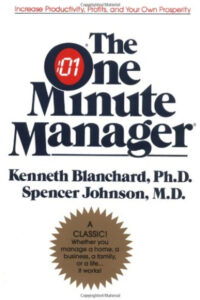
Centered: The One Minute Manager by Kenneth Blanchard Ph.D. and Spencer Johnson M.D.
As a person, he’s amazing in that regard. As an assistant, he’s finding people for him to meet. I have so much respect for that. That was probably one of the most amazing parts. One of the worst parts is that it is your job to say no. People project onto you this massive ability to be like, “I shall make the next insert here.” In reality, your job is all year round to find some reason to say no. They hate you when you’re saying no. Once or twice a year, take your shot. If you’re my boss and chairman of the studio, 12 or 14 times a year, take a shot. You’re talking about hundreds of people coming at you and you’re going, “How can I say no to everyone except one?”
There are a lot of similarities to that between investors and startups, aren’t there?
I got to tell you it’s so interesting because there’s that big Northern and Southern California. there’s North Cal and South Cal division of like, “There are content people down there and all those tech people.” If you took some of those conversations, literally, they searched and replace venture capitalist studios, angel investors, and indie financiers.
This is the funny thing about the film. Going back to your question about chaotic behavior, this is my third point. Film is a fear-based industry. It is so irrational and hard to predict. It is like wildcatting for oil. You get Spielberg and Tom Cruise drill over there and they hit nothing. Two kids, you’ve never heard of drill for oil 50 feet away and they hit a gusher called whatever this year’s hit is. You’re like, “Interesting.”
Blair Witch Project for those of us who remember that.
Blair Witch is a great example. What that means is you don’t have people operating from a place of security because they don’t. Even very successful people from the outside don’t know if their next thing is going to hit or not. They’re neurotic and they take it out on their agents, managers, producers, co-stars, assistants, masseuses, therapists, and astrologers. It’s like you said. It’s a very connected business because it’s fear-based. You’re like, “What if my next one doesn’t work?”
We had a private conversation before the show about a particular actor that you worked with who will remain nameless, but the neurosis that you talk about. Do you see a lot of similarities between successful startup founders and successful actors? Let’s say that person A is this talented, attractive actor, and person B is also an attractive, talented actor, but one shows up on time, is easy to work with, reliable, and not so neurotic. The other one is the opposite. Same thing with the founder. They both have great ideas and tech skills. One is easy to work with. One can explain their concept to investors, but one cannot. Is there a correlation there? Can we take this metaphor or analogy one step further?
You’re right to draw a parallel there. I will say that sadly, the criterion that determines success is not about, “Do they show up on time or do they do this?” It is simply about, “Do they deliver to their audience?” Whether it is I need downloads of my mobile app, to use the service of my SaaS product, or people to tune into Netflix to watch my thing. In my experience, it doesn’t correlate between professional show up a time. The thing it’s interesting is you do get the people who are great salesmen. Sometimes to the point of being sociopathic like the Elizabeth, the Adams, and the Sam Beckman street, and all that, where they’re amazing in the room because they’re so into their own set of fiction.
[bctt tweet=”Go to sleep stress-free knowing that you got everything done.” username=”John_Livesay”]
They can pull you into that dream.
They believe so much.
Investors have said to me that I’ve interviewed on this show, “We invest in the jockey, not the horse, i.e. the people, not the idea.” You’re saying even then, it’s still a gamble. As you mentioned, Elizabeth Holmes was an example of, “We believe that she believed that this product would work.” It’s interesting.
Elizabeth Holmes is a stone’s throw from her to Adam Neumann where WeWork is an office rental company that Adam, through his charisma, made people believe, is a tech company. It’s office desks or office rentals. Andreessen is right behind him. He’s like, “I’m going to turn apartments into communities where people want to plunge their toilets because they love living in my apartment. $350 million from Marc Andreessen, he’s like, “I believe in this guy.”
How did you decide you wanted to get back into tech companies and specifically your own company now Centered? What’s the story of origin around Centered?
Centered is a good buddy. When I left Fox, I started a small tech company. A buddy of mine, Adam, created Siri. I asked him, “I needed an iOS engineer. You know iOS people.” He’s like, “There’s this fantastic guy who worked with me on Siri. I’ll introduce you.” I met him. He showed up. We were in Hayes Valley and went to a beer garden. He’s German. He shows up on his motorcycle with his leather jacket. We hang out and pretty close to the end of the meeting, it’s clear that he’s got his own startup he’s working on and he’s leaving Apple.
He’s all excited about this thing. It was fun when straight out of Silicon Valley and the TV show meetups. We’ve been friends for many years now. He had his own path. He was, a couple of years ago, engineering Postmates, optimized delivery runs to get your little food to you sooner before the Uber deal. He and I were hanging out at Sweetgreen down in the Marina, the one that’s right by Venice.
He was like, “I’m quitting Postmates.” I was like, “Good for you. That’s awesome. What are you going to do?” They talked about, “Why didn’t we go do a mindful to-do list?” I was like, “That sounds boring, AF. I got nothing. I got no passion.” It make me leap out of my chair onto the table and start screaming at people, “Why didn’t they use this mindful pitch?”

Centered: It’s like there is pride in saying, “I have this achievement. I would like you to know about it. I’d like to feel that you recognize how hard this must be and that what I did was valuable.” We built that in. The competition is sometimes fun if you’re in your group with a whole bunch of people.
If that’s a movie pitch, I would’ve said no.
Exactly. The reality is he’s a fantastic engineer and a very smart guy. He sent me a prototype right after Christmas. This is Thanksgiving, he said, “What do you think of this?” It is a great way to draw me in. I said, “This is so much cooler than you described. We could do a flow state app. Let’s think of it as helping people get into that state where they’re hyper-concentrated, they’re doing their best work, or they can block out Instagram and all that.” He’s like, “I don’t speak English as my first language. Maybe I could not explain it the way you’re talking about it, but that sounds cool. Let’s talk about it that way.” That’s how we started Centered.
Did you consider other names?
No. Centered is right out of the gate. Laura and I have a daily yoga practice and it’s felt very much organic to us and all.
For those people who haven’t checked out Centered, what is the elevator story? Who is this for and what makes it unique?
If you ever get distracted while you’re working, you ever think, “Where did today go? I didn’t get my stuff done,” or you have that frustrated feeling when you’re going to sleep at night like, “I’ll get up early tomorrow and I’ll get a jump on stuff I didn’t do,” that was me. If you’re like me, you have had that experience and you want to try a new path. Centered is your new path.
How many users are out there? What’s the percentage of people who feel like the day gets away with them and they don’t get done what they need?
I can count on my fingers. It’d be easier to count the people who don’t feel that way.
[bctt tweet=”Staying on track helps you finish your work twice as fast.” username=”John_Livesay”]
Interesting. Let’s go into, as we used to say in the sales world, the USB. What is the Unique Selling Benefit? There are other apps for meditation. That’s not what this is. There are either other apps that say, “We can help you be more focused. We’ll play the best music for your brain.” That’s also not what this is. I got to see this amazing demo video that you walk people through. From my experience of watching that explainer video, it says, “If you had your personal coach that was going to take all these things that are distracting you and integrate them all together.”
It’s like, “I get distracted by a phone call and social media. I’m late for a meeting. Even if it’s a Zoom meeting, I’m still late. One time, I’m in the zone. I lost track of time and that’s not a good thing. It’s either I’m constantly distracted or I’m in the zone, I’m still missing things and I come across as a total flake. I would like to get things done and be professional.” That’s my takeaway. That’s how I would describe Centered.
That’s a pretty good takeaway. I can do maybe a slightly shorter version of that because I’ve had to talk about it so much, which is there are fantastic focus apps out there that have some of the features. As you said, “This one is cool music. There are great Pomodoro timers. This one is this thing.” The thing that set us apart was we have these AI coaches. It means that when you start work, you can choose from a huge spectrum. If you have ADHD, we have ADHD coaches who provide their voices to our AI.
If you have engineering gurus, you’re like, “I’m a young JavaScript guy. I’m a young open-source acolyte.” We’ve got some of the best names in engineering, ADHD, productivity and life coaching, and fitness. We have yoga instructors and spiritual coaches and they all have their way of talking to you saying, “You press play right before you begin your work.” When you sit down on your laptop, hit play at Centered. Beautiful music starts. All your distractions are blocked and your coach says, “Let’s have a great session, John.”
What all this customization means to users is that it’s still not one size fits all. It’s this customization of if I’m someone with attention deficit disorder, then you think that the audience is needing something like this. If I’m not, this is still for me because the AI is customized that I can find the exact right breaks I want to take and I can constantly say, “I’m taking five-minute breaks every 30 minutes. I need this music because I’m in a different mood than I was yesterday.” It’s not, “Sorry. That doesn’t fit us.” You’re stuck with one size fits all. That’s not it at all. The ability to zig and zag with my particular moods or if I’m my ADHD is acting up, I can program that into the app and it’ll say, “Okay.”
You also get to choose your adventure. You may say, “I love that Steven Puri guy. I want him to be my coach. He’s semi-serious, semi-funny. He’s always got some yoga-like quote to start the day.” The next day, you very much say, “I want that guy who’s super serious, a productivity coach, and has three productivity principles in his framework that are going to make me adhere to his work.” Cassidy Williams is one of our coaches. She’s hilarious. She’s a great engineering influencer who is adorable and fun. It’s like, “Choose your adventure now. What feels good?”
If I was to compare it because I love a metaphor or an analogy. Imagine that you have a coach or a trainer for your workouts or the yoga teacher that you see every day. You might love them. They know you, they know your strengths and weaknesses, and they maybe adjust the workout on your mood and energy level, but it’s pretty much the same person. You’re like, “This day, I want a different coach and I’m not offending the old coach.” They’d be like, “Maybe I want to try a new hairstylist.” People feel loyal to their hair stylists. “I would love a new haircut. I’d like to experiment with something.” My guy is like, “No. That’s a dumb idea.” You’re like, “I’ll go somewhere else.” This is guilt-free customization of whoever you want your coach to be that day.
It is a fantastic metaphor because you’re right. Every time I sit down, you can look at the array of coaches like they’re lined up in a high school gym and be like, “Now I want you,” and they’re available 24 hours a day, 7 days a week. Start your session. They’re there with you. If you finish a task, they’re going to congratulate you like, “John, you finished that 20% faster than you estimated. Congratulations. You’re getting better at monotasking. You are on your phone during a session.” Cassidy Williams is like, “Do you need to be checking your Twitter now?” You’re like, “No.” At the end of the session, they congratulate you and show your hippy scores. You can see you’re getting better day over day, week over week. It’s sometimes nice having a companion there as you work.

Centered: Studies have shown that brain glucose peaks around the first 80 to 90 minutes of work and then starts to decay. You become less and less productive after those first two hours.
That speaks to so many things. The first thing that jumps out to me is the concept of we are brain craves progress, celebrating it and recognizing it. Without any tracking, you don’t track it or recognize it. Secondly, the need to not feel so isolated. If you’re a programmer or just somebody who works from home, you’re killing two birds with one stone there. Our brain is more likely to tackle something that we would like to be distracted from if we know the process might be a little fun. There are a lot of outcomes. Let’s learn what I call a case story instead of a case study of someone who has been using this for a while and how their life has changed, either in their personal or their professional.
What’s interesting is we have had some people who have been users and they have used it frequently. They approached us and said, “Could I now be a coach because I have a whole group of friends that I would love to do this with?” They may have come because they know Kent C. Dodds, who has hundreds of thousands of followers, and Cassidy Williams talks about us. Arianna Bradford, August Bradley, and Nir Eyal who wrote indestructibly books on social media addiction. He’s one of our coaches and he donated his voice. He’s like, “This is great. Every day I can help people in a way that’s way more engaging than they see a tweet for me every other day.” In ten seconds, they read something I wrote on Twitter.
I can sit with an infinite number of people at their table and be like, “I’m here with you.” Our original idea was its people. I have an audience like you John where you go, “I got 50,000 people that would love to hear my fun voice.” We’ve had a couple of radio DJs ask us to be coaches. The most interesting thing is we’ve had some users that every now and then, I’ll see them on the leader board or I’ll see them in a chat talking about it. They say, “I’m the CEO of this 40-person company. It would be funny if all my guys here and girls could hear me. Could I be the coach of my private group for my company?”
We’ve set that up. You can’t search for them. These are private now, so you can’t search for them in Centered. If you work at that company and you sign up with their domain, you get to go and hear like, “The John Livesay, CEO of your company give you all this fun.” They all have their different spin and personalities. One of the most fun things is seeing people rise up and be like, “I now want to lead productivity. I want to share this gift with others.”
I didn’t know this before the interview, so that is a huge milestone.
I have lots of surprises.
I know from interviewing investors that when customers or clients become brand ambassadors or sometimes even investors, that’s the tipping point when the momentum takes over. You’ve got people who are using, selling it for you, or taking it to another level without having to spend every dollar on marketing to get somebody new. That is huge. Let’s talk a little bit about this leaderboard because there are people who do fantasy football and all these other things. There’s the Fitbit tracker and you have your friends that you’re saying, “How many steps did you do versus me.”
I don’t think I’ve ever seen or heard of a focus productivity leaderboard. Maybe there are other people who do it. If we know our brain likes that progress and we have a little competitive nature in ourselves, and also we get encouraged by other people, let’s say you hit a certain score and it’s okay, but your friend is exceptional on that one particular day that they normally don’t have that time spent knocking something out.
[bctt tweet=”Everyone, even very successful people from the outside, doesn’t know if their next thing is going to hit or not.” username=”John_Livesay”]
How great would it be to get a text or smoke signal saying, “Steven, what did you do that made you so productive? I want to acknowledge it and maybe learn something.” How do you feel about getting that message from your colleague? I’m not in a bubble because if you’re in a corporate job or almost any job, you don’t get it. Maybe you get recognized every quarter, annually or bi-annually with some review, but not daily. You then are back to this wonderful book many years ago, One Minute Manager. Catch somebody doing something right even if it’s for a minute and acknowledge it. That is what you have done with this technology.
I appreciate you saying that. You brought up two competing concepts that are at the core of what we’re doing, competition and collaboration. As the Star Wars joke goes, “The force can be used for good or evil.” There are techniques that we use in Centered to help people compete and collaborate. They can be used to make you waste your life in Candy Crush Saga or Instagram or things like that. You’re competing for more likes and they can be used very productively. I know when I saw friends share their bike rides, Apple rings, or Strava things, they’re very proud to go, “Look at this. I rode a 3-hour 12-minute bike ride. I covered 16 miles and this many vertical feet.”
There is the pride of that going, “I have this achievement. I would like you to know about it. I’d like to feel that you recognize how hard this must be and that what I did was valuable.” We built that in. The competition is sometimes fun. If you’re in your group with a whole bunch of friends, you like to see, “Do you know who’s winning in the boardroom?” “I had a great session. I wasn’t distracted. I didn’t open up other apps. I got my tasks done. I got 1,600 points.”
You can also collaborate. In the group chat, we see people ask each other, “I’ve heard about these Pomodoro cycles. Does anyone use them? Do they work? How do you monotask because I have a hard time monotasking?” You see someone else step in and answer them. It’s almost like being in a good Reddit or something where people are stepping up to go, “Let me tell you how that works for me.” That is cool.
Would this be a good sound bite? Competition and collaboration can coexist in the Centered.
Yes.
I love alliteration so I am good to resist. If you look at behaviors, people used to brag back in the day about how little sleep they were getting by on. It was Arianna Huffington who was the tipping point to go, “I almost collapsed and killed myself doing that.” I used to work with people based in New York. They’d take the red-eye, hit the ground from LA, go right to the office, and brag about it. I would always get nauseous. I’m like, “I can’t do that.” Now, people are bragging about how much sleep they got and how they were in REM sleep. That’s helping their fitness and productivity. Things that we never used to measure like, “I know how many hours of sleep I got, but I sure don’t know the quality of it.” It is now being tied into what you’re doing here.
“This is how many hours or minutes you were productive and it’s more or less than yesterday, last week, and last month.” It’s for people who love data and who feel frustrated at the lack of productivity and the overwhelm by being late for things because they’re in the zone, they wonder why they’re not getting promoted or things aren’t making progress that they’re impatient. I would say to almost everybody I’ve met, “If they’re anything like me, I’m barely impatient for things to get done faster. Nothing is ever faster enough in my brain. Why isn’t that book out yet?” He’s like, “It takes a while to get a book published.”

Centered: When doing a task, you need to either be more realistic about what you’re going to get done or accept what you can’t finish in a session.
It’s very interesting what you’re saying, John, if I have to pick up on this because you are right that there was that badge of honor or culture of like, “I’m working harder. I’m sleeping at my desk.” That’s the Japanese Era. Now you have aura rings where people want to compare over their lattes at the blue bottle like, “What was your aura sleep measurement last night?” Something that we thought about with Centered is if we give you a productivity score, what’s the benefit to you? What we want is to say, “The benefit to you is not, ‘You worked longer. Go you.’ You don’t have a life. Your life is miserable but you got 18,000 points.”
Rather we did is we said, “There is established science. There is research on brain glucose levels on how long you can concentrate. We built the score around that. I’ll give you one example. One of the vectors in your productivity score is how long you work. It is not, the longer you work, the more points you get. It’s been shown that after about two hours, your brain glucose has peaked. Somewhere around 80 to 90 minutes in and it starts to decay. You start to become less and less productive after two hours. You don’t earn a single point for working longer.” We want to tell you, “It’s two hours. Go for a walk. Go get a glass of water. Go stretch. Go do something else. Recharge yourself.”
Before the pandemic, when everybody was being so micromanaged, they were afraid to even show that they were away from their desk to go to the bathroom, let alone take a five-minute walk.
We built the points for that one input. It’s not a bell curve but a shift to a bell curve that your brain peaks. In the first fifteen minutes, you’re not in flow. You’re still dropping in, like sleep. If you work for twelve minutes, you don’t get any score. We’re like, “You didn’t get into a flow state. In twelve minutes, you didn’t do that.” There’s some debate about whether people can do it in 15 minutes or 22 minutes. It’s in that zone.
We’re like, “If you work fifteen minutes, you will get a score. You’ll earn the most points per minute, around 80 or 90 minutes. After 120 minutes, you will not get any more points. We don’t want to reward you for sticking around. We want to reward you for taking healthy breaks. Did you schedule and take your breaks? You’ll get points for that.” That’s more we wanted to do.
It’s because when you reward behavior, you reinforce it. You have to measure it, you got to reward it, and then you get the habit.
That’s why we’re having a score. The benefit to you is it’s going to reward you for being healthy and you being healthy is going to be you’re more effective, you’re more efficient, and you have life.
Steven, is there a last thought, a quote, or a book you want to recommend before we say goodbye?
[bctt tweet=”Sometimes, it’s nice to have a companion as you work.” username=”John_Livesay”]
I wish I had premeditated. There were many inspiring quotes. Probably one that I would apply here is that quote from the Mahatma that was about, “Be the change, you want to see in the world.” I would apply that to yourself. I had that moment of, “Why am I going to sleep stressed out about what I didn’t get done and promising myself I’ll get up tomorrow and get a jump on it?” Be the change. Be the person who’s like, “I’m going to set it aside and I do. I block my calendar from 9:00 to 11:00 every day, and I will not talk to you. If you try to reach out to me, you’ll get back something at 11:00 AM.” I saw the phone ring, the WhatsApp goes off, and the emails come in. You’re like, “Where are you? I need to know.” Seriously, you make that commitment to be the change.
Once you become a parent, it’ll be fascinating to see if you can keep that.
Thanks, little Miss Sunshine.
I couldn’t resist. Where do people say, “I need to be Centered?” Where do they go? The app store.
It is free. All you do is go into your Chrome browser on your laptop. Pull out your laptop, open the clamshell, open up your little browser, and type the word Centered.app. That is it. Hit the red button. You’re in. No credit card. Enjoy.
It’s your gift to the world. You are a gift to the world. We’ve established that pretty early on.
John, you are a sweet talker.
Thanks for coming on. If people want to follow you in general, is it LinkedIn or Instagram? What’s the best place for you?
[bctt tweet=”“Be the change you want to see in the world.”” username=”John_Livesay”]
LinkedIn is great. I tweet from time to time about productivity and Centered and stuff like that.
Your handle is your name, I’m guessing.
It’s @StevenPuri.
Thanks for sharing your fun wisdom and helping us all be a little more centered.
I’d like to thank the academy and all the other companies. Thank you, John. This is super fun. Thanks a lot.
My pleasure.
Important Links
- Centered
- One Minute Manager
- LinkedIn – Steven Puri
- @StevenPuri – Twitter
- Better Selling Through Storytelling Method Online Course
Wanna Host Your Own Podcast?
Click here to see how my friends at Podetize can help
Purchase John’s new book
John Livesay, The Pitch Whisperer
Share The Show
Did you enjoy the show? I’d love it if you subscribed today and left us a 5-star review!
- Click this link
- Click on the ‘Subscribe’ button below the artwork
- Go to the ‘Ratings and Reviews’ section
- Click on ‘Write a Review’
Love the show? Subscribe, rate, review, and share!
Join The Successful Pitch community today:
- JohnLivesay.com
- John Livesay Facebook
- John Livesay Twitter
- John Livesay LinkedIn
- John Livesay YouTube
Every Conversation Counts With Riaz Meghji
Posted by John Livesay in podcast | 0 comments

Every conversation counts. They may seem so trivial most of the time, but they are actually key to making significant connections that lead to extraordinary relationships. But sometimes, we get so caught up in our own lives that we forget to ask the right questions, or we simply don’t know what to say. That’s why in this episode, we have human connection expert Riaz Meghji to talk about how conversations spark connections and shape our lives! He shares valuable insights from his book, Every Conversation Counts: The 5 Habits of Human Connection That Build Extraordinary Relationships. Riaz also touches on what to say and how to help someone dealing with grief. You don’t have to be a genius at conversation – just try out new things and keep listening. Tune in now!
—
Listen to the podcast here
Every Conversation Counts With Riaz Meghji
Our guest is Riaz Meghji, who is a Human Connection Keynote Speaker. He talks about how to build connection, which leads to trust and all-important emotional engagement. He has two amazing questions that you can ask someone when they’re grieving the loss of a parent. You don’t want to miss this. Enjoy the episode.
—
Our guest is Riaz Meghji, who is a Human Connection Expert and the author of the book, Every Conversation Counts: The 5 Habits of Human Connection that Build Extraordinary Relationships. His insights have been featured in Fast Company, Harvard Business Review, and Financial Post. After one conversation led him to take a dramatically different career path that changed his life for the better, he became dedicated to exploring the ways that authentic human connection can change lives and organizations. In addition to being a respected thought leader and author on the topic of human connection, Riaz is also an accomplished broadcaster with many years of television hosting experience. He’s interviewed experts on current affairs, sports, entertainment, politics, and business. Riaz, welcome to the show.
John, I feel like this was meant to be, the two of us talking about conversations and stories. It’s great to be here. Thank you.
You are a natural storyteller, and you know how to teach people how to ask questions in difficult situations. We’re going to get to that in a minute. Your bio teases out that little conversation that took a dramatically different career path. I know the answer to it, but I’d love you to share it if you don’t mind, your own story of origin. You can go back to childhood or wherever you want, “Here’s what interested me, and then I thought I was going to do this, and then I did that instead.”
Thanks for opening with this one. It’s so interesting because it’s such a relatable question, “What is your origin story?” For the work that I do and hopefully, invite the audience to think about defining conversations and defining moments, what is one of the most important conversations that changed the trajectory of your path? For me, it goes back a few decades. I was finishing my Finance degree at Simon Fraser University, living my parents’ dream. Not my own South Asian family if you’re not a dentist or financial expert.
An investment banker, yes.
[bctt tweet=”Assertive empathy is the key to connection. Ask questions that show empathy.” username=”John_Livesay”]
You’ve got a few options. In my final semester at Simon Fraser University, I was enjoying the art of presentation. I was presenting at a conference in Quebec City in my final semester. I was fortunate enough to have the co-chair of that conference. He’s still a friend to this day. He sat in on some of my sessions, and they were HR sessions for a student-run group, an international student exchange group.
He pulled me aside at the end of the conference and said, “I know you think you’ve got your life figured out at the age of 22, but I don’t think you should go into Finance.” I remember looking at him and thinking, “Okay.” He said, “From what I saw on stage and your age, you should take a year of your life and explore what’s out there in the presentation space, maybe something on TV.” This was the first time I truly thought about this as a profession. I thought, “That is a compliment, but you recognize my parents are South Asian, so there are expectations here that we need to uphold.” He did not hesitate when he leaned in. He challenged me and said, “When are you going to stop playing safe and start living your life?”
That question is at any age, not just when we’re young in our twenties. Now, as we get older, we get responsibilities, mortgages, and whatever, but this concept of, “We no longer take risks in our life,” you stop taking risks after a certain age is a myth that I would like to bust because we should always be asking ourselves that question, “Am I playing it safe?” What you mentioned that somebody saw on you is what I saw in another guest, Tucker Bryant.
With that kind of talent at such a young age who had a similar trajectory from England, Stanford education, and worked at Google, he was on that path. He was like, “I’m going to be a keynote speaker about poetry and leadership.” Talk about explaining that to mom and dad. What somebody did to you was pointing out that talent. Once you and I have the opportunity to spot that in somebody else at that age, or they’ve already made the decision to do the riskier choice, but it’s their passion, we can double down and say, “That was a good choice. We see why you did it.” That’s the joy of paying it forward or paying it back however you want to look at it.
To build on that, I think back to the gift that the co-chair was able to give me at that moment. It also is a great reminder that he was making a statement, but he was also allowing me to reflect and ask myself the question, “Am I living the life that I truly want to live? Am I playing this game of life safe?” The big opportunity for all of us is to ask first and talk second to have breakthroughs in our conversations because we could feel we’ve got the greatest advice to give to somebody.
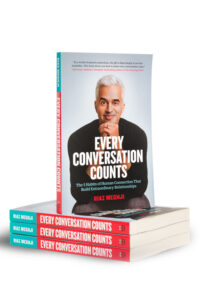
Every Conversation Counts: The 5 Habits of Human Connection That Build Extraordinary Relationships by Riaz Meghi
The conversations you have on this show about persuasion and influence, we cannot motivate, persuade, or influence anybody unless or until we connect with them first. The power of connection starts with the power and quality of the questions we ask. When you have somebody that has seen something that is leaning in with that type of precision, it’s not only a compliment. It’s his opportunity to call me up at that moment and not call me out. That is what true leadership is with storytelling on the questions that we ask ourselves, “How can we call each other up in important moments?”
As a keynote speaker, you’re going into organizations, helping them have better connections with their team and with their clients. You also have this wonderful video talking about you and your brother suddenly losing both of your parents and how to deal with that grief. It’s going to happen to all of us. We’re going to have a situation where we have to grieve, or someone we care about is experiencing loss in their life. Most of us are stuck with the platitudes we see on TV of, “I’m sorry for your loss.” You came up with some incredible questions to ask people while they’re in that state of grief.
I’m going to repeat the questions for you because I want you to then give us some of the experiences and some of the answers you’ve gotten to these questions. That could be a loss of a job or a pet. Grief is grief. It’s different degrees. Let’s say it’s the loss of a parent. The question that hit me was, “What do you want me to know about them?” That person gets to decide. It’s a legacy. The other part is, “What is giving you comfort now?” I thought those were brilliant.
I’ve never heard anyone ask those questions in that situation, and that’s why you’re a thought leader, successful, and in demand. My first thought of, “What gives you comfort now,” makes us look for something. When you’re in that grief, having experienced it with the loss of my dad, nothing’s giving me comfort at the moment, but I have to try and find some answer. Nobody wants to say nothing because you’re still here remembering them, talking about it or whatever it might be. As a former journalist and now keynote speaker on this human connection, how did you come up with those amazing questions?
I’m glad that you introduced this in the conversation. These are probably some of the most powerful moments that come out of the keynote, especially when we talk about one of the habits in the book of assertive empathy. If you’re reading this, and you’ve gone through loss, or you know someone that is going through loss, and you want to be there for them, and you’re not sure what to do or what to say, “What do you want me to know about them,” has been a game-changer question.
[bctt tweet=”Use the power of your curiosity to feel that challenge in front of you to avoid fixing the wrong problem.” username=”John_Livesay”]
I realized before I experienced loss, my brother, my wife, and myself going through this, I had failed everybody that had experienced loss before I experienced it myself. In my mind, I thought, “I don’t want to trigger them, so I’m not going to bring it up. They probably don’t want to talk about it.” I’m making assumptions in my own mind to soothe myself from that discomfort, forgetting about the person in front of me. What do we all do at the moment? You articulated that when something goes wrong, and if there’s loss or some element of grief, it’s autopilot mode, “I’m so sorry for your loss, thoughts and prayers. Let me know if you need anything,” and then what do we do? We step back, and that person is left all alone.
In this message of human connection, I talk a lot about how we combat loneliness. Grief is a huge part of loneliness because you feel like no one can relate, no one can understand, and you feel like you’re drowning. In the early part of 2020, I volunteered with Canuck Place Children’s Hospice every year for their Gift of Love Gala. I found myself in conversation with the Lead Counselor of Canuck Place, Deb Davison. I credit her with this question because she does incredible work to lift parents who have faced the unimaginable circumstance of having lost a child.
She not only is there to support them, but to elevate them, so their parents can take the stage and motivate a community to support the hospice. It’s incredible. I remember saying to Deb at that moment. I was four months removed from the sudden loss of my father and never had truly dealt with grief. I looked at her and said, “Deb, how do you do this? I am profoundly struggling with this notion of grief. How do you do this work? What is the best thing you can say to somebody?”
She reframed my perspective and approach to this question. She said, “It isn’t about what you can say. It is about what you can ask.” When I asked her, “What’s the best question you can ask somebody?” she introduced the question, “What do you want me to know about them?” What that person on the other side needs the most at that moment is to share a piece of that person, their legacy, their story, and ultimately their connection to that person and why it mattered so much. When she said that to me, I remember looking at her and said, “I will never forget this gift you gave me. Thank you.”
Every single person that I knew had lost someone from that point on, one, I recognized my failure in being able to support them wasn’t because of malicious or selfish intent. I just didn’t know. Now, I encourage others to lean with curiosity. What do we all do when the conversations hit a roadblock? Sometimes we fall into the trap of trying to fix it too fast. I encourage others to use the power of their curiosity to feel that challenge in front of them before they fix it, so they’re not fixing the wrong problem and that person is truly feeling seen, heard, and valued in their darkest hour. That person on the other side, as you know, John, will not forget it when you were there to lift them up.

Conversation Counts: Grief is a huge part of loneliness. You just feel like no one can relate or understand you, and you feel like drowning.
That’s what good leaders do. They make their team feel seen, heard, and appreciated as people and not cogs in a wheel. You mentioned in your book, Every Conversation Counts, there are five habits to build these connections, and one of them is assertive empathy. My question is, what determines whether something’s assertive empathy versus regular old empathy?
I love the distinction here. I believe the idea of assertive empathy is leaning in with that empathetic curiosity, even when the conversation is difficult. It’s easy when the emotions aren’t heightened to be empathetic. When it’s difficult or you potentially disagree with someone, there is such an opportunity to understand how you get to that conclusion and the power of our questions and these types of scenarios. I’ll give you some examples.
Think about the idea when someone or I could come to you and say, “John, I presented on stage. Can you give me some feedback?” Before you jump in with that feedback, there’s an opportunity with your assertive empathy to say, “How do you feel that went?” and that’s the opportunity for me to start articulating first and doing that work of reflection. Maybe I’m at a roadblock, and you could simply say to me, “What do you feel is impossible in your life now, Riaz?”
I could express all of this pain, and then you could simply reframe and say to me, “What do you think would make this possible? What’s the first step in making that possible?” You’re not giving me any of the answers, but you are that assertively empathetic guide to unlock the answers that I already have within. I’m just asking for a soundboard that will help me through it and a strategic partner that will ask the questions, that notion we talked about, that will call me up in these moments and not necessarily call me out. It’s an empathetic form of accountability.
Before the show, we had a little bit of a conversation about you being on camera, hosting television, producing segments, and how part of that job and the producers get pitched all the time to have people come on the show and either pitch their book or be an expert on a topic. When people were pitching you to come on your shows, the CityTV Breakfast TV or MTV Canada, what made you say, “I can see that as a great segment,” and what would make you go, “There’s no way I’m having that person on?”
[bctt tweet=”One of the ways to establish trust is putting aside our perfect persona and going first with vulnerability.” username=”John_Livesay”]
The one clear factor that I’d always look at in every single pitch, whether this would be a winner in a 5 to 7-minute live television segment or a complete self-indulgence was looking at this pitch, and is this pitch saying how great this subject is, or is this pitch saying how great the audience can be after this 5 to 7 minutes on TV?
That’s what we do as keynote speakers. We’re all about, “What kind of impact can I have on making this audience’s life better?” Not, “Is the audience impressed with me?” It’s the opposite, but, “How can I serve them?”
I liken it to philosophy, and the whole philosophy behind the book was, “Look at you is greater than look at me.” I believe the interviews that truly resonated, whether we had subject-matter experts or even higher-profile celebrities that came on the show, weren’t about anything that I said. It was the questions that gave them the space to share where they’d say, “I like that guy. He’s on my side,” and giving them space. It’s not only the power of the pitch. If you truly want to impact that audience and move that audience to action, one of the things that I found was the ability for all of us as communicators to embrace the power of productive silence.
What does productive silence look like? More importantly, what does it sound like?
It’s giving the audience space. You, as a keynote speaker, have such great wisdom in the stories you tell. You could give that audience a nugget. Instead of moving to that next point after you drop your knowledge bomb, give them a moment.

Conversation Counts: A strategic partner that will ask questions again is an empathetic form of accountability.
It’s like what I did with you earlier. You said some amazing things like, “Let’s pause here for a second. Let me repeat that for people to digest that.” Is that an example?
Yes, letting it breathe. I feel like there’s this sense of urgency, and maybe because modern culture emphasizes convenience and efficiency. Things move so fast. I’m a firm believer that sometimes efficiency can be the enemy of human connection. How can we slow down these conversations and truly hear each other? You throw something out like, “That resonates with me. I want to reflect on this. Let’s dive into that.”
It’s almost suspending your judgment, your assumptions, and your script. You had beforehand of, “Here’s where I was planning on going with the interview, but you gave me something that I didn’t think was coming. Let’s lean in here.” That’s how you can have a conversation that will be memorable for both sides, where if they can say, “I’ve never shared that before,” that is a gift that you gave them the safe space to do that.
One of the things that really stands out for me watching your keynote speaker video is you have this amazing journey you take the audience on. It’s the awareness that many people are experiencing loneliness personally and at work. Just because you’re in an office doesn’t mean you’re not lonely. Once you show people how to have better connections, that builds the all-important trust, which then builds the engagement for the team to be productive. The same thing is true in sales. You need to connect with that person.
Sometimes that means being a little vulnerable, and that builds trust. You then can have an engagement with that potential buyer or person who’s going to decide whether they’re going to have you on their show or hire you as a speaker. People forget that we, as speakers, have to often pitch ourselves as to what the experience would be like if we’re the speaker that gets hired. That is true in almost every industry, whether you’re a doctor, lawyer, or architect. We’re all having to have some emotional connection. As you said, this efficiency being the enemy of connection, it’s not about how many facts and figures we spiel out, is it?
[bctt tweet=”If you are playing safe, how could you take a small risk every single day and put yourself out there?” username=”John_Livesay”]
No. The facts and figures are going to be vital for the analytical mind, but to make that message sticky with storytelling, you’re going to use powerful metaphors. How do we amplify the emotion at that moment for them, so they truly feel the message? Vulnerability is a big part of this. There’s the notion of, “I think about sales. With your audience, I think about persuasion.” Trust is a huge component of this equation. How do we truly establish trust?
One of the habits I champion is putting aside our perfect persona and going first with vulnerability. Some leaders say to me, “When is it oversharing? When is it too much?” You’re like, “This isn’t the right space and time to do that.” There is a powerful concept in psychology known as the Pratfall Effect, where if you’ve done the work to convey your competence and show that you are that point of authority, are reliable, and establish credibility, your vulnerability will then become a powerful tool to draw people closer and embrace connection.
If they’re questioning your credibility, and then you floor the gas pedal with the vulnerability, that share could fall flat and create distance instead of connections. It’s important that we also convey credibility before vulnerability, but both sides are an important part of the equation to amplify emotion and ultimate impact and motivation for the audience to move.
There is an art to it like there is in selling or storytelling. Everything has a delicate balance. If you’re making a meal, and you over-season something, it ruins the meal. The same thing is true when there’s an order to a recipe for a reason. That makes sense in my head that this has to come first for a reason, and then you add that as opposed to willy-nilly and throw it in any order or any amount. That’s not how you make anything connect as it were.
The science and psychology of the formula are very important, but the formula itself should not be more important than authenticity. Some people would say, “Aren’t you manipulating the person in front of you or the audience or the person you’re trying to sell to?” It’s being who you are. If that fits with who you are, and it’s an authentic display, people will be pulled towards that. If they say, “You’re following a script or a formula. I’m going to back away from that,” nothing trumps authenticity. Authenticity and vulnerability, if we talk about the ingredients of the entire equation, are vital in any message and platform that we’re going to convey.

Conversation Counts: Every audience reacts and responds differently to a particular content. One of the best audiences is the new one who is willing to be open and embrace the message of human connection.
Who’s your favorite audience to speak to?
It’s a real interesting question that makes me think because a lot of strategists will say, “Who is the target audience?” With the message of human connection, there are moments when I’m talking to groups in the HR space with leadership, culture, and collaboration. There are times that I’m talking about how to win customer loyalty. There are times I’m talking about how to grow sales through authentic connections. I feel like there are always two teachers in the room, and every audience is a profound teacher.
To be honest, and this is an indirect way to answer your question, every audience has been this profound teacher where I wait for the moment. In a lot of the keynote, what I do is create a space for interaction. I try to reframe the Q&A into a Q&I that instead of questions and answers and telling them the answers, I try to prompt them to generate their own ideas, so we have a conversation. This isn’t just a sage from the stage. I find every audience is different in how they react and respond to the content. My favorite audience is a new audience that is willing to be open and embrace this message of human connection.
If people want to reach out to you, your book, Every Conversation Counts, is on Amazon. If they’re interested in engaging you for coaching or speaking, it’s your website, your name, RiazMeghji.com. Any last thought or quote you’d like to leave us with?
The final thought about the opportunity we have in any conversation is asking ourselves, “Am I in autopilot mode here? Am I in autopilot mode, showing up with the people I already know?” Sometimes when they’re familiar to you, maybe it’s a lifelong friend, we’re in autopilot mode thinking, “I don’t need to be curious.” What is one thing you can discover about someone you already know?
One of the most profound conversations I had in my career interviewing people for a living for decades was with the late great Wayne Dyer. The reason I introduced this idea of, “Am I in autopilot mode? How do I get intentional with my communication?” whether that’s reaching out, asking more questions, or embracing the power of productive silence, comes down to how we can all create new experiences for ourselves.
I remember I asked Wayne Dyer in the week of his 74th birthday, “What is one of the most important conversations you have when you celebrate the milestone that is your birthday? If I’m lucky enough to make it to that point, I’m curious. How do you celebrate?” He did not hesitate. He looked at me, laughed, and said, “That’s easy. I asked myself a question.” I said, “What’s the question you ask on your birthday?” He said, “Did I live 74 years, or did I live the same year 74 times?” I remember looking at Wayne and saying, “Happy birthday to us. That is a gift.” That always stuck with me. I encourage your audience.
If you’re reading this, ask yourself day in and day out, “Am I in autopilot mode in my conversations?” If you are playing safe, how could you take a small risk every single day and put yourself out there, whether that’s leaning in when the conversations are difficult, having the courage to ask for help when you’re struggling, or maybe intentionally celebrating one another? After reading this, reaching out to somebody right now and saying, “I’m thinking about you. I miss you. Can we get together?” Watching the difference and the small actions in our conversations build profound relationships in our lives.
Thank you so much for helping us all connect better, feel a little less lonely, and have some new wonderful questions to ask so that we can practice assertive empathy.
John, you’re a gift. Thanks for creating these conversations, and thanks for having me on. This was meant to be.
It’s my pleasure.
Important Links
- Riaz Meghji
- Every Conversation Counts: The 5 Habits of Human Connection that Build Extraordinary Relationships
- Tucker Bryant – Past Episode
- Video – Losing Your Parents
- Canuck Place Children’s Hospice
- Gift of Love Gala
- Better Selling Through Storytelling Method Online Course
Wanna Host Your Own Podcast?
Click here to see how my friends at Podetize can help
Purchase John’s new book
John Livesay, The Pitch Whisperer
Share The Show
Did you enjoy the show? I’d love it if you subscribed today and left us a 5-star review!
- Click this link
- Click on the ‘Subscribe’ button below the artwork
- Go to the ‘Ratings and Reviews’ section
- Click on ‘Write a Review’
Love the show? Subscribe, rate, review, and share!
Join The Successful Pitch community today:
- JohnLivesay.com
- John Livesay Facebook
- John Livesay Twitter
- John Livesay LinkedIn
- John Livesay YouTube