

The Selling Well With Mark Cox
Posted by John Livesay in podcast | 0 comments


Sales is a critical part of any business. So, how do you ensure your sales team is supported so they can perform at their best? Here to share his insight is Mark Cox, the Chief Revenue Officer of In the Funnel Sales Coaching and podcast host of The Selling Well. Joining John Livesay, Mark highlights the impact of mindset on performance by looking into how the sales process is about working together with your team and a relentless focus on the client’s needs. Stay tuned as he shares advice for sales leaders on bringing important strategies to propel your team and your business forward.
—
Listen to the podcast here
The Selling Well With Mark Cox
Our guest is Mark Cox who’s the Founder of In The Funnel, which is all about helping sales teams become more productive. He said, “Don’t try to describe a color no one has ever seen before when you are painting a picture, and no one ever goes to a sales call and says, ‘Did I over prepare for that?’” Instead, he said, “You must have a relentless focus on what the client needs.” Enjoy the episode.
—
Our guest is Mark Cox, who has sold, structured, and negotiated some of the largest single-family transactions in North America, including a $1 billion transaction with the top US bank. After several years working for large corporations, he founded In The Funnel, ITF, sales coaching with the mission to dramatically improve the performance of business-to-business sales teams.
With a focus on strategy, process, tools, and discipline, he has helped hundreds of companies achieve predictable double-digit sales growth by implementing the ITF proprietary sales playbook. He’s been named one of the leading sales consultants of 2022 by Selling Power Magazine. He’s also been appointed to partner with the Canadian Professional Sales Association with all of his training content being officially accredited. While he’s not coaching clients to sell better, he can also be found goaltending in the local hockey rink, playing drums, or doing fitness training. When he’s not doing all of that, he hosts his own podcast. It’s called The Selling Well. Welcome to the show, Mr. Cox.
First of all, thank you so much for inviting me here. I have never been as excited about my past as much as when you described it. It sounds so much more exciting when it comes from you.
We try to bring a little passion and energy to everything we described, edify our guests, make them feel welcome, and let the audience know how much of a treat they are in for, which is certainly the case with you. Before you start playing hockey and winning all kinds of sales awards, can you tell us a little bit about how you got into sales in the first place?
This is our second conversation and I was so looking forward to it. I will be honest. I fell into sales. During college and university, I got the opportunity to run a small business, these student franchise companies for painting, and so forth. Way back in the day, years ago, I had that opportunity, maybe even more. It changed my life. It made me realize that my heart that I’m probably an entrepreneur and I loved every aspect of it. It was crazy hard. It was my first introduction to sales.
Even back then, this organization at the time was called AAA Student Painters, and now it’s called the Student Works. They were so good at teaching and coaching on sales, making sure the whole conversation was about the client and their better future after having worked with you. Looking back, I’m amazed at how good that sales training was.
I partied my way through university for a few years, and when I graduated and was looking for a job after starting that company in a couple of different areas in North America, I went full-time into this student franchising. I ended up deciding I had to get back into the corporate world, and the one skill that was easy to translate was sales. I have been an entrepreneur.
When you are applying for a job or talking to somebody in HR about running a business, they have no idea what you are talking about. You are describing a color they have never seen. When you are talking about your capabilities in sales, they could sense that. I started selling photocopiers as my entrance into the corporate world into professional selling with a great company Kodak in the early-90s.
What a phenomenon that company was. Who would have ever predicted they would get out of business? It’s like Google going out of business. That had been around for so long and did so many things right. Also, Xerox had great sales training, I imagine.
They did. They are a good example on the business side. They never wanted to cannibalize their cash cow. When you study them as a business case now, they had traditional film, insanely profitable, and digital film was coming on the table. They invented it, but they’d never invest enough in it because they are always worried about cannibalizing the cash cow.
[bctt tweet=”Have a relentless focus on the clients’ needs.” username=”John_Livesay”]
While they waited to decide what to do, other companies cannibalized their cash cow. Agfa, Sony, and all these guys got into it, but we got hired and we went down to Rochester, New York, and the sales training program was 90 days. Put up in a beautiful townhouse, and we went to a marketing education center, which was a sales university. Each week you had some tests, demos, and recorded sales calls that were being graded. You were rated against the other 80 people in the program every week. Every week, they tapped a couple of people on the shoulder, and unfortunately, they had to go home.
Hearing that is so valuable for people who are in sales to realize that it is a profession like being a lawyer, doctor, professional athlete, or actor that there’s a structure to it, and there are people who don’t always graduate, especially in law school. Also, it helps your mindset go, “My confidence is going to be so much stronger because I’m not just learning product detail. I’m role-playing. I remember when I went through sales training, we were timed.” How long did it take you to give the person your business card in case they forgot your name?
It’s little subtle details like that of trying to anticipate somebody being embarrassed to have you repeat your name again, and you hand the business card back when people did that in a way that the person didn’t have to read it upside down. Taking in a lot of details, especially in my case, I was selling multimillion-dollar mainframe computers and there were so many different decision makers, the financial people, software people, and analyzing.
What I admire about your work is the structure and making sure people don’t forget a step. It’s ironic because if you are baking a cake and you leave out a major ingredient or have it at the wrong temperature, that doesn’t turn out. The same thing is true in sales. I would love you to speak to that. How important is it to have a process and then follow it?
Which mainframe company were you with? Which computer company were you with?
A company called Amdahl that was owned by Fujitsu.
I remember Amdahl. That was a great time to be selling those mainframes. Those were early days for large computing technology. It’s competitive, but those were great days indeed. You described a complex sale. Those were the earliest days of the complex sale with multiple people influencing the decision to move forward.
One of the important things now is that there are steps in any process. Edwards Deming has that comment. I will get the quote wrong but, “It’s not enough to work hard. You have to know what to do and then work hard.” There is this way that you try and engage somebody and build trust and credibility, and then earn the right to proceed with a discussion or conversation about them and their business.

Sales: It’s not enough to work hard. You actually have to know what to do and then work hard.
You can collaborate to figure out how you can help them get to a better future. Whatever that means for their company, and for that particular individual in the company because everybody has these personal and emotional things. They have these things they are trying to accomplish for their client. Whatever role you play in professional sales, whether you are that sales leader, that process is a lot about working with your team and ensuring that, the Liz Wiseman, you are multiplying their capabilities instead of diminishing them when you are trying to coach them and develop them that you are coaching them.
From the salesperson’s perspective, there’s this constant and relentless focus on, “How do I help the other side of the table run a better business?” If they believe your intent is always to help them and that you’ve got some skills, experience, capabilities, and resources to help them do that, I don’t think they go quiet on you. With sales development, the more junior roles in professional sales, but hard now, I do think the checklist and the coaching are so important for them because those poor folks get hired on, get completely lost and overwhelmed, and turn at a shocking rate.
You have a statistic that about 1/3 of salespeople are churned every year. The Great Resignation, the lack of training, overwhelm, and all of those cost companies so much money, doesn’t it?
It sure does. It’s shocking. It’s the bigger cost. You were gracious enough to ask me about my start in professional sales. When I started selling back in the day and I’m selling photocopiers, it was a pretty big deal to get my first corporate job. For my generation, that first start was important and everybody knows you are in that job, and you’ve told your parents or a peer group.
I couldn’t believe how badly I felt for these people at Kodak who got tapped on the shoulder because it didn’t work out. There were tears. This was a major thing and the embarrassment and the impact on self-esteem for young people. That’s where I think about it a lot with the sales teams that we are coaching and developing. We have this responsibility to enable their success.
They have to put the work in. Don’t get me wrong and it’s 51% then, but there are too many environments that have this sink or swim and we’ll hire 30 and hope 15 works out. I don’t like the impact on somebody’s self-esteem or their future when they have got a mishit with the first job they get out of college or university.
When you talk about self-esteem, one of my big purposes and mission now is to help as many people, but specifically, salespeople get off that self-esteem rollercoaster because you get so attached to your results, determining whether you feel like you are a worthy person, let alone worthy salesperson. You are up and down all day long, vetting when you make a sale or not. Many salespeople only focus on the noes and not the yeses. They don’t celebrate the yeses. They move on. Maybe they had a boss that said, “You are only as good as your last sale.” What advice do you give people to make sure they don’t get on that self-esteem rollercoaster?
I’m a big believer in focusing on the positive. I’m no different. Nobody can see us now but I got a little journal beside me here. I do, particularly on a Sunday, sit down and jot down a few of the great things that happen during the week because you and I are entrepreneurs, and the professional salespeople out there are entrepreneurs as well. So much happens in a given week, and you are always on to the next thing. We rarely take a pause and go, “Let’s jot down or write down in a journal all the amazing things that happened this week.” That’s a big one. I like to do that. I find it changes my mindset setting. It gives me energy and enthusiasm for the week.
[bctt tweet=”What is your intent when you meet. ” username=”John_Livesay”]
The second thing is in sales we have got a tough job. We do things and we are trying to help people. At the end of the day, we introduce people to something they’d never thought of before, that can help their business in a way maybe they have never even considered before, and we invite them to spend money that they hadn’t budgeted to spend oftentimes. It’s a pretty tough thing to do.
I’d rather focus on the activities that I can control. If I try and do the right things, the outcomes will come. We have been through this for a long time. We have done things and great things have happened for us that maybe we didn’t deserve it. It just came our way. There were a lot of other times when we put enormous amounts of work, heartache, stress, and commitment into something and it didn’t go our way. I do find that everything reverts to the mean in terms of a large enough sample size. Over the course of a career, it’ll even out.
That’s great advice, especially for somebody starting out. I remember when I was interviewing for a job selling digital ads and I had never done digital, only print. I was giving it my all. I learned how to put a PowerPoint presentation together because I used to have an assistant that did that. I did all this research, mock-up, and preparation for this interview.
A friend of mine said, “You are certainly putting in a lot of effort for one interview. What if you don’t get it? Aren’t you going to feel bad?” I said, “I’d feel bad if I didn’t give it my all,” but a lot of people say, “I’m going to give a 50% effort. If I don’t get it, I will not feel bad.” What do you think about that mindset?
It’s so obvious what the right answer is. Have you ever left a sales call or left a client meeting and said, “I over-prepared for that, what a mistake?” I will be honest with everybody. Even at this stage with what I do, I remember a couple of years back, we had a great sales development team and someone said, “We have got this company and they want to talk to you and all of this.” I had a quick chat with the CEO and whether he was distracted, doing three things at the same time, or something didn’t go very well, and he said, “Come and see me.”
I had very little hope for this and the only way I agreed to see him was I was thinking to myself, “He’s in the same building as my gym. I will go in and go see him, and then right after that, I will do my workout and go home.” I remember showing up for that meeting. This was a few years ago. I hadn’t had time for the proper prep.
When I walked into his boardroom, he had our website up online. He’d been watching our digital video testimonials. He’d been contemplating getting us in for sales consulting. I knew the prep he did for the meeting immediately as I walked in. He was more prepared for that meeting than I was and the confidence came right out of my feet. You know that feeling. This was a few years ago, so I should have known better by this point in time.
I probably came out of an event where I was coaching people on now doing the same thing. I always liked that idea, whether it was playing a game of hockey or working out. I like to develop that DNA that says, “I will give it 100%. I’m going to do my best.” Sometimes things are going to go well, and sometimes they are not going to go well, but I will try and coach myself on the mindset that says, “If it doesn’t go well but I did my best, I’m going to sleep like a baby.”

Sales: Have you ever left a sales call or left a client meeting and said, “Boy, I over-prepared for that. What a mistake!”?
A skill is like a muscle. You get stronger and stronger at those presentation skills and interview skills and nobody bats 1,000 for every goal. That big picture zooming out is key. Since you are a Canadian and you play hockey, is it the Wayne Gretzky quote that says, “You anticipate where the puck is going?”
Thank you for making me comfortable by using a Wayne Gretzky quote. That’s the only language we speak as you well know. He said he’s not looking where the puck went. He’s looking at where the puck’s going. The other quote he’s well known for is, “You miss 100% of the shots you don’t take.” He was well-known that be shooting from behind the net and somehow would go in.
There’s a lot of positive there. One other note since you brought up our cultural hero, one of the things that he always said he learned when he was playing with a team called the Oilers and they were trying to win their first Stanley Cup. They were going against the team that had been on a roll, winning Stanley Cups, which was the New York Islanders in the US.
They, once again, lost to the Islanders in the final, and they were disappointed. As the Oilers left their dressing room, they had to walk by the Islander’s dressing room. They couldn’t believe what they saw. They saw the Islanders team walking around on crutches. Many of them had limbs in casts. What they realized was they were all warriors playing wounded, giving an enormous amount of commitment, and that woke up the Oilers. They didn’t walk away saying, “We are so talented. We’ll beat them next year.”
They started the next season saying, “We have learned something here about what commitment it takes to win.” They showed us. Thank you, Islanders. In the following year, they beat the Islanders in the final, and the commitment, and all those kinds of good things. I bring it up. When we were talking about self-esteem, sometimes when we have a failure in life, we see it as this scarlet letter.
I have had those failure failures as much as anybody else. When I was in my twenties, I started a business. It failed. It wasn’t like now. Now any startup that fails, it’s like a badge of honor. Back then, it was just a failure. That ever sit with me for a long time. It was because I had a bit of a mindset issue where instead of seeing it as an opportunity to learn, I used it as a judgment against myself and that stung. There’s this real opportunity for all of us to think about that, particularly in sales. If something goes bad, what can I learn from it to apply for the next time?
We talked about two companies we worked for before. In your case, it’s Kodak. In my case, it’s Amdahl. They are no longer here. What if those companies or us as entrepreneurs that are reading, start taking that Wayne Gretzky quote to heart and go, “Where’s the market going? Are print sales dying down? Maybe I need to learn digital. Are we ever going to be able to replace the number of digital sales with print sales? I don’t see a way path for that. What else can we do?”
That anticipation of what clients are needing before it becomes so obvious that the competition’s figured it out and you don’t have a product or whatever it is that’s causing you not to win is valuable. Doctors have meetings after they lose a patient to try and figure out what went wrong, learn from that every time, no finger-pointing. I don’t hear a lot of companies doing that in sales when they lose a sale. It’s a lot of finger-pointing. A lot of, “They beat us on price,” or whatever, and then move on. That’s not an in-depth analysis, is it?
[bctt tweet=”Being good at sales solves any other problem in a business for the most part because it’s going to bring revenue in the front door. It’s critically important. ” username=”John_Livesay”]
It’s not. Maybe it’s because some of those environments aren’t psychologically safe. I have no problem. Everybody jokes that I’m self-deprecating most of the time, but it’s also easy to be self-deprecating when you are running everything. Nobody’s judging me and I don’t feel it that way. I want to want to get better.
One of the things we have to think about is if we are going to do a loss review on an account or even do a strategy workshop, we have to go in and understand the rules of conduct. If we want to work on some collaboration or strategize on an account or a big deal we are working on, that meeting isn’t inspection and judgment about what the quarterback of the deal has or hasn’t done.
There might be a time for a little coaching there but put it into a different meeting. If you kick those things off and it’s not about an inspection or judgment, let’s assume you’ve got three other sharp people in a room here as your think tank to help. Maybe that’s a big topic in sales these days. Do we have environments where there’s psychological safety?
Let me ask a really basic question. Sometimes I have worked with sales teams. First of all, not everyone thinks of themselves as a sales team. I have worked with architects who don’t like to consider themselves sales and they have to go in and present. Some of them are so uncomfortable even standing up to speak. “Can’t I just stay seated and read my notes?” At a certain point, you go because I have told you all the reasons to stand up. Your energy changes. You come up in the room on and on. How do you work with people who don’t even want to stand up?
I will be honest with you. I may not be the biggest expert on that, but I do like to try and focus on the positives. I want to make sure that anyone we are working with knows our intent. A fellow by the name of Dr. Nick Morgan has got a couple of books out. His principle is he says, “When we meet someone, what we are always trying to assess is what’s their intent.” It goes back hundreds and hundreds of years that we shake hands. Remember when we shake hands? It’s to prove I don’t have a weapon where I’m going to club you.
To that extent, I’m always trying to make sure that folks understand the intent is only to help to make you better, but if that’s what you say, then you have to back it up. Am I saying that? I’m walking out of the meeting going, “Mark needs a little work here.” Am I being upfront and honest and practicing Kim Scott’s Radical Candor, but doing it so that you are not leaving a bruise? There’s a real art to that.
Feedback without leaving a bruise is one of my favorite things that you said. You also talk about virtual selling and certainly, with the pandemic, that was a big issue. One of my clients said, “Can you teach my sales team how to look and sound good on Zoom? They are uncomfortable presenting on camera,” especially if the client has their camera off.
It was interesting because I was talking to some of those people and they said, “What if a competitor is listening in?” They started making up all these worst-case scenarios. What if the doctor is not even listening? I’m like, “I don’t think virtual selling is going away. It’s going to be a hybrid like this return to the office.”

Sales: Sometimes things are going to go well and sometimes they’re not going to go well, but try and coach yourself in a mindset that says, “if it doesn’t go well, but I did my best, I’m going to sleep like a baby.”
They will be some people, all virtual, everybody, every day, 9:00 to 5:00, but this hybrid 3 days in 2 days off. We’ll continue the need to be good at virtual selling. That’s one of the things you’ve written about, and it’s one of the pieces of training you offer. Tease us a little bit with what you give people that help them in those situations.
Remember when we were kids and the first time you heard your own recorded voice? We can’t stand it and it’s, “I don’t sound that bad.” When I’m doing a face-to-face sales call, nobody’s recording it. I’m not watching myself in real time. You and I do these podcasts and I’m not sure how many of your podcasts you listen to after the podcast from start to finish, but it’s not that much fun.
We all have these kinds of barriers. None of us like seeing ourselves on camera or hearing our voices. A few of us who do become actors in Hollywood. Maybe you need that personality. A couple of thoughts for the meeting, there’s the Albert Mehrabian stuff that says, “A lot of communication is non-verbal.” With all of your training, you are much more of an expert in that area than me, but ridiculous percentages, well north of 80% of non-verbal communications. Where you are trying to make a connection, it’s important. A Zoom call or a video call sound, believe it or not, is more important than the visual.
It’s far more annoying if you can’t hear the person or there’s background noise and all of those kinds of good things. For all the salespeople out there, think of this. Where are you more compelling? If I’m trying to convince somebody and build a relationship and trust, is it best that I’m physically in their building, or do I want to pick up the phone? Easy answer. I have got to be in the building.
Virtual selling was a bit of a bridge between the phone and being in person. It’s the next best thing. If our intent is to make a connection, communicate clearly, demonstrate some energy and enthusiasm, and also play off some cues of other people, you’ve got to have the camera on. You got to be in the center of the screen. For some, they should be able to see your hands when you are on that call.
There are a bunch of subconscious ticks. Somebody else’s brain is going to be wondering about things, so you’ve got to be cognitive. Stress comes into play if you’ve got a complicated background. They can’t see your hands. You are not staring into the camera. You are not squaring the screen. For all of those reasons, remember that at the beginning of the pandemic, that’s why we are all so exhausted after five hours of meetings. Our brain was processing everything. When you are in a big group and you have the gallery view, so you can see twenty people at a time, it makes your brain tired subconsciously.
There are a lot of those things that come into play, and the only thing I can say to folks on the video side is that we have to get over it. None of us like ourselves on video. I’m not sure exactly why a lot of psychological stuff is in there, but it is critical for a connection. Try and stare into your camera, which is quite awkward because I can’t see you perfectly when I’m staring into my camera, but for you to feel a connection to me, you have to see my eyes and vice versa. Those are a couple of quick tips on the virtual side.
You’ve covered so many great tips. There’s no such thing as ever being over-prepared to relentlessly focus to my favorite, “Give feedback without leaving a bruise,” and now these great virtual tips. Do you have a last thought or quote you’d like to leave us with?

Sales: It’s a bit of a responsibility for all of us in sales today to make sure it moves forward as a profession and not a trade.
My first thought is to thank you, John. Your books are fantastic in terms of the importance of storytelling in sales. I love your focus on helping the self-esteem of salespeople. My last thought for everybody is that it’s a bit of responsibility for all of us in sales to make sure it moves forward as a profession and not a trade.
Applying that focus and some discipline, our relentless focus is on putting a client first or a prospect first and making it all about them. For the most part in most businesses now, the most important line item on a P&L is the revenue. Being good at sales solves any other problem in a business for the most part because it’s going to bring revenue in the front door. It’s critically important. It’s going to continue to be so, and it’s been a pleasure connecting with you again. I appreciate being a guest on your amazing show.
Thanks. If people want to reach out to you, they can find you at InTheFunnel.com where they can learn more about your sales workshops and your wonderful podcast, and explore learning how to be better at sales and drive that bottom line. Mark, thanks so much.
John, thank you. We’ll talk again for sure.
Important Links
- In The Funnel
- The Selling Well
- Radical Candor
- Better Selling Through Storytelling Method Online Course
Wanna Host Your Own Podcast?
Click here to see how my friends at Podetize can help
Purchase John’s new book
John Livesay, The Pitch Whisperer
Share The Show
Did you enjoy the show? I’d love it if you subscribed today and left us a 5-star review!
- Click this link
- Click on the ‘Subscribe’ button below the artwork
- Go to the ‘Ratings and Reviews’ section
- Click on ‘Write a Review’
Love the show? Subscribe, rate, review, and share!
Join The Successful Pitch community today:
- JohnLivesay.com
- John Livesay Facebook
- John Livesay Twitter
- John Livesay LinkedIn
- John Livesay YouTube
Why Customers Leave With David Avrin
Posted by John Livesay in podcast | 0 comments

Customers have more power now than they had before. If your service or product isn’t great, they won’t think twice about leaving. They’re going to write you a bad review and that could be it for you. It’s very important to understand your customer’s journey really well. Know what they value and offer that to them. The competition is only getting tougher so you need to be conscious, creative, and intentional with how you deal with your customers.
Join John Livesay as he talks to David Avrin about the new landscape of business and why customers leave. David is a best-selling author and an in-demand customer experience speaker. Learn how to properly do your business by putting the customer front-and-center. Start upping your game when it comes to customer experience.
—
Listen to the podcast here
Why Customers Leave With David Avrin
Our guest for this episode is David Avrin who’s the expert on why customers leave and how to get them back. He said, “You need to keep changing to match customers’ ever-changing needs and when your customers have a problem in their mind, you have a problem you need to solve. Reputation is more important than any marketing.” Finally, his big tip is to be ridiculously easy to do business with. Enjoy the episode.
—
Welcome to the show. Our guest is David Avrin who is one of the most in-demand customer experience speakers in the world. He shares his high-energy and content-rich presentations with audiences across North America and the world, including presentations in Singapore, Monte Carlo, London, and Dubai.
He’s the author of five books, including the acclaimed, It’s Not Who You Know, It’s Who Knows YOU!, Visibility Marketing, and Why Customers Leave (and How To Win Them Back). He’s a former CEO Group Leader with Vistage International and a marketing firm owner. He’s also the Chairman of the Legacy Board. David, welcome to the show.
Thanks for having me.
Let’s start with your own story before you became a customer experience expert and speaker. We can go back to childhood, high school, or college.

Customer Experience: With a customer journey, you can have a greater predictability of your customer’s behavior. You can plan and budget for that. The problem is your customers don’t know how they’re supposed to do it.
It was interesting. I’m the second oldest of six and maybe it’s an issue of trying to stand out in a crowded field of competitors for that last slice of pizza, but I was involved in the performance. I did theater and music. I went to college on a full-ride theater scholarship and realized about halfway through that, “At some point, I’m going to have to be able to support a wife and kids.” I didn’t want to see myself doing community theater in God’s Wrath, Iowa when I’m 50 years old. Apologies to those who live in God’s Wrath, Iowa.
Now, playing the father and Captain Von Trapp in The Sound of Music, David.
In with 42 seats in the back of a converted movie house. I went to college and changed my major halfway. I gave up my scholarship and went into Broadcast Journalism. When you got a deep voice people are like, “You should be on the radio.” I did radio for a while and I studied Journalism. When I came out, I have lots of friends in the press. I did PR for several years and they said, “I went to the dark side,” and I became a PR flack.
It was PR and marketing for much of my career as you do. Talk about how we describe what we do in a way that is persuasive, whether it’s for sales, helping politicians with constituents, or corporations better manage their image. It’s how we describe ourselves and communicate that. It was a big part of my career for years.
[bctt tweet=”If there is a problem in the customer’s mind, there is a problem.” username=”John_Livesay”]
In recent years, I’ve come to the recognition that while what we say about ourselves is important, it is less powerful now than what other people say about us. I have made a pretty profound shift in my business, research, and books to talking to organizations about how we provide an experience that creates true differentiation. Now, I speak and consult on customer experience.
With the pandemic and all the complaints, the post-pandemic of shortage of staff makes the service go down. There’s the unspoken second part of it that I wanted your expertise on. If the majority of people in business have any interaction with the public, whether it’s an airline, a restaurant, you name it, or have new people because of turnover, then what happens to all those people’s first day on the job?
You make a lot of mistakes. You leave the restaurant and think you have your order right, and it’s not. Not only is there a shortage of staff causing planes to be canceled or restaurants saying, “We can’t take a reservation,” but when you do get the service, it’s not usually very good because they’re new and that’s another reason to leave. I’m sure you’re seeing that as a speaker. People are going, “Can you help us in this situation?”
We’re seeing it a lot. What’s interesting is customer experience is evolved into a separate discipline, even from customer service. We’ve been talking about customer service for years. If you don’t know how to be nice to people, you’ve got bigger issues in your business. The experience has changed in so many significant ways how we engage with businesses. It’s not just that straight retail transaction.

Customer Experience: Rules and regulations seem to grow every year. The reality is it should be reducing every year. People should be putting leaders in a room to simplify the process.
In 1968, walking into an appliance store and having some old guy or teenager explain the features of a refrigerator. Now, how we communicate, buy, complain, and have products and services delivered to us have changed in profound ways. Back to your point, there are so many mechanisms we can put in place and safeguards that should help to make those situations better, but they don’t. Part of it is because we’ve become a little bit rigid.
Businesses have become wary of so many external forces they cannot control. We can’t control the internet, governments, pandemics, Amazon, or anyone else. We try to control what we can. We create this customer journey. “Here’s how they’re going to learn about us and reach out, contact, communicate, buy, modify or customize, pay, and deliver. All of that works and we tweak it. It works for us if we’re in business. Where it doesn’t, we fix or tweak it. If we can have greater predictability of our customer’s behavior, then we can plan and budget for that.
The problem is your customers haven’t read your employee manual. They don’t know how they’re supposed to do it, but what they are learning is that they can do it faster, cheaper, and more conveniently through so many other retailers that the patience is down to zero. People are getting annoyed very fast. When mistakes happen, we have so many vehicles at our disposal to complain about. We have Yelp, Tripadvisor, Rotten Tomatoes, and Glassdoor, and that social proof has become a primary drive in all of those.
There are all of these things that are converging at the same time that make it very challenging for businesses to compete and keep people happy. That said, here’s my response. “What are you going to do about it?” The nice thing is there are so many great new mechanisms for helping people replicate in some ways of things that Amazon and Apple are doing with being able to track merchandise when you order something when you know it’s coming. “I’ve got furniture delivery coming sometime in the next 45 minutes or so, and it will show up on my phone. They will be at the door.” I don’t know if I’m answering the question, but it is a challenging environment.
[bctt tweet=”You need to change to keep up with customers’ changing needs.” username=”John_Livesay”]
One of the things you have on your website that is a great soundbite is customers are changing, and so if you wanted to stay competitive, you need to change as well. When I spoke at the Coca-Cola CMO Summit, I met the CMO of Domino’s Pizza. I said, “I love your app because it’s so specific. Sally put the pizza in the oven. George is going to deliver it. It will be there in ten minutes. You will have a sense of where things are and who the people are.” He said, “That’s our marketing challenge is to get tech people to come work here.”
For me, that was a big a-ha because I always think of marketing in terms of, “How do we get more customers?” They have to use marketing to get tech people to go there instead of Amazon. That is another way of how things have changed so much that getting the messaging, not just for customers, but also for the right employees to come.
Reputation is important. They call that EX for employee experience. There’s CX for customer experience and then UX for the user experience. Can you do it with facial recognition? If you put in your username and your password and one letter’s wrong in the password, you have to put your username back in, which is so frustrating. That said, a problem in the mind of your customer is a problem.
These tech teams that you’re talking about are trying to shave quarter seconds off the process. Smart companies are simplifying the process. I interviewed somebody on my show who was talking about how the rules and the regulations seem to grow organizations every year. “Here’s a new policy. Here’s a new procedure.” The reality is we should be reducing them every year. We should be putting leaders in a room. “How can we simplify the process? How can we shorten the timeframe? How can we expedite contact, delivery, communication, and complaint resolution?” Smart companies are the ones who are putting a mind toward that customer journey and becoming more customer-centric.

Customer Experience: Companies can’t just form alliances to bolster their offerings, they still need creativity. They need to understand what the customers value and how they can deliver that differently.
We’re looking to shave microseconds off that transaction so that people can get what they want quickly or get resolution faster. They can get communication, delivery, and all of those things. The reality is people won’t wait. It’s not that they’re getting furious. They are, but we can bolt a transaction like that. We have all gotten the email, “You left something in your shopping cart.” There was a reason. Something frustrated us. Something wasn’t intuitive or overly complicated. We know that the next choice is one click away.
For organizations looking to be competitive, walk your customer’s journey and simplify that process. Eliminate hassle, time delays, and frustrations. This is interesting because several years ago, who had the most clever jingle made you more memorable. Now, everybody’s good. I speak across the country and around the world and they argue with me about that all the time. “We’re better at this.” “You might be, but sometimes good enough at a better price point is a better choice. The reality is everybody’s at least good enough because if you weren’t, you would be outed quickly on social media, Yelp, Tripadvisor, and all the above.”
There’s been this universal leveling. The bad players are weeded out pretty quickly. What’s left is a marketplace replete with quality choices. The words are important because we have to be able to clarify and educate our people, get that pitch, get the description and the benefits clear. What people say about you is more meaningful, oftentimes than what we say about ourselves because we trust the preponderance of the evidence. There was some article about Yelp that as much as a third of the reviews are fake. Nobody’s surprised by that, but it starts with the recognition that the world has changed. That’s a real opportunity for a lot of entrepreneurial companies.
Going back to the Domino’s Pizza CMO, he said, “From the time someone has a thought, ‘I want a pizza,’ we want to shorten that time to when they have a pizza at their door and in their mouth.” It’s the same thing with Amazon. I happen to live here in Austin, Texas near one of their distribution centers, and the first time I got something on the same day I ordered it, I looked outside for the drone. I was like, “What?” That’s a whole another level of fast.
[bctt tweet=”What you say about yourself is less powerful today than what other people say about you.” username=”John_Livesay”]
We’re getting that stuff all the time. I saw a story on the news and I was talking to my wife about this. We were watching TV and I’m one of those annoyingly interactive with the TV, “That’s crap.” She nods her head, “Yes, dear.” There was a story about Bed Bath & Beyond. There was a representative from Bed Bath & Beyond that was trying to explain that their revenues had dropped significantly for the last couple of quarters. The person said, “We’ve had supply chain issues. People are frustrated and haven’t been able to find some of the things.”
I looked at my wife and I said, “That’s a complete pile of garbage.” They aren’t down because people couldn’t find what they were looking for at Bed Bath & Beyond. They’re down because people bought their stuff on Amazon. They didn’t go to some other store and say, “I can’t find it. I better go to Amazon.” They go straight to Amazon because it’s that fast. Sometimes it’s the same day. Sometimes it’s the next day. Even retailers are having to think about where their competitive advantage is. “Are they a showroom for the online retailers? Can they be a showroom for their own online presence?”
I saw that big time with Best Buy in electronics. People were coming in and shopping for what they want to go and then go buy it online.
I will freely admit that I’m one of those people. I had to buy a higher-end camera for my studio and I wasn’t going to buy it online. I went in, looked at them, felt them, and compared them, then I walked out, hit buy on Amazon, and bought it for $162 less. Should I feel bad about that?
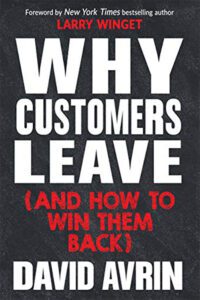
Why Customers Leave (and How to Win Them Back): (24 Reasons People are Leaving You for Competitors, and How to Win Them Back*)
No, they need to get their pricing competitive. I would love your insights on this. What I find interesting is that Walmart and Target, two typical rivals, join forces to try and compete against Amazon. Because the behavior is so ingrained and I’ve got the Prime membership already, it’s working, and you’re not going to give me a cheaper price than Amazon, I’m not so sure that even the Walmart-Target combination can’t get people to change the behavior. There’s no real reason to change unless Amazon messes up that I would maybe consider getting stuff.
It’s interesting. We’re going to see a lot of creative alliances. We’re seeing that certainly in media with a lot of integration on some of the media outlets. We’re seeing that integration in terms of home security, Wi-Fi, ring doorbells, and all of that as well. We’re going to see a lot of that to bolster the offering to be more competitive, but it also requires and continue to require a pretty high level of creativity of recognizing being more customer-centric, understanding what we value as customers, and being able to deliver that differently. Not everybody can do what everybody can do. The question is, “What can you do?”
I was talking to a huge group of small business owners, probably 1,500 in the audience. I did a session afterward. They were saying, “We can’t compete with Amazon and they’re doing free shipping. We can’t afford that.” I said, “What can you do?” The whole idea of positioning yourself as a specialist in a sea of mega generalists is a real opportunity.
I always counsel clients, “Never trash your competitors ever. Compliment your competitors. Just don’t compliment what your customer needs.” You say, “They’re phenomenal if you need this and this, but this is what we do. We do this better than anyone. Everything we do is geared towards delivering this.” “That’s what I need.” “We’re a better choice.” You aren’t one of many different things.
[bctt tweet=”When dealing with customer, you have to be conscious, creative, and intentional. You can’t afford to be in cruise control right now.” username=”John_Livesay”]
I talk about it and not drowning in a sea of sameness and stories that you can share and make you memorable of what makes you unique. You travel so much and a lot of people can relate to this. It’s that excuse you were referring to with Bed Bath & Beyond. If the planes are being canceled now and they go, “It’s the weather or pilot shortage,” I’m like, “I don’t believe it. You didn’t sell enough tickets. It’s not profitable to have this flight go out half empty, so you’re canceling the flight and jamming us all into another one.” My question is it’s not a shock why customers leave, but it’s more about how we win them back. What can an airline do to win them back or do they even care about winning us back?
You stand in any line at an airport and there is constant exasperation up and down the line. You look at the people look and they’re like, “Unbelievable. What’s going on?” They do know what they’re doing, but they’re wrestling a lot of beasts. I don’t have a lot of sympathy for them because we’re all paid full-time wages to get the job done, but we’re seeing it worldwide.
We’re coming out of the pandemic. There was no script for this. What they thought was a great short-term measure to save revenue is they gave early retirement to a lot of people, and then everything came roaring back. The part I will fault them for is they continued to sell tickets for flights that they didn’t know they had pilots for. They assumed they would find some way, even though understanding it takes weeks.

Visibility Marketing: The No-Holds-Barred Truth About What It Takes to Grab Attention, Build Your Brand and Win New Business
I’ve been speaking for 25 years. I’ve never missed a scheduled presentation. Six times, I’ve driven all night to make it to an event. Eventually, knock on wood here, something’s going to happen, but in the last few weeks, I’ve been at three events where a speaker was unable to show up for their time slot. This is my livelihood. This feeds my family and my staff. It’s the same thing when somebody needs something delivered to their home. What’s the backup?
I spoke at a huge conference of major manufacturers. They’re backed up for several months because of supply chain issues. They were talking about 600 vehicles sitting on a lot for a year, waiting for a small motor for the windshield wiper blades that they could not deliver to their clients. It’s going to take years. There is no political party that is to blame because this is global. If I had the answer, I would be far too rich to be taking time to be on shows with my good friends and colleagues. We’ve got to be conscious, creative, and intentional, but nobody can afford to be in cruise control mode.
Speaking of being creative, your website is one of the best I’ve seen for speakers.
Thank you, sir.
24 countries, 13 lost luggages, 1 million plus miles flown, 3 million plus laughs, and 0 events missed. You have a strategy to make sure you can continue to deliver on that promise. Putting it in there in a playful way is also creative. I’ve never seen anybody else do it.
Think about this in terms of the pitch. Let’s take it back to that. What is it that in every industry, there are certain criteria that the people buy from you or looking for? First and foremost, it’s safety. Is this a safe choice? Am I going to get screwed? Can I mitigate the risk? If it is package delivery, you mitigate through risk by giving a tracking number. It also reduces the number of incoming calls from people checking the status.
In my industry, the number one concern is whether it is going to be relevant and well-received. I put a video to alleviate that. They can watch me speak and see what I’m doing. When I throw in little funny things like zero missed engagements, that says something. Maybe it’s subliminal or other, but it’s important for every business to say, “What are the criteria by which the people are choosing between competitors? Are they going to hire you?”
They’re saying, ” I have a need and a number of options. Who’s the best choice for me? Who’s the safest choice? Who’s the most tailored choice?” It’s the same thing when we talked about the specialist over the generalist. When I go to a professional speaker’s website and they say, “Specializing in leadership, change, future, and marketing,” I’m not going to hire them for any of those things because if I need somebody who’s a futurist. I’m going to hire somebody that’s all they do because it’s their gig. They’re futurists.

It’s Not Who You Know, It’s Who Knows YOU! A Practical Business Guide to Raising Your Profits By Raising Your Profile
What I love is the story behind the six times you had to drive. That shows the willingness to do what it takes to have zero events missed. In addition to double booking flights, driving when you need to, cars, planes, and whatever, there also is a subliminal message there that you keep yourself healthy. I saw a speaker posting about having to give a talk with a bad back going out. You never know what’s going to happen. You can still get to the city and then have something go wrong. There’s a lot of thought that goes into it. You’re probably not out partying the night before an event.
If I did, they would never know. Here’s the other thing. I don’t understand this. I’m an oversharer on social media, but sharing every time that you’ve got sick, or “I’m at this event. I feel horrible,” sounds heartless. They have booked you several months in advance. They have 900 people sitting in that audience, but it’s the same thing. I have this video series called The Morning Huddle that I have a new book based on.
Don’t be the hero of your own story. “Look what a martyr I am.”
It goes back to the story, but we deliver because people are relying on us. Whether it’s our staff, our family, our audience, or our customers, we step up.
If anybody wants to book you as a speaker and get your books, they can find all of them on your website, DavidAvrin.com. Is there a last quote or thought you want to leave us with?
The last thought is the real key post-pandemic in the new world is you can win in business. Quality is a foundation by being ridiculously easy to do business with. Don’t make your people work for it. I’m so geeked out on new technology. I’m so bullish on the opportunities that have come about as a result. In many ways, COVID accelerated what’s long been predicted about how we’re going to do business. The ones who sit back, waiting for the cheese to come back are going to be left behind. There are huge challenges, but that creates opportunities for those who are willing to do more, and I am.
I love it. Note, be easy to work with. Thank you so much, David. It’s been a pleasure hearing your stories and wisdom.
Be well.
Important Links
- David Avrin
- It’s Not Who You Know, It’s Who Knows You – Amazon
- Visibility Marketing – Amazon
- Why Customers Leave (and How To Win Them Back) – Amazon
- The Morning Huddle
- The Morning Huddle book – Amazon
- Better Selling Through Storytelling Method Online Course
Wanna Host Your Own Podcast?
Click here to see how my friends at Podetize can help
Purchase John’s new book
John Livesay, The Pitch Whisperer
Share The Show
Did you enjoy the show? I’d love it if you subscribed today and left us a 5-star review!
- Click this link
- Click on the ‘Subscribe’ button below the artwork
- Go to the ‘Ratings and Reviews’ section
- Click on ‘Write a Review’
Love the show? Subscribe, rate, review, and share!
Join The Successful Pitch community today:
- JohnLivesay.com
- John Livesay Facebook
- John Livesay Twitter
- John Livesay LinkedIn
- John Livesay YouTube
Think Unbroken With Michael Unbroken
Posted by John Livesay in podcast | 0 comments

Recovering from a traumatic childhood is extremely hard, especially when transitioning into adulthood. When you’re trying to deal with the trauma, it can be easy to think that the best solution is to forget and pretend it didn’t happen. Yet, it has already been enforced in your mind, and you continue to carry the weight in your life. In today’s episode, award-winning speaker, author, and advocate for adult survivors of childhood trauma, Michael Unbroken, shares his past experiences and how he overcame them. His book, Think Unbroken, has helped thousands of adults with childhood traumas become a better version of themselves. Tune in to this conversation to know more.
—
Listen to the podcast here
Think Unbroken With Michael Unbroken
Our guest on the show is Michael Unbroken, the author of Think Unbroken. He said, “Your brain is a liar.” He is a reality speaker, not a motivational speaker. Find out what he means when he says, “Hurt people, hurt people.” Enjoy the episode.
—
Our guest is Michael Unbroken, who is the Founder of Think Unbroken. He’s a best-selling author, award-winning speaker, podcast host, coach, and advocate for adult survivors of childhood trauma. From 8 to 12, he was often homeless and in deep poverty. He did what it took from stealing food and only bathing at school.
He got high for the first time at 12 and was drunk at 13. At fifteen, he was expelled from school for selling drugs. At eighteen, he found himself deep in the vortex and chasing money to solve the problems. By 25, he was 350 pounds, smoking, drinking, and even attempted suicide for the second time.
He had his mirror moment and decided to stop being a victim and be the hero of his own story. Since 2016, he’s empowered over 100,000 trauma survivors to get out of this vortex, learn to love themselves, and become the hero of their own stories. He’s the author of this best-selling book, Think Unbroken: Understanding and Overcoming Childhood Trauma.
—
Welcome to the show, Michael.
Thank you. It is a pleasure to be here with you.
One of the things I always love is how do we build trust with people. Our mutual friend and speaking manager, Blair, is the one that connected us at BBN Creative Management. Blair Nichols spoke highly of you. I feel like I already know you a little bit. The goal of the kinds of guests I like to have on the show is that the readers feel the warmth and the trust that you have with someone getting transferred.
You have many elements in your story of things that have happened to you. One is leading to the next and to the next. I’m going to let you decide how far back you want to go where you went, “I need to change this.” Usually, 25 years old still have challenges and issues. I myself have had challenges with food. I know what it’s like to feel like your weight is out of control, especially in emotional eating stuff for me. I’m interested to hear that part of your story, but you can take us back as far as you want as to how all these experiences led you to help other people.
It’s the human experience. We all have our thing. I always like to preface that it’s not a competition because people will hear what I’m about to say. They’ll be like, “My life is not that bad.” I’m like, “It’s relative. It doesn’t matter.” I grew up in Indiana. My mom is a drug addict and alcoholic. She cut off my right index finger when I was four years old. My stepfather was super abusive. He kicked out my brothers and me. It put me in the hospital multiple times. The thing I want people to hold on to here is hurt people, hurt people. The deeper I got into doing this work, the more I realized, “Their childhood was freaking bad that this is how they thought it meant to operate in the world.”
[bctt tweet=”I’m a reality speaker, not a motivational speaker.” username=”John_Livesay”]
From 8 to 12, we’re deeply impoverished and homeless. I lived with 30 different families in that four-year span and bounced around from place to place at the church. We’d sleep in vans and abandoned houses. It was crazy. When I was twelve, after living by myself for six weeks, my grandmother found out about this. She came and adopted me, which you think would be a godsend, but I’m biracial, Black and White. My grandma is an old racist, White lady from a town in Tennessee you had never heard of. We had a copy of Mein Kampf on our kitchen table. Imagine an identity crisis. When you introduced me, at twelve years old, I got high for the first time, popping pills, doing weed, whatever drugs, and crazy stuff sometimes. We’re like, “What’s in this?” “I don’t know. Let’s take it anyway.” I’m doing things like that.
By thirteen, I’m drinking all the time. At fifteen, I get expelled from school for selling drugs. I’m breaking into houses, stealing cars, running from the cops, and getting shot at. It’s crazy. I got a call from the school counselor one day, and she’s like, “The dean wants to talk to you. You need to come to school.” I’m like, “Talk to me about what? You already kicked me out. Why am I here?” My grandmother was like, “You need to go to school to figure out what they want.” I go, and I sit down. Two people I’ve never met in my life sit down next to me. We go, “You’ve been volunteered to a last chance program. You have two options here. You can either do this or good luck with the rest of your life.”
John, I was like, “Got it. I’m going to do this.” At that same time, I put a restraining order on my mother and my stepfather. This is on the internet. I’ve shown the report card. When I did this, I went from straight F’s to straight A’s. Captain of the wrestling team, dating the head cheerleader and playing varsity sports. Life is totally different.
A couple of years go by, and my mother gets sober for the first time ever. My grandmother let her move into our house. Within a month, she had completely drunk every single day and popped pills. You can watch my report card go from straight A’s to straight F’s. I ended up not graduating high school. Now, looking back on this, I know something important. My mother was put back into the home of her trauma. She was back in the vortex. She’s in the chaos of all of it. Now that makes sense to me, but at eighteen, it didn’t. I had to do something difficult.
I told my mom one night after she attacked me, “I’m never talking to you again. You’re out of my life.” Eventually, she died from Oxycontin and found herself legless in some random hotel room in the middle of nowhere in Indiana. I knew if she stayed in my life, you and I would not be having this conversation right now. That’s one of the hardest decisions I’ve ever had to make in my life. One of the things people have to understand is the idea about your family is your family. It’s nonsense. You can not get caught up in that because if you do, bad things can come from that. That’s childhood. That’s up to eighteen years old.

Think Unbroken: Understanding and Overcoming Childhood Trauma
From there, I realized, and as I’m in summer school, my business teacher, the irony of all ironies, tells me, “We’re done with you. Here’s your diploma. Get out. See you in six weeks at graduation.” I’m like, “You’re going to pass me after I didn’t pass. I got embarrassed and uninvited from all the parties. All my friends called me a loser. My girlfriend is embarrassed of me. You just got to give me this diploma.”
I’m working this job at a warehouse, putting microchips in motherboards every single day, twelve hours a day. It’s nonsense. I’m watching the desperation in people’s eyes because this is the place where people’s dreams go to die. I got fired, thank God, probably because I was stoned. I’m sitting in my car, and this was one of my first rock bottom moments. I’m like, “What is the solution for homelessness, poverty, abuse, and all the stuff I’ve been through my whole life? It’s got to be money.”
At that moment, I made a declaration to myself. I said, “By the time I’m 21, I want to make $100,000 a year legally.” That part was important. I’ve been in handcuffs more times than I can count. I have family in prison for life several years later. My three childhood best friends have been murdered. I knew where I was going.
I started taking all those skills I learned in that last chance program. I ended up getting a job with a Fortune 10 company as I’m heading into 21, no high school diploma and no college education. I start making $100,000 a year. I reached that goal, but I don’t have clarity in my life. I only know money. Fast forward five years, I’m riding high, and I’ve made almost $1 million, but I’m $42,000 in debt.
I’m 350 pounds. I’m smoking two packs a day and drinking myself to sleep every night. I’m high from the moment I wake up to the moment I go to bed. I’m cheating on my girlfriend. My brother never talked to me again. My best friends were embarrassed of me. My life is a freaking disaster. Why? Because I was still that hurt, lost little boy.
[bctt tweet=”Hurt people hurt people.” username=”John_Livesay”]
I thought money was going to be that thing. Many people who are business owners, entrepreneurs, and change-makers move towards money because we think that’s the thing. Everyone always says, “Money doesn’t change your life.” No one experiences it until it happens. You can read this all day long. I don’t care. Until you feel the impact of that, you don’t know what it means.
I hit this rock bottom. It’s Saturday morning. I’m laying in bed, eating chocolate cake, smoking a joint, and watching the CrossFit games. I’m sitting here at 350 pounds. You talk about rock bottom. For whatever reason, I got up and went to the bathroom. I looked at myself in the mirror. I remember being eight years old and the water company had come and turned our water off. This was normal. It was a blistering hot Indiana summer day. I go to the backyard. I take this little blue bucket. I walked across the street to our neighbor’s house, and for the first time, I stole water.
I remember being like, “When I’m a grownup, this won’t be my life.” It wasn’t in a lot of ways, but it was in all the ways. As I had that memory looking at myself in the mirror, I realized I was breaking a promise to myself. I asked myself the question that changed everything, “What are you willing to do to have the life that you want to have?” The answer became no excuses, just results. Several years later, here I am with you.
There are many things in that incredible story. The thing I want to double-click on is this concept of the vortex. How do you define that? How does someone know if they’re in one?
There are people saying things to themselves right now that if you said to me, I would punch you in the face. You’re expecting yourself to be successful. Think about this for a minute. That vortex is the negative limiting belief and self-sabotage. It is the place in which we play the victim. It is where we live up to the expectations of all the people who have always told us, “This is who we are.”

Overcoming Childhood Trauma: You have to recognize that we hold on to things like life is linear. But healing is peaks and valleys.
It’s natural that we would end up there, especially if you come from a traumatic background. Nobody escapes childhood unscathed. Don’t get it twisted. That’s the first thing that I always tell my clients. I’m like, “When you come into this, the first thing we got to do is we got to understand something that’s empirical that will change your life forever.” The way you speak to yourself matters more than anything else that you do. I promise you, going to the gym, meditating, journaling, yoga, and eating, that stuff does not work if you are an a****** to yourself.
It’s almost like thinking money is going to make me feel better and not addicted. The money doesn’t solve the problem either, much like affirmations and meditation, as you said. All that mean and negative self-talk is the core to getting out of the vortex and healing all addictions, not just one. In my case with food, I want to stuff down feelings I don’t want to feel, whether it is rejection, anger, anxiety, sadness, and boredom.
I had to identify what is the feeling that was triggering this need not to feel this. How do I get comfortable with people being angry at me, not liking me, or, in your case, having to be finding the courage to say, “I’m not going to have my mom in my life just because she’s my mom.” You found the self-esteem to do that. Was there a person along the way that did help you in any way since the grandmother wasn’t the supportive character in your story?
She was because I have the security of at least I know when I go home, I’m not going to get beat. When you look at resilience studies that have been done over the years, one person like that can create a different outcome. I would not argue that she was on, by any stretch of the imagination, somebody who catapulted to the next level because she wasn’t. Periodically I would have teachers or coaches who would eventually come to be mentors that I sought online, who became this foundational cornerstone for change in my life.
When you’re young, you don’t even realize, to an extent, you go, “This doesn’t feel right.” Until you start experiencing life through different views, do you understand that? My high school business teacher and my senior year, who failed me, were the greatest inspiration of my entire life. What happened was he was the only person who ever stood up to me. I’m 6’4”, and I’m towering. I’m a big dude. This is early 2000. People were like, “We want you out. It doesn’t matter.” This was several years ago. It’s different than it is now.
[bctt tweet=”The thing that people hold on to here is hurt.” username=”John_Livesay”]
One day I go up to his classroom, and I go, “I’m never coming to your class. It’s 7:30 in the morning. I’m out selling drugs all night. I’m working at a fake job at Hollywood video, trying to cover up because I thought that’s what you should do. My grandma is in a coma. Me and my younger brother are in this house by ourselves, trying to survive, and you think I’m coming to your class. You’re out of your freaking mind.” He’d been teaching for several years. He goes, “I get it. Check in with me once a week and do homework.” John, do you know how many times I did that? Zero.
I get a call from my girlfriend in my senior year. I’m at home playing video games, and she’s like, “You’re not graduating. You need to come to school and deal with this.” I went to school and I knew it was him because everybody else was like, “Whatever.” I go up to his classroom, and I go, “How dare you fail me?” He says, “I didn’t fail you. You failed yourself.” He told me the most important thing to this date anyone has ever said. He goes, “If you want something in life, you have to earn it. You can’t get by on your charms and your good looks.”
That singularly became the thing that catapulted me to the Fortune 10 company that now catapults me to being an award-winning speaker, having a best-selling book, having an award-winning podcast, and coaching thousands of people because it’s true. If you want it, go to work. What’s interesting is we don’t all get that person. What happens is I get to be that person for my clients.
One of my clients did something amazing in her career. She works for a company that we all know about. Everybody knows who they are, and I posted, “Way to go. You’re a badass. You did this.” Her response to my post was, “I love that I’m able to do this, but I couldn’t have done it without you.” That’s why I do this. I promise you. I can make money in a million other ways, but being able to be that person for people who didn’t have that person is what Mr. Bush was for me several years ago.
I’ve talked about us being the movie director of our own life and yelling cut when things aren’t going a certain way, and sometimes we have to change locations and people in our life. It sounds like you certainly did that. One of your chapters stood out to me, and I thought, “What a clever title.” This is your brain on trauma, as opposed to the commercial about this as your brain on drugs.

Overcoming Childhood Trauma: The coping mechanisms that we have are actually survival mechanisms.
That’s where it came from.
I have an advertising background. I know slogans and taglines. When people put a spin on something that’s already in our subconscious, it makes our brain pay attention because you’re like, “That’s an interesting new twist. I haven’t heard that. What does that mean?” The premise of what you’re saying here, Michael, is until we heal those traumas, nothing else is going to work. Part of the healing is what we’re saying to ourselves. On some level, how much does letting go of resentment and anger plug into that healing?
That’s the secret pill. I also have a background in advertising and marketing going on now for several years. I’m always thinking about that forward facing in the marketplace. It’s the same reason Michael Unbroken exists. You have to recognize that we hold on to things. Life is linear. Here’s your start date. Here’s your end date. Everything else between that was like, “I don’t know. That is the stuff.”
Healing is peaks and valleys. It’s like ping pong. What happens is, somewhere along this line, in this linear experience, you’re going to have to make a decision to let go. Here’s why that’s difficult. We, whether we like it or not, are the sum total of all of our experiences leading to this moment. That means everything that’s ever happened to you counts. Context, in twenty minutes, you know more about me than people who have known me for several years. Think about that for a second. Stuff it down, eat it away, smoke it away, drink it away, and have sex it away. The whole thing does not solve the problem.
The coping mechanisms that we have are survival mechanisms because the brain looks at this and goes, “This is uncomfortable. I must do anything else. If I can do anything else, I will be safe.” If you think about it, those coping mechanisms create chaos in your life. At least they did for me. You hear people who have been through traumatic experiences say this, and this is arguably one of the most dangerous things that you can say, “I thrive in chaos.”
[bctt tweet=”The way you speak to yourself matters.” username=”John_Livesay”]
Why would you want to thrive in chaos? Why would you not want to thrive in peace, companionship, love, empathy, grace, hope, and compassion? What happens is a part of this is going through the healing journey, whether it be therapy, coaching, personal devote, or whatever. At some point on this trajectory, you’re going to have to acknowledge one empirical reality.
You are not culpable for the things that happened to you in your past, but everything from this moment forward is on you. You have to decide whether or not you are going to anchor yourself into the depths of the water that drag you down every single day, or you are going to pull yourself up and go towards the shore of your decision-making. That’s hard because here’s why. Your whole life, you’ve been told you’re not good enough, not strong enough, and not capable enough. This is why you’re a loser, fat, dumb, your dad left you, your mom is a drug addict, your homeless, you’re weak, you’re on food stamps, you have to get school lunch.
In your brain, you go, “That must be who I am.” You then have to recognize reality. This is the matrix. Whether you like it or not, this crap is a red and blue pill. You can choose to stay exactly where you are. That’s easy. You’re already there, or you can take the red pill and see how deep that rabbit hole goes. When you do, you’ll be shocked to find out what you can do.
People will hear me, and there’ll be like, “This guy has all the accolades. He’s done all the things.” I have already been to rock bottom. I already know how dark it is down that street. All I do is simply hold up my hand and a flashlight to people. If you haven’t decided, you must make a decision. If you have not decided that you’re willing to heal and let go of the past so that you can move forward, nothing will help you.
It reminds me of Einstein’s quote, “The biggest decision we ever make is the world of a friendly, safe place or not.” From there, we look for data and experiences to back it up. In your particular case, you didn’t have a friendly, safe environment to grow up in. You’ve had to create that separately to make that your reality is what I’m hearing.

Overcoming Childhood Trauma: People are constantly bending themselves to the world, to everybody else.
That comes from looking at your brain on trauma, understanding that the brain’s response to the stimulus is to simply categorize it and go, “Is this safer or not?” If it’s safe, you continue to do it. If it is not safe, you put it away. Part of the problem with that is when you’re in your developmental years, especially as a child.
If you come from a traumatic background, being you can often be the most dangerous thing you can do. The fastest way for me to get my head slammed into a wall as a kid was simply to exist. The brain goes, “Being me is dangerous. I’m not going to be me anymore.” The worst part about that, John, is it serves you for a period of time when you’re 8, 12, 16, or 18 years old because it keeps you safe.
You’re 22, 37, and 54 years old. You don’t know how to be yourself. You don’t know how to say yes. You don’t know how to say no. The idea of ever asking for what you want, need, or are interested in is terrifying. The only way that you change is by changing. That’s the thing people get stuck on because they feel like they still have to be that other version of themselves. The brain has predetermined, based on empirical historical data, that being you is dangerous. Thus, you cannot be you because then you are not in a state of safety.
The only way you move through that is by slowly stepping your toes over the line of the reality that you live in and into what is next because that will build confidence and self-esteem. Eventually, I hope that on a long enough timeline for you, the thing that you come to realize is that the world is safe, but your brain is a liar because it simply only wants one thing. It wants to keep you safe.
I have Dr. Jud Brewer on Think Unbroken Podcasts. He has a TED Talk with 10 million people who viewed it. I said, “Jud, let me ask you a question. When I think out loud that the brain is a liar, is that true?” He’s like, “Absolutely.” The thing that people need to do if they want to create sustainable long-term change in their life. It’s not therapy, coaching, and personal development. That stuff is fine. Everybody knows to do that. It’s about paying attention to your gut.
[bctt tweet=”It is only until you start experiencing life through different views that you start to understand.” username=”John_Livesay”]
John, how many times in your life have you had a situation where you’re 2 weeks later, 1 month later, or 6 months later go, “I wish I would have followed my gut. I knew it.” You have never once said, “I wish I would have followed my brain.” Get in your body, pay attention to what’s happening here and understand that your brain is a liar.
You’ve taken this beyond the podcast and book to being a speaker. You spoke to over 10,000 people at our Grant Cardone conference. What did that feel like?
I fully and entirely believe in visualization. It’s weird because I’ve spoken at conferences where Blair has been there. I’ve spoken at conferences where 10,000 or 2,000 people are watching or whatever, but nobody was there several years ago when two people came. People always ask that question, but here’s the thing. I already decided a long time ago that I would speak in front of 10,000 people. The marker on my to-do list is to speak in front of 25,000 people. I’m not even close to what I’m trying to accomplish. It’s simply about this. I had already predetermined that it was going to happen.
Coming back to this idea that we live in the matrix. I know people are like, “We don’t live in the matrix.” I’m like, “How do you know?” That’s the whole point. I’m like, “Can you bend the world to you?” People are always bending themselves to the world, to everybody else, to your needs, their needs, and those guys’ needs. We grow up like that. Raise your hand to go to the bathroom, color the way we say to color, go to college, and all this stuff.
For me, what happened is, since you asked my feelings on it, I was sitting there thinking to myself, “I believe that I will accomplish everything that I want to accomplish in my life, but it’s simply about time. That means I have to keep going forward every single day and being in that energy.” I have a tattoo of a guitar pick from Dave Grohl from Foo Fighters on my wrist. When I was a child, I had two dreams. Don’t die and be a rock star. I don’t know how to play any damn instruments. I never put in the effort, so that ain’t going to happen.

Overcoming Childhood Trauma: Why would you want to thrive in chaos? Why would you not want to thrive in peace, companionship, love, empathy, grace, hope, and compassion?
What I can do is I can grab this mic, stand on stage and make tens of thousands of people feel emotional, alive, charged, loved, and feel like they can take on the world. Most importantly, I give them the tools because I’m not a motivational speaker. Motivation is nonsense. I’m a reality speaker. I’m going to tell you the truth you don’t want to hear. When I tell you some truth you don’t want to hear, you’re going to wake up or not. For me, I’m standing there getting ready to go speak in front of all these people. I’m like, “Some people are going to learn something now. It’s the thing that I needed.”
Do you have an ideal type of crowd that you’d like to speak up in front of?
People ask me all the time. I’ve lived a lot of lives. I’ve worked in Corporate America for a Fortune 10 company. I’m an entrepreneur that runs 3 different businesses with a team of over 82 people. I’ve been in leadership since I was eighteen. At eighteen years old, I worked for a fast food joint. I had 52 people under me. I’ve written books. I live my life. I can go and speak to any room. I fully and truly believe that. Here’s the reality. Nobody comes out of childhood unscathed. If you put me in front of a human being, we’re going to have a conversation.
That boils down to why you’re in demand as a speaker because the truths are universal, despite everyone’s different backgrounds and levels of trauma. What I loved most about what you said at the beginning was it’s not a competition. I learned that once in a therapy session. I feel guilty that I’m sad about this when all of these other people have these kinds of traumas. I’m like, “No, each person’s feelings are valid, and they get to have them.” You’re not comparing your feelings to someone else’s feelings of, “I don’t deserve to feel this way because I didn’t have as big a trauma as somebody else.” The fact that you preface that upfront lets people connect to you much stronger in a way that gives you a lot of credibilities but also authenticity.
John, I think this is important too. What I always remind myself of is, what does that have to do with me? We’ve never met until this moment. We have no intersection. There’s no way that the things that you have been through impact me directly. Indirectly on a long enough timeline when you connect the dots. Sure, of course, and ultimately, all of those things have led to this moment. It’d be stupid not to acknowledge that.
[bctt tweet=”The only way that you actually change is by changing.” username=”John_Livesay”]
The truth of the reality of life is everybody is on a different journey. If you get caught up in that mind game of, “They got it better. They got it worse.” you’re going to miss the boat because the only thing that you have is this present moment right now. The past is over. It’s gone. You don’t get it back. I can’t even get back anything I said in this whole conversation. I could have destroyed my whole career for all I know. I don’t know, but I can’t control the future either. I don’t have control over anything that happened, but the future doesn’t even technically exist because it’s either the present or it’s the past, and it’s gone.
The other chapter title I love is Keep Your Promises. I want to have you go into why that’s important. I think it starts with the promises we keep to ourselves and let alone others.
Think about this. If I cannot trust my commitment to myself, how can you? I apply this thoroughly. I measure people by this, and I know it’s not the best way to look at the human experience. If somebody tells me they’re going to do something and they don’t, and it’s for themselves, I can’t trust they’re going to show up for me. We have to show up for ourselves first.
Many of us are used to people breaking their promises. Many of us are used to, “Dad said he was going to come to the ballgame. The teacher said that they were going to help me with the assignment. My best friend said that they were going to be my prom date.” Whatever it is, I don’t know. All these things add up. We learn that it’s okay not to keep the promises.
I told one other person this since I’ve been doing it, a mandate 55 of 75 Hard. I’ve told nobody about it. Nobody even knows. On 75 Hard, you’re supposed to tell everybody and post it on the internet. I’m like, “This is for me. Can I show up and keep my promise to work out, drink water and all the stuff of that thing is?” It’s also like, “Can I keep my promise to write the book, speak on the stage, do the podcast, and not get in my own damn way?”
People are far more afraid of success than they are of failure. We’re used to failure. Failure is easy. I can fell now like that. Success requires work, commitment, a promise kept, and an understanding that on a long enough timeline, you can have anything you want in your life. You truly can. I believe that because I have seen billionaires fly off their helicopters on a beach while I’m sitting there like, “I don’t have that much money.” For me, it’s not the money. I don’t care about the money.
The thing is looking at that, and I go, “That guy wanted that so bad. He figured it out.” Elon Musk put a car in outer space. You have a cell phone in your hand. I have friends who make $100,000 a day with their cell phones. You can do anything, but are you willing to sacrifice? Are you willing to show up? Are you willing to keep your promise? It’s easy to quit on yourself. You’ve been doing it your whole life.
Michael, if people want to find out more about you, hire you as a speaker, get your book The Think Unbroken, where should they go?
I’m everywhere on social @MichaelUnbroken. You can listen to the Think Unbroken Podcast if you go to ThinkUnbrokenPodcast.com. It’s on iTunes, YouTube, Spotify, and all the places. If you want to listen to or download the first three chapters of my first book, you can go to Book.ThinkUnbroken.com.
Thanks for inspiring all of us. I love that you’re a reality speaker, not a motivational speaker. That’s a nice little branding position. Congratulations.
Thanks.
Important Links
- Think Unbroken: Understanding and Overcoming Childhood Trauma
- Think Unbroken
- BBN Creative Management
- Dr. Jud Brewer – Previous Episode of Think Unbroken Podcast
- Think Unbroken Podcasts
- @MichaelUnbroken – Instagram
- iTunes – Think Unbroken Podcast
- YouTube – Think Unbroken Podcast
- Spotify – Think Unbroken Podcast
- Book.ThinkUnbroken.com
- https://www.ThinkUnbroken.com/speak
- Better Selling Through Storytelling Method Online Course
Wanna Host Your Own Podcast?
Click here to see how my friends at Podetize can help
Purchase John’s new book
John Livesay, The Pitch Whisperer
Share The Show
Did you enjoy the show? I’d love it if you subscribed today and left us a 5-star review!
- Click this link
- Click on the ‘Subscribe’ button below the artwork
- Go to the ‘Ratings and Reviews’ section
- Click on ‘Write a Review’
Love the show? Subscribe, rate, review, and share!
Join The Successful Pitch community today:
- JohnLivesay.com
- John Livesay Facebook
- John Livesay Twitter
- John Livesay LinkedIn
- John Livesay YouTube