
One Page Marketing Plan
Posted by John Livesay in podcast | 0 comments

 Episode Summary:
Small businesses need a small business strategy that works, and that really comes down to direct response marketing. Allan Dib needed to come up with a plan that was fast, effective, and followed direct response marketing principles very closely that would move the needle for his clients. From that need was born the 1-Page Marketing Plan which is a process that’s easy for clients to fill in and literally a single page divided that into nine sections. Allan is a serial entrepreneur, marketer and technology expert. He has started, grown and successfully exited multiple businesses in various industries. He walks us through how to have a marketing plan with just one page. He said, well, your path to profit isn’t getting referrals and that the marketing doesn’t stop once you get a customer.
—
Listen To The Episode Here
One Page Marketing Plan
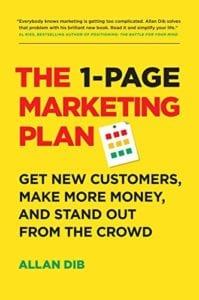
The 1-Page Marketing Plan: Get New Customers, Make More Money, and Stand Out from the Crowd
Our guest is Allan Dib, who was a serial entrepreneur, a rebellious marketer, technology expert and the bestselling author of a book called The 1‑Page Marketing Plan. He started and grown multiple businesses in all kinds of industries around telecommunications and IT. One of his previous business where he faced competition from a big billion-dollar company and he was still able to grow this startup. He was later named by Business Review Weekly as one of Australia’s fastest growing companies and got on their Top Fast 100 list. He’s passionate about helping new businesses find new ways to leverage technology and he is a business coach and consultant and speaker and he is here with us. Allan, welcome to the show.
John, a pleasure to be on the show.
I love hearing people’s story of origin. If you wouldn’t mind taking us back to whatever you want, as far back as childhood, high school, college, university where you said, “There’s got to be a better way to market things and what’s going on.” How did you get interested in what you’re doing?
John, I’m not at all from a marketing background. I’ve got no education in business or training in marketing, whatsoever. It came about by necessity, as many good things do. I was a dead broke IT geek. I was good at what I did. I was running an IT business. I would always try and learn the new technology. Our clients loved what I did, they loved my service. They loved my products, they love our team and everything like that. For the life of me, I could not grow this business. It was stuck and any business that came our way was business that either came by referral or by chance or by some other similar means. It grew out of absolute frustration. That put me on a path to trying to learn marketing for the better part of a decade. Long story short, I learned all I could. I discovered direct response marketing and my life was never the same. It sounds like an overnight success story, but it’s certainly not it. It was probably a decade from start to end.
Let’s figure out if we could have the big takeaways from using The 1‑Page Marketing Plan. Usually marketing plans are known for being thousands of pages if not hundreds. There are three takeaways. You’re going to get new customers, which then you make more money. The big one that I want to jump into is how to stand out from the crowd. One of the things you talked about Allan is why getting your name out there is a losing strategy. That’s such a common thing as like, “We’re starting a company and we’re going to get our name out there and get all kinds of brand awareness and spend money on Facebook and social media. Then when we’re ready to open the floodgates, people will know who we are.” Why does that not work?
“Build it and they will come,” is a great movie plot. It’s not such a good marketing strategy. It comes about because people think that, “I can see Pepsi or Coca-Cola, Apple doing this brand awareness stuff. They’re super successful companies. That sounds like a great strategy for me.” If you’re working on property investment, there are property investors who build skyscrapers and they invest hundreds of millions of dollars in their investment. Then there are investors who buy a single small property somewhere out in the suburbs and rent it out. If the guy who’s trying to do the small investment strategy, who’s working on a small scale, if he tries to do the skyscraper strategy where he’s only got enough money to build one level of the skyscraper that’s not going to work. He needs a strategy that’s going to work on a small scale, not a strategy that works on a large scale.

One Page Marketing Plan: Small businesses need a small business strategy that works.
It comes about because of some of the different motivations behind marketing at a large scale and marketing in a small scale. At a small scale, the only thing that matters is can we get a profit? Can we get a client? At a large scale, large companies, they have completely different motivations. Making a profit is somewhere within there, but I would put to you that above that is things like placing the board of directors, satisfying superiors, biases, winning creative awards, things like that. Things that are completely useless for small businesses. Small businesses need a small business strategy that works and that comes down to direct response marketing.
Let’s walk people through each of your nine grids on The 1‑Page Marketing Plan.
It’s a single page. Where this came about early in my business career, I thought, “I need to hire a consultant to help me put together a business plan.” I did. I paid him thousands of dollars that I couldn’t afford at the time, but I thought, “This is important. All good businesses have a business plan and a marketing plan.” He did what most consultants do. He put together a beautiful looking plan. It was hundreds of pages. It had beautiful graphs and charts and projections and things like that. I took that plan, flick through it, put it in the top drawer of my desk and the next time that I saw it was when I was moving out of our office and we were taking all the things out of the drawers. I looked at it and throw it in the trash and thought, “What a waste of time and money that was.”
I did recall that there was one part of that process, the creating that plan that was very valuable to me. That was the part inside it called The Marketing Plan. It wasn’t the plan itself that was super valuable to me, but it was the process that me and the consultant went through to do that. Part of what we did was look at, “What’s the target market that we’re going after? What’s the message that we’re going to go to that target market? How are we going to reach them? How are we going to position ourselves? How are we going to price ourselves?” That was a super valuable process because it crystallized to me the things that we needed to do as a business and how we needed to present ourselves and how we needed to pitch out our product and our service to differentiate ourselves from some of the competitors that were in the marketplace. That was a super valuable process to me. That stuck in my mind for many years.
Then when I became a coach, one of the things that I started to do with my clients, I started to say, “Let’s do you a marketing plan.” That’s when clients would freeze up and they would procrastinate on that. It feels like something so overwhelming, such a big thing to do. It takes a lot of time, a lot of money. That’s where I needed to come up with a plan that was fast, that was effective and that followed direct response marketing principles very closely because that’s the marketing that would move the needle for my clients. Out of that, they say necessity is the mother invention and I certainly found that to be the case.
From that was born The 1‑Page Marketing Plan. I wanted a process that would be easy for my clients to fill in and literally a single page. I divided that into nine sections. The first three sections are called the before phase, the next three sections are called the during phase, and the last three sections of the after phase. What do we do before we were acquired a client, what do we do during the time that we’re trying to acquire a client, and what do we do after we try and acquire a client? Then within those three major sections, we’ve got three subsections.
You don’t have any revenue coming in and you’re trying to figure out what your prospects are. Then after you’ve got that, those three things done. Your next level is, “How do I capture these leads with my sales funnel?” Then the final one is, “Now, I’ve got a customer, how do I keep them and get referrals and all that good stuff?” I always love to give examples with content and structure because it brings this incredible tool to life.
[bctt tweet=”Path to profit is in referrals.” username=”John_Livesay”]
I am a Co-Founder and CMO of a startup myself and we’re using your tool. I’m a testimonial for you on this podcast. We are helping homeowners who have equity built up in their home and want some cash out, but do not want to take out a second loan and besides selling the house the only way they get access to that cash. That’s our target market. We know that there’s a huge amount of people that want this and either can’t qualify or can’t afford to have a second mortgage payment by taking some cash out to remodel or send their kid to college or whatever they want to do with it.
The message to the target market is we’ll give you the cash in exchange for owning 10% of your house and you can stay in the house as long as you want, and then when you sell the house, that’s when we get our money back based on the percent of the house that we own. Then the third part of this strategy is you talked about what kind of media are we going to use? This is where I want your expertise to come to life is we’re using Facebook ads.
We’ve got an explainer video that explains how to do that. We’re going to be running ads to promote that, to build up an email list of people that are interested. We’re obviously doing PR as part of our marketing with the CEO being interviewed on podcasts and that type of things. That’s our strategy. Is there anything within those three buckets under your before section that you could amplify and say, “You’re good here,” not quite defined enough?
I like to get as niche as possible and it seems counter-intuitive to a lot of people, especially when you’re starting out. Maybe you’ve got a startup, you think, “I’ll cast the widest net possible because I don’t want to miss anyone.” What ends up happening is people say, “Yes, of course I can help you. I can help anyone. My product is for anyone and everyone.” That feels logical, but when you say it’s for anyone, you’re saying it’s for no one. It’s funny, you see so many ads that are a laundry list of products and services. “We do this, we do ABC. We do so on and so forth.” They’re trying to cast the widest net possible. The human brain it has so many stimuli coming at it every day, each day, every minute of the day that it has a filter.
The filter is, “Is this relevant for me?” It tries to actively filter out things that are not relevant for it. If you’re coming at people with a very general message, people’s brains are automatically going to filter that out because your brain wants to find things, “That’s relevant for me,” and then hone in on that. That’s exactly what we want to do. I’ll give the example, if you’ve got a knee problem, do you want to go see a general doctor or do you want to see a knee specialist? Let’s say I’m driving and I see a sign, knee specialist, that’s going to catch my attention. Whereas I might drive past ten signs that tell me about a general practitioner or a general doctor. We want to get hyper specific because we want our message to be so specific that when people read it they say, “That’s for me.” It commands attention.
I’ve had that experience myself where even sometimes in an email marketing. I’ll get an email and it’ll be like, “Are you in my head? This is exactly what my problem is.” I like to tell people that the riches are in the niches, which is a summary of what you said. That’s our challenge sometimes actually is we have found our ideal target market, avatar, whatever you want to call them as a middle-class family who has some teenage kids about to go to college and have been in their homes five plus years or more.
The house has gone up in value 30%, 40% where they could take out $50,000 $100,000 and still have quite a bit of equity left. They don’t want to pay interest rates or have a second mortgage on top of their current mortgage to get that money out. The other target market we could help are senior citizens who have paid their house off, but need some cash but don’t want to reverse mortgage. I said from a marketing standpoint, “Let’s pick one niche and focus on them and not try to have multiple messages going out.” Do you agree with that strategy?
I agree with that. The other thing that you can do is when you do have two obvious markets is have a one-page marketing plan for each. Treat them as completely different segments because the people who are retired who have paid off their house have different worries, they have different things keeping them up at 3:00 AM than the young family who have got a little bit of equity. We want to speak to them very differently.
The big takeaway everybody is have a one-page marketing plan for each of your niche markets. That is gold right there. Let’s go to the second stage, which is, “We’ve focused on people. We’ve got people clicking on our ad. They’re opting in for more information.” You’ve got these great things of what is your lead gen capture system, how do you nurture it, and then how do you convert that to sales? Do you have any examples of how you’ve done that either for your own business or one of your clients?
It comes down very much to who your target market is. In your example, for the older people, I would say things like Snapchat and Instagram may not be the best choice. You’ve got to be thinking about the target market, but when it comes to messaging, you want to hit some of the emotional triggers that people have. Some of the major ones that are universal, things like fear, love, greed, guilt, pride. We want to touch people emotionally in our marketing message. What a lot of people do is they list features and benefits, “This is going to be a low interest rate and this and that.” People think that they make decisions intellectually, but that’s absolutely untrue. People make decisions emotionally.

One Page Marketing Plan: The path to profit is in the after-phase, in the repeat and the referrals.
Those are five emotions that your marketing should encompass, fear, love, greed, guilt and pride. Let’s give our audience an example because that’s going to bring it to life. Sometimes, the fear is, “I won’t be able to send my kid to college or if I take out a second loan, I’m afraid that I might lose my house because that’s too much debt.” Then the love is, “I love my kids so much, I want them to get a good education. I’ve got to figure out a way to do this.”
The greed would be, “This is my money and I’m angry that the bank is so greedy and won’t give it to me without charging me a high interest rate. That’s greedy on their part.” The pride would be, “This is part of a movement that I’m proud to be part of that’s helping people get access to their money that they’ve earned without having to pay a fortune to get it.” Then the guilt is, “If I don’t share this information with my friends who I know are in the same situation, I’m going to feel guilty about it.” Is that helping bring those emotions to life within that scenario?
We want to hit on the things that are keeping your prospects up at 3 AM. What are they sitting there wide-eyed in the middle of the night concerned about, thinking about? What are the thoughts that are racing in their mind when they can’t sleep? We want to hit on some of those emotions because as one of the great copywriters said, “We want to enter the mind of the prospect.”
We’ve got these happy customers and you talked about delivering a world-class experience and how you increase their lifetime value and that was fascinating to me. Finally, how do we get referrals? Let’s take each one of those buckets separately, if we could. A world-class experience, even if you’re not selling something hugely expensive, the example I think of is Banana Republic. They wanted to give a world-class experience to people who come to their big flagship stores by offering them the ability to charge their phones while they shop or remembering their birthdays to their top 20% of their clients. Usually somebody like a Neiman Marcus would do that, but they said, “We could do that for not all of our clients, but the top 20%.” Is that what you’re talking about with world-class experiences, even if it’s not a world class price?
Price has very little to do with it. So many people finish their marketing when they’ve acquired the customer. It’s crazy because all of the money is made in the after phase, after you’ve acquired the customer. Very often, to acquire a customer, your cost of customer acquisition will often not even be covered by your first transaction. It depends on what business you’re in, of course. The path to profit is in the after phase, in the repeat, in the referrals, in all of that phase. What you want to be doing is building a tribe of raving fans.
You don’t want to be transactional. You don’t want to be, “Here’s your product and here’s my money and end of story.” That’s where a lot of businesses and their relationship with their clients. Delivering a world-class experience is all about creating a tribe of raving fans. You want people to become fans and people become fans when you’re easy and fun to deal with. When you create relationships for life, when you create a sense of theater in your products and services. If we think of some of the companies that do that like Apple, you walk into the Apple store, it’s an experience. It’s not just a store.
[bctt tweet=”Build a tribe of raving fans.” username=”John_Livesay”]
It’s interesting because Microsoft has tried to copy that and it feels so sterile and not hip and cool like Apple. It’s a fascinating. It’s like, “You’ve got computers along a wall, but where’s the architecture? Where’s the design of the space to match the design of the product? It’s not even close.” It’s fascinating how that sense of theatrical experience you were talking about is not always easy to even duplicate even if you have money.
It comes down to the DNA of the business and making sure that your marketing is something that’s part of your product. I see this a lot. People will say, “I’ve got XYZ product or this widget. How do I add marketing to it?” At that point it’s pretty much too late. You want to be a thinking about marketing and delivering the world-class experience during the product development phase. You want to say, “This is how we want to end up with a tribe of raving fans rather than clients. How do we do that?” If Apple had already put the store together and then at the end thought, “How are we going to market this thing?” That’s way too late. We want to be delivering a world-class experience and we wanted to have that baked into the DNA of our product and service.
Do you have any tips on how to stimulate referrals? Whether you’re a real estate agent or a company that you know is going to help people get cash out of their home without taking on more debt? How do you encourage those people to refer to their friends? Do you have incentives? What do you think?
A lot of people feel like asking for referrals is like asking for a favor. We feel weird about asking for a favor or we feel like we’re begging for more business or things like that. Certainly, if you’re positioning yourself like that, then that’s going to be a major problem for you. The reason I tackled the last chapter in my book orchestrating and stimulating referrals because it implies something active. It’s not sit and wait for referrals. It’s not beg for referrals or hope that they come to you. We want to plan out how a referral is going to happen in our business. There are a few ways.
First of all, when you’re delivering your product or service you might say, “John, I’m here to deliver you a fantastic experience and part of our business is making sure that referrals are coming our way. I’m going to deliver you a super experienced, but at the end, I’m expecting that you might refer to me to a few friends or relatives or, or whatever.” Making that expectation made upfront and with that expectation upfront, you’ll probably going to be working harder to deliver that world-class experience to the client.
That’s one thing, asking for it. The second thing is, if you think about the last time that you referred one of your friends or family to a movie or to a restaurant that you liked or something like that, were you doing that as a favor to the movie chain or were you doing that as a favor to the restaurant? I highly doubt that. You were doing that because you want to look good. You had a great experience at that movie or that restaurant and you wanted your friend or family to have that same great experience.
Understanding that people are doing referrals for selfish reasons. You want to feed that. You want them to look good and you want their ego to be puffed up or fed. You do that by helping them to understand that they’re going to look good by referring you. There are a few ways you can do that and you don’t have to put a lot of pressure on people. You don’t have to be pushy or anything like that, but giving something of value that they can pass on. An example of that might be a book, it might be a report.
In your case, it could be a free report that tells them how to get cash out of their house without taking out a mortgage. If suddenly hear of a friend who’s saying, “I’m needing cash but I’m struggling to get a home loan or I don’t want to get a home loan because I don’t want to be in more debt.” Then suddenly that’s going to pick up in my mind, ” Hang on. John’s got a report that says how to pull cash out of your home without taking a home loan out.” If I give that to my friend, I’m now helping my friend and I’m looking good.

One Page Marketing Plan: The person with the best pitch, the person who’s the best marketer are the ones who always win.
In case, we’ve created a two-minute video which sometimes people even prefer better than reading a report. It’s like, “Two minutes and it’s a video and it’s animated, I’m in. I can send that link.”
Understanding the psychology behind referrals goes a long way for you to being able to start stimulating and orchestrating those situations that will result in a referral.
Was there any one big mistake that you see people making when they’re doing this one-page? Do you see people getting stuck in either of these quadrants?
Probably the biggest place people get stuck is selecting their target market. A lot of people say, “I’ve got this target market and I’ve got that one and I’ve got that one,” and that’s totally fine. If you’ve got a business that’s got quite a bit of traction and you’re maybe mid-phase in business, that’s totally fine. In that case I would say, “That’s fine. Do a one-page marketing plan for each of those segments, and then deploy campaigns to each of those.” However, when you’re starting out, if you spread yourself too thin, it’s hard enough if you’ve got a single target market, but if you’ve got two or three or four, you’re going to spread yourself too thin. What I say is concentrate on the target market that’s going to give you the most bang for buck and dominate that ad then let’s add another segment and then let’s add the second one, let’s add the third one. First, dominate that target market.
The book again is called The 1‑Page Marketing Plan. We’ve got some great tweets here and takeaways. The path to profit is in the referrals. If you can build a tribe of raving fans by being easy and fun to deal with, some great insights. I can’t thank you enough, Allan, for being on the show. Is there one final thought you want to leave us with?
The last final thought I’d leave you with is become a good marketer. The reason I say that because the best marketer always wins. Many times people think, “I’ve got a great product or I’ve got a great service, so naturally I’m going to make all the sales.” It’s the person with the best pitch, the person who’s the best marketer, they’re the ones who always win. Resolve to be a great marketer in your niche, in your industry rather than being a great technician or delivering the technical thing that you do. The best marketer always wins, so become the best marketer in your industry.
[bctt tweet=”Riches are in the niches” username=”John_Livesay”]
You can even see that sometimes in the entertainment business, “Why is that particular singer more popular than somebody else who’s got a better voice?” They reinvent themselves or they are in the press more or whatever it is. They market themselves better, especially when it comes to technology, you can build the best thing in the world, if nobody knows about it or has an emotional connection to it, Beta versus VHS is always we go back to. How can people follow you on social media, Allan?
I’m on Facebook, @Successwise, and also at my website, Successwise.com. If they want to continue the conversation, just join my mailing list there. You can also get a copy of my book.
Where do you live? Are you in Australia still?
I’m in Melbourne, Australia.
Thanks again, Allan, for being on the show.
It’s a pleasure, John.
Links Mentioned:
- Allan Dib
- The 1‑Page Marketing Plan
- @Successwise – Facebook
- Successwise.com
- book on Successwise website
- www.Quantmre.com
- https://www.YouTube.com/watch?v=rUQezlWp-l0&t=2s
Wanna Host Your Own Podcast?
Click here to see how my friends at Brandcasting You can help
Get your FREE copy of John’s latest eBook Getting To Yes now!
John Livesay, The Pitch Whisperer
Share The Show
Did you enjoy the show? I’d love it if you subscribed today and left us a 5-star review!
-
- Click this link
- Click on the ‘Subscribe’ button below the artwork
- Go to the ‘Ratings and Reviews’ section
- Click on ‘Write a Review’
Are You A Sonic God? With Chris Hayman
Posted by John Livesay in podcast | 0 comments

 Episode Summary:
The most exciting thing ever in entertainment is LA’s creative industry, and that’s largely due to the competition. In LA, everyone’s here for a reason and everyone’s trying to pursue something amazing. Being around that particular level of brilliance that’s abundant in LA pushes you towards the mindset of being the best at what you do, at who you are. Chris Hayman, head composer, producer and founder of Sonic Gods, explores how you, too, can have a stroke of genius. Chris makes it his mission along with his world-class team to create unforgettable music for your next big project.
Chris Hayman is a composer, music producer and creative director with over 12 years of experience creating immersive content. As the founder of both Sonic Gods (music) and Sentient Sky (production/post), Chris has brought together a team of some of the most exciting talent in the world, who have pushed the creative bar for companies such as DreamWorks, Mattel, Warner Bros, Sony, Universal, Disney, Unilever, Lexus, and Ubisoft.
—
Our guest on The Successful Pitch is Chris Hayman who has an amazing story of getting from England to the US and working with big companies like Dreamworks and Sony. His story of how he did it and his secret sauce of how he pitches himself to get hired by big companies is one that’s going to inspire you. He said he learned from his dad the importance of persistence and patience along with a little tenacity doesn’t hurt. He said he came to LA because he saw that this is where the creative capital of the world was. Being passionate about what you want to do and where you need to be is one of the lessons I learned from Chris. Enjoy the episode.
Listen To The Episode Here
Are You A Sonic God? With Chris Hayman
My guest is Chris Hayman who is a composer, a music producer and a creative director with over twelve years of experience where he creates content for some of the biggest companies like DreamWorks and Mattel, Sony and Universal. He’s the Founder of both Sonic Gods, which is music, and a post-production company called Sentient Sky. He’s brought together a team of people and they are always pushing the creative bar. Chris, welcome to the show.
John, thank you so much for having me.
I always like to ask people their story of origin. I’m sure people can tell from a little bit of what you said that you probably didn’t grow up in America. Can you take us back to somewhere in your childhood where you grew up and when you started having a dream of getting into the music production business?
I grew up in a very small town in England outside of Cambridge, which is the middle of England. I grew up to almost like farm country in a way and locked myself away while I was going to school and got into music. My mother was into classical music. My dad was into ‘70s rock. He would always be listening to records. She would always be listening to classical music. I fell in love with both of them and instead of watching TV growing up, I’d sit with my dad, listening into Dire Straits and Fleetwood Mac and legendary music and artists. With my mom, we would go to classical concerts. I formed a high level of appreciation for different types of music, just music as a whole and shortly became so into it that I started writing at a very young age.
I would say probably around eight or nine years old. That turned into me exploring instruments. I started playing the trumpet. It was my first instrument. I explored that to a pretty decent level until I wanted to expand beyond that. I was sitting at the dinner table one day and this is again very young and my dad noticed that I constantly was drumming on the table, he was like, “You love music and you’ve got this excess of energy, why don’t we go look online and see if we can find a second hand cheap drum set,” which we found one for £20, which is like $50, $40. It was a full drum set and we put it up and to this day I respect my parents for that decision because as everyone knows, drums are not the quietest instrument in the world. I quickly got very into it. I had a great drum teacher.
Through my teenage years, I was obsessed with learning instruments. I started learning woodwind instruments. I got more and more into composition, scoring classical music, and cinematic score type music, like film type scores. I loved listening to film scores and analyze them and rip them apart. Then on the other side, which is I figured is from my dad’s side, I also got into producing music. There are two kinds of different things there. Music composition is where your composing music, and you are doing that a lot of the time solo and then you bring in musicians to play music. Then on the music production side, that’s usually collaboration and it’s usually songs.
You produce something that has a song-like structure that’s maybe three and a half minutes long, four minutes long and a lot of the time it has vocals over it. I was doing both of those in parallel and I produced my first band when I was fifteen years old, my first full album. That led the way for my creative career. From there, it just took off. I went to college and studied music and business. My dad was an entrepreneur and that has played an absolute key part in my life in terms of the way I think. Even from the age of fifteen, I always had this entrepreneurial mindset in terms of what I want to do when I grow up as a musician.

Sonic Gods: My dad noticed that I constantly was drumming on the table, so he was like, “Obviously you’ve got this excess of energy, so why don’t we look online and see if we can find a cheap, secondhand drum set?”
I was going to ask you about that. Your dad was not in the music business, but he was in the entrepreneur mindset?
He was in a very random industry. He was in the building merchant industry. He worked for a company before I was born and came up as this building merchant type individual. He worked his way up at this company called National Merchants Buying Society in England. From there, he started his own company and took a complete left turn, and this is where I learned a lot from him as him being a mentor to me as well. He started a company called Carewatch, which is especially a home care company. If you imagine people coming out of hospital or the elderly and people who need care at home, assisted living basically. He started this company with barely any money, completely from scratch. In fact, I remember when I was young and going to school while he was building this company right from zero. It was hard times.
What do you think is the biggest lesson you learned from watching your dad become an entrepreneur, living that life?
The biggest lesson and even looking at him now is persistence, 100%. At the beginning, in the first year, I was young watching him do this, but it seemed like he was fighting such a huge uphill mountain ahead of him. He started on his own and it’s a fairly big industry, but the people he was going up against were like Goliaths in this industry. There weren’t any small startups that were doing this in England. He saw the opportunity in it. That’s why he did it.
I remember when I was young, we were painting his very first office. It’s very small and we painted the walls yellow. I was thinking like, “This is amazing that he’s taking a leap like this.” At the time, I didn’t understand it. I respect him so much because he put a lot on the line to pursue something that he believed in and he saw a future in and luckily it worked out. Another thing that I learned is patience. It didn’t happen overnight. He’s been building the company now for the last twenty something years.
That’s so important to underline, Chris, especially I don’t care how young or old you are, that patience factor can drive you crazy because you’re like, “By the time I’m 30, I should have accomplished these ten things and if I haven’t, then I feel bad about myself. I should be making this much revenue in my startup and if I’m not then I’m a failure,” and stepping back and saying, “This isn’t necessarily a failure yet, just because it hasn’t hit certain milestones by a certain timeframe.” In fact, another guest of mine said the same thing you said. He’s on the opposite end of the spectrum as far as age. Brian Smith is the Founder of UGG. He wrote a book called The Birth of a Brand where he talks about how it’s like a baby and no amount of rocking the cradle gets the baby to start running before it crawls first. That’s in essence what you’re saying to us.
[bctt tweet=”Key to success are persistence and patience.” username=”John_Livesay”]
The thing is the way I’ve already had my mindset and it’s still difficult to this day for me because like most entrepreneurs, we want to rush to the glory as fast as we can. You have to take a step back. What I do these days is I try and make tiny steps of progress every day and I focused on that. That’s the main thing is as long as I’ve finished the day and I feel like I’ve made progress, even if it’s a small amount then I’m on my way to where I want to be. You’ve got to set realistic expectations as well to not get too far ahead of yourself with rushing to that finish line. To me, it’s all about daily progress and making sure that happens and that works for me.
I’m all about that as well. I tell people, “Let go of being a perfectionist and focus on being a progressionist.” It’s important to celebrate the progress. Otherwise, you feel like you’re looking at what has to be done as opposed to how far you’ve already come. The other key around that is to not compare yourself to other people. Do you find yourself doing that sometimes? You’re just that if you stay focused on your own progress, you win. We all have a tendency to start comparing ourselves. Have you experienced that at all?
I absolutely have and this is one of my big lessons of learning how to grow as a person. When I was coming up as a composer, I was constantly looking at the people that I respected and it’s like I want to be in their shoes one day. Then I would listen to their music and I would think, “I don’t think I’m ever going to be that good and this is going back quite a while ago now.” That was that classic situation of comparing yourself in a way where it’s not helping you. Now, what I learned from that was everybody is individual and unique, especially in the creative industry. You shouldn’t compare yourself to people. You should only take things from them that inspire you. Everybody’s different.
As long as you focus on being a master of what you set out to do in the first place and just focus on your lane and get inspiration from things around you, then you’re going to get to the goal that you are heading towards which in most people’s cases is success. That’s the goal. Whereas if you look at other people and start pulling in the comparisons of like, “I should be doing what they’re doing because that’s where I want to be or they’re the people that I need to be.” That’s the other thing, you don’t want to pull yourself away from who you are, because as a creative, who I am is the whole reason now I even get the work that I get.
How did you get from England to America? The Beatles did it in the ‘60s. There’s a little bit of history there. There’s a very small percentage of people that make that leap across the pond as it were.
I was lucky enough to be working in England, in London. At a young age, I went to college in London. I was making some headway in music in England in my career. I worked with Universal Publishing which as for my age was a pretty big deal for me because everyone else that I knew that was working there was a decade older than me. I then had a moment of reanalyzed the English market in music and I saw that it was very limited in England. There were limitations. The industry was very small. I wanted to see where I can go in the world that wasn’t going to restrict my dreams and aspirations at the time, which was probably music. LA, as I call it now, it’s the creative capital of the world. I set my sights for LA. I actually dropped everything in England. I had a career in front of me that if I had stayed in England, I would have done pretty well, but instead I decided to drop everything, come to LA and basically start from scratch.

Sonic Gods: I loved listening to film scores and analyze them, rip them apart.
Did you know anyone?
I didn’t know a single person. As I moved, I found a place to live in England on the internet in LA. I was like, “I’m going to get an apartment building. I’m going to find a big apartment building.” The idea is so I can meet a bunch of people that are in the apartment building and that will set me off. I found a place on the Internet. I get to America. I go to the apartment building. It turns out it’s in a part of LA called Korea Town. Every single person in my building spoke Korean and not English, not a single person spoke English.
I’m there, l don’t know a single person in LA or in California. Luckily it was just a six-month lease. Let’s say the first six months were a little bit lonely, but that was the start of an amazing adventure, which in a way, I wouldn’t have it in any other way being thrust into a new situation where you’re completely out of your comfort zone. I’m talking like completely. Luckily, I was still in an English-speaking country. Even so I was young, I was twenty and I didn’t have a full cup plan of what I was going to do in this apartment building in Korea Town and long story short, I started building my company from nothing and put my head down and started to meet people.
You start at this company, Sonic Gods. How do you get these major studios like Disney, DreamWorks, and Sony to hire someone so young when there’s so much competition?
It’s been the most exciting thing ever being in the creative industry in LA. That’s because of the competition. LA is such an awesome place because it’s the creativity. Everyone’s here for a reason and everyone’s trying to pursue something amazing and so being around that right off is great. Being around the level of brilliance that’s in LA was a reason right off the bat to have the mindset of I have to be the best at what I do and going back to what I was saying earlier, the best of who I am. That was my mindset. One of the big keys I’ve learned as far as these companies that I’ve worked with is a lot of composers and music producers completely struggle. I started a music academy. The whole basis of the music academy was what I’m about to say, which is you could be the best composer, the best music producer, the best creative in the world, but if you don’t have the right social skills, you are going nowhere. That was it in a nutshell and I didn’t know that right off the bat.
[bctt tweet=”Social skills are more important than creative skills.” username=”John_Livesay”]
Inherently composers and music producers are usually introverts, and a lot of time very introverted, especially on the composer side. Their social skills are not usually the best and for me, I was in the same boat. I was okay, but I had to quickly learn how to be very outgoing and social, more than that, someone that could put themselves out there. Put what they knew and how to do out there. The reason I got all this work with all these people, that all are long-term clients now and they have been for a while, is because I’ve instilled that they can trust me to do an incredible job for them consistently and in a way where they don’t even have to think about it. They know what they’re getting from me.
How do you pitch yourself for the first to get that new client? What is it that you said that made them trust you?
It comes down to going back to being me and not trying to be someone else. That was the thing, I know for a fact that the companies I’ve worked with liked the youth factor of me. Some of these big clients I’ve got when I was 25 years old. My experience in music and the creative industry started when I was fifteen years old professionally. My composition and music production background has led me to have a very unique creative angle on how to create content.
You were helping them speak to the group of people they wanted to target, which was your age group, so it sounds to me like you had an inside track of, “I am the target audience, give me a whack at creating something that’s going to appeal to me that would then appeal to other people of my age.” Is that in essence what you’re saying?
That was it. One of the big selling points for me, and still is today the way I pitch, is when I talk to the company or talk to the marketing department or whoever it is, I say, “What does your company look like in five years? What’s the vision of your company in five years? What I want to do is form the creative for that five years and it’s done.”
Future pace your client when you’re painting a picture, when you pitch. Whether you’re painting to get someone to hire you, painting to get a new client for an existing company or painting a picture for an investor, here’s what’s going to look like five years from now and that’s what we’re focused on. When people can share that future vision with you, then they engage you.
That’s how I’ve been able to score these clients because I bring to life their own vision. They have that vision, but they don’t think about the creative side of it in terms of how to put that out into the world. When I show them the vision of the content with their five-year broad scope in mind, all of a sudden, they get excited about it. They’re saying that they need that thing because to achieve that five-year vision, they understand that they need that creative backing to be where they want to be in those five years.
What better company than my company to do it with the team that I’ve built over the last nine years and have experts in their various fields. We come in and we deliver next level content which is production and post production and music, based on the vision that they have for their company five years out. It’s creating that five-year vision and starting to build it now creatively.

Sonic Gods: We would go to classical concerts… and I just became so into it that I started writing at a very young age.
Since you’re both an entrepreneur and in the music business, are there any similarities between business and music that you’ve noticed whether it’s rhythm or emotionally engaging people?
Part of the pitch is, for example, you have to sit with the director or producer for a film and you’d have to explain to them why you should be the composer for their film or what you’re going to do. It’s very much like creating the score in a way. When you sit down, and you create music or any creative project, you’re making something and you’re forming something that either people see or hear from nothing. You have to do the same thing when you pitched it to someone. When I sit in front of someone, I have to form something that they believe in and they hear a story or they see a story, it’s like an emotional connection through the visual or audio.
I definitely use the same skills I have creatively when I’m either pitching or talking to someone. In fact, the flow of what you’re pitching is like a melody. It’s like the thing that sits above and soars and then the team that you bring in is like the harmony that supports that melody. Everything I do, I always think about it in that creative way, which boils down to running my music brain. Whether it’s talking to people pitching, doing meetings, directing projects, things like that. It’s always using the same core skills I feel like I developed and had in me from a very young age. It always comes back to that core.
Anybody who wants to know more about you can go to SonicGods.net and follow you there. Do you have social media handles on Twitter that you want people to follow?
I’m on Facebook at Chris Hayman and Sonic Gods, and then on Instagram, @SonicGods. I’m about to start a new Instagram, which is going to be a professional content, photography content and that’s going to be @ChrisJHayman.
Any final thoughts for everyone on how to follow their passion and create something that’s successful, and yet still exceeding people’s expectations?
[bctt tweet=”LA is the creative capital” username=”John_Livesay”]
I think this every single day now. To me, one of the most important things is how you are with people. That’s how you get any gig. In my experience, if you’re a person that when you’re talking to someone they feel comfortable around you and they understand you, then you’re more likely to get the gig than someone who’s awkward or whatever it is, even if you have the same skill level. In some cases, even if the other person has got higher skill level than you, if you’re the guy that they have a good feeling about, to be honest, that’s taken me to where I am now. I didn’t know that. It’s definitely not the beginning and it’s an ongoing learning process for me is how to be the best version of myself to other people. Then master everything you do and be tenacious.
People like to hire and work with people or invest in people that they trust, like and know. You’re certainly trustworthy and likable and you certainly know what you’re doing. It’s been a pleasure having you on the show. Thanks for sharing your journey and your secrets on having a successful pitch that allows people to say, “I’ve got to have that guy do my movie.”
Thanks, John. I appreciate you having me.
You’re welcome.
Links Mentioned:
- Sonic Gods
- Sentient Sky
- Brian Smith – previous episode
- The Birth of a Brand
- SonicGods.net
- Chris Hayman – Facebook
- Sonic Gods – Facebook
- @SonicGods – Instagram
- @ChrisJHayman – Instagram
- www.SentientSky.net
Wanna Host Your Own Podcast?
Click here to see how my friends at Brandcasting You can help
Get your FREE copy of John’s latest eBook Getting To Yes now!
John Livesay, The Pitch Whisperer
Share The Show
Did you enjoy the show? I’d love it if you subscribed today and left us a 5-star review!
-
- Click this link
- Click on the ‘Subscribe’ button below the artwork
- Go to the ‘Ratings and Reviews’ section
- Click on ‘Write a Review’
The Magic Question: Unveiling Forensic Handwriting With Bart Baggett
Posted by John Livesay in podcast | 0 comments

Episode Summary:
Is it possible to get what you want in half the time? Forensic handwriting expert Bart Baggett dares you to ask the Magic Question: not only the ones we ask other people, but also the questions that we ask ourselves. They influence our beliefs, which influence our actions, and ultimately our success. Bart discusses a never-before-released 1 minute per day technique to manifest more love, happiness, and success. Even if you have studied Neuro-linguistic Programming before, this technique will surely open your mind to new perspectives. Is your desire to double your income, to get a promotion, to improve relationships, or to simply experience more joy on a daily basis? The answer is in your hands!
Bart Baggett is perhaps best known as the world’s #1 forensic handwriting expert who has been featured on CNN, Good Morning America, Today Show and over 1600 radio and TV shows. During his media rise, Bart started an advertising agency for authors and experts and spoke to sold-out audiences in Australia, Taiwan, India, and the USA on both self-improvement and marketing. He launched his latest book The Magic Question to #1 on Amazon with over 100 positive reviews in the first three days.
Listen To The Episode Here
The Magic Question: Unveiling Forensic Handwriting With Bart Baggett
I have my friend and guest, Bart Baggett. Bart is perhaps best known as the world’s number one forensic handwriting expert. He’s been featured on CNN, Good Morning America, The Today Show and literally over 1,600 radio and television shows. During his media rise, Bart started an advertising agency for authors and experts and spoke to sold out audiences around the world in Australia, Taiwan, India and on the US. His book is called The Magic Question and it went to number one with over 100 positive reviews in just three days. Bart, welcome to the show.
Thanks, John. Great to be here. I love what you’re doing.
I always like to ask people like you who have accomplished so much if they could take us back to their own story of origin. When you were a little boy, you became fascinated with handwriting or when you were in college, you figured this out. Nobody just gets born and becomes an expert in anything, let alone the world’s number one at anything. Let’s start there.
There are two stories that come to mind and I’m pretty sure you asked me a question about me at fourteen years old, a dorky little kid and insecure. I was going to summer camp with my dad and he turned to me and he goes, “Grab a piece of paper and write this sentence. I’m going to analyze your handwriting.” I said, “That’s ridiculous. You can’t do that. That’s stupid.” He goes, “I may be stupid but just write for me.” He looked at my writing and he told me things which I didn’t know about myself or didn’t want to admit things like low self-esteem, sensitive to criticism, self-conscious, care too much, well think and he said, “The good news is you can learn this.” I said, “I can’t learn that. That’s Dr. Walker. He’s a doctor.” He said, “No, take this book.”
Within about a week I had memorized 30 or 40 little traits from one of the books and that summer camp changed my life because I finally had empathy for other people. I finally understood why the bully acted the way he did. I understood that the arrogant girl was just insecure. It was amazing. In that summer camp, I ended up holding hands with the prettiest girl in summer camp, which was amazing for I was the dorky kid and I’ve got a trophy for best camper. I ended up being onstage analyzing the handwriting of the camp director and telling people he was disorganized.
In that one week, I went from irrelevant to significant. I had empathy, I was popular, and I had status all connected to this interesting skill called hand writing analysis. Fast forward from that moment, once I learned it, you can learn it in a year to the first time I did some radio interviews when I was in college, eighteen, nineteen. I was like, “They’re going to let me get on the radio?” I have all these emotions, significance with this interesting skill. Then I had to figure out how to make a business out of it. That is the second story is how do you turn the skillset, which is either entertainment, interesting, personal development? I’m like the Tony Robbins with handwriting analysis. That’s the kind of positioning for the first twenty years of my life. Now, I do a lot of other things as you know.
Empathy is such an undervalued or often forgotten skill. It is what makes anybody successful, in my opinion, because if you can put yourself in someone else’s shoes for whatever reason, you understand why the bully is the way he is or why someone’s not jumping to a yes quite yet because they’re afraid to make the wrong decision. It has nothing to do with you or what you’re offering. It gives you so much more patience and also focus.
Knowing you personally, that’s one of your strong skillsets in person is that you are magnetic and you teach other people how to be magnetic by this empathic characteristic that you have in space. I love hearing where it all came from. With handwriting, are there certain characteristics that people can do? Let’s say you are disorganized or you’re shy or whatever your challenge is. If I would cross my T dot my I, that would start impacting my personality. Is there anything that you can share that does help us?
Handwriting is nothing more than micromovements frozen on a piece of paper. Just like your eye movements, body language. All of us can know when a puppy is sad or the puppy is happy because you’re reading the body language. It is very simple and the same thing with human beings around the world. The movements and micro movements of the frown on the forehead. Those are all things we universally accept. The problem is a lot of people that claim to be handwriting experts are not. They’re idiots and there’s a lot of bad books out there. I understand that there’s an inherent skepticism because not everyone is as talented as me and Dr. Walker and that luckily, I learned a good path.
One of the things Dr. Walker told me, which I absolutely thought was the craziest idea I’d ever heard, is that if I cross my T bar higher, meaning at the top of the stem instead of the lower part of the stem in writing my name, I will become more successful. I thought that’s insane but the cost of doing it was nothing. If it doesn’t work, I’ve got to change handwriting but if it does work, what could I be in twenty years? I was fourteen, fifteen years old when he told me this. That conscious decision to raise my self-image brought consciously the awareness of how I was behaving and that helped.

Forensic Handwriting: Affirmations don’t work, and I’m not saying that they’d never worked, but they go up against a core belief.
When I write your name, Bart, if I cross the T, the last letter and your first name, a little bit higher, that’s going to over time impact my self-esteem. Is that what you’re saying?
Yes, it impacts your thought processes, which makes you think, “I can do it.” My belief system switched and then eventually, if your thoughts change, your actions change too. I dramatically recall asking the prettiest girl out in school thinking I could be wealthy, all at fifteen, sixteen years old with no evidence board it. I wasn’t that good of a student. I wasn’t that physical. Teams pick me out last. I didn’t do kick ball.
There was no evidence that said I should be the world’s number one anything or that I could write ten books or I’m going to end up having my own radio show or tv show. There’s no evidence. The belief system changed. Part of it was the handwriting, part of it was just the journey of self-improvement and I’ve taken that message into my books and around the world.
People see this tool as an opportunity for transformation. What sets it apart is they go, “I can understand myself and I can reprogram my unconscious mind,” which is a message that everyone loves. They look at Tony Robbins, Wayne Dyers. It’s a shortcut to reprogram your unconscious mind and then people go, “That makes sense. I’m interested as opposed to some guy at the county fair that analyze your hand.” That’s not what we do, especially in the forensic stuff.
The short answer to that is yes, you can change your writing. It’s not the only methodology to change your belief systems, but it worked for me. It’s also even helped one of our friends, Sam Bata. He had a head-on car collision and he could not speak. I don’t know if you know this story but he basically couldn’t talk. I suggested that he try and write and he basically texted me, “I can’t write. I can’t even talk.” He took a pen and he started writing figure eights, which is the fluidity of thinking trait. You see that in all radio host and speakers, especially the echo ones and he said within 30 days, his ability to speak came back just from handwriting exercises.
Hand writing is a shortcut to change your belief system. Is that accurate?
Yes, it rewires your brain. Here’s a guy who couldn’t talk. Now, he can talk and it has to be because he jumpstarts the neuropathways in his brain. His hand was connected to his brain. That’s why brain writing and handwriting are the same thing. I know it works but how specific it works and how quickly it works depends on the individual.
In addition to crossing our Ts slightly higher than we normally will, you said something on underlining your own name twice when you write it or sign a card or something.
[bctt tweet=”Handwriting is a shortcut to change your belief system.” username=”John_Livesay”]
Underlining is a sign of self-reliance and leadership. When I was younger, I didn’t have any of that. I wanted to add to that. If you’re already in a position of leadership, you don’t necessarily have to do that. There are dozens of little things depending on where you are and where you want to be, what you could add or take away. Our certified handwriting experts are trained in this and so they end up being counselors and not everyone should do this and not everyone should do that.
Everyone should have a good self-esteem. The problem with that is if you raised everyone’s self-image, the relationships in the world would end in divorce because they married the person with low self-esteem. They can control her or him, now you raise the self-image, “I don’t take this crap anymore.” You can’t just blanketly change people. That’s a little more customized. The T bar is always a good place to start.
Within getting people on your team, which is a key factor in getting any kind of success, it’s who you work with and that’s what draws investors. They typically invest in the team first, on the idea second, the famous we invest in the jockey not the horse. Are there any things that people do to screen potential hires with looking at their handwriting?
It’s a useful tool. It’s becoming less useful because a lot of Millennials don’t write cursive and so around the world, you’re seeing a lot of kids don’t know how to write cursive, which is most of the research done in the 19th and 20th centuries on cursive. It’s still useful though. I can glance at a stack of applications and I know who’s going to be lazy, who’s going to be obstinate, who’s going to be stubborn, who’s going to be argumentative and you have to fit the person into the corporate culture.
If you’re doing an executive secretary, for example, you have to know the boss’ personality and if that boss is a real dominant woman, you don’t want to put another dominant woman as her assistant. It’s about compatibility. It’s like finding marriages and marriages can be complex but it’s useful. I’ve never hired anybody in the last twenty years without looking at the writing. Just to confirm either what I already think about them or to look for something hidden and when I have made hiring mistakes, I went back in the handwriting. I’m like, “It was there. I just love the person so much, I let it go.” Now, I’m sold on it.
How did you transition from being such an expert in forensic handwriting into helping create this marketing agency for authors and speakers to help them get more clients?
People are drawn to my story and they say, “You can make a great living selling handwriting analysis. How did you do that?” Of all the crazy skills and yet I’m on TV, I’m on CNN. I travel, I’ve got a school in Taiwan and India and I’ve got books in different languages. They look at that and say, “Teach me. How did you get that done?” I started working with authors and speakers to show them the map of how I integrated online marketing, radio, television, books and information products because even though I work with attorneys and do a lot of high profile cases, a lot of my revenue is from publishing. We write books and let the books and the courses make a transformational difference when I’m not there. That’s leverage.
I can be on a beach or scuba diving and people downloading books. That makes me happy because I’m now using leverage and so people want to know how to do that. I attracted a lot of people. The other thing that I did is we created a couple of different certification programs for who could duplicate my success. They say, “Bart, I’d like to be the number one handwriting expert in Bangalore, India or in Hyderabad or Jordan.”
I teach them how to position themselves so that they can be the Tony Robbins of their city and we teach them in handwriting and LPO stuff. It ended up having lots of students around the world in seventeen countries and they kept asking for marketing advice, so I ended up doing a marketing agency handling with the ad words. We ended up probably spending $800,000 in this one particular niche for forensic experts and we still manage their ad words accounts today.
We have something called the Perpetual Lead Machine and I don’t care what business you’re in, you’re constantly wanting new clients and it’s very similar to dating. Walk us through what those three steps are.
This is from a course I published called Perpetual Lead Machine, which is essentially using an online advertising platform like a downloadable book to start the customer journey, so people end up in a relationship with you. If you’re a dentist or you’re a surgeon or you’re an author or you’re a consultant, whatever you do, everybody has as a customer journey.
The metaphor for dating is such a perfect illustration. I’ve been doing these marketing mastermind calls every couple of weeks for four years and there are dozens of small little steps, whether it’s ad words or Instagram and it’s overwhelmingly confusing. It’s almost like, “How can I create a very simple chart that my clients understood what they’re working on?” If they’re working on a book, we’re going to have a book or a podcast.
They’re working on this thing, it’s going to fall into one of these three circles. In your head, just see three circles on the board. The first one is the meeting phase. You’re doing all this stuff so people can meet you and get noticed. Then the second one is the dating phase and the third one’s proposal. In those three circles, almost all marketing activities fall into one of those circles.
My experience is most of my clients didn’t know what they’re working on. Meaning they’re working on a book thinking they’re dating or they’re working on an article thinking that they’re dating but they don’t have the person’s email lists. It’s interesting getting clarity so you can say, “You don’t have the frontend of your funnel working, which means people aren’t connecting with you. How can you ever get married to them if you don’t connect with them?”
[bctt tweet=”Have a sense of timing when you ask for money.” username=”John_Livesay”]
Marriage proposal would be, “Let’s work together. John, here’s $1,000. Come speak.” Whatever that proposal is, it only comes after a proper customer journey. Just like marriage or proposal only comes after getting to know you and going on dates and before that they have to meet you. You and I can be a in the same room ten times. We may see each other but until we change phone numbers or addresses or Facebook, we’re not friends but we have familiarity with each other.
In my radio show, one of my clients paid somebody $2,500 to book her online radio shows. Her plan was to go on radio and send them all to Amazon to buy her book. That was her plan. When I showed her this chart, she’s like, “I’m going to do all this radio and not get one email address. That doesn’t sound very smart.” I said, “It doesn’t, if you want to continue dating them.”
What do you want then? Do you want $2 from an Amazon book or do you want to sell them at $5,000 transformational coaching package? People think that book or Amazon, all these things but if they fall into the right customer journey, then you can help move them along. An interesting thing is this is not necessarily a new concept but what’s different is the technology.
In 1920, it was newspapers. We read the newspaper. You had to do big print and direct mail, but it’s still the same. You have to get noticed, you have to connect with your customer. They have to get to know, like, and trust you. Then they speak with somebody, connect with them, and then they buy from you. This would work with a $10 book or a $100,000 consulting program.
Maybe you could tell us the biggest mistake you’ve seen in each circle. The meeting process, the pulling people in with some kind of lead magnet, whether it is a short book or a video that you do. What is it that you see with before people start working with you? Either they’re not doing it at all or the video is not giving valuable content. Is there some mistake that you see that people could avoid in the meeting circle?
A lot of entrepreneurs, especially new entrepreneurs, get branding and direct marketing confused. They say things like, “I want to get out there. I want to be known. I want to be famous.” They make these statements as if just having a TED Talk is somehow going to fill your pocket books with money. I flew to Luxembourg and did a TED Talk or TEDx Talk and it was a good use of my time but I have no illusion that that is going to make me money. That is a meeting thing, a TED Talk, a downloadable book, an article, YouTube videos. They’re all meeting. Here’s the deal. If they love that video and they don’t sign up for your newsletter, get into your Facebook, chat, reach out a phone number, you can’t date them again.
The biggest mistake is making this interesting content and not driving them into some lead capture mechanism where you can have permission to talk to them again. One of the beautiful things that happens in the last couple of years with very complicated technology is they can watch a video on Facebook or on my website. I can then go show those same people a video next week because they watched the first video with an email address. That’s something that Google and Facebook figured out with something called a pixel and it’s changed the game. Most of my clients are outside of America, India, and all over Asia.
In India, they’re very willing to put their phone number into a free opt in but in America, they don’t do it. America is very sophisticated. They’ve seen every kind of infomercial. They have sophisticated audiences. In different parts of the world, we can get phone numbers and addresses for $0.03, $0.04, $0.05 but at the US, it’s $1 to $10 to get a qualified lead. Therefore, the biggest mistake would be not getting a permission to stay in touch with them through an email, through WhatsApp, through ManyChat, something like that. That’s the biggest mistake.
We go on from the meet circle to the date circle and in real life. Most people know this. I can’t tell you how many people I’ve been on a date with that make this mistake, which is don’t talk about your ex on your first date with somebody. Have you not heard that? Have you not read that book? You’re monopolizing the whole day talking about how much you hate your ex. In the business context of dating, is there a mistake as big as that that you wanted to share with people not to do?
They need to think about a sequence. If someone agreed to go out with you for the first time and you’ve got three important things to tell them, let’s say you have three hours of stories about your life that you’ll probably get to, what is the first one? If the first story is about your ex, you won’t get a second and third date. Strategically think, “What’s my most interesting content?” One of the ways that I did it, because we’ve had the Handwriting University international brand for twenty years now, maybe 23. We took the last ten or fifteen years of newsletters, looked at all the open rates from hundreds of issues and we selected the five top rated headlines, open rate and click through rates.
I use data, I didn’t just guess to see what people care about. Those articles are like, “What are the five health traits? End of Relationships. Three ways to spot a liar, sexy headlines. Those are the first five dates. Whether I send an email, if I’m on a Facebook messenger, whether I’m repurposing videos through pixeling, all the things that an agency can do.
I want them to consume one of those five pieces of content because I know that if they consume that they’ll go, “This is interesting. This applies to me. I can use this in my personal life. This guy’s smart. I thought this was hocus pocus. This guy has a head on his shoulder.” Whatever that emotion or objections that you might get from taking them from, “I’m just kicking the tire. I read about this. It’s pretty cool,” to move in them in the proposal.
In the business world, we have a webinar called the Client Funnel Blueprint. The easy way to think about this and this has helped my clients understood because they look at me and go, “Bart, you’ve got twenty years of content, you’ve got 500 articles, you’ve got 50,000 visits a month. I can’t be you.” I’m like, “You know what’s interesting, you don’t have to.” You only need three pieces of content that’s interesting.
Get them to consume that and then get on the phone with them and ask them to work with you because people don’t need to spend eighteen hours with you to decide to work with you. They can watch one TED Talk and go, “I’ll hire that speaker.” That’s great, seventeen minutes, that’s done. The webinar is probably the best new invention in five years to turn a cold prospect with let’s say you just got the phone number, you sit down for dinner on the first date, one hour later, they know if they want to go to bed with you or not.
We go from the meet circle to the date circle to the proposed circle. The cliché of guy asking a girl to marry is down on the knee, wears the ring. Now, there’s so much pressure that this has to be such a magical moment, like New Year’s Eve and there’s better be fireworks and flowers and the ring is hidden in the food or something. Is there a mistake you see in the business world on the propose? Is it the people don’t even ask for the order or suddenly they go from teaching to selling and they become awkward? What’s the big thing that you see happening that people can avoid here?
There’s an inherent fear in asking for money, especially new entrepreneurs. The people that come through that love in LP or self-help or counseling, then you say you got to be a marketer. You do have inherent fear of asking for it. That is definitely an issue. The bigger issue is not the fear of asking. It’s that they don’t have a sense of timing. If they ask for the money too soon or too late, meaning that if you’re going on sixteen dates with somebody and they don’t kiss you yet and they’re not going to go into seventeenth date, they’re like, “This should have happened already.” If you’re getting all this free content and never asking for them to come to be a client, they’re just going to move on to somebody else who will because what they want is a higher level of connection with you and your company.

If you’re a business owner, understand what state of business you’re in and where you need to invest your time and money.
High level of service. They’re consuming your content because they’re interested. They have a problem, they need solutions and then they want a higher level of solution. The first one is the most obvious is asking too soon. Here’s the biggest issue, especially with let’s say coaching consultants. If you don’t do the middle circle, and this is probably the biggest mistake I see with our author clients, is they think once you meet somebody, let’s say they downloaded the book, it went from meeting to hire me. They never think about, “What do I want to do in between the date? What do I want to do? What’s my best content? What are the articles?” All you need to do is take a few chapters in your book, make an article or video. Let them consume it.
When they finally talk to you or your staff, then they’re going to be ready. It’s a timing issue. For example, I pretty much won’t even take an appointment until they’ve consumed our Client Blueprint Webinar. Here’s the important thing is if they watched the whole webinar, which is only 60 minutes, it took me a long time to craft it, same thing with the other courses or programs, if they consume that, they know at the end of my phone call, I’m going to say, “If you’re a good fit, let’s work together.” There’s no awkwardness in it. They know this is a strategy session. If you’re a good fit and you already know what I do because you watched an hour of video. You know what funnel is, you know what our agency does. If I want to work with you, I’ll ask and you can say yes or no.
It’s completely transparent like five-date rule. If it’s the fifth date, you know what’s going to happen. They asked too soon or too early. Let’s say that someone calls your company and they’ve not looked at your website. You’ve got to spend twenty minutes giving them content on what it is and then you run out of time or energy to then ask for the close. What I do is I automate everything and that’s what we do as an agency is we say, “Let’s automate the meeting. Let’s automate the dating and then let’s automate the selling when possible. Low ticket items and under $100 and people can buy it.” If you’ve got a high-ticket offer, $5,000, $10,000, let’s get people on the phone with you after they consumed all this great content and they’re going to know, like and trust you already and then they’re likely to say yes.
I talk about being a copilot with your potential buyer and when they make the announcement that you’re landing when you’re flying from LA to New York, nobody suddenly says, “What? We’re landing?” You know that’s the expected announcement that’s going to come. What I hear you saying is when you have the right timing, the proposal is inevitable like a plane landing.
They know why you’re there. It’s not like you’re dating a married woman or married guy and that’s just awkward and like, “You want to go out with me?” You should let them know in the meeting and dating phase, “We offer this service.” It’s not a surprise that you offer this service, but if you’re giving away a $10 book and all you’re talking about the whole time is your $10 book and you say, “Let’s talk about my $20,000 coaching program,” it’s a big surprise because you spend all your time talking about your darn book.
Books are lead generators. Books are meeting and dating. If you use it for free, it’s meeting. Sometimes they can just download the book and they get to know you and Amazon. Sometimes it’s dating if they consume this content, but you’d be surprised how many people buy or download my books, they’ve never read them. That’s not just me, that’s everybody. They just don’t consume the material. A book is not leading to proposal but it’s one of the best things you can do to get on the radar of people and increase your credibility.
Your book, The Magic Question: How to Get What You Want in Half the Time, somebody would be smart to buy and read that. It begs the question, can you share with us what the magic question is or do you want people to buy the book?
I’ll give the book away if they’re so inclined to do that. I’ll tell you the secret to do that. The Magic Question is a 66-page book with one technique that I’ve used in my seminars for years on how to change your internal dialogue, ask a better question and you get better results. It’s one of my bestselling books ever and it’s literally one of the shortest books. If you’re interested in knowing how to retrain your brain, how to be optimistic, how to get your kids optimistic instead of negative, it’s a great read. You could definitely buy it on Amazon but here’s the secret. I’ll tie this into this customer journey and I’ll show you exactly what I’m doing, full transparency and why it makes me more money to give the book to your audience than it is for them to buy them.
It builds rapport, it builds reciprocity and you’ll get them for free. On the website, BartBaggett.com, which is my main website, it’s a collection of everything. You will see a cover of different books. If you click on the book of The Magic Question, it opens up a window you can download a free copy. The other books aren’t that way. It’s a secret little place on the page. Just download that, put your email address and then I get permission to be in touch with you and they voluntarily do that and you’re probably like what we’re going to send you. I’ll send you all this great content about changing your life. It’s not spammy and you’ll like that and if you don’t like it you can unsubscribe. You don’t have to spend money on the book.
That’s the free book funnel and we use that and we teach that in all our programs because there’s a perceived value to a book. That book does have perceived value. You can go to Amazon to buy it. You go to Audible. It was 300 reviews on my Audible. I was like, “That’s a lot of reviews for an Audible book. That’s amazing.” They’re like 4.0, 4.9. I felt blessed that I published a great book. It got to be a good book. I’d rather give it away for free and not take the $6 or $10 or whatever and commission is. I want the opportunity to have a relationship with people and I want to be able to connect with them again.
That helps me as a businessman. It helps the customer too because I know if they like The Magic Question, they’re going to love The Unstoppable You program. They’re going to like my other book called The Success Secrets of The Rich and Happy. If I’m in Taiwan or Singapore or USA and I do a seminar, they’re going to be the first ones to show up because they’ve listened to the book. It’s good for everybody and if I give that customer to Amazon or Audible, I can’t get in touch with them again.
One of the things that’s an open loop that’s intrigued me to want to read your book in more depth is RAS. It’s the one in the chapters six. Can you give us a hint on one of those or all three of those letters stand for that make us intrigue?
RAS is Reticular Activating System. In 2002, I wrote a whole chapter about this in my biggest book called The Success Secrets of the Rich and Happy. Then I’m visiting with John Assaraf who became a real close friend in 2000. I went to his first seminar and he was in the movie, The Secret. He did some great work about the brain and I literally was relearning the RAS from him as if I’d never heard it because I literally forgot that I wrote about it. It’s so crazy. How do you forget that you write something? The fact is if it’s such an important concept and I didn’t have it memorized, it was cool to relearn it. It’s part of the brain. I don’t know if it’s a physical part that you can touch, but it’s conceptual part that sorts information based on your beliefs and your values and your circumstances.
If you’re in danger, it’s going to sort information for an exit and it’s going to sort. One of the great exercises is look around the room and notice everything brown or black. If you’re driving, don’t do this at all. Notice everything is brown or black and then close your eyes and then I’m going to ask you to start talking about what you saw and show me everything that’s yellow. Then you’re like, “You didn’t ask for yellow. You asked for brown or black.” Because you were focused on that, your mind deleted everything that’s yellow. You’ll hear a room full of people just moan and these women are wearing yellow shirt and they don’t say yellow because they have their eyes closed.
[bctt tweet=”The questions we ask ourselves influence our beliefs, which influence our actions, and therefore our success.” username=”John_Livesay”]
They don’t know because they were looking for that. That’s your belief system. If you ask a better question, you’ll start looking for answers to the question of how can I have more love? How can I feel wealthy? How can I make my spouse feel love? You’ll start finding answers to what you need the most. What’s great about it is it doesn’t feel like work because it’s a question. Affirmations don’t always work and here’s why. I’m not saying that they’d never worked, but they go up against a core belief that says, “I’m not good looking. I’m not rich.” It’s like you’re saying, “I’m going to be a millionaire. I am so successful. I’m good looking,” and your unconscious mind goes, “No, you’re not. You’re a dork. You’re a fourteen-year-old kid.” The affirmations block up against a belief system and until you change your belief system, affirmations don’t work really well.
Questions don’t rub anything. They bypass all the places. They weave in an anagram, unconscious mind and say, “What if I could be a millionaire? What if I was really happy?” It just makes the presupposition that you can have what you’re asking for, like, “How good would it feel to drive a new car every year? How good would it feel?” It presumes that it does feel good. It presumes you can drive a new car every year and it presumes that you have the capacity and money to do it. All those presuppositions, seed, and hypnotize your brain to make stuff happen.
How good would it feel to have Bart Baggett as my guest on the Successful Pitch? I made it happen and I am thrilled. It was fantastic content. Incredibly entertaining. I’m going to start crossing my Ts a little higher and thank you for your generous gift to the audience. How else do you want to drive? Should people be following you on social media, any Twitter handles you want to share?
I’m on Instagram and Facebook, @BartBaggett and if you’re interested in the business model of this customer journey, go watch the webinar. I do it every week. It’s called ClientFunnelBlueprint.com. That will help you, if you’re a business owner, understand what state of business you’re in and where you need to invest your time and money. If you want to work with me, that would be great. Just download and learn as much as you can about some of the things because technology changes fast but psychology and human beings don’t.
Thanks again for being such a great guest.
It’s been awesome. Thank you, John.
Links Mentioned:
- Bart Baggett
- The Magic Question: How to Get What You Want in Half the Time
- Perpetual Lead Machine
- Handwriting University
- Client Funnel Blueprint
- The Magic Question – on Bart Baggett’s website
- The Magic Question on Audible
- The Unstoppable You program
- The Success Secrets of The Rich and Happy
- John Assaraf
- Bart Baggett on Instagram
- @BartBaggett – Facebook
- ClientFunnelBlueprint.com
- www.BartBaggett.com
Wanna Host Your Own Podcast?
Click here to see how my friends at Brandcasting You can help
Get your FREE copy of John’s latest eBook Getting To Yes now!
John Livesay, The Pitch Whisperer
Share The Show
Did you enjoy the show? I’d love it if you subscribed today and left us a 5-star review!
-
- Click this link
- Click on the ‘Subscribe’ button below the artwork
- Go to the ‘Ratings and Reviews’ section
- Click on ‘Write a Review’