
A CEO’s Secret Weapon: How To Accelerate Success with Dr. Frumi Barr
Posted by John Livesay in podcast | 0 comments

 Episode Summary:
People make your business successful or not. To accelerate success, a conscious leader always starts with finding the right A players and having the right people on the team. Dr. Frumi Barr says that’s where the whole idea of concentrating on culture came from. One part of culture are the core values and another part is knowing what your purpose is, your why. She says your why is your engine that allows you to overcome challenges. Dr. Barr talks about her book, A CEO’s Secret Weapon: How to Accelerate Success, which offers essential techniques every CEO needs to know to have a huge advantage, as well as the most troublesome issues confronting the CEO every day and how to overcome each.
—
Our guest on the Successful Pitch is Dr. Frumi Barr who is the author of a book called, A CEO’s Secret Weapon. She’s an expert on knowing what your why is, the power of it and how to tap into it. She said a conscious leader is someone who is effectively flexible. She said when you figure out that it might have taken a company 100 years to get their culture where it is, it’s not going to be fixed in one year. She has a great story of how she was able to help a big company turn that culture around from being so negative, yelling and screaming, to being more cooperative. She said when you have your why in place, it helps you navigate the challenges that come along. It becomes your engine.
Listen To The Episode Here
A CEO’s Secret Weapon: How To Accelerate Success with Dr. Frumi Barr
I have Dr. Frumi Rachel Barr who is an entrepreneur having run several adventures herself, where she was a CEO and helps your team scale up. She lives her why, your purpose or your cause. She lives her why by creating a safe environment for leaders and their teams to talk about those tough issues that matter most to build profitable and sustainable manufacturing or distribution companies. Dr. Frumi is always beginning with the culture. What’s the competitive advantage of any company? She built successful businesses. She’s the author of a book called, A CEO’s Secret Weapon, How to Accelerate Success. It was ranked Top Business Book of 2012 and she got a foreword by Simon Sinek, the man who did the amazing talk on Start with Why. Frumi, welcome to the show.
Thank you so much. It’s a pleasure to be with you, John.
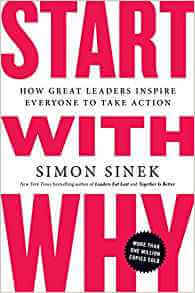
Start with Why: How Great Leaders Inspire Everyone
What a coup to get Simon to write your foreword. I know what a big deal that is to get somebody of note to write a foreword. If he’s talking about why, and you’re talking about why, he saw some similar branding things that he was willing to be co-branded with you on.
I started with John Strelecky who wrote The Why Café. In order to talk about his book, he also wrote The Big Five for Life, which are the five things you wanted, do, see or experience in your life to be successful. Right after I spent a weekend at a retreat with John Strelecky, I got so excited about businesses starting with why. A friend of mine at lunch said, “I just happened to have a book with me written by Simon Sinek.” It was serendipitous. I read Simon’s book. Simon would affectionately tell you that I stalked him. He agreed to work with me. Simon love speaking, first he wrote Start with Why and then he wrote Leaders Eat Last. He didn’t like consulting anymore, so I was very lucky that he referred me to clients who wanted to find their why, even older companies that might have existed for 75 years. That’s how we became colleagues.
Can you take us back a little bit further because you have a PhD and an MBA? When did you figure out your own personal why? The story of origin is what I’m looking for.
Those things start when you’re young with belief systems. There has to be a reason. My mother put me in school when I was three. I was small and I was extremely shy, so I would never lift my hand up in class. They thought that I wasn’t too smart, which is why I have all these credentials. I realized how important it was for people to feel safe in discussing what matters most. You could be in a corporate environment where the CEO shuts you down with a phrase and then that person’s afraid to speak up. It’s important in any team to take advantage of the smart people you have at the table and create that safe place for them to speak up. Challenge their thinking because it’s only when we challenge each other’s thinking that we make an idea better. That’s where mine started.
When someone’s there, the assumptions people make about you at that point and how that spurs you on, it reminds me of Barbra Streisand talking about her mother. If she hadn’t been such a tough critic, who knows if she would have been as driven. It’s a fascinating thing for me to find out what people’s original spark was to start their career. What made you hook into this culture and why aspect of your focus?
I’ve always been fascinated with people. People make your business successful or not. That’s where the whole idea of concentrating on culture came from. After culture, it becomes a strategy and execution in order to make a business sustainable. It always starts with finding the right A-players and having the right people on the team. That’s where I start.
Let’s double click on culture. I’ve had the ability to talk to Larry Senn who’s been called the Father of Culture and he’s in his 80s. Let’s do two different ways with this. One is if you’re Coca-Cola, a big brand that’s been around forever. They have a culture defined. The other is if you’re a startup. You’re less than a year old or you’re just putting a team together. Let’s talk about the similarities and differences on what makes a good culture.
[bctt tweet=”Your why is your engine that let’s you overcome challenges.” username=”John_Livesay”]
What’s important with culture is what the core values of the corporation are. We can have a very big company like Coca-Cola, any company that’s old or long-established often have core values on the wall. They don’t necessarily live those core values. They don’t necessarily hire according to those core values or fire according to them. It’s very difficult to change the culture of an established organization, although that can be done. If it takes 100 years to form a culture, it takes more than one to change it.
I can give you an example of that. A 100-year-old company that I worked with was a nonprofit, one of the largest nonprofits. They used to have a CEO who used to basically bark at everybody that it was a commanding control environment. He was the CEO for about 25 years and after he left, another CEO came in who was more of a servant leader. He had to deal with the shift between a lot of his employees being used to still barking at people. That was an uncomfortable environment for him. I worked with them for about five years. It took us about three years to shift the culture so that takes time.
What kind of values do you see in someone’s culture that makes them successful whether they’re new or established?
Let’s go back to the startups first. Startups have a unique opportunity to create their culture. When I first start working on a plan with a startup, they have a lot of aspirational values. They’re not necessarily values that they’re living. We create a set of values based on what the founders or the first team believe. At the end of the year, we review them and see which ones are actually living. The way that you measure whether people are living their values or not is the stories that they tell. Let me give you an example, and I learned this from John Strelecky. How would you bring those values to life?
One of the things that we suggest is what we call a book of email. Imagine that on the first day at a company, instead of just being given the policy manual, you’re also given a book of emails where you can see what people value. Imagine if someone wrote to you and said, “John, good for you. You upheld our value of extreme ownership.” You give a little story about what extreme ownership meant in that regard. In that way, the new employee is reading real things, not just a line on the wall that says extreme ownership or integrity. One of my favorite ones is aligned by McIntosh Trading, which is a Canadian company. One of their core values is, “Make mama proud.”
Would you say or do anything that would make your mom proud? If not, don’t do it.

Accelerate Success: Be able to share that message and cascade it down, no matter how large your company becomes.
You don’t want to be on the front page of the Wall Street Journal. That’s the way you create a culture of living values. What are the activities that you’re going to do to promote the values all the time? That’s the first part of culture is those core values and the second part of culture is knowing what your purpose is. Be able to share that message and cascade it down, no matter how large your company becomes.
Does that tie in to the why at that point?
Yes. I’ll give you an example. There’s a supermarket that’s been around for 80 years. It was started by grandpa. Why did grandpa start the company? It’s a little hard 80 years later to figure out exactly why he did it. We had this group of 24 people in the room. A supermarket has a drug pharmacy in there, it will have groceries, etc. Why would you unite all of those elements? As we were talking about this, the grocery people said, “Shouldn’t we talk about fresh vegetables?” The pharmacy people said, “Should we talk about the drugs we have?” Here’s the why. Infusing life with health and happiness. That’s the message they started sharing. They have that alive and well in every supermarket. You use that as the compass. If you’re making a decision, you ask yourself, does this fit? Is this an alignment?
The third part of culture is attracting the people who believe what you believe, like what Simon says. If you’re very clear about your core values and you’re very clear about your purpose, then you do what we call top grading. These are a series of interviews when you’re hiring someone. You explore whether they are fit according to their core values, core ideology, or their purpose. If people aren’t in alignment, you’re trying to put a square peg in a round hole.
What are your thoughts on diversity? Is that a value or is that part of a culture?
That’s a big topic.
You’re certainly qualified to answer that topic of how important it is. Why is it important? Anything you want to talk about on that, I’d be fascinated to hear.
I was invited to a dinner put on by women who lead. The big question that we were discussing in that dinner was Women on Boards. There was an initiative, Women on Boards 2020. The idea was to get to 20% because there really hasn’t been a diversity on boards of all kinds. The 2020 goal has been achieved. The goal is to go higher. The question is what do you mean by diversity? Everybody means something different.
Let’s take a very top line definition that it’s not a bunch of white guys over a certain age running the whole show.
Even if we talk about gender diversity, never mind all of the cultural diversity. Any board would benefit to having a broad range of diversity from people from different cultures. If you just take the gender diversity, it brings a much richer conversation. One of my initiatives for 2018 is to be on manufacturing or distribution company boards. I feel that at this stage in my life, looking at the next chapter, I have so much to offer a board and I never thought about it before. Recognizing that there’s so much emphasis on Women on Boards. I thought maybe it’s time. I’ve been in business for so long and I never really thought about being a woman. I did what I had to do. I’ve never pulled that card so to speak.
[bctt tweet=”A conscious leader is one that is effectively flexible.” username=”John_Livesay”]
Let’s double click on manufacturing and double click on distribution company so that people have a clear example of each one.
I bought a part of a company that had a unique design like Gucci Watch with interchangeable faces and interchangeable materials around the face, like wood or leather. One of my reps went into Sears, and this was in Toronto, and we’re supposed to have an appointment with someone from Sears. I said, “I think I should go instead of you.” I was young and he said to me, “You’ve never sold anything, aren’t you afraid to go in and see this buyer?” I said, “It’s my company and I have to pay the rent every month, so I think I should learn something.” I went in to see the buyer. I asked him a question that no one had ever asked him the ten years that he was a buyer. I said, “What do you need?”
The simplest of questions. He said, “I know exactly what I want but nobody wants to make these because I think they’re shocked.” He pulled out a picture from a gift show. It was a California sunset with a screen print to dial in the corner and a quartz movement. He said, “Can you make these?” I said, “Sure, no problem.” He said, “Come back in two weeks with six samples.” I called him a couple of days later. I said, “I’d like to make an appointment to do a site visit with you next week.” I picked him up and we went to a rehabilitation center that I had engaged. There were my clocks, rolling off the conveyor belt. He looked at me and said, “I didn’t expect this. What’s your plan?” I really grew my company from that moment to supplying 67% of Sears’ clocks. I supplied all the other catalog in Canada.
In addition, I flew down to Chicago and ended up having a reciprocal licensing agreement with the largest US clock manufacturer to import their clocks in pieces into Canada to avoid the 12.5% duty. That’s manufacturing. You have to be resourceful, you have to pivot and you have to be lean. I was into lean before lean was laying. I had two infomercial companies. Distribution can mean all kinds of things. In my case, it was having a very popular infomercial and then having to fulfill the product by media, etc. I’ve got a ton of that experience.
One of the chapters in your book is The Power of Why. Can you expand on that for us?
The best way to explain that is to talk about how I wrote the book. My initial idea of writing the book was to talk about how lonely it was at the top. That had always been my experience. I found half of the CEOs that I spoke to, I spoke to 50 from around the world, weren’t lonely at the top. The reason was they were in peer groups. They felt that they had that ability to share and get advice from their peers. The other half worked in peer groups and they were remote. Even though they wanted to be in a peer group, they were two hours out in Dublin or two hours out of Boston. It was too much work to be in a peer group. I asked him another question which was, “What’s your greatest challenge at this time?” My book was written as a distillation of the 40 challenges that I heard. Can you imagine 50 CEOs and I heard 40 challenges?
[bctt tweet=”Each one has their own version on how to use resources and when to use resources.” username=”John_Livesay”]
Each one had their own version on how to use resources, when to use resources and how to overcome people challenges or communication challenges. At the core of it, your why is your engine that allows you to overcome challenges. If you have a strong enough why, it’s at the core of getting up in the morning and being able to overcome whatever obstacle in your path. If you don’t have a strong why, I think either you’d be depressed or you want to give up.
Let’s play a little bit like we’re having a private conversation that people are eavesdropping in on. What you’re saying is a much deeper why. It’s not about just making money so I can support myself or my family. You’re talking about more of what’s your personal mission. I’ve put a lot of time and thought into this. I used to be on the self-esteem rollercoaster, being in sales for a large part of my career. I’m only feeling good about myself if my numbers are up, and bad about myself if my numbers are down.
I thought there’s got to be a better way to separate that. Who I am is bigger than my results. That’s what caused me to write my first book. That’s what gets me up and motivated to go out and speak to companies’ sales teams, is to get them off that self-esteem rollercoaster. I know if I can help other people get off of it, then there’ll be able to handle bad quotas, bad numbers, or getting laid off. That might be useful to the listeners and I certainly welcome your input on it, if you think that’s a good example of a why.
It’s a good example. Is this a story that you would tell someone if you first met them? That’s part of what’s important.
If somebody was interested in getting to know me, I certainly would talk about that.

Accelerate Success: Sharing your why is a personal thing. Nobody wants to share their core vulnerability.
That’s one of the ways you can tell that that’s really why. I want to share a story of a why with you. I belong to a networking group. It’s called ProVisors that were all professional advisors to CEOs. There used to be this gentleman who would stand up and talk about all of his certifications. He was a trust attorney. Every time I heard him stand up and say these things, the fifteenth time I rolled my eyes because I’ve heard that before. I said to him one time, “Why do you do this? I would be so much more inspired to hear why you do this.” He said, “Let me think about that.” Sometimes when you share your why, it’s really a personal thing, nobody wants to share their core vulnerability.
He stood up in another meeting where I was doing a why exercise with people. He mentioned that I challenged him to share his why and this was his first time sharing it. This was his story. When he was in law school, his parents dragged him to a trust attorney. It was a Friday and his parents were organizing their trust. A couple of months later, they left on a holiday and they were on the Pan Am plane that crashed. He spent the next two years trying to unravel their probate.
The reason he felt that happened even though they went to a trust attorney was that the trust attorney maybe did divorces on Monday and bankruptcies on Tuesday. Friday was his trusting. The reason these certifications were so important to him was because he felt that he never wants anybody to go through the pain that he went through. Imagine how people looked at him after he shared that. The one thing you can be sure of was that that man really cared about giving you excellent service.
If you’ve been there yourself, you have such empathy for people that they are drawn to you.
That’s why your why makes a lot of sense for you to share that because not everybody’s on that rollercoaster. It makes you much more likable and much more relatable. I don’t think there’s a sales person alive that doesn’t go through mornings where they wonder if they can still do it.
The burnout factor. You talk about in your book becoming the leaders that others want to follow. Simon even wrote about that at the foreword. It’s such a well-thought out structured book. I highly recommend it to people. In order for someone to lead, people have to follow you. It’s not about authority. What do you think is one of the key elements to becoming a leader that other people want to follow?
There are so many definitions of different kinds of leadership. There are authentic leaders, there are servant leaders, so many different kinds. The most important thing is to be a conscious leader.
Let’s distinguish. You mentioned someone else being a servant leader that took over someone who is authoritative. What’s your definition of a servant leader? We’ll dive into conscious leader after.
I would say a few words. A servant leader, you would say to people, “What obstacles are you facing and how can I remove them?” Servant leaders seem to focus on that. Authentic leaders seem to focus on being very transparent. A conscious leader to me would know when to be what, when you need to be a servant, when you need to be authentic. You can’t be one thing all the time. It’s like situational leadership.
There’s a little bit of fluidity that’s happening in the personality and the style. A conscious leader is all about effective flexibility. Are there any last thoughts that you want to leave us on leadership or the importance of why or how did you discover it?
[bctt tweet=”Think about what would make today a museum day, the kind of day you’d like to see if you had a museum of your life.” username=”John_Livesay”]
Why is a journey. You can’t just sit down one day and discover your why. It takes a little time to sit in the question. When people get uptight about whether or not they know their why, what I would tell people is live every day on purpose. Don’t just let life go by you. Think about what would make today, what John Strelecky and I call a museum day, the kind of day you’d like to see if you had a museum of your life. What is special?
I was in Grand Rapids, Michigan visiting a friend. I went to the Gerald Ford Museum. I’d never been to a presidential museum before. If you think of that as an example, we all can’t be CEOs or presidents, but if someone wants to make a museum of your life, that’s what you’re talking about, those key elements.
One of the things that my children mentioned to me is that I don’t like gifts necessarily. I like experiences.
How can we follow you on social media? How can people reach out to you if they want to have you on the board for their manufacturing or distribution company?
I have a very unique name so on Twitter it’s @Frumi, on LinkedIn it’s Frumi Rachel Barr and Scaling4Growth.com. [email protected], if anyone wants to send me an email. I love talking to people.
You’ve been a delight to talk to. Thanks for sharing your insights on why, leadership and conscious leadership.
Thank you. I love being here and I liked our conversation.
Thanks.
Links Mentioned
- Dr. Frumi Rachel Barr
- A CEO’s Secret Weapon, How to Accelerate Success
- Start with Why
- The Why Café
- The Big Five for Life
- Leaders Eat Last
- Larry Senn – previous episode
- Women on Boards 2020
- ProVisors
- @Frumi on Twitter
- Frumi Rachel Barr on LinkedIn
- Scaling4Growth.com
- [email protected]
- https://www.Sales4Profit.com/
- https://Youtu.be/M9rXdDbQ-3E
Wanna Host Your Own Podcast?
Click here to see how my friends at Brandcasting You can help
Get your FREE copy of John’s latest eBook Getting To Yes now!
John Livesay, The Pitch Whisperer
Share The Show
Did you enjoy the show? I’d love it if you subscribed today and left us a 5-star review!
-
- Click this link
- Click on the ‘Subscribe’ button below the artwork
- Go to the ‘Ratings and Reviews’ section
- Click on ‘Write a Review’
Landing On Your Feet with Sam Morris
Posted by John Livesay in podcast | 0 comments

When one’s sense of identity gets challenged, the whole foundation becomes loose. Even people who are ambitious and are making things happen in the world cannot predict when something is going to come along that is going to completely derail that direction. You have otherwise confident people who have been very successful in their lives suddenly questioning everything and going, “How did I end up here?” Zen Warrior Sam Morris talks about landing on your feet and knowing how to come back to building that foundation in a fresh way. Sam met an accident and became paraplegic due to a drunk driver. From that point on, he has been consistently working on reestablishing the foundation that he lost when his accident occurred. Sam says sometimes that building can come crashing down and you’re left having to find out how to build a new foundation. He now helps people to create that foundation and finding that inner strength that they didn’t even know they had before.
—
Listen to the podcast here
Landing On Your Feet with Sam Morris
I have a guest that I’ve been fortunate enough to have on before, Sam Morris, the Zen Warrior. Sam was on my show before and I’ve had the privilege of working with him one-on-one. When he told me, he had some new insights to share with us, I couldn’t wait to have him back on the show. For those of you who haven’t heard Sam’s other episode, his story is in 1999, he was leading a bike trip for nine teenagers across the US when he was in a car accident caused by a drunk driver, which has left him paralyzed from the waist down. He’s had to deal with surgeries and literally lying down for over three years. Two of those years were in the hospital, but Sam has an ability to not let anything stop him, including being paralyzed from the waist down. As he said to me when I first met him, “My legs might be paralyzed, but my brain and my mind is not.” Sam, welcome back to the show.
Thanks, John. It’s great to be here. Thanks for inviting me.
Your topic that’s very close to your heart and it needed more than ever is how can high performers and entrepreneurs recreate themselves after they’ve experienced some disruption, whether it’s personal like you went through or professional like I went through after being laid off. What is it that made you think, “I have something to say about this topic?”
I have encountered this particular thing over and over again with people who are ambitious, who were making things happen in the world, but you cannot predict when something is going to come along that is going to completely derail that direction. You have otherwise confident people who have been very successful in their lives suddenly questioning everything and going, “How did I end up here? I was on this track here and now I’m in this situation here,” whether that is a being laid off or whether that is getting a divorce or going through something that challenges one’s sense of identity. When one’s sense of identity gets challenged, it’s like the whole foundation becomes loose and people need to know how to come back to building that foundation in a fresh way.
[bctt tweet=”Disruption is a natural process, don’t take it personally.” username=”John_Livesay”]
When my injury happened, my accident happened shortly after finishing my bike trip when a drunk driver caused my paraplegia. From that point in 1999 to this point in 2018, I have been consistently working on reestablishing the foundation that I lost when my accident occurred. I’ve put in so many countless hours, days, months and years into working on sensing the core essence of who I am and the value that I offer that is independent of any circumstance. I happened to have a lot of practice in this area where most people, unfortunately, don’t have as much practice. It’s quite good that they don’t have that practice. I’m trying to make it easier for high performers and entrepreneurs to make that pivot. When something happens in their lives to make that pivot because that foundational identity that we build up over the course of years or decades can get compromised very easily.
It tends to happen periodically throughout people’s lives in some major way. It’s so easy to get trapped in the mindset of linear success where if I am X degrees successful now, then I should be X plus one tomorrow and then I should be X plus two next week. There’s this expectation that people put on themselves to keep on building on what they have already done. Sometimes that building can come crashing down and you’re left having to find out how to build a new foundation. That new foundation is what I help people to create. What I discover is that when people create that new foundation, they actually find an inner strength that they didn’t even know they had before.
What I’m hearing you say is that our foundation and our identity get tied up together and when we lose the foundation, either through a job loss, a divorce or a health situation, we also somehow feel we’ve lost our identity. That’s part of the challenge when the foundation goes away. Even if you just lose your house in a fire, that’s equally traumatic and that’s literally your foundation. In your case, your legs are your foundation. “It’s who am I without that foundation,” is what I’m hearing is the big challenge for most of us.
It’s exactly that. The “Who am I?” makes it very challenging to build a new foundation when you’re constantly questioning who you are and what your role is in the world because the way that you learn to function before simply no longer works. These things are very common. In general, I would say people experience this at least once in their lives past the age of maturity where something occurs that totally makes them question everything.
You said about this expectation that everything is going to consistently be a linear, straight line up. The minute it becomes a roller coaster, it makes us mad and angry in addition to scared because having been in the corporate world at Conde Nast for over fifteen years where every year was a quota and that quota was consistently set higher than the year before and you were expected to meet it. The following year, it was just endless, “We need growth, growth, growth.” Startups have the same thing. Anybody who’s in any accelerator, it’s the whole thing is, “How fast are you growing? Are you growing faster than the other startup that’s in here? Whoever grows the fastest gets the funding.”

Landing On Your Feet: Honor both what you can do and what you can’t do.
This fear of things never being fast enough. You better hurry up and get your funding before the economy tanks again or the bottom falls out of the XYZ stock market, home market, fill in the blank. What are some of your suggestions for everyone and the clients that work with you on, “I definitely either experienced losing my foundation and my identity along with it and I don’t know what to do because the things I’ve been doing aren’t going to work anymore?” How do we let go of expecting things to continue to be linear?
The first place to start is getting that the process is natural, that this is a human process. That it is not a personal thing so much as it is a human condition. A lot of people compare themselves to an idea of how other people are doing and think, “Their lives are so much easier. They are so much more successful, or they have so much more money or whatever than I do this and that,” but rarely do they get a chance to look under the hood and see what’s occurring in that person’s life. Even with the most successful people out there, there are massive disruptive circumstances that occur in their lives, which create the exact same challenge for one’s sense of identity and self-esteem and everything.
It doesn’t matter how successful you are. Those moments can happen. and they can throw you off for months or years, depending on how you process that situation. How you process your circumstances and how you move forward from there, a lot of people will stay in a state of paralysis for a long time. My physical paralysis has given me a lot of insights into the nature of paralysis because my physical paralysis for a number of years, created this emotional-psychological paralysis inside of myself that was actually a lot harder to deal with than the actual physical paralysis. I understand this very deeply from the inside out. Getting that this is just a natural process, that there’s nothing personal, it’s not saying anything about who you are, what you can do or not do or whatever it is, a time for reassessment.
It’s a time to get grounded and look at, “What can I do and what can’t I do?” Get clear about that and honor both what you can do and what you can’t do. A lot of people get caught in the trap of thinking they should be able to do more than they’re actually able to do. That’s a very unhealthy mindset if you get and it’s humbling. It’s very humbling to get clear on what you can do and what you can’t do. The vast majority of what there is to do, none of us can do. The vast majority of what there is that I could potentially do, I cannot do. I have to get clear on the very limited range of things that I can do and then commit my focus to those things without getting caught up in what I can’t do and think that I should be able to do.
The big takeaway for me on that is this process of being disrupted is natural and not something that you should sit around feeling sorry for yourself. “Why did this happen to me? Why am I in a wheelchair or why did I get laid off? Why did I get divorced? That must mean I’m a failure as a spouse. That must mean I’m a failure as an employee,” and this whole internal paralysis. You’re really big on paralysis or movement and using breathing, which is something everyone can do to not stay in the state of paralysis. Can you talk a little bit about that?
The breath is our most important tool that we have. I am constantly amazed by the power of the breath. The breath is a way of being able to access your whole system and get out of your head. When disruption occurs, the hardest thing is for people to get out of their heads. It’s the identity, identifying with what went wrong essentially. “What the hell went wrong? What does that say about me?” All that negativity comes in and it’s a very natural thing for people to have all of this self-judgment occur as a result of disruption. You can’t get away from that judgment at the level of just trying to think new thoughts. You have to actually have a tool to work through that self-judgment that actually puts you in touch with something deeper than those thoughts.
[bctt tweet=”Get out of your head by getting into your body.” username=”John_Livesay”]
Those thoughts are just projections. They’re not real, the what ifs. People get way too caught up in their thoughts. The breath is the way that you can process thoughts and feelings in the moment and stay in contact with yourself, essentially maintaining a relationship with yourself that is more holistic than your thoughts that you have about yourself or any temporary feeling that you may be having. By connecting to your breath and connecting to your body, it helps to still the mind. It also helps to process feelings and process thoughts so that the feelings that one is having don’t turn into this back and forth between thoughts and feelings.
It’s a common thing for people to get caught, essentially tripping out on themselves where they’re having some feeling and then they’re having some thought about the feeling which is inaccurate. The feeling just gets worse because the feeling doesn’t feel like it’s been listened to, which then creates another inaccurate thought. It goes back and forth like a feedback loop between thoughts and feelings. In the meantime, we’re not present the whole time that’s happening. We’re getting caught in our feelings and then thinking about the past or worrying about the future and we lose track of our presence. The breath is here to bring us back into presence. There’s a reason why every Zen master and every Yogi all emphasize the importance of the breath. There is a very specific reason why. That is because it actually helps you to contact yourself in such a way that it transcends any thought-based identification with one’s feelings.
If we lose our identity, when we get disrupted, and then we start identifying with our thoughts as being real, then it sounds to me like that’s a total recipe for paralysis.
It’s an absolute recipe for paralysis. I cannot tell you how many people that I have met and worked with who have or are experiencing that exact recipe for paralysis.
If the thoughts aren’t real, you’re catastrophizing the future or for separating and reliving the past. “I can’t believe he said or she said this to me and did that or this,” and you just get angrier about it the more that you think about it. Meanwhile, you’re not in the moment at all. You don’t have any tools to release that. Then you’re missing what’s happening in the moment, which may be great, but you’re still stuck on what somebody said or did to you. Whether it’s a divorce or getting fired or being mad at the person who hit you who was drunk back in 1999. You were clearly not in the present, if that’s what you’re thinking about all the time.
Not only is it key for anyone who’s gone through some personal or professional disruption, this is also key as well for productivity. People frequently talk about how they wish they were more productive or they wish they had more time in the day. How much time do you have where you’re actually present? What percentage of most people’s time are they actually present and not thinking about the past or thinking about the future? If you looked at that where people are truly present, it would be a tiny fraction of any given day. As they are thinking about the past and as they are concerned about the future, they are actively wasting time. They’re not truly focused on what is occurring right here in the present moment. That bouncing back and forth between past and future, not being connected to yourself, not being connected to your breath, bouncing back and forth, creates mental exhaustion, which then creates the feeling of, “I have to go home and pass out or watch TV for three hours, tune out somehow.” What they’re trying to tune out from is their own thoughts and their own feelings. If you breathed and stay present, then you can sustain your energy. You can sustain your focus throughout the day without feeling the burden of your own mental data crunching.

Landing On Your Feet: The focus of attention means everything in terms of the quality of work that you can do and achieve.
Those are two big things there. The reason we’re so tired at the end of a workday is not because the work was particularly grueling or even mentally taking its toll on us because we had to think so hard, it’s because our thoughts drain the energy out of us because we weren’t in the moment.
When you’re not in the moment, that automatically means you’re not connected to your breath. If you’re caught in your head thinking about past and future, you can be guaranteed that you’re not going to be sensing your breath and your breath is how you stay connected to your fuel source in your body because your body is the fuel source for your energy. As you’re breathing, you’re constantly recycling that fuel source into your body.
You’re bringing more life into your body. When we’re just breathing in our normal habitual way and we’re not paying attention to it, we have enough breath to stay alive. We have breath for our organs to keep functioning, and for our minds to keep functioning somewhat throughout the day. When we consciously breathe, then we’re consciously connected to the fuel source, that is our body. That is creating the energy that we need to be able to move through any kind of situation and not get caught up in our head and losing touch with what’s actually occurring in the present moment.
That element of productivity is also very interesting because the more present you are, the less you’re trying to multitask. Do you want to speak to that a little bit?
We can’t multitask and anyone who tries to, I don’t think is doing it at any given moment. You can only focus on one thing at one time. That’s not to say that you can’t have multiple things occurring at any given time, but the quality of your focus can only be looking at one thing at one time. We tend to convince ourselves that we can multitask or that we need to multitask, and ultimately, we end up putting less quality focus into the things that we’re doing because we were trying to focus on too many things at once. Nothing ends up going as well as it could if we were to choose to stay connected to ourselves. Focus on the one thing that’s right in front of us. Know that there are other things happening simultaneously that are going to require our focus but choosing where you are placing your focus of attention. For most people, they’re not choosing where to put their focus of attention. They’re bouncing back and forth between things, but the focus of attention means everything in terms of the quality of work that you can do and the productivity that you can achieve.
It sounds like you’ve got this idea that you’re turning into a book about landing on your feet from someone who can’t even feel his is the working title.
That was a catchy title that I thought it would be good for the podcast. My working title right now for the book, and this may change, is Why Not Me? which is like the antidote to the “Why me?” mentality. That’s our biggest problem. The biggest challenge that people face is having this underlying sense of why me? Why do I have to go through this? Why is it me who has to go through divorce? Why is it me who has to go through a job loss? Why is it me who has to deal with this god damn spreadsheet? All of the things that we, “Why me?” about all day every day, it’s, “Why not me?” puts it in perspective. As many times as I asked the question, why me following my paralysis, the only answer I ever got was why not me? Why shouldn’t it be me who goes through paralysis?
There are different forms of deep suffering that are occurring around the world. There are seven billion forms of suffering going on. Why shouldn’t I go through this particular form? There’s no reason why. Buddha said, “Life is suffering,” but it didn’t end there. You said that life is suffering and it’s that suffering that can serve as the catalyst for freedom. You have to first embrace the suffering before experiencing the freedom. The freedom that we are seeking is on the other side of the suffering.
[bctt tweet=”Your thoughts are not real.” username=”John_Livesay”]
Most people feel like if I can avoid the suffering, then I’ll feel free. You’re saying and so is Buddha, that you’ve personally had to embrace the suffering, figure out what you can and can’t do and make the best of that situation and that’s how you land on your feet.
People are constantly trying to avoid suffering and I’ll include myself. I’m oftentimes totally trying to avoid suffering. Then I realized, “I’m already suffering, but I might as well just embrace it.” There’s nothing to avoid. It’s just a matter of welcoming the experience because once you welcome the experience, once you truly do that, it neutralizes the energy of the situation. You’re no longer in a state of judgment where it’s wrong or right or good or bad that you’re experiencing what you’re experiencing. There is no longer an attachment to a label about the experience. It’s just the experience is what it is.
Do you have any last thoughts about how we can land on our feet, embrace disruption, whether it’s happened to us or hasn’t happened yet?
Trust your process, connect to your breath, connect to your body, connect to your energy source. Get out of your head not by thinking other thoughts or trying to think other thoughts but get out of your head by getting into your body, into your energy source because it is inside. They say the power is within. It truly is within. It’s not within our thoughts, it’s within our physical body and our energetic resources that we have available to us.
Get out of your head by getting into your body. So many of us think the answer’s in our head, “If I can just think about this enough, I’ll come up with an answer,” and that’s probably not where it is.
That’s trying to find an easy way out. When you’re trying to find this logical answer. It’s just like, “What’s the easy way out? How can I just get out of this situation?” You can’t get out of the situation. You have to go through the situation as opposed to get out of the situation. Otherwise, the situation will just keep repeating itself in new ways.

Landing On Your Feet: A lot of people compare themselves to an idea of how other people are doing.
Sam, how can people follow you? Give us your twitter handle, your website, all that good stuff.
My Twitter handle is @ZWTraining. Instagram is @ZenWarriorTraining as is Facebook. I do have a few spots open for private clients who are very committed to working through their own disruptive experience in their lives and using the challenge as a catalyst for growth into their next level of potential. They can contact me and apply through ZenWarriorTraining.com.
I was fortunate enough to get accepted and it changed my life. I can’t recommend that enough. Thanks again, Sam.
It’s been a pleasure, John.
Important Links
- Sam Morris
- Sam’s other episode – Sam Morris’ previous episode
- @ZWTraining – Twitter
- @ZenWarriorTraining – Instagram
- Better Selling Through Storytelling Method Online Course
Wanna Host Your Own Podcast?
Click here to see how my friends at Podetize can help
Purchase John’s new book
John Livesay, The Pitch Whisperer
Share The Show
Did you enjoy the show? I’d love it if you subscribed today and left us a 5-star review!
- Click this link
- Click on the ‘Subscribe’ button below the artwork
- Go to the ‘Ratings and Reviews’ section
- Click on ‘Write a Review’
Love the show? Subscribe, rate, review, and share!
Join The Successful Pitch community today:
- JohnLivesay.com
- John Livesay Facebook
- John Livesay Twitter
- John Livesay LinkedIn
- John Livesay YouTube
Awakening Your Inner Guru with Dr. Erin Fall Haskell
Posted by John Livesay in podcast | 0 comments

Episode Summary
What we energize, we magnetize. That is what Doctor of Divinity and thought leader Dr. Erin Fall Haskell always tell people during her speaking engagements and when she’s broadcasting her podcast, Good Morning Lala Land. Erin is a self-made millionaire and an active philanthropist. Growing up, she always believed that finding the right relationship, getting the right job, and marrying the right person would make her whole life work out. A personal tragedy sent her on what’s been now a 24-year track of seeking her own healing and self-discovery. Her book, Awakening: A 30-Day Guide to Unleashing Your Inner Guru, is a collection of fun stories that takes you through your health, your wealth, and your creative expression and bring it to life to not only know the truth but live the truth as well. Erin shares her journey of becoming a self-made millionaire by the time she was 30.
—
My guest is Dr. Erin Fall Haskell. She said, “Complaining is praying for crap.” She said, “What we energize, we magnetize.” She tells this amazing story becoming a self-made millionaire by the time she was 30 and how she likes to invest in green tech and real estate. She is the CEO and co-host of a live streaming show called Good Morning Lala Land and the author of a book Awakening: A 40-Day Guide to Unleashing Your Spiritual Powers, Life’s Purpose and Manifesting Your Dreams where you unleash your inner guru. She said, “Success doesn’t taste good unless you have the barriers to overcome to get there.” She describes what it takes to be a good guest on her show or any show. I think you’ll enjoy this episode on entrepreneurial mindset.
Listen To The Episode Here
Awakening Your Inner Guru with Dr. Erin Fall Haskell
I’m honored to have my dear friend of many years, Dr. Erin Fall Haskell, who’s a Doctor of Divinity, a new thought leader, a transformational author and speaker. She’s a global peace leader, award winner, a mother lover of life. She is the CEO and co-host of a wonderful show called Good Morning Lala Land. Erin has quite a journey that she’s going to share with us of becoming a self-made millionaire by the time she was 30 in real estate. She invests in green tech and real estate while she’s writing this book called Awakening: A 40-Day Guide to Unleashing Your Spiritual Powers, Life’s Purpose and Manifesting Your Dreams. Erin, welcome to the show.
Thank you so much, John. I just adore you and I’m so honored because I love your podcast. What a brilliant idea to bring storytelling and the heart to the finances that we all must claim is our birthright.
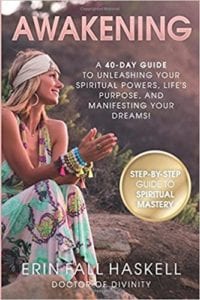
Awakening: A 40-Day Guide to Unleashing Your Spiritual Powers, Life’s Purpose and Manifesting Your Dreams!
I always ask my guests to tell their own story of origin and you can decide how far back you want to take us. You can take us back to your childhood. You can take us back to when you made the decision that you were not going to work for someone else and become an entrepreneur wherever you want to start.
All day long, I listen to other people’s stories these days, so it’s always fun when we get to get back into our remembrance of the whole thing for us. I grew up in a hippie commune, basically on the hilltop of Santa Barbara. It’s like the residual leftover of the ’60s when it was super cool and quite dysfunctional at the same time. My parents got divorced when I was two years old. My dad went and had another family and I was confused and sad and all the above thinking that families had to be a particular way when the reality is that they are all unique and expressions. Anyways, I grew up in the mountains of Santa Barbara and I basically didn’t have any rules or regulation, no religion.
In fact, my mom was anti all that. I came to high school and everyone started trying some drugs and alcohol and all that kind of stuff. I didn’t know what I was going to do. I thought, “If I just found the right relationship, got the right job and marry the right person, my whole life would work out.” Lo and behold, I got married for all the wrong reasons, basically just because it was a thing to do. I found myself pregnant at the age of 21 and I had a stillborn son at the age of 22. I was nine months pregnant and I was in nursing school and I realized that my baby had stopped moving inside of me. I went down to the doctor right about 5:00 PM and the doctor was gone. A nurse lubed up my belly. We took a look and saw there was no heartbeat. We rushed over to the hospital and realized that my baby had died inside of me and I had to give birth to my baby, which was a bizarre twist at that point in my life.
It was one of those moments, John. It was actually the next day after I’d given birth to his body and bathe your baby, take pictures with your baby and go home with your dead baby. Next day I was a little at coo-coo and I thought I didn’t get the right pictures with my baby. I went down to the mortician’s house alone. I don’t know where my parents were, I don’t know where my husband was but I went alone and it was literally a scene out of the movie. The mortician was like, “Sweetheart, I’m so sorry. Your baby’s been in formaldehyde for 24 hours and you’ve got the room all prepared.”
It got me down. I just had one of those moments. It was a moment with God and my higher-self saying, “How could you be so cruel?” It was one of those moments just looking down at my baby’s body, realizing he was gone but he was here. I realized he’s not his body and I’m not this body and what the hell are we doing here? It sent me on what’s been now 24-year track of seeking my own healing, seeking my own discovery. I had bulimia when I was in high school. I had been date-raped in high school. I got divorced and all that typical human beingness. I finally have arrived at an amazing, extraordinary life beyond my wildest dreams.
Just to give a little bit of coda to the story. You do have a very healthy son now.
Thank you for saying that because I always forget to say that and some people are like, “It’s so sad.” I got pregnant a month after my stillborn. He’s watched me bloom going through my own healing and consciousness and becoming an author and practitioner and doctor and all those things and watching the show bloom. It’s super cool for any of those parents out there who are young parents, it’s cool to have your children witness you grow up. You can see the woman that I am now, that I always want to be, which is super cool.

Your Inner Guru: The cool thing about entrepreneurship is the more you work, the more you have residual income, the more your workload goes down and you have more freedom.
You’ve painted a picture, you’re a single mom in your early twenties and that’s usually very difficult to figure out a way to pay the bills, let alone become a self-made millionaire. How did you go from those circumstances to saying, “I’m not going to go back to nursing school, I’m going to dabble in real estate or become an expert in real estate?” Was it commercial? Is it residential? How did that happen?
I actually dropped out of nursing school when I had my son because I left him one day at the nanny would have been caught and it just broke my heart. I couldn’t do it. I just thought I have to figure out something as a mom to make money and be able to do both. I immediately went into real estate school and which was for any people out there want to get into real estate, one of the hardest industries to do traditional real estate. I found a way of buying and fixing up homes and that was a modality for me. I was doing my spiritual work, part of the day and then I do my real estate.
It was literally reading the book Rich Dad, Poor Dad and things like that. Realizing how to build assets and how to leverage and all those basic 101 things that everybody needs to know. I should become financially literate. I highly recommend Rich Dad, Poor Dad. The book I highly recommend some of the basic books that are just simple distinctions that make you realize when you’re buying a liability, when you’re buying an asset, how to leverage things like that. I started buying and fixing up homes. I was so broke on literally I could not. I can barely put much more than pasta on the table. It was not a fun track. I saved every penny I could ever make.
I never touched a principal. One of the secrets to growing wealth in my opinion is to never touch a principal. Have income come in but don’t touch your principal. If you have an asset like a home or business, let that business grow and don’t touch into tapping all your money there. Then what happened is I began to have more residual income from real estate, I was able to have more time, not only to spend time with my son, but also to develop my spiritual work. Because I’ve been doing it and doing all my healing work, it became my obsession. I became so involved and just obsessed with the work. I loved it so much and I became so fulfilled. That’s a cool thing about entrepreneurship is the more you work, the more you have residual income, the more your workload goes down and you have more freedom, more passive income or things like that. What I did in real estate was I bought and fix up homes and I had rentals so I wasn’t doing traditional agency work.
Let’s go to the birth of your book, Awakening: A 40-Day Guide to Unleashing Your Spiritual Powers, Life’s Purpose and Manifesting Your Dreams. This is the part I love, unleashing your inner guru. A lot of people think, “I’ve got to find a guru and follow their steps to success.” You’ve flipped that on its head, which is about, “No, wake up and find your inner guru.” Can you share something with us about how you came up with that concept?
Awakening: A 40-Day Guide to Unleashing Your Spiritual Powers, Life’s Purpose and Manifesting Your Dreams. What happened was I didn’t plan on writing a book. In fact, English was my worst subject in school. I didn’t ever understand what was so hard for me. What happened was, as I began to do my subconscious work, as I began to meditate for 22 years, I go in my closet for three hours a day at times when my son was at school late at night. Of course, you see through the veil. Over time things happened in there that people will think you’re crazy. For me, deities came, all kinds of things happen. You’ve tracked through your whole DNA if you want to go there, let’s go there. What happened was, I can’t just take notes for myself. I had said that was such a blissful in how I needed to write them down. I began to keep my online journal around things. Of course, one day I had this stupid idea of writing a book. I thought, “I got to put all this stuff into a book.”
It was a disaster, quite frankly. I rearranged the book five times. I had to get two different editors. It not easy. What happened was as I was getting my doctorate also all the wisdom, all the truth, I thought, “How do I organize this into a book where I’ve taken the epiphanies that I’ve had and the distinctions from the great minds like Emerson, Troward, Louise Hay, Ernest Holmes. All these people that have come and taught us such great wisdom. How do I put it into what I would say is that into a book that it has fun stories that also takes you through your health, your wealth, your creative expression, relationships, all of the above into those four legs of life?” I just basically put it into a 42-guide because I like little chunks. I don’t think we learn in huge chunks. I want to take a book and break it down into 40 days so people could take little chunks, bring it into the life and actually not know the truth but live the truth.
[Tweet “Complaining is pretty much like praying for crap because we know how the universal law works.”]
How great not just knowing it but live it. One of the things you talk about the book is complaining. What are your insights on complaining?
I think the complaining is pretty much like praying for crap because we know how the universal law works. That’s pretty much what it is. I’m spiritual, I’m not religious I like to say I think that there’s great of truth and all of the great teachings. “Fear thy Lord.” is what it says and what the Lord refers to the law of the universe, the universal law of cause and effect. What that means is we should be afraid because every word we speak, every thought we think, every action we take is heard in profound ways for the universe and reflects back to us in ways that we could never even imagine. If we complain, literally think about what you’re doing. If I complain I am speaking all negative things into my mind, into my subconscious, into the world, and what we energize magnifies. If I complain, I’m literally saying to the universe, please give me more of what I don’t want.
Those are two great tweets right there. Complaining is praying for crap and what we energize, we magnetize because I talk about the power of a good story, become magnetic and pull people in. Let’s double click on another focus that you have on one of these 40 things, which is the scarcity mentality. So many entrepreneurs think there’s never enough time, there’s never enough funding, there’s never enough clients, there’s never enough of team to do everything enough hours in the day. I hear a lot of scarcity mentality and mindset of a lot of entrepreneurs, even at advanced stages. You think it’s just that initial bootstrapping startup where there’s scarcity. If you have that at the beginning, you’re going to continue to have it, even if you become a hugely successful company. What are your insights and thoughts on that?
I still struggle with this myself. I’m not going to lie. I think it’s between allowing managers flow and building because we’re caught up in building wealth and building assets. It’s a really fine dance in my opinion. One of the things I’ve noticed for people that are truly expressed because I think when we shift our mind think our business is not about growing, like collecting things. It’s about developing ourselves. That’s the whole point in why we do our business is to have a full life with people we love and develop ourselves, our consciousness, our spiritual selves. When I think about that, when I think about people that I admire, there was a common denominator and it is people spend money to make money. If you witness people who are successful, they generally spend a lot of money to make money.
Oftentimes people who are very wealthy are very miserable, it’s not always the case, but I would say there are definitely some huge leaders in the world that have abundance of money that are very fulfilled. If you look at the stats, there are more people that are not, that are not that happy. They have a lot of wealth in their assets, a lot of money in the bank, a lot of investments. They can’t figure out why they’re still not fulfilled. I think it’s a real fine dance to have a flow. I think that abundance mentality comes down to one thing and it is a flow knowing that what we put out has to come back, abundantly and multiplied as we know.
I love that concept of a lot of people I know who have substantial amount of money that may or may not be happy at certain points. The part of what I’m seeing and hearing from them was they had the illusion that as soon as I have this much money in the bank, as soon as I have these many homes, as soon as I have this many private jets or whatever it is, I’ll be happy. Then when you get those things and you’re still not happy, that’s even more depressing than not having them. Because on the goal to achieving them, you have some hope that you’re going to be happy at XYZ achievement, and then you read the illusion completely burst when you realize it wasn’t.
Don’t get me wrong, I like money, I like abundance. Somewhere I think it’s around $250,000 beyond that, your lifestyle doesn’t change that much. Then you’re just stacking money, like let’s just get into flow abundant. I think there’s a way of doing both for sure.

Your Inner Guru: We do our business to have a full life with people we love and develop ourselves, our consciousness, our spiritual selves.
The other thing you talk about is this concept of perfectionism and I’m always fascinated by that. It’s one of my challenges is to let go of having everything to be perfect. Especially in the startup world, it’s sometimes challenging for founders to let go of trying to control every little thing a. Obviously if you’re going to be pitching and having slides and your website and your branding, all that needs to be as perfect and have as many people check it as possible. The concept of perfectionism that I want to ask you about is I see sometimes people hitting these milestones that are quite significant and not even taking a minute to celebrate them. They’re onto the next thing because there are ten other things that still needed to be done and are perfect. Do you see that? Do you have any thoughts on that?
I’m still guilty of that. I had an eating disorder when I was seventeen to twenty. I was a total perfectionist. In this world with the filters, we see highly; highly produced things, whether it be an online or in the movies or in magazine. We see such highly produced things that it’s hard to not compare ourselves. The reality is this is that the perfection, a good example is doing lives online. I remember doing live streams and when I first started was it was like a joke. I was a disaster, not going to lie and I’d have people come in and they put comments and I get all sidetrack. I couldn’t remember what I was talking about. The only way that I broke through is to just keep doing it. It’s not like you’re not going to come online in your business or in your product or in no matter if you’re an author or a writer or you’re starting to pod cast or whatever. There’s no way you can be the top of the top. You didn’t know it started at the top there. You have to be somewhere and I think that the mistake is not just doing it.
In this world, we live in the most abundant. Going back to money, I just want to stay because I never was able to say this. Scarcity mentality versus abundant mentality comes down to one thing. You’re either giving yourself to life or you’re taking from life. The extent to which we assign money more powerful than ourselves is the extent to which we will feel dis-empowered when it comes to money. Having a scarcity mentality is you’re, again, you are informing law and informing life that you are their scarcity, there’s not abundance and you literally are that powerful and the moment you even consider yourself to not have all abundance, you literally informed instantaneously the universe to deliver and so it is.
What I hear is you’re saying it’s a self-fulfilling prophecy one way or the other.
100% you can use it either way. Works the same regardless of what directions of perfection. It’s like you’ve got to love yourself or someone else to love you. It’s the same thing. Got to love yourself.
Let’s talk about how you went from doing live feeds from your home to being on a live network streaming five days a week called Good Morning Lala Land. How did that come about?
It’s so funny how the universe delivers stuff to us. You can never plan it out and then we know this that we can’t outline. We call it outlining when you try and figure out and plan out exactly how something’s going to manifest. It happened with a complete twist. What happened was I was doing lives and I was committed to delivering truth. I didn’t know where, when, how, I just thought I’m just going to do it. Whether it be live streams on Facebook, Periscope, wherever I’m going to be with clients. I’m going to do one on ones. Whatever is I’m going to give, give, give, and I’m going to develop myself because that’s what we know. This work is not about what comes of it, it’s who we become out of it. I just kept doing it. Lo and behold, you put yourself out there, you develop yourself and you embody the wisdom human body being the expert in whatever your field is, it doesn’t matter what your field is. Soon enough as they say, you can’t get lucky unless you’re in the game.
[Tweet “What we energize, we magnetize.”]
I actually had a girlfriend asked me, she wanted to interview me on her show. I went into the studio and we did an interview and at the end I said, “Spirit just keeps saying that I need to have a show. There’s something that bringing this consciousness. Mainstreaming is what feels like my calling.” She said, “We’ll talk to the producer.” Sure enough, right after the show, I gathered the producer for a while and he’s like, “Just come on and start shooting your show.” I went in, I started shooting some one on one interviews and I just thought, what’s being inspired is a morning show. I felt this for a long time. I felt there should be multiple hosts. I feel like this is something that is all about good news, positivity and inspiration. Within a month time we found two other hosts and I had no idea how it was going to go. I just structured it, I thought of the name, I thought of the different segments. Lo and behold, we now have like two to five guests a day. We’ve had almost 250 guests. We are being looked at by so many huge producers and we’ve got a few studios that are looking to take us on. Also, if we want to move up in our production and we’ve got a whole platform.
I was fortunate enough to be a guest on your show. It’s so well-organized and you created a space where all the guests feel instantly welcomed and relaxed. It’s very clear this energy between you and your two co-hosts. I’m interested to hear that process because The Successful Pitch includes everything from pitching your idea to get funded to pitching your idea, to get on the air too. What were you looking for when you were interviewing co-host? What was it that they said or did in their pitch to you? Why they should be your co-host that you said, “These are my people.”
Rob Mack, I’d known him for twelve years. It goes to show you that the relationships that you have in your life, how we treat people every day, how we show up every day. You have no idea, you may already have the person that’s going to fund your project in your life. In fact, you most likely do. When I have a new project coming up, for instance, I’m having a multiple women events for entrepreneur, empowering that bringing spirituality, who do you call, who do you look to? The people that you already know. The people that you’ve already been watching doing their show online or they already have books already have up because you’ve been watching them.
The same person that when you do real estate, all of a sudden, you’ve known somebody, you’ve witnessed them doing real estate for years because they’re showing consistent marketing; who they are. When you happen to go, “It’s time to move, honey. Let’s sell this house and buy another one.” You just call them up. It’s not like you go searching out there. You already know somebody. When you go to angel funding or you go to any of the startups, they want you to actually have raised some capital from your friends and family because they know. If your friends and family have not been watching you and they don’t believe in you, then the likelihood is that you need an expert or somebody to step into that field.
You’ve had so many guests who typically have three guests per show per day, five days a week. What is it that makes a good guest? Because the guest coming on, whether it’s a podcast or a television show or anything to give good content versus somebody trying to get people to buy their book or buy their program or whatever it might be.
It’s all about the story. I think it’s like a good movie. or whatever you want either. The ideal thing is to have somebody that has a story that people cry, laugh or inspire all the above. We want to touch on people’s emotions. I think that’s the point of it is that we are human beings. We’re spiritual beings having a human experience. We’re here because we want to experience the happiness, the sadness, the joy, the hardship. Success doesn’t taste good unless you’ve experienced barriers and blocks. That’s life. The best guest is somebody that just become so vulnerable tells their deepest, darkest trials and tribulations and has an inspiration outcome.

Your Inner Guru: Success doesn’t taste good unless you’ve experienced barriers and blocks.
The concept of a good story is that it does take us on emotions like a good movie does or a good book. I think that’s what people forget when they’re co-telling their story, whether it’s about themselves or about what their product does or how it’s inspiring people to, to make a difference. I think that all comes down to telling people something that’s unexpected. For example, you had Rob Kessler and his wife, Linda, on your show and they happen to have a product called Million Dollar Collar. On the surface you might think, “Is that a TV segment? What is that? How is that interesting to the viewers?” Yet through the lens of this company, this is a love story. You take people on the picture of the wedding, pictures of the beach that didn’t come up because the collar was sloppy.
That gave him the idea to create a way to make the collars constantly look sharp and how they’ve to risk their whole future and quit their safe jobs to move to LA to live their vision and their dream and all the obstacles they’ve had to overcome and. Suddenly, it’s a couple whose love for each other and trust and belief in each other and the outcome is just this company’s product. That’s not the story on the show. The story is this love story. I think giving people a specific example on this episode of what makes a good guest and so if you ever want to get publicity for your startup or your company or yourself as a brand, keeping those elements of good story in mind. Even if you have what it might be perceived as the most mundane product in the world. Not what the Million Dollar Collar is but no matter what it is, a good story can make almost anything compelling.
On the show, we had these three gentlemen that came on and it was about a clothing line. I thought, “We just make the best. That’s my commitment every day. No matter what we’re going to find a story out of it.” After the interview with these three gentlemen, they talked about their struggles, they talked about their friendship and how having a business together has made them commit to communication, how to commit to finding their own strengths and weaknesses and all that kind of stuff. They talked about how they ride motorcycles together and how this is a bonding thing and how the clothing line was a part of them having their own expression and how they didn’t want to buy things from China anymore. How they wanted to support the people in the community.
Authenticity, you’re so authentic. Your story is authentic, your show’s authentic. Everything you touch and do is authentic and you just described a company of two guys that are literally on the road riding motorcycles and out of that a fashion brand evolves because it’s authentic and people can feel it and see it and hear it. You’ve had to launch your own brand and not only as an expert one-on-one, a person who works with people’s subconscious, but you’re also running a mastermind where people, you help people build a brand. Tell us your thoughts on the importance of authenticity and how to get it.
It’s easy to go, “Just be authentic or just be yourself or whatever.” Most people don’t even know who they are. That’s the reality that I think this is my authentic self. They don’t even know what their authentic self is like. That’s cool. It’s like a hip thing to say right now, but I don’t think most people even have gotten in touch with their authentic self. I’m a true believer, I help people want working with finding their purpose and calling which authentically is finding their authentic self. Their authentic and their unique swing in life. It always comes down to say in formula every time. Maybe someone has a different formula. I’m more open to it, but finding someone’s trials and tribulations, what they had to have triumph over their passions and their skills equals their purpose and calling. I truly think that being authentic is a great concept. It’s almost like the human factor, until you’ve gone through some hard stuff, you may not even know what is authentic for yourself. That’s the beauty of it.
Let’s just recap what you just said so that everybody can digest it. Write it down, look at it. When you get in touch with your authentic self, you’re taking down the mask, the veil, you’re expressing your own vulnerabilities, have some challenge you had to overcome that was difficult. You add that to your passion and skills, voila you’ve now got your purpose. I so relate to this because as I was working on my TEDx Talk, that was exactly the formula that I needed to use in order to even get a yes to get on that stage. For me it was overcoming being laid off after fifteen years of working and feeling like I’d lost my identity because I had somehow allowed it to get so connected to where I was working and what was my identity. I felt scared and sad and nervous about the future and remembering that losing my job doesn’t mean I’m losing my identity.
[Tweet “It’s going to sell as the story. People want to invest in personalities.”]
When I realized that my passion is about helping as many people on the planet as possible become storytellers so that that will then allow me to live my purpose, which is to help as many people as possible. Get off the self-esteem rollercoaster of only feeling good when things are going well in bad, when they’re not, or however many views or clicks or whatever your measurement is. That once you get off of that self-esteem roller coaster, you’re truly free to be the best version of yourself. I think hearing that formula and then giving the listeners the example of how I follow that formula to get my TEDx Talk should inspire everyone to want to track you down to hire you for one on one or the book or be part of your mastermind.
I just want to say that what you’re doing is so important because helping people find an entrepreneurial movement like a lot of the world is moving towards entrepreneurship. You’re helping people find their story because I’m telling you, people out there, you’ve got whatever your product is, it’s never going to sell, you’re never going to raise money if you don’t get your story together because people don’t care. They don’t care about the product. Do you know any people I see they’re bringing that are creating the next facial products like come on? What is important is the story behind it. Of course, the product has to be excellent because we’ve got so much competition in today’s marketplace.
Beyond it being a good product, it’s going to sell as the story. People want to invest in personalities. People will watch shows, but if there’s not a person that they connect with and that presented, they will not. They won’t do it. I work with people. I love to do subconscious work with people. It’s one of the most rewarding. It’s not easy to do one on ones anymore because I’m very busy, but it’s so rewarding to watch people when their chains of their past and their limiting beliefs come. They get out of their own shackles and there’s nothing more rewarding than that. Masterminds are so rewarding as you are doing a twelve-week mastermind with people and watching their lives transform in all areas is so incredibly rewarding.
The thing I want to leave people with is how people can find you. If people want to join your mastermind, where can people find Good Morning Lala Land?
Good Morning Lala Land is GoodMorningLalaLand.com. They can find us on Instagram, Facebook, YouTube, all under Good Morning Lala Land. Good Morning Lala Land, John, was helping us work on our branding. It’s a state of mind. It’s a world movement around people doing good, about dreamers and people up to incredible things in. You can find me at DrErin.tv. On there you can download my free app. You can get my podcast that actually has a show on my app also, which is all free, 30 guided meditations all on there for you. I have a mastermind. I have a 30-day prosperity course and I do one-on-one, so all the above. You can just reach out and email me and I’ll talk to anybody anytime.
We’re so gracious of you. I can’t thank you enough for sharing your wisdom, your passion and your purpose. Inspiring us to live our purpose.
I just want to say thank you. Anyone out there, please share this podcast. I do believe in raising capital and getting people interested, whether it be they’re being your partner, whether they are one of voluntary. You’d be surprised when you just ask for advice about your pitch, I think it’s the best advice ever. Go to them just asking for their advice. Everybody wants to give advice and when you do that people want to get involved. Whether it is that they just want to watch you succeed, they want to volunteer, they want to give you money, whatever that is. You want to just have a community and the communities and most important thing.
Thanks, Erin.
Thanks so much, John. I love you so much.
Links Mentioned
- Dr. Erin Fall Haskell
- Good Morning Lala Land
- Awakening: A 40-Day Guide to Unleashing Your Spiritual Powers, Life’s Purpose and Manifesting Your Dreams
- Rich Dad, Poor Dad
- show – John Livesay on Good Morning Lala Land
- Rob Mack
- Rob Kessler on Good Morning Lala Land
- GoodMorningLalaLand.com
- Instagram – Good Morning Lala Land
- Facebook – Good Morning Lala Land
- YouTube – Good Morning Lala Land
- DrErin.tv
- Good Morning Lala Land’s email
- www.erinfallhaskell.com
- https://vimeo.com/271354054
Wanna Host Your Own Podcast?
Click here to see how my friends at FeedYourBrand You can help
Get your FREE copy of John’s latest eBook Getting To Yes now!
John Livesay, The Pitch Whisperer
Share The Show
Did you enjoy the show? I’d love it if you subscribed today and left us a 5-star review!
-
- Click this link
- Click on the ‘Subscribe’ button below the artwork
- Go to the ‘Ratings and Reviews’ section
- Click on ‘Write a Review’