
Firestarter with Sanyika Street
Posted by John Livesay in podcast | 0 comments

 Episode Summary:
When you are writing, you have to have good human qualities. You’ve got to know how to be transparent and vulnerable and know how to collaborate. Sanyika The Firestarter believed he was none of those. Sanyika Street was originally from Washington, DC. He moved to LA to pursue a career in entertainment. At age 24, he was doing national commercials, movies and TV shows on FOX. By age 32, he had a drinking problem which left him broken. At that point, Sanyika realized that the most important thing he needed to do was to start telling his story. The first fire he lit was the light within himself through video blogging. As he started to feel better, it opened the pathways for him to move into the space of speaking and performing arts. Sanyika talks about his YHUTU approach to rebuilding himself and blazing a trail for others to follow.
Listen To The Episode Here
Firestarter with Sanyika Street
I’m honored to have Sanyika The Firestarter who is an inspirational speaker, a performing artist, and a brand spokesperson. He uses performing art, which is basically the spoken word, music, and storytelling to entertain and inspire people. I’ve seen it in person and it blows me away. He teaches people how to be an innovative leader or how to be a firestarter. He said his mission is to help one million people find their fire and use that fire to light up the world. Sanyika, welcome to the show.
Thank you for having me, John. It’s a pleasure to be here.
You have a big backstory that I want to get into. I know that you’re originally from DC and then you moved to LA, which is where we met. Take us back at the time when you moved to LA at 24 or you can even go back further. How did you become The Firestarter?

Firestarter: I’m just a writer trapped in the body of an NFL lineman.
My first name, Sanyika, means leader of his people. A firestarter is basically a leader. The truth is that I’ve been chasing my name my whole life. I think that was in my mother’s infinite wisdom, her giving me a name that I had to live up to. Somebody asked me, they said, “Are you born a leader, or do you have to become a leader?” I said, “You’re born king, you have to become a leader.” I’m born in DC. I’m the youngest of four. I’m the baby. I am bigger than everybody else. I’m 6’8″ and I weigh about 290 pounds.
As I always say, I’m a writer. I’m a writer trapped in the body of an NFL lineman. I’ve been writing and performing since I was in fourth grade doing poetry and then getting into music in my teen years. When I was about 24, I decided to pursue a career in entertainment. I did a show on Fox called The Complex Malibu when I was in DC. When I got kicked off the show, I went back to DC. I decided that I wanted to pursue a career in entertainment.
I moved to LA to pursue a career in entertainment. In my first couple of years in LA, I did about four national commercials. I did a couple of TV shows and another one on Fox. I did a movie. During that period of time I was like, “It’s going to be like this all the time,” and no. Acting slowed down and then I decided to pursue what I love to do, which is writing. I started songwriting for artists. I started songwriting for artists on Konvict Records.
I worked with artists like Nick Lachey and 98 Degrees. We did their reunion album, rappers, independent artists, rock bands, and everybody. The thing I realized is that when you are writing, you have to have good human qualities. You got to know how to be transparent and be vulnerable and know how to collaborate. None of which I knew how to do. During that period of time, I started to slip into depression. I got into a drinking problem. I’ve got two DUIs. The interesting thing about the DUIs is that I got both of my DUIs when I wasn’t even driving. I wasn’t even a successful drunk.
How is that possible? Somebody else was driving but they gave the DUI to everyone in the car?
No, I was in the car sleeping both times. If you’re in a car sleeping and you’re drunk, then it doesn’t matter. It was a dark period for me. I was in depression. The low point for me is working at this crappy production house in the valley in LA. I was working for this tyrant owner. He came up to me one day and he said, “Sanyika, I don’t want you to use your first name with clients anymore because it confuses clients.” At the lowest point of my life, this guy is trying to strip me of my identity. We were at odds. We were arguing that day. That night, I was in tears. I couldn’t believe that I’d let my life get to that point. That was the turnaround point.
[Tweet ” There is no button to click to be a leader, only a button to follow.”]
From that point is when I started to rebuild myself. The first fire I had was the Light Within Me. I started to video blog. I realized that the most important thing I needed to do was to start telling my story. I just started telling my story, video blogging. I went through a period where I wanted to pursue video blogging and doing the YouTube thing, but after getting 50 views on one video, you realize that maybe that’s not the move. I started to feel better. It opened the pathways for me to move into the space of the things that I’m doing now.
The three things that I realized is that you got to approach it on five different levels. I had to start moving into I call it YHUTU. It is start learning more about how to be Yourself, being more authentically me. I had to learn how to be H, Honest. I had to be U to be Useful, T to be Tactical and the last U is to be Unique. What happens is a lot of people start with trying to be unique and then they end up with the U. Uniqueness is not a ploy. You’ve got to find your uniqueness. They call it your unfair advantage. You have to find your uniqueness in the process of identifying who you are to the utmost degree.
The search of finding myself is where I’m at now. After going through the process of identifying who I am, I identified that my voice is a powerful voice for change. I decided to use that to inspire people and to talk about innovative leadership. There’s a sexy word that’s going around called disruption and being a disruptor. Everybody wants to sound like they’re doing something different, but nobody wants to change.
The idea is that disruption and innovation, it comes as a result of identifying your unique strengths and being a firestarter. Being not afraid to take a few shots when you go out into the world because people aren’t going to understand what it is that you’re doing. Then you’ve got to take a few shots so that you can start leading the way. Eventually, other people are going to start following your path. I speak and perform, and then incorporate those things into my work.
Being a firestarter is being authentic, honest, useful, tactical and unique. What is the distinction between authentic and unique? If you’re authentic, I would assume there’s nobody else quite like you. Doesn’t that make you unique? How do you distinguish those two?
Authenticity means connecting with who you are. It’s the who. It’s the talents that you possess, the gifts that you have. Like yourself, you’re a pitch whisperer. You’re a storyteller. You have to identify those gifts. It’s hard to be authentic because the wave is one of following what everyone else does. There’s a button that you can click online to become a follower, but there’s no button you can click to become a leader. Being authentic means identification. It’s more about identification of who you are. When you think about unique, then you can start to veer away from who you are to start to twist and refine the gifts that you have to put a unique spin or to put a reframe on them so that they can be a little bit different than what everyone else is doing.

Firestarter: It’s hard when you are in a dark period because you’re questioning your value to the world.
If you’re unique, you obviously want to be authentic. Authentic is what layers everything around that. Is that accurate?
Yes, that’s it.
You went on to create a recent campaign, Thank You for Your Service, which is a tribute to the veterans with the Department of Defense. It went viral and it has over 730,000 views. Tell us how that came about.
You and I are both members of an entrepreneur’s community. One of the things that I learned through my dark period was that I didn’t know how to collaborate. It’s hard when you are in a dark period because you’re questioning your value to the world. Your constant unquestionable value to the world is always revealed through service. As you give yourself of service, you get this thing I call executive level reflection.
When I can see my work through your eyes and you can reflect back on me whether or not the work that I’m doing is creating positive change or positive impact, that’s of value to me. When I didn’t know myself, I used to think compliments were praise. When I started to understand who I was, I understood that compliments were data. It was information saying that I’m on the right path.
As I started to offer myself to the entrepreneur’s community that we’re a part of, the community started to serve me, not the other way around. When I started to offer myself in service, then that’s what happened. That’s an important point. I’ve got a call one day from a guy named Mike Navarre who was opening a Farmers’ Insurance Agency in Beverly Hills. He randomly heard that I did spoken word and he said, “Sanyika, I’m doing this launch for this event called Suits for Soldiers, a Farmers’ Insurance initiative. I would love it if you came to my place and you help me open my place by doing a spoken word piece. I said, “Sure.” He asked me to write a piece about being a veteran. I was like, “Sure. I’ve never served in the military. It will be a challenge for me to write something about serving in the military.” That’s what I did.
I ended up serving it and writing a piece about serving in the military. I realized that I’d never served in the military. The thing about it is I realized that the powerful perspective is that most people don’t serve in the military. There’s only about a million active duty service men and women and about ten million in total in terms of veterans. When it came to us, I thought that will be a powerful perspective to share a perspective that says, “None of us know really what it means to say, Thank You For Your Service, and let’s explore that.” I did the piece for him.
We filmed it live on Facebook. I’ve got a call from another guy named Greg Bishop who runs a network called the All Warrior Network. He said this will be great for my network. We went out to a military base in Los Alamitos in partnership with the Department of Defense. They footed the bill on the entire location. We filmed it. We put it out and it went viral.
[Tweet “Networking is for amateurs. Relationships are for professionals.”]
Let’s describe what that looks like. When you say you filmed it, aren’t you in front of some huge jet?
I’m in front of a Black Hawk helicopter. We filmed it on a hangar and in that hangar, there were eight helicopters. One of the lines that sum up the whole piece is that I used to think being in the service was just tours in Afghanistan or Iraq. The truth is 85% of military jobs are non-combat. That line sums up the fact that 85% of the people who serve in the military operate in support of the infantry, the people are on the front lines.
We were in an airport hangar with mechanics. People working on Black Hawk helicopters and many of them have very thankless jobs. They don’t get any rewards or any credit, but they are in there cranking out all day making sure those helicopters run smoothly. Thankfully, they don’t get any praise or get any recognition because the only recognition they would get is if one of those helicopters didn’t work.
Would you mind giving the audience a little sample, so they’ll be intrigued to go and watch the whole thing of what it sounds like and experience your spoken word?
Thank you for your service, but what does that really mean? I never spent a single day on a battlefield. I never had to enlist and leave my life behind. I never woke up at 5:00 for Boot Camp daily grind. I never had to practice ducking a bomb blasts or risk discovering at shrapnel fields. Thank you for your service seems empty sometimes like, “Good morning,” a phrase we say to be polite.
A soldier said to me once, “I appreciate you saying thank you for your service, but do you know our sacrifice? If you want to thank us for our service, then show us the proof. There are a few good men and women need your support, but most of you can’t handle the truth. We go back-to-back tours, winters to springs, summers to fall, we guard this country. If the coronel orders the code red, you want as on that wall. You need us on that wall.”
I used to think being in the service was just tours in Afghanistan or Iraq but the real truth is 85% of military jobs are non-combat. I was just going to say, if you want to hear more about the piece then you can go watch the rest of the video. These pieces are done in spoken word music videos. We filmed them, and I do a spoken word piece. We compose and score music to it like it was a film. These are full productions.
I also heard you give an amazing talk on how to own the stage. Since a lot of the audience are people who have to pitch to get their startup funded or pitch to get new clients, what tips do you have of how someone who doesn’t do spoken word, but they could still learn some things from you about how to own the stage? Could you share a couple of those tips?
The very first thing that I think an audience wants to connect with, and this is the reason in that YHUTU process is because being yourself is the most important thing that you can do. We’ve gone from where people on movies used to have a TV voice and 50, 60 years ago, people had a TV voice and a movie voice. Now, people want to see people who are authentic.
There’s this thing that when you’re having a conversation with someone and it comes across as very natural and free flowing, you’re laughing and joking and saying, “How’s it going?” There are all these natural intonations and fluctuations. As soon as you put a camera in front of someone’s face, they immediately turn into an assassin. All of a sudden, they go cold and dark. They’re trying to find out what to do with their hands and they don’t know exactly what to do. What happens is the same thing on stage.
On stage, people get stage fright. The idea is that the most important thing that you want to do is the same person that you are when you are shaking hands, kissing babies, hugging and laughing with people in the lobby of an event that you’re going to be speaking at. You also want to do the same thing on stage. Whatever you need to do to be your most authentic self, to be you, to be the individual that you are, that’s the most thing because people want to see congruence. They want to see that the person that you are off-stage is the person that you are on-stage. Also, what it does is it shows courage and confidence. Confidence wins immediately.

Firestarter: Strategic is not about gain. It’s about creating relationships. Relationships are the most important thing.
If you show confidence on stage, you have won the crowd. They say in Gladiator, “You win the crowd, you win your freedom.” You win the freedom with your authenticity and your confidence initially. The second thing that I’d say in owning the stage is being honest. We live in the age of everyone is trying to be an expert. The video I did with Thank You For Your Service, we call a social impact campaign.
We you take one broad social issue or a worthy cause. The power of the piece is that I wasn’t pretending to be something or know something that I wasn’t. Nowadays, because of the Internet and the fact that we have access to all this information, it’s amazing that people pretend to be experts when they’re not an expert. You can’t show me how to get a million followers when you only have 500.
Let’s talk about how many followers you do have on social media. Just to acknowledge that.
I have about 1,500 on Instagram. I have about 5,000 on Twitter. On Facebook, I have about a few hundred. Everything is growing.
You’ve gotten over a million social media views with the things you’ve done.
The reason why is because a lot of people say, “I can’t do this until I get about 10,000 followers. I can’t get on stage until I get this or until I get that.” The sky is literally the limit. If you are useful and you provide value, then you can get access to partner with people who have vast amounts of networks through their social media basis because of the value that you bring to the table. That’s what usefulness is about and being tactical in that process means that you want to be able to be tactical and strategic. Strategic is not about gain. It’s about being able to be tactical to create relationships. Relationships are the most important thing. If I go out to a bar and I’m trying to meet a woman, I’m not trying to network. I want to build a relationship with her. That’s my intention, is to build a relationship. Networking is for amateurs, relationships are for pros.
It’s important that you build relationships and that’s the tactical. Meaning, you need to know what’s of value to someone else and what the things are that you’re trying to accomplish. You need to be open and transparent in delivering those things, so you can create a relationship of mutual benefit. That’s the tactical part. After you are yourself being authentic and honest in terms of what it is that you have to offer, you are useful in terms of the information that you can provide. Also, urgent in terms of being able to deliver it with some level of importance and tactical in your process, then you can figure out how to be unique. You got to be yourself before you start figuring out how to be unique.
I was watching American Idol. This guy was dressed as Michael Jackson and he looked like George Michael. I think that in his mind he thought to himself, “That’s what makes me unique. I’m going to combine two pop stars into the person that I present to the world. That’s me being unique.” Obviously, he was just trying to be two different people. Being unique is about being able to find an innovative angle or reframe that’s going to produce a lot of value. The example that I use a lot is when Al Gore started pursuing a film about how to impact the earth in a positive way. Fifteen, twenty, thirty years ago the primary way that we described it was called global warming. Everyone said, “Global warming is what’s changing the temperature of the Earth. That’s what we need to fix.”
As people started to hear about that, they would say, “Maybe it’s not warm in certain places. It’s cold.” The climate is going from warm to cold.” They realized that was an unnecessary reframe. They need it to be unique. There was a change in the terminology. They changed it to climate change. When that chant transformed, when the Earth’s dilemma was reframed into climate change, just a unique perspective, then that gave a lot of opportunity for people to frame that conversation and Al Gore did that with An Inconvenient Truth. It subsequently spurred a movement and it also made him a multimillionaire.
[Tweet “You got to be yourself before you start figuring out how to be unique.”]
Good storytellers have this arc where they were at their low and now they’re at the top. I remember watching that movie where you see him going from flying in the Air Force One as a VP to waiting in line like everybody else, go through security at an airport, and then rising back to the top, but going through a rough period. He grew the beard to try and figure out who he was, and he lost a little bit of his identity again.
I think when you look outside of yourself, whether you’re David Letterman or Al Gore, and you no longer have that show or that job and that people identify you so much, it is challenging to remember who is the real authentic self. You walk your talk. You are exactly the same person on-stage as you are off-stage. It’s inspiring to watch you. It’s inspiring to be your friend. I can’t encourage people enough to check out your website FirestarterLive.com.
They should be following you if they want to keep up on these amazing social impact videos and the videos that you’re constantly putting out amazing content on Instagram and other places. Before we get to all those last-minute details, is there any book that you would like to leave as a recommendation that’s inspired you to be authentic or anything that you think would be something that you would want to promote?
I’m going to have a preliminary manual. It’s going to be the preface to my upcoming book. It’s going to be called How to be a Firestarter. It’s going to talk about how to approach and how to embody the innovative leadership. We are moving into a new phase of leadership where we are requiring more transparency and authenticity. That’s what the blockchain is all about.
It’s about transparency and putting forward everything that it is that you’re doing so that people understand the value that you bringing to the world. It’s about creating a social impact so that it’s not about just your game but the world’s game. It’s going to encompass a little bit of art. It’s going to have a little bit of strategies and tools on how to become a better and more innovative leader and some funny quips and quirks that are just uniquely me and to make you laugh a little bit too. How to be a Firestarter, it will be available on my website, Firestarter Live which is also my social media handle as well, @FirestarterLive.
Any last thought you want to leave us with about how we can remember to be firestarters and light up our own life if we tend to lose it?
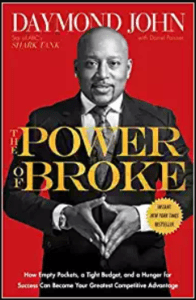
The Power of Broke
Everyone from Daymond John to The Power of Broke to Al Gore is that there’s this pivotal moment that we hit. Some people call it rock bottom, like Ryan Blair. Some people call it the fork in the road. To me, I call it the lightning rod moment. That’s your lightning rod. It’s the moment that the lightning hits you. That one in a million chance, that one in a million moment where you’re walking down the street, the percentage of a bolt of lightning hitting you is obviously very small to minimal. T
hat lightning bolt hits you and it jolts you. It pushes you back. It knocks you off your feet. What happens is that you have a choice when the lightning bolt hits you, you can stay down on the ground or you can use the fact that you got this one in a million moment so that you can build up the human being that you want to become. Embrace the moment because it informs everything afterwards and tells a story that you’re going to be able to tell on-stage or in the work that you do forever.
Sanyika, thank you so much for sharing your passion, your vision, and your incredible authenticity with us.
I appreciate that, John. It’s a pleasure. John, you are one of the most rooted in-service guys that I’ve ever met in my life. I greatly appreciate knowing you and having you as a friend. It is an inspiration and I appreciate it very much and you’re a great speaker.
Thanks.
Links Mentioned:
- Sanyika
- Thank You for Your Service
- All Warrior Network
- Instagram – Sanyika
- Twitter – Sanyika
- Facebook – Sanyika
- The Power of Broke
- Suits for Soldiers
- www.FirestarterLive.com
Wanna Host Your Own Podcast?
Click here to see how my friends at Brandcasting You can help
Get your FREE copy of John’s latest eBook Getting To Yes now!
John Livesay, The Pitch Whisperer
Share The Show
Did you enjoy the show? I’d love it if you subscribed today and left us a 5-star review!
-
- Click this link
- Click on the ‘Subscribe’ button below the artwork
- Go to the ‘Ratings and Reviews’ section
- Click on ‘Write a Review’
How To Invest in Cryptocurrency
Posted by John Livesay in podcast | 0 comments
 Episode Summary:
If you have been following the world of cryptocurrency, you may have noticed that Teeka Tiwari and Palm Beach Confidential are trending. That is because we are at the doorstep of the next cryptocurrency boom. Teeka is an editor at Palm Beach Research Group LLC and he is responsible for the firm’s flagship service, The Palm Beach Letter and small-cap and cryptocurrency advisory, Palm Beach Confidential. One of the best case uses of the blockchain is helping homeowners, and Teeka provides professional advice to everyday people on how to invest in cryptocurrency. People need to get in the game because putting your money in stocks, bonds, and real estate and calling it a day is no longer enough. Learn from Teeka as he provides insight information on how to invest in cryptocurrency without having to depend on a broker.
—
Teeka Tiwari has quite an impressive background as an investment banker and now as an expert in cryptocurrency. He shares with us his incredible story of being in foster care in the UK to making it big in America. He said, “When you visualize the future you want, it becomes a reality. When you focus and outwork everyone else, success is inevitable.” He shares a clear understanding of what the blockchain is and why it’s going to change how we all do business.
Listen To The Episode Here
How To Invest in Cryptocurrency
I’m thrilled and honored to have someone I met at a Brenton Woods Economic Summit. His name is Teeka Tiwari and he is the Editor of the Palm Beach Letter and small-cap and cryptocurrency advisory Palm Beach Confidential. He’s a former hedge fund manager and Wall Street executive and he’s widely considered one of the world’s premier cryptocurrency analysts. He epitomizes the American dream. He grew up in the foster care system in the UK and he came to America at sixteen with just $150 in his pocket and the clothes on his back. By eighteen, he’d become the youngest employee at Lehman Brothers. Two years after that, he shattered conventions by becoming the youngest VP in the history of Shearson Lehman. He’s a regular contributor to the Fox Business Network and has appeared on all kinds of shows like CNBC and ABC’s Nightline and a lot of international television networks. Teeka, welcome to the show.
Thank you, John. I appreciate it. It’s great to be here.
I have had the privilege of watching you in action on your amazing webinar. I would love to have you start talking about what it was like growing up in the foster care system in the UK. People are familiar with what it’s like here in the US. It’s usually not a pleasant experience, and I’m hoping it’s a little bit better and not so Charles Dickens-ish as we might imagine.
The first time I entered into a system, I was eight years old. I was in a group home where the average child was at least four or five years older than me and some were considerably older. I would love to tell you that it’s a wonderful place and we sang songs, but it wasn’t. It was a place full of violence and danger. It’s a frightening and very dangerous place for an eight-year-old boy to be in. I’d get beaten up and my things would get stolen. I would have to maneuver a chair at my door to stop people from coming into my room at night. It was a terrible time. From there, I went into a foster home with a family, not a bad family, but not the greatest. I lived in a room over an uninsulated garage. At night in the winter, when you would breathe, you would see your breath. It was like being outside. The room was probably 38 to 42 degrees. It was freezing. My final foster family were very nice people and gave me a wonderful home. I can’t say enough good things about them. It’s definitely a hit or miss when you grow up in the system, and I’m fortunate that I did well regardless of what I went through as a kid.

Invest in Cryptocurrency: It’s very hit or miss when you grow up in the system.
What’s interesting to me is the whole nurture versus nature element that causes people to still thrive despite possibly not having the best childhood. What made you come to America at sixteen? That’s a brave thing to do with very little money as well.
From the age of twelve years old, I had this desire to move to New York and work on Wall Street. I remember I watched some show and they were talking about this new type of person cold a Yuppie, a young urban professional. This is the early ‘80s and I thought, “That’s cool.” I started and I saw all these yuppies who all worked on Wall Street or in the city of London, in finance. I started doing some research on this and I discovered the stock market. The whole idea of being able to buy a piece of paper and be able to sell it later at a higher price blew my mind.
Growing up, I had always seen people trading time for money. I had never seen anybody use their mind to make enormous amounts of money. That idea intrigued me, and it was like inception. It was something in my brain that would not go away. I grew up in horrible poverty and I remembered thinking, “There’s got to be a better life than the one I’m in now.” My focus was get to America and go work on Wall Street. While other kids had posters of soccer stars on their walls, I had pictures of New York. I had travel brochures all over my floor. I would sit there and I would dream about walking the streets of New York City, working on Wall Street and driving a beautiful car. It was very real for me.
The power of visualization is important at any age. I am so grateful that you shared that early visualization and how that came to be. I’m imagining there’s a story of how a young lad from the UK convinced Lehman to hire him. Did you have special skills that they said, “We’ve got to get this guy in?” You probably didn’t know anybody.
I moved to New York at sixteen. I was now eighteen and I was selling typewriter supplies over the telephone, IBM Selectric. This was 1989. I’m making $300 a week and I’m thinking, “This is the American dream. This is amazing.” I met a guy there called Kevin Wong. I would always tell people from the time I came to America, “I’m going to go work on Wall Street.” If I had met you even for two minutes, I was going to tell you about my Wall Street dream. I was telling everybody about my Wall Street dream. I met Kevin, I told him, and he said, “If you’re serious, I know a guy at Lehman Brothers.” I was like, “You do?” He said, “Yes. They’ll treat you like hell, they’ll pay you like hell but they’ll give you a shot.” He gave me a name of a guy called Frank. I called him and he’s like, “Come in for an interview.”
I didn’t have the right clothes to wear to go to Lehman Brothers, so I went shopping. I bought a pair of gray slacks and I didn’t realize that when you buy pants, you have to get them finished. They’re unfinished. My pants are dragging on the ground. I’m wearing fake leather shoes with white gym socks, a pink polyester shirt, a pink polyester tie, and no jacket because I can’t afford one. I walk into Lehman Brothers, which at that point in 1989, 55 Water Street was the highest producing retail brokerage office in the world. It was doing $150 million a year in commission, which was a lot of money for retail.
[bctt tweet=”Visualize the future you want.” username=”John_Livesay”]
I go to the interview with Frank. This guy looks at me and shakes his head and says “You’re a nice kid.” He’s trying to let me down easy. “This is not for you. Thanks for coming in.” I look at Frank and I said, “Frank, I just want a shot. I’ll work for free. I don’t care. Just give me a shot.” There was something about that he liked and he gave me a shot. Back at Lehman, if you work 60 hours a week, they only pay you for 29 hours and they paid us $4 an hour. I was in the door, I would work nights and weekends to make ends meet.
Talk about the determination and passion you had that he was able to see past your clothes to say, “I’m going to give this willing to work for free.” That’s the way you were. That guy must be so happy he gave you that shot. How did you get to be so successful so fast?
I haven’t always been like a natural study at things, but one thing that I have and I consider it the greatest equalizer, is I have an ability to work, focus and outwork anyone. I tried to make myself as useful as possible to as many people as possible to learn as much as I could. Then I read everything on investing, how to give presentations, and understanding and selling to an affluent market. This is not anything people told me to do, I just did it. I would practice presentations because at eighteen, I was driven but I was shy.
Social interactions were very difficult for me, so I knew I had to overcome that. I read a lot and one of the things that I learned was that people cannot tell the difference between somebody who was confident and somebody who just acts confident. That was groundbreaking for me because I wasn’t confident but I could act confident. I could say, “These are the markers of a confident person.” It was a pantomime I’d go through and people would respond to me as if I was confident.

Invest in Cryptocurrency: Make yourself as useful as possible to as many people as possible to learn as much as you could.
Stand up, straight eye contact, all that good stuff that you pantomime. What I’m getting from this is that success is inevitable when you focus in that work with other people and combine that with acting as if you’re already confident and you will be.
I firmly believe that success is an act of will. All creation is an act of will. Some of us were born with these skills and others of us, like myself, had to learn them. These are learnable skills and they have nothing to do with how smart you are at math or how good you are remembering facts. Anybody with average intelligence can become successful in their chosen field. I possess average intelligence and I would say my differentiator is the ability to focus on things that move the needle in my life. I’m a big believer in the 80/20 rule, which says, “20% of your actions create 80% of the results in your life.” I focus most of my time on that 20%. I’ll sit down and I’ll say, “What’s the 20% of actions that move the needle in my business life, personal life, and health?” I build my life around that.
I love that because people get overwhelmed and they don’t know what to do first. If you focus on what’s going to get you the biggest bang for your buck and do that first, you’ll be successful in all areas. You have a success story that I heard on your webinar that I’d love to have you share. What did you do that had you become the youngest VP at Shearson Lehman?
I was good at raising assets, creating great relationships with my clients, and generating a lot of revenue for the firm. I was the number one rookie producing broker in my first year. The second year, I was one of the top five producing brokers in the office. I was very good at what I did. They were afraid that I was going to get poached. I could imagine the discussion was, “We’ve got to make Tiwari our VP,” and it meant a lot to me as a kid.
Everyone’s ego gets stroked by that title but back then, that’s fantastic. I know that your expertise is in the cryptocurrency advisory role. All the lessons you’ve learned from your expertise on Wall Street are now being taken to the blockchain. I hear a lot of people saying the blockchain is as revolutionary as the internet was, and we certainly heard a lot about that at the event that we were at. The analogy I loved was the internet didn’t take off until email and blockchain’s killer app is Bitcoin. Can you share with us what you see as far as impact and opportunity around blockchain and cryptocurrencies that are using it?
A blockchain is a form of a database. It’s not that sophisticated. A traditional database has a central repository of information and then you have a lot of people hitting that database for information. The problem with a centralized database is that it’s very easy to manipulate. We’ve seen companies like Wells Fargo go back and change records on their database because it’s a centralized database. There’s no oversight there to prevent that. The blockchain solves this problem and it does it because it keeps an identical copy of the data on thousands of machines. An example of that would be Bitcoin. How do we prevent people double spending their bitcoin?
[bctt tweet=”When you focus and outwork others, success is inevitable.” username=”John_Livesay”]
The way that’s done is that say there’s 50,000 machines on the Bitcoin network and they all have an identical copy of the ledger. Before somebody can make a change to that ledger, let’s say I want to spend some Bitcoin or you want to send me some Bitcoin, the note that you’re trying to do that through will compare their version of the ledger with everybody else’s version of the ledger. If everybody else’s version of the ledger says, “John has that money that he can send to Teeka,” it allows the transaction to happen. Those transactions happen in ten-minute blocks of time. All those transactions in that ten minutes are correlated and then tacked on to the block of information that came before and that continues.
What’s the advantage of that? You can’t double spend and you cannot go back and change data in the blockchain because you would have to take control with 51% of all the computers on the network and you’d have to do it simultaneously in order to tamper with the blockchain. Because the Bitcoin blockchain is now so large, there isn’t enough computing power available to try to coopt the Bitcoin blockchain. It gives you the ability to have a universal source of truth that you can rely on. When you can do that, it opens up all these new avenues and applications that never existed before.
One prime example is with stocks. When you go and you buy a stock, the person that you’re buying the stock from might not have the stock that you’re buying. They might be lying about it. There’s this three-day period where the firms have to make sure that this person has a stock, make sure you have the money, then they have to transfer it over. That whole process, which is called trade settlement, costs about $20 billion dollars a year. If you put all of that on a blockchain, it says, “John owns us thousand shares of IBM,” and the blockchain says, “Teeka has this $146,000 to buy the thousand shares.” Then you can do the transaction immediately and eliminate any of the of the back-office functions that chew up so much capital and time.
I’ve never heard anybody explain it in terms of ten-minute blocks of time that create a blockchain. Everything the readers and I do is all about what makes a good pitch. What problem are you solving? Who do you help? What problem do you solve? You did a great job of explaining the transparency factor combined with the time savings, which then gives huge cost savings. People will start to get a little bit more in-depth understanding of how the blockchain technology is revolutionizing not just cryptocurrencies, but the authenticity of, “Is that food organic? Is that jewelry or art authentic?”
If we double click on how that’s impacting cryptocurrencies and your expertise in particular, what you offer is insider observations through your ability to focus on in the Palm Beach Letter and the Palm Beach Confidential that is so valuable to people who are overwhelmed and they need someone like you to curate for them. If I want to dip my toe in, where should I start? Is what you’re offering that accurate?
[bctt tweet=”Success is an act of will.” username=”John_Livesay”]
I travel all over the world and meet with development teams, venture capitalists, and the people that are putting together different blockchain types of solutions. My job is to uncover the ideas that are worthy of investment and very few ideas are. There’s a reason why I don’t recommend ICOs or Initial Coin Offerings. It’s because about 85% of them are just fraudulence. Another 10% to 13% of them are bad ideas and maybe 1% to 2% of them are good. You have to go through a lot of different ideas in order to find ideas that will work out over the long-term.
One tip out I’ll leave the audience with is that as you’re examining a coin or use case, you should always think about, “How is this coin going to aggregate users? How are they going to incentivize usage of the coin, adoption of the coin?” Having a great idea is not enough. Great ideas are a dime a dozen. It’s getting people to migrate over and use your solution. The very best projects have great incentives built into them that make it easy to adapt and make it a no brainer for people to adapt their solution. That’s what I try to focus on.

Invest in Cryptocurrency: 85% of ICOs, initial coin offerings, are fraudulent, 10%-13% of them are bad ideas, and only 1%-2% of them are actually good.
There’s been a big shift from tokens being just utility versus now being perceived as security. I’m involved with one that is an asset backed with residential real estate of fractional ownership. That’s our solution. It’s how can we create something that people are understanding and feeling comfortable with because a lot of people understand real estate. I like to say that when Bitcoin gets a cold, the rest of the alternative coins gets pneumonia.
If we’re creating a token that’s backed by actual net asset value of owning small percentages of thousands of homes, we’re not going to be as affected as the other ones that are not backed by assets. I was curious to hear your thoughts on tokens that are backed by assets, whether it’s real estate, gold and art as a potential way that they might have an incentive for people to use it because they understand it.
This is an area of token economics that I’m excited about. What I’m excited about is that we can take previously illiquid assets or assets for the average person could not own a fractional piece because they don’t have enough money and we can tokenize them. For instance, homes, shopping malls, massive buildings, stadiums, these are things that would have required enormous amounts of funding by massive banks that individuals haven’t even been allowed to buy a piece of. Through tokenization, you can create these types of investments that can give you equity ownership directly into a performing asset, can give you income that is directly paid to you via the blockchain, and gives you ownership on something at a fractional level that would never be practical before. You take $100 million building, you can’t make money selling thousand-dollar pieces of it but with the blockchain, you could do that.
That’s why I was so excited to join quantmRE because I saw that there was fractional ownership happening where someone has a million-dollar home and they only have a mortgage payment of $500,000 and they want $100,000 out. Their only option is to refinance it or second mortgage HELOC, which means going into more debt. The ability to give people $100,000 in exchange for owning 10% of their house is fantastic, but it still requires all those investors to wait for that person to sell their house before they get their money back. By tokenizing this, we’re making this illiquid asset of all that equity that’s sitting in people’s homes liquid because now people can buy and sell an asset back token without people having to sell their homes.
To your point, everyday investors who maybe want to get into real estate but don’t have the money to own an apartment building or a rental house can now get in because they’re owning a fraction of a fraction of someone’s home without having to be a landlord. That’s one of the best case uses of the blockchain, helping everyday people who are homeowners and helping everyday people who want to invest. It becomes a great digital on ramp for institutions where your background is. From what I understand, Smith Barney is hiring several hundred people to start analyzing cryptocurrencies for their clients to figure out where they should be going. If people are smart enough to subscribe to your Palm Beach Confidential, they’ll get their own insight information without having to depend on a broker.
I wouldn’t trust brokers yet with crypto research.
They know they need to get in the game because it’s no longer enough for people that say, “Put my money in stocks, bonds and real estate,” and call it a day.
Everybody should have at least a small allocation to crypto. The point that I want to hammer home is that be rational. I recommend if you’re a smaller investor, $200 to $400 per idea, if you’re a bigger investor, $500 to $1,000 per idea. I suggest never put more than 5% to 10% of your liquid net worth into crypto because they’re incredibly volatile. The truth is we are very early in the cycle and some of these ideas won’t make it. Some of them will go to zero. I suggest having a broad-based portfolio and using an equal dollar amount in each one, this way you don’t over own a loser or under own a winner.
It’s a great strategy. If you look at all the dotcoms back in the ‘80s, some made it, some didn’t. Looking at tokens or coins that are backed by actual assets give you some level of comfort that the homes are never going to go down to zero in value. When the housing market went down in 2008, they didn’t go down to zero and now by 2018, they’re all backed up to where they were a little higher. If you’re willing to take a long view, real estate can be a great place to have some of your money in it. With tokenization of it, it becomes a whole new wave because before nobody could get into those assets.
We’re going to see a lot of assets that were once highly illiquid become liquid through tokenization. Another area you’re going to see liquidity come to is in private equity. If you invest in a private equity fund, your money is tied up for seven to ten years and you have zero liquidity. You’ll start seeing private equity funds start to tokenize and a whole secondary market will spring up around private equity as well.

Invest in Cryptocurrency: You’ll start seeing private equity funds start to tokenize and a whole secondary market will spring up around private equity as well.
What is also exciting is that not only do you let people get into something that they haven’t been able to get into and liquid. For those people who want to invest in stocks, you can buy mutual funds. There’s always a certain percentage of people, I call them the “Laptop and Latte Crowd.” Those people at Starbucks with their laptops and they like to invest on their own and think they can outsmart the S&P 500. The blockchain is allowing quantmRE to let people say, “I want to buy homes that are within a certain area code or zip code of where I live because I know this market well. I don’t want to buy all the homes that you own.” When you have that kind of flexibility, you’re allowing people to use their knowledge and creativity to invest in something in a small zoom in way, like monopoly meetings Zillow.
I’m not familiar with quantmRE. This is the first time I’ve ever heard about this project, John.
It’s this concept of using the blockchain to take something that’s illiquid and making it liquid with some social impact thrown in. That goes back to what you said. A good analysis of what’s the incentive for people to adopt using a token that’s backed by an asset. It makes it much more compelling because it’s not so attached to Bitcoin’s volatility.
A lot of people ask, “What’s the point of Bitcoin?” For me, Bitcoin is a store of value. It is the equivalent of digital gold. It’s the world’s most secure way to hold and transfer value. There will only be 21 million of them, and about five or six million of them have been lost forever. When people say, “You can’t go into a store and use Bitcoin to buy a latte,” that’s like saying, “I can’t use my Ferrari to tow a bunch of firewood. It’s not designed for that.”
[bctt tweet=”Focus on things that move the needle in your life and build your life around that.” username=”John_Livesay”]
When you start looking at things on a global level, that’s what interests me. You zoom out and it’s the world looking for some digital currencies where they don’t have to pay fees to convert from dollars to pesos, pounds, and euros. You start to get a picture of how big this can be. I can’t thank you enough for sharing your expertise. Your personal story is riveting. How can people follow you on social media? Let us know what’s the best way to keep track of how you’re continuing to give advice.
We have a free eLetter, which you can sign up for at PalmBeachGroup.com. I don’t use a social media channel.
Go there for the free newsletter and that will get you in the world of your expertise. I personally have studied who you are, what you’re doing, and your expertise. It’s a world that once you start to enter, you feel like you’ve gotten some water after crossing the Sahara because it’s so refreshing and so easily understood in a way that’s not with all the hype but with all the insights. That’s what everybody needs.
Thank you so much, John.
Links Mentioned:
- Teeka Tiwari
- Palm Beach Letter
- Palm Beach Confidential
- Teeka Tiwari’s webinar
- quantmRE
- PalmBeachGroup.com
Wanna Host Your Own Podcast?
Click here to see how my friends at Brandcasting You can help
Get your FREE copy of John’s latest eBook Getting To Yes now!
John Livesay, The Pitch Whisperer
Share The Show
Did you enjoy the show? I’d love it if you subscribed today and left us a 5-star review!
-
- Click this link
- Click on the ‘Subscribe’ button below the artwork
- Go to the ‘Ratings and Reviews’ section
- Click on ‘Write a Review’
Financial Mentor: Creating A Wealth Plan That Actually Works with Todd Tresidder
Posted by John Livesay in podcast | 0 comments
Episode Summary
Have you ever fantasized about never working again? We probably all do. But even if you never have to work a day in your life again, financial mentor Todd Tresidder said that won’t make you happy because when you can have everything and when you have lots of money, you end up not wanting anything. Todd says work is part of having a purposeful life. Even with large income streams, Todd is constantly developing wealth plans that actually work. Being a financial mentor and creating successful businesses is his passion and he helps entrepreneurs identify common errors and things to avoid in creating their wealth plan.
Listen To The Episode Here
Financial Mentor: Creating A Wealth Plan That Actually Works with Todd Tresidder
Our guest is Todd Tresidder, who graduated from the University of California with a BA in Economics and has a passion for creating successful businesses. He’s a serial entrepreneur since childhood like I am, and he went on to build his own wealth as a hedge fund investment manager before retiring at 35. He grew his net worth from less than zero at 23 to the point of financial independence just twelve years later. It’s no surprise I wanted to have him on the podcast and how he’s maintained his wealth is by remaining an active investor and using a risk management system for investing. He’s also the author of several books like How Much Money Do I Need to Retire? We all have that question pending in our head. Todd, welcome to the show.
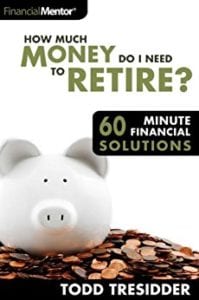
How Much Money Do I Need to Retire? (60 Minute Financial Solutions Book 5)
Thanks, John. Thanks for having me.
I’m always interested to find out what that story of origin was. Since you talk about being an entrepreneur since childhood, can you take us back to one of your first entrepreneurial ventures as a kid?
I had my first paper route as a kid. Then I realized that if I’ve got a cool motorcycle, even as a little kid I could ride around the neighborhoods and deliver more papers and make more money and have fun. That was that first thing in finding efficiency and doing it faster, better, and cheaper. I made pretty good money in paper. I bought my first car at sixteen and then had a sailboat refinishing business, had a pool supply business, on and on and on. They just weren’t on top of the other, all the way through college and into adulthood.
I was also someone who had a paper route and I don’t know about you. I grew up in the Midwest, so I did deliver the papers in all kinds of weather including the sub-zero snow. What I think that taught me, and I’d like to see you learned some lessons is I did knock on these doors door to door. “Do you want to subscribe to the paper?” I had to sell it. Then I had to be the one to deliver it and then I had to go at the end of the month to collect the money. It was a full stop experience of what it takes to be an entrepreneur. Did you have similar life lessons from being a paperboy?
Absolutely, how do you grow your route? I would get extra papers and I would just start tossing them on people’s doorsteps and then the ballsy little kid would show up and try to collect for it when they never asked for it. I was such a crazy little kid. I didn’t know that that was unethical. People were nice. They go, “I’d never asked for it, but here, I’ll pay for it this month, but you don’t need to continue.” Then some people would continue. They’d like the paper and they go, “That was nice of you to start me, I’ll keep going.” It was funny how you build a business. I think even more so, John, it teaches discipline. Getting up early in the morning before school every day and you have to go deliver those papers. You run the business and you have to run your life in the meantime. I think there’s a beingness in that that transfers over in your professional life that is just powerful.
Let’s double click on the discipline because obviously you made a decision at a young age that you were going to be financially independent by 35. How much discipline did that take and what specific disciplines did it take?
Not that much, actually. I hate to disappoint you on that. Because what happened was I had the insight that if I want to be financially independent, I had become a master investor and so I skipped all the traditional routes. Most people, if they’re interested in finance and investing, they would go and become a broker or a financial adviser. I skipped that whole thing. I went straight to the hedge fund business, which is the rocket science of investing. I started developing quantitative risk management system and statistical risk management systems straight out of college. I was programming my own stuff. I had to build my own databases. I’m 57, so this is back in the 1980’s. It was very early on in computers. IBM came out with his first PC, Apples were still being made in a garage with Wozniak and Jobs. It was very early on. There were no databases for that you could even get a stock date. I had to hand key punch all my data in order to develop the methods. We’re talking early pioneer here.
What I learned was I had the insight that I had to become a master investor. I developed that skill and then we grew the business rapidly because we actually had it right. We knew what we were doing. We grew that business rapidly. My income grew tremendously straight out of college. As a result, I had a large income, but I didn’t spend much because I started college lifestyle days. I lived on a tiny fraction of what I made, socked away the rest. I never had to discipline myself. I could spend pretty much what I wanted and achieve financial independence rather rapidly.
For someone who doesn’t have your skill set about algorithms and math, do you have any suggestions on what they should do if they’re working for someone else or if they’re starting their own company and money’s tight, they don’t say like, “I’m putting all my money into my company. I’m not saving anything,” which is a story I hear a lot from entrepreneurs.
The thing about being an entrepreneur that’s dangerous is there’s a real tendency to put all your money back into your business. You do have to pay yourself and you have to carve money out of the business and get it over to your personal net worth. That way all your assets are not tied up in one location. If something happens to you, happens unfavorable to the business, you still have a nest egg to show for the years that you built that business. You have to start separating out the equity and start transferring stuff over the personal side and keep a separation between it.
It’s almost like paying yourself first.
I try to avoid the clichés. That would be one way of saying it. You can also just set up retirement plans, government-funded retirement plans. The nice thing with those retirement plans is they have a penalty if you break into him and people would say, “That doesn’t sound very nice, Todd.” It actually is because it keeps you from using it. It creates kind of a little bit of a firewall around when you pay a penalty plus you pay tax to get into it. You look and say, “If I pull a buck out, I only get to keep fifty cents of it so what the good is that I may as well leave it in there.”
In your book about how we should plan our retirement, you talk about The 4% Rule. That’s not a cliché. How did you come up with that and what is it?
The 4% Rule was actually created by William Bengen long ago, a couple decades back in research on US data. The 4% Rule basically says that on a 30-year retirement, so it’s a 30-year time span, you can spend 4% of your portfolio fairly safely. It’s pretty safe. The failure rate is extremely tiny on US data. It does fail on international data, however. When we say 4%, what you do is you spend 4% first year and then you adjust it for inflation every year thereafter. The amount adjusts for inflation. The reciprocal of The 4% Rule is the Rule of 25. The Rule of 25 gets a little more intuitive and a little simpler. When it says is you have to have 25 times your annual spending in assets.
[bctt tweet=”Work is part of a purposeful life.” username=”John_Livesay”]
This is all for conventional passive index asset allocation portfolio. Is it accurate? No, it’s not. It’s not perfect, but it’s close enough that you can use it as an indicator or direction to point for how much you need to save. Another even more intuitive way to understand it is the rule of 300. The Rule of 25 comes from the reciprocal of The 4% Rule. 25, 4% equals 100. The rule of 300 is the same thing, but it breaks it down to a monthly amount. That’s what makes it intuitive. It’s 25 times twelve months, 300. What it is 300 times your monthly spending amount.
For every $1,000 you spend per month that you need to support your lifestyle, it requires $300,000 in a conventional asset allocation portfolio. Then if you want to be more conservative you could make it $400,000. It would be the Rule of 400. That would be a very conservative approximation. 300’s probably workable, 400 for conservative. We can go into how it varies. It varies with market valuation and interest rates, so in as we record this, you’d probably want to be on the conservative side and you’d probably want to push towards the 400 number.
In your book, you talk about your simple three rules that allowed you to retire at 35. Can you share with us what those are?
What that’s doing is this talking about a very different approach. That’s the cashflow-based approach versus the asset-based approach. We’ve got to step back a second and understand the traditional approach to contrast it with what I’m talking about. The traditional approaches that you amassed this pile of assets. You’re supposed to scrimp and save, put away money into your 401(k) and into your savings and you build up this big nest egg and then when you retire you do nothing of substance and live off it.
Obviously for entrepreneurs that’s probably not very likely because entrepreneurs have what I’ll call the modern retirement, which is they’ll have cashflow streams, maybe some real estate. Maybe when they sell the business, they’ll sell it over time and get cashflow from that. There are a lot of different ways entrepreneurs get paid, but again, that’s the traditional model. You build a big pile of assets and then you amortize them down. It’s like a mortgage. Every payment the mortgage makes the balance grows smaller. Same thing in retirement. Every time you pull money out it gets smaller.
The three-rule system I created, basically it’s a cashflow model. Instead of worrying about accumulating these assets and then you have to figure out this amortization equation for the assets were like you have to come up with your life expectancy and you have to estimate the return on investment and you have to estimate inflation. All these things that are impossible for any normal human to estimate over 30-year period you’re supposed to do for normal retirement planning and in fact it’s impossible for the pros to do right, which makes it inaccurate. The cashflow based model is super simple and it’s super accurate. All it says is you have to create cashflow generating assets.
The cashflow produced by him exceeds the amount you spend each month and when you do that, you’re infinitely wealthy. It requires no fancy assumptions, you don’t have to worry about your lifespan. You don’t have to worry about outliving your assets and if you do it right, you don’t even have to worry about inflation. Let’s say you have rental real estate income or you have dividend growth stocks. Historically, income from those assets exceeds or approximates the growth of inflation and so you don’t even have to estimate for inflation, you had to estimate for lifespan, investment return, all that goes out the window. You have a very secure, safe retirement working with the cashflow-based model.
The other thing where it’s helpful is for people who retire early. You opened up and you pointed out that I retired twelve years after getting out of college. I’m almost 57. That was a long time ago and that’s why I created these models is because the traditional model doesn’t work for an earlier retirement. Because you can’t safely amortized assets over periods exceeding 30 years. There are too many variables in the equation. It’s not stable. Whereas the cashflow-based models are stable over very long timeframes. That’s where I developed a lot of these very alternative, very different ideas. They’re more stable, they’re safer. It’s because I had to have them.
A lot of people are always talking about the importance of diversifying their portfolio and obviously you’re talking about if you want to be successful, what I heard you saying was get into assets that generate cashflow, whatever that might be, whether it’s rental income or other investments. How important is diversification when you’re looking at stocks and bonds, or should all that be in real estate or should it only be in things like know and trust? What are your thoughts on that?
First of all, diversification’s valid. The joke on Wall Street, it’s the only free lunch on Wall Street where it lowers risk and increases return theoretically. Diversification done the traditional way is fine, which is diversifying by asset classes. You diversify stocks, bonds, cash, commodities, REITs, that type of thing. I’m losing myself traditional paper assets when I talk about that because that’s where it’s commonly applied. However, diversification done the smart way is where you take it a cut deeper.
You go outside paper assets because the issue with paper assets now as they all correlate. Everybody knows that intuitively when the market tanks recently went through a quick 10% decline, when it does that all the assets declined at the same time. Diversification is this funny thing where it works the 95% of the time you don’t need it and it fails the 5% of the time you actually need it, but it’s worth doing. Again, it’s not hurting you to do it as long as you don’t diversify into lower expectancy assets, in other words, assets that have a lower expected return.
That lowers the expectancy or portfolio which then hurts your average returns over time or your compound returns over time. Diversification done the smart way however, as you go outside traditional asset. You get into real estate, you get into your business, since you’ve got entrepreneurs, that’s another asset class to retirement. It doesn’t correlate at all because the neat thing about real estate, most of the time, the only time this will be an exception is in a credit crunch nationwide, like we had in 2008, 2009.
In general, real estate is very stable and not correlated accepting credit crunches. What you get is you get non-correlated returns with your business and that’s because they’re a micro-economy. The growth of your real estate is generally driven by the local economy, job growth and income growth. The growth of your business is determined by your business model. In fact, you can create a business it’s inversely correlated to the markets.
A great example is an attorney. If he specializes in bankruptcy law, his business is going to grow every time the market’s turned down and every time the economy gets in trouble. What you want to do is you want to contrast what you build in alternative assets with what you have in your traditional portfolio. You get non-diversified returns. The other thing too, you can look at diversification, go cut deeper and diversify by the strategy source of return.
In other words, even within paper assets, you can have the conventional buy and hold strategy, which is a passive approach, but there are active strategies as well in those active strategies to have different sources of return and they don’t correlate. Let me make this more tangible for most people in real estate. You can have active and passive strategies so you could have a buy and hold real estate portfolio, but you could also have a fix and flip portfolio. The fix and flip portfolio probably will outperform in a downturn because you’re going to get better deals.

Financial Mentor: Diversification is this funny thing where it works the 95% of the time you don’t need it and it fails the 5% of the time you actually need it, but it’s worth doing.
You’ve got to diversify by source of return as well as by asset class. That’s how smart investors do it. Then you want to make sure that the sources of return don’t stack up. The other thing about diversifying by source of return is it doesn’t start to correlate. The correlations remained stable even in adverse economic environments. That’s not true by diversifying by asset class. When you diversified by asset class the returns start to stack up and correlate. Diversification only adds value as long as you have non-correlation. That’s why source of return is actually a better way to diversify.
What are some of the mistakes you see people making when planning their retirement?
There are so many, you’ve given me a layup. Because I have a course in the whole course is about how you develop a wealth plan that actually work.
Let’s talk about the course so people can decide. People are desperate or at least hungry or thirsty for this. Don’t be shy in telling us what your course offers.
I’m not trying to pitch, but what prompt me was when you asked about all the errors. I’ve actually got a lesson right before they build their wealth plan, there’s a lesson teaching all of the common errors and things you want to avoid when you go to actually create your wealth plan. You build up to a point in that course where you develop all the knowledge, all the things you need. You actually know more than your financial adviser about how you design a wealth literally. I’ve got multimillionaires in the course and they are like, “If I had this knowledge twenty years earlier, I would have done even better.” It takes you from beginner level, starts with your resources, shows you how to harness your resources, convert them into conventional plan like we were talking about.
Then you convert them into what I call the advanced planning framework, which is the alternative assets, which includes your business in real estate. That’s governed by very different mathematics and limitations. All of these asset classes and all these strategies, they have different characteristics. Then you yourself, as you come to the equation you have specific characteristics as well. You have values, you have goals, you have resources, and they’re unique to you. Skills that you bring to the equation. What you do is you connect your unique situation to unique characteristics of the asset class to create a wealth plan that’s personalized to you.
On your Financial Mentor website, you have this great for phrase tagline, “Invest Smart, Build Wealth, Retire Early and Live Free.” I want to reverse engineer that for people because there are a lot of people that don’t know people that have retired early and don’t know what it’s like to live free. Would you describe to us, Todd, what does it feel like to be financially independent? Where you can in fact live free?
It’s been my life for so long. I don’t even know how to relate it to something that isn’t. How do you describe the color orange, except in contrast to the color red?
Do you see other people hating their job and how to go about it and living for the weekends and you’re living, you’re happy all the time? Anything like that would be interesting.
I don’t even distinguish. The only distinguishing difference between a midweek day and a weekend day is that my kids are in school midweek during school time. That’s the only thing I miss. I work on weekends. I play on weekdays. I mix it all up. It depends on where the opportunity is. I live opportunistically. If there’s something going on that I want to do, I go do it. I’m an avid snow skier. If it’s a powder day I’ll go ski. There’s a certain amount of freedom there. I vacation probably on average about three months a year I found is what I enjoy. If I do a lot more than that, then it becomes a way of life and I did do less than then I’m working too much. Here’s something that will surprise people is that work is part of a meaningful life.
The fantasy, it’s all or nothing.
People think that when you’re working hard and you need the money and you’re trying to build up, a lot of things happen like you start to covet goods when you have plenty of money. You don’t covet goods anymore. When you can have everything, you don’t want anything because you don’t value it. If you started acquiring endless stuff before you know it, you’re filled with clutter in your life and you have no freedom again. It gives you the opposite of the value you’re trying to honor in the first place.
I know you’re breathing it for the last 27 years, but for most people those are some valuable insights whether you retire early or not to keep that perspective in place is helpful.
For business owners, here’s one of the myths people do. They build up their business and the big dream is that big liquidity event day when they sell the business and they get a few million dollars and now they’re finally free. Wrong. What you want to do is you want to design the business so you have a life so enjoyable that you never want to retire from it. That’s the real goal. Not the liquidity event day but get the cashflow of the business and figuring out how to develop the business that you’re unnecessary so you have whatever freedom you desire right now. I’ve coached clients on this and it takes a few months. It’s not that hard. What you do is you start looking at anything that requires your time and you look at as a failure of your business systems. You start finding employees and developing business systems to replace every aspect of what you do that you can.
Then over time you may remove yourself from the business so you have the freedom you desire right now while you still have the cashflow of the business and that’s freedom. Because see what happens when you sell the business, you get a liquidity event, you have a bunch of money. First of all, you pay out a ton of it in taxes. That’s the first thing so you end up with a fraction of what you had before and then now you’re in an amortization equation, which I talked about earlier, and you’re living off those assets. While people think that’s free, you’ll be surprised once you start living off the assets what it does is it creates a scarcity mentality, because you know that every dollar you spend is a dollar. It’s like killing a soldier on the battlefield. Those are your soldiers on the battlefield of wealth and every time you spend, when you kill them, you slaughter them, and I’m being graphic to make it visual.
[bctt tweet=”When you can have everything, you want nothing.” username=”John_Livesay”]
What does is it creates scarcity and it’s the opposite of freedom, which is the value we’re trying to honor. Cashflow is freedom, assets are nice reserves. They’re great security but they aren’t freedom. It’s the cashflow from the assets that creates the freedom, and so your business is a valuable asset. You’re probably better off not selling it and paying the taxes and keeping the cashflow than you are to pay the taxes or sell it. Pay the taxes converted into income producing assets. They’ll produce far less cashflow than your business would in the first place.
Here’s a question that may not get asked a lot, or maybe you do, which is what are your thoughts on cryptocurrency and how that’s changing the world and is that a good investment?
Almost every interview asked me that, basically it’s a bubble. Back in 2008, 2009, I couldn’t talk to anybody without being asked about how you get rich in real estate and of course that was the absolute top and then the market or 2007, 2006 and then the market rolled over obviously after that. Same thing in 1998, 1999. Everybody wanted to talk to me about internet stocks and technology stocks and of course that was the final top. Here’s the thing, the blockchain is real. The blockchain’s a big deal. The blockchain is going to have impact. The great analogy actually is the Internet bubble in 1998 going up to 2000 top, the internet fulfilled its proclamation, it’s destiny. It has changed our lives. It’s a huge big deal. It was everything that they claimed it would be back in the 1900’s.
However, the stocks that people bought of many of them got slaughtered in the downturn and many vanished. Pets.com is a great example. All these stocks vanished from the scene and it was nearly impossible to put together a portfolio that would benefit from this big internet revolution, except in hindsight. You could do it in hindsight, but in real time it would’ve been extremely difficult to know who the ultimate winners would be and to whether all the volatility of went with the assets. The same thing’s going to happen with cryptocurrency and you’re already seeing it. Bitcoin went up to $ 20,000 and then it went down to $6,000 to $7,000. That’s a 70% decline. It’s crazy and if you think about it, no sound currency goes through fluctuations like that. If people run around and they think it’s a sound current center placement for a currency, it’s not. It’s pure speculation. That’s all it is.
Any last thoughts on how the average person can achieve financial freedom?
Save more than you spend and invest the difference wisely.
Todd, your Twitter is @FinancialMentor, your website is FinancialMentor.com. You’ve got several great books on this topic. Why don’t you list them for us?
The big main seller, the book that most people would be interested in is How Much Money Do I Need to Retire? Then the following book is The 4% Rule and Safe Withdrawal Rates. If people are interested in coaching, the book Don’t Hire a Financial Coach! Until You Read This Book is designed to protect you from all the fraud out there around and financial coaching. Frauds’ probably a strong word, I’ll call it overblown sales hype. There are legitimate financial coaching businesses and there are people who primarily New York Times bestselling authors who hire these companies who have floors of guys sitting in cubicles with headsets on, offering these high-end coaching programs and they don’t know anything. They’re following scripts, and so you’ve got to be careful who you hire and what you’re getting and understand that there are differences in quality.

Financial Mentor: Save more than you spend and invest the difference wisely.
All my books are consumer protection books. They’re all written in as a result of client need. My Variable Annuity book, I only wrote it because I had so many clients being ripped off by variable annuity salesmen that I felt the need to write a book that simplified and dumped them down to where the person had the tools and the knowledge they needed to counteract the salesman’s hype. It’s a brief book. It’s like 30, 40 pages. It goes through and it explains what a variable is, how it works in simple language so that when the salesman is hyping out, you can go, “Yes, but what about this? Yes, but it doesn’t fit my profile because I’m not that.”
It gives you the exact tools you need so you can counteract their hype and not get ripped off. Then the Investment Fraud book was also written because I have a remarkable number of coaching clients who are victims of investment fraud. You can look into the testimonials of how many people I’ve saved from fraud. You’d be surprised if you’re going to build wealth, you’re going to run into investment fraud so I wrote a book to protect you.
I have a book coming out, On Leverage, which the subtitle is How You Make More by Doing Less. It actually explains the distinction but it would be important for your business owners. That book is important. The feedback from the editors as they’re working on it is they’re surprised because they go into it expecting another junk-me to how-to business book thing and they’re going in it. Their response is, “I wish I’d learned this years ago.”
Thanks again, Todd. We appreciate your sharing your wisdom and it is wisdom when you actually lived it yourself and you certainly have done that. Thanks again.
Thank you, John.
Links Mentioned:
- Todd Tresidder
- How Much Money Do I Need to Retire?
- Pets.com
- @FinancialMentor – Twitter
- FinancialMentor.com
- The 4% Rule and Safe Withdrawal Rates
- Don’t Hire a Financial Coach! Until You Read This Book
- Variable Annuity
- Investment Fraud
Wanna Host Your Own Podcast?
Click here to see how my friends at Brandcasting You can help
Get your FREE copy of John’s latest eBook Getting To Yes now!
John Livesay, The Pitch Whisperer
Share The Show
Did you enjoy the show? I’d love it if you subscribed today and left us a 5-star review!
-
- Click this link
- Click on the ‘Subscribe’ button below the artwork
- Go to the ‘Ratings and Reviews’ section
- Click on ‘Write a Review’