

Libby Gill, The Hope Driven Leader
Posted by John Livesay in podcast | 0 comments
 Episode Summary:
Hopes starts when we believe that change is possible. Being a hope-driven leader means believing that whatever you do makes a difference for the entire team. If hope is one of your foundations in leadership, you are leading by inspiring and informing; not by demanding and ordering. Libby Gill believes that when you become this kind of leader, you will be able to determine the outcome of your team’s performance. She shares that hope and happiness are key to keeping up with the velocity of technological changes as leader.
—
Are you someone who’s hopeful or are you someone who’s pessimistic? Our guest, Libby Gill, is the expert on hope. In fact, she’s written a book called The Hope-Driven Leader. She said, “Hope is what is connected to taking action. That’s the difference between hope and optimism even though they are both emotional cousins. It’s hard to be hopeless and happy at the same time.” She gives us specific ways that we can bring hope into our lives and into our careers. Enjoy the episode.
Listen To The Episode Here
Libby Gill, The Hope Driven Leader
I have Libby Gill as my guest. She is the former head of communications and public relations for big companies like Sony, Universal, and Turner Broadcasting. She’s now the CEO of LA-based Libby Gill & Company, which is an executive coaching and consulting firm. She guides emerging and established leaders and organizations like Acura, Capital One, Disney, Honda, the big boys and women. Libby shared her success strategies on everything from CNN to the Today Show, to Time, The New York Times and many more. She’s the author of four books. The latest one is The Hope-Driven Leader: Harness the Power of Positivity at Work. I’m very excited to have her on the show. Welcome, Libby.
Thank you, John. I’m happy to be here.
One of the things that we didn’t touch on in your little introduction is that you’re also a keynote speaker.
Yes, I am. I just did a keynote in Kansas City and it’s exciting. I know you do the same thing, John. It’s a lot of fun to be able to spread your message and get to connect with people whose paths you might not ever cross otherwise.
You had all these great jobs in corporate entertainment, which is very challenging to get let alone decide to make that leap to be an entrepreneur. What made you decide to do that?
I’d been in television. I headed communications at those three studios and after a long time launching television shows and promoting our studio and our celebrities and our executives, what I found I loved was turning my team, my kids, and in my world anybody under 30 is still a kid, into real leaders. That was a joy. The studio could be chaotic and crazy swirling around us and I typically had the youngest and greenest staff of any department because what we did was very time and labor‑intensive. You got to know people and learned what made them tick. I just found that such a joyful process to help people sort out their own career path and help boost them along the way.
What’s some of the things that you find most challenging with leaders since you’ve had a front row seat to them? The biggest thing that people are dealing with now is just the velocity of change. We’re all faced with technological changes. There are always sorts of advances and things. It’s very difficult to keep up, regulations, political atmosphere, all of these things. In the corporate world, it’s just compounded by the fact that the people are managing human beings that have to adapt to all these changes. If you think about it, the rapidity of change right now, the acceleration, this may be the slowest rate of change we ever deal with in our lives again. We’re not going to slow down. We’re going to continue to speed up.
Hope Driven Leader: The biggest thing that people are dealing with now is just the velocity of change.
I’ve seen presentations on this. It’s the hockey stick. Everyone thinks, “I’ll eventually catch my breath again.” It’s not the case at all with artificial intelligence and all the other things coming.
Just think about driverless cars. We think, “Who would have shopped online?” but now everyone does and yet, Amazon’s only been around since 1994. To us, it feels like it’s been here forever. All of these things, Airbnb and Uber, that affect us in our personal lives, artificial intelligence and internet grocery shopping, all the things that have changed professionally. Dealing with people who are really hardwired, we are not very skillful as animals. We look at things negatively and that’s the way we’ve survived. We don’t have a lot of defensive skills. We’ve had to weigh out who’s in our path, what’s in our path, how are we going to respond to this? Our fight or flight response is kicked in to high gear when we’re dealing with all these changes in the workplace, even though we don’t always realize it’s just our primitive brain reacting as it’s supposed to.
It’s interesting you talked about Amazon because one of the things I work with people on is getting their pitch clear and concise. I tell people, “Remember when Amazon just sold books,” and people forget. I said, “They were known for one thing and everybody in business needs to be known for one thing first before you’re known for all the other things you could do.” I’m guessing that that becomes one of the challenges that you see in the corporate world and in the clients you coach, which is they’re trying to be known for a lot of things and then they end up not being known for any one thing.
The truth is you don’t have to be good. Amazon is its own unique category like Oprah Winfrey. You can’t compare anybody to either of those. For most organizations, they only have to be good at a few things, their core competency, and then they can branch from there. That first thing is figuring out, “How do I get everybody marching in the same direction?” We’ve been taught that there is a leadership style, but the fact is there are so many different styles. When leaders can figure out, “What’s my superpower? What am I great at and how do I develop that so I can lead people in the way that works for me?,” that’s up to you.
What’s your superpower?
My superpower is what I write about. I feel I’ve got a good handle on inspiring people to go through all these changes. I went through a lot of changes myself. I grew up on a couple of different continents. I went to six different high schools including two in my senior year. How do you go through all these changes? When I started in the corporate world, in corporate entertainment, I started this little company that was founded by a real legend in the business. Norman Lear was the guy who created All in The Family and all those great shows and I thought, “I’m in this mid-sized company founded by this legend. I’m going to learn so much.” About five minutes later, that company was bought by Columbia Pictures and then by Coca-cola and then by Sony. It was either raise your hand and go with it and figure it out as you go or stay in this little place. I thought, “I’m just going to keep raising my hand whether I know this or not.” In five years, I went from being an assistant in Norman Lear’s company to being head of the publicity, advertising, and promotion for Sony’s television business.
I’m a big fan of his as well. In fact, he has a podcast out so let’s give a shout-out to Norman Lear’s podcast because it’s fantastic. He’s in his 90s, talk about staying relevant, healthy and funny and still working. It’s just amazing. His podcast is called All of the Above with Norman Lear. Since we both are admirers of him, we might as well send people to that podcast as well. Let’s talk about your book, The Hope-Driven Leader. What made you write about hope?
Somebody pointed out to me that I had been talking and writing about hope for a long time and I had a book that came out years ago called Traveling Hopefully. It’s about getting over the negative stories of the past, letting go of that baggage whether it’s personal or professional or whatever it is. I kept talking about hope and I had to sneak it in especially at keynotes because people thought, “It was fuzzy or abstract.” The more I study about hope, I had the good fortune to learn about this body of science that comes out of the medical community and positive psychology called hope theory. It is the research about hope. I was able to turn my personal obsession into a professional one and study and learn about the benefits of being a hopeful leader. That’s what kicked it in to high gear.
Is there a big difference between being hopeful and optimistic?
There is. Obviously, they’re related. They’re emotional cousins. Here’s the difference. Optimism is a generalized sense of, “It’s all going to be fine. It’s all going to turn out okay,” which is great, but hope links that to actions. It makes it specific and situational and focused on the future. In other words, “If I believe this and I behave accordingly, I’m going to go in this direction.” When you see it with an open-eye sense of reality, “This may not be easy but I see the pitfalls. I see the obstacles. I know there are some out there that I may not even see yet, but this is so important. I’m going to keep going towards that vision.” That’s the difference between hope and optimism. It’s action-based.
[Tweet “Hope and optimism are emotional cousins.”]
If we distinguish hope versus happiness, would you say that everyone who is hopeful is therefore happier than those who aren’t?
It’s hard to be hopeless and happy. They are clearly linked. There’s so much research about it now which I love, but according to the data, it is about being having a positive outlook on life and absence of major stressors. We’re not all happy all the time, but many of us have that happiness set point that people talk about. Hope is very much directed towards the future and based on, “If I do this, then this will happen.” It starts with a fundamental belief that change is possible. We think about that and think, “Doesn’t everybody believe that?” Think about someone. We’ve all got someone in our own life that that doesn’t believe change is possible. It’s that, “It is what it is,” person. “No matter what I do, nothing will change.” We all know one or several of those people.
Hope starts with a belief that change is possible and then an expectation that what you do as an individual is what makes the difference. You determine the outcome. It’s not determined by your boss or your spouse or the world at large. It’s up to you. When you put those together and you have that future vision that is so visceral and so intense and so inspiring, and the trick is, and what you’re so good at, John, is then you have to be able to articulate that to others. You’re leading yourself, which is okay but when you’re a leader, you can lead by demanding and ordering and requiring or you can lead by inspiring and informing.
Let’s double click on what you said about not being dependent on outside events to determine whether you make the choice to be happy. A lot of people think, “My boss is my boss and the marketplace is what it is. It’s never going to get better for us. My boss is never suddenly going to be someone who gives acknowledgement or whatever.” What do you say to those people of how they can find hope even if they’re in a culture that doesn’t exude it?
There are people who say, “I’ve got a terrible boss and I’m not going anywhere.” Hope is not rose-colored glasses. You look at that with a sense of reality. That’s the difference between what the hope pioneers, the hope theorists coined true hope versus false hope. In false hope, it’s the person who says, “Maybe someday it will change. My boss will suddenly wake up and be a different human being.” That’s not going to happen. That’s false hope, but true hope is looking at it, “What can I do to influence the situation?” Honestly, if you’ve done everything you can and it’s not getting better and you’re going to work with your stomach in knots, then wake up and look around and say, “This is never going to change, but I can. I can look for another department in my company. I can look for a different job. I can look for another way to handle this.”
That’s where the risk-taking comes in and that’s where as human beings, we trigger those biological fears and we get scared. “What if it’s worse over here? What if I get a meaner boss?” Those things are possible but you don’t know and we never have 100% of the data. It’s up to you to either try it out or make peace with where you are with a less than positive or fulfilling environment. For me, that was never going to happen. That’s why I worked in my corporate career at three different studios and I wasn’t jumping ship constantly. That was over eighteen years. It was always this sense of, “I think there’s another adventure out there. Let me try that.”
Starting your own business in your 40s, I had never run my own business. I’d never even thought about it. That was a pretty daunting time to think, “Let me go be an entrepreneur.” It was just time for a change and frankly if the right corporate job had come along, I probably would have grabbed it. Being a speaker and teaching and writing and training, all of those things, it’s hard to find that job. Instead, I decided I just create it.
We both have done the corporate world and now work for ourselves. For you, was it a difficult transition?
It was difficult in the sense of, “I no longer had that nice universal title. I’m no longer senior vice president of something at a Fortune 500 company.” That disappeared. Then you have that moment of, “Will the phone ever ring or will I figure out what the heck I’m doing?” I had those same fears everybody else does, but I had some money in the bank and I had a plan. I’d never been a great person about soliciting help, but I was the sole support of my kids and myself. I’ve done favors for people for all these years and it’s time to ask and I started asking. At first, you suck it up and say, “Would you mentor me and guide me?” I went to a former boss at Sony who today is one of my real heroes of that corporate world and just asked him if we could have a quarterly breakfast. He said, “No.” “How about monthly? How about you pick up the phone anytime you hit a snag?” He later told me, “I had no clue what you were doing.” I said, “Neither did I, so that made two of us.”

Hope Driven Leader: Raise your hand, be vulnerable and ask for the help you need and you might just get it.
He was a business guy and he shepherded me through this process. He never let me pick up a check. He always answered questions. He introduced me to other people who were so instrumental and that’s the first hurdle people have to get over. Raise your hand, be vulnerable and ask for the help you need and you might just get it. There are a lot of nice people out in the world as you discover when you start asking all of them for help. I discovered the art of the small favor, “Could you help me do this one thing?” It sends a signal that you need some help. You’re not going to suck up somebody’s time and energy without their consent, but that you need a little help and could they do it. You find out how gracious people can be and it’s pretty humbling.
The big takeaway for me is that you built a relationship already with someone who weren’t starting from scratch asking for the small favors or mentoring without having given something to some people in the past. That’s important for people to realize that there’s always something you can give other people who are helping you whether it’s advice themselves. Maybe you’re an expert in social media and they’re not or whatever it might be, to come up with ways to offer your help back because it is a two-way street.
For myself just launching a podcast, I realized the tech part of it, how to edit it and promote it, I didn’t know how to do any of that. I realized that if I was going to invest in my own career, I had to hire some people to help me as well. There’s not only the small favor and the mentoring that you can do, but sometimes you have to hire people to help you as well for skills you don’t have.
You have to do it before you think you can afford it. Entrepreneurs, whether it’s a college intern or a virtual assistant, whatever it is that you bring onboard or whomever, you find that you’ve got to focus on your highest level activity and if that’s marketing and providing the services to your clients, nobody can get out there and give a keynote for us. We’ve got to do that, but somebody can book our travel. You start looking at what can you shift to someone else so that you can focus your time.
Ideally, if you can spend 80% of your time and that’s arbitrary, maybe it’s 60%, maybe it’s 90%, on what you do best and let other people take care of whether it is the technical or the social media or the travel planning or the outreach, whatever that is, so that you can be giving back. Social media is such a good way to provide value to people. Through your podcast, through our platforms, through posting articles on LinkedIn or wherever you do what you do, you’ve got a great way to open doors and give something to people before you start asking. You got to give them some value and build those relationships.
[Tweet “It’s hard to be hopeless and happy at the same time.”]
If someone is a leader at a company, even if it’s their own company or a big company, and they say, “I think my team could use some hope or motivation or just start to get them onboard with what my new vision is going to be, to adapt to all of this disruption happening,” what would be some tips you have for leaders?
I always tell clients, “Don’t overlook the obvious. What you know is in your head but it’s not in everybody else’s head.” The first thing obviously is to share your purpose. Make sure everybody understands, “This is what we do and this is what we care about.” That you’re all onboard together and that they have a vivid picture of the future. You’ve got to connect everybody from your brand new college recruit that just graduated and this is their first job. They’ve got to understand where the future is just like your high-level CFO or another high-level sophisticated employee. We’ve all got to understand and articulate where we’re going.
One of the amazing things that I see, I do a lot of work in healthcare, is when a medical device company that I worked with brought in people who had made the pacemaker for the patient. They connected the person who made that pacemaker by serial number to the patient that had that pacemaker inside them. Can you imagine if you’re a guy, you’re a manufacturer essentially, and suddenly you meet somebody whose device that you built is in their body? Talk about a powerful connection for people that don’t always see the end results. As a leader, you’ve got to connect the dots for people. They could be a file clerk but they’ve got to see, “This is the big picture of what we do. This is how we change lives by our product or services, the information we provide.” That’s your job as a leader, to get people fired up and excited about their role so they don’t feel like, “I’m just a corporate drone or a cog in the wheel.” “No. You’re a vital part of this organization and here’s why.”
That’s one thing and that requires that as leaders, we got to know our people. If you’ve got a company of 25 or 150, you can know every single person. If you’ve got a company of 30,000 or 300,000 people, you can’t know all those people personally, but you can know your top line people. Then they know the level below them. As long as that message is trickling down about, “Here’s what we stand for, here’s what we care about and here’s where we’re going, here’s how you connect to that vision,” then everybody is feeding that sense of hopefulness all the way through the organization.
What brands do you think exude hopefulness that are out there? Is it a Starbucks or is it anything like that that you can point to?
Starbucks is one of them certainly because they’re one of the good guys. We know what Howard Schultz is doing in terms of fair trade and all the things that they put back into the organization. I love those companies like TOMS shoes that has their One for One initiative where they buy a pair of shoes, they donate a pair of shoes. I’ve been over to TOMS’ headquarters which is here in LA. It’s in Venice. Seeing what they do and why it’s so cool and, and how they’ve got those organizations in countries around the world that are set up to provide those shoes. That’s so important to our Millennials. You look at the stats. Millennials are going to connect and look at now. To get just a touch political, but two of the big companies, both Walmart and DICK’S Sporting Goods have decided, “We’re going to do what we can and what we feel is appropriate to stem some of the gun violence that’s out there,” and at risk to their own bottom line.
DICK’S took some of those assault rifles off the shelf, but I think they’re going to get it back. It was the right thing to do. It was a smart thing to do because Millennials want those purpose-driven companies. When they think about, “Where am I going to spend my sporting good dollars? Whether it’s to buy a basketball or whether it’s to buy a hunting rifle, I’m going to go somewhere that gets it. In my worldview, they get it.” Understanding because by 2020, our workforce is going to be 60% of Millennials, so we better understand what they care about. Those are the kinds of purpose-driven companies. We don’t all have to have the same point of view, but we should have a point of view and be able to stand up and say, “This is what I believe and why.”
What I’m hearing is that companies that have a clear purpose and a mission for why they’re in business beyond making money are more likely to have a culture and a mindset of being hopeful than those who don’t have a purpose except to make money. Would that be fair?
Absolutely. I just saw a piece on a show about Beautycounter, which I know because I have friends and colleagues that are involved in it. That started because the founder didn’t want people wearing makeup with all sorts of ingredients that had been banned through much of the developed world but not here in the US. She started with, “I’m going to make these products,” and then found a way to market and sell them. That was a real mission. That started with somebody who had a real purpose.
Is there any little tidbit you can share with us that you haven’t already from what you’ve learned from all the research on hope theory?
One thing is about the way you connect with your teams. It didn’t necessarily come out of hope theory, but some of the research that I did about the engagement with your team. It flies in the face of conventional wisdom that in those big team meetings, which is one of the major complaints of my corporate clients and I’m a big fan of, “Start your meetings at a weird time like 9:21 AM.” It sends a message that, “This meeting is different and it’s important and you better show up on time because we’re starting at 9:21 AM.” Teams are engaged and don’t just sit there and listen and interact with the boss.
There was one MIT study that I cited in my book, The Hope-Driven Leader, where they put devices on people that monitored what their body language was, who they were talking to, who they were listening to, the volume of their voice, and what they found was the level of energy and interaction was as important as the substance of the meeting. The fact that people were talking to each other and they were engaging with people besides the leader, then the other part that was so critical was exploration.
Team members that go out and meet with other people outside of their immediate group or team and bring that information back to the team. The explorers provided a level of not only energy and information, but they brought in new ideas and new risk taking. Things that people could act upon that they might not have stumbled upon in their immediate world. It is that idea of energy and engagement and external exploration. Go to that conference. Listen to that speaker. When I get to go to an event and there are other speakers and the travel schedule allows, I’m first in the door. I want to hear what they have to say and also how they say it because that’s so important to how we engage.
Two things there. What you’re talking about being an explorer reminds me of Tim Sanders’ book Dealstorming, which is all about collaborative selling and having other departments interact with each other and all be part of the same vision. I love that. It’s so funny you brought up other keynote speakers because I’m giving a talk and there’s a speaker that’s speaking the night before on the topic of focus and then I’m giving my talk on Getting to Yes. I’m flying in early so that I can start mingling with the audience at dinner but also hear what that speaker has to say about focus so that I can then incorporate it into my talk the next morning. For the audience, there’s a through line of what they just heard the night before and what I’m saying so it’s all consistent. Doing things like that make you an explorer, make you more relevant, and ultimately then the audience gets more energized.
It connects it all to them. It makes it one overarching theme where you’ve got different information and different takeaways from the other speaker, but it all makes sense in that same world. Just as business people, people are paying a lot of money to go hear some of these people like you speak. Why would we not want to sit in and soak up that knowledge and that information? It’s the best way to learn about our own business.

Hope Driven Leader: Hopeful people tend to be stewards of our own future.
I do have a question for you around the connection research, if there’s any, on hope and health, or optimism. Are people who are more hopeful healthier or when you get a diagnosis of something, does hope come into play?
It’s interesting that you asked that because where I started with the research of hope was having the good fortune to read a book called The Anatomy of Hope by a man named Dr. Jerome Groopman who’s a Harvard-trained oncologist. He was one of the early researchers in AIDS and then he himself had this major pain issue. He had a back problem that for twenty years plagued him and then he went in a completely different way. He went to sports medicine and was able to cure it about 90%, which was interesting. What he said was early in his career as an oncologist and a clinician, thinking he was doing the right thing, he would give so much information about their diagnosis to the patient and their families. Then he realized they were shutting down. They felt so hopeless. It’s like, “There’s nothing I can do.” They didn’t participate in their own healing process. Part of that is mental and part of it is the physical follow through. There is definitely a brain chemical factor. When you feel like, “I’m going to get through this,” your brain releases endorphins and enkephalins that suppress pain, that boost the immune system. He saw that these patients weren’t able to do that.
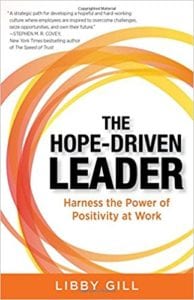
The Hope-Driven Leader: Harness the Power of Positivity at Work
As we often do, he swung too far to the other side and started limiting the information and saw the people were getting that sense of false hope. They felt like, “I guess no news is good news. I’m going to be okay,” even when that wasn’t necessarily true. He had to find that spot in the center where he could give them the diagnosis and the information, but also leave them that sense of possibility even when the situation was dire, that there was always hope, that there was always a possibility. He didn’t rob them of that sense because he knew he was not playing God. He didn’t have all the answers. There’s definitely a connection. In my book, I cite this study that was done in San Antonio where people followed people who self-identified as hopeful and hopeless and the ones who said they were hopeless, no surprise tended to be smokers, they overate, they over drink, they didn’t exercise. They had a shorter lifespan than people who said they were hopeful. Hopeful people, we tend to be stewards of our own future, but people who did not feel hopeless did not. The morbidity rate, it came much younger than the group that identified themselves as hopeful. There is absolutely a correlation.
The book is again The Hope-Driven Leader: Harness the Power of Positivity at Work. Any last words of advice for the listeners?
Just for people to think about how can you feed hope? There’s no neutrality. You’re either feeding it or you’re starving it. In whatever way is meaningful to you, feed hope into your environment.
How can people follow you on social media, Libby?
Go to LibbyGill.com, my website. I’m active on Instagram, LinkedIn, Facebook, Twitter.
Thanks for sharing your hopeful insights and we’re all inspired to feed it going forward. Thank you so much.
Thank you.
Links Mentioned:
- Libby Gill
- The Hope-Driven Leader: Harness the Power of Positivity at Work
- Norman Lear
- All of the Above with Norman Lear
- Traveling Hopefully
- Beautycounter
- Dealstorming
- The Anatomy of Hope
- LibbyGill.com
- Libby’s Instagram
- Libby’s LinkedIn
- Libby’s Facebook
- Libby Twitter
- Libby Gill & Company
Wanna Host Your Own Podcast?
Click here to see how my friends at Brandcasting You can help
Get your FREE copy of John’s latest eBook Getting To Yes now!
John Livesay, The Pitch Whisperer
Share The Show
Did you enjoy the show? I’d love it if you subscribed today and left us a 5-star review!
-
- Click this link
- Click on the ‘Subscribe’ button below the artwork
- Go to the ‘Ratings and Reviews’ section
- Click on ‘Write a Review’
Anticipate Disruption: Become The Disruptors Of Today’s Age with Dan Burrus
Posted by John Livesay in podcast | 0 comments

 Episode Summary:
It is no longer enough to just be reactive and agile in this fast-paced world of technology and disruption. More than agility, we need to learn how to anticipate disruption and become the disruptors of today’s age. Dan Burrus has been predicting technological change for 30 years and encourages people to start speaking in future facts so that you can solve the problems before they comes to you. If you think things can be done, then it can be done. The question is are you going to be the one doing it? Dan shares how you can become the disruptor and strategically position yourself when the disruption happens.
—
Our guest on The Successful Pitch is Dan Burrus, the author of The Anticipatory Organization. Dan says, “It’s not enough to just be agile with disruption. You need to anticipate it so that you can be smart about it.” He said, “When you really look at life, there’s some real key things that if you think something can be done, it probably will be done and somebody else is going to do it if you don’t do it.” He said, “Stop giving opinions when you pitch and start speaking in future facts. Before you ask someone to say yes or no to something, tell them what the cost is of saying no.”
Listen To The Episode Here
Anticipate Disruption: Become The Disruptors Of Today’s Age with Dan Burrus
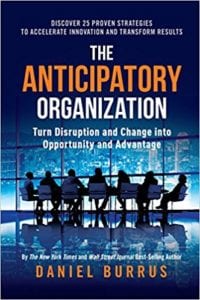
The Anticipatory Organization: Turn Disruption and Change into Opportunity and Advantage
Our guest is Dan Burrus. He’s considered as one of the world’s leading technology forecasters and innovation expert. He’s the CEO of Burrus Research, which is a research consulting firm that monitors global advances in technology driven trends to help clients profit from technology, social, and business forces. Over the past 30 years, he’s established a worldwide reputation for his exceptional record of predicting the future of technology change. He was talking to me about all the things he’s done around the world, including China. He’s a strategic advisor for many Fortune 500 companies ranging from GE, American Express, IBM, Honda, etc. He’s the author of six books, most recently Flash Foresight and The Anticipatory Organization: Turn Disruption and Change into Opportunity and Advantage. He’s also started six companies from scratch. Five were profitable within the first year. He’s a keynote speaker and has spoken to groups as large as 14,000 people. I am fortunate to have him one-on-one. Dan, welcome to the show.
It’s a pleasure to be with you.
I always like to ask my guests if you could tell us your story of origin. You can go back as far as you want to when you were a child or when you were in college. How did you decide this is the trajectory of my career?
The two most important times in a person’s life are the day you’re born and the day you find out why you were born. I’m very fortunate to have found out long ago why I’ve been put on the planet and that is to teach. As long as you understand, in my mind, that teaching and learning are connected in symbiotic and the same thing. Rather than tell audiences and clients, I teach audiences and clients, and that’s something that I’m passionate about. I want to create as much value for our audience as possible. I have started six companies over the years in a variety of areas. All of them were based on doing things that hadn’t been done before. Three of them were national leaders in the first year. Five were profitable in the first year. First one was in aviation. I had my own airplane design. I was a test pilot for my own design. Had 37 national locations in the first year with that company. One of the last companies I started was an experiment. When I was writing my book, Flash Foresight, which I’m happy to say was the New York Times and Wall Street Journal Bestseller, we were in a recession when I started. I thought, “Why not start a company based on the principles of the book? Let’s see how good the book is.”It took us seven months to generate $1.1 million a month in recurring revenue with no employees and no money invest, so obviously the book worked.
Before that, just to go a little farther back, I taught biology and physics before starting my first company. I’m a science guy and all of my methodologies on how to predict the future and separate the wheat from the chaff is based on scientific methodologies. I started Burrus Research 34 years ago, and that’s when I developed my principles on how to predict the future and separate the things that will happen from the things that might happen, and then started advising and consulting. My portfolio of what I do is I write articles. I had 113 articles published last year. I’ve been doing that for over 30 years. I write books; this is number seven. I give speeches; I’ve given many of those, but I also do strategic advising. I’m a Strategic Advisor to the Joint Chiefs and the Head of the DOD and the Head of Cyber Security for the US. I’m also a Strategic Advisor to the top people at GE, IBM and many others.

Anticipate Disruption: The two most important times in a person’s life are the day you’re born and the day you find out why you were born.
You have a science background. My memory of being in class in science was if you’re going to test something, don’t change more than one variable at a time. Isn’t that right, Dan?
Yes, otherwise you don’t know what is taking place.
One of the biggest mistakes I see people make in business is, “Let’s test, let’s change the headline and the image of an ad at the same time, and see if that helps.” I’m like, “How are you going to know which one it is?” The fact that you have a scientific approach to helping all of us deal with change, disruption and technology, is a key element of why you’re so successful.
Let me give everyone a tip for writing blogs, because I’m sure many people do that. Instead of just putting them out there one after the other, what I did is I started analyzing the number of readerships within the first two days and how many people were reading because you can get statistics like that. One blog, I might have 240,000 people read it in the first two days. Another one, I might have 2,000. That’s a big difference. The key is I thought, “They were both good. What was different?” By analyzing one thing at a time and starting to break it apart and then make changes along the way, for example on LinkedIn, I’ve got 975,000 followers. I’m in the top 35 in the world. The reason is whenever I write something, I had been upping my game and I got a couple million monthly blog readers. That’s because I had been taking one thing, separating it, changing it, finding out what works, what doesn’t work, instead of just pumping it out there. It’s a little food for thought for all those that are writing blogs and doing posts.
Let’s dive into this wonderful, Anticipatory Organization Model that you’ve created. One of the things you shared with me was unlike a lot of people who maybe started with a business that come up with this idea, they tried to take it out and see if anybody’s going to use it. You have developed these learning principles for years and the military is using your training. You know this works, so the book came out of proven ways to deal with how to deal with things. Some people say, “If I adapt or an agile to change,” and you say, “That’s not enough, you have to anticipate the change.”
Let’s take a second on that because there is a lot on agility now. Most companies think that agility is the best weapon against the accelerating pace of change. There are even programs in books called Agile Innovation, but if you think about it, agility is really reacting fast. Agility is still reactive. In other words, instead of saying, “Agile innovation,” you should say, “Reactive innovation,” which doesn’t sound as good. I would say, “Did the people that came up with a multi-billion-dollar idea of Uber or the multi-billion-dollar idea of Airbnb, did they use agility? Could that have helped them?”No, that didn’t help them at all. What helps companies like Amazon and others to be able to leap ahead with the confidence that will make them know they’re on the right path? You need to be able to react, but I want us to anticipate.
[Tweet “Agility is not enough you need to anticipate disruption.”]
A coin has two sides. You need to be good at agility because you can’t predict everything. You can’t predict that much. There are a lot of things you can’t predict, so you better be agile. The other side of the coin is the missing part that I’m filling with this book, and that is you’ll be amazed at how much you can predict, how many problems you can see ahead of time and pre-solve, how many disruptions you can see, but for the disrupt, giving you the option of making disruption an advantage to yourself so that you can be the disruptor, and how many game changing opportunities you can accurately predict ahead of time. What I’m doing is covering the other side of that two-sided coin that is needed to be able to turn all of the changes that we’re facing into opportunity.
I’m always trying to give people skills to tell a great story like you just did. To our audience, did you notice how Dan gave you a visual image and didn’t make one thing right and one thing wrong? He said, “There are two sides of the same coin,” so you could see the words on both sides of that coin and how one without the other is not enough. Leading right into that, we bought into your premise that we need to anticipate change, not just be agile with it. There’s a great takeaway in your book about hard trends versus soft trends. Can you give us an example of each?
There is no shortage of trends. Deloitte publishes on IBM that everybody’s got trends. The problem is which ones are going to happen and which ones aren’t? That’s what I can give you with this book and with this mindset that I’m trying to help you to create. This is based on over 30 years of research. There are two types of trends, hard trends and soft trends. Instead of me coming along and telling all of our audience, “I have the only good list of trends and everyone else’s trends are bad.” I’m saying, “No, what I did have is a methodology that I can teach you so that no matter whose trend you’re looking at, you can tell whether it’s going to happen for sure or whether it’s an if or a maybe.”That’s powerful because if you know it’s going to happen before it happens, you have an advantage.
Hard trends are based on what I call future facts. You can’t change them; you can’t stop them. I don’t care how much money you’ve got or what kind of political power you have. They’re going to happen anyway. The good news is you can see them happening. You can see them coming down the road. It’s like being in an ocean. If you’re looking down at the sand and the waves lapping at your feet, you don’t get a view out. If you look out, you can see the waves coming and you can say, “There’s a bigger wave, I’ve got to move back or I’m going to get wet.”You can pre-act, so that you don’t end up getting in trouble. It gives you the ability to see what’s up ahead.
Soft trends have, you might think, “Dan doesn’t care about soft trends. It’s only about the future of certainties that he’s concerned about,” and the answer is no. Soft trends have very big value. The reason why they might happen, some are negative, some are positive. I can shape them; I can influence that. If there is a positive hard or soft trend, I want to make sure it happens. I’ve got to do some things because there’s no guarantee this is not a future fact. It’s based on an assumption. Hard trends are based on future facts. Soft trends are based on assumptions. There are two types of assumptions: hard and soft assumptions. Soft assumption is an assumption that you’ve made in your mind. You’re thinking of it as a future fact, but it’s an assumption and it’s based on all of your years of experience, everything that you’ve experienced. It’s like looking at the future by looking up in a rear-view mirror rather than looking out through the windshield. Because of the transformational changes and exponential growth of technology, your old view of the future based on everything you’ve known and learned might be out the window. You just haven’t seen that yet. That’s a big risk.
A soft assumption isn’t research. It’s based on intuitive insight based on past history. It makes sense to you, but you didn’t do what would make it a hard assumption, and that is you didn’t do your homework. You didn’t do your research. When the Affordable Care Act, which is called Obamacare, was put into place, there was an assumption that enough young people would sign up to offset the old people that are more expensive that signed up. That was a soft assumption somebody made. They didn’t research it. Turned out it was an invalid assumption and it’s like, “Whoops, that didn’t work out the way we planned.”That’s because they didn’t research it, but it made sense to somebody. Soft trends have the value that you can change them if you don’t like them. There is a twenty-year growing trend in the United States that obesity is rising. More and more people are becoming obese and so are diseases like Alzheimer’s and diabetes. They’re going up, and they’re expensive. There was a big study that was done by the United States to look at the year 2025 to see where those trends would be on obesity and diabetes and to see how many people would be there. They came up with a number and it was a big number. The reason was because they got to figure out how to pay for it because the number of obese people is growing. Are those hard trends that are unstoppable or are those soft trends that you could influence? What do you think?

Anticipate Disruption: The technology is already there. Do it right now and somebody’s going to make a lot of money on that.
Having read your book, I know that it’s a soft trend. Although I thought it was a hard trend that was never going to stop, but there are things that with new technology and drugs, there are a lot of things that could influence and turn that trend around.
Let’s take obesity. Everybody’s getting fatter. Soon, it’d be going up. Not everyone, but the numbers. A company in Milwaukee, Wisconsin, they’re an international company called Manpower, decided to do something about it a couple of years ago. They realized they can’t change the world. They can’t change everybody in the United States, but they can change manpower. What can we do to influence that soft trend? What they did is they gave everybody Fitbits and have company and team competitions. My sister as an Executive at Manpower, and one of the things that her team is doing is climbing Mount Kilimanjaro in the number of steps they take and there are prizes. They’ve been doing it for several years and they have, as a company and they’re a good size company, have lowered cholesterol, gotten people off of medications, have lowered weight, have done amazing things. They’ve actually changed that obesity number for manpower. They couldn’t change the world, but we can change what we can change. That is a soft trend?
It goes back to when you’re running your own business. If you measure something, you can then start to increase your awareness of what’s working, not working. Then in the case of eating, maybe you go, “There’s a goal of how many steps I’m supposed to do every day. I didn’t even know that. The fact that I’m tracking it automatically changes my behavior and therefore, the outcome.”The same thing is true in your business that you’re running. That’s such a great example of looking for a problem and saying, “It’s too big to change,” and figuring out a way to slice it into something that can be changed.
Let’s go back to hard trends. The book is not complex. I would hope you would agree with that. The key is I’ve been taking complex things and making them simple. That’s the trick and I think I’m pretty good at that. Let’s talk about the hard trend certainties. There are only three categories. One is technology, one is demographics, and one is regulations. Let’s talk about demographics for a minute. In the United States, there are 78 million baby boomers. Hard trend. They’re going to get older. They’re not going to get younger, they’re going to continue to get older. We could predict very easily a lot of opportunities as well as a lot of challenges.
Could you and I create a smartwatch or a smart watch app that would have huge success right now, even though there’s a lot of competition for that? The answer is, “Sure. We just use the hard trend of demographics and the aging population.” I would create a smart watch, for example, that is for 80-year olds and older. Are they going to buy it? No, they’re not going to buy it. Who’s going to buy it? You’re going to buy it for them. Why do we do that? All of those smartwatches that exist today and the new ones have a little thing called an accelerometer in it that lets you know movement. If your old grandma, all of a sudden, her watch rapidly moves four feet, what happened to grandma? She fell. How does grandma need to know she fell? She’s on the floor. Who needs to know? You, if it’s your grandma. If grandpa gets a little lost when he’s driving because he gets forgetful. All he’s got to do is ask his watch, “How do I get home?” His watch can say, “Walk up and take a block or to the right.” Where is grandpa? Look at your smart phone, you can see.
I was visiting two women who are in their 80sthat don’t want to wear that necklace saying, “I’ve fallen and I can’t get up.”They live alone, and I thought, “The statistics show you’re likely to fall living alone and who knows how long until somebody finds you.” They would wear a watch but not that device because of their vanity. “I have to wear a watch anyway. If the watch happens to have that device that I could push and if the watch was waterproof, I could wear it in my shower where it’s slippery and I might fall.” You’re onto something there, Dan.
We could do more, and there’s only so much time. That kind of watch application for 80 years old and older and I even just began to tell you what. It could do two things but it could do a lot. That doesn’t exist. Do you think that that watch is going to exist or it isn’t going to happen?
I would like to think it’s going to exist because I see a need for it and the baby boomers is a hard trend. That’s not going away, so I’m going to say it’s going to eventually exist.
I’m going to teach all of you a guiding principle. If it can be done, it will be done. If you don’t do it, someone else will. In this case, the need is there. The technology is already there. Do it right now, and somebody’s going to make a lot of money on that. It’s going to get done. You’re going to be reading about that that’ll happen. What’ll happen is, “I’ll wait. Nobody does it. I’ll just do it myself.” You already want one, so we know it would work.
[Tweet “Stop giving opinions and speak in future facts.”]
Technology is a way that changes our world on us and it causes disruption. This is book number seven, I’ve written thousands of articles. If you track all of that, you would see I’ve got an amazing track record of being right about telling you the disruptions that will happen before they will happen. You can learn to do this, that’s what this book is about. You can’t see everything but you can see so much. Like in my 1993 book, Techno Trends, I was talking about the smartphones that we have today, like the Apple watch, iPhones. I was talking about social media. That was in ‘93 when that book came out, putting accurate time frames on it. It isn’t just about me doing it, I want you to learn how to do it, that’s why I wrote this book.
Speaking of being on top of things, you have this amazing interplay between something that’s possible, useful, and exceptional, and you talk about why Apple didn’t release the iPhone two years earlier and why didn’t Netflix start streaming video. I was really riveted by that.
You see the hard trends and soft trends will give you what will happen next. The other element that the book gives you is when will it happen? There are three digital accelerators that have been on a completely predictable path for over 30 years that I’ve been tracking, and they give you the wind. One is computing power. It’s based on Moore’s Law of processing power doubles every eighteen months as the price drops in half. I discovered that back in 1983. I can tell you not many people were looking at Moore’s law in ‘83, but I came and because I’m a science guy, I realized he nailed it. Just imagine for a second, here I am at 83. Pricing power doubles every eighteen months as the price drops in half, so in the year 2000, I would know exactly how powerful a computer it would be and how much it would cost. If I know that, I can tell you a lot about how we use it. I can do that today for the year 2025 and so can you, but you need more than processing power. I’m calling it computing power because now with our smart phones and devices, we’re tapping into the super computers in the cloud, not just the chips in our devices. Exponential Moore’s law is going to continue.
Secondly, it’s storage and bandwidth. My first computer didn’t even have a hard drive. Today, bandwidth has 3G wireless, 4G wireless. You’ve probably read a little bit about 5G. Is that it or can you predict what we’ll call the next one? Using these curves that I talk about in the book, you can know when six is coming out, when seven’s coming out, and how powerful it would be. When you know that, you can see how the drive timing. The iPhone didn’t come out a year earlier or two years earlier, even though they could miniaturize the parts and create it earlier. Here’s why they didn’t. The user experience would have sucked. Bandwidth wasn’t there. In other words, the video wouldn’t have worked that good. The storage wasn’t quite enough yet. It would have been a crummy experience, so they had to wait for those three digital accelerators to get to the spot where the user experience would be good enough to put it out there. It’s been getting better ever since in a predictable way.
That’s fantastic insights and realizing that timing is, in fact, everything. When someone’s giving a pitch to get a new client or to get hired or to get their startup funded, whatever it is, one of the key questions is, “Why now?” You’ve certainly been able to give us some great tools to predict when something’s going to happen. Let’s talk about this premise you have about the dangers of rear-view mirror thinking.
Can I give you one more tip on obese? I know that’s one of your big focus areas and I’m trying to help you create value for people. Think of it this way. I want all of you, when you’re giving a pitch, to stop giving your opinion. For example if I give you, “Here’s what Dan Burrus thinks the trends are,” what are you going to say? I’m now going to see what Deloitte’s going to say and what all the other guys are going to say, but if I start speaking in future facts, I have done the homework to look at my customers and the hard trends that are shaping their business and their future. I start going and talking in terms of, “These are the future facts that are going to be impacting you.”When you hear a future fact, you know it. You don’t need a white paper to prove you’re right, so when you start speaking in terms of the hard trends that will impact them and then tie your product or service through those things that are going to happen, all of a sudden, the risk is going down and they have high levels of certainty. The uncertainty opens the door to a sale. Nothing better than a confused customer. You know what the ultimate closing tool is? It’s certainty. When you are certain, you write a big check, you say yes. When you’re uncertain, you hold back. What I want us to do in our pitches is to talk about future facts and the certainty and not just the cost of the yes about your product or service you’re selling but based on the future and the hard trends shaping the future. Let me tell you the cost of the no. Make sure you share the cost of the no based on the future facts, not just the cost of the yes. When you really look at that, you’re going to find out the no is more expensive than the yes.

Anticipate Disruption: Legacy thinking is we’re looking into the future but we’re looking at a rear-view mirror mindset.
Two great takeaways: Stop giving opinions and speak in future facts. Finally, make sure you talk about the cost of not taking action now because everybody wants to think things over. The longer you wait, the bigger this problem is going to be or somebody else is going to do it.
I’m going to give my pitch to a competitor and they may say yes. How would you like that?
Let’s jump back to this rear-view mirror thinking. I love the imagery of it.
We’ve all heard of legacy technology and that’s the older systems. We have virtualization, the cloud, and the newer systems, but legacy technology doesn’t worry me as much as legacy thinking. Legacy thinking is we’re looking into the future, but we’re looking at a rear-view mirror mindset, meaning it’s based on our past perspective. It’s the things that we’ve known. The pace of change was fast but not exponential. New technology came out but came out kind of slow. I could take my time and next year will be pretty much like this year with a few variables. That’s all rear-view mirror thinking, when you start realizing that right now, a kid could come along and disrupt your business without even having to get a lot of funding. I did an experiment at the last company I started where I decided to create a business with no money and no employees and see if these hard trends, soft trends worked well. This was the end of 2009, beginning of 2010. What I did is I created the first national real estate apps because they didn’t exist and I knew that was a hard trend. They would exist because I know if it can be done, it will be done. If I don’t do it, someone else will. I skipped my problem.
I’m not a programmer, so how am I going to do it? What I did is I called a nearby university, asked for the Computer Department, talked to the Head of the department and I said, “I want the name of an undergraduate who’s getting a degree in software programming and design, who is smarter than all the teachers.” He said, “You mean Steve?” I said, “Yeah, Steve.” I called Steve and I asked what he was doing for money on the side. He was programming websites for companies and he was bored because he’s been doing it since junior high. I said, “How’d you like to develop a mobile app that no one’s ever seen before?” He said, “Yes, I’m in.” I said, “I can’t pay you money but I can give you 5% of the revenue of the profits of it after the first two years as long as you don’t drop out of school.” He said, “I’m in.” Now, I had my free developer. It took seven months to launch that. We were the 17th most downloaded app in the Apple store. In the first day, we were featured in the New York Times, Wall Street Journal because I was disrupting the entire world of real estate within the first week. I was on national television the next week.
I came up with a new way of making money on that, because at that time, the only way you can make money on an app was paying for the download, like¢99 and you download it. I like recurring revenue, so if I will do what everybody else did, that would’ve ended up with just a small amount of money. Instead, I made the apps free so that I had large people using them. What I did instead was I charged $24.95 for real estate agents for having an exclusive zip code within the app. That’s how I ended up with $1.1 million in recurring revenue in a few months. It’s about redefining and reinventing. It’s realizing that everything can be made different, that if you don’t do it, someone else will if it’s based on a hard trend certainty.
You showed us how to skip the problem. Let’s talk about the other thing that seems incongruous, taking big leaps. It can be a low risk.
That comes a little bit around to the whole idea of hard trends. Hard trends are going to happen anyway. You can’t stop them. If you want to innovate with low risk, what you need to do is ask yourself, “What am I certain about? What do I know what’ll happen?” I gave you the story of me launching that for the first real estate apps. I have since licensed to Zillow and companies like that but the foundational software is coming from that. The day that I decided to do mobile apps, there was a headline news on CNN that very day that said, “If you’re thinking of developing a mobile app, it’s too late. There are already 100,000 apps in the Apple store.” That was around the end of ‘09. A lot of people will listen to that and think, “There are already 100,000 apps. I guess it was too late.” I looked at the hard trends and I thought to myself, “Will there be mobile apps for purchasing logistics, supply chain management, customer support? Will there be apps for remote disease monitoring? Will there be apps for finding my lost dog where I can have it on a collar and I can see where the dog is on my phone?”
I knew this national real estate apps were going to happen, and if I didn’t do it, someone else would. If you learn how to separate the hard trends from the soft trends as I’m teaching you in this book, if you learn how to do that and then you innovate around those hard trend certainties, you will find yourself able to do those things with the low risk because you’ve got confidence. Certainty gives you the confidence to make bold moves.
[Tweet “Skip the problem.”]
Don’t listen to people saying, “You’re too late,” but also within this rear-view mirror thinking, you need to say, “If I see driverless cars are coming and I’m a truck driver, which I found out is one of the largest, if not the largest employer in every single state of first jobs, I might want to figure out what I’m going to do when the trucks are driving themselves as opposed to thinking, “That’s not going to happen during my lifetime. I don’t have to worry about it.” That’s what you talk about in the definition of rear-view mirror thinking.
There’s a little side note. I was meeting with the CEO of Daimler Trucks. They make the engine transmission and the body. The only thing they don’t make is the brand on the outside of the semi-trucks. I was in Iceland having a strategic meeting with him a number of years ago and I said, “There’s going to be a semi driverless, autonomous semi-truck. You ought to create it.” I said, “Is that a hard trend?” He agreed it was. It took him less than a year and Daimler was the first to do a driverless truck. It took them 12 months because he realized that it can be done. “It will be. If I don’t do it, a competitor will.” It gave him the confidence to do something that he had never considered when I met him in Iceland. Once he realized that was a hard trend, he knew he had to do it and he did.
The book is The Anticipatory Organization: Turned Disruption and Change into Opportunity and Advantage. I can personally tell you, I’ve underlined, and dog-eared so many pages. This is going to be my new Bible. I’m going to keep looking at it. I really love how you talk about, “It’s a choice that we make every day to be extraordinary.” You are someone who is extraordinary. Dan, how can people follow you? I know you have so many followers already, but how can we follow you on Twitter, et cetera?
You can go to Burrus.com. There are some great videos and resources that you can find like blogs. @DanielBurrus is my Twitter handle. @DanielBurrus is probably the handle for all of those things. The reason I have a lot of followers is I’m trying to create a lot of value for people. I’ve got the number one spot on Amazon in Hot New Books and so you can go on Amazon or any of those others to order The Anticipatory Organization.
It’s going to be another hit. That is a hard trend I would bet money on. Thanks, Dan.
Links Mentioned:
- Dan Burrus
- Burrus Research
- Flash Foresight
- The Anticipatory Organization: Turn Disruption and Change into Opportunity and Advantage
- Manpower
- Techno Trends
- @DanielBurrus Twitter
- Daniel Burrus Facebook
Wanna Host Your Own Podcast?
Click here to see how my friends at Brandcasting You can help
Get your FREE copy of John’s latest eBook Getting To Yes now!
John Livesay, The Pitch Whisperer
Share The Show
Did you enjoy the show? I’d love it if you subscribed today and left us a 5-star review!
-
- Click this link
- Click on the ‘Subscribe’ button below the artwork
- Go to the ‘Ratings and Reviews’ section
- Click on ‘Write a Review’
The Skill Set Of The Ask Is The New Pitch with Tracy Chadwell
Posted by John Livesay in podcast | 0 comments
 Episode Summary:
Have you ever tried not pitching for fifteen minutes? It’s not always easy but you can get better at it by developing the skill set of the ask. Tracy Chadwell shares how this method will help you clearly identify all you need to know to create that perfect pitch, things like creating an investible market, identifying your competitors, learning how to stand out, and more importantly, pricing your products or services to create a successful pitch and close that deal.
—
Today’s guest is Tracy Chadwell, who’s the Founder of 1843 Capital. She invests in tech startups specifically in the augmented reality world and she says, “You can’t be what you can’t see,” so that’s why she’s so committed to helping as many women as possible get funded and getting the investment gains. She also said, “You need to tell her some key things in order to get her to fund you. What problem are you solving? What is your secret sauce? Who’s on your team and how big is your market? You really need to show how big this market can be and how you’re the right people to execute it and have you thought about your pricing as it relates to your competition.”Finally she said, “If you don’t know who you are, when you ask someone for something, it will come across as a demand.” She has the three knows, to get a yes: know yourself, know your audience and know that no is not forever.
Listen To The Episode Here
The Skill Set Of The Ask Is The New Pitch with Tracy Chadwell
Our guest is Tracy Chadwell, the founding partner. She has over fifteen years’ experience in venture capital and private equity. She’s part of a team at 1843 Capital and we have a great story there, she’s going to share on where they came up with that wonderful name. She has five years experience investing in early stage companies with a female founder through her personal entity, Coyote Capital. She was partner of a growth capital fund, Baker Capital, which has more than $1 billion under management. She’s a frequent speaker. She’s given a TEDx Talk and a startup competitive competition judge. She has developed a broad network in the Female Founder community and was recently a speaker on women in venture at the Wonder Women Summit, and the speaker on augmented reality at High Court.
Most recently she was a judge for the Refinery UberPITCH. It’s fascinating. You’ll want to see what her one question is that she asked that she’s probably asked people whether she’d rent an Uber with her or not. She’s featured in the chapter of the book, The Internet of Women. She is a trusted board member and she serves on the boards of Marstone and Sachs Insights. Her philanthropic work includes the advisory board of the MIT Enterprise Forum as well as many others. She’s an attorney as well as speaking conversational Japanese and restaurant French. Tracy, obviously you know what you’re doing. We’re excited to have you. Welcome to the show.
Konnichiwa. Thank you so much for having me.
Let’s start with your story of origin. How did you decide, “I’m going to be a lawyer and then I’m going to be an investor?” Or did you just thought, “I’m just going to be a lawyer?” Take us back to your decision to first become a lawyer. Was it in the hopes of becoming an investor? Was there other reasons?
[Tweet “You can’t be what you can see.”]
One of the things that is important and something that I do in my work on a daily basis is I always say, “You can’t be what you can’t see.” Growing up, I had a dad as a lawyer and I saw a lot of people who were lawyers so I was encouraged to be a lawyer, which I did. I went and did that but I didn’t see any investors. I didn’t see any women investors and I’d never heard of venture capital before. That was tough for me to be able to wake up in high school and say what I want to do is go into VC. When I was in high school, there were maybe just a handful of venture investors and they were all in the Silicon Valley area. I went to law school, which I think is terrific training and good from an analytical standpoint. Also, it translates into what I do now in that I am very fluid and functional in terms of structuring businesses and structuring deal terms. The introduction into venture investing came when I was working for an investment bank called Robertson Stevens, which was a west coast investment bank which was responsible for a lot of the technology investing and a lot of the IPOs that were happening during the Go-go nineties.
Did you miss being a lawyer or did you say, “That’s just great skills that I see, that I use.”
I do not miss being a lawyer. I usually say that I’m a recovering lawyer. It’s a very valuable skill set, but I picked up early on. I worked for a small merchant bank and was responsible for doing all the structuring. About six months into it, I said, “Can I go back and take a few classes of business school and can I learn how to do some modeling and work on the deals because this is what I’m really attracted to?” It came down to the fact that, while law is very appealing to some people, and I certainly respect those who are good at it and do it well, for me I saw it as a zero sum game, to the extent that I were to win in negotiations and documents, that makes that other people lose. I decided to switch to a career that much more suited my personal philosophy, which is that I would much rather see everybody build so that everyone wins. I find in the venture capital space that’s what you’re doing. If you are 100% on the team of making sure that these companies are successful, when they win you win.
Let’s talk about where 1843 Capital came from and how you and your co-founders found each other, the story of where that came from. It reminds me of the movie about the women at NASA.
It’s timely now that people are becoming more and more interested in historical figures that were involved in technology. The name 1843 Capital, which is an investment fund that invests in female-founded technology companies, came from Ada Lovelace. Ada was effectively the first computer programmer. She wrote a computer program for something called the Analytical Engine that Charles Babbage had created, and a really interesting fact is that she was Lord Byron’s only legitimate daughter. Her mom was more interested. She wouldn’t let her study anything romantic. She was worried that she was going to grow up to be something like her dad, so what she did is she only let her studied math and science, but Ada even found poetry in that and became very skilled at it. It was a great story.
How did you find your two co-founders? I always love that story.
One of the wonderful things now, and I don’t know how many people are aware of it, is that over the last five years, they’ve developed this incredible infrastructure for women. I met both Christina Bechhold and Alison Reyes through this network of female entrepreneurs and female investors. There are all these incubators, accelerators and mentor groups that have popped up over the last five years, and we met through those things.
You don’t invest in seed rounds. You’re primarily focused on series A and B after someone’s gotten some traction and revenue coming in. Is that correct?
[Tweet “A pitch can make or break someone.”]
Right. 50% of the funds raised last year were seed stage funds, so there are a lot of people who are out there doing that and doing that well. I like to see some revenue. I like to see some traction. What is important is product market fit and then making sure pricing is in place. Pricing can take a long time. When people are pitching and looking for money, they don’t realize that when you’re sitting on the venture side, you’re on a time clock. Your returns or internal rate of returns are IRRs, so we can’t wait for you. It’s costing us money when we’re waiting for you to figure out what your product market fit is or your pricing. If I can de-risk and eliminate those things, I can step up on the J curve as it’s going up the escalator.
Do you have a story of someone whose pitch you heard and they said they got all the boxes checked off and this is somebody we want to invest in?
A pitch can make or break someone. Sometimes you only get two minutes like the elevator pitch. Even when you do sit down for a meeting, you only have 45 minutes to an hour. One of the things that I help the companies that I’m invested in is I help them get additional rounds of financing or help them complete the rounds, and I say to them, “You spend the first fifteen minutes not pitching. Spend the first fifteen minutes finding out who you’re talking to and asking them questions. Because very often they’ll give you keys to what they find attractive or not, and then you could speak to those or vice versa. What concerns that they might have might show up early on.” When someone sits down to talk to me, first of all, I’m always surprised when they don’t ask a word about me. I’m sure there’s a lot that they can find out on the internet, but maybe they want to ask what do I see as interesting in the market right now? What am I interested in investing in? We can shortcut the conversation if, let’s say, I’ve decided that dog food is not the place to be and what you’re selling is dog food. One of the things that really grab me is after someone has spent a few minutes to find out what I’m interested in, if they hit all the high points. There is really a checklist and most investors are looking to go through that checklist.
You can short cut that a little bit by saying right up front, “Here’s the problem I’m solving.” I can’t invest in things that are nice to have. I have to invest in things that have to have, especially if there’s a market downturn. I want to make sure that people are still interested in buying this product. Then what is your competitive advantage? What makes you special? What makes you stand out and why are you going to win over other people? Third, I look for really strong team. Fourth, large market opportunities. There’s nothing wrong with building a business for a small market opportunity. People do it all the time and they’re very successful and they can make a lot of money for themselves. It might not be venture capital investible if you can’t see yourself getting to $100 million in revenues within five years. The last thing on the checklist for me is attractive business models. I don’t want to be a small-dollar amount in something that’s a large infrastructure build that’s going to take a lot of capital going forward where I can risk a lot of dilution. That would be an example of something that I wouldn’t see as an attractive business model. Things that have lower costs are lower maintenance and high perspective revenues are more attractive business models. I always say that nobody can really talk me into investing in them, but they can sure talk me out of it. You have to hit those points.
What I saw you say in the Uber ride that something people need to incorporate in their pitch would be prepared to answer in a Q&A is, “What’s your secret sauce?” You touched on that with, “What’s your competitive advantage? What’s going to prevent someone from doing what you’re doing?” Let’s talk about, since you were in Uber, the differences between Uber and Lyft because that’s an example that comes up all the time. There isn’t a “competitive advantage” except Uber got there faster and raised more money. What are your thoughts on that?

Skill Set Of The Ask: Things that have lower costs are lower maintenance and high perspective revenues are more attractive business models.
Certainly that’s a huge market opportunity. This is one of the places where Uber went in and broke down all of the barriers. They went in and rolled up their sleeves and did all the hard work in terms of the regulatory restrictions, and then Lyft drafted in on their end. You’ve seen that too in things like Myspace. Myspace came in and they broke the barriers of saying, “Being online and creating a community online is something that people would be interested in,” and then Facebook swept in and crushed it. What you’re seeing there is even though there was ability for other people to come into the market, it’s about execution. If there is an incredibly large market opportunity, you’re going to see room for four or five people to be successful in this space, and then maybe get acquired too. That’s always an option. If four or five people are in the space, I don’t see it as a real threat, but if you’re doing something that isn’t that interesting and doesn’t have a large market opportunity, it’s going to be hard to invest in that.
That also speaks to the point of when you’re giving your pitch, explaining who your competition is. One of the big mistakes people sometimes make, probably not at the series A level, but at the C level is, “I don’t have any competition.” I always say, “Then you don’t have a market.”
What they have to be clear about is to show you how they’re going to create a market and how it’s not going to take a lot of capital invested in marketing to do that.
I’m fascinated by when you’re talking about market size. A lot of people share that that’s important, but you said, “Is it the revenue from this person you’re investing in to hit a $100 million in five years or their market size?” Can you clarify that?
No, it’s the revenue. The revenues have to be. To do that, if you’re a far and away winner, you have to have the potential to achieve $300 million, $400 million in revenue because you’re certainly not going to acquire all the available customers. The first 10% are usually a little bit easier than the next 90%. You have to be able to show a clear path to being able to do that and how you’re going to acquire and retain those customers going forward. That’s across the board whether you’re talking about a consumer product or whether you’re talking about an enterprise software product.
That goes to your whole point about pricing earlier, that you have to have thought through if we’re going to scale this, people have to be willing to pay this amount of money because it’s changing their behavior, right?
[Tweet “Virtual reality does have a lot of interesting use cases.”]
Absolutely. You have to find out what they’re willing to pay, who that customer is, and how to go get more of those customers.
How did you decide that you wanted to focus in things like augmented reality in the technology space?
It comes down to market opportunity. People always thought that virtual reality was going to be the next big thing and virtual reality does have a lot of interesting use cases, but truly augmented reality is the larger market opportunity. It’s been estimated that virtual reality is about a $30-billion market opportunity and augmented reality is close to a $260 billion. A lot of that has to do with community. People like to continue to do what they do, and one of them is to connect, share and be with each other. When you’re in virtual reality, you’re very isolated and that’s very difficult for younger people and older people. There are issues. We’re getting better with the latency with virtual reality, but it still give people a little bit of a nauseated feeling. Also the weight currently of the headsets, it’s difficult for some people to maintain. Honestly, one of the funniest things that I thought is when you look at why there hasn’t been as much uptake in VR as people thought there would be. It’s because people don’t want to look stupid. In terms of consumer applications, we’re going to continue to see them in the gaming space. Architecture and the museum space is a place where people are using them a little bit on the education side.
Google has done a tremendous amount of it with putting Google cardboard viewers in the classroom. One of the reasons the cardboard ones are more interesting for the kids, the kids can quickly put them up and put them down really fast. There’s strapping in the headset so they can retain the connectivity with the kids and keep them engaged because of that, which I thought was fascinating. On the other hand, augmented reality could be a hologram or could be something that everybody looks at on a cell phone or an iPad together and communicate together. That’s why I think you’ll see more of an uptake in that space. Also, there are great developments that Microsoft is doing with their HoloLens. The nice thing about that is that you can see through it so you don’t feel so isolated. Also, it has a CPU or the central processing unit in the headset so you’re not tethered to anything. You can walk around. You can have more experiences.
Has there been an augmented reality company that you’ve invested in that you can talk about?

Skill Set Of The Ask: People like to continue to do what they do and one of them is connect, share and be with each other.
Yes, there is a fantastic one. I’ve been watching this space for a while and found it a difficult place to invest in, but I have invested in a company that does virtual reality and augmented reality toys. This is a company called Seedling. It’s fascinating because they had a great supply chain in place, but then they also had great existing distribution. What was nice is they had an existing business but they took this intelligent toy space and they bolted it onto that. Instead of trying to create a market for a new toy, they already had the place where people could discover it. They’re already in Best Buy, they’re already in Toys “R” Us, and they’re already in Nordstrom’s. They have had a tremendous amount of success already and kids obviously are going to be the first that are going to be on the uptake in terms of some of these new technology applications.
Talk about a big market, right?
Absolutely a huge market. I’m very interested in something I call silver tech, which is technology for people over 50. This is something that technology hasn’t penetrated the space. You could argue that in terms of the toys. Grandparents who have all the capital are buying these toys for children. People over 50 control 84% of the wealth in this country. They also control 70% of discretionary spending. The people building a lot of these companies are millennials, and so they’re very millennial pain points. They’re not the people with the capital and or the time. I view as a much more attractive market are people over 50.
Do you see any people you’re doing augmented reality for, people in that age group?
The place where it started first, I’m sure we’ll see more of it going into augmented reality. We’ve seen more on the virtual reality in terms of helping people with health issues using virtual reality. There are also some surgical applications with augmented reality. They’re doing brain surgery now with the HoloLens and laying over the certain aspects of the brain on top of what the surgeon is seeing while he’s doing surgery. I’m building empathy and helping people using virtual reality with they feel like there could be some applications for helping them with loneliness and like that, which are nice. People who have a fear of heights, “Let’s put you in this virtual reality space and let you walk around on the edge of a cliff,” because we can talk to you and tell you you’re safe and you really actually are safe, but it’s a step closer to getting over those fears. A lot of the psychology places you’ll see the virtual reality applications.
Talk about the Wonder Women Summit. The fact that name alone makes me want to hear about it.
This was a terrific summit that brought together a lot of women who are leading the conversation about what is happening in terms of women in technology, the numbers. We’re seeing fewer and fewer women entering the STEM space. This was just a place to get the conversation going about not only how are we going to encourage more women and girls, specifically back to my silver tech, I would love to see more women over 50 getting educated in this space, learning how to code and learning how to do things. Given what’s happening in healthcare now, a lot of people could be living easily into their hundreds. Fundamentally, everybody still wants to engage and still want to feel valued. By re-upping some of the skill sets for both young girls and for older women, they can still be engaged and still be a part of the growth in the disruption that’s happening in our society right now. We had a conversation about my favorite topic, which is the lack of funding for women in space. I’m sure by now everybody’s heard the statistic that last year women got 2.19% of total venture capital dollars, which is really frustrating considering they create 38% of the companies that are out there right now. Those aren’t all obviously venture fundable, but to a certain extent there are a lot of companies that people are missing.
[Tweet “A lot of the psychology places you’ll see the virtual reality applications.”]
Let’s talk about the TEDx Talk you gave. Many people are interested in giving a TEDx Talk, myself included, and I have many friends that have done it. That’s a pitch too. To get a TEDx Talk is a pitch like getting funded or anything else. What was your journey there? Tell us the preparation that goes into it. It’ll be very useful for people to see the prep that goes into a TEDx Talk very similar to the prep that goes into a pitch.
The TEDx Talk, I did not have to pitch for that one. I was asked to give that one at the New York Institute of Technology, and that had led up to that is that I had been giving a lot of other speeches. I was on a panel for the MIT Enterprise Forum, I do a lot of panel judging, and I was part of the Cisco Women of Impact Summit. A lot of those lead up to New York Institute of Technology saying, “We would love to have Tracy participate in this.” The preparation is anywhere from seven minutes up to fifteen minutes, no more than fifteen minutes. That has to be memorized. There’s usually a theme associated with it. The theme has to correlate, and the theme for this was persistence and community. What I talked about was in the vein of persistence of how to ask for things, similar to what you do such a great job of. You’re great about this and have three ways to focus on when you’re talking about doing a pitch. I had a little bit of a different spin because I worry that a lot of people, especially women, have a lot of trouble asking for things. I feel like men, since the time they’ve been fifteen years old had been asking women out on dates, and so they got that muscle memory and they get a little bit of an idea about how to do things. I thought that women could use some guidance on this, especially to help them ask for raises and ask per positions of management, but then also to ask for money for startups.
On ABC, you talked about the skill set of the ask, the muscle memory of asking and getting rejected. If you’re asking someone out on a date, then translate into asking for someone to fund your startup, hire you, be a customer, join your team, all of that muscle. What are your recommendations on how can anybody ask?
It is a skill set. A lot of people are afraid and they don’t know how to do this, and they say, “I’m just not good at it. I don’t know how to ask.”The truth is this is something that everybody can learn. With a little bit of knowledge, you can take away some of that fear that we all have. I look at it as a process and I decided to frame it easily by saying it’s three knows to a yes, which is know yourself, know your audience, and then finally, know doesn’t mean no forever. It’s really important to know who you are, know what your value proposition is, and know what you’re bringing to the table. What I say in the TEDx Talk is, “If you don’t know what you’re bringing to the table, your ask becomes a demand, and you’re not going to get there.”To knowing your audience, this is important because you have to know whether someone has the authority or the interest to do what you’re asking. If you go to the counter at the CVS and ask the woman to give you a raise when you work at IBM, you’re not going get very far. You have to know that you’re asking the right person and know that they can give you what you’re asking for. Then, know doesn’t mean no forever, it just means no at that time for what you’re specifically asking for. If you change either what you’re asking for or ask at different time, you might get somewhere.
Tracy, you’ve said something I’ve never heard before and I just love it, and we’re going to tweet it out. “If you don’t know who you are, your ask becomes a demand.” Did I get that right?

Skill Set Of The Ask: If you’re somebody asking for a raise, you’re trying to show the company what you’ve done in the past.
Yes. That’s just bold faced going up and saying, “I want a raise or I want to have some funding for my startup.” This gets back to what we were talking about before. If you are asking for money for a startup, you can’t just say to me, “Give me your money.” What it has to be is, “I’m giving you an incredibly interesting opportunity here. I have an incredibly interesting business that I’m building and here is what you’re going to get back. This is how we’re to grow this company and this is who we’re going to be able to sell it to, and this is the type of return that you’re going to get.” That’s the value proposition for a startup. If you’re somebody asking for a raise, you’re trying to show the company what you’ve done in the past. Throw out your regular resume. What you need is a value resume to show specifically, “I have caused ten contracts to be signed this year or I’ve been responsible for over $1 million in revenue this year.” You want to be able to quantify that and show people your value so that you go and say, “I deserve a raise or I deserve a promotion. This is why.” If you’re asking a guy on a date, you want to say, “I have something fun to do or I have something fun to offer,” not just, “Let’s go out.” It’s applicable to just about anything.
How can people follow you on social media? We’re going to put the link to 1843 Capital in the show notes and other ways that people can track you on Twitter, etc.
Definitely check out my website, 1843Capital.com, especially if you’re a female founder and even if you’re a male founder as well. I do, under my resources section, offer a lot of places where people can access capital, whether it’s non-diluted funding in terms of grants or all the way down to who are the interested VC groups that are looking for female founders.
Skill Set Of The Ask: The Hard Thing About Hard Things: Building a Business When There Are No Easy Answers
It’s one of the most comprehensive things I’ve ever seen and that’s hard to find all in one place. That’s quite a gift you’re giving everybody.
We all should be able to know how to access things. I am also super active on Twitter and I love to tweet out interesting facts about what’s happening in the space that I’m interested in investing in. If there’s a contest coming up where you could win some money for your startup, I like to tweet that out too. It’s a good reason to follow me at @TChadwell.
Tracy, I can’t thank you enough. Is there a book you would like to recommend anyone to buy either about knowing themselves better or getting funded?
The one I read most recently was Ben Horowitz’s The Hard Thing About Hard Things. If you’re doing something or building something, know you’re not alone. This is one of the things that Ben talks about. He would’ve had all this success at Netscape, but then he went on to his next venture and had struggles through that as well and nearly lost the company a couple times. Understand that sometimes when you’re in the trenches and you’re in the dark, it’s just before you see the light and it’s a good reminder.
What a great way to end. You’ve been so insightful, helpful, and entertaining.
I’m thrilled to do it. Just like I said, “You can’t be what you can’t see.”
We certainly saw a lot from you. Thanks again, Tracy.
Thanks.
Links Mentioned:
- 1843 Capital
- Coyote Capital
- Baker Capital
- The Internet of Women
- HoloLens
- Seedling
- Wonder Women Summit
- @TChadwell Twitter
- The Hard Thing About Hard Things
Wanna Host Your Own Podcast?
Click here to see how my friends at Brandcasting You can help
Get your FREE copy of John’s latest eBook Getting To Yes now!
John Livesay, The Pitch Whisperer
Share The Show
Did you enjoy the show? I’d love it if you subscribed today and left us a 5-star review!
-
- Click this link
- Click on the ‘Subscribe’ button below the artwork
- Go to the ‘Ratings and Reviews’ section
- Click on ‘Write a Review’