

Change The Rules, Change The Game with David Mammano
Posted by John Livesay in podcast | 0 comments

 Episode Summary:
When successful entrepreneurs look back on their journey, they realize that the obstacles they over came were a part of their path. Failing forward is the first step to success, you just need to learn how to change the rules and change the game so that opportunities line up for you. Founder of Avanti Entrepreneur Group David Mammano teaches his students that every entrepreneur suffers failures, but their success is dictated by their ability and willingness to keep going forward and learn from their mistakes. David shares how he helps businesses see that failure is the path to the next level.
—
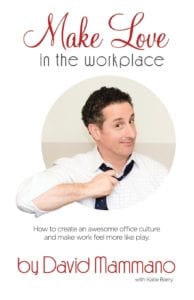
Our guest on The Successful Pitch is Dave Mammano who hosts his own podcast called Avanti Entrepreneur. Avant means going forward in Italian and Dave is somebody who definitely goes forward. He’s written many books, including one called Make Love in the Workplace. He assures me it’s G-rated and tells an adorable story of something he did for his employees, kids that make them feel part of the family. He said, “If you don’t like the game, you’ve got to change the rules.” He has some really key insights on when to pivot, when not to pivot, and what lessons to take with you when you do pivot. Finally, he shared some really important insights on goal-setting, and how you have to make things a habit, much like brushing your teeth or breathing, otherwise, it doesn’t get done.
Listen To The Episode Here
Change The Rules, Change The Game with David Mammano
Change The Game: Make Love in the Workplace
Our guest is America’s entrepreneur coach. His name is David Mammano and for more than twenty years, he’s been a serial entrepreneur. He started no less than seven businesses from scratch. Clearly, he likes to start and grow businesses. He thrives in helping others start and grow their businesses, and he has so many different ways he does that. He was a three-time Inc. magazine 5000 Growth Company. He is the host of his own podcast, the Avanti Entrepreneur. He’s a TEDx speaker. He contributes to Forbes and he has a summit. He’s done it all. He sold franchises. He just got a podcast sponsor. He’s going to share with us the secrets he learned there in pitching. He’s got a book out called Make Love in the Workplace. Dave, welcome to the show.
Thanks for having me. I’ve done all those things but it’s been over a number of years. To hear them all at once, it’s like, “I’m accomplishing things. Good.” As entrepreneurs, we’re rarely looking back. We’re always looking forward.
I always like to ask my guest to take us back to their story of origin. You can start any way you want from being a child, right out of college, your first of seven startups, wherever you want to start the story.
I’m going to start at six years old because that’s when I look back and realize that I was meant to be an entrepreneur. I live in Rochester, New York where we’re known to have a very vibrant winter. I’m six and it’s February in Upstate New York. There’s lots of snow and I was going to shovel the driveways and make some extra cash. I went house to house and everybody was politely saying no. “I have a plow service. My father does it. My son does it. My sister does it,” whatever, somebody was taking care of it. I remember walking back home being a little discouraged. All of a sudden, I stopped and I realized that, “I’m a six-year-old kid. Let me use the cute factor.” I changed the rules of the game with this new idea.
I walked over to the next street and I started shoveling the driveway first. Then I would go to the door with my cute little six-year-old smile and held the shovel a very certain cute way. I would say, “Hi. I just shoveled your driveway.” Inevitably, if they were human, they would give me a dollar, a couple of bucks, $5 and sometimes $10 And I walked home with a full pocket. I remember thinking that I look back at that and saying, “I changed the rules.” There was a game and it wasn’t working for me so I had to change the rules of the game, which is what entrepreneurs always do. A lot of times there’s an idea and it doesn’t work out and instead of giving up, we say, “How can we do this differently better or more unique?” I look back and that was the start of my entrepreneurial career. I was that stereotypical kid that had the lemonade stand. I delivered newspapers. I sold magazine subscriptions for boy scouts. Everything you could think about, I did. I sold t-shirts at rock concerts with a friend of mine that did screen printing. I always have that gene of wanting to be in control of making my career. My first business, I was 25 and I started a magazine called Next Step. It was all about helping high school students with college, career, and life planning. It was free. We printed 10,000 copies here in Rochester, New York. I delivered them in bulk to every high school in the area and we made our money by selling advertising, mostly to colleges that wanted to recruit those students. We made a profit, expanded it to Buffalo and Syracuse, started to neighboring cities and made a bigger profit, went to all New York State and made a bigger profit, and then decided I want to go national. We didn’t just go national with one edition because I would lose a lot of my career advertisers. Most colleges are very regional in their recruiting.
What we did is we ended up creating a separate company to be a franchise corporation and we sold Next Step magazine franchises all around the country. For instance, somebody would buy it in Texas and for that they would own that state, all the advertising accounts, etc., and we would do the magazine for them. We would do the cover, the design, the articles. What they would do is sell ads in their state or region. They were allowed to produce some local editorial that we approved and they would pay me on a per issue basis. We had magazines all over the country. We were in every state, 25,000 high schools, five times a year. What’s nice is we sold ads in each other’s magazines, too. For instance, a college in Texas did want to recruit New York State, he would place that ad in my magazine and I would pay him a commission, and vice versa. We all became freelance sales people for each other too, which was a nice little side benefit. Since then, I’ve spun off a lot of that, just magazines and themes and prints. That’s no longer cutting edge technology. That’s all online now. We license that to schools and charter schools and boys and girls clubs.
I’m spending most of my time with my new company called Avanti Entrepreneur Group. Avanti means move forward in Italian which is like Next Step. About two years ago, I got a call from a 25-year-old kid and he just called to thank me. He goes, “I want to thank you, Dave. I have my own business now and did really well. You met with me five years ago when I was graduating college. I picked your brain, I took tons of notes and you gave me some really great advice. I’m doing well now. I look back at my notes and it’s because of a lot of what you told me to do.” He thanked me and before I got off the phone, he goes, “You should really make a living out of this, helping people start businesses.” It just hit me at the right time, right place. I had launched about six businesses by then. I made a lot of mistakes. I’ve done a few things right and I was in a very great state of mind to teach people. I thought, “I’d really enjoyed that.”I got back to the office. To Diana Fisher, my marketing VP, I said, “We’re going to start a new company that I’m going to be a coach and help people start and grow businesses.” She’s like, “What we’re going to call it?” Avanti came later. At first, it was just DavidMammano.com.
[Tweet “If you don’t like the game, you’ve got to change the rules. “]
We still have DavidMammano.com that has a lot of my speaking, you can buy my book, and things like that. We launched Avanti Entrepreneur Group. It is the house for my podcast, our events. We have a lot of Avanti Entrepreneur Summits. They’re one-day events where we bring in some great entrepreneurs, speakers. We do panels as well and we sell tickets. They’re one-day boot camps for people that want to start and build businesses. We’ve created a one-stop shop for people that want to start and grow businesses between the content we put out, between my podcast, we’re starting a YouTube show, we’re starting a new magazine for entrepreneurs, our events, I started an online course for entrepreneurs, and then my coaching services and my speaking services. Everything that we do is very focused on helping people starting to build businesses.
I don’t know how you’re able to juggle all that but it seems to me that it’s under the theme of “I know who I help and what problem I solve.” You started out with having a lot of empathy for the students. The fact that that’s still going on is quite impressive. To take that out into the world, the more you have empathy for customers’ pain points, the better you have the solution. The fact that you heard from someone saying, “You should do this,” versus you trying to figure out, “Do I have an idea? Is anybody interested in this?” I love that takeaway for everybody from your story here of let the market tell you what they need and then decide if you want to give them that. If you do, en your business will probably take off. One of your topics is change the rules, change the game. You talk about twelve characteristics to win the game. Can you share one or two that you think are important?
It’s my new keynote that I’ve been giving. It really came from me thinking about what inspired me to bring my game to the next level. As entrepreneurs, we tend to set a goal, we reach it, and we’re happy for a little while, maybe a day or two, and then we want a new goal. It becomes our drug of choice. We’re always wanting to grow. It’s just a matter of growing the right way. Looking back at the entrepreneurs in the past that have constantly been successful with everything that they touched, that sometimes means failing, but using their failure not as a place to give up but as a learning lesson and a part two. Every entrepreneur that has succeeded has probably failed much more than they have succeeded. The difference and what makes them a successful entrepreneur is they kept on going until they figured it out. I have twelve characteristics of being a successful entrepreneur, and that’s one of them. It’s failing forward. I’m not saying, “This didn’t work out. I’m done.”
One of my favorite quotes that actually inspired me to start my first business was from Tony Robbins. The quote goes something like, “If you are committed, you will always find a way.” That stuck with me. It’s like, “You’re right. I’d be totally committed.”If my first business doesn’t work out, I’ll use those lessons to fuel my part two to say, “I know what doesn’t work. Let me start another business and use those learning lessons to be more successful on my second one.” It’s just keep on going and not giving up and being willing to be adaptive and change. Failing forward is a big characteristic of being an entrepreneur. If you look at Steve Jobs, he got fired from the company that he built. Somebody could say, “That’s failing.” At the time, he viewed it as a failure, but if you read his biography, he said that looking back, that was the best thing that could have happened to him, and because of that, he was able to come back and bring Apple to the next level. We probably never would have the iPad if he wasn’t fired. He would have made better computers.

Change The Game: Use failure not as a place to give up but as a learning lesson and a part two.
Another characteristic is being agile, being willing to pivot, but knowing also when to pivot. Pivot’s a big word now in the business world, and I agree. There’s two things about pivot. One is don’t pivot too soon. Sometimes your idea’s good but you’re just not giving it enough time. Maybe you haven’t given it enough endurance to at least see if it’s going to work. They were about to pull the plug on Seinfeld back in the day, but they said, “Let’s do a few more episodes. See what happens.” Good thing they didn’t pivot and cancel that show. After the instincts that you’ve given it all you’ve got and this is not working, instead of giving up, how can you change the model? Change the rules of that game to make it work. For instance, one of my “failures” was I started a college planning center called The Next Step College Planning Center. It was like a Sylvan, like a Huntingdon, but instead of doing everything that they do, we very hyper-focus on college and career planning.
It’s almost like an outsourced guidance counselor on steroids. There’s a retail center, great location, very suburban across from the most popular mall in Rochester above Starbucks. It just didn’t work out. There was not enough individual families to pay for the service where we were able to make it a profitable business model, paying the rent, paying the instructors, etc. We ended up closing that retail center, but we pivoted it. I looked at what we had and we had created a world class college planning curriculum. That was the crux of the program. That was created by a PhD in the college planning filed, four-year veteran PhD. We created this incredible college planning curriculum.
When we closed the retail center, we put it online with videos and downloadable homework and resources and articles and training videos for counselors to deliver it. It became an online college planning curriculum that I would license to boys and girls clubs and charter schools and high schools and YMCAs. From the ashes, we picked up what was still a really good product and took that retail model and turned it into a really robust online college planning curriculum that now we license to boys and girls clubs and some charter schools, etc. It’s still the same business, still the same employee identification number, but it went from this failed “retail center” to all online. We pivoted. That’s another big trait of successful entrepreneurs, that they know first of all when to pivot and have the courage to pivot, and so keep all of the endurance and energy that they had when they originally started the business to make sure that they can make the second go of it a great success.
I love that because you’re not throwing the baby out with the bathwater. You’re taking the lessons learned before you pivot onto the next thing. Once you do that, there’s a great deal of learning there which is really fantastic. I can’t let you go without talking about this very thought-provoking break-through-the-clutter title, Make Love in the Workplace book as well as one of your keynotes. Everybody knows the importance of having a good culture and a good team. Tell us what you mean by Make Love in the Workplace.
What’s really important to me especially as I built my national magazine was always culture first. People first, culture first. It’s just my nature. I just love people and if I hired somebody, I want to make sure that they were empowered to be engaged and take ownership and really want to do as great a job as they can. What we did is constantly brainstormed different strategies, different ways to keep people engaged in the workplace. I started writing a blog about it.
Then I got asked to do a TEDx Talk about my workplace culture stuff. I named it Making Love in the Work Place. The TEDx Talk was very well received and very popular. Someone suggested I take that and write a book about it, so I did. I put all those ideas together and expanded them. It’s a book that talks about how great it is to have a great workplace culture. I actually give you very tactical things that you can do, that you can bring into your company. Most of them are free. Some of them cost a little bit of money. They’re just a lot of takeaway tips and tactics that you can implement in your company to reach the potential of what your workforce can be by showing them that you care about them in different ways. One of my favorite ones is when someone starts working here, they fill out a general application. We ask them on the form the birthdays of their kids, anyone under eighteen. A lot of times, they’re like, “Why do you have to know the birthdays of my kids?” We’re like, “Just fill it out. You’ll see.” What we do for the kids’ birthdays is we get a birthday card and everyone in the company signs the card. “Happy birthday, Nate. I can’t believe you’re nine already.” Personally, I held Nate when he was first born so I’ve known Nate for these nine years. We all sign it and then we put a gift certificate, a $25 gift card to the movies, and we mail it. Nate is nine. He never gets handwritten mail. He gets to the mailbox, he gets to his mail and he’s thrilled. He’s like, “I got a gift card. All of mommy’s employees and coworkers signed it.” He feels great. The icing on the cake is little Nate tells mommy, “Mom, I love your work. You work at the coolest place ever.” “You’re right. I know.” It goes back to work. It’s a little selfish in that respect but it’s keeping them engaged.
Why that’s so great is sometimes parents have to make sacrifices and miss something or be late coming home, and the kids start resenting their work. If you can create a way for the employee to have their child see their work as, “Not just a place you go to make money because we need to pay the bills, but a place that cares about me like you do,” then you’ve really got a love culture.
[Tweet “Be agile and fail forward. “]
It’s filled with a lot of ideas like that, things you can implement in your workplace to keep people there. A lot of these are not only retention but also attraction, so when you’re hiring people, you could put in the ad some of these things that you do for your team. If you’re marketing what a great place it is to work, it becomes a recruiting tool.
You mentioned your podcast, The Avanti Entrepreneur. You recently pitched and got a sponsor, so clearly, you know how to pitch for a lot of things. Let’s hear what lessons you could give us on pitching as it relates to a sponsor. I’m sure they’ll be takeaways for pitching anything.
I really learned a lot about this from our mutual friend, Stephen Woessner who runs the Onward Nation podcast. He had a guest named Linda Hollander on his show. Linda is someone who created her own events and sponsorships for those events. She teaches people on how to get sponsors for your events. I ended up calling her, reading her book, and I’m doing an event. We’re talking about getting sponsors and she says, “What else do you do, Dave?” I said, “I have a podcast. I’m starting a YouTube TV show. I’m starting a magazine. I have my website, my email list, etc.” She goes, “Don’t just sell the event. Sell something that you can help your sponsors all year long with everything that you do.” She called them properties. She goes, “You have multiple properties.” What I ended up doing is I went to Paychex, the payroll company, and I asked them if they wanted to reach beginning to middle-stage entrepreneurs, because that’s who I reach with my properties, my products, and they were like, “Absolutely.” I put together a proposal based on what I learned from Linda. What Linda does on Stephen’s podcast is spell out her outline for a proposal. I listened to the podcast over and over again, printed out the show notes. I followed her advice. I was a very diligent student and wrote my proposal based on Linda’s advice that I learned on Stephen’s podcast. I sent it to Paychex and got a call two days later. They were like, “Dave, we’re going to do it.” I gave it to my boss and he was like, “It’s the best proposal I’ve ever seen. Let’s give it a shot.” It’s $30,000. It’s $2,500 a month for a year. I call it spreading peanut butter across the whole bread. They’re going to be across all my properties. We’re integrating them into everything that we’re doing, events, podcasts, etc. The whole idea is that by the end of the year, we’re going to get a bunch of new prospective clients and they’re going to be very happy and renew.
I’m always telling people when they pitch, paint a picture. You just painted a really great picture. Spread the peanut butter across the whole bread, Get into my bread and butter and be part of the team and be integrated with it like a peanut butter and jelly sandwich is. Another topic you talk about is goal setting. I’d love to hear your take on goal setting because clearly, you’re able to achieve a lot of goals.
A lot of the goal setting work that I’ve learned is from a friend and mentor, Darren Hardy, who’s the former publisher of Success Magazine. He runs a lot of insane productivity events. He runs a three-day learning event called the High Performance Forum. I learned a lot about goal setting. I use a document that I created. It’s a combination of a lot of the things I learned from different people, and I just made it work for me. Essentially, it’s thinking about where do you want to be in a year and let’s reverse engineer there, quarter by quarter, month by month, week by week, What are the steps that I need to be doing every day, every week? I don’t know if you saw the movie What About Bob? Baby steps is the theme of the movie. How can you baby step into some of these big goals? Darren Hardy is always saying that when you think about the goal, many people get anxiety, they get nervous, they stop doing it because it’s like so unattainable.
If you break it down into bite-sized chunks and steps, and you say, “This month, this is what I need to do, ” then it becomes more attainable. Don’t look at the whole staircase at once. Look at the first step. What do you got to do to get to that first step? Then the next one, and then the next one. Just do it step by step by step. Before you know it, you’re at the top. You don’t even know it. Look at all those steps. I created a spreadsheet every day, it’s a Google doc, and I list in a column all the things I need to be doing everyday in order to be baby-stepping towards my goals. I check those off if I do. Some things I have to do five days a week, three days a week, seven days a week. I’ll check off if I do it, and that helps me stay accountable. At the end of the day, execution. I schedule a lot of these things into my schedule so that I don’t have to rely on my own discipline. It’s there and it becomes almost like brushing your teeth. You don’t think about it. It becomes part of the schedule.

Change The Game: I want to make sure that our employees were empowered to be engaged and take ownership and want to do as great as job as they can.
That’s the real trick to achieving goals, just to schedule it or just make it part of your habits where you don’t even have to rely on your own discipline. Often if you rely on your own discipline, it fades away. If you rely on your own discipline for breathing, you’d probably die because it’s automatic. You brush your teeth but you probably didn’t even think about it. It just became part of your day, part of your habit. About five years ago, I was 30 pounds heavier. I created a whole new lifestyle for myself. I got on the scale and realized I was at maximum density and said, “All right. I got to stop the insanity.” I started eating a lot better. I got some exercise programs and equipment. For a while, it was an effort. Now, every morning six days a week, I don’t even think about it.
I just wake up and before you know it, I’m downstairs in my basement and I’m working out. If I don’t, something’s off. It’s like if I didn’t brush my teeth, something is off. I probably will, at some point throughout the day, go work out, maybe after dinner instead of in the morning, but I just need to do it. I want to write my next book. That’s a big audacious goal right now because I want to write what could be a New York Times’ bestseller. It’s crazy when I think about it all at once, but what can I do this month to take a baby step towards writing that book? Recently, I contacted an agent. She likes my idea and now I have to write a proposal. I’m going to spend this next month writing a really great proposal for my book. I haven’t been thinking about writing the book yet, just writing the proposal. After that, I’ll be thinking about chapter one. That will be the next goal, little by little, and scheduling time to do it, not relying on my discipline to say, “Sometime today I’m going to write the book.” No. At 5:00 AM, whatever it is, or at 7:00 PM, “I’m going to spend an hour and work on this. It’s scheduled. It’s on my calendar.” If you want something done, schedule it.
The Avanti Entrepreneur Summits that you’re doing throughout the year, what’s a big takeaway that people have told you from attending previous events?
The immediate takeaway is that they’re very inspired and excited. I like to think that my energy and my enthusiasm is contagious, but that only lasts for so long. You have that only for a while. I just had coffee with somebody who attended my last Avanti Summit. She said, “You gave me so many great tips on what I need to do to build my business.” She talked about some of the tips that she was implementing. I’m all about giving stuff. I’m going to give you things that you can actually do. I’m not only going to pump you up and make you want to run through that brick wall behind you, I’m going to give you tactical things that you could implement in your life, in your habits, in your company to help build it to the next level. That’s my big thing, I want to give meat, not only the gravy and the wine and the nice stuff. I want to give you meat that you can actually use to bring your business and your life to the next level.
[Tweet “Take baby steps towards your goals so you don’t get over. “]
I’m sure anybody who gets to be even a little bit of peanut butter on any piece of your bread is lucky to learn from you. I can’t thank you enough for being on the podcast today, Dave.
It’s been very fun. I can’t wait to talk to you more and learn from you a little bit as well. As you know, I have my own podcast, the Avanti Entrepreneur Podcasts, and we got to get you on my podcast as well.
People can go to your website, DavidMammano.com. Let’s give out your Twitter handle in case people want to follow you there, too.
It’s @DavidMammano. We have another website which really houses all of our properties. It’s called AvantiEntrepreneurGroup.com. From there, it’s linked to all the content and events and everything that we’re doing as well.
Thanks again, Dave.
Thank you, John. Have a great day.
You too.
Links Mentioned
- Dave Mammano
- Avanti Entrepreneur
- Make Love in the Workplace
- Diana Fisher
- DavidMammano.com
- Avanti Entrepreneur Group
- Avanti Entrepreneur Summits
- Tony Robbins
- Sylvan
- Huntingdon
- Onward Nation
- Linda Hollander
- Paychex
- Darren Hardy
- High Performance Forum
- @DavidMammano – Twitter
- AvantiEntrepreneurGroup.com
- Making Love in the Work Place – TEDx Talk
Wanna Host Your Own Podcast?
Click here to see how my friends at Brandcasting You can help
Get your FREE copy of John’s latest eBook Getting To Yes now!
John Livesay, The Pitch Whisperer
Share The Show
Did you enjoy the show? I’d love it if you subscribed today and left us a 5-star review!
-
- Click this link
- Click on the ‘Subscribe’ button below the artwork
- Go to the ‘Ratings and Reviews’ section
- Click on ‘Write a Review’
The Content Formula, Tell A Story Of Success with Michael Brenner
Posted by John Livesay in podcast | 0 comments

 Episode Summary:
In the digital world and in its marketing space, consistency is key. And from that consistency comes the ability to tell stories to win clients. But like most speakers who are just starting up, we get butterflies when we speak in front of people. The trick is to not get rid of the butterflies but make them fly in a formation that will work for you. One other technique by Michael Brenner is to tell a story that seeks to help people instead of promoting your product or service to them. He also developed the Content Formula that’s been used by Pixar Movies to tell their stories. Michael shares his stories of overcoming his fear of speaking by speaking in front of many people and telling them great stories.
—
Our guest is Michael Brenner who shares the formula that Pixar movies uses to tell their stories, and lets us see how we can tell our own story using that successful formula. He said, “Fear are just stories that we tell ourselves, so if you want to let go of your fear, tell yourself a different story.” He said, “The way to be successful in your communication is to help people versus just promoting. That’s how you get a good return on your investment.” He has specific examples of how to do that with your content marketing, where you are tapping into both the knowledge and the humanity of the people on your team. Enjoy the episode.
Listen To The Episode Here
The Content Formula, Tell A Story Of Success with Michael Brenner
Our guest is Michael Brenner who speaks, writes and consults on marketing, leadership, customer experience, and even employee engagement. He’s been recognized as the top business speaker by Huffington Post and he’s a top CMO Influencer by Forbes.
The Content Formula: Calculate the ROI of Content Marketing & Never Waste Money Again
He speaks on leadership and culture, but what he does is he helps companies engage and convert new customers by getting the employees engaged in my favorite topic of all, storytelling. He’s co-authored the best-selling book, The Content Formula. He has written over 1,000 articles for companies like The Economist, The Guardian, Forbes, and many more. He’s championed a customer-centric approach at big organizations and small. He delivers workshops and keynotes for Fortune 500 brands, and now he’s the CEO of a marketing insider group believing that strong leaders are those that champion the teams. Michael, welcome to the show.
Thanks for having me. Good to be here.
I always like to ask my guests if they can take us back as far back as you want. You can go back anywhere in your childhood, high school or college. Where did you start to think, “I want to learn how to be a storyteller and a keynote speaker?”
I was always into stories and was a pretty avid reader at a relatively young age. I was an English Lit major when I was in college. Understanding the fine art of storytelling was something that I was interested in. I enjoyed college. I didn’t think it was something that I was going to be doing professionally. I thought I’d get into business and do sales and marketing or whatever, and sure enough I’m now doing marketing and speaking around storytelling. It was something that from a relatively early age, I geeked out about the process of telling a great story. The keynote speaking part is interesting. I talk about this in my seminars when I speak to executives who have a desire to become better speakers, that I had to navigate myself through a tremendous amount of stage fright, physically debilitating stage fright. In my seminars, I go through the six most common fears and how we’re more afraid of public speaking than death and we’ve all heard that. What I help my clients and my workshop attendees try to understand is that we all face those fears, but we can overcome them. Myself as an example, I tell the story that I physically passed out in fourth grade on stage when I had to do a recitation of the Gettysburg Address. I had similarly crazy stories even as I got older. As I became a professional and started working for other people, I realized that my career was going to suffer if I didn’t figure this out. It was a journey. It took me a long time. There are a few tips and tricks and things like that that I try to train people to use that can allow the story that’s inside all of us to emerge. That’s what I try to help people understand.
I love that you gave an example of the vulnerability, a little fourth grade boy passing out. Your system basically shut down. Now as adults, we tend to get butterflies in our stomach, and what I like to tell people is the goal is not to get rid of them, but to get them to fly in formation. That’s my little tip. What tip do you have to help people get over their stage fright?
There were a few very specific things that helped me. The line that I use is “Fears are just stories that we tell ourselves.” When I stopped to focus on that and started realizing that, there’s something inside me, in my head, some knowledge or experience or some story that I need to tell, that the audience I’m speaking to needs to hear, and it could change their life. Maybe it only changes their life in a small way, it will help them do their job a little bit better or whatever, it’s not life-changing stuff, but it’s something that they need to hear. As soon as I started thinking that I was giving a gift of knowledge or experience or stories to my audience instead of making it, “I’m afraid. Am I going to go through the right words?” and all those kinds of things, as soon as I made the focus outward and not inward, my whole approach changed.
[Tweet “Fears are just stories that we tell ourselves. “]
Fears are just stories we tell ourselves, so we can tell ourselves a different story. From the fourth grade boy who got nervous, to overcoming your fears by re-telling a different story, to getting named a top business speaker by Huffington Post, I bet there’s another story in there that I can ask you to tell us. Was it a goal you set? Did it just happen? People are always fascinated by that kind of accomplishment, because obviously people want to get recognized. It’s always interesting for me to hear, “I just did my thing and I was discovered,” or “This is what I did to get there.”
There’s no one story. I never set out to become a recognized speaker. It’s probably around the same time that I figured out that the digital world we live in is something that you can take advantage of if you commit to being consistent about it. Twitter came out and I signed up and got a Twitter account. I didn’t get it for a long time. Then I started blogging and I realized that when you add content, you create to an audience you’ve nurtured on the social platforms, the combination of those two things can be powerful. That led me to being asked to do things like podcasts, webcasts, webinars and things like that. As I overcame my fear of public speaking, I found that I love it. In the digital world that we live in, it’s consistency. I wrote a mission statement for myself that I didn’t want to just sponge knowledge out of the world, I wanted to give back. As soon as I made that commitment, that meant writing and speaking and taking requests from great folks like you to have conversations like this. It emerged and I feel so fortunate to be able to do what I do. The recognition was never something I sought out, but obviously it’s great to see.
What I hear is that the shift from worrying about what you’re going to do and getting it out to the world in your speaking helps you overcome the fear of speaking, and then the same thing is you don’t want to just take knowledge, you want to give it out. Your purpose is what drives you. I hear that time and again from successful people like yourself, who tell me, “My bigger purpose is, and that’s what drives me, and then the results come from that,” as opposed to, “My purpose is to get recognized as X, Y and Z.” Would that be a fair summary?
Absolutely. To the question you asked, I didn’t seek to become a public speaker, let alone a recognized one, but public speaking was an extension of that mission of trying to share what I know and what I love to do with others. Speaking is one of the platforms that I use to do that.
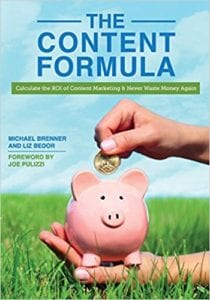
One of the things you and I share in common in addition to both being keynote speakers is we both have been in the shoes of our audiences because you have this background of working for companies, so you know what it’s like to have a quota and meet deadlines and get promoted and all that stuff. That brings a whole other level of credibility and authenticity. For me, my purpose is to help as many people as possible get off the self-esteem rollercoaster of only feeling good if their numbers are up because I was on that rollercoaster and it wasn’t fun. I love what you’re doing of helping people figure out a way to take the content they’re creating and get a return on investment, which leads us to your great book. If you haven’t seen the cover of Michael’s book, I highly encourage you to go to Amazon.com and look up The Content Formula and buy the book. Tell us where the cover image came from because that’s a great image.
I don’t know if there’s any great story behind it. The frustration that led to the book was all around the massive amounts of money that I see companies wasting. There’s not a single company out there of any size that isn’t wasting 40%, 50%, sometimes 60% of either marketing budget or even the time and effort they put into marketing. I tried to dumb it down and simplify it. For your audience who haven’t jumped over to Amazon, it’s an image of a piggybank. It brings you back to those days when you were a kid and you were saving the quarters that grandma gave you in your birthday card. The answer to the question, “How do you stop wasting all that money?” is simple. The frustration that I feel is almost juvenile. It makes me so crazy I want to bang my head against the wall. The goal of the book is to try to shed some light on the simple answers. For example, we’re all storytellers and there are experts inside every company. We had the Super Bowl and you see $5 million spent on a 30-second ad and it’s easy to see why our egos lead us down paths to creating communications in our companies that don’t resonate. Yet, our companies are filled with great people who have real stories to tell, that can help their customers, and we have to expose that. If we do, we can achieve the ROI and the growth in our business that everyone’s looking for.
There are two big takeaways that I have from your book and I’m sure there are many more, but the first one that you alluded to is you can spend a lot of money on a 30-second spot, but how engaged is the audience? That’s the differential between content marketing and just the commercial that puts something out there. Is that a good take away from The Content Formula book?
The main one is that if you seek to help versus promote, you’ll see better results. It’s counterintuitive because almost every executive in the world thinks that, “I work for this company, I love this company, and so I need to tell people all about it.” It’s our natural business instinct to want to tell stories that way. Those are the exact stories that we tune out. They’re self-serving. If you reverse that thinking into, “I have this company filled with amazing, professional, and smart people. If I ask them to tell the world what they know and how they help our customers solve the problems that they have,” that’s how you can, not tell, but show the world how great your company is. We have to put mechanisms in place that allow our brain to think in that different way.
[Tweet “If you seek to help versus promote, you’ll see better results. “]
Let’s talk about two of the commercials that have gotten some buzz, which is one of the goals. If you don’t capture those millions of people at the Super Bowl, the ideal is that there’s maybe some pre-chat before the Super Bowl now, with the commercials being aired on YouTube and getting conversations, as well as post Super Bowl conversations and sharing. The two that I saw and we can maybe have a conversation about is the Amazon one, where they had all these celebrities pretending to be the voice of their Alexa. What did you think of that? Is that engaging? Has it got the help versus promote element to it or is it just entertaining?
It’s just entertaining. What’s the value of that entertainment? There’s another commercial that my family and I, we always laugh when it comes on and then we always talk about it that we forget who the actual advertiser is. Is it achieving its goal? I doubt it. I read in AdAge that the Dilly Dilly Budweiser commercial is the most of viral ad campaign in years, and yet sales of Budweiser have not just gone down, they’ve accelerated the decrease in sales. It’s a great example of having a very entertaining, even memorable advertising experience, but you can’t turn Budweiser into craft beer. It is what it is. I’ve never been one to ask for advertising budgets and I don’t want to necessarily criticize the hardworking and creative folks in that industry, but I choose to focus on content that helps. The book, The Content Formula, shows how in marketing, we don’t always know what the return on investment is, but with content marketing, you’ll always know. Every time I’ve worked with a company that has looked at it, they’ve seen increases in their return on investment by factors of two and three and four. It’s not just visibility to return on investment, it’s significant impact increases. That’s where I choose to focus on.
Do you have an example, Michael, of someone you’ve worked with that’s okay with you sharing or maybe even a great example you’ve seen of content marketing versus the old school of pushing your message out that you hope will eventually get awareness up? Even that it doesn’t necessarily mean it’s going to translate into sales.
In almost every one of my keynotes, even when it’s not about content marketing, I tell some content marketing success stories for different reasons. I’ll just mention two. One of them is Cleveland Clinic, who’s not a customer or client of mine. Amanda Todorovich runs the content team over there. I have a huge respect for what they’ve done. They went from just as a hospital system five years ago to a content provider today that outranks WebMD and Wikipedia for most of the healthcare search terms that people use. They’re a top fifteen website in the world. They get 5 million monthly visitors. What Amanda has done is she said, “We’re not just a hospital system. We have doctors, administrators, nurses and folks inside our organization that care deeply about our patients.” They have so much knowledge that they could share that, “If we start to share that knowledge, we can grow the awareness of Cleveland Clinic, but we can help a lot of people. Our core mission is to improve patient outcomes.” Their content mission is to improve patient outcomes, whether you could become a patient of theirs or not. Basically, they’re sharing what they know with the world and in doing so they’ve created essentially an online magazine, a healthcare website, that generates revenue in the form of Google Ads. It’s unbelievable that three times a week they interview a doctor or a specialist inside the company, they share some interesting piece of health information, and it’s creating tremendous results. That’s one example.
This is the first time I’ve ever heard of a company creating content that’s their employees telling stories, in this case doctors, that they’ve been able to monetize. It’s a whole other source of revenue. That’s revolutionary.
My second story is Capgemini. I started working with them about four years ago. I was so overwhelmed by the story. There were three people in their corporate marketing and communications organization who decided, “We’re trying to market our products and services. We’re the number four after Accenture, Deloitte and KPMG. How does a number four player break through the noise?” They started highlighting the knowledge and expertise of their practice leaders, their consultants basically. They created a site called Content Loop. It’s everyday consultants talking about blockchain and cloud computing, the technical stuff that they consult around. They don’t do a lot of branding, there’s no super hard call to action on it. It says, “If you liked this article by Joe, connect with Joe on LinkedIn.” In a program that was only intended to raise the awareness of the folks inside their organization, after a year they found that they generated $1 million in sales via the LinkedIn platform, because people said, “Joe was smart and he wrote a great article that helped me. Then I connected with Joe and when I had a project come up, I thought of Joe. I reached out to him and we sold $1 million.” What’s interesting is when Capgemini realized what they had, they focused on sharing the stories of their people and the humanity of the people that they have. They generated $24 million in sales in the second year by almost doing nothing else but focusing on the connections that their readers were making with their authors.
It’s such a great example of an organization that tapped into the knowledge and the passions and the humanity of their folks inside their organization and generated significant returns. I don’t think any Super Bowl commercial is going to generate $24 million in sales. I asked a bunch of consultants to write an article and they were able to achieve that. That’s that counterintuitive nature that storytelling could be the results that it can provide for organizations.
[Tweet “Tap into the knowledge and humanity of your people. “]
The interesting thing about that story for me, Michael, is that the call to action is so easy and not asking someone to go from first date to getting married. It’s like, “If you liked this, do you want to connect?” It’s very low risk, very easy, “Why not? There’s no downside to doing that.” That starts to build the relationship, so you’re not asking someone to make this huge commitment from reading a blog article. That’s a valuable insight that you shared. The other one is not just sharing your knowledge, but the humanity of the people. On this Content-Loop.com, do you work with people to try and put in some personal story? How do you bring the humanity into the blogs or the content that they’re creating so that it’s not just like you’re reading some boring article?
The analogy I always use when I talk to folks is everyone has that initial fear of “I’m not a good enough writer.” A lot of companies want to over-engineer the editorial process with brand standards and tone of voice and all this stuff. I always tell people, “From a company perspective, you’ve got to let go.” From an individual perspective, the analogy I use is it doesn’t matter if you love cats. You share a story about cats because you love cats and maybe it’s GIFs of cats riding on Roombas or whatever silly things cats do. The interesting thing is it doesn’t have to have anything to do with what your company sells, because there’s a potential customer, employee or investor of your company that might also love cats. When they see, let’s say Capgemini, people writing and sharing funny stories about cats, they’re going to realize, “What a great organization that allows their people to do that, to share the things that they love, no matter how nerdy or funny that might be.” Obviously I’ve never seen anybody write an article about cats or sharing cat videos on a branded content platform, but I try to highlight that it’s okay to be human. It’s okay to even be a little personal. That’s the stuff that we like to read and share.
When I work with clients when they are pitching to get a new client, I tell them, “People hire people they trust and like. You’ve got to tell some stories about you and why you’re so passionate about working here, or how you got to become an architect,” if you’re an architectural firm, whatever it is that makes it so human. People get confused and think, “If I give enough information, then I’ll get hired,” as opposed to people are going to emotionally connect with your stories. If you’re pitching and other people are pitching before and after you, stories are the best way to be memorable. What you’re doing is taking that and putting it into not just the story when you’re in front of a client to get hired, but also when you’re putting your messaging out into the world on websites and blogs, etc.
A lot of people that do keynote speeches, a lot of times you’ll see lesser trained speakers stand up and they might go through ten stats. I always try to tell presenters that stats can support a point, but fear is what drives us. It almost sounds like a manipulative thing to say, but I start almost every one of my conversations with folks in the professional setting by identifying and almost spending too much time on calling out the fears that we all have. We started talking about the fear of public speaking when we started, that I almost passed out on the stage when I was in fourth grade. People feel that fear, and that’s the only way to drive change. It’s okay. It doesn’t mean we have to create fear, it just means call out the fear we all have, that we all face every day and be the solution to it. We call that the villain in the storytelling formula.
Are there any other tips that you have about what makes a good story that you can share?
I’m a big fan and believer in the Pixar storytelling formula. Pixar is now doing a massive online course that I think is for free. It’s an extensive course. I can give you the cheat sheet of it. Pixar, for those of you who don’t know, is owned now by Disney Animation Studios and was bought by Steve Jobs back in the ’80s when he was let go from Apple. He bought it from George Lucas, the creator of Star Wars, for a very small amount of money, a couple of $100,000, and sold it to Disney for billions and billions of dollars. It’s the most successful production studio in Hollywood’s history. The reason for that is their storytelling formula. One of my favorite business books is Ed Catmull’s Creativity, Inc. For those of you who are interested in getting an understanding of how to scale creativity inside of business, he does a great job in that book. The answer is leaders that inspire their teams and allow their teams to do the work that they want to do, that’s the trick there.
The Pixar storytelling formula is, “Once upon a time,” and then you introduce the hero. “Every day,” so it’s what does the hero do every day. “One day,” this is the big thing that drives somebody to take a step forward in their life. “Because of that, because of that, until finally.” “Once upon a time, every day, one day, because of that, because of that, until finally.” That’s the Pixar storytelling formula. You could use it like, “Once upon a time, there was a fish named Nemo whose father was scared that he might go out into the open ocean and die. Every day, he warned his son Nemo about the terrors that could happen and the bad things that can happen out in the open ocean. One day, Nemo, because he’s a teenager, decided to rebel and he went out into the open ocean. Because of that, he was captured. Because of that, Marlin, his father, went on a journey to save him until finally they were reunited and learned these great lessons about facing your fears and going out into the world.” Every Pixar animated movie follows that exact same formula. Once upon a time, every day, one day, because of that, because of that, until finally. Write that down and try to think about how you can tell your story or tell your company’s story or even present your product or solution in that storytelling way.

Content Formula: Call out the fear we all have, that we all face every day and be the solution to it.
What I love about it is there was some fear, which you said is one of the things that makes a good story. There’s the fear of “Don’t go out into the ocean, it’s not safe.” That fear element to a great story but into this formula is fantastic. How else can people follow you on social media? What’s your Twitter handle and all that good stuff?
My company is MarketingInsiderGroup.com. If you head over there, you can get a PDF version of my book for half price, The Content Formula. I also offer some training courses and even some free videos there that you can subscribe to on activating your team for success and how to put together a business case for doing content marketing and storytelling. You can find me on Twitter, @BrennerMichael, and also in LinkedIn. Those are my main platforms.
Michael, any last thoughts or bit of advice?
Keep in mind that storytelling is the key to being able to communicate in today’s world. Hopefully, we shared some tips. I love helping people to see the light when it comes to inverting their pitches and resisting that natural tendency to want to talk about yourself. If I can help in any way, please feel free to reach out to me.
Thanks again for being such a great guest.
Thanks for having me.
Links Mentioned
- Michael Brenner
- The Content Formula
- CMO Influencer
- The Content Formula on Amazon
- Amazon Super Bowl Ad
- AdAge Dilly Dilly Budqweiser Commercial Article
- Cleveland Clinic
- Capgemini
- Content Loop
- Creativity, Inc.
- MarketingInsiderGroup.com
- PDF version of The Content Formula
- @BrennerMichael Twitter
- Michael’s LinkedIn
Wanna Host Your Own Podcast?
Click here to see how my friends at Brandcasting You can help
Get your FREE copy of John’s latest eBook Getting To Yes now!
John Livesay, The Pitch Whisperer
Share The Show
Did you enjoy the show? I’d love it if you subscribed today and left us a 5-star review!
-
- Click this link
- Click on the ‘Subscribe’ button below the artwork
- Go to the ‘Ratings and Reviews’ section
- Click on ‘Write a Review’
Creative Storytelling Is Key To Growth with Anton Zietsman
Posted by John Livesay in podcast | 0 comments

 Episode Summary:
The easiest part of the business is having the idea. The more challenging part is bringing life to that idea and finding the right people to help you do it. Director of 3311 Ventures Anton Zietsman adds that a company needs the ability to transition from the founding members to the expansion team that will develop culture and that will promote high and hyper growth. However, before all of these, founders need to develop the ability of creative storytelling as well as developing deep working relationships. Learn how strategic partnerships can provide capital and future leverage.
—
Our guest is Anton Zietsman who works at 3311 Ventures as part of the core team finding entertainment startups to fund. One of those companies is Donut Media, which creates video content to entice millenials to be interested in the automotive industry since a lot of millenials are not keen on buying a car right away. He talks about what it takes to be successful both as an entrepreneur and as someone who’s pitching and has the ability to execute he said is much more important than whatever your idea is. You need to have great communication skills, be strong on juggling a lot of different things competing for your time and most importantly keep the quality up in everything you do. Enjoy the episode.
Listen To The Episode Here
Creative Storytelling Is Key To Growth with Anton Zietsman
Our guest is Anton Zietsman who is serving now as the Director of 3311 Ventures where he manages the day-to-day operations of that fund. That fund has some unique things that you’re going to want to hear about. Before joining 3311, Anton worked at Homejoy Inc. and Goldman Sachs. He has his degree from Stanford. Welcome to the show.
John, it’s good to be here.
You and I met when I was moderating a panel and you were so well-spoken and able to show a lot of empathy for founders seeking funding that I wanted to have you on the show to share your expertise and your insights. One of the things I love to do is ask my guest to take us back to their own personal story of origin. Someone like you graduating from Stanford has a lot of choices. Did you know right from the get go, “I’m going to go into this world of investments?”
I didn’t. Initially, what I wanted to do and what I was passionate about was politics. That’s why I studied political science and economics at Stanford. The goal was to get involved on the public side of things and ultimately pursue a career in politics, however loosely defined that was for me in the early days. What ultimately ended up happening is I joined a program called Stanford in Washington, which sends students to D.C. for about three months and places us in a government internship while we live and learn and involve in the city. I worked for the Treasury Department for about three months in the Department of International Affairs in the office for the Western Hemisphere. This was about 2010, which is right towards the latter half of the financial crisis where Dodd-Frank was being implemented and a lot of reforms were being pushed through when it comes to domestic finance side of things. I came away with two realizations from that internship. One was that government sector work was probably not for me, a little on the slow side. While there were great people at Treasury Department, I didn’t get that urgency and that piece of work that I was longing for. The second one was that domestic finance was where all the change and all the excitement was, at least at the time of the Treasury Department. That’s when I started to change my focus and started looking at internships on the private side and looking at finance work. That’s ultimately what led me to Goldman Sachs.

Creative Storytelling: Having the idea is almost the easy part of the job.
What was that like? Goldman Sachs is certainly well-known and prestigious and so is Stanford, but they don’t take anybody who wants to work there.
No. For me to go an opportunity to work with a group of likeminded and to work on a faster pace and on subject matters that I was passionate about at the time, which was global economies and the companies operating within them. That’s how I found my way to Goldman, which was an incredible experience from a skill set and personal development perspective. For me, it was a great couple of years learning the tools that I still use today and building a network of pretty impressive people.
What kind of tools did you learn that you still use today?
It’s mostly around the ability to be effective within a corporate or business setting. It sounds a little loosey goosey but what the biggest takeaways from Goldman is the company teaches you how to be effective, how to be a good communicator, how to manage competing workflows, how to manage tight deadlines, and do so while maintaining a high degree of rigor when it comes to the quality and the excellence of your work. In terms of transferability, that’s one of the greatest things that I took away from that experience. On top of that, there’s all the industry specific knowledge when it comes to how companies run and operate, how companies are capitalized, how they raise capital and evolve through their lifecycle. For me, all that was just a bonus.
What I find fascinating is that the ability to communicate well, the ability to deal with competing projects demanding your time and keeping the quality of everything up is exactly what it takes to be a successful entrepreneur as well as what it takes to be successful at a big corporation like Goldman Sachs. Are those the kinds of qualities you’re looking for and the founders that you and your team decide to fund when you hear a pitch?
That’s part of it. The DNA of a successful entrepreneur tends to be very different from the DNA of someone who is going to be a highly successful corporate student. There are certainly aspects of those qualities that are transferable, the ability to be tenacious, the ability to communicate effectively to really paint a vision, the ability to execute is incredibly important. Having the idea is almost the easy part of the job. What’s a lot harder is the ability to go out and bring it to life. What I see as being the main difference is that successful entrepreneurs and the ones that we look for have a big component of rule breaking, of being rebels on some level that you won’t necessarily find at a higher-level corporation. That’s something that’s important. It’s easy to say that the best startups have been the ones that came in and disrupted existing industries and have thought about industries in a new way or created new industries in of themselves. That’s the X factor that differs when it comes to entrepreneurs and something that we try and identify when identifying the companies to invest in.
[Tweet “The ability to execute is even more important than the idea.”]
People get so married to their idea and realize it’s probably going to pivot and it’s your ability to execute that is what the investors like you are looking for. Take us to what made you want to leave Goldman and go to Homejoy.
It was a combination of things. The most important one though is companies like Goldman are successful at what they do because they’ve built a structure in which they’re able to basically churn out junior employees on an annual or biannual basis and maintain their level of excellence. While that may be great for the firm and it may be great for the firm’s clients, what it means is an individual contributor within those companies is that you’re cog in a much larger wheel. Part of what I wanted to do was to be a lot closer to the underlying business. I wanted to be in an operational role in a smaller company in which I was able to come in and impact the underlying operations. That translated into a startup. I was intrigued in the world of high-growth companies, which at the time, a lot of which were in the on-demand space. That’s ultimately the experience that I was seeking. Through a connection at the right network, I was able to land at Homejoy.
What are some of the things that you learned at Homejoy that relates to operations that you think would be valuable for the audience to make sure they’re doing to make sure that their startup is operating at its peak level?
I spent a little under two years there and there are so many lessons learned, so many things that I picked up along the way that would be valuable. Ultimately, part of what was most striking to me is the importance of the team that you build and the culture that you develop over time, particularly when you’re dealing in a high growth or hyper growth situation like Homejoy. One of the challenges a lot of entrepreneurs’ face is how do you scale the team, how do you up level the team at the right time. One of the hardest things to do is moving forward or moving ahead from the founding team and bringing on more experienced executives and timing that in a way that makes sense for the business. That was one of the very interesting lessons and experiences that we had to go through and figure out when to reach out for the right kind of expertise and bring it on board. The second thing is just obsessing about the consumer and the consumer experience. It depends on the business not the industry. It’s understanding who the customer is, why they’re using you and being laser-focused on improving that experience. For us at Homejoy, that was both sides of the marketplace, both the client and the service provider, and understanding who the key constituencies are and keeping them conscious on top of mind throughout the development cycle of the company is critically important.
You’ve got so many other things trying to grab your attention, but if you focus on that, you’re most likely continue to keep them loyal and get new ones. This concept of the culture evolving from just a few people to now realizing, “Is it too soon or too late to hire somebody? Are they a good fit with our culture?” Sometimes the founders might be a little intimidated by people that are coming in with a skill set that they don’t have but need. Do you ever see that in the teams that you’re watching and funding?
[Tweet “Team and culture are the keys to growth.”]
It’s a problem that young companies face all the time. It’s important to get comfortable with that level of unease and on the contrary, seek out that unease and try and be honest about what the skill set of the founder is, what the skill set of the team is and understand what your blind spots are, what your goals are, and going out there and finding someone who is smarter than you when it comes to those things. Who’s going to be able to instantly or very quickly start pulling their weight and educate you and educate the rest of the company when it comes to that domain. It could be anything. It could be sales. It could be marketing. It could be branding. It could be operations. The best founders that we see have a high level of self-awareness when it comes to where they need help and are comfortable seeking out and convincing people to join them that can help them.
That brings us to 3311 Ventures. Do you know the story of origin, by chance, and why the company is called 3311?
3311 comes from the two numbers from our founders’ favorite baseball players. That’s where it comes from. 3311 Productions, which is our parent company, was founded in 2011 primarily as a film finance and production company. Over the years, it grew into a more diversified entertainment company that now does scripted TV and unscripted TV as well.
I’ve interviewed a lot of Angel investors, VCs, family offices, etc. A lot of people are not expertise in funding television, scripted or unscripted or films. That’s the kind of startup you’re looking for or a startup that has something that can help disrupt the entertainment business, is that right?
Our focus and the way we look at the landscape can be summarized this way. We look for companies in which we can not only come in and provide capital but also be strategic in terms of our partnership. When we think about that there are two things that we’re good at as an overall company. The first is storytelling, content creation, video production and distribution. The second is over the course of our existence of the company, we’ve developed deep relationships across the industry whether it’s with talent, agencies, networks, studios, distributors. We look for companies in which we can bring capital to the equation but also leverage one of these two core skill sets in a much more strategic way. In terms of what that translates to from a target company, we do see a lot of companies in the media and entertainment space, but we also see companies in the consumer tech, consumer econ space, in which we have the ability to get involved more in our marketing and branding perspective.
Can you give us a story or an example of someone that you said, “That was a great pitch, we want to go and do business with them?”
We currently have five companies in our portfolio and looking to add a couple more. There’s one example that I can give that will illustrate this well. We invest in a company called Donut Media, which is a millennial brand for car enthusiasts. Essentially, what they do is they create videos and distribute videos across their social platforms in a voice and tone and manner that is obviously compelling to their fans and allows them to grow their audience and establish and develop themselves as a brand and lifestyle brand. The reason why Donut was so compelling to us was through the founder and the founding team who had experience at AwesomenessTV in the capacity of creating, distributing content to this very specific audience and demographic. They also had the Premier Content creators in the car space who had made some of the more successful videos on YouTube what that featured car is. There was this genuine and incredibly authentic passion not only for the space but for their audience coupled with a long track record and expertise when it came to not only building teams and building content teams but also finding ways to distribute and grow that audience. For us, that’s the perfect mix of what we’re looking for and why we’re ultimately convinced to invest.

Creative Storytelling: We look for companies in which we can not only come in and provide capital but also be strategic in terms of our partnership.
The other thing I want to talk about is the importance of storytelling not only in the content you’re creating but also when you’re pitching. What are your tips on that?
Storytelling is not everything but it’s a big part of the process, particularly at this stage that we invest in, which is Series C to Series A. Very early stage companies. At that point, there are so few data points that we can go off and that we can use to do some of the more rigorous analysis that we would do with later stage companies. For example, when I was in Goldman, if we’re doing later stage growth or private equity, you’re ultimately betting on three things, which is the size of the market, the business plan and the team. The team plays a big role in that decision-making process, particularly their ability to paint a picture for what the company is going to look like not necessarily in the next six to twelve months but in the next six to twelve years. Investors can only spend so much time with each company and with each concept due to the volume of deal flow that we look at. The founder needs to do a lot of the legwork when it comes to painting the picture and connecting the dots for the investor and drawing them in to share their vision and see their vision and want to be a part of that process.
Your personal passion, your reason for why you love doing this, understanding who your customer is in the pitch, I have a big philosophy that the more you show an investor like you that you have empathy for the customer and you understand their problem better than anyone else, then someone like you would say, “You’re the right person to provide that solution. We’re going to get in business with you.”
That’s exactly right, especially in content companies and media companies. That has some crossover application as well in other businesses. There are a lot of people who are MBAs and make analytical judgments on opportunities that they think they can exploit. That’s certainly one way to build a business and it’s been successful in the past. When it comes to media companies and new media companies, something that we look for is authenticity and passion. Audiences have become much more sophisticated and much more intuitive when it comes to understanding if the company or the brand they’re interacting with is authentic. That’s a critical part of the equation for us is making sure that the DNA of the founders is in line with the business that they’re trying to create because it will also ensure that they’re in it for the long haul. They’re not just doing it for ulterior motives.
Let’s talk about what do you look for when you hear a pitch. Do you fund producers who want to pitch an idea for a reality TV show?
On the production side of the company, we’ll invest in feature films in the $5 to $25 million budget range. We’re very much film maker driven and chase storytellers. We have a unique voice and a unique perspective across genres. On the scripted and unscripted TV side, we do a lot more development. We’ll take stories. We’ll take ideas. We work with writers to develop a concept and we’ll go out and will pitch that to the universe of buyers whether it’s your traditional guys like HBO or Netflix or non-traditional guys like YouTube brand or some of the new entries in this space. On the venture side, we purely look for companies. We invest in companies that have an existing team and existing products. From that perspective, it’s much less funding productions and much more capitalizing companies to go out and build a media brand for example that itself then create productions to grow its audience.
What are your thoughts on virtual reality and augmented reality as it relates to being impacting in the way we experience entertainment?
[Tweet “Be obsessed and focused on the customer experience.”]
It’s top of mind topic for a lot of investors in this space and even investors outside of the space.You see a lot of the big players up in the Bay Area are starting to spend their time on virtual and augmented reality. My perspective is it’s too early to tell. It sounds like a cop out but the way I see it when it comes to virtual reality in the entertainment space, there’s still some very real concerns that I have when it comes to the sheer ability of the experience, the distribution of devices and headsets that allow people to consume the content around the cost of creating the content, which is incredibly high today. From an investment perspective, the consumer VR space is still earlier than we’d like it to be. That said, there’s no question in my mind that that is a huge growth portion of the industry. We’ve already started to see virtual reality content being created on the gaming side and adopted on the gaming side very successfully. There’s no doubt in my mind that that’s going to happen as well when it comes to other forms of entertainment. There are just a few more things that need to fall into place before we can get excited about it from an investment perspective.
Is there a book that you would recommend people to read when they’re trying to become good storytellers or get their startup funded?
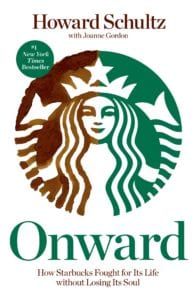
I am a big fan of founder stories or founder autobiographies or memoirs. One of the best books that I read when it came to getting a business off the ground and having the tenacity and the determination to not let yourself fail was Howard Schultz’s autobiography. Howard Schultz, the founder and CEO of Starbucks. He paints a very detailed and colorful picture about what it took him to basically get the funding for his first Starbucks store and the amount of rejection and the amount of resilience that he needed because no one believed in his idea. That’s a great inspiration. It tactically gives you a pretty good idea, a pretty good understanding of how to go to market and how to sell your vision.
Onward: How Starbucks Fought for Its Life without Losing Its Soul
The book is Onward. Is that the one you’re referring to?
That’s right. He wrote two books. It’s either Onward or the one or the one before that.
Any last thoughts you want to leave us with, Anton?
When it comes to pitching, the only thing I would say is that everything matters. What I mean by that is every interaction you have with the potential investor is a data point. Whether it’s showing up to the meeting on time, responsiveness to emails, all of these interactions creates a data bank in the investor’s mind. There are so few data points to go off of in early stage companies that we use all of these inputs as a way to make a decision. Be conscientious about that and present yourself in the best possible way even when you think you’re not “pitching” because everything counts.
I’m a big believer of that. I am so glad to hear you say that because people think, “I can just phone it in. Nobody cares about this detail.” They really do. Thanks so much for being on. You’re a great guest and I am excited to watch you and your career and all the things that your company does.
I appreciate you having me.
Links Mentioned
- 3311 Ventures
- Donut Media
- Goldman Sachs
- Stanford in Washington
- Dodd-Frank
- 3311 Productions
- Donut Media
- AwesomenessTV
- Premier Content
- Onward
Wanna Host Your Own Podcast?
Click here to see how my friends at Brandcasting You can help
Get your FREE copy of John’s latest eBook Getting To Yes now!
John Livesay, The Pitch Whisperer
Share The Show
Did you enjoy the show? I’d love it if you subscribed today and left us a 5-star review!
-
- Click this link
- Click on the ‘Subscribe’ button below the artwork
- Go to the ‘Ratings and Reviews’ section
- Click on ‘Write a Review’