

Engage People On Social Media To Bring In New Clients with Sean Hyde
Posted by John Livesay in podcast | 0 comments

 Episode Summary:
Building a successful business is one of the most challenging yet rewarding things you’ll ever do in your life. The path can be rocky, to say the least, and you’ll encounter numerous learning experiences along the way. Sean Hyde, Founder of Ideation Digital, is no different. He’s made a lot of mistakes when he was starting out. He learned how to transform those mistakes into learning opportunities in order to develop the tools he needs to grow his business. One of the key nuggets Sean shares is the importance of getting the right team to engage people on social media to tell their story to win the clients.
—
Our guest on The Successful Pitch is Sean Hyde who is the Founder of a company called Ideation Digital. His real expertise is helping people use social media to tell their story to pull in new clients. I always love to hear the story of how somebody were struggling to raise money with a Kickstarter campaign that didn’t have social media and he gives some really great insights on engaging people with social media. He said, “When you’re looking to get the right team, you want to hire slow and fire fast and don’t ignore the red flags when you’re interviewing people.” He also said that his expertise is having his staff give him what he calls an end of day report. That’s the culture fit to work for him is, “What did you do every day? You have to give a short report on what went right, what went wrong, and what you’re going to do to fix it. He said, “When you make your clients the hero instead of you being the hero, then your business takes off.”
Listen To The Episode Here
Engage People On Social Media To Bring In New Clients with Sean Hyde
Our guest is Sean Hyde. He’s a lifelong entrepreneur at heart. He’s been involved in establishing businesses in real estate, automotive and marketing. He also has in-depth experience and has held designation is in the financial and equity market investing sectors. He’s the owner of Five Day Solution and Ideation Digital, which are two marketing strategy companies that serve businesses at different levels depending on where they are in their development. His company has worked with entrepreneurs and business organizations to help them grow their businesses through innovative digital marketing solutions that include social media, branding, website development, and even search engine optimization. He started three successful businesses with no traditional startup capital and has grown them by reinvesting in himself and his people without the use of traditional small business funding or even angel investors. That’s going to be interesting to hear about. Sean, welcome to the show.
Thanks, John. That was a heck of an introduction. I appreciate it.
You say you’re an entrepreneur at heart. How young were you? Take us back to when you realized that you wanted to be an entrepreneur.
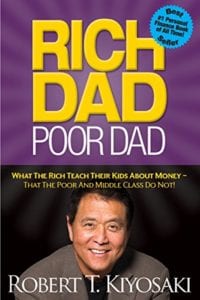
Rich Dad Poor Dad: What The Rich Teach Their Kids About Money – That The Poor And Middle Class Do Not!
To be honest with you, this was a total fluke. It’s the funniest thing. I was doing the traditional thing. I went to school. I was a pretty smart kid. I had skipped some grades and I read a lot when I was nerdy. I was on that straight path and I was about halfway through college and had to go on a flight. I went to the bookstore because I like to read, and I picked up Rich Dad Poor Dad, the Robert Kiyosaki book. I started reading through it. That’s an easy read, but it has a lot of impactful points. One of the things that stuck with me was Robert Kiyosaki discussed how most people’s biggest expense is taxes. He was like, “If you own your own business, if you have your own investments, you can save that 35% right off the top.” I was like, “That makes a lot of sense that I can make 35% extra money or give myself a raise. I can make less and pursue my passions if I do this. If I learn the tax system and I learn real estate investments, I learned how to invest in a company.
After reading that book, I finished college anyway, but I went right to work for a real estate developer who owned his own business thinking that I could learn from him. He had heard about me through his kids who had said, “Sean’s doing all this stuff and he’s learning investing. That’s a guy I need to work for me.” I worked for him for about a year and learned a lot of what I did do. He was a very traditional real estate developer. He was more about cutting corners and playing games with finance, a really smart guy. I didn’t want a business where people were showing up on my door because they need to get paid and they had it or where you are constantly scrounging for financing to that next construction loan. As I decided I was going to leave that company, I went online and I was like, “Let me try and find businesses that have low startup capital.” I was a year out of college, still paying off student loans and I didn’t have a ton of money. I’ve had good profit margins and I found a windshield repair company and I literally, on a credit card, spent less than a thousand dollars at the time to fly out to Las Vegas. They taught me how to fix the windshields for a week. They put me up, sent me back with a kit, and out of the trunk or my BMW because I had started making money and I thought that’s what you do, and you make money is go buy a fancy car. I went to a car dealership on a Saturday morning and start fixing their windshields.
That was a Toyota dealership. We’ve got a Mercedes dealership because I grew up in the New York City area, so we had a lot of big car dealerships. It was a good area for that. They started saying to me things like, “Usually a windshield guy can fix leather tears or paint chips or bumpers.” I was like, “I don’t know how to do that, but I bet you I could figure it out.” I went online again and I started researching companies. I found a company in Michigan that did all of that. I moved to Michigan for two months and I learned how to do everything from fix dents to paint bumpers. I got a van and hired a couple of people. I already had a Jeep that we had bought with the money I started making as part of the company, and basically built a business from there. I had an uncle who had an advertising firm, so he worked with me on some marketing. We went in and made sure we were the best at what we did. Then I developed skill sets from there as far as making sure we were placed well for tax advantages. We had a hard time with sales, so I took a cold calling class and I started learning how to do a pitch and get in there so that we could get into these competitive markets and deal with these car dealers.
[Tweet “Have your staff give you a daily status on what they did to drive revenue.”]
I quickly learned that working on cars was not my passion. That’s how I got into the equity markets and real estate because investing is my passion, like helping other people grow things. I enjoyed going to seminars and meeting other people and mentoring people and saying the same things I learned, “Taxes are costing you money. Real estate’s a great long-term investment. Having your own business is an important thing.” I tried to hand off that business probably a little too quickly and sat back and said, “I’m pretty young and I’ve got some money and I’d had some success. What do you do?”I was like, “You do what everyone says they did when they were older. You travel. You try new things and meet people.” I started traveling the world. Long story short, I spent a few years traveling the world, trusted the wrong people, and made some mistakes as a young person. I lost most of what I had. I learned a lot of lessons on how not to manage your business, especially for around the country.
When you’re talking about growing your business from windshields to fixing bumpers, to me, the big lesson that stands out there is if your customers that are buying from you say, “We would also buy the following five other things,” that’s a great way to figure out that you have something that people are willing to pay for without you having to do a lot of expensive research, as opposed to trying to figure out what to sell people. If they tell you they’ll buy it and they want these other services, that’s valuable whether you’re selling windshield wipers or anything in business.
The other hand on that is customer acquisition for most of us is our biggest expense. If we can sell more of the customers we already have, why wouldn’t you try and do that? In real estate, they’re the same thing where I worked with a guy for awhile that said, “If you have a family renting your house and they’re growing, they’re going to move because they needed more room. Look into the cost of expanding that house because in a lot of cases, it will be worth it to you to have the equity of your home and keep a good tenant in your house rather than having to start all over trying to find a good tenant.” A lot of businesses use that concept where if you have a client or a customer that you love and they’re asking for things that you can give them in addition to what you’re doing, why wouldn’t you?
You also alluded to making some bad decisions in your youth and losing everything. Doing due diligence on people before you hire them, before you take their money as an investor, who you have on your team, even due diligence on who you take on as a client is a valuable thing for people to understand. A lot of people are so happy to have an investor or have a new client or get somebody to fill this job, they don’t take the time. What would you say are things you’ve learned so you don’t repeat that mistake of getting involved in business with the wrong people?
If I can steal a quote from Eben Pagan, it’s to, “Hire slowly, fire quickly.” I was too attached to people. I grew up around people. I was social and I was loyal. Loyalty’s very important and I got too attached. If I hire somebody, I can make it work. Even when I saw red flags, I tried to work through it and that was a mistake. The other big mistake I made was I didn’t put systems in place. I didn’t understand even that concept at that age. I would hire somebody that had worked for an autobody shop and think painting bumpers at a car dealership is going to be no issue. It actually was very different for them and the independence was a challenge for them because nobody’s looking over their shoulder. Those were things I did not take into consideration. One of the biggest lessons I learned was hiring the right people and then giving them the tools and the support they need and how important that is if you really want to grow a business that’s not dependent on you.
[Tweet “Hire slowly, fire quickly.”]
Do you have one cultural fit that you’ve decided for your company, Ideation Digital, that is a filter you use on whether somebody is a good fit for your company so you’re hiring the right people?
For me it, everything else aside, I have to work with results-oriented people, so they can have different approaches. At the end of the day, what did you work on today? What results did you get? What challenges were there and what questions do you have? Whatever you’re doing every day, you need to get some result. Sometimes that results we learned what not to do. You can learn from that and you can apply that. The biggest thing is your team has to be working on growing your business and it’s me gathering information. Especially if you’re building a new business, you’re not going to do everything right the first time, but you need people to understand they have to get out there and make things happen even if they’re the wrong things so that we know what the wrong things are.
Have your staff give you an end of day report. It’s measurable. If somebody is not willing to do that, then they’re probably not a fit for you. That’s micro-managing to be asking me what I did every day. Law firms, they have to say what they did every fifteen minutes for billable hours. There are all kinds of variation on that. Some people are like, “How about once a week?” You’re like, “No, every day. I need to know what the end of the day report is.” How did you come up with the name Five Day Solution?
When I stopped traveling, I did a brief stint in corporate America for two and a half years just to see what it was like. I got promoted out of existence. During that time, I had a girl that worked for me. I was running first class airline. I had 80 bartenders and 100-something cleaning people working for me. One of the bartenders was going through a bad divorce and she was going to lose all the equity in her car because they were literally going to repossess it. She had, let’s say, $8,000. I said, “In real estate, there’s something called a five-day sale, which is how you sell a house in five days from market value.” I was like, “Let’s try this on your car,” and it works. Believe it or not, a car dealer bought it from market value. She got all her equity out of it, sold it in five days, didn’t get it repossessed, and didn’t have to take any more credit hits. I tried this again and it worked. I was like, “I’m going to write an eBook, How to Sell Any Car in Five Days.”
When I moved to Charleston to start working with my uncle who had the advertising firm to develop this new business brand, I’m like, “I know a lot of things that you can do in five days. They’ll have a big impact on your life that I can make these little books about.” I had started studying digital marketing and online marketing strategies when they were still new-ish. I moved here, and I started meeting small business owners that needed help with their websites, their online marketing, and marketing in general with smaller budgets. I was like, “There’s a real need for that. There’s nobody addressing this small business marketing niche out there. These traditional advertising firms want $10,000 to $20,000. No one’s out there on that smaller budget range. Let me look into that.” We kept the name even though we took a shift, but we stuck with it because we do fast turnarounds. One of our things with that first business model was we’re a small business marketing model. Small businesses need quicker turnaround, smaller budgets, more ROI. We’re provable ROI so that’s what we focused on and we kept that name.
You’ve been able to grow your businesses without taking either angel investing or bank financing. What is the secret sauce you have there?
I don’t know if it’s secret sauce. A lot of people will probably tell you that’s a mistake because I’m sure you could grow it faster if you did it the other way in some circumstances. For me, it was like an eat what you kill theory. You want this realistically. I got out there and I said, “We’ve got to make money and we’ve got to be smart with his money if we want to keep growing,” and I do want to keep growing. I want the schedule I want, I want the lifestyle I want, and I want to be able to talk to people. I mentor kids or other adults in business and say, “I did start a business with a small credit card purchase. Five Day Solution, I started with a Groupon. I spent $15 at Groupon. I bought a digital marketing education course. It was this huge comprehensive course and that’s how I started that business. I spent two months working through this certification course and implementing all the strategies. We’ve grown from growing that business to now building a second brand off of that.

Engage People On Social Media: Small businesses need quicker turnaround, smaller budgets, more ROI.
I don’t know that everyone would agree with me. Robert Kiyosaki, who I love would not agree with me because he’s all about leveraging other people’s money. For me, it’s worked very well to be able to keep that motivation and keep control of my finances. One of the problems I ran into with my first business was when the banking markets went crazy. Some of my line of credits were like credit cards so I had a lot of credits. They went from 7% to 23% overnight when the banking crisis happened. You can imagine what quadrupling your overhead looks like when you’re running a business. When we did try that out for a little bit, it wasn’t worth it. I backed away pretty quickly from even using like credit lines in some cases.
You continue to be a good student even though you’ve been out of school for several years to continue to grow your skills. Would that be something you would encourage other people to do as well?
Absolutely. You read in the papers, you see all these memes that every successful person is constantly reading and educating themselves, especially in my industry, digital marketing changes daily. Facebook puts out a new platform or product or new algorithm. It’s the same thing with Google, with Snapchat, good this week or bad? Is Twitter going to implode? These are real questions. Some of the people that I try to follow, the smartest marketers I know, say they get up every morning to read every article that’s out there on what’s going on. What the new abilities are because these platforms, in order to compete, are constantly adding new features and new functions. Some of them are useful and some of them are time wasters. Part of our business success is knowing the difference.
Do you have a story of someone you’ve helped using social media to get them more sales?
We’ve done some interesting things. My uncle runs a traditional but very successful advertising firm. When I started this, he was like, “Social media, that’s all fad. It’s a tool. It will be okay but it’s not going to be a thing.” There was a local woman here who’s trying to publish a book. She got a newspaper column and she got these cooking classes and she even had a local TV show. She was putting out a cooking book and she did a crowdfunding. About three or four days out, she’d only raised about 15% of what she was looking for.
I went to her because I knew her. When I saw what she was doing. I sent her a message. I was like, “April, why don’t you let me help you? I can go to Facebook and find people that have used your specific crowdfunding platform that liked cookbooks and like supporting these events and put your thing in front of just them, and let’s see if we can get someone engaged.” By the end of her campaign, she’d raised 10% more than she was looking for. It took her from not even coming close to being able to publish her book to having more money than she needed. She added in features and gave people bonuses and was able to start her business and her book from there. We’ve done a lot of interesting things like that. I got mentioned in that book. It’s one of my favorite things. I’m like, “If you look into this book, in the credits it says, “Thank you, Sean Hyde, for stepping in and saving the day.” It’s silly but to me that was a big thing. I spent maybe an hour helping somebody out and but now I’m in a book.
You’ve got not just the right people, but you’ve got the right people engaged on social media. What are your suggestions and techniques on how to get people engaged when you make a social media post?
With most business owners, their biggest problem is specificity. I could go to so many business owners and ask them what their offer is. What are you actually offering? Exactly work on that pitch. What is the specific value that you’re offering in exchange for their value and their money? Most business owners cannot define that. You run into that with so many clients where I’m like, “I can just beat people over the head with the name of your business, but that’s not going to get us anywhere. That’s like that old school marketing where maybe if someone sees a Whirlpool ad 3,000 times, when they go to buy a washer, they’ll think Whirlpool. We’re in a place where we can be so much better than that.
[Tweet “With most business owners, their biggest problem is specificity.”]
The one thing that everyone needs to concentrate on whether it’s your strategies, or like recently Donald Miller, he’s like, “Keep it short.” He said, “One of the brain’s main purpose is to conserve energy, so don’t waste people’s energy and making them think. Get right to the point.” Don’t try to be the hero. That’s the other thing that I see a lot of people make a mistake of is they constantly is talking about the products when people want a guide. Everyone wants to be their own hero, but they want someone that says, “I can help you be that hero,” and not someone that’s like, “I’m the hero.” Rather than saying, “Here are the 4,000 products we offer,” we try to work with people on saying, “Here are the results you will get that you want from working with us.” Those are the two easiest things that people can do to create a lot of impact when they’re posting on social media.
Talk about going from stumbling through your pitch to soaring from boring your audience, to inspiring them, and from confusing them to giving them clarity as the outcomes of having a good elevator pitch, for example. What are some of those outcomes and journeys you take people on?
As our brand or when we’re working with customers?
Customers. How about somebody who is compliant?
I don’t even know that we have any of those, to be honest with you. I’m trying to think we work hard with that. I would say some of the clients that let us just handle that are pretty good. A lot of them, they have a difficult time stepping outside themselves and seeing that. We worked with some restaurants and we put together some restaurant posts that were all about what it’s like having the perfect birthday dinner with your friends and then ran that ad on Facebook at people having birthdays coming up in the next seven to fourteen days. Rather than saying, “We have the best menu or we have the best sushi, or we have the best burgers,” it’s pictures of fun-looking birthday dishes with people having a good time and saying, “This is what it’s going to feel like on your birthday when you come here. Don’t risk going to a restaurant that might have bad service or bad food and ruin it. You want to feel like these people that are having fun over here,” and then putting it in front of people probably right around the time they’re trying to decide where they’re going to go to dinner for their birthday or what they’re going to do.
It’s not about you and the quality of your food. It’s the emotional connection because that’s the difference between right brain-left brain engagement. If you’re just giving people information about how good your food is from a nutritional standpoint of view as opposed to how you’re going to feel having the experience at that restaurant, that’s much more engaging. That needs to translate into social media is what I’m hearing you saying.

Engage People On Social Media: One of the brain’s main purpose is to conserve energy, so don’t waste people’s energy and making them think. Get right to the point.
With food in particular, you can do that because we all connect to that. Feeding someone is taking care of them. That’s part of nurturing. Restaurants in particular, if they spent more time with engagement on that level of the experience and the nourishing and the nurturing potential they have as a good restaurant, rather than saying, “We have $4.99 appetizers or we have the biggest menu around,” and then putting it in front of the right audience, which we have a lot of opportunity to do these days with all these different platforms, finding those exactly who we want to find, that’s a great way to do it. You can show them like, “Afterwards, this is how you’re going to feel more important and you’re going to feel more special. You’re going to feel less stressed.” I’ve seen a couple of restaurants adopt these order-ahead-of-time platforms that busy parents love. If you market that to say, “You’re frazzled enough, let us handle dinner,” as opposed to, “Here’s our new little gadget that we have where you can order takeout from an app on your phone. Download our app right now.” You can find some good results with those messages.
You’re also experts at creating websites for people. What’s the biggest mistake you see people have on their business websites?
Usually, they don’t understand basic search engine optimization and their content. A lot of people, the first thing we ask them is, “Is your website showing up when people search for you?”They’ll be like, “Yeah.” When people search for Joel Murphy’s Tractor Company, it comes up first. My first question is, “If I search for tractors in Chicago and Illinois, do you come up first?” They’re like, “No. We don’t come up at all. What’s the point?” I’m like, “If somebody already knows Joel Murphy Tractor Company, there are about 7,000 different ways they could find you. If I’m new in town or I need a new tractor and my old store went down or I don’t want to go to Lowe’s, the first thing most people do is they’re going to go on the internet and look for tractors stores near me. They’re going to look up your reviews and they’re going to look for you, especially on mobile now. The statistics say 54% of people that searched for your business on mobile enter your store the same day.
People that aren’t adopting mobile-friendly websites are considering the mobile experience as another big one. People tend to talk about themselves and talk about their product. One thing we see a lot is they missed talking about their actual product though. We’ll find business managers that get in and they talk about taxes, talking about accounting, and talk about who their clients are. They never actually say, “We’re business managers.” When you type business managers into Google, they don’t show up and that’s something a lot of people miss, what are the fundamental keywords that you need to have on your website as part of your content.
[Tweet “People tend to talk about themselves and talk about their product.”]
What I’ve found interesting for me is coming up with a brand identity, when you can have a tagline that is memorable and tells people what you do. For example, mine is I’m the Pitch Whisperer and I’ve done enough content and been on enough interviews where people say that. If you Google Pitch Whisperer, that gives you all kinds of stuff about me. It’s much easier for people to remember than my personal name. Those kinds of things have some value in creating content that can drive traffic to your site as well.
The other side of that is if I go look for the pitch whisperer and you’re one of ten websites, and there are different Google business pages and images there, that you’re okay. If I have to Google the pitch whisperer and it’s seven different pages on your website plus your video plus ten of your images plus I’m listening to your podcast, you are the pitch whisperer. I’m not looking for that anymore and that’s another thing we work with people on is and especially in smaller markets, you have the ability. One of our clients is a national franchise that does auto work and they were missing some segments. We went into keyword research on custom paint jobs. It’s a huge search market here. You have your franchise site. We could create some YouTube videos, build your own easy small site and do a couple of posts, and literally dominate every search for custom paint jobs in this entire metropolitan market. That’s exactly what we did, hundred searches a month just for that term and maybe another 200 for related terms.
All of a sudden, they’re getting all these extra leads off of that just on doing a couple little tweaks. That’s exactly what you’re talking about that to be of such a multimedia world now, it’s not just the website, it’s who’s pointing at your website that’s saying, “These people are legitimate,” because the search engines want to see that. On top of that, on your website is text and images and videos and audio. Search engine to read that, that’s the other side. Are your images numbered 3561243? That can’t be seen. Is your image called Dinner Special at Charleston’s Best Restaurant? That’s the other side that people forget sometimes.
The importance of video content helps your search engine optimization. That is something that people can even just Facebook Live or Snapchat. What’s your thought on all of that? Will Facebook Live take over or Snapchat? My observation from my little world of people I know who have teenagers is they’re not even on Facebook. They love Snapchat because it doesn’t stay around, their parents aren’t there. There are a lot of psychological reasons why people use certain platforms and I wonder how that fits into your branding and marketing strategy for your clients?
We always look at a product market mix first. We definitely want to look at what you’re offering, who your market is, and then figuring out where your market is and that changes. There are a lot of Snapchat now that they’re facing challenges because there’s competition. Their biggest challenge is that their parents are getting on there because they like the filters now. Twitter used to be the hide out from Facebook, and then Instagram was the hide out from Facebook, and now Snapchat is the hide out from it. Their parents are following that world little by little and they’re trying to hide deeper and deeper in the internet somewhere. To answer your question, I don’t know that Snapchat will last forever. I don’t think they’re going to make the money, but Twitter hasn’t made money yet and they’re still around. That’s not always a great indication, but as newer outlets for the younger generation come out, they will run to those because their parents and their uncles and their grandparents don’t know about it yet, but also because we live in a society where everyone wants to be that early adopter. Everyone wants to be the first one with the new iPhone, even though it’s going to have bugs and be overpriced. Everyone wants to be the first on that social platform even if nobody’s using it because they were the first one there. We’ll always have that attraction and part of the challenge is monitoring them.

Engage People On Social Media: Everyone wants to be the first on that social platform even if nobody’s using it because they were the first one there.
Any final thoughts you want to leave everyone with, Sean?
I agree with a lot of what you say so I’ll keep listening to your show. The clarity of message, it’s a big thing. Everyone needs to work on being able to explain your business very quickly and be able to explain that from the perspective of how you’re going to help the person you’re talking to. What’s in it for them is what everyone tends to overlook. I see this with so many clients when they have their marketing message, and they tell you, “Talk about our products or talk about this or show this.” They’ve got a million-people trying to do that to them. They want to know what’s in it for them. Everyone wants to know that these days. Make sure that when you do it, it’s concise because people don’t have attention spans. Make sure that you’re taking that, “We’re the guide, not the hero perspective,” or “We can help you and here’s what’s in it for you,” perspective. Those are the big things that we see a lot of people having challenges.
How can people follow you? What’s your Twitter handle? What’s your website?
I’m pretty much @SeanPHyde almost everywhere, that’s Twitter. You can find me on Facebook pretty easily. Those are the ones I stick to. I do have an Instagram but honestly, I’m not active, the same thing with Snapchat. I spend so much time on other people’s social media, stick to the ones that I’m good at. Our website for our new brand, which is where we would focus, www.ideation-digital.com. Anyone can go out there. They can reach me at [email protected] with their questions and I’m always happy top help.
Thanks, Sean. You’ve been a great guest. I appreciate your sharing your insights on what it takes to have a successful pitch using social media and making your clients the hero, not yourself.
Thank you, John. I appreciate the opportunity.
Links Mentioned:
- Ideation Digital
- Five Day Solution
- Rich Dad Poor Dad
- Groupon
- @SeanPHyde Twitter
- [email protected]
- Sean’s Facebook
Wanna Host Your Own Podcast?
Click here to see how my friends at Brandcasting You can help
Get your FREE copy of John’s latest eBook Getting To Yes now!
John Livesay, The Pitch Whisperer
Share The Show
Did you enjoy the show? I’d love it if you subscribed today and left us a 5-star review!
-
- Click this link
- Click on the ‘Subscribe’ button below the artwork
- Go to the ‘Ratings and Reviews’ section
- Click on ‘Write a Review’
The Purpose Revolution, Show Your Value And Tell Your Story with John Izzo
Posted by John Livesay in podcast | 0 comments

 Episode Summary:
What happens when businesses put purpose at the top of the list? Companies that focus on purpose and people are happier and more successful than the ones that don’t. The Purpose Revolution drives people to do better and be better. Employees become committed to work because they don’t feel like its work when they enjoy doing what they do and where they do it. John Izzo, President of Izzo Associates teaches clients that by connecting with people, you gain competitive advantage with a value level that goes past the product or the service. Learn how you can use purpose to compete with all the disruption and contribute to the social good.
—
Our guest is Dr. John Izzo, who is the author of The Purpose Revolution. John has so many great insights as to the importance of having a purpose in your business and in your personal life. He said, “When you connect to people’s values and have a purpose, you get them to become loyal. It also gives you a competitive advantage, but not forever, so you need to act now.” He also said, “One of the best ways to show your purpose is at the point of sale. Can people see what your purpose and what your story of good is when they’re buying your product at the checkout?” He said, “Begin your meetings with anybody sharing an idea of how what you’re all doing as a company is making a difference in others’ lives.”
Listen To The Episode Here
The Purpose Revolution, Show Your Value And Tell Your Story with John Izzo
John Izzo is the President of Izzo Associates. He has spoken to over 1 million people and advised over 500 companies including IBM, Quantas, Verizon, Walmart, and Microsoft. He is the author of several books including Awakening the Corporate Soul, and the The Purpose Revolution. John, welcome to the show.
Thank you. It’s great to be here.
You are a master storyteller. What we love to talk about here on The Successful Pitch are great stories that pull at people’s heart strings and are memorable. Before we get into your book, The Purpose Revolution, I just wondered if you wouldn’t mind taking us back to your own story of origin. Did you always know you wanted to be an author and a speaker? How did your own journey start?
Growing up in New York City as a young boy, I was always a do-gooder. I was always more driven by purpose than anything else. There’s only three careers I considered doing when I was a young person. One was to go to law school so I could go into politics. At the time, I thought of politics as a worthy profession, not some slimy opportunistic one. Another one was to be a journalist to expose bad things and tell great stories, or to become a minister. I grew up in a Presbyterian Church in New York City. I sometimes like to say I have wound up marrying all three of those careers. I’m involved in issues I care about, especially the role that business plays in society. I’ve written books that have mostly been journalistic exercises to hear and find out what’s working and to tell those stories to inspire others to change. Finally, I preach 70 to 80 times a year. Unlike a good preacher, I don’t have to write a new sermon every week. Even though I was a do-gooder, I always was a type-A entrepreneurial person. The world of business always fascinated me because I liked to get things done and I like the energy of business, which is often very pragmatic. I did a lot of various things in my career before starting Izzo Associates 22 years ago. The rest is history.
What a great background and combination of multiple things all coming together. Many times, people think, “Something I did ten years ago is not going to impact what I’m doing now.” I find the opposite. It’s unexpected connections that happen, so everything we are interested in and curious about and do helps pull us in to being uniquely qualified to talk about something that no one else has because we have our own unique experiences.
In my case, I did spend six years as a Presbyterian minister. I got to be with people in the most profound and important moments of their lives. I honed my skills speaking to the same audience week after week and having to come up with a new talk to inspire them. I got a degree in journalism. You asked if I always wanted to write books. I remember writing my first beginning of a play when I was ten years old. I remember my family making fun it, but it did not dissuade me from the writing life. I did always have a passion for writing and telling stories. My publisher, Berrett-Koehler, the President, says that my real gift is to go out and find out what’s working and to tell the story and connect the dots. This new book is no exception that I believe in many ways that’s what I’ve done.
Let’s take a dive into the book, The Purpose Revolution. I know you have a keynote around that very topic as well. The subtitle is also interesting to me, How Leaders Create Engagement and Competitive Advantage in an Age of Social Good. There’s three things that pop out there. There’s been some research that more and more companies are all talking about the importance of social good, not just making money, in the companies that they invested in and what consumers are looking for. What happens when a business doesn’t have a purpose?
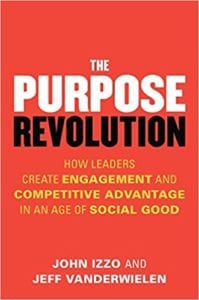
The Purpose Revolution: How Leaders Create Engagement and Competitive Advantage in an Age of Social Good
There are three fundamental things as we think about this idea of The Purpose Revolution. First, purpose-focused people and purpose-focused companies have always been happier and more successful than ones that aren’t. If we think about some of the most successful companies over generations, whether it’s Southwest Airlines that always wanted to treat guests and their employees with great dignity, or Vanguard who soon may pass BlackRock as the largest manager of money in the world that began with a very simple purpose to give the average investor a shot to be successful so they started the low-cost ETF movement. Purpose-focused companies have always been, over time, more successful than ones that are less purpose-focused. We know that people who see their job as a calling, not only are they happier but they perform better on every metric that we care about as business owners. They call in sick less, they’re more productive, they provide better service, they’re more committed, they’re more engaged, they stay longer. We know that purpose has always been a key to a happy life and a successful business.
What’s new is a revolution of expectations where three key groups all over the world are saying, “This is a major reason why I would go to work for someone.” Around 80% of employees say that they want to work for companies they believe in. 50 % of millennials say they would take a pay cut to work for a company or a job that had purpose. A full 40 % of the global workforce are using purpose as a major way they decide who to work for and who not to work for. About 80 % of the customers globally say they want to buy from companies they believe in, who are aligned with their values. About 34 % of global consumers are regularly punishing companies that do bad and rewarding ones that do good. What the revolution is about is that people are saying, “I’m demanding this. It’s becoming a major screen through which I decide who to buy it from, who to work for, and who to invest in.” Wells Fargo and Volkswagen, both of whom share prices were decimated by their choice not to be purpose driven to open accounts for people who didn’t want them and to say you were green and creating green diesel, when in fact you created a software that would lie to the people who would measure your emissions. Increasingly, these companies are being punished and good companies being rewarded with retention, engagement, and stock price.
It’s a demand both from the employees and the consumers to have a purpose be a big part of why they’re going to work and why people are supporting those companies. Starbucks was the first one to come up on my radar of not only giving employees benefits when they work part time, but also tapping into local communities and giving back that way. How can people use this purpose to compete with all the disruption going on? How does that become a competitive advantage?
First, there is a revolution. In the first 30 % of the book, we make the case. Here’s the revolution. Here’s how things are changing customers, employees and investors. Here’s why most companies are failing at purpose and failing to benefit from that. The second is engagement. We’ve talked about employees more engaged, more likely to attract top talent, customers are more loyal. We know at organizations like Unilever that brands that have made a purpose connection with their consumers, like Dove and Ben & Jerry’s, are growing on average 35% faster than their brands that don’t have a connection with their customers. The third piece is competitive advantage. When I’m in front of an audience, one of the questions I ask people is, “In an age of commoditization, how do you find competitive advantage?” Think about the traditional levers we use to compete with other companies. Quality is rarely a differentiator because everyone has quality and great customer service. Everyone has a return policy that’s amazing. You can’t be in business anymore if you’ve got low quality or bad service. Some people are a little better, but the game has gotten even. How about price? Almost everyone now has to compete on price. If your prices are significantly higher than your competitors, in all but a few cases, you will have to match their prices. What about innovation and products?
Whenever I’m doing a keynote, I sometimes will ask people at their table to come up with ten companies in the world that are sustainably successful because their products are fundamentally different than their competitors. No table can get to ten. The obvious ones come up, Apple, Tesla. Once you get past three or four, nobody can find anybody who’s differentiated because their products are fundamentally different. Where then can you find competitive advantage? Connecting to people’s values and connecting to their sense of purpose is an advantage very hard to duplicate. Ben & Jerry’s is one of the companies we feature in the book. They know that about 60% of people buy from them mostly because they like their ice cream, but about 40% of their customers are connected to them because of their values and the things that Ben & Jerry’s stands for whether it’s climate change, LGBT rights, or their support of organic and local farmers. Those 40% of customers that have done the research never leave. When Häagen-Dazs and other premium ice creams put their ice cream on sale, these people don’t leave. The reason is because they feel a part of the Ben & Jerry’s story because of their value. This is one of the few true places of differentiation in an age of commoditization.
You’re doing two things. You’re getting people in the story Which is what I love to do when you’re talking to people how you convince anyone to buy anything from you is put them in your story. In this case, it’s the story of what your values are in Ben & Jerry’s. Once people are in your story or aligned with your values, you’ve got the loyalty factor that is that not sensitive to price differentiation anymore. That’s what everybody wants is to not be seen as a commodity. The best way to do that is this new insight that you provided. Connect to people’s values and you get a competitive advantage.
[Tweet “Connecting to people’s values is the ultimate connection.”]
I support Starbucks on a regular basis even though they’re often more costly. I don’t even like their coffee as much as I like some other people’s coffee, but because of the work they’ve done around social issues, how they’ve treated their employees, some stands they have taken on issues that I care about, I support this company. I support them with my dollars, and it becomes where I feel a part of their story. Steve Jobs once said, “Connecting to people’s values is the ultimate connection.” In the book, we talk about Apple as a great example. If you ask people why Apple was so successful, almost everyone will say because of their products. That’s true now because everyone buys Apple, but in the beginning, people forget that when Steve Jobs came back to Apple, they were performing in a very mediocre way. What he did was he started to think different campaign. He said to his leaders, “We will not be able to compete on bits and feats. Everyone’s got that. We have to stand for something.” “Think different” became the value. In the old days, before everybody bought Apple, you knew an Apple user not because they had an Apple but because their glasses were different, their pants were different, and their shoes were different. They bought Apple in part because of the connection to the value that thinking differently was a value to the world. Even some of the companies we think are successful only because of their products are often successful because they somehow connect to a value that is more powerful than the product.
One of the things you talk about in the book is the purpose gap, which is that employees and customers want a purpose but they’re not getting it. We’ve talked about how few companies seem to have it, but how big is this gap?
The gap is a tremendous opportunity. This book is not just for the CEO. Whether you’re running a little store or a small business or a leader with a team, this book walks you through how to engage purpose whether your whole company has it or not. Here’s the interesting thing about the gap. While 80% of employees say they want to work for a company that gives them a sense of purpose and that they believe in, 70% of global employees say, “The company that I work for mostly cares about profits and its own self-interest, not the well-being of its clients, customers, or society.” Think about the tremendous opportunity there. I don’t think 70% of companies only care about profits, but it means that most companies are doing an incredibly poor job of helping purpose be at center stage in their business, of doing the things we talk about, the practical ideas in the book that the winners are doing, creating line of sight to purpose, getting people engaged in purpose, driving job purpose instead of job function. This is a big opportunity because 80% want it and 70% said, “I’m not getting it.”
The same gap exists with customers where 83% of global customers say, “I want to buy from companies that are good,” but they only have confidence that about 6% of the brands are good. They look and are confused. “I don’t know if Procter & Gamble or Unilever or Clorox is good.” Another gap is we want it but we feel routinely confused about who’s good and who’s not. The book is filled with lots of ideas about how to close that gap whether it’s with employees or customers. Unilever did a study that showed about a trillion-dollar opportunity for companies who can close the gap and help customers see the story of good that is authentic. If you could close that gap, there’s about a trillion-dollar opportunity in terms of increased business globally.
What would you say are three things that companies big or small could do to become more purpose- focused?
There’s a few key things. On the customer side, right at the point of sale, can I easily see your story of good in an authentic way? One of the most powerful things we know for customers is on the label, in the store, in the point of sale, is there some believable story of good? My co-author Jeff VanderWielen tells a wonderful story about being in Peet’s Coffee and having right there at the till, the story of farmers that they’re supporting in Africa and all the good that they’ve done for them. “Buy this particular coffee right here and you can help support the work that we’re doing.” He talked about how right at that point of sale, he believed that story. There’s a restaurant chain that we’re familiar with in Europe called Be Good Foods. Anybody can have a title in their restaurant, “Be Good”, but they have a giant sign in their store that says, “What we mean by being good.” It’s a chalkboard so they can change it over time. They tell you, “Here’s five things about what we mean by being good and how we’re living being good every day.” If you have an authentic story of good right at the point of sale, tell that story in an authentic way that’s believable.

Purpose Revolution: If you have an authentic story of good right at the point of sale, tell that story in an authentic way that’s believable.
On the employee’s side, number one, leaders have to start watching how much they communicate about numbers and task versus profit and purpose. Think about the average meeting in your team or your company and the communications that come from leaders in the company. What percentage is about profit and task and what percentage is telling the story of the real difference you are making with clients, customers, and society? Most companies, if they do that audit, will find out that about 80% of their communication is about profit and task, about 20% are on purpose and the difference they’re making. We have to try and flip that around. It’s not just about the formal communication, it’s the subtle communication. Someone was telling me they were in a meeting in their company. The head of customer service was telling a beautiful story about something they had done to make a difference for a customer who had a problem. Halfway through the story, the CEO interrupted him and said, “Could you hurry up a little bit? We got to get to the finance report.”
That leader probably did not intend to send the message that purpose wasn’t the thing that mattered most in that company, but that’s the message that people received. The first thing you can do is start looking at your communication. If I’m a team leader, how about start every meeting with, “Has anybody have a story of how we made a difference for someone, a client, customer, or community since the last time we were together?” Make that the first thing that begins every meeting in your company. Let people get engaged and tell their story. Another thing you have to do is engage people to talk about their purpose. One of the things we talk about in the book is getting every employee to identify their personal purpose and their purpose in their job. Powerful things happen when you start to engage people in identifying their own purpose at work. As we say in the book, “You’ve got to give people hands-on purpose.” It’s not a spectator sport. You can’t give people their purpose. You’ve got to create an environment where they can identify it for themselves.
I want to share how I’ve taken what you’re talking about and what you wrote about in The Purpose Revolution and put it into action in a startup that I’m the Chief Marketing Officer of. We’re sitting around having these conversations as we go out for investors, as we go out for finding people to become advisers, and ultimately creating our message on the website. We all needed to agree before we even started that we all had a similar purpose and vision beyond just making money. We used your book as the guidepost. This concept of point of sale, what we’re doing is called QUANTM.one, which is going to help people who have equity in their house and want to take it out to possibly take some of that cash and send their kid to college. If they do that, typically their only option is to take out a second mortgage. A lot of people say, “My budget is tight. I can’t pay a second mortgage. If you’re going to give me cash in exchange for owning 10% of my home, it’s not a loan, you’re just owning 10% of my home. I could stay in the house as long as I want, and when I sell the house you get a check and we get a check depending on the percentages.” That seems to be a big social impact on helping people get some cash out without going into more debt.
We got excited about that as purpose for what we’re doing. The way we’re doing it is by using cryptocurrency and creating a token. Instead of Bitcoin, it’s going to be the QUANTM token that is going to be backed by actual real estate. For investors, they suddenly say, “I’m putting my money on buying a token that actually has some net asset value because it is backed by some real estate.” Everyone’s winning. The customer is getting money out without another loan and the investors are saying, “You’re giving me something that I can see the value of because it actually has real estate behind it, and that makes me feel less stressed out.” Let’s start with the customer experience. Does that seem like it’s on track? There are a lot of people that want some of that equity out of their house but don’t want a bigger loan. Do you see that that is a social impact?
I definitely think it is a social impact. One of the things around purpose is that the first purpose of every company is to have the best interests of their customers and clients in mind. Don Guloien, the former CEO and now Chairman of Manulife Financial said something that struck me. He said, “Almost every company, small or large, began in the beginning with that purpose, to solve a real problem that people were having.” That’s how Airbnb started, because the founders couldn’t find a place to stay. That’s the basic first purpose is are we meeting a need that isn’t filled in in people’s lives or in society?
What we do at the end of every week is we recap our progress because it’s so easy to get stuck on the task that we need to do and how much money we raise. I was talking to my mom, whose house is paid off, and she’s tapping out on her IRA savings thinking what’s she going to do. She doesn’t want a reverse mortgage and would this work for her? We said, “Yes.” We would give her cash in exchange for ownership of the house. That way, she doesn’t have to worry about any interest accumulating. We all got jazzed that there’s another group of people that could benefit from this. The following week, someone said, “I know someone who’s not retired, but they’ve paid off their house, and yet their financial planner said to them, ‘70% of your assets are tied up in your house. You need to diversify.’” They’re like, “How do I do that besides selling the house or taking a loan out? I don’t want to do either of those.” They said, “We could own 10% of the house and give them some cash. They can either buy cryptocurrency with it, they could remodel, they could invest in anything else besides real estate, giving them some choices.” It’s fun for us to keep tapping into these individual people and how our overall purpose is creating stories, to begin those meetings with how we’re making a difference keeps us all inspired.
[Tweet “Powerful things happen when you start to engage people in identifying their own purpose at work.”]
It’s a great teaching point. One of the ways you fan purpose in a company is to create line of sight to purpose, which is consistently helping people see how our products and services are making a difference. As your company grows, bringing in people whose lives have been changed by this, making sure that those stories are alive inside the company is so important. One of the people we feature in the book is one of the most successful Molly Maid franchisees in the world, a young woman who’s kicking the pants off of much older franchise owners. One of the things that she does is she regularly brings in busy moms to single moms to say, “I can’t tell you what it’s like to come home to an oasis of calm in my crazy life where everything is always a mess,” or the son or daughter of an older person who’s home they clean are saying, “My mother is lonely. She doesn’t get a lot of visitors, and the way you befriended her has alleviated a lot of loneliness in her life and I want to thank you.” That’s what we call a line of sight to purpose. One thing I recommend for you as your company grows is make sure that is continually happening so that people never forget it’s not just about money. It’s actually about truly contributing.
My goal is always to create little case stories of who this is for and what problem it helps. As we get those stories and those people, get little video testimonials or even a couple of paragraphs with a picture, brings it to life. Part of my job as the Chief Marketing Officer is to find other brands that we might want to do business with. I was thinking, “Who makes sense and how could I align with another company who’s got a similar purpose to what we’re doing?”
One of the companies we’re in conversations with is Farmers Insurance because if you’ve got equity in your house that you’re able to take some cash out of, it probably means your house is worth more than when you bought it. 90% of the people do not increase their homeowner’s insurance when that happens. What happens when there’s a fire or an earthquake or mudslide or a hurricane? There’s not enough insurance to rebuild their home. To partner with a company like Farmers Insurance, to say, “If you’re triggering cash out of your house, then you might want to have us take another look at it to make sure that if you need your house rebuilt, there’s enough insurance for that.” After watching all these stories of people losing their homes and fires in California or hurricanes in Puerto Rico, your heart goes out to them going, “I hope there’s insurance to cover that.” That’s where, for me, got exciting from a marketing standpoint of, “How could we not just market with any brand but market with a company that had an impact socially?”
One could see that as just about making more money or one could say, “We really have a chance to make a difference.” Just continually focusing on that is such a critical aspect of leading for purpose.
One of the things you say in your book is, “Don’t be afraid to claim a moral mandate and state it loudly that you care about people and society.” I just wanted to applaud that because sometimes people are afraid, “We don’t want to be seen as a company that’s not focused on profits because investors won’t do it.” That’s why your book is called The Purpose Revolution. It’s a revolution. If you’re not doing that, you’re not only not attracting the right people, you’re repelling them.
What’s so important for people to understand is this is now a major lever. BlackRock sent out this letter to companies all over the world saying, “If you’re not doing good and you’re doing bad, we’re not going to invest in you, so get ready.” This is a tsunami about to hit companies. Here’s the thing that is important for people to remember. First of all, when we have purpose and we focus on the good we are doing, we are happier and we feel better. I discovered most business owners and leaders want to leave a legacy. They don’t just care about profits. 30 years from now when you’re sitting in your rocking chair, you’re not going to be thinking about the quarterly profits. You’re going to think about what the legacy was of your company.
[Tweet “When we have purpose and we focus on the good we are doing, we are happier and we feel better.”]
The second thing is that increasingly, this is going to become a place of differentiation. Don’t think the window is going to stay open very long. I compare this to the quality revolution in the 1970s and early 1980s. Only a few people benefited from the quality revolution; FedEx, Toyota, Honda. The people who adopted quality early on got almost all the benefit from it. Sooner or later, everyone just had to have great quality. The same thing is true with this. In five or six years or seven years from now, it’s going to be very hard to differentiate around your purpose because if you don’t have one, no one’s going to want to do business with you. Because of this gap we talked about earlier, employees and customers want it but don’t feel they’re getting it or are confused. Those who can close that gap are going to have a big advantage at this time in the age of social good.
It is the same thing with those windows of opportunity to differentiate yourself and have a competitive advantage. We can’t wait for everyone else to be doing it. One of my favorite takeaways from our interview is monitoring this 80/20 rule. 80% of the time, are we just talking about profits and tasks and only 20% about the purpose? What happens if we flip that? The irony is if you keep focusing on purpose, the money and the tasks will come.
It’s always important to remember that profits are a reward and byproduct of us fulfilling a purpose, which is solving real problems for people and society. Steve Jobs, he was considered a jerk to work for personally, but he believed in that mantra that profits were a byproduct of purpose, not the other way around. We forget that at our peril that’s why it’s so important to do that. Communication is so critical. A few years ago, I was coaching an executive who ran a big division for an aerospace company. She was very successful, a great numbers person, but nobody thought she was very connected to the purpose of the business, to keep the peace and to protect the soldiers. She cared deeply about this, but her communications said otherwise. All we did was coach her to begin every one of her talks and meetings connecting to purpose, to consistently start telling stories of the real difference that they are making for the country and for the world. I watched over a year period where her brand grows, where she got more meaning out of her work, where people liked her, where engagement went up, where commitment went up. It all began with a leader examining how they were communicating and what they were talking about day-to-day.
What you focus on, you get more of. That’s my motto. Is there any final thought you have?
If you can’t sing the song that you came to sing in the company or the role that you’re in right now, then you owe it to your life to either find another place to sing your song or to find a way to sing the song you need to sing differently where you are. Purpose is a big thing for organizations, but also for us individually. Life’s too short not to have a job with purpose and a place where you can find meaning. It may mean changing to another place or it may mean starting to reconnect with the purpose of your work and the difference you want to make where you are.
[Tweet “Life’s too short not to have a job with purpose and a place where you can find meaning.”]
We all have music inside of us that needs to come out, and if you’re not in the right place that wants to hear that song, then find another place or change your song. Social media, anything you want to share with us?
DrJohnIzzo.com. It’s the same thing for Twitter, follow us there. It’s on LinkedIn as well, so it’s pretty easy to find me. If people want to know more about the book, just go to PurposeRevolutionBook.com. It has all the links to buy the book or download a free chapter. Whether you’re a business owner, a CEO, or someone who wants more purpose in your work, the book is filled with lots of exercises and practical things you can do to connect to purpose and lead purpose at whatever level you are.
I can’t recommend it enough. I’ve read it several times and I keep referring back to it multiple times. Thank you for being a great guest and for writing such another great book.
Thank you for your great work. Keep spreading those positive messages.
Links Mentioned
- Dr. John Izzo
- The Purpose Revolution
- Izzo Associates
- Awakening the Corporate Soul
- The Purpose Revolution
- Berrett-Koehler
- QUANTM.one
- DrJohnIzzo.com
- PurposeRevolutionBook.com
- BlackRock
Wanna Host Your Own Podcast?
Click here to see how my friends at Brandcasting You can help
Get your FREE copy of John’s latest eBook Getting To Yes now!
John Livesay, The Pitch Whisperer
Share The Show
Did you enjoy the show? I’d love it if you subscribed today and left us a 5-star review!
-
- Click this link
- Click on the ‘Subscribe’ button below the artwork
- Go to the ‘Ratings and Reviews’ section
- Click on ‘Write a Review’
The Power Of Company Culture with Chris Dyer
Posted by John Livesay in podcast | 0 comments

 Episode Summary:
A good team makes good business, so screening for the right person is very critical for every business owner. Chris Dyer, Founder of PeopleG2, know that the key to communicating well with applicants is being honest and transparent. When he does screenings, Chris controls the conversation. He doesn’t just look at the negative patterns of an applicant, but also the positive ones leading people to be more open towards him and communicative. Chris shares the power of company culture as way to know what you should and shouldn’t do during a background check.
—
Our guest on the Successful Pitch is Chris Dyer, the Founder of PeopleG2, which is all about getting Intel, aka G2 in the military, on the people that you hire. He was so successful at what he does that a book publisher approached him to publish his new book, The Power of Company Culture. He has a whole article in Forbes magazine about the things you should be looking for and not looking for when you’re screening to make sure an applicant is not lying to you because as you know, the team is so important. He said that where to focus is so important and looking for patterns that you see in someone’s background, and even share some interesting insights on the personality tests you can give people to see if they’re going to be a cultural fit with your company. Finally, he has some secrets on how to make your team unapproachable from a competitor.
Listen To The Episode Here
The Power Of Company Culture with Chris Dyer
Our guest is Chris Dyer, who founded PeopleG2 in 2001 with a goal of making his vision for excellence, human capital and due diligence a reality. He’s a recognized authority on this, and he understands the challenges that are inherent to talent management decisions. If you’ve been listening to The Successful Pitch at all, you know that having a good team is the key to success. Chris believes that this impersonal automated background check has no value in this global talent spectrum, especially as it relates to finding key people. That’s why he built a company with innovative services that reduce the risk and maximize the best fit, whether it’s for a new candidate or promoting a candidate or anything along those lines. He is all about driving business forward so you have the best intelligence to make when you’re getting people-related decisions. Chris, welcome to the show.
Thank you, John. I appreciate you having me on the show. I love it and I’m excited to be here to have a great conversation with you.
I neglected to say that you’re the host of your own show, Talent Talk Radio, which has been almost four years in existence. You clearly are an expert in this. Did you always know you wanted to be an entrepreneur?
In hindsight, I did. As a child, I didn’t realize what that I was. All I knew was that if I wanted to sneak around the corner liquor store to get candy as a kid, I needed to have a lemonade stand. I needed to shake the cushions on the couches, I needed to somehow talk an adult into paying me to do something, and that was always wired that way. I wasn’t necessarily wired that I wanted to make money for money’s sake, but if I wanted something, I was very good at figuring out how I could go from point A to point B and get that accomplished. That’s very much an entrepreneurial skill. It was very common for me to have a lemonade stand all the time on our street. I don’t know if you have this experience but you think of things in your childhood as normal and then you get older and you start reflecting and having other experiences and you realize that it’s not normal. Not everyone thought those things or did the same things that you did. It was then that I realized I was more entrepreneurial.
I completely relate to that. In my case, instead of a lemonade stand back in the day in the Chicago suburbs, I had a paper route. You had to knock on doors to get people to subscribe, then you had to deliver it and then you had to go once a month and collect the money. It was this whole mini-business of get the client, deliver and then collect the money. You were wearing a lot of hats without even really realizing you were doing that. I’m curious to know, how did you come up with a name PeopleG2? What does it stand for?

The Power Of Company Culture
: Start finding out who that other person is a little bit better and allow yourself to go a little farther and have a better result.
When we started the business, it was originally Liberty Alliance. We started it back in 2011 right around just after 9/11. It was a lot of patriotism going on and that name just felt great. The problem is that everyone thought we sold insurance. For years, we had to fight this assumption that people had, that they knew what we did even though they were wrong. We decided in 2012 that we were going to change the name. We wanted something that made sense but also was nondescript enough that people would ask what does this mean as opposed to knowing in their heads that they knew what we did. People is pretty simple. We have a solution for any people-related transaction. We have employment screening, tenant screening, vendor screening, clients screening. If you’re going to have interaction with a human being, we have a solution to help you check them out to make sure that it’s who they say they are and there’s no big red flags there. The G2 part actually comes from the military. When they go do intelligence gathering, that is referred to as G2.It’s very common for people in the military to say, “We need to go do some G2.” That we found out has translated into Corporate America. A lot of great leaders in Corporate America have come from military backgrounds and they brought that term with them. It was a way for us to combine it. Most people don’t know but those that do seem to grab, “You do intelligence gathering.”If they know that, it’s been a good little connection.
There are several nuggets of wisdom there. First, the willingness to pivot even on your name. A lot of people will go, “We’re committed to it. We’ve spent all this money on branding and website development, etc. That’s what people know us at.” You’re willing enough, smart enough to say, “It’s not working. It could be better and we’re going to rebrand and do this.” Big brands have tried it and sometimes it works and sometimes it doesn’t. I love that you broke it down into that there’s a reason behind. That story of origin for me is what makes interesting conversation.
If someone sees your business card, sees a logo and asks you what it is, you now have a really interesting story about intel in the military and then it totally explains what you do. That’s the sticky factor that everybody wants to have. You’ve done a great job there. It also gives an element of intrigue and a little bit of detectiveness in it. It makes it a little sexier than we just do background checks.
It’s probably important to know that for anyone here, it sounds sexy and it sounds easy. I can tell you it was one of the hardest things we ever did. We fought over it. We tried to bring in consultants. People almost quit over it. It was a really difficult process, and eventually what came out of that, by being brave enough to go down that route, it allowed us then to have that space to actually find something better. We really liked our old name. We had the Statue of Liberty as our mascot and people had those in their office and we really liked our name. Our name just sucked to what we were doing. It was hurting us, not helping.
People go, “That was obvious,” and realize they’ve posted probably the tens if not hundreds of choices you had. The internal disruption that that caused is fascinating to see. How do you background check people who are going to come work for you?
We ran them through the gamut. If they are going to be working in our business and we’re going to be background checking other people, we better have really good people. We run just about everything we can on them. I have yet to have anybody come and want to work for me that has something on their background that’s a problem. We have a natural wall there that they’re not going to show up with two felonies and open court case and say, “I want to work for a background check company.” There’s a natural barrier, much like maybe being a police officer or something. We do a lot of other things that might be valuable for everyone. I absolutely love the Gallup Strengthsfinder. If you go on, you can create an account, you can buy them in advance and it’s $7 or something. You give them to your applicants and allow them to take this little test and they get their five strengths. We put you into this positive mode. Often with applicants, we are looking for ways to disqualify them. What stupid thing did they say? Are they wearing shoes that are ugly? They went to a school I don’t like.
We’re trying to find reasons that we don’t like in this person, and that ends up messing us up because we miss out on great people that don’t fit into our little box that we think is the person who we want. The Strengthsfinder System, aside from being incredibly inexpensive, tells us who this person really is. It doesn’t tell us whether or not they’re going to do a great job doing the work, but it will tell us whether they have that potential. My number one strength is ideation. Essentially what that means is that I’m really good at taking a hundred ideas. I can sit in a room, people throw a hundred ideas at me and I enjoy that and I go, “Those two ideas right here are the ones we should focus on.” For other people, that’s not a skill for them. They don’t enjoy that. It really helps you understand. You can watch a little two-minute fun video and you feel like you understand the person and can make a better choice about them. That’s $7.
[Tweet “We have a solution for any people-related transaction.”]
The second one is Tony Robbins is actually giving away free DISC profiles. DISC profile is one of the best personality assessments out there. Full disclosure, I am an avid hater of Myers Briggs. DISC for me is where it really is. It used to be an expensive test that we would spend a lot of money on. It’s TonyRobbins.com/disc, you can get it for free. We had everyone in our company do it. We have all of our applicants to it. When they become an employee, we take their DISC profile and we put it into our Google Drive and every employee can see every employee’s DISC profile. If you want to understand somebody better, if you’re having a conflict with someone, you want to know how to deliver good news or bad news or an idea to your boss, go in there and read their profile. It tells you exactly what to do and what not to do.
I’ll give you a quick story. I had two managers that really like each other and they do great work, but for some reason when we’re actually doing the work, they seem to butt heads quite a bit. They both independently were telling me, “I don’t know what it is and why we butt heads and I don’t know how to fix it,” and they both could see the conflict and they didn’t know how to resolve it. After we did this DISC profile, they both read each other’s profiles and they both called me independently and said, “I’ve been doing it all wrong. I’ve been making these huge mistakes and they’re silly, simple things.” One person didn’t like small talk. It said this person hates small talk at the beginning of conversation. Essentially what you should do is just get on the phone and get right into it. We’re on the call for this, we get right into it, and then do the small talk at the end, if there are some. That simple switch caused all the conflict to go out of the air. How would you ever know that? You would probably just be upset with that other person until one day you didn’t work there anymore. I find those are great tools for companies that are free, they’re easy or free or almost free, to start finding out who that other person is a little bit better and allow yourself to go a little farther and have a better result.
That’s so interesting to me because I used to work for a boss and she was like that. She was a New Yorker and she was busy and was not into this laid back California way of rapport building. Yet there are certain clients that if you start talking about work right away, they get offended. You really need to adjust and pivot depending on who you’re talking to. Certainly in an interview process, I find with rapport building, people either skip it or spend way too much time on it. That’s an art form of just the right amount. Thank you for that. I’m assuming it also works in personal relationships, not just business, correct?
Absolutely. The first thing I did is I have my wife take that, and I took mine and I gave it to her. We exchanged. Even though her and I had been together since we were sixteen, we’ve been together longer than we’ve ever been now, there were things I learned in that, that I didn’t ever know and insights that helped me in communication, and the same for her. If we can have that, anyone can. Some of the best salespeople in the world learn, whether it’s intuitively or they have a natural ability, that they’ve learned over time they can pick up those personality type, to know when it’s time to have that rapport building and when it’s not. There’s only a handful of those people in the world that are really good at that. The rest of us have to start doing it and this is a great way. If you start doing this with your team and you start to learn people who have a more dominant personality, they tend to fall in this category than people who are more introverted. There are some similarities between those. Not all the time, but you can start to pick and choose how you’re going to operate and be a little bit more successful.
It even reminds me of the book, The Five Languages of Love. Some people hate gifts, some people love it.
I love those books. I found it was harder for work to utilize those. Some people like to be touched. My HR brain was like, “What does that mean?”We’re to have back rubs during work? It got a little weird, but for family or for personal relationships, that is a fantastic book.

The Power Of Company Culture: You should make up your mind about that person and whether or not you think they’d be a good fit, independent of whether or not they have a criminal record.
The thing that translates for me is do something unexpected for the person. The One Minute Manager talks about that, to catch people doing something right, acknowledge it, then you really get a lot of loyalty and stuff. Let’s talk about Forbes sharing your insights on the Ten Dos and Don’ts of Conducting Employee Background Checks. Give us a couple of dos and give us a couple of don’ts.
Some of the dos are you want to keep it broad and thorough. If you come in and run just a criminal search, let’s say. Criminal search is important and you should run it, but based on trying to find the best candidate and also to try to comply with a lot of the movement that’s happening in our country which is called Ban the Box, which is not asking people upfront to disclose that they’ve had a criminal record. That disclosure should come at the end of the process. You should make up your mind about that person and whether or not you think they’d be a good fit, independent of whether or not they have a criminal record. At the end, once you find out if they do, then you can decide whether or not you think that that has anything to do with the job. For example, somebody has a misdemeanor for possession of a joint. They had one marijuana cigarette in their pocket. Does that mean that they are going to do bad? A lot of companies have taken the stance that we hire nobody with any criminal record. In Texas, a $10 bounced check, is a misdemeanor. Having your dog off the leash in Utah is a misdemeanor.
There are some crimes that you just don’t think about and a lot of this has to do with people who have had problems with drugs and so they may have had a past. If they haven’t had anything since then and they can display that they’ve had work and school and all these other things, they got their life figured out and they don’t have this problem anymore, should you consider them for a job? The movement says yes. Personally, I say, yes. We don’t want to have someone who’s harmed a child in charge of watching children, and someone who has stolen money to be in charge of your money. Those clear things where the crime and the job don’t match. We don’t want to get into this situation, which is where it was headed for a while where we make these blanket statements that if you’ve had any crime, you can’t work here, because that puts it back on society. What do we expect those people to do? If they can’t get a job, they have to live, what are they going to do? They’re going to commit more crimes, or live on welfare or one of these other things that we complain that people might be doing. Yet if they can’t get a job, what do you expect them to do? It’s a situation that’s evolving and changing, but that’s some of the things to keep it broad. Look at everything. Employment, education, their DMV record. Get a full picture of this person so that you can understand them. If the only thing they had was they got caught smoking a joint at that concert that one time and everything else was perfect, you should be able to make a better decision about them. We’re not telling you what your decisions should or shouldn’t be, but at least you can make a better decision by having more information.
One of the things you talked about in your article is locate patterns, both positive and negative. I’m always interested in that. People tend to look at the negative when they’re looking for a background check, but you’re encouraging people to look for positive patterns as well. Can you give an example or a story of what a positive pattern could look like?
There are a few for positive patterns. Look at their work history. Have they consistently stayed at jobs for amounts of time that would be reasonable? in this day and age, we don’t see people very often coming in to do your whole life. We don’t ask the people to come in and sign up and work for you for 40 years. It’s really changed to more of a tour of duty. We’re asking people to come in and work for two or three years and then they may re-up again for another tour of duty. We may give them a promotion, we may change where they going to work, or they may decide they’re going to move on. If that works for you, is their work pattern two or three years or three to five years? As opposed to the negative pattern, it might be they worked here for two years, then six months, nine months, a year. They can’t seem to stick somewhere. Finding that positive pattern. Do you see a positive pattern of they consistently seem to be taking on more and more responsibility? Getting a better and better job title? Are they growing and becoming better at what they do, as opposed to someone who’s gone every two years and changed jobs and has the exact same job title?
That’s showing that maybe they are more interested in the money, not necessarily in the growth. You can look for the positives there. Have they gotten better with their education? Is there a DMV record? A funny story I can tell is the jerk test. I don’t know how it is in the rest of the country, but I can tell you in California, for a very long time, there is a law that you must wear a seatbelt. It has been long enough that anyone who was old enough to have gone through that process, it may have been hard for them to deal with that new reality. Those people are old enough that they’re no longer driving or they had spent enough time that they’ve conformed. You have someone who is a viable work candidate who has got three seatbelt tickets on their DMV? They’re probably a jerk. They’re not a criminal, not necessarily having an infraction, but who doesn’t conform to the basic levels of society that you’re supposed to wear a seat belt, and then got called three times and still has not changed their behavior?
[Tweet “You can make a better decision by having more information.”]
I have a funny story to add to that. I was recently in an Uber and I sat in the back. I always wear a seat belt when I’m driving or a passenger in the front seat, but I honestly don’t wear a seat belt when I’m in a taxi and in my mindset, I wasn’t wearing a seatbelt in the backseat when an Uber driver is driving me. The driver asked me something and I lean forward and we got pulled over because I wasn’t wearing a seatbelt in the backseat. We were both stunned like what did we do wrong? He gave me a ticket, and I was like, “Holy cow.” There are so many slight things you can do. It’s even illegal to eat while you’re driving. It’s just so many little things. I could see what you’re saying here that you can’t let those things stop you from hiring a really good person because everybody makes minor mistakes throughout their life.
You got to look for patterns. If they have one ticket for that, okay, whatever. Yours would probably show up as a passenger not wearing a seat belt, which is a different thing than the driver, but it’s patterns. If you can find multiple things in their background that show you good things, then great. If you’re seeing a pattern that might show you a lot of negatives, you got to listen to that and say maybe we shouldn’t hire this person. If you are going to hire them, then you’re going to put them on a tight leash and you got to be really clear about what their goals are and what their expectations are. The moment that they’re not following that, you cannot allow this to fester and go on and on. You need to fail-fast with that person and get them out if they’re not going to do the things that you’re expecting.
A lot of people will say, “I worked at this company for two or three years and then I took another job. It didn’t work out. I only left after three months and then I found another job and I’ve been there for a while.” I’m not going to put that three-month job on my resume or my LinkedIn profile. Would that show up on a background check and is that considered a ding?
We could find it. It’s possible that when we call for one employer, they may tell us that you left with this other one. If we find that out, we’re probably going to really put that on the report. This is really a personal choice, because it could be that you went to this other job, thinking it was going to be great, and it was the most horrible, terrible experience of your life. Maybe you don’t want to put that on there. Maybe those people were terrible and you’re afraid someone’s going to call them and they’re going to know, some reasons it into that. I have found with this scenario and in everything else in life, if you have to lie and someone finds out that you lied, it always sets the relationship up to be problematic. You’re better off putting that out there. Maybe you don’t have to put it on your LinkedIn profile. That’s like your “look how I am social media thing” but on your resume or an application, in the application specifically, if they are asking you, “Tell us the last seven jobs you had,” you need to put that down.
Then you need to walk in there and you need to control that conversation. You need to say, “I don’t put this one on my LinkedIn. I don’t put it on my resume, but you asked me, I put this one down because I want to be honest with you. I went and I did this one. This was the worst job I ever had. It was three months, and I went to this new place and I’ve been happy. Every place I’ve ever gone; this was just a bad fit.”Bring it up front and control that conversation, as opposed to putting it on there and just hoping something happens or hope that no one ever asks you about it. When they catch you in a lie, they think you’re lying about something small, then they start to wonder if you’re lying to them about everything else. You’re just never going to be successful in your new environment if that’s the scenario.
You have a new book. What’s the title and what made you want to write it?
The book is the The Power of Company Culture. Kogan Page approached me and said, “We’d like you to consider writing a book.” It just really came from the stories and the things that we talk about on the radio show and also a lot of the talks that I give. I do a lot of speaking around the country. They came to me and say, “If you did write a book, why don’t you write down what you would do? A rough outline and then we’ll talk about it.” I said, “That’s easy, I can do that.” I essentially just took an outline of what my current speeches are and a couple of the cool people I’ve had on the radio show and inserted that, send it off, honestly thinking they were going to tell me no or they were going to come back and tell me we need to work on this or something. They came back and said, “Cool. We want you to do it.” I was a bit not prepared for that and I thought, “This is a cool challenge.” A lot of my growth in my life has come from saying yes to things that I probably shouldn’t have said yes to. I wasn’t technically ready to do it yet, so I said yes.
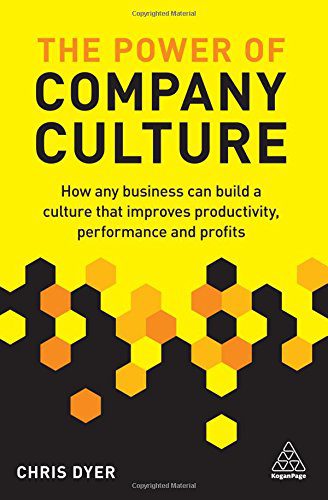
The Power of Company Culture: How Any Business Can Build a Culture That Improves Productivity, Performance and Profits
In the middle of writing the book, jumping off a bridge was a thought that came into my mind a few times. It is far more difficult than I ever thought it was going to be, but it has really helped me grow. My speeches have gotten better. What I’m talking about has gotten better. I learned so much more, read so much more, understand so much more than I did before. They’re just little stories that I would tell sometimes, maybe a little five-minute snippet of a story and a talk. When I went up for the book, I had to go back and really understand that story. Then I would read the entire book about the story and it was like, “I was telling the horrible cracker Jack version of the story when it’s really much better.” I’ve been able to learn and get better at that, but I would say anyone who’s trying to run a company, who does a bunch of other things, I do a lot of other things in my life, adding on a book was daunting. I’m really excited for people to read it. Hopefully my thing on my radio shows, I hope that someone can take one thing away from the conversation I’m having and use it in their life that day or that week. If that can happen, I’m happy. I’m happy to show up every week and have that radio show if there’s someone out there that can take a nugget and improve themselves. I’m hoping the same thing with a book, there might be a chapter in that that really resonates with them that they can take back to their work.
Give us some of your keynote topics because I think since it dovetails into the content of the book, it’ll almost be like a sneak peek on some of the chapter titles.
I do a couple of different talks. We do the traditional boring background check compliance talk, if you want to know how not to get sued and all that. I do that talk a lot. It’s my least favorite one to give, because it’s scary and boring and I feel like everyone turns white as I’m talking. It’s not fun, but it’s important. It’s an intense one. My company is completely virtual. We went from a brick and mortar company to completely virtual back in 2009.I talk a lot about virtual success and how you can do that with your company, how you can handle virtual employees, or a department that might be virtual. A lot of people still don’t understand how to make that work. They think seeing people rustling papers and hearing a stapler go out every once in a while is productivity, and so they can’t wrap their arms around virtual work. We do a lot of talks on that.
I experienced it when I was in Condé Nast and I had friends in law firms that people would literally do crazy things, like I’m going to put my coat on my back in my chair then go out and have dinner, and then come back at 7:30 PM or 8:00 PM for like ten minutes, send a few emails, and give the illusion that I’m working late. All that goes away with virtual. It’s just based on your output, not that you put in ten-hour or twelve-hour days.
[Tweet “Employee engagement WTF means, “Where To Focus?””]
At least be smart enough to go into Outlook and just do a delay delivery. You can send those emails out ahead of time and delay the delivery. Isn’t that crazy that people think they have to do that, and that’s not productivity. For me, productivity is you tell people this is what I expect, this is your goal, this is what I want you to do, and then you got to be able to measure it. That’s one of the chapters in the book, measurement. I do a couple of different talks around company culture. One is employee engagement WTF and that means, “Where To Focus?” That one’s fun. Really we’re morphing with this current version is spectacular workplaces, how to have a fun loving cult. The newest one that I started playing around with that our mutual friend, Mark Goldson, and I developed was unpoachable. How do you get your people to be unpoachable? How do you have an organization where people just don’t want to leave?
Measurement is the place that I see companies doing the worst job at. Some of the best of the best like Google, they do measurement, they kick our butts all day long. They measure everything that is relevant to measure, and they know what not to measure. We don’t want to micromanage people and we don’t want to measure things to the point of exhaustion where all people do is spend their time telling you what they did. I had a buddy whose boss left, and so the owner took over the management of the team temporarily. He had everyone on the sales team do a sheet where you had to tell them in five-minute increments what you had done. He said half of his day was just spent writing out the form, and his productivity absolutely dropped. Fortunately, the boss got frustrated and said he brought in a new VP of sales, because he felt like the salespeople had all started doing a terrible job. Of course, he didn’t recognize that it was over measuring them.
I have another example of that myself. Back in the day before you just paid a fee for your phone and you would get a line item charge for every call you made. They made us go through our phone records and say whether it was a personal call or a business call, and have to write down the account that you called so that you can turn your phoning bill in. They were only paying for the business calls. Do you know how much time that took?

The Power Of Company Culture: If we want to pick one thing where you could start with, it could be getting rid of the crappy people.
Whatever it costs for your phone bill. They lost the money on your productivity and time that you spend doing that report. I guarantee it.
You’ve given us so many incredible takeaways. For me, just that Gallup Strengthsfinder or the DISC profiles from Tony Robbins, really identifying the best way to communicate with people, being honest and transparent, and you control the conversation so you’re not “caught in a lie” and the big one is how to be unpoachable. Can you give us a little snippet of one thing someone could do as a leader to keep their key employees from being poachable?
How do you have one thing? The honest answer is it’s a whole system. It is a culture. If we want to pick one thing where you could start with, it could be getting rid of the crappy people. Nobody wants to work with a bunch of idiots.
It seems obvious to you, but that’s a great starting point for people, that one bad apple. Don’t allow somebody’s negativity, even if they’re a great producer, to overshadow the whole culture because then the other ones are like, “I got to get away from that guy. He gets away with behavior because he’s a top salesperson or whatever his job is. I can’t take it. It’s a toxic workplace. I’m out of here.”Just that one thing, I know that’s the tip of the iceberg. People will buy your book, which is The Power of Company Culture. I can’t thank you enough. Is there any final thought you want to leave us with?
I really appreciate you having me on the show. I know we’re going to have you on our show as well so we can keep the conversation going. It’s been a lot of fun.
Thank you, Chris. I’m looking forward to reading your book, The Power of Company Culture. In the meantime, be sure to tune into Chris’s show, Talent Talk. If you need someone to come and give you an amazing keynote on how to have a fun loving workplace or how to make your team unpoachable, Chris is the guy. Thanks again, Chris.
You’re welcome. I appreciate it.
Links Mentioned
- Chris Dyer
- PeopleG2
- The Power of Company Culture
- Talent Talk Radio
- Gallup Strengthsfinder
- TonyRobbins.com/disc
- The Five Languages of Love
- Ban the Box
- One Minute Manager
- Kogan Page
- Ten Dos and Don’ts of Conducting Employee Background Checks
Wanna Host Your Own Podcast?
Click here to see how my friends at Feed Your Brand You can help
Get your FREE copy of John’s latest eBook Getting To Yes now!
John Livesay, The Pitch Whisperer
Share The Show
Did you enjoy the show? I’d love it if you subscribed today and left us a 5-star review!
-
- Click this link
- Click on the ‘Subscribe’ button below the artwork
- Go to the ‘Ratings and Reviews’ section
- Click on ‘Write a Review’