

The Skill Set Of The Ask Is The New Pitch with Tracy Chadwell
Posted by John Livesay in podcast | 0 comments
 Episode Summary:
Have you ever tried not pitching for fifteen minutes? It’s not always easy but you can get better at it by developing the skill set of the ask. Tracy Chadwell shares how this method will help you clearly identify all you need to know to create that perfect pitch, things like creating an investible market, identifying your competitors, learning how to stand out, and more importantly, pricing your products or services to create a successful pitch and close that deal.
—
Today’s guest is Tracy Chadwell, who’s the Founder of 1843 Capital. She invests in tech startups specifically in the augmented reality world and she says, “You can’t be what you can’t see,” so that’s why she’s so committed to helping as many women as possible get funded and getting the investment gains. She also said, “You need to tell her some key things in order to get her to fund you. What problem are you solving? What is your secret sauce? Who’s on your team and how big is your market? You really need to show how big this market can be and how you’re the right people to execute it and have you thought about your pricing as it relates to your competition.”Finally she said, “If you don’t know who you are, when you ask someone for something, it will come across as a demand.” She has the three knows, to get a yes: know yourself, know your audience and know that no is not forever.
Listen To The Episode Here
The Skill Set Of The Ask Is The New Pitch with Tracy Chadwell
Our guest is Tracy Chadwell, the founding partner. She has over fifteen years’ experience in venture capital and private equity. She’s part of a team at 1843 Capital and we have a great story there, she’s going to share on where they came up with that wonderful name. She has five years experience investing in early stage companies with a female founder through her personal entity, Coyote Capital. She was partner of a growth capital fund, Baker Capital, which has more than $1 billion under management. She’s a frequent speaker. She’s given a TEDx Talk and a startup competitive competition judge. She has developed a broad network in the Female Founder community and was recently a speaker on women in venture at the Wonder Women Summit, and the speaker on augmented reality at High Court.
Most recently she was a judge for the Refinery UberPITCH. It’s fascinating. You’ll want to see what her one question is that she asked that she’s probably asked people whether she’d rent an Uber with her or not. She’s featured in the chapter of the book, The Internet of Women. She is a trusted board member and she serves on the boards of Marstone and Sachs Insights. Her philanthropic work includes the advisory board of the MIT Enterprise Forum as well as many others. She’s an attorney as well as speaking conversational Japanese and restaurant French. Tracy, obviously you know what you’re doing. We’re excited to have you. Welcome to the show.
Konnichiwa. Thank you so much for having me.
Let’s start with your story of origin. How did you decide, “I’m going to be a lawyer and then I’m going to be an investor?” Or did you just thought, “I’m just going to be a lawyer?” Take us back to your decision to first become a lawyer. Was it in the hopes of becoming an investor? Was there other reasons?
[Tweet “You can’t be what you can see.”]
One of the things that is important and something that I do in my work on a daily basis is I always say, “You can’t be what you can’t see.” Growing up, I had a dad as a lawyer and I saw a lot of people who were lawyers so I was encouraged to be a lawyer, which I did. I went and did that but I didn’t see any investors. I didn’t see any women investors and I’d never heard of venture capital before. That was tough for me to be able to wake up in high school and say what I want to do is go into VC. When I was in high school, there were maybe just a handful of venture investors and they were all in the Silicon Valley area. I went to law school, which I think is terrific training and good from an analytical standpoint. Also, it translates into what I do now in that I am very fluid and functional in terms of structuring businesses and structuring deal terms. The introduction into venture investing came when I was working for an investment bank called Robertson Stevens, which was a west coast investment bank which was responsible for a lot of the technology investing and a lot of the IPOs that were happening during the Go-go nineties.
Did you miss being a lawyer or did you say, “That’s just great skills that I see, that I use.”
I do not miss being a lawyer. I usually say that I’m a recovering lawyer. It’s a very valuable skill set, but I picked up early on. I worked for a small merchant bank and was responsible for doing all the structuring. About six months into it, I said, “Can I go back and take a few classes of business school and can I learn how to do some modeling and work on the deals because this is what I’m really attracted to?” It came down to the fact that, while law is very appealing to some people, and I certainly respect those who are good at it and do it well, for me I saw it as a zero sum game, to the extent that I were to win in negotiations and documents, that makes that other people lose. I decided to switch to a career that much more suited my personal philosophy, which is that I would much rather see everybody build so that everyone wins. I find in the venture capital space that’s what you’re doing. If you are 100% on the team of making sure that these companies are successful, when they win you win.
Let’s talk about where 1843 Capital came from and how you and your co-founders found each other, the story of where that came from. It reminds me of the movie about the women at NASA.
It’s timely now that people are becoming more and more interested in historical figures that were involved in technology. The name 1843 Capital, which is an investment fund that invests in female-founded technology companies, came from Ada Lovelace. Ada was effectively the first computer programmer. She wrote a computer program for something called the Analytical Engine that Charles Babbage had created, and a really interesting fact is that she was Lord Byron’s only legitimate daughter. Her mom was more interested. She wouldn’t let her study anything romantic. She was worried that she was going to grow up to be something like her dad, so what she did is she only let her studied math and science, but Ada even found poetry in that and became very skilled at it. It was a great story.
How did you find your two co-founders? I always love that story.
One of the wonderful things now, and I don’t know how many people are aware of it, is that over the last five years, they’ve developed this incredible infrastructure for women. I met both Christina Bechhold and Alison Reyes through this network of female entrepreneurs and female investors. There are all these incubators, accelerators and mentor groups that have popped up over the last five years, and we met through those things.
You don’t invest in seed rounds. You’re primarily focused on series A and B after someone’s gotten some traction and revenue coming in. Is that correct?
[Tweet “A pitch can make or break someone.”]
Right. 50% of the funds raised last year were seed stage funds, so there are a lot of people who are out there doing that and doing that well. I like to see some revenue. I like to see some traction. What is important is product market fit and then making sure pricing is in place. Pricing can take a long time. When people are pitching and looking for money, they don’t realize that when you’re sitting on the venture side, you’re on a time clock. Your returns or internal rate of returns are IRRs, so we can’t wait for you. It’s costing us money when we’re waiting for you to figure out what your product market fit is or your pricing. If I can de-risk and eliminate those things, I can step up on the J curve as it’s going up the escalator.
Do you have a story of someone whose pitch you heard and they said they got all the boxes checked off and this is somebody we want to invest in?
A pitch can make or break someone. Sometimes you only get two minutes like the elevator pitch. Even when you do sit down for a meeting, you only have 45 minutes to an hour. One of the things that I help the companies that I’m invested in is I help them get additional rounds of financing or help them complete the rounds, and I say to them, “You spend the first fifteen minutes not pitching. Spend the first fifteen minutes finding out who you’re talking to and asking them questions. Because very often they’ll give you keys to what they find attractive or not, and then you could speak to those or vice versa. What concerns that they might have might show up early on.” When someone sits down to talk to me, first of all, I’m always surprised when they don’t ask a word about me. I’m sure there’s a lot that they can find out on the internet, but maybe they want to ask what do I see as interesting in the market right now? What am I interested in investing in? We can shortcut the conversation if, let’s say, I’ve decided that dog food is not the place to be and what you’re selling is dog food. One of the things that really grab me is after someone has spent a few minutes to find out what I’m interested in, if they hit all the high points. There is really a checklist and most investors are looking to go through that checklist.
You can short cut that a little bit by saying right up front, “Here’s the problem I’m solving.” I can’t invest in things that are nice to have. I have to invest in things that have to have, especially if there’s a market downturn. I want to make sure that people are still interested in buying this product. Then what is your competitive advantage? What makes you special? What makes you stand out and why are you going to win over other people? Third, I look for really strong team. Fourth, large market opportunities. There’s nothing wrong with building a business for a small market opportunity. People do it all the time and they’re very successful and they can make a lot of money for themselves. It might not be venture capital investible if you can’t see yourself getting to $100 million in revenues within five years. The last thing on the checklist for me is attractive business models. I don’t want to be a small-dollar amount in something that’s a large infrastructure build that’s going to take a lot of capital going forward where I can risk a lot of dilution. That would be an example of something that I wouldn’t see as an attractive business model. Things that have lower costs are lower maintenance and high perspective revenues are more attractive business models. I always say that nobody can really talk me into investing in them, but they can sure talk me out of it. You have to hit those points.
What I saw you say in the Uber ride that something people need to incorporate in their pitch would be prepared to answer in a Q&A is, “What’s your secret sauce?” You touched on that with, “What’s your competitive advantage? What’s going to prevent someone from doing what you’re doing?” Let’s talk about, since you were in Uber, the differences between Uber and Lyft because that’s an example that comes up all the time. There isn’t a “competitive advantage” except Uber got there faster and raised more money. What are your thoughts on that?

Skill Set Of The Ask: Things that have lower costs are lower maintenance and high perspective revenues are more attractive business models.
Certainly that’s a huge market opportunity. This is one of the places where Uber went in and broke down all of the barriers. They went in and rolled up their sleeves and did all the hard work in terms of the regulatory restrictions, and then Lyft drafted in on their end. You’ve seen that too in things like Myspace. Myspace came in and they broke the barriers of saying, “Being online and creating a community online is something that people would be interested in,” and then Facebook swept in and crushed it. What you’re seeing there is even though there was ability for other people to come into the market, it’s about execution. If there is an incredibly large market opportunity, you’re going to see room for four or five people to be successful in this space, and then maybe get acquired too. That’s always an option. If four or five people are in the space, I don’t see it as a real threat, but if you’re doing something that isn’t that interesting and doesn’t have a large market opportunity, it’s going to be hard to invest in that.
That also speaks to the point of when you’re giving your pitch, explaining who your competition is. One of the big mistakes people sometimes make, probably not at the series A level, but at the C level is, “I don’t have any competition.” I always say, “Then you don’t have a market.”
What they have to be clear about is to show you how they’re going to create a market and how it’s not going to take a lot of capital invested in marketing to do that.
I’m fascinated by when you’re talking about market size. A lot of people share that that’s important, but you said, “Is it the revenue from this person you’re investing in to hit a $100 million in five years or their market size?” Can you clarify that?
No, it’s the revenue. The revenues have to be. To do that, if you’re a far and away winner, you have to have the potential to achieve $300 million, $400 million in revenue because you’re certainly not going to acquire all the available customers. The first 10% are usually a little bit easier than the next 90%. You have to be able to show a clear path to being able to do that and how you’re going to acquire and retain those customers going forward. That’s across the board whether you’re talking about a consumer product or whether you’re talking about an enterprise software product.
That goes to your whole point about pricing earlier, that you have to have thought through if we’re going to scale this, people have to be willing to pay this amount of money because it’s changing their behavior, right?
[Tweet “Virtual reality does have a lot of interesting use cases.”]
Absolutely. You have to find out what they’re willing to pay, who that customer is, and how to go get more of those customers.
How did you decide that you wanted to focus in things like augmented reality in the technology space?
It comes down to market opportunity. People always thought that virtual reality was going to be the next big thing and virtual reality does have a lot of interesting use cases, but truly augmented reality is the larger market opportunity. It’s been estimated that virtual reality is about a $30-billion market opportunity and augmented reality is close to a $260 billion. A lot of that has to do with community. People like to continue to do what they do, and one of them is to connect, share and be with each other. When you’re in virtual reality, you’re very isolated and that’s very difficult for younger people and older people. There are issues. We’re getting better with the latency with virtual reality, but it still give people a little bit of a nauseated feeling. Also the weight currently of the headsets, it’s difficult for some people to maintain. Honestly, one of the funniest things that I thought is when you look at why there hasn’t been as much uptake in VR as people thought there would be. It’s because people don’t want to look stupid. In terms of consumer applications, we’re going to continue to see them in the gaming space. Architecture and the museum space is a place where people are using them a little bit on the education side.
Google has done a tremendous amount of it with putting Google cardboard viewers in the classroom. One of the reasons the cardboard ones are more interesting for the kids, the kids can quickly put them up and put them down really fast. There’s strapping in the headset so they can retain the connectivity with the kids and keep them engaged because of that, which I thought was fascinating. On the other hand, augmented reality could be a hologram or could be something that everybody looks at on a cell phone or an iPad together and communicate together. That’s why I think you’ll see more of an uptake in that space. Also, there are great developments that Microsoft is doing with their HoloLens. The nice thing about that is that you can see through it so you don’t feel so isolated. Also, it has a CPU or the central processing unit in the headset so you’re not tethered to anything. You can walk around. You can have more experiences.
Has there been an augmented reality company that you’ve invested in that you can talk about?

Skill Set Of The Ask: People like to continue to do what they do and one of them is connect, share and be with each other.
Yes, there is a fantastic one. I’ve been watching this space for a while and found it a difficult place to invest in, but I have invested in a company that does virtual reality and augmented reality toys. This is a company called Seedling. It’s fascinating because they had a great supply chain in place, but then they also had great existing distribution. What was nice is they had an existing business but they took this intelligent toy space and they bolted it onto that. Instead of trying to create a market for a new toy, they already had the place where people could discover it. They’re already in Best Buy, they’re already in Toys “R” Us, and they’re already in Nordstrom’s. They have had a tremendous amount of success already and kids obviously are going to be the first that are going to be on the uptake in terms of some of these new technology applications.
Talk about a big market, right?
Absolutely a huge market. I’m very interested in something I call silver tech, which is technology for people over 50. This is something that technology hasn’t penetrated the space. You could argue that in terms of the toys. Grandparents who have all the capital are buying these toys for children. People over 50 control 84% of the wealth in this country. They also control 70% of discretionary spending. The people building a lot of these companies are millennials, and so they’re very millennial pain points. They’re not the people with the capital and or the time. I view as a much more attractive market are people over 50.
Do you see any people you’re doing augmented reality for, people in that age group?
The place where it started first, I’m sure we’ll see more of it going into augmented reality. We’ve seen more on the virtual reality in terms of helping people with health issues using virtual reality. There are also some surgical applications with augmented reality. They’re doing brain surgery now with the HoloLens and laying over the certain aspects of the brain on top of what the surgeon is seeing while he’s doing surgery. I’m building empathy and helping people using virtual reality with they feel like there could be some applications for helping them with loneliness and like that, which are nice. People who have a fear of heights, “Let’s put you in this virtual reality space and let you walk around on the edge of a cliff,” because we can talk to you and tell you you’re safe and you really actually are safe, but it’s a step closer to getting over those fears. A lot of the psychology places you’ll see the virtual reality applications.
Talk about the Wonder Women Summit. The fact that name alone makes me want to hear about it.
This was a terrific summit that brought together a lot of women who are leading the conversation about what is happening in terms of women in technology, the numbers. We’re seeing fewer and fewer women entering the STEM space. This was just a place to get the conversation going about not only how are we going to encourage more women and girls, specifically back to my silver tech, I would love to see more women over 50 getting educated in this space, learning how to code and learning how to do things. Given what’s happening in healthcare now, a lot of people could be living easily into their hundreds. Fundamentally, everybody still wants to engage and still want to feel valued. By re-upping some of the skill sets for both young girls and for older women, they can still be engaged and still be a part of the growth in the disruption that’s happening in our society right now. We had a conversation about my favorite topic, which is the lack of funding for women in space. I’m sure by now everybody’s heard the statistic that last year women got 2.19% of total venture capital dollars, which is really frustrating considering they create 38% of the companies that are out there right now. Those aren’t all obviously venture fundable, but to a certain extent there are a lot of companies that people are missing.
[Tweet “A lot of the psychology places you’ll see the virtual reality applications.”]
Let’s talk about the TEDx Talk you gave. Many people are interested in giving a TEDx Talk, myself included, and I have many friends that have done it. That’s a pitch too. To get a TEDx Talk is a pitch like getting funded or anything else. What was your journey there? Tell us the preparation that goes into it. It’ll be very useful for people to see the prep that goes into a TEDx Talk very similar to the prep that goes into a pitch.
The TEDx Talk, I did not have to pitch for that one. I was asked to give that one at the New York Institute of Technology, and that had led up to that is that I had been giving a lot of other speeches. I was on a panel for the MIT Enterprise Forum, I do a lot of panel judging, and I was part of the Cisco Women of Impact Summit. A lot of those lead up to New York Institute of Technology saying, “We would love to have Tracy participate in this.” The preparation is anywhere from seven minutes up to fifteen minutes, no more than fifteen minutes. That has to be memorized. There’s usually a theme associated with it. The theme has to correlate, and the theme for this was persistence and community. What I talked about was in the vein of persistence of how to ask for things, similar to what you do such a great job of. You’re great about this and have three ways to focus on when you’re talking about doing a pitch. I had a little bit of a different spin because I worry that a lot of people, especially women, have a lot of trouble asking for things. I feel like men, since the time they’ve been fifteen years old had been asking women out on dates, and so they got that muscle memory and they get a little bit of an idea about how to do things. I thought that women could use some guidance on this, especially to help them ask for raises and ask per positions of management, but then also to ask for money for startups.
On ABC, you talked about the skill set of the ask, the muscle memory of asking and getting rejected. If you’re asking someone out on a date, then translate into asking for someone to fund your startup, hire you, be a customer, join your team, all of that muscle. What are your recommendations on how can anybody ask?
It is a skill set. A lot of people are afraid and they don’t know how to do this, and they say, “I’m just not good at it. I don’t know how to ask.”The truth is this is something that everybody can learn. With a little bit of knowledge, you can take away some of that fear that we all have. I look at it as a process and I decided to frame it easily by saying it’s three knows to a yes, which is know yourself, know your audience, and then finally, know doesn’t mean no forever. It’s really important to know who you are, know what your value proposition is, and know what you’re bringing to the table. What I say in the TEDx Talk is, “If you don’t know what you’re bringing to the table, your ask becomes a demand, and you’re not going to get there.”To knowing your audience, this is important because you have to know whether someone has the authority or the interest to do what you’re asking. If you go to the counter at the CVS and ask the woman to give you a raise when you work at IBM, you’re not going get very far. You have to know that you’re asking the right person and know that they can give you what you’re asking for. Then, know doesn’t mean no forever, it just means no at that time for what you’re specifically asking for. If you change either what you’re asking for or ask at different time, you might get somewhere.
Tracy, you’ve said something I’ve never heard before and I just love it, and we’re going to tweet it out. “If you don’t know who you are, your ask becomes a demand.” Did I get that right?

Skill Set Of The Ask: If you’re somebody asking for a raise, you’re trying to show the company what you’ve done in the past.
Yes. That’s just bold faced going up and saying, “I want a raise or I want to have some funding for my startup.” This gets back to what we were talking about before. If you are asking for money for a startup, you can’t just say to me, “Give me your money.” What it has to be is, “I’m giving you an incredibly interesting opportunity here. I have an incredibly interesting business that I’m building and here is what you’re going to get back. This is how we’re to grow this company and this is who we’re going to be able to sell it to, and this is the type of return that you’re going to get.” That’s the value proposition for a startup. If you’re somebody asking for a raise, you’re trying to show the company what you’ve done in the past. Throw out your regular resume. What you need is a value resume to show specifically, “I have caused ten contracts to be signed this year or I’ve been responsible for over $1 million in revenue this year.” You want to be able to quantify that and show people your value so that you go and say, “I deserve a raise or I deserve a promotion. This is why.” If you’re asking a guy on a date, you want to say, “I have something fun to do or I have something fun to offer,” not just, “Let’s go out.” It’s applicable to just about anything.
How can people follow you on social media? We’re going to put the link to 1843 Capital in the show notes and other ways that people can track you on Twitter, etc.
Definitely check out my website, 1843Capital.com, especially if you’re a female founder and even if you’re a male founder as well. I do, under my resources section, offer a lot of places where people can access capital, whether it’s non-diluted funding in terms of grants or all the way down to who are the interested VC groups that are looking for female founders.
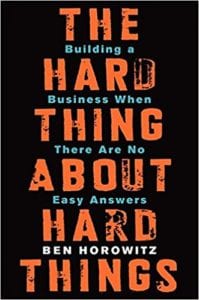
Skill Set Of The Ask: The Hard Thing About Hard Things: Building a Business When There Are No Easy Answers
It’s one of the most comprehensive things I’ve ever seen and that’s hard to find all in one place. That’s quite a gift you’re giving everybody.
We all should be able to know how to access things. I am also super active on Twitter and I love to tweet out interesting facts about what’s happening in the space that I’m interested in investing in. If there’s a contest coming up where you could win some money for your startup, I like to tweet that out too. It’s a good reason to follow me at @TChadwell.
Tracy, I can’t thank you enough. Is there a book you would like to recommend anyone to buy either about knowing themselves better or getting funded?
The one I read most recently was Ben Horowitz’s The Hard Thing About Hard Things. If you’re doing something or building something, know you’re not alone. This is one of the things that Ben talks about. He would’ve had all this success at Netscape, but then he went on to his next venture and had struggles through that as well and nearly lost the company a couple times. Understand that sometimes when you’re in the trenches and you’re in the dark, it’s just before you see the light and it’s a good reminder.
What a great way to end. You’ve been so insightful, helpful, and entertaining.
I’m thrilled to do it. Just like I said, “You can’t be what you can’t see.”
We certainly saw a lot from you. Thanks again, Tracy.
Thanks.
Links Mentioned:
- 1843 Capital
- Coyote Capital
- Baker Capital
- The Internet of Women
- HoloLens
- Seedling
- Wonder Women Summit
- @TChadwell Twitter
- The Hard Thing About Hard Things
Wanna Host Your Own Podcast?
Click here to see how my friends at Brandcasting You can help
Get your FREE copy of John’s latest eBook Getting To Yes now!
John Livesay, The Pitch Whisperer
Share The Show
Did you enjoy the show? I’d love it if you subscribed today and left us a 5-star review!
-
- Click this link
- Click on the ‘Subscribe’ button below the artwork
- Go to the ‘Ratings and Reviews’ section
- Click on ‘Write a Review’
- JohnLivesay.com
- John Livesay Facebook
- John Livesay Twitter
- John Livesay LinkedIn
- John Livesay YouTube