

Command Your Brand With Jeremy Slate
Posted by John Livesay in podcast | 0 comments

Doing business involves trial and error, and some mistakes are bigger than others, but that shouldn’t stop you from striving for the top. Today’s guest is entrepreneur, media expert, author, host of the Create Your Own Life Podcast, and CEO/Co-Founder of Command Your Brand, Jeremy Slate. In this episode, he joins John Livesay to share what it takes to pave your path to success. Jeremy shares his journey and the major mistake that led him to success. The two also discuss how to grow a business and differentiate public relations, marketing, sales and how these three should interact to help you succeed. Plus, he talks about how he got into podcasting and why it’s the next big thing. Get valuable business insight and life advice as Jeremy shares insight from his upcoming book, Unremarkable to Extraordinary: Ignite Your Passion to Go From Passive Observer to Creator of Your Own Life. Stay tuned!
—
Listen to the podcast here
Command Your Brand With Jeremy Slate
Our guest is Jeremy Ryan Slate, who’s an entrepreneur, a media expert, author, CEO, and Founder of Command Your Brand. He studied Literature at Oxford University and is a former champion powerlifter that helps visionary founders to impact the world and better mankind through podcasting and new media to create trust and opinion leader status. He has experienced some of life’s toughest challenges will certainly get into, including a routine surgery that led him into receiving last rights from a priest.
A few years later, his mom had a massive stroke which left her with permanent disabilities. Professionally, he’s tried it all, from teaching and network marketing to selling life insurance but he’s good at creating debt and not paying bills. He had an idea to start a podcast. Rock Your Life was the first one that didn’t do so well.
I love that part of the story because everyone thinks the first thing you try is always going to be a hit. He launched another one called The Create Your Own Life Show, which saw 10,000 listens in the first 30 days, which has led him to speaking to many of his heroes and on stages globally. Jeremy, welcome to the show.
Thanks for having me. I’m stoked to hang out.
You have done a lot in a short amount of time because your podcast literally took off, and you were named one of the top Millennial influencers by Buzzfeed. A lot of people in that generation are still thinking, “I’m not quite sure what I want to do with my life. I haven’t had my big break yet.” You are like, “I have probably lived three times than what most people have lived.” You also have a book, Unremarkable to Extraordinary, that we want to get into as well. Let’s go back to your own childhood or in college. Where did you get this tenacity? Was it from sports or this concept of, “I’m going to create my own life and not follow everyone else’s path?”
It was more of frustration at the life I had. My parents are both two hardworking, blue-collar people, neither of which went to college. They always thought college was that thing that was always imprinted on me like, “You’ve got to do that because that’s going to help you get that career and go wherever it may be.” For me, I created a lot of debt. I basically became a professional student. I’ve got a Master’s degree in Ancient History. It’s not a very usable skill in the world of getting jobs but I have always loved to learn. I have always enjoyed that. At the same time, it was a frustration with the world we are in.
Interestingly, you mentioned in your intro a lot of people in my generation are still trying to figure it out like, “What does that look like?” One of the main problems with that is they’re not willing to try things and fail at them to find the thing they want to do. You’ve always got to keep moving forward, trying things, and working. There’s this weird idea. I don’t know where it came from. “If you find your purpose, you’re never going to work a day in your life.” The first part of that is key, and that’s to find your purpose.
You’ve got to do some stuff to find your purpose. That’s one of the biggest things that has been a key guider in my life. I have worked hard on a lot of different things. Some were right, some were wrong for me but all of those experiences have helped me to become the person I am now. When I look at being back in college at that point in time, I came out in 2011 with a Master’s degree in Ancient History in a bad economy, which is funny looking at now, this economy. We’ve lost 20% of the value of the dollar of that day versus now.
There weren’t a lot of jobs for coming out of school at that point in time, especially for somebody that has a Master’s degree because it’s like, “What are you working, in a museum? What do you do?” I came out and ended up working for a house painter during the day. This is old school, by the way. We did everything by hand, hand scraping, 40-foot wooden ladders. It was wild.
No electric sanders for you, right?
No, we did all old Victorian homes where everything was supposed to be done by hand and things like that. I did that during the day from 7:00 AM until 5:00. I had come home. I had dinner and showered quick, and I had had to be at the gym at 6:00 where I had worked as the nighttime Manager from 6:00 to 11:00, and then I would be sleeping in between that. I ended up running into a priest friend of the family. He’s like, “The Catholic school I used to teach at is looking for teachers. You don’t need any requirements other than a college degree.” I’m like, “I’m in.” For me, it was going through and realizing like, “This isn’t what I wanted to do with my life.”
[bctt tweet=”PR is the cornerstone to growing your business. ” username=”John_Livesay”]
When my mom had a stroke when I was 24, it made me look at a lot of what I’m doing and realize like, “There’s got to be something more than this. You don’t work and be miserable until you are 65 and then end it. What’s the point?” From there, I took that jump to entrepreneurship and tried a bunch of things. It didn’t work. You’ve got to try some things and find out what you like. That’s how you find your purpose.
One of the things that fascinated me about you when I was preparing for this interview was this wonderful combination of intellect and physical fitness. The two are not known to be going together. In other words, there’s the “stereotype of the dumb jock” or “the nerdy skinny intellectual” that studies history all the time. You, right off the get-go, have blown that stereotype out the window.
That are the diametrically opposed parts of my life. I was always the guy sitting in the front asking way too many questions, unable to fit in my shirt.
The biceps are bursting. The assumptions that people make about you, either way, is interesting in terms of your potential because you are now working on this remarkable, extraordinary. Where are the book and the journey? Are you still interviewing people?
The podcast is still always an ongoing thing. We started it back in 2015. That was where the bulk of the conversations that I have had that are in the book came from. We are launching on June 7th, 2022. The advanced reader copy came in. We’ve got the cover design going. We are setting up media, waiting up to the launch. It has been an interesting experience to do that. I have learned a lot, even in the process of putting it together, even that formative process can change you as a person.
To get people at the level that you’ve gotten to be agreed to be on your podcast, you are having to sell yourself. There’s a lot of trepidation that would be worth going through because as both of us being podcasters, launching and wanting the big names or at least somebody with this incredible story, for me, there was the fear of rejection.
If I asked somebody from Shark Tank, especially at the beginning, when you don’t have a lot of episodes under your belt or the fear of rejection, the fear of failure, nobody listens, and then the fear of the unknown of like, “How do you do all this?” You go to school and learn how to be a good host, let alone all the tech stuff behind it. Can you walk us through your process of how you dealt with those three fears, launching your podcast? It’s relevant to launching anything. The first one is, do you ever struggle with the fear of rejection? If so, how do you handle it?

Command Your Brand: You’ve got to try some things and find out what you like. That’s how you find your purpose.
I sold life insurance for a year. That will solve your fear of rejection. The biggest transformative thing in my life was selling life insurance for a year because you’ve got to make 50 to 100 phone calls a day. When you first start, that phone is heavy. Once you realize that people, maybe, will verbally assault you but they cannot physically assault you through the phone, that’s a big freedom point, frankly. For me, that willingness to keep going, I’ve got a lot of that of selling life insurance.
I feel like anybody that’s willing to go get a commission-only sales job or anything like that will learn so much from that experience. You will become better at accepting rejection because of that. To me, you’ve got to do things where you are willing to fail and realize the estimation of effort. That’s the other biggest thing. A lot of people reach out to 1 person or 2 people, they don’t hear anything, and they are like, “I will quit.”
When you realize you’ve got to reach out to 50 to 100 people, whatever it may be, to get what you want, that’s all the difference. I would say for most people, get yourself a commission sales job and an internship where you are good at. Do something like that, and you will find that rejection doesn’t hurt much when you have been rejected a lot.
For me, my whole thing is I never take it personally. No now is a no forever. I’m not so freaked out by getting a no or rejection, I go into the fear of failure. You touched on that a little bit but it’s a separate fear in other words, “I’m going to keep calling people to sell insurance or I sell whatever it is I’m doing.” In this case, getting a great guest on the show.
I remember for myself, when Larry King interviewed me, I was like, “Game on.” I never dreamed that was ever going to happen. I’ve got to be prepared. I don’t want to blow it when I have the amazing opportunity. When you are interviewing somebody, the kinds of people you have had on the show, that could be a little intimidating for someone. I’m not saying it was for you but how do you handle that? What advice do you have around that?
It’s gradients. When I first started, I was afraid of a microphone. I was afraid of those conversations. The first conversations I had is I took a look at people I knew locally that had successful businesses. I went to their houses, and we recorded it on my MacBook, which I did not know how to do audio mapping or anything at that point in time.
The sound quality wasn’t good but it allowed me to have those first conversations with people I was comfortable with and people I know. That’s one of the biggest things. It’s something that I have talked a lot about in the book. It’s consistency, doing things over and over again, and continuing to do it until you get better at it.
[bctt tweet=”Focus on what you can control when dealing with fear. ” username=”John_Livesay”]
That’s how, for me, how you get more comfortable at either reaching out to a guest or that’s how you get more comfortable with doing an interview with somebody. As you mentioned, being on the other side of the mic, even from somebody that’s well known. You have to have more conversations and be willing to handle that. If you do it on your first time, it may not go as well for you because you need to be get used to that. It is that continue doing it. At first, I started in people’s homes, then I went to doing it on Skype, without video, by the way, because I was too nervous to talk to people that I didn’t know with the video on.
We moved from there to then doing it on Zoom. I’m like, “They can see me now. I’m okay with that.” Now I look at where we are at several years later, we do a full video show on YouTube, Rumble, and all those places. We are talking to some great people but I could not do the show now like several years ago. It had to get through, continually showing up and improving every day.
One of the tweets is, “Consistent practice delivers excellence and not being frustrated that you don’t hit a home run in your first time at-bat.”
There’s an Abraham Lincoln quote around that, too. I don’t remember exactly what it is but it’s something like, “I will prepare my day will come.” That’s one of the biggest things. I’m a huge football fan. One of the things that is a big deal is something I like to call a Mo Lewis moment. Mo Lewis was a former linebacker for the Jets. In 2001, he hit the quarterback of the New England Patriots, Drew Bledsoe. He almost killed him, by the way.
After that hit, in walks a little-known guy named Tom Brady. Tom Brady became the starter of the New England Patriots for many years, won six Super Bowls with them and another one with the Bucs. Had he not prepared every single day for his moment to come? There’s no Tom Brady. What you have to look at is you don’t know when that moment or opportunity is coming but you always need to be preparing in the background.
I also find it fascinating that you, as a professional power lifter, and that is all about being seen, and little clothing usually, that you would still have situational confidence almost. To get in front of the camera with your clothes on is still a whole new trip. That’s why as a sales keynote speaker, I always go on the stage the night or the morning before the audience comes in so that my brain does not say, “We have never been up here before. What’s happening?”
I do that same thing, by the way, because you’ve got to feel the room. You’ve got to be able to sense the back of the room, the front of the room, see how big or small the room is, because at the same time, how you show up in that space is going to be vital to how you understand that space.

Command Your Brand: When you let go of that stress, a lot of good things start happening.
Let’s deal with that third fear that I have experienced. This is so valuable for everyone reading. Try and fail until you find what you love to do. Realize that progress is in steps, not leaps. Where you will be a year or three years from now is not even possible now. Don’t even compare it to that. This almost stopped me from doing it is the fear of the unknown. For my solution, don’t go it alone. I have somebody produce the show for me. Let’s face it, we have all been through a pandemic. There’s so much unknown going on in the world now, even after the pandemic is starting to not be such a threat but the fear of the unknown is not going anywhere.
We don’t know what shoe’s dropping next.
How do you, as an athlete, as a successful business person, and running a team of people and ideally inspiring people of all ages but in particular your own niche, I always think that, “You are old. You figured it out but I’m still going to have ten years of being afraid of the unknown.” Some people never stop being afraid of the unknown. What is it that you do, Jeremy, that you think could help people around that?
The thing to take a look at in this situation is you look at what things you can control. “Can I control what John’s doing? No. Can I control what my kids are doing? Sometimes. Can I control what my animals are doing? It depends how well-trained they are.” The only thing you can control is yourself and your reaction to things. Frankly, the biggest thing that I try to make a major thing that I do every day is making sure my fitness, the way I eat, and the way I go through my routine is taken care of.
At the same time, even looking at situations and saying, “How can I manage myself in that situation?” We’ve got some rough situations. If you come at that situation with a head of steam, you are going to make it worse. The only thing you can control is yourself and your reaction to things. When you do that, you can change the game a lot of times. It’s interesting.
I’m thinking where sometimes you get your stressful days. It is what it is. I had one of those days where you say, “Whatever. What comes, comes. I’m going to continue to prepare and keep going in the right direction.” You find when you let go of that stress, a lot of good things start happening because you are not focused on the stress you have loosened and opened up. That’s what you have to take a look at. You can control yourself and your reaction to things. That’s it.
What I’m hearing is when you have a system in place, a structure, and a routine, we all know our children likes structure.
[bctt tweet=”You’ve got to do things where you’re willing to fail and realize the estimation of effort.” username=”John_Livesay”]
Mine doesn’t.
Even our pets like structure. They need to know where they are getting fed at a certain time. Even if a child says they don’t like structure, they really do. They might fight the bedtime. We have seen a lot of parents struggling with the lack of structure with the kids being homeschooled, totally throwing off the routine of kids, interacting with themselves, and having trouble waking up since it’s just a Zoom call, it’s not leaving the house. All that stuff was stressful on a lot of levels.
You need to keep your fitness up no matter what’s going on. It’s a baseline, let’s say, and then the eating, so that you are prepared for whatever surprises because if you are not rested and on a sugar plunge, you are not nearly as equipped to think clearly. Your success on how you help other people become successful, tell us a little bit about what your business model is.
We believe that podcasting is the next great frontier. It is that place where incredible conversations can happen. It’s the direction the media is going. The incredible thing about it is, it’s user-driven. You look at why people watch Netflix and Prime. It’s because they can decide what they want to watch. The same thing with podcasts. People are making the decision to spend time with us and listen to it, their leisure.
That’s an important thing to think about. It’s because of that we have decided that we help people to tell stories on the podcast medium. We have been doing this back since 2016, where we help people to tell a better story. We find the right podcast for them. We helped them get booked in those shows because we see this as the new world PR play to be telling your story on the podcast.
There have been all kinds of research that the number one thing that sells books for new authors are podcasts. Not TV, being in The Wall Street Journal or whatever. Part of it is behavioral. If you are listening to a podcast on your iPhone or whatever, and you go, “That sounds like a good book. I like what that person said in the interview. I probably would like the book,” you are a click away from ordering the book. Whereas if you are seeing somebody on TV, you are like, “Maybe I should get that book.” You’ve got to go find your phone as opposed to the phone being in your hand when you are listening.
That’s even if you watch TV. I don’t even watch TV anymore. I listen to podcasts and that’s it. That’s where I find everything anyway.

Command Your Brand: Public relations should always be the first thing you’re doing because it should be something where you create that “know, like, and trust” factor.
This is part of my background and one point of your niches, there’s a right combination to public relations versus marketing versus sales. First, let’s do a quick definition for people who might not understand the distinction of paid versus unpaid exposure. Let’s start with PR. Most people have a sense of it but what’s your definition of PR?
Public Relations is how you relate to your public but the public, in this way is a type of audience. It’s the people that you want to know you. You may say, “My public is business owners. My public is CEOs.” It’s basically how you want to be known and seen by those people. There are different types of public relations within that. There could be crisis public relations. “If the ships are burning down, you’ve got to figure out how to bail it out.” There could be an awareness campaign or a launch campaign but it’s how you relate and create a relationship with your public or your audience. That’s Public Relations.
Also, it’s not paid for. Whatever you are creating, the content you are creating is newsworthy in some way, shape, or form.
It’s made newsworthy too because the positioning of it and how you position it can make it seem newsworthy.
Versus marketing, which for the most part is paid advertising. Some things can go viral, and then you get unpaid exposure. Part of PR can be seen as part of marketing. For the readers who are entrepreneurs, understanding one is paid, one is non-paid. Marketing and sales sometimes in big companies can butt heads, and the salespeople are demanding.
The sales guys were like, “Those marketing guys stinks.” The marketing guys were like, “Sales guys can’t close all the leads I’m getting.”
What is the right combination if you are a business owner, do you think?
[bctt tweet=”You don’t know when that moment’s coming, you don’t know when the opportunity is coming, but you always need to be preparing in the background. ” username=”John_Livesay”]
It’s all three. I look at it this way. If your sales aren’t working, you take a look at marketing. If marketing isn’t converting, you take a look at public relations. Public relations should always be the first thing you are doing because it should be something where you create that know, like, and trust factor. You could have a great marketing program but if a lot of people are landing on your site and never heard of you, they are not going to convert. They need to know who you are, like you, and trust you. That’s why I look at it as the combination of things. You always work it backwards. If sales isn’t working, you take a look at marketing. If marketing isn’t working, take a look at public relations.
You can work it back the other way now, public relations create the things for marketing to now promote because they are creating the pieces where that can be seen as trustworthy and create that opinion leader status for you. Now you promote those things, and you get them out there, and either paid traffic, a social media campaign or something like that, to then get somebody in front of you to sell. When you look at it that way, you can work it back and forth, and you can find out what’s wrong in your organization if one of those things isn’t working well.
A lot of people think, “I don’t even need PR. I’m going to focus on spending ads. That should drive people to my funnel, and then I will close them.” You are like, “You forgot a big part of that ingredient there.”
There’s a misconception in that too, John because a lot of people will say, and this happens in sales conversations for us, “I’m going to wait until people find me.” To me, that tells me that you don’t quite understand how the media world works. When you understand how the media world works, they are not looking for feel-good stories all the time because they are more interested in telling you about, “Something on the news at 10:00 could scare you and buy our products.” They are 24 hours a day trying to fill a new cycle of things that do get eyeballs and attention. For you, you have to be the one willing to get out there, tell your story and get it in front of people because they are not going to be looking for you.
Let’s close up our interview with a happy story, not a sad story or a scare you story, of how you were able to make your brand grow 71% in the economy, and what other people can be doing to get those same kinds of result.
Frankly, the biggest thing that we did was the whole COVID situation, we have been a digital company since 2015 or 2016. We had that foot above. What we did is when companies started laying people off, we started hiring. That was the biggest thing we looked at. Now there is a talent pool of people that were not available to me a year ago or a month ago or whatever it may have been. We started hiring because we are like, “You can work from home. You are incredibly talented. We are excited to have you.” We focused on hiring. The next thing we focused on was our training. Our company training was okay but now if we are going to hire all these good people, we need to train them better.
We focused on having better company training. That was vital. The other thing we focused on is better processes. Especially since we are hiring and training more people, you need a better-written process. When we write our processes, we call them hats. It’s the hat you wear to do a job. Within that, it’s, “How should that person be? What should they be doing on a daily basis? What is every single step to what they are doing every single day?” Our job descriptions are like little books. There’s so much to them. Focusing working on our business rather than in it was one of the biggest things that helped us to growth because we were able to locate the right people, put the right processes there, and focus on how can we train them better. When you do that, everything else you are doing works better.
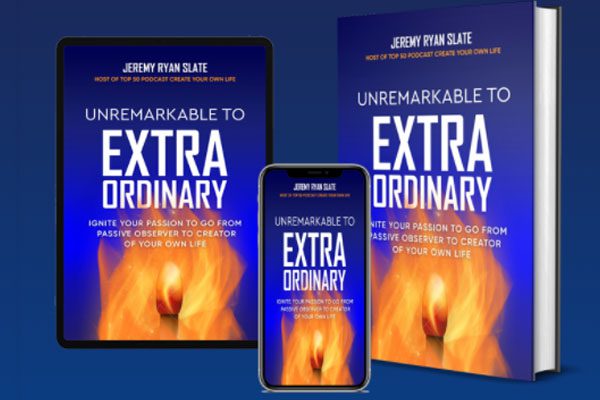
Unremarkable to Extraordinary: Ignite Your Passion to Go From Passive Observer to Creator of Your Own Life
That’s a huge takeaway. Most people don’t spend the time training people. They figured, “I’m hiring you. You should be able to hit the ground running.” We don’t even talk about our culture and whether you are a fit or not.
That’s a huge misconception.
If you don’t have clear expectations or boundaries like we were talking about with children and pets, for the employees, they don’t know. “Is it okay if I come in at 10:00?” “Not really.” “Nobody told me.” I can set up a problem right off the get-go. “Here’s what we do. This is our workday. We are totally flexible. As long as you get the work done, you can come in what time you start.” Everyone is different. That training as a speaker who gets hired to sometimes also train after the keynote and help people get a new skill because the skills you have are not enough. You have to constantly be learning new skills is my experience.
That’s one of the things. If you are not growing, you are dying. You always need to be growing and working on what you are doing. That goes back to what we have been talking about all through this conversation. It’s about incremental improvements and consistent improvements. You have to be thinking about the same thing for your team. They should be training weekly, whether it’s on some sort of new process, some process you have been running for all, whatever it is, they need to be improving as much as you do because that’s how you keep your organization growing.
If people want to listen to your podcast, it’s called Create Your Own Life. If people want to learn how you can help them with their branding, they should go to CommandYourBrand.media.
CommandYourBrand.com or CommandYourBrand.media, either one will get them to us.
Any last thought you want to leave us with?
I would encourage people to go out and grab my book, which is now in pre-order. It’s going to be released on June 7th, 2022, which distills down a lot of what we talked about and brings that into something that you can bring into your life to make some huge improvements and find your extraordinary. It’s Unremarkable to Extraordinary. They can get that over at GetExtraordinaryBook.com.
Jeremy, thanks again for inspiring us all to put a little structure in our life and get some practice in.
John, thanks so much for having me. It’s a lot of fun.
Important Links
- Command Your Brand
- Create Your Own Life Show
- Unremarkable to Extraordinary
- YouTube – Jeremy Ryan Slate
- Rumble – The Create Your Own Life Show
- CommandYourBrand.media
- Larry King – YouTube, Larry King interviews Sales Keynote Speaker John Livesay
- Better Selling Through Storytelling Method Online Course
Wanna Host Your Own Podcast?
Click here to see how my friends at Podetize can help
Purchase John’s new book
John Livesay, The Pitch Whisperer
Share The Show
Did you enjoy the show? I’d love it if you subscribed today and left us a 5-star review!
- Click this link
- Click on the ‘Subscribe’ button below the artwork
- Go to the ‘Ratings and Reviews’ section
- Click on ‘Write a Review’
Love the show? Subscribe, rate, review, and share!
Join The Successful Pitch community today:
- JohnLivesay.com
- John Livesay Facebook
- John Livesay Twitter
- John Livesay LinkedIn
- John Livesay YouTube
Winning Is Better With Bob Wiesner
Posted by John Livesay in podcast | 0 comments

“Winning is better” has got to be the slogan of many companies and businesses. The question is, how do you start winning? We tackle this question and more as John Livesay and Bob Wiesner of The Artemis Partnership grapple with the mechanics of persuasion. We take a deep dive into Bob’s book, Winning Is Better, to look at building trust, leveraging the non-technical aspects, and positioning yourself for success. Tune in to learn more from the masters in pitching.
—
Listen to the podcast here
Winning Is Better With Bob Wiesner
In this episode, Bob Wiesner talks about his new book, Winning is Better, and how to stop coming in second place. We talk about how important it is to build trust and how to do it fast. Finally, he talks about making a win room instead of a war room. Find out what he means. Enjoy the episode.
—
Our guest is Bob Wiesner, who has always been fascinated with how people make decisions. Even as a kid and a huge baseball fan, he was more interested in the operations of the front office than in action on the field. He studied Psychology as an undergrad and graduate student and went into advertising, where his focus on decision making shifted to the advertiser.
After several years where some of the biggest ad agencies like BBDO and McCann Erickson, he shifted focus again from the mass persuasion of advertisers to the individual persuasion of a seller relative to a buyer. He is all about this practice. People know him as the Pitch Doctor. As the Pitch Whisperer, I would like to welcome the Pitch Doctor to the show.
Thank you, and thank you for not whispering as well. We can talk out loud. I appreciate it, John. I’m glad to be here.
This premise of a whisper of anything, we horse whispers, dog whispers, we also go to the doctor for them. We trust them and ask a bunch of questions to figure out what is going on specifically. Before we get into how you came up with being known as the Pitch Doctor, take us back to what inspired you to be interested in how people get persuaded, I know for myself. I watched a TV show called Bewitched, where there was a character that worked for an ad agency. I thought, “That looks like a cool job.” What was the initial thing that pulled you into? I want to learn how people get motivated to change their minds.
It was not a lot unlike yours, John. I stumbled my way into advertising by accident. I graduated college, and before I decided to go to grad school, I was looking for a job, and I did not know what to do. I had a buddy who worked for a large ad agency. I asked him, “What did you do? It sounded interesting. Do you need special training or education for that?” He said, “Anybody could do it.” I said, “Sign me up.” I did find a job in agency life and enjoyed it.
What I liked about it was a combination of a couple of things. First of all, it was about persuasion. I found that getting an undergraduate degree in Psychology, there is nothing remarkable about that but the whole idea about how people think about things and how they perceive things, they perceived the impact of those things on themselves was something that I had studied, and it was interesting. I loved the creative aspect of it.
[bctt tweet=”Show you have a deeper understanding to build trust.” username=”John_Livesay”]
Here we were creating things for a reason. We were creating them to be different yet to be purposeful, to have an objective at the end of the day, which was to sell and soak. That was something I wanted to know more about. I stayed in the agency business in total for eighteen years with some graduate school mixed in there and focused entirely on mass persuasion, how advertisers who spend tens of millions of dollars persuaded millions of people. Later, I realized, I wanted to get a little bit more personal about it and turn my attention to how individuals are persuaded by other individuals.
What were you doing at the agency? Were you media account services selling the agency to win new business, or were you the creative team?
Yes and no. I started in media planning and buying. I moved over into account management. I spent some time in a new business. I forget what the 4th one was but not creative but I touched on all different facets of the agency. To this day, I feel like I do understand how agencies do their thing and how they persuade people.
You now are morphing into instead of trying to convince the masses to prefer one brand over another. Let’s get into helping one person persuade another person to pick a client, to hire them, whether it is a speaker or an architecture firm, you have several clients in several different industries. I love what you say in your book, Winning is Better: The Journey to New Business Success. Can people look at the roster of clients that you are now working with and say, “That does not seem to have a lot in common?” Yet, at the end of the day, there is one thing that is in common with all of them, and you say, “We are all people, and people are wired pretty much the same.”
Before I started Artemis, which is only two years old in 2022, I was doing this for other firms and doing this on my own since the mid-’90s. What fascinated me was that a decision-maker is a person. They are not a role or a job description. They are human beings. As human beings, while there are obvious differences from person to person, they are also predictable aspects about how they think. It does not matter whether they are thinking about advertising, accounting or management strategy. They are still a human, and they still have needs, desires, and mechanisms for processing information.
I don’t think that as a rule, a lot of professional services firms like advertising, architecture, and accounting understand that aspect of the person that they are pitching to. My goal since I’ve got into this part of the business is to help my clients get a deeper understanding about how decision-makers perceive their offers and use that understanding to differentiate their offers from their competitors.
One of the things you talk about in the book that is counterintuitive for many people is, “Don’t pitch everything.” Especially for me, coming from a sales background, we were told the old way of selling is to throw as much as you can up on the wall and hope some of it sticks, which is a nightmare. It is not targeted and strategic. You have a much more strategic approach to let’s define who your ideal client is and the work you love to do. In the book Winning is Better, you talk about how sometimes you can take a bid to get something, and you even win it. If it is not something you love, the win is a chore. It is not a joyful experience. I thought, “What a great distinction.”
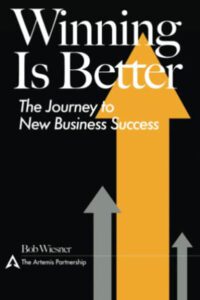
Winning is Better: The Journey to New Business Success
That is something that is easily overlooked by sales organizations and by business development professionals. It is the price of winning or the cost of winning. It is one thing to rack up numbers to get your percentages up. It is one thing even to get your revenue up but what is the impact of that win on my organization both short-term and long-term?
We define a chore as something that we are capable of doing that people will pay us to do but that nobody gets any leisure from doing. We are competent at it but that is far as it goes. You start layering a lot of that stuff into an organization, and people start turning off to it. Your workers start to shrug their shoulders and say, “Not again. Do I have to do another bathroom design? Do I have to design another landing page on a website? I would like to do something more exciting, interesting, meaningful, purposeful.”
John, everyone now knows about the Great Resignation. Is that even contributing to the Great Resignation? The fact that you are. “We are a successful company. We are growing and winning new business left and right,” your people have to do stuff they do not enjoy doing. Now, maybe they do not even want to stick around to do it.
Without people sticking around, the cost of turnover, and consistency, you are selling the team’s ability to work well together. If all that goes out the window, you are a commodity.
You have got this short-term impact of, do people want to be doing this work, and you get the long-term impact, which is if it is the work I do not love to do if people are not sticking around to do it, and if it is a commodity exactly as you say it, where is the growth opportunity going to come later on? How is this client going to turn into a bigger client down the road if the initial work that I won is one where I’m churning out a product without any passion, excitement or cultural lift from it?
Let’s double click on that word, that phrase without any excitement. I have a belief that people buy your energy. I know for myself, as a sales keynote speaker, I often have to compete. I get interviewed like big companies when they are in the final 2 or 3. I remember getting an email from the speaking bureau saying, “Congrats, they picked you. They liked your energy.” Rarely, it’s that specifically called out. I then talked to the person and they said, “You made us feel good. We figured you could make the whole ballroom full of people feel the same way.”
That energy you bring to the 45-hour however over your timeframe is presentation or interview, whatever you want to call it is important that people are going, “How do we feel? Can we see ourselves enjoying this journey if we are going to hire you to work with us?” In the case of an architect, sometimes 4 to 6 years on renovating an airport or something. People forget that that is a key part of you can’t give away anything you do not have. If you are burnt out from doing all these bathroom jobs of designing bathrooms, and you want to be designing a whole airport, you are not bringing your best energy to the room.
[bctt tweet=”Listening and empathy create chemistry.” username=”John_Livesay”]
What people lose sight of is not only that, and I’m not diminishing the importance of it but from a decision-maker standpoint, that is our thing. It is about the buyer. They are comparing you as the potential speaker to seven other people they are interviewing to be potential speaker. It is not your energy level in the absolute sense that they are looking at. It is you relative to everybody else.
How do you differentiate yourself from other people? Your content may be awesome but their content may be pretty good too. They might not be able to tell the difference between the topic you are going to speak about and the topic someone else is going to speak about. If it comes to your energy, passion, commitment, drive or what you might more broadly call the cultural fit, that could be the differentiator that wins you the business way more important than any topic or content that you might be proposing to them. That is what competing firms lose sight of is the importance of the non-technical aspects of their pursuit.
We talk about the importance of trust, and most people will go, “Yes, I know trust is important.” You have a formula for how people can be better at building trust that you reference here. I thought it was clever that trust is not just, “You are safe to be within the room. You’ve got a good referral. That is maybe 1/3 of it.” Can you walk us through what companies can do if they are walking into a room cold and have to present to build some trust?
The trust will worthiness equation was first identified by David Maister, Charles Green, and Robert Galford in a book called The Trusted Advisor, which alongside Winning is Better: The journey to New Business Success should be on everybody’s bookshelf. What they articulated was that trust has four components. It has credibility, reliability, transparency, and self-orientation.
One area that every sales organization blows consistently when it comes to building trust is this area of self-orientation. In other words, they always seem to be selling something. They seem as if the relationship that they are attempting to build with the buyer, again, buyer perception maybe not be a reality but it seems like all they want to do is talk about themselves, products, and price and try to extract money from the buyer.
All that torpedoes trust faster than anything you can possibly do. You layer onto that, whether they are credible in the space, deliver on their promises or are open and honest. All those factors together influence whether you are viewed as being tried trustworthy. Our point of view is that when initiating a conversation with a prospect, regardless of what stage you are in the sales journey, think about how are they perceiving your trustworthiness and what are you doing to build it up or diminish it?
Sometimes, part of it is being a little bit vulnerable and not pretending that you have all the answers all the time.

Winning Is Better: When initiating a conversation with a prospect, regardless of what stage you are in the sales journey, you have to think about how they perceive your trustworthiness and what you are doing to either build it up or diminish it.
That is what Maister, Green, and Galford called intimacy, which I don’t think is a 2022 word. I prefer the word transparency but being honest with people about, “Here is what I’m capable of doing. I’m good at it, and here is what I’m not so capable of doing. I’m not going to take on the project if it is not directly in my area of expertise and brilliance.” A lot of buyers appreciate that.
Let’s close that open-loop I did at the opening. How did you become known as the Pitch Doctor?
In the firm that I was working for at that time, the part of our practice that focused on helping our clients as you are doing now, John, is helping them be more effective with pitching. Not everybody in my firm back then liked doing that work. It was high-pressure work. Unlike the usual training and development stuff that the firm was doing back in the ‘90s and early 2000s, this one had results attached to it, either you win the pitch or you do not.
I loved that. That fits my personality and my motivation for working perfectly, so I raised my hand. I said, “I want to learn more about how to do this. I want to take our principles that we were training and apply them in real-time to actual new business pitches.” I did that. I worked on dozens of them for ad agencies, IPOs, and management consulting firms for an Olympic bid. I became the go-to person within the US operation when there was a client who wanted help on a specific pitch, so I became known as the Pitch Doctor.
When I talk to people who say, “We are so tired of coming in second place.” I know on The Artemis Partnership, that is one of the things that you are solving because, unlike in the Olympics, there is no medal for second place that will say, “Did you ask why you came in second place?” Oftentimes, they will say, “We were too salesy.” It goes back to what you were saying earlier, “You are too self-absorbed about bragging about how big your company is, and it has nothing to do with them.” Those kinds of things. Are you seeing a current consistent reason why people do come in second place that you are able to fix?
If someone tells you that you came in second because you are too salesy, that is great feedback, and it is better feedback than most organizations are either seeking or able to get. There are a couple of factors here. First of all, a lot of companies do not get accurate feedback at all, which makes it difficult for them to understand why they come in second.
That is a whole separate chapter of the book because it is important to get that good feedback. We hear this more from the buyers than we do from the sellers. Buyers will tell us that they did not select a firm because they did not trust them, did not connect with them, and did not provide any additional reason for why they should be hired. They followed the RFP. They met the minimum standards.
[bctt tweet=”What competing firms lose sight of is the importance of the non-technical aspects of their pursuit. ” username=”John_Livesay”]
The firms that win always have gone beyond what was initially accepted. Now the beyond could be defined emotionally. I knew you used the word energy before. We hear the word passion a lot, commitment, drive, and dedication. We also hear buyers say, “I selected that firm because they showed a deeper understanding of what I was looking for. They answered the questions in the RFP but they went beyond that to show that they understood what we looked for and they cared about it.” What is interesting is that a lot of losing firms wind up losing because they did what was asked of them but whereas the winning firms did what was asked of them and did more.
This is so insightful and valuable. For everyone reading, take that in, that it is not enough to answer the questions. You need to show the person making the decision that this is not another client or checklist for us to do. I have a philosophy. It sounds like you agree with this. The better you can describe someone’s problem and put it into words that they have not even used before, they think, “You get us that feeling of you understand us, the fact that you can express our challenges and what keeps us up in the middle of the night. Therefore, I trust you to have our solution because you understand our problem well, even if it is beyond what we described in a proposal.”
We see that manifested in a few different ways but the firm that stands out from others is a firm that shows a better understanding of the challenges of the problem. It could be the upside, a better articulation of the opportunity. That absolutely matters. That takes us back because everything is connected to a point you made earlier in our conversation, John, which is about the importance of pitching less or chasing fewer opportunities.
I cannot get the depth and the information that will help me win if I’m chasing everything. I do not have the time, bandwidth or energy for it. Whereas if I’m more selective about what I chase, I can get more depth and more understanding. I can have that diagnostic that you mentioned that deeper understanding of the problem because I took more time to do it. Everything goes hand in hand. The buyer gets that right away. They can distinguish the 6, 10 or 16 firms they are talking to. They can tell the 1 or 2 of them that took the time to get to know them from the other fourteen that did an autopilot and submitted a proforma response even if it answered all the questions.
You and I, as authors and being on a show, it is evidently clear within the first five minutes if the host has read your book or not, versus reading through some provided questions from the publicist. Going back to this concept that if you can go beyond the expectations and show a deeper caring than the come-up competition. I want to give people an example of what that looks and sounds like.
When I was working with an architecture firm on the presentation, we were having dinner the night before the practice. One of the guys said, “As an architect working in airports, I travel over the world and gets to move wherever the job is but this is my hometown. If we win this, this is a hometown game for me. The whole point of this airport is to reflect the new version of this city.” I go, “That is what we are going to be saying on the team slide. This isn’t another job for you.” That personal connection to the city for the people making the decision of what firm is going to redesign the city’s airport came through time and again. That is what you were talking about as an example.
I want to get into your wonderful pie chart on the truth about decision-makers here. You are helping people have empathy for what they are thinking about. The first part of this is people go, “You win or lose business based on what your solution is, and you say no.” That is only 28% of the decision. Let’s talk about what the other three quadrants are.

Winning Is Better: If you’re going to be a politically unsafe choice, compensate for that by pumping up some of the other parts of your sales initiative recommendation. But if you are going to be politically sound or even advisable, then leverage the heck out of it.
The next one up, which ranks higher than the solution, is the understanding me. We have touched on that. I want to get people the full fork pieces of the pie. If you have your solution, we can see that it would work. Now 31% of my decision is going to be based on how well you show me you understand me. That goes above and beyond my problems.
I’m glad that you emphasized the word me because decisions are made by individual people. They are not made by anonymous groups using groupthink. Each decision-maker is going to judge the options in front of them based on, “Did this team or organization understands what I personally was looking for, what my concerns were, what my fears were, what my hopes and dreams were, and what my own personal decision criteria are,” which might be completely different than anything published in an RFQ or RFP.
Each decision-maker, person, and influencer needs to know that the pitching team was addressing their individual needs. Sometimes, you have to be nuanced or careful about how you articulate them but you still have to make it clear that you heard them and that you’ve got it. Now that is distinguished from understanding my company or the project, which is important. They are both necessary but they are not sufficient to win. You have to go deeper, get to know the people, and show you understand the individuals.
The other part of it is chemistry. We know chemistry is with dating, and we know whether we have chemistry when we watch a movie. Although, those actors did not have the chemistry that does not work. The script is great. The chemistry in the business scenario is, “Do I want to work with you? Is this somebody I want to go have a drink with after work? Is this somebody who would have my back or would they throw me under the bus?” All those things come into play.
It is all of those but it does not necessarily have to go that deep. It depends, frankly, on whether or not I have spent enough time with you to even know that you have my back. In the first meeting that you will have with people, long before they reach the conclusions that you accurately pointed out, they are going to be able to perceive, “Do we communicate on the same wavelength? Do we use the same language? Do we waste each other’s time with irrelevant facts? Do we cut to the chase? Do we seem to care about each other as people? Are we listening well? Are we showing empathy?”
These are all factors that go into this idea of chemistry. They are easily represented even in a Zoom meeting, and they set you up for then getting to know the person even better. By the end of the process, I will believe that you and I are simpatico, we will look out for each other, I will enjoy having you around my job site for the next five years or having you auditing my books for the next three months. I would not say I would enjoy having you auditing my books but I will enjoy having you around my office. Those things will look eventually get there. I want people to understand that the chemistry is evident from the first conversation that you have with people, and it carries on from there.
Finally, chemistry is 25%. That leads a remaining 16% to the category of politics, which most people feel uncomfortable and hazy about, “Do I want to get involved with the company’s politics? Is it being aware that there is politics involved? If 16% of the decisions are based on politics, help me, Bob, how do I navigate that?”
[bctt tweet=”Competing firms lose sight of the importance of the non-technical aspects of their pursuit. ” username=”John_Livesay”]
You may not be able to but you at least have to be aware of what it is now. Internal politics are about, “What do decision-makers care about internally? Who evaluates them? Who needs to approve their decision? How will they look to these other stakeholders, that could be their bosses or colleagues? If you are selling into a marketing department, how will the marketing people feel when they go to the sales department and say to the sales guys, ‘We hired this firm to do our social media?’ Are they going to like it, or are they going to hate it?”
If you are a large organization, maybe you are publicly traded. You’ve got to worry about the shareholders. How will they feel about things? This information is not easily discovered but it is findoutable. If you can at least know what it is, you can anticipate how important it is. If you are going to be a politically unsafe choice, you can compensate for that by pumping up some of the other parts of your sales initiative. If you are going to be politically sound or even advisable, leverage the heck out of it.
If you say we have picked this social media company or we picked John as a speaker, we are going to have the Pitch Whisperer come to speak to us, give them some ammo to present why you are the good choice to get somebody excited with, especially if they are not involved in the choice. If you are an architecture firm pitching to redo an airport renovation, realize all the taxpayers and city officials that are involved in giving opinions on this as it goes along that is way more than the eight people in the room listening to the presentation. Before I let you go, I want to talk about your wonderful book at the end here, the pursuit field manual, where you have a win room. You are all about winning is better, focused on the winning more than the selling. What is a win room and how can people start to create their own?
Many people in sales and business development are familiar with the term war room. We prefer to call it a win room because we want to be more optimistic about what the purpose of the room is. The typical war room that I have seen, and John, you have probably seen it as well, is oftentimes constructed around what our offering is going to be. It is like, “What is our strategy? What is our weaponry out? How flank the other guy is? Where are we going to put our battalions? What about us?”
The win room is about the buyers. Not surprisingly, as we have been talking about. The win room is built around how much information you have about decision-makers and influencers. You probably do not have enough. How do you get more? It becomes a formula for how do I convert these inputs, which is the information you have about decision-makers and influencers, and convert that into outputs, which is your messaging.
Messaging that differentiates you from your competition persuades the buyer that you are not just viable but you are an optimal choice for them and seals the deal in your final proposals and your pitches. The win room differs from the war room, not in name or attitude but while war rooms are much more product and firm centric, the win room is entirely prospected centric and builds all of its efforts around that.
Before the show started, you and I had a little chat, and we talked about how you need to keep your flexibility at the moment. If you get feedback right before you are about to go present that a client checked your references, find out what the reference was asked, and possibly use that as part of their criteria that might not have been in the proposal to open up your messaging, you are playing at optimizing things in the win room.
[bctt tweet=”Pitching and winning isn’t about having the best product and solution, but how you position and offer it up.” username=”John_Livesay”]
One of the interesting things about the win room is that you never close your win room. It has never been done. You continually input right up until the last minute because every little nugget of information you get could make the difference.
The book again is called Winning is Better. You can get it on Amazon. People can also find you at TheArtemisPartnership.com.
Connect with me directly on LinkedIn. They are both effective.
Any last thought or quote, you want to leave us with Bob?
This has been a great conversation. I loved it. We are like-minded because we both believe that pitching and winning are not about having the best product and solution. It is about how you position it and how you offer it up. Your readers will do well to follow your advice on selling and storytelling. They would also want to read some that we have to say about the overall strategic approach to pitching, and you put these combinations together. You will be a powerful force in the market, and your competitors will be trying to figure out what the heck you are doing. That is driving them crazy.
Thanks again, Bob.
John, it was a pleasure. Thank you.
Important Links
- Bob Wiesner
- Winning is Better
- BBDO
- McCann Erickson
- The Trusted Advisor
- LinkedIn – Bob Wiesner
- Better Selling Through Storytelling Method Online Course
Wanna Host Your Own Podcast?
Click here to see how my friends at Podetize can help
Purchase John’s new book
John Livesay, The Pitch Whisperer
Share The Show
Did you enjoy the show? I’d love it if you subscribed today and left us a 5-star review!
- Click this link
- Click on the ‘Subscribe’ button below the artwork
- Go to the ‘Ratings and Reviews’ section
- Click on ‘Write a Review’
Love the show? Subscribe, rate, review, and share!
Join The Successful Pitch community today:
- JohnLivesay.com
- John Livesay Facebook
- John Livesay Twitter
- John Livesay LinkedIn
- John Livesay YouTube
The People Whisperer With Ken Sterling
Posted by John Livesay in podcast | 0 comments

Public speaking isn’t easy. Sometimes, to maximize success, you need a people whisperer like today’s guest on your side. In this episode, John Livesay and Ken Sterling, Executive Vice President of BigSpeak dive deep into what you need to succeed in the public speaking space. Ken talks about being authentic, reacting to feedback, accountability, and choosing the right speaker for the job. Tune in for more great insights and learn from one of the best in the business.
—
Listen to the podcast here
The People Whisperer With Ken Sterling
Our guest is Ken Sterling, the Executive Vice President at BigSpeak Speakers Bureau. He talks about how they go from gurus to go-tos. Find out what he means in terms of speakers and the kinds of questions he asks to keep people coming back time and again and getting repeat referrals. He has an acronym called ACE for Anticipate, Communicate, and Execute. Enjoy the episode.
—
Our guest is Ken Sterling, who is based in Santa Barbara and the Executive Vice President at BigSpeak, the leading keynote, and business speaking bureau. He is a columnist for Inc. Magazine with a column called Talk Business to Me. He holds a PhD from UC Santa Barbara and an MBA from Babson College. He also teaches entrepreneurship, marketing, and strategy at USC Santa Barbara. In his spare time, believe it or not, he has some, Ken is a serial entrepreneur, a keynote speaker, and coaches executives for high-performance results. Ken, welcome to the show.
John, thank you for having me. It is an honor.
I am the one that is honored. You certainly are someone who does not dabble at life. You go all-in. You are able to be successful at so many things at the same time. Before we get into how you do that, I would love to know your story of origin. You can go back to childhood where you realized, “I gave a little talk and I’ve got a laugh. Maybe that is something I want to get into. I am interested in how organizations run.” Whenever you want to start the story from childhood or college because those stories are never linear, although I have done over 450 interviews now, no one has this, “I am going to get my PhD.” Few people have that in their heads when they first start their journey. Tell us how yours started.
I do not get asked this question often. I reflect on this a lot because I am so happy doing what I do in this blessed life and career that some people would call a job. It does not feel like a job. It feels like everything I did, including my origin, set me up to be successful doing what I do on what BigSpeak does. Going back over the waves of time back in the dinosaur days, I was born in a women’s college in Upstate New York. My mother was at a women’s college there. She is Sicilian.
Thanks to things like Roe v. Wade or whatever it is, I am a living being here. Thanks to my mom and the doctors at the little hospital there. I lived in a dorm for two years. My mom still has a picture of a drawer where they swaddled me in a blanket where I slept. We grew up very humble, not with a lot of money. My dad was not around. There was a lot of controversy around him and my mother. I grew up with a distant connection with my mother and no connection with my dad.
I have to make friends to survive and later to thrive. The first part of my origin story is about a kid that needs to connect and curate this tribe of a network. That is a lot of what we do in the agency world. We are networking, connecting, and being of service. We do good work. We have a reputation that we need to uphold. What I would do on my vacations is I would go live with my grandparents. My Nonno was an old-school Italian guy. He had a saying, motto, and value for everything. That rubbed off on me.
I was this poor street kid in New York then having these idyllic times with my Nonno. We came out to California when I was a teenager, which was interesting because back in those days, California was the big glitz and glamor of Hollywood. Elvis Presley was still the King. There was a lot going on. I was impacted a lot by Los Angeles, the energy, and the entertainment industry.
[bctt tweet=”Anticipate, Communicate and Execute.” username=”John_Livesay”]
I thought I wanted to be an actor. I auditioned. I was in a commercial with Sylvester Stallone for the Boys Club of America. I then tried out for a couple of being in movies. I’ve never got the parts. I did some theater arts and was in a couple of plays. I am still connected to performance, theater, and things like that. It is funny because I do have a PhD now. I am a high school dropout. I got kicked out and dropped out about two months before graduation.
Things did not go well. I had a run-in with a teacher and did not go back to school for many years. I’ve got my Bachelor’s, Master’s, and PhD much later in life. All the things that I did and the different businesses that I’ve got involved in were very much about building the community, connecting with people, feeding the family, and creating a family. Hopefully, good background of what makes me good at what I do is that I know how to keep people together and take care of people.
What a fascinating story from your crib being a drawer to dropping out of high school. With the predictions that you would go on to get a PhD and be at the level of success and contribution that you are making now, most people would not have bet on a story turning out like that. Was there a mentor involved that got you back into school? We are talking about your hero’s journey. Usually, there is some inciting incident or in a speaker’s career, there is a flashpoint, whether it is a book or a talk that changes things for that person’s career. Is there something you can point to now, looking back, that you said, “This is this person or this event got me on another path?”
Yes. It is interesting because there have been a few different mentors over the years. The mentor that helped me realize it was time to get back into education is the CEO and Founder of BigSpeak, Jonathan Wygant. We have known each other for years. Ever since I was a teenager, he has been a real mentor in my life and helped me a lot with getting me on good paths. What happened was interesting.
I was applying for a great job. Jonathan was one of my references. I ended up not getting the job because I did not have a college degree. I had some accomplishments and started some companies. I made some money, had some houses, and all the stuff. I was upset candidly that I did not get this job. I remember saying to the CEO of that company, “Mark Zuckerberg did not have a college degree.”
To her credit, she said, “With all due respect, you are not Mark Zuckerberg.” I said, “Thank you.” Jonathan invited me to go to lunch. We were having lunch and he shared with me at his company such as BigSpeak that he had a requirement for people to have a college degree and that to him and a lot of people, it demonstrates someone’s ability to follow through on a commitment and analytical thinking.
That was a barrier or a ticket of entry into a different world. I got out of that lunch meeting with him, drove up to the local community college, and went to the transfer center. I remember I waited in line, read a magazine, and got in front of this woman. Christine was her name and I said, “How fast can you get me to UC Santa Barbara” She put a plan together and I stuck to it, hustled, and made it happen.
Let’s talk a little bit about BigSpeak and the story of origin around BigSpeak. It is based in Santa Barbara where you live as well. What is it that BigSpeak does that makes clients want to keep working with you?

People Whisperer: I know how to keep people together and take care of people.
It is a great question to answer externally. It is a great question that we ask ourselves internally all the time, and because we ask ourselves that question, it sets us up for success. At BigSpeak, we are averaging about a 75% repeat referral rate, which is pretty phenomenal. We also run what’s called an NPS survey or a Net Promoter Score survey. To set the table for that, if anyone has ever gotten an email that says, “John, thank you for shopping at XYZ Widget Company. On a scale of 1 to 10, how likely would you be to recommend XYZ Widget Company’s services to a friend or colleague?”
There is a lot of science between why they asked the question the way they do and in the waiting for the answers. For example, on a scale of 1 to 10, most people think that a 7 or an 8 is pretty good when 7 and 8 are not good, so you want 10s, “How likely are you to promote us? How likely are you to tell a friend to do work with u?” We have for years sent the survey out to every client that we work with. We send it out on the company event planner side, to speakers, and to the speaker’s bureaus. The number is important. Our number is phenomenal.
Our NPS is 82, which shows a very high level of satisfaction. Back in the day, when Nordstrom had a great reputation, their NPS was in the 80s. Zappos back in the day was up in the 80s. Banks are notoriously down in the 30s and 40s. That is terrible. It is worse than an F’s. I will use the word obsessed because we are engaged with customer satisfaction and with Net Promoter Score, we always improve our systems. The number is one piece of it. The other thing is we ask the question, “If you did not give us a 10, what would it take to earn a 10?” We ask another question, “What’s something you think we do not want to hear?”
It is very vulnerable. With the stuff we have picked up on that over the years, we have revamped the way that we send out bills, collection notices, set up contracts, and do handoffs between our sales team, the events team, and other operations team. It has helped us understand those comments. We learn a lot more from them than the numbers, for example. We love the number and it is great for the ego. What we love are those comments where we learn from those.
Circling back to your original question here, “What is it that has made us successful?” 1) We are obsessed and concerned with customer satisfaction. 2) We work hard to do clean, effective, and good work. What that means is that we try to remove the turbulence and friction. We try to get everything cleaned ahead of time. Some folks in different roles, bureaus, and industries might half-communicate upfront. We like to get it all out on the table upfront. There are no surprises.
That tends to be important in terms of taking good care and setting good expectations. It is also great because when the speaker meets the buyer during the pre-call, onsite or virtually in the virtual green room, there are no surprises. You are in the speaking industry and we were talking about this before we came on. Sometimes, things happen. Anticipating those things and doing good, clean, thoughtful, and considerate work for all the parties helps.
I love a couple of things you have said that I want to double-click on. One, from your TEDx Talk, you talk about how leaders own turbulence. They do not try to avoid it. It is your process at BigSpeak of being transparent. I talk about, as a sales keynote speaker, the need to be a copilot with your buyers. Therefore, you are both agreeing, “This is where we are landing. It is not a surprise when we land the plane.” This concept of removing friction up front is so important because you have this wonderful acronym that I wanted to get into.
This is the perfect place for it because what BigSpeak is doing is putting the acronym into action. It is Anticipate something, Communicate it, and then Execute it. Let’s take the ACE. Let’s take each letter. Anticipating is what could go wrong and not shying away from it, both at the beginning and this is what is so smart about what you are doing but also at the end. What is it you think we do not want to hear? You are anticipating even the worst-case scenario. We still want to hear it so we can learn from it and this clear communication of, “This is what the speaker or the event requires.”
[bctt tweet=”From gurus, to go tos, leaders own turbulence.” username=”John_Livesay”]
Also, let me ask you this. How important is it that people are flexible enough like when a pilot hits unexpected turbulence? If something might go wrong at the event, that speaker has some flexibility in everything from how long they are going to speak to incorporating what happened so that it does not seem like a canned presentation. Do you have some examples of how you as a bureau have communicated some things that have allowed the clients to say, “We feel like you had our back”
Those moments happen when there is turbulence. We did about 1,600 events in 2021 and in 1,575, I will make that number up, we do not hear much. We get the smile sheet on the NPS and the 9 or the 10, “Amy was great to work with. Marc Randolph was an excellent speaker.” Those are great. In less than 1% of what we do, there is going to be some turbulence and the way that we show up, meaning BigSpeak, the leadership team, the operations team who might be interfacing. Also, the advisor on the sales team, when we get that feedback or know there is a problem, the first thing is to remain calm.
We talked about this as a group when we were all together. When a challenge comes up, embrace it as an opportunity to shine. A lot of folks, me included, would tend to sometimes feel a little triggered, anxious, and almost like we need to get defensive about something. What I mean by that is that even if let’s say it is not BigSpeak’s fault, we are still part of it. We still help create, promote or allow whatever the situation happens. Having ownership and accountability around that, realizing we are here to help, and this is why we exist. Otherwise, people could use Expedia for speakers.
We are here to solve challenges. That is a big part of the first step, “We are in a situation. I am here to help. I am a professional. I’ve got the expertise, knowledge, and experience. We have a team here to help.” That helps internally with the process. As we do hit those, let’s say 25 out of 1,600 events a year where there is a stumble and we hit the guard rails. Any number of situations may be created from those 25 challenges. What have we learned from those? That is where we can help with the A of the Anticipate.
We have been seeing more of this going on. It’s because of COVID, airlines have been canceling flights. We have got a speaker stuck in Dallas who was supposed to be in Orlando tomorrow. It is not going to work. Even if we could get a private plane, it is still not going to work, so we are going to have to scramble. Scrambling could mean lots of things. Scramble could be, “Who do we have in Orlando? Who do we have within three hours of driving to Orlando? Could we do a virtual? Could we get that speaker who is stranded in Dallas to a studio?” Those are the things that sometimes we are ahead of.
As we are putting that event together, speaking with the event planner and the speaker on that pre-call, what is our contingency plan? Gosh, forbid, everything is going to go great, and if it doesn’t, what is our backup plan? That is interesting because it hasn’t scared anybody away. It has helped the companies and the speakers feel, “BigSpeak knows what’s going on there. They are thinking of this stuff.” We have changed some of our discovery intake processes and agreements around what happened to COVID. It’s funny because A could be a lot of things. A is Anticipate, Accountability, and Adapting. As long as we are coming at it from those points of view, it is very helpful.
It reminds me of Captain Sully flying for years. When those birds flew into the engine, he needed to be able to land the plane in the Hudson. That is the kind of thing an event planner, management, and big clients want to know that BigSpeak has the skills. For everyone reading, when you start to collect worst-case scenarios, then you are not having to create them on the spot like, “This reminds me of another time somebody got stuck. Here are six choices we had.”
You offered them a virtual and a studio. Who lives there? You are not trying to come up with solutions under stress because you already have that template ready to go. I do the same thing with clients and stories. You have given so many great talks on what makes a good salesperson. We are in sync on the concept of having the ability to tell the right story to the right person at the right time so that you stand out against all the competitors.

People Whisperer: We learn a lot more from them than the numbers, for example. We love the number and it’s great for the ego. What we love are those comments where we learn from those.
It allows you to have this predictable revenue that you were focused on, giving people the sense of if you know your ideal client, in my case, it happens to be tech companies and healthcare companies, in that niche, when that offer or request comes up, then people go, “That is John’s niche.” They do not have to think about it. What if you could speak to them? I can speak to a lot of other kinds of sales organizations but that is my niche.
A lot of people are afraid to niche down but I feel and would love your opinion, that when you do have a niche, A) It makes you more memorable and, B) It makes you easier to refer and you get momentum. You are like, “You have got all these healthcare and tech companies under your belt.” You can speak to a real estate group, too, and they might even want to hear what’s going on in healthcare. That is what’s interesting but there is this ability to not try to be everything to everybody. Do you find that those are the speakers that are the most successful?
This comes up in conversations. This question comes up in my daily practice at least once a day, especially with newer speakers that we have been introduced to who are hungry for the work and may or may not be as passionate and do not have their niche, “What is popular? What are your top five topics? I can change my presentation and talk about something different.” That is a hard conversation because I am also empathetic to what their needs are and a few different things.
What I share with them and that I hope the impact is good with them is it is best to stay with your true north and your niche. Here’s why. First, you know it, you own it, and you are comfortable with it. To your point, when you get asked to shorten your presentation by ten minutes, the reason you can do that other than you being a wonderful speaker and you are very professional is that you know this content so well. You can take a couple of those Lego blocks out and it is not a problem.
If it is not you, if it is not authentic, and if it is this whole house of cards that you have built that isn’t true, then you are going to have a challenge with that. When things or a monkey wrench has happened, as you have seen on stage, sometimes, the confidence monitors go down or the lights go down. Who knows what’s going to happen? The more it is you and the more it is what you are an expert on, the better you are going to do, and the better the audience is going to feel.
They also can feel if it is not authentic and it is not what you are passionate about. I loathe sometimes to say, “Follow your passion,” because that is what a lot of parents say to their kids. I do believe in that as a speaker. Get up on stage and share your story that resonates and bangs so deeply in your heart that you have got to get it out there and share it.
I talk about it in terms of being an artist. An artist needs to create. There is this wonderful story of Picasso and other artists painting over their masterpieces in the ’40s because there was a shortage of canvases. If we were salespeople, speakers or whatever we are doing in the world, we would have that same urge, we will figure out how to compensate for a shortage of anything, whether it is a startup or not. The other thing is there are so many similarities between acting and speaking in terms of positioning and branding.
When they are casting a movie or sending out a request for a speaker, oftentimes, everybody wants Meryl Streep and a lot of people would love to have Simon Sinek because he is a wonderful speaker. They go, “We can’t afford either of them. Who else can we talk to?” I’ve got a gig that way because they knew they couldn’t afford Simon. They were looking for not a competitor but who can at least somehow connect the dots from why we like him to what we do when it fits our budget.
[bctt tweet=”If it’s not you, if it’s not authentic, and if it’s this whole house of cards that you’ve built that isn’t true, then you’re going to have a challenge with that.” username=”John_Livesay”]
I do not think a lot of people think of themselves like that. It helps bureaus like you and the salespeople go, “It is not the poor man’s whatever. It is just an alternative.” If you are looking for this kind of storytelling to explain your why, Simon is the man or the speaker. If that budget does not fit, there are also some other people that might be able to get you where you want to go within the budget that you have. You need to have that position for them to be able to think of you in those situations. That is the secret of it all.
I do not know if we can trademark this or not. We call it internally and when we are speaking with companies, the gurus, and the go-tos. I like that because it is not the plusser or the lesser situation. The gurus are Tony Robbins, Simon, Brené, and those kinds of folks. They are great. If that is not going to work out for a variety of reasons, then we have got the go-tos. These are amazing thought leaders who are professional speakers and knock it out of the park. They get 10 out of 10 reviews every time.
Sometimes, I will share candidly, and there is truth to this. I will say, “If you get a celebrity on your stage, it is great. Maybe you’ve got a photograph. I do not know if you or your audience is going to learn much from them. If you bring John in, he is going to get into how to help your sales team achieve their goals, be better storytellers, wrap storytelling into their pitch, and develop a better rapport with their clients. Isn’t that what is going to help move the needle at ABC Widget Company?” I believe that firmly. That is not a spin or a sales thing. I have written a couple of articles, “Do not Book a Headliner for Your Next Event,” and this is why.
It is that counterintuitive thing. I am sure you have got a lot of clicks on that.
I understand that a lot of big companies want that celebrity to sell the tickets, especially if it is an internal event and it is a sales team, you do not have to sell tickets. Their participation is mandatory. Why don’t you save yourself $100,000 and move the needle with someone like John and a thought leader in one of these go-tos who will get in, learn about your organization, and help make some change?
What’s fascinating is at one point, almost every guru was a go-to. They did not start with guru status, whether it is an actor or a speaker, everybody had their first break and went from there. What an enjoyable conversation wrapping around your expertise and BigSpeak’s expertise. Is there any last thought or a quote that you would like to leave us with?
A quote that I love applies to the speaking industry in general. We are in this area of information meets education meets entertainment. Sometimes I call it edutainment. At BigSpeak, our goal or mission is awakening greatness within. Where we go with that is that we believe that we want to help people learn, help them discover, and awaken things within them. I remember a quote by Ben Franklin. It had something to do with, “Teach me and I remember.”
I have got it here, “Tell me and I forget. Teach me and I remember. Involve me and I learn.”

People Whisperer: Get up on stage and share your story that resonates and bangs so deeply in your heart that you’ve got to get it out there and share it.
If you are a speaker, in the industry, and an event planner, as we build these experiences for audiences and have people up on stage or in a Zoom meeting, involve the audience, get them engaged, and make it inspirational, engaging, and interactive as much as you can because that is how you are going to get people and how they are going to remember in 30 days and 60 days. It is not that you had a blue shirt on or that there was a life preserver in the back. They are going to remember some content.
They are like, “There is a life preserver. We are drowning in a sea of sameness unless we tell a story. I’ve got it.” It is even a little visual cues. I have little life preserver chips that I can give people. It is a tangible thing for them to keep in their pocket or purse. They go, “I do not want to go back to my old habits.” There are all kinds of hooks. I love the involvement of using all of our senses. If people want to find out more about you, they can go to BigSpeak and follow you on Inc. The column is Talk Business To Me.
It is one of my favorites. It covers not only current topics but it makes us think in a way that brings your thought process, “I hadn’t thought about that,” or something like that. Here’s one of my favorite titles, “The Best Piece of Investment Advice I Got From a Billionaire Didn’t Involve Money.” That is how you hook an audience, whether it is a soundbite on a talk or a headline. That is part of what makes you and BigSpeak so successful as you cut through the clutter. Ken, thank you so much for being on the show.
Thank you, John. It is great to be here.
Important Links
- BigSpeak
- Talk Business to Me
- TEDx Talk – Managing Turbulence YouTube
- Do not Book a Headliner for Your Next Event – Article
- The Best Piece of Investment Advice I Got From a Billionaire Did not Involve Money – Article
- Better Selling Through Storytelling Method Online Course
Wanna Host Your Own Podcast?
Click here to see how my friends at Podetize can help
Purchase John’s new book
John Livesay, The Pitch Whisperer
Share The Show
Did you enjoy the show? I’d love it if you subscribed today and left us a 5-star review!
- Click this link
- Click on the ‘Subscribe’ button below the artwork
- Go to the ‘Ratings and Reviews’ section
- Click on ‘Write a Review’
Love the show? Subscribe, rate, review, and share!
Join The Successful Pitch community today:
- JohnLivesay.com
- John Livesay Facebook
- John Livesay Twitter
- John Livesay LinkedIn
- John Livesay YouTube