

Discover Your WHY With Dr. Gary Sanchez
Posted by John Livesay in podcast | 0 comments

There’s a big difference between knowing your why and not knowing your why. When you don’t discover your why, you can’t understand yourself. When you don’t understand yourself, you won’t find the words to articulate your message. John Livesay’s guest is Dr. Gary Sanchez, the creator and founder of the WHY Institute. John discusses with Dr. Gary how important your “why” is in figuring out your marketing strategy. Join in the conversation and discover how you can find your “why” and why you need to!
—
Listen to the podcast here
Discover Your WHY With Dr. Gary Sanchez
Our guest is Dr. Gary Sanchez, the Creator and Founder of the WHY Institute. He talks about his own personal journey, how specific pains and frustrations have been a motivator for him to create solutions. He said that sometimes the fear of looking bad causes people to say nothing, and that if all you’re saying is what you do, then you blend in with your competitors. Find out how to find out what your why is and how it can change your life. Enjoy the episode.
—
Our guest is Dr. Gary Sanchez. He is the CEO and Founder of the WHY Institute. His own personal why is to find a better way and share it. How he does this is by making things clear and easy to understand. What he brings are simple solutions to help people move forward. He and his team at the WHY Institute have worked with over 40,000 individuals, as well as 500 companies, from a small yoga studio to a Fortune 500 company. He helps them get clear, stand out and play bigger. Gary, welcome to the show.
John, thank you for having me. I’m excited to be here.
Your story is fascinating to me. I want to invite you to take us back to your own story of origin. Did you grow up wanting to be a dentist your whole childhood? Was that a new thing? A lot of people may not think of dentists as entrepreneurs, but they really are. Let’s start your story wherever you want. You can start pre-dental school, in dental school, and then we’ll get to how you got to the WHY Institute.
Like a lot of people who are probably reading this, I had no idea what I wanted to do. It wasn’t a lifelong passion or dream that I had to be a dentist. When I was in college, I started with the major of undeclared. I kept that until the last possible second until I almost had an emotional breakdown or something when I had to decide what I’m going to major in. I picked Biology because that was the only thing I had a good grade in. That only prolonged it for a few short months because soon, you got to figure out what are you going to do with the major of Biology. My dad was a dentist. I knew the lifestyle and said, “I’m going to give it a shot.” Off I go to USC Dental School. I enjoyed it. I had a great time there. When I graduated, the advice that I was given from the experts at that time was to build a great product and people will come. Have you ever heard that before?
I have heard that. It’s very Field of Dreams. Build and they will come. Work hard and you’ll get promoted. Build the best mouse trap and somehow, magically people will find you.
That’s exactly it. I took that to heart and spent about twenty years doing that with my brother. We went to the best institutes. We reached the highest levels you could go to as far as technical dentistry. We built a beautiful facility. We had a well-trained team and all the latest technology. For us, that wasn’t enough because everybody says they have everything, even if they don’t. If all you do is talk about what you have, you blend in with everybody who has what you have or what you do. If I went to a cocktail party or something and they say, “What do you do?” I say, “I’m a dentist.” They say, “One of my nephews is a dentist too,” or something along those lines. I’ve spent twenty years perfecting my craft. Their nephew had just gotten out of dental school and we were considered the same. It was very frustrating. How do you stand out in this crowded marketplace? I’m in Albuquerque. There were like 600 dentists here. How do you stand out when everybody says they do the same thing? I’m guessing many of your readers have experienced the same thing.
Yes. Even if you’re not in the professional services industry like doctors, lawyers, accountants, a lot of people think of all that being the same and then that becomes commoditized. You’re an entrepreneur trying to come up with a new idea and maybe you’re trying to even get funding. If you make the fatal mistake of saying, “I don’t have any competition,” then investors say, “Then you don’t have a market.” One extreme or the other is bad. Being lost in a sea of sameness is the kiss of death. That’s the big problem that you’ve solved with the WHY Institute.
The other thing about you that fascinates me is most people would be like, “I’m going to double down, be the best dentist and figure out how to grow my practice, even though a lot of people don’t see what I’m doing is different.” You said, “I’m also going to start something called the Health Chair.” That was way before people were even thinking of that as an investment. We have beds that we now spend a ton of money on sometimes. There’s been Herman Miller of the world that companies get to spend a lot of money on fancy conference room tables and chairs. Was it from a personal pain point where you’re sitting in an uncomfortable chair as a dentist and then that led to this? Those are always the best story of origins as you’ve experienced the pain yourself.
[bctt tweet=”Fear of looking bad causes us to say nothing at all.” username=”John_Livesay”]
Pain is a motivator. Before dental school, I was very active. I was playing professional racquetball. I was traveling around the country, playing all these tournaments. I went from being very active to getting into a dental school where I sat all day long. I would show up at 8:00. I would sit in the chair until 10:00 at night, five days a week. My back was killing me. I kept injuring my back to the point where I couldn’t do much. I had to give up all the sports that I loved. All that skiing, basketball, racquetball, squash and tennis. All the things I want to do, I couldn’t do. I started going to different experts, chiropractors, massage therapists, physical therapists, acupuncture and Rolfing. I went to all these different people to try to get results and nothing would work. I learned that you could not out-therapy bad posture.
That’s like you can’t outrun your diet when people think they can just exercise to compensate for bad eating.
I was at this chiropractor’s office and he gave me this book called The Egoscue Method of Health Through Motion. It’s written by a guy named Peter Egoscue out in San Diego. It was like, “You got yourself into this and you can get yourself out.” It was exactly what I was looking for. I flew out to see him in San Diego. I went through his program. It was about a six-month-long process of straightening up your body, getting your body to function correctly, and then it would heal itself, which was exactly what happened. When I graduated from his program, I had to carry a 200-pound guy on my back through an obstacle course. No problem and I went on. After that, I played in the World Racquetball Championships. I won the World Championships. I had played 52 games in five days.
I learned the value of good posture. Good posture starts with sitting correctly. I started buying chairs. I tried to find a chair that would fit me and I couldn’t find one. I took all these chairs that I bought. I had a whole room full of chairs. I cut them apart and developed the Health Chair. The difference between the Health Chair and any other chair, when you sit down on this, it forms itself to you versus you having to form yourself to it. You push these buttons and the chair forms to you.
Would it be fair to say it’s almost like some of those mattresses that take your body shape a little bit, except yours is automated with technology where you push buttons?
Imagine looking at a regular chair that you see anywhere. Who does that fit? Nobody. It’s a universal size that doesn’t fit anybody. The chair that I developed has two individual backs that go up and down, forward and back individually. When you sit down on it, you push these buttons on the side of it and the chair forms itself to you. You can put the lumbar exactly where you want. You can have as much lumbar as you want. You can just form it to exactly how you like to sit. Periodically, you change the position, so you’re not stuck in one place. That was another better way.
The reason I wanted to talk about this before we go into the WHY Institute was that early seed of, “There’s a problem I’m experiencing and I want to solve it.” Using the skills that you have, not just as a dentist who is good with your hands and understands how the engineering of things, and that whole MacGyver description of what you did with those chairs, it’s like taking spare parts from robots and creating a new one. That led to you experiencing another kind of problem, which was distinguishing the “how do I stand out” problem. You worked with experts like Simon Sinek, figuring out the why. What you’ve done that I am so impressed with is you’ve figured out a way like you did with the chair, where you push certain buttons and then out pops up people’s individual why. You have an actual formula that’s based on that research and now using artificial intelligence to make that available for people in a whole another way.
Let’s rewind the story of, you’re on your own quest. You’re the hero in the story, trying to figure out, “What is my why? How can I explain it to people that makes my dental practice take off?” Once we hear that, then we’ll be able to apply it to whatever our business is. Let’s start with you’re on this quest. You learn some things from Simon, getting to talk with him, not just watch his talk like a lot of us, but get to ask questions and figure out your own why. What was the big click for you of, “Now that I know what my why is, that’s going to help me stand out?” How do you connect those dots?
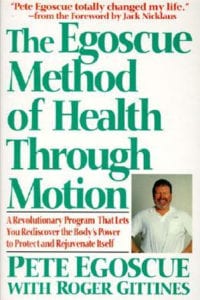
The Egoscue Method of Health Through Motion: A Revolutionary Program That Lets You Rediscover the Body’s Power to Protect and Rejuvenate Itself
I had hired a coach previous to that. His name was John Assaraf, who you might be familiar with and the movie, The Secret. Through John, I learned how to use the internet. I learned how to do websites, SEO, drip campaigns and video marketing. I learned how to get my message out to the world. Now, I can tell everybody about how great I am, but the only problem was what am I going to say that doesn’t make me sound bad, desperate or like I need new patients. Since I didn’t know what to say, I bet a lot of your audience is this way. When you don’t know what to say, so you don’t say anything for fear, which is what I had. As a professional, you don’t want to look bad to the public by what you say.
I didn’t say anything until I heard John interviewed Simon Sinek. Once I heard about this concept of why, how and what, it made so much sense to me. I was like, “That is the missing piece. I’ve got a great what but I don’t know my why. Until I know my why, it’s going to blend in with everybody else.” I became obsessed with discovering my why. That’s when I called Simon. I said, “Simon, I need you to help me discover my why.” He said, “That’s not necessarily what I do, but let’s take a stab at it.” He and I spent about eight months together, going back through my life, looking for clues as to why I do what I do. As we kept working and working, I finally figured out that my why is to find a better way and then share it. My life made so much sense to me. That’s why I developed this chair. That’s why I’ve made the decisions I have. That’s why I haven’t made other decisions. It was all based on finding a better way and then sharing it.
Since that was the case, I went and took what Simon was trying to do and made it better. First, I went from 6, 8 or 10 months to helping people discover their why in about an hour. I can sit down with you, John, and take you through this series of questions. We could develop your why and discover your why in about an hour. I did this so many times all over the world, on stages, on Skype, in different languages that I started to keep track of all the whys that I discovered. I figured out that there are only nine different whys. That was the most important thing I discovered because once I saw that, then I could help someone discover their why in about fifteen minutes. I got more data, developed the algorithm and wrote the software to where you can now go online and discover your why in about five minutes.
Let’s take a pause on all that incredible journey from figuring out yourself, interviewing enough people, and then figuring out a way to automate it so that people can now do that. Let’s zoom out again when companies or coaches don’t know their own personal why, they have a very hard time expressing it in their marketing materials, LinkedIn profiles, and the messages when they’re talking to potential clients. Once you figured out someone’s why, the next steps are now the what fits into the why and the how much like Simon’s talk. Can you give us a story of what you did with your dental practice once you found out your why? What did you say in your marketing materials that made potential patients care that you want to know or find a better way of doing things? You had to figure out what it meant to them.
This is something I know that’s important for you, John. That is authenticity. That’s why telling a story is so important because it’s authentic. When you develop your message, it has to be real. It can’t be some marketing firm that goes into a closet and comes back out and says, “Here’s what you’re going to say, John. Here’s what I want you to talk about yourself.” That doesn’t feel good. It doesn’t feel right. It’s not authentic. It’s not truly you, so you don’t want to say it. When it comes from you, that’s the big difference between knowing your why and not knowing your why. You can not only understand yourself, but you’ll have the words to articulate your message to say it. Your branding, messaging, marketing and culture all become based on your why.
The simplest example is a radio spot that you got in millions and millions of dollars that people are going to love that will bring it all the life. In that radio spot, you’ll notice that I don’t talk at all about crowns, bridges, fillings, gum care, X-rays, pricing, none of that. It’s all based on what we believe that life is better when you have great teeth. You can’t have a good life when you have bad teeth. There are so many people who are being held back from who they were meant to be by their teeth. It doesn’t have to be that way. We’ve developed a process where they can sleep through their visits so they can get the smile they’ve always wanted smile so they can be who they were meant to be. You’ll hear that in the radio spot and it’s very powerful. Often, we get people who are coming into our office saying, “I was driving down the road. I heard that radio spot and that is me. I know I’m in the right place.”
That’s your headline on your website, “Great teeth, better life.” That is connecting the dots. You figured out that your why is all about a better way. Your better way in this case was people hate going to the dentist. Let’s not pretend that’s not a thing. They’re not only worried about paying, but they’re also worried about being scolded, “You’re not flossing enough.” You addressed all of that on your website, which then people go, “He has found a better way for me to not dread going to the dentist.” Would that be a fair connecting of the dots?
It’s very much, no scolding, no lectures, just a healthy mouth in about an afternoon.
[bctt tweet=”When you are passionate about what you do, you have unlimited energy.” username=”John_Livesay”]
People are like, “I’ll do it. Why do I need to be?” We can get into all the details. I happened to be passionate about this study as a hobby that oral health connects to your heart health. Most people aren’t even aware of that. Your premise is based on science again that you can’t be having your best life if your mouth isn’t healthy because we all know heart issues. It’s this concept of, “Why then do I avoid it?” It’s like, “Why do I avoid exercise?” You’re going, “There’s a better way to exercise. There’s a better way to sit in a chair. Now, there’s a better way to take care of your teeth so that you can have a better life.”
What I work with people on is, “We have to grab their attention.” What you’ve done is you’ve taken your why and used it to stand out from the clutter. Instead of just saying to somebody at a cocktail party, “I’m a dentist,” you’re saying, “I help people have a better life.” You might even leave it at that. They’re like, “What do you mean?” “I help people get over their fear of the dentist and the dread of it.” That is a much easier thing to remember and certainly something to look at. If you’re looking for dentists and you hate going to the dentist, he’s promising a better life. It doesn’t matter. They don’t need to know. That’s connected to your why. That’s what sticks. That’s the story that brings it together.
Here’s another way to say it that I use. Instead of just saying, “I’m a dentist,” I’ll say, “I believe that when you have your health, you have a thousand dreams. When you don’t, you have one.” I help people have a better life and reach their dreams by helping them have great teeth. We’re having totally different conversations then, “How much is a crown? How much is a cleaning?”
It’s that whole premise of, what do you notice about somebody first? Is it their smile? Is it their eyes? Is it their whatever? Your confidence level and everything gets connected to all of that. A lot of people don’t connect those dots. You’ve talked to anybody who doesn’t feel confident that they have a good smile and how that shuts them down and not speaking out. They don’t want to draw attention. They speak with their mouth closed. They’re not putting themselves out there. They’re not living their best life because of this shame and guilt around my teeth are crooked, stained or whatever the issue is that takes them away from not feeling attractive. If you can fix that, then the emotional stuff starts to come and soar.
The great part of this interview is, how do I apply this to my career? You have these nine whys. Do you find that people who have similar whys get along better? Your why is to find a better way of doing things. Mine from taking your test is to clarify. Do you find that people who like to clarify get along with people who like to find a better way of doing things? Is there any connection between the compatibility between the whys?
What we haven’t talked about yet is there’s your why, how and what. What I found is that 1 of the 9 whys is your why, 1 of the 9 whys is your how, and 1 of the 9 whys is your what. My why is to find a better way. How I do that is by making things clear and understandable to clarify like you. Ultimately, what I bring is a simple solution, which is simplify. My why is a better way, my how is clarify and my what is simplify. Your why is clarify, which is right in line with how I think. In my case, if it’s not better, clear and simple, I don’t want it. In your case, it’s got to be clear.
We’re speaking the same language. We’re just emphasizing one over the other, but it still feels like we’re in the same lane. One of the outcome is when people hire you to speak or take your workshops to all these companies. If you’re trying to get your boss to take action, promote you or approve something, and you know their why, how and what, and you phrase things in that lens, you’re not asking them to shift gears at all. I think that is the secret sauce. The other thing that you had said that I want to bring out is there are a lot of other companies that are known for testing personality types and people trying to figure out all that, but you’re not in that competitive set at all or before that. Can you clarify that?
There are a lot of great assessments out there. There’s Myers-Briggs, Kolbe, StrengthsFinder, DISC. You go on and on. They are awesome assessments. They are all about how you take action, but not why you take action. The why is the essential first step. When you are trying to figure yourself out, your culture, your marketing or your messaging, the first step that you take is discovering your why, and then everything else will make a lot more sense to you. You’re starting with your why and then your how. Your how is all these other assessments. They’re great, so you use the why first and then you see the other assessments from the perspective of your why. They’ll make a lot more sense to you. They’ll be much more valuable for you when you look at them from the perspective of your why.

Discover Your Why: Telling a story is so important because it’s authentic. When you develop your message, it has to be real.
We’re not competing with them. We’re collaborating with them. Whichever one you like the best as far as understanding your how, that’s great. That will work for you. What’s interesting John is when I talk with a lot of coaches, consultants or speakers, you hear them often refer to the why, “We love the why. We love Simon Sinek’s work. In fact, we help our clients discover their why.” I say, “That’s great. How do you do that?” They’ll say, “We read a couple of books. We talk about different things going on in their lives. We look for clues.” I say, “The client you’re working with right there, what is their why?” They’ll say, “We’re still refining that. We’re working on that.” I say, “What is your why?” They’ll say, “I’m still working on mine too.” It has become this airy-fairy, mysterious thing helping someone discover their why. If it’s that critical, how can you not know it? How can you not be clear on it? That’s where the why discovery came in. That was what happened to me. I heard so much about it from so many different experts that I have to know my why, but nobody ever helped me discover it.
In a way that was scientifically backed up and you’ve done that with the algorithm. The analogy for me is anyone building a house knows you must have a strong foundation. Anyone building a practice, whether it’s a dental practice, coaching practice, sales team, etc., you have to have the why as the foundation. If it’s airy-fairy, you’re not solid and it changes with the wind or whatever the latest trend is, then that’s not how you build a brand. I wanted to give the readers another example of using these nine whys in a format you gave yours so eloquently.
For me from taking the test, it instantly resonated. I am all about my why is to seek clarity. How I do it is teaching people how to tell stories which then creates authenticity and builds relationships built on trust. In sales, that’s what you need. The what of what all this comes down to for me is we found a better way to sell. It’s not pushing information out. It’s pulling people in with stories that target their heartstrings. That’s how I’ve processed this. It gives me a completely different framework to explain what I do.
Let me take a stab at it as well. For you, things have to be in clarity. The only way to get clear on what we’re talking about is to enhance it with a story. Your why is to make things clear and understandable. How do you do that? It was by making sense of these challenges that people are facing. It’s taking in all this information and boiling it down to the thing that’s keeping them stuck. What you bring is a better way to help them move forward, utilizing storytelling. Make things clear by figuring them out and understanding them so that you can bring a better way to help them move forward.
If someone else is maybe an engineer, they love making sense out of complex things. That’s their left brain at work. That’s their why, then they’ll have a different way of expressing that in the world. It is so valuable to all kinds of people, whether they’re entrepreneurs or big companies. Do you have a story of a big company that’s brought you in to speak and having the why, how and what formulated and not guessing at it? You have some incredible testimonials. I’m trying to get you to tell the story of one of them. I’ll let you pick.
I’ll tell you two. One quick that will bring it home very simply because everybody knows about Apple. I have not worked with Steve Jobs, but I know what his why, how and what are. His why is to challenge the status quo. How he does that is by finding better ways and what he brings is a simple solution. You see that in his life everywhere, the way he dropped out of school. He didn’t want to do it the way they said he should do it. He found a better way and snuck into the ones that he wanted to go to. He simplified the process. He found a better way and simplified it. You take his why, how and what and you apply that to Apple.
In everything Apple does, they challenge the status quo and think differently. They go into that market, whether that’s phones, computers, watches or the music industry and then they find a better way. What they bring is a simple solution where a 3-year-old and a 93-year-old can use it and do it. Their why is the exact same why, how and what as Steve Jobs. What is Apple’s tagline? It’s, “Think different.” Where do you think that came from? From Steve Jobs. His why is to think differently. All of their commercials and stuff are about thinking differently and challenging the status quo. Your why, how and what are directly related to the why, how and what of your business if you are the visionary.
As you said, people can relate to that. I want to let them have a second to digest that. When I was selling advertising and I had them as a client, they took that because my whole passion is getting people to see themselves in the story. We were talking about when you communicate and you know someone’s why, it’s much clearer. They go, “Think different, not differently.” Even that alone makes you go, “What? Are you doing something a different way?” They would show people in the ads who thought different like Picasso and you would say, “Oh.” It begs the question, “Maybe I don’t relate to Steve Jobs, but I relate to Picasso. I’d like to be the Picasso of my business, even if I’m not in the art business.”
[bctt tweet=”Pain is a motivator.” username=”John_Livesay”]
By having those kinds of people in the campaign, that’s a great example of the WHY Institute at work because it kept going. It’s not just Picasso, it’s Amelia Earhart. It’s all these people, Maria Callas. It makes you want to know their story. What I love so much about what you’re doing, what we’re doing and why there’s such synergy is, why are those three people chosen to represent think different and bring that why to life? There’s a story that you have to understand of them thinking different like Cubism in Picasso’s case or not letting the fact that you’re a woman stop you from flying and all that. That’s where people are pulled in. The same thing is true whether it’s a dental practice or a Fortune 500 company. Now, your next story.
I was called by a gentleman. He was the CEO of one of the larger investment firms, a $565 billion investment firm. I had helped him with one of his daughters, who was struggling with some things. He said, “I own about 1,500 companies. I’d like you to start working with some of them.” I said, “Okay.” The first one was one of the larger venture capital firms on the East Coast. I went out and worked with the executive team. I took the CEO through discovering his why, which was trust, creating relationships based upon trust, being that trusted source.
What they wanted us to do was redevelop their website, messaging, marketing and more specifically, their presentation deck because they needed to raise a lot of money for their next round. We did that. We went through all of their belief statements and created their tagline. Their tagline became, “Trusted relationships, better outcomes.” We redid their deck. They had all the right things. It was all in the right order to tell the story. They raised $300 million in that next week. He gave me a $10,000 tip. I’ve never had a $10,000 tip. He said, “How much do we pay you?” I told him and he went, “That’s not enough.”
Talk about over-delivery, that’s fantastic. That’s a better way to get paid is to have so much value that people decide they need to pay you more.
That was quite a fun experience. They won. We won. Everybody won. It was a great experience for us. They love the results. They’re still using it. There are lots of stories like that. I’ve done it with school systems, cities, country clubs, banks and so many different kinds of businesses. We’ve gone through this same process. Locally here, we’ve got a country club that had gone bankrupt. We went in, worked with the new owners, developed their why, how and what and used that for their tagline, website and branding. Now, they have a waiting list. It’s on fire over there. There are lots of stories that way. When you get that right, when you start with the right foundation, all the rest becomes a lot easier.
You’re cutting through the clutter. People go, “This is for me. This is not for me.” You’re not trying to be all things to all people. If people want to interact with you, there are so many options. They can listen to your show called Beyond Your Why. They can go to the WHY Institute website and take their WHY quiz and get the results very quickly. They can hire you as a speaker. Companies can put their team through your workshops and training programs. I might be missing something, but please expand if I have.
If you go to the website, there is the WHY Discovery there. You can take that as your first step, discovering your why. The next step is we have launched the WHY.os Discovery, what we call your why operating system. That’s the system that drives you, which is your why, how and what. There will be a discovery there. You can go online and discover your why, how and what. There are ways to either use that to get on the right career path or take your business to the next level, depending on where you’re at in your entrepreneurial stage. Any of those would be great.
It’s not just for yourself but for other people. There’s always an unspoken question when I’m working with salespeople that they need to address, which is, “Will this work for me?” If you’ve told a great story and people see themselves in the story, the answer is yes. They want to go on the journey. What I love and admire so much about your work, Gary, is you’ve done it for yourself. You weren’t somebody who’s like, “I’m going to figure this out and try to see if I can help coaches and their clients figure out their why.” You were like, “No, I’m an entrepreneur. I helped my dental practice soar.”

Discover Your Why: Knowing your why is the essential first step.
You’ve got a proof of concept that works for you. A lot of people might be saying, “I’m still not a dentist. I’m not as smart as Gary.” You go, “No, it works.” As you’ve listed, banks, country clubs, companies, then we start to say, “It would work for me because it’s been proven and it’s scientifically backed.” It’s not something that changes with the wind or the time of day you were born. It’s complementary to existing programs that people might have to see what personalities will work in certain cultures.
At the end of the day, all of this is helping us emotionally connect and communicate. That helps you break through the clutter, but more importantly, it makes you feel seen, heard and appreciated. That’s what the best people, leaders and companies are all doing. They pull people in. You’re doing it in such a way that’s accessible for people without them having to stay stuck in this land of confusion. I can’t thank you enough for being on the show and doing this incredible work that the world needs more than ever.
John, thank you for having me here. I’m a fan of what you’re doing. I appreciate you helping me bring this to the world. Our vision is to be that essential first step in self-awareness. Our goal is to reach one billion people in the next five years to help them discover and live their why and make decisions based upon their why. That’s where we’re headed. I would love for everybody to help us be part of this. It’s going to be a fun journey for everybody involved.
Because if you know that, then you don’t have any regrets on your deathbed. That’s what everyone’s fear. Thanks again.
Take care, John.
Important Links
- WHY Institute
- The Egoscue Method of Health Through Motion
- John Assaraf
- Beyond Your Why
- WHY.os Discovery
- Better Selling Through Storytelling Method Online Course
Wanna Host Your Own Podcast?
Click here to see how my friends at Podetize can help
Purchase John’s new book
John Livesay, The Pitch Whisperer
Share The Show
Did you enjoy the show? I’d love it if you subscribed today and left us a 5-star review!
- Click this link
- Click on the ‘Subscribe’ button below the artwork
- Go to the ‘Ratings and Reviews’ section
- Click on ‘Write a Review’
Love the show? Subscribe, rate, review, and share!
Join The Successful Pitch community today:
- JohnLivesay.com
- John Livesay Facebook
- John Livesay Twitter
- John Livesay LinkedIn
- John Livesay YouTube
Book Yourself Solid With Matthew Kimberley
Posted by John Livesay in podcast | 0 comments

When we think of attracting clients into our business, we immediately think of marketing. But not for Matthew Kimberley, the owner of Book Yourself Solid, who believes that marketing does not get you clients. In this episode, he joins John Livesay to explain to us this contrarian idea as inspired by Michael Port’s Book Yourself Solid, a handbook for self-promotion that can help you get more clients even if you hate marketing and selling. He discusses the effectiveness of emails and how best to format them, growing a personality-based brand, and becoming a person of value rather than a provider of value. What is more, Matthew then speaks about why your business should be a love story, one that is between you and your business, you and your clients, and you and marketing.
—
Listen to the podcast here
Book Yourself Solid With Matthew Kimberley
Our guest is Matthew Kimberley, the Owner of Book Yourself Solid. He works with coaches and all kinds of entrepreneurs to do just that. He said, “Marketing does not get you clients.” What an a-ha moment that was for me and many other people. Find out what he means by that. He said, “Your business should be a love story.” Enjoy the episode.
—
Our guest is a friend and he is quite fun to talk to. You’re going to enjoy this episode. Matthew Kimberley helps small businesses sell more and sell with sophistication. He spends a lot of time providing strategic counsel to business owners and coaches. He’s got over two decades of international sales and advisory experience and multiple millions of dollars, euros and pounds that he has generated for companies. Now he hides out in the Mediterranean. Welcome to the show, Matthew.
Thank you for having me, John. There is nowhere I would rather be on a wet Thursday afternoon than doing this with you.
Isn’t that the definition of success that you’re with the people you want to be with in the place you want to be and that there’s no anxiety of, “I wish I was doing something else besides this?”
I still struggle a bit. I’ve got young family. I’ve got two boys. One is seven and one is eleven. Like many people who are self-employed and to have young families, I do battle a bit with what gets my attention when, and I’ve got much better at this and I’ll tell you why I’ve got that strategy. I felt guilty when I was at work because I was neglecting my kids. I felt guilty when I was with my family because I was neglecting my business baby.
What changed was confidence that came with time. I proved to myself year after year that business will probably be okay and I didn’t have to stress and to take time off, to switch off from business and spend it with my family. It didn’t mean anything was being neglected. I still get that sometimes. If one of them falls over, gets a booboo, needs a kiss and I’m on a call with a client, but generally with confidence around next month’s revenue and next year’s revenue comes a bit more relaxation and freedom of time. Freedom of time was the ultimate metric of success if you can choose who you spend your time with, where you spend your time, then what else do you need?
I love to ask my guests their own little story of origin. You can go back to school days. Take us a bit on your own personal journey before you got to this place where you do have the freedom to help other coaches get themselves booked. I’m guessing at one point you might have been in that situation where you were struggling to get booked. Who knows?
[bctt tweet=”Marketing does not get your clients.” username=”John_Livesay”]
It was the end of the summer, 1979, Paris. Reverend John Kimberley and his wife, Susan Kimberley, were probably putting their feet up in their hotel room after a long boozy lunch. If I go back too far, this is the conception story. My first self-employed job was selling entertainment in the streets. I was a juggler and a busker. I was a street entertainer. I learned that there was a direct correlation between asking for people to throw money in the hat and people throwing money in the hat. With the benefit of hindsight, I look back and say, “That was probably one of my first introductions to persuasion and sales and being in direct control of the amount of money that you earn.”
I’d go and stand in the street first and balls around and people would walk past, but when I caught their eyes, I smile at them and said, “If you enjoy the show, give me a pound.” They were far more likely to give me a pound so asking for the sale. Fast forward a few years, I’m working in timeshare by accident. This is age 23. It was my first introduction to hard direct selling. I got the job because it was the only job in a foreign country that would employ me without a work permit and because the turnover was massive. We were paid on a commission only basis. It was low risk for them to hire foreigners in the block, but it was a real baptism of fire.
We had daily sales motivation training for an hour, 8:00 AM to 9:00 AM. We would be given unqualified prospects and told if you spend 6 to 7 hours with them and followed the system, there’s a 10% chance they’ll buy something, which is exhausting, but true. They will give you an unqualified prospect. They had no idea what they were in the room for, probably the promise of a dolphin show or a winning prize or free bottle of champagne. We’d sit down with them and over the course of seven hours sell them $10,000 worth of vacation ownership. That taught me about direct sales. It taught me about the importance of not leaving anything to chance to following the system of crossing the T’s and dotting the I’s. It was a horrible filthy industry. It was lots of fun, lots of drugs, lots of late nights.
I didn’t want to sell it to my parents. When they came to visit and they said, “Can we come and see what you do for a living?” I said, “No.” If I can’t do that, I probably shouldn’t be doing it. I shouldn’t be selling it to other people’s patterns or grandparents, so I left. I got a job in corporate sales and fast forward again a number of years, I own a recruitment company selling agency services. I’m a 50% owner in a recruitment company that sells agency services to large multinational corporations, agency being, “I need a Java programmer.” I’ve got a budget of €600 a day. I would go and find somebody for €400 a day and take the difference. Huge money, young age, I hated it. I was the other owner. I was getting into work later and later I had a fractious relationship with my business partner.
Although I loved parts of the job like selling and training my salespeople, I didn’t love anything else about it. I didn’t love the structure. I didn’t love the industry. I was bored by it. I could only talk computer technology for five minutes before falling asleep, and here I was talking day in, day out with people who were trying to batter me on price every time I met them. I left and I said, “If I enjoy sales and I enjoy training, maybe I should become a sales trainer.” That’s what happened. I didn’t want to do it my own because of my interest in selling, which had been born with timeshare. I had been on various mailing lists, rather like you are now, John, and everybody reading this. I had a bit of savings from selling my 50% share of the company and Michael Port who wrote a book called Book Yourself Solid, which I’d read and whose mailing list I was on an opportune moment sends a blast out to his list that said, “Would you like to become a Book Yourself Solid Certified Coach?”
Fast forward 12 years, 13 years. I now run the Book Yourself Solid Organization. Michael has retired from operations and I am now the person who trains the trainer how to book their own business to solid, but also how to book their clients businesses solid. It’s an absolute joy there. We all have days which are better than others, but there’s isn’t a day I don’t say I’m not grateful for the trials and tribulations and the journey that I’d been on because now I get to do this. I get to hang out with rock star coaches four times a week. We have mastermind calls, open invitation to all of our licensed trainers and ambassadors. It’s a community that looks out for each other. We’ve got a fantastic piece of world-class intellectual property, which the market is hungry for and the works. Thank you for asking John. Do you want me to fill in the gaps? I should stop talking now. That that story could go on for days.

Book Yourself Solid: Freedom of time is the ultimate metric of success if you can choose who you spend your time with and where you spend your time.
No. it’s good. I find it fascinating too. The lessons learned from, first of all, getting people’s attention on the street much like we all have to do in digital marketing and blog posts and advertisements to not being afraid to ask for the order, is that a big problem for a lot of people. They feel awkward and clunky doing it. Not having a system, a script, a plan in place. Before GPS there were these old maps that we have in California, it was called the Thomas Guide. You’d have to flip pages and then you get halfway where your speed, it’d be like, “Now turn to page 506.” The rest of that particular journey continues. You’d be like, “I can’t look at this and drive at the same time.” That need for a clear, concise roadmap can never be underestimated. A lot of people have been in that situation where, “Can I do what I love and make money?” It seems like they’re mutually exclusive. When you can show people they can do both, that’s where it becomes magnetic. I do have a question about what you’re doing, training the trainers. People are thinking, “Is this for me or not?” If someone’s a coach or a consultant, they probably need Book Yourself Solid. Whether they need to then train other people who is it that decides, “I don’t want to coach anymore. I want to train other coaches.” How does that work?
There’s this sweet groups of people who join our program. It looks a bit like a business coaching franchise. If you are from the outside because our business is the transference of intellectual property. If you want to be a coach, we will give you workbooks, materials and a system that you can give to your clients and guide them through it. That’s where the similarities stop. There’s no territorial exclusivity and no royalty payments made. We don’t take a percentage of your earnings. It’s a flat annual fee and an affordable one. We say that every Book Yourself Solid Coach who’s using the material should make their annual investment back with two clients. We want you to be signing up more than two clients a week, ideally.
That’s where the paradigm is with the franchise, but that’s a close parallel. You’re not tied to it. You can mix and match it with anything else you might be selling. You might be a car salesman who also does Book Yourself Solid on the side or you may offer personality assessments or you might be certified in fifteen other modalities. You might have picked up certifications from Tony Robbins or Mike Michalowicz. We’ve also got franchise owners who are also Book Yourself Solid Coaches because they can use them together. Three groups of people, the first group of people is the existing sales trainer or coach or business consultant who knows that they can flip the IP for profit quickly. John, if I were to say, become a Book Yourself Solid Coach, John, and in three weeks’ time after you’ve had time to study the material, you can hold a workshop for your own clients, charge them $1,500 a pop for a weekend workshop and keep 100% of the cash.
What are you going to teach in the workshop? Book Yourself Solid. Some people see it as a piece of inventory they’re buying retail, they’re selling wholesale. That’s for the experience coach. The experience coach is also interested in masterminding with other experienced coaches. That’s what we do four times a week, which is super valuable. That’s the third group of people. The third group of people are business owners, who are not that interested in reselling or teaching Book Yourself Solid ever, but they want to use Book Yourself Solid in their own business. What better way to learn it than from the source? They can hire a Book Yourself Solid Coach for $3,000 a month or they can join us for a whole year for a fraction of that. That is the 1st and the 3rd groups.
The second group are the pivoters. These are the people who say, “I’ve finished a career in engineering or consultancy or retail or human resources or I’ve got my Psychology degree. I want to try to make a success of being a coach or a consultant.” We say, “Do it with us.” We provide them with comprehensive training and coaching skills and business skills. In the first 6 to 12 months with them, we want them to get booked solid. Whether they’re teaching Book Yourself Solid or whether they’re teaching Reiki, it’s skewed primarily for consultants or coaches, people who deal in intellectual property rather than massage therapist or dentist or anything like that. We’ve got a lot of chiropractors in the group, by dint of the fact that there’s a happy marriage between Book Yourself Solid and the chiropractic community based on some of our influential alumni. They’re all coming at it from the angle, which is, “I want to get my chiropractic business booked solid,” and teach the chiropractors have to do the same. Those are the three groups of people. We support six figure coaches.
What a big need. Let’s say you’re in that pivot group and you’re leaving this career as an engineer, for example, and you want to do something else in your life or you want a side business, you’re not dependent on whether you get fired or not. This roller coaster of income, when you don’t have the plan and you’re like, “I had a great month this month but because I was focused on delivering, I was ignoring the attracting and converting part.” That is a big fear and a big pain point for many people is I’m working for myself but my income is inconsistent. You’re solving that.
[bctt tweet=”Be a person of value, not a provider of value.” username=”John_Livesay”]
Consistent income, consistency of revenue being booked solid is not on booked solid in January, but I’m not booked solid in February is perpetually working the system to make sure that your marketing is attracting attention on a consistent basis. That marketing doesn’t mean you’re doing endless calls. I don’t believe in endless content marketing, categorically don’t. That’s an invention of the last several years. I don’t see why coaches have to also be publishers. That’s crazy. What happened to old-fashioned marketing. Book Yourself Solid has been around since before the social media. The first edition of the book came out in 2006, which is before social media was a thing. We have some evergreen client attraction strategies, which you can supercharge with social media use. If you look around your neighborhood, John, at the businesses that are booked solid, often the owners don’t even know how to turn on a computer. They are providing a valuable service to a community who needs it. There’s a market to product fit or market to service fit. They’re doing, over generations, the right thing in order to keep people walking through the door.
We sit firmly in that camp and say, “We’ve got tools that we can use that will help us gain access to the right people.” Marketing doesn’t get you clients. Marketing creates awareness about who you are. We’ve got one of our certified coaches is and I’m glad you said a sidekick. One of our coaches who has got a comfortable six figure income from providing coaching services is a full-time partner in a technology firm. For about 5 to 10 hours a month, he provides services to 5 or 6 clients who have his cell phone number. He will talk to them when he’s walking the dog on a Saturday or Friday afternoon, and they will pay him a retainer of $2,000 to $3,000 a month in order to have access to his insight. He has got $100,000 to $150,000 worth of business for fifteen hours a month.
I love what you said, marketing doesn’t get you clients.
That’s one of the fundamental premises of Book Yourself Solid.
When you say something like that, our brain goes, “Wait a minute. What? That’s the opposite of what I think or was taught.” That’s what cuts through the clutter. That’s why our brain goes, “That’s new information.” I would be totally remiss if I did not ask you and edify your incredible skills at writing emails, nobody does it better. You don’t have to take my word for it. I get highly entertained and watching a master at work when I read these things. I love words. If somebody wants to see an example of your email at work, they can go to MarketingForCoaches.com and get the five things we need to do every morning to get more clients in 60 days. I’m guessing that email is entertaining and informative.
I’ve got a love affair with emails. I still think there’s no better way to build a long-term relationship with people, but most people in our situation who own a transactional email service like a AWeber or Mailchimp or Infusionsoft or ConvertKit, whatever they’re using onto using it. I know this because I’ve asked thousands of them when talking about and selling my Delightful Emails program, that’s always the first question. If anyone raises their hand to be a prospect, I ask them, “Do you have something?” “Yes.” “Are you satisfied, quite satisfied, unsatisfied with the way that you’re using it and the results that you’re getting?” Vast majority say, “I’m unhappy with the results I’m getting.” We tend to poop the bed when it comes to sending out an email to our prospect database, but we never poop the bed when we were sending an email to a girlfriend or a boyfriend or family members or our high school buddies, we say, “I have a special relationship with you. I know that you want to hear from me.”
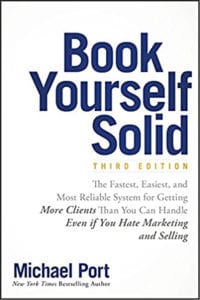
Book Yourself Solid: The Fastest, Easiest, and Most Reliable System for Getting More Clients Than You Can Handle Even if You Hate Marketing and Selling
The only reason that people have ended up on your mailing list, unless you a spammer, in which case there’s a special place for you in hell, is because they have raised their hand and said, “I want to hear from you. I want you to help me, please help me.” If we don’t email them regularly, then we’re being neglectful in our duty of care towards our prospects if we want to put a hippie slant on it. The other mistake that people make is they can’t get the tone right. When I was in recruitment, people wear a professional hat and people wear a personal hat. The beauty about growing a personality-based brand, that doesn’t mean a personal brand, it means a brand that has personality, is that you get to inject that personality into your emails. Recruiters would always write on LinkedIn. I used to beat them up for it. They would say, “We are currently seeking candidates with the following attributes.” I would say, “Who uses that language? William Shakespeare?”
Are you someone who’s looking for a job? We’re looking for some people who are, it’s how people talk. We got to remember how we talk. We talk to a human being on the other end of the line. We should have a relationship with them where we are the leader. They’re looking to us for leadership, but we can’t, everyone’s got to develop their own voice. I’m not saying one voice is appropriate for you. Everyone’s got to find their own voice. My Delightful Emails program does help a bit in how you find your voice. My preferred relationship to my list is like the head of the family. I want the best for them. I refuse to insult their intelligence. I’m going to nurture their growth. Sometimes I’m going to slap them if they’re being stupid and send them to the bedrooms, and often we’re going to have pillow fights and tickle parties.
We want them to see fun dad and we want them to see concerned dad. We want them to see caring that empathetic dad. It might not be dad. It might be a different role. You have to think carefully about authenticity and vulnerability because people are coming to you for a specific reason. If you start treating them as your therapist, which many personal brands do, they write to their list and they evacuate their spiritual bowels onto the email and start to share every problem because somebody once told them that authenticity is the key to building relationships. Yes and no, but leadership is the key to sales. If you’re going to say to somebody, “I’m a complete mess, my life is a mess. Please join my life coaching program.” You’ve got a problem. If you’re in a hotel room and the hotel is burning down and somebody knocks on the door and says, “Follow me, I know the safest way out of here.” You’re going with them.
If somebody knocks on the door and says, “I’m feeling a bit lost too. Shall we run together and see if we can find a way out?” You’re like, “No. You stay where you are. I’m not coming with you. I’m safe where I am. Thanks you.” You list and looking for leadership. The key thing is value. The concept of providing valuable, actionable content has destroyed email marketing because everybody feels that every email has to be valuable and they’ve translated that into, “I must provide how to content in my email.” Even worse, what they do is they double create. They say, “I’ve written a how to piece on my blog. How to get over your boyfriend? How to get more clicks? How to get on the first page of Google? How to get more followers on Instagram? How to overcome your mental turmoil?”
They write an email that says, “I have written some valuable content for you, click here.” What you’re training people to do is ignore your email because there’s no value in the email. You might say, “Matthew, do I put how to content in the email?” How to content isn’t valuable. It might be valuable for a brief period of time when we ended an answer to how can I get more Instagram followers or how can I fix my washing machine? The minute our washing machine has been fixed, we’re throwing away the manual and we can’t find it next time we need it or we’re going to Google it. John, if your house was burning down or if your hotel room, what are you risking? What is valuable to you?
You’re rescuing your family members, your photos, your record collection and your phone, which is your connection to the outside world on your friends. What about if we could show up in a way that mirrors that? What about if we could become a person of value rather than a provider of value and a person of value makes us feel something. They make us laugh, cry, think and angry. They’re the people that we live with. They’re the people that are always welcome to our kitchen table, which solves the problem of how frequently should I email my list? The answer is, “Would I be welcome to sit down and have a cup of coffee with them? Am I making them smile? Am I making them laugh? Am I making them cry? Am I making them feel something?” Value is where we spend our time and money. Where do we spend our time? What’s your most valuable app on your phone, John? The one that for the rest of your entire life, you have to get rid of all of them, but you can keep one or maybe two. What are they?
[bctt tweet=”Confidence is not enthusiasm.” username=”John_Livesay”]
I’m directionally challenged, it would be Google Maps so I can get to figure out how to get from point A to B.
That’s it. You’ve got Google Maps on your phone for the rest of your life. You are an anomaly, John. You’re the first person who’s ever said that.
My biggest fear is being late and lost because I was having to go on many cold calls. I am meeting clients for the appointments. I would sweat bullets being lost in Los Angeles in the freeway system and then I would be late and lost. That’s my biggest anxiety. It’s still solving a problem.
Let me tell you what 90% of people tell me, they tell me a way to connect with friends, WhatsApp or Facebook Messenger because you can’t live without friends. For me, it’s Spotify. If you tell me that I can’t have music in my ears whenever I want it, when I’m walking the dog, whatever I’m doing, that for me is a fate worse than a life without music. Can you imagine that? Like people say, is it too soon to email the list? If you’re doing it right, it’s like saying, “Is it too soon to release another episode of Breaking Bad?” No, because people want to binge it because they value the emotions that our favorite TV show stirs up in them. They want it. They want more and more of it. That is what you can achieve with emails if you care.
There are many nuggets here, be a person of value, not a provider of value because a provider of value, we don’t need that. We can Google it. The overall arching theme that I take away from listening to you when you and I have had this discussion before is the value of storytelling, which hooks into people’s emotions, whether laughing or crying. A lot of people are struggling with, “How do I tell a story in an email? How do I make my subject line interesting enough to make somebody open it?” All of that is part of a story. During a pandemic, a lot of healthcare companies in particular, salespeople are struggling to get in the door because they can’t see the doctor between surgeries and they can’t walk into their offices anymore and they’ve never had to learn how to request a virtual appointment, an email. If you’ve never had to do it, you don’t have that skill.
There are two different things. One is how can we tell a story in an email? What makes a good story? What makes a good subject line? You’re the expert when it comes to this. If you weren’t writing delightful emails using the person of value approach, you can say anything. It doesn’t matter. If you were dating somebody and you’re in the throes of a new romance, they can send you a message that says, “Babe, I had a bowl of cornflakes for breakfast. It was delicious.” That will be the most delightful email that you received that day. Am I wrong? It’s because of who it is from. I do have strategies and techniques for quickly generating stories for emails. The trick is if it comes from someone that you want to listen to, then the content of the story is less important than who’s telling that.

Book Yourself Solid: Marketing doesn’t get you clients. Marketing creates awareness about who you are.
We build that through entertaining content about being a person. The other thing, when you’re talking about these horrible recruitment advertisements, unfortunately, that typically is what salespeople are saying. The corporate speak, I’ve heard, “We use critical thinking to anticipate problems. You should hire us to do this project for you.” I was like, “No, we need to tell a story and show it in the story.” Let’s talk about what is the biggest mistake people make trying to get themselves booked solid?
They believe that marketing gets them clients and that’s backwards. I had somebody talk to me who says, “If only I could get more Instagram followers,” that might be true, but it’s a supposition which comes up far too frequently without any grounding in fact. What would be true is I have a sales conversion process that attracts the right people that gives them incentive to stick around that I can build trust. They can repay their trust by making investments in me and my services that are proportionate to the amount of trust that I have earned. Sometimes that’s financial investment, an investment of time or an investment of data or an investment in spreading the word about you. I have comprehensive systems in place to close the sale when it’s appropriate.
I have literature and information products that speeds up the sales cycle process so that I don’t have to be pitching people one-to-one doing coffee endlessly time and time again. I can tell people I’ve got all of that in place. In short, I know how to close the business. What I also know is that 90% of my customer database has come from my Instagram marketing efforts. Therefore, my hypothesis is that if I could add 2,000 Instagram followers a month to my 2, 000 qualified, targeted, appropriate prospects to my Instagram, then that would result in 500 new additions to my newsletter each month, which would result in five new clients every month. That’s great, but that’s not what I hear. What I hear is, “If only I can crush Clubhouse, then I can make $1 million.”
The biggest mistake people make, and it’s where we always spend the longest is market to service match. I work with coaches and consultants. They tend to stay things like, “I help entrepreneurs find freedom.” “Bob, here’s Elon Musk. What are you going to do with him?” “Here’s an entrepreneur for you. It’s a lawyer. He’s the founding partner in a firm that has 40 partners and 300 employees in six offices around the world. Do you think he needs your solution for finding the perfect virtual assistant?” No. Firstly, we talk about what we do by honing in on a specific target market. “I help goddesses step into their light” is something I never want to hear. “I help women.” No, you don’t. Let’s be serious about this.
The living proof of whether or not you have a business is if somebody will buy your product or service twice. What we tried to do is we think we have resources that we don’t have access to. We think we own a trawling fleet, a fleet of fishing trawlers with an army of 300 fishermen who are going to go out with these nets that are 5 kilometers long and we’re going to catch all of the fish in the sea to become our prospects, but we don’t have those resources. We have ourselves, probably not much money when we’re getting started, and a fishing rod. What do we do? We go to one fishing spot. We dangle one line and we try and catch a nice big fat fish that will feed our family. We don’t say, “I’m going to try a different spot.”
You do your research. You find out where the fish are, and you show up repeatedly and you have something that is highly relevant to them. That’s the biggest mistake people make. They’re afraid, terrified to get specific about their target market. Remember, John, the target market is where you target your marketing. Unless you have squillion dollars to spend on reaching everybody in the world, you better be laser-focused. In fact, you may have zero budget. You may only have time and energy to show up. What do you choose to do? One day you show up in Florida and other day you show up in New York and other day you show up in Minnesota and other day you show up in Texas and other day you show up in San Diego. By the time you’ve done all the states in the world, everyone’s forgotten about you.
[bctt tweet=”For every success story, there are 90 horror stories.” username=”John_Livesay”]
What about if you showed up at the school gates in your zip code every day after school, wearing your yoga gear and start to have the conversations with the mothers who are waiting to pick up their kids and the dads who are waiting to pick up their kids about the fact that you’re a yoga teacher? Do you think you might pick up 4 or 5 clients within the space of three weeks? You would because you’ve chosen your pawn.
What I hear you saying is we’re not Coca-Cola. Coca-Cola has huge budgets and they’re trying to market to everybody.
Even Coca-Cola wasn’t Coca-Cola when they started and Starbucks wasn’t Starbucks when it started. When Starbucks started, they didn’t have the budget. They had enough money to open a single retail outlet in Seattle where they sell dried coffee beans. They said, “We can’t sell to the world. We’re going to sell to people who live and work in this neighborhood.” If somebody came from outside of their target market and said, “I live in Portland but I’ve heard you make great coffee. Can I buy a bag?” You say, “Yes, of course you can,” but you don’t fly to Portland to tell people to come to your store in Seattle. With time, when their resources grew, they were able to offer additional services to their target market. “You know what we can do with these beans? We can ground them up and add hot water and give you a cup of coffee while you’re here.” “We can sell bananas, oatmeal and newspapers. This worked well here. We have the resources. We’re going to open a second store and begin to appeal to a different target market.” That is the mistake everybody makes. They think outside of the resources that they have available to them.
I hear that a lot too. I tell people, “Remember, Amazon sell books first.” People forget that and you’re trying to be what Amazon is now. It would never have worked, it will be too overwhelming.
John, if you want a, if you want a six-figure consulting business, do what our guy did that I told you about, find five clients who will give you $2,000 a month and then you’ve got $120,000, $140,000 worth of business coming in. Even if that takes you 25 hours a week at the beginning in marketing, you are on course for a winner. You might have been sold the idea that online courses are the way to go, maybe they are, but for every success story, there are 90 horror stories. That’s not true for small service businesses who go to a clearly defined group of people and say, “I have a thing that I could help you with.” They don’t see a 90% failure to complete the course rate. What they typically do is they might limp along for a bit, but they’ll get a client in the 1st month, 2nd month, 3rd month and then they’ll start to get traction. Think small.
Also, this Book Yourself Solid works for speakers because I know that’s what Michael Port’s background is. Many speakers wait passively for their speaking agent to say, “Someone saw your website or saw your video on my website.” This is an active way to do it. Speakers say, “I can speak on any topic to any audience.” That’s another same mistake over and over again. I, myself niched down saying I speak to healthcare tech companies.

Book Yourself Solid: When you love what you do and love every minute of what you do, business is a pleasure rather than a chore.
What happened as a result of that?
When I reach out to other healthcare tech companies, they’re like, “You know our industry.” What’s also surprising is I get hired by mortgage companies and insurance companies going, “We’d love to hear what the healthcare tech people are doing. Maybe we can learn from that.” I thought it was going to push them away and it makes them more interested. That’s a fascinating outcome I thought.
I get that all the time. I know you mainly work with coaches, but we like what you do. Do you think you could bring something to our accountancy firm?
That is the biggest takeaway from what we’re talking about here, don’t be afraid to niche. You think it’s going to push away everybody and the irony is it makes you magnetic because who we say “no” to is as important as who we say “yes” to whether it’s in our marketing, our messaging, our emails. Someone was saying to me, “Can you come speak to this?” It was a fast-food chain. The audiences are all the people who work in the restaurant, who make the fries. I said, “That’s not what I do. I speak to audiences of salespeople.” Unless you’re trying to make those people upsell people when they’re buying their hamburger, probably not, but I know someone else. I pulled back, they’re like, “What about if you did a workshop on storytelling then for these people?” I’m like, “That I could do, but I’m not going to try to pretend I can do everything.”
I get that all the time, John, here in Malta specifically because people know that I don’t do any work in Malta generally, but every now and again, someone who owns the company who knows me or knows me says, “We’ve got a Christmas party. Can you come to a motivational talk for our whole company?” I said, “I’m sorry, I don’t do motivational talk, but if you’ve got to say it was your business development team, I’d be happy to come and do a 90-minute workshop with them.” They always say, “Yes, that’s exactly what I want.” I’m going to have reputational damage. If I go and do a motivational workshop for the factory guys, they’re going to laugh me out the room.
I know that. That’s not plain interesting. You said something about it’s rare to find someone who truly says it gets to what you love. You also said something which ties everything together from a Book Yourself Solid point of view. There were three pillars that hold Book Yourself Solid out. The first one we’ve discussed, which is that marketing doesn’t get you clients. The second pillar, which is a philosophical pillar, is that business should be a love story. Book Yourself Solid is a love story between you and your business, between you and your clients, between you and marketing, because when you love what you do and you love every minute of what you do, business is a pleasure rather than a chore. The third philosophical pillar that holds everything up is exactly what you said. There are some people who you’re meant to serve and others not so much.
[bctt tweet=”Value is where we spend our time and money.” username=”John_Livesay”]
My last topic I know you’re an expert on is how can people not undersell themselves? What’s your tip on that?
Confidence and enthusiasm are related bedfellows, but they’re not the same. People say, “I don’t have the confidence to do something.” What they mean is, “I don’t feel enthusiastic about it.” That’s a mistake. I’m confident, John, that in the United States and around the world in the next 24 hours, we’re going to see multiple COVID related deaths. I am confident of that. If I was offered the right odds, I would bet my house on that. I am not enthusiastic about it. However, the data shows me that that is likely to be true. Therefore, I can predict with some confidence that that’s going to be likely. The same thing comes to being confident when selling yourself. You mentioned two lessons that I learned in my youth.
The first lesson was if you ask for the sale, you get it. The second lesson was, if you stick to the system, then you’re likely to get predictable results. The third lesson was from my recruitment days, which I didn’t mention, is that these guys had activity targets. I’d never say you have to make three sales this month because you can’t control that, but I did say you have to pick up the telephone 60 times a day. That’s what’s missing from the confidence-lacking entrepreneur. They are predicting based upon no data that the path that they’re about to take or the journey that they’re on is not going to work out for them. Get the data then you can make those predictions with confidence.
How did you get the data? By doing the activity. We’ve all got to say it was that sales muscle. We can have perfect theoretical form. We can attend endless sales seminars, but unless we’d having our at-bats, our muscle is going to be weak. As we’re doing the reps, our muscle is going to be weak. Somebody would come to me, typically a personal trainer back in the day and say, “I haven’t made any sales. Can you help me?” I’d say, “Yes. Why haven’t you made any sales?” “I don’t know.” “How many sales offers did you make this month?” “I didn’t get to make any.” “I see a correlation here. Go to the shopping mall on Saturday,” walk up to 100 strangers and say, “I’m a personal trainer. I’m running a special promotion. I wonder if you’d like to buy a personal training session for $40 instead of $80.” What happens is results walking up to 100 strangers and making an offer?
Ten percent at least, probably.
Yes. Complete Strangers can’t resist the deal. I say, “Great. We’ve got a basis to work on.” It’s because you’ve done the reps, you can be confident that an offer will be accepted by the market. Our job is to refine the offer and refine the market. Go and try more. It’s not for everybody, John. If you’re not prepared to put in the reps, you don’t deserve the rewards.
David gets your six pack and your big biceps, the same thing. I get it. Thank you for sharing this passion, this humor. If anybody wants to find out more about you, we’re going to send them to MarketingForCoaches.com, as well as BookYourselfSolid.com. Get these five things you need to do every morning. I can’t wait to see what those five things are myself. Thank you, Matthew.
Thank you. I enjoyed that much. You’re such a strong interview. You let me have fun. Thank you. It was a huge pleasure.
Important Links
- Book Yourself Solid
- MarketingForCoaches.com
- Delightful Emails
- BookYourselfSolid.com
- Better Selling Through Storytelling Method Online Course
Wanna Host Your Own Podcast?
Click here to see how my friends at Podetize can help
Purchase John’s new book
John Livesay, The Pitch Whisperer
Share The Show
Did you enjoy the show? I’d love it if you subscribed today and left us a 5-star review!
- Click this link
- Click on the ‘Subscribe’ button below the artwork
- Go to the ‘Ratings and Reviews’ section
- Click on ‘Write a Review’
Love the show? Subscribe, rate, review, and share!
Join The Successful Pitch community today:
- JohnLivesay.com
- John Livesay Facebook
- John Livesay Twitter
- John Livesay LinkedIn
- John Livesay YouTube
Pitch Investors Live With Jonathan Foltz
Posted by John Livesay in podcast | 0 comments

Finding the right people to invest in your company, particularly start-up ones, is a pretty tedious and time-consuming endeavor to accomplish. But thanks to Pitch Investors Live, every business can take advantage of this online platform that’s very much like Shark Tank combined with Tinder. John Livesay interviews Pitch Investors Live Co-founder, Jonathan Foltz, to share how he and his friends started this groundbreaking project. He also looks back on his childhood and how his falling short of being a basketball player pushed him to pursue a career in entrepreneurship.
—
Listen to the podcast here
Pitch Investors Live With Jonathan Foltz
Jonathan Foltz is a Co-Founder of Pitch Investors Live. What they do is they help match up investors with founders looking for money, much like dating app meets Shark Tank. He talks about his career as an entrepreneur and how he had to overcome the fear of not being good enough after his dream of being a basketball star did not happen. That was his first pivot in life. He’s now gone on to do many other successful businesses and has life lessons of having a passion for what you do.
—
Our guest is Jonathan Foltz, who is the Co-Founder and visionary of Pitch Investors Live. He is a futurist, a philosopher and an avid knowledge seeker. He started multiple companies in technology, education, eCommerce and the digital space. He’s built $4 million brands in completely four different industries. He’s also the Owner of an international marketing agency, Digital Age Business, which has worked with some of the biggest brands in the world. He also owns multiple eCommerce brands. He was able to take a business to seven figures a month within its first year. Welcome to the show, Jonathan.
I’m happy to be here.
Before we dive into everything you’re doing and this whole concept of your own story of origin around the PitchInvestorsLive.com, I want to invite you to tell us your own story of origin. You can go back to childhood school. Where did you get this urge to be an entrepreneur? Did you always have a passion for multiple things? Start the story wherever you want.
Like many entrepreneurs, a lot of my entrepreneurial skills came from a necessity as a young kid growing up with my father and everything like that. He was in the oil industry and we traveled a lot. I was born in Canada, then we moved to New York, to Miami, to Argentina, to Columbia and then back to Miami. In between was Venezuela, Peru and the UK. I went to a few different schools when I was in Columbia as a kid. I got used to having to make new friends. That started to build a little of my social skills. As a kid, you want to be liked. I had to go and find brand new friends because I was moving from place to place. It was rough as a kid and you have to figure out the skillsets to make new kids, new teachers and new people in your realm like you. You’re like, “Now I’m in a brand-new environment.” It made me a little bit more confident having to go through so much of that. As time went on, my parents got divorced when I was 12, 13 years old.

Pitch Investors Live: A lot of our entrepreneurial skills came from a necessity.
I was obsessed with basketball. Basketball was my life. I thought I was going to be in the NBA. I had that belief system. I was obsessed. I watch ESPN and played all day. As time went on, I remember when my parents got divorced, I know that my mom had gone through a rough time during the divorce. She started hustling. She started working and doing some stuff with flea markets and stuff like that. The interesting thing about this is that my mom was a hustler. She was good, social, likable and had such a good personality that everyone loves her. She’s a social butterfly. That’s one of the skills that I got from her. That’s where I learned that type of skillset around that time.
Little by little, I started learning. I was able to get a computer. One of the things that I learned quickly when having a computer and a CD burner, which not a lot of my friends had them at the time, I was making CDs for friends. This was in the beginning stages. I was a little kid and people didn’t know about Napster. Every kid in the school was burning CDs. I happened to burn CDs for music stuff that they’d never heard of. I’ll put a cover on it and sell it. I’d made a little $5 here and there. One day, there was a CD coming out. It was called The Marshall Mathers LP, it’s an Eminem CD. Before it was coming out, I got access somehow to the internet as a little kid. This is when the internet was new. I was probably 14, 13 years old or something around the time. This was the early stages of when all this was coming out.
No one knew about Napster and how Napster would take down the entire entertainment business. It was crazy what was happening. We didn’t know what was going to happen from it. I knew that I’m like, “This is a popular CD.” I have early access to it. As a little kid, I have no idea what I’m doing here. I brought that CD to school and this was my first glimpse. I don’t know if they were giving fines for people at the time that were burning CDs and such. I don’t even think that time had come yet. Later down the road, people start getting fines. Their parents were getting $5,000 fines from the entertainment business. I don’t know if you remember that. They were sending out checks like lawsuits against a bunch of people, but little kids didn’t know. None of them knew what was going on. They’re little kids with power of the internet.
That’s what was exciting to me. Nowadays, people call me the Digital Frontiersman. I got my first sample of the power of the internet when you could do these things that were never possible before. When I got my hands on the internet as a little kid, my whole world had unfolded into something that I could never imagine. My first case study of great success. I tried all kinds of stuff. I try some baseball cards. I would open up all the cards and I would never be able to sell them all. That was a failed venture. I sold a little CDs here and there for $5. I was entrepreneurial because of my mom. When I did this The Marshall Mathers LP CD, I knew it was going to be a hit for some intuitive reason. I empty my book bag. I filled the entire book bag with these CDs. I went to school and sold them for $10 apiece. I sold every single one and my mind was blown. I was like, “What just happened?” The next day, every kid in school was selling them too. I saw what happened. It was like I was the first mover in that direction. Every kid in school went and copied the same model that I did and it blew up through the entire school, even so much so that the principals and everyone said, “You guys got to stop selling CDs in the hallways.”
[bctt tweet=”Our values and purpose are built out of voids.” username=”John_Livesay”]
That’s how big it became in our school, Palmetto High School, which is the same high school that Jeff Bezos went to. That was one of the things, but what put me into the entrepreneurial realm was in the 9th grade. I tried out for the basketball team and I got cut in the first round. For me, basketball was life. When I got cut from the basketball team and I knew that there were people on the team that made the cut that I was way better in, what it meant for me as a kid was I’m not good enough. I went home that night, went to my bed and I’m thinking to myself like, “If I’m not good at basketball, what am I good at?” Honestly, I have no clue what I’m good at. That was deteriorating to me. I had to go through a shift.
This is another reason I got into philosophy. Aristotle had something that he called upon Axiology. It’s a study that he developed and he called something the Telos, which was the purpose. All being the medium in mind and where you’re going in life. One of the biggest things that he talks about is that our values and purpose are built out of voids. Voids are things missing. What was missing to me was I’m not good enough. That started to build a mentality out of me that I wanted to be good enough. When I started to find out a little bit about the entrepreneurial realm, I started making money with these little side hustles selling whether it was sneakers, selling baseball cards or selling the CDs. Early out of high school, I had a pet shop. I started figuring out all these ways. I was like, “I’m good at something.” To me, it was inspiring because that wasn’t my mentality. I thought I wasn’t good at anything at that point when I got cut from the team. That was where the spark and the power came from. It was from me being cut from that team. It became one of my greatest driving forces.
What an inspirational story. That concept of not feeling good enough is something that people struggle with most of their life on a subconscious level sometimes. That’s why people fear rejection. That’s why we get into the imposter syndrome. We’re comparing ourselves to other people and coming up short, “I didn’t go to that Ivy League school. My book didn’t sell as much as theirs.” It’s an insane route. The fact that you were able to pivot at a young age like entrepreneurs learn to do and go, “Basketball is not it. I’ll figure something else out.” Even that earlier story you were telling about the people started copying you. That’s another big takeaway for everyone reading, which is investors are always going to ask you, “What’s your secret sauce?” “What’s your barrier to entry from a big competitor.” You had all that in that story. The awareness of, “Other people are going to think of this too, so I need to get something here that’s going to prevent other people from doing that.” Let’s talk about what void you saw in the marketplace that made you and your team start Pitch Investors Live?
I’ve started many companies. I’m going on maybe 25, 26 companies. I am one of those crazy serial entrepreneurs. I know well how hard it is first and foremost. Secondly, I started learning more about the investment space. I wanted to learn more. I remember reading many magazines and books. I’m like, “One day, I want to have my own venture capital fund. I want to be a venture capitalist. I want to work on multiple projects.” I’m much on the go. I’m a visionary, but I like to go and do it. I love the building process and that’s why I’ve done many different things.

Pitch Investors Live: You can have the greatest idea in the world, but if you don’t position it correctly, shift it, and adapt it, it’s not going to get anywhere.
My business partner was the founding founder, if you want to call him that, from the 2UP app itself. 2UP app was a debate app when it first started. That’s how Pitch Investors Live came in and that’s the time that I came in. 2UP itself was an app before Facebook Live existed. It was even before Periscope existed. Before all that stuff came out, 2UP came out. I had met Matt at a startup conference. He was launching 2UP. I was going to help him with marketing. We threw some ideas back and forth together. I was going to join him, but I was doing so many other things. I never joined 2UP. It got traction but it was missing some key components. Later down the road, when I and Matt came together to build Pitch Investors Live, we realized he’s the technical backend innovator and I’m the business dev marketing visionary. I know what can go to market the right way and how to position it. You can have the greatest idea in the world, but if you don’t position it correctly, shift it and adapt it, it’s not going to get anywhere.
Knowing all these different things and being a huge fan of Shark Tank, when Matt was developing Pitch Investors Live and it was like an older UI, I honestly did not like it at all. I was like, “This needs some major work.” He was trying to hire us to launch Pitch Investors Live. When we started talking about this, I invited them to a house that we were staying at called the Marketer’s Mansion. We rented a huge mansion on the top of a mountain in Arizona. It was five of us internet marketers, e-commerce experts. What we did is we created an accelerator. We had probably over 1,000 people come through those doors. We had a mastermind where there were two giant mansions and there was a jet involved where we went to Las Vegas. It was one of those fun things to do.
As time went on, we had different people come through the door. I remember Matt, he had a significant exit in the tech space. I’m like, “We need to get some high-end people here. We want to have some people that we can learn from and they can learn from us.” I called Matt, “We’re looking for another person. We have an open spot. One of our roommates has gone. What we do here is we collaborate. I’m looking to create some new apps. I know you know how to develop them. I know what’s going to make a whole bunch of money in the marketplace. That’s one of my expertise. Let’s get together and let’s build something.” When he came over, he started telling us about Pitch Investors Live and how he turned 2UP into pitch. He wants to take it to the next level. He wants branding.
There was also cryptocurrency and blockchain involved. To me, that was a massive space that is going to be monumental in the future. Every single big company now in the world is implementing some type of blockchain technology, especially in the financial space. Even the federal reserve and the Chinese are implementing full blockchain into their finance, but that’s a whole different story. That was exciting to me. I was getting the hang of it. I was like, “Let me see what he has available. I am busy but let me see what he wants.” I’m not trying to take clients on. We used to take clients because I had an agency. I stopped doing it and I listened. I was excited with what he had envisioned, but I knew there was more of what it could be and I knew what it took. I went back to him and I said, “I’m not going to take on this project. I’m not going to help you with the marketing. The only thing that I’ll do is I’ll come on as a co-founder to help you build this because this is bad-ass and I know what needs to get done.”
[bctt tweet=”It’s lovely to see people get success from a new technology that has come out that has changed how things used to be.” username=”John_Livesay”]
It needs some complete revamp on the branding side. The app needs to have all kinds of stuff. I was like, “I will come in. I’ll bring my entire team because this is an amazing idea.” It is amazing that I was like, “This has to come to market.” When I saw it, what I thought of and I gave it this interpretation, it was like you make Shark Tank together with Kickstarter, together with Tinder or Bumble, or one of the swipe dating apps together with live streaming technology. That right there is monumental. No one’s ever done that in the startup space or the funding landscape. No one’s done anything like that. We’re going to be the first people to be able to pull this off.
I was like, “That’s what I want to do. I want to come as a co-founder. I will not come in as anything else. You can’t hire me. He was happy. He was like, “Someone wants to join on board. All right, let’s do this.” We were friends also. That was one of the beneficial parts of the whole thing. As soon as I came on, I enrolled my business partner, Umer, into it. I enrolled my other roommates from the Marketer’s Mansion, Damien Coughlan, Lawrence Aponte, and there was this other guy, Odie, an amazing camera guy. We started enrolling all these people and everyone wants to join because it was a cool project. This is going to be monumental with what we could do not just with the blockchain components but also simultaneously, with the faction that what we want it to do is allowing people to invest in companies live. Imagine if you’re able to invest into companies as there’s a live pitch happening. This is a game-changer for me.
You also have Kevin Harrington on your advisory board. He’s also been a guest on this show. What I love about this story is that your dream and part of your pitch is to imagine Shark Tank meeting Kickstarter, meeting a dating app and live streaming. That is no longer like, “Wouldn’t it be nice to have that as an analogy?” One of the original Shark is part of this. The credibility factor goes soaring up. The first of many takeaways for people who are reading is who’s on your advisory board is as important as who’s on your team, especially if they’re active. When investors are looking at what kind of credibility and experience like, who you’re going to when you have questions and get stuck? Imagine all the years and all the deals that Kevin has heard so that he can say, “If I put myself in the shoes of an investor, this is what I’d want to hear and what’s missing from this pitch.”
You and I have discussed why I’m excited about joining with you and promoting this to people is investors I’ve interviewed on this show have told me, “We hear about 2,500 pitches in a year and funded about 25, 1%.” What you’re doing is allowing people to get in that 1% club. The old way of doing this is you had to get an introduction, you physically get in the room, you have ten minutes, and you hope you did a good enough job that you get invited back. I’ve seen that happen successfully multiple times in multiple levels from seed to series A, and all the other stuff that you’re talking about. Investors need to hear pitches. If you streamline this even before the pandemic and people weren’t traveling, think how much more productive it is. I’m only hearing pitches from people who are in Silicon Valley, for the most part. There’s got to be some other ideas out there. You’re allowing people to get heard without them having to move to Silicon Valley to build their network. It’s not that a network isn’t important, but I think this premise is so important. You have no shortage of investors that want to be part of this.

Pitch Investors Live: Every single big company now in the world is implementing some type of blockchain technology, especially in the financial space.
We have a good decent amount of all kinds of investors from VCs, Angels, regular credit investors and institutional.
One of the things I say when I’ve worked with people is don’t talk to an investor who only invests in AI if you’re not AI. You need to do a little homework on the investor’s portfolio and see if they have a competitor or they don’t fund the thing you’re pitching. You’re in the wrong room. You need to get in the right room with the right pitch, which is why this combination of what you’re doing is so smart. I’m guessing there’s some kind of vetting that’s going on so that an investor can see what’s coming up to see if he wants to watch those live pitches.
For anyone that wants to download Pitch Investors Live on both iOS, Android and PWA. We had a lot of people and some older investors that are like, “I want to be on my computer.” We’re like, “Let’s do PWA,” so we created that.
For those people who don’t know, what is PWA?
It’s a Progressive Web App, which means it’s like a website, except it loads much faster. You could use it on a website and you could get on it live like what you do on Zoom. That will be on a web browser. We added some very light artificial intelligence. It’s more like machine learning to allow people to connect. It’s already rolled out, but we’re going to roll it out and implement it in a cool manner. When the investor comes in, we’re going to find out all their information. What kind of projects they like? What’s the funding? What’s their sweet spot? How much money they’re looking to invest?
[bctt tweet=”If there’s something that’s truly inspiring to you, no matter what it is, go after that.” username=”John_Livesay”]
We’ve had some investors that are like, “Our sweet spot has been in the few hundred thousand dollars.” We have a lot of investors that are in the $2 million to $5 million range. They will put the ranges inside there. What kind of companies they’re looking for, if it’s pre-revenue or post-revenue? Some are willing to go into those companies that are early stage. Some are like, “No, I need to make sure that they’re making money.” We vet them in all that type of information. We then have the entrepreneurs answer similar questions. How the AI comes into place is it has a matchmaking service that pulls them like, “You guys are a good link because you’re looking for $2 million, he likes companies from $2 to $5 million. You’re an eCommerce, he likes to get eCommerce entrepreneurs.”
That was exactly the answer I was looking for on how we take the concept of a dating app and apply it to Shark Tank that it screened. The other thing that you are doing brilliantly is your pitch is saved in a library. Any potential investors can see it at any time. That alone is worth so much because if you’re a founder pitching and you figured, “This is my one shot.” If the right person is not there or they’re sick, I don’t get to come back because we’ve already passed on that. We’re looking at new pitches. This fear of, what if somebody doesn’t see it live? It completely goes away. For everyone reading who is trying to figure out how to get people to join their team, having good people, you got to be attractive to them. Once you’ve got that good team, you need to pitch the investors. You also need to pitch to get business clients, the marketing is part of that. There are three different buckets that the storytelling aspect that I teach helps solve that whole thing from start to finish.
The problem is a lot of people think, “If the right person doesn’t hear my pitch, then it’s lost forever.” Now you’ve solved that problem. The big takeaway here is think like Jonathan and his team. Anticipate an objection, whether it’s from an investor or a potential customer, which in this case it would be like, “If I’m going to pay money to put my pitch on live streaming, what if the perfect investor isn’t listening to me at that moment?” You’ve anticipated that problem and you have an answer and a solution for them that creates value. What I’m trying to do is use your model for people to not only say, “I need to get on Pitch Investors Live to get my startup funded,” but also for those people who are reading that aren’t necessarily looking for funding, they can still learn so much from you. They can learn from anticipating objections and answering them in advance, as opposed to being a deer in headlights when you get them from a customer or an investor.
One of the things that we’ve been very excited about is when you do come on to Pitch, you’re not pitching that one investor. It goes live in the app, on Facebook and YouTube. In the future, we plan on pushing that into other genres, stuff and potentially podcasts too. We have a story of a guy named Efren who had a company called Gemini Cyber Securities, it was something similar. He pitched Kevin. Kevin didn’t like the deal but he was like, “This is a good project. I might talk to Robert about it.” I don’t know the backstory on that, but what I do know is that it was saved on YouTube. Efren put on his own LinkedIn. Someone hit him up on LinkedIn because of the video that was online. They didn’t watch it live. They’ve watched a rerun of it. They contacted him. He got fully invested, found two new partners from that live that was prerecorded on the internet. Several months later, we come to find that Efren got acquired. He got the Pitch helped him find his investor, gets two partners and then get acquired several months later. None of that would have been possible or at least in that timeline if he had it on his homepage and then had it on there. It’s lovely to see people get success from a new technology that has come out that has changed things how they used to be.

Pitch Investors Live: Imagine if you’re able to invest in companies as there’s a live pitch happening. It’s a game-changer.
It’s a philosophical perspective on life. It goes back to a metaphysical way we’re talking about in your childhood, which is either you feel like you’re good enough or you don’t. You have to compare yourself to other people or you don’t. Einstein said, “One of the biggest decisions we ever make is if we feel that the world is a safe and friendly place or it’s not.” From that one decision, we then go looking for evidence to support that decision. The same thing is true in the startup world or entrepreneurship. You either believe that you’re going to get good people. It doesn’t mean you don’t do your due diligence, but it’s your mindset. If you have the belief that, “I never know who’s going to be listening to this live pitch on what platform, that could change my life.” If I believe and I’m open to those possibilities as opposed to, “I must know how it’s going to happen, when it’s going to happen, and who’s listening.”
The structure is great but you might want to be an accountant versus an entrepreneur if that’s the way you’d like to think and work. That’s why I love that story you share because the goal is we want other people to see themselves in that story of someone who used your platform and say, “If that happened for that founder, it could happen for me.” That’s what you are creating. You’re walking your talk on many levels. I don’t even know if you realized it. You’re inspiring people with your own passion and your own unlimited thinking of possibilities while also helping other people and making money. That’s the dream.
The social impact aspect of it is the factor that is going to continue to get more and more important. People feel that energetically when they talk to you, when they tuned-in to this show, and when they go to your website. All of that is what I want to leave everybody with. Your brand and your messaging need to be consistent. It is constantly sending out some kind of vibration and energy. It’s up to you to define what your culture is, and define who fits and who doesn’t. When that happens, then you trust and allow the rest to fall into place. You have a good story. You’re in the right room. You’re embracing new technologies and new ways of doing things so you’re not dependent on who your network is at any given time. That’s what I see is your big impact on the world.
I do this because I love it. That’s why even starting Pitch was something that I believed in and I knew how much entrepreneurs needed the support. In the funding landscape, you hit it on the nail how we explained it to people in the beginning stages. We don’t want the entrepreneurs to have to go to Silicon Valley or have to go to New York. The best thing for them is why can’t they be at home and be able to pitch an investor instantaneously from anywhere that they’re at.

Pitch Investors Live: Entrepreneurs don’t have to go to Silicon Valley or New York. They can be at home and be able to pitch to an investor instantaneously from anywhere they’re at.
With the pandemic, your timing is perfect. You’ve been doing this for years. We’ve got it all the kinks ironed up. You’ve got proof of concept. The timing in the synergy of now more than ever, no one’s going and pitching people in person. Any last thoughts or inspirational quotes that you want to leave us with?
One of my beliefs in life is that you have to do something that is truly inspiring to you. If you’re doing things for the money, you’re doing things because of the judgment that you had, what your parents thought or whatever it is, the biggest thing that has been proven even scientifically, to give you more energy and longer life span is being inspired about something. If there’s something that’s truly inspiring to you no matter what it is, if you go after that, it changes the dynamic. You go to sleep with energy. You wake up with energy. Your true genius and potential come out in forms that you can’t even imagine. Any time that you can tap into that flow, that is where your true potential comes from and where you’ll make a great impact in the world. Usually, it’s of service like what you’re doing right here on this show.
I can support what you said because I was hired as a speaker once. My agent said to me, “It was between you and another speaker, they loved your energy and they want to hire you.” We can never underestimate how much passion and our energy is what people are buying. We’ve heard this line a hundred times, “Investors invest in the jockey, not the horse.” The person is the jockey. Jonathan, thanks for your passion, energy, insights, and for creating Pitch Investors Live as a place for both investors and founders to find each other like a dating app while still having a little technology to make sure those matches are good. We all need innovation now more than ever to solve all these big problems we have. You’re the catalyst in making that happen.
I appreciate that. It was great coming on here and being able to speak to you and everyone.
Important Links
- Digital Age Business
- https://PitchInvestorsLive.com/
- Kevin Harrington – Past episode
- Better Selling Through Storytelling Method Online Course
Wanna Host Your Own Podcast?
Click here to see how my friends at Podetize can help
Purchase John’s new book
John Livesay, The Pitch Whisperer
Share The Show
Did you enjoy the show? I’d love it if you subscribed today and left us a 5-star review!
- Click this link
- Click on the ‘Subscribe’ button below the artwork
- Go to the ‘Ratings and Reviews’ section
- Click on ‘Write a Review’
Love the show? Subscribe, rate, review, and share!
Join The Successful Pitch community today:
- JohnLivesay.com
- John Livesay Facebook
- John Livesay Twitter
- John Livesay LinkedIn
- John Livesay YouTube