

Real Business Connections Network With Ben Albert
Posted by John Livesay in podcast | 0 comments


We all took a hit when COVID-19 struck the world. Many businesses closed, and many more became unemployed. Ben Albert was one of those people. Furloughed from work, he went on a downward spiral towards depression and battling imposter syndrome. Fortunately, this was only the start of his hero’s journey. Now, he hosts a network of five podcasts called Real Business Connections Network and is the owner of Balbert Marketing LLC. What is the key to his success? Join this episode as he sits down with John Livesay to fill in the gaps of his story of reinvention, overcoming his feelings of being unworthy, and starting an incredible marketing firm. You just might find the missing piece to your own success story!
—
Listen to the podcast here
Real Business Connections Network With Ben Albert
Our guest on the show is Ben Albert, who has a real hero’s journey story of how he reinvented himself and overcame the Imposter syndrome to start an incredible marketing firm. He said, “The true key to success is finding your unique combination and unlocking it.” Enjoy the episode.
—
When COVID hit, Ben Albert was furloughed from work. He found himself down and out staring at an empty handle of Jim Beam whiskey. He was unemployed, depressed and felt unworthy. Presently, he opened his MacBook and started reaching out to strangers on LinkedIn. This spearheaded his entrepreneurial journey. The rest is history. Ben hosts a network of five podcasts called Real Business Connections, runs a massively successful marketing firm, Balbert Marketing and has replaced his established sales income in over a year.
Ben found his way. Once an underdog, now a successful entrepreneur. Ben is passionate about helping other underdogs find their way and achieve their dreams. He’s on a mission to move the needle on 1 million lives 1 conversation at a time. I’ve had the pleasure of being on his podcast and I am thrilled to bring him to my audience and readers. Ben, welcome to the show.
John, I’m humbled to be here. Your episode has been one of my favorites and one of my reader’s favorites. You always over deliver and that’s why I love hanging out with you.
Thanks. Let’s talk about your story of origin. Take us back before COVID, if you don’t mind, when you were saying, “I want to get into this business, whether it’s sales or marketing.” What were you doing that got you into the world of marketing in the first place?
Feel free to dissect this because I am here to learn something new every single day in every single conversation. It’s funny because I didn’t see myself as a marketer, promoter or podcaster. When I was a kid, I was the quietest kid in school and very reclusive. I got bullied so I’d make myself even smaller. Everyone starts to hit a growth spurt. I stayed the same height.
I’m the second smallest kid. There was a little Asian girl that was a little shorter. I was always proud of myself for not being the shortest but I also had a basketball jersey for every single day of the week because I wanted to be the next Vince Carter and Michael Jordan. Imagine what happens to the shortest kid in school that’s bullied and is too quiet that wants to be the next Michael Jordan. The probability of getting there was pretty low.
I was always identified as an underdog. I didn’t quite realize it at the time but I was developing this love of learning and a growth mindset. I didn’t have a sense of belonging at the time. It wasn’t until around high school that I started to, as a late bloomer, find my way. It was a friend, Brendon Gansemer, who introduced me to the music industry. I became obsessed with music.
There’s a local band. I don’t know if anyone’s heard of him, Giant Panda Guerilla Dub Squad but I love them. They’re a great band. Before you know it, I was the one handing out flyers, selling merchandise and setting up MySpaces at the time. I found that I was in alignment with great people that uplifted each other and it was something I was passionate about. I was no longer the quiet person. I still wasn’t the best musician per se but my sweet spot was quite amplifying musicians and being the promoter and the marketer.
I wasn’t going to school for marketing. I didn’t even know what I wanted to be when I grew up at the time. I started developing this love of promoting underdogs and at the time musicians. I found my way in marketing by accident. It was a sales job and I wanted to make a lot of money. I realized in that role that I was passionate about connecting with people, taking their businesses and helping them reach the next level by listening first.
[bctt tweet=”Keep doing it to get over feeling like an imposter.” username=”John_Livesay”]
I like to joke, “I get to ask questions for a living.” In the podcast, it’s all about interviewing incredible people like you to learn about storytelling and then learn tangible tips. Learn through their stories and what they have learned throughout. Ultimately, take their wisdom, put it into practice and multiply their wisdom. In the marketing firm, I’m still that curious growth-minded person so it’s asking questions for a living and determining the best fit if I can serve them.
Knowing that I’m not a good fit for everyone and every company’s different, I went in, asked questions and learned that I once had no sense of belonging and was sad with an alcoholic father. They joke about this in psychology. People get into psychology because they’re trying to figure themselves out. I got into podcasting and marketing because I’m trying to figure myself out.
A lot of people will talk about podcasting as a great networking tool or a way to monetize your content. I started my show 450 some episodes ago. I realized that I had some fears about it. I had to put a face on them. For me, it was the fear of, “How do I even do this? I’ve been a guest but how do I be a host?” I found someone that does that for me.
The fear of the unknown of the tech part went away. There was the fear of rejection, “What if I ask people to be on the show and they say no?” I’ve been in sales like you. We don’t take rejection personally and then the fear of failure. “What if I launch it and nobody listens? I’ll waste time and money. I’ll be embarrassed.” Did you have any of those fears, Ben?
At that time, I didn’t have too much to lose because you touched on it in the bio. I was furloughed for my sales executive role. I was able to replace my income by starting my marketing firm but it was because I had been through so much failure and struggle and learning experiences to get me there. I grew up with an alcoholic father. When I started binge drinking when COVID hit, I saw myself. Imagine, you know where the North Star is and you’re running backward in the wrong direction. Since I’m running backward, I can still see that North Star.
I know how to get there but whether it’s binge eating or drinking, I was doing all the wrong things and I knew better. It wasn’t until I started the podcast with nothing to lose. Granted, let’s be transparent. The government was cutting me checks for being unemployed. It was the weirdest time in human history. I was getting these fat checks for being unemployed. What I did is I lived very humbly, took that money from the government and reinvested in the business knowing the power of podcasting.
I didn’t necessarily do it to monetize the podcast. I did know that podcasts don’t make money on their own but I knew that if I could network with the right people and obtain the right knowledge, that would be worth its weight in gold. The rest is history. We’ve got a couple of hundred episodes plus. I’ve built a good community and a great company but it’s by learning from brilliant people like John.
What’s your biggest surprise in hosting a podcast?
No one’s ever asked me that before. The biggest surprise was what you had mentioned as one of your fears and it still is a fear sometimes when you’re stepping out to ask someone out of your league. I’ve had so many people on. You’ll be able to go listen to it. Chris Van Vliet was on my show. He is a four-time Emmy Award-Winning Host. He’s been nominated for eleven. I’m stumbling forward, networking well and learning as I go but I’m no Chris Van Vliet.

Real Business Connections: Part of building a lifestyle business is not working with people that are completely misaligned with your vision and your truth.
He was willing to put his chips on me, the little guy, knowing that there is a high potential that even if we reach 1,000 people and change 100 of those people’s lives, he thinks it’s worth his time to spend 45 minutes with me. I’m humbled every single day at the ability to connect and learn from such brilliant people. You do get the nerves because you have that Imposter syndrome feeling like you’re unworthy sometimes when you reach out to some of these big names.
Let’s talk about Imposter syndrome. I’ve certainly suffered from it. I remember once I was engaged to be one of the speakers at the Coca-Cola Summit for the CMOs of brands that carry Coca-Cola at movie theaters and quick service restaurants. They create this beautiful brochure that’s in the hotel room. I’m reading all the bios of all the other speakers whom all went to Yale and Harvard and have New York Times bestsellers. My Imposter syndrome kicked in big time.
I thought, “I didn’t go to an Ivy League school. I went to a good school, don’t get me wrong but it’s not Harvard or Yale. I have a book that sold well but it wasn’t a New York Times.” I started getting all this anxiety like, “The VP who hired me, she’s going to get fired for bringing me in.” I did talk myself off the ledge and say, “Maybe she knows what she’s doing. She’s been here a long time. Maybe she saw something in your speaker video that she thought she liked.”
I was able to talk myself off the ledge by saying, “Do I care where somebody went to school when I hear them speak? No. Do I care how many books they sold? No. I care about how they make me feel and think and if I learn something that I can use.” That is the only way I was able to get out there and not be so intimidated. What tips do you have for people when they find themselves feeling like an imposter?
First, I’d like to say that it’s not going to get easier but you’ll get better. The number one tip is to go do it. If you do it and you’re not getting the result that you expect, seek a mentor because they can shorten that curve, create a bridge and maybe even connect or introduce that person in some scenarios. Learn because for every single one of these failures, there are great opportunities. Sit back and decompress, “What did I do wrong here? What can I change?” Be a scientist.
Sometimes the Imposter syndrome starts before you even open your mouth or do anything. One of your real strengths is the preparation that you do for each guest. One of my favorite quotes is from Arthur Ashe, the famous Tennis pro, who said, “The key to success is confidence and the key to confidence is preparation.” Internal thoughts are a strong way to dial down Imposter syndrome. Can you speak about the preparation you do as a podcast host, as a template for success? How important do you think it is to do it?
Preparation begins the moment you open your eyes in the morning. Everything beyond that is going to be unique. Brad Lee, a big sales mentor says, “There is no key to success. It’s a combination lock.” The true key is finding your unique combination because no two are alike as how no two fingers are similar. If you were to try to break into my phone, you’d have to cut my finger off and tape it to your finger. I don’t even know if that would work.
It’s possible but it’s not the best route. The preparation begins the moment you open your eyes. You have to ask yourself, “What’s the end in mind? What am I looking to achieve here?” Everyone’s going to be different. I don’t over-prepare but I want to prepare enough that I know at least a little bit about the person’s bios and their audience.
For me, the biggest piece of preparation in a podcast is taking a minute to ask them a couple of questions and get a feeling like, “What are you looking to accomplish? What’s bringing joy to your life? Is there anything that you’d like to promote,” and sudden attention of explaining who the audience is, whom they’re speaking to then go in. John, I used to prepare much more than I did. I’ve got a three-page sheet of questions. I created those questions on episode one. I did come in very prepared for episode one but now, I don’t use that cheat sheet because I know the general narrative.
[bctt tweet=”Create, Connect, and Community.” username=”John_Livesay”]
What’s more important and things that I’ve learned from people like you are giving people permission to tell their unique stories in a way that lights them up. The biggest preparation I can do and I’m not going to go into every little detail is to have a morning routine, work on myself first so I can show up to that podcast interview energized, prepared, ready to go and allow them to be their best self. All I am is a bit of a Sherpa or a guide. I guide the conversation. However, they choose the destination and the story.
You are very excited and grateful about the success you’re having in Balbert Marketing. Tell us who your ideal client is and how you find them.
I joke about this. I don’t work with craps. That’s a start. I immediately get rid of surprisingly a lot of people.
I saw Justin Bieber doing some little meme thing and he was asked to do something. He went, “Immediately no.” That’s my favorite. You don’t have to think about it. It’s like someone said to me, “Would you like to eat raw liver?” “Immediately no.”
I’m not there yet. I’m still on the journey like most people, readers and anyone else. I want to build a lifestyle business. Part of building a lifestyle business is not working with people that are misaligned with your vision and truth and growth-minded people that care about their community. I like to have a little bit of fun. When it comes to growth, community building and fun, those are three major values.
I’ll work with someone that don’t have those three values but for the most part, I’m trying to vet and work with people that have similar alignment and we’re looking to grow this thing and have fun doing it. We do want our pockets to overflow but overflow into everyone we meet and get to affect and collective impact we get to create as business people.
Do you have specific industries that you’ve helped with their brands or is it most individuals that are small business owners?
This is where you see that I’m an entrepreneur who has a new startup. The first thing you do when you’re an entrepreneur, they tell you to do all this planning. No one does it. Honestly, you could plan and fail. I dived in. Small to medium size businesses are 50 employees or less. Once you get to a certain size, there are marketing teams, a lot of checks and balances and hoops.
Part of the lifestyle business is I don’t want to jump through a lot of hoops. I like someone who’s agile, small and an underdog with massive growth potential but you can see that I’m an entrepreneur. I got started in the fact that I would take on about any client. As long as they fit those standards, I work with an aesthetician, a realtor, an eyecare clinic or a tech startup. The goal, which isn’t quite clear yet is to double and triple down on specifically podcasting and LinkedIn. Social selling, in addition to that, how to use podcasting and LinkedIn for social selling because quite honestly, that’s where 98% of my clients come from.

Real Business Connections: The amount of impact we can make is more valuable than the time it takes to do.
Why am I selling all these different services to fifteen different people when I can focus on what drives revenue for my business and teach other businesses how to do it? I’m still in that analysis paralysis working with multiple different companies. I’m very humbly proud to say that everyone I work with, we have an alignment of values. That’s still going to be the most important thing to me but long-term, I’ll niche down.
What’s the biggest mistake people make before they work with you in their marketing?
I’d say the biggest mistake most people make is not acknowledging the fact that it’s a long-term investment. Most marketing professionals guarantee an ROI. I’d have to see the metrics but in most of the cases, they’re crap. They can’t guarantee you to be first on Google unless you’re paying for ads to be there. The moment you stop paying for the ad, if you don’t have organics, you’re not going to come up. There are a lot of misconceptions. A lot of times, it’s salespeople creating a falsified vision of what they’re going to get out of marketing, people get burned time and time again then no one knows whom to trust.
Since you’ve been in sales and then you’re in the marketing side of things, there typically is a lot of animosity between the two departments. Salespeople say, “Marketing is not giving us good enough leads.” Marketing says, “The salespeople aren’t closing. They’re not saying the right message and not consistent.” You’ve been on both sides of the fence able to help your clients with that so that it doesn’t work against each other but work together.
It’s funny because I sold marketing. Since I sold online marketing, day one, I walked in the door and had no clue what I was doing. I had a CRM. We click dial and their name would pop up. I was so nervous and such an imposter and did so uncomfortable that I would try to transcribe every word they said. I’d call John and Elizabeth would pick up, the executive assistant, and say, “This is Elizabeth. How are you?” I’d be writing down the name Elizabeth.
She told me the name. I don’t need to write it down but I was so caught in my head and struggling. Over time, what we learned in this organization was to sell features and benefits. It wasn’t entirely unethical but it was more of a boiler room approach than it was like a Sherpa consultant being a guided approach. I learned to hammer down and create at that time. I didn’t realize what I was saying or know what I was doing. We were creating a false narrative of the results that they were going to get.
The number one reason I started to do well in my job is I started to pivot and not do what everyone else did. I started asking a bit more questions. I was okay jumping up on. If they didn’t buy the first time, I still would follow up. I would do all the friendly essentials and got better at it. I got to a level where I was one of the top producers kicking butt. I started to want to learn more about the products because I’m obsessed with that growth mentality.
I’m researching Google, looking up the keywords and starting to learn not as well as them at the time but what the marketers were doing on their end and fulfilling the orders. I would hear people saying things that were wrong. I would call them out on it and I had the door slammed in my face one time. My sales manager said, “Fix this,” and close the door on me with my trainer. What I was doing was questioning the narrative that was creating sales but we were the issue, John.
We were in the weeds in understanding the wrong way to do things and the value of marketing. Being able to paint a picture and how people realize and see their goals but not doing a great job fulfilling them or creating a false narrative ate away at me. I’m talking about years in the past and we can fast forward. When I started my company, it was to do everything differently from what I was taught. I had been in the weeds so I had seen the opportunity. Marketing creates billionaires when done the right way. My goal is to do it the right way.
[bctt tweet=”The preparation begins the moment you open your eyes.” username=”John_Livesay”]
I see one of your goals is to be a keynote speaker on the power of networking. Talk to us about how did you pick that topic and what your talk was about the topic of networking.
One thing I like to talk about is what I call the CCCCAN system. I didn’t realize the concept of the CCCCAN system when I started my business. I started to quantify everything twelve months later. If I had only known this going in, it would’ve taken me a quarter of the time. There are lots of Cs. I like adding Cs. I’m a big C guy. Create, Connect, Collaborate, Community And Networking. Creation is the reason and purpose for my networking. I can create content and network. We can build community and network.
When you go into a networking conversation with a creation-driven mindset and a can mindset like, “I can collaborate. Let’s look for collaborators,” you put on a different lens. It’s not like, “I do this for this person and I’m looking for this referral. Do you have them? Here’s a business card. If you don’t, maybe you’ll call me.” Who am I alignment with so that I can create something fun? Who can I create and network with?
I like the word fun a lot because it’s part of your culture. In addition to not being crap is, “Let’s have fun while we’re working together.” I believe people buy energy. With your energy and passion, fun comes through any marketing materials or websites. The other thing I want to ask you about is one of your goals is raising money for cystic fibrosis. Is there a story there that makes you pick that charity?
To give you the short version, I spent most of my life not giving back. I was raised Jewish and in Jewish, they call them a mitzvah. Mitzvahs are good deeds. The best mitzvah you can give is the ones that can’t be repaid. For example, in Judaism, helping bury a body is a great mitzvah because there’s no way in the world that they could ever repay you. I was raised on doing good deeds in mitzvahs. I was raised a certain way and then anxiety hits you and you start smoking weed and drinking in college. You’re following all the shoulds that people tell you, “Go to school, get a job this or that.” You forget to give back.
My connection with cystic fibrosis transparently wasn’t a personal one. It was as simple as I was so mad at myself for going so long selfishly that they asked me and I said yes. In doing so, we raised a lot of money and I love it. I raised $3,000 for cystic fibrosis in a grassroots campaign with 60 donors. We raised on under $5,000 for the Alzheimer’s Association. I’m looking to build an event for diabetes. My brother has diabetes. My mother had multiple sclerosis.
This was always within me but I did the wrong thing for so long that quite transparently, Cystic Fibrosis Foundation was the first person that asked and I gave him an emphatic yes. I’m happy I did because I realized the impact I get to make. My time is valuable but the amount of impact we can make is more valuable than the time it takes to.
Let’s double-click on that. Somebody at that foundation had the courage to reach out to you and ask. They happen to catch you at the right time. What a wonderful full circle moment. That’s what marketing is, knocking on the door going, “This is something you want to explore,” and not attached to the results.
To create another circle around that circle, I met him through networking on LinkedIn when I launched my podcast. I was meeting people like crazy. One thing that was happening to me all the time is people were saying yes. They were putting their chips on Ben and coming on a podcast that a lot of people said yes to before it even existed yet. The moment someone came to me with an ask, I said yes.

Real Business Connections: How can I serve you that I maybe haven’t served you yet?
My final question is, is there a question that you wished someone had asked you on a previous podcast or that I had asked you on this show that I haven’t asked you yet?
I ask questions like this once in a while, John. I stump people and I’m stumping myself. I probably thought about a question that hasn’t been asked.
Is there a question that you wish somebody would ask you, whether it’s about networking, charity, marketing, podcasting or anything?
How do I listen to John Livesay on your show?
The whole focus is on how can you be of service. I felt that as your guest and I strived to make you feel the same way. Welcome, cared about and surprise you with questions that maybe other people haven’t asked. That’s always been a goal of mine, doing a little deeper dive than maybe somebody else would’ve done, the preparation we talked about. If someone is intrigued and I’m sure many people are saying, “This guy sounds amazing. I want to have fun. I want some marketing that’s out of the box and someone who’s going to take the time to be empathetic to my needs,” what’s the best way for them to find you?
I want to connect and have a one-to-one conversation. I don’t have anyone running my social media. It’s just me so you’ll speak to me. To touch on that question, people have asked me this before but how can I help you? It always goes both ways. I never want the conversation to end at the end of a podcast conversation.
If there’s any way I can serve you, yes. If there’s any way you can serve me, yes. I want that everybody to be asking that question forever. How can I serve you that I maybe haven’t served you yet and find a way to collaborate? If anyone wants to connect with me, you can go to BalbertMarketing.com. The website is under construction for a little bit. It’s a landing page with all my links in one spot.
In there, you’ll get the podcast, social media and LinkedIn but reach out and send me a DM. Let’s figure out how we can work together. I found this in my past. I would listen to a podcast, I’d love it and six weeks later, nothing happened. Forgot everything about it. If you’re reading this and you haven’t reached out to John yet, reach out to him. Say hello. You can reach out to me as well but subscribe. Start a conversation and we’d be humbled to chat with you.
Ben, thanks for bringing your wonderful story and warmth to the episode. It’s been great.
Thanks, John.
Important Links
- Ben Albert
- Real Business Connections
- Podcast – Past Episode on Real Business Connections featuring John Livesay
- Giant Panda Guerilla Dub Squad
- Chris Van Vliet – Past Episode on Real Business Connections
- Alzheimer’s Association
- Cystic Fibrosis Foundation
- Better Selling Through Storytelling Method Online Course
Wanna Host Your Own Podcast?
Click here to see how my friends at Podetize can help
Purchase John’s new book
John Livesay, The Pitch Whisperer
Share The Show
Did you enjoy the show? I’d love it if you subscribed today and left us a 5-star review!
- Click this link
- Click on the ‘Subscribe’ button below the artwork
- Go to the ‘Ratings and Reviews’ section
- Click on ‘Write a Review’
Love the show? Subscribe, rate, review, and share!
Join The Successful Pitch community today:
- JohnLivesay.com
- John Livesay Facebook
- John Livesay Twitter
- John Livesay LinkedIn
- John Livesay YouTube
Human Factor Media With Zack Slingsby
Posted by John Livesay in podcast | 0 comments

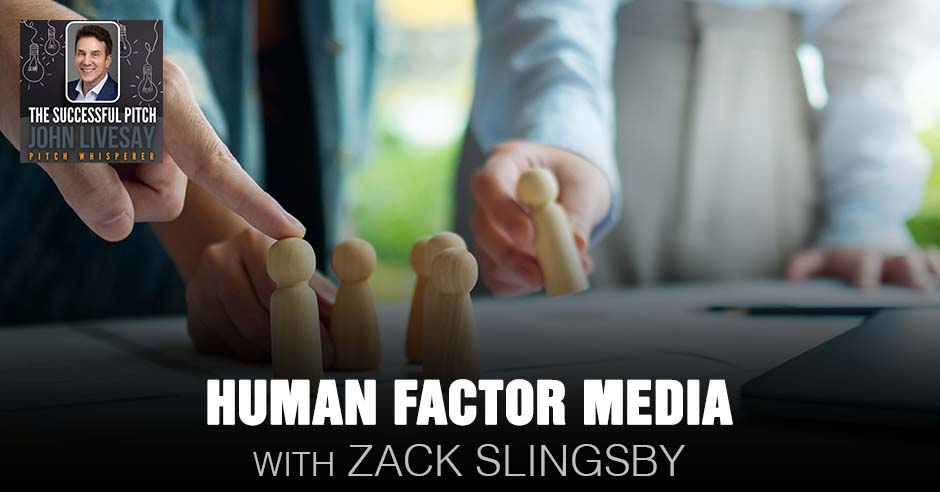
Storytelling is an effective way of getting people to buy into what you are selling. As long as you can harness the human factor in your story, you will always find someone interested in your brand. In this episode, John Livesay teams up with Zack Slingsby, the Founder of Human Factor Media. Zack discusses using literary techniques to gain attention and how to effectively leverage story-telling. Full of great insights, tune in and learn how to use story-telling to create the perfect pitch.
—
Listen to the podcast here
Human Factor Media With Zack Slingsby
My guest on the show is Zack Slingsby, who created an agency that does amazing videos using storytelling. He said, “When you create wonder and awe with stories, you pull people in.” Find out what he means. Enjoy the episode.
—
My guest is Zack Slingsby, who is the Founder of Human Factor Media, focusing on redefining branded storytelling. Zack is a writer, Short Film Creator, and Founder of Human Factor Media, which is an award-winning branded storytelling company that has worked with leading brands and publishers to create videos people want to watch. He graduated from Fordham University, received his MFA from the New School, and published in over a dozen creative and industry publications. He believes the ingredient that makes a literary story great is the same that makes for a great video. Zack, welcome to the show.
John, how are you?
I’m great. It is nice to have someone so creative as you on the show. Let’s go back to your own story of origin. You can go back to childhood, college, wherever you want. Were you someone who loved to read? Obviously, you have a lot of books in your background here. I’m curious as to your own interest and passion for where storytelling got.
My love of reading came a little bit later like early college. Growing up, I loved shows. The emergence of basically TV shows had literary qualities, starting with the West Wing and Sopranos. Everything from the late ’90s through 2010. It was such a great time for television. That got me obsessed with storytelling. I would write the scripts for my favorite shows. Growing up, I would write my own versions of them alone for many hours while my friends were out doing more normal things at that time.
When I’ve got the MFA program after college, which is called the Master of Fine Arts, for those whose background may not be creative, I had been very obsessed with the traditional path for a creative, which is, do great work and try to find an avenue that already existed to push that work out there. In my case, it was literature. Everyone in the MFA is pretty sure that within a year or so, they will be Hemingway. They are pretty positive that it is common. You need to get discovered and write a perfect paragraph. You are side by side with these people. You build each other up and think, “It is not good. It is going to be me. It won’t be these other 30 guys. It will be me.”
Very quickly, that gets deflated. I had a good amount of early success. I finished a book, got an agent, and published some short stories. My book went out to press to be sold to a publisher. We went to all the big guys, and you have to get unanimous consent from an acquisitions board. With some of the big ones, Random House, Picador, and these guys, we had 9 out of 10 people say yes or it is 8 out of 12. It is short of where you want to be. At that time, it was in my early twenties and crushing. As I’ve got older, I went to Washington and started writing.
I saw the way branded content was going. It was a vehicle for storytelling. I thought that I would be very happy to have a career like that. Some friends and I started this thing where we tried to make creative and funny videos, and over time it evolved. We are this group of creatives who make story-driven videos for brands. I do not know if that was a longer answer than perhaps you intended.
[bctt tweet=”Fear kills creativity. ” username=”John_Livesay”]
Everyone’s story is not usually linear. You took your love of literature and created something that pulls people in. That is what a good story does, whether you are watching it as a video or listening to someone tell you a story. What are some of the mistakes that you see people making when they create branded videos these days? Is it that they are trying to make it like a commercial? Is it they are making it too long or they are trying to be funny, and they are not? What are some of the things that you see entrepreneurs do that aren’t working?
There are different tiers to this. There is a startup, a brand, and obviously, the established brands. We have gotten worked for both kinds and done a lot of work with nonprofits and startups. We have also gotten to work with some bigger brands like LG, Planet Fitness, and New York Post. Let’s say on the startup front. There is this need to focus on the product because you feel this is your one chance. You have this certain amount of money and are going to do a blast. You have to get home the differentiating features of your product or service very quickly.
I am totally sympathetic to that and understand how that could happen. It is not always the wrong strategy either. Maybe that is where you are but at a certain point, that brands have to ask themselves if they see value in being even tangentially entertaining and some scale going into the entertainment business. The age of the traditional ad, we all agree, is behind us. We need to find a way to access a wonder and awe in the people we want to reach.
Teaming up with actual storytellers to do this tends to be a strategy that is rewarded by the market. Laughter is older than language. Music is older than human speech. When you only appeal to the rational side of consumers, you are leaving all these other things on the table. The new trends are bearing this out more and more.
How did you come up with the name of your company, Human Factor Media?
I do not know. There is a novel by Graham Greene called The Human Factor, which is about spies. There was one passage in that where he said that he could empathize too much with both sides. He can empathize with the communist and the capitalist. It drove him crazy because he could see the human factor in both camps. More to the point is we are trying to find something resonating about a story that moves beyond the product. Those are the stories you could eventually find on a streaming platform.

Human Factor: We are this group of creatives who make story-driven videos for brands
We are trying to find something that relates to people as people. There is an old definition of commerce that you want to lower uncertainty about one another so that we can exchange value. I thought that is what great branded content does is lowers the scale. I know this is primarily an audience of entrepreneurs. I’m sure you know more than I do but the great salespeople I have met were not even doing sales anymore. They found something else to do that simulates the effect of sales. They are not saying over and over, “Can I have five minutes of your time?” They found some creative way to lower the skepticism of the prospect. Narrative video is simply a way to scale that strategy.
It is interesting because, in the core startup world around trying to get investors, the phrase is, “How do you mitigate the risk for an investment?” You are saying the same thing needs to happen even at the consumer level and the B2B level when you are selling a product. Are there certain things that you think a story needs to have so that it, in fact, resonates?
It has to be motivated the way the story is motivated, which is to say that it is not motivated to manipulate an end product. It has to be motivated by a genuine desire to tell that story or create that piece of art, for lack of a better word. That won’t be the priority of every brand out there and fair enough but it will have to be something where you say, “We are telling the story of this woman or this man on this journey.” That has to be all we are in this for and the whole point of this video. It can’t be that 2/3 of the way through, and we give you a list of the reasons why this razor is better than the razor that you are currently using.
Are there any rules about how long a video should be? Thirty seconds is too short. Ten minutes is too long. Anything like that?
I do not think so. I think that people say that maybe. When we do a campaign now, we do long videos, sometimes five minutes. We did a documentary that was 30 minutes. Sometimes they are long but we always break down tons of small content from that. You can take 15 to 30-second clips out of everything. We try to cover the scorcher of the content strategy. I do not know. It is a weird time. TikTok is 15 seconds but Joe Rogan’s got 4 hours and he is the most popular media figure out there. It is so bizarre. What do you think about that, John? Have you had any experiences?
A good story pulls you in and keeps your attention if there are open loops, hooks, and something unexpected. It depends on what platform the story is but in terms of businesses that have hired you, as you mentioned, Planet Fitness and LG, can you tell us a story of what the scope of work was or what problem they were trying to solve, and how were you able to use storytelling to solve that problem?
[bctt tweet=”Lower the risk so you can share value.” username=”John_Livesay”]
Let’s say Planet Fitness was integrating a new product into several locations. That was more along the lines of traditional branded storytelling, and they had something they wanted to impart to an audience. It had something to do with the brand itself. It wasn’t a documentary or comedy series as we have done for other companies. In that case, in terms of content length, we did, once again, everything that was the long stuff, 3 to 4 minutes stuff. For the short content for LG, we were brought in similarly to do a product integration video. We’ve got to talk them into letting us do a 90-second to 2-minute vignette to go along with it.
A common pattern is we will start the conversation on the level of traditional branded videos and we will say, “Give us some percentage of the budget over here to do something that is a little more experimental, run that through your channels, and see if there is any value to this.” Oftentimes, the client is surprised and wants to experiment more.
We have case studies on a ride-hailing app that did a comedy music video side by side of a product video. We did this with a couple of nonprofits, a water company that we are doing a documentary for now, and a jewelry brand that did a series of funny videos. In some sense, this is a trend but also, by and large, most companies are still making ads. The market is wide open for these experiments.
Are these videos living on their website and their social media platforms, and that is it or where do they go?
It is everywhere. We are engaged now pretty much ends at the content creation. We do not oversee the distribution generally. Sometimes occasionally, we do, but they are ad assets, social videos, and sometimes website videos. Sometimes, they are sales videos. How weird is that? We are working with one company now in the tree-free paper product space, which is a very niche space. We want to use these to strengthen our prospects or leads because what is better a sales intro than some content that seeks to lower the guard. It is not coming in with five reasons why you should book a meeting with us.
That brings up the point. We briefly discussed the relationship between sales and marketing. That has been a theme that comes up a lot in our conversations lately. You have this strategy for creative content. You live in the clouds, which is fair enough as a lot of us do. How do we connect that to our actual sales strategy? I do not know. Have you experienced that at all?
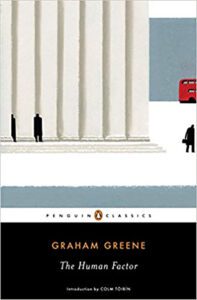
The Human Factor
Yes. As a storytelling speaker, I often get brought in because they realize that they are not telling stories in the marketing materials or what is coming out of the salespeople’s mouths. Especially in medical tech sales, they love to get stuck into the percentages. This makes this surgery go 30% faster. Speeds and feeds, as I call it, in the tech world. When did you start to get them to tell a story of what is 30% faster means, and who cares about that? Is it strictly an ROI? In one case, I helped them tell a story of how it made a patient’s family not have to wait an extra hour to find out if somebody was going to have cancer or not.
You start going, “It never occurred to us to tell a story and let alone make the patient’s family a character in this story.” Part of what I do is take these facts and figures or even basic case studies and turn them into case stories, and then they start using that as their marketing material. As opposed to listing features, they start having little 2 or 3 sentence case stories about how happy the family was. The doctor, who was the hero of the story, came out an hour earlier than expected and put them out of their waiting misery.
You are doing the human factor the same way we are.
When I start to work with sales teams, sometimes they think, “If I’m going to tell a story, surely I’m the hero of the story.” I go, “No, the goal is to make a potential buyer.” If you are telling a story about a doctor, the doctor is the hero. Another doctor sees himself in the story and wants to go on the journey. People are like, “I thought I was a pretty good storyteller but I have never thought about how to make people see themselves in that story.” When that happens, we are all in.
My ad week about what Super Bowl commercials I think are the best, and it is fascinating to put it through the lens of, “Was it entertaining? Yes. Is it memorable? Yes. Do I remember the product? Whoops, no.” There are a lot of boxes to be checked off besides that was great content but I have no idea who or why that brand should be part of that content.
That is a common thing that we come up against, and it is a fair objection. What do you think is the difference, though, between storytelling on TV and digitally?
For certainly like the Super Bowl that is appointment viewing and what is fascinating about that is the commercials now are released before the Super Bowl. People are literally interested in watching your commercial and seeking it out. Not just the trades are covering it. The Today Show was revealing a new Super Bowl commercial every day before the countdown.
[bctt tweet=”The most coveted real estate now in media is the subscriber base on social channels.” username=”John_Livesay”]
Do you think we have a long time left to do that? Do you think that is dated or that it is going to expire? Do you think we will always do that?
Obviously, the award shows are struggling for viewers but in sports, when people get together, it is a whole experience and eating good foods. It is almost like an American tradition. There is still that window. I saw a brand using storytelling, and they weren’t paying to be on the Super Bowl yet. They were part of the Super Bowl buzz.
I would love your opinion on this. It is called Enfamil, and they work with babies that are premature. They started showing commercials, “This baby was due on February 13th, which is when the Super Bowl was airing but it came two weeks early. We are taking good care of it.” It was very clever marketing on a lot of different levels to get part of that buzz without having to pay the fee to run it on that.
Much of marketing is cleverness like that. I do not think that is our core competency. I wouldn’t have thought of that. I had to leverage what is going on in the country to get attention, for what you are working on is a special skillset. It is not ours. We have an ability to tell stories that will be as impactful as they will be in five years. They can transcend what we do. That is our goal for what we are making and to try to appeal to people the same way your favorite show would appeal to you.
Can you give an example of that jewelry one you said that had some humor in it?
In that case, what we were doing was how can you compete as a jewelry brand. You have Diamonds Are Forever. Kate Spade had a web series. I remember they brought in Tina Fey or Amy Poehler or somebody but products like that are CPG products or luxury products. They only can compete on the story that they are going to tell. The commodity itself is too ubiquitous. We are too used to it as consumers and too commonplace. To me, it is crazy that when you are in a highly competitive market like that, you are not figuring out ways to make the coolest web series.

Human Factor: It is crazy that when you are in a highly competitive market like that, you are not figuring out ways to make the coolest web series. That is the greatest tool you are not using if you are in that space.
That is the greatest tool that you are not using if you are in that space. We tried to do some very small versions of that. You could see how these things can be scaled up or down based on resources and the size of the brand. In that case, it was a smaller one. It is accessible to everyone. To try to use the power of entertainment, you do not have to be Prada or Kate Spade to do that. It is so strange what is happening when you touch on it with the television medium. Movie stars are trying to find television shows to go on or TV series. The TV stars are going to YouTube.
The YouTube stars do not care about anything. Those people who have 5 million to 10 million people do not care. They do not want anything else. They feel they are the kingpins of entertainment. They are right. The most coveted real estate now in media is the subscriber base on these social channels. It has happened very quickly and is bizarre but anybody can try to do that. They won’t all succeed but their barriers to entry are gone. You have to make a commitment to recurring storytelling and genuine entertainment value. We think that, in our humble way, literary style can have someplace in that.
Let’s say you have got this amazing web series you have created for this diamond company. If the salespeople at the retail stores are not aware of that and someone comes in and references it, all that creativity and momentum has gone. If, on the other hand, there are images in the store reminding people of it or maybe they didn’t see it and go to a QR code and download, or the salesperson brings it up, now that is when sales and marketing are working well together. That is what I love to see.
Your whole goal is to get someone to put something on their shortlist of things they are considering and break through the clutter. That is what you are doing. For me, as a speaker, there are some similarities in what you are doing as an agency because every agency I have ever worked with is usually asked to come in and pitch or present. It is between you and 2 or 3 other agencies or other people who do something similar to what you do. We all have to sell ourselves, our company, and what makes us unique.
I certainly have to do that as a speaker. We will tell a story about another talk I gave and the outcomes that happened that people say, “That is what we want.” Do you have any tips for someone? We are all in that. If we do not have stories, my whole line is we are drowning in a sea of sameness. I do not think it is good enough for anybody to go, “Let my work speak for myself.” I have had people hire me from watching my demo videos, my TEDx, which is lovely but we still need the skill to sell ourselves to get picked. People could watch your amazing videos and go, “We want that,” but I’m still guessing you might need to quote, pitch, interview, whatever you want to call it.
We do that every week. We generally get hired through making presentations on spec. We think that we haven’t been an idea. We want to present them and try to get the attention of a brand manager, a CMO or a business owner. I have an incredibly deep respect for salespeople after starting this business that I lacked beforehand. The answer is definitely, yes.
[bctt tweet=”Everything about the creative mindset is in opposition to the act of creation itself.” username=”John_Livesay”]
What is it that you say in those presentations without giving away any of your intellectual property secrets? My belief is that people buy your energy. I think because you are so likable and approachable, they think that this guy has the skills to do it. Probably another agency we are looking at might have the same skills.
At the end of the day, is he going to be easy to work with? Is he going to take our feedback? Is he accessible? Those are some skills and unique selling benefits that we sometimes might overlook. I have literally had given a presentation, an interview by a potential client to hire me, and knew they were looking at 1 or 2 other speakers.
My bureau agent calls me, “Congrats. They picked you. They liked your energy.” Rarely is it that spelled out. I spoke to the client later and said, “That was so nice of you to say shit.” I felt bad. I am better about myself. I felt energized about the possibilities of what you could do at our meeting. I figured, “If you make me feel like this, you will make the hundreds of people that are coming to the ballroom feel the same way.”
All that other stuff gets us to that interview. We have got a referral. They have seen your video. They did not see it at all or whatever it is, then we need to have storytelling. My latest book is The Sale Is in the Tale, which is a business fable. It is a story about storytelling. Your presentations are hiring us. We are going to tell you a story of why we are the best people to create your stories. It is very parallel.
We will have a couple of slides that our accolades, awards, and some brands that we have worked with him. We try to rush through that because it is important to say but it is not something we want to be overly self-conscious about or reference about. We get to a couple of slides on where content is going, how we move from the idea of commercials to the idea of the content, and the skip rate for, let’s say, traditional ads or the amount of money wasted every year on interruption marketing, which we become geniuses at obfuscating as consumers.
We get to the ideas themselves and usually have 2 or 3 ideas. To your point about the energy, I agree, and it is hard to articulate that and even talk about it because it is such a nebulous force. It doesn’t always work in your favor. You almost go through a prism of insincerity before you come out yourself again. You have to go through all these things to go back to who you normally are in your life. When that person comes through again, you are like, “Now I can talk to these people genuinely.” When we first started out, it was very hard for me to feel like I could be myself in those situations. That worked against us. I do not know if you have ever experienced that.

Human Factor: Creatives generally are hostile to routine and discipline. They do not want to be put in a category or a box.
I tell people the gateway to the Imposter syndrome is to start comparing yourself to other people. The minute when you start that, you are down that rabbit hole. If I start to find myself doing that, I go pull up like an airplane. We do not want to go down that path. It is a conscious decision, and it goes back to some core beliefs of who I am is enough. This is what I have to offer, and not needing it. It is like dating. Nobody wants to date anybody desperate and wants to work with somebody who’s desperate.
Sometimes when we pull back a little bit and say, “I may not be the right speaker for you but I probably know somebody who is.” Those kinds of comments as go back to mitigate the risk of working with you because we do not feel like you are being pushy. That goes full circle to why I love storytelling, and I like talking to people like you who make wonderful stories. Stories pull us in. We are not being pushed out a bunch of facts, figures, bells, and whistles to look at this price. “It is 20% off, this weekend only.” You are not creating that content.
That is self-consciousness that gets you into trouble. It is incredibly inherent to the creative mindset. It is a very weird and cruel trick of nature. Everything about the creative mindset is in opposition to the act of creation itself. Creatives generally are open to so many possibilities. It is hard to marry themselves to anyone. They become hyper-aware of cliché. They would rather die than repeat a cliché. They want to try new things but they think most of them won’t work. They generally are hostile to routine and discipline. They do not want to be put in a category or a box.
All these instincts could generally make you a good storyteller. They also can be paralyzing when it comes to something concrete and important like growing a business. It is like you try to convince someone that you have something to offer them. You have to go through that ring of fire to be able to come out of the other side and say, “I can help you here.”
What I heard you say is fear is the killer of creativity, and so you cannot be afraid of whether you get the business or not because then you can’t be creative at the moment. A friend of mine asked me to read the draft of something they are working on. He literally wrote, “That family made lemons out of lemonade.” Please do not say that. There’s got to be a better way to say that. We all need editors. Zack, if people want to find out more about the Human Factor Media, where should they go?
They can go to our website, HumanFactorMedia.co. We have got a portfolio on there as well as a form to contact us. You can also get in touch with me directly at [email protected].
Thanks so much for sharing your insights into what is going on that will continue to grow. I think you are in a good niche there. Congratulations.
Thank you. I appreciate this. It was good to talk to you.
Important Links
- Human Factor Media
- The Sale Is in the Tale
- [email protected]
- The Human Factor
- Better Selling Through Storytelling Method Online Course
Wanna Host Your Own Podcast?
Click here to see how my friends at Podetize can help
Purchase John’s new book
John Livesay, The Pitch Whisperer
Share The Show
Did you enjoy the show? I’d love it if you subscribed today and left us a 5-star review!
- Click this link
- Click on the ‘Subscribe’ button below the artwork
- Go to the ‘Ratings and Reviews’ section
- Click on ‘Write a Review’
Love the show? Subscribe, rate, review, and share!
Join The Successful Pitch community today:
- JohnLivesay.com
- John Livesay Facebook
- John Livesay Twitter
- John Livesay LinkedIn
- John Livesay YouTube
Just Say Yes With Jim Palmer
Posted by John Livesay in podcast | 0 comments

“Just say yes!” is Jim Palmer‘s battle cry. Get ready as the internationally acclaimed business coach shares valuable insights into building a business. John Livesay interviews Jim as he lets us have a look at how you can build your dream business. Jim also gives us a glimpse of his work mindset and why you need to take action. Tune in and learn more from a master of the craft and build your dream today.
—
Listen to the podcast here
Just Say Yes With Jim Palmer
Our guest is Jim Palmer and he talks about how the fear of perfection kills people launching their business idea. He gives us some insights as to what is behind this fear of perfection and how to overcome it. We also talk about his book Just Say Yes and Stick Like Glue, which cannot only apply to keeping customers but also keeping employees. Enjoy the episode.
—
Our guest is Captain Jim Palmer, who is the Founder and Creator of the Dream Business Mastermind and Coaching Program, the creator of the Dream Business Academy and the host of the Dream Business Radio, a weekly podcast based on his unique brand of smart marketing and Dream Business building strategies. His other business includes No Hassle Newsletters, Success Advantage Publishing and How to Sell from the Stage Like a Pro. He’s also the developer of the Cashflow Conversation Code as well as the acclaimed author of several books. In 2016 after raising four kids and leading his predictable life, he and Stephanie sold their home in Philly and live full-time and travel on their yacht called the Floating Home. Welcome to the show, Jim.
John, how are you doing? Good to see you and hear from you again.
Likewise. What a little adventure and creative third act you have created. I love it, and especially during a pandemic, I imagine there were a lot of advantages to that.
We were in Cocoa Beach in March 2020. Stephanie and I used to be by ourselves unless we wanted to go out and mingle on the docks or meet other people, but our life did not change that much. Other than the town that we were staying in, the marina was void of anything. If you remember it, it was a ghost town. It was a good situation because we were already used to being together 24/7 in a small space.
Some people were in a small home or apartment and had not planned on having to be there 24/7, but you had already planned your life in a space that did not require a lot of changing of location or trying to make things work because you already had set it up.
You mentioned a small adventure. We called it our big adventure. When we sold the house, we bought this boat, intending to do this for one year to go do something crazy. We live the typical, safe, predictable life like, “Let’s do something adventurous and exciting.” We moved on the boat. About six months in, we looked at each other and go, “This is way too much fun.” This is the fifth time that we have traveled down the coast from the Chesapeake Bay. We are in the Keys as you and I are talking.
It’s Gilligan’s Island, in a good way.

Just Say Yes: When you grow a business, you’ve got to be all in.
We are still on top of the water. We did not have any holes in the boat.
Why don’t you take us back to your story of origin? You can go back to childhood or college, wherever you want to start, when you started thinking, “I’m good at helping businesses grow or I want to get into the business world.” Any little nuggets that you could point to as the starting point of all this.
When you start getting a little older, you start looking backward a little more than forward. It’s amazing the clarity you have. Amongst the different jobs I had, I was the Head of Marketing for a training company. I spent ten years helping to grow a franchise. I was the lead trainer and the main support person for these brand new franchise owners, which is very much like I do, helping business owners market and grow their business, but who knew. It was July of 2000. My position was eliminated with that company and I thought, “I’m going to go get another job.” I have always worked for entrepreneurs. I’m very entrepreneurial.
I knew I would probably have my business someday, but Stephanie and I have four children. It never seemed to be the right time to make that leap. God had other plans because he made it like, “There’s no job here. Start a business.” One year into my what was then almost a year and a half of unemployment, I got cancer. It was a whole kerfluffle of circumstances that said, “Once you reach rock bottom, there’s only one way you can go in that’s up.” I started my first business and was very excited. I was a business owner. I had my cards that said, “President of my corporation.” It took me a full year to get my first paying customer. I did some part-time work.
That took off. I grew it to about $300,000 in five years and then I learned about internet marketing. That’s when somebody introduced me to Dan Kennedy and the whole GKIC world. I started learning direct response copywriting. I started my first internet company called No Hassle Newsletters and we grew that about 1,200 small business owners in 9 countries. It was a monthly membership where I created content and done-for-you newsletter templates.
I created a mail program so that we could print their newsletters. I started writing books, training programs and Success Advantage Publishing. We have published about 50 books for my books and my clients. We help my coaching clients get their books done. When we bought this boat, that was a decision I made. I did not want to work five days a week anymore. I restructured my schedule. I do coaching with my clients on Tuesday, Wednesday, Thursday and then Stephanie and I wish we could travel Friday through Monday. We’ve got to be at a Marina where we have some decent Wi-Fi and then if we want, we can travel again or do whatever we want.
Is there a common mistake you see a lot of entrepreneurs making that prevents them from growing their business? Are they wearing too many hats or is it like, “I read your great blog about all the what-ifs that we can what if ourselves in all kinds of horror stories?”
It’s all of these things like the what-if fear of perfection. Perfectionism is a big business killer. People don’t want to launch until it’s perfect. That all stems from not wanting to be criticized. As I say, “The biggest battle you will ever face as an entrepreneur is right between your ears and having the courage to play, win and not simply play, not to lose.”
[bctt tweet=”Stick Like Glue. ” username=”John_Livesay”]
A lot of the folks that I helped are not 22, starting full of pitch vinegar expression, on their second career, might have a home or had some responsibilities. Some of them would say something like, “I want to grow a business, but I don’t want to disturb what I have here.” When you grow a business, you have got to be all in. Whether that’s in marketing, free Facebook posts, LinkedIn articles, working with a coach or joining a mastermind, whatever that is, the people who grow the fastest in most cases, the highest are those that go through the fences every day.
I love this line that you gave us. “Fear of perfection kills launches.” Let’s double click on what you said. What’s behind most people’s fear of perfection?
Nobody’s perfect. I became familiar with this at a real gut level because I have written 6 books and my first book took 18 months. In reality, it took about under 1 year to write but it took me about 6 or 7 months to get the courage to publish it because then everybody would find out how challenged I am with the English language, what blew by him and my name is on the cover. There was a lot of fear about being criticized because who am I to be an author?
I went through that myself when I wrote my first book. I realized that negative self-talk of, “Who am I to be an author or a speaker,” can trigger imposter syndrome. Do you see that as something you help your clients with?
Yes. It’s interesting. A lot of my clients are in the 6-figure to multiple 6-figure ranges. The largest guy that I helped start a coaching program was doing $34 million. He had a very large business and wanted to do events. I used to put on events called Dream Business Academy. He wanted to do that. What I learned from working with startups, people in that mid-six-figure range, and him, everybody has imposter syndrome. Nobody feels good enough. He even said to me, which helps cement my belief that imposter syndrome is real, “I never finished college.” It almost feels like you are going to be found out that you are not all that your marketing says you are.
It is a real thing. As far as perfection, one of the things that helped me, you said when you wrote your first book, you were concerned as well, was that I was so afraid somebody was going to find an error or a mistake. I must have proofread that thing 500 times. Of course, me proofreading it does not guarantee anything. Somebody did reach out in 60 days. This was before on demand. We had to order 3,000 books or something like that. That’s when you had to print the books in 2009.
Somebody said, “There’s an error on page 34. You have a dangling participle.” I’m like, “What is a dangling participle? I have no clue.” I sat in my chair, reading this email. My heart was probably racing and my palms were sweating like, “I knew this was going to happen.” I responded and said, “Thank you for letting me know. I’m going to tell our editing team and we will fix it for the next printing.” I hit a comment. I said, “How did you like the book?”
This guy, who pointed out my dangling participle loved my book. “I know why you need a newsletter, the type of content to use, the ratio of content to pictures and paper to use.” He loved my book. Thankfully, I was smart enough to recognize that my imperfect book was getting customers for me and providing. What I tell my clients when they struggle with this is, “You make a decision. You choose to be judged on the quality of the content, the training and the service you provide and not the imperfect way in which you provide it because it will always be imperfect.”

Just Say Yes: Choose to be judged on the quality of the content, training, and service you provide and not the imperfect way in which you provide it because it will always be imperfect.
For anyone who is working on a book, I have learned a valuable lesson around proofing, which is to record the Audible of the book before it goes to print because you will probably find typos that you and your copy editors missed when you read it out loud. My book The Sale Is in the Tale is 40,000 words. That took four 90-minute sessions to read that, which you would not normally do to prove a book, but if you know it’s being recorded for Audible, then you go, “Wait a minute. There’s a typo or that does not make sense. How is it that nobody caught that?” Hopefully, that’s a little nugget for everybody.
Let’s go to your book Just Say Yes. This concept of not letting the fear of perfection or criticism. I can’t circle that and underline that enough for everybody. I hear a lot of people talk about the fear of perfection, but I don’t think anyone’s dug down to where you were like, “What’s behind that not? Can I tolerate somebody criticizing me?” If you can heal that and let go of what other people think, the judgment or the constant pressure of, “Did you make the New York Times bestseller list yet?” You are like, “That’s not my criteria of how I judge success,” then you are a lot freer in life. Hopefully, we don’t have to wait until we are in our 60s to get that. That’s why you and I are out there preaching to people who are younger than we are saying, “If you can let this go early, you are going to be much happier and be able to say yes more often.”
My last three books were written and published in 60 days. Bill Glazer used to be partners with Dan Kennedy back in the day and I heard him say once, “My imperfect book is getting me customers and serving some customers while your perfect book is still in your word processor.” There’s an old term word processor. I’m like, “That’s right.”
You mentioned New York Times bestseller. What I often tell people is, “How are we going to get this to be a bestseller? There are strategies to do that but let me check in with you why we are writing the book.” I will share my viewpoint because they hire me. I’m sure they are interested in what I say. I don’t know this for sure, John. Maybe you do, but you have got to sell 10,000 books in a short period to even be considered for a list like that.
I said, “Do I want to sell 10,000 books using some tricks, strategies or whatever, get to that scoreboard and you can then hold the badge ‘I’m a New York Times bestseller,’ or with Jim Palmer rather than sell 200 books to prospective customers and have 20 of those people become coaching clients? I will go for the twenty coaching clients.” My ego is, “I’m not about the badge. I’m about my business.” I’m about to be able to afford diesel fuels so I can get back to the North in the summertime.
Another one of your books that’s one of my favorites, because I love the title and the colors, is Stick Like Glue. It’s about creating this bond. This was an interesting question I have been working on for you in our interview. We know how important it is to get our customers to stick and return so we don’t have to keep spending money to get new ones. During this time of The Great Resignation, where so many people are leaving their jobs, I’m wondering if your principles of getting your customers to stick could be applied to small business owners or big companies who want to get their employees to stick?
It’s interesting because I interviewed somebody who’s an expert on workplace staff changes, all the things that we are talking about. She’s a client. We are helping her write a book, Workplace Detox or Detox the Workplace. It’s all these companies, large, small and everything in between have become toxic for several reasons. It goes to all these different things where there’s no trust. It’s my way or the highway. There’s no communication. People don’t see the vision.
Her name is Julie Barcus. The one thing she said to me is, “Have you ever been behind a semi-truck going down the highway and you can’t see around it, so you don’t even know if it’s safe to move out of it?” I said, “Yeah.” She says, “That’s what employees feel like. The boss has the vision. He’s got the view. He knows where you are going, but the people behind them have no clue and meanwhile, you are in the big office going, ‘I have got staff. I’m paying them well. Do their job. Everybody’s happy,’ that’s not the case.”
[bctt tweet=”When you start getting a little older and looking backward a little more than forward, it’s amazing the clarity you have.” username=”John_Livesay”]
It’s The Great Resignation that’s a great term, but to me, it’s like, “How could anybody stop working? There are probably ways to do it.” There’s a big surge in entrepreneurship. People going, “If I’m going to work 80 hours, I might as well do it for myself and have some shot at future.” It was the ‘40s or ‘50s when there was this giant blackout in New York City. Nine months later, babies came as well. As a result of the pandemic, this great reset and everything else, small business owners are popping up left and right.
You said something there that one of your clients has a book titled Detox the Workplace. When you frame something from your personal life and put it into a work situation, our brain loves that because it’s connecting dots that have not been previously connected. One of my most successful soundbites as a sales keynote speaker is, “Are you stuck in the friend zone at work?” People say, “I know what friend zone dating is. What’s the friend zone at work?”
I say, “It’s when they say they are interested and you never hear back.” Everyone laughs. If someone is thinking of creating the name of a book, a business, a newsletter headline and anything that you help people with, try to craft it in such a way that you are combining something that people know what it is and put a little spin on it that grabs people’s attention and you are so good at helping people do that. Tell us about your mastermind.
I want to go back to something you said that was very important. I don’t lose chance on the mastermind but whether it’s a headline on a sales page, website, squeeze page or a book title, the headline and the title are made to grab your attention. It should make sense to somebody when they see whatever it’s 1, 3 or 5 words. The subtitle or the sub-headline cement the whole thing. That’s a big part of what I do.
One of the things I help my clients in the mastermind is I said, “There’s going to be a big shift in your income through the revenue of your business, but your income will go up dramatically when you focus more on who you are and not what you do. I guarantee you, no matter what you do, 10,000 other people also do what you do.”
People are connected to people who they believe have the best chance of satisfying them and want hope in certainty. It’s more about who you are. That’s why I take so much. When I branded myself the newsletter guru years ago, I never went to school for design or writing. I know how to do great newsletters and people took to the fact that I’m the newsletter guru. I must know what I’m talking about.
When I started coaching, I did not want to be Jim Palmer Small Business Coach. I created the whole Dream Business brand. The mastermind is virtual. I was talking with a guy that I have known for a long time. I started my mastermind in 2009. I was traveling, going to a lot of conferences and other entrepreneurs were talking about different masterminds, but they all required you to get on a plane once a quarter or something.
Whether you fly to Chicago, Illinois, Las Vegas, California, sometimes you go to Cancun or whatever, but it’s always like a day of travel, mastermind for 1 day or 2 and then travel for 3 or 4 days. I got the idea. “What if we did it virtually and we all got together virtually?” I don’t think I invented virtual masterminds, but I’m one of the first to make it popular and that’s how I started in 2009. I’m still virtual. We meet once a month on my private conference line. We mastermind through some of our members and some of the challenges or questions they have and then I do private coaching with the members on Tuesday, Wednesday and Thursday.

Just Say Yes: The biggest battle you’ll ever face as an entrepreneur is right between your ears and having the courage to play to win and not simply play, not to lose.
That’s great because you are not learning from yourself, but you are also learning from the other people who are successful enough. Things that have worked for 1 person in 1 industry can be transferred to not have to reinvent the wheel for every single part of your business.
What I love most about our group calls is that I have what’s called profit seats. Sometimes people call them hot seats. I call mine profit seats. On a given call, we might do five profit seats and we could talk about marketing, what’s an idea and how you connect with these people. In a very safe zone, almost every somebody will get transparent. We had our call and one of our ladies in the group, a very tiny, petite person and she has a high, squeaky voice goes, “I have a voice like Minnie Mouse.” I’m like, “My clients are usually men. I feel like I’m not being taken seriously. Many people chimed in about Mike Tyson being a boxer but got a voice like Minnie Mouse.” We gave a lot of love and support.
That’s one of the best things about our group and there are so many other things about that like, “I’m afraid to grow. I have this idea. I want to write a book.” I said, “I got this one.” “What if the book sucks?” There is so much comradery, accountability, and everybody pushing each other during the group calls and the work that I do with them privately on our coaching calls. It’s a wonderful experience.
When you are talking about the need to have even a good subtitle that grabs someone’s attention and breaks through the clutter, I talk about it in terms of most people are drowning in a sea of sameness. “I’m an accountant, lawyer, architect, financial planner.” Everyone thinks, “There are so many of you out there. You are all the same. Are you not? Real estate people on and on.” The need to have something that makes you stand out and that people can put a hook on like, “John is the pitch whisperer. Jim is the newsletter guru. What he does is he builds an iron fence around your business,” that’s a visual.
We know what a fence is and the fact that it’s made of iron. It’s not going to blow over in the wind and you think, “How can a newsletter make something an iron fence that people can’t see in my clients? I’m so intrigued. I need to know more.” That’s what the goal is. You want to have the conversation of, “Do people even read newsletters?” Our brain is going into 100 million. At a time when people are not reading newsletters, that’s the time to do one because you are going to stand out and on and on.
We are talking about print and mail, paper and ink newsletters, not the email newsletters, which only get read by about 6% of your customers at best. We have known each other for a long time. I used to go around the country speaking about newsletter marketing. In a large way, that’s how I grew No Hassle Newsletters. I never marketed my talk as a newsletter talk. It was all about retention-based marketing. How smart companies take more of their energy, effort and resources and don’t figure about new customer acquisition. It’s about how do I get and keep the customers I have longer. We know that customers that stay connected with you longer, spend and refer more, which is pretty much the title of my second book, Stick Like Glue.
Once people understand the relationship between faster growth, higher profits, more referrals and repeat business, then I come in and say, “The newsletter is the best and most effective way to do that. Every month they are seeing you in their mailbox, learning about some tip.” You don’t even have to be about what you do. Maybe it’s about how to keep your car running. It could be anything, but as long as they see your name and the masthead at the top, they get your newsletter every month and you stay top of mind. When they are ready to buy or refer again, they will remember your name.
If people want to find out more about you, they go to GetJimPalmer.com.
[bctt tweet=”Perfectionism is a big business killer. People don’t want to launch until it’s perfect, and that all stems from not wanting to be criticized.” username=”John_Livesay”]
That is the home base. Everything stems off there. I probably got five at this point that I have pared down. GetJimPalmer.com is where people can connect with me. I can say one more thing looking backwards. One of my longtime mastermind members, Dr. David Phelps, wrote a book called What’s Your Next?. One of the chapters was about building your legacy. I know what a legacy is and I thought, “I’m so young. I want to think about my legacy. Maybe I will go down to two days a week because I love my lifestyle,” but I felt conflicted that I’m supposed to be helping more entrepreneurs the skills and the gifts that I have.
I said, “How can I do that if I only want to work two days a week?” I decided to make all of my six books free in the digital download. I found a way. I’m not going to share it here. My Kindle books are free. Not for a ten-day promo. You can go to Amazon and type in Jim Palmer. That will get you an old Baltimore Orioles pitcher. Type in one of the titles of my book and you will see my author page. You can download all six books for free. They are in the iBookstore and also at BarnesAndNobleBNN.com, but you can get all my books for free.
Jim, thank you so much for helping so many people live their dreams because a lot of people have given up on their dreams and people like you help keep them alive.
I appreciate it, John. Thanks for having me on.
My pleasure.
Important Links
- Just Say Yes
- Stick Like Glue
- Dream Business Mastermind and Coaching Program
- Dream Business Academy
- Dream Business Radio
- No Hassle Newsletters
- Success Advantage Publishing
- How to Sell from the Stage Like a Pro
- Cashflow Conversation Code
- Blog – What If It DOES Work?
- The Sale Is in the Tale
- GetJimPalmer.com
- What’s Your Next?
- Jim Palmer – Amazon Author’s Page
- BarnesAndNobleBNN.com
- Better Selling Through Storytelling Method Online Course
Wanna Host Your Own Podcast?
Click here to see how my friends at Podetize can help
Purchase John’s new book
John Livesay, The Pitch Whisperer
Share The Show
Did you enjoy the show? I’d love it if you subscribed today and left us a 5-star review!
- Click this link
- Click on the ‘Subscribe’ button below the artwork
- Go to the ‘Ratings and Reviews’ section
- Click on ‘Write a Review’
Love the show? Subscribe, rate, review, and share!
Join The Successful Pitch community today:
- JohnLivesay.com
- John Livesay Facebook
- John Livesay Twitter
- John Livesay LinkedIn
- John Livesay YouTube