
The Leadership Gap with Lolly Daskal
Posted by John Livesay in podcast | 0 comments

Episode Summary
Today’s guest on The Successful Pitch is Lolly Daskal. She is the author of The Leadership Gap: What Gets Between You and Your Greatness, and she has amazing insights as to how you can be a better leader, and that everyone is a leader who influences somebody, impacts somebody, or makes a difference in some way. She has a formula for confidence, it’s one of the best I’ve ever heard. You’re going to want to be sure to listen to what that is, she said, “Leaders inspire people, but before they do that they have to inspire themselves.” And of course, you have to know yourself to do that. And she said, “Vulnerability is the new strong,” and, “Instead of looking at failure as something to avoid, look at it as a teacher, and not an undertaker.” I can’t wait for you to hear all of her tips on how to become a better leader.
Listen To The Episode Here
The Leadership Gap with Lolly Daskal
Hello and welcome to The Successful Pitch podcast. Today’s guest is Lolly Daskal. Lolly’s one of the most sought after executive leadership coaches in the world. She’s got cross cultural expertise that spans over 14 countries, 6 languages, and hundreds of companies. My goodness, that’s a lot of languages and travel. She’s the founder and CEO of Lead from Within, which is her proprietary leadership program that’s designed to be a catalyst for leaders who want to enhance performance and of course, make a meaningful difference. Not only in their companies but their lives and even the world. She’s got a really clever mix of modern philosophy, science, and nearly 30 years coaching top executives. One of her many awards is that she was designated a top 50 leadership and management expert by Inc Magazine, and Huffington Post honored her with the title of quote, are you ready for this, The Most Inspiring Woman in the World. So I am thrilled to have her on, she’s got a great book coming out that we’re going to be talking about called, The Leadership Gap: What Gets you Between You and Your Greatness. So Lolly, welcome.
I’m so happy to be here, thank you, John.
I am very impressed that you earned this title. So let’s start with that, The Most Inspiring Woman in the World. How did that come about?
Okay so nobody knows this, I’m blushing right now. I don’t know how it came about. It was something that was done, and something that I don’t really spend too much time reflecting on, and I’m very honored, but my whole purpose is to be of service to others. If I inspire others, then I can sleep at night, because that’s what I’m meant to do.
Yeah, that’s really what it’s all about, isn’t it? But that’s what’s inspiring I think, is I would like to just start with getting you to define, because you have such a global perspective, let’s have you define two words. The first one is, inspiring, and then the second one is, leader. So if you want to combine either one, say, “A good leader is someone who inspires, and inspiring is,” I’m going to let you free form with that.
Absolutely. First of all, I love that. I love this. Inspire, if you look at the word inspire, it’s about in, right? It comes from within. If you look at the best leaders that are out there, there are leaders that lead from within. I think that anything that we do, to leave a mark, to be admired, to make an impact, to make a difference, has to start with oneself. Leaders inspire, and we inspire leadership within ourselves. I think it’s almost like a full circle when you talk about inspire, and leaders.
What I hear you saying is, in order to inspire others, you have to first inspire yourself. Would that be accurate?
Well, you have to inspire yourself, and the thing is, is that you have to find something within yourself that inspires you, right. So inspire yourself about yourself, and then it’s almost like if you understand yourself, you can understand others. If you know what inspires you, you can understand what inspires others.
I like that a lot because it’s all about empathy, isn’t it? If you’re trying to get other people to take action, follow your lead, be part of your vision, you have to put yourself in their shoes and say, “Would this inspire me? Do I see the value in this, and am I as committed as I’m asking them to be.”
In my practice for over three decades, I found something to be very true; is that there’s a pattern in human behavior, is that when one person thinks they’re a certain way, they think nobody else is like that. What I have found is, there is a pattern. If one person is suffering from let’s say, self-doubt, then there are many others that are suffering from self-doubt. We have to realize that we’re not on an island. That as human beings we have a lot more in common than we think, and a lot more going on that is concise with another person. You don’t even have to put yourself in somebody else’s shoes as much as say, “What does it feel like for me, to be in this position? There are times when I felt insecure. There are times when I felt self-doubt. I’m sure that’s what it’s like for someone else.” So we really have to get to know ourselves and to understand ourselves, in order to understand others.
A lot of people are sometimes afraid to show their vulnerability, “I’m the leader, I’m supposed to be perfect all the time. I can’t let my team see that I’ve ever had doubts or worries.” What are your thoughts on that?
I think it was over 20 years ago, I coined this phrase in an organization and I said to the leader, “Vulnerability is the new strong.”
And he was like, “What do you mean? What do you mean?” I said, “The more vulnerable that you are, the more you show your true colors. The more you tell them that things aren’t going right, you’ll have an organization that feels, A, connected to you, B, they’ll want to help you, and three, they’ll be part of the solution.”
So that’s where the strength comes from. I said, “Try it, try it for one month. Try to be more transparent than you are,” because his way of leadership was, “It’s my way or the highway.” I said, “Nobody feels that you’re human, and you have to bring some humanness to who you are, and he goes, “How do I do that?” And I said, “Well, vulnerability is the new strong. That’s your motto.” And it really worked. It took him a little bit more than a month to catch on to what it meant, but people kept saying, “Hey, did you drink Lolly’s Kool-Aid?” Because they were like, “What did you do to him? What’d you do to him?” And I just said, “Well, we tapped into his humanness.”

Source: Pexels
[Tweet “Vulnerability is the new strong”]
Nice. Well, I can’t tell you how many investors I’ve interviewed that say, “You know, when people pitch me for money, be a human. Don’t pretend like you have all the answers,” and the same thing is true when you’re pitching someone to buy your product. You need to show some vulnerability in the pitch, I think. Can you expand on how someone could be vulnerable and strong at the same time that they’re pitching, let’s say to get a new client.
Absolutely. I believe anything that you do in your business, comes to pitching, comes to having a conversation. I think you have to bring your best self forward, and that means, everything that you have to offer, has to be put on the table. Usually, people think I’m only going to talk about all the great things about who I am. And I find it very exciting actually, and very enticing when someone says, “You know, I have these skills. But I notice that I have these other skills that might not always work, but I’m mindful of them, and I’m learning to leverage them, but I’m aware of them.” That to me makes someone vulnerable, makes them strong because they realize they’re a whole person. They’re not only one side of only doing great things, but they’ve made some mistakes and they’re learning about it, and they’re leveraging it. I’d rather be aligned with someone like that than someone’s always like, “Everything is great, and everything is wonderful,” because it doesn’t really work that way.
One of the things that I’ve noticed when I’m coaching people on how to pitch to get new clients is, if you tell a story of a time when there was a problem, because let’s face it, there’s usually some bump in the road during a long experience with a client, but how you handled it. You didn’t keep it a secret from them, you collaborated with them. That’s a much more compelling pitch, “That person is going to have my back,” and you tell the story of when it wasn’t always perfect. That really separates you from just one hit after another.
Absolutely. You know, I always tell my clients that failure should be a teacher and not an undertaker. Some people think it’s like the death of them, and I always say, “Failure is a delay. It’s not a defeat. It’s temporary,” I always tell them it’s a detour and it’s funny because most people want to not talk about it, but I think failure is something that we cannot avoid. It’s something that actually is part of our learning lessons. So I think it’s very important to talk about failure. I fail all the time, and it just means that I have to try a new way, to A, try it in a new way, or do something different. Think in a different way.

Source: Pexels
[Tweet “Failure is a teacher not an undertaker”]
I love that, well I’m all about inspiring people to be confident when they pitch. Let’s talk about The Leadership Gap, your wonderful book that really, you’re defining the difference between what people should be focused on, versus what they actually do when they’re managing people. Can you tell us what the big gap is?
Yeah, so the big great thing about this book is that if you learn this system, it’s situational. That means that every time you have a meeting, every time you meet someone, you can ask yourself this inner question, “Should I stand in my greatness? Or will I reveal my gaps?” And just by asking that question, you will know how the meeting goes. So I’ll give you an example.
Please.
There are seven archetypes within the re-think system. I’ll give you the first one so you’ll understand how it means to stand in your greatness, or stand in your gap. Let’s say you have a business, right? And you want to make an impact in the world and you’re very passionate about this business and this new venture. You need to be a rebel, who is confident, in order to be able to pitch that in a way that it comes across, that it’s a magnificent idea. So you need to be a rebel who is confident.
But guess what? For every single rebel that is confident about what they want to do in the world, and what business they want to create, there is a gap that we feel like an imposter, who has self-doubt. If we are not mindful of that, that means when we get up to pitch, when we get up to tell our story, if we’re not feeling good about ourselves, if we have self-doubt, if we feel like an imposter, that will come across. So we have to ask ourselves, “Will I stand in greatness as the rebel who is confident, or will I allow my gap to lead and show that I feel like an imposter who has self-doubt?” That in itself will be a game changer when you’re pitching.
It’s situational. You can ask yourself that question, and you could pivot and leverage the imposter. In my book, I talk about seven different ways that you can leverage the imposter, that you don’t have to show up with self-doubt. That you can stand, and pitch, and be the rebel who’s confident.
Well, I think almost all of us have experienced that feeling of, someone’s going to tap me on the shoulder and say, “I’m sorry, there’s been a horrible mistake, you don’t know what you’re doing, get out of here.”
Exactly. Exactly.
Can you share with us one of the tips of how to deal with this imposter syndrome that you mentioned, your seven of them?
Yeah. I want to share two because I want to bring as much value as I can, and my research shows that there is 99.9% of us that feel this way. So, if we can help the 99.9%, let’s do that, right?
Yeah.
Interestingly enough I do coach the 1% because he feels he has no imposter, and that he’s filled with confidence, so much confidence, and he hired me because he wanted to learn empathy. He goes, “Teach me how to have empathy, I don’t have empathy for someone else because I have no self-doubt.” Let’s go back to all the rest of us who do suffer from the imposter syndrome, and who has self-doubt sometime or another.
The first thing I think I’d like to share a ritual that I do, that I think can help people. Every night, I do a two part ritual. At the end of the evening before I go to sleep, I ask myself, “Lolly, what did you do well today? What did you do that was really great today? And what did you do,” either it’s a skill, or having a conversation, or making an impact with someone. When I think about that, and I go, “Wow, that was really great.” Then I say to myself, part two, “What can you do tomorrow to be even better?” So I’m doing two things in this exercise, which we’ll learn to leverage the self-doubt and the imposter that maybe I sometimes feel.
The first thing is, confidence doesn’t come from looking in a mirror and saying, “I am great, I am wonderful.” Confidence comes from competence plus capabilities. Confidence is believing you’re able, but competence is knowing you’re able. That’s the difference.
So what I do at night is, I think about all my competencies, and I think about my capabilities and I anchor them, “You did that well,” so I confirm it in my head, “Lolly, you did it. You made it. You’re making a difference. You’re doing it. You’re doing a great job.”
The second part of that exercise, why it works so well is, I’m not comparing myself to anybody else. I’m only comparing myself to myself. I am measuring my capabilities and my competence against myself. Most people out there that feel like an imposter, who have self-doubt, is because they’re so busy comparing themselves to others.
You know I’ve never heard anybody else say that, and I love it. The source of why we feel like an imposter is not because we’re looking at our own progress or lack of, but because we’re comparing ourselves to other people who might have achieved more than we have at the moment, and that’s where it comes from. That’s so great, Lolly.
Yeah, well you know the truth is John, there’s always going to be somebody out there that is better, faster, prettier, smarter, wiser, more handsome, than we are. Trust me, I know that for a fact; but if we take that out of the equation and we only bring it inward, right, where we have that inspire, we inspire ourselves.
So those are two things that really, really work. I’ve been doing their practice for a long time. Guess what? Every single day, I do better than I did the day before. Can you imagine, after 30 days of doing that, where you’re going to be at in your mind, and where you’re going to be at in your business?
Think about it this way. If you’re pitching someone, how can you pitch better tomorrow? What can you do better tomorrow? What else can you add? What else you can delete so it’s much better? So I think that’s a game changer.
That’s a huge game changer. First of all, you’ve given us the real secret formula to confidence as it replaced to competence and capabilities, and then the real secret to why some of us, or most of us, feel like imposters. The fast cure is ask yourself these questions at night, and secondly, stop comparing yourself to other people. Even if you start to catch yourself doing it, going, “Oh, whoa, what am I doing here? No wonder I feel like an imposter,” that combination is a huge win.
I just want to tell you a little secret. Most people that are in the room feel exactly the way you do. Just know that. I sit with very high-level individuals, and non-achieving individuals and they say, “Lolly, I feel like an imposter, they’re going to find out I’m not as smart as I am. I didn’t go to the best schools. I’m sitting on this board and I have thousands of people listening to me. I can’t believe it.” So just realize that we all suffer from it.
Nice, the empathy factor really helps there. One of the things you talk about is why training fails to solve the problem. I’m really fascinated by, okay, you give somebody some information, they teach their team, “Okay this is what we want to do now,” but this whole concept of soft skills is really where I want to take a little deep dive. I’ve worked with architecture firms, and they’re always shocked when they hear from their clients that, we’re going to pick the designer to redesign our offices or build a skyscraper; not on your designs, but on who we like the most. And the soft skills of likability, and empathy, and confidence, and storytelling, are just not taught and they don’t know how to keep using them. They keep going back to, “Oh here’s my design, do you want to hire us.” How do you get people to first see it, and then train their team to do it?
Interesting that you’re talking about that because you might not know this, but I read a book a day. What I noticed was, in the books that I was reading about business and leadership, most books will tell you how to be. They’ll tell you what to do, they’ll tell you even why to do it, and I think that they were missing the core foundational as we talked about earlier, that humanness. What brings you to greatness, is that who we are. I think most people align themselves with the person that knows the most about themselves, and who knows what I call, their greatness. Who stands from their best potential, who brings out their humanness, who has loyalty and trust, and confidence, and integrity.
All those delicious things that people feel connected to. And so, when I work with leaders, I always say, “It has to start with you. You have to lead by example. You have to show others what it means to be a true leader. It means about leading from within. You have to find out who you are and what’s important to you. Then you have to let people know what’s important to you, and how their story, who they are, is important to you. So not only you have to know about yourself, but you have to show interest in others, and it’s the celebration of who we are as a collective, is what makes a company so successful.”
It’s funny I was having a conversation earlier today and they said, “You know, why do you get hired, Lolly?” And I said, “Well most people hire me because they want the results that I was able to give another organization. They were able to reach their targets, their employee engagement has gone up, they’re making more money, all the wonderful things that people hire coaches for,” correct? Then I come in and I say, “Well, we’re going to talk about who you are,” and they go, “No, no, no, no, no, we don’t want that. We want what you did for the other company, we want to know how to reach our metrics, we want to know how we can make more money. We want to know how we can have more employee engagement, that everybody feels connected, here.” And I said, “Yeah, it starts with who you are.” And they’re like, “No,” I go, “Yes, it does. Just give me the six months and you will see the revenue will go up. The results will be met, the targets will be met.”
So most people are like, “We don’t really want to do the work,” I said, “I know, it’s hard work. It’s usually the soft things, right, that are the hardest things to do. They’re not easy at all. Taking a little bit longer when you see someone and asking them how they are and connecting with them, takes a little bit more than, “Okay, do your job. You have to stop, you have to listen, you have to learn about others.” And I think that’s very effective when it comes to training and connecting with people.
I love it. Well, you gave us a little snapshot of one of the seven different archetypes of the rebel, do you have another favorite one that you want to share? I’m really intrigued to learn about the navigator because I think you’re always pivoting when you’re leading and things are changing all the time, but if there’s another one you want to talk about, I think that would be great.
I love them all because they’re within all of us, so let’s talk about the navigator. And it’s everybody on this podcast. It’s everybody who is smart, everybody who is good at solving problems, and the way they solve problems is being very practical and very pragmatic. They can look at something and they can solve it. What makes them really great, is then when people come to them with a problem, they navigate them, they steer them, they guide them, and because they do that people trust them. You recognize a navigator very easily, but, there’s a gap. For ever navigator that is very good at navigating and staring, and having people trust them, the gap is a fixer who becomes arrogant. The fixer sounds like this, “This is what you need to do. This is how you should do. This is when you should do it, and this is why you should do it, now go do it.”
So that fixer, and I’m sure we’ve seen this, A, in our marriages, we have seen this in our partnerships. Somebody comes to you with a problem, and instead of just stopping and listening, we all of a sudden want to solve the problem for them so it goes away. Guess what we’re doing? We’re disempowering them. A true leader, a successful person, will empower people by listening and then starting, but not fixing it. Not saying, “This is what you need to do.” Most people know what they need to do, they just need to be able to talk about it, talk through it and say, “You know what, that’s what I’m going to do. That makes sense.” That’s how we empower people. The best coaches are navigators, the best leaders are navigators, the best entrepreneurs can navigate through things and empower the customers, their clients, their joint venture, anything. They know how to navigate and that’s what we have to remember. At any given moment, we can ask ourselves, “Greatness, or gap. Navigator, or fixer.”
Well, you know men, in particular, have this reputation of trying to fix everything as opposed to just listening. But certainly in a leadership role, when someone comes to you with a problem, you get them addicted if you’re always fixing their problems, right? They don’t even start to think for themselves, they’re like, “I don’t even want to think for myself, I just want my boss to tell me what to do,” and that never develops them into a leader, does it?
Absolutely not, and if you own your company or let’s say you’re a coach, let’s go to that for a second. Let’s say you’re coaching someone, and you’re always fixing their problem. That person’s going to end up blaming you, “You couldn’t fix my problems,” and they’re either going to fire you, or they’re not going to want to work with you. If you’re a boss, and you’re always telling people what to do, and they are not allowed to showcase who they are, they’re going to leave. They’re not going to stay because they don’t want to do it your way, they’re there because they have capabilities and competence, right? And they want to showcase them.
You’re really an expert, Lolly, in giving us contrast and distinctions, and the one I really am curious about is the gap that happens between having an intuition and using that for manipulation or for good. Can you tell us a little bit about that?
Yeah, I love that archetype. That archetype is the explorer. The explorer is someone that wants to go into unchartered waters. It’s starting a new business, it’s starting a new venture; something that hasn’t been done before. What I have found is, the best explorers use their intuition. They use their intuition to go to new places, new thoughts, new ideas. Why? Because intuition, the concept of intuition, is letting go of what you know, in order to let something new come in. When you do that, guess what you have to do? You have to let go of control. You have to let go of, this is how it has to be. And when you can’t let go of control, you find yourself in a gap. And you find yourself being an exploiter who manipulates. An exploiter is someone who wants so much control over what is going to happen, that they end up using people, and they end up manipulating people in a way that they don’t even realize it.
It’s someone who comes in and says, “Get it done now, do it my way or else you’ll pay the price for it.” That’s not the way to create something, that’s manipulation. That’s exploiting people. When we go into new places, when we find ourselves at the edge of our discomfort, the thing is that we have to allow to become the explorer and to let things come to us because, the truth is, is that we only know what we know. Intuition allows us to go to a place we might not have thought of. So somebody might say that, “What is intuition? I want to understand what intuition is.” The science of intuition tells us that our brain is almost like a memory chip. We see things and it goes into our brain and there’s a chip, and there’s another chip, and another chip, and another chip, and so what happens is over time there’s all these chips in our brain of information and knowledge that we’ve accumulated. Intuition is that all of a sudden those chips get connected and we say, “Ah, I know what to do.” That’s intuition.
I love that definition.
It’s connecting the dots from all our previous experiences, as opposed to just, “Oh, well, it’s a gut feeling,” I love that there’s some science behind it.
Yeah, the science talks about that it’s the chips in our brains that get connected, that’s why if you ever listen to someone speak who’s very intuitive, they say things that have five words or less. That’s how you know they’re intuition. They go, “Get it. Done it. Know it. Feel it.” They speak in very short words because all of a sudden they got so connected, it’s almost like an energy that comes out that says, “Get it done.” The minute you use the word because then it is not intuition. So be careful.
Oh, that’s interesting. Because you’re justifying something as opposed to just stating it.
Right.
This whole concept of needing to be in control versus trusting your intuition, especially when you’re pitching. If you feel like you have to try to control the potential buyer, and, “You should do this, and you should do it by this time, and here’s why, because the price is going up,” or blah, blah, blah, blah, blah, and creating all this scarcity, is really manipulation more than intuition, don’t you think?
Brilliant John. I couldn’t have said it better. That’s exactly what it means to stand in your gap. That exactly what’s going to cost you and anybody saying, “I want to work with you, I want to do business with you,” so I couldn’t have said it better.
Oh, thank you. Well, I love what you’re talking about, I think it’s very valuable, I think we’re in the gap and we’re not even aware of the gap. First of all, whether you just want to lead yourself, if you have your own business or you just want to become a better leader, this book, The Leadership Gap: What Gets Between You and Your Greatness, is so important for everyone. Whether you perceive yourself to be a leader or not, because until we become aware of these different archetypes, and figure out what the contrasts are, we can’t even begin to change our behavior or improve, and then go back to the questions that you ask yourself at night. So I am going to, not only say, “What did I do great today,” but then put it in the context of, “What did I do great today as the explorer, and what could I do better tomorrow as the explorer.” That gives me a whole nother frame of reference.
I love that. I just want to say one thing about what you just said, can I add something?
Please.
For anybody that believes that they’re not a leader, then I say that’s not the truth; because the definition of a leader means, are you influencing someone? Are you impacting someone? Are you making a difference in someone’s lives? And I think every single person can say yes. That to me is a leader. You don’t have to have a title or a position – it could be a mom, it could be a dad, it could be a coach, it could be anybody in your life that is when they talk to you – they make a difference in your life. They’re having an impact. So I believe everybody’s a leader to someone.

Source: Pexels
[Tweet “What gets between you and your greatness?”]
That’s so great and so valuable. That motivates everybody’s self-esteem, to start thinking of yourself a leader even if you don’t have the title of manager, VP, or what have you, in or out of a company. I love that, because as a parent clearly, you lead your children. And you know, I think it keeps going back to what you said. You look inside, you gotta lead yourself, you gotta parent yourself-
Since you read a book a day, I guess I want to ask you, in addition to your own book, is there a book you want to recommend that has inspired you or give you some really great insights that you want to share?
Absolutely. So there’s a book that I read every day, excuse me, there’s a book that I read every year on my birthday, so I re-read it and I’ve been doing it for 27 years.
Wow.
The book is called, Man’s Search for Meaning by Viktor Frankl. I don’t care what business you’re in, I don’t care how old you are, this book is a book that will give you a code of conduct for the rest of your life. The reason I read it is that it reminds me of, number one is, there are so many wonderful things. It teaches me that whatever I’m going through, whatever challenges I’m going through if I could find meaning in it I’ll be able to survive it.
Nice.
 It teaches me when I could no longer change a situation, then I have to change myself. It teaches me that I can’t take anything for granted and that if I need to, as I call in my words, “Move myself to greatness,” maybe I need to change my attitude. It just teaches me these wonderful things and reminds me year after year to just keep grounded in the aspects of how I want to live my life. So A Man’s Search for Meaning is a book that I buy them in droves and I give them out as gifts. It’s just an amazing book.
Well, speaking of amazing books. Yours is certainly up there in my mind, The Leadership Gap: What gets Between You and Your Greatness. And your twitter handle is @lollydaskal and obviously, we’re going to put it in the show notes, you can get the book online. I can’t thank you enough for sharing your wisdom. You really have great insights into how we can all be leaders and make a difference and an impact.
Thank you so much for having me, it was a pleasure and a privilege.
Links Mentioned
- Book: Man’s Search for Meaning by Viktor Frankl
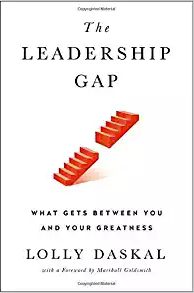
- Book: The Leadership Gap: What Gets Between You and Your Greatness
- Website: www.lollydaskal.com
- Twitter: @lollydaskal
Do You Want To Host Your Own Podcast?
Click here to see how my friends at Predictive ROI can help
Fox 11 News Los Angeles John Livesay The Successful Pitch book
Share The Show
Did you enjoy the show? I’d love it if you subscribed today and left us a 5-star review!
-
- Click this link
- Click on the ‘Subscribe’ button below the artwork
- Go to the ‘Ratings and Reviews’ section
- Click on ‘Write a Review’
Leadership Lessons From Mt Everest with Alison Levine
Posted by John Livesay in podcast | 0 comments
Episode Summary

Today’s guest is Alison Levine, the author of On the Edge: Lessons Learned from Mount Everest. She’s also the executive producer of The Glass Ceiling, a documentary about a woman who was the first one in Nepal to climb Mount Everest. She has some great takeaways like what is your mantra, your three-word mantra? Find out what hers are and why it’s so valuable. She tells the story of climbing Mount Everest, that it’s not a straight line up and psychologically what that does to you. She said, “backing up is not the same thing as backing down.” One of the things she talks about also is how she launched her speaking career and how difficult that was, and she said, “You need to treat every opportunity as if this is your big break.” Finally, she has the secrets to choosing a great team, which is experience, expertise, and ego.
Listen To The Episode Here
Leadership Lessons From Mt Everest with Alison Levine
Hi and welcome to The Successful Pitch. Today I am thrilled and honored to have Alison Levine as the guest because I got to hear her speak in person. She’s a history-making polar explorer and mountaineer. She served as the team captain of the first women’s Everest expedition that’s climbing the highest peak on each continent, skied on both the North and the South Pole. That’s called an adventure grand slam, which fewer than 40 people in the world have achieved, and then in 2008 she made history as the first American to complete a 600 mile traverse from west Antarctica to the South Pole following the route of the legendary explorer, I’m going to kill his name, Reinhold Messner.
Alison had completed this arduous journey on skis, and believe me when she tells the story, it’s arduous. While hauling 150 pounds of her gear and supplies in a sled harnessed to her waist, she made history once again in 2016 when she completed the first ascent of Antarctica’s Hall Peak. Her success in extreme environments is noteworthy given that she’s had three heart surgeries and suffers from Raynaud’s disease which causes the arteries that feed her fingers and toes to collapse in cold weather, leaving her at extreme risk for frostbite. That just alone boggles my mind.
In addition to having tackled some of the most challenging environments in the outdoors, she spent time climbing the corporate ladder. She worked in the pharmaceutical and medical device industry and earned an MBA from Duke and spent three years working for Goldman Sachs and then she left that in 2003 and served as deputy finance director for Arnold Schwarzenegger in his successful bid to become governor of California.
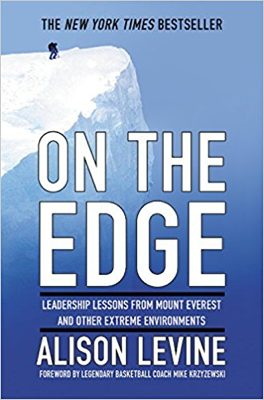 And she’s done so many other things that it just continues to impress me, but she’s a keynote speaker. She’s addressed audiences from Fortune 500 companies. She’s the author of the New York Times bestseller On the Edge: Leadership Lessons from Mount Everest and Other Extreme Environments, and that includes Wall Street which I just think is hilarious. She also has an amazing new role where she’s the executive producer of the upcoming documentary film, The Glass Ceiling, and the website’s TheGlassCeilingMovie which chronicles the life of a Sherpa and her quest to become the first Nepali woman to climb Mount Everest, so there’s a whole lot of things to unpack. Alison, welcome to the show.
Thank you. Thank you so much for having me.
Well, you are just a bundle of energy on stage, off stage, because it takes all of that. I always like to ask my guests to tell me a little bit of the story of origin, so let’s go back. We can go back further if you’d like, but let’s start with getting your MBA at Duke and your idea of, “I’m going to go work on Wall Street and do all this.” Was that always the focus?
No. You know what, it was never the focus. When I went back to grad school, I was a liberal arts major, I grew up in Arizona, went to the University of Arizona for undergrad and had no exposure to business classes whatsoever, and I had this dream of starting my own adventure travel company and I thought, “Well, if I want to get investors and start this company I’m going to need some kind of business background, and so I should go to business school.”
So I ended up applying to a bunch of business schools. Got a partial scholarship to Duke. I was super excited but I thought, “OK if I’m here at Duke, I’m here to go to business school. I’m here to learn about business. I’ve worked in sales. I’ve worked in marketing. I have those skills. I might as well really focus on more finance and accounting and if I want to learn finance I should try to get an internship on Wall Street for the summer.” I thought, “Well, I’m just going to do it for the summer. I would never actually want a job on Wall Street because that’s just not me at all.” I thought, “Well, if I’m going to go to Wall Street for the summer I should try to go to a big firm,” and I interviewed with all the big firms. Ended up getting some offers. Went to Goldman for the summer and I thought, “Well, I’m just here for the summer. I would never actually want to work here.”
Then, of course, it really surprised me because I met so many interesting, smart, talented people for the summer and ended up getting an offer to go back there full time and took the offer, and it’s interesting because even though I never really liked the job itself, I did love the people. I felt like every day I was learning something from my colleagues, and what I loved about the people was that they were clutch players. What I mean by that is that whenever somebody at that firm told you they were going to get something done, they did it.
It’s funny, I was only there for a few years but when I left the firm I realized the rest of the world doesn’t necessarily work that way. People promise you all kinds of things and they tell you they’re going to meet deadlines and they don’t do it. People at Goldman, when they say they’re going to get it done they get it done, and that’s something I really value. People you know you can count on. People that are going to come through for you. That’s the type of environment that it was and I really liked that.
Well, it’s almost foreshadowing for climbing Mount Everest, because you really need your team to do what they say they’re going to do, don’t you?
Exactly. Exactly. You want to know that you’re climbing with people that you can count on.
One of the things that are so important whether you’re climbing Mount Everest or starting a business or working in a culture is choosing the right team. Investors tell me all the time that’s really the number one criteria more than the idea of who they’re going to invest in and when people are starting their own business it’s all about the team, and you have a wonderful chapter called Choosing Your Team from your book On the Edge about, “The Three Es: experience, expertise, and ego.” Can you tell us a little bit about what’s in that chapter and how you used that for assembling your team?
First of all, when you’re climbing Mount Everest obviously you want to be up there with people who have the skill and the experience to get to the top of the mountain and get back down alive. But you also want people who are going to be really good team players because you’re spending two months in a tent with that person. The team has to gel and you have to have people that are going to look out for the people around them because look, even the best players, the most talented, skilled climbers, the smartest employees, everybody’s going to have a bad day once in awhile, so you want people that are going to supportive, that are going to be team players.
Some advice I got from Coach K who was kind enough to write the foreword for my book and taught me a lot about how to choose the right team. He’s the head men’s basketball coach at Duke University. The winningest coach in the history of men’s Division I college basketball. Spent years as the coach of the US men’s Olympic basketball team and brought home several gold medals, so that guy knows something about how to put together a team.
He’s the one that taught me about ego because I always thought well, ego’s bad. You don’t want ego on your team. And he said, “No, you want ego.” And he said that when he’s putting together a team he looks for two kinds of ego. The first is what he calls, “performance ego.” He said, “I want people who are good and who know that they’re good,” and I thought, “Alright, that makes sense.” Because I do not want to be climbing a mountain or starting a business with people who are thinking, “Gosh, I don’t know. Maybe we’re a little out of our league here.” You want to be climbing with people who are thinking, “I’ve got this. I’ve got this.” That’s performance ego.
The other kind of ego that he taught me that is so important is team ego. He said, “You want people on your team who are going to feel that collectively, the interests of the team are more important than the interests of the individual.” He said, “The name on the front of the uniform, Team USA, is more important than the name on the back of the uniform,” and that made sense to me too because I didn’t want to be climbing Mount Everest again with people who were super selfish climbers and weren’t looking out for other people and were putting their own interests ahead of the team’s interests. So I really learned a lot from Coach K about why ego is so important. You want to find people for your team who have the perfect mix of skill and experience, but who are also going to be really good team players.

Source: Pexels
[Tweet “Choosing your team – experience, ego and expertise”]
I love that. That’s so great. There’s two kinds of ego, performance ego which is, “I know I can do it,” and then the team ego which is, “But it’s not all about me at the same time,” which is that fine balance of confidence without arrogance and really caring about other people. There’s a lot of people that are falling into different buckets so you need that perfect chemistry. One of the things that really was my big takeaway from listening to your amazing keynote, Alison, is this whole concept of the journey up the mountain, and I don’t think most people know how you have to backtrack to go forward. I think that is such a great analogy for starting a business or being in business sometimes. Can you explain to us what that all means and what would you say to yourself if you were going back?
I agree with you. I think it’s a great analogy for business whether you’re starting a business or whether you’re somewhere further along in your career working for somebody else and thinking about starting your own business. There are so many analogies with this one. When you’re climbing Mount Everest, people typically think that you start off at base camp and then you climb to camp one and then you climb to camp two, you climb to camp three. You go higher on the mountain until you get to the summit. That sounds logical, but that is not the way that climbing Mount Everest works.
First of all, it’s going to take you 10 days just to get to base camp and set everything up. Base camp is over 17,000 feet. Once you’ve been at base camp for a few days and you’re used to the altitude and your body has adjusted a little bit, then you get ready to climb to camp one. You climb up to camp one, you spend the night up there, and after you spend the night up there the next day you actually come back down to base camp again, and then you spend a few nights at base camp again. Then you climb up to camp one again for the second time, and then you climb up to camp two.
And after you get up to camp two which is about 21,500 feet, so higher than any mountain in the US. Higher than Denali in Alaska. You’re up there. The next day you pack up your stuff and you come all the way back down to base camp again and then you spend a few nights there again. Then you climb to camp one again and spend a night, and then you climb to camp two again and spend a night. Then the next day you’re going to spend maybe 9 or 10 hours fighting your way up the mountain to get to camp three. Now you’re at 24,000 feet and after you spend a night up there you come all the way back down to base camp again. I know it sounds like wait a minute, wait a minute. You’re going in the wrong direction because you’re going back down to base camp, but the reason that you have to keep coming back down to base camp is that you have to let your body get used to the altitude very slowly.
It’s what we call acclimatization. You have to acclimatize slowly because if someone were to magically drop you off on the summit of Mount Everest by a helicopter or something like that, you would actually be dead in a matter of minutes from the altitude. That’s why you have to move up very slowly to give your body time to adjust. But, (there’s always a but, right?) the catch is that when you’re above an elevation of about 18,000 feet which is going to be any camp above your main base camp. Anytime you’re above 18,000 feet your body is starting to deteriorate and your muscles are getting weaker, so it’s this crazy, crazy balance of trying to spend time up high to get used to the altitude, but you have to come back down low so you can eat, sleep, hydrate, and regain some of that strength that you lost being at the higher altitude.
It’s very, very physically exhausting and emotionally, psychologically can be very frustrating because you know you want to be going up the mountain. You’re thinking about the summit. You got to get to 29,035 feet, but you’re spending so much time climbing back down the mountain, down to the lower camps, down to base camp, and you might feel like you’re losing ground because you’ve worked so hard to get up to that point where you’ve hit your high point, and then you give up all the elevation and you go back down. But you’re not losing ground. You’re just helping your body acclimatize and you’re gaining strength, so I always like to remind people that backing up is not the same as backing down.
Source: Pexels
[Tweet “Backing up is not the same as backing down”]
That’s a great tweet. Really love that line.
Right? Backing up is not the same as backing down, and just because you’re going backward doesn’t mean you’re not making progress. For whatever reason, we always think that progress has to happen in one particular direction and that’s just not the case. Sometimes you are going to have to go backward. Sometimes you will find yourself backtracking, and that’s OK. Just realize that it’s time to regroup, regain some strength so you’re better out of the gates the next time around. Backing up is not the same as backing down.
That’s one of my favorite takeaways from you, and you also talk, the psychological importance of climbing a mountain, starting a business, not giving up. You have these three words. “What’s your mantra?” That’s what really interests me is, what do I say to myself? If we all are telling stories to get people to sponsor what we’re doing, hire us, fund us, hire us to speak, whatever it is, the story we tell ourselves I think is so important so I really want you to tell these three words that you have in your wonderful book On the Edge about what’s your mantra?
For me, I needed a mantra to help me stay centered and help me figure out how to navigate the most difficult times, and I think if everybody has their own mantra that can help you find your way when you’re feeling a little bit lost. For me, my three words that I use to describe myself as my mantra is, “Count on me.” I want people to know that I am going to come through, so if I’m pitching a business or I’m trying to get funding or I’m trying to get something sponsored, that’s the thing I want to come through.
I want people to know that they can count on me to pull together this business, to pull together this film, to pull together this expedition and know that when I’m doing it, when I’m working on it, they’re going to get 200,000% effort from me that I am not going to give up. I am not going to stop. I’m going to get the job done, and I think that’s why people invest in other people because they trust that they’re going to get it done, no matter what it takes. I am going to go to the mat and make it happen, whatever I have to do. Whatever mountains I have to move, it’s going to get done, and I think people feel confident about investing in people that have that sense of determination and resilience.
We’ve come full circle to when you were talking about being a clutch player at Goldman Sachs. It’s fascinating, isn’t it? It’s a through line through your life and through your different things that you do. You tell the story of getting within I think it was 200 feet of the top and a storm coming.
Yes.
And then having to go down, and the thing that people in any kind of business. We’ve all had failures. Sometimes they’re not quite as public as what you went through where you’re on television or expectations, but you had this great line of what somebody said to you at a cocktail party. Would you mind sharing a little bit of the context of that story? Because it’s one of my favorites.
Of course. The setup is that I was the team captain for the 1st American Women’s Everest Expedition and because we were the 1st American Women’s Everest Expedition we had tons of media coverage. We did all the talk shows circuit. The morning show talk shows. The evening news anchors were interviewing us. 450 media outlets following our climb. CNN doing live updates from the mountain. And then we miss the summit by just a couple hundred feet.
It’s a very high profile failure of course with all this media coverage, so then you come back and everybody feels like they’re so disappointed in you and you go from being this person that’s praised in the media to being the butt of Jay Leno’s opening monologue joke. How does that feel to have such a public failure? And especially when you’re someone like me where your motto, you pride yourself on, “count on me,” but sometimes there are external factors that come into play. For us it was the weather. There are uncontrollable things when you’re in environments that are constantly shifting and changing, just like the business world, just like entrepreneurs have to deal with every day. All these things that are outside of your control. We didn’t make the summit and we had to come back to media scrutiny and I had to come back to just people asking me a ton of questions. “What happened? How could you get that close and not make it?”
The anecdote you were referring to was at a dinner party I went to shortly after I returned where the host of the dinner party was introducing me to the other guests. He said, “Hey, this is my friend Alison. She just climbed Mount Everest,” and the guy sitting across the table from me said, “Oh, no way. Mount Everest. All the way to the top?” And of course, I then had to say, “Well, no. No. We turned around just a couple hundred feet from the top in a storm.” And he looked at me and said, “Oh, so you didn’t climb Mount Everest.” And I was like, “Two months on that mountain dealing with hurricane force winds, sub zero temperatures, near death experiences and avalanches, and then here’s this guy going, ‘Oh, so you didn’t do it.’”
I was explaining to him the whole situation, I was like, “Well look, we spent two months on the mountain. We just had bad luck with the weather.” I gave him a whole lecture about getting to the top is optional. Getting down is mandatory. And he said, “Yeah, but look. If you weren’t at the very top then you didn’t climb it. If you weren’t at the top then it doesn’t count.” So I said, “OK, what do you do, tough guy?” He said, “I work for J.P. Morgan.” And I said, “Oh, wow. No way. You’re the CEO of J.P. Morgan?” And he said, “Wait a minute, no. I’m not the CEO. I didn’t say I was the CEO. I work in fixed income trading.” And I said, “Oh, well then I guess you don’t really work for J.P. Morgan then, do you? Because if you’re not at the very top then it doesn’t count.” And he was like, “Oh, that’s totally different. That’s not even the same thing at all.” And I was like, “Ah, whatever with you.”
People put so much focus on getting to the summit of a mountain, and what they don’t realize, everybody has their mountains to climb. Mine are literal. Most people’s are figurative but everybody’s got mountains in life whether it’s entrepreneurial stuff, whether you’re still working for a big company. Whether it’s your family or your community or sports or whatever it is you’re dealing with, you’ve got mountains.
Everyone’s got their mountains to climb and what you have to remember is that getting to the top of a mountain is not the important thing. It’s about the lessons you learn along the way when you’re getting your ass kicked on the way to the top and then what you’re going to do with that information to be better on your next climb.
Love it. By the way, everyone who’s listening, if you didn’t catch it in the introduction, Alison did go back and did get to the top, and one of the fascinating things for me was she said, “It didn’t feel that different.” That’s the irony.
The thing is it took me eight years to go back, and I think this is such an important lesson for entrepreneurs is it took me eight years to go back because I was so afraid to fail again. After such a high profile failure I thought, “What if I don’t make it again and what are people going to think again and how will I ever get a sponsor to invest in me again?” And so I regret the fact that it took eight years for me to get up enough guts and enough courage to try again, because I was so afraid of failure and then when I did summit on my second attempt and completed as you mentioned the adventure grand slam, which is climbing the seven summits, the highest peak on each continent, and then skiing to both the North and the South Pole.
When I finally did complete it I realized that getting to the top of Everest just wasn’t that big of a deal. It really wasn’t, because it’s just a pile of rock and ice. Let’s keep things in perspective here. Granted it’s a very tall pile of rock and ice, but come on. You’re standing on top of a pile of rock and ice. That’s not going to change you. It’s not going to change the world. You are the only person who can change you, right?
Yes, exactly.
And look, changing the world. Who’s changing the world? Entrepreneurs. Look, I respect entrepreneurs a heck of a lot more than I respect people that stand on top of a mountain. Sure, and entrepreneurs have to have that same grit and that same determination and they have to survive their own hurricane force winds and sudden avalanches and things like that in their business. I think you can learn so many things climbing a mountain that help you in other aspects of life, but climbing the mountain itself I just don’t think is important. Like I said it’s what you learn along the way and what you’re going to do with that information to be better.
Look, anyone that knows a little something about the history of Mount Everest will know the names Sir Edmund Hillary and Tenzing Norgay. First guys to summit that mountain. But what you also have to remember is that there were dozens of climbers who tried and failed before Sir Edmund Hillary and Tenzing Norgay made it to the summit, but those two guys, they had the benefit of all of the beta from those previous climbers, and those other guys are gutsy. They were the ones that were so brave and so gutsy to go at it first, and Sir Edmund Hillary and Tenzing Norgay got to learn from their mistakes and their past experience. If those other guys hadn’t had the courage to try and fail first, maybe Sir Edmund Hillary and Tenzing Norgay would never have made it to the summit.
Love it. One of the things you referenced earlier is this fear of failure. “How am I ever going to get somebody to invest in me?” Can you tell us the story of who you got as a sponsor for your climb and that you had two different choices and obviously one was much better than the other?
When I was putting together the 1st American Women’s Everest Expedition, this is back in 2001. We started putting the team together for the 2002 climb and climbing Everest was quite expensive, $25,000. It’s almost actually double that now but at the time: $25,000. I didn’t have any money. Nobody else I knew in the climbing community had any money. So we could only make this trip happen if we found sponsors, so I started pitching everybody I knew under the sun. I was leaving voicemail messages. This is back when people used phones. And sending out emails and nothing was happening, so I figured out I needed to do something creative in my pitch to get people to pay attention and to take action.
Instead of just sending emails, “Hey, we’re putting together this expedition. Are you interested in being a sponsor? Here’s what you get.” I started sending out my hiking boot in a cardboard box, and I would put a note to people in the box and I’d explain what we wanted to do. How we had this dream of becoming the first American women’s Everest team, and I said at the end, “Whether or not you choose to sponsor us, I really need my boot back so make sure you send it back to me because I have to train. I can’t train for this climb. I need to be prepared for my climb. I can’t train until I get my boot back.”
I thought that would make people take action quickly and I put a return, a prepaid FedEx label in there hoping that they would return the boot. Then I kept getting the boot back like, “Dear Alison, good luck on your expedition. We regret that we are not able to help,” but at least people were taking action and reading it because they were getting this box with this old, smelly hiking boot in it thinking, “What the hell is this?”
Eventually, I ended up pitching a friend of mine who worked for Ford and what happened was I was in the Bay Area. I was walking around. I was at the Half Moon Bay Pumpkin Festival with some friends and I walked by what is called a “concept car,” and that’s a car that is on display that’s actually not in production. It was this massive SUV by Ford. It was this white SUV and it was called the Himalayan Expedition, and all of a sudden, light bulb. Oh my god. Ford, that’s who needs to sponsor our expedition, because here I’m thinking The North Face and Patagonia and Mountain Hardwear and I’m thinking Nike. People involved in outdoor wear, and it didn’t hit me that oh my gosh, a car company. That’s who should sponsor us.
So I pitched Ford. A friend of mine who worked there helped us funnel the idea to the right people there. They ended up agreeing to sponsor the entire trip, which I was super, super happy about, because, well Ford! And let me tell you the reason they agreed to sponsor us is because they were getting ready to launch their new 2003 full-size SUV which was the Ford Expedition, and I saw the concept car at the Half Moon Bay Pumpkin Festival and then of course they were getting ready to launch the real car, which wasn’t called the Himalayan Expedition but just the Ford Expedition. That is why they ended up agreeing to sponsor us because it was a perfect fit for the launch of their new SUV.
Now, I was so happy with that because as I mentioned I was also negotiating with Chevy, and of course, their full-size SUV is the Avalanche, so I just thought, “You know, if you’re going to go to Mount Everest, it’s probably a lot better to be sponsored by the Expedition than it is by the Avalanche,” so it worked out. It worked out really well. They were a great sponsor for us, and God, we would have loved to have made it to the top for them, for us, for America and for them, and of course, they were wonderfully supportive when we didn’t make it and expressed the fact that everybody coming back alive was really the number one priority for the trip.
Look how much value they got out of it because you are talking about it years later so the sponsorship awareness continues. I just love that. Which leads me to my next question is, how did you launch your speaking career?
My speaking career got launched, it was one of those, “right place, right time, oh my god I never thought this would happen,” type of moments. I wanted a career that would allow me the flexibility to continue to do these adventures and these expeditions, but I was tired of being broke and scrounging for expedition dollars all the time and I thought, “OK, if I could make money as a speaker then it would allow me the flexibility that I want in my schedule and it would allow me the income to fund these expeditions.” So I started pitching all these different speakers’ bureaus. “Hello, my name is Alison. I was the team captain of 1st American Women’s Everest Expedition and we had this amazing experience and I can talk about leadership and what it’s like to try for something and not necessarily achieve it but learn from the experience,” and they kept responding, “Oh, we have a lot of Everest speakers already.”
This was after, and he’s actually a friend of mine but Aron Ralston. If you saw the movie 127 Hours where he’s stuck in Bluejohn Canyon, he has to cut off his arm. This was right after that event actually happened, and they’re like, “So, you’re speaking about climbing and Everest. Have you cut off any body part?” I was so not interesting to them at all. You have to have cut off a body part or something. They’re like, “We have Everest speakers. We’re not interested.” So nobody was interested in me.
Well, I ended up, one of the bureaus that I pitched was this speakers’ bureau called Keppler Speakers out of Arlington, Virginia and they were one of the few bureaus that actually let me come in there and meet their agents and give them a quick pitch, a 10-minute excerpt from my speech. And they said, “You know, we think we could do some business with you,” and I thought, “Great. Great.” I was so excited. I was jumping up and down in the elevator, and then I never heard from them again and I was like, “Isn’t this how it goes?”
Six months go by and then they call me, and they said, “Alison, we have this opportunity for you. A speaking engagement that we think you’d be perfect for.” And I said, “Oh, great! Give me the scoop.” They said, “Well, before we give you the scoop, what are the chances you could get yourself to Vegas before 7:00 AM tomorrow morning?” And I was like, “Wait, what?” And they said, “There’s an event in Vegas. It’s 6,000 people there.” They were supposed to hear from Carolyn Kepcher who, this is back in 2007 when the show The Apprentice was really big, the original Apprentice, and Carolyn Kepcher was Donald Trump’s sidekick on the show. She was the executive vice president of The Trump Organization. She was the one in the boardroom and was helping him fire people and she had the opening keynote on the final day of this event.
This three-day event in Vegas. 6,000 people. She canceled at the last minute. They had had, I think, Cal Ripken, Jr. speak and Jim Lovell and pretty famous people, but you can’t get a famous person at the last minute as a replacement, so I’m sure they went through their whole speaker list and I was last and they were like, “Remember that Alison Levine chick that came in? Maybe she could get to Vegas.” Because this is late afternoon the day before, so who’s going to be available to get on a plane within a few hours?
Well, there was a 10:30 flight. I got to Vegas. Got to my hotel at midnight. I called the meeting planner first of all before I got on the plane and I said, “Hey, Jeff. This is Alison Levine. I’m going to be replacing Carolyn tomorrow morning for the opening of the conference on this last day. I know it’s important to send everybody off the right way.” I said, “What message do you want me to focus on?” And he said, “I don’t give a … What message you focus on. I just want to make sure that my audience isn’t pissed off that Carolyn Kepcher is a no-show.” And I was like, “OK.”
So I get to Vegas. Get to my hotel. It’s midnight, 12:30. I’m opening up the meeting on the final day. I’ve got to be downstairs at 7:00 AM for an AB check, I think my talk was starting at 8:00, I stayed up the whole entire night putting together a presentation for these people knowing they were expecting Carolyn Kepcher and they had no idea she wasn’t going to come on stage. I created this presentation about being a clutch player, going back to “Count on me,” about being a clutch player and I photoshopped Donald Trump and Carolyn Kepcher into my Everest slides and I basically kind of just poked fun at Carolyn for not showing up, and the whole point of my message is if you want to build your customer base, if you want to build customer loyalty, if you want more engagement from your employees, be that person that they know they can count on.
And I was like, “Right, Carolyn?” And I was like, “So I don’t care …” She was sick and that’s why she couldn’t come, but I was like, “I don’t care if you’re laying on the bathroom floor vomiting your guts out. You show up for people when you say you’re going to show up.” And I basically did a talk around being a clutch player, coming through no matter what, and that’s how you’re going to build trust and loyalty with your customer base.
I had had the “You’re fired” video in there. I stayed up the whole night putting this together. I didn’t go to sleep for one minute. I ended up getting a standing ovation and being the highest rated speaker at the conference, and after I got off stage the meeting planner came up to me and he said, “Oh my god, first of all, who are you? Who are you?”
And he goes, “No offense, but I have never heard of you before.” And I said, “There’s no reason you would have heard of me. I’m not famous. I’m not Cal Ripken. I’m not Jim Lovell from Apollo 13. I’m nobody.” And he goes, “Wait a minute.” He’s like, “You just knocked it out of the park here.” And he goes, “When did you put together that presentation?” He said, “I know you didn’t even get in until midnight,” and I said, “Jeff, I stayed up the whole night putting it together. I haven’t gone to sleep yet.” And he said, “Wait a minute. I can’t believe you would do that.” And I said, “Of course I would do it. I had no choice but to do it. You were counting on me. Your audience was counting on me.”
I said, “The most valuable resource they have is time, and they were giving me an hour of their time and I wanted to make sure that they would never regret it,” and he said, “I don’t know too many people that would do what you just did, staying up the whole night to come through.” And I said, “I don’t know too many people who wouldn’t do it.” And he said, “No offense but no speakers bureau has ever, ever mentioned your name to me before.” He said, “I book more speakers than probably any meeting planner in the country. I am going to pick up the phone tomorrow and I’m going to call every speakers’ bureau that I’ve ever worked with and I’m going to tell them what you just did here today,” and he did. He did it.
He called every major bureau in the country and then my phone was ringing off the hook by the following week, and now I do over 100 talks a year and I make a really good living at it and I’m just very, very grateful to the people that helped me along the way but it was such a good lesson for me to remember that you have to treat every opportunity, for me, when I’m on stage, that’s a pitch. I’m pitching. I am pitching and my brand is me and my business is me but I am pitching myself every time I’m on stage, so my pitch is my speech. That’s why I want people to invest in me and you’re out there. Your audience is out there trying to get people to invest in them and invest in their business and what you have to remember is that you must treat every opportunity as if it’s going to be your one big break.

Source: Pexels
[Tweet “Treat every opportunity as if this is your one big break”]
Great takeaway. We’re going to tweet that out. Treat every opportunity as if this is your one big break. It’s so great.
Because it might be. It might be.
It might be, yeah. It clearly was for you and look at the tenacity that you’ve shown climbing Mount Everest not once but twice and also doing whatever it takes to get yourself there and doing an amazing that now launched this career. Before I let you go I want to finish on this other project, The Glass Ceiling, and tell us why you’re so passionate about it and how we can help.
Oh, thanks for asking about that. For me, obviously my passion is climbing mountains and I think it’s so important when we have the privilege to do things that we enjoy, things that enrich our lives, it’s really important to pay homage to the people that have made that possible and for me, one of the people who was so inspiring in my journey is a woman named Pasang Lhamu Sherpa who was the first woman Sherpa to climb Mount Everest, and she had to break through all kinds of political and social barriers in order to climb the mountain that was essentially in her backyard because Sherpa women didn’t climb.
It was something only the men did and the women were expected to stay home and cook and clean and take care of the men, and she was the first Sherpa woman who fought for Nepali women’s right to climb Everest and she tried three times unsuccessfully. Was thwarted by either bad weather which I know how that goes or by climbing politics. They didn’t want a woman summiting Everest, a Nepali woman, a Sherpa woman touching the top of the mountain because they thought that would just be horrible.
She was absolutely relentless in her pursuit of this dream though and she finally summited Everest on her fourth attempt but she died on the way down. She left three young children behind and there’s still a lot of mystery and controversy surrounding her final climb and no one’s ever told her story but she really broke through that glass ceiling for women in Nepal and paved the way for so many other women to be able to climb that mountain, so I’m working on a documentary about her life.
The film sizzle reel can be seen at TheGlassCeilingMovie.com. I’m working on that now and I’m really honored to be a part of the project and to be able to share her story with the world because it’s such an important message for everybody that no matter who you are, no matter your race, gender, socioeconomic background. She was dirt poor. She couldn’t read. She couldn’t write. You have the power to be an architect of change.
I love that so much. We’re going to put the link for that movie trailer in the show notes. The link for your book, On the Edge, your website so people can book you even more for keynote speeches. Alison, I can’t thank you enough for giving us such insights and energy.
Of course.
We know that it really all comes down to everyone can count on you and that’s a question we can all ask ourselves is, am I somebody people can count on? And if I am I’m going to be able to climb all kinds of challenges and get up to the top, even though that’s not the ultimate goal as you said.
Exactly.
Thanks again, Alison.
Of course. Thanks for having me and if people have questions, you can count on me to get back to you. You can get in touch with me through my website or through social media. Feel free to reach out and ask any questions and I’m happy to connect with your listeners.
That’s very generous. Thanks again. We’ll post all your links in the show notes.
Perfect.
Links Mentioned
- Book: On the Edge: Lessons Learned from Mount Everest
- Film: The Glass Ceiling
- John Livesay Funding Strategist
Do You Want To Host Your Own Podcast?
Click here to see how my friends at Predictive ROI can help
Fox 11 News Los Angeles John Livesay The Successful Pitch book
Share The Show
Did you enjoy the show? I’d love it if you subscribed today and left us a 5-star review!
-
- Click this link
- Click on the ‘Subscribe’ button below the artwork
- Go to the ‘Ratings and Reviews’ section
- Click on ‘Write a Review’
Rocket Fuel with Mark Winters
Posted by John Livesay in podcast | 0 comments


Episode Summary

Today’s guest on The Successful Pitch is Mark Winters, the author of Rocket Fuel. He talks about the different personalities that are entrepreneurship. There’s a visionary, who has obviously the vision, and then there’s the integrator, and you need both. You can’t both be visionaries or both be people who integrate and implement the situation.
He has specific examples from history like Roy and Walt Disney, as well as the problems and frustrations that each of these personalities faced and how to handle them. He said, “You know, when a visionary starts changing his mind, the whole company gets visionary whiplash,” which I just love that concept, and he really talks about how important it is to have a same page meeting with the co-founders before you get in front of your employees.
He’s got all kinds of other great tips. Be sure to listen and learn what it takes to be a successful visionary and integrator.
Listen To The Episode Here
Rocket Fuel with Mark Winters
Hello and welcome to The Successful Pitch. Today I’m very happy to have Mark C. Winters who has a passion for helping entrepreneurs get unstuck so they can pursue their freedom and let’s face it, we all need that. Depending on the situation, he can introduce people to the right combination of perspective and process that then allows teams to start moving, and not just moving but moving faster and get going in the right direction with clarity, because you can start moving faster but if you’re going the wrong way, forget it. Mark is sort of you GPS compass is what I call him.
He’s a teacher, a coach and a facilitator, and he spends a lot of time with leadership teams. He’s, in fact, a Certified EOS Implementer and he helps them become really smart businesses. He’s got over 25 years of entrepreneurial leadership experience and he’s got everything ranging from raw startups on a napkin to big multimillion dollar global enterprises such as big brands that we all know like Procter & Gamble. This diverse background allows Mark to identify patterns of success to virtually any business scenario, so you can see why I’m so happy to have him on. Mark, welcome to the show.
Thanks, John. Great to be on here with you.
Yes. Well, I always like to hear from my guests the story of origin. I’m guessing if we go back 25 years that there was something in your past that, “Hmm, I made that mistake. I’m going to help others not make that mistake.” Can you tell us a story from where you were there, 25 years ago?
I don’t know if it’s a story of origin or a story of rebirth, but basically I was a good corporate soldier in the Procter & Gamble army, which was the thing that it seemed I was supposed to do coming out of undergraduate school. Somewhere along that experience, I had an encounter that completely changed my direction, and it basically went like this.
I was having dinner with my manager, and we were talking about having a very, very senior executive come in and tour our market. The discussion we were having had this distinct feel of being a setup, meaning we were going to make the market appear as if everything was just wonderful and perfect, and in reality it was anything but that in a couple different areas, for sure. I questioned the intent of that; “Shouldn’t we let this guy see what’s really going on so that maybe we can get some of these issues to get some attention?”
The response I got from my manager was just this stare that went right into my soul, and he says, “Mark, don’t F with me.” You can fill in the blank on the F. It was like time stood still, and everything went into this weird swirl around me, because what I saw in that moment in time was, “Wow, I’m in a situation here where my entire corporate career with this company,” which was really, I only ever thought about being with this company, was in this one person’s hands and they could really shut down all the stuff that I had going on, and all the ambitions that I had in that world, and in that future that I had imagined. Candidly, I had imagined that I would be the CEO of that company one day.
To see that and to realize that, it just took me to this place of, “I don’t like that at all. I don’t like the feeling of that, that feels awful to not have control.” I literally left that dinner, went straight to a bookstore, and picked up a handful of different books on how to start your own business; you know, Entrepreneur Magazine, and whatever happened to be on the shelf at the time, and went back and thought, “I’ve got to get out of this,” and began the process of trying to figure out what I was going to do, and how I was going to pull it off. That led me down a path where, at this point in time, there’s a dozen different companies that I’ve either started up, bought, shut down, or sold, or done something with, which is a whole different path than what I was on at that point in time with Procter & Gamble.
Well, that’s the hero’s journey, isn’t it? There’s always those big moments, some catalyst that causes us to say, “I’m not going to keep going down this path, I’m going to take a different path that’s unknown, and even a little scary, but I’m going to do this because I want to take control of my destiny.” Is that what happened there?
That’s exactly right. You know, of course my wife got to come along.
Yes, we all need support, that’s for sure as we go on journeys. Speaking of books you went out and found that allowed you to make this happen, you have your own wonderful book called Rocket Fuel: The One Essential Combination. Tell us about that.
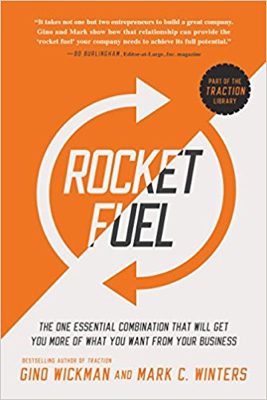 Rocket Fuel is a book I wrote with Gino Wickman, and what it’s about is the combination of leaders that we find at the helm of entrepreneurial companies that really take it to a whole different level in terms of success and impact that they’re able to achieve with the company. The two different types of leaders are one we call the visionary, which is your stereotypical founding entrepreneur. They’ve got tons of ideas, great with external people, and see in the future.
The other we call the integrator, which is much more execution-oriented. They’re all about getting things done, and making things happen, and pulling the different parts of the team together to do that. They in combination, the visionary’s coming up with these ideas, and the integrator’s making them real, and it can really supercharge an entrepreneurial company.
Well, a classic example of that I think is Steve Jobs and Wozniak, right? One was the visionary, the other was the executor?
Yeah, to a certain degree that’s so, and we’ve got a number of different big company examples that we’d like to talk to people through. The important point I like to make is, we’re talking about when a company is in that entrepreneurial stage, so when they’re at that stage, they’re just getting rolling, that’s the dynamic that we’re looking for.
We even go back to Henry Ford had a guy named James Couzens. Couzens was the one who helped do all the things that Ford couldn’t do; Ford was a mechanical genius in terms of how to invent the car and make it work, but Couzens was the one who saw how to work the distribution channel, how to do all the processes and everything around that so they could actually build a sustainable company out of it.
Well, you also talk about Walt and his brother, Roy Disney doing the same thing, correct?
Exactly right, exactly right.
What do you see there that was a little different, where they were brothers? It’s interesting if you find a co-founder, but when they’re brothers, does that change the dynamic at all? Is it the same from childhood all the way through, and everybody knows their role, and nobody questions it?
Yeah, maybe to a certain extent. Any time that there’s a family relationship, or sometimes a friend relationship, it changes the dynamic. You know, when you look at Walt and Roy, Walt would say himself that, “If it wasn’t for Roy, I probably would’ve ended up in prison.” He certainly had his struggles when he was off on his own before he came back and partnered up with Roy to make the Disney Company itself go.
Well, it’s so important for everyone who’s listening who’s working for themselves as an entrepreneur or thinking of doing this, that you find the right co-founder and that you have complementary skill sets, right? You don’t need two visionaries running the helm, you need a visionary and an integrator, right?
That’s right, and that’s really sort of a trap that’s easy to fall into because a good visionary will instinctively go out into the world and look for themselves, because it feels good, right? You go and find somebody else that thinks like you do, and does things that you’re familiar with. You’ll be drawn to that, and in reality you need something very different that may not feel very comfortable, and in fact may feel abrasive to you.
I was interviewing a visionary and an integrator from a company in the Dallas area that was in sort of an urban arming business. When they went to look for their integrator, the visionary and one of his business partners that was working with him, they said frankly they would not have hired this guy if they hadn’t done some pre-work just to really understand, here’s who we need, and they worked with a profiling company to understand the pattern of what they were looking for.
It didn’t feel good in the interview, but they knew that that was really what they needed to complete the two piece puzzle. After they got together and started to work out the relationship, they found that that they were absolutely right. That’s where we put some structure in the book, we talk about the five rules and the five tools. We put some structure around that relationship to help take those differences that are naturally very filled with friction if you will, and blend that friction into something really positive and powerful.
Well, part of it has to do, I would imagine, with mutual respect. Right? “You do what I don’t want to do and vice versa, and we both need each other.” Can you speak to that? Am I on the right path here?
Yeah, you are. In fact, maintaining mutual respect is one of the five rules. What tends to happen is that the visionary may think of the integrator as something less than, or in fact the integrator may think of themselves that way. What’s important is that the two of them need to see each other at eye level, and it really is a very strong relationship. In fact, I have one client, a visionary that refers to their integrator as their business spouse.
It’s almost like a business marriage; that’s the kind of respect you want to have for each other in this relationship, and so you’re never treating the other as less than, you’re never out saying anything negative to somebody else in the organization about your counterpart. You’re working that stuff out one-on-one with each other through a vehicle we call the same page meeting, and that’s where you get strong. You hash it out, or fight it out, or however you get there. Ultimately, you resolve things, get on the same page, so when you walk out of that meeting you guys are locked arm-in-arm, on the same page presenting the unified front to the rest of the organization.

Source: Pexels
[Tweet “Have a “Same Page” meeting”]
You know what this reminds me of, are parents. Parents have to deal with their stuff, otherwise the kids will start to try and play them off each other. If a parent starts complaining to one of their children about the other parent, it’s disastrous; I would say the same thing is true with co-founders. If they start getting employees taking sides with one versus the other, it’s a recipe for disaster.
Yeah, for sure.
Your cure seems to be this same page meeting, I love that, we’re going to tweet that out, which basically says everything right there. “Let’s get on the same page before we go out in the front.” You have five rules. Is there one rule that you see people tending to break over and over again, that you could warn people, “Look, if you’re going to break a rule, don’t break this one because this is curtains if you do?”
Yeah. Staying on the same page is the number one, but we’ve talked about that, so here’s a rule that I see, a behavioral-based thing that I see people break that gets them in trouble. We call them “end runs.” If you think about it, a company when it’s starting out, before it has an integrator, it’s just the visionary there. Everybody goes to the visionary with their problems.
Or the solution to their decisions, so they’re sort of trained and in the habit of going directly to the visionary. In the structure, the integrator actually lies between the visionary and the rest of the organization. The structure of accountability is for those folks to go to the integrator, so an end run is when somebody goes around the integrator directly to the visionary and says, “Hey visionary, solve this problem for me. You know, be Solomon and tell us what to do, or give us a decision.” Right?
The trap is if the visionary does that, then he or she is going to reinforce that behavior in the folks in the organization, it’s going to keep happening, and they’re also in the process going to sort of cut off the integrator at the knees, and really prevent them from being able to be effective and be successful. We introduced a solution here that we call, “The Question”; what we train the visionary to do is to, when someone does that, they may listen and just let the person vent, or air whatever it is they’ve got to say.
But at the end of it they don’t give them a decision, they don’t solve the problem, they don’t give them direction. Instead, they confront them with The Question, which is simply this: “Are you going to tell them, or am I going to tell them?” Meaning, “Are you going to tell the integrator about this, or am I going to go tell them, because somebody has got to tell the integrator about this.” You lay it right back at their feet, and what we see in practice, John, is if the visionary will employ that tool, within about 30 days end runs will be a thing of the past. They just won’t happen anymore.
Well, I can imagine that in a family scenario, right? Your kid comes up to you, goes, “Mom’s been mean, mom did this, I feel it’s unfair, blah-blah-blah.” It’s the same thing in business. You go, “Well, are you going to tell mom, or am I going to tell mom that we’ve had this conversation?”
Right on it.
I love it. Now you have this whole chapter devoted to patience, and that’s a topic that is near and dear to my heart. It’s something I’ve had to personally work on, I always want things to happen faster than they are, and I think a lot of entrepreneurs feel that way sometimes. Talk to us, Mark, about how can we become more patient?
The context for this is, you go through this journey as a visionary and an integrator, and so you know, step one, we call it “Crystalize” because you’re just trying to get clear on, “Hey, is this the structure that can help me in my business or am I one of these parties? Am I an integrator and I need to go find a visionary out there? Is this something that has an impact or relevance in your life?”
Second phase once they get clear on that is what we call “Connect” which is where they get paired up. They get joined up, they find each other, and so now they are a pair, and that brings us into the third phase which we call “Maximize” which is all about making that relationship great and powerful, and that’s where we blend that friction into something positive.
That’s where patience is essential, because a good entrepreneurial visionary is very impatient and so they get their integrator onboard, and so immediately they want this thing to be running at 150 mile an hour, and doing everything that I read it could do, and all that stuff. The reality is it just doesn’t happen like that; you’ve got to have a little bit of patience, so recognize that, manage the expectation going in.
There’s some specific things that you can do to move progressively along that path, and set some milestones, but the reality is it may be a year before a visionary/integrator duo is really hitting their full stride, and trusting each other, and staying on the same page, and really acting like two different halves of one brain.
It’s just essential to go back to that place and realize, “Hey. It’s a journey, it’s a process. We are getting closer to where we want to be, we’ve come a long way from where we were,” and you know, frankly the journey’s going to go on forever so just be patient in that early phase of getting it together and making it do what you want it to do.
Well, I love that. It’s so important, because I see it happen a lot. You know, “Why isn’t this up and running? How fast can it be?” The other nuance that happens, and I’d love your insights in this, that I see and you can tell me if you think this is a common problem is, “Okay, we’ve agreed. This is something,” new software for example, “we wanted to use and it’s going to make everything better and so you as the integrator are going to make that happen. That’s my vision: that our customers don’t have to wait,” or whatever.
And so like, “Okay, great. It’s going to take 30 days. Got it. Boom.” Then the next day, “Oh, now I see a new toy I want to do that’s going to solve a new problem, and I want this to happen in the same amount of time,” and the integrator’s like, “You can’t. I said 30 days, meaning that that’s going to take me 30 days of 100% of my time to make that happen, not give me five more things to do and still expect me to meet that deadline.” Is that something that’s happened a lot?
Oh, absolutely. We talk about it as, “visionary whiplash.”

Source: Pexels
[Tweet “Don’t get “Visionary Whiplash””]
What a great line. Yes, okay.
That’s what effect the visionary left unchecked can have on not just the integrator, but the organization. It’s sort of the visionary looks left, the whole organization looks left, and then they look back to the right, and they get whiplash trying to keep with them. The integrator, part of their role and their challenge is part of the visionary’s unique value is all these ideas that they see and that they come up with and that they throw out, and so you’ve got to listen to that and try to sort through it and get the distractions out of there, get the things that are too much out of there, but always looking for that gold nugget, that thing that can really take us to another level.
Part of the process that helps them do that together in the five tools, there’s some questions. We call them the “Four Questions” that they have to answer, and they have to get clear on, “Hey, where are we trying to go with this thing? You know, what business are we in, who are we selling to, what do we want this thing to look like three years from now?” They get a clear picture of the vision of what they’re trying to do, and then setting the priorities towards achieving that vision, and they do that collaboratively.
That becomes the plan, right? These new ideas that keep popping up, you’ve just got to recognize, “Hey, is it in alignment with our plan? Is it consistent with our plan? How does it match with our capacity?” That’s a key application of the integrator’s role is to sort all that out, and help make sure that we don’t put the organization on tilt just because the visionary happened to be at a show and saw something that triggered some new idea; you don’t just throw all the other stuff that we’re working on out, and actually a friend of mine says it very well when he says, “The biggest threat to a visionary’s great idea is their next good idea.”
Wow, that’s so true because they’re not implementing the first one.
That’s right.
Well, you know, people obviously need to buy this book, Rocket Fuel, but you’ve taken it a step further with a Rocket Fuel Maximizer that allows people to have an online community so that they can take what they learned from the book, but still even ask questions to you, and keep this from getting visionary whiplash. Tell us a little bit about what’s going on in the Rocket Fuel Maximizer.
We developed the Rocket Fuel Maximizer to create this place where visionaries and integrators could go and regardless of what stage of the journey they’re on; whether they’re still crystallizing, or they’re trying to get paired up, or they’re in a relationship that they’re trying to maximize, they can get support to move them further down that path and hopefully get there faster with fewer mistakes.
We’ve got a lot of different elements that go into that. Every month, I’ll do an interview with a visionary, I’ll do an interview with an integrator, those get posted and there’s a library of those online, I’ll have a monthly office hours which is a “Ask Mark anything, or stump me” where they’ll bring their questions and ask those, and I’ll answer those live. Those all get archived.
We have a question board on there, where you can ask anything and those get voted up and down, and so every month I’ll do a deep dive video response to the question that gets upvoted the most, and then we have some different areas and different tools. We have what we call the “VI Matchmaker,” where integrators who are looking for a visionary can post themselves. Same thing for visionaries, they can post themselves, say, “Hey, I’m looking for an integrator.” They can find each other and get paired up.
We have stories where folks have organically met through that tool and gotten paired up, and gone on to be a really powerful visionary/integrator combination. We have a whole resource section of other folks that can help you along this path, so you know, lots of different value, but that is the places for visionaries and integrators who are moving down this path to go and become great visionaries and integrators together.
Well, it seems to me that everybody needs that no matter what stage they’re in, because you know what? Let’s face it, whether you’re a visionary or an integrator, you get frustrated. Wouldn’t it be great to keep it out of the company and culture, and have a place to go to say to another fellow visionary for example, “I’m frustrated this isn’t happening. What do you do?” And then of course, they can always ask you. Right?
Absolutely. And really, there’s a lot of power. I think you’re hitting on something really key is to learn from other peers who are wrestling with the same stuff you are.
To be able to hear their experiences and have them react to the challenges of questions you’re facing is really a powerful piece, and just recognizing that you’re not alone in this thing. That’s sort of an entrepreneurial truism for founders in particular is, you have this feeling of isolation, of being alone. When you can be in a community that is aligned in what you’re trying do and you’re wrestling the same stuff, and you can learn from each other so I don’t have to step in the same hole that you stepped in, if you’re kind enough to tell me there’s a hole here. That’s good stuff.
That’s great stuff. I’m sure people are like, “Oh my god, I can’t wait. How do I find out …” The book, so obviously we’ll put that in the show notes, you can get it on Amazon, but how does someone learn more about Rocket Fuel Maximizer? What’s the best way to find out about that?
So rocketfuelnow.com is the main website, and so that’s the place to go. I put out a weekly video, just a short three minute video that’s available, so you can sign up for those there, you can sign up for a free trial of the Maximizer program and go in there and explore, and see what that’s all about. That’s really the one-stop shop for everything “Rocket Fuel.”
Well, the other thing that’s on that same website, rocketfuelnow.com, is the Integrator Mastery Forum. Now this is for somebody who may be not able, or not willing for whatever reason, to be part of the online community but says, “You know what? I need to get this information fast,” and you’re like, “Guess what? We do a full day intensive workshop just for that.” Right?
Yeah. Really, everybody should be in the Maximizer program; if you’re a visionary or an integrator, it’s for you. The Integrator Mastery Forum is specifically for integrators, so visionaries cannot come, visionaries aren’t allowed, but it’s a place that integrators come if they want to be a truly great integrator. Literally we’ve got 50 integrators locked in a room for a full day of intensive teaching and interaction, and coaching, and we do live issue solving where everybody’s putting their challenges up on the board and working through all that.
It’s a very, very powerful day. You talked about not being alone, and when you see a room full of integrators for the first time, realize that, “There’s other out there like me,” it’s a really, really powerful moment. You know, visionaries, they recognize there are other people out there like them. They may not have found them or interacted with them, but they have a lot of opportunities to find that. For integrators, there’s nothing else out there like this.
Right. So your personality if you’re a visionary is you’re probably outgoing, you’re out going to all these events and networking, and listening to motivational speakers, but the integrators have a different need and a different personality, so they need to be in a safe space and that’s what you’ve created.
Exactly right.
Tell us one final story before I let you go of someone who’s attended this Integrator Mastery Forum, their big takeaway from being at that day.
Okay. His name is Stewart, and so Stewart comes to an Integrator Mastery Forum, and Stewart is solid. I mean, this guy is a rock star, I feel, on the team that he plays on as integrator, and he came and spent the day, and his big, “Ah ha” takeaway at the end of the day was, “Wow. This integrator thing is a full time job.” Now to play back a little bit, Stewart was sitting in a couple of different seats on the accountability chart for their organization. He was playing multiple roles, and he was trying to fill that integrator seat just as a part-time thing.
He thought that was okay, but when he saw all the different things that other folks in the room were doing, and just realized how much could be done and how big an impact it could have on his organization, he got clear that, “What I need to do is bring other people onto my team to sit in those other seats, so that I can really devote my full time and attention to this role.”
Full circle. Empathy. That’s what it’s all about. If you can really understand what the other person’s going through, then your requests get a little more compassionate, yes?
Yep, and you get clear on what you need to do.
That’s so great. Mark, clearly your book, your online community, and this incredible event that you have once a month, is making a difference in the world of entrepreneurs. I encourage people to look at all of it, and pick one or both, or all three that works for you. Thanks so much for being on the show, Mark.
Thank you, John.
Links Mentioned
Do You Want To Host Your Own Podcast?
Click here to see how my friends at Predictive ROI can help
Fox 11 News Los Angeles John Livesay The Successful Pitch book
Share The Show
Did you enjoy the show? I’d love it if you subscribed today and left us a 5-star review!
-
- Click this link
- Click on the ‘Subscribe’ button below the artwork
- Go to the ‘Ratings and Reviews’ section
- Click on ‘Write a Review’