
Video Storytelling That Sells with Ian Garlic
Posted by John Livesay in podcast | 0 comments


Episode Summary
 Today’s guest on The Successful Pitch is Ian Garlic, who is an expert at digital video storytelling. And he combines that with his expertise in SEO as well as website design, and allows people to tell their story in a way that’s authentic, and pulls people in. I’m all about the storytelling when you pitch, and he takes it to the level of creating videos that do that for his clients. So you’re gonna really want to listen in on how to do that. He said stories really are what sell, and not so much a testimonial. And that great video storytelling is all about great timing. And he shares the secrets and the mistakes to avoid when you’re doing search engine optimization. You’ll want to be sure to listen in on his wisdom on that and more. The interview begins in 45 seconds, right after this information on how hosting a podcast can grow your business.
Listen To The Episode Here
Video Storytelling That Sells with Ian Garlic
Hello and welcome to The Successful Pitch podcast. Today’s guest is Ian Garlic who is an online video storytelling expert. And as if that’s not enough he has this amazing podcast called the Garlic Marketing Show. And the tagline on that has got to be one of the best taglines I’ve ever heard. “Stories and strategies that don’t stink” with a picture of garlic on it, brilliant. Ian, welcome to the show.
Thank you so much, it’s awesome to be a guest on a show.
Yes because you know, you go back and forth host, guest, host, guest. People say, “Oh, what’s easier? What’s harder?” You know, it’s different amounts of preparation I think is the key there. But let’s start there. What’s your favorite thing to do, be a host or be a guest?
With our agency Authentic Web, I’ve been interviewing people now for about ten years, on video. I love the interview process, I love to talk to people about business. I’m really, really bad at small talk. So the podcast really allows me to just get right to the point and talk to people, and then the small talk comes. What I found out is actually it’s a sign of introversion, that you do small talk on the end.
Interesting.
Yeah. So yeah, I like both. I don’t like talking about myself too much but when it comes to talking business and marketing, I love talking about it.
Got it. Well on your site, which is different than your agency’s site, there’s lots of different ways to find you, IanGarlic.com. Can you talk about your own story and you have of course a video telling that story, your love of stories and how you got there. So because this is an audio podcast and not a video one, can you tell us how did you start to love stories as much as I do? I love that about you.
I always loved film to a certain, when I was a kid I always loved it. I think back and this is probably the first time I’ve told it but I always loved to tell jokes when I was a kid, so there was always that element. I remember when I was like four or five years old telling these horrible jokes. Probably my jokes are still horrible but I think they’re funny now.
But really when I was working in marketing and I was working for a Fortune 100 company. I was doing marketing consulting and we kept doing like kind of the same marketing over and over again, not in a bad way. It worked, it just wasn’t awesome. And I was like, “How do I help these people stand out?” And then one day I realized, I’m like every single one of these people really has a different story to tell, and their stories are so interesting.
When you tell your story then you enjoy your business more because the people that connect with your story connect with you. Instead of just trying to do the same thing as everyone else competing, we all tell a different story, and all of a sudden you’re attracting the people you like to work with and you’re being true to yourself. And that’s where we came up with the name Authentic Web, because it’s really about telling the story. When you do that, you have your authenticity there, you enjoy your business more, it grows better, and you serve people better.
What do you think makes a good story when you’re doing it in a video format?
So for us, what I’ve found is most business owners, most people are not trained to be on video. I love the documentary style, so that’s a first part. We read people’s faces and it’s a universal human trait, it’s ingrained in us. I think, before, you and I have talked about it but it’s like one of those things, it’s one of those traits that’s deep in there, that we can’t get out, just like storytelling. So I think having that authenticity in their face, being able to read someone’s face and seeing that they truly enjoy what they do is important.
I think also making sure that your stories, for the most part, are in the light of the person you’re trying to help. So it’s like going to a cocktail party. I always tell people, you don’t go and tell your story start to finish. You always listen to someone and you tell the parts of your story that are important and can serve them. And I think that’s incredibly important. A great video story is about timing. That’s actually our slogan, our motto at Authentic Web. It’s “the right story at the right time.”

Source: Pexels
[Tweet “Great video storytelling is about timing”]
I love that. Well we’re gonna tweet that out. Great video storytelling is all about timing. So that’s a really great thing to keep in mind. So people need, in my opinion, to have a video on their website now. It’s not enough just to have words and pictures. I think that people are consuming content with YouTube and even Instagram lets you put on videos, it’s just everywhere, and that pulls people in. So they need to hire someone like you, especially if they’re a small business, to figure out how to tell their story in a way that stays consistent and authentic to their brand.
Now you say timing is one big thing about having a really great online video story. Do you have a story of a client that you helped that didn’t have a video story and maybe some challenges you helped them overcome along the way?
Yeah, sure. Because I came out of legal marketing, there was a lot of attorneys to begin with. Now we really focus on larger marketing technology companies, but we still work with attorneys. But one of the attorneys, this is one of the things that we found out right away, was … well we didn’t find out right away, we’d been doing it for a while. So backtrack we did a lot of video SEO, search engine optimization for video. Because it helps with the timing, if someone’s looking for something and you put a video in front of them that answers that question because then you’re the expert. Right? So that’s one of the best timing out there because there’s that intent of search and if you answer it, you become their friend.
We were getting clients to the top of really difficult searches. Legal SEO is probably one of the hardest out there. It’s always one of the top five most expensive search terms out there.
Huh.
Yeah, so it was difficult, and we made good money. I enjoyed it for the most part. So we had these clients, they were getting to the top and what we found was that once in a while one client would make a lot of money, then other client wouldn’t. And you can’t really control what happens after the call as much. I mean we’ve done a lot to develop video funnels and stuff. There’s only so much you can do as the marketer to control the sales process.
But what we learned was, what are some opportunities for me to help sell them more? And I start doing the research and going through websites. I’m good at patterns, I love to identify patterns. I was a hedge fund trader after I graduated from college. So I found that the About Us page is the second most used page on a website.
Oh, okay.
And if you think about it it makes sense, right?
Sure.
So you go to the homepage and then you want to know who is this person I might work with? Who’s this company I’m buying from? But a lot of times people just throw their bio up there, right?
Mm-hmm.
The attorneys are bad about just throwing CVs up there. Or companies, even like something cutesy. And they’re like, “Oh this is fun and it’s exciting.” But I’m like that’s your opportunity to sell because someone’s like, “Okay, I like what you’re selling. Do I like you?”
Let’s just take a second and then really underline that. Whether you’re an attorney, whether you’re an architecture design firm, whether you’re a start-up seeking funding, everybody invests and buys from people they like first. More than your big idea, or your service, or your graphic design, or your architecture renderings. So that’s so important for people, it’s a big “aha” for a lot of people. I think you and I intuitively understand that. But then we get down to, “Okay, I get that I have to sell myself on my website. But I really hate selling myself, and I hate being on camera” enter … Authentic Web.
Yeah. Well enter the idea that we’re not selling ourselves, that you provide enough value through your stories and what you say. How is this part of my story valuable to someone?
Yes. I tell people forget selling and tell stories instead all the time. So that’s really what you’re saying in a way is okay, don’t think we’re gonna put a camera on you and you’re gonna have to go, “Hi, buy from me” like you’re selling a used car. It’s not that at all. It’s like you know what? I found that people I work with have these same kind of problems and I love helping them solve those problems, whether it’s a legal problem or whatever the issue is. And if that’s something that you have, maybe I could help you. That’s a much soft, and maybe even tell a story of somebody you helped, right?
Yeah. That’s the number one thing that people can do is start collecting the stories of the people that they help. And the stories, not testimonials. I always say testimonials stink. It’s not because testimonials are bad, but it’s because of the word testimonial. To most people it means, “John Livesay’s the greatest. He helped us close our biggest round of funding ever.” No, it’s that story of how you helped them, where they were before, where they were and they weren’t able to even articulate their pitch, to how you helped them find it, what their concerns were, what their problems were. And even the problems that they had working with you, because there’s an authenticity to that. It’s not all sunshine and roses. And then the conclusion. It’s that story format that you talk about too.

Source: Pexels
[Tweet “Stories sell not testimonials”]
If you collect enough of those stories, you could have the worst website in the world, if you have enough of your clients telling those stories, you will win every time.
Yes. I’m seeing some people who are using video testimonials and their mini case studies and the person’s just on camera going, “Here’s where I was, I didn’t want to” … For example, Stephen Woessner has a company called Predictive ROI that produces podcasts for people who don’t want to produce it themselves. They don’t have the time or the interest or whatever their thing is, right? So these people are saying, “I didn’t want to do it but I wanted to have a podcast and now I don’t have to worry about all the production stuff. It’s grown my business.”
Like when people have worked with me sometimes they’ll say, “John really pushed me. I was so frustrated because I thought I had it down and he said it’s still not there yet. And I’m so glad he didn’t let me just get by with just being average. Now I have a great pitch and that makes all the difference.” When someone’s that authentic in their messaging, saying it’s not gonna be all roses and easy peasy, like “I can fix this in two minutes,” but the outcome is worth it. That’s the journey you’re taking them on, right?
It is completely. And you said something really important there about that story of someone saying, “Oh I didn’t know if I was gonna make it through it. Or how I’m gonna do this. And John pushed me through.” Because I tell people when we tell a good story and we want to sell to them, we have to talk about what they want, and then give them what they need. Most experts just go straight to what they need, which no one drowns out, but we have to tell them what they want. What’s that end goal? What they need.
But then we have to overcome their alibis, their excuses. There’s the excuses of working with you, which a lot of people do a good job, but most people don’t overcome the alibis, the internal alibis. Like people believing, “Hey, am I good enough to do this pitch? Is my company good enough to get in front of these VCs?” If you can have a client saying, “You know what? I wasn’t sure about our company, John made me really sure.” You hit that trigger point that now it’s like, “I believe in myself, let’s do this.”
Well I love what you’re saying there because I’m always seeing people are asking, “Okay, I trust you, I like you,” and then the question is when they’re watching a video that you create for their company is, “Will this work for me?” And I have found, and I want your input and maybe a story, on if I can get someone to not just give a case study, which is as boring as somebody’s CV, right? Letting the person watching the video in your case, that you create, put themselves into the story then they can see it happen, if it worked, because sometimes people will say, “Well I’m sure that worked for Joe, but it will never work for me.” But if somehow you tell the story that they can identify with, “Gosh, Joe sounds a lot like me and he had the same challenges and fears and he overcame them.” That to me is the secret sauce, what are your thoughts on that?
Oh, yes. Developing that empathy is absolutely critical. Empathy, when someone can see themselves in the situation, now they’re completely engaged and you can tell them a story and they’re gonna pay attention. So I have lots of stories around that because the people, oh man, we’ve made so many of these case stories. Over the years I’ve interviewed so many of our clients’ clients. We always spent a lot of time making sure that people connect. But I’ve got two scientific examples.
Ooh, I love it. Let’s hear it.
And they both come from actually from other people who have done the research. So the first one was I had one guy doing funnel optimization. For those of you, you know marketing funnels, it’s moving people along either e-mails and market funnel getting from step to step to step. And at one point on the marketing funnel they had, on a landing page, a picture of a man. And then they realize that their target audience was 75% women. They switched that picture and told the story of that person, told the story of one of their clients. Just switching that picture, that connection, increased their conversation rate 150%.
What?
Yeah.
One little tweak, huh?
One little tweak because when we see someone that we believe is like us, that’s why when you look … I’m an infomercial junkie, I have been since I was a kid because I’m like in, I’m dissecting these always, I’ve always loved them.
Right.
And all the great infomercials have multiple people in multiple looks on there because they want you to connect to the person.
Right, so if Cindy Crawford’s doing an infomercial for beauty products, she’s gonna have a lot of different women, multiple ages, multiple hair colors all on there. So you’re like, “I don’t know if I identify with Cindy Crawford, she’s too pretty, but I identify with who she’s helping.” Right?
Yep. Exactly, exactly. And the second story’s, actually I just did an interview with this guy Paul Zak, who’s an incredible researcher. His studies just always blow me away ’cause I’m such a marketing nerd. Basically he started out taking blood tests of people as they were going through marketing things. But he did this one test with video, and it showed the story of a son and a dad. And then they added the story into it that the son has cancer and is dying, right? And it was this situation that so many connected with, that it raised their empathy level. So what it did, he found out, is it raised their cortisol level and their oxytocin levels. Which those two combined in the right combination increase empathy and are directly related to empathy.
When someone empathizes not only do they pay attention, they feel a kinship. And we know who in the end we buy from, our friends. And they show the marketing response through the roof. It’s just the more than people can connect with the person telling that story, what’s gonna happen is they like that person, right?
Yeah.
And then a transfer of trust to you.
Well I love this concept because for everybody who may not be aware, cortisol is a stress hormone and oxy is what you feel when you eat chocolate or you’re happy, right?
Yeah, yeah.
So it’s this combination of stress and happiness, you think why would that be a good combo? But I’m guessing, and I want, you’re the expert on it, is because the stress part is you’re aware, right? Your fight or flight response is triggered, it gets triggered sometimes when anything’s new, including something new that’s good. Right? “Oh my god, someone’s got cancer. It’s not me but I’m still stressed out watching somebody who has tell the story about have cancer.” Is that what’s going on?
Yes, yes. When we are engaged, you’re exactly right, that fight or flight response is there. We have that oxytocin, that feel good chemical. Really oxytocin is one of the big ones that builds trust. And then there’s that cortisol and they battle, not battle each other but balance each other out so we’re this heightened level of awareness and really that’s what triggers empathy in our brain. It’s that connection because if it’s just all happy, like you know if you’re really comfortable and relaxed and happy-
You’re not gonna take action, right? Yeah.
Yeah. You’re not paying attention. But if you’re completely stressed, you’re also gonna run away.
Yeah.
So it’s that balance. We see it all the time but if you think about all the great stories they start with that little bit of conflict and then you connect with the character. We watch those TV shows where we’re like, “I don’t really get that character so I don’t care.”
Mm-hmm. Well one of the things that really impresses me about what you do at Authentic Web marketing is not only giving the right story at the right time, but I don’t see a lot of other people with this combo expert. You’re like the one stop shop where, if I need a great website design, there’s a lot of people that might do that, but nobody else is combining that with an SEO expert. Because you can have a pretty website and if no one’s going to it it doesn’t matter. And then you take it one step further with, “We’ll create online videos that tell your story, that drives the traffic to the SEO, and the website.”
And it’s just like oh my gosh, you’ve got, in my opinion, the secret recipe that makes everything, as you said just one small tweak, ’cause you’ve got all three of these levers and expertise going. Most people just know SEO or just know website design or maybe they’re lucky enough to find somebody like you who’s an expert on online video storytelling. But what you’ve packaged together I’ve never seen anywhere else.
Oh, thanks. I appreciate it. I wouldn’t say I’m the best at any one of them in the world. Scott Adams talks about it too, he’s like 50% at these three things but when they combine together he has this unique talent. Scott Adams from Dilbert. I’m a heavy reader so I always have these references, sorry.
No, I love it. I’m a heavy reader too. It’s true, but that’s what you want. And I think it’s encouraging for people who think, “Oh, I’ll figure it out myself.” And oh you know what, what does that look like? When people tell me they’re gonna just wing it when they do a pitch I’m like, “Okay, what is that? Let me hear it.” “Um, duh, lalala,” especially with a video, right? And you’ve got the camera on you and if you’re not used to being on camera forget it.
Do you have any secrets that you want to share that most, what’s the biggest mistake you make, I guess that’s a better way to ask the question. The biggest mistake you see people making in SEO, search engine optimization? What is it that people are, when they come to you you’re like, “Oh, there it is again”?
The biggest mistake, and this is, it’s the biggest mistake in marketing. You are not your client. You are not your client. So that means like people say to me, “Well I would search this.” I’m like yeah, but you’re the expert. And you have that curse of the expert because you know so much, you can’t remember being a beginning again. And they’re like, “Well what key words are people searching for?” I’m like, “I don’t know, I can guess.” I’m trying not to guess because I want to find it. I want to have an open mind, a beginner’s mind when I come into this.
So when it comes to SEO thinking that … Well A, that you have to be number one for everything, and B, that you have to get a lot of traffic because of it. But in the end it’s you don’t know the one term that’s gonna make you a million dollars.
I love this. “You have the curse of the expert,” and putting that beginner’s mindset back on it. The more empathy you can show for your customers, the better off you are at solving their problems. But it seems to me like you’re saying it’s not a guessing game, there’s an actual scientific method, proprietary knowledge you have of how to test it, right?
Oh yeah. It is testing, it is testing but in the end, it’s the same thing that you do I’m sure when you’re thinking about a pitch. You’re thinking about who you’re pitching to, what do they want, and as much as you can put yourself in their situation, the better off you’ll do, and answer as many questions as possible in their situation. We buy because of the situation, we don’t buy just because of who we are. And I’m sure there’s perfect times of the day to do a pitch, right? And perfect times-
Mm-hmm.
There’s a perfect timing and there’s a way, there’s probably, one of my favorite things is that David Letterman was always famous for keeping his set cold. He kept it at 50 degrees. What he found was that made his jokes, actually he got the biggest laugh at that temperature. He controlled the situation to that degree. And understanding that situation, the more you can answer like comes back to that value. The more you can think about that person’s situation and how you can you help them. If you can just think about helping that person at that moment as much as possible, and you do it with stories, you can win.
It’s so true. Now you also give keynote talks on storytelling. What are some of the takeaways that you give the audiences when they have you come and speak?
The big ones, I talk about the story process, how to develop a great story. How to develop the About Us page and how to tell your story. Understanding the power of the situation, because we get so taken away from it. And then I really am driving home with people just the power of collecting your company’s stories. The stories of your customers, the stories of the people. Because it’s not just, you have to have an arsenal of stories. You have to because if you, if you’re giving a pitch … And I keep coming back to this because people have asked me about it a lot and I’m like that’s not my thing as much.

Source: Pexels
[Tweet “Have an arsenal of stories”]
If you’re giving a pitch you’re controlling that situation but if you run into that same guy that you’re trying to pitch to in the elevator, you’re not giving that same pitch. You have to be ready with something else to tell him. And we’re all a collection of stories so I tell people to collect those stories.
Well I know you’re also really into … the mindset of how we think, and the neuroscience and marketing connection, so I would be remiss if I didn’t ask you to talk a little bit about neuroscience and marketing because I’m really big on that too. Whether it’s neurolinguistic programming, advertising is my background, all this subtle messaging, what motivates us, what grabs our attention. What are your thoughts on that, neuroscience and marketing?
I talked a little bit about Paul Zak, he’s a great resource, but we have to remember too that our brains are wired to be caveman brains. And there’s triggers in there — triggers that keep us from doing stuff and triggers that make us do stuff. And to think well I’m a human and not an animal, and I shouldn’t play with those in my marketing, and those tricks don’t work. If you have a service that you want to provide, you have to learn all the tricks of the human brain. And if you’re doing something of value for people, which I hope all your listeners are. I hope when they’re pitching their new software or their big new company that it’s providing value to people. You should be pulling out every trick in the book to provide that value to people.
So you need to learn that. There’s the false attribution error which I was just talking about. We believe that people do things because of who they are, when actually we do things because of the situation. There’s a low correlation that we do things because of who we are. It’s because of what’s going on. And there’s all these studies around it too. The Milgram study is a perfect example of it. The example with the doctors in lab coats making people think that they’re killing the person on the other side by turning up the voltage. It’s a perfect example, people in those situations, it’s because of the controlling the situation so that’s just one of them. The other one, I love all of Cialdini’s stuff.
I’ve interviewed him, he’s amazing about persuasion and presuasion.
Yeah. If you don’t go out and learn those six weapons of persuasion you’re doing yourself a disservice, whether you’re in business or not.
Let’s just, if you don’t mind, I want to explain to the audience ’cause maybe they didn’t grasp all the nuances there. So what you’re saying is the perception is we take action based on who we are and you’re saying that’s not it at all, it’s situation-based, right?
Yup, it is situation-based.
So is there another story or example you could give us. Let’s say I’m pitching to get a company to hire me to be their architecture firm, right?
Mm-hmm (affirmative).
So when I had Robert on he was saying well you want to really … paint. It’s what you do before you even start talking is important but let’s talk, and obviously the team slide is important whether you’re pitching for money or pitching to get hired. That’s where I think people start to go, “What are you talking about it’s not a who we are?” Can you explain, and when we have a team slide up-
Okay.
That’s who we are but how does that really … The situation’s more important? You see what I’m saying?
Well no, what I’m saying is not who we are … Who you are when you’re selling your business is very important. What I’m saying is the person you’re pitching to … It’s more about their situation and understanding-
Ahh.
The person you’re talking to, it’s about understanding that moment in time. The simplest example is one I always give to people. I ask them, I go … “There’s a 45 year old woman, she’s a mother of three, she’s a professional and she walks into Starbucks, what does she buy?” And people are like always, almost 90% of the time, I’ll give everyone a second to think about it and say your answer out loud. And it’s usually, most people say a latte. Right?
Yeah.
So then I ask them, “Okay, now it’s five o’clock, she lives in Florida, it’s 95 degrees out and her husband just called and said he’s filing for divorce. What does she buy?” And everyone’s like, “Well she goes straight to the bar.” And I’m like, “Exactly.” We think we’re in control, that she thinks Starbucks is in control of that situation.
That’s such a great example, I’m totally clear now. Yeah, it’s so helpful. So if I’m pitching somebody, it’s not about how great this product is if it doesn’t solve their problem that they have in that exact moment. It’s about whether they … So my example is Airbnb would not have been successful had the economy not been bad in 2008 for people to even consider renting out a room or their home, right?
Yep, exactly.
So there’s an example of if you just asked somebody randomly in 2006, “Hey would you ever consider renting out your home or a room to a stranger?” “No. No, I don’t need the money and I would”, right? But now they’re like, “Oh.” Or before we all had smartphones, can you ever imagine not taking a taxi and just ordering up on your phone? What? No. So they why now is always … So that’s so clear that we respond differently. So you can’t just say, “I’ve got this great thing and it’s good for you 24/7.” No, it’s only good for you if you’re in this particular situation. That’s so helpful.
Now I always have heard, and I want your insight on this, that if I say to people, “Here’s the three mistakes to avoid when you pitch,” or “Here’s three good things to do when you pitch,” that most people, going back to this caveman type of brain, want to avoid making a mistake more than doing the right thing. Thoughts? Thoughts on that?
Yeah, you’re presenting the conflict, right? You’re presenting the conflict and most people do want to avoid the right thing. Because also, in that, you’re presenting the conflict. Now if you had some more specificity and you could take someone, there was a promise like, “Three things to say the perfect pitch in five minutes or less.” Now you have some specificity on that, you might get more attention. But really conflict usually …
That’s why we rubberneck. Everyone hates rubbernecks, right? But we all … No matter how much someone says, “I hate rubbernecking.” There’s not a single person that will not turn and look at that car accident and try and figure out what’s going on. If I walk into a quiet room and clap my hands really loud, everyone’s turning around.
Right.
So that conflict, yes, 100% can control the situation. And to that point, you can prime the situation. Like you could walk into a pitch possibly and put some sort of conflict in so you now put them in, frame that situation, and now you know what mood they’re in.
Yeah. It was so funny I was just talking to a start-up that has an app that can put you in touch with an attorney right away if you’ve been pulled over by the police. And I said, “Oh.” He starts talking about it’s on Android and iOS and it’s a mobile platform and it’s patented. I said, “No, no, no, you’re wasting it.” “Have you ever had the feeling when the lights of a cop car go on and your heart starts pounding fast and you’re pulled over, and you don’t know if you were speeding, had a broken tail light, and God, where the heck is my registration? I hope it’s up to date and hasn’t expired. All those feelings and thoughts are going through your head? Well we have a solution to that.” That’s so much more compelling, right? ‘Cause that’s the conflict and then people can put themselves in that, it’s happened to almost everybody.
Yeah if you want to do it one better, and this might be a little tricky, you figure some way to put that siren and those lights behind that person within an hour before they walk in that room-
Yeah.
They’re gonna remember that.
Oh yeah.
You know that feeling that you just had? Imagine now you always had that solution. And now you’ve put me back to it, right? My three year old has this cop car that we finally got out of his hands. Every time he’d turn it on in the back seat I’m like, “Oh!”
Right. “Oh, it’s just you. Okay, you can’t play with that in the car anymore, it’s too realistic, sorry.” That’s so funny, so funny. Well Authentic … is just an incredible, AuthenticWeb.marketing, we’re gonna put that in the show notes. Your podcast is called The Garlic Marketing Show. And you are the person to get when somebody wants to know about video digital storytelling and what to have on their website about the about page since it’s the second most clicked thing in the world.
So if you want to have all of that combined, great website design, great SEO, and more importantly, in my opinion, the secret sauce of the video digital storytelling that makes it all come to life, what are you waiting for everybody? Get Ian on your team.
Yes.
And so how can we follow you? What’s all your Twitter handle and all that good stuff?
So it’s pretty much everything is Ian Garlic. I had a battle against cooking blogs for a long time, but now you can find me. My Facebook page, if you just go to garlicface.com that redirects you to my Facebook page. The big thing is I want everyone to start making great case study videos. You can do it with your iPhone if you know how to create them. So what I did is made something for your listeners. It’s a checklist to creating the perfect video case study. And it’s 15 steps. You just go to iangarlic.com/livesay and you’ll be there, you can download it, boom, use it. If you have any questions hop on my Facebook page, I love to help people out with this. I tell you the world would be such a better place if we just all collect as many of those stories of helping people. ‘Cause those stories of us helping people helps someone else too.
Nice. Well you’ve just been an amazing guest, giving us so much valuable content on storytelling, on SEO, and mistakes to avoid when we do SEO. I can’t thank you enough for sharing your wisdom.
Oh John, it’s been my pleasure. I love talking to you, it’s been awesome. And anytime you want me back I will be more than happy.
Links Mentioned
- Video Case Study Checklist: iangarlic.com/livesay
- Website: AuthenticWeb.marketing
- Facebook: garlicface.com
Wanna Host Your Own Podcast?
Click here to see how my friends at Predictive ROI can help
Fox 11 News Los Angeles John Livesay The Successful Pitch book
Share The Show
Did you enjoy the show? I’d love it if you subscribed today and left us a 5-star review!
-
- Click this link
- Click on the ‘Subscribe’ button below the artwork
- Go to the ‘Ratings and Reviews’ section
- Click on ‘Write a Review’
Building Lasting Relationships with Meredith Bell
Posted by John Livesay in podcast | 0 comments
 Episode Summary

Today’s guest on the Successful Pitch is Meredith Bell, who’s an expert at communication, connection, and listening. She said, “It’s really important that the people you work with and go into business with, that you have the same values, respect for each other and really look at the person with equality.” She said, “When you listen to what’s being said as well as what’s not being said, your intuition kicks in and the person can tell that you really care about them.”
She has some steps on how to be a better listener. They include focus, attention, and reflection. If you listen to this episode you’re going to learn exactly what those secrets are behind those three steps so that you’re going to become a better listener. She also teaches us how to break a bad habit that we might have, which could include not being a good listener but also why it’s so difficult to break them. Enjoy the episode.
Listen To The Episode Here
Building Lasting Relationships with Meredith Bell
Today’s guest on the Successful Pitch is Meredith Bell, who’s an expert at communication, connection, and listening. She said, “It’s really important that the people you work with and go into business with, that you have the same values, respect for each other and really look at the person with equality.” She said, “When you listen to what’s being said as well as what’s not being said, your intuition kicks in and the person can tell that you really care about them.”
She has some steps on how to be a better listener. They include focus, attention, and reflection. If you listen to this episode you’re going to learn exactly what those secrets are behind those three steps so that you’re going to become a better listener. She also teaches us how to break a bad habit that we might have, which could include not being a good listener but also why it’s so difficult to break them. Enjoy the episode.
Hello and welcome to the Successful Pitch. Today I’m very excited and thrilled actually to have Meredith Bell as the guest. She’s been an entrepreneur since 1982 and she’s an expert in helping companies develop the people side of their business. Meredith is the co-founder and president of Performance Support System, which is a global software company that’s based in Virginia. Their products are used by business consultants, executive coaches and human resource training professionals to help their managers become more effective leaders. Since it’s all about having a great team, Meredith is the expert on that.
One of her big strengths is building strong relationships. She and her business partners have worked together for over 25 years so that says something. Many of the clients and retailers have done business with her for 20 years. She really understands what’s required to build the loyalty and commitment that leads to repeat business and referrals. She takes great pride getting feedback like the one that said to her her system is really the epitome of the client centered high integrity, high support company, with world class products. You could look for a lifetime and not find its equal. I think that’s true not only of her software but of herself as a person. Meredith, welcome to the show.
Thank you, John. I’m really excited to be here with you today. I appreciate your kind remarks.
Well, I’ve gotten to know you and that’s what made me want to have you on as a guest, you really walk your talk. I always like to start with the story of origin. How did you, Meredith Bell, become this expert in people and relationships?
Like any other entrepreneur, it’s through a lot of scraped knees, might even say broken bones. I started out as a teacher in elementary school and got my Master’s and worked in three different school divisions in administrative roles and realized, John, I was not cut out for bureaucracy or politics. Which I think a lot of your listeners have probably experienced that along the way. I just jumped out and decided I was going to start my own business. I had not a single business course to my name or any business experience, but I am a learner and I had this inner confidence that I could do whatever I set out to do. You might call it determination too.
I had at that time experience of course doing training for teachers in addition to just being a teacher. So building on what I felt comfortable doing anyway, which was getting up in front of people, I decided I would do training around communication skills, which was one of my favorite passions. So I just started approaching local businesses and I leveraged what I already could do well, which was speak, into some local speaking in front of the chamber or associations or any group that I felt either could make a decision about working with me or introduce me to somebody in their company who would. That’s how I started out.
I love it because one of the thing that investors look for when someone’s pitching to get funding is, why you? Or the same thing is true is whether you’re pitching to get a new customer. They really typically want to know why you’re doing what you’re doing, that it’s not just a job, that it’s a passion. The fact that you were a teacher before you became an expert in training people how to be more connected with their employees makes perfect sense. That little story of origin is a great nugget for everyone to remember, “Oh, it doesn’t have to be I went to school to study this, but there’s something in my background that gives me the passion to want to teach people what I know, feel comfortable speaking in front of others and figure out that’s my business that’s going to make me successful,” and then you figured out a business model from there.
Yes. I met one of my business partners back in 1990. We started collaborating and we were very compatible. I think that’s a key think when people go into business and they think about forming a partnership, you look for good chemistry but sometimes you get so excited about that good chemistry that you assume everything else will work out, and it doesn’t. You have to make sure your values are aligned, that there’s mutual respect and a real sense of equality. That’s what we discovered and we brought in a third partner who managed the back end.
The three of us quickly came to appreciate each other’s strengths. It’s like a good marriage, you have to recognize it isn’t always going to be happy and everything working smoothly, but having the skills to work through differences is really critical. I think that was an advantage we had because we were already in the business of helping other companies improve communication skills, develop strong leaders. So we had some of that as an advantage in working through differences that we encountered over time.
Let’s talk about that, what communication skills do you think are essential for not only getting along with your co-founders but getting along with your clients?
Great question. Number one, the foundation of everything is listening. People often think, “I’m a good listener, what do I need to know about that?” But that is one the most important skills that is not taught in our world for the most part. There’s no class that most people take on listening. To me, it’s listening to what is being said as well as what’s not being said. It’s using your intuition and noticing the non-verbals along with the actual words, so that you get the full message and you’re not being quiet to just wait your turn, you’re truly trying to understand this other person.

Source: Pexels
[Tweet “Listen to what is being said and not being said”]
Honestly, John, I think that’s one of the key takeaways of everything else we might talk about today, that willingness to set aside your own needs, your own agenda, to truly understand this person who’s in front of you. Because when you have that attitude, they sense it and they become more relaxed, less confrontative because you’re making it safe for them to be honest with you. Whether it’s a potential client that you’re hoping to do business with or somebody that you have to work closely with as a partner, that sense that you value them as a person, no matter what they might say, and you’re not going to take it personally.
You really have to set your ego aside to be able to be willing to have an open mind and not assume you know what the person means. Listening is a combination of taking in what the person is saying, but it’s also interactive because you need to ask questions to make sure you got it right, because I’ve been guilty of starting to jump in and respond to things people say and it’s not even the question they’re asking or the issue they’re bringing up. So taking that time to step back and clarify and state in your own words, just to make sure you’ve got it right before you ask them to continue or before you respond.
That’s so important. I see that happen a lot, when people are pitching to get a new client or pitching to get funded, is they’ll get asked a question and sometimes it might even come across as an objection, and you can’t get defensive. If you don’t answer their question because you didn’t hear it properly, they’ll think you’re trying to avoid the question and really not trust you.
You can eliminate all that by just saying, “Okay, so what I heard you say is,” and then you answer the question. “Is that right?” “That’s right, yes.” “Okay, then here’s my answer.” Then I love to put in a little extra bonus at the end and say, “Did that answer your question?” Because sometimes it didn’t or they have another question from that, and then you really start having a dialog, as opposed to you just presenting, presenting, presenting.
Yes. You know, that word dialog is also key in this whole idea of listening, because to me the very definition of a dialog is keeping an open mind, where you are trying to understand the reasoning behind the position they hold, or the opinion they have, and then also setting the stage for you being able to share what your thoughts are and the reasoning behind that. I think that’s one of the key skills in addition to listening, is in terms of any relationship working well, is being willing to ask, “What’s behind that?” Because, again, we can make assumptions and start judging people and drawing all these conclusions, and we can be totally off base. These are stories we’re telling ourselves about this other person that aren’t even real, but we believe them and we act upon them, and that in itself can create all kinds of issues.
Yes. We’re going to Tweet that out, what you said, “Listen to what is being said as well as what is not being said.” I just love that. You talked about a lot of people think they’re already a good listener, and for the most part, we’re not because we haven’t been taught a class. You’re also an expert on how to rewire our brains to master a new skill or habit, so I think this is a perfect segue to do a little side journey on that because it’s such a key factor to relationships as you said.
Is there some tip you can give us, so we say, “Okay, Meredith, I agree with you. Listening is important and maybe I’m not the best because I’m jumping to conclusions or assumptions, and I’m only just listening, I’m waiting for my turn. How can I … It’s a habit, right? So how do I break that habit of not being a good listener?”
Thank you, I love that. We have a simple three step process that I think people could start using as a way to really start changing the way they listen. We call it focus, action, reflection. If you decide you’re going to focus on listening, then start also focusing on one thing you could do differently than what you do. Maybe it’s, “I’m going to stop interrupting people and let them finish their sentences.” Because that habit can be, “Oh my gosh, I’ve got so much to do, you’ve got to get this finished. Get on with it.” We want to help them along, but we’re disrespecting people when we do that, so that might be a goal, is, “I want to quit interrupting people.”

Source: Pexels
[Tweet “Focus, action, and reflection are key to listening”]
Then you commit to taking action. You hold it in the front of your mind, when I’m in a situation I’m going to catch myself if I find myself starting to jump in. You’re not going to be 100% because the old way is actually hard wired in your brain. You’re trying to lay down a new pathway and that requires practice. The third step is reflection, which means you think about what happened after it happened. So you don’t just keep action, action, action, without processing the experience and learning from it. You look at things like, “Okay, what happened? Why did it happen that way? What were the consequences?” You think about, “What would I want to do differently next time?”
So there’s learning that’s happening it sounds like.
Yes, exactly. It’s even better if you write down your answers to those questions and not just think them, so that you’re repeating that, focusing on the behavior, then acting upon it and then reflecting on it. Repeating that process is laying down the pathway in the brain for a new behavior. John, probably the easiest way to think about it is the old way that you are doing things, the current habit is like a roadway you drive every day to work. It’s automatic, that’s how you do it.
What we’re trying to do now, is create this new pathway but it’s at this point a gravel road. It’s going to be bumpy and uncomfortable and you can experience what we call the crunch point, where you encounter these challenges because it’s hard to get it right when you are competing against the old way. What you have to do is stick with it and persist, and eventually that rewiring with that additional practice over time, the new wiring will eventually overcome the old way of doing it.
You want to stick with it until that new way becomes a very smooth road that you travel in comfort in a way, so you’re not struggling with doing that. So catching yourself when you got to interrupt becomes the natural way that you do it, you’re not having to fight it so much. You’ll have more successes over time.
I think you also gave us an answer on why it’s so hard to learn and master something new, is we’re repaving that road, right?
Exactly. If you’ve never learned something before, then it’s a brand new thing that you’re learning, you don’t have the competing pathways. But for most of us, those inter-personal skills are habits we’ve acquired over time, so we have an existing way of listening to people, of giving feedback, of receiving feedback, all those elements that make a huge difference in our relationships.
Speaking of habits, what personal habits do you think have served you to be so successful all these years?
I would say one of them is that I am an eager learner. I keep an open mind about the fact that there’s always a better way to do things. I’m not locked into doing it one way. I’m also open to feedback. If somebody points out something that they wish I would do differently, I’ve grown a lot in this area because I used to take it personally and get my feelings hurt or think it was, “What’s wrong with them?”
Instead, I look at, “Okay, so let me examine that and see, is there something I’ve done here that I could do better?” One of my favorite quotes to answer that is Steve Chandler says, “Ask yourself, what’s the gift in this?”
Nice.
I think that is so important because it prevents us from judging the other person, from taking it personally, instead of looking at, here’s an opportunity to examine this input and see if it’s valid if it’s something I want to consider changing. I think that’s another critical piece. The other thing that is related to that is I try to look at things that I try because you know as entrepreneurs, we are always experimenting with one thing or another. Whether it’s a marketing strategy or anything else that we’re doing.
When something doesn’t work, again this comes from Steve Chandler and another fellow, Brian Johnson. Put on your lab coat and your goggles and see yourself as a scientist, where it’s all an experiment. So what happens as a result of something you try is simply data.
Yes. It eliminates the fear of failure, doesn’t it?
Exactly, well at least it minimizes it if it doesn’t eliminate it altogether. Because again, it’s not about you personally failing, it’s the fact that you’ve tried this, and whatever the result is, you can learn from it. That has been really valuable for me.
I love it.
Because it keeps me from getting discouraged or giving up. It’s like, “Okay, I just have to think of what do I need to do differently if this didn’t produce the outcome that I hoped it would?”
I love those three habits. Stay open to feedback, be an eager learner and ask yourself, what’s the gift in this? Now that we have those new habits that we can start using, what kind of thinking or mindset’s required for us? Let’s say we want to start reaching out to people and make new connections either for reaching out to investors or you’re just reaching out to potential new customers, what’s your tip there on what we should be thinking about?

Source: Pexels
[Tweet “Be an eager learner and open to feedback”]
There are a few things that I would recommend there. Number one is an overall attitude about being of service to this person and not thinking about, “What can they do for me?” That is so fundamental to forming good relationships. Again, people sense this, anymore, I think everybody’s radar is up, “Is this person going to try to sell me?” I think that it’s very important to have that attitude of, “How can I help them?”
Part of that involves being genuinely curious to learn about them, because again it’s like with listening, most people want to tell you about themselves, so you really will stand out if you ask questions where you’re genuinely interested in learning more about them. Doing some homework in advance I think is also really valuable. When you do, like in reaching out to people, let’s say on LinkedIn. If you want to meet them, their profiles can tell you a lot about them. Instead of just sending out the generic LinkedIn request, you can personalize that invitation so they know that you’ve taken time to check them out. That, that sets you apart from other people without having to say anything about yourself.
You could even do a tie-in and say, “Oh, I see we both went to college in Chicago,” or, “I see you’re involved with XYZ charity, that’s something near and dear to my heart too.” So it’s personalized and letting them see a little bit of who you are, without obviously trying to sell yourself but you are having … I think that’s what you’re really the master at, is personalizing something and at the same time letting us know a little bit about yourself, why you do that.
You have so many great stories, and you know I love stories on the Successful Pitch. Can you tell us the story of how you’ve used your expertise in being of service, letting people know you appreciate their talk or their book, and how that’s turned out to be something really wonderful for you that you didn’t even anticipate?
Yes. You know, there are a lot of them. I think underlying everything John, we’re talking about a way of being, not a specific strategy that you implement.
Nice.
I think that is so important because this one story I want to share with you is all about that. It incorporates another habit that I’ve developed, which is taking action. For many years I went to this conference called GKIC, used to be Glazer-Kennedy. Bill Glazer was the president there for many years. I’ve put on live events myself, so I always made a point of going up to him at some point in the conference and simply saying to him some specific things that I was really enjoying. It wasn’t to butter him up or anything, I just know how people complain about the little things.
Yeah, “It’s too hard,” “It’s too cold,” “There’s no water,” whatever. Yeah.
I would come up with specific things, it might have been a speaker or something he had said, and just go up and say, “Bill, I just have to tell you, I loved ABC.”
Let me just ask you to pause there, because that’s so important. When you give feedback to somebody everybody, don’t just say, “That was a great conference,” or, “That was a great talk.” It’s so much more powerful if you say, “I really liked that analogy you used,” or quote them back, “I’m really going to be able to use that instantly.” That’s so much more meaningful when you give specific feedback.
Yes, excellent point. One of the times I did this, he said to me, “You know Meredith, could I get you to call me every day?” He said, “Because you always say such nice things.” It just goes to show you, because you know Bill was a millionaire back then, many times over I’m sure, and yet all of us as human beings have this need to be affirmed for what we’re doing.
Nice specific feedback, that’s what he wanted, not just, “Oh, have a nice day.” You were really giving specific nice that made him feel good because you took the time, as you said earlier about the preparation, to make that feedback meaningful.
And you know, you just reminded me, one of the other things that happened there is after that particular conference, I sent a thank you note to him. I listed a bunch of different things that had been valuable for me in that conference. The next edition of their newsletter, he had put my thank you note in there, in a full page display.
Yeah, because it’s so rare that someone, A, takes the time to write a thank you note, and B, is that specific.
I think that was really the reason why he did it. But here’s the more interesting evolution of that story, I ended up being featured in their monthly CD that they send out to members, because I had read a newsletter and I had sent a pitch to another person there, saying, “I think I could add value to your members in this particular area.” This other person and Bill were both on the call, and Bill was eating up some of the things that I was saying. So afterward I thought, “I wonder if I could pitch him on the idea of speaking at one of the conferences.”
I sent him a note and I said, “You know Bill, you seem to really find this valuable. What do you think about me putting together a presentation around this at one of the conferences?” He loved it. He said, “Yes,” but what was really unexpected to me is he said, “I think this ought to be a general session.” I ended up speaking to 900 entrepreneurs at one of these conferences. It was one of those things where the relationship was built because I had given him what he perceived as value in advance of making that request, so I had paved the way and made it easy for him to say yes. That would have never happened if I had just contacted him cold and said, “Hey Bill, I’d like to speak at your conference. Here’s what I could do.”
Right, right. It’s so valuable. I think some people might be really curious, maybe we’ve all spoken in front of a conference room of 20 people, maybe if you’ve been a keynote speaker your audience is sometimes 150 people. But speaking in front of 900 people is a whole ‘nother ball game, isn’t it?
It sure is, because I had never spoken to that large a number before. Yes, that in itself was a good learning experience for me.
Right, it’s the same amount of preparation but you’re not going to be able to make eye contact with everyone in the room, let’s start there, right?
That’s exactly right.
You are such an expert on relationships and breaking habits. You help a lot of people who are in human resources at big companies or even small companies. You model it for yourself with your own company and your co-founders. Is there any last piece of advice you want to leave people with? Who’s your ideal client? “Here’s my advice if you’re suffering from this particular challenge.”
I would say that if there’s someone you really want to connect with, learn more about them in advance and look for ways that you can be of value to them. You reach out from the perspective of, “How can I add value to them about something that I can see would be useful to them based on what I’ve learned about them.”
I think not being afraid. I think fear is a key thing that really paralyzes us and prevents us. It’s that inner critic from, “Who do you think you are?” To, “Why would they want to hear from me?” All the things we say to ourselves that get in the way of us taking action because we can so easily talk ourselves out of doing things. It’s all driven by a fear, by the stories we tell ourselves. I think that adjusting our thinking and asking ourselves, “What’s the worst that could happen if I take this step? Well, they won’t want to do business with me. Guess what? They’re not doing business with me today anyway.” So why hold back?
I’m trying to remember if it was Sheryl Sandberg might be the one from Facebook. Anyway, someone had said, “Every day do something that scares you.” It doesn’t have to be huge but something that you normally would be a little fearful about. Take a baby step, just do a little something because what that does is the more you show courage, the more you build up self-confidence. You don’t build up confidence by just doing a lot of self-talk, “I’m confident, I’m confident.” That doesn’t do it. It’s taking action and showing yourself, “By golly, I can do this.”
Therefor, just making a commitment to yourself that you’re going to step out and do something today, because honestly John, we all have a responsibility to show up as our best selves. Somebody is not getting the best of us if we don’t do that. I remind myself of that every day, who am I? Who’s not learning about what I could be sharing if I don’t take this step?
I love it. It’s not just telling yourself you’re confident, it’s taking steps because then that reinforces you have, what I call stacking your moments of certainty. I took this action and that worked, so you remember all the positive things that came out of taking action to continue inspiring you to continue to take action instead of just telling yourself something.
Exactly.
You’re an avid reader Meredith, I’m asking you to recommend one book, but if you want to recommend more than one, that you would think would help people with business, with life, with communication, anything that you really want to share and promote.
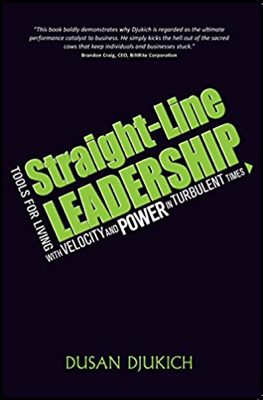 I have to say at the very top is a book called “Straight Line Leadership” by Dusan Djukich. I’m always saying it’s in my top three but I can never come up with one that’s ahead of it. The reason I love it is because it’s immensely practical. I recommend every entrepreneur read and study this book. It’s short chapters and not academic at all, it’s very practical, direct. What he does is he positions, he is encouraging you to take the stances that are going to help you show up in the world in a very powerful way.
He contrasts two ways of being in every chapter, like trying versus committing. He has a series of questions in one of the chapters that he asks potential clients. The book is worth getting just for that. I have a way of getting a free copy for people, so if any of your listeners want to contact me, I’ll be glad to tell them how to get that.
That’s very kind. Please tell us the best ways to contact you?
I’m on LinkedIn a lot, so Meredith Bell on LinkedIn. My email address, I’m happy to share, is [email protected]. I’m on Twitter @MeredithMBell.
Nice. I can’t thank you enough for sharing your wisdom, your expertise on listening, on breaking habits and connecting with people in a way that makes you of service instead of what’s in it for you. It’s great advice. I’m sure I can see why you’ve been in business for so long, I can see why your clients love working with you because when you can get them to shift that mindset, they’re all going to be more productive and get along. That’s what the name of the game is.
Exactly. John, it’s such a pleasure being with you. Thank you so much for having me.
My pleasure. Thanks for listening.
Links Mentioned
- Book: “Straight Line Leadership” by Dusan Djukich
- LinkedIn: Meredith Bell
- Twitter: @MeredithMBell
- Email: [email protected]
Do You Want To Host Your Own Podcast?
Click here to see how my friends at Predictive ROI can help
Fox 11 News Los Angeles John Livesay The Successful Pitch book
Share The Show
Did you enjoy the show? I’d love it if you subscribed today and left us a 5-star review!
-
- Click this link
- Click on the ‘Subscribe’ button below the artwork
- Go to the ‘Ratings and Reviews’ section
- Click on ‘Write a Review’
Destroying Excuses with Tony Grebmeier
Posted by John Livesay in podcast | 0 comments

Episode Summary

Today’s guest on The Successful Pitch is Tony Grebmeier, who is the Co-Founder of ShipOffers, that’s doing multi-million dollars in revenue and ranked very highly on Inc’s Startups as well as the founder and creator of something called “Destroying Excuses.” Which is a fantastic way to identify blind spots, be accountable and figure how to solve those blind spots, so that your life and your business takes off. He has really shared some key successes to getting the right team and culture. It has to with the key word called transparency, and he walks his talk. He’s transparent in his life and in his business, and he shows you how to get the right business partners that provide complimentary skillsets, so that you’re hitting the right product, right marketing, the right financial way to run your business, so that everything is seamless and runs smoothly.
Listen To The Episode Here
Destroying Excuses with Tony Grebmeier
Hi and welcome The Successful Pitch. Today I have a very special guest and friend, Tony Grebmeier. He hosts his own podcast called “The Tony G Show.” Tony is one of those people who not only makes a difference in the world, but is successful in business and in his personal life, and he shares his secrets of how he does that. He’s been an on-air radio personality, you’ll see a lot of personality coming through I’m sure. He’s got this amazing story of two friends that he’s known for years, and how that’s created this fascinating company called ShipOffers, and the culture they’ve created and the money they’ve generated. More importantly now, he’s really helpful and inspired to help entrepreneurs not make the same mistakes that he’s made, but he gives them a road map to make sure that excuses are not destroying your life.
So Tony, welcome to the show.
Well now I feel like I have to do something because you gave me such an amazing intro. So, thank you John first and foremost for the opportunity to be on your show today.
Yes, well … you’re one of those people that you come across in life and you go, “I’m gonna be friends with this guy or this gal forever.” Tim Sanders was one of those people for me, 14-15 years ago and you’re one of them as well. That’s part of the joy for me, of meeting people like you who really don’t just talk about something, but you actually live it and you share your vulnerabilities, and let people see, “Oh, it hasn’t always been an easy ride for you.”
So, If you wouldn’t mind, one of my favorite things to do, cause you know I love stories. Take us back to your own story of origin. Let’s go back to … was it high school, that you became friends with your business partners?
No, I’ve actually known my two business partners … my sister, this is gonna be great. My sister actually changed one of my business partner’s diapers, so I’ve known them all of my life. I lived in the neighborhood, we grew up together. We bumped and bruised, we did life and then we happened to go to high school together, but what my story was unique for me was, I left during the middle of our upgrowing and went across the way and lived with my dad. Went to a whole new school and made a whole new set of friends, and I missed out from fourth grade through eight grade. I was with a whole bunch of other people, and then I came back into the neighborhood and I went to high school with all of them. We just hung out, had fun, had fake IDs together and partied and did life. You know, went to high school and Gill, who is one of my partners, is a year older than us. When I was a freshman, he was in 10th grade etc.
I think I was trying to figure out who I was. It was 11th and 12th and I watched my best friend leave, and now Doug and myself were great friends growing up. I had a period of time where I actually even lived with Doug, because I got my ear pierced and my mom got mad at me, and kicked me out of the house. She said she never kicked me out of the house, I actually truly left, but in reality she was pissed that I got my ear pierced. So, I lived with Doug’s family for a short period of time. Throughout all of this, I really just truly loved people. That’s my key to life, right?
I have a heartbeat, you have a heartbeat. That’s why I think we’ve been able to pair up so well, is that you’re trying to serve your audience, your community and I’m doing the same. These people, that I’ve been able to get together and build a business with, all went of to college on their own. They went to UCLA, Long Beach, Arizona, and here was Tony, who didn’t know what the hell he wanted to do with life. He was an athlete, played water polo. Went off to a junior college, built this idea of being a radio air personality, but I kept in touch with my friends.
I contacted them one day and I’m like, “Hey, what’s up?” And Gil’s like, “Hey, I’m gonna go do this business. I have this idea, would you be interested?” I’m like, “Hey, do you want to meet me in Vegas?” And Gil’s like, “Yeah, I love Vegas.”
So we go to Vegas, Gil pitches me, 1995-96, the internet and shows me the internet for the very first time and I’m like, “What is this?” He’s like, “Do you think you can do this?” I’m like, “What?” He’s like, “Do you think you can build this?” And I’m like, “Is there code?” And I’m like, “I’ll figure it out.”
And so Gil and I actually started in business together in 1996. Purely just from a passion of just, “Let’s do something.” And before you know it, we built a business that about 7,000,000 visitors a day. We were buying and selling traffic to Google and Yahoo and we were actually in business with some of the pioneers of the internet. We didn’t have a set deal with them, but we were selling traffic to what you surf on today, which is Google and Yahoo. We did that for about five years, Gil and myself and then we realized we sucked at counting money, because I’m wanting to like, “Let’s make it and we’ll go spend it.” We didn’t have anybody to balance this out and so, then came Doug. The other neighbor from the childhood friendship, who had this whole background with an MBA, and he’s like, “I’ll help you.” That’s how we transitioned into ShipOffers in 2001.
Yeah. First of all, I love that there’s so many elements to that. The fact that you guys started this idea in Vegas and then say, “We’re not good with money.” I think is hilarious. It’s like … anything that starts in Vegas is gonna have some money issues probably, but what’s also really interesting is the fact that anybody could sell traffic to Google, is so hard for everybody to comprehend today. But back then, that was what was happening. It’s an amazing story.
I love this concept of what really is so important in any business, but especially a startup, is that you have three different areas of expertise; no one is usually good at all three. One is, “I’m the product guy. I really can make this the best product ever.” The second person is the financial guy that’s gonna manage the money and profitability, and the third guy is the marketing/sales personality gal or gal obviously. Do you feel that the three of you fall into one of those three buckets, and that’s why your skills are so complimentary?
Yeah, I mean, look at Doug. Doug is the guy who’s the finance person, right? If I have a question on a deal, I just go to Doug, right? If I need something in operations, or I need the artistic element that I can’t get across necessarily, I go to Gil. And then sales, people come to me and we work together. We have a philosophy that I’ll tell you, is the longevity of our business-
Yes.
We all have to agree, or we pass on the deal. If we all three are interested, we’ll stay, we’ll work and see it through. If, two say yes and one says no, we’ll just kill the deal. It’s not even worth fighting about-
Wow.
I think we’ve had two arguments in 16 years of business, and I think I started both of them, because I’m so passionate about … like, “No, no, no! You guys gotta do this! This is the deal! This is gonna change the trajectory of our business.” And they’re like, “Go back in your office.”
Now, that’s really interesting. So, that nobody feels left out, if you would. Two out of three, sorry you’re outnumbered. That would … you’re not ganging up on each other, and that’s a really interesting takeaway I think. That we all agree or we don’t do it. That’s really fantastic, so everyone’s voice is heard.
Now, there’s a really interesting story that I think will help people, which is the ultimate pivot, right? You started with something called “EyeFive” and that transitioned into ShipOffers. Can you tell us that story?
Yeah. So, 2009 we are living in Southern California, in Van Nuys, California is where our offices were. I was up in Santa Clarita, Doug was Calabasas, Gil was in the Hollywood Hills and business was going well, but it wasn’t where it could be. One day, I think Gil mentioned it, saying “Hey, what do you guys think about packing up?” “Packing up?” I said. He’s like, “Yeah. What do you think about finding a new place to live and raise our kids? California’s kind of crazy.” I’m like, “Okay cool.” Doug’s like, “Sure.”
So, we discovered Colorado after a long winded search of Seattle, Washington, Vegas, all of these places. And we landed here, and our business was actually on oxygen overload, meaning we had none. We had no business anymore and we were needing something. We were needing a fresh of breath air, and I happened to meet somebody in my life, early on here from a mutual friend named Kevin Cohen. Kevin and I started talking and he says, “You know what Tony? The more I’ve gotten to know you, the more I know that you need to get out from behind the table.” And I say, “What does that mean?” He’s like, “You need to get out from behind your desk. Let’s go meet people.” So, he invited me to come to a show in San Francisco called “Traffic and Conversions” and going there, I got a chance to listen to William Shatner.
William Shatner was on stage and he was talking about his brown bag wine club, about sharing a bottle of wine at a brown bag. Didn’t know what it was with some friends, and then talking about the flavor, the taste etc. It was great, but I said to myself, “If an 80 guy at the time, is on stage pitching something as silly as a brown bag to everybody, why can’t we have fun in our business, and create something that every body gets lit up about?” EyeFive was doing some millions of business, but it wasn’t the passionate business that we really wanted.
So, I literally left that and Kevin, Chad, another one of my buddies was there, and I said, “What do you guys think about the name ShipOffers?” Everybody was like, “Oh I love it. That’s fantastic.” Because EyeFive was convenient for California, everybody who’s familiar with Southern California is driven up into Northern California. EyeFive was the name, and everybody used to call us and say, “Can I make an eye appointment today? My eyes are really bad.” And I’m like, “We’re not an optometrist. That’s not what we do.” So one, it was easy for us to differentiate and number two, ShipOffers really sounds more in alignment of what we do. We ship offers for marketers, that’s our current business for 16 years.
So, it gave us a better name and I think, I tell people everything changed the moment we changed ShipOffer’s name. Once we got it right, we said “Let’s go with ShipOffers.” Everything changed, because what we did is we bought fully into the brand. Our business more or less looks the same today as it did in 2001, but the name gave us something that we all bought into. We became really passionate about selling and sharing it with the world, and our story became easier to tell.
Well that’s everything there, The Successful Pitch is all about helping people come up with a way that instantly people understand, who do you help and what problem are you solving? It all starts with the name and the brand. Isn’t there a story Tony about how you guys realized that you might have been losing control of what you were doing, and that caused the willingness to shift then name and move?
Well part of the story for me and the company’s … I think our longevity is I had a mid-life crisis. I personally experienced one of the biggest pivots in my life from 2005 until 2008. I was heavily sedated every single day with drugs and I got addicted to drinking all the time, my marital issues fell apart. My life was basically crazy. I was literally heading towards suicide and I attempted that 10/9/8, but a phone call and eventually, a knock on the door saved my life. Awoken this beast inside of me, which was the passion to truly help people that I was dealing with stuff from my childhood, that I never really identified and never did anything around. Finally, I was able to admit I had an issue and I needed some help and I’ve been sober since 12/15 of 08. That really helped me to become aware of the opportunity which was a rebirth, a rebrand.
So, the rebrand first happened for myself. Then I was able to, I think, build the rebrand into the company. Everybody went into their role; Doug went back to finance, Gil went into ops, I went into sales and marketing. We literally flipped the script and we went and built a company that was low seven. Now, we’re an eight figure business. We’ve been an Inc 5,000 company the last three years in a row. I’m anticipating breaking into the top 500 this year. We’re just growing and what happened along the way, was we saw an opportunity in the market, that nobody else was doing.
Which was an on-demand, pay as you go business model. So, what really happened for us, is that we saw a need and we actually changed and shifted our vocabulary a little bit to get into some networks. From there, we were able to grow into the company today, known as ShipOffers. On average, we ship about 40,000 packages a week to marketers, customers in about 34 countries all around the world. So, we saw an opportunity for the rebrand. And I tell people all the time, “Where’s the opportunity in your life for a rebrand?”
That’s so powerful and it all starts with rebranding yourself. Well, there’s two great stories that I wanted to take a little dive on. Let’s go into when you guys realized that you were depending on someone else to ship your products. Then you said, “You know what? We’re not gonna put ourselves in that situation again, we’re gonna take that over.” Yes?
Yes. So I’m so sorry for that. Great. So in 2002, we were allowing a company to do our fulfillment for us in Southern California and we received some phone calls one day. They’re like, “Hey, we haven’t received our shipment.” I’m like, “That’s interesting.” So, I noted it then got another call a couple minutes later, and then a call from the bank saying, “Hey, customers wanted their money back.” I’m like, “What is going on?”
So Doug, Gil and myself jump in our car like another day or so, and we drive to the fulfillment center and there’s a meeting going on in the very, very back. You walk into this giant warehouse and you can see five or six people, and they’re like in a little meeting. I just happened to look up and we see all of our packages, cause it says EyeFive on all of them, and they’re in bins. And I’m like, “What the heck?” So, we pull them down and we’re like, “These are the orders. They’re not shipping them out. They’re just charging us.” So, we took all the product, we bailed and we took it and said, “We’re never allowing somebody else to screw us.” Because, the problem is we now know that you can’t mess with somebody’s merchant account, you can’t mess with somebody’s marketing and you’ve gotta deliver what you say you’re gonna deliver to your customers; That’s it.
That’s such a powerful story. I love it. We all depend on other people to do certain parts of our business, right? I mean, we’re not gonna do everything and a lot of people depend, let’s face it, on Amazon obviously, if that’s what your niche is. But, whatever your business is, you have to really look at who your partnering with. For example, when Periscope was so dependent on … and then Twitter said “Hey, you’re using our platform. Now, we’re just gonna come up with a competitor.”
So, you can’t be so dependent on somebody outside of your business that if they don’t do what they’re gonna do, you’re whole business falls apart. You guys took upon yourselves to say, “We’re gonna do this and take of our own distribution.” Which I think is a really valuable lesson for everybody.
Yeah. I mean, the key that I found in all the chaos, because that’s what it was at the time. It was a lot of chaos, noise and craziness, and that was a business opportunity in itself. Our motto behind the scenes at ShipOffers is you market and we’ll handle the rest. We were trying to outsource it, cause we didn’t know what we were doing at the beginning. I mean, we’re three kids from Santa Cruz; it’s 2001, 2002. I was in my early 20s. September 11th came, I still remember being in the warehouse when that happened. We were like, “What do we do? Is the business gonna die? Do we stop right here in the moment?” And we were like, “No, we just keep going, but let’s figure it along the way.”
Then Gill’s brother came in and talked to us about how to make money doing wholesale. I came with the idea I’d like to do wholesale, but my price points were wrong. He came in and said, “Charge a dollar more.” Charge a dollar more and our business grew. I’m like, “How can you charge a dollar more and your business grew?” It’s because you added value to a great product, and people saw a value, then wanted to buy it because the price point was different. It wasn’t cheap, there was something behind it. It was the mystique or whatnot.
So, instantly we grew another revenue stream, which was wholesaling products that we were already selling, but we just came up with a new market. It’s been pivotal for us the entire time. From 2001 until today, we’ve been constantly rebranding ourselves. Constantly going back to the drawing board. I think we’ve had four rebrands, even though we’re the same company, we just keep saying, “How do we get better? How do we serve the market better? How do we serve and honor our customers better? How do we bring more transparency to the business models? So that customers and business owners understand how the thing works.” Cause I have no competition, and that’s my belief system, right? I just believe you put out good stuff, people will stay. You take good care of your customers, people will stay.
I’m not fearful of people taking my customers, because at the end of the day, they know they received so much value. I believe my way of being is to go above and beyond what anybody else is even thinking, and that’s because I’m constantly working on rebranding who I am and how we do business with our customers. So, I’m on the phone … one of the owners of the company is talking to the CEO of another company on a constant regular basis. Building a personal friendship and a professional friendship, where we learn how to help each other. So, I open my Rolodex to my clients and say, “What do you need? You want to go buy the product direct and just ship it to me, and then I’ll fulfill it for you? Great, if that’s what you want to do with your cash flow, awesome.”
So, I’m not hiding anything with my customers, I’m helping them to win.
Nice. So, when you help your customers to win, they stay loyal. That’s the tweet I think, that’s really the message that you’re giving people as the secret to winning your successes, yes?

Source: Pexels
[Tweet “Help customers to win and they stay”]
Yeah. It’s the secret sauce to longevity. You help your customers to win, you win every single time.
Yeah, love it. Now, I’d be really remiss if I didn’t unpack that little comment you made about being suicidal, and one phone call changing your mind about it. So, can you take us back Tony, to what that phone call was, what that person said to you that made you change your mind?
Yeah, it was October 9th, 2008. I just gotten out of the car a few minutes earlier, seeing my wife and my kids, and I just gotten home from a trip. My wife and I were coming back from the pumpkin patch with our kids. It was not good. We were really going through some dark times in our marriage and she’d gotten out of the car. As I was getting ready to punch the key pad into the apartment complex, she said, “Hey, I just gotta tell you this. I don’t love you anymore.” And she needed to say it for herself, and I needed to hear her say it, because that was the first time in my life that I remember of someone telling me something to that magnitude.
Now, I’ve always been the person on the other end to say it. Like, “I don’t love you anymore. I want to break up. It’s not you, it’s me.” I’ve always been that person and in that moment, I didn’t know what to do. Fight or flight kicked in, I didn’t know what to do. So I say goodbye and I go up to my apartment, I get out all the drugs that I’ve been on, I was taking about eight different things at the time. From back pain, sleep aids, Xanax, Lunesta, it didn’t matter if it was testosterone, HGH, uppers, downers, anything to kind of keep me balanced, right? Cause I was totally out of whack for a period of time, cause I had been in the midst of addiction issues, struggling with knee pain. I had a whole bunch of surgeries up until that point.
So, I’m sitting on the couch and I’m about to write my suicide note. I take out my phone, I got all my drugs and just gonna text it out. I thought that’d be a cool way to say goodbye. As I prepare, I receive a phone call and my buddy says, “Hey, I’m coming to see you.” I’m like, “All right. Whatever.” And I hang up the phone and I’m like, “Aww crap, now I gotta put all this stuff away.” I go back to the note that I had already begun to be halfway done through it, and it was gone. I was so baffled like, “Oh my gosh. Where did my note go?” Can I do that paste thing and I’m like, they didn’t exist on the phones yet.
All of sudden I get the knock on the door and my buddy comes in, and he gives me a big hug. He says, “You know Tony, your life has meaning and purpose, but what your doing right now doesn’t.” This is time where it’s the darkest of my life, but I also believe in that moment, and I’m just a spiritual being that God sent an angel and it had to be my buddy John. John walked into my life, gave me a big hug and John had gone through a lot of similar stuff. I was able to be there and help him, but also I was probably a bad influence on John in a lot of ways. So, in that moment, I listened to John and I think stayed for about 45 minutes to an hour. In there, was some of the greatest context that I ever heard.

Source: Pexels
[Tweet “Your life has meaning and purpose”]
Imagine sitting with an angel and he says, “You know, your life has meaning and purpose.” I think we all think at some times we’re trying to find our meaning, and we’re trying to find our purpose, but I heard it. Then he painted a picture for me, and then a day or two later came, as I was talking to my pastor, he says, “Tony, you could lead many. You could be in front of thousands.” And I began to understand what people saw in me, but I didn’t see in myself. Because I had been living a lie. I’d been living this life of trying to look good to avoid looking bad. I’d been dishonest with everybody in my life; my family, my wife, my kids, my business partners. So, I had this awakening in the moment like, standing on the beach with your back towards the ocean, and you literally have your toes in the sand, you’re kind of moving your toes up and down. You can feel the sand coming in between and waves crashing over, but not panicking and running, but just allowing the water to crash over you.
That was the wave of emotions that I felt and in there, I became aware of the opportunity that I had and that was, I needed help. I needed help, because I couldn’t do it anymore on my own. So, I reached out to my mom on 12/14 of 08, and my mom said something that was really, really cool. She said, “I dealt with your father.” My dad was an alcoholic. “Your grandfather was an alcoholic.” And so on, and so on, and so on, and so there was this huge pattern. She said, “You could break the cycle. You could end the pattern. You could do something today that would change history.” She wasn’t necessarily saying history for the world. She was just saying my family’s history.
Right.
And in that moment I said, “Yeah, yeah, yeah, yeah.” But at the 45th minute of her conversation, as anybody who’s ever been sober, knows somebody who’s gone through it. There’s a 12 step philosophy and mom basically 12 stepped me into the rooms of alcoholics anonymous, by simply saying “You need help.” And I saying, “For the first time in my life, I do.” And that changed everything, that changed the business, that changed my family; my wife and I are happily married, coming up on 19 years. Best relationship I have on planet Earth were with my kids, my business partners, my mom, everybody in my life. I just live a transparent life. I’ve shared a lot on this show and I could share anything, because there’s nothing that I have today in my life, that’s holding me back from experiencing greatness.
Let’s talk about this transparency, I think it’s a theme that runs across who you are, and so many people are afraid of being transparent, because they think “If people know this about me, then they won’t like me. If they know this about me, then they’ll leave either personally, or professionally.” But because you’re so transparent and fearless, you then don’t have the fear of losing a customer. You take this willingness to be transparent in your personal life, into your business and into the way you interact with clients. Therefore, I think that is a big takeaway. If you are transparent and vulnerable even, I think it allows people to see you as a person, and they want to connect with you. As opposed to pretending everything’s perfect all the time.
Yeah, let me clarify something, cause for anybody who’s listening, I want to have you understand what I’m about to say and I want to put it in two buckets. So, if you work for somebody, keep some of your transparency to yourself.
Got it.
If you are a professional and you have a business yourself, you can create the rules.
Yes.
I just have to say that, because for me, it’s a huge clarification piece. Because I’m an owner of a company, I live one way; by truth, transparency, integrity, passion. And how I do that, is easy because my stuff became aired out, it got aired out, right? Literally like, “Oh Tony’s that guy, in that neighborhood, that’s the guy.” And so, it became for me, the only way to live my life, which was, I made a lot of mistakes. I just needed to admit them. Once I admitted them, I became free to share. When I was in a meeting once, I shared what happened and all this stuff and I realized, “Oh my gosh, the way to live a life that is worth living is one of transparency, that doesn’t have anything to hide.”
And by doing that, everything opened up for me.
And that’s what’s giving you the content and the credibility to create this program you have called “Destroying Excuses” because you destroyed all your excuses for not being successful and not being happy. And now, you teach other entrepreneurs how to do it, tell us about that.
So, one of the interesting things along this journey, right? I go back to when we were ready to move from California to Colorado, I had to short sell my house with my wife. I put my family into financial debt living in an apartment down the road, addicted to drugs and alcohol, running up tons of bills, driving fancy cars that we couldn’t afford. My ego was so big, I bought a two-seater for a family of four. I wasn’t thinking about anyone, or anyone but myself and so — just about a million dollars in debt, I put my family. In 2015, I was able to pay that debt off.
What I realized along the way was, I accepted personal responsibility for everything. That’s one of the keys to destroying any excuse in your life, you have to own up to it. You have to take responsibility, so once I became aware of that I caused it, cause I’d been asked, “Do you want me to file bankruptcy for you?” I’m like, “No. I got all this debt, I’m gonna get out of it.” No bankruptcy, I just figured it out and made a lot of phone calls, and got really honest with a lot of creditors and told them my story. And simply said, “Hey, you know what? I gotta figure this thing out, cause I got myself in it in the first place, let’s do the work.”
Along the way I realized, I have a lot of excuses along the way of what was holding me back from success. Now, success to me isn’t dollars in the bank. Success is living a lifestyle that gives you freedom to do what you want with your friends, and go where you want with your friends, or just travel by yourself, or whatever. I started realizing that, I’m like, “Man I made so many excuses about my health, my wealth, my business, my family, etc.” So, I started working through some formulas and I did a lot of research. I attended a lot of workshops and events, and I’m like, “That’s great, but that doesn’t really speak to me, that’s a bunch of information.” I didn’t get it the way they were teaching it.
So, I went and decided to create in 2016, an accountability online group. Just to simply put, a bunch of working professionals, six, seven and eight figure mindset people into a program to help them over a 30-day period of time; to really start working on some of the stuff that was holding them back. To literally put everything into a Petri dish, and get it under the microscope and say, “That’s similar. It’s in this person and this person and this person.” And out of that came Destroying Excuses.
So, it’s a new program. It’s something that I’m super passionate about. I help people … that’s my platform for coaching. Is I take people through a 30-day curriculum and help them to identify the blind spots in their life, what’s holding them back, a solution to overcoming any obstacle and literally, to live the best life possible. Nothing works without work and so, everybody deep dives into it. They figure out the number one thing that they want is more time, so they can have the freedom to do what they want. But the number one thing holding them back is all the BS they’ve been telling themselves. So, I help them to identify their excuses and they begin to break through them and create new habits.

Source: Pexels
[Tweet “When you identify your blindspots, you can destroy your excuses”]
So, it’s a two-fold process. A lot of places just say, “Okay, we’re gonna show you what your blind spots are. Now you know them, good luck fixing them.” But, you take it one step further and say, “Okay, now we know what the problem is, let’s come up with a solution.” And that’s what I think is so unique. A lot of people stop at just identifying the blind spots/problem, but you because you’ve done it yourself, can then take people through how to solve those blind spots, it’s not enough just to identify them.
You have this great quote here about “If I change my behaviors, I change the direction in life.” I think that’s what you’re doing with this Destroying Excuses program.
Yeah, you’ve heard it, we’ve done a lot of work around it, but I tell people “I just went to the dealership today. I bought a brand new car. I pay for it. I drive onto the road, two minutes into the driving, I get into an accident. The officer comes up to me and says, “Everything all right? You just got blind-sided”” I’m like, “I did? I couldn’t see them, I had a blind spot.” And the officer’s like, “Interesting. Hold on a second.” Writes a citation to the other person, comes back and says, “Hey, we’re not gonna cite you today, but I want you to be aware of that blind spot.”
So, when you go about your day, you know that’s there. Every time you get into the car, you’re gonna have to use the mirrors to check around and see what’s going on. You’re probably gonna have to look left or right a little bit better. Okay, so now it’s an awareness. And see, most of us already have a lot of blind spots, and now I’m just giving people the awareness so they can see them differently. Then they can make changes and we can come up with better solutions. So, those no longer hold them back. I think the idea is, now people see clearly; where they’re going and what they want. They know they do have limitations, but they’re not putting so much emphasis on those.
Well, one of the big blind spots a lot of entrepreneurs have is getting the right team, right? Not all of us are fortunate to have childhood friends that we have as business partners, but then, we need to grow and scale our business, we still need to hire the right people to fit our culture. I think you’ve really solved that problem and I think if you share your definition of culture, as we wrap up the show. So, the people can say, “Oh yeah, that’s one of my blind spots is hiring. I don’t know how to hire the right people.”
And you say it starts with making sure that you have a culture defined, so that you know whether that person’s a fit. Can you tell us what the culture is at ShipOffers?
Oh gosh, it’s fun, crazy fun. That’s one of our fifth core values here. So number one, this is interesting, it’s gonna tie into your theme perfectly, it’s called transparency. When you interview, I don’t care what’s on your resume, that’s what you said you did. I want to know what you can do for our company, and how you think that you can fit in this dynamic, multi-culture company that has so many distinctive backgrounds. We’re shipping 40,000 packages a week, everybody’s involved in each shipment in some way. So, you have to come in and add some value right away. What can you do? What are you really talented at?
So, we ask crazy questions like, “What’s one thing that nobody knows about you, that you wouldn’t mind sharing with us today? So we get to know a little bit about you.” People are like, “Oh I love animals, but I love curling their hair and putting bows in them.” Cool, so you’re creative. You like to have fun, you’re also passionate about animals. So it gives us a little idea about the type of person you are outside of your work.
I also tell people when we hire them. I actually need to know what’s going on in your personal life. The best that you can possibly share with me, because when you come to work, that’s gonna come with you. So, I just need to know … I don’t ask “Do you have kids? Are you in a relationship? Have you ever been in jail?” Those are not the kinds of things that I’m asking. “I just want to know … tell me about what do you do when you’re not working. What are you super passionate about and excited about? By asking them an open ended question, they’ll actually tell me all the other stuff.
If someone says they’re not passionate about anything outside of work, that’s a red flag right there, isn’t it?
Yeah. You just say, “Hey, we’re probably not culturally … we don’t line up well together.” But the more that they begin to open up, I begin to realize “You know what? You could fit our culture.” We do a lot of stuff, so every Monday and every Friday, we do a quick 15 to 20 minute huddle. I lead that in the morning. We’ll do some kind of fun activity, we get everybody moving and talking and involved. We ask them how their weekend was, and we talk about “What’s one thing you’re excited about during the week?”
Then, we have a huddle on Wednesday, where we bring in all the managers from all the departments, and we talk. It’s about 15 to 30 minutes, and we get everybody really, really clear on how we’re helping our company and everybody in it to win. Cause culture for me, is about getting everybody involved.
Nice.
It’s not about Doug, Tony, and Gil being at the top of the pyramid. It’s actually flipping the work chart over and putting us at the bottom, to support the team; everybody above us. Because, if we can do that, then we can win. See, when you take yourself out of having to be the man or the woman in the deal, and you can actually be the person who’s the cheerleader. I cheer so loud for our team. When people literally clock out at the end of their day, the entire group is giving high fives and happy claps, and everybody’s like, “See you tomorrow.” And they’re like, “Bye!”
Tell me when’s the last time you walked into a business where that happens. There’s 30 employees, it’s not a lot, but it’s still 30. Everybody is excited to come to work, work and go home, and can’t wait to get back.
Wow.
That to me, is created over time, but also by three owners that were passionate about leading, and I did it by … at least, what I say. I take credit for it in my life, is transparency. I’m gonna say, “I made a mistake today. This is my fault. This is my failure.” I just want you guys to know, it’s gonna happen and I’m gonna be there I’m not gonna walk ahead of you or behind you, I’m gonna walk with you.” So, we walk with our employees through this entire organization and employees, bad word. Team members, better word.
Nice. So, transparency and fun, crazy fun are two of the core values that make ShipOffer successful. If anybody wants to really take their business, and their personal life to the next level, I highly recommend signing up and getting involved with Tony’s insights on how you can destroy those excuses that keep you from being successful. Because until you know what your blind spots are, you’re not gonna be able to fix them. So Tony, tell people how they can follow you on social media and learn more about Destroying Excuses.
Sure, so two ways real quick, ShipOffers is my lifeline. It’s how I get to interact with everybody in the world. So, Shipoffers.com if you want to learn more about logistics, products and fulfillment and what we do. And then Destroyingexcuses.com is my online 30-day course where we always have new courses starting. So, you can just go learn some information, get signed up. It’s an amazing program, tons of accountability, small group coaches, it’s a lot of fun. So, those are two platforms that you can learn more about what I do.
You can follow me anywhere on social media. Just type in Tony Grebmeier, you’ll find me on YouTube, LinkedIn, Twitter, Facebook, Instagram, all that and I personally love to interact with the human spirit. So, I’ll be the one responding.
Nice. Well, that’s for sure. Tony, I can’t thank you enough for being transparent, being fun and just being an overall great guest and sharing your secrets to success, so that we can all emulate you.
Well, I just want to say thanks. All kidding aside, you came onto my show as a guest, and I told you after we hung up, I said, “You know, I want to learn. I want to learn more your coaching services.” And I said, “Can I pay you for your time?” Because I felt compelled, you were the first person I interviewed and I’d been in the radio business for a long period of time, who literally spoke to my heart. You weren’t trying to sale, you were sharing and sharing is the way to win business, and to really help people in life. And you’re like, “Sure.” I knew right then and there, I literally left the interview, I went down the hall and I’m like, “Gill and Doug, I just had the most incredible interview that I’ve had on my show and I can’t wait for you guys to meet him.” And you’ve been gone to do some work for ShipOffers, you’ve been gone to do some work with one of my business partners.
So John, coming on your show is a complete honor for me, because it’s a way for me to say at the end. Thank you for all that you do to help so many people. You have a gift, you’re talented, and I can’t even repay you.
Thank you. Very, very kind. All right Tony, I can’t wait for this episode to air and I can’t wait for more people to stop just throwing their excuses with your help. So, that they can make the world a happier better place, thanks again.
Well thank you.
Links Mentioned
- Website: Shipoffers.com
- Course: Destroyingexcuses.com
- Twitter: @tonygrebmeier
Do You Want To Host Your Own Podcast?
Click here to see how my friends at Predictive ROI can help
Fox 11 News Los Angeles John Livesay The Successful Pitch book
Share The Show
Did you enjoy the show? I’d love it if you subscribed today and left us a 5-star review!
-
- Click this link
- Click on the ‘Subscribe’ button below the artwork
- Go to the ‘Ratings and Reviews’ section
- Click on ‘Write a Review’