
The Art Of Opportunity with Marc Sniukas
Posted by John Livesay in podcast | 0 comments
Episode Summary
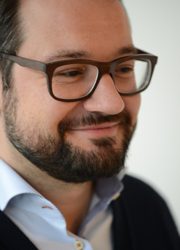 Today’s guest on The Successful Pitch is Marc Sniukas, the author of The Art of Opportunity. He’s an expert in helping big and small businesses learn how to innovate and scale. He said, “When someone’s not buying, that’s an opportunity to see if you can solve that problem.”
He also talks about you need to think big, start small, and scale intelligently. Listen to find out the number one mistake companies make when they scale and how to avoid it. You’re going to really enjoy learning the three different types of ways to launch from inception to evolution to diffusion.
Listen To The Episode Here
The Art Of Opportunity with Marc Sniukas
Hello, and welcome to The Successful Pitch. I’m very excited today to have Dr. Marc Sniukas. He’s a global expert on strategic innovation and corporate entrepreneurship. He’s the author of one of my new favorite books called The Art of Opportunity and the co-founder of the Business Model Gallery, which is the world’s largest business model database.
He partners with leadership teams and their organizations to help them discover new growth, develop breakthrough strategies, and innovative business models. Let’s face it, who doesn’t need that? Once he does that, they can seize on these opportunities, and their organizations are able to execute on new growth. He is the expert on growth, and that’s what keeps a business alive. Marc, welcome to the show.
Hi John, thanks for having me.
Yes, I always like to ask my guests to flush out a little bit of the bio that’s certainly impressive. I’m interested in the story of origin, Marc, so would you take us back to your early days at university. Did you know you wanted to write a book? How did you get where you are?
Yeah, sure. I was at university and I studied business administration in Vienna, Austria, and I was always interested in these topics of strategic innovation, the early works of Gary Hamel, for example, Leading the Revolution, this kind of topic. I’ve always been interested in the topic of strategy and strategic innovation. I wrote my master’s’ thesis at the time already on the topic of strategic innovation.
It was more of a literary review of looking at what has been said and written about this topic, what the state of research in the topic was, and synthesizing this into a framework that actually managers then also use in their work. After university, I founded my first company. It was a company, which was focused on management education and management development where we also did a lot of strategy programs like innovation programs, but also very hands-on business acumen programs, for example.
I did a lot of finance for non-financial managers training. I built a solid foundation on the business administration and finance of the company. I did that for a couple of years and actually successfully sold that company because I wanted to move more into consulting. I started working in consulting. I started working with executives on how to transform their companies, on how to develop and implement new growth strategies.
I got more and more interested in the topic. At some point I realized, always going back to the literature and the academic research, at some point we realized that a lot of the stuff was written. The state of the research didn’t really answer the question of how to come up with new business models, for example. The business model topic was a hot one at the time. I started working with people on that, and we looked at the research and said, “Yeah, well, this doesn’t really work.”
I got interested in the question of so how does it really work. How to established companies successfully reinvent their business models? We know a lot about how startups do it, how they come up with new business models, but we didn’t know much about how established companies actually can change their business models and implement new innovative business models.
I was interested in that particular question and was very serious about finding an answer to it, so I went to Manchester Business School. I did a doctoral program answering that particular question. The outcome of the doctoral research then turned into the book. The research was very focused on the topic of business model innovation.
What I saw is that most established companies, they come up with new business models in order to find new growth opportunities, in order to seize new growth opportunities so that turned into The Art of Opportunity where we outline step-by-step approach on where to find opportunities, how to seize these opportunities, and where to innovate but also where to innovate customer experiences, innovative business models, innovative revenue models. We also show how you can test these ideas, validate such ideas, and implement them in a very low-risk fashion.
It sounds like you were able to turn your Ph.D. dissertation into research that became a book, and not everybody is able to do that. If I heard you correctly, is that what you did?
Yeah, that’s what I did. The doctoral work is very rigorous or very relevant, so to say, because I tried to answer that question the executives are interested in. How to find the growth and how to develop innovative business models. It’s not that theoretical per se. It’s rigorous in the way it’s been done, but the outcome’s very practical, and that’s also why then it was relatively easy to turn it into a book.
The Art of Opportunity is not only for big companies that are looking for ways to reinvent themselves, to have new sources of revenue, which I’m completely interested in talking to you about, but I think it’s also for companies that are starting out and trying to make sure that their business model is working, or if it’s not how to pivot. Would that be correct, Marc?
Yes, exactly. As my research came from established companies I was always more interested in that. As I said there was a lot of research, and we know a lot about how startups do it. Nevertheless, yes, so although the primary target audience for the book was corporate the methodology works just as fine for startups, and if you come up with an idea to launch a new company.
Well, I work with people on their pitch to get funded or their pitch to get new customers, so the business model is near and dear to The Successful Pitch podcast audience. We love stories because, as you know, that’s what brings people in, and they understand things. Would you mind revealing a little bit of the secret that you tease out about the American rock band Nine Inch Nails, how they were able to achieve $1.6 million within a week even though the music was available as a free download?
Yeah, that’s always one of my favorite examples. I like to start up conversations with that one. The trick was actually freemium at the time. You have to remember that the Nine Inch Nails model, it’s about 10, or that particular example is about 10 years old. They were one of the first companies or first rock bands to try the freemium model, so to say. The music was available as a free download, but you could some limited edition CD and DVD boxes hand-signed by Trent Reznor, the mastermind of Nine Inch Nails. That’s where the money came in.
Well, that’s even more impressive $1.6 million is a lot, but 10 years ago, it’s really a lot, right?
Yeah, right, and just in the first week. It was in the first week it came out, that the album came out.
Is the concept of if you get something enough away free and they like it enough, maybe it’s one song. Is that the concept? Then they want to buy the whole album, is that the gist of it?
They had the whole album available for free as I said, and they had the limited edition CD boxes and DVD boxes with original footage from the concert and fans just wanted to buy it. Basically, they gave away for free to create a fan base and they wanted to have the new stuff and have the CDs.
Are those lessons learned from that experience certainly are applicable today, are they not?
Yeah, so another example that we have in the book is the German TV media company called ProSieben, the leading TV station, public or free TV station in German and one of the leading channels in Europe. The revenues they do is by selling advertising, right? They thought about how can we grow. We are the market leader.
We have like 30% market share. The market is very dominated by them and a second company called Arch. They were looking into how can we grow our business. They asked themselves, who is not buying TV advertising, right? The obvious question was Starbucks and other medium companies, they don’t buy.
They came up with also a very innovative revenue model, which is not that different maybe from Nine Inch Nails in the sense that they say, “We’re going to give away advertising for free to the Starbucks and smaller medium companies. We’re going to help them even with the production and everything. Then we’re going to get a cut of the revenue share we create.” Basic service, you get it for free. Then if it is successful, it’s performance related pay, so to say, and ProSieben got money out of that.
They have been very successful with this, and they grew by two billion Euro revenues within like five to six years with ideas like these. They basically doubled their revenue in six year’s time, with innovative ideas like these coming from growth outside of the core, coming from growth businesses and new businesses that did not exist yet five, six years ago.
You know, I love your whole journey poster, would you walk us through the five steps on a journey? I think that would be very helpful for people to get an overall picture of that.
Yeah, sure. One of the things that I wanted to have in the book is I want to make it very visual so that it’s easier for readers to orient themselves and grasp the contents. That’s why we work with these journey posters, for example, and throughout the book, we use a very visual language to explain concepts. It’s not just visual in the sense of being good, but the visual has actually helped to understand the content.
You talk about five steps, and that’s basically the outline of the book. The first step in a journey is to understand the concept and get a high-level overview of what it is that we’re going to be talking about. We introduce that concept of saying when thinking about strategy you have to think about where do you want to play, how do you want to play, and then how do you want to win.
That traditional strategy offers a certain approach to answering these questions, but what we see in these innovative and high growth companies is that they take a different approach to asking these questions. Three questions are pretty standard for strategy, classic strategy questions that you need to answer yourself, but we take a different approach now.
Then we go through to the second chapter which is all about answering that question of where to play. We say that where to play, it’s all about looking at your customers, looking at non-customers, looking at dissatisfied customers to discover new growth opportunities. The idea is that if you’re really looking for big time growth, like doubling your revenues, or you’re looking for a billion or two billion plus in revenues, that’s not likely to come from your existing and most satisfied customers.
Although you need to keep them happy, obviously, right? That’s what we’ve been taught in marketing. If you’re really looking for the big time growth, you need to go for non-customers. You need to go for unsatisfied customers. It’s about looking at those. We have different types of those we talk about, for example, want-to-be customers. They would like to have your product or service, but there are some barriers to consumptions, so maybe it’s price, maybe it’s access, maybe it’s usability, this kind of things.
We talk about that, what is keeping the customers from being a customer actually. We talk about “job to be done theory,” for example, so we picked that up. We talk about how can you map out and visualize jobs to be done, how can you visualize customer experiences. Then we dive into what are the barriers to consumption, as we called it, what are the hurdles to satisfaction. Basically, understanding why a customer doesn’t buy, that’s your opportunity.
Here, you have an opportunity that you want to get. This is the where to play. Then we come to how to play. How to play is all about how are you going to seize that opportunity. We talk about, we take a very holistic approach to innovation, if you like, so we say it’s not only about product and services, but it’s also about customer experiences. It’s about your business model, and it’s about the revenue model.
We go into these three elements, so to say, of how you define how you want to play. We talk about how to win, which means traditionally you win by being different or by being cheap, for example. We say that nowadays, that’s no longer the case of being different or being cheap, but the real competitive advantage comes from offering value and offering value not only to your customers. We talk about of customer value proposition, obviously.
Whatever strategy or business idea that you come up with, it needs to deliver value to you as a company. That’s why you go there in the first place. Again, we take a very different approach to talking about financial value only, we also talk about operation value. We talk about the strategic value that some business model ideas, for example, give you of others. We talk about the increasing importance of creating value in the ecosystem you’re involved in so if we apply it in the circumstances you’re working with.
This is all about how to play. Then we finish off then with, where to play, how to play, how to win, and then we outline a process, which comes very much from the research that I did about how you can implement this, and how you can take such an idea through iterative cycles and increase the maturity, and the sophistication of your idea as you go through these cycles.

Source: Pexels
[Tweet “Find Out Why Someone Doesn’t Buy Is A Way To Discover An Opportunity”]
Wow, you’ve given us so much great content there. I love the fact you said why someone doesn’t buy is an opportunity. We’re going to tweet that out from the episode. That’s a great line. It’s really a great sound byte, and I’m also really fascinated by this whole validation option card you have going on. They always talk about executives getting out behind their desk. If you’re working at a retail store, go work the floor and hear what the customers are saying one on one.
Let me bring it down to a specific example. I’d be really curious to get your input on this. There’s a family that’s thinking of starting a fashion line based on their daughters’ wanting to be entrepreneurs. The daughters are I think 8 and 11. They’re at the launch stage. They’re tinkering around to see is the audience girls their age whose moms would buy the shirts? They’re on Instagram, and they’re using social media to try and create some branding. Any thoughts on what would be a good way to use your book for them?
Have they launched already or are in-
No, they’re still in the mode of discovering who’s the avatar, and who’s going to buy this, and what should we offer first, and all that.
They are using already a great approach by not building a business fast but by trying out through Instagram and through this kind of things, what is it that people respond to before you invest a lot of money. I think that’s turning the traditional approach and the conventional approach around.
The conventional approach would tell you okay, we do market research. Then we know this is the target audience, and we believe this is what they’re going to buy, and then you build the business, right? You build the products, you fill up your inventory, and then you go out, and you try to sell. We see here is a lot that people before they even build something, so that idea of the minimum viable product, but before you build something, you test and check out whether there is some interest.
I think it’s brilliant to go out and say, “Let’s post a couple of pictures on Instagram and see if the people like them or not.” To pick up that example of ProSieben again that I introduced, ProSieben, to test the idea of giving media for free and getting a share of the revenues, what they did is just issue a press release advertising that idea.
They got dozens of companies that called them up and said, “Hey, this is something that you want to do?” Only then started they building out a contract and what would it look like, and how can we structure this legally, and so on and so forth. Yeah, I think it’s brilliant to test something. Today, with social media and online and everything, it’s very easy to test something without having to spend a lot of money.
That’s great. It’s interesting because you want, in this particular case, the ideal client is the girls their own age, but obviously the mom or the dad or both have to be the ones to get asked to say, “Oh, I want that t-shirt, or I resonate with that message or I like that design.” It’s an interesting challenge from a marketing standpoint to figure out are we targeting the moms or are we targeting their peers because that’s a completely different strategy.
Right, this is where the idea of the ecosystem idea actually comes in. You look at who are the partners selling or who are the partner lobbying. In our business model, it’s obviously the end customers or the girls, but you need the parents to be on board because otherwise, it’s not going to work, right?
The question is what group can we offer them and provide to them. The need the parents have is obviously a different one than the need that the girls have. You need to figure out what are the different stakeholders, and what is the value that we provide to each of them.
Oh, I love that. Who are the stakeholders and the different values we provide? Really great insights. Let’s jump if we don’t mind, Marc, to a bigger company obviously that has been around for a long time, but since you’re the expert on this as well. I used to work at Conde Nast for years publishing magazines, GQ, Wired, W, Vogue, Art Digest, etc. Dwindling print-dollar budgets have caused them to have to reinvent themselves where not only do they have websites that they sell, ads on those, but they’ve gone into a whole entertainment division now.
They’re creating content from the articles into TV shows and movies and have snack-able things to try and have additional sources of revenue. It’s totally changing the business model, so it’s not dependent just on print. The big challenge they’re facing is, of course, whether it’s digital or the entertainments, it takes a while for that to scale up, to make up for the losses in print. That’s rampant across Time and Hearst. Have you looked at that industry at all? Any thoughts on that?
I was indeed the example as I said that we have in the book, which is around media is seven, so looking into new areas of growth. Actually, they use the model to nowadays create the strategic portfolios of investments of companies they work with. Over time, they switched the model a little from media for revenue share. They went into media for equity.
They said, “We’re actually going to use our media power, and we’re going to invest with that power into start-ups.” And they created a portfolio of categories where the model actually works very well. Over time, they learned that it works, for example, very well if everything that’s online instead of offline, retail-based things because they could track whether if it’s an online business, they can track very well, “We broadcast the ad at 8:00 PM and at 8:10 PM, the clicks on the website and the sales on the website go up,” so that’s made them focus, for example, on online business.
Anyhow, nowadays, they use this model to invest in strategic areas, and actually, at the last annual conference, they said that they want to be the number one online trip provider in the next couple of years in Europe. They’re completely switching the traditional advertising business to using their assets, the media, to invest in other areas and build up new revenue streams, there.
When talking about Conde Nast, I think you have the expertise in certain areas like travel, for example, you have the access to the reader, so the question is how can you leverage that and go into completely different areas, which bring you different revenues, and you’re not so much relying anymore on the advertising on the one hand. On the other hand, ProSieben always profits from the ecosystems that they build in these offerings because they can do some cross-selling there and there.
Yes, I think that’s fascinating. Do you see a lot of differences between what’s going on in Europe versus the US with launching?
I think in Europe we’re still a little bit more in that risk averse mode, I would say. The culture here is not entrepreneurial as in the US. We tend to be more careful also with the money, I would say, depending on the country. I used to live in Austria as I studied there. If you’re a startup and you get 500,000 in venture capital in funding then nobody would talk about 500,000. That’s the difference, I would say.
Let’s go back to The Art of Opportunity, this road map because there’s just so much wealth of information here. We’ve got the concept of finding the opportunity. Then this whole concept that you said of understanding who your customers is and who your customer is not, and why somebody wouldn’t be buying it. Then you craft a strategy. I’m really fascinated by the three phases of launching: inception, evolution, and diffusion. Can you expand on those three for us for a minute?
Yes, sure. That was really the core of my research, so when I did get the research, I looked at companies that have successfully launched new business models. I looked at what it is that they actually did. So I mapped out all the activities that they went through. I read hundreds and hundreds of recalls of minutes from the meeting, from workshops, and I did interviews, and I did product planners, and so on and so forth.
What really looking at what it is that they did. Having been trained in traditional strategies, I tried to look into where did the analysis happen, where did the development of the strategy happen, where did the implementation happen. Obviously these categories of that kind of thinking, it didn’t help me to explain what was going on in the data. I couldn’t make sense of the data. The analysis was all over, planning was all over, they started implementing already before planning was done. The traditional strategy approach just did not explain what was happening.
Then I looked into, I thought, “Okay, it sounds a little bit more like lead, for example, design treating and agile because it’s these iterative cycles of doing things. Then I also saw that it’s not all iterated, like this build, measure, learn that entire lean, that doesn’t go on forever. There was some stuff that happens before, and there’s some stuff that happens after.”
That’s when I came up with these three stages that I called inception, evolution, and diffusion. The key thing is that in the inception phase, this is where you do some research, and you try and figure out what is your opportunity, as I said earlier. Then once you have your opportunity, you develop an initial idea. Like ProSieben, we’re going to do media for revenue.
At that stage, it’s just that idea. It’s not very sophisticated, and you have not planned out and flushed out all the details. You haven’t built anything. It’s really just about testing that. Once you start testing that, so you validated with these Instagram pictures like the family fashion business that we spoke about or issuing a press release like ProSieben did, and then you get some feedback. Then you start working. This is where you enter the evolution phase.
The evolution phase is really about that iterative cycle of you design something, you develop something, you put it out, you test it, you gain some insight based on the reactions from customers. You use that to work it into your strategy and into your business design. As you go along and as you go through these cycles of doing something, learning from it, using the learnings again to go into the next cycle, you go through these cycles and the maturity of your idea keeps on going up.
The idea becomes more sophisticated and you have flushed out all the details until you hit a point where you say, “Now I know and have validated that it works sufficiently well. Now we’re going to switch gears and we’re going to switch from designing our strategy in our business toward scaling up.” That for example, for ProSieben, was the moment, so that was about two years, they had about 20 million euro in profit, and they said, “Now we’re sure that this works well. Now we’re going to scale it up.” That was the moment where they found a dedicated company. They started hiring more people. They started standardizing the processes to be able to scale it. This is the diffusion phase. That’s where you diffuse everything, and you scale it upward.

Source: Pexels
[Tweet “Tweet: Launch with 3 phases: Inception, Evolution, and Diffusion”]
What mistakes do you see when people scale?
Scaling too early, I would say, is definitely a mistake. If you think that we have something, we invest a lot of money in it, and then you scale it up, and then it doesn’t work, and then you’re stuck with it, and now we have to pivot. You might sort of make a lot of customers angry when you pivot. The example that comes to my mind now is Medium.
Oh yeah, the articles.
Yeah, right. They convinced a lot of publishers to come to their platform and did some advertising model behind that. They had some idea of guaranteeing revenue for the advertisers I think and for the publishers. At some point, they saw that, well it’s not working, and they pivoted. Now they had a lot of startups and were relying on these revenues.
Obviously now they’re all angry of having been failed by Medium. In my mind, I would think that was scaling too early. You have an idea, and you’re not sure whether it works, and you scale it and you try to get a lot of customers. Then you see, oops, it doesn’t work.
Wow. Thank you. I love the example. Thank you. Well, before I let you go, let’s just tab the highlights. I know there’s business-designed thinking. If you had to describe that in a few sentences, Marc, how would you describe mastering the art of business-designed thinking?
I think it’s all about a new way of working and a new mindset that you need. What we do in the business-designed thinking chapter, we kind of summarize what we believe are the ways of working and the mindset that we need to apply more and more. Coming from designed thinking, it’s obviously all around visualization, visual thinking, but it’s also about co-creation, which means, on the one hand, a more cross-disciplinary team from your company.
It’s amazing when working with companies, I did an innovation workshop not too long ago at a North American manufacturing company, and I worked with the R&D guys. One of the outcomes of the workshop was actually, well, we ought to talk to marketing and sales. They had never done that. You won’t know what R&D is doing if they never talk to you.
Yeah. In their own little bubble, their own little silo.
So co-creation with your customers, asking your customers for constant feedback to validate your ideas. To me, these are the two most important ones. Then obviously, as we discussed that being comfortable with the iterated approach. You don’t need to have all the answers when you start, but you need to be able to collect the feedback and be willing to iterate on your ideas.
Got it. Don’t need all the answers when you start. That’s another great tweet, really great. It’s interesting, one of my clients is Gensler, which is one of the world’s largest architecture design firms, and they have 20, 30-some different practice areas, airports, and sports, and law firms. What I found working with them is one of their key strengths is that they compliment each other.
The knowledge they learn in research on airport security, they can then translate that when they’re designing a sports stadium. If you only specialize in one thing and don’t share that information across practice areas, then you’re having to start from scratch every time. I really think that what you’re talking about there is a great example.
Yep, very good example of it.
We’re going to put The Art of Opportunity link to buy the book in the show notes. Do you want to give us the website address and your Twitter handle so we can follow you and all that good stuff?
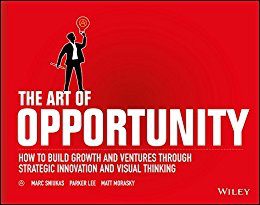 Yes. The book website is at theartofopportunity.net. You can sign up for free to get access to downloads, so we have a lot of the content that is in the book like the exercises that you can do with your teams, the templates to visualize your opportunity, to visualize your strategies for free. Download at www.theartofopportunity.net and my personal Twitter handle is @sniukas.
Got it. All right, Marc, well thank you so much. Do you have any final word of advice or suggestion for people as they’re on this path?
Let’s close with one of the quotes from the book. It’s about you think big, so you think plus a billion. You start very small with one or two people and maybe just the press release, and then you need to scale in an intelligent way.

Source: Pexels
[Tweet “Think Big Start Small Scale Intelligently”]
That’s fantastic. I love it. Thank you so much for sharing your wisdom, your research, and more importantly your stories because that’s really what connects us. We can see and get inspired on how we can take what you put together in it. To me, this is a must read for everybody in the entrepreneurial space and even those obviously big companies who are looking to innovate. Thanks again, Marc.
Thank you, John.
Links Mentioned
- Book: The Art of Opportunity
- Twitter: @sniukas
- John Livesay Funding Strategist
Do You Want To Host Your Own Podcast?
Click here to see how my friends at Predictive ROI can help
Fox 11 News Los Angeles John Livesay The Successful Pitch book
Share The Show
Did you enjoy the show? I’d love it if you subscribed today and left us a 5-star review!
-
- Click this link
- Click on the ‘Subscribe’ button below the artwork
- Go to the ‘Ratings and Reviews’ section
- Click on ‘Write a Review’
Innovation Secrets with Jonathan Rosenthal
Posted by John Livesay in podcast | 0 comments
Episode Summary
 Today’s guest on the Successful Pitch is Jonathan Rosenthal, he’s an expert at spotting trends and knowing exactly when to make an investment or launch a new startup. All the way back in 1978 he was aware that things were going to be disrupted when the airlines got deregulated and now he’s involved with looking at how things are being disrupted in the shipping industry from when products get shipped from China all the way here. He said, “When you look for industries with rapid innovation but their culture has people being slow adopters, they will then be an ideal target to go after.” He said, “There’s no difference between being too early when you launch and wrong, so timing is everything.” He’s all about collecting, curating, and analyzing data so you can make smart decisions. Enjoy the episode.
Listen To The Episode Here
Innovation Secrets with Jonathan Rosenthal
Hello and welcome to the Successful Pitch podcast. I’m really excited to have Jonathan Rosenthal on as the guest today. He’s an entrepreneur, an investor and what’s really interesting is, he’s a logistics innovator. You don’t find many of those around. He’s recognized as a top investor, entrepreneur, and supply chain expert, particularly where deregulation drives macro industry change. And he was retained by the federal court as a lead advisor in the Pacific Gas and Electric 2001 reorganization. He’s represented, get this, $16.5 billion of invested capital that he attained, the largest unsecured credit recovery in history. And he’s had similar roles in reorganizations of Kmart and other companies like that. He led a $28.5 billion of claims in the 2003 reorganization of United Airlines, so clearly he’s used to dealing with big numbers and big companies. Jonathan, welcome to the show.
Well, thank you, thank you.
I’m always interested to hear how people got their start. So, you were a philosophy major and then went on to get your degrees in that but did you know when you were studying philosophy that you wanted to get into this kind of investing?
No, life is serendipitous and so, they always say, “Life is what happens when you’re planning for the future.” So, that’s a little bit of what happened to me. I got out of law school and started practicing law back in 1980 and that’s really all I ever wanted to do. I really wanted to be a lawyer and I loved the law, until I started practicing law. And when I started practicing law, I said that, “I only had one problem practicing law and that was staying awake.” I found it boring and it just wasn’t for me. I’m massively ADD and so I was bored with the practice after about three years. I worked for a large law firm, that may actually have been part of the problem, had I been on my own. I’m not very good at taking instruction.
But in 1983 I saw that there was going to be very significant macro change in the transportation system, as a result of the 1978 Deregulation Act of the airlines. That ’78 Deregulation Act meant that, the airlines and the Civil Aeronautics Board would be deregulated in 1983 and so everybody could fly wherever they wanted, they could charge whatever they wanted and I said, “That is going to be a huge opportunity.” And in fact, when I look back at my career over the last 30 plus years, what I’ve learned is, that where you can find an industry that has rapid innovation and that innovation is driven by something external, that externality can be technology. That externality can be regulation or deregulation. So, lots of things that can drive massive, rapid innovation.
But when you find an industry like that and then on top of it, the participants in that industry are slow adopters. And, they’re slow adopters partly culturally and partly because they have so much embedded infrastructure. When you find that kind of an industry and the airlines were a great example, that’s why I got involved there and that’s really where I started. So, I started in 1983, I had an idea. I started in my upstairs bedroom. My father loaned me $13,000, at the time $13,000 was a lot of money to him.
So, I started a company in 1983 that was a precursor, it ended up being the largest on demand national jet charter service in the country. We were the largest non-scheduled certificated carrier. So, the idea was, gosh, with deregulation, it’s going to be a lot harder to get around, because I predicted at the time, that airlines were going to fundamentally change as a result of deregulation, we were going to have a direct point-to-point system. So, instead of getting on an airplane in San Diego and going directly to Chicago, you were going to have to go through a hub. So, you would go from San Diego, perhaps to Denver, and then you would change planes and you’d go from Denver to Chicago. So, that’s a hub-and-spoke system, that’s a much, much more efficient way to move things. Fred Smith knew that when he started Federal Express. The airlines knew that when they had deregulation.
Let’s just take a minute there because there’s so much valuable information that’s so timely today. So, if you’re looking to see whether your idea is scalable and is the right time, because one of the key issues that I’m always telling everybody when they’re pitching is, why you and why now? And I think what you just tapped into is the whole answer to the, “why now?” and certainly, rapid innovation with slow adapters in the culture is the key hotspot and everybody understands what happened to the airline industry.
If you take a look around you can see that happening, for example with robotics replacing jobs in factories, right? There’s a lot of disruption happening with, in this case technology causing it, cars have been made the same way from high-priced union workers, that’s why there’s such upset over job losses. So, I think what you’re saying that you did back then is just as relevant to what’s going on today, just different reasons for the disruption.

Source: Unsplash
[Tweet “Find industry with rapid innovation and slow adaption”]
You’re 100% right, John and it is fundamental, that is never going to change. That’s not, when I say that you look for industries with rapid innovation and slow adopters, that is never going to change. There are going to be those opportunities in the world and they exist today and they existed 10 years ago, and they existed 50 years ago. You’re right that timing is quite important. I learned, I’ve made many investments. I’ve made a little over 100 investments over the course of the past 30 years. So, I’ve learned that there’s almost no perceptible difference between being too early and being wrong.
I love that. We’re going to tweet that out. That’s a great line. There’s no difference between too early and wrong, it’s all the same result, right?
It’s all the same result, so timing is important but there are a lot of other factors that come into play and so, when I look back at that first experience of building a company from scratch, literally from my upstairs bedroom and then going through three rounds of venture capital financing, I learned a lot about that. I knew nothing, I was a lawyer, I had never read a business plan.

Source: Pexels
[Tweet “No difference between being too early and wrong”]
I literally had to go to the library, get a book on how to write a business plan and really start from scratch. But at the end of the day and I hope from my few minutes with you, that anyone that listens to this, that one thing that they should take away, is that people are everything. The quality of the people you deal with, the relationships you develop are everything. It’s not about a good idea, although good ideas are helpful. It’s not just about timing, although timing is very helpful. It’s about surrounding yourself with great people. People that are knowledgeable, people that are incredibly persistent, that won’t give up in the face of all odds. People who are fundamentally honest and are fair minded. Doesn’t matter how good your idea is, if you don’t have good people, if you’re not surrounding yourself with good people and that could be consultants, it can be partners, whatever it is. If you don’t have good people around you, your likelihood of success is quite low.
It’s a great, great takeaway. I had one investor tell me, “We’re investing in the jockey, the person, not the horse, which is the idea.” And you’ve just underlined it and said it in a whole other way. So many people think, oh I’m going to get funding or I’m going to get someone to hire me because I have a great idea or because my app is so cool or this is the perfect time to fix this problem. All of that’s good but if you’re not the right people to execute it and have the tenacity and grit required to not give up when it gets tough, then you’re never going to make it, that’s really valuable information and insights with all your experience.
And the other part of that is, that everything is tough, everything is tough. I often joke that somebody out there has all the easy deals, because I’ve gotten none of them.
That’s funny. It may look on the outside looking in that it looks easy, right? But it’s, you don’t have a sense of what it all took. Jonathan, I love people like you who are great story-tellers. So, can you tell us a story of what you did with Kmart in that reorganization because I think that’s so helpful, so many people talk about the need to pivot and I’m, that’s just another work for reorganization in a way, yes?
Yup. Well, all of these have their own stories. I was fortunate enough, frankly honored, by the shareholders of Kmart to be asked to reorganize the company back whenever that was, early 2000s, when they went into bankruptcy. So, it’s an interesting phenomena, you show up, and keep in mind that when an industry is going through massive transformation or a company’s going through massive transformation, they try to fix the problems on their own and many times, they might be successful. If it gets to a point where I get involved, it means that all their ideas failed, otherwise I wouldn’t be there.
So, when I showed up at Kmart, it was the day after the bankruptcy filing. They literally had no CEO, the CEO had been let go. They had a rented CFO, they had a consultant that was a part-time CFO. They had sort of a chief operating officer that shuttled back and forth and the executive suite was empty. So, when I showed up, with my team of, I think I had five, four or five people with me and we sat down with what was left of the management team. I asked the question, “So, tell me how we’re doing?” And they said, “Well, we’re losing about $100 million a month.” And I said, “Well, that certainly can’t last long.”
So, we had to do something quickly. This is the equivalent of someone arriving in the emergency room and bleeding out of their aorta. They may have lots of problems, they may have a cut foot, and a cut hand, and a cut head, but you got to fix the big problems first. So, at a $100 million a month of losses, we had to do some things very quickly.
With Kmart losing 100 million dollars a month, we said, “Let’s take three buckets. Let’s take a bucket of stores.” We had I think 2,800 stores. “Let’s take out a bucket of stores, let’s put in the first bucket, the bucket of stores that are making money, in the third bucket, we’ll put the bucket, we’ll put the stores that are losing money. And the middle bucket, let’s put the buckets that are sort of on the edge. Let’s close all the stores that are losing money.” And so in a period of about 90 days, I think we closed 600 stores. That was very, very tough.
I must tell you that doing what we do, which is changing industries. We’re involved in transformation of industries, you’ve got to make some tough decisions. I view what we do, I view what I do as an agent of change. And so, by definition, if you’re an agent of change, you have to make some tough decisions but I will say, and so you have to keep some distance, right, because you’re making professional decisions, much like a doctor is making a professional decision about getting too involved with his patient.
It’s triage time.
It’s triage time. But I must say that the night we closed 800 stores, I had a tough time sleeping. Because, I think we lost 30,000 employees. But without that Kmart wouldn’t have survived.
Exactly, you’d be losing everybody, right so?
Yes, so my saving grace there was that I thought about the 225,000 employees that we did keep. So, Kmart was interesting and it took a while to kind of get through the issues, but you have to start with the big problems. The same was true of a company like United or Pac Gas, you really have to start with those things that are really going to move the deal. And so you focus on those.
Now, more current day, you’ve got so many exciting things going on, starting with, you were appointed, just this year, to the board of Global Infrastructure Solutions and Mayor Garcetti in Los Angeles here, appointed you as the Sustainable Freight Advisory Committee by the federal DOT to the Marine Transportation System. Tell us about what all you’re doing with that world.
Again back to my core thesis, which is, try to find industries that are going through rapid innovation and are populated by participants that are slow adopters. About five years ago, I looked around and I said, “Okay, what’s the next business? What’s the next industry that’s big, that’s going to go through rapid innovation and is relatively slow to adopt?” And what I focused on was the freight ecosystem. That is moving things from place to place, moving things from a manufacturing facility in China to a store shelf in Ohio. That’s what I think of as the freight ecosystem. Some people call it the, “supply chain.” I don’t like to use the word, “supply chain” because it’s really not a supply “chain,” which implies that something is linear, that the path is linear.
Yes it does.
And that it is a series of links, with one link being mostly related to the adjacent length so, that notion of supply chain is incorrect. It leaves people with a false impression. In the ecosystem, the freight ecosystem, everything is interrelated. So, whether it’s a ship, or a dock, or a warehouse, or a truck, or a train, it is all interrelated to the environmental impacts, the economic impacts, the labor issues that are associated with that ecosystem, so it’s a network, it has a network effect. It’s a system, it’s actually a system of systems.
One of the things I’ve been trying to do over the past five years, we made a number of investments. We acquired a midsize third party logistics provider, which is basically a warehouse operator. We have warehouses all over the country. We acquired a number of trucking companies, both long-haul and in the freightage business, that’s the movement of containers from the port to the first distribution point. We invested in data analytics within the logistics base and we’ve invested in real estate in port related real estate infrastructure. That freight ecosystem as an industry is going through massive disruption. It’s going through disruption for a whole bunch of reasons, not least of which is the introduction of the internet. So, things as you know, people are not going to the store to buy things. But that’s changing everything. It’s changing how things are manufactured, where they’re manufactured. It changes how you actually order things, how you get bids.
So, just in simplistic terms, instead of having to deliver goods made in China to a retail store, now they’re having to deliver them to an Amazon distribution center, would that be an example of what you’re talking about?
That or to your house.
Oh, right, okay.
So, the entire distribution system changes, right, it would be, now years ago, your manufacturing might have occurred down the street. You might have been a company here in LA and you manufacture things in a factory in Riverside. Now, all of a sudden you go on the internet and you get bids from companies in Vietnam, and in China, and India, and Korea, and God only knows where. So, the distribution channel has gotten much more complex. Lots of change, lots of innovation there. Then you add to that, things like Global Positioning, GPS. You add to that big data, the ability to curate, collect and curate, and analyze a lot of data. Add to that the Internet of things, which means that every garment, every box, every container, every ship, every truck is going to produce data.

Source: Pexels
[Tweet “Collect, Curate and Analyze Data”]
Wow.
Where am I? Where have I been? Who owns me? What temperature am I? Have I been tampered with? It’s going to produce lots and lots of data. I’ll give you a couple of examples. Today, in the freight business, there are approximately 100 million containers, sea-bound containers. So, going around the world, these big metal boxes, they’re approximately 100 million containers. Less than 1% of those containers are smart.
Wow, that’s, you would think by now that’d be at least half. That’s a big problem to solve, that’s for sure.
Less than 1%. So, the chassis pools, there in, just in the Los Angeles area, there’s about 80,000 chassis. There’s probably less than two or 3% of those chassis had any kind of a brain. Again, where am I? Where am I going? How much weight am I carrying? Who owns me? All of that kind of stuff.
And is the reason why it’s such a small percentage Jonathan, is because no one wanted to invest in it? They didn’t see the return on investment over the time to be able to track that better?
The question you’re really asking is, the side that we talked about a little bit earlier, which is slow adoption. Why is it, that there’s rapid innovation, we know that, we know there’s very rapid innovation within the freight ecosystem but there’s very slow adoption? Slow adoption in an industry can be driven by a couple things. One, it can be driven by culture. So, just generally, the culture of the trucking business, the culture of the shipping business, the culture of the warehouse business, is generally a bit of a slow adopter. It’s not exactly the Silicon Valley. So, it’s a little different culture.
But it’s not just that. It’s also the embedded infrastructure. So, to be able to innovate rapidly, you have to spend money. And when you have money invested, think about the freight ecosystem and think about how much has been invested in the freight ecosystem, how much has been spent. The last terminal that was built in Southern California was about three billion dollars and we have 14 terminals here in Southern California. That’s a lot of embedded infrastructure.
Then you think about the highways, the rail, the trucks, the bridges, the cranes at the terminals, the ports. All of that infrastructure is embedded, stranded costs. So, you can’t just flip a switch and say, “Okay, there were lots of better ways to do this.” The technology is available and becoming more and more accessible every day but it’s not so easy to do. I mean, not a lot of people want to write a check for two billion dollars and build a new terminal.
And that’s what’s required to make those containers quote, “smart”?
No, that’s a different chute. Today we have 100 million containers across the world, to make them smart means you’ve got to have probably new containers or at least have technology implanted on those containers. That’s expensive, and no one has been willing to write that check yet. But it will come.
Well, you almost have to do an analysis don’t you of, how much is it costing us with damaged goods, lost goods, things that are overheated, whether it’s art or wine or whatever that needs to be measured with all those details that could have been not lost or insurance having to cover it, that the return on investment would come in three years, five years, whatever, right? I’m assuming that’s the thinking that goes into it.
Well, it’s partly that and it’s also, it doesn’t do you any good to collect a lot of data and not be able to do anything with it.
Got it, so that goes back to what you said earlier, you need to collect and curate it. That’s really the key.
You have to be able to curate it, and you have to be able to analyze it. So, we’re actually working very, very closely with IBM’s Watson team because they have developed the Watson system, which is quite good at absorbing a lot of data and comparing that data and making sense of it, being able to analyze it. The Holy Grail is being able to take all of that data and predict the future. Let me give you an example, so let’s say you’re a manufacture and I can come to you and I can say, “John, based on all the data that we see in the marketplace. And that includes weather data, traffic data, data about other shipping companies, data about what’s happening on the oceans, data about what’s going on inside all of the warehouses. Based on all these millions and millions of pieces of data, we determined that your shipment has a 14% chance of being two weeks late.”
Interesting, almost like predicting whether a plane’s going to be on time or not.
You hit it on the head. I didn’t make this stuff up. I stole it from the airlines. The airlines are actually quite good, when you get on an airplane and that airplane is full, airlines are running at 90% plus load factors, when that airliners full, you gotta ask yourself, how did they do that? How did they know, just exactly the number of seats and how many people wouldn’t show up? Well, they were able to predict it. Now, sometimes they miss. But the airline knows exactly how many times they miss. So, when they pay you $100 to take the next flight, they knew that there was some likelihood and they have predictive analytics to tell them on a certain number of flights, we’re going to have to pay a certain number of dollars but it’s better in the long run because we keep our airplanes full. That’s an analysis that you can’t do without curating the data.
Great, great insights. That’s really fascinating stuff. Well, do you have a book that you would recommend someone to read about how to be a better entrepreneur or just how to be more aware of spotting these types of trends you’ve talk about?
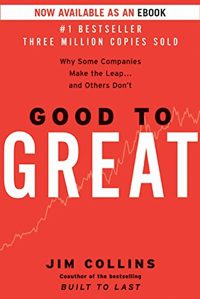 I’ve got some great books, I read a lot, so there are some wonderful books. I think if I had to choose two, one I’m sure most of your readers have read called, “Good to Great.”
It’s a wonderful book. I would read that at least a couple of times. But the other one that a lot of people haven’t read is, “Where Good Ideas Come From: The Natural History of Innovation.”
When you think about innovation, a lot of people think innovation is an epiphany. That someone wakes up one day with an epiphany and they say to themselves, “Oh my God, I just figured out the answer to the world’s problems, here it is.” When you dissect innovation, when you look back at history and you say, “Okay, the computer was obviously, everyone would agree, a terrific innovation. How did that happen?” And you begin to dissect that and you learn that innovation is the result of many, many steps. It is an incremental process. The computer started back in the early 1800s.
Yes, I was watching a movie about that whole thing of during the war and even before, so the 1800s is even earlier than people anticipate but yeah, it’s taken, or the new movie “Hidden Figures” about how NASA used it by hand. So, all of that innovation doesn’t come overnight as you said. I love that.
But when you look at innovation and that could be everything from, the innovators, “Where Good Ideas Come From: The Natural History of Innovation,” is probably the book that I learned this from, things like the lead pencil. Things that really changed the world in a pretty interesting way but when you dissect those, those big innovations in history, you find out that it was an incremental process and it involved many, many people and many steps. We sometimes say, “Wilbur and Orville Wright invented the airplane.” And then you look at the history, you read about the invention of the airplane, you find out, oh no, no, wait a second. They were at the tipping point and so they get a lot of credit but really they were a piece of the puzzle.
So, I like the innovators, “Where Good Ideas Come From: The Natural History of Innovation.”
Yes, well you are certainly busy and you’ve got your hands full with everything, all the innovation you’re doing now. But if someone was ever interested in possibly having you invest or come in and do what you did for Kmart, what’s the best way for people to engage with you?
That’s a good question, probably LinkedIn or something like that, so I’m on LinkedIn.
Well, we can certainly put that in the show notes.
Yeah and again my real focus these days is not doing turnarounds of companies as much as investing in the freight ecosystem because it has such a huge impact on the economy, on jobs, on the environment. It’s really been a fascinating ride.
Great, well Jonathan, I can’t thank you enough for being a guest on this show today.
I’m delighted. I appreciate having the opportunity.
Links Mentioned
- LinkedIn: www.linkedin.com/in/jonrosenthal
- Book: “Good to Great” by Jim Collins
- Book: “Where Good Ideas Come From: The Natural History of Innovation” by Steven Johnson
- John Livesay Funding Strategist
Do You Want To Host Your Own Podcast?
Click here to see how my friends at Predictive ROI can help
Fox 11 News Los Angeles John Livesay The Successful Pitch book
Share The Show
Did you enjoy the show? I’d love it if you subscribed today and left us a 5-star review!
-
- Click this link
- Click on the ‘Subscribe’ button below the artwork
- Go to the ‘Ratings and Reviews’ section
- Click on ‘Write a Review’
Tactical Thinking with Moran Bar-Kochva
Posted by John Livesay in podcast | 0 comments

Episode Summary
 Today’s guest on The Successful Pitch is Moran Bar-Kochva, who has a law degree from Tel Aviv and a Harvard MBA. He is bi-coastal now, in the States, investing in all kinds of new, interesting technologies. Everything from 3-D holograms on your phone, to how to get food from farm to table in an efficient way. They actually are doing that for airBNB’s. He has some great lines here about confidence and passion are two important parts of a pitch. But you can’t be arrogant. He said, “We really are looking to see how you think when you have to approach a challenging solution.” He talks about the three types of I’s, of personalities. First one’s those are innovators. The second one is those who are imitators, and I’m going to let you find out on the podcast what the third I is. Enjoy.
Listen To The Episode Here
Tactical Thinking with Moran Bar-Kochva
Hi and welcome to The Successful Pitch. Today’s guest is Moran Bar-Kochva, who is the managing partner at Unison Capital. He has a very impressive background. He has his law degree from Tel Aviv University, and his MBA from Harvard, and he has been involved in a lot of startups. It’s a bi-coastal venture capital firm that backs transformational entrepreneurs. We’re going to ask him all about that. Moran, welcome to the show.
Thank you. Pleasure to be here.
I ask my guests to take us on a story of origin. When you were studying law, did you decide “I’m going to take a couple years off and then go get my MBA”? Or how did you get from Tel Aviv to Harvard’s MBA program?
In a simple, non-simple Israeli way. In Israel, we tend to have a small less formal society. Everyone knows everyone and formative years, in reality, tend to the be the ones that you serve in the military. For me, after the service in reality, the formative time was working with Ehud Barak, who was the former Chief of Staff of Israel. On his campaign, leading in for his election in ‘1999 as the ninth Israeli prime minister. I was very involved. I was his assistant, I was involved in the campaign in different positions and capacities. I have to say, for the first time, after being in the trenches, so to speak, I had the opportunity to see things from a relatively macro-level to kind of better understand what’s going on around the world.
If you remember, the late ’90s were the era of technology, and Israel at that time became formed what I think now we tend to brand as the startup nation. In an interesting reversal of fortunes when Barak became prime minister, I kind of decided that it’s time to move to the private sector. I wanted to go into technology. I wanted to start a company or get involved in the venture business. I have to say, I didn’t know how. I had some experience, I studied technology in high school, but at that point I was not part of that, let’s call it, community. I think communities and networks are very important.
I had a friend who gave me a pretty sharp idea. He said, “Maybe you should join the press. Maybe you should join the media to cover the technology industry. And by doing that, you’ll be able to learn and study a lot about what’s going on.” At that time, Israel had basically one media outlet that was covering the business world on a day to day basis. It actually gave me a pretty interesting vantage point, both through things that were done in Israel, but mostly to a lot of the connection between Israel and the United States. I covered a lot of the Israeli startups and Israeli companies that were traded then on the stock exchange. Mostly on NASDAQ and the New York Stock Exchange.
That, by the way, made me think more and more about MBA. Then I left the paper, I joined a startup that I was one of the early founders of. That experience and after selling that startup in 2003, made me think that I would like to stay in the States, I would like to get a better understanding for how you actually manage and how you actually run business on a global scale. I thought that an MBA would be a good opportunity to do so.
I’m not sure I have exactly the same point of view today. I think that there is a different, value proposition for MBA’s, for someone who’s coming from abroad to someone who is born, bred, and spent most of his career in one of the economic centers in the States. For someone like me, it was a phenomenal experience, and HBS in particular, was just one of the most flourishing, fruitful, exciting things that I’ve done in my life. Definitely the basis for a lot of my community over here in the States.
Why don’t we talk a little bit about what you founded on the Harvard Business School campus back in 2003, The Contemporaries, this non-profit society. I think it’s always fascinating to hear how people like you are not only interested in making a lot of money with your investments, but also in giving back. Let’s just take a minute and talk about how that came about.
I have to say that part of it, again, I’ll have to go back to when I was in the service. The services tend to be very focused on very narrow-minded things altogether. I was looking for opportunities to broaden my horizons. One of the things I got very excited about after the service was contemporary art. Through different friends and activities back home, I became a little bit more involved with the contemporary scene in Israel. In some sort of natural progression, I started collecting art, in the sense of promoting and helping artists that I knew, buying their work, just to support them and their livelihood.
When I moved to the States, I wanted to continue the same kind of idea. I thought that supporting art, especially contemporary art, especially young, contemporary artists, is a really important aspect of what we do on a day to day. My big discovery when I was in school was that in reality, a lot of the people who were in school with me, highly educated, smart, ambitious, knowledgeable, many of them even have actual academic background in art, didn’t have an actual interest in contemporary art. They would go maybe to the MoMA, they might go to some other museums, but they wouldn’t actually go to the galleries that exhibit artists that are more or less their peers in age. They wouldn’t consider, even, actually buying art from, again, someone who’s in their age group.
I thought that the reason was that the contemporary tends to have this mumbo jumbo and lingo and it has some sort of mystique and mystery around it. I thought that with some education we can bridge the gap between contemporary art and the rest of us. With a friend from business school, a guy by the name of Fraud Newreed, we decided that it’s something worthwhile starting a nonprofit to focus on it. A nonprofit that will promote contemporary art, add to the knowledge, the education, the concept of contemporary art collecting, promote the concept involved with contemporary art. Tell people what’s the value of contemporary art. Why should we support contemporary and contemporary artists?
That’s it. We started in business school as a small group of friends that were just inclined to go out and look at art and artists and meet young artists in Boston. Then we moved to New York and it became a bit more institutionalized and a bit more defined in its value proposition and also in its ability to actually do stuff. New York, I think, is the biggest hotbed of art and contemporary artists today around the world.
It’s so true. Certainly, artists in Miami and then L.A. and San Francisco are also doing their part with all the new museums and architecture being built. I brought this up because I think it’s so important for the listeners to realize that investors and people as successful as you are, are people who have other interests. If you really want to develop a relationship with someone like you, to potentially invest in their startup, I think it’s so important to have something else to talk about that you might share a passion for. I don’t know if anybody’s ever pitched you and done their due diligence and brought up the shared love of contemporary art or not, but I imagine if they have, it certainly starts the relationship off on a good step.
Absolutely. I think that you’re touching on a very fundamental aspect of human interaction. Find something that connects you and someone else. It could be a specific network that both of you are involved. That’s one of the reasons, for example, that groups like Harvard Business School, but also like other different groups tend to be pretty successful and cohesive. But it could be just issues or topics that you share. I think that’s something that is definitely worthwhile researching before you meet someone. “What do I have in common with that person?”
Yes.
Maybe you like art. Maybe you like music. Maybe you like comics or movies. Then use that, both as an icebreaker, but also as a way to connect and make it much more personable and discuss and create a story from something that is maybe a purposeful interaction, where basically you just want to get something.
Yes. Right. People can always tell the difference. The more specific your story is with details, the better. That leads us right into you hear so many pitches and you’ve invested in so many companies over the last several years, both here and in New York. What’s interesting for you is that someone doesn’t have to be based on the east or west coast for you to feel like you can get to know them, since you’re bi-coastal. What do you think makes a good pitch when you hear a pitch?
I think the most important aspect of a good pitch, eventually when I think about it, is confidence. It’s the ability of someone to convey a strong understanding and knowledge and power in that particular domain. Confidence is one word, maybe another word is passion. I think that it’s not necessarily a pitch that’s done by one person, by the way. I think that that’s somewhat of a mistake. I think that a lot of wise people would be wise in reality to include more than one person in a pitch, especially for a technology startup, for example. It’s pretty clear that not everyone knows everything, and we should assume that nobody’s perfect. If that’s the case, you can absolutely bring on board your cofounders and even early employees that are relevant for the valued proposition.
Then the idea is to show that you are passionate, you’re knowledgeable, you know what you are talking about, you are pretty coherent about your company, and you also know what you don’t know. I think that people who are almost, in some respect, over-confident, they have an answer for every question, and the answer is almost too fast. I tend to be a bit taken back by that, because I know that that’s something that doesn’t happen. There are some rare cases, I have to say. I did see, and I even invest in people, who really knew everything about their domain of expertise, but because some of those people are just superstars.
Actually, research documented that there was one case of a hedge fund manager, investor, basically very similar to what Jeff Bezos did, who during his day job, he researched two very minute details, a very particular business opportunity, and then went forth and actually followed through. It’s true, he knew way more than I did and way more than anybody else on that domain, but that’s pretty rare. In most cases, it’s important also to be able to say, “Listen. Here’s what I know and here’s what I don’t know, but here is how I’m thinking of getting the answers. Now, I won’t be able to get those answers today, but I’ll be able to get the answers with the following resources.”

Source: Pexels
[Tweet “Confidence and Passion are key elements to a pitch”]
Nice. I think that’s a really great tip right there, is what the investors are looking for is someone who’s confident, but not arrogant, and more importantly, they’re really looking to see how do you think? If you don’t have the answer to something, how are you going to think to get it? Any time you can show how you think when you give a pitch, I think that’s what they look for in school, right? Teaching people to think for themselves and not just recite information back, so how you approach problems would be, I think, a key criteria of what you’re saying here.
Exactly. I think that … I’m, personally, especially impressed by what I call “tactical thinking.” People who actually think about it, not in a wide range, kind of almost 30,000 miles out in the sky, but people who actually think about it tactically. “How can I be able achieve certain things?” And have a clear understanding and good ideas. Again, nobody knows everything, but you need to be able to think clearly about how you tactically are going to resolve and approach certain challenges.
Nice.
That’s something that conveys a lot of confidence for me, by the way. Because if I understand that you, the entrepreneur, have thought about it, and also thought about how you actually going to approach obstacles and challenges, it makes me understand that you’ll be able to deal with it on a grand scheme.

Source: Pexels
[Tweet “Show How You Think When You Solve A Problem”]
Fantastic. Unison Capital is venture capital, Can you share with us what you? Do you series A, you don’t do any C, I’m guessing?
I tend to stay away from C, but again, the way that I frame it is the following. I would like and we would like to get involved in companies where a lot of the questions are already answered. We can basically think and help the entrepreneur or the team of entrepreneurs to take the company to commercialization.
Got it.
Which is, in reality, the main value proposition of people like us.
Here’s the money so you can scale, in other words. Is that right?
Here’s the money so you can scale. Here’s the money to help you recruit the right people. Here’s the know how to recruit the right people. For example, I think that recruiting a team, a very early stage team, is something that people like me, at least, have a hard time to do. But I can help in the stage where this is already an early team, the basic product was done, or at least came to a certain level of maturity, where you actually need to start thinking about executives, and about people who will be able to help to take it to actual launch. At that point, I think our value proposition is real and meaningful.
Nice. Let’s talk about some of the companies you’ve invested in. The one that caught my eye is getsourcery.com, because they have airBNB as a client. Can you tell us what that pitch was like, what Get Sourcery does?
Get Sourcery is mostly Sourcery. Sourcery is a company started by a very tenacious and I would say powerful entrepreneur called Na’ama Moran. Funny enough, we shared the first and last name, who was also by coincidence also from Israel. Na’ama was looking like a lot of other entrepreneur these days in markets that are ripe for change. Markets that basically have the ability to use technology or information technology to create value. In her case, what she focused on was the market for food, in the foodservice industry. When you think about restaurants, catering, any kind of food service business, how do they actually source the food that eventually they bring us all the way to the table?
The concept of farm to table, it’s much deeper and much more complicated in reality than that great slogan, “Farm to table.”
I imagine there’s a few steps along the way.
There are a few steps along the way. A lot of them can be done in a better way, more efficient way with technology. Sourcery was built exactly around that concept. How can we create more efficiencies? How we can bring better food, how we can understand and make things more transparent, both for, let’s say, chefs and restaurateurs, as much as it is for the farms, farmers, and the distributors that actually do the work of taking it from one point to another. Na’ama has taken that concept one step further. Nowadays, she’s actually offering a new, really interesting, I can’t say too many words, but a really interesting idea of distribution directly from large warehouse stores all the way to the restaurants.
Wow.
In a way that is much more transparent and also much more financially efficient than the other options today.
I see that she won 2017’s top woman in food service technology. Clearly you invested in a great team there. How is it that she’s connected to airBNB, with Sourcery?
airBNB is a customer of Sourcery. airBNB, like many other growing startups, they have their own kitchen, where they offer food to their employees. They need that under their hat. They also need to use someone who will help them to source food. That’s basically the value proposition for Sourcery for airBNB. The question of how they are connected is one of the big advantages of Silicon Valley. Silicon Valley is actually a relatively small place. I’m not even sure what exactly was the connection, but I’m pretty certain that one of the members of the Sourcery team somehow met either the chef or one of the people involved with airBNB.
That’s great social proof, isn’t it, to have that as a client for the next round of funding and everything else?
Yeah, absolutely. Absolutely.
Let’s talk about another. You have so many so it’s a little challenging.
Maybe I’ll pick and choose, if I can.
Of course.
I’ll maybe mention another really cool company that I’m very excited and very passionate and quite involved with. A company called Ostendo. Ostendo, in Latin, means “to show.” Ostendo is a company that, I have to say, is one of those unique experiences for an investor. Eventually, all of us would love to see a relatively fast turn of investment to a return. Obviously, if you can invest money today and get a great return for your money within two years, you’ve done very well. But the reality is that that’s not the case. When you think about it in Israel, and maybe throughout a lot of the technology world a few days ago, the big news were about acquisition of a company called Mobileye by Intel, for 15 and a change billion dollars, which is not a small amount of money.
Mobileye is an Israeli technology company that was dealing with computer vision focusing on the car industry. For many years, I think it’s a company that celebrated, its 15th or 16th year around the time of this transaction. It’s a company, that for many, many years, I think for more than a decade even, was just in development stages. Until they actually reach a point where the market was mature enough, as well as their technology. Maybe I’ll do a little caveat now and later we’ll wrap it in another way.
I talk about one of the theories that I tend to follow as an investor and also I discuss it in a book that I’m writing these days. When you think about it, I always say that in technology investment, but it’s true for almost any kind of development, there’s a good theory that will take the three I’s. Three types of people that start with the letter I.
The first are innovators. Second are imitators. Third are idiots. Let’s start by saying that being an idiot is probably not a useful thing to do. Idiocy, in that aspect, is when you come to someone that was done and overdone, and you tried to find some other way to do it, where the market is in reality mostly exhausted.

Source: Pexels
[Tweet “3 Types of people-Innovators, Imitators and Idiots”]
When you think about innovation and imitation, both of them are places where there is a way to create value, but it’s worthwhile to remember, both for us as investors, and also of course, even more so as entrepreneurs and people who want to do something, that the value generated by imitation, is substantially higher than innovation. It’s interesting, because I think in general, in our business and in society in general, we tend to elevate, almost to a mythological level innovation and innovators. But eventually the people who actually change the face of things and make reality, tend to not be innovators. Other people who almost came and did something out of nothing, but mostly the people who actually took things that were created before them and made a powerful, easy to digest reality out of them.
One example for that, I think that is pretty good, is a band called The Beatles. When you think about it, The Beatles, although, in their relatively large work, you can see certain aspects where they did actually innovated things. One example would be the use of Indian motifs and Indian music into their western rock music or western pop music. But altogether, they mostly built on building blocks that were created before them. In the blues, in the early rock music. They basically just took all of it and were able to place it in this perfectly amazing music that was both unique and still exciting and at the same time, relatively easy to digest.
I think that’s the reason why they became the quintessential rock band of all time. In similar ways, we can think about the emergence of Google, as a search engine, compared to a bunch of other search engines that came earlier. Or to the emergence of Facebook as a social network compared to Friendster and a bunch of other networks that actually I think the Jonathan Abrams from Friendster needs to get that award of innovator of the entire social networking world or industry. Eventually the people who actually reap all the value, most of the value, from that innovation were the founders of Facebook, and to a lesser extent, the founders of a company like Myspace and LinkedIn in the professional world. We can go on and on.
It’s interesting. What you’re saying, if I’m hearing you correctly, is you don’t have to be an innovator to be successful. If you imitate something and put your own spin on it, you can still be successful. Would that be accurate?
More than that. Even more than that I would say that, in reality, not only that imitators can be very successful, they can probably even be more successful.
I think that when we think about it from a more macro point of view, eventually the imitators are the one who actually make the world that we see and shaped around us, rather than any innovators.
Well, I can even bring it back to the art world, right?
Absolutely.
You can look at certain artists.
I think that, again, these things are a theory that in reality works very well in all those worlds. You can apply it, of course, like I just did for The Beatles, you can easily discuss how someone like Jeff Koons and a bunch of other artists, that are immensely successful and relatively known today, are eventually people who mostly stood on the shoulders of people who preceded them and actually innovated certain aspects of art. We can even discuss of how certain aspects of the real innovation that Andy Warhol did, eventually materialized way after his own death.
Yes.
It takes time for us to actually digest, to actually accept innovation.
Now we’re back to the innovation that Ostendo is doing with your phone and tablets doing 3-D holograms, my goodness.
Even before that, the founder of Ostendo, Dr. Hussein El-Ghoroury, who is a pretty fascinating force of nature for an entrepreneur, a decade ago was already working and thinking about how we can create a technology that will be able to offer us the level of visual experience that will make the mobile experience really immense and powerful. Think about it, he did it around the same time that Apple released the iPhone, so that was pretty early. That was just the time we started actually experiencing video and other visual content on our mobile. He was already saying that the technology that we’re using, basically technologies like LCD, are a bit outdated. We need to rethink the entire display technologies.
What he did, and I can’t say too many words, because it’s still a company that is very much under the radar, was completely rethink the way that we generate shape and consume light or, even more accurately, visual content. One of the outcomes of that, and it’s something that was seen in the past, was basic, real 3-D holograms. Something that all of us kind of experienced since Star Wars and ever since, but in reality, what we mostly saw were things like Tupac and Michael Jackson, which are basically what we call smoke and mirrors. It’s literally the use of smoke and mirrors in order to create the illusion of a 3-D hologram.
What Ostendo’s doing is completely different and I will maybe stop at that point.
Okay. Fantastic. Do you have a book that you would recommend, either about life or startups or anything that you find inspiring?
 There are so many. There’s one big that I would highly recommend. I think it’s one of the most fascinating that I read, I have to say, recent years. It’s a book by Yuval Noah Harari. He’s an historian who wrote about evolutionary history. Again, it’s a very macro-level thinking about who we are and how we were actually shaped to what we are nowadays. It’s called “Sapiens,” and I’ll tell you what’s the full name, for people to find it. It’s called “Sapiens: A Brief History of Humankind.”
It’s not very brief, it’s about 400 pages, but it should be a pretty easy read and an interesting one.
Another book that I recommend, it’s called “Super Forecasting: The Art and Science of Prediction.” It was written by a Wharton professor called Philip Tetlock.
Nice. We’ll be sure to put both of those in the show notes. Can you tell us anything about your upcoming book or is it still a secret?
It’s basically a work in progress. Unfortunately, I don’t have enough time. Eventually we are very much and I apologize for all of my military metaphors-
No, I like it.
We tend to come from the trenches, at least for me. Once you are in the trenches, and I have to say that technology startups are always a very intense experience. You tend to, as I said, to think tactically and have very narrow-minded focus on making something successful. I was trying, a few years ago, to think about it in a more macro way. Ask myself, “What are the things that actually allow certain companies to be successful or certain entrepreneurs to be successful, and which aren’t?” Then I start formulating them into different ideas. One of them is those three I’s: innovators, imitators, and idiots concept. Another one is something I called the “blowfish strategy,” which basically means that the trick for a lot of startups, which are by nature, relatively small, is to find ways to make themselves look and act larger.
Nice.
It’s kind of a blowfish trick.
I love that analogy.
Yeah. It’s a good one. It even looks nice. In the book, I’m trying to offer different ideas of how to do that. How you as a small startup, can actually become bigger. How you can actually create an efficient process of growing fast.
Love it.
I have a lot of other kind of concept and ideas that maybe we can talk about in another-
I would love that. When your book is ready. I can see the cover of your book already is a blowfish.
Exactly.
That’s fantastic. Thank you so much for being a wonderful guest and sharing your insights and all the exciting companies that you’re funding. I think we’ve learned a tremendous amount. I’m going to remember the three I’s forever. I love that.
Thank you.
Thanks again.
Remember, don’t be an idiot.
Yes, I’ll try. Thanks.
All right. And thank you.
Links Mentioned
- LinkedIn: www.linkedin.com/in/moran-bar-kochva-14842
- Book: “Sapiens: A Brief History of Humankind” by Yuval Noah Harari
- Book: “Super Forecasting: The Art and Science of Prediction” by Philip E. Tetlock and Dan Gardner
- John Livesay Funding Strategist
Do You Want To Host Your Own Podcast?
Click here to see how my friends at Predictive ROI can help
Fox 11 News Los Angeles John Livesay The Successful Pitch book
Share The Show
Did you enjoy the show? I’d love it if you subscribed today and left us a 5-star review!
-
- Click this link
- Click on the ‘Subscribe’ button below the artwork
- Go to the ‘Ratings and Reviews’ section
- Click on ‘Write a Review’