
Finding The Hero Inside All Of Us with Ben Way
Posted by John Livesay in podcast | 0 comments
Episode Summary
 Today’s guest on The Successful Pitch is Ben Way. He wrote a book about robots taking over our jobs and he’s working on a second book about artificial intelligence becoming artificial consciousness But he’s got an incredible story beyond all those accomplishments, which includes going to the White House, raising a lot of money, being named one of the most influential entrepreneurs of 2016 from the UK, he’s the co-founder, COO of Digitzs company that is disrupting the way we’re going to be making payments in the future, and he said, “when you have a pitch,” and he hears lots of them, as he also runs his own incubator, “you need to be concise, you need to show traction, and you need to have a team.” Be, show, and have. Really great advice there. And he also talks about selling a dream, and that’s the best way to get the best people on your team. Enjoy the episode.
Listen To The Episode Here
Finding The Hero Inside All Of Us with Ben Way
 Hello and welcome to today’s episode of The Successful Pitch. I’m very excited to have Ben Way on the show. Ben is a serial entrepreneur and a best-selling author who is best known for his appearance on Secret Millionaire, the Startup Kids, and he was a cast member on Start-ups: Silicon Valley. He started his first company at the young age of 15 and he’s gone on to raise over £25 million in his teens. Yes, he is from the UK and that made him one of the first dot-com millionaires. His first book was “Jobocalypse,” which is taking the concepts of apocalypse and putting it into the job world, he’s got a second book coming out that he’s going to share with us what he’s doing. And most interestingly, he’s involved with a new company called Digitzs, which is disrupting the whole way we pay for things. Ben, welcome to the show.
Thank you very much.
I’d love to hear your story of origin. So how did you, at a young age of 15, decide that you were going to do your first startup?
Well, it actually came, like many of these things, quite accidentally. I had actually been pseudo running a business from the age of about nine because I grew up on a farm. And we had chickens, so I did a small cash up and I bought chickens and I sold their eggs.
Then luckily, or unluckily, depending on the way you look at it, I actually think luckily, I was diagnosed with dyslexia very early on. So I had severe problems reading and writing, etcetera, etcetera, early days of school and was given a laptop. And by getting that laptop, that kind of changed my life because back in the day, these laptops were very unusual so I got very good at computers at a very early age, and then people started asking me for help. And I thought, well I can charge, you know, 15 bucks an hour, and that was better than getting wet in a paper round every day, so that’s how I started a business.
I love it. It’s interesting because we always sometimes feel like we have some disadvantage, but you’ve been able to figure out a way to turn that into something that gave you some other focus that obviously you’ve been extremely successful. So you became this computer consultant at 15 and then you raised £25 million at 19. Were you living in the States when you did that?
No, no. I was actually in the UK–
But the company was based … the VCs that invested you were based in Jersey, is that right?
Yes, but there’s two Jerseys–
Got it. Fair enough. Well most venture capitalists or even angel investors I know are not, you know, it’s all about the team and so how did you overcome the objection of your age?
Well one of the beautiful things was, I mean first of all I couldn’t even understand why anybody would want to invest in me. I’d never considered investment, but I had happened to be on a very big TV show in the UK. And after that TV show, some investors rang me up and said, “We have money to spend, do you have any good ideas?” And I was like, “Well good ideas has never been the issue, so why don’t we talk?” And that’s how that started, so it’s always very different when a VC approaches you because they’ve already pre-qualified you.
Well, that’s the advantage of getting on television. I’ve done some television myself for my book and I know that once people see you on TV, it’s a whole other level of credibility. Well, the idea that you decided to create is online shopping comparison technology called Pulsar, which I think is really worth noting because that probably gave you some of the expertise for what you’re doing now at Digitzs, yes?
Indeed, indeed. You know, Pulsar was basically the first ever e-commerce search engine, so a bit like Google Shopping. So that gave me a lot of insight into the commerce space, and that’s why Digitzs is so exciting because Digitzs, really being focused with platforms and payments, really allows platforms and e-commerce synergies to do payments with a whole new set of tools at their disposal. So it’s not a space I ever thought I would be involved in, but when you’re actually involved in it, it’s fascinating.
Well, I would be remiss if I didn’t talk about the fact that you also won the New Business Millennium Young Entrepreneur of the year in 2000 by Gordon Brown giving you that. And then you’ve advised both the White House and the UK on technology. I don’t know that that is something that a lot of people can claim they’ve done both. So can you paint a picture for us of what it was like to go to the White House?
Yeah, well I mean it was quite funny because I’d been advising the US Embassy in the UK through the Undersecretary of Commerce Robert Shapiro and Robert called me up one day and said, “You know, we’re working on this thing called digital mobile.” Because this is back in the day when everything in the US was analog and we were digital in Europe. “Would you come over and have a chat to us about UTMS mobile technology?” And I was like, “Yeah sure.” So yeah, I’m basically a 17 or 18-year-old kid, in a suit with a briefcase walking up to the White House was an experience. Genuinely, it was one of the proudest moments of my life. I was very proud to represent my country and help your country, in effect.
That’s so great. So then in 2012 you moved to San Francisco and is that where you still live now?
Indeed, indeed. I moved to the States overall about 10 years ago, but I’ve been in the Bay about 6 or 7 years now.
What’s the biggest contrast that you see in Silicon Valley area versus the UK?
It’s changed a little bit over the years but Silicon Valley is just such an engine. When I was in London I used to think, “Oh yeah, we can turn London into the next Silicon Valley,” or other places I’ve lived. But the reality is, Silicon Valley is utterly unique and it’s a massively powerful engine that is set up and designed for startup companies. So until another center really takes over somewhere else, Silicon Valley will always be Silicon Valley. It’s really because you have the resources and the concentration of talent and networking and education, it’s just setup for startups.
Now how did you get involved with Digitzs? Because Digitzs, the founder Laura Wagner, who’s been a guest on the podcast, is based here in Los Angeles and you know, she’s got such an amazing team between you and people from Apple and Visa and PayPal and even Kevin Harrington from the original Shark Tank judges. I’m very interested to know how does someone connect with someone like you because I think that’s really going to be valuable for founders that are listening in on, “How do I get the best team?”
Well, Laura is amazing. She is one of the most amazing entrepreneurs I’ve ever worked with. She is absolutely amazingly capable but she has this way with people that just engages them and wants them to be on a journey with her. So I never thought I would join Digitzs. I was introduced through a friend and I always joke that Laura can sell snow to the Eskimos. So she convinced me to join the team and I’ve never looked back. Digitzs has been one of the most fun companies, the most engaging companies, I’ve ever worked with. I’m really excited about where we’re going and what we can do.
So I would say to entrepreneurs, you’ve got to sell a dream, a vision. Startups is hard work and if you can make it easier for people to see that vision and allow people to enjoy themselves while achieving that dream. If I didn’t enjoy Digitzs, I definitely wouldn’t be part of it. I have opportunities coming to me every week. So it takes a cult of personality to convince me to join the company properly.

Source: Pexels
[Tweet “Pitch your vision”]
I bet. What is it that makes it so fun and engaging? Because I think you’ve really tapped into something that a lot of people don’t think about when they’re trying to woo people to join the team.
Yeah, you’re going to spend most of your life during that period with that company, so culturally you’ve got to be able to enjoy it. You’ve got to be passionate about it, you’ve got to want to wake up in the morning and think about it. If you don’t have that, the risk of the startup is far greater because you’re not … there’s no way you’re going to entice somebody from Google into your startup just based on money or equity because Google has worked out that it’s not just about that, it’s about quality of life. So you’ve got to be able to replicate that in order to get absolutely the best out of them. If you make it all about that nine to five, or the graph or whatever it may be, you’re not going to attract that same talent.
I love that, you know, I’ve done over 110 episodes and I’ve never heard anybody say that quite like that, it’s really helpful. Because the same elements you’re doing when you’re pitching to get funded, painting the picture, selling the dream, describing what the culture is so that the investors say, “not only am I going to make money, but I’m going to have fun working with these people,” right?
Exactly, exactly. Me and Laura laugh about it, I would’ve never have naturally joined a payments company but Laura made it so easy because she’s so great to work with. So, as a founder, allow yourself to be that person that people want to be around and want to work for.

Source: Pexels
[Tweet “Have a culture where people are engaged”]
Yes, because a lot of people have the tech skills and not the marketing personality skills or what I call the soft skills of empathy and compassion and enthusiasm. You’re just passionate for the technology and it sounds like Laura has created a culture where people are having fun and engaged in a vision more than the technology. Would that be an accurate statement?
Yes, that would be an accurate statement.
Good, I always like to try and sum up what I’ve heard and help the listeners understand. Now you have a second book coming out. Why don’t you tell us what that’s about and what the title of that is?
Well, I can’t disclose the title yet.
Oh okay. Secret. When’s it coming out?
I think it will probably be out early next year.
Okay, got it.
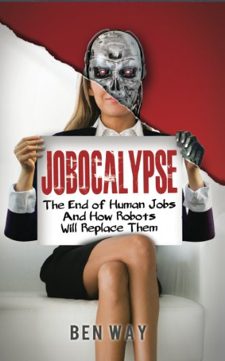
And it’s a very different book from “Jobocalypse.” So “Jobocalypse” is a factual book about how robots will take over the world of jobs. The new book is a much more cathartic experience in the fact that it’s actually a piece of fiction, though I should lead with, it follows quite accurately, probably what we’re going to experience. And it’s all about the journey of artificial consciousness. So when artificial technology reaches the inflection point and becomes more intelligent than us. That is the premise of the book. And it’s just the whole journey of the next 30 years of how that impacts society, what the challenges are and all that jazz.
Well, all the way back from, “2001” when HAL was the computer and people were so afraid, there was all, artificial consciousness, that the computer would be smarter and take over and all the way to the new TV show “Humans” now, where we’re living with, you know, artificially conscious robots in our homes and yet some of them have feelings. It’s a fascinating topic. Do you think people are afraid of it or welcome it?
I feel there’s a natural fear of the unknown and you know, ultimately the way to describe it is Neanderthals never knew they were Neanderthals until it was too late, right?
Yes.
So there’s an aspect of that. But I know, without getting too spiritual on you, I inherently believe the universe is a positive force and therefore any consciousness that evolves out of it should inherently be positive. You know, people say, “Well it could be programmed to be evil,” yeah and theoretically it could be, but the whole point about consciousness is that it is that tipping point where something starts to think for itself and have emotions. So any sufficiently advanced emotional technology is going to have a level of empathy. So it should see beyond its initial constraints, should they be negative.
As I joke, the best outcome for humans currently has to become well looked after pets.
Oh boy, well I’m sure that book’s going to be a big seller because it’s certainly topical. Now you’ve also been involved with looking at a lot of … do people pitch you often?
Oh yeah. We have probably 10 entrepreneurs a week pitch me in some form or. I’ve looked at probably over 10,000 businesses in my lifetime.
Wow. So what would you say makes a great pitch?
Concise, you know, investors are lazy, at the end of the day. And they’re going to judge you on the first 30 seconds of what comes out of your mouth or is on the paper. So I always say, “What is the problem you’re trying to solve?”
What is that problem you’re trying to solve? And if you could focus in on that and get that concise. And then the other keys are obviously traction and team. So you know these days it’s becoming harder and harder to launch a product without some kind of proof of concept. It used to be that investors wanted to and would invest in early stage businesses on an idea, but that’s becoming less and less feasible as the cost to testing these products becomes less and less.

Source: Unsplash
[Tweet “Be concise, show traction and have a great team”]
Great. Well, I love what you just said there. For me, it’s the be, show, and have. Be concise, show traction, and have a great team. What a great way to end the episode. Ben, I can’t thank you enough for being a guest today.
No problem, thank you very much, I really enjoyed that.
Links Mentioned
- Book: “Jobocalypse” by Ben Way
- Website: digitzs.com
- Twitter: @bway
- John Livesay Funding Strategist
Do You Want To Host Your Own Podcast?
Click here to see how my friends at Predictive ROI can help
Fox 11 News Los Angeles John Livesay The Successful Pitch book
Share The Show
Did you enjoy the show? I’d love it if you subscribed today and left us a 5-star review!
-
- Click this link
- Click on the ‘Subscribe’ button below the artwork
- Go to the ‘Ratings and Reviews’ section
- Click on ‘Write a Review’
Painless Mobile App Development with Sani Abdul-Jabbar
Posted by John Livesay in podcast | 0 comments

Episode Summary
 Today’s guest on the Successful Pitch is Sani Abdul-Jabbar and he runs a company that helps people have a painless mobile app development. His whole premise is he can take you from idea to the App store. But not only does he do that, if he really likes the idea, he can introduce the founders who have an idea for an app to investors he knows and trust him to see that this can come to fruition. So, he has great stories of examples where he has heard an idea, helped the founder create an app and then take it to market and get it funded. Enjoy the episode.
Listen To The Episode Here
Painless Mobile App Development with Sani Abdul-Jabbar
Hello and welcome to the Successful Pitch. Today, I’m very excited to have Sani Abdul Jabbar as my guest. He helps app startups and brands from idea to the App store. Everybody who is in the tech startup world is always interested in what’s the next hot app? How do I make mine successful? How do I get mine funded? He is the expert who knows how to do that. He has a career that spans from working at Warner Bros., we’re gonna ask him about what he did there. Now he sits on the board of several companies. We’re gonna get an inside look as to what a board member looks for. More importantly, his company Veztek really gives people the ability to not only develop an app but figure out a way of how to possibly get it funded.
So without any further ado, Sani, welcome to the show.
Thank you, John. Glad to be here.
I’m always interested to see people’s background. You know, I call it the story of origin. How did you get to where you were? Did you … you know you got your MBA from Eastern Illinois. I’m an Illinois guy myself. Then, you know … going to school there, did you go I’m gonna get to California and make my mark. How did you get to decide that that’s where you’re gonna come versus Silicon Valley, for example?
Well, coming to L.A. was purely for economic reasons. After graduation from the business school in Illinois, at that point … Before that, I had lived on the East Coast, the Midwest, and I was just, you know, looking for new pastures. I was a single guy, you know, I could move anywhere I wanted. L.A. just … I basically knew somebody here would help me with job search, so, nothing too deep.
Nice and then tell us what you did at Warner Bros. Entertainment, that’s how everybody always wants to come to L.A. and work in the entertainment industry and you actually did it.
So, actually Warner Bros. didn’t happen till many years later, after I moved to L.A. I started my career in corporate finance, after moving to L.A. I worked in corporate finance for some time and then moved on to working with the technology teams, first as a liaison between the technology and the business side, more as a subject matter expert on the business affairs. Then, I managed some projects and some products. Veztek was initially set up as a general IT consulting firm. And in 2006, when iTunes App Store opened up its doors for the first time … From very early on it was kinda clear that apps were gonna be the future.
So, that was the notion that helped us, and the second was just pure market demand. People started asking, markets starting presenting that demand, and we, Veztek, morphed into what it is today, an aid in a mobile app’s development and especially it’s unrelated subjects to mobile app’s development.
Now Warner Bros. happened along the way. Those were the days when they were working on Harry Potter.
Oh, fun.
It was a fun movie. I was a big fan of Harry Potter and when the person who introduced us at Warner Bros., when he mentioned that, “Oh, they’re working on Harry Potter and you’re gonna have some involvement with that.” I was like, “Wow, that’s so cool.” So I was sold right there.
Yes.
The challenge with that movie, like any other movie, was, it was being worked on in many different countries, many different locations. Data was flying from a gazillion locations to gazillion locations. There were concerns over data security. So we came in as a subcontractor to help on the data security side. Remember I mentioned in the beginning that Veztek was initially set up as an IT consulting firm, IT enablement firm. So we came in as, from the data security perspective. Now that opened many other doors into using mobile applications and mobile technology as a promotional tool and many other things. But that was the first interaction we had with Warner Bros.
I love it. Now one of the things that VeztekUSA does is you offer a painless way for people to get their mobile apps developed. Can you describe to us how you do that? Because the process for so many people is overwhelming. They figure, “Oh my gosh. I’m not a CTO, do I have to go find someone to do this for me?” But, you’re saying not necessarily, right?
So the word ‘painless’ that you see on our website, it’s very intentional. The reason for that was before the app, in “pre-app era,” like we have “common era” … So, “pre-app era.” It was the techies who were dealing with the techies. It was the people who could speak a similar language on both sides, though not one hundred percent of the time. When the app era started, we had to face a situation where we were dealing with people who had never dealt with IT products before and never dealt with IT products, as an investor or as a project manager. These are average people, they have a high net worth individuals sometimes, sometimes a more professional investor.
But they have no experience in working with technology. Some of our early clients, actually, they came from the real estate background, developing real estate, a restaurant owner from Chicago, a 9-1-1 expert from, an emergency response expert from Florida. People of that type. So, when we started dealing with them like many other IT companies were doing and as we had done in the past. We had them talk to our developers directly and we thought, “Oh, this is an open line of communication.” I’m just giving you one example of the challenges.

Source: Pexels
[Tweet “Painless mobile app development”]
Sure.
An open line of communication, no bottlenecks, we can have excellent products. Turned out this was not a good idea for multiple reasons. One, as you know it’s not a secret that the U.S. IT industry is built on the shoulders of developers from many countries around the world and they’re not necessarily located in the U.S. So at that time, some of our developers were located outside the U.S. So, there were time zone issues, there were cultural issues, there were language issues, and when I started at doing extra interviews without clients, one thing that kept coming up was this was a nightmare. This was horrible, this was the worst experience in my life.
Their projects did alright. Some of those apps went on to become award-winning apps and some of them were sold and helped the initial founders retire on that money and it’s all good things happen, but the experience itself was a nightmare, as for these people.
So from that point forward, we actively worked on creating a process that takes that pain out of the equation. If I can’t give you a good experience in working with me, you’re never gonna work with me again. So, the simple question was, “How can we take that discomfort, that pain, out of the process?” Very simple example: time zones was an issue at that time. We didn’t have any U.S. teams at that point.
So, what can we do about that? Well, we could change our working hours in other countries we were working with and have them work on the U.S. schedule, Pacific time. That’s just one example that we did. Then, for language, we had some people here, we had project managers liaison based in L.A. Then over time, we brought more development stateside, more client facing relationships on the stateside. By doing that, we made the process increasingly easier.
Nice. So what do you see is the biggest challenge that people have getting investors to invest in their app? Is there a big thing that the investor’s go, “Well, this is just an idea. We need to see some kind of minimal viable product.” Or, “We need to see this being used.” What’s the big challenge for people who have an idea for an app and how do you help them get investors to see that this could actually work?
Some of our most successful projects, when the clients came to us, it was usually more often than not it was a one-liner or half a paragraph. “I have this great idea,” and that one-liner usually was, “I have the next billion dollar idea.”
Right.
Little one-liner. One of our most successful app in the real estate world, first one-liner was, “Need a real estate app.” So to answer your question, the biggest challenge is people come to us with an idea, more often than not. Not even a very well defined idea. They’re just too emotionally invested, or too focused, too narrowly focused on the idea itself. Now the idea is the greatest thing in the world. Human civilization has survived for millennia, because of ideas. But ideas are a dime a dozen, that’s a challenge. Ideas are useful only when talked through and implemented in a systematic and a proper way. By people who have done it over and over.
When new plans come to us and they mention ideas, we tell them, “Okay, it’s a great idea. We know how to build it. But what does this idea gonna do? Why are you doing it?” So, in other words, my focus has always been on the value side of it.
Yes.
And from an investor’s perspective, the value is obviously economic value. But then there are other values, too. We have done some work with nonprofit organizations and they don’t look at value as an investor would do and 9-1-1 emergency response system, they don’t look at value as an investor would do. But you have to understand what the value is. So my very first question is, “What value is this idea is gonna produce?”
Then work backward from there, how do we get to that point? Once we understand what value we are gonna deliver to a product. And take that value to stakeholders, to investors, to whomever we need to bring into the picture and present that value. Now technical details, we have people who are specialists and we have developers who’ve spent half of their adult lives learning to code. I could never be better than them. An investor could never be better than them.
Right.
Because they’re specialized in it. So, many times when new clients come to us, I tell them, “Don’t talk to me about technology. Don’t talk to me about anything else. Tell me what value are your ideas gonna create.” Then start backwards from there.
So an example would be one of your clients FanFlex, right? The value they’re providing for their fans is they can have their favorite band play in their town and the bands themselves minimize their financial risk by playing live by crowdfunding their next show. Right? Is that what you’re talking about when you’re talking about what’s the value?
Okay, so currently as of the end of February, I believe there are about 2.2 million apps in the Play store.
Wow.
The Play store. 2.7 million in the iOS Play store, about over 50 billion downloads worldwide. In a situation like this if we were to build just another app, what value is that gonna produce? Or how we gonna even have this app noticed? So, an approach that I have used lately, for the last few years is can I say with confidence that this is the first time ever ‘x’ is done. This app does ‘x’ for the first time ever. Or, “What if?” concept. What if we can do things in a different way. Now, FanFlex, is another first-time ever, “What if?” type of application.
Challenge of the concert planning and band management industry is the way it works is first you plan, then you advertise, then you hope that you’re gonna get enough fans to buy the tickets and then you deliver the service that is playing a concert and then you hope that you made some money.
Yeah.
There is very high-risk involved. We turned this model upside-down, working with FanFlex founders. We said, “Why don’t we ask the ‘n’ user, the fan, the ‘n’ customer. Why don’t we ask them first, what do you want? Who do you want to play in your town? Are you willing to pay for it?” In some cases even how are you willing to pay for it? Then asking the local venues, “Well, we are selling this many tickets. Are you willing to have this band play at your place?” So, we took it from that side, turning the model upside-down, for the first time ever. We said, “what if we turn the model upside down?” and we did and then for the first time ever, FanFlex creates value by taking the risk out of the equation.
Nice. Now one of the things, you keep talking about, which is so important is “Are you the right team to execute this idea? How are you gonna break through the clutter?” Do you have any services that you help people do that? Get discovered on the different platforms?
How to get discovered on different platforms?
Right, so whether you’re on the Apple store or the other Android version. There are so many other apps out there. Do you help people figure out ways to break through the clutter? So that people would download the app?
Oh, absolutely. Absolutely. So, one of the services that we offer is digital marketing. Specifically from mobile applications. There are many different ways to market your product. Starting from good old online marketing and SEO on social media all the way to event marketing. We just completed a product for the social networking type usage and there is a first time component in it. And a first time component is that every social media or dating type application starts from the app.
It is first in your app. You say, “Well, you know who is open to connect with an ‘x’ miles radius for me. We say, “no, first time ever turn the model upside-down. Address a problem and the problem is that we hiding behind our screens.” So, to address that problem, first time ever, we said, “what if we, in our physical environment, we look for people first? Then we look in the app, is this person open to connect? Is this even the kind of person that I want to connect with based on our common likes, dislikes, etc. We have an algorithm that connects people and matches people in different, based on different factors.
Well, this is not a dating application, this is a social networking application that has a dating component in it, but I won’t call it a dating app. Now to promote this application, we said, “Why don’t we bring people in close proximity, just based on hyper-local marketing, or event marketing type environment, or seminar type places where people are already present there and then see who matches with whom based on their likes and dislikes.” Then using that mathematical algorithm, then we try to connect.
The question, how to discover an app. Yes, you can do good old marketing, then there are app-discovery platforms that we leverage, then there are event marketing and several other channels that can be used based on the nature of the app and the nature of the targeted market.
So clearly, there’s a lot to think about and know when you have an idea for an app, besides just the idea. You’ve given us two great examples of, “how are you gonna breaking through the clutter and be discovered?” “What’s the value you’re providing that makes anybody want to pay or download this in the first place?” I think the other is, “You’re probably gonna need some funding.” So, let’s talk about your expertise. You know, you’re really unique that I haven’t found anybody else who has all the experience and connections like you do.
What’s it like when you sit on the board of some companies. What do you look for as a board member in the founder that people should keep in mind?
So, in my day job, I get about half a dozen pitches. Half a dozen to a dozen pitches a day.
Now are people … let’s just, can you clarify that are people pitching you to hire you to help them make their app come to life? Or are they pitching you for something else?
So our tagline has been we help tech startups and brands take their mobile apps from idea to app store. So that’s the tagline that they respond to.

Source: Pexels
[Tweet “From Idea to App Store”]
Okay, so they’re pitching you to “help me do this.” Right?
Basically.
They’re pitching you to see if you’re gonna let them become a client or not, right? Which is unusual in and of itself because most people, you’re the one having to pitch to get clients, but in this case, because you’re the established credibility authority, they’re pitching you to say, “Help me make this reality.” Right?
Right, right. Now, it helps that we have been through over seven hundred projects and we have made our mistakes and some mistakes I mentioned in the beginning, but experience is the value that mistakes are basically what we call experience and our experience is the fact that you have made your mistakes. So that kind of the added value that we bring to the table. Now, so when founders approach us first and present their ideas. Like I mentioned, I receive multiple pitches a day. My focus has always been, in the recent years, on the founder’s ability to run an application as a business. You’re thinking of it as a tech startup, not just saying that I’m building an app.
Building an app is the easy part. Most of the time, most of the clients, when they come to us and they mention app, I tell them, “let’s not talk about technology. We know technology. Let’s talk about how you’re gonna run it as a business.”
So, I like to see board members and founders with business background, marketing background, discovery, client, user relationship, user acquisition, investment, fundraising. So, more business skills than technical skills. Even having one technical mind in the boardroom, that can sort of serve as a bridge between the board and the technical team, I feel that’s more than sufficient. Having business minds in the room I feel that’s more important to have. To produce that value.
Right. What do investors look for? What’s the minimum viable product that your company Veztek USA is able to create for someone to show a potential investor?
So, before you go to a potential investor, like any other venture, like any other investment model, the earlier in the game you go to investors, the more you have to give away. It’s simple as that. There is a step actually before minimum viable product and that’s visual prototype. The step before that is SRS, that’s a write up on what’s included in the app that usually doesn’t work for investors because they don’t have time to read a hundred pages, right? That doesn’t work.
So, now to get ready to present your idea in front of investors, your first option, the lowest, the cheapest option is to start with a visual prototype. A visual prototype is based on the idea, “a picture is worth a thousand words,” and it’s basically pictures. You’re able to go to different screens, click on different places, and see how the app is gonna flow through and present your idea.
You can communicate your idea like that. It is the least expensive model, but your ability to present or your ability to convey your idea in a compelling manner is also limited. Then, the next level, is what you mentioned, minimum viable product. Not too much focus on the fancy bells and whistles, but more focus on the feature side. The core features of the product, the minimum viable product.
So we can create that and take to investors, potential investors.
And just to paint a picture a little bit for the listeners. What that looks like is, it’s not in the App store, but it is something someone can play around with and click a few things. Correct?
So the difference between visual prototype and an MVP. The visual prototype is basically just user interface of screens. You can flow through screens, we can take some actions, the data is all basically just for display purpose. In a minimum viable product, the features are actually functional. There is actually code in the back. The core features are functional, the data is actually being pulled from databases and what-not. So, that app is actually deployable in the market with core feature, minimum features you can actually put it in the App stores if you wanted.
Got it. But what makes that so compelling is you’re engaging the investors. They don’t have to imagine what it would be like to click and be taken to another screen. They can actually have the experience of it and from my observation, the more you give someone an experience the more likely they are to emotionally engage and get excited to invest. Would you agree with that?
I completely agree. The more you take and invest, you’re closer to the real deal, the more they’re likely to invest and the less they are likely to expect lesser in return. Lesser equity, lesser control, lesser whatever. Because now you are further along the product life cycle, product curve.

Source: Pexels
[Tweet “A working MVP gets investors engaged”]
Right. You reduce the risk because you have more credibility within the minimum viable product versus just the visual prototype.
Also not only an idea, not just a thought, it’s an actual physical thing in my hand, that I can play with.
And you’re sure you’re committed enough to hire someone like you to create that so they can say … and having someone like you advising the founder gives a lot of credibility to the investor. You could say, “Well, we hired Veztek USA to create this and they’ve done this for a lot of other companies and they know what they’re doing and we’re following that path to expansion across multiple platforms and multiple versions of it. Right?
Absolutely. So, we take the position of in-house IT team for many of our clients. Sometimes we even attend meetings with them, when they meet with the potential investors. In case any technical questions come up. Now my personal background is all business. I have two MBAs, one in business, the other in technology. I studied marketing at Master’s level, project management at Ivy League schools. All that knowledge, when it comes to the table, investors usually don’t talk about coding, they talk about the value, they talk about, “how are you gonna implement your wonderful idea?”
So we take the position where we actually go as a partner, almost, in front of the potential investors and we present the idea. We help our clients, client partners. We help them present their idea in a compelling way.
Also, I’m guessing, that because you’ve been doing this for so long, you probably know investors who like to fund things that are pre-revenue but are involved in mobile. You could possibly make some introductions if people have engaged your company at a certain level. Would that be something that you offer as well?
Absolutely. So we work with small group of investors, high net worth individuals mostly, some VC’s. And when we see a promising idea that idea has to be promising, it has to be something that I can probably present. We have long-term relationships with these investors. I can’t burn those bridges.
No, of course. It’s your own social capital. I’m in the same situation, I completely understand. So, tell us a story of an idea, when you heard it and then you loved it and you loved the founder’s background, in having a business background and they’ve got you, you’ve got them. Take us on a journey of one of your favorite examples of a great idea that got executed.
Great idea. Base Match. So, Base Match is one of those products. The way this idea happened, I was actually speaking with this friend of mine, a business fellow. We have known each other for a long time and when we were talking on the phone, the guy was standing at a Walgreen’s. He told me over the phone, he’s like “I’m in the makeup aisle.” And I’m like, “What are you doing in the makeup aisle at Walgreen’s?” Turned out that his wife had asked him to bring foundation. She had told him it’s this specific brand and a specific type within that brand. Specific shade, that is.
So he goes to Walgreen’s and he’s looking for that brand and then he asks Walgreen’s employees, turns out Walgreen’s does not carry that brand. Walgreen’s does carry other brands and the employees told him, well there’s this other shade in this other brand that is comparable to the one that your wife asked you to buy.
So he buys that shade and later he tells me that he went home, he gave that product to his wife was like, “Can’t you see the difference in the shade?” And he was like, “No, I only see the basic three colors.”
Yeah.
Turned out that there are all these shades across brands that have different names. Blue is not blue, it’s something else. They have things in exotic names, so there’s no way for you to compare these colors across brands and people, the users of makeup, they would agree that they’re very committed to their ready type, to the brand. Not just for shade, but also the way it interacts with their skin and god knows what other factors.
So that’s where the conversation started and this person came to me later, my friend, and he said, “Well, this is the problem: this sounds like a data-based problem.” So, he had done research online, he didn’t find anything, he came to me and we talked about it. That sound like a database problem. Now, my business mind and my project manager mind, that kicked into high-gear. I brought in people from the makeup industry, from the user side, and from the investment side and within the next few weeks we were able to come up with a model that would help us create a tool that can be used to find matching shades across brands globally and this would grow as the user base grows.
Well, sounds very similar to what happens at a Home Depot, when you’re trying to match paint color for your wall, except this is makeup for women’s faces, right?
Because it’s not just the shade issue. There’s also how that makeup impacts your skin. So, there are health-related concerns there. So, we brought in some chemists who could actually compare colors on chemical levels and we brought in some skin specialists and from the healthcare industry. And this idea created a prototype very quickly and the minimum viable product, I think within the first four weeks, four to six. Then from that point forward, presenting it to investors that was easy. They got it, everybody got it. It was amazing.
Every potential investor in the room, when we presented it for the first time, wasn’t bad. Then they started talking about it, I was like, “Now these people aren’t gonna get it.” But they got it. Probably they had been in similar situations.
Yes, that’s funny.
They built the product. It later turned out it wasn’t a consumer product. It was deployed as a business product, which is now being used at commercial scale at retail stores.
Interesting. Wow, I love that story. Well, you’re a great storyteller, Sani. That’s just fantastic. Clearly, if anybody has any need to get their app developed to a minimum viable product and then actually be on that and as well as get their app funded. If you create the app for them, you are the best place to go and where people can go is VeztekUSA.com. And how can people follow you, you create these wonderful blogs on LinkedIn, but what is your Twitter handle?
So Twitter is @VeztekUSA. Same on Facebook, Google Plus, everywhere. Veztek has it’s own blog. If you go on VeztekUSA.com, there’s a blog right there.
Great. Any final thoughts that you want to leave the listeners on whether it’s a book you want to recommend or just an idea to inspire people to keep going with their idea for an app.
So, I can share with you my process and I come across all these ideas. I think of my own ideas and the first thing that I do is I do a quick search and you know, Google knows everything, right? So, do a quick search, find out what’s in the market, is your idea worth pursuing? Now, having something available in the market, having competition isn’t necessarily a bad thing. One of our best products, one of the most innovative products that we created in our minds, it got four patents on it, it didn’t work very well because the market wasn’t ready for it. Which means if there is some competition available in the market, it may be actually a good thing.
You can always learn from others and create something. So start there and then find somebody who understands it. What are the pieces of the puzzle? The pieces of the puzzle are the idea, technology, the business side, the money. Not many people are expert in all these four pieces of the puzzle. So find those people, talk to somebody like me, talk to somebody like John who can help you on the investment side. Technology is the easy part, business is the more complicated part.
Find sources, TechCrunch, Veztek blog, MMA Smart Brief, these are good sources. You can learn a lot by launching mobile app space business from there.
Well, I think we all learned a lot listening to you talk and I can’t thank you enough for being on this show today, Sani.
It’s my pleasure, John. Thank you.
Links Mentioned
- Website: www.veztekusa.com
- Twitter: @VeztekUSA
- Facebook: www.facebook.com/veztekusa
- Google Plus: www.facebook.com/veztekusa
- John Livesay Funding Strategist
Do You Want To Host Your Own Podcast?
Click here to see how my friends at Predictive ROI can help
Fox 11 News Los Angeles John Livesay The Successful Pitch book
Share The Show
Did you enjoy the show? I’d love it if you subscribed today and left us a 5-star review!
-
- Click this link
- Click on the ‘Subscribe’ button below the artwork
- Go to the ‘Ratings and Reviews’ section
- Click on ‘Write a Review’
Keys To A Successful Exit with Mark Mullen
Posted by John Livesay in podcast | 0 comments
Episode Summary
 Today’s guest on The Successful Pitch is Mark Mullen, the founder and the largest investor in Double M Partners, based here in Los Angeles, which is an investor in both early stage and series A. They have about 60 investors in total. He’s also the founder and largest investor in Mull Capital. They focus on investing in internet, media and communications infrastructure, with a big focus on business to business solutions, software and technology. Mark said he sees about 500 deals in a year and out of those 500, he will meet with about a 100 people and fund one or two of them.
When you get in the room with Mark, he doesn’t want to have you go through the pitch deck, because he’s already done that. He wants to hear about you and your family. What are your parents like? How many siblings do you have? Where did you go to university? How did you pick that university over another? You need to be able to sell yourself and your passion, because that’s really what your company is, is you and your passion. Be prepared to sell yourself with storytelling. He also talks about some successful exits he’s invested in, including one that Google bought. Find out more in this episode, enjoy.
Listen To The Episode Here
Keys To A Successful Exit with Mark Mullen
Hello and welcome to The Successful Pitch podcast. I’m excited today to have Mark Mullen from Double M Capital, who’s based here in Los Angeles like I am and I actually read about Mark being named one of the top investors in Los Angeles so, of course, I am just ecstatic that he has agreed to be a guest on the podcast. Mark has been a managing partner at Double M for, gosh, many, many years now, since 2012. They are one of the largest investors with $7.1 million. They also invest in seed and early VC funds focused on the internet, media and communications. Primarily target people who are here, in Southern California. Before that he was the managing member of Mull Capital for 18 years and had quite a successful run there. We’re gonna ask him to talk about what that experience was like, and what made him decide to go out on his own. Mark, welcome to the show.
Thanks John. Nice to hear from you.
I’m always fascinated… you have so many successes under your belt. Can you take us back to the days of vintage 2012, with the investments and the exits and all that? People love to hear about successful exits and all that great stuff.
Yeah, for sure. Fast forward into today, we have about $40 million under management for investments. I was an investment banker actually in M&A and private equity. I worked for a incredible, formerly very well known entrepreneur in the Telecom and Cable TV space, named Bill Daniels. He’s actually known as the “Father of Cable TV” in the United States. I had a chance, he hired me in 1992 to help him build the international M&A and private equity investment platform for what they had already established in the United States, which was an operating company. They had over probably 20 companies. We owned over a million cable television subscribers. We also had an investment bank that had 60 employees that focused on all the activity in-between all these businesses as they were growing up. I worked at Daniels for 19 years and I did deals in 30 different countries. I lived in France, I lived in Paris, I lived in London. I lived in New York city, San Francisco and then eventually Los Angeles. I’ve been around both in living places and on an airplane as you can imagine. But in all those cases, I had the incredible luck to actually work with and for so many different entrepreneurs. Obviously men and women from all these different countries and all these different businesses. There were young, there were old, there were different temperaments, talents and convictions. In addition to working for an incredible entrepreneur, my father is an entrepreneur and then I spent almost 20 years working with all these different types of entrepreneurs and watching them build businesses.
Wow. It’s literally in your blood, isn’t it, and globally.
Yeah. Maybe I’m getting too old, because I can say that I’ve been around, but the reality is, that’s the reality. In 1998 was really the very first time that I made a direct investment into a company. It was a, I believe it was an ISP and they were gonna build websites for people. That was the early days and I actually loaned them money to buy a server and it was $10,000 at that time. I loaned them 10 grand at 15% interest and I also got warrants to invest in the company and who would know that company ended up going public and I converted those warrants. That was really the start of investing directly and also where I got the bug.
Because of the firm I was with, we also had opportunities to invest in other private equity funds, venture capital funds and companies directly. Over the last 20 years, I’ve invested not only directly into companies, but also VCs and private equity funds. I’ve had all that direct experience and getting ready, let’s say, to launch my own fund in 2012. When we sold the firm, we sold Daniels to RBC capital markets in 2007. I’d like to say that I retired for about a weekend in 2010. I left banking on a Friday and on Monday I was the Chief Operating Officer of the city of LA. Had agreed to go down there and work with some other individuals, who were trying to work with the city to help change the culture, work more closely with businesses. Essentially to create jobs. If you recall, 2010, the country and California was not doing well.
That was really a great opportunity for me to break out of banking. Where I had been for, really, 24 years since I got out of college. When I came out of that opportunity, I decided to raise my first fund, which was the $7.1 million fund you indicated. In order to really launch that, I went back and looked at all the investments that I had made since 1998, which now has, and these are all individual investments in our company called Mull Capital, which eventually we’ve made 19 investments in there. Which sold eight companies and we still have the 11. That was really the early track record of what we used to raise fund one. Double M partners fund one.
Clearly Double M comes from your initials from your name, I’m guessing, right? I just always want to double check on that.
Sometimes it does take people, they do hit a light bulb sometimes, like, “Oh, I get that.” Yeah, exactly. Then the objective, I had a kind of a catbird seat by being not only in the government, but having made all these investments and being around Southern California. Also having traveled so much of my life up to that point, I had no interest in traveling. I now have two small children and all of those things, so I really wanted to focus on Southern California. As you know, there’s an incredible wealth of talent here for creativity, entertainment, mobile applications for our consumers, etc. I specifically don’t do those things. I feel like there’s an opportunity to really focus much more on technology, software, things that are being utilized in the cloud, security, etc. I’m much more focused on more technology platforms than I am on consumer experiences.
Well, I always love to hear stories. You have so many stories to pull from. Let’s talk about your choice. One or both, either Lettuce that was sold to Intuit or is it Orbitera that was sold to Google? I think those would be really interesting, because those are the kinds of technology software companies you’re talking about, that you’d like to invest in, is that right?
Yes. Lettuce was started by a very exciting, young entrepreneur named Raad Mobrem who is still a very good friend and has become an investor in my funds. Many of my, I now have 16 CEOs or founders that I have invested into in the past, who are now investing in me, so it’s nice. We have this ecosystem.
Oh my god, I’ve never heard that before, that’s come about full circle huh? Making them successful and then they take some of their success and give you money to fund the next startup, right? Oh, how great.
Yeah. I did that deal with CrossCut Venture. It’s a very good VC here in LA that I’m actually an investor in as well. We both saw the same things that made us excited about Raad. He was building an inventory SAS platform to allow retailers, who were traveling all over the country to actually take orders from buyers and it automatically synced into the inventory system, wherever the company was and the accounting system. That sounds pretty pedantic right now, but it’s very, it’s actually not been fixed. There’s so many disparate systems and Excel and faxes and things like that. It’s not a very good system.
So Raad and his team, obviously very determined and excited, were able to build a platform that was technologically advanced enough and potentially very interesting, obviously, to Intuit. So Intuit acquired that company back in 2014. Real quickly, Orbitera’s different only from the perspective of, I actually met them four years ago from one of my LP’s actually and they were not ready to raise, it was more of a concept idea. I said, “I really like this, this is interesting. You’re not ready to raise capital. I’d be happy to be helpful to you as you prepare to raise. Anything you want to hear from me, I’ll do whatever I can. Let’s stay in touch.” That was a very organic, nice way, every three to six months was kind of a update.
“Here’s what we’re doing.” They both had jobs at other companies, the founders. “Here’s what we’re doing.” Okay, good. “Okay, we’re proceeding, we actually got a product, we’re building the technology and we’re gonna raise money.” In that situation, there are only two investors, which, or two venture capital funds which included Mike Rushlin from Boston, who’s a very technology savvy investor and a great guy and I, were the only two investors in that company. Which is interesting, because there’s very few investors in LA, I think, that would have looked at it or would have known what they were looking at.
I actually had one of the top VCs in LA tell me, after that deal closed, he says, “I don’t even know if there’s anybody in our firm that understands what they do.” I said, “That’s great, that’s why I do those things and you do the things you do really well, so we’re all in a nice ecosystem here in Los Angeles.”
Orbitera had such a fantastic, again, technology platform, that Google and several other people actually bid on that company and we had a very nice auction and a very nice exit there. Actually, it’s nice for LA, because Google buys a technology company in LA, that’s different than Time Warner or YouTube buying a entertainment company here.
Is there something that you can explain, for people who aren’t really tech experts, that explains what about it made it so attractive to Google? What problem were they solving with their technology?
What Orbitera created was an agnostic marketplace platform for other SAS software companies to sell their software into Azure, Amazon, Google, all the different platforms to sell their software services into those platforms to distribute. Orbitera created this agnostic platform with incredible technology that allowed you to do that. It’s harder than it sounds. I’m trying to paraphrase.
Oh, I know, I get it. It’s all about inventory and cash flow that makes or breaks any company. If you can help make that flow better, just like Lettuce, that’s really a big solution.
Yes.
There’s another company in your portfolio that I’m fascinated with, ChowNow. Which, I’m sure there’s a lot of technology behind it, but it’s a little easier to understand that an online food system for restaurants is also solving a similar problem of supply and demand, right?
Yes. The difference we have, they really got in early and when the wave of, you know, it doesn’t seem like anybody eats at home anymore. If they do, it was delivered by one of many different companies or it was picked up and brought home. That has really blown up here with GrubHub and Postmates and all the different entities that are involved. Home cooking kits. What they created was software, really a interface, which is on iPad, but software that allows all the ordering or takeout to be done on this one screen. It managed all the sales, ties into the restaurant itself, it helps the restaurant market, etc. Rather than calling, when you try to call and get a pizza and you call your pizza place and you’re waiting on hold or they get on the phone, “Yeah, hold on one second.” You know how it works. Then you can hear the chefs in the background and the waiters and it’s just not a great customer experience. That was the premise.
The way they’ve done it is, it’s a SAS model, which is, they give the equipment to the restaurant. They charge the restaurant a fixed fee every month. We do not charge for how much revenue you generate as a restaurant. So the restaurant is very happy with us compared to other platforms, who charge a commission on whatever the restaurant sales is. That company, ChowNow has, I mean, triple revenue this year and it’s very interesting in terms of how it’s, even though it’s four years old, the momentum for that company has been great.
Fascinating. Mark, can you talk about what you look for when you hear somebody pitch. Whether they’re pre-revenue or they have some revenue. How do you decide whether you’re gonna fund that?
Okay, so it’s very easy, it’s easier of course to say, “Yeah, I’d be interested in meeting with you, considering you built a company that’s already making money.” Right, that doesn’t happen very often. Of course, and I don’t like to invest in ideas. I’m really trying to, I invest into seed stage through A, meaning I’ll invest in B or C rounds, but I intend to invest in the A round where you can further follow up once the company is doing well. But I won’t come in, with say, just be part of an A round, because I think the pricing is wrong for what I try to focus on.
I won’t come in at a later round. I try to be the C through A person. In that context they might have different stages in development, right? They may have $10,000 revenue, a $100,000 revenue, $250,000 of revenue. Different stages. I’m much more focused on what they’re building, what they want to build, what they have built today and who the people are.
Right, so you say you don’t invest in ideas, so you’re really investing in the people. Plus they have to have some kind of minimal viable product to show that there’s something that would actually work and that people would want to buy it, right?
Yeah. If you go back to what I was saying earlier, that the experience I’ve had with the deals in all those countries and investments. I feel comfortable with my own intuition, whether it’s right or wrong on people. Every investor has to have conviction and maybe some investors feel super great about their understanding of a technology stack or some engineering algorithm.
Right.
You gotta find what you think you’re good at and stick with it. I feel comfortable in the early stage, which is necessary in terms of value and the people.
You like to have the founders located here in Southern California, is that correct?
We have three companies in San Francisco, one in Washington, DC, two in Canada, one in Phoenix, the rest are in Southern Cal.
Got it.
I don’t have a, I’m not against it, but there has to be some sort of unique reason why I’m doing an investment outside of LA. All of these have been. Whether it’s, I already knew the founder, or the company had a co-founder in LA or something like that.
Can you explain to the listeners and to me, what is the difference between what you’re doing early seed versus an angel group?
Angels tend to be more like the $25,000 to a $100,000 checks. That’s really the round that it can be, anywhere between $25,000 and even a million dollars. Call it the typical friends and family round. That is more of the round where there may be a relationship in the past, that’s kind of a, “trust me” round. I’ve known this kid who’s starting this company, for 10 years because I knew his or her parents. Or I’m actually known as an angel, I have a day job, where I make a lot of money, so I’m gonna do some side investments.
That’s really the money that goes in to help the founder get to some sort of minimal MBP or some sort of product that they can use to display. The counter to that is the reason I try not to do, be in friends and family rounds, is only because naturally that entity still has to go out raise capital. Angels typically are not big check writers. I like to have investors next to me who can write bigger checks overtime.
How many pitches do you think you hear in a year and then how many do you fund? Typically we hear it’s only like one percent. Is it a little more higher for you because it’s so niche?
It’s a difference between how many deals I see versus how many I then start. There’s how many deals that I receive or go out and get. That means pitches, et cetera, decks, et cetera. Then there’s how many of those that I will actually meet with or have a conference call with. Then there’s how many I will actually do due diligence on and then there’s how many I will actually invest in.
Right, yeah, I’d love to see that funnel if you don’t mind, giving us a ballpark, yeah.
It depends on timing a little bit. But I end up probably meeting or talking with about 20% of the deal flow that I receive. We invest in, so far it’s been about 1.2%.
Got it. Well that’s the numbers I keep hearing. How many do you see to get it down to the 20%? Are you seeing about 2,000 deals a year and you see 20% of that or is it fewer or more?
No, it’s probably more in … I mean, I know exactly the numbers, but it’s in the 500 range.
Okay. You see about 500 deals and out of that 500 you meet with 20% and then out of that, it’s one percent. Is there any tips you have for someone who is fortunate enough to get in front of you and actually have a meeting to get in that 20%, where they’re pitching you. Do you have the, “Man, if you say this, then I’m really interested in another meeting.” Or, “If you say this, it’s deal over.” Anything like that would be really helpful.
Yeah, I kind of wince at our industry and it’s uncommon in other places, but unfortunately the numbers make it so hard to really meet with as many people or be as accessible as I’d like to be. It’s not because I’m, you made the comment, sorry, you said, “If somebody is lucky enough to meet with you.” I mean, I don’t want people to feel like you have to be lucky to meet with the VC. That’s hard, but if you think about me seeing 500 plus deals a year, it’s just impossible. I have to have some sort of filter and get down to a small group.
But I’d like to meet with more people. If we do get a chance to meet, I do not go through the deck. If somebody comes to my office, someone here yesterday was great. Great founder, great meeting. He brought in his computer, plugged it in, set it up. I was getting him water and I said, “You don’t need that.” I was just like, there was a hesitation and he got it right away, like, “okay, I don’t need this.” If you can’t tell me what you’re doing in a short period of time without a pitch deck, then there’s no chance.
Got it.
The second thing is, we spend a lot of time, or I do, I don’t think this is necessarily that unique, but I spend a lot of, we don’t talk about the company for at least the first half hour.
Oh, interesting. Okay, this is great. Tell me more.
Well, I start with, well if I got introduced to that person by somebody, I want to know why and how they know each other, how deeply they knew each other. Then I’m like literally, “Where are you from?” Then that starts. “What are your parents like? Where do they live? Do you have brothers and sisters? Why did you go to school there, what other places did you have an opportunity to go to? Are you happy with that decision? Then what did you do?”
I’m looking for lots of things. One is I’m trying to find the chip on their shoulder. I’m looking for what are the unique drivers that make this individual want to be crazy enough to start a company, right?

Source: Pexels
[Tweet “Be prepared to talk about your family and where you went to school with an investor.”]
Yes.
What’s gonna take them through that. It also, I hope that there’s some sort of long-term relationship with this person. That’s going to be initially established by some sort of, by my investing in that company. If the person can’t really communicate about themselves, I think it’s gonna be pretty hard to communicate about the passion they have for their company, because their identity is going to be that company.
Oh, that’s great, we’re gonna Tweet a version of that out. You guys communicate about who you are and your passion, because your company becomes your passion and it all is tied together.
It’s your identity, yeah.
You need to sell yourself basically, through storytelling and being comfortable talking about yourself, right?
Yeah. The other thing I try to determine is really where it came from that you wanted to start this company. Some people have had companies in other businesses, like, “I saw this was a problem, I want to fix it.” There are others that have found that entrepreneurialism or starting a company is actually a career path. I think some people think you can go to college and take entrepreneurship classes and then you get a job as an entrepreneur. That is not how it works, right? I’m really looking for a lot of those factors that have created the drive and passion to go through what they’re going to go through, which is not easy.
Right. Just to back up a little bit. You have 500 deals presented to you, you meet 20% of them, which would be about a 100 people. In that 500 people, are you looking at pitch decks at that point to decide, is that part of your filter, who I want to meet with?
Yeah. That means I’ve looked at something around the deal. Whether it was introduction or verbal conversation, a deck, et cetera.
Okay, right. There’s a need to get on the radar to get in that room with a good pitch deck. Then once you’re in the room, you just need to be able to talk without having the crutch of using slides and talking from some script.
Then how long does due diligence typically take? I know there’s a wide range, but let’s, now we’ve got a 100 people and one percent of that, so that’s like one or two people in a year, that you’re gonna be funding. I imagine, from the 100 people down to that one or two that you’re gonna actually fund, that can take a while, yes?

Source: Pexels
[Tweet “Be prepared to talk without using the pitch deck.”]
Yeah. I mean, it depends a little bit on how old the company is, right? If a company is six months old, you have a due diligence, it’s really gonna be much more market analysis and references. There’s just not a lot to look at the company. If it’s a technology platform, there’s gonna be some technology due diligence to make sure it’s actually real, etc. You’re absolutely right that it takes a while. I mean, it takes, to complete a wide range, I can be honest and say that I have probably invested in, I committed to people, I would say five times in the first meeting.
Wow, that’s great.
Matter of fact, those companies are all doing really well. There have been situations where I spent a lot of time on due diligence and this and that, wrote a report to myself and went through all, as many references and all these things that I could think of and spent three months doing due diligence and that company is out of business.
Interesting. Yeah. It goes back to your intuitive gut again, doesn’t it? Do you have an average, I know, depending whether it’s seed or series A, obviously on CrunchBase it says very specifically, you were three million at series A. But on the seed round, do you have a range of what the typical check is?
Well, it depends. I’m now raising the third fund, where I’m almost closed with that. Those checks can be twice, three times bigger than the last fund, which was bigger than the first fund. Each check’s size goes up. This next fund, it’s gonna be, in the seed round it’s gonna be anywhere between 400 and 750, it’s the first check. In the prior funds, it was 200 in the first fund and 375 in the second.
Right. If somebody wants to raise a million and you’re giving them $500,000, you’re totally okay with syndicating with another investor or another angel group, yes?
Yes. I mean, I’ve got a bunch of great relationships around the country and here in LA and I’ve done numerous deals with a lot of people.
Got it. One of the questions that I hear from a lot of investors. I’m fortunate enough to interview, is a key question to them is, “What’s your barrier to entry from a competitor? Why can’t somebody else bigger than you, who gets funded faster than you or has the resources already, just take this idea?” Is that something that’s a concern to you?
It is, but it’s so hard to answer. If that’s the way everybody lived their lives for the last 100 years, nothing would have been made.
Right, exactly.
You have to have a little bit, I would say, you do as much as you can and you’re still gonna have to take a leap of faith. What we’re trying to do is reduce that leap. That’s all that I’m trying to do. Minimize that leap.

Source: Pexels
[Tweet “Asking for funding is asking for a leap of faith. Reduce how big the leap is.”]
Right. That’s a great Tweet. Reduce the, you know, “you take a leap of faith and we’re gonna try to reduce how big of a leap that is,” that’s great.
Yeah.
Is there any parting advice that you want to leave investors? Any book you want to recommend that they read, either about business or life in general?
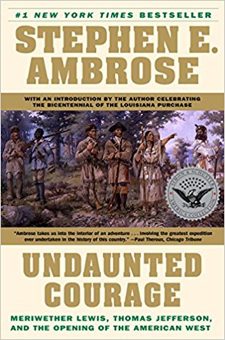 That’s a good question. There’s so many answers, but I recently reread the book “Undaunted Courage.” If you remember that Lewis and Clark story.
Of course. I love it, that’s great metaphor.
Yeah. If you’re an entrepreneur and you’re crazy enough to go out and start this company, you should read or try to read the dummy version of the book, because it is so inspiring, it’s crazy. This was not just starting a company that’s many, many, many, many companies have been founded, many, many VCs out there, many, many stories, blogs, etc. You can read all you want about this stuff. These guys had nothing but horses and guns and themselves. If you want to be inspired, I felt like that was an inspiring book to reread recently.
I’m just so happy you said that Mark, because now instead of horses and guns we have laptops and the internet connection, right?
Yes.
Fantastic. Mark, how can people follow you on social media and stay on top of what you’re doing. What’s your Twitter handle, all that good stuff?
@DoubleMCapital. This is Twitter.
Nice, fantastic. Mark, I thank you so much for your valuable time. This has been extremely insightful and I know a lot of people are gonna get a lot of value out of hearing what makes you successful and what you’re looking for when someone pitches you. Thanks again, Mark.
Links Mentioned
- Book: “Undaunted Courage” by Stephen E. Ambrose
- Website: Double M Capital
- Twitter: @DoubleMCapital
- John Livesay Funding Strategist
Do You Want To Host Your Own Podcast?
Click here to see how my friends at Predictive ROI can help
Fox 11 News Los Angeles John Livesay The Successful Pitch book
Share The Show
Did you enjoy the show? I’d love it if you subscribed today and left us a 5-star review!
-
- Click this link
- Click on the ‘Subscribe’ button below the artwork
- Go to the ‘Ratings and Reviews’ section
- Click on ‘Write a Review’