
What Made Me Who I Am With Bernie Swain
Posted by John Livesay in podcast | 0 comments

Episode Summary
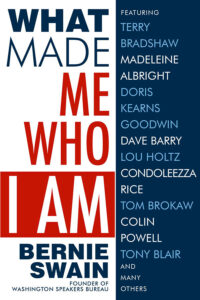
 Today’s guest on The Successful Pitch is Bernie Swain, the author of “What Made Me Who I Am”. He’s the founder of the Washington Speakers Bureau, which represents famous presidents, Tony Blair, Condoleezza Rice, athletes, Tom Brokaw, and he talks about how he started his agency, how long he had to wait while working out of a closet to get his first client, and the resilience it takes to become an entrepreneur. He said, “Passion is much more important than talent, and a pitch works when it’s real and authentic. Really, there’s no short-term path to long-term success.” He said, “You’ll never be happy until you control your own destiny.”
Listen To The Episode Here
What Made Me Who I Am With Bernie Swain
Hi and welcome to The Successful Pitch. Today I’m honored, and quite honestly very thrilled, to have Bernie Swain as my guest today. He’s the co-founder of the Washington Speakers Bureau and today’s foremost authority on the lecture industry. Over the past 35 years, Swain has represented former US presidents, American and world leaders, journalists, authors, business visionaries, and sports legends. He’s got a wonderful new book out called “What Made Me Who I Am”. I highly recommend it. I’ve enjoyed every single chapter. Bernie, welcome to the show.
Thank you. This is an honor. Thank you, John.
Well, your background of coming from a family of humble beginnings definitely resonates with me. My grandfather was a coal miner and I know that that really resonates with your roots, but I always love to ask my guests to take us back to their own story of origin. Feel free to start in any way you’d like as to whether it’s your parents or your own big decisions that you had to make in your career, but how did you get to be who you are?
Well, John, my parents were like yours. They were from Virginia and West Virginia. My mother’s side, they were farmers in Virginia. My father’s side, they lived in the poorest of mining towns in West Virginia and in a two-room house with five sisters, a brother, and assorted relatives who came and went. My father spent part of his childhood, when my grandmother couldn’t always take of care of him, in an orphanage. No one in my family ever went to college before. They were good people, but there was never any conversation in my family about going to college, even when I was a junior and senior in high school.
I had a mentor, one of those first turning points in my life. He was a teacher. He was the athletic director, the football coach at the high school, and everyone looked up to him. I wanted to be just like him. In fact, I was not only inspired by him, but I started a 17-year career based on following in his footsteps. At 36 years old, I was offered the job as the athletic director at George Washington University.
About the same time, a friend of mine had sent me a copy of Fortune Magazine, and in the magazine was an article about the largest lecture agency in the world. They had just walked into the Ford White House and picked up Gerald Ford, Henry Kissinger, and Alexander Hague as clients. Near the end of the article, Henry Kissinger is quoted, complaining about the high commission rate that this agency wanted to charge and saying, “Well, why simply don’t I sign with one of your competitors?” The agency president said, “Well, I have no competitors.”
I took the article home and I put it on the coffee table, thinking I would probably look at the rest of the articles in the magazine, and a couple of days later, I came home and my wife said, “Have you read the article in this magazine? He has no competition.” She sat me down and she said, “You come home two or three times a week and you complain about the bureaucracy of university life, and I don’t think you’ll ever be happy unless you can make decisions on your own.” Over a period of weeks, she pushed and she prodded me and convinced me to walk away from my dream job as an athletic director at a university.
We had no money. We certainly had no experience. We had no plan in order to start our company and to get money to live on. My wife had been making $11,000 a year and I’d only been making $33,000 as the assistant athletic director. In order to get money, we put a second mortgage on our home, and now we had $55,000 of mortgages on a $60,000 house, above 12% interest rate. As I said, we had no money, but then a friend of ours offered to rent us his stationery closet as our first office. To give you an idea what it was like to live in a stationery closet, the person whose office of the stationery closet it was was Chuck Hagel, who would later become Barack Obama’s secretary of defense.
Well, you never know who you’re talking to, do you.
No.
I want to take a moment and just dwell on what Paula said to you, which is you’ll never truly be happy until you control your own destiny. We’re going to tweet that out. It’s such a great line, and I think that’s a pivotal moment for everyone listening, is is that true for you? If it is and you choose happiness over security … because that’s the choice you were having to make, isn’t it, Bernie?
 Source: Pexels
[Tweet “You’ll never truly be happy until you control your own destiny.”]
Yeah, it is. I learned later on, because of some of the people I represented, that there are turning points like my happening to find a mentor in high school. There are turning points in life where if we slow down and we pay attention to these turning points or these forks in the road, we can make good decisions to go one way or the other. The great legendary catcher of the New York Yankees Yogi Berra once said, “I get to a fork in a road, one of these turning points, and I take it.” Unfortunately, that’s what most of us do. We miss these forks in the road. We miss these turning points in life where we can go in one direction or another. I was fortunate, without giving much thought to it, to pay attention to two people in my life early, the high school teacher and my wife, who saw something in me that I didn’t see in myself.
Isn’t that great.
I think that’s the key to success in anything we do, is to listen to others who can see something that we don’t see.
What a great gift. Well, so let’s go back. You’re working out of a closet. You’re in debt up to your ears. You don’t have a lot of experience. Now we’re going, “Okay. We’ve got the Washington Speakers Bureau. Surely we’ll be getting a speaker any day now.” Pick up the story there, because it’s a doozy.
Well, as you said, we had no experience, and so we would sit in this closet and we would try to think of famous names to represent. We were trying to get a telephone number, and none of our calls were ever returned, and our letters were returned from lawyers who said, “My client, this famous person, is under a written contract with another agency. Don’t write them again or we’ll sue you.” You have to remember back in 1980, there was no internet. There was no way for us to determine whether that quote, where, “I have no competition”, was true. Because of those letters, we discovered there were actually five or six other large agencies up and down the east coast of the United States in addition to this one large agency.
We sat in that closet for 12 months, and, really, nothing had changed. We didn’t represent anyone, we had discovered there was competition we did not know existed before, and we were about out of money. Two months more passes, we had been in there for 14 months in this closet, and I get a call from a guy named Steve Bell, who was an anchorman for a news show that started in 1975 called Good Morning America. I had briefly met Steve when I was at the university, I let him use the swimming pool. Steve had been under one of those written contracts. That agency had not fulfilled their obligation to him. The contract had expired.
Steve called me on the phone and said, “I heard that you started a speakers bureau. If you want, I’ll give you a chance.” I went over to his office and I shook hands, and on the way back, I suddenly realized that I had not signed him to a written contract. When I got back to the closet, I tried to justify it to my wife, Paula, by saying, “Well, what good will it do to hold him to a piece of paper if he’s not happy?” That mistake on my part, that error in judgment at the moment, turned into be a defining moment for us because Steve then went and told other journalists, his friends, that if you don’t want to be tied up to a written contract with an agency, you can go shake hands with these new little guys in town and walk out on them any time you want.
 Source: Pexels
[Tweet “What is your defining moment?”]
Well, there’s the defining moment, everybody. That’s the branding. That’s what separates you from the competition. Because everybody’s always asking startups, especially when they’re trying to get funding, “What’s your secret sauce? What separates you from the competition?” And you just gave it that. The question that you need to ask yourself, listeners, is, “What’s my defining moment in my story of origin?” Because those 12, 14 months, I know you’ve said to yourself, “What have I done?” How did you keep going, Bernie? How did you and Paula keep the faith that this was going to work out?
Well, you’re exactly right when you talk about finding that brand, that moment. Sometimes it happens by mistake and sometimes you can identify it in the beginning. The key to it, once you find that branding, is to be truthful to it. It’s to stay with it. I remember about a year and a half passed after I shook his hands, and no other agency that we competed against went to handshakes. They were still signing people to written contracts.
I remember one day I was sitting at my desk and thinking of ways that I could cut corners. “Let’s give up these handshakes. Let’s tie people up. Why worry about whether they’re going to walk out on us? Does it really make a difference? Do people really care about the truth and the faith and the honesty that those handshakes brought for us?” Then, at the same time, I get a letter from a coach at the University of Minnesota named Lou Holtz, who went on to Notre Dame, and in the letter, at the bottom, it said, “I ask of you three questions. Can I trust you? Are you committed to excellence? Do you care about me?”
Now, these were things that Lou Holtz put in every bit of correspondence he ever wrote, so it would be easy to forget it and just pass by it. I remember putting the letter to file it away on my desk, and it sat there for a day and then it sat there for several days. I finally picked it up and I read it again, and it said, “Can I trust you? Are you committed to excellence? Do you care about me?” The very reasons those handshakes worked and the very reasons I started the company in the first place, what that lesson taught me was there’s no short-term path to long-term success. Those handshakes created a brand for me, and it would be foolish for me to give up on that.
That’s a good quote, too. There’s no short-term path to long-term success. We’re going to tweet that out as well. I love those three questions. I find when I work with clients, helping them with their pitch, whether it’s to get funded or to get a new client, that that first question that clients have or investors have is, “Do I trust you?” It’s a fight or flight thing. Is it safe to be in your presence? Are you going to stab me in the back? Or is this someone I want to work with? Then, this commitment to excellence. That really shows up in so many ways. Keeping your word, as you said. If you’re going to say, “We run our business on a handshake,” then you have to keep doing that. Finally, the big one is, “Do you care about me?” Whether you’re listening to someone give a keynote talk or pitch to get someone to hire you, ultimately one of the questions people have after they trust and like you is, “How committed are you to making me look good?” Or, “What extra mile are you going to go for me?”
 Source: Pexels
[Tweet “No short term path to long term success”]
Right.
I just love what you said.
I put that letter in plastic and I look at it every several weeks, because I want to remind myself what’s really important in life. We’ve been in business now for 37 years, so over a 37-year period, we’ve never signed a speaker, including three United States presidents and six prime ministers of Great Britain and countless secretaries of state, authors, journalists.
Right.
None of them have been signed by a contract. It’s all been on a handshake.
What Made Me Who I Am
Isn’t that great. I want to ask the story. Again, the book is “What Made Me Who I Am”. and there’s a riveting story of how you got your first president, Former President Ronald Reagan, to pick you versus much larger agencies that he could’ve gone with after he stopped being president and was going to be a speaker. I think it goes full circle to how we opened the interview today, Bernie, which was who you are, what your values are, what your background is, and how that resonated with Former President Reagan.
Yes. This story shows how powerful it is to have a great reputation no matter what you do. There is nothing more important in your life. We were one of 30 agencies that got a letter asking if we would interview to represent Ronald Reagan when he left office. They were all the big agencies, all bigger than we were. They were Hollywood agencies because Ronald Reagan had been an actor in Hollywood. The idea was that you would take 30 agencies and whittle it down after one interview to 15 and then down to seven, and the top two choices would be given to President and Mrs. Reagan for them to make the choice.
After our final interview, we heard nothing for two months. Washington’s a very gossipy town, so usually you can find out something. You can call somebody on the phone and they can usually say, “Well, here’s what I think is going on,” but nobody could figure out anything. Everything was totally silent. I get a call one day from Fred Ryan, who was the chief of staff of Ronald Reagan and was now a publisher for The Washington Post, and I braced myself for the bad news. I envisaged this conversation by Fred saying, “Well, Bernie, you’ve done a great job, you’ve got to be proud of what you’ve accomplished in nine years, you have a good reputation, but I hope you understand we must go with more experienced people.”
I got on the phone and I braced myself for that bad news, and Fred Ryan got right to the point. “Bernie, President and Mrs. Reagan have selected you to represent them.” I sat there at my desk totally surprised. I did not know what to say, so I promised to do a good job. I told him we’d be in touch in the next day and I hung up the phone. I remember sitting there at my desk that day thinking how totally amazing that a president of the United States would risk his legacy on a totally inexperienced group of people.
But over the years, as I got to know him, I came to understand how this all happened. He was a believer in entrepreneurism and the little guy, and true to the fundamentals that he had been taught young in life. I remember asking Fred Ryan how this all happened later on, and Fred said, “President and Mrs. Reagan recognized that you were young entrepreneurs. They recognized that you had a good reputation. They simply wanted to give you a chance.”
Wow. What a great, great story. Again there’s a theme that I’m hearing, and when I read your book it’s really stuck out with me, was you had to wait 14 months to get your first speaker. Then, after your big pitch to represent President Reagan, you had to wait two months. There’s some skillset there of resilience and maybe a little bit of releasing the attachment to the outcome is what I call it, that I think would be really valuable. I want to ask you about those two situations, because it’s a skill that everybody can use, whether you’re an entrepreneur or working for someone else. After you give a pitch to get hired, to get someone to hire you or to get your startup funded, there’s a waiting period before you hear the yay or nay. Any insights there, Bernie, on how to deal with that time in between?
For some reason, I found it very easy for me to sit down and talk to the president of the United States or Margaret Thatcher, prime minister of Great Britain or Colin Powell or other people who had far exceeded what they accomplished in life than I had, and I did so because the thing about making a pitch is that the pitch is real if it’s based on the life that you live and the way you go about your business and the way you treat other people. If you have a good reputation and you care about other people, then the pitch is really from the heart. It’s not trying to talk somebody into something by creating a set of facts that may or may not exist.
I always found myself talking about family and relationships when I sat down with other people because those are the most important things for all of us in our lives. It is the reason we’re in business in the first place. If we think that we’re in business in order to make ourselves look better or to give ourselves a better reputation, then we’re not going to succeed. We succeed in life because we’re trying to do something good for other people. Other people may be our customers, they may be our family, they may be our employees, but if we put those people first, then the pitches we make in life, no matter whether we’re talking to that customer one-on-one or are pitching to a famous speaker or not, they ring true.
I love that, because so many people have the imposter syndrome, right? You start comparing yourself. “I haven’t done nearly as much as what that person has done,” or, “This is a really big client or a client big investor, and why would they hire little old me?” When you get out of trying to compare yourself to other people and go into what you said, being authentic and talking about relationships and what’s important to you, then you’re talking to people as other people and not about their accomplishments. Would that be a fair summary of what you said?
Excellent. Exactly what I meant.
Terrific. Now, there’s a wonderful story in here that I love about James Carville, which he talks about watching his mother sell. He said, “Mama taught me there’s honor in being a good salesperson, especially when you’re selling a worthy product.” He took that life lesson and said, “Politics is all about selling.” Would you take us back to paint that picture of where he got that life lesson?
Well, they grew up in a very small town in Carville, named not because of their family but because for other reasons, but his mother was, as he said, one of the greatest salespeople he ever knew. She would sell World Book Encyclopedia door to door, and she would take young James whenever she went somewhere. I remember she would say, “Now, James, look for the house that has a bicycle and a boat, a vast boat parked in the front.” James would say, “Well, how come, mom?” She would say, “Well, the bicycle means the family has kids, and therefore the encyclopedia means something to them. The boat means they have enough money to buy the boat.”
She would go in there and she would sit down, and she would start asking, saying the virtues of getting the encyclopedia and how important it was. She would start to ask James some questions, and James would answer, “Yes, the capital of this state is this,” or, “The French Revolution was at this time.” Most often, the lady of the house where the husband was away would say, “Well, I don’t know whether we can do this or not. We have a lot of expenses.” The lady would say, “Well, if you have kids, there’s nothing more important than getting the encyclopedia to teach them knowledge.” They would say, “Well, I’m not sure. We’re struggling.” Well, if you have a boat, then you have the money to invest in those children. It was a well thought out plan by his mother that taught him how important it was to think about selling and the importance of doing a good job selling.
What I love about that story is she qualified. She wasn’t just going door to door, she knew that her buyer had to have kids and had to have enough money to afford the encyclopedias, and that’s so important when you pitch, is to do your due diligence and do your research to see if this potential client is a good fit. That all comes down to knowing who this is for and who it’s not for, right?
Exactly. Knowing your customer.
I love it.
That applies to almost everything. Knowing your customer is so important for the success of any company.
Well, there’s so many great interviews in the book. Again, “What Made Me Who I Am”. Let’s jump to Condoleezza Rice, because she’s always fascinated me with this discipline and focus from being an ice skater to her career in politics.
Right. Well, Condi Rice came from a long line of slaves and, quite surprisingly, a family of ministers. Her grandfather was a great believer in knowledge. They had absolutely no money, and he took what was virtually all the money they had and bought this set of books. His wife, her grandmother, tried to talk him out of getting the books because they really couldn’t afford them, and he insisted on keeping the books because he believes so intently on knowledge and education. That idea of education and believing in knowledge was passed down over the generations. In the book, it’s an example of a turning point in life that can sustain generations. Condi, she is incredibly bright, and she is the provost of Stanford today. All of this is because of one turning point two generations before she was born that happened in her life.
Amazing. Well, I think I would be remiss if I didn’t ask you what advice you have for professional speakers who may not be a famous president or athlete or something along those lines, because you’ve obviously managed a lot of successful people’s careers. What advice do you have for speakers who want to get in an agency like yours but they’re not famous? What would you say to them?
Well, first I will say if you get a chance, go to my website, BernieSwain.com, because in there is a blog that I created called 10 Steps to Get a Speaker’s Bureau Interested In You. One of the most important things in this is that you need to find your own story. It goes back to what I’ve always believed in, in that there are turning points in life. I’ve simply started a lecture agency, but I found a great deal of turning points in my life that create a story for me.
What you need to do as a potential speaker is to find out what in your life, what were the turning points in your life? What created that story for you that made you unique? What do you have to say to others that can change lives? I think that’s the fundamental importance of anybody who’s going out and speaking. It doesn’t do any good to go and find 10 great business ideas and then take those ideas that have been said 100 times and use them. It all comes from inside you. What are the turning points in your life? What are those powerful influences, those defining moments, those people who come into your life, those unexpected events that you experience, those moments in time? If you can find those, then you can create and you can share your story with others.
Got it. Well, my final question to you is how did you come up with the title of your book, “What Made Me Who I Am”?
The people in the book that I think I explained to you earlier before we started the broadcast are people that are older, that I grew up with. What I’m trying to reach are younger people today and entrepreneurs, people in their 20s and 30s who are either starting something new, want to start something new, or they’re in the middle of something and maybe they’re struggling a little bit. Because I want to give good examples in life, people who took adversity and difficult times and changes in their lives and how they reacted to those turning points.
I want to tell the people how important these turning points are, how important it is for us, no matter how small that fork in the road is, to slow down a bit and make good and wise decisions. Because we can look back on life and say, “Gee, I wish I had done this,” but when you’re young and you’re starting out and you’re becoming an entrepreneur or whatever you want to do in life, isn’t it better to discover those moments in time that you can make the right decision before you have to look back and say, “I wish I had done that”?
No regrets, right? Take some risks.
Right.
Well, Bernie, this has been amazing. We’re going to put the link to buy your book, “What Made Me Who I Am,” in the show notes. We’re going to put the link to your website, BernieSwain.com. On Twitter, if people want to follow you, your Twitter handle is @Swain_Bernie. Are there any final thoughts you want to leave us with?
I will say one thing, and you alluded to it a little bit earlier, is that how did we survive in that closet for 14 months without absolutely any success? Why did we sit there for two months when we didn’t think we were going to get Ronald Reagan and we were just simply waiting for who got him and how disappointed we were going to be? The thing is I had no idea I would be good at this. What is important in life for any entrepreneur is passion is more important than talent. It’s important to realize that. You’ve got to say it over and over again. You’ve got to believe in what you do and you have confidence in yourself. Passion is more important than talent.
Well, that’s my favorite quote of the day. We’ll tweet that out as well. What a great way to end the episode. Passion is, in fact, more important than talent. You’re a living example of that. I can feel your passion talking with you. I can feel your passion reading the book. Everyone, get that book “What Made Me Who I Am”. Thanks again, Bernie.
 Source: Pexels
[Tweet “Passion is more important than talent”]
Thank you, John.
Links Mentioned
- Book: “What Made Me Who I Am”
- Website: BernieSwain.com
- Twitter: @Swain_Bernie
Wanna Host Your Own Podcast?
Click here to see how my friends at Predictive ROI can help
Fox 11 News Los Angeles John Livesay The Successful Pitch book
Share The Show
Did you enjoy the show? I’d love it if you subscribed today and left us a 5-star review!
-
- Click this link
- Click on the ‘Subscribe’ button below the artwork
- Go to the ‘Ratings and Reviews’ section
- Click on ‘Write a Review’
- JohnLivesay.com
- John Livesay Facebook
- John Livesay Twitter
- John Livesay LinkedIn
- John Livesay YouTube
Liquid Leadership with Brad Szollose
Posted by John Livesay in podcast | 0 comments


Episode Summary
 Today’s guest on The Successful Pitch is Brad Szollose, who is the author of “Liquid Leadership”. It’s all about staying fluid when you’re a good leader following Brad’s tips. He is quite the expert on knowing why millennials don’t want to stay. He said, “It’s not enough to have flexible hours and free food and open areas to work and even telling them what their purpose.” The secret he talks about is that people withhold 40% of their core values and skills even if they feel safe in a work environment. He has really specific ways to get people to open up and do that.
The thing that’s really surprising are the three things that have triggered this generational gap between baby boomers and millennials. Here’s a hint. One, it has to do with a hit science fiction movie. Another is it has to tie in with people playing video games and making mistakes and finding out how to do things intuitively. The third one, I’m gonna leave for a surprise. Enjoy the episode.
Listen To The Episode Here
Liquid Leadership with Brad Szollose
Hi and welcome to The Successful Pitch. Today’s guest is Brad Szollose, who is the author of “Liquid Leadership”. I love nothing more than a nice alliteration. He’s an expert on the topic of generations in the work place. He co-founded K2 Design, which — get this — became the first .com agency to go public. He has all kinds of expertise on how we can talk to each other, depending on what generation we’re from, and what I’m really interested in is about creating high trust, because as you know, that’s the key foundation to getting anyone to say yes to your pitch.
Brad, welcome to the show.
John, thank you so much for having me. I’m excited. My favorite topic, yes is, the generational stuff and everybody I know is tuning in maybe because it’s about millennials, but honestly, I get a little tired of talking about millennials because I see it as a much bigger picture, much broader picture.
Well before we get into the millennials, can you take us back to your own story of origin when you would have been considered a millennial?
I was in my 30s when I started K2 Design. I heard on the news that I was a boomer, a baby boomer. I was furious. Some of you may be listening and remembering that, but back in the 90s, ’94 in around there, they started labeling everybody. This is just marketing terms, because they couldn’t figure out what the heck to do with all of us. We were all spending money differently and doing different things.
And so many of us. That was the other big thing, right? Oh my God. There’s never been so many.
Yeah. I was sitting there, my business partner and I, we had started K2 Design and for the first year we were struggling. We’re in this 9 by 12 office, and all of a sudden, he comes in after a year of struggling because we’re competing against 4,000 other design firms in New York City and we’re a traditional firm. He runs into the office at 8:30 in the morning and he goes, “We have to become an internet company.” I’m savvy and I know you were too at that time, John, and maybe more so than I because I looked at him and said, “What the hell is the internet?”
In 1994, a lot of people don’t realize, I would say 90% of the people I talked to did not know what the internet was. They thought it was email. They thought it was a gray background.
Or something the government did. That’s what I always heard about it. “Oh, it’s some kind of government secret way of communicating.”
Yeah. It was ridiculous. When I first saw it as a designer and a creative director, I thought it was a real step backwards, but I said, “Okay. Let’s see if we can sell this thing.” I gotta tell you, this goes right into The Successful Pitch, we decided to create a laptop that had a self contained demo that looked like you were on the internet, but you weren’t.
Because back then the connections were horrible, so that was very smart.
We bought a laptop, which was a new fangled device at the time. We got Macromedia Director. We made this animated piece. We even created a fake Netscape browser with the pulsing logo and the hypertext links. It fit on a 1.5 meg HD floppy. Remember those?
Mm-hmm.
We would go into these offices and we’d pitch. We’d show our traditional portfolio and end with the internet. Guess what happened? Everybody’s eyes would glaze over. They had no idea what we were talking about. This went on for three months. Imagine trying to sell something for three months and people just look at you like, okay, all right, whatever, guys. We weren’t technology guys but we knew how to sell it. That’s the idea of pitching, especially when you’re in the advertising or you’re in the graphic design industry. You have to paint that picture of what they’re gonna get when they hire you, what you’re gonna do for them.
We kept going around. Most of the places that hired us, actually hired us to create those demos for their sales teams. But at one point, this gray haired older executive stood up and he said, “Hey. Could you guys create a proprietary browser that would be connected to a CD-ROM hybrid that could launch to our end report password protected section of our website? Could you guys do that?” That sounds like common phraseology today, but back then, it was like the dog spoke.
Yes.
We just looked at him and we said, “Yes, we can do that.”
That’s what any good entrepreneur does. We’ll figure it out like an actor. Sure I can tap dance and walk a tightrope. Yeah.
I speak French. We can do all those things. We had MIT grads that we knew could do the programming and all that, but we were really like in the Wild West shooting from the hip. We landed that account, which was JP Morgan Chase’s CD-ROM hybrid for their 1996 annual report. Yeah. That was a $250,000 job. Then from that moment on, we started doing live events. OgilvyOne hired us because they really didn’t know as much about the internet as they pretended to be at that time. They hired us to do the Garry Kasparov Chess Challenge with Deep Blue.
We started becoming the company that did the live events. We did Bring In The Noise, Bring In The Funk, the live cast party afterwards. We hired videographers. We just took off from that moment on because well, we were featured in Advertising Age in 1995, and we were one of 10 companies in the country that could build websites and create web events.
Wow, 10 companies at the time. Talk about cutting edge, huh?
Oh, it was crazy. We didn’t even send pictures of our work, John. I happened to get corporate head shots of us, and sent those instead. Our phone rang off the hook from that moment on. We had 425% growth for five straight years.
You know what’s interesting about painting that picture, and thank you for taking us back, because I love story of origins. Agencies were pretending they knew more about the internet than they really did is what you said. So now, 10 years ago or less, agencies were pretending to know more about social media than they really do. Typical traditional ad agency, yeah, we can do your social media. They’re like, what the heck? And they’re scrambling to figure that out because the client wanted that as part of their bag.
Now, I think, it continues to evolve, and now agencies are being asked to, we want to get into virtual reality and augmented reality, so it never stops.
It never stops. No. It doesn’t. I attended a symposium last week, sponsored by CrossKnowledge and Wiley. It was about the amazing work place. Jacob Morgan was there. He just released a new book and he was giving a big talk. I tried on the virtual reality goggles.
That’s the latest.
I was freaking out, but this is the subject of my Ted Talk, which is, how are we using serious gaming technology, which virtual reality is, to teach and train and get the next generation ready, because it’s gonna happen, whether we like it or not.
Right. Well, that’s a fascinating topic in and of itself because they’re training a lot of the military, I believe, through video games, correct?
Yes.
 Yes. Well, your book, “Liquid Leadership”. Obviously you quote Bruce Lee about the need to stay fluid and flexible. How did you decide? It’s the name of your book, but it’s also your company.
Yes.
Tell us what you do at Liquid Leadership. Who’s your ideal client there?
I like companies that are 500 employees and under. What I do is I specialize in customized workshops and training programs that get them to communicate better in a cross generational methodology, because what motivates a boomer does not motivate a millennial and is not gonna motivate generation Z which is coming in.
Oh, got it.
I’ve worked with MasterCard and Dell and Liquidnet. These are big companies but my sweet spot is really when I can take a company that has 350 employees and really help them transition into this new way of leading and managing.
One of my favorite things to do when I help people with their pitch is to say, “Okay. Who do you help and what problem are you solving for them?” So we’re very clear, because you’re so concise and compelling, that you help companies 500 and under, ideally 350, communicate across generations so that they can become better leaders. Take us on a little bit of a deeper dive, almost imagine that you’re pitching an ideal client, because I want people to see what a good pitch sounds like and hear what it sounds like. I’m so visual, I talk in terms of seeing. You can’t see. So describe to us, all right, we know who you help, but what problems are you solving when you come into a company that size?
First, I like to sit with them and create the image. I said, “How many of you are having trouble right now, where you’ve hired millennials and 20 of them have all gotten up at the end of the day and they’ve all left?” The hands go up. Then I ask, “Okay. You’re doing everything right. You have flexible hours. You have free food every afternoon that’s catered. It’s top shelf stuff. You have open areas. Everybody has access to the CEO. And you have a purpose. You’re helping out in Rwanda, let’s say. So why did they leave?” They all look at me.
Most people don’t have two out of those four, let alone all four. I’m impressed that there’s still a problem and that’s what’s so fascinating, right?
Right.
When we try to solve things from the outside in, which that would be, oh, let’s do this. Let’s design our offices this way. Let’s bring in the food. We’ll keep them happy like their our pets or animals or something, right? I’m sure you have a whole different way to keep people.
Oh, yeah. People don’t realize, this is a statistic I just heard, I’m gonna have to do a little more research on it, but they said, “Even when people are in environments where they’re not threatened, they withhold 40% of their core, what they really want to do to help the company.” That’s 40% that they’re not giving over, they’re giving back and things like this. Now, take a look at traditional environments where they can’t do such progressive management styles. So what do I recommend there? I said, “How would this environment look?” Just remember, when you do a pitch, you have to create the image in their minds, so you never say, “I created Teflon back in the 70s. Do you know how awesome I am? Wouldn’t you like to be me?” No. You flip that.

Source: Pexels
[Tweet “People withhold 40% of their skills at work”]
I start all my keynote speeches, all my trainings like this, I say, “Imagine for a moment, it’s the morning of your 18th birthday.” Boom. Right away, you’re back in time to your 18th birthday.
Yeah.
You almost have to paint that picture for them and ask the right questions near the end. That’s the clincher. I look at people like that and said, “How many of you had mean bosses?” Hands go up, especially if they’re boomers. “How many of you had bosses that truly mentored you?” Couple in the room. I said, “Do you know how lucky you are if you had mentors?” They look. I said, “Look around the room at those who did not have mentors and had mean bosses. Put your hands up again.” Boom, the hands go up. “What did you promise yourself when you got into the same position, that you were never ever going to treat employees the way you were treated. How many of you are doing that?”
Oh my God, it’s just like what we promise ourselves. I’m never gonna be like that kind of parent, right?
Exactly.
And here I am saying exactly what my dad or mom said to me. Clean your room, or whatever. Yeah. Okay. Got it.
What I help you with is I will help you retain the next generation longer. I will help get them engaged because I will show you the tools that each and everyone of your people managers have to have. I will help you develop your communication skills and we’ll shift out of hierarchy control and structure into support, unleashing that passion, and persuasion. You’re gonna get more out of your people just from some simple tweaks.
Oh, I love it. Well, this whole concept of persuasion is my whole sweet spot. I love studying behavior and what gets someone to say yes faster. Well, one of your areas of expertise are the three things that created this generational divide, so let’s hear what those three are.
Well, let’s go back in time to 1977.
Teflon?
Yeah. Teflon and the pet rock and disco. What was the number one blockbuster movie in 1977?
Oh, man. Saturday Night Live, maybe. I don’t know.
The number one blockbuster movie was Star Wars.
Oh, okay.
Now, you’re probably going, Brad, come one. What’s that have to do with anything? Well, before 1977, major motion pictures were usually detective thrillers, cop shows, romance, horror movies, things like that. Science fiction was kind of made fun of. You could see the wire usually as the ship went through space.
Star Trek kind of stuff, yeah.
Right. Yeah. Star Trek actually took it seriously for the first time and only a few movies stood out, like 2001 Space Odyssey or The Day the Earth Stood Still, but after 1977, if you add up all the top 10 blockbusters films in the last 35 years, seven to eight of them were either science fiction driven or fantasy driven. Dr. Michio Kaku, the theoretical physicist actually said this, “Star Wars initiated a paradigm shift.”
Anybody who’s a boomer knows when Star Wars came out, movies changed the way we looked at things. We had hope. We had belief. This movie interacted on our gestalt in some way, shape, or form that cannot be explained. And at the same time, it showed us a ubiquitous way of using technology in our day to day lives. Now, that’s only part of it.
Star Trek was seen in the industrialized nations only, and usually you were a geek and you were ridiculed if you liked Star Trek. I was made fun of, so I didn’t tell anybody I was a Trekker. Then, guess what? Star Wars was the first movie of its kind, science fiction driven, that was seen all over the world. If you were in Russia or Guam, you saw Star Wars. If you were in Haiti or you were in Australia, you saw Star Wars. If you were in Hawaii or Canada, you saw Star Wars. That had never happened before and anybody listening can Google international Star Wars posters. In order to pitch that first movie into these other countries, they had to fake how the plot was to be in the movie.
If you look at the Scandinavian ones, all the characters have blonde hair. If you look at the Russian poster for Star Wars, they show Darth Vader with his helmet off, and it’s done like an opera, like he’s the dark villain. If you look in Japan and China, C-3P0 is in a ninja pose. Okay.
This showed us how we’re going to live in the future. If you think about it, our brains work in pictures. Here it is, 35, 45 years later and millennials lived within the shadow of that. All they heard from their baby boomer parents was Star Wars, Star Wars, Star Wars.
And Halloween costumes, right?
You got it. When it came out again, they went to see it again. I think it was in 1989. Boom. They went to see it again. Well, what this did is, take a look. 90% of the devices in Star Wars we have today. We have pads. We have wifi networks. We have holograms. They are working on the light saber. What happened is, both Hollywood and business started to realize that science fiction was a serious genre to put money into. That launched this whole need on the screen and in the toys and the interactivity and everything else, this new era where we looked at science fiction as science fact. I can make that happen. So that’s number one.

Source: Pexels
[Tweet “Science Fiction is Science Fact”]
Number two is a big one. This one is fascinating to me, but number two, the video game came into the household. Before 1977, we had to go to the arcade and pump quarters in. I had a job as a kid, so I had the money to pump into those machines. I played Pac-Man and Galaga and Phoenix and all this other stuff. But in 1977, I’ll never forget this. I was dating this girl, Robin. I went over to her house and her parents had this Atari station, had the joysticks and all this. They were playing Black Jack. I was like, “Wow, that’s kind of cool.”
We kind of make fun of those first video games, like come on Brad, 1977, those video games coming out. Well, it wasn’t those first games, but we got comfortable with them, so by the time 1984 rolled out, when Atari screwed up as a business, and suddenly Nintendo and Sega brought the video game into the home with more robust multilevel, multiplayer games. Mortal Kombat alone, in 1986 I think it was, or ’87, was a 10 billion dollar industry, the video game alone with the movies, and the dolls and all these things. It was a 10 billion dollar industry, globally.
This exposed the United States and people around the world to a global brand now. Guess what else it did? Guess what else it did? I talk about this in my Ted Talk, it changed the brains of the next generation.
Instant gratification, addiction to constantly the next level and all that stuff.
And guess what? All the toys were interactive from this moment on, so instead of going to your bedroom and being told often, you have to sit and think, now you can play video games. 1984 is when the Apple Macintosh came into the household. So now you had two computers in the household. One was visually driven and story driven and gaming driven, and the other was a business computer in your home that allowed you to reach out into the world. This opened up this expectation psychologically, behavior wise, interactive devices. Everything from millennial and even Gen X to some point, they have to have some interactivity in it.
Baby boomers, if you’re listening right now, this is why when you go home at the end of the day, all you want to do is sit with your wife and watch Dancing With the Stars. You don’t want to Tweet. You don’t want to do anything. This is my wife’s favorite show.
We’re cracking up over this, because once I unhinged and unlocked this code, I started to realize this is why the next generation loves gamification, because all it is interactivity. There’s so many things that you learn. How do you learn in a video game, John?
Oh, when you make a mistake and whether you get better and better. Yeah.

Source: Pexels
[Tweet “When you play video games you learn from mistakes”]
Yeah. When I was a kid, you had to read the entire box of monopoly before you could play it.
That’s right.
If you broke the rules, everybody flipped the board and got into fights.
Yes. Or listen to somebody read the rules out loud. That was so horrible. Yeah.
Oh, gosh, yes. Now, you learn the rules intuitively. You jump in. Everything’s peer to peer. You learn the rules intuitively. You learn the politics. You learn who can help you in the game. You look around for the awards. You push against. You test. You fight to discover what the boundaries are within the game.
Boomers were taught, if you make one mistake, your career was over. This generation has been taught, the more mistakes you make, the more you’re going to learn.
Wow, that’s really great. I’ve never heard anybody say it like that. It also makes sense why baby boomers, sometimes find technology so challenging, is because they don’t have the experience of figuring something out by intuition. The kids are not afraid to just, well, I’ll just click around until I find a drop down menu. If it’s not this one, I’ll go to the next one.
Yeah.
Meanwhile, the baby boomers are like, oh my God, I’ve tried. Where are the instructions on this thing? Why is this so hard?
If I handed my dad the iPhone, he’d just stare at it. But if I hand it to my nephew, who I helped raise, he just clicks, clicks and he’s got all these pages open. What it did is, this generation learned to manipulate digital information before they could read, write, and speak in some cases. It’s a part of the medulla oblongata when they go to do something.
Getting back to The Successful Pitch, guess what? When you walk in your room and you’re pitching to millennials or you’re pitching as a boomer to a tech savvy company, you better have a millennial standing to your side, because they’re not going to trust that you even know about technology if you’re my age.
Now, I’m kind of hip and cool. I can get away with it, at least I think in my mind.
Yes, of course.
That guy is crazy. You walk in. I’ve actually helped these insurance salesmen who walk in with the three piece suit on and the tie, you know, they’re clearly in their 60s. I try to explain to them, take the tie off and go in with a millennial by your side or a Gen Xer and stop talking and trying to sell, and start listening. It’s a game to them. If you do the right things, there’s no linear in this world.
Nice, okay.
I’ll continue with the video game, what you learn in the video games. Leadership is rotational as you push against and learn all the rules. Each person within your team has a skill set and you need to use that skill set in the moment when you need it. If someone on your team doesn’t have the right skills, you get rid of them. They eat their young very quickly in these team environments. Yes, everybody has to keep their skill level up. And everything in a video game is peer to peer. That means, there is no hierarchy. You just have to earn your way from level to level to level. By the way, once you storm the castle, kill the trolls, save the princess, disregard most of the information you just learned, because some of it’s going to change, most of it. The rules may change completely at the next level.
Does any of this behavior sound familiar?
Sure. If you’re used to that, then you don’t resent or you’re not afraid of change. If you don’t have that gaming experience, then it pisses you off because you’re like hey, I was taught to play by the rules and now you’re changing the rules on me. I’m out of here, right?
Right. It also explains why when people walk into a corporation, the younger generation may be bored after a couple of weeks. Hey, I want more challenges. I want to move forward, because in the video game world, you want more risk. You want more challenges. And companies don’t quite know yet how to integrate this into the day to day curriculum of the learning cycle.
Yeah, I want to ask about that, tapping this millennial talent for hyper growth so you don’t bore them. But let’s finish the third big thing. We’ve got science fiction is science fact. We’ve got that video games created a difference between people who learn intuitively versus following the rules and learn by mistakes. And the third big thing that causes divide is…
Get ready. Parenting changed. My dad was a chiropractor. He had a PhD in chiropractic medicine and a Bachelors degree in chemistry. When he heard about child centric parenting, he said, “This is a load of crap.” Okay.
Everybody jumped on the bandwagon and listened to the experts like Dr. Spock and they would sit with Mr. Rogers. I don’t want anybody to judge any of this. This is neither right nor wrong. It’s just we shifted into, the conversation used to be, wait till your father gets home. He’s gonna paddle your butt. Now, parents would look at their child, and get down really low and go, “Hey, buddy. Hey, mommy and daddy have a question for you. Do you think the two of us should get a divorce? What do you think?”
Now, you’re laughing, and boomers laugh, and then they start to get, oh, I did that. What we did is, we didn’t know we flattened the hierarchy inside the home, so now instead of mom and dad being up there, benevolent rulers and the kids could just play and not worry about life, now the child was equal, eye level to the parents. The parents began to speak to them differently and became mentors, managers of their time, drove them to karate classes, French lessons, soccer lessons, lacrosse, all these things.
Now, the kid didn’t see their parent as an authority figure to fear once in a while. They were a mentor that they could go to and talk with, interact. Parents would look at their kids and go, “Hey, don’t do what mommy and daddy did. We worked for the corporate man. You follow your passion.” Now, when they went into the school system, the same thing happened. The hierarchy was flattened and they were encouraged to call the teacher by her first name. “Hey, Becky. How’s it going?” They were also encouraged to cherry pick their curriculums.
Now, I add this sometimes, but a lot of the young people going into college now, they’re choosing what I call TV professions. Nobody knew what a CSI investigator was when I was a kid.
Oh, that’s funny.
Most professions you fell into and you went, “You know what I do for a living? You know that spring on the pen. I install that.” You fell into your profession by accident. You didn’t go to college and have a college degree based on what you wanted to do for a living. Usually, got a college degree or you went straight into a job.
As a matter of fact, when I was a kid, being a bank teller was a summer job for a teenager. You didn’t have to be trained. You didn’t have to have skills. You just had to be a straight A student, usually.
The other thing I want to ask you about is this whole thing within parenting that I hear so many people saying, “Parents really did their kids a disservice by saying, ‘You are all winners.'” There’s seventh place, eighth place trophies. The kid never has a sense of failure or not being considered a superstar everywhere, so when they go out into the work force they’re stunned that they’re not the star.
Right. I feel, I don’t want anybody to get too upset with me right now, but I feel part of the reason a lot of people are very upset with how the presidency has turned out is, they never really have lost. So, that can affect you. You don’t like the choice, but half of America chose that. I may not like it either, which I’m sitting there going, I can’t believe he said that. This is tremendous. Basically, this is what’s happened. People haven’t lost ever.
Now, I think, and I’ve talked with a lot of millennials, that they know that the trophies are BS. They’ve now reached a point where they’re like, “Look. We didn’t ask for the trophies.” And in some cases, they’re ashamed. They’re embarrassed that you gave them the trophies, because everybody got trophies so they would feel good. If you have the poor kid in class who never has the right clothing and is always mismatched and you constantly give that person an award for their crappy clothing, they can’t hide anymore. Now they’re a focus of attention. They know it’s nonsense and they’re actually angry at you for giving them this trophy, because they don’t feel good about it. Instead, you put the spotlight on something they didn’t want to talk about.
Well, let’s dive in to this, because this is a problem I hear a lot, which is these millennials get bored easily. They expect to be promoted in six months instead of three years. You have a whole thing on how to tap into their talent so they can have hyper growth. Please share that secret.
Yeah. Everything that we’ve been taught, boomers, throw it out the window, except for the stuff that works. Yes. You have to be on time. Certain things in business are never going to change. But in order to up your game, you have to up the challenge. A lot of times, what you have is an employee that has an amazing amount of skill, and you put them in an entry level position, even though they have a Masters degree, and now after three months, you may not want them to advance because it took you years to move up one notch.
What you do is you get your team to make the decision as to whether they’ve earned the right to do a lateral move within the company. Or maybe their dream job within the company is not to work in the IT sector, but to work in the pitch part of the company. This means, that as a manager, as a people manager person, you have to know a little bit more about your employees than just the surface stuff.
I’ll give you a good example. A friend of mine runs one of the best and largest web development agencies here in Long Island and in New York City and in LA. He came to me and he said, “Hey, I have an employee. We can’t figure it out, but he stands up in meetings. He’s a brilliant IT guy, but he won’t stop talking. He just goes on and on and on. He doesn’t seem to get…” They thought he was autistic because he couldn’t get facial cues that the client was bored.
Oh my gosh. Wow.
Yeah, it was bad. This young man, we’ll call him JJ. He was brilliant. I sat with him once. We were doing a project, and I said, “Can you build a dashboard overnight using this, this, and this?” He said, “Yeah, I can do that.” He had it done the next day, a highly complex dashboard. He made it from scratch. I said to them, “Take JJ out to lunch and find out what he loves to do.” He called me up the next day. He says, “He likes to write.” I said, “You’re kidding.” He goes, “No. His passion is writing.” I said, “Put him on the team to write the pitches, the RFPs when they come in.”
Well, he started writing and helping the team, and guess what? They started training him, ever so slightly, how to give a speech, to stand up, say what you gotta say, sit down, and take questions and learn facial cues. Because of that shift of moving one employee into a different zone based on their skill set, not their resume, they were able to now pitch larger projects. They started instead of winning the under million dollar pitches they were winning, they started to be able to go after four millions dollars, two million dollars, twelve million.
There’s a story.
Yeah. It’s all because they moved one employee. So you have to take the weirdo, take the one person out to coffee that you don’t understand. Just do it, because inside of them, like what I said in the beginning, 40%, they won’t give it to you.
They hold it back. It goes right into the environment if they don’t trust it. Even if they trust that it’s a safe environment, they’re still not trusting that they can be themselves or that anybody cares enough, right?
Yeah.
That’s really what’s going on.
Part of that child centric parenting part and the schooling, what that did is, it made them not see there are authority figures around them, so they are fearless when it comes to walking up to the CEO of a company and saying, “Hey, I’m gonna show you how to run this place.” It makes them fearless to go into a room and pitch a 20 million dollar account when they’ve got $10 in the bank.
Yeah.
That’s the power of millennial thinking that I think a lot of people miss out on.
Nice. Well, Brad, you’ve given us so much to think about, so many great insights, and really great take aways on what we can do to get our best out of our team.
Good.
I really love it. The book is called, “Liquid Leadership”. We’re gonna put it in the show notes. It’s a great book if people can’t engage you one on one to come in and fix their companies with your training, but they can certainly get a lot out of your book, which is really fascinating and a great read on changing the way we run things. Anybody who needs to be a leader, and I think we all are, needs to learn how to become a little more liquid.
Thank you so much for being on.
Thank you, John. I appreciate it.
Links Mentioned
- Book: “Liquid Leadership”
Wanna Host Your Own Podcast?
Click here to see how my friends at Predictive ROI can help
Fox 11 News Los Angeles John Livesay The Successful Pitch book
Share The Show
Did you enjoy the show? I’d love it if you subscribed today and left us a 5-star review!
-
- Click this link
- Click on the ‘Subscribe’ button below the artwork
- Go to the ‘Ratings and Reviews’ section
- Click on ‘Write a Review’
Getting Investors To Pick You with Jefferson Lilly
Posted by John Livesay in podcast | 0 comments


Episode Summary
 Today’s guest on the Successful Pitch is Jefferson Lilly. He has a Wharton MBA but decided to go a different route than most of his other fellow graduates. And he now runs a fund that invests in mobile home parks. So people are somewhat surprised, as he calls it, this quirky little niche, of why they would ever invest in that versus apartment buildings, for example. So no matter what you’re pitching, you still have to get somebody to understand why you and why now, and really explaining how you’re adding value, and that you’re the right team to make sure that this investment’s going to give them a good return on their investment, not only having a great exit plan, but he also talks about how his investments give dividends to people. He tells the story of exactly all the grit and tenacity that was required to get his business to take off. But now he’s the expert. He shows you how you can become the expert in what you’re doing too.
Listen To The Episode Here
Getting Investors To Pick You with Jefferson Lilly
Hi, and welcome to the Successful Pitch. Today’s guest is Jefferson Lilly, who owns a company called Park Street Partners. He’s a self-made millionaire, a mobile home park investment expert, educator and industry consultant. His company owns 16 mobile home parks coast to coast, totaling over $30 million in value. Jefferson’s been featured in the New York Times, Bloomberg Magazine, and on the Real Money television show. We are going to ask him to share some tactical and practical stories of his journey, and it’s all about investing and telling stories, no matter what you’re investing in. Jefferson, welcome to the show.
Thank you, John, it’s great to be with you today.
Tell me, if you don’t mind, I always like to ask my guests their story of origin. So, when you were starting out, you’re maybe getting out of school, and you’re thinking, “I’m going to go invest in mobile homes,” or, “I’m going to become a millionaire.” Tell us, how did you decide, did you start at a young age, tell us what happened.
Well, as I say, John, when I woke up from the concussion, it just seemed like a good idea to be buying mobile home parks. But no, seriously, yeah, I had always been interested in investing generally. I bought my first stock at age 17. I won’t tell you how old I am, but suffice it to say this is back when trade tickets were physical pieces of paper, not anything on the internet, and my dad had to cosign that trade ticket. Anyway, so I went on, I was an Econ major in college, did basically a couple of different tours of duty as an analyst in my 20s, went to the Wharton School of Business for my MBA, and came out of that, and all the while was certainly focused on making money. But honestly, I came out of Wharton and went into high-tech, like so many people back in the late ’90s. I rode the dot com boom up and down.
I just began thinking after that, that personal finance is never quite a question of black or white, but to the extent it is, that basically value investing is what’s right. And sort of momentum high-tech, solar-tech, biotech, silly tech investing was just not going to be what I wanted to do anymore. I had already been a shareholder in Berkshire Hathaway and was well aware of what value investing was and just wanted to do more of that. That led to diversifying away from the stock market and buying value real estate. There’s really nothing better that I’ve found than mobile home parks, as far as just generating good cash flow. Value investing is all about buying a dollar for fifty cents, and typically buying and holding. And so mobile home parks just fit really nicely into that perspective that I now have and continue to have, that really value investing is the way to go, and not chase high-priced other investments.
So you, I would guess, would be someone who’s not jumping into the, “Oh, I need to be investing in Uber’s Series,” whatever letter they’re on now.
No, and I don’t intend to buy Uber on the IPO, and who knows. I may be sorry for that or I may be quite happy, but honestly, to be able to generate the kinds of returns that we do pretty consistently, which are 20-30% cash flows, plus of course appreciation in addition to that, but just the cash alone is in the 20-30% range, to have that kind of annual return really is almost venture capital returns. All the fancy firms up and down Sand Hill Road here in the Bay Area, that go after all those sexy deals and have so many wipe-outs are generating that kind of return, and it’s much more volatile and those are far less liquid investments. We’ve got a far more stable asset that’s more liquid, and again, we make those kind of returns and we’re quite happy doing what we’re doing here at Park Street Partners.
Can you tell me about the concept of what you’ve learned about pitching? How do you pitch to get people to invest with you?
We’ve evolved. We got started just really without specifically pitching in mind. And by that, I mean that, I don’t know, probably seven or eight years ago, before I even had my partnership, I was just getting back into the mobile home park investing community. I was posting online at various blogs, answering other people’s questions about mobile home park investing. Because I was giving back, I got to be reasonably well known. Then when I formed the partnership with my partner Brad Johnson, that was about three and a half years ago, I already had some profile on the web, some awareness, and just putting the word out online, that we had a deal and were looking for investors, got us our first set of investors, our first deal that we closed on that was now summer of 2014. I believe we had six investors. And so I had established some amount of credibility on the web, again, for several years, just kind of giving back into the community.
Then we put together a PowerPoint presentation, and pitched investors, but it varied. Some of those investors had a lot of questions. Frankly, the first guy that we thought that was going to do that deal, when through three or four weeks with us, on and on questions on and on. He looked at the pitch, he had questions, he had more questions, then he had the same questions, again and again. He eventually fell by the wayside. So it doesn’t always work, but again, we had honed our pitch and so then we were able to close that first deal. We raised money, roughly from half a dozen other folks. And that pitch, which just lays out first the marketplace, why is the mobile home park industry such a great business to invest in, that’s in our pitch. And the second part in our pitch then is the individual deal in question. Here’s the mobile home park, the location, the occupancy, the rents currently. Here’s what it should be after 12 and 24 months, higher rents, higher occupancy, et cetera.
Let me ask you a couple questions there, because you’ve given such valuable information. Before we get more from you, I just want to underscore it for the listeners. So what I’m hearing is the amount of preparation is so key, so that when you get asked a question, a) you’re prepared, and b) you’re not defensive.
Yeah.
So I’m guessing that some of the questions that you might get asked, because you, as I mentioned, were in the New York Times, the perception of mobile homes maybe not as sexy as a new high-tech startup. Then people say well, for the people who are in a mobile home trailer park, is sort of their last resort sometimes before they become homeless, but it doesn’t mean it should be your last resort as an investment, correct?
We’ve never said it quite that way, but you’re very perceptive there, John. Yeah, so that’s it. We know that this is such a quirky niche, that a lot of our audience, let’s just call it all of our audience, has never invested in a mobile home park before. So we have to start, we err to the side of caution. So our pitch starts with, assuming ground zero like no knowledge of the business. And again, we start off talking about the industry. We actually compare it to apartment investing. Many investors are familiar with traditional multifamily investing, which means apartments. Mobile home parks are still multifamily, it’s just a teeny tiny niche. Maybe 1%, maybe less, of all multifamily is mobile home parks.
Anyway, we’re able to compare and contrast like, well, here’s how our expense line item for repair and maintenance compares favorably to apartment buildings. Here’s why mobile home parks are better, have lower repair and maintenance. People then get drawn into our story and they understand line item by line item, like why are our rents the way the are, why is our repair and maintenance the way it is, why is our tenant retention, our turnover as low as it is, why is it so much more favorable than apartment building investing. So we just kind of walk our investors through the P & L and do a side-by-side comparison, our quirky little niche compared to something they probably already know. Again, apartment building investing. And that’s how we build our pitch.
Every good pitch paints a picture, and you’re painting a picture, giving them a frame of reference of apartments, so they can have some anchor. And then you’re acknowledging that this might be a little quirky, and I think when you have something that’s an unspoken objection and you bring it up, then people feel like, “Oh, I can trust you because you’re not pretending this is some high rise on Park Avenue in New York,” right?
Right.
The other thing that I think is important in the pitch is to reduce the risk. So credibility and risk, and it sounds like when you’re going through and comparing, when you start saying you know, people like Warren Buffet invest in this-
He does.
And we know he’s very successful and does his due diligence. So you start to have some social proof there, that I would think would be really a big take-away for anyone who’s pitching to get a new client, to get funded, whatever it is, is if you have credibility and you reduce the risk, using social proof, that it really helps get people to say, “Oh, you’re the guy.” And the other thing that I think you’ve really done that everybody can take away is you’ve generated press. You were giving away content, which allows you to be known as the expert, which then of course, if you’re going to invest in this quirky little niche, as you call it, then why wouldn’t you invest with someone who’s known as the expert, but you had to set yourself up as the expert.
Yeah.
The thing I hear over and over again, that you’ve done so well, and why I wanted to have you on the show, is you answered the question why you, right?
Right.
You really are the person that is the go-to person. So if you’re pitching any kind of startup, pitching to get a customer, we all have choices. Everyone has competition or there’s no market. So answering this question, why you, you’ve done really well, I believe. And I think that’s a key to your success and I just wanted to have you maybe zoom out a little bit and say, “It’s always been my strategy,” or, “Here’s a couple tips I would say to somebody who’s starting out,” if you don’t have a strategy on how to do that.
You want to set yourself up to be, as you said, the guy to invest with. You don’t want your prospective investors to get super excited about the concept of what you’re doing, and then go do it themselves, or do it with someone else. So to get folks tied into us, we then, in our pitch, we talk about our background, how long Brad and I have been in real estate, which in aggregate between the two of us is now more than 20 years, and we have some very specific quarter-by-quarter graphs that document how much cash our investors have been earning with us historically, quarter-by-quarter. And suffice it to say, again, it’s better than investing in the stock market or most other forms of real estate. Of course, I’m making no guarantees about any future gains here. But by having that kind of black and white evidence of our historical track record, and again, how many years, more than 20 that we’ve been in the business, that helps us to make the case that yes, we’re the guys to go after this niche with.
We also mention, frankly, that because this niche is so small, it’s not like doing single family house investing or apartment investing. Finding these deals is difficult. It’s not impossible, but it’s difficult. We’ve spent time outreaching to both brokers that specialize in bringing mobile home parks to market, and we also outreach directly to mobile home park owners. We send out some postcard mailers, and we’ve made some follow-up phone calls. So we have a little bit of secret sauce in what we do, in our deal flow. And again, if someone else were to say, “Hey, I’m just going to go buy my own park,” or “I’m just going to go invest with some other partnership,” I’m not saying that wouldn’t work, but again, we make it clear that we’ve got good deal flow and there is something unique about our partnership. This isn’t like just looking on the MLS to just go buy a regular single family house, and flip it. So we add value and we’ve got a good track record.

Source: Pexels
[Tweet “Add Value and Show Your Track Record to Get A Yes”]
Nice. So that’s the tweet right there. Add value and have a good track record when you pitch, and the track record could be previous successes, even in other industries if you’ve had another startup, or you have another client, a customer that’s happy, maybe. Have you ever told a story of an investor that was a little skeptical at first and then they put in some money and then they got a return, and so that you give somebody that little story, that hero’s journey, if you will, so that they can go, “That sounds like where I am, and I do want to go and be where that guy is three to five years from now.” Is that the kind of thing you do?
We have not made it quite that personal around any specific investor, but what we do tell folks, is hey, Park Street Partners comes with references, and if you choose to invest with us, we will happily provide a fairly lengthy list of references. We make it clear that we’ve got at least one guy who started with us in that very first deal, three years ago, and he then invested subsequently in our first fund, which was our 2015 fund, and he’s invested in our current fund. So we make it clear that we’ve got investors that are happy with what we’re doing and they are repeat investors with us.
There’s nothing more it sounds like.
That’s how we sell with our investors, so to speak.
Yes. Just so people … I try to anticipate the questions people might have when they’re listening, so what’s the minimum amount of money someone has to invest with you to be part of this?
$50,000.
Got it. Okay. And is there some kind of exit plan, much like an apartment building, do you have to hold onto it for five to ten years before you sell the mobile park, or how do people get their money back?
Yeah, exactly. So, John, as you know, you can’t go to the market, at least we’ve not been able to go to the market with sort of a very open-ended investment and say, “Hey, there’s no exit,” because then of course what people hear is, “Oh, my gosh, Jefferson is going to keep my money forever.” So we put a 10-year life on the fund, so that investors emotionally could get comfortable that at some point, we would be selling off everything and getting them their money back. So that, in a nutshell, that’s the answer. But this is such a profitable niche, we’ve been paying our investors about 12% a year, 3% a quarter. So honestly, just from dividend payouts, they’ll have all their money back, probably in eight years, and then still will have the property to sell at year 10. So, there’s really a fair amount of liquidity.
This isn’t like traditional venture capital, where you write a check and you get nothing for five to seven years, until you have a winner and something goes public or gets acquired. We start paying out our investors from the first or second quarter, while we’re still raising funds. This is just a very strong cash flow business, so investors start to see some of their money back, honestly, probably within 90 or 180 days. And then, again, as we grow the portfolio, as we infill any vacant pads with new mobile homes, et cetera, then the returns tend to improve over time, but they actually start getting money back well within that first year after investing.
And is it similar to investing in a mutual fund where you’re owning multiple stocks, in this case, you’re owning multiple mobile parks across the country?
Yeah, you can think of it that way. Folks invest in our fund, which is a Delaware LLC. It in turn owns LLCs in the states that we have properties, and each of those LLCs owns just the one property, so our deal in Dayton, Ohio, is held in an Ohio LLC, which is 100% owned by our fund. So yeah, investors own a diversified portfolio, geographically diversified portfolio of mobile home parks. We don’t also do self-storage, or apartments, or retail or anything, so they’re focused in mobile home parks, but yeah, they’re buying into a portfolio of 10 or 15 parks nationwide. So that’s the way we do it.
And how do you find your investors? Do you use family offices, do you advertise, networking, referrals? I’m very curious about that.
Yeah, a little bit of all of the above. So we’ve evolved, as I mentioned earlier, from doing just some of those blog postings, and really kind of knowing most of those first half dozen investors, to now, we’ve got our own podcast, which is simply called Mobile Home Park Investors, so we were the first people to do a podcast on mobile home park investing. So we get a lot of listeners. Let’s just say we’re averaging about 10,000 downloads a month right now. And so from that, we get both investors, people will just literally every week, I get at least an email or two, or a phone call from somebody that says “Hey, I’ve heard your podcast. I love the investment thesis. This is a great quirky little niche. Too much for me to do on my own, let’s just talk about me writing a check for 100 grand or a quarter million.” We get inquiries like that most weeks from our podcasts, but also, to a lesser degree, but still important, we also get some deal flow from our podcast.
Last fall, we bought a property in Raleigh-Durham, a great market where 15 minutes from Duke and 15 minutes from UNC Chapel Hill, and that came to us through a couple of, I call them the kids, a couple 20-somethings, that want to get into the business. They heard our podcast and we do pay referral fees for people that bring us off-market deals, and so these guys just called out of the blue, and said, “We’ve heard your podcast. We know about a park in this great market, Raleigh-Durham, and if you pay us a referral fee, maybe we can do some business together. So we’ve done some business together.
So it sounds like hosting a podcast sounds like a great way to find new clients and investors.

Source: Pexels
[Tweet “Hosting a podcast is a great way to get new clients”]
Yeah. You should try it sometime, John.
I know it well. But I love that I’m seeing someone else use it in a different format. It’s a great way of extending your expertise and your branding beyond blogs, and you can even repurpose the podcast and take some of the transcripts and turn them into blogs if you want. That’s what I love.
Blogs or books, yes. There aren’t all the hours in the day, but you may see a blog or a book coming out of us at some point in the next year. We’ll see.
Very interesting. So, people who are listening that either want to have their own business, have their own business and are really looking for some life lessons that you’ve learned on cash flow, getting a good team, anything you could share would be great, Jefferson.
To be candid, yeah, nobody needs to have top school, Wharton, Harvard or Stanford type MBA to be successful in the mobile home park business. It’s just not that complex. I mean, I think I was pretty good with numbers, and getting through my business school program I certainly took some real estate finance courses, and some basic marketing courses, those sorts of things help. But really, truly, this has been mostly for me, learning trial by fire. I read every book that I could, I went to seminars when I was getting into the business. I just put the word out to everybody that I knew, that I wanted to buy a mobile home park. I certainly got a number of quirky, quizzical looks, but like one guy from my church just said, “Oh, my dad owned a mobile home park, and that was what sent us, our whole family, to a great European vacation every summer. You should call my dad and talk to him.”
So I built up kind of an unofficial advisory board of about 10 guys that had all owned mobile home parks. I started bouncing deals off them to get their input. And then again, finally found my first park to buy and bought it, and just jumped in. I had learned as much as I could, at that point, without actually owning a park. I had learned as much as I could, and jumped in, but certainly the learning curve continues, but again, it’s been a good business. So again, I just encourage folks that are interested in this business to learn about it. They can hit our website and we’ve got resources there for folks that would consider buying their own park. Learn about it, but like anything, at some point you got to just put your foot, or well, your toe, your foot or your whole leg into the water, and just sort of jump in and go for it, and there’ll be more learning hands-on. But this is a manageable, a very manageable business. This is not rocket science, you don’t need to have a fancy degree to be successful. You just need to have kind of the right attitude and stick to it in this.
Let’s talk about that, because that’s true for everybody. The right attitude and perseverance. I mean, you paint a picture of like, “Oh, this is … I found this, it’s easy to do, anybody can do it,” but I’m sure there’s some challenges in any business you have, whether it’s like competing to get the mobile park, or there’s some unexpected bump in the road. So what do you do to keep your attitude positive when things get frustrating?
John, we hire other people to take the headaches off my plate.
Well, you know what? That’s a great tip. Don’t wear all the hats, right?
Yeah. I mean, I did … When I got into the business, I was literally sleeping onsite, one out of every three weeks in one of my trailers being the general contractor, overseeing the roofer that was rehabbing house number 17, and the guy that was putting carpets in house 24, and the new toilets in 24 and 30, and blah blah blah. Now I’ve hired other people to do that sort of general contracting. But yeah, when I got started, I did virtually all of it. I never actually swung a hammer or hung sheet rock, but I answered the phone, I talked to tenants, I collected rents. I was literally living onsite, one third of the time, for about the first six months, being a general contractor. I put up all my own ads up on Craigslist and the website.
So I’ve outsourced most all that now, and I do a lot less, but I know what those jobs should be, and I know what success looks like, because I did it, and now I can say to somebody, like, “Hey, here’s how you do the job, although we generally tend to hire people that already know. But it does then give my insight if it’s like, “Hey, you rehabbed a house, and it cost how much? Why is that? It never cost me that much when I was doing it.
Yeah. That’s the story of tenacity and grit and doing what it takes, that a lot of people are not willing to do it. It’s so funny, I was talking to a co-founder of Barry’s Bootcamp, which is now global, and she said they started off with one location, and she used to be the one that would clean the mirrors in the gym. So now when she has a team of people doing it, they roll their eyes at her going, “Oh, my God, you’re so picky about how the mirrors are clean,” and she reminds them, “I used to do your job.”
It’s just the way I did it.
Yes. So that’s the heart and soul. I can see why people would put their money with you. Not only are you likable, and trustworthy, but you really care. And that’s really what everybody is selling when they’re pitching anything. Jefferson, I can’t thank you enough for being on the show. Let’s give the website, and twitter handle, anything you want to do, so people can really do a deep dive into what you’re offering.
Yeah, sure. So if folks are interested perhaps in co-owning parks with us by investing in our funds, or if you just want to buy your own park, our website is parkstreetpartners.com. And then, if you want to find our podcast, we’ve got now cumulatively something like almost 30 hours of content. And we’ve got actually the largest group on LinkedIn about 3,500 folks. Anyway, you can find all of that by going to mobilehomeparkinvestors.net, to get our content.
We’ll put all that in the show notes for everybody as well. Thanks again, and congratulations on all your great success.
Great to be with you, John.
Links Mentioned
- Website: parkstreetpartners.com
- Website: mobilehomeparkinvestors.net
Wanna Host Your Own Podcast?
Click here to see how my friends at Predictive ROI can help
Fox 11 News Los Angeles John Livesay The Successful Pitch book
Share The Show
Did you enjoy the show? I’d love it if you subscribed today and left us a 5-star review!
-
- Click this link
- Click on the ‘Subscribe’ button below the artwork
- Go to the ‘Ratings and Reviews’ section
- Click on ‘Write a Review’