
Up The Mood Elevator with Larry Senn
Posted by John Livesay in podcast | 0 comments
Episode Summary
 Today’s guest on the successful pitch is Larry Senn, the author of Up the Mood Elevator. He has some great insights on how you can shift from being angry and irritated to being grateful. He said that really is the key. He’s been called the Father of Corporate Culture so he knows how to get people and teams to work really well together, and of course that’s the secret to being successful. His whole premise is if you maintain a gratitude perspective, everything shifts, and that companies have value systems just like people do. He’s got so many great nuggets that I can’t wait for you to hear how he tells people to ask this question, “Do you have winners or whiners on your team?” Enjoy the episode.
Listen To The Episode Here
Up The Mood Elevator with Larry Senn
I am honored to have Dr. Larry Senn on my show today. Larry is someone that you probably don’t realize what an impact he’s had on your life and your business. He is a pioneer in the field of corporate culture and has literally been called the Father of Corporate Culture, so we’re going to ask him about that. He really has a vision to create a process to allow leaders to create a healthy and high performance culture. Of course, if you’re trying to get your startup funded, that’s one of the key factors as to whether it’s successful or not. Investors are always asking you, “What kind of culture do you have here?” From his Doctoral dissertation, Organizational Character as a Tool, he’s played a key role in really helping people for the last 30 years. He’s got a book out called Up the Mood Elevator. I can’t take you on a ride literally but since I’m all about helping people with the elevator pitch, we’re going to have a lot of fun talking about that. Larry, welcome to the show.
 Thank you. I’m delighted to be here. It’s great to be with the famous Pitch Whisperer. There’s actually some mysticism in being a whisperer. I’m anxious to learn more about how you really create that deeper connection, which is such a key. I also think we’re aligned in the notion that nothing happens until you can sell something, whether it’s funding, an idea, a product, a vision. That’s what makes life move. Nothing happens until that happens, so it’s a wonderful art to develop.
We all have to “pitch” ourselves all the time. Even if we’re starting our own company, we have to pitch our vision to get the right team, we have to pitch to get clients, and if you want to pitch to get funding, it’s a skill that everybody needs to learn. Part of it has to do with being comfortable with who you are. That comes from defining your own culture even if you’re a one man band or one woman band at the time. If you wouldn’t mind, Larry, can you take us back to your own story of origin. There’s a story behind how I became The Pitch Whisperer, as you alluded to. I’m really fascinated to hear the story of how you became known as the Father of Corporate Culture.
I followed what my father told me to do initially, went off to engineering school. I didn’t come from a wealthy family so I started my first commissioned work selling flowers on street corners at eleven. As I started college, I started a business with kids selling flowers on street corners. Then I found that they didn’t sell flowers that time in supermarkets, so I started a second business selling flowers in supermarkets. By the time I was eighteen, I was driving a Jaguar XK120 and doing pretty well for my businesses. I said, “Maybe I’m more a businessman than engineer.”
When I finished engineering school I went on to get my MBA at UCLA. What I found is that I loved case studies. I love to try to understand businesses and what made them tick. Early on, I decided I want to be consultant. With the help of a professor and a kid named Jim Delaney, that’s why it’s named Senn Delaney, after the two of us, we started an early day retail, more of a process improvement firm. What I quickly found was that it was easier to decide on change than to get people to change. Most organizations were a bit like dysfunctional families. They had politics and turf issues and trust issues. I got my epiphany. We actually were hired, Delaney and I, to help Sam at Walmart, create the original supply chain for Walmart. It was a dream job. He was like an evangelist. Talk about a Pitch Whisperer, this guy just could charm you in. He had this vision of bringing low-cost goods all over America. He really lined up all the financing to build that organization and to grow it. Working with him was a dream. At the same time, we were trying to do something similar at Woolworth in New York. I would fly from Bentonville, Arkansas into New York and it would be like going to the morgue, just a bunch of old guys and there were old guys sitting around the table. Their only purpose seems to be to maintain the status quo. I said to myself, “That little company in Arkansas is going to take over the world and this one is going to die.”
There something about them, it’s almost like they have a different personality. I need to understand that. I realized that companies are like people, they have value systems, they have habits, they have character and that’s what corporate culture is. The name didn’t exist back then. This is in the 60s. I found a professor at USC who’d written a book called Readings in Organizational Character, just people commenting on the phenomenon. I went to him and I said, “Dr. Wolf, I’ve got to understand this thing because it has more to do with success in any company, even my own company as a startup, than anything else.” He said, “People have talked about it. No one’s ever studied it. What if we paid your way through the doctoral program and you study this phenomenon?”
You hit on a big problem there and you got a big solution for yourself out of it, what a great story.
That was really what led to ultimately writing my Doctoral dissertation as the world’s first research on the concept of corporate culture, then starting the world’s first firm devoted to shaping corporate culture. It’s those two things that got CEO Magazine to name me the Father of Corporate Culture.
The big takeaway for me is when you said companies have value systems like people. I love that so much, Larry. I think people sometimes aren’t even introspective enough to figure out what they value. Then if they’re starting a company they certainly don’t think of it like a person, so they don’t really even think that they need to define what the values are. You’re saying you really better have it, otherwise you won’t succeed.
In fact, for anyone who’s creating one, there’s a series of essential values that exist in any healthy individual leader, team or company. One of those, for example, is called the performance value rooted in accountability because I think in life we have winners or whiners. If you really want to make it, then you really want to be highly accountable. Then you also have to have a collaborative value because you can’t do it all alone. Unless you can partner with others and bring people on board and have healthy relationships, you can’t be successful, so that’s a second of the essential values. There’s a set of values that we all have if we’re successful, even if we haven’t thought about, but we have them. We are accountable. We are collaborative. We are open to change. We do have integrity.
[Tweet “You either work with winner or whiners.”]
You speak in such great sound bites and nuggets, I can’t get enough of you. That’s great stuff. It’s memorable, it’s got a good hook, and it really is an a-ha wake-up moment for people who are running their own company, and then also if you’re at all willing to look at your own growth as a person and as a leader. You can take a minute and go, “What do I have to do the majority of the time?” If I find myself whining or complaining about something that’s not really important, stop it.
I think that life is partly about energy management. What’s your energy like? If you think about it, one of the great drains of energy is moaning, complaining, blaming, being in wait and hope as opposed to the energy created by having a bias for action and results orientation. Energy is drained if you have politics in your company, no matter how small or large, people not getting along, that’s another energy drain. If you have people who are aligned around your purpose and going for the same goal with healthy relationships, then you have this clean positive energy that really does move you forward. That’s just a part of any person or organization.
That’s a really interesting way to distinguish it because from a metaphysical standpoint, quantum physics, you look at everything as energy. Certainly, when I’m working with people on crafting a great pitch and telling them the importance of using stories to pull people in and literally become magnetic, being magnetic, being charming, that is an energy that is created between people. You either repel or you’re attracted to want to work with people or not and have them as clients. All that stuff comes into play. If we can take the perspective you just gave us and say, “The better I manage my energy, then the better I’m going to be as a person and the better I’m going to be at being magnetic to my ideal clients.” I just love that. That leads us right into managing our energy on upping the mood elevator. How did you come up with Up the Mood Elevator: Living Life at Your Best? How did you come up with that title?
[Tweet “Companies have values like people.”]
We got to thinking about these essential values. In fact, one of the values is positive spirit. What became clear to us is that when people are at their best, when people are their best selves, at the top of their game, they tend to be more accountable, collaborative, creative, innovative. They have better energy. If you think about even yourself, when you’re at your very best, what are the kinds of feelings you have? For example, when I’m at my best, I’m more optimistic, I’m more hopeful. I feel more resourceful. I feel more confident. Those are some of the ways that I feel. I feel more loving as a father or a spouse. I feel more creative, more energetic. Those are feelings I have. On the other hand, think about those times when you’re really off your game, when you’re at your worst. For me for example, I tend to get more bothered and impatient easily, more irritated and bothered. I can become more judgmental. I can worry. I can become more self-righteous.
If you think about those things, you can put those on a scale that you call a mood elevator. At the top of the mood elevator is grateful. That’s an overriding emotion we have. When we’re seeing a sunset for seeing the birth of a child, there’s no thinking, it’s just positive, just embracing emotion. That’s at the top. Then you come down to feelings like being forgiving or being creative. Those are all higher states of the mood elevator, then you go all the way down to depressed at the bottom. Every moment of every day, we live somewhere on this thing called the mood elevator. Wouldn’t it be great if you know how to press a button that could move you up? What if you learned how to not do damage when you’re down? For example, have you ever said something to a loved one you wish you could take back? Where were you in the mood elevator? You were down there because when you’re down there, your thinking is unreliable, you say things you don’t mean, you sent emails you shouldn’t have sent. It’s just learning to know that you’re thinking’s unreliable in the lower mood states in the mood elevator and not acting on them, it really can change relationships, it can change companies, it can change many things. I remember one of the CEOs said to me, “Larry, I can’t always be up the mood elevator but I can learn to do no harm.” His mantra is, “Do no harm when you’re in a bad mood.”
[Tweet “Don’t do damage when you’re down the mood elevator.”]
If you’re at the bottom of this mood elevator that you so brilliantly created where are your depressed and angry, because typically behind depression is anger that’s unexpressed from my experience, is it possible to just jump right from that to being grateful or do we have to slowly move ourselves up? Like let’s just get a little where we be just maybe realizing we’re not depressed but a little irritated and then maybe we can start to find some humor in the situation so that we can start? Can we jump from depressed to grateful?
Let me give you an example. Let’s say that you’re sitting there at home one evening and you really are down that mood. One of the goals you had in your life is you wanted desperately to see Hamilton. It’s impossible to get tickets and you’re sitting there depressed. Your friend calls up and says, ” John, I just scored four tickets to Hamilton and I want you and your spouse to come with me. In fact, I know a member of the cast, we’re going to get to go backstage. We’re going to have dinner beforehand across the street. Would you like to come with me?” Now where would you be in that?
You instantly jump up.
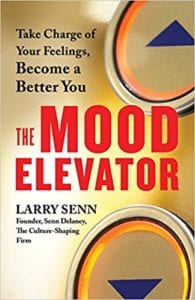
The Mood Elevator: Take Charge of Your Feelings, Become a Better You
Let me tell you what happens. Our thinking creates our experience of life. Our thinking creates our reality. We’re talking about how someone can immediately shift as in the case of learning about going to Hamilton. The fundamental principle in understanding the mood elevator is that we create through our thinking. Worried thoughts create worried feelings. Grateful thoughts create grateful feelings. Every moment it’s like we’re creating a movie and we’re the producer and we have all the Hollywood sound effects to go with it. There are times where we will be stuck for a period of time in the lower levels. Just to know it’s our thinking though helps a bit, but there are things you can do. There are pointers to being up the mood elevator.
One of those is if you can do a pattern interrupt, and what I just described is a pattern interrupt, you were thinking very depressed and all of a sudden you are thinking Hamilton. A pattern interrupt can be as simple as taking a walk, walking with the dog. I pick up the phone I call Bernadette, my soul mate of four years, because just talking to her raises my spirits. I call one of my kids and just listen or maybe pick up the phone and call the grandkids. There are things you can do. I can read a book and get lost in the book, go to a movie. If I can change my thinking, I will change my mood.
We found that there are two things that scientifically shift what you call your set point on the mood elevator. One of those is pretty obvious but people don’t do it, and that is take better care of yourself. We don’t get enough sleep. We don’t take enough breaks. We don’t eat right. We don’t exercise. It’s scientifically proven that if you really get run down, you can catch a cold more easily. The fact is if you get run down, you catch a mood more easily. If you’re physically fit, taking care of yourself, you are much less likely to slide down the mood elevator. That’s one basis. That’s in my book, The Mood Elevator, that’s actually chapter nine, Shifting Your Set Point: The Wellness Equation.
Let’s take a moment and acknowledge that you walk your talk, because a lot of people can say, “Exercise, eat right, take breaks.” You literally do it. Can you just tell us a little bit about what you do to stay in shape?
Yes. I am nationally ranked and undefeated in the 80 and over sprint triathlon category. I just won the Long Beach triathlon two weeks ago in my category.
When he says 80 he means 80 plus years old, not 80% of something. I wanted you to really own that because you are walking your talk and it’s such an inspiration of how not only live better at any age but how to live better in our third act. I just think it’s so inspiring there are people out there like you. We know people like Carl Reiner maybe and other people or Norman Lear that are even older than you are that are still out there creating and making a difference. When you say something, it has a whole different level of credibility than somebody who’s just saying it, I don’t know, 30 or 40 years old. Thank you for that.
I want to also ask you, because this is one of my passions, is to help people get off the self-esteem roller coaster, especially if they’re in the sales position of only feeling good about themselves if their numbers are up, and feel lousy about themselves if their numbers are down. Let me tell you, it goes up and down multiple times in a day sometimes. I love your example of you can go from depressed to grateful if suddenly something wonderful happens, like getting tickets to a show you want to go to. Do you have any insights either from your own personal life or within the mood elevator of how can we shift our mood without having to have something outside of us come in and shift it?
[Tweet “Maintain a gratitude perspective.”]
That’s a deep question. What’s interesting is that we are so attached. We just learn in life that we think we are our results. The most significant factor that can help someone with the mood elevator is this notion of maintaining a gratitude perspective. I might have lost this sale today but my wife loves me. I have five wonderful kids. I can still run a triathlon. I’m so blessed in many ways. What can I learn from that sale? What did I do there that I didn’t do as well as I could? How do I turn that into a learning experience? The ability to maintain perspective in life. Whenever we get depressed and down, we’ve made the thing too big a deal. We’ve lost our perspective. All of us here and anybody who’s listening to this is in the small fraction of a percentage of people in the world based upon how fortunate we are, where we live, the fact we have a job, the fact that we’re learning and growing by turning into something like this. All of those things are wonderful things and yet we sweat the small stuff too much.
It’s Maslow’s hierarchy, isn’t it? You’ve got the basics handled and you know where your next meal is coming from and you’ve got a place to sleep, anything above that and the self-actualization stuff of constantly trying to make things perfect will drive you crazy and you won’t have any peace of mind. I’ve been fortunate enough to interview thought leaders, business experts like yourself. I interviewed Isaac Lidsky who happens to be blind, and wrote a book called Eyes Wide Open and runs his own company and looks at his blindness as a gift. I’ve interviewed Sam Morris who is known as the Zen Warrior. He was hit by a drunk driver 16 years ago and he’s paralyzed from the waist down. He tells me, “My brain’s not paralyzed. I’m helping other people transcend their physical.” Whenever I start to get a little mopey or frustrated or overwhelmed like, “Why isn’t this happening as fast as I want it to?” the impatience button, I go, ” I can see and I can walk. Let’s start there.” This maintaining the gratitude perspective is brilliant. I just love it so much.
I want to do a little bit of a shift if we can because you’re such an expert and you have so much information. One of the things that you are the master at, Larry, is helping companies that have merged two different types of cultures figure out how that team is going to get along. Can you tell us when example of what you’ve done so people can know to go to you for that in the future?

In any relationship, look at your differences as complementary.
Yes. Actually two companies merging is almost like two people getting married and all they have is their bios. They just met each other. It’s this phenomenon called cultural clash when two organizations come together. A famous example is a very costly one. Sprint when they tried to buy Nextel, it cost them $20 billion of market cap because of cultural clash. Most of the problems that United had. Continental was a pretty good culture and United was a terrible culture. The culture there was a clash. These things can happen. Some of the very successful mergers, CVS and Caremark, Boeing and McDonnell Douglas, all those we’ve been a part of. It’s really about really understanding the culture of the two firms and getting really to respect and value the differences as opposed to judging it. I think in any relationship, a marriage or anything, if you can look at your differences as complementary, if you look at them as helping one another as opposed to being opposing or critical.
The key thing we do, in fact, right now we’re working with a company called CenturyLink and Level 3, a gigantic $34 billion merger. We just did a two-day off-site seminar with the new eighteen-person team about half of each company. We just spent a lot of time really getting to know each other and tell our crucible stories about where we came from, what our values are, what our aspirations are, what we want to have as a joint vision for the future culture of this organization. At the end of that two days is like they’ve been together ten years in terms of trust, openness. A term we put out there is it’s very useful in life to assume positive intentions in others, not assume motives. We so often assume motives. What happens in mergers is we assume motives. It’s believing that each person’s doing what makes sense to them even if you don’t agree with it. It’s not malicious. It’s just how they see things.
We bring these wonderful concepts like the mood elevator and assuming positive intention and accountability and collaboration. We play a fascinating game that they can only win if they cooperate. Initially, they compete and don’t win, but then they finally figure it out and they say, “We’re so much better together than we are apart.” There’s an interesting thing we call an insight or a-ha based learning methodology we use that many people describe our two-day off-site event as a life altering event. That’s part of our magic.
One of my favorite expressions is when you’re healed, you’re not healed alone. When you fix something inside yourself, you’re in an ecosystem or your family or friends or in corporate situations, where if one person can get that a-ha moment of, ” I don’t have to go it alone. I don’t have to assume that everyone’s out to get me or get me fired,” and come from this place of trust. I work with people all the time that there are three unspoken questions people have when they hear you pitch. The first one is, “Do I trust you?” If I don’t trust you, I’m not ever going to hire you, buy from you, fund you, any of that stuff.
You really have delved down into a great way for people to start trusting each other so that then the client could say, “This team gets along. They’re trustworthy.” Just to double-click for a minute on the United Airlines example, which didn’t have a good culture, as you said, those things leak out. That’s the controversy that happened with the passenger being dragged off. Then the way they responded to it wasn’t the ideal scenario according to the majority of people who looked at that. You’ve got to own your stuff when you make a mistake. Putting principles above people never works. That’s what I saw happening there. I’d love your take on if you agree with that or what your perspective is.
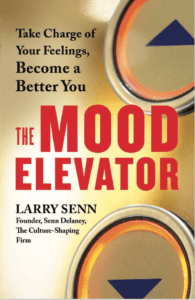
I do. One thing that can drive all that is to have a purpose or noble cause. For me, both working today at my age and writing the book all has to do with a purpose. Taking care of myself is my purpose of being around for my family. I have a seventeen-year old son in high school still, kids ranging in age from 17 to 52. The book really, my personal purpose is to help more and more people live life at their best mentally, emotionally, physically, and spiritually. When I formulated that, I said, “I need to write a book about living life at your best.” The original book I wrote in 2012 was Up the Mood Elevator: Living Life at Your Best. The new book that just came out is called The Mood Elevator: Become a Better You. It really is my way of communicating things I’ve learned about living life as your best self more of the time. That’s what I hope to get to the world through the seminars that tens and thousands of people attend every year and through the book and ways like that. To any of your listeners, if there’s any way it’s helped any of them with their startup or their idea or anything, then I feel as if I’ve made a difference.
People can follow you on Twitter @TheMoodElevator. Larry, do you have any last words of wisdom? Obviously, you’ve led an incredibly productive, looking from the outside-in, very fulfilling life. Do you have any insights for people on how to do that? Almost like if you could talk to your younger self, what would you say?
Find your passion in life, the thing that really inspires and motivates you and creates energy for you, and then go about doing it being your best self. Be really accountable for the shadow you cast. Know that your mood affects others and that you are accountable for how you show up every day. You’re accountable to the world for that.
You cast a shadow wherever you go. That’s about being conscious, isn’t it?
Yes.
How else can people follow you?
There are some great videos I’ve done on The Mood Elevator and some great articles on TheMoodElevator.com. They can reach me at [email protected] also.
Thank you so much for inspiring us to find our passion. Stay healthy, stay active, and most of all figure out ways to get up when you’re down by using your mood elevator. Wonderful stuff. Thanks, Larry.
You’re welcome.
Links Mentioned
- Larry Senn
- Up the Mood Elevator
- Dr. Wolf
- Isaac Lidsky
- Eyes Wide Open
- Sam Morris
- Up the Mood Elevator: Living Life at Your Best
- The Mood Elevator: Become a Better You
- TheMoodElevator.com
Wanna Host Your Own Podcast?
Click here to see how my friends at Brandcasting You can help
Fox 11 News Los Angeles John Livesay The Successful Pitch book
Share The Show
Did you enjoy the show? I’d love it if you subscribed today and left us a 5-star review!
-
- Click this link
- Click on the ‘Subscribe’ button below the artwork
- Go to the ‘Ratings and Reviews’ section
- Click on ‘Write a Review’
Show Me The Money with Leigh Steinberg
Posted by John Livesay in podcast | 0 comments


Episode Summary
 Today’s guest on The Successful Pitch is Leigh Steinberg who was the inspiration for the character Jerry Maguire. He has a fascinating story of where that famous line, “Show me the money” came from, so you’re going to really want to listen to hear how that came about. Leigh is also very interested in making a difference in the world, not only with his own business but for the athletes and coaches and newscasters that he represents. He’s all about making sure that people know about anti-bullying as well as the issues of concussion with football players. He has all kinds of tips on how to take what you’ve learned as an athlete and apply it to the business world, whether it be courage under pressure or the self-discipline that you learn from sports and applying that to being a business leader. He said when you ask the right questions, you draw people out, and that’s really the secret to negotiating a great deal. Enjoy the episode.
Listen To The Episode Here
Show Me The Money with Leigh Steinberg
Today’s guest is Leigh Steinberg who is the CEO and Chairman of the Board at Steinberg Sports and Entertainment. He has two core values that I am really resonating with and excited to bring you, about treasuring relationships and making a positive impact in the world. Leigh represents professional athletes that are willing to serve as role models. He can retrace the roots to high school and collegiate programs and scholarships. He has represented eight players in the Pro Football Hall of Fame. He represents boxers like Oscar De La Hoya. He represents literally 40 television news anchors, sportscasters and coaches. As if that’s not enough, he was a creative consultant on Jerry Maguire, to name a few. Leigh, welcome to the show.
Thank you, John.
I’m always interested to ask my guest to tell me and our listeners the story of origin. In other words, I know you went to Berkeley and got your law degree there and actually taught legal things. How did you get from being so involved in the law into becoming this guru for sports and entertainment?

Show Me The Money: Leigh Steinberg was the inspiration for the character Jerry Maguire.
I went to Berkeley in the tumultuous time of the late 60s and early 70s, ended up Student Body President when the Governor of California was Ronald Reagan. I learned all I needed to know about negotiating from interacting with Governor Reagan as we were on the streets protesting the war in Vietnam and he was crushing those protests. I became a dorm counselor in an undergraduate dormitory. Working my way through law school, they moved the freshman football team into the dorm, and one of the students was Steve Bartkowski. In 1975, he became the very first player picked in the first round of the NFL draft. There really wasn’t sports agencies then. Players mostly represented themselves or have their parents represent them. He asked me to represent him and we got the largest rookie contract in NFL history. Berkeley was laid back when it came to sports, and so was Southern California where I’ve grown up.
We got back to Atlanta, their Klieg lights flashing in the sky like for a movie premier. A huge crowd was pressed up against the police line and the first thing we heard was, “We interrupt the Johnny Carson Show to bring you a special news bulletin, Steve Bartkowski and Leigh Steinberg have just arrived at the Atlanta Airport. We switch you live for the interview.” It was really then I saw the tremendous idol worship and veneration that athletes were held in communities across the country, how they were movie stars and celebrities. I thought if I could take those core values and have athletes go back to the high school community and retrace their roots by setting up a scholarship fund or working with the boys and girls club or church and then go to the collegiate community and endow some form of a scholarship, and then set up a charitable foundation at the professional level where the leading business figures, community leaders, and the political leaders with chairs and advisory board and set up a foundation that enhance the quality of life. They really could serve as role models, show the qualities of their character, and make a profound difference in the world.
It’s not enough to just be famous, I don’t think. You still want to make an impact in the world. In fact, one of the people I think that does that really well is Judith Light. I am fortunate enough to know her on a personal level. She’s won two Tony’s and an Emmy and all kinds of great stuff. She uses that fame to support causes that she believes in. It sounds like that’s what you’re doing for the athletes that you represent.
Running back to Tampa and Atlanta, just flipped 161st single mother and her family into the first home they’ll ever own by making the down payment and having the output. We have athletes who are working on causes from dyslexia to endangered species, from at-risk kids. Warren Moon has sent hundreds of kids with scholarships to college through his Crescent Moon Foundation. Troy Aikman has enriched children’s hospitals. The athletes pick something near and dear to them and then go ahead and make a difference. While they’re doing it, they’re learning skills other than athletic ones and they’re networking. It also can be messaging. I had the boxer, Lennox Lewis, cut the public service announcement that said, “Real men don’t hit women.” He was able to permeate the perceptual screen that especially rebellious adolescents put up against authority figures in messages and make more of a difference on an issue like domestic violence than a thousand authority figures ever could. Steve Young and Oscar de la Hoya, “Prejudice is foul play.”
[Tweet “Build Trust Through Listening”]
There’s so much to unpack there. First of all, the irony of having someone who’s a boxer talk about not bullying people and then realizing that a lot of people somehow don’t see color when they see a star athlete. Then that athlete as a person has still experienced some form of racism and can be the person to speak out and say, “This is not okay.”
We use the cultural symbols to try and deliver messaging in a way that triggers imitative behavior. It could be Bruce Smith, all-time sack leader in the NFL being part of The Impression Virtual Environmental Law March on Washington. It can be Warren Moon and I posing for an ad for one of the environmental organizations. You’re able to take an athlete like Rolf Benirschke, who did a program with the San Diego Zoo called Kicks for Critters, which raised millions of dollars and exposure for the concept that many species are endangered and they can be saved.
I think having athletes who have a shelf life much like a dancer, for example, ballet dancers or somebody like that, you know you’re only going to be able to do that for a certain amount of time. It sounds like you really help them have other focus besides just how much money you’re making and what team are you playing on, to start broadening their horizons while they’re in their peak so that that they can transition into possibly being a co-host of a talk show or whatever else they might want to do from being known for more than just being the athlete. Is that a fair statement?
We’re trying to stimulate both the most positive values and priorities with them, but also prepare them for a second career that will be just as fulfilling as what has come before. We have three players who are now minority owners of actual NFL teams, players who own parts of luxury hotels or head of construction companies, or run hedge funds or very involved in broadcast. No longer the greeters in front of Las Vegas hotels; these athletes have brand. Everything they learn in the athletic experience, whether it’s pushing off present gratification for future success, self-discipline, mastering complex information and applying it in real time, courage under pressure, team work. All these skill sets are completely applicable to business, media, coaching or anything else that they like to be involved in.
Self-discipline from sports can be transferred to business career and this concept of courage under pressure, which you will face whether you work for yourself or someone else, that there will be pressures and you have to dig deep. If you have that frame of reference, I think that brings a lot of credibility to what you’re doing. You wrote a book called The Agent: My 40-Year Career Making Deals and Changing the Game. Tell us about some of the stories from that.

The Agent: My 40-Year Career Making Deals and Changing the Game
What I try to emphasize there is that the real skill in life is listening. People think that it’s suasion, but allowing a space and trust to be built up so that you can peel away layers of the onion in another human being and be able to understand their deepest anxieties and fears and their greatest hopes and dreams, and bond with them at a deep level and see the world through their eyes. If you have that skill, you can gracefully navigate life. It’s not as important what your feelings are in the situation, whether it’s recruiting someone, negotiating with someone, trying to get to a solution. Being able to understand the other person’s priorities and goals so you can craft a win-win scenario is critically important. It’s listening and being able to draw out another human being and understand not what they’re telling you on the surface but what their real deeper agenda is, and seeing if you can figure out a way to accomplish your own goals while doing the same thing.
I negotiate contracts and the time frame of it is critical because there’s nothing that the athlete can do better with his life than to play for that team. Time works against us; time to be late to training camp or time to miss. The point is that what you fear is deadlock. When two people feel like somehow good faith has been offended, they can lock their positions in and self-destruct and just takes over. They’ll lock in and lock in. When you think things can’t get worse, in a deadlock they always can. The question is, how can you work out a paradigm of cooperation and not have that break down, and to be able to somehow identify points of commonality where resolution could be reached?
You’re the renowned expert at negotiation. I think people would be surprised to hear that your real tip on negotiating is not being typically aggressive but the listening and the empathy skills that you just iterated there. I think that’s a nice a-ha moment for everybody to say, “If I really want to be a good negotiator, I should become a good listener.” Am I on the right page there, Leigh?
Yes, and you also need to understand how to ask the right questions that could draw people out. The same skill is true in recruiting, in trying to make a sale, in every area of business. Making the assumption that you’re pre-set pitch is going to be effective assumes that every human being has the same priorities and the same personalities. What’s really important is to focus in critical situations that someone have the power to exclude all extraneous stimuli, to ignore the fact that the consequence of not making a sale or not negotiating this deal may be apocalyptic. To be able to tune that out, tune out extraneous noise, focus on the moment and elevate your level of performance to come through in those situations. So often in life, there will have been mistakes made or the situation may have grown dire. You may be facing pressures or temptation to quit or to see the situation as dire and unsolvable will be there at all times. It’s having the ability to tune all that out and focus on solution and be creative and perform in that moment that’s critical.
[Tweet “Ask The Right Questions When You Negotiate”]
You are the “real life Jerry Maguire,” super-agent, that’s what your book is really about. The director, Cameron Crow, of Jerry Maguire said you were the primary inspiration for that. Did you ever have a client ask you to do what they did in the movie about “Show me the money” and all that stuff?
No. It’s funny. Cameron called me up back in 1993 and asked if he could shadow me to pick up the atmosphere for a film that will involve a sports agent. He followed me to the 1993 NFL draft where I had the first pick. He came up to a press conference in New England with Bill Parcells, went to USC Pro Scouting Day, came for a week to league meetings, came into my office, Super Bowl parties, games, and I told him lots and lots of stories. The line, “Show me the money,” comes from a player named Tim McDonald who was out in Palm Springs. It was at the league meeting as I was showing him off to different teams to try to get them to sign him as a free agent. One night, Cameron went up to Tim’s hotel room and said, “What are you looking for in this experience?” Lou Dobbs in Moneyline was on in the background and Tim gestured towards the screen and said, “I’m looking for someone to show me some respect. I’m looking for a team to show me some winning. I’m looking for a team that shows me some money,” and Cameron wrote, “Show me the money.”
I love the story behind that. It’s such an iconic moment. Thank you for sharing that. You also have a story about how you decided to pass on representing Peyton Manning. Can you tell us about that?
That was one of my genius moves of the 20th century. There had been a situation where there were two quarterbacks coming out in ’93, Drew Bledsoe and Rick Mirer. Everyone thought Rick Mirer was more prolific in college, Drew was a better natural talent. I took Drew, we went on to Pro Bowls and to play in the Super Bowl, and Rick was not quite as successful. The same paradigm looked like it was going to happen in 1998, and that was Peyton Manning and Ryan Leaf. Ryan Leaf was really gifted athletically. Peyton Manning was really prolific in college. Ryan had to decide earlier, I took him. Peyton goes on to be one of the all-time great players and Ryan had a very fore-shortened career.
Do people pitch to you all the time to represent them? What do you look for when you hear a pitch like that?
I’ve represented in football 61 first round draft picks and the very first pick in the first round eight different years and in baseball practice, basketball practice. You’re looking for a talent level that’s going to enable our practice to stay on the cutting edge and give us role models who will really make an impact. In football, we have a quarterback-centered practice. This year, we have a quarterback Patrick Mahomes II who’s shooting up the first round with Texas Tech and last year. Paxton Lynch who hopefully will start this year for the Denver Broncos. You look for good values, first of all, and you’re looking for someone with a sense of self-respect, who understands the importance of nurturing family, who wants to be part of the community where people care for each other. Then you look for a work ethic and then that capacity, the ability to transcend the moment to perform in critical situations. All those things. Hopefully you have a strong family there but that’s sometimes not possible to have a nuclear, two-parent family. You look first for the character and personality qualities. There are many talented athletes. Every time you represent someone, it involves cutting up a little bit of your own life, which you have a finite amount of. You want to make sure you’re spending it on young men or women that truly you’ll be proud of.
What’s interesting to me is you not only represent the athletes but news anchors and sportscasters and sports coaches. I assume that same filter applies to them as well, yes?
It does. If you’re meeting people who have a heart, compassion, social conscience, a sense of a larger world, they’re going to use their craft and they’ll do more. They’ll find a way to use their profile to make a real difference. You get the same impact from people who are on television really in any capacity. Some of the coaches are as well-known as the players. They have longer careers, so do the news anchors, than athletes do. Again, every form of celebrity affords the opportunity to influence other people. A news person can do it through a well-crafted story or a story that’s got some passion or illumination to it. I think it’s all equally compelling.
The other thing that you’re doing that I’m really interested in is this creation of a virtual studio where you’re producing sports themed movies and TV and video games. Certainly, in the startup world, these internet apps and fan interactivity, the second-screen involvement, is really the hot button right now. Can you tell us about how that came about and what you’re doing with that?
We learned very early that the representation of athletes took us into the creation of content, and being involved with technologies. Back in the 90s, I have developed a company called Athletes Direct which was football, baseball, basketball players’ writing weekly diaries talking about their charitable foundation, e-commerce application. This was when you still have to go to AOL to get on the internet. We germinated it and sold it a couple of years later for a massive multiple. These projects where we can develop a sports themed reality show, a competition show, are dramatically scripted where we can consult on a sports themed motion picture. Then in technology, can we find the next new app, the new startup that brings fan experience closer, the next new website, the next new way to deliver content and be an adviser to that?

We have a group called Steinberg Ventures that looks at all forms of new technology development and looks for good startups.
I’m an adviser to a company called Desk Site where if you live in Los Angeles but you grew up in New York, you want to follow the New York Giants football team, you can get 30 hours of high-def over your computer, all the highlights, all the analysis and everything. It’s just like you were there. It’s got a demographic feature where you can tailor the advertising on a subscription basis to women or men or younger people or older people, as opposed to the scatter shot that happens when they’re advertising trucks on NFL games to an audience that’s 41% women. It’s a new concussion helmet that uses coil and compression to attenuate and dissipate the energy that comes into the head by as much as 50%. We have a group called Steinberg Ventures that looks at all forms of new technology development and looks for good startups.
Let’s talk about one of your other passion projects besides preventing bullying is working on concussion awareness and prevention and potential cures. You touched on that a little bit with Steinberg Ventures. Using technology to prevent some of these head injuries, obviously it’s a big topic right now. If the damage has occurred sometimes it doesn’t show up for a while. Anything else you want to tell us about what we can do as people who care? Is there a charity or something?
First, awareness. The reality of the situation is that, for example the sport of football, every time an offensive lineman hits a defense lineman with the inception of a play, it produces a low-level sub-concussive event. It turns out that an offensive lineman can walk out of the game with 10,000 sub-concussion events, none of which has been diagnosed, none of which has worked. It could happen as many as 10,000 times. The aggregate will almost certainly produce ALS, premature senility, Parkinson’s, chronic traumatic encephalopathy and depression. This danger exists not simply in pro-football or college and high school, in field hockey, in AYSO, in hockey; anything that involves collision. People need to be aware of that and understand that the collisions and concussions have especially devastating effects on younger people.
Looking at the age someone should start a collision sport, it takes longer for that adolescent brain to heal. Keeping track of the amount of concussions, finding ways to play collision sports more safely, protective helmetry and other devices. These are all things we need to focus on. We know that athletes who play collision sports may turn 40 and have problems bending over to pick up their child. It’s another thing not to be able to identify that child. We’re talking about the brain, which makes the concussion issue different than any other type of injury.
[Tweet “Show Courage Under Pressure”]
Any final thoughts, it’s just been a pleasure having you on, that you want to leave the audience with?
My dad used to tell me, when you’re looking for someone to fix a problem or deal with a situation in the world, and you keep waiting for the amorphous ‘they’ or them to fix it: the government, older people, someone else. He would say to me, you can wait forever. He would look at me and say, “The ‘they’ is you, son. You are the ‘they’.” It’s about individual responsibility and people believing that they have the power to affect the world around them and make a difference.
Don’t wait for somebody else to make a difference. You do it. I love it so much, Leigh. Thanks for sharing your insights and even the secrets of where, “Show me the money” came from. It’s been a fascinating interview. Thanks again.
Links Mentioned
- Leigh Steinberg
- Steinberg Sports and Entertainment
- Pro Football Hall of Fame
- Crescent Moon Foundation
- Kicks for Critters
- The Agent: My 40-Year Career Making Deals and Changing the Game
- Desk Site
- Steinberg Ventures
Wanna Host Your Own Podcast?
Click here to see how my friends at Brandcasting You can help
Fox 11 News Los Angeles John Livesay The Successful Pitch book
Share The Show
Did you enjoy the show? I’d love it if you subscribed today and left us a 5-star review!
-
- Click this link
- Click on the ‘Subscribe’ button below the artwork
- Go to the ‘Ratings and Reviews’ section
- Click on ‘Write a Review’
How To Pitch To God with Andrea Gold
Posted by John Livesay in podcast | 0 comments


Episode Summary
 Today’s guest on The Successful Pitch is Andrea Gold. She’s been in business for over 30 years as an entrepreneur, running her own speakers’ bureau. She really knows what it takes to be successful and to not give up. She has a great expression in here about how to pitch to God. She said, “Don’t be afraid to ask for what you want when you’re negotiating with somebody because you might just get it.” She tells a wonderful story of how that happened for her and one of her clients. She said, “When your power of purpose is bigger than your fear, you then can feel the fear and do it anyway.” I just love that so much. She’s got some real insights on not just being clear with what you’re communicating but tapping in to the unseen factors that make somebody want to say yes. Enjoy the episode.
Listen To The Episode Here
How To Pitch To God with Andrea Gold
Today, I’m honored to have Andrea Gold who’s an entrepreneur and President and Co-founder of Gold Stars Speakers Bureau. She’s been in business for nearly 30 years, which is not an easy thing to do. It’s based in Tucson, Arizona and they provide speakers and celebrities worldwide. She’s also the co-author of several books including The Business of Successful Speaking: Proven Secrets to Becoming a Million Dollar Speaker and Authors Who Speak Sell More Books Using the Platform to Profit. She’s going to share some practical tips and stories so that you can figure out how your dream of becoming a professional speaker or a successful entrepreneur can happen. She really is focused and knows how to provide solutions for corporations and trade associations and governments. She has personally booked thousands of presentation deals worth tens of millions. In addition, she’s negotiated a lot of book deals for the speakers. It’s just one success after another. She belongs to a MeCo Meetings Community with more than 3,500 meeting planners, which is really important because that’s who books the speakers. Before that, she has a degree in Journalism. We’re going to ask all about this. Andrea, welcome to the show.
I am delighted to be here.
One of the things that you and I share is this passion for being a life adventurer and continually to grow and focus on ourselves. I think that really is what makes somebody a good storyteller. If you’re a good storyteller, I think you tend to be successful in presenting and pitching. Would you mind taking us back to your own story of origin, if you will, when you were in journalism school and becoming a journalist and then said, “I think I’m going to do something else besides Journalism.”

The Business of Successful Speaking: Proven Secrets to Becoming a Million Dollar Speaker
It actually goes back a little before that. I went to a very unique liberal college and it went bankrupt while I was there and I was just a freshman in my first semester. I had to make a very quick decision. Northern Arizona University in Flagstaff was taking in us refugees. I had to declare a Major, and in the original college, we didn’t have declared Majors so I declared Journalism because I like to write. From there, I actually did very well in Journalism. I’m still in touch with my teacher by the way, who’s 80 years old now. He’s wonderful and he’s still working. The guy is great. I did well in that. Then afterwards, I ended up searching. I went through a whole period for a decade and a half of looking for what to do. I did not fit the mold of climbing the corporate ladder. That was not me. I wanted more freedom and I didn’t want to be stuck in a room. I ended up working for everybody all over the place. I even did an archeological dig overseas with the Israel Museum. I spent time in India on my spiritual quest. I worked in places, I worked in Crete. As a matter of fact, I was thinking about you with your pitch. Probably you talk about pitching and selling, but for me, one of the funniest pitches that I ever did was in Crete, Greece.
I was with a British friend and we met there. We both wanted to get some labor, some work. We went to this courtyard that looked like an amphitheater and there was a bar with all these agricultural farmer guys. They were sitting in this amphitheater where the seats go up, up, up. We were on the bottom as if we were the entertainment. We stood there and I practiced the word for work. It’s douleiá, something like that. The British guy, being a guy was going to say this, because it was more of a masculine world. He freaked out and he got very scared. I stepped up to the plate and I said, “Douleiá,” and I pointed at him and I. The farmers just looked at us like we’re crazy. One of them, actually in a very strange way, asked us to come over. We didn’t understand anything. He didn’t know any English, we didn’t know, any other Greek. There was a bartender who helped us to a deal. I don’t drink but he gave us some Ouzo. That was to seal the deal and I didn’t want to be disrespectful, so I had it. We got the deal and we ended up doing labor which was cucumbers, peppers. We had this beautiful setting in a plastic arena. It was like a greenhouse but very large, it was professional. It was right next to the water. It was just beautiful. It was October and we did that for a while. I actually worked unofficially as a laborer. It was great. Let me tell you, you can only do so much crouching in a day. I have great respect for these people.
The big takeaway from that is if you want something, whether it’s to pitch to get hired, pitch to get someone to join your team, pitch to get a new client, you must be passionate and committed to the outcome. The way you said that word in Greek, let them know, “I’m not taking no for an answer.” It’s really interesting. From all those adventures, how did you get into, “I’m going to help speakers get booked and I’m going to teach them what to do?” How did that all come about?
There were many jobs in between. I was in Tucson, Arizona at that time. I’m still here. We were helping a person named Dottie Walters who had a speakers’ bureau. I was asked by a TV anchor friend. I was doing little local booking of my husband who speaks and he’s an author and this TV anchor. I didn’t know anything about the world beyond that. I didn’t come from a meeting planning background. Dottie Walters was coming to town, the TV anchor said, “Could you help her get some bookings to promote her book?” I said, “Sure.” I didn’t know this woman. I didn’t know anything. I didn’t even have contacts in the media locally but I actually made them. I booked her on TV and radio and newspaper. We went around all day and we drove her around. At the end of the day, she said, “You should start a speakers’ bureau.” I said, “Okay, what’s a speakers’ bureau?” I really didn’t know. She’s one of the originals. From there, my husband and I started a speakers’ bureau not really knowing what it was. The first two years were, if you were to look at our Social Security statements, they looked like zero. I always say we had a minus zero income for a few years. Any success that I have now did not come from straight success. They say that your instant success may take twenty years. Mine took a few years.
There’s a spiritual side to the story, call it a miracle or whatever you want. Long story short, we were down to our last month of mortgage payments that we could afford to pay. We had started the business out of our pockets. I said, “This is it.” It was New Year’s Eve. I had a little talk with God and I said, “Look here,” and I’m very direct. It’s a pitch to God. I have no shyness about this whatsoever. This is part of our life. I said, “If you want me to succeed, then you need to make this work because I’m doing everything I can. Otherwise, I’m going to have to get a job.” It was New Year’s Day and there’s no work. We had gone to see a consultant, just to back pace a little bit. We saw a consultant a few months before. We gave him thousands of dollars and he gave us advice. We implemented a few things but nothing had happened yet. New Year’s Day passed, the first work day began and we started getting calls. It was just like that and we took off from there.
[Tweet “”How To Pitch To God””]
Do you think some of it has to do with the analogy of planting some seeds and sometimes it just takes a while for them to come to fruition and you just have to trust the process as it’s happening if you’re doing everything you can?
No, it was so time specific. I would say the consultant’s work in what we did, we had done a mailing. That specifically, it wasn’t the two years of work. It was specifically the mailing which back then was a good way to do it. I wouldn’t do that today but it worked.
It’s finding something that works. If what you’re doing isn’t working, you need to pivot and find something else to try as opposed to just giving up. Do you have a story of a speaker knocking it out of the park, exceeding your expectations, the event planner’s expectations that you could share with us?
Let me just tell you one that just happened that really made me happy, and there’s a lesson in it for those that are listening. We’re talking about pitching and stories. I have a client that I’ve worked in New York State for a very long time. They book a number of speakers a year. We have a real friendship that goes back a long way. I won’t mention names but they wanted a very famous football player. It’s somebody that’s revered in the industry; retired but still revered. He put down all the things that he wanted and there were quite a few things he wanted from this person. He wanted an appearance and he was going to go a certain restaurant and then he wanted him to speak the next day. He’s like, “Do you think we could do all these?” I said, “Here’s the lesson, if you don’t ask, you don’t get. If you ask, you may get.” We just found out that we got. He got everything that we asked for. I’m very pleased about that. We have a happy client. It’s going to be a year before we know how the ball player does. Does he hit it out of the park or kick it out of the park? We won’t know yet but I’m sure we will.
[Tweet “Don’t be afraid to ask for what you want.”]
I had another one too. You talk about the wins and the losses in the business of pitching, which is really selling. I had another one recently which really, you could call it a win-loss-win. A win is we booked this celebrity speaker to begin with and the client was so excited. We got who we wanted. Then I get a call that the speaker had to have an emergency surgery. It was very sudden and unexpected. We had a loss and the meeting was in five days. Bureaus deal with this. This is keeping us on our toes. It’s rare but it does happen. We’re good backup when it does happen. I immediately spent my whole weekend working on who’s going to take over and I pitched. My heart is all about who are we going to get to replace this speaker. Who had a certain industry specific focus and a celebrity no less? We found the right person. I found a few different choices but there was one that stood out and he was also available and willing to do it at the same fee, because you have that prospect to consider. The client actually thought it was a great idea, vetted it out and booked that person. The person just spoke yesterday. It was a win for everybody. That was very dramatic. It was a huge amount of time, just a big time block all at one time getting it done. That’s what you do as an entrepreneur. You have to think on your feet. You’ve got to be there and you’ve got to back up your client and back up your speaker, in this case.
Also have some resources to have a Plan B in case Plan A falls apart. I think that’s where a lot of people don’t do the planning. Obviously, your years of experience in having those kinds of connections pay off. It’s also willing to work hard. You were willing to work over the weekend to find the right choice in the last minute.
Just put yourself in their shoes. If you were the client and your keynote speaker all of a sudden is not coming and you had promoted this person, I can’t even imagine not having someone. I gave options somewhere in the industry and somewhere outside the industry but they were all excellent and they were all good choices. We actually found somebody who is an industry specific, perfect person and a celebrity. It was right on the money. It was very fortunate. It doesn’t always work out that well.
It’s nice to hear when it does. The other thing I really take away from what you said, Andrea, is you put on what I call the empathy hat. You put yourself, in this case, the client’s shoes to imagine what it would feel like and that’s what motivated you. I know for myself when I do that, when I’m pitching, it makes all the difference in the world. It’s no longer about, “What do I need? What do I want?” It’s, “What do you need? How can I help you? It must be so frustrating. You must be so stressed out right now thinking this isn’t going to happen. How can I help and solve that? We’re in this together.” That combination of empathy and collaboration is really a recipe for success.
[Tweet “Empathy plus collaboration is a formula for success.”]
I was thinking about what we were going to end up talking about because we’re organic and we’re flowing here. Your point exactly is what I wanted to say. You said it, it’s your story but it’s my story too. Because I do work from caring and I’ve been accused of caring too much. I’d rather care too much and do a great job than be accused of being just not fully there for the client. There’s no in between. You either are there or you aren’t there. Your actions will speak louder than your words. What you do and you don’t do for your customer will show. The one thing I would suggest in any kind of conflict or confrontation or any kind of problem situation you may have, doesn’t come up often for me but occasionally, communicate. Always get on the phone and talk because there may be a misunderstanding.
Another piece of advice is never assume. We could apply it to this never assume that you know everything that’s going on. You don’t know why a person feels as they do. You don’t know why they think as they do, so communicate. That’s just a little thing. Never assume that people know everything just on the details when you’re talking about a meeting. Never assume that they know everything about the speaker you’re proposing, in my case, or about whatever it is you’re selling: your product or your service. I feel very strongly about the whole entrepreneurial aspect. I’ve been in business a long time. I think there are some things that either a person knows or they don’t know. There are certain things you can’t train on. I know from training people. You want to hear a little test on sales?
Sure.
I had somebody who was excellent in customer service. I had hired him and he was a great guy. He was smart but he could not get the information that we needed. There were five points that we needed to make sure that he did a good job such as, “Is there a budget for a speaker?” Important, relevant, quick to get things; it’s a quick question. He couldn’t do it. I wrote up a list, “Here are five questions. I want you to just read the questions and fill in the blank at the end.” I gave him a bunch of copies. He could not do it. He was not a stupid guy. It was just how brains work. Either you could do this or you can’t. Your state of being is actually going to come through. This is the core of everything I stand for. Who you are, your integrity, your values, your clarity, that’s a biggie. Your clarity about how you see the customer’s needs and how you can fulfill them is really what makes or breaks a very good salesperson.
I agree. I have found that if you cannot be clear and concise and if you confuse people, they always say no. They won’t admit that they’re confused, they’ll just say no and you don’t know why.

Authors Who Speak Sell More Books
That’s true. I’m going to take it a little step further though. When I talk clarity, I mean awareness. I mean your intuition. I mean all those unseen factors that you may not even realize you use but we all do. Who doesn’t walk in a room and feel goosebumps and something’s not right. We all have this ability but you can develop it and you can use it to help people and that gives you more sales. It gives them exactly who they need or what they need depending on what it is you sell. I feel really strongly about it. Talk about personal growth, the more that you can develop yourself and the more powerful, clear, aware person you are, the better and more effective salesperson you’re going to be. Your pitch is going to be very in-tuned. It will be pitch-perfect.
That goes to your whole branding, your tagline: “Our word is gold.”
I have a story about that. While we were new, we hired an advertising person and it costs a few thousand dollars for what we were doing. It had to do with their catalogue, etc. in the old days. He was worried about the bill. He said, “I want to make sure that you pay us.” We’ve never reneged on a bill. We have a perfect record. I said, “Our word is gold. You will have your money.” Of course, we paid him. That stuck. He looked at me and he went, “Oh my God, that’s your tagline.” We’ve never changed it. Integrity is number one. There is a great temptation in business for sales people to sell what gives the salesperson the most income instead of giving the customer what it is they really need. In my world, what that looks like is not to push the most expensive speaker on a client when someone else might be a better fit. To have the ethics, the integrity to suggest both, let them choose but you can say this one really is what you’re looking for.
They trust you to have their back because everyone’s afraid of making the wrong decision.
There’s so much fear in the world of sales. From the salesperson’s side, they need to get rid of it. I want to add one thing. When I was starting out, I’ve never had training on sales in the beginning. I’m now around all these sales speakers so I learned just by being around the materials and through the years. When I first started, and if anybody is listening who’s just starting out in business, I want you to hear this well. I was terrified. I wasn’t the most fearful person. I’m not a wallflower. I had no training of how to approach people, what to do and how to make a living out of it. I did it anyway. I have a saying, “Face your fear and do it anyway.” I would get on the phone and I’d do it and I was terrified. I’d cry sometimes. People weren’t always nice but I got over it. I realize they don’t know me. It’s not personal.
I’m a big believer in not taking rejection personally. The way I have found to do it myself in my own sales career is to realize that just because they say no to me and no to what I’m selling, doesn’t mean I’m not valuable. It certainly doesn’t mean my product or service, or in your case, your speaker isn’t good. The Four Agreements says don’t take anything personally. To apply that to selling, that’s the number one reason people don’t go into sales or burn out is because they’re taking all the no’s really personally. If we can help people in this episode, that’s one of my big mantras when I go out and speak is, how to not take it personally.
When you go to a restaurant, they give you some sorbet sometimes to cleanse your palate in between courses. I said, “You need a sorbet to cleanse your mind from the no before you go talk to somebody else.” We go in with that no energy and that no mindset, “The next person is probably going to say no too,” you’ll just be a self-fulfilling prophecy. If you can cleanse the palate in your head by calling someone who’s happy with what you sold them or offered them and just took some customer service follow-up before you make that next new attempt to get business. It really makes a difference on the energy that’s exchanged between people.
I totally agree with that. That goes back to my whole thing about personal growth. You must feel very good about yourself despite whatever the outer influences may be. You will get run over occasionally only if you allow yourself. I’ve had moments where I can’t believe that these people are doing this or saying this. I’ve caught clients lying to me. I knew they were lying. Once in a while I’ve called them on it because for me that’s horrendous. It’s like pick your battles. What I’ll do in a case like that is you should have a thing, a device, whether it’s a book or a saying or something where you could come back and ground yourself again. For me, I have a hummingbird feeder outside of the office and I look at the birds. I actually go out there and they know me. I talk to animals by the way, and they do respond. I don’t know if it’s vibes or I’ve got some of the language down, who knows? Anyway, I’m pitching to them.
It worked in Greece and so now it’s just a different language, right?
Yeah. Anyway for me, the birds it’s nature, it’s away from people for a moment. I love people but it gets me back to what’s real. You really have to a good self-esteem. That comes back to your own personal growth. One more thing I want to add is your purpose. When you get on the phone and you’re pitching or you’re selling, the main thing should be, “How can I help this customer?” That’s the number one driving force. If it’s anything else, you’re going to come across as false. You may do okay but part of you is going to know you’re false. Some part of them is going to know you’re false too. Let’s be direct, cut to the chase, be authentic.
Something I like to do is have fun. I will tease my people mercilessly if we have a good relationship and they understand. I make sure they understand I’m teasing. We have a lot of fun. It’s just my nature and I do it for my own entertainment as well as whatever fun we could have in the process of doing business. If you were asking, “What’s your pitch? How do you stand out?” I didn’t create this. It just naturally evolved as I felt more comfortable in selling. Frankly, I have a perspective on selling that selling isn’t selling at all. If you’re really helping somebody, it’s so much higher than selling. Selling is a contrived, pushing thing to me. This is something I’ve just arrived at through the years. You are hearing. You are listening. The best sales you could do is listen and then fulfill. Listen, ask questions if needed, fulfill.
What you just said that selling is pushing, I believe that storytelling is the new way to be engaging. When you tell stories, you’re magnetic. You pull people into the story as opposed to having to push your message out. That’s why I’m such an evangelist for teaching as many people as possible how to become storytellers. Then we get off that self-esteem roller coaster. We’re feeling good if we get a sale.
Something I do, has nothing to with sales at all, my nature is to share as much as somebody wants to hear. I’m in heaven that we’re sharing here. I’m happy for everybody who’s listening. I want you to get something out of this. I’ll kick your butt so you do. The main thing is we want to help people and we want to do the best we could do. That’s not sales. I share about travel adventures. I like to travel. I’ve had adventures. I’ll share that and the insights I’ve gotten if anybody wants. I’ll even share the photos. The pitch isn’t always directly about the product or the service. In a way, you’re sharing yourself. I guess that would be called selling yourself even though I don’t. Everybody I contact, I want to pull up with me so we go up together, rise up together, whatever that means; to be better together, to enjoy together. There’s no separation between us. Even though we think we’re all different and separate, that’s only our ignorance frankly.
You said something earlier I want to go back to. We agreed that the confused mind always says no. Then you said it’s not just the clarity, it’s the energy exchanged. There are some unseen factors like your intuition. I talk about there are three unspoken questions people have when they’re listening to you pitch. I want to go through each one and just get your quick take on it. The first one is people are asking themselves when they hear you pitch, “Do I trust you?” What is your tip on how people can come across trustworthy even if it’s not in person? What is it that people can do either in person or on the phone to become more trustworthy?

Another way that you could develop trust, to answer your question, isn’t necessarily in that first conversation. It’s how you follow up.
It’s a tall order to communicate yourself to another on the phone and virtually, and in today’s world, by email. That’s even harder. I know some speakers do a pitch themselves by video and they’ll do a personal pitch. That’s an idea that you could do because you’re making an effort. That takes time. You’re sharing of yourself. A short video pitch in today’s world, I’m talking about twenty seconds, can really convey a sense of you. Also, telling a few stories if there’s time of how you’ve handled a similar request before. It shows credibility, so there’s a trust there. Things will come up depending on the case by case that you could share. It could be just a phrase that you throw in that shows, “I’m there for you.” I’ll tell you one thing. My client, the one where I just provided the emergency speaker who just spoke and said, “I’m going to write you a huge testimonial letter.” I’m very grateful for that. He’s so grateful and he’s so happy. There’s a huge trust. Another way that you could develop trust, to answer your question, isn’t necessarily in that first conversation. It’s how you follow up. Are you reliable?
It goes back to the integrity. If you say you’re going to do something, email someone, you do it. The trust thing really is a gut thing. It’s the fight or flight response, “Do I trust you? Is it safe?” Then we move up to the heart, which is likeability. That’s the second unspoken question that people have when they hear you pitch. I know empathy is a big factor in getting people to like you. Do you have any suggestions on how we can improve our empathy/likeability?
For me, since most of what I do today isn’t on the phone anymore, it used to be, your writing skills and how you approach somebody are going to be critical. I think getting on the phone once in a while is a good idea. I’d like to hear a voice once in a while. Not all clients have time to speak or talk on the phone. It’s good if you can. For likeability, for me, it’s teasing and also really genuinely having an interest in the client’s life. I look for common denominators. I’ve lived all over this country and I’ve done all kinds of stuff that you can’t even imagine. If you go to my LinkedIn page you’ll see I call myself The Woman of the World. I can say, “I was this. I did this for ten years.” I did an archeological dig. I inoculated turkeys on a farm in Israel in a kibbutz. I actually was in an active warfare. I lived in some bomb shelters. I’ve done all these things. I actually was a technical editor for the military. All these make connections with people because there’s either somewhere they lived or something they’ve done or somewhere they’ve travelled that I’ve probably done too. We have that common denominator, that is a huge likeability factor. I find it a lot of fun. To me, that’s totally the reward of doing this business, is the connection.
The big takeaway here is people like people who they have fun with. They think they’re going to have fun if they hire you as a speaker and you’re going to make the audience have fun, that’s great.
I just want to say with the fun part, you’ve got to be grounded too.
Now we go from the gut to the heart and then to the head. The third part of this unspoken question is, “Will this work for me?” I love to tell stories that pull people in so that they can see themselves in the story of someone else that you helped, an audience or another client. Once you get people to be in the story with you, then that’s answering that question, “Will this work for me?” What are your thoughts on that order, first of all? Do you like that we don’t start off with the numbers and then try to get people to like and trust us? We start off with the trust; the gut, the heart, the head?
I don’t know if there’s one order. I like what you’re saying, how you’re clarifying each point, but I think it comes in a flow and in all different orders. I deal with clients that they just want to cut to the chase. Then we get to know each other. There are people that shocked me. They seem so serious, then I do a little teaser thing and they just totally warm up.
You bring out the best in people, don’t you?
I don’t know, or the worse, but I have fun. The main thing is we get business done.
[Tweet “The power of your purpose is greater than your fear.”]
Are there any last thoughts you want to have? The time goes so fast with someone like you.
For everybody listening, this is what I want you to hear for the entrepreneurial aspect. I already told you face your fear and do it anyway. It’s okay to be afraid. Once you do it, that’s how you overcome fear. It’s okay to be afraid. It’s not a weakness. The next part, and probably the high-level aspect thing I want to say here, is the power of your purpose is greater than your fear. That’s something that has helped me through the years. That’s my own quote. I seem to come up with these quotes. The power of your purpose is greater than your fear, and I want to leave you with this, life is an adventure. I want you to map yours out today. I’m talking about your work, your play, your whole life because it’s going to go by very fast. I want you to make the most of your life, have fun.
We certainly had fun talking with you. If people want to follow you, you have your website of Gold Stars Speakers Bureau, GoldStars.com. On there, you can find all of your wonderful products including The Business of Successful Speaking. People can follow you on LinkedIn and Twitter, @AndreaGold. I can’t thank you enough for sharing your insights, your passion for life and most importantly, your authenticity has really come across. Your authenticity is really something that stands out with this empathy and collaboration as the secret formula to success.
Thank you. Here’s to your success.
Thank you so much.
Links Mentioned
- Gold Stars Speakers Bureau
- The Business of Successful Speaking: Proven Secrets to Becoming a Million Dollar Speaker
- Authors Who Speak Sell More Books Using the Platform to Profit
- MeCo
- Twitter Andrea Gold
- The Four Agreements
Wanna Host Your Own Podcast?
Click here to see how my friends at Brandcasting You can help
Fox 11 News Los Angeles John Livesay The Successful Pitch book
Share The Show
Did you enjoy the show? I’d love it if you subscribed today and left us a 5-star review!
-
- Click this link
- Click on the ‘Subscribe’ button below the artwork
- Go to the ‘Ratings and Reviews’ section
- Click on ‘Write a Review’