
How To Be Irresistible When You Pitch with Patrick Netter
Posted by John Livesay in podcast | 0 comments

 Episode Summary
Every success has a story behind it. People are pulled in by the origins of a person because that is where the connection happens. John Livesay tries something new as he gets interviewed instead by health and fitness industry influencer Patrick Netter. Listen to John Livesay’s story of origin as he shares his experiences from being inspired by Bewitched to working for Fujitsu and ultimately becoming The Pitch Whisperer. Stop being invisible and learn how to be irresistible.
This is a very special The Successful Pitch podcast because my guest, Patrick Netter, asked me if he could interview me instead of me interviewing him. I said, “Why not? Let’s see what happens.” I talked about things I’ve never talked about on any other podcasts. He asked me some really insightful questions that made me think. I think you’ll find it interesting to see how I share my own journey and how you can apply those lessons to your own life to go from invisible to irresistible.
Listen To The Episode Here
How To Be Irresistible When You Pitch with Patrick Netter
For the first time ever, I’m going to have my guest interview me at his request. I thought it’s all about embracing disruption and trying something new so why not? Patrick Netter is the guest/host. He is a health and fitness industry influencer and he has been called the Gear Guru. We met at an organization here in Los Angeles called METal. He’s been so kind and helpful to me about helping me with my sizzle reel. He’s been on television many times himself. He’s got a new product out called MuV that lets you exercise while you work sitting at your desk or at your home. Patrick, welcome to the show. You’re now the host.
You have been promoted, demoted but in any case, it’s great to be with you. I would just change one word. I’m not going to interview. I’m going to interrogate you. This will allow your audience to really find out the true John Livesay. We’ll extract the right information from you. I’ve got a bunch of questions that I’m sure your audience would like to know as well. You call yourself a Pitch Whisperer. We all know about the horse whisperer. It’s a trainer who has sympathetic view of needs and desires and motives of a horse. What’s a Pitch Whisperer?
Patrick, a Pitch Whisperer is a lot like a horse whisperer. The horse whisperer calms a horse down. A lot of people come to me because they have a big pitch coming up. Either it’s a big pitch to win a new client if it’s a big company or they’re pitching to get their startup funded. Most people get nervous when you pitch. I work with people as the Pitch Whisperer on helping get their confidence up. It really is your Super Bowl or your Olympic moment of meetings. If you can be confident, calm, and focused, then that’s the first part. The second part is, there are three unspoken questions that everybody has when they hear anybody pitch anything. I make sure that my clients have those three unspoken questions ready to go in their pitch.
When you say an unspoken question, you’re talking about whoever the potential client or customer is, they always have three questions in their mind that they want to find out?
Yes.
Give me an example.
The first one is a gut thing which is, “Do I trust you?” It’s the fight or flight response kicks in. That’s where the handshake came around, which is to show you don’t have a weapon. Once you feel that you can trust somebody and you can get some credibility going, then you’re willing to listen to them. Then it moves from the gut into the heart. Then they’re thinking as they listen to you pitch whatever it is, “Do I like this person?” The best way to increase your likeability is through empathy. The more the people trust and like you, then they’ll go into their head and say to themselves, “Will this product work for me? How would this investment fit in to my existing portfolio?” What I find is most people, A) Aren’t aware of those things going on, and B) If they are, they think it’s the reverse story. They think, “People have to know me. Then they get to like me and then they trust me.” I said, “No. You’ve got to start from the bottom and work your way up.”
Fear, fight or flight, is the limbic system. It’s the oldest parts of our reptilian brain. What you say makes sense and that’s the first thing that comes up. If you don’t feel trustworthy, if you don’t feel safe, then it doesn’t matter. You talked about story of origin on some of your podcasts. What really is that?
It’s a way to get people to take people back to, “How did you become you?” I love asking people that question because it lets them go back as far as they want. They can go back to childhood. They can go back to college. They can go back to a moment in time when they said, “This is where I came up with the idea from my company. or this is how I decided I wanted to be an architect,” or whatever their profession or choices are. I have yet to meet anybody who did a very linear path. I think that’s so valuable to hear people’s story of origin because that’s how we connect with each other is through stories. By telling people your own story of origin, “I thought I was going to do this. That didn’t work. I tried this.” Then people go, “Oh,” or, “I had a problem. I decided to solve it and that’s what made me want to start this company.” All of those things and big brands do it all the time like the Johnnie Walker Scotch. He used to be this poor Scottish farmer and now he became Johnnie Walker.

How To Be Irresistible: It’s so valuable to hear people’s story of origin. We connect with each other through stories.
There’s a great 60-second ad out that tells that whole story. That’s interesting.
That’s how we connect to something. It’s not this cold, big company. It’s an actual story of, “Once upon a time, somebody had an idea for a McDonald’s hamburger.” They made a whole movie about it. Those story of origins really pull people in.
What is your story of origin of why you’re the Pitch Whisperer?
I’ll take you back all the way to my days at the University of Illinois in Champaign-Urbana, when I was inspired to go into advertising in general from watching on a TV show called Bewitched.
You’re talking about Darrin and Samantha, but her husband Larry Tate and Darrin had an ad agency.
They did indeed. I thought Darrin Stephens had the coolest job ever of getting to go out and pitch new ideas to potential clients. On top of that, he got to be married to Elizabeth Montgomery. I thought, “She’s got magical powers. I want that whole life. I want the job. I want the whole experience. Never bored.” That’s what made me decide to go into advertising. When I moved to San Francisco in the 80s, that was when Steve Jobs was starting Apple. You could be in your twenties back then and be in computers. That whole thing fascinated me. I thought, “That seems a little more interesting than going into advertising and selling toilet papers,” or whatever the product was going to be that I’d be assigned to. I focused on learning how to sell mainframe computers.
For whom?
A big company called Fujitsu. We competed against IBM. They used to sell with FUD: fear, uncertainty and doubt. If you buy anything that’s not IBM and it goes down and it did all the time back then, we’re going to point the finger at the other vendor and you’re going to get fired. You can imagine how challenging that was to counter that culture they created to get people to take a chance.
What was your magical answer to that?
I would tell a story of another client of Fujitsu’s, Boeing, that had been all blue for one point. They needed to get a part from point A to point B. They got a plane to keep going. For whatever reason, IBM wasn’t able to do it. They realized they put all their eggs in one basket and that’s when they said, “We’re never going to do that to ourselves again.” That’s when they let another vendor into the shop. They had backed up. I painted that picture in a different way, a different kind of FUD.
What was yours?
That case was you need to be like Boeing and not have all your eggs in one basket. As great as IBM is, they’re still human. There could be a time when they’re not going to have what you need. If you’d only have that vendor, you don’t have anybody else to call.
From the high-tech computer business, you segued into what?
I moved down to Southern California and I segued into advertising. After all, I met this owner of a small agency that created commercials for movies coming out on video way before DVD. I said, “I majored in advertising. I loved it.” He said, “I’m looking for someone to sell our creative abilities to the big studios to let us cut down their movies into 30-second commercials to get people to rent the videos.”
Are these trailers?
No. Literally, TV commercials. There’s a budget back in the day where they ran commercials like, “Lethal Weapon, now on home video. Rent it now. Go to Blockbuster,” then they’d show the cassette box. I said, “Now, that’s much more exciting. I love entertainment. I’m going to quit my Fortune 500 job, take a risk at this small startup and learn how to produce a commercial from post-production to voiceover talent, to telling a story in 30 seconds or sometimes even 15 that makes people want to rent that movie,” and learning from what didn’t work in the theatrical campaign and repositioning the movie sometimes. That was fascinating and fun.
From there, I made the decision to go into print. I sold advertising for the American Film magazine, which is the American Film Institute. It’s a segue from entertainment to print. Then I ended up working at Condé Nast for fifteen years selling advertising for big brands like W. At the end, I was packaging all the corporate brands of Wired, GQ, Vanity Fair, Vogue altogether for Lexus and Guess jeans. During that whole path, three separate career paths, I thought, “No. These things will never intersect.” While I was at Condé Nast they’d said, “There’s this thing called the internet. We’re going have to have our website and our clients are going to start selling clothes on these websites. Does anybody know anything about computers?”
You’re talking about the Interweb, the new super highway that the kids are talking about today?
Yeah. I said, “I know something about computers,” so that helped. About a year later they said, “We’re no longer going to just put models on the cover of these fashion magazines. We’re going to start putting celebrities on them. Does anybody know anything about the entertainment industry?” “I do.” All of those seemingly unrelated careers totally dovetailed to the point now where people are saying to people, “What are you wearing?” on celebrities on the red carpet. The merger of fashion and celebrity really took off and I was uniquely positioned to brainstorm on how to make that come alive.
From Condé Nast, I understand you had some wins in that.
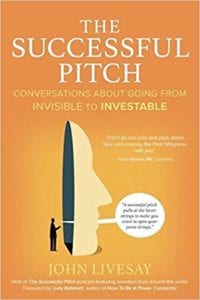
The Successful Pitch: Conversations about Going from Invisible to Investable
I did but before I had the wins, I had some disruption. Back in 2008, after being there for over twelve years, the economy tanked and all the luxury brand advertising dried up. They decided they had to lay off all the outside sales people that weren’t in the New York office including 30% of the New York people. I felt like, “What happened?” I got completely disrupted. Even though you could see it coming like a Titanic hitting the iceberg, when it does hit, it’s still a jolt to your system. I had to figure out how I was going to reinvent myself. A friend of mine said, “It’s like the actors going from silent movies to talkies. Some people are going to make this transition from print into digital and some aren’t.” I thought, “Am I going to be one of those people that makes the transition and learn something new? Got it.” I had to convince The Daily Beast to hire me with no real experience in digital when they were looking at other people that were younger, work for less money and had experience.
This is what year, John?
2010.
By then you already have some seasoned, digitally interested and digitally experienced people, younger, working cheaper than you and yet what was your pitch?
I knew on paper I didn’t look like I was qualified against somebody who’d worked at Yahoo, who’d also gotten laid off two years ago. I said to them, “I’m going to be in New York for the holidays. Why don’t I just come and meet you?” They said, “All right.” I flew myself there in my frequent flyer miles. I didn’t have a plan but I knew I had to get in front of them. I was like Kramer vs. Kramer moment. Do you remember that scene where Dustin Hoffman has to get a job in order to get child custody? He goes to somebody’s Christmas party and that agency’s Christmas party, that’s what it was like for me. I walked in the Christmas party I had been the night before. Streamers were still in the lobby floor and people are hung over. I’m like, “I like to talk to you about why I’m the perfect person for you to hire.” I basically sold myself on what I’d done at Condé Nast and what I would do here. I had created a mockup of how I would convince Lexus to sponsor their innovation channel on the website. I had all that ready. I acted as if I already had the job. I hired a coach actually who is a coach on helping people interview. People said, “Why would you do that?” I said, “Because I have interviewed so many years and I need somebody to get me on the top of my game.”
What do you remember your coach telling you that made the difference?
It goes back to the problem-solution storytelling scenario. He said, “Tell me about a success you had at Condé Nast.” I said, “Jaguar came to us with a problem that they wanted people to think of the car as moving sculpture. They didn’t know how to do it.” The solution I came up with was we would have some of the subscribers picked up in a Jaguar that had a lease expiring from Mercedes Benz or BMW and take them to a Golden Globes party. After they did that, they would be taken from the party to a private room at a nice, new restaurant with a chef and people from the Museum of Modern Art would be there. Jaguar could be in that conversation about art and sculpture. In between courses, people could take a test drive on yet another model. Jaguar gave me $500,000 worth of ads. Jaguar sold two cars that night.
Were they happy with that?
They were very happy with that. They got a return on their investment from the advertising. That whole structure of that story, I needed to really hone in on which is paint the picture. Who’s the client? What’s their problem? What’s my solution? Then the big part was, what’s the resolution? Most people stop at the solution, “I got the ads but how much money was generated?” and all that good stuff. Jaguar sold two cars. That makes the story compelling and that was a great example of what I do with clients, and then they could see how they could apply it to digital.
You talked about a five-step program.
It’s one of the things that I’ve really noticed that it’s a lot like dating. You go from invisible all the way up the rungs of this ladder to irresistible.
When you say invisible, let’s use that in a business sense. What do you mean by that?
One of my clients is Gensler, which happens to be the world’s largest architecture firm. They do billion dollars in revenue around the world building skyscrapers and airports and all kinds of things. Believe it or not, there is a lot of people who still haven’t heard of them, which is mindboggling to me that you could be that big. A lot of people, Gensler is invisible to them. Certainly, if you’re a smaller company than that, you’re probably invisible to a lot of your clients.
Particularly if you’re a startup or early-stage company, nobody knows you. There’s no brand awareness.

How To Be Irresistible: You have to first figure out where you are on that ladder.
You have to deal with that. I compare it to dating where you see somebody at a party and you’re attracted to them. You might as well be invisible. They don’t even know you exist. You have to first figure out where you are on that ladder. If you think you’re irresistible and you start acting like that, the person doesn’t even know you exist, you’re never going to get anywhere.
It’s too big a leap?
Exactly. It’s like saying to somebody on a first coffee date, “You want to marry me?” You’re like, “What?”
Invisible is at the bottom. Then, what’s the next stage?
We go up to insignificant. In the dating world, I don’t know what’s worse. Insignificant or invisible?
Not good on the ego for being either.
You think to yourself, “As soon as they see me, they’re going to just think I’m all that in a bag of chips.” “I see you and I’m still not interested.” The same thing is true with our marketing messages on emails and all that stuff. You give somebody your elevator pitch and they’re like, “I don’t need that. That’s insignificant to me. I don’t need insurance,” or whatever it is you’re doing. You have to say something that makes it seem significant to the person before you can ever get up to the next rung, which is interesting.
We’re from invisible to insignificant to interesting. Interesting on what level?
Back to dating, maybe I say something that’s funny or clever and someone’s like, “Maybe I wrote you off too soon. I’m interested to talk to you more but I’m still not going out with you yet.” In our business situation, you might say something like a statistic that people don’t know, “Do you know people remember your stories ten times more than they remember your numbers? The people who tell the best story get the sale.” “That is interesting. I’m interested to hear more about why I should talk to you about having you come in and speak to my team on storytelling.” That’s an interesting level but they haven’t hired me to be their keynote speaker yet.
Interesting means they’re leaning in. It’s now has application to their life, to their business.
Or you said something that they find interesting whereas before they didn’t even see it was relevant.
We’re now at the interesting level and we’re now progressing to what?
It becomes intriguing.
The interest level now is intensified.
[Tweet “The person who tells the best story wins the sale.”]
Back to dating, you say, “If we were to go out, here’s what I think I would like to do on our first date. I would like to have a limo pick you up and take you to a hard-to-get-in restaurant. After that, I thought we’d go to Griffith Park. I’ve arranged for a private tour of the observatory. Does that sound like something you’d be interested in? Are you intrigued a little more about what that could look like?” The same thing with marketing and selling yourself. I always like to say the best way to be intriguing is to start a sentence with what if. Anthem Insurance hired me to be a speaker. I knew I had to get up to the final rung of irresistible. I wasn’t quite there yet so I came up with an intriguing idea which for them was they’re only just going to have a keynote speaker come and leave and I said, “What if I stayed the whole day and people could ask me questions at lunch? Then you’re doing this improv session at the end of the day where people are going to be throwing objections for the audience. I could be on stage and be part of that improv and help people who get stuck know what to say and coach them through that and whisper in their ear.” They said, “That’s intriguing. Tell us more how that would work?”
Now, I’m really leaning in and now what are you going in for the close?
That’s the irresistible part. You’re doing something that no one else is willing to do. Most of the other speakers are like, “I’m in. I’m out. I don’t want to catch a red-eye at home and stay all day. Forget it.” I interviewed Charles Michael Yim who’s the only person on Shark Tank to ever get all five sharks to give him money because his pitch was so irresistible. Not only with his breathalyzer were you helping people not drive when they’re drunk, but you’re literally saving lives. People go, “I’ve got to be in on that. Not only this is a big market but I’m going to have a social impact.” That’s an irresistible pitch.
How would you define an irresistible pitch? That’s the goal pretty much of every pitch whispering session you have. Is it not?
It is. There are a lot of elements to it. You’re tugging at the heartstrings.
What are the indispensable aspects of being irresistible?
I think there are three things to it. It has to do with storytelling again. There is the problem that you’re solving for somebody. There’s the external problem you’re solving. Then there’s the philosophical problem that you’re solving. If you solve all three of those, that makes you irresistible. Let me give an example from a movie, Star Wars. When Luke shoots that weapon into the Death Star, the external problem is he’s destroying the Death Star. The internal problem he’s solving is, he’s proving himself worthy to be a warrior, which is what the whole movie was about, his own journey. The philosophical problem he’s solving is good does win out over evil.
Let’s say in a business situation.
Tesla, the external problem they’re solving is, “We’re so dependent on foreign oil. These cars are gas-guzzling and they’re polluting the world.” The internal problem you solve when someone decides to buy a Tesla is, “I want to be seen as someone who is cutting edge in technology.” The philosophical problem you’re solving is, “I can drive a car and make the world a cleaner place.”
Ideally, every single pitch will address those three: internal, external and philosophical issues.
Most people just try to solve an external problem and maybe an internal problem. When you get that combined with what’s the philosophical problem, then we’re tapping into the heartstrings. That’s what makes it irresistible like the Charles Michael Yim. The external problem is drunk drivers. The internal problem is, “My next door neighbor son died from a drunk driver and I’m committed to helping. That’s what started the Mothers Against Drunk Drivers. This is more than just a way to make money for me.” The philosophical problem is, “We’ve got to save lives here because it’s killing more people than heart attacks or whatever.”
Nowadays, social conscious companies are doing very well. In fact, so many big advertisers are now tugging at the heartstrings and giving back like car companies or all kinds. That all makes sense. Give me an example of a particularly thorny problem that you had recently and how you turned it around for this pitch.
I think the one I wanted to talk about is Gensler. They’re architects. They are amazing designers. They have a lot of hard skills of design. They’re invited to a lot of presentations because of their reputation. They have a marketing department that creates beautiful slides. What they don’t have are the soft skills, which I list as empathy, likeability, confidence and storytelling.
John, are you talking about the corporate communication doesn’t exude that or the individuals that are going out to pitch more business?
The individuals going out to pitch. The thorny problem they have was either they wouldn’t practice their pitch enough or they would just go and show their designs and hope that would get them the job. They’re solving just the external problem. One of the airports that they were pitching said to them, “We’re going to hire the people we like the most. All of you have good design. This is a six-year project. We’ve got to work with people we like.” That’s when they realized, “We have a problem.” Nobody has been trained on how to connect with people on a human level so that our team is perceived as not only competent but likeable.
If this were the Herrmann Brain Dominance Index: the blue, green, yellow, red paradigm, these guys are pros at being engineers at being scientific. They’re high tech but they don’t have it high touch.
It’s the hard skills versus soft skills. Without both, you don’t win as many pitches. Someone else could have an inferior design but if they come across as more empathetic, likeable, confident and better storytelling, they’re going to get the job. I help them with that.
How do you help somebody, an engineer type, even if it’s in sales, how do you develop that skill?
There were seven of them that had 45 minutes to an hour to pitch. There was somebody pitching before them and somebody pitching after them. It’s back to back. You’ve got to really stand out. I asked them, “What are you planning to say when you open your pitch?” They said, “We thought we’d say something like thanks for this opportunity. I’m excited to be here.” I go, “That is a snooze fest. Everyone says that and it has nothing to do with the audience. Let’s fix that right off the get-go. You have to do good reopening.” We did a deep dive into what’s important to the audience. The new opening sounds like this, “Your CEO has tasked you with getting this airport ranked from number 24 to number 1 in six years. We know exactly how to do that. We’ve done it for three other airports around the world. We have the right team to do it to make you look good.” Suddenly they’re like, “What’s in it for me?” Then when they would get to the team slide, which they show all the people who are in the room and what their jobs are and titles, it would be, “Hi, my name is George. I’d been here ten years. I’m in charge of this.” I’m like, “Oh my god.” Now, it is, “Hi, my name is George. The thing that inspired me to become an architect was I used to play with Legos when I was eleven years old. Now, I’m an architect and I have son that’s eleven and I still play with Legos. I’m going to bring that same passion to this job because I really care about architecture and making a difference in the world with airports and the experience people have there.”
Now, you’re connecting to their heart not just their logical mind, which is important. What I’m hearing from you, John, is that you’re teaching people who pitch to really connect on a logical basis, on an emotional basis with some call to action with hope.
The reason they got that multi-million dollar sale, when everybody laughed we said, “I like the team that one person played with Legos and somebody else on his team was from the Israeli army. She brings that discipline to making sure this is going to come on time and under budget.” They remember the stories.
They remember the story, which is the most important part. Why? Because that’s the way we’ve been learning for the last 100,000 years or whatever, storytelling.
That’s the secret weapon of how I make people go irresistible and how I can teach people how to do that on these big pitches.
What do you think of the line, “Never make a point without a story nor a story without a point?”
I think that’s great. I would add to that, never make more than three points. Our brain likes that, three things.
Why three?
It’s just the way things go in design and everything else. It’s an odd number versus an even number. We can remember three things. We like the structure of, “Here’s three reasons why we should hire you in summary,” that kind of thing. If you’re going to make three points, have three stories for each point. Every story should definitely have the structure which is the exposition, problem solution, resolution. That makes the story have a point when you talk about, “The moral of the story is, the outcome is.” You’re going to get your startup funded or whatever it is.
You’re right now spending most of your time as keynote speaker for what companies?
Last month, I spoke to Anthem Insurance. Their healthcare is being disrupted. They wanted me to speak not only about disruption and how to embrace it emotionally as a person, since I’ve went through it myself, but those people that are nurses and MBAs now have to sell. They were really resisting it. I said, “We’re just going to ask them to be storytellers, not sales people and that’s what really was.” “Thank God. Come, you’re the perfect person.” Coca-Cola had me speak at their CMO Summit where they had CMOs from Olive Garden, and McDonald’s, and art like movie theaters. They really wanted to have me talk about how can we figure out what technology is best for us to use in our marketing strategy and what’s going on in the startup world that we can learn and apply to what we’re doing.
[Tweet “Embrace disruption or perish; ie be Netflix, not Blockbuster”]
What did you come up with?
One of the people that I met with before the event, we all went to dinner the night before. There’s a brand called Schlotzsky’s which is a sandwich bar restaurant. People come in there to watch the games. If the games are not particularly interesting, people leave and then their food and liquor bill doesn’t go very high. I said, “Figure out what problem you want to solve and then figure out what technology can help you solve that as oppose to trying to pull the trigger on everything. In this case, I would recommend augmented reality because the replay of the game could pop up from the bar and people could watch that replay while the commercial is going on and start betting on what’s going to happen next. You’ll get them involved in a whole other way that even if the game isn’t particularly interesting, the technology, the camaraderie and the betting what’s going to happen next will keep them intrigued, drinking, and eating.”
A new way to engage them further?
Yes. Coldwell Banker had me come and speak to their Beverly Hills office. These people are cutthroat. They’re seen as a commodity. They need to learn how to brand themselves. I just said, “Whoever tells the best story gets the listing,” because they go in and pitch all these multi-million dollar homes. They need to have a good story of why they’re uniquely qualified and what they’re going to do to find these buyers and what their strategy is. Big companies that have a sales force in either technology or travel or automotive, all of those have sweet spots.
Back to the Coldwell Banker, they walked out of your event learning what?
That they had to think of themselves as storytellers, first of all, because they didn’t. They were going in with facts and figures, “The comps show that your house is worth this much.”
Something that every one of their competitors can come up with.
What I was showing them how to do was paint a picture of someone else who had a house that was very similar to this house in terms of the design and the price point. You tell the story if they were struggling to figure out which agent to use. Once I painted a picture of how we were going to not just have the classic open house but do an events at night and have an orchestra and get some press, after that happened, they actually found a buyer from China who saw the press and bought the house for cash. That is the pitch, which is a story of how you help someone just like them stand out from the crowd.
You find when you’re dealing with some of these brand enterprise companies, the things that they do wrong typically are what?
They go in with the numbers and logic as oppose to the emotion part. They think that data is going to convince people to buy from them. They get into the mudslinging of commodity and being seen as a commodity because they’re not tapping into the emotional reasons why somebody wants to be seen and heard and what you’re bringing to the table that is worth a premium price.
This empathy, this way of reaching their emotion, can you teach that?

How To Be Irresistible: Figure out what problem you want to solve and then figure out what technology can help you solve that.
Yes. There’s a difference between empathy and sympathy and rudeness at the bottom of the scale and just being aware of the range of what the differences are and how to do it. I have people visualize putting on an empathy hat to get them out of their own head, “What’s in it for me? What do I need from this situation?” Literally trying to put themselves in shoes. I have stories about it. When I used to call on Lexus’s agency I said to them, “My job is to make you look good to your client.” No other sales rep selling any kind of media whether it was print or TV or radio would ever say that and yet the agencies are like, “That’s what we need. We need somebody who’s on our side.” It’s a collaborative conversation because they’re not in any danger of losing the account tomorrow, but all agencies live in fear of losing the account. That’s an example of teaching somebody how to be empathetic.
What have you found at the end one of your events, one of your speeches that they come up and they say, “John, thank you so much for teaching me,” what?
The importance of how to be a storyteller. “We referenced your talk for the entire two-day summit. We thought we had heard it all. We realized that we all need to become better storytellers and tap into the emotional side of the brain as opposed to just being seen as another vendor. We’re totally excited to realize that when we become a better storyteller, we’re going to get more sales and prevent taking rejection personally and burning out, which is what we were starting to do with the old way.”
Why did you figure this out? Why are there other companies not hearing this more often?
I figured it out because I wanted to get off the self-esteem rollercoaster of only feeling good about myself when my numbers were up and bad about myself when my numbers were down. I think working in this corporate culture which is, “What did you do for me lately? How did this month’s number is compared to the last month’s, last year’s?” It’s all focused that way. I just started to realize my clients are just tuning out if all I do is talk them from a number’s perspective of how many readers and what’s the cost per thousand of all these advertising. I just said, “I’m going to start telling stories.” I did it fifteen years ago when I wrote my first book, The 7 Most Powerful Selling Secrets.
Can you divulge that now that it’s a few years? What are they?
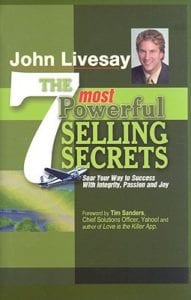
The 7 Most Powerful Selling Secrets: Soar Your Way to Success With Integrity, Passion and Joy
The most powerful one is being comfortable with silence. When you ask a closing question like, “Do you want to buy the house?” Then you have all that negative self-talk going on in your head, “I really need this commission. If I have to show this person another house, I’m going to lose my mind.” You’d say, “If I throw the refrigerator in, would you buy it?” Then you’ve missed the chance for them to say yes or no. I tell people, “Do you like to buy the house?” The old way of sales training was whoever speaks first loses and it’s a battle of will. That doesn’t work. If you say to yourself, “Would you like to buy the house? I am patient and calm.” Three times to yourself, you literally put that energy out. You’re giving the person the chance to say yes or no without a lot of pressure. They can feel the difference. I’ve had real estate agents increased their sales by 30% just from that one secret. The other one is creating a sales flight plan for your whole experience, like you’re a co-pilot with your buyer.
When you say a flight plan, you mean what in this case?
Preparing before you go to the call, really doing a deep dive into what their needs are and not just giving the same old canned presentation over and over again, customizing it. You’re like a pilot and thinking of them as a co-pilot. You’re not just flying the plane. It’s a conversation. It’s not just, “I’m going to talk to you for twenty minutes or an hour and you’re not going to say one word.” That’s very hard to get a yes when you just talk, talk, talk.
We have silence, we have flight plan and the other five?
It would be not being attached to the outcome. Part of that is not taking rejection personally. The way to do that is you never reject yourself. The other part of this is just dealing with objections and having them prepared so you’re not a deer in headlights, “The people keep telling me my price is too high and I don’t have an answer.” Come up with an answer so you’re not a deer in headlights. One of the things I also do is give people some actual structure on how to handle an objection with feel, felt, found. Have you heard that before?
No. What is that?
Say that the price is too high, “I understand how you could feel that way. Other clients felt that way at first too but what they found is the investment they make is more than worth what the cost is.” That’s a big one. Just this whole concept of rapport building. Either people spend too little time on it or too much. You need a little bit but you don’t want to spend twenty minutes of a 30-minute call on talking about your kids and baseball and whatever.
It’s important to create the rapport but is there a way that you can actually condense that time? Are there techniques that you teach?
There are. I think the biggest one is going on a person’s LinkedIn profile and really dig around and see who you might know or where you all have something in common or you belong to similar organizations or find out what their charity is, read their blogs, follow them on social media, comment on that as an opener. The more specific you are on feedback to someone, the more meaningful it is. That’s one of the techniques I train.
As oppose to telling an author, “I really love your book.” You would be more specific, “I really found chapter thirteen of particular interest because when you talked about this specific time you spent in Vietnam,” blah, blah, blah.
They’re like, “You really did read it. I see why it’s so meaningful to you.” That and my new book The Successful Pitch.
What is the purpose of your book?
It’s ten of my favorite episodes where I’ve interviewed really interesting people like Jay Samit, Tim Sanders and asked them to share their experiences on what makes a good pitch. You get to eavesdrop in on those conversations in the book and digest it really fast and just go whatever chapter grabs you so that you can really learn a lot from people who are successful thought leaders and walk away with some new tools on how to give a successful pitch.
You’ve convinced me. I’m coming to you. I want you to whisper in my ear and up my game when we finally introduce ontheMuV because that’s something like every other early-stage company we want to get blown up. I think John Livesay, the Pitch Whisperer, is just the ticket for us.
Thanks, Patrick. This has been a lot of fun.
It’s been fun for me as well. I’ll be listening in for your next podcast.
Links Mentioned
- Patrick Netter
- METal
- ontheMuV
- Condé Nast
- The Daily Beast
- Gensler
- The 7 Most Powerful Selling Secrets
- The Successful Pitch
- Fujitsu
- American Film Institute
- Coldwell Banker
Wanna Host Your Own Podcast?
Click here to see how my friends at Brandcasting You can help
The Successful Pitch – Book Trailer
Share The Show
Did you enjoy the show? I’d love it if you subscribed today and left us a 5-star review!
-
- Click this link
- Click on the ‘Subscribe’ button below the artwork
- Go to the ‘Ratings and Reviews’ section
- Click on ‘Write a Review’
Monetize Your Mission with Nicola Grace
Posted by John Livesay in podcast | 0 comments

Episode Summary
Once you have a clear vision of how you want to express your passion in the world that is when you can monetize your mission and keep doing what you love. Nicola Grace can help you make the world a better place and leave a legacy for the next generation. Start acknowledging your dormant gifts and talents, because they can lead you to a passionate career and a life filled with happiness.
Today’s guest on The Successful Pitch is Nicola Grace who called in from Australia and is the Mission Mentor. She is really great at helping people realize what are their beliefs that keep them from being successful. She specializes in social entrepreneurship. She even has some intuitive skills that she uses with me on the show to tap in to what my beliefs might be that are keeping me from being my best self. Enjoy the episode.
Listen To The Episode Here
Monetize Your Mission with Nicola Grace
Today’s guest is all the way from Australia, Nicola Grace. She has this amazing story from cancer to making history by saving a billion-dollar industry from ruins. She’s an award-winning strategist and best-selling author. She literally helps entrepreneurs and visionaries clarify and monetize their life’s big mission so they can make a bigger impact, transform the world, and build their legacy. Who doesn’t want to do that? She is known as one of the top speakers on social entrepreneurship. Even though she’s from New Zealand, she lives in Australia. She has an intuitive visionary strategy skill set that makes her the secret weapon for politicians, business owners and thought leaders. She has built a six-figure business by spearheading hundreds of social business enterprises that are making a global impact. Welcome to the show.
Thanks, John. Awesome to be here.
I’m always interested in how people start their story, the story of origin. If you wouldn’t mind, before you became such an expert in writing a book and helping people with social entrepreneurship, tell us how did you become an entrepreneur?

Monetize Your Mission: I’m a natural strategist and I could see how well if you just did this and you just did that, you’d get a better result
I became an entrepreneur really early on in my early twenties because basically I thought every boss I had ever had in jobs while I was going through school and university were idiots. I’m a natural strategist and I could see how well if you just did this and you just did that, you’d get a better result or you’d be a better person or things would work well and there’d be harmony. I was always in this critical mind of looking at how things could be done better. I really didn’t like taking orders from people that I arrogantly, in those days, assumed weren’t as smart as I was. Really early on, I learned that I wasn’t a good employee.
You are known for being a Mission Mentor. I think that is so important that people need to be able to express their vision and their mission to people who they’re trying to get to be on their team, as well as potential clients. How did you come up with being a Mission Mentor?
It was a process of evolution. I’ve been a serial entrepreneur for three decades now, but really everything came together for me when I’ve been diagnosed with cancer for the second time. I was in my office and she told me that it was a bill that was passing through New Zealand parliament that was going to have Australia and New Zealand form a corporation run by the pharmaceutical companies to regulate the Natural Health Industry and themselves. We all know where that would have ended up. They fought that legislation for seven years. It was passed in Australia. It was waiting for one more reading to pass in New Zealand. While that had happened, I had this flash of inspiration of a strategy that I thought would work. She got me an interview with the board of one of the big industry bodies that was fighting the legislation. I presented my strategy, and miracles of miracles would have it, they supported me and within six months we defeated the legislation when they didn’t do it in seven years. Everybody was saying to me, “You’ve got mission mojo. You’re a woman on a mission. You are the one that was supposed to do this, obviously, because it was part of your purpose.” Everything filtered in for me to think about this idea of mission.
I had two people in my life, my brother and then a partner later on, both of them said words to the effect, “You need to figure out what the success factor was and teach everybody that’s campaigning to make the world better, to change society in some way, to help humanity, to help the planet. Teach them what the success factors were so that we can get all of these missions for change out there.” I started working in the not-for-profit field, but that was a minefield. I was getting successes if they were implementing my strategy, but there was so much ego involved. It just wasn’t my thing. When I transferred to start working with entrepreneur activists, entrepreneurs that go into business to change something, either at the societal level or the world or what have you. Then it started to become social entrepreneurship, and I found my sweet spot. I love working with people that really want to create a better world for people, for the community or for the world at large. It evolved from there and then it just popped out that I’m going to be the Mission Mentor to help people strategize and put the social enterprises together.
[Tweet “I’m going to be the Mission Mentor to help people strategize and put the social enterprises together.”]
I am a bit different from a lot of people working in that space because I go to the spiritual side and start with, what is it that you’re really here to do? When you’ve got a purpose, when you’ve got, “There’s something else I’m supposed to be doing,” you’re hinting at the fact that you’re here to do something specific. That’s where I start, rather than, “What idea should we pluck out of the ear for you to build your business on?”
I think your passion and your purpose have to be more than just making money. It seems like that’s really where you’re starting from is, “What does your gut tell that makes you want to make a difference?” You really are the expert on telling people how they can get paid well to change the world. So many people associate this concept of, “That would be volunteer work. This non-profit would never pay me. Yes, I’d love to help build homes or whatever it is, make the water cleaner,” but that’s not a career there. What are your tips on how we can get paid well while changing the world?
I think that’s really important because as governments are donating the money to charities and more and more corporations are down-sizing and so therefore the giving is shrinking. It’s more important than ever. The way I approach it is let’s first of all find out how you feel passionate about your expression. What lights you up as you express yourself? When you’re speaking or when you’re interviewing somebody, when you’re creating a product or you’re creating something via writing or with your hands, or when you’re communicating with people, collaborating, networking, what type of expressions light you up and make you feel incredibly passionate? Because then, we know the essence of what I call your mojo. We know the essence of where you’re going to be happy, but also in that passion is your ability to influence. When we know those things, we’ve got some clarity on how we can trade, what are you going to trade, and then we look at monetizing that.

Monetize Your Mission: I started speaking more, doing videos and getting out there and speaking my message.
To give you a clear example, for me, when I first started out my business, I was taking my intuitive skills and I was doing life purpose readings to people, helping people just figure out their life purpose. I started attracting lots of business people, so then I started doing workshops. When I discovered that my passionate expressions are speaking and writing, I wrote my next book and then within six months I became a three-time best-selling author, I’m now seven-time best-selling author. I started speaking more, doing videos and getting out there and speaking my message. My business just boomed and then I reached six figures within ten months and I’m now at double six figures, hitting towards seven figures. Then I went, “If that works for me, could it work with others?” I started using this formula. Let’s find out where these passionate expressions are and how that can translate into what you would trade, i.e. “Give me money and I will give you this,” then we can figure out the monetization model around how you’re going to trade your way to change the world.
What’s the name of your book?
I’ve got several books. The book that I wrote way back then was called Discover What You’re Here To Do. The other one that I’m launching, which is just a bigger version, a more updated version, is Right Mission Right Money, which is a social entrepreneur’s guide to clarifying and monetizing missions that transform the world.
Is there an example from the book besides your own personal example that you can share with us or someone you’ve worked with that you have helped?
There are several examples that I gave in the book. One client in particular who was the first client that made me realize that what I was doing was duplicatable to everybody. She thought she was a coach in the running space. Running was her passion and so she wanted to monetize running. How do you monetize running? She started coaching runners on how to run better, how to have mindful running and so on and so forth, and she was struggling with it. When we found out what her expression modalities are, we actually found out that one of her expressions was to change things. She was obviously in the space of transformation. She was also a speaker. When we started totally changing her monetization model, offering products that we had her leverage so she wasn’t doing one-on-one, where she was helping change makers make changes in a specific area or their life, all of a sudden she started getting more clients or just more people from social media, because she was very big on social media but it hadn’t monetized. She got more people saying, “I want to work with you. I’m resonating with what you’re saying.”
Even more miraculously, within three weeks I said, “Do A, B, C. Implement this into your business.” She raced away and implemented it, posted something on social media about this new direction. Two Google officials commented on it and said, “You’ve nailed it.” All of a sudden, overnight, people on social media went, “She’s the expert,” even though she was just beginning internet marketer. Things just snowballed from there. She’s rather big on the internet now working with change makers, helping them build their businesses.
It seems like it’s very important to come up with a niche, like you’re the Mission Mentor, I’m the Pitch Whisperer. I think when you really target and have something that’s memorable for people, it really can help your branding and your credibility to let people go, “This is what you do and this is why you’re the expert.” That really is so important, to get that clarification, isn’t it?
Absolutely, and the clarification and the congruity. I have had people who say, “I’m a business mentor. I’m a business coach.” I say, “How many businesses have you owned?” They haven’t owned any. There’s no congruity in that niche. Again, I take it back to purpose. What’s your purpose? Where are your passions? Who are you actually here to serve? You get that magnetism. People get you, they go, “I’m attracted to you. I’m attracted to what you’re saying. I’m resonating with what you’re saying because I’m feeling the congruence in everything that you’re doing, saying and how you’re presenting yourself.”
It’s interesting you said that because I coach people all the time on if you’re pitching to get an investor to fund your startup, for example, one of the questions they ask is, “Why are you uniquely qualified to execute this idea you’re pitching us to invest in?” If you say, “I have a military background and I’m pitching an idea to keep the school safe,” well then that makes sense. Or, “I’m a former math teacher and I have an app to help students with their math,” that makes sense. “I won Salesperson of the Year at Condé Nast, so I’m the expert on helping people tell stories in order to increase their sales.” The minute there is a disconnect, then it all falls apart. I love what you’re saying about that and giving people these three or four examples of figure out your passion but make sure that what you’re going out to say you want to do is tied to your expertise.
You need to use your unique skill set, your talents and your gifts. I find people struggle knowing what those are a lot. My first module in my signature program, Right Mission Right Money, hones in on those passions and I call it the passionate purpose factor. What are those expressions? Where’s the passion? When people go through that process, they find that they’ve got gifts and talents that have been dormant that they haven’t acknowledged, or that they even never knew they had because they took them for granted. If we could give a tip to the audience today, it would be to sit down and have a look at everything you’re denying about how good you are, what you do for others, the gifts that you have, what people say you’re good at, and you deny. Write it down because there’s a lot of juice in that denial.

Monetize Your Mission: You need to use your unique skill set, your talents and your gifts.
It’s interesting because we assume that our gifts, our genius, if you will, everyone can do them and you realize, “Everyone can’t do them.” Sometimes it comes easy to us so we just assume it’s easy for everyone and that’s not the case. A lot of people have a lot of resistance to playing what you call a bigger game and fear is part of it, I’m guessing. What is the resistance and how do we remove it?
That is a really great question and a really necessary question because it’s one of the reasons why we’re floundering in the world right now. We’re leaving the change up to politicians that aren’t really motivated to make the significant changes. When I worked with the Natural Health Industry in New Zealand to do that big thing, I really dissected a lot of them and many people out there who want to do good things in the world. I thought that I had to do that for free because it was my service to humanity and you shouldn’t charge for serving humanity. I actually didn’t make any money doing that. That was totally volunteer work but 30,000 jobs were saved and 3,000 businesses were saved. There were a lot of businesses that got to keep trading and keep money coming in because of what I did. I didn’t think that I should get paid for that.
I realized in that moment, actually it was an epiphany moment where I actually saw my brain come outside my head and present itself in front of me. I clearly saw the two hemispheres of the brain, the left and the right. All the thinking about money and reward and work were whirling away around in circles through the left hemisphere, and the passion, the purpose, love and doing what I want to do and everything was in the right side. I could see that they weren’t communicating with each other. I came up with this concept called Split Brain Hemisphere Syndrome. I saw it in a lot of my clients whereby the idea of making money by being on purpose was repugnant, as in you should give the gifts that you’ve got from God for free kind of attitude.
For some reason, it’s actually okay to exploit the plan and get paid a lot of money. There’s a real split in this thinking. Through the process of looking at what beliefs actually hold that split in place and then removing those beliefs, learning how to dissolve those beliefs, that resistance to charging what you’re worth for being on purpose started to subside, and even believing that you could make a lot of money by being a social entrepreneur. There are social entrepreneur billionaires. Richard Branson is one of them. Roger Hamilton is a multi-millionaire, big social entrepreneur. Elon Musk is a multi-billionaire. We’ve got these great examples out there. Anita Roddick was probably the first social entrepreneur, The Body Shop. She broke the mold there in creating a beauty line where she was bringing forward this idea of saving the rainforest. They were the forerunners. The rest of us are being programmed to think in these split ways. You’ve got to work to make money and you have to volunteer to save the world. We bring those two together and people are going to be on focus on solving some of the most pressing problems in the world because they’re getting paid to do it.
It’s really removing that belief that things are mutually exclusive, that I can’t make a difference in the world and make money. It’s fascinating. I heard someone give a TED Talk on that. Why are we paying someone all this money to do something that’s not helping the planet? Yet when someone who’s working in a charity, people don’t want to attract the best talent to run the charity because they don’t think that person should have a high salary. It doesn’t make any sense.
It doesn’t make any sense. It’s like a false apex or should we say an upside down apex, because the apex should be completely flipped. If you’re doing something that’s destroying the planet, you shouldn’t be getting paid anything.
You mentioned your intuitive side earlier. I’m just curious, how does that work? Do you need the person in front of you? Can you do it via Skype? Is there anything you pick up from someone’s voice or energy? I just thought if you have that ability, let’s see if you pick up anything that the listeners who listen to my show on a regular basis would know something about me, where it could be a fun little way to play and something unique.
All of the above. Usually, I need to have some material and got to be in the head space for it. Let’s just see, I think that’s fun. I’m up for the challenge.
Sometimes I’ve been guest on shows and they ask me to come up with a pitch for them right away. You just have to trust your process. I just thought if people could get a sense of, obviously it’s not a whole reading, but just any initial hints or thoughts that I can say, “That’s definitely me,” or, “I’m not sure about that.” I thought it would be fun for people to get to see you in action a little bit because then they get a sense of, “I need to get her to help me.”

Monetize Your Mission: You’ve got a level of mastery, you’ve got a following.
Usually I work best if you’ve got some issue or pressing question or some clarity that you want to talk because that’s my expertise. I use that as a doorway in. You’re scaling at the moment, are you, because you’re forging ahead with great speed. You’ve got a level of mastery, you’ve got a following. You’re also going up to a higher level within your teaching, you’re downloading something really big. It’s pretty huge and it’s going to need a lot of collaboration, but you’re running into that problem that a lot of people have when they scale, which is lack of time and lack of that extra funding that you need. That’s slowing you down a bit but that’s coming from a belief system actually, which is nice to know. We need to correct something within your belief system to move forward. It has to do with being a male leader. Now, I may be way off the charts here but you called me so I’m going to give it to you as I see it.
I love it, you’re right on target.
This is really true about a lot of really good men on the planet right now. It’s the guilt of the ancestral men and what they’ve done to the planet, what they’ve done to women and children. You need to shake that off and not take responsibility for that, because that’s part of the belief system that’s holding you back. Power corrupts; “If I had absolute power as a man, I’m going to get corrupted.” It’s a belief system around those ideas that actually on yours, you’ve inherited them from the men in your family. 15% of our brain is ancestral. The thoughts in our brain come from our ancestors.
That resonates with me in a lot of levels actually. My parents are from the south and I was just mortified as a child to read about slavery. That just freaks me out. As a white Anglo-Saxon male in this country, I’m very aware of all the advantages that I have, and certain things going on that upset me and I feel guilty, I guess. I’ve always said I don’t really want to run a big company because that’s not my passion, managing a bunch of people, but I love helping people. The interesting thing is this lack of time. If I’m not working every single minute then I feel guilty. That’s where it is, there’s the belief. I can’t be wealthy unless I’m exhausted and working myself to the bone, which I think a lot of entrepreneurs feel.
You’ve worked really hard so that you feel like you deserve it. Again, that comes from having a look at all these people that were wealthy and were corrupted and lazy, but we’re in a different time. The key thing is unlocking that relationship between power, corruption and evil. One of the ways I do that is I allow myself to be the powerful woman that I am because I only use power as a source for good in the world. I now allow myself to be as wealthy as I possibly can be because I’m using my wealth as a force for good in the world. I only use my money as a force for good in the world. I only use my power as a force for good in the world. You just keep affirming those things to bring out the opposite and then get rid of the beliefs that come up around that, and that you are a powerful force for good in the world to drown out that ancestral use and abuse of power.
That’s so helpful because just that makes me already feel lighter, a little more focused, and a little less guilty. I wasn’t even aware I was having any of that. I can’t thank you enough. It’s really valuable. I can see why you’re so successful.
Thanks. That’s good. It’s great to have that. You do need to be forging ahead with what you’re doing because the more people you could help then the more people they can help, and the ripple effect to that is going to be massive, causing a transformation in the world.
Tell us our listeners how they can engage with you. We want to send people to your website, NicolaGrace.com. I also want to see if there’s a way for people to start following you on Twitter and if you have other things that they could start learning from you.
Twitter’s not my thing because a lot of my audience aren’t on Twitter, but definitely Facebook and LinkedIn. You’ll find all of that on my website. The best thing to do really is to go over to my mini course because it introduces you to the entire concept of how to clarify and monetize your mission today in today’s world. We’re going into a robotic revolution. We’re losing a lot of jobs and a lot of businesses and roles and everything. There’s a specific way that I have people prepare for that and monetize that. It’s five days with short videos with things that you implement and clarity assessments that you do for yourself, and that really introduces you to all of my teaching. From there, you’ll be invited to come to a master class or contact me and work with me if you feel you want to go into that depth of transformation.
[Tweet “Get Clarity To Monetize Your Mission”]
Is there any final thoughts you have to give people who are saying, “I have a business now and I want to learn how I can incorporate social change into that.”?
It really has to do with people asking those questions or feeling that desire, there are also hints and clues and things that are being drawn to you at the same time to help you with that first step. I really encourage you to take that first step, and obviously, do my course and then also listen to what else is going on in you. Most importantly, say yes because I see this a lot. People go, “I’ve got this really good idea or I think my mission is along this line, but who am I to do that? Who’s going to listen to me?” We’re being so programmed. I guess the final thought is don’t believe in the program. Know that it is just a program and yes, it is you. Yes, it is, you are the one that is going to do something that will cause a ripple effect to make change. At this time on the planet right now, it doesn’t matter what culture you come from, what country you come from, we are all being called into higher service to make sure that our world continues to survive.
I can’t thank you enough for sharing your insights, your intuition and your passion with us. You’ve inspired all of us to take some action and realize that we all deserve to make a difference and make money at the same time.
Thank you.
Links Mentioned
- Nicola Grace
- Discover What You’re Here To Do
- Right Mission Right Money
- Facebook – Nicola Grace
- LinkedIn – Nicola Grace
- mini course
Wanna Host Your Own Podcast?
Click here to see how my friends at Brandcasting You can help
Fox 11 News Los Angeles John Livesay The Successful Pitch book
Share The Show
Did you enjoy the show? I’d love it if you subscribed today and left us a 5-star review!
-
- Click this link
- Click on the ‘Subscribe’ button below the artwork
- Go to the ‘Ratings and Reviews’ section
- Click on ‘Write a Review’
The Boss Box with Hillary Gadsby
Posted by John Livesay in podcast | 0 comments

Episode Summary
 Instead of competing, team up and learn from and with each other. Hillary Gadsby’s success isn’t defined by how much money she has, it is the people in her circle who paints the most honest picture of who she is. As the founder of The Boss Box, Hillary aims to help women entrepreneurs by showcasing their products through collaborations and educating each other with the many facets of wellness, beauty and fashion. Have fun, be different and rock those stilettos like the boss you really are.
Today’s guest on The Successful Pitch is Hillary Gadsby. She is the Founder of Stiletto Gal and has a fascinating story about how she came up with that name. From there, has launched a company called The Boss Box which is a box that comes to female entrepreneurs with everything from mindset to usable tips on how to be a better business person. She’s really created something big and interesting here. She said, “If you help people to give them the tools to thrive, they will use those tools.” Her big question that we talked about is how do you define success? It’s much bigger than just money. She said, “When we’re all about collaborating versus competing, things really take off.” She said, “Be at peace, not in pieces.” She’s got something on there called Bossfidence, which is a play of confidence that I think you’ll really enjoy.
Listen To The Episode Here
The Boss Box with Hillary Gadsby
Today’s guest is Hillary Gadsby, a marketing dynamo whose international career spans the US, the UK, and France. Hillary is known for creating and producing outstanding and diverse events including a wide range of corporate events, public relations, corporate meetings, product launches, fashion shows, you name it. Her extensive experience in sales and marketing event management shows that she has gained recognition among some of the world’s best brands like Ralph Lauren, Gucci and Vera Wang. She’s been nominated as a Woman to Watch for 2016 Women of Influence Awards. I’m thrilled to have her today. Hillary, welcome to the show.
Thank you so much for having me, John.
It’s always interesting to me how people and women like you have their hands in so many different things. If you wouldn’t mind, would you take us back to your story of origin? You can go back as far as you want of when you were in college or before you went to college. Did you always know you wanted to do this?
Yes. My mother has always been an entrepreneur. Unfortunately, she’s failed miserably each time but she really was somebody who would pick herself back up and start over again. I’ve followed that in my life as well, in my business. I’m from Sun Valley, Idaho. It’s a prominent area. You know that you can charge a good amount of money for babysitting services and that’s what I did. I started out with one family and then it built up to several different families. I can’t be in the same place at one time so I recruited some girlfriends. I charged $20 an hour for my services. I gave my girlfriends $15 an hour. I created my little staffing company, if you will, at ten years old. I stopped doing that thing. I went into school and life happens.

A Gadsby Affair: Strategic Marketing Solutions
Fast forward to 2008, I was working with a concierge firm in San Diego helping them to build their LA business. I was a consultant and I had one client who came in and wanted to do some client appreciation events. I had not really done anything entrepreneurial ever since my ten years old. This client was coming in. We haven’t signed the contract yet. It was an accounting firm and they wanted to do client appreciation events for their clients. We were working with this other firm and I decided that I was not going to continue with them. I called up the client who I had brought in and I said, “I’m not going to be working with this company anymore. I know you’re going to sign the contract, but I just wanted to let you know I won’t be there.” He said, “Hillary, the reason why I signed this contract was to work with you. I want your skills. I know you can do this. I want to work with you. Why don’t you just work with me instead?” That’s how A Gadsby Affair was born. Within a couple of seconds, I became a business owner. Within that weekend, I had a domain name. I had a logo. I had it all. Then I had to start pitching myself. I was lucky to start with this one client. He said, “We’re going to do one event with you and then we’ll see what happens.” We did the event and then he hired me for nine more.
You had the ultimate proof of concept there, didn’t you?
I did, definitely a big boost in my self-esteem there.
Also to prove to him and other people that you can deliver what you say you’re going to deliver, which is so important, the integrity. People want to know that they can trust you to do what you say you’re going to do. I see that time and again in successful entrepreneurs like you. You deliver, people trust you, then they give you more money for your startup or they give you more clients or more business. That repeat business is everything, isn’t it?
It is everything. That’s what I’ve actually built my company on, is the repeat business. It’s people referring me. I have never really done a lot of marketing in my company. It’s been more referrals through other clients. It’s been really, really lucrative. I’ve had some amazing clients like Four Seasons and Toyota and it’s because of the reputation that we’ve built over the years.
Now, you’ve got your hands in a couple of other things. Let’s talk about Stiletto Gal a little bit.
Stiletto Gal came about in 2012. Going back to when I started A Gadsby Affair, I didn’t really have any mentors. I’ve just started. I was like, “I’m going to fake it until I make it.” I called upon some people within my sphere, my circle who were men. I didn’t have any female mentors and female advisers. Stiletto Gal came about because not only do I want to create my own personal brand, which is all about confidence and women, and I was always known for the shoes that I wore. I came up with Stiletto Gal because it has nothing to do with shoes. It had to do about walking a mile in my shoes and doing the things that I did. I wanted to create something where women could look at the content and feel inspired by it and also to give them tools on what they need to do, “Here’s what I did wrong. Here’s what you can do right.” That’s how Stiletto Gal was born. It started out as a blog in 2012. It was all about a day in my life as a woman entrepreneur. I did it five days a week, which I’m sure a lot of bloggers know that five days a week blogging is a lot of work. People loved walked a mile in my shoes and then I created Walk a Mile in her shoes every Thursday where I featured another woman in business. I feel like learning from other women was a great platform for not only myself but others. In 2014, it turned into a Speaker Series called Secrets of Successful Woman Entrepreneurs where it was a fireside chat between myself and a woman entrepreneur. It started out with Toni Ko, the founder of NYX Cosmetics.
Don’t you find as a host you learn so much from your guests?
Yes. I want to write a book from the stuff that I learned from my guests.
I literally did. That’s so funny you said that. I took ten of my favorite podcasts and took the transcripts and turned it into a book. That’s another takeaway for everyone listening today, is there are all kinds of ways to repurpose your content.
I definitely want to write a book one day from the stuff that I’ve learned from the speaker series. One of the questions that I ask that’s so important is, how do you define success? A lot of the women do not say money. I love that because I don’t believe in that either. I don’t believe that success equals money. I believe that success equals happiness. I believe that success means the people you surround yourself with, the people who are in your circle, I believe that that’s where success comes from. It’s being well-known and having the integrity in your circle of friends and colleagues.
If you don’t enjoy the people you’re working with or the people you’re hanging out with, your life is miserable no matter how much money you have, is what I found. Unfortunately, seeing people like that in the media that you go, “Why are they so unhappy?” It’s because of one of the things you said. They’re not purposed. They don’t have integrity. Stiletto Gal led to The Boss Box. Is that correct?
Yes. I had always wanted to do a subscription box for women in business. At the time, I was like, “There’s nothing out there like this.” There’s the Birchboxes and the FabFitFuns, all these different subscription boxes for women but there wasn’t anything that provided some educational material or tools. We actually call it #ToolstoThrive. I found a couple of women on social media who were doing similar things. They wanted to empower women. They wanted to inspire them and give them the tools to do so. The first person I met was Shalini Vadhera. Shalini has Passport to Beauty, which is this global beauty brand. She took all kinds of ideas from beauty tips all around the world and creates her own product. She wrote a book, a best-selling book. She also has Power Beauty Living, which she launched on the floor of the UN a few years ago. It’s all about empowering women through their not only beauty but inside and then also their business.
She and I met on Instagram and we were just, “We have to meet. Let’s help each other.” That’s what Boss Box is about. It’s helping other women. It’s helping showcase other women’s products and not only that, it’s getting women to collaborate instead of compete. Shalini and I started that. It had a different name. The Boss Box popped into my head one day. It’s funny, a lot of things pop into my head daily that turn into great businesses. Stiletto Gal popped in my head as I was having coffee with a girlfriend. She said, “I like your stilettos.” That’s how it happened. Boss Box was the same way. Then, we brought in another partner about six months ago named Heidi Nazarudin. She’s The Ambitionista. She’s a lifestyle influencer in fashion and lifestyle and she’s building some really amazing brands. The three of us together wanted to just collaborate with each other and help as many women as we could. It’s a quarterly subscription box for women in business. Everything from leadership to education to wellness, mindfulness, fashion and beauty, all in one box every quarter.
[Tweet “Collaborate; don’t compete.”]
I also love that you’re connected with Dale Carnegie in doing this. That’s the mindset’s impart, yes?
Yes. The soft skills and the leadership skills are so important especially when you’re pitching yourself and how to do that effectively. We partnered with Los Angeles and Ventura County Dale Carnegie, and an amazing man named Brian Barry who’s a top coach there. He has been a friend of mine for many, many years. We’ve always wanted to work together. He’s always seen the stuff that I’ve done with my events and always really admired everything that we’re doing. I came up to him with this and he was, “I’m in.” We created The Boss Box Academy series with him. Every box has its own booklet, which is the lesson and then the workbook as well. You have to go back and do the lesson yourself on your business. Not only that, each one comes with a 60-minute online live coaching session with him.
That alone is worth the cost of the subscription.
He’s one of the most amazing coaches I’ve ever seen. We did a training a couple of weeks ago and it was just incredible.
I work with people all the time on their confidence before they get up to pitch to get a new client or to get funding for their startup. You have a really clever word that I have never seen, Bossfidence.

That’s how Bossfidence was created. She is our case study for what we do.
Bossfidence is a brand that this lovely girl, Ashley Gibson, created. I’ve known her for a couple of years now. When I was doing my events with LA Business Journal, she worked for the LA Business Journal. I mentored here along the way. She started writing pieces for our Speaker Series. I thought she was a great writer. I said, “We’re building The Boss Box and we have TheBossBox.com and there’s going to be content on it. Why don’t we give you your own column?” That’s how Bossfidence was created. She is our case study for what we do. She has this whole brand and she’s doing well. She’s got 1,500 people following her so far. She’s only been doing it for a couple of months.
The one that really jumps out at me is be at peace not in pieces.
She’s brilliant when it comes to that stuff. I’m really proud of her. We’re excited to have her with The Boss Box.
It’s quite exciting to watch all of that happening. What is your strategy on getting people to subscribe to The Boss Box?
We’re lucky the three of us combined we have over a million followers on social media so that helps. I’m not going to say that that’s the only thing because I think it’s important that we get our faces out there too. I’ve done an event where there was a room of ten women. It was a small mastermind and I sold six boxes out with that. It’s really important for us to get in front of people because they have to see the passion. With social media, you could have so many followers but it’s also the engagement. Luckily, we do have the engagement and a lot of our subscribers come from Instagram. I think that you really have to have people who are ambassadors for you, really believe in the brand to get it out there. That’s really what sells is when people are saying, “I love this product. This is what has helped me do with the case studies that come from it.” That’s what sells a product.
Let’s hear one of your stories of who this is for and who this is not for. I think that’s always so helpful to have that down and very clear who your avatar is. If you wouldn’t mind sharing that, I think it will give people not only a great example of how to define their avatar, but also determine whether this is a good fit for them or not.
We have two target markets, which is interesting. We have 18 to 35, the millennial market. They may have a corporate job but they want a side hustle. They want to start their own business but they just don’t know how. We give them those tools. It’s also for a corporate executive who maybe wants to level up in their career, who’s stagnant right now. Not only does the educational materials help them, but also there’s really fun, inspirational items in each box that do that. With those two target markets are really who we target. People who are more established in their business, the entrepreneur who has maybe had an exit. That’s not for them.
You’re solving a problem for people who have an urge but don’t know how to do it and they stumble and fall without your guidance. The Boss Box is a clever way to get some inspiration, get some guidance and be part of a network. This is what I see is happening.
We have a network of around 15,000 between all of us. If you don’t subscribe to the box, you do have the network. You can come to our events, which are going to be launched later this year in other cities. Boss Talks will be launched in Dallas, in New York. We’re only in LA at the moment but later this year, we’re going to be launching in other cities. It’s really exciting. We’ll be inspiring women all over the country and giving them tools to thrive.
[Tweet “Be at peace, not in pieces.”]
I think it could be its own reality show in a way. I think this is really great stories. Speaking of stories, can you share a story of what it was like to work with either Ralph Lauren, Toyota or Four Seasons?
Ralph Lauren was quite an experience. I unfortunately had the experience during 9/11. I was in Paris. I worked for Ralph Lauren in Paris, which is really close to the American Embassy. It was so fun to work with them. I worked on the women’s side, the men’s side and the children’s brands. It was so fast-paced. These women were incredible. I was in the marketing and PR department. Every single day was different whether it was a product launch or PR press materials, anything like that. I had a really great time. I learned a lot. I would say, John, I learned a lot more from another brand that I worked with in luxury and it was the France Luxury Group. A gentleman by the name of Mounir Moufarrige is one of my mentors. He’s a man. He took Phoebe Philo to Chloé, Stella McCartney to Chloé. He’s all about making brands better; taking older brands and revamping them. I worked for him for about a year and watched everything he did. I did everything from marketing to PR to being his executive assistant to sales to watching dresses in haute couture being made from a sketch to putting beading on a dress. I learned from him what a brand is and not only what a brand is, how to make it different, how to stand out from anything else. In my business today, I use every skill that he gave me.
Can you share what are the secrets of how do we make our brand stand out?
You have to be different. With Stiletto Gal for example, I took a shoe and made women feel confident, “It makes me feel confident. Why can’t it make other women feel confident?” That doesn’t have to be wearing a stiletto. It could be wearing a flip-flop but what makes you feel confident. That’s one of the things that I can say is, you can take things that resonate with you and that gives you something different.
I love that because for me I’m known as The Pitch Whisperer, you’re known as the Stiletto Gal and now the founder of The Boss Box. When you have something catchy that people can remember more than your name or your company, I think it really helps get the sticky factor and the awareness up. Yes?
I agree, 100%.
If you had one piece of advice for our listeners about either branding or networking, what would it be?

I would say for networking, meet as many people as you possibly can in your early stages of your business.
I would say for networking, meet as many people as you possibly can in your early stages of your business. One of the things that I did is I worked with a lot of financial services firms. That was my niche because of the CPA firm that I started with. I thought, “They definitely need some help. We need to get some return on investment. It’s all about bringing them new clients. Not just throwing an event, but giving them that return on investment.” I started going to accounting firm events, associations, business forums international where it’s all finance firms and networking with those people. It’s really important to network with the people who you want as your clients because that’s where you see the pain points. They’ll tell you what they need. It’s not about going to just random networking events where there’s all kinds of different people there, which is great. You want to build your Rolodex as fast as you possibly can. However, if you do more targeting and re-targeting of the people that you meet, you’ll go much further in business.
Have a laser focus of who you connect with so you’re not talking to people who are not in your sweet spot. Is that the essence of it?
Exactly.
Since you’ve been so successful producing so many events, what makes a good event in your mind?
There are a couple of things. I think a really good event needs to have education. I think that’s so important. What are you going to learn from it? What’s the takeaway? Great networking and then also, it’s got to look good. You’ve got to stand out. If you’re a brand and you want people to talk about you, you have to stand out.
That means investing in lighting, flowers, food and all of that stuff.
Not only that, investing in somebody like me who’s going to build an entire strategic marketing plan for you so that you can get business out of it instead of spending $400,000 on an event that doesn’t result in anything.
I imagine part of your strategy includes helping people get publicity out of it to keep it going. Yes?
Absolutely. I can tell you one of our clients Joiful. They are an on-demand wellness app. They started out as beauty and wellness. Now, they’ve gone into massage and we did two events for them. The first one was all about getting artists. Getting the artist, the hairstylist, the makeup artist, the massage therapist, and the aestheticians to get onto the app and be the artist on the app that you use. Then, the other one was the consumer one. For the artist one, they invited about 200 people to this event and we got 75 artists to sign up on the app that evening. It was really good for the first one. Then the second one, funny enough we brought on Heidi in Marque Media, my business partner on Boss Box. We wanted to have something that had a lot of influencers for the consumer launch. Heidi brought in 17 million hits in two days for the event.
What do you attribute that to? Having a really good hook?
Our event was incredible. What we did was we created these vignettes where you could see exactly the type of service that you were getting in the event. We had this really big 10×10 boxes with a landscape behind them. There were massage therapists doing massage, facialists doing facials, hair stylist doing hair and braids and curls, and then makeup artists so you could really see and feel and experience what it would be like to use the Joiful app.
What you just did there is you painted a picture for us with all those details. It almost makes you feel like you’re in the movie and that you created the cinematic experience for people way above what you would just think of in terms of an app for wellness and massage. It became something much, much bigger and that’s what you need to do when you’re pitching anything is paint a picture, get people in the story, and then you have the big wow effect that you consistently have. Congratulations. It’s thrilling to watch and see.
It was a lot of fun to produce as well. A lot of work but a lot of fun to produce and the results were incredible. The client loves us. I think it’s really important. I agree with you, John, that telling the story is probably one of not if the most important part of selling your brand.
Now with full circle to what we’d started off the episode with was how do you define success? You just gave a great example of it, all that great outcome and having fun.
[Tweet “How do you define success?”]How do you define success?
It’s really important to have fun. If you’re not having fun, you might as well not do it.
People can feel that energy at the event even looking at the pictures whether it was fun to be there or not. I think that’s contagious and that’s ultimately what people want is they want a feeling when they’re buying or trying any new product or service. There’s a feeling that you’re going to get. When you get The Boss Box, you’re going to feel, I imagine, that you’re not alone. That’s an a-ha moment right there because being an entrepreneur can be scary and lonely. If you got The Boss Box coming to you quarterly, you feel like, “There’s other people out there doing what I’m doing, cheering me on and I’ve got some real tools that I didn’t even know where to go to find them and they’re all here in one box. How wonderful.”

That’s why we created it is really to show people that they’re not alone and we are here.
That’s why we created it is really to show people that they’re not alone and we are here. Our earlier subscribers in the first box, we give them access to us. I reached out to a couple of people on Instagram when we launched our first box and loved what they were doing. I reached out to them and I talked to them about The Boss Box and they bought it. This one young lady was on the training the other day and she said, “I didn’t even realize I needed this.” That was the nugget. That was it.
That’s my favorite definition of luxury. When I was calling on big brands like Banana Republic and Lexus, we always had conversations of luxury is giving someone something they need without even knowing they need it. For example, Lexus would allow your phone to ring and be connected to your music so the music volume would go down so you can hear your phone. “I didn’t know I needed that but that’s really great.” Banana Republic started putting phone charges in their flagship stores so that people could charge their phone while they’re shopping. That’s really nice and the sales went up because people kept shopping while they waited for their phone to fully charge. It just keeps going and going, doesn’t it?
It definitely does. I like that idea, it’s smart.
How can we follow you on Instagram, Twitter, all that great stuff? How can people sign up for The Boss Box? Tell us everything about knowing more about keeping in touch with you, Hillary.
Personally, you can go to all the social media Facebook, Twitter and Instagram as @TheStilettoGal. The Boss Box is @TheBossBoxOfficial on Twitter, Instagram and Facebook. If you want to buy the box at www.TheBossBox.com.
Thank you so much for being such a great inspirational guest with amazing stories. Please, how many people have worked for Ralph Lauren in France no less? It’s just fantastic. Thanks again, Hillary.
Thank you, John.
Links Mentioned
- Stiletto Gal
- The Boss Box
- Bossfidence
- Hillary Gadsby
- A Gadsby Affair
- Walk a Mile
- Speaker Series
- NYX Cosmetics
- Passport to Beauty
- Power Beauty Living
- The Ambitionista
- Dale Carnegie
- Joiful
Wanna Host Your Own Podcast?
Click here to see how my friends at Brandcasting You can help
The Successful Pitch – Book Trailer
Share The Show
Did you enjoy the show? I’d love it if you subscribed today and left us a 5-star review!
-
- Click this link
- Click on the ‘Subscribe’ button below the artwork
- Go to the ‘Ratings and Reviews’ section
- Click on ‘Write a Review’