

TSP052 | Charlene Li – Transcription
Posted by John Livesay in Uncategorized | 0 comments
John:
Hi, and welcome to the Successful Pitch podcast. Today’s guest is Charlene Li, who is a principal analyst at Altimeter, which was recently bought by Prophet Brand. Charlene has a great story of how to start a startup when there’s a lot of competition and make sure that it’s get bought versus just selling it, because that completely changes the evaluation that you get. She talks about the importance of using social media to listen at scale, making sure that what you’re sharing is shaping your team by using social media to give them kudos, and most importantly, how to engage and become an engaged leader so that you can transform your business. She said, “It’s so important for founders to be using social media to create their brand, keep their team inspired, and do their research on the investors that they’re going to go pitch.” Enjoy the episode.
Are you a founder struggling with your investor pitch? Do you need warm introductions to the right investors to get your startup funded? Do you need a funding road map to get you there fast? All of this and more can be found in Crack the Funding Code. Judy Robinett, best-selling author of “How to Be a Power Connector” and on the board of Illuminate Ventures, and I invite you to our free Crack the Funding Code webinar. Simply go to Judy Robinett, J-U-D-Y, R-O-B-I-N-E-T-T.com and click on the webinar tab to see how to tap into our network of investors around the world. There’s a link in the show notes, as well. You’re only one click away from getting funded fast.
Hi, and welcome to the Successful Pitch Podcast. Today’s guest is Charlene Li, who is the principal analyst at Altimeter, which was recently bought by Prophet Brand. We’re going to talk to her about what that’s like, to start a company get it bought by somebody else, because that really is a lot of what provides an exit strategy for investors to look at. Charlene has a Harvard MBA and she has so many awards, I don’t even know which ones to pick first. But I would definitely want to talk about that she’s been named by Fast Company as one of the most influential women in technology. Fast Company also named Charlene as one of the 12 most creative minds in 2008. Needless to say, we are thrilled to have Charlene on the phone. She’s the author of not one, but three books: The Engaged Leader, Open Leadership, and Groundswell. Charlene, welcome to the show.
Charlene:
Thank you. Good to be here.
John:
I always am so fascinated to see when someone has the background that you do, a Harvard MBA, you have so many choices of what you can decide to do. Can you take us back to how did you get into being a specialist in research and social media and creating platforms?
Charlene:
Well actually, I came out of the school in 1993 and saw that there’s this thing called the internet. The world wide web hadn’t even been invented yet.
John:
Right.
Charlene:
I’m kind of out there. I said, “This is something that’s going to change the world, this internet thing.” I got a job at a newspaper, the San Jose Mercury News. People thought I was crazy. Why go to a dying, old-school, unionized manufacturing business? I saw it as a completely different business. This is a company that was in the contents base. It was going to move online and people are going to be first affected, and also could take advantage of the immediacy of the internet. I sought an early claim. I didn’t know what was going to happen, but I figured this was going to be a company that would be investing. You would be thinking about it, and I wanted to be in the middle of Silicon Valley, frankly.
John:
Yes.
Charlene:
From there, kept following my gut and thinking about what was the next thing and the next thing? I realized I was pretty good at it, so I became an analyst. But I was raising my kids because I figured that would be a little easier to manage than managing a team of people, and found that I really enjoyed being an analyst and a thinker and a writer.
John:
How wonderful. Managing data, managing children, managing teams. It’s all part of the same skill set in some ways, isn’t it?
Charlene:
It is. I like to say that there’s no such thing as balance. There is just lurching from one less than optimal compromise to the next one. That’s the way I think about my life, but also about business because as an entrepreneur, you can never do it all.
John:
Right.
Charlene:
You’re constantly compromising.
John:
That’s so great. There’s no balance, it’s just lurching from one … Did you say uncompromising situation to the next?
Charlene:
Less than optimal compromising.
John:
Less than optimal. Yes, that’s great. Wonderful. We’re going to tweet a version of that out because that’s great. Let me ask you about starting Altimeter and then of course in 2008 and then in 2015, being able to be acquired by that, because that’s such a great example of an entrepreneur really knowing what to create that somebody would want to acquire you.
Charlene:
Yeah. When I started the company, I left Forrester. I think that’s a better way to think about it. I left Forrester after almost 10 years there, after writing a book. I realized I had everything that I could have done there. I loved working there, loved the environment, loved the people. I realized I needed to kick myself out and do something different, not knowing what it was. I fell into founding Altimeter. We’re up against these really established analyst firms. How do we stand out? There were two things in particular. Going after something that was much more holistic and very difficult to do, all the new immersion technologies. Then the second thing, a disruptive business model. We gave our research away for free in order to build a marketplace. At Forrester, it really we get like 2,000 reads. At Altimeter, we’re talking about 100,000 reads.
John:
Wow.
Charlene:
They resolved this. We spent no time on marketing and sales. Everybody, it was 100 percent over the transom. It’s a disruptive business model that gave us almost immediately overnight, and especially doing the downturn. This is 2008, 2009, 2010.
John:
Oh, wow.
Charlene:
We were growing like gangbusters because we hit a cord in the marketplace, where people wanted to understand how to do marketing or reach out to customers without spending any marketing because they didn’t have any.
John:
Right.
Charlene:
Social was the way to do it.
John:
Interesting. You said there’s two ways to stand out when you’re launching something that’s got tons of competition. For you, it was being disruptive and giving your research away for free. What was the second?
Charlene:
I think it was really going after these pain points and being really, really targeted. This is the thing that I find oftentimes with entrepreneurs. Again, I talk to companies all the time, and I’m also thinking constantly about how do I stand out? As long as you are creating value and 100 percent focused on what that value is, and it’s not product. It is not about the features. It is about knowing your customers and being customer-obsessed. We became obsessed with, what were the pain points that people were facing? It wasn’t defined by role, by industry, or even by geography. It was really about defining that pain point really clearly and then writing the research and providing the consulting against that.
John:
Fascinating. Well, let me ask, how did you make money if you were giving your research away for free?
Charlene:
We were making it into speeches, so you can give the same speech over and over again and you get a very high price point for speeches. We were also doing it through some leverage consulting too, as well. The biggest constraint against us has always been how do you create more leverage against a very rare commodity, which is the analyst’s time? Because every minute they spend delivering is less time spent on research, where there’s this concept balance between the two.
John:
Right.
Charlene:
About a year ago, a year and a half ago, I embarked on looking for financing to get us out of that rut because that was the biggest constraint to growth. How do I create more leverage and more scale inside a very people-driven business? I had in my back pocket the circumstances under which I would be interested in an acquisition. When I met Prophet, after about 45 minutes, I realized it met every single one of my criteria. I pulled out that card and said, “Let’s move beyond just strategic financing. I’ve not entered into this discussion with anyone else, but let’s talk about acquisition instead of financing.”
John:
Wow. But you had your criteria already in your head, and that’s what’s really important for the listeners to realize, is you can’t just wing it. My favorite definition of luck is “opportunity meeting preparation.” You were prepared. When you had that opportunity to talk to Prophet about financing you and you could see the potential because they checked off all your boxes, you had definite preparation in advance of what your criteria was going to be for the ideal acquisition. Right?
Charlene:
Right. You always want to be bought, as a company. You never want to be sold because evaluations are two very different things.
John:
Yes.
Charlene:
Exponentially different. I think that the best situation for you as an entrepreneur is always know what your criteria are, and if you build a company to be sold, if your exit is to be sold at some point, you won’t build the best company. You just fundamentally won’t. My team kept asking me, “Are you building Altimeter to sell it at some point? What’s your exit?”
John:
Right.
Charlene:
I just went, “You know, I have two paths here. I’m always open to both, but I know that the best way to be bought is to build a fantastic, sustainable organization that people would want to have.” If you put all of your eggs in the basket of building it, a highly sustainable, great business, then you have lots of different options.
John:
Well, it’s so interesting because it really connects to what you were talking about earlier, which is giving out great content for free creates great value, and the same thing is true that that’s what makes somebody want to buy you versus you selling them. Right?
Charlene:
Exactly. The thing is all of our relationships have been about people wanting to come to us. Almost none of our business was competitive. It was always people knowing that they could get the answer because they already had read it …
John:
Right.
Charlene:
… and got reports. Because we were so focused on those pain points, they knew that we had the answers to those. Now they wanted a more specific application to it. Because we only did the speaking and consulting on topics you already had research on, it was highly efficient to be able to deliver that too, as well. The beautiful part about being part of Prophet is that there is almost complete alignment between the research that we do and the consulting that they deliver. This is great synergy that we have always found between research and the advisory and the influence that we create in the marketplace.
John:
Right.
Charlene:
They are a company that truly understands and values thought leadership. Most of the executive team have published books themselves. They love this research. They love the intellectual challenge of it. They know that they really get the consulting side and less of the content side. We’re really good at the content and leadership side. Less so good at the consulting side. It’s really forging this partnership between the two sides of the business. They know about the business and they can deliver.
John:
Complimentary skill sets, right?
Charlene:
Absolutely.
John:
What’s interesting to me, and I would love to hear your opinion on this, is even when you give people all the great content in the world, like in your case, the research papers who are getting hundreds of thousands of people reading it for free, they still want and need someone to come in and give a speech on that very topic, even though they could read it themselves because there’s a lot of nuances. They can ask questions, right? Can you talk about that gap? Even with the content available, they still need to have somebody come in and consult and give a talk on it.
Charlene:
Right. There are two issues. First of all, there’s a knowledge gap, an experience gap, where you just don’t know it. It’s great to get that validation from somebody, but also just give me that brain dump. Make me as smart as possible. I think that’s a key part of being a business leader. You have to have tremendous humility to understand, “I don’t know all the answers.”
John:
Right.
Charlene:
Then the second part is really about alignment and change management. A lot of the things that we write about are very, very difficult. They’re really hard. They challenge sacred cows. By bringing somebody in from the outside, they have full permission to go and sleigh those cows that you already have.
John:
Got it. Let’s talk about the engaged leader. I love the concept of getting someone to go from being a reluctant leader to an engaged leader. Your classic example in your book is some CEOs and other high management people aren’t even interested in being on social media, so clearly they’re reluctant. You’re being very disruptive in telling them, “No, no. You need to be on social media.” Right?
Charlene:
Right. My key here is that leadership is all about relationships. Relationships today are created in the digital space. We email, we video conference, and we use social media. I didn’t want to call the book about digital leadership, because that’s sort of a cop out. People would say, “Well, I’m not digital.” I think today, the very definition of engagement, and everybody wants to be an engaged leader, you can’t be an engaged leader unless you know how to master these tools. At a minimum, you have to at least use them to listen to what your followers are saying.
John:
Yes. Well, let’s walk quickly our listeners through the four stages that you have in your book. You have to listen to scale, share to shape, and then engage to transform. Those three key areas are really valuable and then of course the fourth thing for me is the examples you have and these mindsets. Let’s talk about the first one, which is listening to scale. Obviously, when you’re a leader, one of your key things that people look to you as is to get and retain top talent. This it true if you’re a founder seeking funding, but also if you’re working for a big company. No matter where you on the scale of running a business, talent and using social media to attract the right talent is key. Let’s hear your expertise on how listening at scale helps with that.
Charlene:
Well, I think more than anything else, if you are connected to what people’s biggest concerns and joys are, their accomplishments, their challenges, then you can be a much more effective leader in making sure that they understand what the strategic goals are and then making sure that they have the resources and then finally breaking down those barriers. Otherwise, you’re stuck in the corner office in your ivory tower, waiting for somebody to tell you what’s really going on. What I love about the examples I give around the listening is that these CEOs, these leaders, and they’re from all sorts of different types of companies and countries, they said the hardest part about being a CEO is really knowing what the truth is out there.
The truth in terms of what the employees are really saying and doing, and then what your customers are saying you’re doing, what your partners are saying you’re doing. You know that show, Undercover Boss?
John:
Yes.
Charlene:
Right? These bosses think everything is great and then they put on the disguise and see what’s really going on. Well, you can do this every single day. But doing this every single day, you’re going out there, spending a few minutes every day listening to the most important people who can drive your business, internally and externally.
John:
That’s a great tweet. The hardest part about being a CEO? What is the truth out there? That’s wonderful. Can you talk about one of the examples from your book, which I believe is Ginni Rometty, the CEO of IBM?
Charlene:
Yes. She’s one of my favorite examples of being an engaged leader, and you wouldn’t know it because she has a Twitter account but she never uses it to tweet.
John:
How ironic.
Charlene:
Yeah. She’s the head of one of the largest technology companies. I asked her, “Look, why don’t you do this?” She goes, “You know, I am really engaged in all these other things. It’s part of my strategy. But I looked at Twitter, took a long hard look at it, and realized I would not be able to be authentic, first of all. Then second of all, be able to sustain it. Rather than start something that I couldn’t do very well, nor could I really put my heart and soul into it, decided not to do it. It’s still there, so I have my teams to read all the comments coming in from people,” so she uses it for listening, but she has chosen to share and engage in other channels. I so completely respect that.
John:
Yes. Let’s talk about the second part of this, which is sharing to shape. I love the example you have in here about using social media for leaders, CEOs, to give kudos to their staff. Acknowledgements have always been a key motivating factor, even above salary for people. It’s certainly a great way to retain people and make them feel appreciated. I believe you had an example with UPS, right?
Charlene:
Yes. Rosemary Turner is one of my favorite examples. She would say even herself that she’s no spring chicken. She was kidding her social media team, her communications team, like, “Get me on the Twitter.”
John:
Twitter.
Charlene:
It seems like people use it. But she had an underwriting goal, which is you wanted people to feel comfortable knowing who she was, and she goes, “My measurement was would somebody who I’d engage with on Twitter, would that person knock on my door?”
John:
Oh, I like that.
Charlene:
“Feel more comfortable knowing on my door and saying, ‘Hey, Rosemary. I’ve got to talk to you about something.'” She started using Twitter to reach out to people, and UPS has mostly people running around in trucks and warehouses. They’re not sitting at desks. They were using Twitter, and she’s starting to think about using Snapchat and Instagram and all these other tools, to be able to connect with them. She would take pictures with people, give them awards. She gave this guy, Doug, who’s a mechanic in one of their warehouses, a safety award. Took a picture with him and then posted it up there. People were giving high fives to Doug virtually on Twitter. She looks at this as not a technology issue. This is a leadership issue. This is something that you would absolutely naturally do to break down that power distance between her and her employees.
John:
Right. I love that whole image of instead of literally having to go knock on my door, you can knock on my door through social media.
Charlene: Exactly.
John: That’s really clever. Wonderful. Of course now the third part, which I think you said is the most important in your book, which is engaging to transform your relationship, not only with your team, but with your customers. You have a very dramatic example of that when it comes to one of the CEOs stepping in when it comes to a patient.
Charlene:
Right. This is Mark Bertolini, the CEO of Aetna. There was a student at Arizona State University, I believe. He was diagnosed with stage four colon cancer. He had reached his lifetime limit of benefits, so he was using Twitter to complain about this fact. The CEO of Aetna, Mark, is highly technical. In fact, I DMed him to interview him for the book. That’s how I was able to connect with him and get his feedback, through direct messaging on Twitter.
John:
I love it.
Charlene:
Kind of unusual. He immediately started engaging. Not always to the satisfaction of his communications team and his legal team. They’re like, “You can’t say that.” He goes, “I’ve got to say this.” He essentially diffused the situation. But it was his innate comfort level with using Twitter already that allowed him to do this. You can’t move into this space and have authenticity or legitimacy and credibility if you’ve never done it before.
John:
Right.
Charlene:
It’s so obvious if you’ve never done it before.
John:
So many people are afraid of saying the wrong thing on social media. You talk about that a lot as one of the big objections. He even got criticized for, “Well, you can’t do that for every patient.” Can you speak to that?
Charlene:
Yeah. This is where I talk about engagement as a strategy. You have to decide when it makes sense to engage and when you won’t. I believe as a leader, you have to be very strategic about it. When will your engagement make the biggest difference?
John:
Yeah.
Charlene:
It’s not engaging with everybody. He definitely does not engage with everybody who tweets at him.
John:
Right.
Charlene:
Very few people do. He has a good sense to understand when it does make a difference and when his leadership and his presence, his words and his position because he has power in his position, and by simply acknowledging that this is a problem puts a lot of power and shines a light on that situation.
John:
Nice. Well, let’s talk about people in power, whether it’s Barack Obama or the Pope. You talk about them in your book. Can you tell us how they were able to make guest appearances?
Charlene:
Sure. Well, Barack Obama did this wonderful thing on Reddit called Ask Me Anything. It was fantastic because, “Hey, you can go and ask the president anything.” He would just sit there and respond. He sat there and typed all his answers right in. But the number one question that people kept asking was, “Are you going to legalize marijuana?” He studiously ignored all those questions, right? Which I just loved, because he was not going to talk about it. He was absolutely going to engage on certain issues and he just went, “I’m not going to talk about it.” He didn’t acknowledge it, right? People were like, “Well, that was sort of like a ‘ask me anything but I won’t answer everything’ kind of session.”
John:
There you go.
Charlene:
In the end, he still came across looking pretty sharp. Really cool.
John:
Yep.
Charlene:
Very reading on Reddit. How many people have the guts to go on Reddit and ask that? But it was a little bit tarnished too because he wasn’t quite prepared to say, “I appreciate you asking those questions, but I’m not going to answer them.”
John:
If he had just done that one extra step, that people felt heard at least, and then they got some kind of answer, even if the answer is, “I’m not going to answer that.”
Charlene:
Yes, exactly.
John:
As opposed to being ignored. Okay, got it. Very helpful for everybody to keep in mind when you’re using social media to create your brand and engage with your customers. Great. There’s a story with the Pope, as well, right?
Charlene:
Yes. The Pope, he’s pretty with it in terms of understanding how to use his platform. It started right from the very beginning. The minute he was appointed the Pope, he kept off the platform. He walked amongst all the cardinals, greeting them. Instead of having them come up to the Dias and greet him, he walked amongst them. He has been setting this example. He’s very studious about the image that he has and engaging. One of the things he started doing was posing with people for selfies.
John:
Wow.
Charlene:
Then having his social media team re-tweet it. Now his account is completely managed. It’s absolutely influenced by him, but other people manage it.
John:
Right. Sure.
Charlene:
But it has his stamp all over it, because the previous that have actually started the social media Twitter account but he wasn’t that active in it, whereas Pope Francis absolutely is. You can see his touch and his influence on everything. I think in the end, that’s what it requires of a leader. You can be one of the top leaders in the world and do this. Barack Obama also now has his own Twitter account, which he uses all the time. These people can do this, right?
John:
Right.
Charlene:
They’re really busy people.
John:
Yeah.
Charlene:
They understand why they should do it, when they will do it, what goals and purposes and strategies they have behind it, and they’ve really learned how to use it to help them achieve their leadership goals. I look at those people and then I look at the middle managers and top leaders inside an organization. I look at them and just go, “What’s your excuse for not at least even listening?”
John:
Right. I love it. Do you have any advice for people who are founders of startups who are seeking investors? Of how they could best use social media, whether it’s to reach out to potential investors, follow investors, so that when they meet them, they have something to talk about by listening to their posts and things like that?
Charlene:
I think it’s a given that if you are going to go meet with an investor, you better know everything they have posted online for the past couple of months. You will have seen who they are meeting with, which is one of the great things about LinkedIn. You can see when somebody has accepted an invitation from somebody. You can see who they are talking to, literally, and connecting with. You can infer from that, “Well, what are they really interested in?” To know that command, you say in the media, there’s nothing more impressive. I understand that what you’re looking for are these and these and your point of view on this topic is this. Let me expound and go deeper into that.
John:
Yes. Everybody appreciates people doing their homework, don’t they?
Charlene:
Exactly.
John:
It’s a sign of expect. It sets you apart. It seems so obvious, as you said. If the major leaders are using social media and you’re in middle management and you’re not, what’s your excuse? The same thing is true when you’re going to pitch to investors, right?
Charlene:
Right.
John:
If a small percent of people get Angel investors or Venture Capital, do everything in your power to set yourself apart, starting with it’s all about relationships. As you said earlier, relationships are created through social media.
Charlene:
What’s interesting is I’m an analyst and I see a lot of pictures from investors from entrepreneurs all the time. My body of work is pretty clear what I look at. It irks me when somebody comes in and says, “Yeah, we have this briefing. What do you want to learn about?” I’m like, “This is your time. Your time to pitch me.” I saw, after 15, 20 years in this remember the best briefings I ever had. The person came in, had done their homework, and the briefing was over in about 5 minutes.
John:
Wow.
Charlene:
I was sold. I was completely sold, never having seen a single slide. Because they got it. They absolutely told me, “This is what the market need is. These are the pain points we’re going after. This is what we believe the opportunity is and how we’re going to meet the opportunity.”
John:
Love it. Bing, bing, bing. Right? Answer those three questions. What’s the pain point? What’s the market opportunity? Here’s how we’re going to do it. I get it. I’m in. I agree.
Charlene:
Three of those, please.
John:
Yeah.
Charlene:
Not a single slide has shown itself.
John:
Interesting.
Charlene:
But that is when I go, “This person really has a handle on what the market is needing, understands that need, can articulate it, and can lead it.”
John:
Yes.
Charlene:
What I’m looking for as an investor, as an analyst, is do you have a good handle in terms of what your business is about? The pain points you’re trying to solve. Can you articulate this? If you can’t even do those two things, you can’t create a team.
John:
No.
Charlene:
You can’t get money.
John:
Right.
Charlene:
You’re not going to be able to market yourself. It’s not coherent.
John:
Yes. The importance of not only having a great idea but the ability to execute it and have that come across in the pitch is everything, isn’t it?
Charlene:
Yes, because that’s where you’re really showing and demonstrating your leadership.
John:
Are there any suggestions you have besides being very concise and compelling when people pitch to you or anyone else?
Charlene:
If you can’t tell me what your pitch is within two minutes, you don’t have a pitch.
John:
Nice. Yes. It should be able to be that simplified, right? In one sentence, or two at the most.
Charlene:
Right.
John:
One to two minutes, right? So you prefer not ever seeing pitch decks and just hearing it, or …
Charlene:
Oh, no. I want to see the pitch deck.
John:
Yeah, got it. But you need to understand right at the get go, what is this and is this for me or not. Right?
Charlene:
Yeah. You always hear about the elevator pitch. Do you have your elevator pitch down? The whole idea of the elevator pitch is tell me more. That’s all you want somebody to say. It’s not to say everything. You just want somebody to go, “Well, tell me more.”
John:
Be intriguing, right?
Charlene:
Don’t tell me everything.
John:
Yes, just tell me enough to lean in and want to know.
Charlene:
Yeah. My pitch, I have it on my social media profiles and everything. I think they’re all there. But my line is, what I do personally and what Altimeter does, is help leaders deal with disruptive technologies.
John:
Yes.
Charlene:
Helping them thrive with this.
John:
Thrive.
Charlene:
Helping them to understand and ask on disruption and thrive in this space. It’s that powerful word of thriving, right?
John:
Yep.
Charlene:
Very aspirational. But we also do very specific things. We help them to understand and then act. What happened then with profit is a whole organization … We were very good at understanding, a little bit less so with the acting. Now we have an entire group of 400 consultants who can help them out.
John:
Wow. Let’s just go back, because it’s such a great one-sentence pitch. You help leaders thrive in a disruptive environment. Those two key words: thriving and disruptive. Everyone thinks of course is Uber as an example of disrupting the taxi industry, et cetera, et cetera. There’s lot of books out about the need to thrive during change. If that’s what you help leaders do, then I want to know more. Right?
Charlene:
Right.
John:
Lean in. How are you going to help me? What else do I need to do? What is your ideal client that you’re looking for and then if you wouldn’t mind answering also what kind of things do you like to invest in, so that we can get a sense of …
Charlene:
Sure. Yeah, the ideal client for Altimeter and Prophet is usually an organization that has a really tough problem, either because of its business model. They’re stuck in between places, they’ve been trying something that hasn’t worked, and they’re just genuinely puzzled and stressed by this situation. A lot of writing on their ability to move past this barrier into an area where they can truly grow. Prophet has always been about growth strategies. We have always been looking at business model innovation and ways we can really take things to the next level. I’m less interested about the incremental shifts. A lot of my work again is around transformative leadership. How do you transform organizations? Digital transformation is what my colleagues, people like Brian Solis or analyzing big data for a significant business game. We like these big, hairy problems that nobody else wants to take on.
John:
Wow. That’s great. Nice niche. Okay, fantastic. From an investment standpoint, which is fascinating that you obviously run a business and solve problems for big companies, but you also invest and you’re an author. You’ve got all these things going on. It’s wonderful.
Charlene:
Yeah. I just started investing, and I have to be careful. I need to invest outside of my space.
John:
Right.
Charlene:
Because it’s too many conflicts of interests. But the things that I look at and the way I think about investment is more about would I make a recommendation about companies that I’m seeing, why do I think they’re a good investment? Why do I think they’re a good debt, basically. You invest in them by giving them business and betting your company on them. You also invest in them by actually giving them money as an investor. I think about investment on two different levels. For me, we talked about recommending companies. My biggest thing here is, do you have … Two things. Do you have a unique view of the marketplace? Do you understand the marketplace? Second of all, do you have a team that can be resilient in the face of that marketplace constantly changing?
John:
Yes.
Charlene:
I am less interested in product demos. I will look at them because it gives me an idea of how it works, but I know that that product demo is going to change in another 2 months. What I really want to understand is, how do you see the market developing? Where do you see yourself playing in it and how do you see yourself developing your business along with the changes in that business?
John:
Nice. Great. Great stuff. What’s your unique view of the market? Most importantly, how resilient is your team? Because it’s going to change and there’s going to be changes in the market. You have to be able to go with those changes and have that come across.
Charlene:
Right.
John:
Fascinating and really useful information. In addition to your three great books, The Engaged Leader, Open Leadership, and Groundswell, are there any other books that you would recommend founders to read, about life or business?
Charlene:
Oh, you’re going to laugh but the most trans formative book that got me on this path was the created by Tim Farris.
John:
I love it. No, I don’t laugh.
Charlene:
It is a fantastic book to always remind yourself you only have 4 hours a week that really matter. I think it’s so easy and I think another one is the book Re-Work, because what they both talk about is not about putting tons of hours in. It’s about focus. Focusing on the one most important thing you have to get done, because everything else doesn’t matter. I have a big problem with entrepreneurs who are putting in 70, 80, 100 hours a week, because you can’t do your best work. I would much rather see an entrepreneur who goes, “I’ve put in 45 hours a week, week in, and week out.” Those 45 hours a week are completely, 100 percent impact.
John:
Because you’re focused and you’re productive and you’ve got that all down. Right?
Charlene:
That’s your best brain. If I’m going to invest in you as an entrepreneur, I need your best brain and you can’t be your best brain.
John:
If you burn out, right?
Charlene:
If you’re working 78 hours a week.
John:
Right.
Charlene:
You just can’t. He was the first person I heard talk about this, way back in like 2009, where he said, “If you’re working 60 hours a week, work 55. If you’re working 55 hours a week, work 50.”
John:
Got it.
Charlene:
Find those 5 hours that weren’t really doing that much for you anyways, and stop doing that.
John:
Nice. Oh, yes. Here it is. Jason Fried, Rework.
Charlene:
Yes, Jason Fried.
John:
Okay, we’ll put that in the show notes.
Charlene:
Exactly. Tim Farris does the same thing. He goes, “If you don’t stop running on the treadmill and forcing yourself to say if you could only work 4 hours a week, what would those 4 hours been?”
John:
Wow. Talk about focus, right?
Charlene:
Yeah.
John:
That’s great.
Charlene:
Because really if you think about it, it comes down to about 4 hours that really matter each week. I think also as an entrepreneur, if you’re going out and pitching, you have to be so aware because those moments when you would create the most value for your organization will happen in about 5 minutes.
John:
Yes.
Charlene:
That one negotiating point, that one opportunity when you have to make an impression on somebody who will then become your huge advocate. Those moments come so quickly.
John:
Yes.
Charlene:
If you’re not 100 percent present to be able to recognize that, as you were talking about with luck …
John:
Yes.
Charlene:
It’s about being prepared. You can’t do that on 6 hours, 5 hours of sleep a night.
John:
So true. Well, speaking of social media, I’m following you. This has been an amazing interview with great insights. How do people follow you on Twitter? Your Twitter is … Your at … Your name, I believe. Right?
Charlene:
Yes. I consistently try to brand myself with the same handle, so it’s charleneli. Anywhere you look for, you will find me. It’s facebook.com/charleneli. Same thing on YouTube, on Twitter, on LinkedIn. It’s always my name. My website is charleneli.com.
John:
Fantastic. Charlene, thank you so much. You’ve been a great guest. Can’t wait to dig in even deeper to your books and really keep the focus going. Thank you, again.
Charlene:
Thank you. It’s been great talking to you.
John:
Thanks for listening to The Successful Pitch podcast. If you like the show, please go to iTunes and write a review, and encourage your friends to write reviews, too. It really helps get the word out. People say that the longest distance is between someone’s mouth and their wallet. People can tell you they’re going to invest, but when it comes time to write the check, they don’t do it. How do you get people to say yes and follow through? Visualize yourself on the left side of a river bank and you have to cross the river. On the other side of the river is where the funding happens. First, you make up your idea. Then you make it real, then you make it re-occur. Once you start dipping your toe into the water to get to funding, that’s where I can help.
I get you across that river faster than you would on your own, with a lot less frustration than you will get when you hear a bunch of nos, and you don’t know why. If you want some help getting funded faster with less frustration, go to my free funding webinar, sellingsecretsforfunding.com/webinar. Sign up and get in depth information on how you can get funded fast. Thanks.
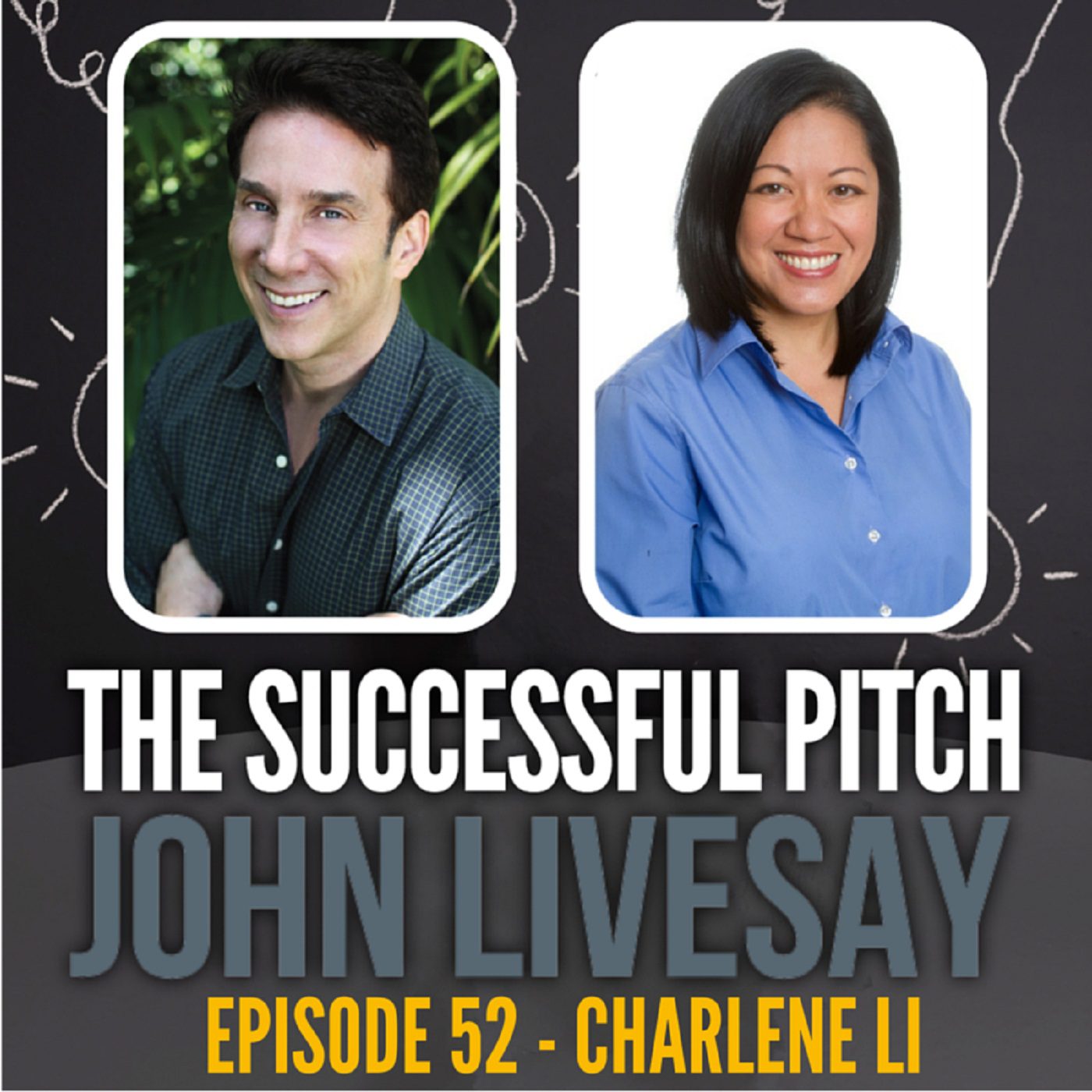
TSP052 | Charlene Li – How To Be the Engaged Leader Investors Seek
Posted by John Livesay in podcast | 0 comments
Listen To The Episode Here
Episode Summary
Charlene Li is the founder of Altimeter Group and the author of several books including the New York Times bestseller, Open Leadership. Today Charlene sits down with John to talk about how entrepreneurs can become engaged leaders; not only for their team, but for their customers as well. She talks on the four key aspects a leader must have in order to become properly engaged with people who matter.
What Was Covered
- 03:25 – How did Charlene get started?
- 05:40 – Charlene talks on how she made her company, Altimeter, stand out.
- 09:25 – You can’t just wing it, you have to prepare.
- 12:40 – Despite Charlene giving her research out for free, people still wanted to hire her to speak.
- 13:55 – Leaderships are all about relationships.
- 14:20 – How can you really become an engaged leader?
- 16:50 – Charlene shares an example of an engaged leader.
- 19:40 – How can you engage to transform not only your team, but your customers as well?
- 22:10 – Charlene talks about Obama being on Reddit.
- 23:25 – What does Pope Francis do differently than everyone else?
- 27:10 – Charlene talks about the best pitch she has listened to.
- 28:35 – If you can’t tell Charlene what your pitch is within two minutes, you don’t have a pitch.
- 30:40 – What kind of businesses does Charlene like to invest in?
- 33:15 – How resilient is your team?
- 33:45 – You only have four hours of the week that really matters.
- 34:15 – You can’t do your best work when you’re putting in 70-80-100 hours a week.
Tweetables
[Tweet “You want your company to be bought not sold.”]
[Tweet “Use social media to engage and transform.”]
[Tweet “How to thrive during disruption.”]
[Tweet “Focus on you solving pain points in a unique way.”]
Links Mentioned
Judy Ronbinett
Charlene Li
The Engaged Leader by Charlene Li
Open Leadership by Charlene Li
Groundswell by Charlene Li
The 4-Hour Workweek by Tim Ferriss
Rework by Jason Fried
Want the Transcription?
Crack The Funding Code!
Register now for the free webinar
Share The Show
Did you enjoy the show? I’d love it if you subscribed today and left us a 5-star review!
-
- Click this link
- Click on the ‘Subscribe’ button below the artwork
- Go to the ‘Ratings and Reviews’ section
- Click on ‘Write a Review’
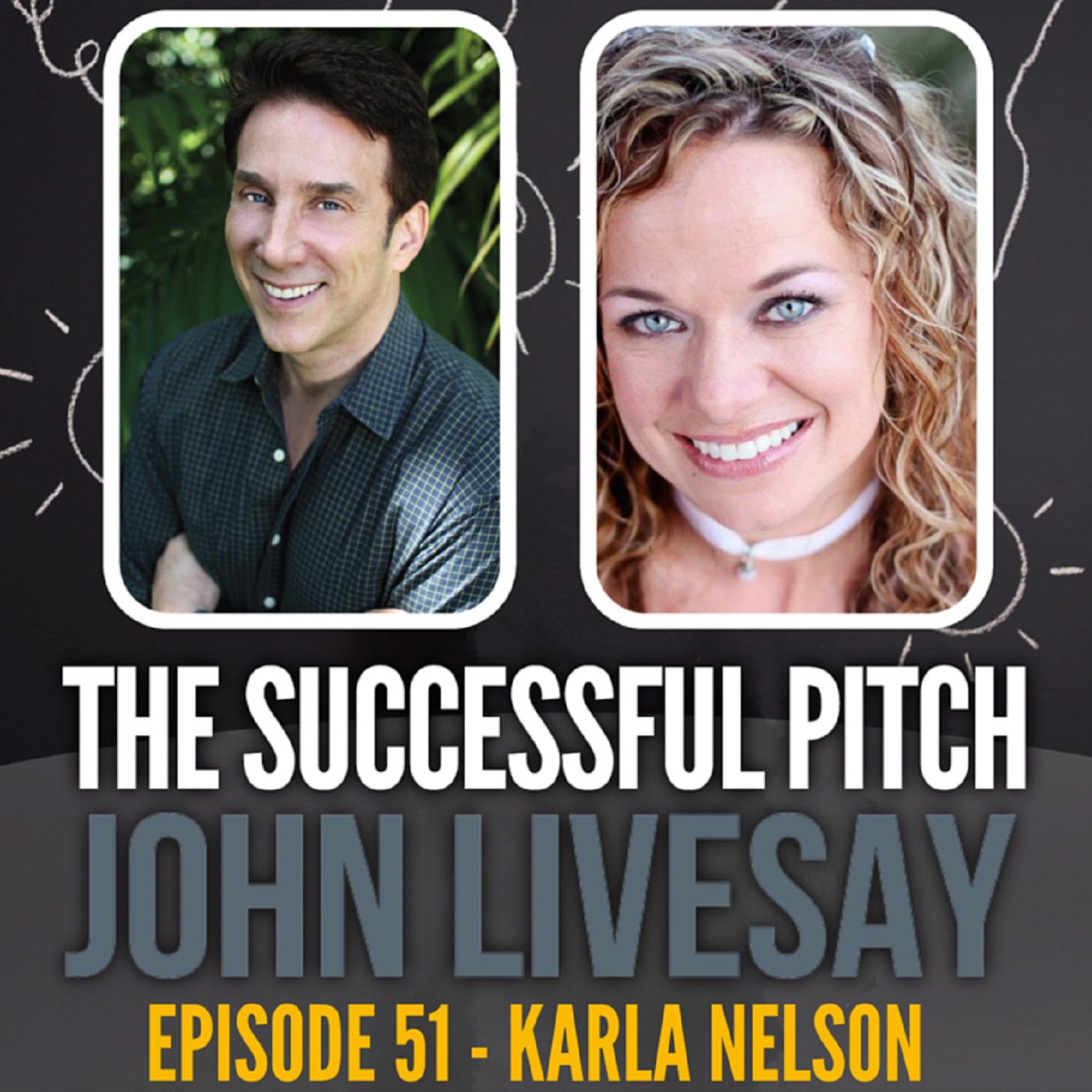
TSP051 | Karla Nelson – Next steps to getting funded
Posted by John Livesay in podcast | 0 comments
Listen To The Episode Here
Episode Summary
Karla Nelson is an entrepreneur, business innovator, and a power connector. She is a thought leader at Sac-cess.com and is heavily involved with Latch.com, a company that helps connect the right business professionals within the real estate industry. Her message is clear: entrepreneurs need a strong ecosystem of support or else they’ll burn out and become uninspired. She also says to never underestimate a person and their personal network of people.
What Was Covered
- 03:25 – Why did Karla become an entrepreneur?
- 06:25 – What does Karla mean when she says, ‘the significant of next’?
- 08:35 – How did Latch.com get started?
- 10:50 – It’s about the quality of the relationship instead of quantity.
- 14:55 – Karla is helping the Sacramento community.
- 16:00 – The reason why everyone wants to go to Silicon Valley is because of the network.
- 17:30 – Technology allows us to work remotely and do great things regardless of our location.
- 20:25 – Transparency is the key to successful and trusting relationships.
- 26:00 – The death of an entrepreneur is solitude. You need to have an ecosystem.
- 27:45 – VCs need to see your passion.
- 28:25 – There’s nothing you can’t do with passion.
- 31:40 – There’s sales and then there’s everything else. Learn how to sell yourself.
- 33:05 – Karla recommends two books.
- 36:40 – You’re one person away of massively changing your life. Don’t underestimate a person.
Tweetables
[Tweet “Death of founder is solitude.”]
[Tweet “Connection through empathy.”]
[Tweet “Only one person away from changing your life.”]
[Tweet “People buy with emotion and back it up with logic.”]
Links Mentioned
JRobinett Enterprises
Karla Nelson Website
LATCH
Sac-Cess
BubbleBall
Karla Nelson Twitter
The 4-Hour Workweek by Tim Ferriss
How to Be a Power Connector by Judy Robinett
Want the Transcription?
Crack The Funding Code!
Register now for the free webinar
Share The Show
Did you enjoy the show? I’d love it if you subscribed today and left us a 5-star review!
-
- Click this link
- Click on the ‘Subscribe’ button below the artwork
- Go to the ‘Ratings and Reviews’ section
- Click on ‘Write a Review’