

Real Business Connections Network With Ben Albert
Posted by John Livesay in podcast | 0 comments


We all took a hit when COVID-19 struck the world. Many businesses closed, and many more became unemployed. Ben Albert was one of those people. Furloughed from work, he went on a downward spiral towards depression and battling imposter syndrome. Fortunately, this was only the start of his hero’s journey. Now, he hosts a network of five podcasts called Real Business Connections Network and is the owner of Balbert Marketing LLC. What is the key to his success? Join this episode as he sits down with John Livesay to fill in the gaps of his story of reinvention, overcoming his feelings of being unworthy, and starting an incredible marketing firm. You just might find the missing piece to your own success story!
—
Listen to the podcast here
Real Business Connections Network With Ben Albert
Our guest on the show is Ben Albert, who has a real hero’s journey story of how he reinvented himself and overcame the Imposter syndrome to start an incredible marketing firm. He said, “The true key to success is finding your unique combination and unlocking it.” Enjoy the episode.
—
When COVID hit, Ben Albert was furloughed from work. He found himself down and out staring at an empty handle of Jim Beam whiskey. He was unemployed, depressed and felt unworthy. Presently, he opened his MacBook and started reaching out to strangers on LinkedIn. This spearheaded his entrepreneurial journey. The rest is history. Ben hosts a network of five podcasts called Real Business Connections, runs a massively successful marketing firm, Balbert Marketing and has replaced his established sales income in over a year.
Ben found his way. Once an underdog, now a successful entrepreneur. Ben is passionate about helping other underdogs find their way and achieve their dreams. He’s on a mission to move the needle on 1 million lives 1 conversation at a time. I’ve had the pleasure of being on his podcast and I am thrilled to bring him to my audience and readers. Ben, welcome to the show.
John, I’m humbled to be here. Your episode has been one of my favorites and one of my reader’s favorites. You always over deliver and that’s why I love hanging out with you.
Thanks. Let’s talk about your story of origin. Take us back before COVID, if you don’t mind, when you were saying, “I want to get into this business, whether it’s sales or marketing.” What were you doing that got you into the world of marketing in the first place?
Feel free to dissect this because I am here to learn something new every single day in every single conversation. It’s funny because I didn’t see myself as a marketer, promoter or podcaster. When I was a kid, I was the quietest kid in school and very reclusive. I got bullied so I’d make myself even smaller. Everyone starts to hit a growth spurt. I stayed the same height.
I’m the second smallest kid. There was a little Asian girl that was a little shorter. I was always proud of myself for not being the shortest but I also had a basketball jersey for every single day of the week because I wanted to be the next Vince Carter and Michael Jordan. Imagine what happens to the shortest kid in school that’s bullied and is too quiet that wants to be the next Michael Jordan. The probability of getting there was pretty low.
I was always identified as an underdog. I didn’t quite realize it at the time but I was developing this love of learning and a growth mindset. I didn’t have a sense of belonging at the time. It wasn’t until around high school that I started to, as a late bloomer, find my way. It was a friend, Brendon Gansemer, who introduced me to the music industry. I became obsessed with music.
There’s a local band. I don’t know if anyone’s heard of him, Giant Panda Guerilla Dub Squad but I love them. They’re a great band. Before you know it, I was the one handing out flyers, selling merchandise and setting up MySpaces at the time. I found that I was in alignment with great people that uplifted each other and it was something I was passionate about. I was no longer the quiet person. I still wasn’t the best musician per se but my sweet spot was quite amplifying musicians and being the promoter and the marketer.
I wasn’t going to school for marketing. I didn’t even know what I wanted to be when I grew up at the time. I started developing this love of promoting underdogs and at the time musicians. I found my way in marketing by accident. It was a sales job and I wanted to make a lot of money. I realized in that role that I was passionate about connecting with people, taking their businesses and helping them reach the next level by listening first.
[bctt tweet=”Keep doing it to get over feeling like an imposter.” username=”John_Livesay”]
I like to joke, “I get to ask questions for a living.” In the podcast, it’s all about interviewing incredible people like you to learn about storytelling and then learn tangible tips. Learn through their stories and what they have learned throughout. Ultimately, take their wisdom, put it into practice and multiply their wisdom. In the marketing firm, I’m still that curious growth-minded person so it’s asking questions for a living and determining the best fit if I can serve them.
Knowing that I’m not a good fit for everyone and every company’s different, I went in, asked questions and learned that I once had no sense of belonging and was sad with an alcoholic father. They joke about this in psychology. People get into psychology because they’re trying to figure themselves out. I got into podcasting and marketing because I’m trying to figure myself out.
A lot of people will talk about podcasting as a great networking tool or a way to monetize your content. I started my show 450 some episodes ago. I realized that I had some fears about it. I had to put a face on them. For me, it was the fear of, “How do I even do this? I’ve been a guest but how do I be a host?” I found someone that does that for me.
The fear of the unknown of the tech part went away. There was the fear of rejection, “What if I ask people to be on the show and they say no?” I’ve been in sales like you. We don’t take rejection personally and then the fear of failure. “What if I launch it and nobody listens? I’ll waste time and money. I’ll be embarrassed.” Did you have any of those fears, Ben?
At that time, I didn’t have too much to lose because you touched on it in the bio. I was furloughed for my sales executive role. I was able to replace my income by starting my marketing firm but it was because I had been through so much failure and struggle and learning experiences to get me there. I grew up with an alcoholic father. When I started binge drinking when COVID hit, I saw myself. Imagine, you know where the North Star is and you’re running backward in the wrong direction. Since I’m running backward, I can still see that North Star.
I know how to get there but whether it’s binge eating or drinking, I was doing all the wrong things and I knew better. It wasn’t until I started the podcast with nothing to lose. Granted, let’s be transparent. The government was cutting me checks for being unemployed. It was the weirdest time in human history. I was getting these fat checks for being unemployed. What I did is I lived very humbly, took that money from the government and reinvested in the business knowing the power of podcasting.
I didn’t necessarily do it to monetize the podcast. I did know that podcasts don’t make money on their own but I knew that if I could network with the right people and obtain the right knowledge, that would be worth its weight in gold. The rest is history. We’ve got a couple of hundred episodes plus. I’ve built a good community and a great company but it’s by learning from brilliant people like John.
What’s your biggest surprise in hosting a podcast?
No one’s ever asked me that before. The biggest surprise was what you had mentioned as one of your fears and it still is a fear sometimes when you’re stepping out to ask someone out of your league. I’ve had so many people on. You’ll be able to go listen to it. Chris Van Vliet was on my show. He is a four-time Emmy Award-Winning Host. He’s been nominated for eleven. I’m stumbling forward, networking well and learning as I go but I’m no Chris Van Vliet.

Real Business Connections: Part of building a lifestyle business is not working with people that are completely misaligned with your vision and your truth.
He was willing to put his chips on me, the little guy, knowing that there is a high potential that even if we reach 1,000 people and change 100 of those people’s lives, he thinks it’s worth his time to spend 45 minutes with me. I’m humbled every single day at the ability to connect and learn from such brilliant people. You do get the nerves because you have that Imposter syndrome feeling like you’re unworthy sometimes when you reach out to some of these big names.
Let’s talk about Imposter syndrome. I’ve certainly suffered from it. I remember once I was engaged to be one of the speakers at the Coca-Cola Summit for the CMOs of brands that carry Coca-Cola at movie theaters and quick service restaurants. They create this beautiful brochure that’s in the hotel room. I’m reading all the bios of all the other speakers whom all went to Yale and Harvard and have New York Times bestsellers. My Imposter syndrome kicked in big time.
I thought, “I didn’t go to an Ivy League school. I went to a good school, don’t get me wrong but it’s not Harvard or Yale. I have a book that sold well but it wasn’t a New York Times.” I started getting all this anxiety like, “The VP who hired me, she’s going to get fired for bringing me in.” I did talk myself off the ledge and say, “Maybe she knows what she’s doing. She’s been here a long time. Maybe she saw something in your speaker video that she thought she liked.”
I was able to talk myself off the ledge by saying, “Do I care where somebody went to school when I hear them speak? No. Do I care how many books they sold? No. I care about how they make me feel and think and if I learn something that I can use.” That is the only way I was able to get out there and not be so intimidated. What tips do you have for people when they find themselves feeling like an imposter?
First, I’d like to say that it’s not going to get easier but you’ll get better. The number one tip is to go do it. If you do it and you’re not getting the result that you expect, seek a mentor because they can shorten that curve, create a bridge and maybe even connect or introduce that person in some scenarios. Learn because for every single one of these failures, there are great opportunities. Sit back and decompress, “What did I do wrong here? What can I change?” Be a scientist.
Sometimes the Imposter syndrome starts before you even open your mouth or do anything. One of your real strengths is the preparation that you do for each guest. One of my favorite quotes is from Arthur Ashe, the famous Tennis pro, who said, “The key to success is confidence and the key to confidence is preparation.” Internal thoughts are a strong way to dial down Imposter syndrome. Can you speak about the preparation you do as a podcast host, as a template for success? How important do you think it is to do it?
Preparation begins the moment you open your eyes in the morning. Everything beyond that is going to be unique. Brad Lee, a big sales mentor says, “There is no key to success. It’s a combination lock.” The true key is finding your unique combination because no two are alike as how no two fingers are similar. If you were to try to break into my phone, you’d have to cut my finger off and tape it to your finger. I don’t even know if that would work.
It’s possible but it’s not the best route. The preparation begins the moment you open your eyes. You have to ask yourself, “What’s the end in mind? What am I looking to achieve here?” Everyone’s going to be different. I don’t over-prepare but I want to prepare enough that I know at least a little bit about the person’s bios and their audience.
For me, the biggest piece of preparation in a podcast is taking a minute to ask them a couple of questions and get a feeling like, “What are you looking to accomplish? What’s bringing joy to your life? Is there anything that you’d like to promote,” and sudden attention of explaining who the audience is, whom they’re speaking to then go in. John, I used to prepare much more than I did. I’ve got a three-page sheet of questions. I created those questions on episode one. I did come in very prepared for episode one but now, I don’t use that cheat sheet because I know the general narrative.
[bctt tweet=”Create, Connect, and Community.” username=”John_Livesay”]
What’s more important and things that I’ve learned from people like you are giving people permission to tell their unique stories in a way that lights them up. The biggest preparation I can do and I’m not going to go into every little detail is to have a morning routine, work on myself first so I can show up to that podcast interview energized, prepared, ready to go and allow them to be their best self. All I am is a bit of a Sherpa or a guide. I guide the conversation. However, they choose the destination and the story.
You are very excited and grateful about the success you’re having in Balbert Marketing. Tell us who your ideal client is and how you find them.
I joke about this. I don’t work with craps. That’s a start. I immediately get rid of surprisingly a lot of people.
I saw Justin Bieber doing some little meme thing and he was asked to do something. He went, “Immediately no.” That’s my favorite. You don’t have to think about it. It’s like someone said to me, “Would you like to eat raw liver?” “Immediately no.”
I’m not there yet. I’m still on the journey like most people, readers and anyone else. I want to build a lifestyle business. Part of building a lifestyle business is not working with people that are misaligned with your vision and truth and growth-minded people that care about their community. I like to have a little bit of fun. When it comes to growth, community building and fun, those are three major values.
I’ll work with someone that don’t have those three values but for the most part, I’m trying to vet and work with people that have similar alignment and we’re looking to grow this thing and have fun doing it. We do want our pockets to overflow but overflow into everyone we meet and get to affect and collective impact we get to create as business people.
Do you have specific industries that you’ve helped with their brands or is it most individuals that are small business owners?
This is where you see that I’m an entrepreneur who has a new startup. The first thing you do when you’re an entrepreneur, they tell you to do all this planning. No one does it. Honestly, you could plan and fail. I dived in. Small to medium size businesses are 50 employees or less. Once you get to a certain size, there are marketing teams, a lot of checks and balances and hoops.
Part of the lifestyle business is I don’t want to jump through a lot of hoops. I like someone who’s agile, small and an underdog with massive growth potential but you can see that I’m an entrepreneur. I got started in the fact that I would take on about any client. As long as they fit those standards, I work with an aesthetician, a realtor, an eyecare clinic or a tech startup. The goal, which isn’t quite clear yet is to double and triple down on specifically podcasting and LinkedIn. Social selling, in addition to that, how to use podcasting and LinkedIn for social selling because quite honestly, that’s where 98% of my clients come from.

Real Business Connections: The amount of impact we can make is more valuable than the time it takes to do.
Why am I selling all these different services to fifteen different people when I can focus on what drives revenue for my business and teach other businesses how to do it? I’m still in that analysis paralysis working with multiple different companies. I’m very humbly proud to say that everyone I work with, we have an alignment of values. That’s still going to be the most important thing to me but long-term, I’ll niche down.
What’s the biggest mistake people make before they work with you in their marketing?
I’d say the biggest mistake most people make is not acknowledging the fact that it’s a long-term investment. Most marketing professionals guarantee an ROI. I’d have to see the metrics but in most of the cases, they’re crap. They can’t guarantee you to be first on Google unless you’re paying for ads to be there. The moment you stop paying for the ad, if you don’t have organics, you’re not going to come up. There are a lot of misconceptions. A lot of times, it’s salespeople creating a falsified vision of what they’re going to get out of marketing, people get burned time and time again then no one knows whom to trust.
Since you’ve been in sales and then you’re in the marketing side of things, there typically is a lot of animosity between the two departments. Salespeople say, “Marketing is not giving us good enough leads.” Marketing says, “The salespeople aren’t closing. They’re not saying the right message and not consistent.” You’ve been on both sides of the fence able to help your clients with that so that it doesn’t work against each other but work together.
It’s funny because I sold marketing. Since I sold online marketing, day one, I walked in the door and had no clue what I was doing. I had a CRM. We click dial and their name would pop up. I was so nervous and such an imposter and did so uncomfortable that I would try to transcribe every word they said. I’d call John and Elizabeth would pick up, the executive assistant, and say, “This is Elizabeth. How are you?” I’d be writing down the name Elizabeth.
She told me the name. I don’t need to write it down but I was so caught in my head and struggling. Over time, what we learned in this organization was to sell features and benefits. It wasn’t entirely unethical but it was more of a boiler room approach than it was like a Sherpa consultant being a guided approach. I learned to hammer down and create at that time. I didn’t realize what I was saying or know what I was doing. We were creating a false narrative of the results that they were going to get.
The number one reason I started to do well in my job is I started to pivot and not do what everyone else did. I started asking a bit more questions. I was okay jumping up on. If they didn’t buy the first time, I still would follow up. I would do all the friendly essentials and got better at it. I got to a level where I was one of the top producers kicking butt. I started to want to learn more about the products because I’m obsessed with that growth mentality.
I’m researching Google, looking up the keywords and starting to learn not as well as them at the time but what the marketers were doing on their end and fulfilling the orders. I would hear people saying things that were wrong. I would call them out on it and I had the door slammed in my face one time. My sales manager said, “Fix this,” and close the door on me with my trainer. What I was doing was questioning the narrative that was creating sales but we were the issue, John.
We were in the weeds in understanding the wrong way to do things and the value of marketing. Being able to paint a picture and how people realize and see their goals but not doing a great job fulfilling them or creating a false narrative ate away at me. I’m talking about years in the past and we can fast forward. When I started my company, it was to do everything differently from what I was taught. I had been in the weeds so I had seen the opportunity. Marketing creates billionaires when done the right way. My goal is to do it the right way.
[bctt tweet=”The preparation begins the moment you open your eyes.” username=”John_Livesay”]
I see one of your goals is to be a keynote speaker on the power of networking. Talk to us about how did you pick that topic and what your talk was about the topic of networking.
One thing I like to talk about is what I call the CCCCAN system. I didn’t realize the concept of the CCCCAN system when I started my business. I started to quantify everything twelve months later. If I had only known this going in, it would’ve taken me a quarter of the time. There are lots of Cs. I like adding Cs. I’m a big C guy. Create, Connect, Collaborate, Community And Networking. Creation is the reason and purpose for my networking. I can create content and network. We can build community and network.
When you go into a networking conversation with a creation-driven mindset and a can mindset like, “I can collaborate. Let’s look for collaborators,” you put on a different lens. It’s not like, “I do this for this person and I’m looking for this referral. Do you have them? Here’s a business card. If you don’t, maybe you’ll call me.” Who am I alignment with so that I can create something fun? Who can I create and network with?
I like the word fun a lot because it’s part of your culture. In addition to not being crap is, “Let’s have fun while we’re working together.” I believe people buy energy. With your energy and passion, fun comes through any marketing materials or websites. The other thing I want to ask you about is one of your goals is raising money for cystic fibrosis. Is there a story there that makes you pick that charity?
To give you the short version, I spent most of my life not giving back. I was raised Jewish and in Jewish, they call them a mitzvah. Mitzvahs are good deeds. The best mitzvah you can give is the ones that can’t be repaid. For example, in Judaism, helping bury a body is a great mitzvah because there’s no way in the world that they could ever repay you. I was raised on doing good deeds in mitzvahs. I was raised a certain way and then anxiety hits you and you start smoking weed and drinking in college. You’re following all the shoulds that people tell you, “Go to school, get a job this or that.” You forget to give back.
My connection with cystic fibrosis transparently wasn’t a personal one. It was as simple as I was so mad at myself for going so long selfishly that they asked me and I said yes. In doing so, we raised a lot of money and I love it. I raised $3,000 for cystic fibrosis in a grassroots campaign with 60 donors. We raised on under $5,000 for the Alzheimer’s Association. I’m looking to build an event for diabetes. My brother has diabetes. My mother had multiple sclerosis.
This was always within me but I did the wrong thing for so long that quite transparently, Cystic Fibrosis Foundation was the first person that asked and I gave him an emphatic yes. I’m happy I did because I realized the impact I get to make. My time is valuable but the amount of impact we can make is more valuable than the time it takes to.
Let’s double-click on that. Somebody at that foundation had the courage to reach out to you and ask. They happen to catch you at the right time. What a wonderful full circle moment. That’s what marketing is, knocking on the door going, “This is something you want to explore,” and not attached to the results.
To create another circle around that circle, I met him through networking on LinkedIn when I launched my podcast. I was meeting people like crazy. One thing that was happening to me all the time is people were saying yes. They were putting their chips on Ben and coming on a podcast that a lot of people said yes to before it even existed yet. The moment someone came to me with an ask, I said yes.

Real Business Connections: How can I serve you that I maybe haven’t served you yet?
My final question is, is there a question that you wished someone had asked you on a previous podcast or that I had asked you on this show that I haven’t asked you yet?
I ask questions like this once in a while, John. I stump people and I’m stumping myself. I probably thought about a question that hasn’t been asked.
Is there a question that you wish somebody would ask you, whether it’s about networking, charity, marketing, podcasting or anything?
How do I listen to John Livesay on your show?
The whole focus is on how can you be of service. I felt that as your guest and I strived to make you feel the same way. Welcome, cared about and surprise you with questions that maybe other people haven’t asked. That’s always been a goal of mine, doing a little deeper dive than maybe somebody else would’ve done, the preparation we talked about. If someone is intrigued and I’m sure many people are saying, “This guy sounds amazing. I want to have fun. I want some marketing that’s out of the box and someone who’s going to take the time to be empathetic to my needs,” what’s the best way for them to find you?
I want to connect and have a one-to-one conversation. I don’t have anyone running my social media. It’s just me so you’ll speak to me. To touch on that question, people have asked me this before but how can I help you? It always goes both ways. I never want the conversation to end at the end of a podcast conversation.
If there’s any way I can serve you, yes. If there’s any way you can serve me, yes. I want that everybody to be asking that question forever. How can I serve you that I maybe haven’t served you yet and find a way to collaborate? If anyone wants to connect with me, you can go to BalbertMarketing.com. The website is under construction for a little bit. It’s a landing page with all my links in one spot.
In there, you’ll get the podcast, social media and LinkedIn but reach out and send me a DM. Let’s figure out how we can work together. I found this in my past. I would listen to a podcast, I’d love it and six weeks later, nothing happened. Forgot everything about it. If you’re reading this and you haven’t reached out to John yet, reach out to him. Say hello. You can reach out to me as well but subscribe. Start a conversation and we’d be humbled to chat with you.
Ben, thanks for bringing your wonderful story and warmth to the episode. It’s been great.
Thanks, John.
Important Links
- Ben Albert
- Real Business Connections
- Podcast – Past Episode on Real Business Connections featuring John Livesay
- Giant Panda Guerilla Dub Squad
- Chris Van Vliet – Past Episode on Real Business Connections
- Alzheimer’s Association
- Cystic Fibrosis Foundation
- Better Selling Through Storytelling Method Online Course
Wanna Host Your Own Podcast?
Click here to see how my friends at Podetize can help
Purchase John’s new book
John Livesay, The Pitch Whisperer
Share The Show
Did you enjoy the show? I’d love it if you subscribed today and left us a 5-star review!
- Click this link
- Click on the ‘Subscribe’ button below the artwork
- Go to the ‘Ratings and Reviews’ section
- Click on ‘Write a Review’
Love the show? Subscribe, rate, review, and share!
Join The Successful Pitch community today:
- JohnLivesay.com
- John Livesay Facebook
- John Livesay Twitter
- John Livesay LinkedIn
- John Livesay YouTube
Evolve Your Success With Samuel Adeyinka
Posted by John Livesay in podcast | 0 comments

Personal development can affect, boost, and evolve your success to any aspect of your life. It is something one should focus on because you can have the opportunity to make a difference. When he was young, Samuel Adeyinka wanted to be a physician but realized that he could do other things related to medicine. That led him to pursue a career in medical sales. He experienced a lot of setbacks and challenges, which enabled him to give importance to personal development. Now, Samuel started his podcast to let people hear and have more information about the medical sales industry. Join him in this episode as he shares more about his inspiring journey to success.
—
Listen to the podcast here
Evolve Your Success With Samuel Adeyinka
Our guest is Samuel Adeyinka, who after graduating from the University of California in Riverside with a Bachelor of Science Degree in Biology, started his medical sales career. Over the next several years, he worked for a variety of biotech and pharmaceutical companies. He then went on to work in various roles, including medical sales development trainer, International Coaching Federation, and a certified coach. He has now started his podcast and Evolve Your Success, which is an organization that delivers digital marketing strategy and training programs to corporations and individuals.
—
Welcome to the show.
Thank you for having me. I’m glad to be here.
Let’s talk about your own story of origin. Did you know from a young age that you wanted to get into medical sales, or how did that road start for you? Do you have some great Biology teachers in high school or someone in your family?
I think everyone can say this. When it comes to medical sales, you did not know at a young age. This was new to a lot of us, probably for the last several years. I wanted to be a physician when I was younger. I was all about bones rise. I memorized every bone at a young age. I used to go around telling people what bones they had. At least I identify that all the time.
I want to be a physician. I thought I wanted that. That’s what led me to UC Riverside. I enrolled in the Biomed program. I got into that program. In that program, you got to spend some time with some physicians. I got to get a couple of mentors and I got to see what goes on at hospitals. I realized that, as much as I like this field, I want to look into other things related to it. I was not sure I wanted to practice medicine with patients.
I said, “Let me look into something else.” I spent some time working in the lab. Through that experience, I learned about this industry called Medical Sales. I worked with a PhD there, he was working on a diuretic, and he would say, “Sammy, you have a great personality. You understand the medicine. I see you have a big interest in the business. You should look into what manufacturers do for drugs and devices. Check it out and see if you like it.”
[bctt tweet=”Be a resource to your client. ” username=”John_Livesay”]
I looked into that. I looked into high-performance liquid chromatography devices and some pharmaceutical companies. With the pharmaceutical companies, I got my first role, moved out to the desert, and loved it. It was an awesome experience. I performed very well. Right going into it my first year, I had at a time in my life, loving what I was doing, and the rest is history.
When do you say desert, is it Phoenix or Palm Springs?
The desert is in the desert of California. Palm Springs, Palm Desert, Indio, those were my stomping grounds, and that is where I originated. That introduced me to the field.
A lot of people who understand science and like to study science are known as a little bit of introverts perhaps. They don’t like to even think of rejection personally, not the personality at all that sales require. When you do find a hybrid of someone who understands science and willing to put themselves out there in a sales environment, it is a magical find.
Usually, there are a lot of personalities like sales. They don’t know the science. I’m sure that combination was, in fact, a huge success. I’m fascinated to see how somebody did suggest it to you. It is amazing how one person in our life can be a major character in our own story of, “Had I not thought about that, I would never have even explored it. I didn’t know it existed.”
When you find something that fits, it is like, “This is what I meant to do.” It is not you are forcing yourself to do it, hate it, and find it awkward or whatever. Let’s talk about it because a lot of people think of pharmaceutical sales. Don’t you have to be a model to do that job because everyone is attractive? It’s crazy. The impressions that people have of the glamour of that job because it is the smartest, the best, and the most attractive, it’s like getting into Harvard or something.
Everyone has this perception that it is a difficult field to get into. You have now taken your expertise in doing it and helping people get into it, which we will talk about for sure later, but I want to get your impressions of it. Were you surprised at how competitive or challenging it was to get into when you first started?

Evolve Your Success: No matter what level of success you’ve reached in your life, you can always evolve it to the next level of success.
I’m going to be honest with you. I wasn’t even thinking about that. It’s funny. I didn’t even realize what I was getting into. When I first started, I was trying to develop my sales acumen. I had never been in sales before. I was working in the lab, and it was a high-performance liquid chromatography. We were studying these graphs and preparing liquid chromatography while running the experiments for this diuretic on live testing. That was what I knew and everything I studied in school, which was Biology.
When it came to sales, I didn’t know. I thought I needed to go develop my sales skills. I looked into T-Mobile, and there was a sales position there. A friend of mine said, “These guys teach you how to sell, you make good money, and they can help you with your first career move.” At the same time, I learned about this pharmaceutical opportunity. There was a company that wanted to work with me and I wanted to work there.
I said, “Do I develop my sales acumen at T-Mobile or even out here at a pharmaceutical company?” When anybody hears this, they’re like, “That’s an obvious choice.” At that time, it was not that obvious to me. I went ahead and went into it. I was excited to be in a role that offered that, doing things, selling, being a part of the business with them, and that excited me. Even before that role, I had this little nutraceutical company where I worked with a few providers. We were trying to have this diet nutraceutical product that we were trying to sell, market, and get out there.
It seemed like a sensible position to take on it. I felt I would learn more about what I was doing and get experienced in this new industry. I was not thinking about the challenge of getting in. Honestly, this was several years ago. It was competitive back then, but it was also not as well known. Now everybody knows about medical sales, medical device sales reps, and pharmaceutical sales reps. The average person knows what a drug rep or a medical device rep does. Now all these people want to get into it, and ever since COVID hit, even more so. It has become this very competitive and aggressive industry where you got to be a certain person and put in the work to get a foot in the door.
[bctt tweet=”Be someone your client can rely on.” username=”John_Livesay”]
The need for companies to train people has changed. When you and I were getting into sales, I got into high tech sales and they would put us through a training program, not only on the products but on the actual selling. I remember being videotaped and you should be giving someone your business card within many seconds of meeting them, in case they forget your name.
All those little tips that you don’t think about, emotional intelligence or social skills, especially if you are selling something expensive, there are a lot of people that get involved in the decision, and you are not going to walk out with a yes. You have to call on, in my case, financial people for leasing, a multimillion-dollar piece of equipment, or the tech people had to speak to the tech people and solve a problem.
It was a lot of training that was great because once you have an understanding of where things are in the pipeline, as well as where somebody is in their buying decision, you are able to make projections on a much more accurate basis. Without all that experience with somebody guiding you, you are making it up as you go along.
We have seen, without the proper training, how frustrating it can be for someone who does not have that training. How did you come up with the name of Evolve Your Success, which you’ve created now a full-service media and training company for both companies and individuals? I love it because it assumes someone’s already got a level of access, and you’re helping them evolve it.
That has always been important to me. No matter what level of success you have reached in your life, you can always evolve it to the next level of success, and human nature initiates that. If the money is great, you want to work on a personal relationship. If the relationship is great, you want to work on the finances. If all these different parts are great, you want to work on the family.
There is always an aspect of your life that you want to improve, you are either going to step toward that on your own, or something is going to pull you into wanting to develop it. That’s something that I’ve recognized pretty early on in my career. One thing that I loved was personal development. I became a fan of that early on because I had my own personal setbacks that let me see.
There is a way people can experience a personal setback and still get back to performing at a high level. I didn’t understand what that meant. I didn’t know what that meant until I started looking into the work of what personal coaches and personal development coaches do. That’s when I got to learn that no matter what you’re experiencing in life, whether it be a divorce, death, job loss, or whatever’s happening.
There’s a way where you can recalibrate, reevaluate yourself and develop from that place and evolve to even greater success than you have ever experienced. Me going through that developed a passion for me wanting to do that with my own career and help people do it as well. Several years ago, I worked with some personal development companies. I got to see what they do and how they work with people. It was completely inspiring to me. I said, “No matter what I do in this life, I have to remain connected to this work.” I started working with sales reps in all kinds of different industries.
This was passion coaching where I can help someone say, “Let’s look at what you are doing. Let’s look at your opportunities, and let’s help you ramp up your sales.” Honestly, what often happens is we end up working on their personal life. Not directly, but to show up a certain way professionally, you got to have certain things in your pocket personally. That is what would always come out when working with all these people.

Evolve Your Success: Whatever’s happening, there’s a way where you can really recalibrate, reevaluate yourself and develop from that place and evolve to even greater success.
This became a habit. What I noticed through that is a lot of these people also want it to be in the medical sales industry. I’m like, “You have all these people that want to improve their sales, their careers, and realize the value of developing personally. It carried over professionally. You have all these people that want to get into the medical sales space.” I said, “There should be something out there that gives them the opportunity to do so.” That is where Evolve Your Success was birthed, we started helping people create those opportunities, and we have been doing that ever since.
As a story keynote speaker, what I have found is how important it is that we are resilient and how fast we get back up after we get rejected, lose a job or a loved one, divorce, or whatever it is. They were all going to have experiences like that knocked us down. The trick is, how fast do we get back up. A lot of people shake it off fairly quickly, and then you see people two weeks, sometimes, even two months still talking about it. You are like, “You are not in the right mindset to move on. That’s why you’re in a slump.”
The other thing I love about what you do that I’ve noticed myself was when I got hired by a healthcare med-tech company, they wanted a sales keynote speaker to come in and teach their people how to tell stories. One of them had reached out to me during the interview process on LinkedIn. I liked and commented on a couple of his posts. He became my inside salesperson because he was trying to get his team to like and comment on doctors’ posts on LinkedIn.
The fact that I did it, he said, “I knew you were the person that would not try to squeeze that concept in, but you were doing it to sell yourself. I knew that wasn’t a good fit for our company.” The fact that you have used selling based on the science of social media to help people connect with people is important whether you’re selling yourself as we do as speakers or you’re in the medical tech world. A lot of them think, “I have to use social media to develop relationships. I’m going to keep hammering away like everybody else and send a bunch of emails going, can I have an appointment?” Tell us about what you’re doing and what makes your experience unique in this science in social media?
[bctt tweet=”There’s always an aspect of your life that you want to improve. You’re either going to step towards that on your own, or something’s going to pull you into wanting to develop it.” username=”John_Livesay”]
It’s the age we live in right now. Right now, we live in the age of social proof. Any influencers, celebrities, anybody you know the first name of that you don’t directly know, you can probably go online and find some social proof about that person. Anybody you know, you can go online and find some social proof about that person.
In this day and age, it is important to build a brand around yourself because the opportunities to provide value for people are endless. When it comes to social media or online technology, healthcare is the last space to realize the value, and healthcare has finally said, “There is a lot of value here to develop a brand for myself.” Surgeons and specialty providers are realizing that.
If I build a brand on TikTok, Instagram or LinkedIn, I am going to get more patients and get noticed. The good work that I’m putting out there in the world is going to be seen. Whether it’s intentional or not, there is going to be a level of credibility to what I do that people will believe in before they meet me. That applies to everyone, and everyone has the opportunity to do that. It makes you more marketable in the marketplace. If you work for a company and you’re ready to take your skillset to a different level, other companies can easily see the good work you’ve done at that organization and say, “Come work for us. You’re doing excellent.” Even within your own organization.
A lot of times, you’re doing all this good work in your role, and outside of your manager, the leadership has no idea all of the good work you’re doing well, but now you have the opportunity to let that be seen with your brand. The people within your organization are saying, “I didn’t know you were working on that. We want to consider you for this role over here. Let’s have a conversation.” There are so many opportunities.
Personal branding is very important. It’s more important it has ever been. I believe that we’re going to continue to go in that direction. I wanted to help in that transition. My whole thing is about developing other people. That’s what I’m big on. In every role that I’ve had, I’ve tried to focus on doing that, providing value for the customers and colleagues. Anybody I’m working with, I want to train them and help them reach their highest potential. Social branding is a great way to do that as well.
You offer this as a service. You help people optimize their profile, which people don’t even think about how important that is. They go, “I only need to be on LinkedIn if I’m looking for another job.” Wrong. You need to brand yourself on LinkedIn, which could even help you get a promotion. You take that another step further, which is, “Now we’ve got your branding done, but let’s get you to be perceived as a thought leader.” Maybe create some good content.
Think about it this way. You’re someone that understands a lot about your product or service. Let’s be honest. A good sales professional, he or she, understands their disease state, condition, and problem that their customers have better than anyone, even better than their customers. Let’s talk about it. You would have a doctor and he says, “I went to med school. I know more than you.”
It is granted, but I spent all this time, my whole livelihood is built on me, understanding this very specific detail of your breadth of knowledge to help you be even better and provide better quality for your patients. There’s got to be something there. On top of that, I spent all this time talking to your peers that do things differently than you do to give insight on how you practice what you do.

Evolve Your Success: In this day and age, it’s important to build a brand around yourself because the opportunities to provide value for people are endless.
I have friends that are providers, and a lot of them say, “A good representative is someone that I can rely on. It’s someone that I can look to them and depend on their knowledge to help me show up better for my patients.” If you are doing that, why not be seen by the right provider so that they can tap on you to be a resource to them. That is where social branding or being out there also does. It gives your customers another way for them to know that you are this person that can give them all this value and potentially lead to an in-person meeting. You become their real customer, doing business, and they are happy about it.
I talk to people all the time that we have worked with that say, “I met this account through LinkedIn. They saw what I posted about so-and-so and they contacted me. Now we were doing business, and their patients are doing better.” That’s awesome. That’s the beauty of what is happening in this day and age. That is something that I like being a part of.
I was interviewing an optometrist for an upcoming talk I’m giving to an eye care company. He said, “The reps used to be able to bring lunch in, and we would have lunch. They could present and pitch. Now they have to catch us between patients. We give them ten minutes.” Everyone is saying the same thing, “Our products are the best. Here are all our stats,” and then it is forgotten.
He goes, “I’m looking for a sales rep that I can rely on, that’s going to bring their expertise.” They’re looking at hundreds of other optometrist offices, and maybe they see a best practice going on there, or maybe I’m short-staffed. They know someone that is looking for a job. When those reps do more than give me stats, I want to do business with them. Most reps don’t think about that. They think, “My job is to pitch you what my knowledge.” That’s not it. That’s why I’m like, “You need to be a consultant and tell stories of a patient using your product, not just the stats, because we know people forget the information.”
You teach storytelling how to communicate your value to a provider. At the end of the day, what I’m all about is being a resource to your customers. When your customer can say, “When I have an issue and it comes to this space, I want to call on John. John will know how to help me in some way, shape, or form.” Your job is to be a resource to him and utilize your product as you do. That is the opportunity that every sales rep can take advantage of and truly be valued in the space that they’re working in.
Your show is called The Medical Sales Podcast. Let’s talk about picking a niche. I love it that you are interviewing all these people, and I was fortunate enough to be one of them that has expertise in this. One of the things you say here is you’ll laugh, you’ll learn, and you’ll be inspired. We need to be like that in person as well. We can’t be a robot putting out information.
[bctt tweet=”We live in the age of social proof.” username=”John_Livesay”]
There is a relationship. You are a person talking to another person, and people want to not only be informed but inspired. I maybe even entertained a little bit. That is a part that people get so focused on, “I’m only myself when I’m at home, and I’m a whole different person at work.” What you are saying that I love is, “No, when you have integrated it all together, you show up.” That is what makes you stand out in the hiring and the selling process.
One of the goals with the Medical Sales Podcast was there is this whole world that everybody hears about. The medical sales world, pharmaceutical sales, biotech sales, medical device sales, medical equipment sales, and I’ve heard patients say, “You drug reps come in, and you take up the doctor’s time.” No one understands what is going on outside of the people doing it.
I said, “There should be a resource anyone can tap into and find out not what the industry is about, the good that’s being done, and the value that every sales rep puts into medicine, but the lives these people are living, doing, care about, moves them, inspires them, and they are beautiful stories.” You were a guest, John. You have heard the episodes. You got some fascinating people doing some amazing things.
When you find that out, you will say, “Thank God they are in this space, and they’re committed to wanting to improve the quality of life through the patient and helping their providers do the best work their providers know how to do.” That’s a beautiful thing and that’s something that should be known by everyone.
I love how you evolved your career, and now you are the expert in getting other people to live the dream that you were living, and you offer many multiple ways to work with you, whether it’s branding on LinkedIn, tips on a podcast or getting coaching. What thought or quote do you have for us about life in general or medical staff?
One thing that we can all take home is no matter where you are, there is a place you can evolve to. We are in the age where if there’s something out there that you want, there’s an opportunity to go for it. You should not feel limited in this day and age. If you’re someone that’s saying, “I want to be in medical sales. I want to be the best medical sales rep ever. This year I want to be number one.” There is a way to make that happen, and you can make that happen. Nothing should make you think any differently.
When it comes to medical sales specifically, it’s a great field, and if anyone is interested, they should look into it and the beautiful careers that can recreate out of it. At the end of the day, you’re doing great work because it’s all geared to the patient. That’s the most important thing. The patient’s quality of life, regardless of what it is you’re selling. If it’s in medical sales, it’s geared to helping a patient live a better quality of life. If that’s what you’re about, that’s a field you should look into.
The best way to find you is EvolveYourSuccess.com. Samuel, thanks for doing what you do in the world. I can’t think of a number of people you have impacted in the ripple effect. That must make you feel good. Thanks for sharing your wisdom with us and your stories.
Thanks for having me, John.
Important Links
- International Coaching Federation
- Evolve Your Success
- The Medical Sales Podcast
- Better Selling Through Storytelling Method Online Course
Wanna Host Your Own Podcast?
Click here to see how my friends at Podetize can help
Purchase John’s new book
John Livesay, The Pitch Whisperer
Share The Show
Did you enjoy the show? I’d love it if you subscribed today and left us a 5-star review!
- Click this link
- Click on the ‘Subscribe’ button below the artwork
- Go to the ‘Ratings and Reviews’ section
- Click on ‘Write a Review’
Love the show? Subscribe, rate, review, and share!
Join The Successful Pitch community today:
- JohnLivesay.com
- John Livesay Facebook
- John Livesay Twitter
- John Livesay LinkedIn
- John Livesay YouTube
The Influencer: Secrets To Success And Happiness With Brian Ahearn
Posted by John Livesay in podcast | 0 comments

Developing your ability to influence people is crucial to success and happiness. Your business needs to have a solid foundation, and you also have to know how to widen your network. Join John Livesay as he talks with Brian Ahearn on the science behind the influence process. Brian is a dynamic international keynote speaker, author, coach, and consultant. He specializes in applying the science of influence in everyday situations. Tune in to discover how to recognize powerful opportunities and influence people!
—
Listen to the podcast here
The Influencer: Secrets To Success And Happiness With Brian Ahearn
Our guest is Brian Ahearn, a return guest from October of 2020. When he reached out to me and said that he has a new book called The Influencer: Secrets to Success and Happiness, that is a business parable and follows the life of John Andrews, who’s an ordinary person who becomes an extraordinary influencer as he learns from coaches, mentors, and clients. I thought to myself, “I need to have Brian back on.” I, myself, have written a fable. What he is doing is using the storytelling format to reach a new set of readers. It is about applying what is in The Influencer book on the impact that influence can have both professionally and personally.
—
Brian, welcome back to the show.
John, I appreciate you having me on. It’s good to talk to you again.
I know that one of the things that excited you about this book is that nearly every character is based on a real person that you have learned something from. What a great combination of your life’s work? I know what that feels like. You think I couldn’t have written this book several years ago, and I couldn’t have done it.
Absolutely. I didn’t start out writing the book with that in mind, but I started to quickly realize, “This character is based on Loring, Ben or Dwayne.” I started utilizing those first names so I could clearly visualize them, but it was an honor to share with the world the things that these people taught me that were so helpful on a professional and a personal level.
For those who haven’t read your episode from October 2020, give us a little snippet of your own story of origin. You can parallel that with the book as well. You do an amazing analysis and research to give some exposition on who this lead character is. I wonder if any of those things mirror your own story of origin.
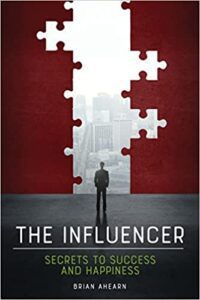
The Influencer: Secrets to Success and Happiness
They do mirror my story. I had people ask me, “Is this your story?” Its bits and pieces are. For example, when John goes off to college, he takes a Psychology class as a freshman, which has a big impact on him. That happened to me. I didn’t come across influence, but I do clearly remember that class. It obviously had a big impact, but John is a lot smarter than I was. The things that he learns, he lays hold of and puts into practice so that he starts reaping the benefits.
It took me a lot longer to figure that part of the game. Certain things do parallel. Many of the things that he learns throughout the book are things that I learned from significant people, coaches, clients and mentors throughout the course of my life. To go back to that episode in 2020 and let people know my area of expertise is the science of influence. I look at the decades of research from Social Psychology and Behavioral Economics. I look at ways to put that into practice to help clients get to yes more often. That usually means, on a personal level, a lot more success when you are in the office and usually a lot more happiness at home when people are more willingly saying yes to you.
As a storytelling keynote speaker, what I have found is that when people learn how to tell better stories, it not only helps them in their sales career, it helps them in their personal life. You do such a great job in this book of showing how the two things work in this character’s life. Can you give us a little snippet of when you fix, learn, or improve one area of your life? It is not in a siloed, “This only helps me in my career.”
I think it takes creativity to figure out how to take some of the silos and combine them. As a personal example, I’m a disciplined individual. It came from sports at a young age, football, weightlifting, running marathons, and things like that. It took me a while to figure out how do I take that silo and put it into my career to have more success. Once I figured it out, all of a sudden, especially as I stepped out on my own a few years ago, it has never been hard for me to get up early, put my head down, and put in 8 or 10 hours a day towards the business where a lot of people might say, “I would not have that self-motivation.”
That is a personal thing for me. In the book, I tried to help the character as he learns these bits and pieces. He has got this vision of what he is trying to put together in this puzzle. He doesn’t know what the picture is going to be ultimately, but he knows that these snippets of ideas that are helping him somehow have to come together to form a philosophy of life. At the end of the book, he completes the puzzle and knows what that picture is.
One of the intersections of what your work and my work is people inevitably get this objection, which is, “I don’t feel like I’m ready to make a decision right now. I need to think it over.” You have helped people come up with some things to either avoid that from happening or what to say when it does happen. Can you give us some insight on that?
I think a great way of avoiding that is very early in the sales process. John, the lead character, is a medical supply sales rep. When you understand the principle of consistency, it tells us that we feel an internal psychological pressure and external social pressure to be consistent in what we say and what we do. The bottom line, we feel better about ourselves when our words and deeds line up.
[bctt tweet=”Don’t say ‘no problem’ after someone thanks you. Give people everything they need upfront to make saying yes easier.” username=”John_Livesay”]
If a salesperson learns to ask the right questions early on, when you get to the point where you are trying to close the sale, it becomes much easier because you can reference back to. For example, “John, when we initially talked, you told me that you needed this particular price, timing, and these terms in the contract. It looks like we have done all of that and a little bit more. Go ahead and start working on the paperwork and consummate this deal.”
It becomes much harder for you to say, “Let me think about it.” It is not that you want to remove yourself from the situation. There is always a little bit of fear when you are making a change and a purchase. Learning how to ask those questions to trigger this principle of consistency allows somebody to feel good about themselves by saying yes because they are only responding that you have done everything you said you would.
The other thing that almost all of us have happened to us at one time or another, especially if there is some emotion involved in it, like if someone is breaking up with you, for example. They said, “It was never my intention to hurt you.” I know this happened to me exactly. At that time, I found that so unsatisfying of an answer and I thought, “Why is that not landing as a sincere apology or making me feel any better?”
Someone said later, “Wouldn’t it have been great if you could have said back? I’m sure it wasn’t your intention to make me feel loved by that behavior either.” I didn’t have that in my repertoire to say when it happened to me. You talk about almost all of us having that situation where we go, “I should have said this instead of that or not saying anything.” What do you show in the book that helps us with these situations?
This guy, John, is a smart and good person, down to the poor, which most people are. We want to do the right thing. He does run into situations where he ends up hurting his wife because he is making some decisions without consulting her. She was looking at this like, “This is a partnership, and you may not think this is important, but I’m not even in on the decision-making.”
He does feel bad about it, but he continues to make this mistake at times. It is never to hurt. He sometimes feels boxed into a decision, and all of a sudden, he is responding. I will say that he begins to learn his lesson, and that makes things better, having to sit down with somebody in a situation like that and not try to defend why you did what you did because we all have reasons to be able to say, “I am so sorry. It was never my intention. Here is what went on with me. I hope you can forgive me.”
That is an integral part of having relationships being able to say you are sorry and asking for forgiveness. I think asking for forgiveness is important. We could think that everything is okay because we apologize and have not gotten confirmation from the other person that they are okay. I think it is important to admit the mistake and then say, “Can you forgive me?” If that person says yes, you are in harmony. If they say, “This is going to take some time,” then you have got to be patient.

Influencing People: It takes creativity to figure out how to take some of the silos and combine them as a personal example.
I think what the frustration was, at least, for me, and I see it in other situations where it is not that big of a dramatic moment, but it is when someone doesn’t want to own responsibility for what they did or the outcome. The fact that it wasn’t my intention to hurt you means I’m off the hook. There is nothing to even ask for forgiveness for because it wasn’t my intention. I think in a business situation, it is the same thing because I have worked with clients that have lost clients and tried to win them back. We have to do the same thing as we do in our personal relationships and own that we made a mistake, explain what we are going to do, that it doesn’t happen again and have some empathy for what that other person is feeling.
The other part of what you do so well is when someone is looking for a sales keynote speaker. They typically do a Google search. Oftentimes, I have come up against a couple of other speakers. They had a meeting and interviewed the final three candidates and looked at our videos and our books. Sometimes, as many as 8 or 10 people have to agree on who is going to be the speaker. You hoped you had created somebody in there that is going to be your internal champion to rally for you. No matter what the decision is, getting a consensus can be challenging with a team. What kinds of tips are we going to learn from your Influencer book?
When you are going into a situation like that, try to discern, first of all, is this person the decision-maker, or there going to be other individuals who are part of it? Can you get some of those other individuals on the call? For example, I had the second call with a client. The first there was the lead-in, but we had a call with that lead-in’s boss and a peer of the boss. There are still other people that are going to make the decision. I know that now having a positive influence on three different decision-makers and being able to speak their language in the middle of that sales conversation gives them confidence that this guy knows what he is talking about and he can relate to us.
Three people will be a lot better for ultimately making that decision than if I had that single individual. Discerning who the decision-maker is and doing what you can to bring in other people also asking, if you and I were having the conversation and I might say, “John, it is a great conversation. I’m excited about the potential opportunity to work. Who else will you be talking with? What can I give you beyond the conversation to support your recommendation for me as a speaker?”
If it is that bio, the customer list, the videos, and all of that stuff are usually out there for any speaker. My goal is to make your life a little easier and directly give you that information so that you are ready at that moment to say, “I talked to the person, look at the list. Let’s watch this five-minute video and get that traction.”
I think that is so valuable. Sometimes you get hired because you are easy to work with, given everything else is the same. The simplest things of, “You are connecting the dots for me. I don’t have to go searching for something, or you have some empathy and are trying to put yourself in my shoes going, “You might need this. I’m happy to send it to you. You don’t have to spend five minutes looking for it,” or whatever it might be. Those little things do add up.
I had a client in 2021. I’m very diligent about staying on top of the email. When I would email that person, they are like, “Thank you so much for getting back to me quickly.” I said, “Part of my job is to make your job easy.” She was like, “You would not believe how many people don’t do that or hard to get ahold of. They don’t get me information.”
[bctt tweet=”An integral part of having relationships is being able to say you’re sorry and ask for forgiveness.” username=”John_Livesay”]
I also know this when I get something. If she had said, “Give me the bio, the customer lists, and a link to a video,” I almost always would put in the beginning, “Name as promised to make what you need.” It is only highlighting that, “Brian is a guy who does what he says he will do.” Those little bits continually work on somebody. That is when they look for a speaker again, and they say, “This person was great on stage. They were so easy to work with.” They want you back.
It is that whole thing of pre-suasion that you are such an expert at. You are reinforcing, as promised, is a subtle subconscious thing of almost edifying yourself that you keep your promises.
If you go into a store, you may have a wonderful experience, but it can be reinforced when that person says something about, “We hope you had a great experience shopping here now,” or the server who comes up. The server, like in a restaurant, should never, ever, come up and say, “Is the food okay?” Nobody goes to a restaurant for okayed food.
That is all we are aiming for.
Is the food delicious? If you come back and say, “Delicious,” you have convinced yourself that this is pretty good. I should probably come back. If it is not, they have an opportunity to say, “I am so sorry. What can I do to change this? Can you bring it back and have it warmed up or something like that?” That act becomes viewed as reciprocity, “That server was nice.” He or she went out of their way to make sure this was warmed up. I’m going to tip them a little more and come back here. Those little interactions back to that customer mean a lot.
I had an experience of this personally. I was in New York to go see some Broadway shows. You now have to stand in line to show your ID and vaccination and then another line to show your tickets. You are standing outside. It is cold and winter. They have those people saying, “Welcome back to Broadway.” Suddenly, everyone is happy in the line. You don’t mind the cold. You are excited to see a show that you have seen for many months. That one phrase said by the people who are running the line made a whole energy shift for everyone to remember why they are there. You have a great story in here about a major insurance company that was able to recover from a $700,000 mistake with post-it notes. Please share what that is.
The first book that I wrote, Influence PEOPLE: The Powerful Everyday Opportunities to Persuade that are Lasting and Ethical, looks at a lot of business case studies. There was a piece of research that intrigued me. It was around a company trying to increase the response rate for a survey they sent out. When they sent the survey out with a cover letter, I think 36% of the people responded. When they put a little handwritten note on the cover letter, it bumped it up to 48%. Taking a little extra time to sign that personally and put a little note on there increased the response rate, but in a third variation, they put a yellow sticky note. They had the same handwritten note that had been on the cover letter before.

Influencing People: There’s always a little bit of fear when you’re making a change and you’re making a purchase.
The response rate was 75%. They more than doubled it. When people hear that, they are fascinated, but they don’t always know how to put it into practice. At the company that I used to work for several years, I would come back from an extended Christmas break, and almost immediately, I was called into a room with half a dozen people. “Here is the situation we face, John. We had overpaid insurance agents in one of our operating states, $700,000 in total, 150 agents had their commission for the month of December doubled. We needed to get the money back because, at the end of January, we were going to be paying year-end bonuses to those agents. It would be nice to have an extra $700,000.”
As we strategized about it, we didn’t have the ability to go in electronically and take the money out. We were going to have to inform them that there had been a mistake and ask them to write a check. That is no easy task. If you get a letter that says, “John, I’m so sorry, but we overpaid you $5,000 last month, would you sit down and write us a check right away?”
That is where cold calling becomes more appealing than writing the $5,000. The head of accounting had been through some of my training, and I turned to him and said, “Steve, remember what I taught you guys about the sticky notes?” He said, “Yeah.” I said, “When you send out that letter that talks about the mistake and asks for the money back, make sure you put a sticky note on every one of those, personally sign it or put a little note.” He said, “I will do it.”
It was a couple of weeks later, I called them up, and I asked, “How was the collection going?” His exact words were, “John, I’m floored.” I said, “Why?” He goes, “We have already gotten money back from 130 of the 150.” The optimist in me said, “You mean we didn’t get it all back?” He laughed at me and went, “We are talking about money because I get them to say, ‘Take it out of next month’s commission, put me on a payment plan’ or anything, but ‘Sit down and write the check.’”
When we had lunch a few months later, we had collected in full from 147 of the 150. This is a hardcore accounting, black and white numbers guy, and your sales staff is BS. I don’t believe in that. He believed in the use of yellow sticky notes. He was a believer after that because he knew that was a radical change in behavior from these people to pay us that money back.
When you go, the extra effort to other people is a great way to end the episode. The book itself again is Influence PEOPLE: The Powerful Everyday Opportunities to Persuade that are Lasting and Ethical. It is on Amazon, but this concept of the unrecognized power of saying thanks and responding properly to thanks, there are two questions in that. One is, saying thanks, how is that unrecognized as a good thing to do? The second part of it is, when someone thanks you, there is a proper way to respond as opposed to maybe, “You’re welcome,” not saying anything or a smile. Let’s take the first part of that question. Are most people not aware that there is power in saying thanks, and that is why they don’t do it?
[bctt tweet=”Having positive influence on different decision makers and being able to speak their language in the middle of that sales conversation is important.” username=”John_Livesay”]
I think what you or I might have called good manners as we were growing up had gone by the wayside. I have always found that, for example, if somebody asks me something and I say, “Yes, please or no, thank you,” I have a lot of people go, “It is so nice to interact with somebody who has manners.” I will say, “My mom raised me right.” The story that I put in the book was about a man named Lieutenant Murphy who was a Navy SEAL and was killed in action.
He had to make a call back to base and expose himself on a rock. He knew he was going to die and be shot. In the middle of that, he called for airstrikes and said, “Thank you,” at the end of the call. The individual who relayed the story, a commanding officer, said, “That is the man that he was,” in the middle of a firefight and he did lose his life. My point with sharing the story is if he can find the time, life and death situation, to say, “Thank you,” then we all should.
It acknowledges that other person like, “I appreciate what you have done.” On the flip side, the other story and that you asked about how we respond to that, we never wanted to dismiss somebody’s thanks to you. When somebody says, “No problem. No big deal. No worries,” you are de-valuing what somebody felt like was valuable. The proper way when somebody says “thank you” is to say something like, “John, that is what partners do for each other. You helped me. I will help you. I’m happy to do this.”
If you want to be funny, sometimes I have said this, “It would have killed an ordinary man, but you were worth it.” Something that acknowledges you heard them. You had put forth an effort and I appreciate what they did. It is the grease of the wheels that make our relationships better. Little things like that make customers want to come back because they feel good about the transaction.
I want to thank you publicly, but most people won’t be able to see what I see, which is you did something very personalized and customized as you have a monitor with my show’s image logo. It says, “Hello, John,” on it. I have done over 350 episodes. It also shows pictures of your wonderful books. I have never had a guest do that ever.
I appreciate you saying that. I joke with people, I say, “Everybody should have their name in lights once a day,” but I’m a fast learner like John was in the book, The Influencer. Once I see that something means something to people, I make it a point to go out and make sure that I recognize and prepare for the time that we are going to spend together. It is a wonderful selling tool, too, because then people ask questions. I can stand up and talk about the virtual studio that I put in because of the pandemic. It creates a win for everybody.
Any last thought? Obviously, if people want to reach out to you, they can go where?

Influencing People: Learning how to ask questions to trigger the principle of consistency allows somebody to feel good about themselves by saying yes.
The best place to go to start is LinkedIn because I post a lot of content. If you reach out to me and don’t tell me how you found me, guaranteed, I will come back and say, “How did you find me?” I like to know why people reach out. It allows us to have a little bit of interaction. It makes social media social. If you let me know how you found me, I will still say “thank you,” and we will have a little interaction. You are going to get some one-on-one.
The other place would be my website, which is InfluencePeople.biz. There you find links to the books. You can see previews of my LinkedIn learning courses and all kinds of other information. I have been blogging weekly for several years. There are a ton of free resources available if you are a reader, and I have been on well over 100 podcasts. If you want to listen to podcasts, there are lots that are listed there.
Thanks for sharing your wonderful wisdom and fable. It is a fun way to improve our skills in becoming better influencers and having better connections with people.
Thank you, John. I appreciate you having me on the show. It was great to chat with you, and hopefully, as we get out of the pandemic, we might find each other at the same venues speaking to some audiences.
That would be terrific. I look forward to that day. Thanks again, Brian.
Important Links
- Brian Ahearn – Previous Episode
- The Influencer: Secrets to Success and Happiness
- Influence PEOPLE: The Powerful Everyday Opportunities to Persuade that are Lasting and Ethical
- LinkedIn – Brian Ahearn
- InfluencePeople.biz
- Better Selling Through Storytelling Method Online Course
Wanna Host Your Own Podcast?
Click here to see how my friends at Podetize can help
Purchase John’s new book
John Livesay, The Pitch Whisperer
Share The Show
Did you enjoy the show? I’d love it if you subscribed today and left us a 5-star review!
- Click this link
- Click on the ‘Subscribe’ button below the artwork
- Go to the ‘Ratings and Reviews’ section
- Click on ‘Write a Review’
Love the show? Subscribe, rate, review, and share!
Join The Successful Pitch community today:
- JohnLivesay.com
- John Livesay Facebook
- John Livesay Twitter
- John Livesay LinkedIn
- John Livesay YouTube