

Storytelling With Impact: The Secrets To Giving A TEDx Talk With Mark Lovett
Posted by John Livesay in podcast | 0 comments

A former corporate executive who was saved by storytelling, Mark Lovett spent many years in the computer industry in Southern California. After getting out of that, he started consulting and got dragged by one of his clients to be a co-organizer of TEDx San Diego back in 2010, eventually producing twenty TEDx events over a six-year period. Today, Mark joins John Livesay to share his secrets to giving a TEDx talk and telling stories that can impact the lives of others. Shake off your fear of public speaking. Listen to this episode and start sharing your wisdom with the world.
—
Listen to the podcast here
Storytelling With Impact: The Secrets To Giving A TEDx Talk With Mark Lovett
Have you ever wondered what it takes to get to TEDx or a TED Talk? Do you think you have a story with an idea that’s worth sharing? Have you ever wondered what it’s like to organize a TED event? This episode is for you. Mark Lovett has given TEDx Talk and organized multiple ones. He shares with us all the secrets that go into creating a story with impact. Enjoy the episode.
—
I’m honored that we have Mark Lovett here from Lisbon. Mark and I knew each other when we lived in Southern California together. He was running the TEDx for San Diego for many years. He went on to do it down in between the border of Mexico and California. He even has done a TEDx in a prison. He is the expert not only on TEDx but how to tell a great story. Mark, thank you for joining us.
It’s a pleasure to be here, John.
Let’s have people know a little bit more about you. Would you mind expanding on your background?
I like to tell people that I was a former corporate executive who was saved by storytelling. I spent many years in the computer industry in Southern California. I got out of that and started consulting. It was one of my clients who started TEDx San Diego back in 2010, but that’s a program that only started in 2009. He was one of the first TEDx right out of the gate. He dragged me into the process to be a co-organizer. As the story goes, after one of the events, he puts something in my wine and I woke up the next day with a licensed to TEDx San Diego in my hand. Over a six-year period, we produced twenty TEDx events.
The big ones inside Symphony Hall were 1,800 people. You mentioned the one we did on the border where we built a stage in the United States and the stage in Mexico. There was the border fence right in the middle. We alternated our speakers back and forth from one country to the other. We did TEDx inside a state prison. One of our events was a youth event and that’s where the speakers, the performers, and the emcees were all high school students. My only rule was no adults allowed on stage.
I bet the kids love that.
[bctt tweet=”Tired of coming in second place? Stop playing defense.” username=”John_Livesay”]
They were thrilled. It’s like, “We don’t have any teachers or principals and we’re going to run this thing?” That whole process got me into speaker coaching, which has been a wide variety of things, from seminars to one-on-one. You and I met through a Speaker Adventure, which was a program I put on with another amazing speaker coach. We would bring six people together for a weekend and do intensive storytelling training. Storytelling’s become a lot of fun and it’s the passion of my life.
What I find interesting is many people will say to me, “I don’t have a story and I don’t have any interesting things to talk about.” You’ve shown that everyone from a high school student to someone in prison has a story. Can you speak to that a little bit of how can people who may not feel that they have a story, where should they start looking?
That is a common comment that I get from people also, “I don’t have a story to tell. I’m just an average person and I haven’t done anything great.” I said, “Interesting. No story to tell. You’ve never had any experiences in life? You’ve never made any mistakes? You’ve never had any successes? You’ve never learned a single lesson in your entire life?” They go, “No, let me tell you about,” and they’re rattling off. They were a football star in high school or they got in a car wreck and almost died but they recovered from it. When you dig into it, everyone does have a story. They have learned something. They have wisdom to share with other people. Once you can bring it out of them, then you get the ball rolling and then they get into the storytelling mode.
I once heard someone say that, “Your mess is your story.” That is a different way of looking at it because you’re saying, “You’ve never made a mistake. You never had any experience where you learned a life lesson.” Once we start to look at our lives, we think there is a story. The other issue is, “I’m not good at telling stories.” We’ve solved one problem. We’ve given people two places to look in their life, mistakes you’ve made and the lessons you’ve learned. Before anybody feels comfortable telling a story, even at a party, let alone in front of the people for business purposes, they think, “I stumble through it.” Let’s talk about that. How much practice is required when someone does give a TEDx Talk?
Let me back up a step to the overall point and then we’ll get into the TEDx. Unfortunately, there’s one of these urban legends that get out there that says, “People fear public speaking more than death.” I used to teach a class at the University of California, San Diego in storytelling and everyone would nod their head like, “I’ve heard that. I believe that. That’s the most frightening thing.” I said, “I’m going to give everyone in the class a choice. Option A, you come up in front of the class and speak for five minutes. Option B, I have a guillotine out in the parking lot. You can walk out to the parking lot and it’s off with your head. How many of you are going to choose to go out to the parking lot?” Nobody raises their hand.
In that class, the first night, there are a lot of nervous people. By the sixth class, everyone is up there delivering stories and they’re blown away by the other students. They’re all saying, “I had no idea you were such a great speaker.” It’s not that we’re afraid of public speaking. As humans, we are afraid of doing anything that we’re not good at and that we’re going to do in public because we don’t want to embarrass ourselves. Once you can start practicing to your point and get used to it, you realize, “I can do this. I tell stories all the time. I still tell stories to my family, friends, and at work all the time. Up on stage is a little different, but I can do it.”
Giving A TEDx Talk: When you dig into it, everyone does have a story. They have learned something and they have wisdom to share with other people.
That reminds me of a book I read called Scared Speechless. My friend Steve Rohr wrote it. He said, “What’s going on in our brain is that from a tribal standpoint, stick with the herd. If you get hurt or you’re limping behind, that’s when you get picked off by a predator.” Our old brain is wired. If we’re standing in front of an audience, the herd is out there. You’re all by yourself. What are you doing? You’re going to get hurt. The other common thing I hear is that, “I get butterflies in my stomach. I get nervous and I hate that feeling.” I’m going to give everybody a solution to that, which is the goal.
It is not to get rid of those butterflies in your stomach, but to get those butterflies in your stomach to fly information. Get the nervous energy out of your stomach and into the room. If we make a gesture, then we’re putting energy into the room. It comes out of our stomach. The biggest thing is to get out of your head, worrying about how you’re doing. As you said, we’re afraid of embarrassing ourselves and of being judged, “Will they like me? Am I good enough?” The key to getting those butterflies in your stomach is don’t try to get rid of them. Get them to fly information. What are your thoughts on that?
It’s common. A lot of times, people think, “Only the amateurs get butterflies in their stomach.” I’ve talked to many professionals, they’ve been on stage 1,000 times and they still have that nervous energy. To your point, they turn it around to help them rather than to detract them from giving a speech. What I try to tell people is, “Think about this before you’re going on stage. The fact that you have this honor to connect with an audience and you’re going to give them a gift of your wisdom. This is a lesson you’ve learned, an idea that you have, an experience that you have and you’re going to share it. The audience is sitting there because they want to hear your story. They’re not passing judgment on you. Instead, they’re showing love to you.” When I tell that to people, they look at me strangely like, “What do you mean? These people don’t even know me. How can they love me?” They get out there, give a talk and then they come off stage. They go, “You were right. I could feel the love coming out of the audience. I could see the smiles. I heard the laughter. I got the applause.” They start feeding on that energy. Once you bring the energy of the audience and then the butterflies go away.
What I found when I gave a virtual keynote as opposed to doing it in front of an audience, we had that energy going back and forth. I wasn’t sure if the energy was going to come. I knew I could put the energy out, but I didn’t know because everyone’s on mute. I thought, “I’m wondering if this is going to still be the impact that I’m looking for.” Sure enough, it was. The element of connection and the joy of storytelling comes through virtually, which is fantastic to know. We can do a Zoom breakout rooms and we’ve got chats, we’ve got some questions here already.
Before we jump into that question, let’s just recap what we’ve covered so far. Everyone has a story. Look at your mistakes or lessons learned. Overcome your fear of giving the talk because you wouldn’t get those butterflies in your stomach to fly information. Get out of your head, worrying about embarrassing yourself. It’s one of the key elements, so we don’t feel like we’re going to stumble is practice. That would be the next logical thing of, “I know what I’m going to say. I’m not afraid of having to be perfect even.” The practice part also supports getting those nerves to go away.
The more comfortable you are, the more relaxed you’re going to be on stage. We used to always talk about when we did Speaker Adventure. There’s this process of moving the talk from your head down to your heart. It’s always in your head when you’re trying to remember, “What’s my next line? What’s the next thing I’m going to say?” Once you rehearse it enough times, it starts to become easier and easier to recite. It’s what’s often called the happy birthday effect. I’d walk up to anybody on the street and said, “Start singing happy birthday.” They wouldn’t stop and say, “What are the lyrics to that?” They would start singing happy birthday because they’ve done it so often. For me, there’s this circular process of writing, rehearsing, and editing. I try to get students involved in that as soon as possible.
[bctt tweet=”Go from pushy to persuasive.” username=”John_Livesay”]
I’m a big proponent for writing out your talk because the writing is where ideas start to flow and then stand up and rehearse this talk. All of a sudden, you’ll start hearing yourself going, “That sentence doesn’t sound right. I would never say that word. This sounds a bit disjointed.” One of the big reasons is that we read differently than we hear. When you’re reading a book, it’s not the same as somebody giving a speech. When you start writing your talk, you’re going to write it as though you’re reading it and it’s going to read well. When you start speaking it, you’ll notice all these things that don’t work quite right. You sit down and you start to edit it. Make your sentences shorter, more concise, use simpler words, and then get up and rehearse. When you do that, 30, 40, 50 times, some people roll their eyes and go, “I can’t believe I’m going to do it that many times.” You start to feel it. You start to get that happy birthday effect.
I love that happy birthday effect. That is clever. One of the mistakes that I see a lot of people are making is pushing out a bunch of information and I want to talk about that. What’s causing that? I’m going to tell his concept of, “We have to get people to know, like, and trust us.” People say, “What does that look like?” The problem with know, like, and trust is, you think, “If I have to get people to know me before they want to trust me, that’s going to cause me to push out a bunch of information.” You’ll get confused about it. You think, “I’ve got to explain to everybody why they would need to know me and why they need to like me.” When that happens, people get bored and they checked out because nobody remembers a bunch of information. That’s where storytelling comes in.
The old way of doing this is you got to know, like, and trust, therefore, “I got to give you a bunch of information, then maybe you’ll like me and trust me.” I tell people, “You’ve got the order wrong. You need to start with trust,” That’s a gut thing. In fact, the handshake came about to show you didn’t have a weapon in your hand. It goes from the gut to the heart. The more you show empathy for someone and can describe what their pain point is, especially as you were describing the mistake you might have made when you share that in a TEDx Talk or any situation. People feel like, “I have empathy for what that felt like. I’ve been in that situation.” It goes to our head where we want to have a story that gives people some actionable takeaway where they think to themselves, “This advice you’re giving me would work for me.” Tell me about some of the best TEDx Talks you’ve seen and coach people giving that use this formula.
I go all the way back to the ancient Greeks and the Romans, which is where rhetoric started. Aristotle had three principles that mirror what you talked about. Those are ethos, pathos and logos. Ethos is where we get the word ethics and it’s your credibility. Whether somebody believes in you, whether they trust you, whether they feel confident that you know what you’re talking about. Pathos is the emotional side, which is liking somebody. You want to touch somebody emotionally. I love the fact that you reverse the order on these because it’s the third one, the intellect. Logos is where we get logic from. Your argument needs to come off as being logical, but that logic comes after the emotional connection and after that credibility.
That gut, heart and head are important there. One of the ways that you do that is by being authentic on stage. Dumping out a bunch of information, then you sound like a college professor, “I’m reading from a textbook and here’s all the information that I’m trying to convince you that this information is true.” People need to be able to connect to you as a human first. One of the ways to do that is to put a human story within your story. Even if your story is technical, let’s bring in that human element. For example, we did a TEDx at the Salk Institute. I coached all the speakers. One of the scientists, his specialty was electron microscopy.
It’s a beautiful technology, but he would get down to the molecular level of what they’re seeing. They’re watching cells split and divided, all this stuff. I said, “I love all of that. Let’s take a step back and tell me who you are. How did you get into this?” I was certain he was going to tell me, “I knew I wanted to be a scientist when I was five years old. I had a microscope and I would look through a telescope.” He said, “When I was growing up, I wanted to be a tennis pro.” I said, “Unbelievable.” He goes, “I realized I wasn’t good enough, so I decided to go to college.” I said, “You wanted to be a scientist?” He said, “No, I was a Philosophy major.” It turned out his girlfriend had told him he needed to take an elective and she said, “Why don’t you take one of these organic chemistry classes?”

Giving A TEDx Talk: Your argument needs to come off as logical, but that logic comes after the emotional connection and, after that, credibility.
He stumbled into this class. He got into the lab and he says, “This is it. I’m hooked.” It completely changed his life. I said, “We need to put a piece of that in your talk so the people can understand you took a human journey to get to the point where you became a scientist. You weren’t born a scientist. You weren’t running around in your diapers with a little stethoscope.” He ended up giving a great talk connected with the audience because almost everybody’s had this issue of, “What’s my career? Am I going to change careers? What am I going to be when I grow up?” He tapped into that, “What am I going to be when I grow up?” It took him into the information piece.
When I work with people in the business world, salespeople, or helping people with their own story for an interview to get a job, I talk about the four parts of a story. You’d exhibited them brilliantly. I can refer back to what you said. The first part is the exposition, the who, what, where, when. You describe a problem, and then there’s a solution, and then there’s the resolution. Harry posted a question about, “How do we approach a complex story and reduce it to eighteen minutes for a TEDx Talk?” The same is true whether you’re given an hour in front of a client, if you’re a salesperson. Many times in my career they said, “I know we said you have an hour, you only have twenty minutes.”
You have to be agile and flexible. If we look at what you described for us, the Salk Institute. That’s Jonas Salk, who created the polio vaccine. You’re doing a whole TEDx. We know that’s going to be complicated and scientific. You then tell the story of all the problems this scientist was getting into the real nitty-gritty. There was no emotional connection to what he was saying. The solution you came up with was an unexpected story. It was not a linear story. Suddenly, we know about his life by chance of discovering how much he loves science and had a knack for it. That becomes a huge resolution to the story of whether you’re thinking if you might stumble upon something just like scientists do when they discover a cure, where they’re not even trying to cure something.
We know many examples of that, like penicillin or even Viagra. Many things were not originally discovered that way. Something that’s complex about molecules and scientists, we’ve taken them on that journey using exposition, a problem, a solution, and then I feel that the secret sauce to a great story is the resolution. I talk about The Wizard of Oz. Part of what hooks that movie is that little 3, 4-minute when Dorothy’s back home and saying, “You were there.” Suddenly she puts all the pieces together of what life is all about. If that movie ended with her in the hot air balloon going back home, then we’re like, “Okay.” We need those takeaways, don’t we?
In the story that I told about that speaker, once he connected with the audience and he got into the technology of electron microscopy, how they’re able to watch the AIDS virus, how it infiltrates a cell and how it replicates and all of this, he came out of that. He said, “What we’re learning now, we’ll be able to use to investigate many other diseases.” I’ve been thinking about him lately because of COVID-19. The fact that his research is exactly the research that looks at that molecular level to say, “How is the virus acting? Is it mutating? Is it changing? How is it affecting humans? Why is it killing one person and the other person doesn’t even know they have it?” He brought it back to that human level. He was saying to the audience, “Even though what I work on is very technical, the reason I do this is because it will change your life. The scientific discoveries that we’re going to make will change the world of disease prevention and control.” The people walk out of that talk feeling like, “My life is going to be different. Especially, my children’s lives are going to be different because of what he’s doing.” It came right back to that human aspect.
Let’s give everybody another example of storytelling. I was hired by Olympus Medical to be their keynote speaker for their 250 salespeople that call on doctors. They wanted to bring storytelling into their culture. Tapping into another TED speaker, Simon Sinek, who’s all about the why and not the how or the what. The thing is it was an a-ha moment for their executive marketing director. This started the journey where they said, “Everything we’re putting out in our marketing materials and what’s coming out of the salespeople’s mouth is about the what and the how, not why we’re doing this. Let’s find a speaker who can talk about storytelling and selling and help us get to our why.”
[bctt tweet=”The more comfortable you are, the more relaxed you’re going to be on stage.” username=”John_Livesay”]
They started their journey of looking and used Google search. My Better Selling Through Storytelling book came up. They saw I was a speaker and then I was up against another speaker. What’s ironic about all this is I help people use storytelling to sell their product or service better, and yet the audience forget that I had to sell myself using the same skills. I talked to them about, “What does it look like? What would this be?” I tell a story of how I helped an architecture firm win $1 billion airport renovation by telling a story that took people on a journey as opposed to showing a bunch of before and after pictures with statistics. When I started to work with the Olympus Medical people, I said to them, “What are you saying now?” “Our equipment makes surgeries 30% faster.”
I said, “That’s a nice feature. There’s no story there. There’s no emotional connection.” It’s very left brain analytical. They start doing the math for how many more surgeries? How much money could you make? I said, “What does that mean? How long is a typical surgery without your equipment?” “Two and a half hours,” “With it?” “Thirty percent faster is an hour and half.” I said, “How about if we tell this story to a doctor? Tell the story of another doctor.” Here’s the secret, everybody. When people see themselves in your story, they want to go on that journey with you. They said, “Dr. Higgins was using our equipment compared to what he had been using. You can imagine how happy he was that he was able to go out into the waiting room and tell the patient’s family who was waiting to know if their loved one was okay or not, as they look for cancer, made it and got good results an hour and a half earlier than normal. For that family in the waiting room, if you’ve ever been there, every minute feels like an hour.”
The doctor said, “This is why I became a doctor because I wanted to be able to deliver good news. The fact that I could deliver good news and heal people earlier than making someone out there waiting.” They said, “That gives us chills. We’ve never thought about the patient’s family benefiting from this.” Let’s talk about characters in a story that we bring in. How do we target people’s heart strings, so inevitably they want to open their purse strings and buy from us? What do you think about the importance of describing characters like that?
I think it’s key. I had a wonderful opportunity to work with an entrepreneur. He was starting a brand new company. They were still in stealth mode. Nobody knew they existed. Their product hadn’t been released yet. I came in and I said, “This is odd. I work with entrepreneurs and CEOs, but they have existing businesses.” He said, “I want all of my employees to become storytellers. I want them to start thinking about stories in what they do.” We brainstormed a couple of options. One was I gave a workshop to everyone on the general principles of storytelling.
We had a unique idea that we got everyone to buy into. That was we were going to make a commercial for a product that didn’t exist yet. We storyboarded the process and we said, “This is not you as an engineer or a marketing person telling the world how great your product is. We’re going to focus this little movie on two people, the one person who’s bringing out this product and the other person that is going to be one of the customers. Tell us a story of who this person is who’s developing this product. Once that product gets in the market and a customer gets a hold of that product, what are they going to do with it?” The focus was that the customer’s life was going to be better or to your point, they were going to be happier because every successful product ends up with a happy customer.
They have a smile on their face, they’re satisfied. Maybe it solved a pain point. Maybe it reduced the amount of time. Maybe it relieves stress. We did a storyboard. A couple of the employees in the company were pretty good with cameras and a couple of the engineers had daughters who would have been in theater. We wrote this out and they filmed a little movie about these two people. It humanized the whole process of why their product existed in the first place and the change that happened to their customer. When they showed this little video to the rest of the company, everyone’s eyes got big.

Giving A TEDx Talk: Once we are emotionally attached, there needs to be the logic underneath. Without the logic, it’s just a feel-good story, and there’s no takeaway from that.
They were watching someone’s life change in front of them. For most businesses, you don’t get to see that. You can make the sales call, you win the order, you ship the product, and then that company might sell that again to somebody else. You don’t get to be in that waiting room to touch on your story and you don’t get to see the look on the family’s face when they go, “Thank you so much. We were sitting here worrying minute by minute. It’s good to hear this news sooner rather than later.” By doing that, they were able to visually show that customer being happy. I would encourage other people to do something like that, to envision how the customer’s going to feel when your product has an effect on them.
Here’s a big myth like, “I’d rather die than get up and speak.” Another myth is people buy logically. There’s no emotion in any decisions. People buy emotionally and then back it up with logic. A lot of my tech engineer audiences and clients are shocked by that because they think everything they’re doing is logical. I said, “I promise if you go into an expensive sports car dealership, they’re not talking about how many miles per gallon it gets. They’re talking about how sexy you’re going to look and feel and how much fun it’s going to be.” That part of the joy of storytelling is it elicits emotion and then drives us going from there. This concept of storytelling. I want to go back to that with another story and then an example of that. This premise that, “Do we have a story or not?” Everybody has a story.
As we’ve talked about, you can tap into your stories from looking at the mistakes that you’ve made or lessons that you’ve learned. Businesses tend to talk about things through a case study, which has been around forever. It’s boring. They usually go, “We worked with this client.” You’re listening to someone recite a bunch of information. The magic is when you turn a boring case study into a compelling case story, almost like The Wizard of Oz that goes from black and white to color, people are suddenly pulled in saying, “I want to go on that journey.” When I was working with that architecture firm, we turned that fairly traditional boring case study.
I said, “What’s the exposition?” “Years ago, Jet Blue hired us at JFK to renovate the airport. One of the problems we had to deal with was wrapping up all the floors in the middle of the night. We had all our vendors on call from 9:00 at night until 9:00 in the morning in case something went wrong. At 2:00 in the morning, a fuse blew and we had the vendor there in twenty minutes fixed it. At 8:59, the last tile went down and then all the stores opened on time at 9:00 AM. A year later, sales are up 15% because we’ve designed a place that attracts and keeps people shopping longer.” That’s a case story as opposed to a lot of before and after pictures. Instead of getting up there and saying, “We use critical thinking to anticipate problems.” That was part of the story. We had all our vendors on call. Even the little visual of, “At 8:59, the last tile went down.” A little bit of drama in a story is important. Would you speak to that of how good TEDx Talk could use this?
I love that visual that you mentioned of putting down that last tile. We are geared these days to the Hollywood version of that storytelling. It’s right down to the last second and the hero has no chance of winning. He pulls it off in this miraculous fashion and we feel good because the hero was successful. There’s that emotional connection between the success of the hero and our desire to be successful also. Back to your point about the emotions versus the logic, it’s true. There are a lot of studies that have been done where people say, “I make my decisions logically. It’s based on the facts.” Studies have shown that emotion always leads. Once we are emotionally attached, there needs to be the logic underneath. Without the logic underneath, it’s just a feel good story and there’s no takeaway from that. That’s important for people to remember that they do need the data, but it needs to support the emotional piece of the story.
When we are working with TEDx speakers, that’s much the same process. They start off with, “Here’s all of the data that I want to put out there.” We come back and say, “How can they connect to you? How can your data connect to the audience?” In the case of the scientist, what he was doing was technical, but the result of what he was doing was going to touch people’s lives. We had a young woman on our stage talking about the integration of San Diego and Tijuana, Mexico and the fact that these two cities sit on the most heavily trafficked land border in the world. People think it’s far away and it’s a foreign country. When you bring people together, you see how cultures interact. Instead of this becoming a political issue or a physical issue or even some immigration issue, all of a sudden, she brought them down to culture.
[bctt tweet=”Every successful product ends up with a happy customer.” username=”John_Livesay”]
She’s like, “Think of the music that we share across this border or think of the art that we share.” She even told a funny story inside of her big story, which was, “When your friends come to town, they all want to know where can I get the $2 tacos?” The Taco Tuesday had become this religion in the United States. She brought this laughter into the audience where everyone in the audience could connect because they all knew what Taco Tuesday was. If you need to know about commerce across the board, maybe they didn’t understand all of the ramifications of two cultures, but it brought it down to this very common point. When you can do that, then you can layer the statistics on that. People now trust you because you’ve met them where they are. You’ve put yourself in the audience’s shoes.
Harry has another question for us. It taps into what you were saying about how Hollywood has influenced our perception of what a good story is and how we get pulled in and Robert McKee is known for being a big teacher of scriptwriting. There’s Joseph Campbell, who’s also known as creating the story structure of the Hero’s Journey. I’ve got some examples of how both of those things intersect to Hero’s Journey within movies. Did you pull from both when you’re working with people on their TEDx Talks and companies?
I like to pull from a variety of sources. I love to go back in history, so I can bring some of Aristotle and Cicero into the mix to say, “Look how old storytelling is. Before any of these electronics came out, the only way we could convey a message was through verbally speaking in front of a crowd.” Get into the Hollywood genre, which the Hero’s Journey is a part of that. Some people like to talk about the three-act play in the theater. There are some elements you can pull out of that. There’s a whole area of expertise called narrative nonfiction.
This is where you take a nonfiction, but instead of presenting it like a newspaper report, you present it as a story. If you’ve ever seen movies like The Right Stuff or Black Hawk Down, true stories, but they were wrapped in a narrative. You can pull techniques from each of these different genres to convince people that onstage, you can be telling a true story. Do it in a narrative fashion where you have characters, emotions, plot points and a resolution. These basic principles can all be pulled together.
Let’s share with people some of the genres of storytelling and then we’re going to talk about a movie that uses it and a brand that uses it. Rags to riches is a common example of storytelling. The movie that uses it is Cinderella when she gets completely transformed into something amazing. We hear rags to riches stories when we hear about Oprah. She was born poor. The fact that she’s a billionaire, brands use it. Johnnie Walker Scotch used to be this poor Scottish farmer and now he’s Johnnie Walker. When I was giving a talk at the Coca-Cola Summit for their CMOs, I met the Marketing Director at Auntie Anne’s Pretzels, which are sold in airports and shopping centers. I said, “How did this all start?” She started selling pretzel on a farmer’s market and clearly scaled up from there.
The next one is a quest, going on this journey. For me, nothing says that better than Lord of the Rings. Lord of the Rings is all about finding that ring, “I must get that back.” Their tagline is used to be, the pursuit of perfection. We’re on this journey together and how do we get there? The next one is a rebirth genre. This is It’s A Wonderful Life, when he’s trying to figure out, “How I can get a second chance at my life?” Prudential uses this in their brand marketing. They talk about in terms of storytelling structure. They say, “Your retirement is your third act. It’s not a continuation of middle age, it is a rebirth.” It’s very obvious. Back to our favorite, your decision of, “Do I stay home or travel?” It takes on all kinds of meaning during the COVID-19 situation but from a storytelling standpoint, that is The Wizard of Oz.

Giving A TEDx Talk: Every audience is going to be different. Every audience has a unique perspective on the experiences they’ve been in.
We talked about the importance of this resolution. This is all part of the storytelling. When people are going to go back to traveling again, Expedia uses this genre when they say, “Go book a trip on Expedia, had this amazing adventure and then come back and tell all your friends about it.” It’s important that people are taken on a journey so that they can relate to it. One of the biggest problems I help companies and salespeople do is become memorable. When I was talking to an executive search firm, he said, “It’s between us and two other people. We each get an hour to come in and present.” We always say, “Can we go last? We’ve done some research hoping that whoever goes last is more memorable.” I said, “If that’s what you’re depending on to be memorable, you’re in trouble.” Can you speak to the power of how stories make us more memorable?
I did a webinar with a bunch of hosts from Airbnb and these were their experiences. They’re used to people coming into town and having these great experiences. Right now, there are no travels. They’re looking at, “Once travel opens up, how am I going to retool myself? How am I going to improve my company?” I said, “People when they’re in storytelling mode, it happens in three phases.” This happens in a lot of industries, but travel is the top example. I said. “The first storytelling that they get into is when they see your product. They start telling themselves a story of, “When I have that experience, what is it going to be like? I’m going to be walking through a city. I’m going to be surfing. I’m going to be tasting wine.” They have to have a good enough story in their head for them to hit the buy button and to even purchase your product in the first place.
The second level of storytelling is when they do go on vacation. They’re in your city and you’re taking them on a hike out through the mountain ranges. They’re in a real-time story. It’s no longer imagination. Every step is a little piece of the story, the other people who are on the tour, and all of the things that they see. The third part of the story is once they go home and that’s when they’re telling all of her friends. That’s where that memory becomes solidified because they started out envisioning the process and then they experienced it. They’re telling their friends.
I think Apple did this well. To give one quick example, I remember these giant billboards when the iPod came out. It would have this girl dancing with headphones. She’s holding an iPod. They were like, “That’s it.” There’s no text. There are no specs, there’s nothing there. The whole story was people driving by that billboard, “I could be that person. If I was that person and I had that product, I could be listening to music everywhere.” They go out and they buy the product. They’re running on the beach and they’re listening to their favorite music. The third part of that story is they go tell all their friends, “You can’t believe how great this product is. It’s changed my life completely. I can listen to my favorite music everywhere that I’m at.”
Once you get someone to become your brand ambassador and sell your story, they have more impact than you telling your own story. When you’re trying to get a client to hire you as a speaker like I do, or to get a client to buy your product versus another product for a hospital or whatever it is you’re selling, you need to have somebody inside who can remember your story. They’re not going to remember 30% faster necessarily, but they’re going to remember that story. There are a lot of decision-makers these days. You need someone who can remember your story and tell it for you.
That’s why I’ve created an online course called Better Selling Through Storytelling to help people learn how to become better storytellers, so that they are able to start increasing the amount of sales that they’re closing. They just keep going up to bat and going, “I’m not getting anything.” They get burned out. I know I was there. I was on that roller coaster of pushing and pushing and hoping something stuck on the wall like spaghetti. With storytelling, you don’t have to push hard. You can pull people in. One of my clients said, “We are tired of coming in second place when we go up for these presentations.” They go, “We looked at three and sorry you came in second.” Unlike the Olympics, there’s no reward. There’s no medal for second place in business. You just don’t get the business.
[bctt tweet=”People will trust you when you’ve met them where they are, when you’ve put yourself in their shoes.” username=”John_Livesay”]
When I started working with them, they’d sent their team through this course to learn how to turn these boring case studies in the case stories, they won three new pieces of business back-to-back. They were statically happy. When I was working with Gensler, the architecture firm renovating the Pittsburgh Airport, the stakes are so important in a story. You have to have people to care. I’ve never worked on anything that had the stakes that high, $1 billion with its stake on who told the best story during that interview hour. This concept of nobody wants to be pushy. A lot of people hate even saying that they’re salespeople because of the image of an old used-car salesman pushing stuff.
Kurt Beecher, who was the CEO of Sugar Mountain Foods, they make this amazing cheese up in Seattle. He said, “Can you come teach my team how to become persuasive but not pushy? How would you do that?” I said, “Teaching them how to tell stories,” because when you teach people stories, they’re in the story. You’re not pushing. You’re pulling people in. We touched on the importance of people forget what you say right after you leave the room. That’s why going last was a hope strategy, which is not at all something you can control, but you can control telling the best story.
Even if you have to go first, you set the bar and people will remember you and then share that story. I love this phrase and I hear it a lot in the healthcare industry. People say, “I’m trying to talk to the doctors in between surgeries. I feel like I’m an annoying pest.” I said, “Stop pushing out a bunch of information and tell him a quick story. The story doesn’t have to be something about your product. ‘You look overwhelmed. You reminded me of another doctor who was so overwhelmed. He didn’t have time to go to the bathroom and get his lunch and I bought him his lunch. Would you like me to do that for you?’” It’s amazing. “I can’t wait to see you again. Do you have any more stories for me?”
There’s always time for a good story, not for being bored by a bunch of information. People talk about, “Is there anything storytelling can do to help me become better? I feel invisible. My calls didn’t get returned. People go, ‘Who are you? What’s the company again?’” I said, “You got to start with a story to get on somebody’s radar.” Have a catchy line in your subject line and your email. I help people do all of this. They go from invisible to feeling irresistible and then you get people wanting to work with you. You’re not pushing anymore. You’re pulling them in.
This online course goes through everything we talked about but in much greater detail. You can do it at your own pace. It’s only ten-minute modules. There’s a little quiz to make sure you understood things. You don’t even have to do it in order. I’ve made it so it’s not cumulative. Rob Angel, the creator of Pictionary said, “I skipped around on the things I wanted to learn first.” I said, “It’s designed for you to do that.” He was able to use what he learned in this to help him tell better stories for his talks as well as when he was getting interviewed for his new book. If I’ve put together a lot of bonuses and for everybody on this particular mastermind, not only do you get invited to a Facebook group where you can work with me once a week with everyone else in the course and have me help you with your pitch.
I’m giving people a one hour bonus to work with me one-on-one that normally goes for $500 an hour. You can see the value of signing up will give you an hour after you’ve gone through the course for me to help you do this. If you’re selling something for $50,000, like the Olympus Medical people do, and you’re closing five out of ten pitches and through becoming a better storyteller, you close six out of ten. That’s a great benefit to you. The course investment is only $497 and I come up with a 60-day guarantee. If your sales aren’t up by 10% after taking the course, I give your money back. Why? I don’t want people to feel like this is a risk. I’m passionate and my purpose is to help as many people as possible become storytellers because I know it can help change the way you feel about yourself and the impact you have on people.
If you go to this website, JohnLivesay.com/sales, you can sign up and you’ll get the bonus hour to work with me one-on-one. The Olympus Medical people put their entire team of people through it after my keynote. They kept reinforcing what they’ve heard. You’re in a similar situation where you’ve heard a mini version of my keynote and the course will reinforce this. You can imagine how much better your life is going to be where there’s storytelling in your toolbox instead of a hammer, as Maslow said, “Looking for something to hit a nail.” Mary Ann, thanks. She said she loved that there’s always time for a good story. You talk yourself out of it saying, “No one has time to listen to my story.” If you’re going to learn how to be clear, concise, and compelling with your stories, people always have time for that. Don’t you find, Mark?
The key thing to remember there, and you’ll hear about storytelling all the time, is to know your audience. Every audience is going to be different and every audience has a unique perspective on the experiences they’ve been in. Even if you sell one product to 100 different clients, all 100 of those clients are going to have their own story. You do need to do your homework. Put yourself in their shoes and understand what does success mean to them. Success to you means, “I made the sale,” there’s nothing wrong with that. If you’re focused on what is success for them, what does that story look like? Your story can be more tailored to take them on a journey in their mind, from where they are now to a place where they’re successful. We talked about customers being happy, that’s the same thing. They want to feel like, “This was a good choice. This was the wise move. This made my life, my company, and my customers better.”
I want to thank you, Mark, for giving us your wisdom and your insights and all that experience putting on many TEDx Talks and now you’re helping people around the world. If anybody’s interested in learning how to give a TEDx Talk, I’ve referred several of my friends to you and everyone. You coached me on mine. I will forever be grateful for that incredible experience. Storytelling is it, gang. That’s why I wanted to invite Mark on because we’re both in that same mindset of whoever tells the best story has the best TEDx Talk or the best chance at their career. Thank you all for joining us and I’m looking forward to getting to work with you, hopefully on telling your story. Someone’s asking how people can get a hold of you, Mark?
If you go to StorytellingWithImpact.com, that has all my information. You can connect to me through there. Like John, I also have an offer on my website for people who want to get on a Zoom call with me. My rates are similar normally, but in this time of COVID, I’ve been giving people a free hour session with me. It’s been amazing. I’ve heard a lot of great stories, not just about business, but mainly about what people are experiencing going through quarantine. You can book a time with me if you want, and we can chat too.
You get an hour bonus with me if you sign up for the course. Mark’s been generous enough to throw in an hour of his time. I can tell you will get a lot out of it than I have. Thanks again, everybody. Go out and tell great stories.
Take care.
Important Links
- Mark Lovett
- Speaker Adventure
- Scared Speechless
- Better Selling Through Storytelling
- Sugar Mountain Foods
- JohnLivesay.com/sales
- https://www.StoryTellingWithImpact.com/
Wanna Host Your Own Podcast?
Click here to see how my friends at Podetize can help
Purchase John’s new book
John Livesay, The Pitch Whisperer
Share The Show
Did you enjoy the show? I’d love it if you subscribed today and left us a 5-star review!
- Click this link
- Click on the ‘Subscribe’ button below the artwork
- Go to the ‘Ratings and Reviews’ section
- Click on ‘Write a Review’
Love the show? Subscribe, rate, review, and share!
Join The Successful Pitch community today:
- JohnLivesay.com
- John Livesay Facebook
- John Livesay Twitter
- John Livesay LinkedIn
- John Livesay YouTube
Booking Celebrities: The New Storytellers With Bruce Merrin
Posted by John Livesay in podcast | 0 comments

Booking celebrities for appearances is one of the most important functions of public relations and management teams because those appearances, more often than not, really do mean a lot to the people there to witness it. Just being in that space with a speaker who’s also a storyteller can take a person to so many worlds beyond themselves. Bruce Merrin is the Founder and Owner of the Celebrity Speakers & Entertainment Bureau. Joining John Livesay, he shares some of his most heartwarming stories on the job about both celebrity speakers and the people who got to see these celebrities in the flesh.
—
Listen to the podcast here
Booking Celebrities: The New Storytellers With Bruce Merrin
Our guest is Bruce Merrin who is the Celebrity Speakers Bureau Founder which is then a top ten grossing firm in both Los Angeles and Las Vegas. In 1973, Bruce booked his PR client, actor Michael Landon, on The Tonight Show starring Johnny Carson. Bruce credits Carson for inspiring the idea to launch a Celebrity Speakers Bureau. After the show at NBC in Burbank, Johnny Carson invited Michael Landon and Bruce to his Malibu home for dinner. When Carson suggested that he create Bruce Merrin’s Celebrity Speakers Bureau, Landon offered to be Bruce’s first client. That’s quite a wonderful story of origin. Bruce, welcome to the show.
Thank you. It’s an honor and a privilege.
I am fascinated not only to know the story of the origin of how your Celebrity Speakers Bureau started, but also to hear your personal story. You can take us back to your childhood, school, wherever you want that you knew you wanted to be in the entertainment business or the speaking business or PR. Tell us what your early childhood inspirations were.
First of all, I was born in Louisville. My first and big sports star was Muhammad Ali. When I met him, he got such a kick that I was born in Louisville and he was too. We moved to New York City. I lived there until I was graduating in the sixth grade. The important story that ties into my business is my dad was a big Brooklyn Dodgers fan. He took me to the Brooklyn Dodgers games often. One of my favorite players was Jackie Robinson who wore number 42. Fast forward, he became my second sports client that I ever represented. When we were living in New York, that was a real impactful thing for me that I became a Brooklyn Dodgers fan and that Jackie was my hero and became my client.

Booking Celebrities: You find out the true value of a person by how they treat people, how kind they are not only to people who are like them but to regular people.
After graduating sixth grade, we moved to Las Vegas where I am. My dad was the President of the Flamingo Hotel back then and this is where the entertainment side comes in. Dad, because he was the president of the Flamingo, he and my mom would take me to all the big headlining shows here in Vegas. Judy Garland, Sammy Davis Jr., Frank Sinatra, Ella Fitzgerald, Lena Horne, the way the entertainment side comes with a great story. When I was in the seventh grade, they took me to see Sammy Davis Jr., certainly one of the greatest performers of all time. I was a young junior high guy at the time. I had heard of Sammy Davis, but I had never seen him perform.
We went to the Sands Hotel, we sat in the front row and Sammy as his closing number does a song that was called Mr. Bojangles. Everybody knew that was his song. After the show was over, dad and mom took me to Sammy Davis Jr.’s dressing room and I got to meet him and I was impressed with Sammy. He’s one of the greatest entertainers that I’ve ever seen. We were driving back home and I was in the seventh grade then, I said to my mom and dad, “Mom and dad, I want to work in the entertainment industry.” At a young age, after seeing Sammy Davis Jr., thanks to Las Vegas and my mom and dad, those are what gave me that first spark of loving entertainment.
I imagine that being around that much talent and seeing it close-up gives you a different perspective that you get to see them as people and not somebody famous that doesn’t have challenges and things that other people have.
Thanks to my mom and dad, I did. I get to meet these people up close and on a friendly basis as well. The other Vegas story that I’ll share because this is something that affected my life as well. Brenda Lee, the great country music artist, had over 40 top ten Billboard hits. When she first headlined in Las Vegas at the Flamingo where my dad was president, she was only twelve years old. She was the youngest headliner ever to perform in Las Vegas. She was twelve and I was twelve. My dad said, “How would you like to come to the Flamingo pool? We’re having a twelve-year birthday party for Brenda. You can meet Brenda and then you’ll sit in the front row and watch her show.” She had a big hit. It was a number one hit. It was called Jambalaya. I was familiar with her because I would hear her song all the time on KRM Radio here in Vegas. Not only was I her date at the Flamingo pool party, but at the dinner show, I sat in the front row. I’m blessed at a young age. Thanks to my mom and dad, I got exposed to the entertainment industry and it was in my blood from a young age.
The fact you got invited to Johnny Carson’s Malibu home and he was such a private person, that shows that celebrities feel safe to be with you. I want to put that out to everyone reading this episode. In life, whether it’s your personal life or your career, if people feel safe to be themselves around you that you’re not going to judge them or be star struck or whatever the issue is, it’s the best compliment anyone can ever give is I feel safe to be myself. Certainly for me, if someone feels that they can be safe to be themselves with me, that’s what I try to create here as the host of the show. In my personal and business life, that is what’s jumping out at me about you is that all these people felt safe to be themselves in front of you.
[bctt tweet=”Be A Giver, Not A Taker. ” username=”John_Livesay”]
That’s a kind comment to make and you’re right, because imagine I was a young guy at the time when I went to Johnny Carson’s home and Michael Landon was my first big celebrity client. What you’re saying is certainly correct but think this was 46 years that I was at Johnny Carson’s home. Think about how Johnny and Michael impacted my life? Your comment is accurate. The funny story is the next day after the dinner, Ed McMahon calls me up. He said, “Johnny tells me you’re starting a celebrity bureau. I’d like to be your third client.” He was. I’m blessed but that’s an insightful comment that you make because if people don’t have that trust, it never would’ve happened.
One of my big inspirations, I like to quote him quite often, it’s Dr. Wayne Dyer. One of his wonderful quotes is, “If you squeeze an orange, you always get orange juice. It doesn’t matter what time of day, middle of the room, in the corner.” He said, “What happens when you get squeezed and you’re under stress and you’re squeezed into a corner?” It was such a great metaphor. I know that you booked him with Steve Jobs and Apple. Would you share that story with us?
Having done this many years, I’ve been blessed to book about everybody in the world. Dr. Dyer, without question, would be in my top five of all time because I use the term. I already know you and you’d like this term as well, impact lives. I like to have the ability to impact people’s lives. One of the ways that I can do that is by booking clients like Dr. Wayne Dyer, and he was such an amazing speaker. Whenever I booked him, I’d always get a call or a text or some message from the client saying, “Dr. Dyer was the best speaker we’ve ever had. Bruce, you’re my hero.” Dr. Dyer was an amazing man. The lady that was the main executive that worked with Dr. Dyer lived in Miami.
I was in touch with her all the time, but Dr. Dyer truly, he’d be in my top five because of what he talks about and writes about in the books. He had a great quote that you mentioned. For me, he’s still alive. He was such an amazing guy and every time he went out and talked to audiences, he did impact their lives. I will say, of all the speakers that I booked them all. He would sell more books at his engagements than anybody because everybody wanted to get a copy of his book. I’m glad that you did mention Dr. Dyer. He truly was one of the greatest of all time. I love him and I do miss him.
The other thing that you talk about is the impact and there’s a whole philosophy of a good speaker can hold an audience’s attention. A great speaker might give them some takeaways that they can start using in their career, but an extraordinary speaker is someone who has an impact for months, if not years after their talk. I know for myself when I hear people echo back something I’ve said, the old way of selling is to Always Be Closing, the old ABC. I reframe that to ABK, which is Always Be Kind and to the way you talk to yourself and your coworkers and the people you’re working with, telling people to put ABK on a Post-It note. That one little takeaway, people will come up to me and say, “ABK,” and it stuck. It had an impact. That feels like you’re on purpose and doing what you’re supposed to be doing in your life. Do you have a story of a speaker you booked had that impact either there’s a story or when so-and-so spoke they said this, and people still talk about it?

Booking Celebrities: Instead of trying to sell or close with people, ask them this question: What is important to you?
Yeah, and I love what you’re saying about kindness because I believe you find out the true value of a person. If they’re at a hotel, how do they treat the valet? How do they treat the concierge? It’s not the people that are millionaires or billionaires. How did they treat regular people? I love what you’re saying about kind. The instance story that hit me was President Gerald Ford. I, as you know, have been lucky to book all of the past presidents, starting with President Reagan. Here in Nevada, we booked President Ford for a big event along with many other people. One of the people on the stage that same day was Bruce Jenner. We get a talk show about some stories there. President Ford was such an amazing gentleman. A gentleman is a word that I would think. He was on the stage in front of about 5,000 people. When he finished his talk, he got a well-deserved standing ovation with the past presidents.
The Secret Service is with them. As soon as he finished, they were storming the stage and they wanted to whisk them away to the limousine. President Ford holds his hand up to all the Secret Service and says, “Gentlemen, these nice people out here have some questions they’d like to ask me.” He was kind about that and he stayed for 30 extra minutes answering questions. He didn’t have to do that. He easily could’ve gotten into the limousine and left. In terms of kindness, that was a story that immediately made because he was such a kind person that he cared about all the people there in the audience that was there instead of leaving and getting in the limo. He wanted to answer some questions and make them happy. To me, that showed a lot of his character, which had nothing to do with politics.
One of the things I talk about is trying to find something you can do that’s unexpected. Luxury is defined as giving somebody something that they didn’t even know they needed. If you can do something that makes you irresistible and helps you stand out against other people, that extra bit staying for an extra 30 minutes, people want to know that it’s not another job to you. When you come and give a talk and then the more you can customize it and be available and sign books or take pictures or talk to people before you give a talk and customize it to them. I know when I spoke to Anthem Insurance after my talks and said, “How long have you worked in healthcare? I don’t, I took the time to learn your acronyms.” Some people said to me, “Our biggest challenge is, we’re asking people who are nurses and MBAs to sell.” I said, “Let’s ask them to become a storyteller instead of a salesperson.” “They’d like that.” Here’s the secret sauce, Bruce, that people can read, which is trying to do what you’re afforded. What else could I do to give extra value?
In this case with Anthem, I said to them, “What’s happening after I give my talk?” They go, “At the end of the day, we’re going to have an improv session and people from the audience are going to shout out objections they get from doctors and people are going to on stage role-playing.” I said, “What if I stayed and was helping them if they got stuck in the improv of what to say? I could whisper in their ear?” They went, “No one’s offered that. We didn’t even think to ask a speaker to do that.” That’s what made them select me versus someone else. They said, “I wish you could be in my ear all the time. You are The Pitch Whisperer.” It became that extra bond. There’s another example of letting people who are reading our blog think to themselves, “What can I do that would show part of my character and give extra value that’s not even anticipated or requested?”
It’s a beautiful story and I admire and respect what you do. When you mentioned storyteller, no matter who the speaker is, if they are a good storyteller, then they got me at hello. You can get people that are experts and then you can throw out all these different facts. If they’re a good storyteller, especially one of the things I tell to younger speakers who are starting to try to make it, I said, “At the beginning of your talk, if you can touch the hearts of the people in the audience, that goes a long way. If you can touch their hearts, what is your story that would touch their heart and have them at hello? Also, if you can make them laugh, that’s great too.” I love what you were mentioning about storytelling. It’s such an important aspect of a good speaker to be a good storyteller.
[bctt tweet=”When people feel safe to be themselves with you, they want to work with you.” username=”John_Livesay”]
Stories make us memorable. A lot of clients that I work with, whether they’re architects or law firms or tech companies or healthcare companies, they usually get down to a final three where they have to present. Fill out all the paperwork and it’s between them and two other people, and they say, “We hope we get to go because we think whoever goes is memorable.” The problem is you can’t control the order you present like an interview for a job. I said, “Whoever tells the best story are people going to be memorable.” That’s what our brain is wired to remember a story. It’s coming up with things that touch the heart. One of the upcoming social media posts I’m going to be doing, because buildings and restaurants are being closed does not mean you have to close your heart to other people. That’s what good communicators and storytellers do is you take what’s going on and try to have people see it differently. That everything is closing. Don’t close your heart. Still have heart connections with people.
It goes back to the networking phrase, “Givers gain.” It’s not having your hand out saying, “What can you do for me? Instead, it’s what can I do for you?” Especially at this time. I love what you’re sharing. To me, that’s important. I believe the greatest gifts are free. What can you do for somebody else that doesn’t have to do with the money? The way you can touch your heart or impact your life, I applaud you. I’m giving you a sitting ovation.
One of the things that you have talked about, great soundbites and I love a good sound bite because it’s memorable, you tell people that hire you, whether it’s IBM or other Fortune 500 companies. Never hear the sound of one hand clapping at your event. Can you tell us a story of a speaker that you booked that took people from being bored to being entertained and how that all works?
It’s interesting when you’re talking like this, it’s what pops into your head because I’ve been doing this so long, I got to work with all of the astronauts starting from the beginning of the John Glenn’s of the world but Wally Schirra was one of the early astronauts to became famous and he was good that he wound up going on CBS Evening News with Walter Cronkite. What impressed me with Wally Schirra is he was able to connect with his audience by inspiring and motivating them with experiences that he had in space, but yet taking it down to the earth and the people got what he was trying to say. As an astronaut, he was somebody that I enjoyed working with because he was a hero to everybody in the United States and around the world. He was able to speak on the same level with the people in the audience. He was one of my favorite speakers of all time because, while I worked with all the astronauts, he was one of the early ones, but it shows how good he was the fact that Walter Cronkite, the great newsman, said, “Wally, I want you on my broadcasts.”
I know I’ve had the privilege of being interviewed by Larry King. I did my homework. You can imagine and I read that he does not like small talk. I read his story of origin because I’m always fascinated to hear that. It turns out his big break was interviewing Frank Sinatra. At a time when Frank Sinatra was not doing interviews because his son had been kidnapped and the media was saying it was because of possible mafia connections. Larry has a great story about all of that. I brought that up to him before we went on camera and he said, “That was a great night.” When he asked me what makes a good story in my interview, I was able to say, “You have a great story how you got your big break interviewing Frank Sinatra. Would you mind telling that story and then we could break it down for everyone watching as to what the elements to that story?” The famous tennis pro Arthur Ashe said, “The key to success is confidence. The key to confidence is preparation.” If you’re going to interact with somebody iconic, whether it’s Walter Cronkite or Larry King, you best be prepared.

Booking Celebrities: Instead of trying to sell or close with people, ask them this question: What is important to you?
Larry is one of my favorite people of all time. I first met Larry when he was hosting his radio show in Florida. I was booking clients on his radio show and then when he went to CNN because of the nature of our public relations to business, I got to know him well and I did book them. I’d say maybe about ten times for speaking engagements. When you mentioned Larry, I love him and I was sad when he finally did go off CNN because I thought he did a great job. I love the story about Larry, and I’ll trace it back to Johnny Carson. One of the great things about Johnny Carson, he was a comic genius, but something that I heard from all the celebrities that went on his show when he did his interviews, all the celebrities would say, “Bruce, he is such a great listener. He didn’t always interrupt and he left the person who was his guest do the talking.” Larry had that same quality. Without mentioning names, some people who do shows are always interrupting and they always want to give their point of view and get in but Larry was a good listener. Whenever I book PR clients, they loved it because he was able to listen without always having to feel that he had to throw in his two cents. I love Larry King.
One of the things I work with salespeople on is improving their listening skills because if you ask someone a question and they don’t hear the question properly and they answer something, you feel like, “What is this? A politician trying to avoid the question?” Sometimes it is because you didn’t hear it. I often tell people, “Before they’re willing to listen to you, they have to know you care enough to listen to them.”
That’s a brilliant comment that you’re making. One of our clients is a gentleman named David Fabricius. He’s spoken in over 100 countries. He’s one of the best speakers that I’ve ever seen, but he has a tagline that he shares with audiences in the sales area that you can identify with and certainly people that are reading. That is instead of trying to sell them and close them, ask them this question, “What is most important to you?” Not selling them but try to find out from them what’s most important to them. When they answer that question, that can give you a good idea of how to then follow-up.
That helps people ask good questions when they’re interviewing for a job. When I was on television that was what they wanted to talk about. We have to sell ourselves, including getting a job and daytime TV. Help anybody who’s watching tell stories, bring your resume to life through storytelling. At the end of most interviews and when they’ve asked you hundreds of questions, they will typically say, “Do you have any questions for us?” Unfortunately, a lot of the younger people are saying, “When does my vacation start?” I ask this question, which is, “What would it look like if I were to exceed your expectations in this job?” You’re future pacing and you’re showing not telling that you’re someone who goes above and beyond the minimum job requirements. That’s the joy of well-crafted story question that makes people start to think of, “I got somebody hired from asking that question.”
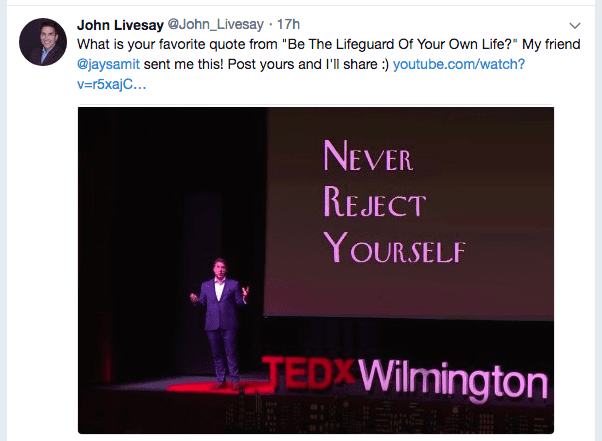
Going back to your story about your astronaut speaker. People often will say to me, “I’m looking for your help in coming up with a story. I haven’t climbed Mount Everest. I haven’t been to the moon.” I opened my TEDx Talk, which is called Be The Lifeguard of Your Own Life, with a story of being a lifeguard when I was in high school, having to save a young girl. The lesson I learned from that situation is to don’t panic and stay calm. How that helped me in my career when I got laid off and that’s another takeaway that people say, “Not only does that help me in my career, but it’s helped me with my life when things get off track.” With the entire world being disruptive, we want to be people who stay calm and don’t panic when the world is panicking. Buying everything off the shelves and all that other stuff that’s going on that is creating such. We don’t want to contribute to that. We want to be the voice of calm and confidence in our social circle and certainly when we’re able to be in front of an audience. I thought you might have a story of your career when you didn’t panic and stayed calm.
[bctt tweet=”The greatest gifts are free.” username=”John_Livesay”]
I’ve got to throw in one thing because when you mentioned the astronaut. We booked Buzz Aldrin many times and he was on the moon. He has the most spectacular videos and stills from the moon. When I do book Buzz Aldrin, I always get big thank you’s from everybody because they’re dazzling and they’re amazing. There’s one story that comes to mind. I had booked Magic Johnson for a big event in California and this was before we had iPhones and texting. He was late. He was over 45 minutes late. Number one, my face was getting red and I was getting nervous. I thought, “What if he doesn’t show up?” We didn’t have cell phones at this particular time. I couldn’t use a cell phone. What I decided to do was I took the microphone and for about fifteen minutes, I interacted with the audience and I told them some stories.
Thank goodness after I did my best to charm the people in the audience because for me, it was an emergency, it was a red alert. He wasn’t there. There were about 100 kids there that were going to get signed basketball. Instead of panicking and maybe going in the other direction, I decided to take charge, stay calm, and interact with the audience. They appreciated that I did that rather than making them keep looking at their watches and like, “Where is Magic Johnson?” I felt good about the fact that even though it was a mini crisis, for me because he was a big star. I’m a Lakers fan and one of the greatest Lakers fan of all time. Instead of panicking, I did that and thank goodness it ended up good.
That’s another example of your professionalism. In the entertainment business, they call it vamping, to keep it going because that dead time seems eternal if someone’s not up there filling the space with other questions and ideas. That’s as good a place as any to leave. Is there a quote or a book that you’d like to leave us with that you recommend, that you find inspirational or helpful?
I can’t think of a quote, but I will say, because when you said inspirational, the greatest stand-up comic and actor to me in showbiz was Robin Williams. I booked Robin Williams many times and Robin at the end of his speaking engagement, would come up to me and shake my hand and say, “Bruce, you’re the greatest.” It’s meaningful to me because Robin is my all-time hero in the comedy area. The fact Robin Williams would say to Bruce, “You’re the greatest,” that does stand out in my mind.
That shows that no matter how successful you are, it’s important to give people feedback to appreciate them. Do you want to tell people how else they can find you or follow you on social media?

Booking Celebrities: Instead of panicking and going in the other direction, you have to decide to take charge and stay calm in the face of adversity.
On Twitter, it is @CelebSpkrs4U. We have Bruce Merrin’s Celebrity Speakers on Facebook. On LinkedIn, they can follow me on Bruce Merrin and then on Instagram, it is @BruceMerrinSpeakers. Those are four different ways that they can follow me. You’re a delight and I admire and respect all that you’re doing in this area because you impact lives. That’s a plus.
Thank you, Bruce. That means a lot. I appreciate that.
Important Links
- Bruce Merrin
- Be The Lifeguard of Your Own Life – John’s TEDx Talk
- @CelebSpkrs4U – Twitter
- Bruce Merrin’s Celebrity Speakers – Facebook
- Bruce Merrin – LinkedIn
- @BruceMerrinSpeakers – Instagram
- Better Selling Through Storytelling Method Online Course
Wanna Host Your Own Podcast?
Click here to see how my friends at Podetize can help
Purchase John’s new book
John Livesay, The Pitch Whisperer
Share The Show
Did you enjoy the show? I’d love it if you subscribed today and left us a 5-star review!
- Click this link
- Click on the ‘Subscribe’ button below the artwork
- Go to the ‘Ratings and Reviews’ section
- Click on ‘Write a Review’
Love the show? Subscribe, rate, review, and share!
Join The Successful Pitch community today:
- JohnLivesay.com
- John Livesay Facebook
- John Livesay Twitter
- John Livesay LinkedIn
- John Livesay YouTube
Close The Sales Gap Through Stories with Dr. Mark Goulston
Posted by John Livesay in podcast | 0 comments

Episode Summary
—
Listen To The Episode Here
Close The Sales Gap Through Stories with Dr. Mark Goulston
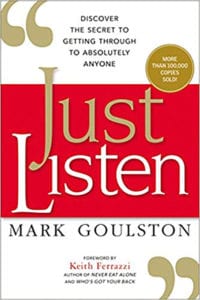
Just Listen: Discover the Secret to Getting Through to Absolutely Anyone
I am thrilled to welcome back, Dr. Mark Goulston, who is my mentor and a close personal friend. I’m honored to say that. I’m going to tell you a little bit about Dr. Mark. He was originally a UCLA professor of psychiatry for over 25 years and a former FBI and police hostage negotiation trainer. Imagine being qualified to do that. His expertise has been forged and proven in the crucible of real life, high stakes situations. If you’re in sales, there are high stakes situations all the time, whether you’re going to get the sale or not. That’s why we brought Mark on. He’s an influencer who helps influencers become more influential. His background from speaking in Russia on empathy, which is a key skill that any person in sales or pitching needs to have, as well as the author of several successful bestselling books such as Just Listen. He’s an expert on so many things, but he’s going to talk to us about how we can become better sellers and the science behind it. Mark, welcome.
Thanks for having me on again, John. I’m proud to call myself your mentor. That’s really been special.
Mark, you and I were having a conversation that generated the concept of multitasking. People are like, “I’m going to be on my phone. I’m going to be listening to you and writing an email at the same time and maybe checking a text message that pops in.” There’s a big myth around that. I think you’re an expert who can talk about that as a topical opener because you can’t sell and tell a story at the same time. It triggered so many thoughts about multitasking and the ability to be present with people. Can you talk about what inspired you to have that insight?
I have an anecdote because people remember stories. I think you may have taught me about that. Here’s a story. We live in Los Angeles and they say it’s better to show than tell. Within a month after 9/11, I was called in by a number of groups to say, “Can you call the group down?” I was a member of a professional services networking group and these were lawyers, accountants, insurance people, very transactional people, but the whole world was shaken. I did an exercise with one of the groups which had about 25 attendees. I said, “I want each of you to talk about a dark time in your life that you never thought you’d get out of but you did and that life was never the same again after you got through it.” What was fascinating is they all went around. I think it can show you the power of a story. There was a very civil, demure female attorney. It was very easy back then, hopefully, it’s changed, to see people who had manners, who are attorneys not having the killer instinct, not having what it took to be able to handle your case. She was seen in that way. She was highly competent.
Here was her story, and she said it with no scintilla of being impressed with what she said. She said, “One of those times in my life was on the day that I graduated law school and I was about to be given a chance to start paying back all the debt I had. On that same day, I was given total custody of my two younger siblings.” You could feel in the audience, she’s no lightweight. What was fascinating is I would say it was 90% recall of people’s stories. Whereas this group, we’ve been meeting for years and a lot of times you hear the elevator pitch and you still don’t know, “Is this a banker? Is this an accountant? Is this a lawyer or what do they do?” They say the same old spiel.
I think what happened is as people shared stories that they were connected to, everybody lowered their guard. That’s what you and I spoke about. When you share a story that you’re emotionally connected to, it causes the other person to feel he or she is emotionally connected to that story so I can lower my guard and lean in without worrying that they’re going to do a bait and switch. That said, and you’re a master at this, you need to teach people that when they share a story, it just can’t be a memorized one where they raise the inflection at the proper time to demonstrate how I am so emotional and then do a bait and switch. It’s a challenge because when you tell the same story many times because it touches a nerve, you need to be able to still be present in the story as opposed to knowing this is instrumental to my getting them to connect with me and then I’m going to start selling them.
Actors on Broadway get the same script every time, and yet the really good ones make it fresh and respond to how the audience is responding and they’re in the moment, which I think is the big takeaway. If I’m someone who is in sales and we all have to sell ourselves, we’re pitching ourselves to get hired, we’re pitching ourselves to get a new client, we’re pitching ourselves to get hired as a speaker, we’re pitching ourselves to get our start up funded. Whatever it is, you’re selling yourself and your ideas to get implemented all the time. People say, “It’s time to sell. Push.” My whole premise is to tell a story that people see themselves in and you become magnetic. Instead of pushing, you’re going to pull people in. When you’re telling a good story, you’re so present as you just described, that you’re not selling. What happens to us from a scientific standpoint? You obviously have a medical degree, so you understand mirror neurons and how that all works. Why is it that when we’re telling a story where accessing, if you will, a different part of someone’s brain and the defenses go down?
I’m glad you mentioned mirror neurons. I have several books and I have a book called Just Listen and the subtitle is Discover the Secret to Getting Through to Absolutely Anyone by Listening. What I talked about in there were mirror neurons. For people who don’t know much about neuroscience, mirror neurons were discovered in the late 1980s actually in macaque monkeys. They were called “Monkey see, monkey do” neurons because people noted that monkeys would imitate each other. They would even imitate you. There are pictures where you’ll see someone sticking their tongue out and one of the monkeys and the monkey sticking his tongue out backwards, back at that person. Mirror neurons mirror what’s coming to them. I introduced the concept in Just Listen, which I’ve spoken to in many occasions, called the mirror neuron gap. Imagine that we’re often trying to mirror others. We’re trying to conform to their needs. We’re trying to please them. We’re trying to not tick them off. The more that we do that consciously or unconsciously, the more it develops a hunger in us for the world to mirror us in return. The greater the mirror neuron gap, meaning the more we feel we’ve confirmed everybody else’s emotional, psychological needs, the greater the gap and the greater the gap, the higher our cortisol is. It is stressful when there’s a big gap. Some of the things that widen the gap are sarcasm, ridicule, abuse and sullenness.
Define that word for us just in case it’s not a word that everybody says in their everyday language.
Sullenness means if you have ever talked to a teenager or a spouse and they’re really upset and you think they’d feel better if they spoke about it, they just say, “Leave me alone. I’m fine. I’m okay.” Clearly, they’re not a happy camper but they’re just sullen. They’re withdrawn and they’re moody.
[bctt tweet=”You can’t sell and tell stories at the same time.” username=”John_Livesay”]
Let’s double click on that because for people reading, you can transfer this, not just to your personal life but your business life. If you’re managing people and you’re trying to motivate them or you’re a speaker, like you and I are, and we’re trying to motivate an audience or just not getting through, sometimes it has nothing to do with us. If you’re selling something to someone and you don’t have any idea what the story was, what phone call they got. Maybe they got chewed up by their boss, who knows what happened and they are just not in the mood to hear what you have to say? The awareness that not everybody’s always just as excited as you are to be talking about what you’re talking about is a huge tool in our toolbox.
It reminds me of a 60 Minutes segment that Oprah Winfrey did. It was about a program I think in Wisconsin that treats childhood trauma. In the 60 Minutes Overtime, someone interviewed Oprah because Oprah said that was the most life-changing story she’s done in her entire career. That’s a pretty big claim, so the person interviewing her in 60 Minutes Overtime was like, “What do you mean?” She said, “There’s a reason they’re so successful in treating these traumatized children who are not just passive, they’re acting out, they’re doing destructive things, they’re hitting, they’re kicking. Their whole approach is they believe that most people are good inside, but it gets distorted. Their whole approach when they approach people is to say, ‘What happened to you that this is what’s going on now?’” They always believe that something happened, a prior story, a prior incident to cause what’s happening as opposed to just jumping down their throat and saying, “Stop doing that. Why are you doing it? Why are you acting up?”
It was fascinating because the reporter asked Oprah, “Did that change your life?” She said it changed everything. I think what she was really admitting is that between the lines that you can be judgmental if someone acted up instead of realizing something had happened to them to cause them to act up. I think what she was admitting is before realizing this, I would react to the behavior and said, “Why are you doing that? Stop doing that,” as opposed to, “What happened to you?” Here’s the power of going behind things and it’s in my book, Just Listen. There’s an anecdote and this is the power. If you’re reading and you want to influence people, what’s more powerful than what you tell others is what you enable them to tell you that matters to them. The more you can get them to tell a foundational story or a story behind what’s going on. To your point, I was meeting with a CEO and it took a while for me to get an appointment with him. I’m seated with him and it is clear he’s not there. He’s not making eye contact. It’s clear that he had made the appointment and he probably wanted to cancel it.
I work for myself. I can say things that if I had a sales manager and I told him I said this, they tell you “How did you dare say that?” To this fellow who was clearly preoccupied, I said, “How much time do you got from me?” He goes, “What?” I said, “Your time’s up.” “What do you mean?” I said, “How much time do you got for me? Look at your calendar.” He ruffled around. He was ticked off and he said, “Twenty minutes.” I said to him, “We’re into minute three and it’s clear that there’s something more important in your mind than meeting with me. I’m guessing it’s more important than a lot of the things you’re going to do now. Here’s the deal. Let’s stop our appointment now at minute four, but take the remaining sixteen minutes and take care of whatever is on your mind because I think what we would talk about would be worth your undivided attention, but you can’t give that to me. It’s not fair to this conversation, but it’s not going to be fair to other people. Take care of that other thing. If I’ve been too rude, just tell your assistant, ‘Don’t ever let him back.’”
He was a big footballer and he looked at me and he paused and then his eyes watered up. I say to myself, “Mark, you can’t be the shrink out in the business world. Stop making people cry.” He looks at me and he says, “You’ve known me for four minutes and you know something that people 30 yards from us don’t know because I’m very private.” I said, “What’s that?” He looked at me and he said, “My wife’s having a biopsy and it doesn’t look good.” His voice is emotional. I said, “Go be with her. You shouldn’t be here. Make a call. I’m sorry. Take care of it.” It was fascinating because he looked at me and he felt the relief of being able to tell his story that was behind his behavior. He was like one of these big Newfoundland dogs coming in from the rain. He shook his shoulders, he looked at me and he said, “I’m not as strong as my wife, but I’m pretty strong. I did two tours of duty in Vietnam. You’ve got my undivided attention and you’ve got your full twenty minutes.”

Storytelling And Selling: A lot of people have trouble with their close, pitch or sales because they’re so nakedly about themselves.
I think if you’re reading this, what happened is I mirrored him by knowing something was going on that was causing him not to be present. By then having him tell the story of what was going on, and again I didn’t race to put it aside. If I was really a jerk, I would have said, “Do you think you’ll be able to compartmentalize that so we can get onto the pitch?” It shouldn’t surprise you. I know this person since then. That’s the power of not only storytelling but getting other people to tell their story. There’s something I’ve come up with, and you might want to try this if you’re doing a pitch. What I notice is a lot of people have trouble with their close, pitch or sales. The reason for that is because you’re so nakedly about yourself. Even if you’ve had this conversation, when you have to come in and ask for the sale, a lot of salespeople are awkward because what you’re doing is you’re stepping out of it being about a win-win into, “Am I going to get my number?” That’s I think what fuels the awkwardness.
Something I’ve been coaching sales teams about is what I call starting with the close. Somewhere early on in the conversation and you have to modify to fit the situation and whatever you’re selling and you say to the other person, “Can I tell you what I think our conversation is about? It’s not about me selling you anything or you buying anything,” which would intrigue people to go, “Can I tell you what I think is going on?” You’re doing this early on, you could say, “The purpose of this conversation is that I get a yes from you. If not now, in the near future. If I get a yes from you, there’s a possibility, I’ll not only meet my numbers but I’ll exceed my numbers. I’ll get a raise. I’ll get paid more. I’ll get a bonus. I put myself in your shoes. What I realize is it’s about for you as what I call 1116 squared.” I’m putting that together in an article and possibly a book and they’re going to say, “What is that?” You could say, “What you’re listening for as the buyer of products and services for your company is if you say yes, whether you will regret it one day, one week or one month from now. That’s the 1, 1, 1.”
You’re listening for that because if you regret it and it turns out badly, your boss is going to say, “What did you buy this thing for? We can’t use it. We can’t implement it. I have to tell my boss why we brought it into the company.” My guess is you’re listening to make sure that you won’t have the 1, 1, 1 regret, but the six squared is what you’re really listening for unconsciously. I this going to be the purchase where your boss’s boss says to your boss, “I’m giving you a raise because you and your group just brought something into the company that helped us be so much more successful than the CEO singled me out to say, ‘That was pretty neat, what you brought into the company.’” The 6 squared is what you’re hoping is that your boss’ boss will be so pleased with they’re getting a raise that they’re going to do the same for your boss. If your boss is someone who’s not totally self-absorbed, they’re going to know that not only did your bosses group to achieve that sale, but you’re the one who was the key person.
I do this when I’m being hired as a keynote speaker. I future pace the event planner and I’ll say, “What would it look like a week after this event for you to look really great to your boss? What feedback would you be getting?” They think to themselves, “I guess at the event I would see people engaged and not on their phones and then people will come up to me and say, “That’s the best speaker we’ve had in years. My boss would say, ‘You really nailed it. The people are actually using what John talked about in telling better stories now and we’re winning more pitches,’ and all of that would start happening.”
If they get stuck and they can’t visualize what good feedback sounds like, I will reference other keynotes I’ve given and say, “Here’s what happened last time, the feedback they got,” and then they see themselves in that story and they go, “That’s the journey I want to go on.” I think there are lots of applications to what you just shared there of future pacing people of when you make the right decision, because everyone’s afraid of making the wrong one. There’s fear to pull the trigger. If you can tell a story and paint the picture of what it looks like when you make the right decision, then they can take a breath, as you said, and the storytelling is happening versus the selling. They’re like, “That’s for me.”
[bctt tweet=”Show, don’t tell, how people can see themselves working with you.” username=”John_Livesay”]
What I loved about what you just said and what I hope readers will pick up is it goes to the word relevant. When you future pace it, it needs to be relevant. You outlined it perfectly that a week or two weeks later, whatever the timeframe is it’s exactly that. The speaker was engaging, people didn’t look at their phones, plus you gave them information that was doable by them. I think that’s a key component, doable by them. One of the problems that experts have is they’re so passionate about their expertise that they often want to infuse people with all kinds of insight, how it works and why it works. That can sometimes be helpful. A lot of the audiences in business, what they’re listening for is the bottom line. The bottom line is, is this something that is relevant to me that I can use immediately without having to become an expert?
What I like about what you do is you give people actual tips and a roadmap for telling a great story. They don’t have to be natural born storytellers. If they follow those steps, the result will be people saying, “You tell an amazing story.” I know that when you work with people, initially they learn the skill and it may not be authentic, but as they start to attract an influence and attention, they begin to say, “I like this. I like that telling the story was not just affective and selling more, but more people came up to me.” When people learn what you have to teach them and they give presentations, people are going to come up to them and some of these people will say, “No one’s ever come up to me after a presentation.”
I remember when we met years ago when you came up to me and you said, that’s one of the best presentations I’ve ever heard because you spoke with us or above us. I think I will always remember that my whole life because it was one of the highest compliments I’ve ever received. I didn’t know who you were, so it even took on more meaning. That’s the goal, whether it’s a keynote presentation or a one-on-one conversation where you’re trying to get someone to take some action. I think the real takeaway from what you said there is everyone has this unspoken question in their head when they’re listening to you talk, especially if you’re telling a story about someone else you helped, and that question is, “Will it work for me?” It’s great that that person went from this to that or that other event planner got rave reviews, but these people are not that. They have to see themselves in your story and you are the master with this. It’s the mirror neurons. The more we get those mirror neurons to match, the more they see themselves in the story, you’re closing that stress gap and then they think, “Yes, this will work for me too because I’m matching. The more I’d match myself in that story if I understand your whole strategy there.”
The compliment that you took from that about you talking with an audience, when you talk with an audience, you’re mirroring them. When you talk over or at them, you’re pushing them away, you’re increasing the gap. If their minds are overwhelmed, and most people’s minds are, and you’re talking to them, they will nod from the neck up, but they won’t execute because it’s just more information and they can’t hold on to everything they have. When you talk with people, people lean into it because sadly, this is an interesting awareness that you could share with your audiences. You could say, “Raise your hand if you feel talked with less than 10% of your conversations.” I think a lot of them are going to raise their hand. “Raise your hand if you feel being talked with would almost exponentially increase the other person’s influence with you.” They’re going to raise their hands. You can say, “Raise your hands if what I’ve presented so far, not just stories I’ve shared, but hopefully my enthusiasm for you. I want to make you more successful and I want to introduce a way that you haven’t recognized. It’s yours for the having, for the taking.” It’s not rocket science. It might be neuroscience and because I think storytelling, especially stories that you’re connected with and that are relevant to them, people lean in to that and they feel talked with.
You’ve been interviewed by everyone from Oprah to Larry King. You understand the value of being present in those moments when the stakes are high. It’s not hostage negotiation, but your adrenaline is kicked up a notch or two when you’re being interviewed by people like that and the cameras are rolling and it’s live TV. The preparation that goes that, that you can depend on your skills when you need them is something so valuable. I wanted to give an example of the preparation I did and then get your take on what you do. It was invited to be on a show called Talk of the Town and talk about storytelling and selling. They said, “A lot of our viewers are in the morning and they’re stay-at-home moms. Is there anything in your book better selling through storytelling that’s at all relevant to them?” I said, “Yes.” A mutual friend of ours said to me she’s got some twelve-year-old boys that she’ll say to them, “How was your day?” She gets one-word answers, “Fine. Good.” Every parent has had that experience.

Storytelling And Selling: What people respect is when you have values that you don’t stray from and that are being of service to them.
I said, “Instead of asking your kid that question, ‘How was your day?’ you could say, “Tell me a story about the best part of your day.” It causes them to think about it, learn some storytelling skills and get a dialogue going.” The producer liked that and so did the host of the show. Customizing your audience, when you talk about being relevant, the ability to shift and say, for these people who are going to possibly hire me as a speaker, it’s a very different messaging and story I’m going to tell when I’m on camera talking about my book. You have done that so many times and I wanted to get your thoughts on the ability to be prepared and what is it that we can all do and learn from you so that we can be more flexible and in the moment.
There’s something that’s helped me get prepared and at the same time, lessen my anxiety because I’m an introvert and so I have to pump myself up to be present. Something I’ve been focusing on, and I’m coaching other people to do, is if you can imagine that whoever you’re speaking to or with, if you think to yourself, they are looking and listening for what? If you imagine what they’re looking for and listening for, I’ve actually identified several key elements that they’re unconsciously looking for and listening for. If you can deliver on them, you’ll have an amazing influence. The first thing that they’re looking or listening for is can they trust me? I’m this foreign entity. I’m obviously presenting something, until proven otherwise I’m selling them on something, which is basically I want you to hire me for more. The first thing is can they trust me to not hurt them or take advantage of them? Unconsciously they’re comparing me to all the people who did hurt them, took advantage of them, especially the ones who initially they thought were their friends.
The next thing that they are listening for is confidence. The confidence is, “What’s his track record?” Confidence comes not from what I say I can do. Confidence in me comes from them hearing what have I already done that helps someone exactly like them that produced hopefully measurable results. When they hear a track record of something, I was able to do with other people just like them, that makes it relevant. They have confidence. Here’s the extra thing and this is really underneath the trust and confidence. They’re actually listening for whether they can respect and admire me. Why? When they can respect and admire me, I become someone they want more of, not for my service as a product. They want my esteem. I had seven mentors, they all passed away.
One of the most important things to me about all of them was their esteem. These influential and powerful people gave me the gift of their most precious thing, which was their time. It was interesting because I so wanted their esteem and never wanted to disappoint them, I would never tell them something I was intending to do unless I was 150% sure I would do it. I want to be in integrity and I wouldn’t want them to think, “He’s flaky.” They were so forgiving and they liked me and I think we loved each other for more than what I was doing that they would have cut me more slack than I did. People are listing for, “Can I trust you? Can I have confidence in you?” Because of their experience of really not necessarily interacting with people that they respect or admire a lot, they’re not consciously listening for that. When you can deliver on that, people want more of you. What I’ve discovered that people respect is when you have values that you don’t stray from and the values are always focused on other people being of service to them.
That taps right into why companies hire you to become a keynote speaker. They’re trying to make sure that they have a culture that attracts and keeps the right talent there so that they can be more competitive. If there’s dissonance between departments, they can bring you in to get people to start cooperating and listening and working together in a new way that’s never been possible before. Those are some of the takeaways that I’ve seen from watching your reel of you in front of Russia and seeing some of the companies that have hired you to speak before. Are there any last thoughts you want to leave this with, Mark, about what takeaways the audience has when they hear you give a keynote?
[bctt tweet=”Talk with people, not at or above them.” username=”John_Livesay”]
Here’s an anecdote. People look up Goulston Moscow on YouTube. They made a three-minute highlight reel to say this is what our events look like and our speakers look like. I actually wrote a blog called the Three Da Formula. Da is yes in Russia. It was a way of easing my own anxiety. I spoke for six hours. It was just me one day for a one-and-a-half hour module and questions. People said, “Were you exhausted?” I said, “When you have adrenaline going through every pore in your body, you only get exhausted afterwards and you can’t move after.” What I did at the beginning was what you want to do to be successful as you want to get into the other person thinking. What I did at the beginning, and I try to do this now in most presentations, I said, “Wouldn’t you agree that it’s important for the speaker to get where you’re coming from?”
I did a little research on new Russians. My first slide was a slide of a Russian audience with their arms crossed and all of them looking pissed. I showed that slide and I said, “What people told me is when you go to Russia, don’t smile.” I showed the slide and they laughed and I said, “What I realized is you’re not smiling, not because you’re upset but you’re looking for whether you can trust me to not take advantage of you or hurt you because historically, every time some foreign entity came into Russia, it was to hurt it. You have hundreds of years of people trying to hurt Russia, trying to kill off Mother Russia. You’re listening for what my intentions are. Let me see if I get where you’re coming from.”
I’ll give you an example, but other people have to modify it. I said, “Most of you are managers. You don’t get anything done yourself. You get stuff done through people. You don’t do this stuff. You let people do it. Is that true?” “Da.” “Is it also true that you’re coming here because your way of getting things done is sometimes to be pushy, which gets short-term results but it’s stressful on them, stressful on you, causes them and you to drink a little bit too much vodka, not eat that well? If there’s another way to get the same results or better results, it’s less stressful. Is that what you’re listening for?” They go, “Da.”
The third thing I said, “Finally, what you’re listening for is can you get from our six hours together tactics and tips that are doable by you and there is no upsell? I’m not selling you a course. The Russian edition of my books are out there in front if you want it. You don’t have to buy it, but you’re looking if you can get things that are doable and implementable by you in your life, and you don’t have to like psychology. You don’t even have to like thinking. If I could give you those, would this have been worth your time and money?” They go, “Da.” The idea is if you can get into people’s thinking, it’s pretty easy like what we talked about earlier.
It’s easy for you because you’ve done it so long and you’ve been used to getting in people’s heads as a therapist. I think it’s the lessons that we can all take away of empathy, listening and storytelling. Those are the three key secrets to becoming or compelling and less pushing, Mark. I can’t thank you enough. The book again is called Just Listen. I can’t thank you again for giving us such great insights into the ability that if you’re telling a story, you can’t be selling and people love stories. Thanks, Mark.
You make me want to be a better person. I feel like this is that Jack Nicholson movie.
Thank you. That’s very kind.
Links Mentioned:
- Dr. Mark Goulston
- Show – Previous episode
- Just Listen
- YouTube – Dr. Mark Goulston in Moscow
- https://MarkGoulston.com/
Wanna Host Your Own Podcast?
Click here to see how my friends at Brandcasting You can help
Get your FREE Sneak Peek of John’s new book Better Selling Through Storytelling
John Livesay, The Pitch Whisperer
Share The Show
Did you enjoy the show? I’d love it if you subscribed today and left us a 5-star review!
-
- Click this link
- Click on the ‘Subscribe’ button below the artwork
- Go to the ‘Ratings and Reviews’ section
- Click on ‘Write a Review’