

Big Fun Is Serious Business
Posted by John Livesay in podcast | 0 comments
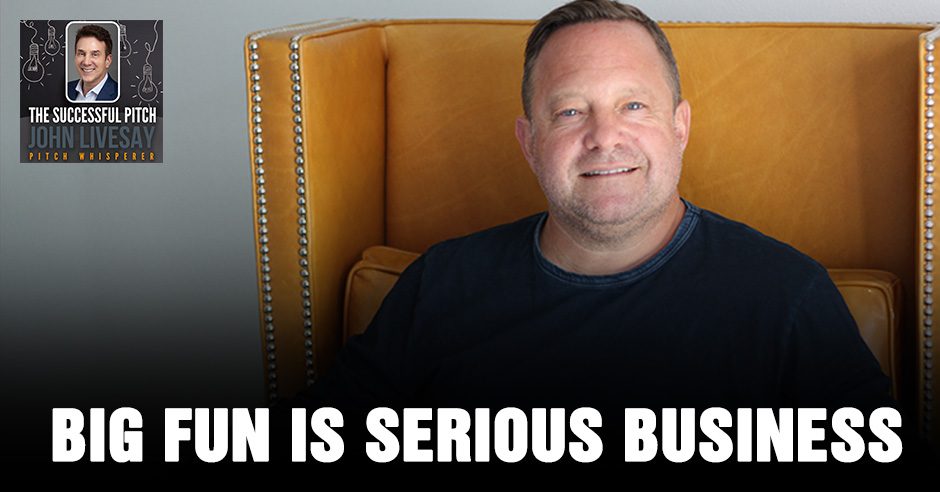
Attending events can be so fun yet, the amount of work put behind the scenes to make them successful is no joke. Take it from the founder of Eventmakers, Guy Genis, who said that big fun is, in fact, serious business. In this episode, he joins John Livesay to share how he is working with huge clients to create memorable and immersive events. He taps into the power of storytelling, taking people from beginning to end with events, and making connections that help propel your business. Guy also talks about interior design, working with clients, and balancing that fine line between giving them what they want and keeping it within the constraints of what is going to look best.
—
Listen to the podcast here
Big Fun Is Serious Business
My guest is Guy Genis, the Founder of Eventmakers, which has been in business for over 30 years, working with huge clients like McDonald’s on creating memorable events in multiple different places. When we describe some of the events that he’s created, the experiences and how immersive they are, you’re going to feel like you’re right there. We talk about the power of storytelling and how that makes events memorable. He said that big fun is in fact serious business, and that you’re only as good as your connections. Enjoy the episode.
—
My guest is Guy Genis, the President and CEO of Eventmakers. He founded Eventmakers back in 1990. He’s produced over 1,000 events in his 30 years and his knowledge and expertise in event creation and execution clearly speaks for itself. Before Eventmakers, he charted and planned events on luxury yachts in partnerships with the Ritz Carlton hotels. When he’s not doing that, he’s busy with Guy Genis Designs as an Interior Design Expert, which is all part of the experience he creates for his events. Guy, welcome to the show.
Thank you.
Let’s talk about your own story of origin. Before the show, we were talking about you have a history with your mom and your grandmother in the world of design. Is that true?
That is true. It’s an interior design dynasty. It’s grandmother. Mother was a successful interior designer for multiple celebrities including DeNiro, Marlon Brando and Rod Stewart. My sister, in her own right, is successful and works with my mom. Now, I’m collaborating with my sister on interior design projects all over. We did a 6,000 square foot home in Kona, Hawaii overlooking the Four Seasons golf course. We did a 12,000-square-foot home in Newport Coast. That’s when I’m not doing producing events.
How did you get into this 30-some years ago? Did you say, “I want to take my passion and skills from creating beautiful spaces for homes and started an event company?”
No, it dates back and I didn’t even know I was doing it. I was the Social Chairman of my fraternity at University of the Pacific. I never knew I would end up for a living producing events. I was an actor when I graduated. I was on a bunch of TV shows. I played a nerd name Earl on Saved by the Bell on a couple of episodes. I was a day player on Coach and Dear John and Anything But Love with Jamie Lee Curtis. It’s amazing when you’re acting and to be on a 3, 4 camera shows is incredible. When you’re not working like all actors know and going on auditions and not getting them, it’s a little depressing. My father was in the film industry. I came from a creative background. My dad produced the special effects for Star Wars with Lucas. He created those iconic titles that went off into space.
[bctt tweet=”If you enjoy what you’re selling, you could sell anything.” username=”John_Livesay”]
Let’s take a moment. I think any person that has any creative aspect in their life dreams of creating something that iconic and that will live on long past their life. To grow up around that, you have a sense of anything is possible, I would think.
It was a great combination of one parent being on the creative scientific end and the mother could be creative in the interior design.
You are the mix of science and creativity. When those things come together, magic happens. It reminds me of the story of Jonas Salk down in La Jolla wooing Francoise Gilot who was with Picasso in the ‘40s. She’s like, “Why do I want a data scientist? I’m an artist.” He used the architecture of the Salk Institute. He said, “Architecture is the bridge between art and science. I want to have artists here as well as someone like Francis Crick working on DNA.” You’re the only other person I’ve ever heard connect those dots like that. What I think is interesting around what your dad was doing with Star Wars is there’s a lot of creativity, obviously creating something that’s still the iconic opening, the once upon a time storytelling, but there’s some science behind it too. He wasn’t a graphic design person, correct?
That is correct. I drifted away from your question. The real answer is how I got into it is I went to my dad who had a post-production company and they were doing the audience reaction spots for Disney. I said, “Dad, I’m bummed out. I’m not getting these auditions.” He says, “Go to work for the company that plans our events.” I ended up for a low salary and a high commission going to work for this boutique company in Marina Del Rey, California chartering yachts for the Ritz Carlton. We would do these extravagant corporate events. I ended up the cold call king. I knew if I enjoyed what I was selling, I could sell anything. My acting partner, when I would go on auditions, this female happened to own a McDonald’s.
She said, “You are crazy if you don’t call the regional office in Woodland Hills and try to get a meeting or an event.” After thirteen cold calls, they said, “You’re bothering me. Come in.” I ended up closing a holiday party for 1,000 guests for McDonald’s. Flash forward 30 years later, my twin brother and I produced the majority of owner-operator meetings throughout the country for McDonald’s. That’s where I think you, as a motivational speaker, when I learned about you and selling and storytelling could be perfect for our McDonald’s clients as well.
Also, I want to zoom out for everyone because you had a story of persistence. You had a friend saying you’d be crazy not to try something, but you’re used to rejection like salespeople are. An actor’s life and a speaker’s life are very similar. We can’t take rejection personally. Yet when you are creating content, and in my case it’s creating a show and interviewing great people like you, I happened to interview a mutual friend of ours, Amber Allen. That’s how we met because you knew Amber. You’d worked with her when she was at Warner and Disney and you did events for her. You heard me interviewing her about her virtual reality company, Double A Labs.

Events Business: More than anything, you can’t sell your style to a client. You have to listen first and make sure that you understand where they’re coming from.
You reached out to me. You never know how relationships are going to start and the connections and the need to keep creating something that’s valuable. You get into other people’s networks and other people’s worlds. I’m sure that’s how you have been able to grow Eventmakers where you’re working with not McDonald’s but Coca-Cola, American Express, Fox and many others. You get the trust transferred over is what I’m saying.
You are only as good as your connections. I would say Amber is a highly talented cutting-edge person producing these technological events where using augmented reality. That’s why she’s an innovator. She’s on the cutting edge and we all help each other. You can’t advance your company without having strong connections like this.
Also what I admire about you, Guy, is your multiple sources of income. It’s a basic business strategy. Yet a lot of event planners, a lot of speakers suddenly go, “If I’m not doing a live event that’s shut down for a pandemic, I don’t know how to else to make money.” You have the design business. You’re already planning months in advance for when live events come back. Have you been able to do any planning for virtual events to make those special?
Yes. As a matter of fact, McDonald’s has embraced virtual events. We’ve invested in a full studio in Orange County with one of our partners. We have full capabilities to stream. We have a green screen, we have Johnny on the spot custom to produce for a network, camera crews that go out and do interviews of these executives. We’re doing these virtual meetings for McDonald’s throughout the country.
Everyone knows about Tony, the famous motivational guy. He’s invested millions of dollars in having a virtual ability to connect with people. I think when a company like you creates a new way of doing something. Let’s talk about that. Over your 30 years of running Eventmakers, what other kinds of pivots or challenges have you had to face and how have you done it like Tony Robbins has done?
The interior design is the perfect pivot. It was right in front of my face, but yet it’s one of those things you have to come to a real realization that, “I’ve done this all my life.” It’s such an easy pivot and you’re already good at it. It’s a form of storytelling as well.
[bctt tweet=”You are only as good as your connections.” username=”John_Livesay”]
We were talking about one of your clients, GameStop, and how you turned a game into an experience in a specific location that was completely relevant to what the game was about. Can you tell us that story?
The end client was 2K. It’s a video gaming company based in Novato. The game itself was called Mafia 3. The backdrop of the game is about the mafia in New Orleans in the 1960s where the mafia started. The purpose was to sell 5,000 GameStop managers in three minutes, which is a challenge. How do you tell a story beginning, middle, and end, get the GameStop managers motivated and have them leave the arena with the intent of an excitement to sell this game through at a GameStop? We came up with the story of creating a real live New Orleans funeral where we had a cast of 50. We had the cast of 50 dressed by Emmy award-winning costume designers in those 1960s outfits. They were doing a real funeral procession down the aisles, pushing the caskets. The audience didn’t know that this cast of 50 was a world-class choir. They get up on stage and they come in and we have them led by a sixteen-piece jazz band singing The Saints Go Marching In like they would do in New Orleans.
They get up on stage and 25 peel off to the right on the bleachers and 25 peel off to the left and they begin the choral of Can’t Always Get What You Want by The Rolling Stones, which is the perfect song and lyrics to talk about the mafia. It was a big surprise in the audience didn’t know that this was a world-class choir, the Angel City Chorale from out of Los Angeles. They made it to the finals of America’s Got Talent. All of a sudden, after they start, I put together a world-class rock band led by Chester Bennington of Linkin Park, Dave Navarro. I had the drummer from Queens of the Stone Age. I had the bass player Scott from Weezer and they go into Can’t Always Get What You Want.
We outfitted every single GameStop manager with LED wristbands. We control the color of 5,000 in the audience and they went bananas. While this was all happening, we edited scenes from Mafia 3 above them on a 100-foot video screen. It was a full visceral, they were enveloped, sold on the game footage, a world-class band and choir. It was a full sensory emotional experience. They came out of there pumped up. Some people were crying from GameStop, the managers, and they said they’ve never seen anything like it.
For everyone reading, let’s break down what Guy told us. A story has to be three things: clear, concise and compelling. In three minutes, you have to tell this amazing story that pulls people in. I always say, when you tug at people’s heartstrings, they want to open their purse strings. When you learn a good story, craft it, make it concise and compelling, then it touches us on an emotional level. Any good story has a little bit of drama and unexpectedness to it. First, it’s cool enough that these people are dressed and carrying a coffin and wearing stylish period clothes. That alone pulls you in. The surprise is those people are professional singers. You keep escalating the wow factor.
You take it one step further. You were describing where it became interactive that they felt part of the story with the colors. If you’re trying to figure out, “How do I tell a story to get people to want to hire me? How do I tell a story to get people to join my team? How do I get to tell a story to get people motivated and re-energized?” Those are some real key tactics. What I love helping people do is take these examples like you gave and turn them into stories so that people see themselves so much in the story that they want to go on the journey with you. You did something I’m not even aware of that you did because you’re such a natural storyteller, which was you gave a resolution to that story. It was telling the story of the guy who runs it saying he was almost in tears and so was the audience. He’d never seen anything like it. That’s the resolution of that story.

Events Business: “Big fun is serious business.”
Imagine the Wizard of Oz if the movie stopped when Dorothy had gotten on the balloon to go back to Kansas. It wouldn’t nearly be meaningful, but we need that resolution of her back in her bed and all the lessons, there’s no place like home. All of that is what makes any movie a story compelling. You gave us a great example of it and how when we tell those stories, sales happen long after people keep talking about it. That’s the other wonderful thing about storytelling is it makes things memorable.
I might add one more thing that these three minutes was only an introduction to introduce the game developer. By the time the game developer comes on stage, they’re already sold. All he has to do is now show them all this great content that they haven’t seen yet. It was making his job easier, getting them excited and that’s storytelling at its best, I think.
One of my previous guests is Robert Cialdini, who wrote a book called Pre-Suasion. He talks about the power of edification. When you edify somebody before they come on stage or speak, it’s good intros, but you did a whole production to edify somebody. They’re already sold emotionally and then they’re backing up their decision with his own story hopefully if what the game is about and how fun it’s going to be to play. Storytelling as a tool to edify is something I like and have not heard people put those two things together. Thanks for that. I had to share that detail. When you get hired as part of your design expertise, what is it that you do that separates you from all the other people who do interior design?
Everybody has their own style. I would call myself a minimalist. I think listening to the client is important, but we tend to have a clean look. We also do a lot of research on the latest in furniture whether it’s already made or do we need to custom make it. It’s more of a custom-tailored approach to every single client. I think more than anything is you can’t sell your style onto a client. You have to listen first and make sure that you understand where they’re coming from. You also need to let them know if there are any limitations to what they want to do, which is important. You have to be able to direct them in the right way. It’s a fine line between what they want and what you think they should have.
It’s almost like an event. That’s why it’s similar. I’m trying to guide somebody. You want to give them something new, it has to be within a budget. One of the techniques that I use, and I’m curious to see if you do this, which is a future pacing somebody. You say, “Let’s imagine that it’s a week after the event. What would have to happen for you to feel happy that this was the best event ever? In the case of designing a home, let’s imagine it’s all done. You’ve had this amazing Thanksgiving dinner, inviting everybody to come see it. What would you think would be the wow factors in the house?” Those kinds of things help people start imagining the future with you even before they’ve hired you.
That is crucial, which is why I always start with what are their goals? Where do they want to be? They’re living in this house every single day. What’s going to make them the happiest? It’s like walking that fine line between giving them exactly or as much as they want, but yet keeping it in the constraints of what I think is going to look the best.
[bctt tweet=”People get bogged down with data and don’t pay attention.” username=”John_Livesay”]
The other thing I think you do for people is there’s a whole book called The Paradox of Choice. Too many choices overwhelm and maybe even depress us sometimes. Unless we have someone like you, Guy, that we trust your taste, your experience, and that you know what we like even before we see it. You’ve curated something for us. Instead of showing somebody 100 samples of floor coverings or window treatments, or color scheme, if you curate that down to here’s three choices, none of them are wrong. It’s let’s brainstorm together what’s the right one. That takes much stress off of people that you don’t even realize what a gift that is that you’re giving to people. It’s the ability to not overwhelm them by too many choices. That trust factor that you have and that’s what a good salesperson does too.
It all boils down to focus and you want to keep them focused on the goal of getting this done the best way and the most creative way possible. I’m also interested. I’m aware that you sold a major institutional interior design firm Gensler on a $1 billion project. I’m interested to go more in-depth on how you did that because it’s something that would help me in my interior design endeavors.
They hired me originally to speak to their team on storytelling for client relationships. We need to connect with our existing clients better. It became how do we tell better stories in our interviews when we’re competing against other firms. They didn’t understand what made a good story or how to structure a story. They weren’t telling stories. They were showing typically before and after pictures of work they’d done and hope that whoever had the best design would get the business. In this particular case, they were told, “You’re in the final three. All three firms could do the work. Otherwise, you wouldn’t have made it to the final three. We’re going to hire the people we like the most.” They said, “Let’s get John in here.” We don’t even know where to start with that criteria.
I flew to Pittsburgh with them for two days and worked with them. I said, “On this team slide here, what are you going to say?” They said, “If we run out of time, we might skip it even.” I’m like, “That’s the most important slide.” This is the secret, Guy. People hire you, and then the company, and then your designs in this case. Most people jump to the design. I said, “What are you going to say?” There are ten pictures of ten people that would be working on this that they got the job. “My name is Bob. I’ve been here ten years. This is what I do.” I said, “No, Bob. What made you become an architect?” “I played with Legos when I was eleven and now I have a son that’s eleven and I still play with Legos and bring that same passion.” “Sue, how about you?” “I was in the Israeli Army before I worked here.” I go, “You’re going to bring a lot of discipline and focus. Since you’re in charge of making sure this thing comes on time and under budget, you’re the perfect person.”
Each one of them had their own stories that they told that made them memorable and likable so that the clients said, “We get them. That’s who we’d like to work with for the next six years.” When we got to the part where they had to showcase studies, they had some beautiful before and after pictures, but no story. I taught them how to take those pictures and facts about square footage and things into a story. It sounds like this. “Two years ago, JetBlue at JFK hired us to come in and renovate that wing. One of the challenges we had during that four-year project was you had to rip off all the tiles in the middle of the night and rewire everything. We had to do it between 9:00 at night and 9:00 in the morning to make sure the stores could still open and not lose revenue. We had all our vendors on call in case something went wrong.”
“Sure enough, at 2:00 in the morning, a fuse blew. We got the vendor to fix it there in twenty minutes. At 8:59, the last tile went down and all the stores opened on time. Now a year later, sales are up 15% in those retail stores because we’ve designed a place that pulls more people in and causes them to spend more time shopping.” It’s a short little story, but it’s got the elements, the exposition. We know where we are. It’s JFK years ago. We know the story. The difference is most people make the mistake of saying, “We use critical thinking to anticipate problems.” That’s corporate-speak. I teach people how to tell a story. You see, I show them critical thinking by having all those vendors on call.
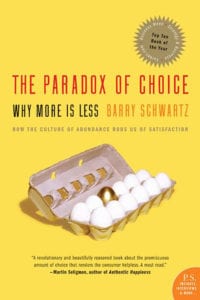
The Paradox of Choice: Why More Is Less
I read some of your literature and it says that people get bogged down with data and don’t pay attention. That is the main purpose for the story. Everyone loves a story.
The magic question then becomes, does that sound like the journey you’d like to go on? The people at the Pittsburgh airport saw themselves in this journey that they had done for JetBlue at JFK, they said, “Yes, that’s the journey we want to go on. We have an emotional connection to you from your story of origins. Now we have a case story that we’ve seen ourselves in that makes us want to pick you.”
It’s an excellent way to approach sales.
The awkwardness of do you want to buy? What do you think? I also work with people on having a great opening and a great closing. You know that from being an actor and designing things. When you’re going into space, you need that wow factor. You need a wow factor in your opening. Most people waste all that time with cliché statements like, “Thanks for this opportunity. I’m excited to be here.” I tell people, “First of all, it’s not about you. Nobody cares that you’re excited. We need to open up with something that’s going to grab their attention and make it about them. In this case, you’re a CEO tasked you with getting the airport ranked from 24 to 1 in five years because we’ve done it before for another airport.” That’s much stronger than, “Thanks for this opportunity, I’m excited to be here.”
The closing, when you’re going to a great party or an event, there’s usually some closing of the event whether it’s music or something that ends it. Unfortunately, without proper training, a lot of people end a meeting or a presentation or a pitch with, “That’s all we got. Any questions?” It’s bad. I train them on recap what you’ve said, “If this sounds like the journey you’d like to go on,” recapping what they need to get their ranking up and imagining the future. “We’d like to invite you to join us on this journey together.” That closing question is part of the story. It’s not pushy.
One of the things we haven’t touched on yet, which is such a big part of Eventmakers is the ability to tell a story through an exhibit. We are designing and producing exhibits in a great way to tell a story for one of our clients Starbreeze, which is a video game company based out of Sweden, is they had The Walking Dead license. We designed and produced The Walking Dead exhibit at E3 and it won by multiple press companies, best exhibit. We recreated the actual fort from the video game that is realistic with the seats that were tires. Things in The Walking Dead movie and TV show where they build things out of scrap junk. We made it come to life. The extra layer was hiring the actual makeup artists from The Walking Dead and having actors in clothes. We had eleven zombies walking around for both photo op. It was effective and it told the story.
The photo op, what a great example of making something memorable and then people post it on their social media and then the event memory, the experience lives on and on. That’s the takeaway that resolution part of it that people go, “I’m going to remember that.”
We had produced fake guts and the attendees and the press would eat the guts. They were in there with them. It was effective and fun.
The more senses we get involved, the more interaction we have going on, the more people are emotionally connected to any story. That’s why we were talking about the Madison Square Garden Sphere opening in Vegas. That’s going to be interactive where you can smell things and feel the wind in your hair like a Disneyland ride or something. The new way of creating events is to have it be completely immersive. The sound is as good in the first seat as it is in the back row. If you’re are showing an example of a concert or what it’s like to land on the moon, you feel like you’re in the story in a 360-degree experience. You’re certainly positioned as the right event company to make those experiences happen because you’ve already done it. Now, technology is catching up with your skillset and vision. Any last thoughts or quote you’d like to leave us with, Guy?
We always under-promise and over-deliver. The other one that I learned from a famous event planner, John Daley was, “Big fun is serious business,” because the more that the bigger the event, it is a serious undertaking. It’s a three-ring circus and you’ve got to go to the next level to make this immersive and impressive.
Guy, thank you so much for coming on and sharing your passion about storytelling, your own amazing history with your family and how you’ve been able to continually adapt and create new virtual experiences for people. I can’t wait to see what other amazing events and designs that you put out into the world.
Likewise, I look forward to working with you on some big motivational appearances.
Thanks.
Take care.
Important Links
- Amber Allen – Past episode
- Robert Cialdini – Past episode
- Pre-Suasion
- The Paradox of Choice
- Eventmakers.com
- https://www.GuyGenisDesigns.com/
- Better Selling Through Storytelling Method Online Course
Wanna Host Your Own Podcast?
Click here to see how my friends at Podetize can help
Purchase John’s new book
John Livesay, The Pitch Whisperer
Share The Show
Did you enjoy the show? I’d love it if you subscribed today and left us a 5-star review!
- Click this link
- Click on the ‘Subscribe’ button below the artwork
- Go to the ‘Ratings and Reviews’ section
- Click on ‘Write a Review’
Love the show? Subscribe, rate, review, and share!
Join The Successful Pitch community today:
- JohnLivesay.com
- John Livesay Facebook
- John Livesay Twitter
- John Livesay LinkedIn
- John Livesay YouTube
Marketing With Webinars With Tom Poland
Posted by John Livesay in podcast | 0 comments

One of the difficulties many businesses face is finding the perfect timing to pop the question and ask potential clients to take the leap. How do you make people have the confidence and trust to work with you? In this episode, multiple best-selling marketing author, Tom Poland, joins John Livesay to reveal his unique answer: webinars. Tom shares with us his book, Marketing with Webinars, to guide us into the key benefits of using this method and what you can do to successfully get people to your lane. What is the Goldilocks marketing? How can you become more relatable? What role does storytelling play in the process? Why is reciprocity the most powerful force in marketing? Tom gives the answers and more in this discussion.
—
Listen to the podcast here
Marketing With Webinars With Tom Poland
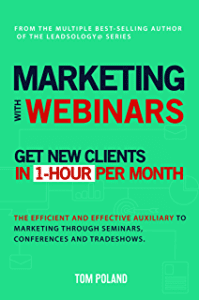
Our guest is Tom Poland. He’s a multiple best-selling marketing author. Over the past 41 years, he started and sold five businesses, taking three of them international. He has led teams of over 100 people with annual revenues of more than $20 million. In his book, which is called Marketing with Webinars, he reveals the unique method that has helped thousands of organizations globally enjoy the fulfillment and prosperity that comes with a weekly flow of high-quality inbound client inquiries. Tom, welcome to the show.
John, thanks for having me.
Let everybody know besides your accent, where are you located in the world?
Just a correction first. I don’t have the accent, the Americans have. I am in the center of the universe, which is little Castaways Beach in Queensland, Australia.
It’s such a beautiful country. I’ve been up to the Barrier Reef. I know it well and lucky to be in all that beauty. Tom, I like to ask my guests to take us back to their own story of origin. You can go back to childhood, school, wherever you want to start the story, your interest in communications or marketing. It’s always fascinating to hear those stories are rarely linear.
[bctt tweet=”We’ve got to give people an opportunity to get to know us before we even pop the question of maybe talking about working together.” username=”John_Livesay”]
If I went and clocked back 41 years, I started out as a young management consultant. As a 24-year-old setting up shop as an independent management consultant. I was competing against the likes of the big fours that were then, the PricewaterhouseCoopers and Coopers & Lybrand. Way back then also, if you didn’t have a brick and mortar office with a receptionist behind a typewriter, you didn’t have a business. I had the overhead of a brick and mortar office and I had mortgages, three of them. I had children and I was broke. It doesn’t take too long to figure out that if you’re going to set yourself up as a 24-year-old management consultant marketing in competition against some big brands, you better get bloody good at marketing. You better get good fast. I bought every book, I went to every seminar and put everything in place. It didn’t work. I was going broke. Long story, I survived. I ended up thriving, but it was because I figured out there was one vital difference between almost all the marketing information and teaching that I was consuming and what would actually work. That one vital piece of information could be summed up by me saying, “When you’re marketing services advice or Software as a Service, it’s far more like you’re proposing marriage in your marketing than it is selling a washing machine.”
I was learning from people that were selling cars, real estate or dry-cleaning services. I was suggesting that a prospect enters into a long-term relationship with me so that I could give them advice. That meant the direct mail letters and whatever else we use back then, radio ads, “Come and get it, call this number and we’ll give you one.” None of that worked because I had to set up a scenario where people could have a first date with me. Before I propose, we talk about business. That first night became the event. It became the seminar, the workshop, the conference. I found that was a tremendously effective way to get new clients in the door. I reflected on that and I thought about the oldest, most successful marketing method in the world, which is speaking to groups of people.
If you have any doubts about that, ask yourself how many clients Buddha, Christ, Muhammad have. There are billions of them. All those three guys did was speak to groups of people and often quite small groups but it produced billions of followers. They didn’t even write anything. How I got to marketing webinars goes way back to that origin story. We’ve morphed from physical events into webinars mainly because I’m lazy. I got sick of running around the planet. I did have 500 physical events over those years. You’ll hire a conference center, send out direct mail letters, give everyone tickets, fill a room and struck your stuff on the stage for a couple of hours, hand out feedback forms and pick up the clients. It works well but it’s complicated. Long story short, when you’re marketing services advice or development software, you’ve got to give your prospect, your audience an opportunity to get to know you, much the same way as if I said, my now wife, I could have proposed to her at first sight, but I didn’t. I was only smart enough to know that that wouldn’t work. I asked her out for a date. One thing led to another. I think that’s analogous to the consultant, the coach, marketing services. We’ve got to give people an opportunity to get to know us before we even pop the question of maybe talking about working together.
For those first requests, I have found that the smaller they are, the easier it is. You don’t go from, “Fill out this form.” Maybe say, “If you want this free PDF, give me your email.” It’s like a little baby step. The risk is low and the reward is hopefully some good content as a sample.
It’s a bit like Goldilocks marketing. It could be too hot, it could be too cold. It can be just right. The right part depends on where the prospect is at because some of them want to know, where do I order? Almost literally they buy more of my books. I’ve got webinars. “Do we have to go through a consult? I want to work with you.” Those are the hot ones, and this is about 3%. Not a lot, but if you have enough volume, it can become significant. We find about 12% want to explore deeply. These are 12% of the people who comprised our audiences who want to explore deeply. They’ll read every word on a sales page. They’ll delve say for every second of a webinar or so on. That is what I call the explorers.
Marketing with Webinars
The 85% are the wanderers. They want to download the free PDF or the one-page blueprint. If you want to cater for the whole marketplace, you do need more than one marketing medium. The one I find that is the best, the Goldilocks. That’s about the right temperature is the webinar. If you align the title of the webinar with the benefit of working with you then you’re going to attract the right people. My webinars are about marketing with webinars. My book is about marketing with webinars, my program is about marketing with webinars and that’s an alignment. You think about this, we talked about how we’ve got to give people an opportunity to get to know us before we propose.
It’s like the first date. You can do speed dating. That’s not quite enough. That’s like social media. Six minutes and the clock goes, “Tell me all about yourself, I’ll do the same.” It’s not long enough to get to know someone. You could ask people to sign up for a six-week boot camp. It’s probably too much, but the webinars like the night out on the town. Let’s have dinner, let’s have a show, maybe have some coffee and we’ll go from there. They’ve got to register. It’s going to be an hour of their lives that they’re prepared to commit. If they’re prepared to put that much skin in the game, it’s about right for them at the end of that hour and 90 minutes, if everything’s clicked to reach out and book a time to talk with you about becoming a client. That’s why I call it Goldilocks marketing because we were hitting the sweet spot for the people that are ready to explore further.
I was doing one and somebody who’s a friend was listening, and he said, “Do you ever worry about giving away so much free good content that people might think?” I have my answer, but I would love to hear yours and I’ll share what I said to him. An open-loop we call that in storytelling. It’s creating a little suspense of, “I wonder what the answer is.”
My take on that is this. The simple answer is to give it all away, but there’s a caveat. I often start my webinars with a picture, a point of view photo of someone driving a beautiful car and you can see the dashboard and the screen, everything else. I said, “This webinar is going to be a bit like a test drive of the car.” Bringing them to the showroom. We can look under the hood and pop the trunk and fit you in the driver’s seat. We’re not going to build the car. We don’t have time to do that, but I can show you the car. If you want to build one together, we can talk about that later.
Don’t worry. You still going to get great value. You’re going to get lots of ideas and what to look like on a car. It’s going to be worthwhile. Please do understand that while some are paid to answer every single question, it’s not actually building the car. You will need help with that. If you want to work with someone else, work with me. I don’t mind. Please know that is a pivot to it. With that caveat, I’m happy to tell them everything.
[bctt tweet=”You don’t actually have to be smart to be successful. You only have to be smart enough to know how dumb you are.” username=”John_Livesay”]
The other thing to think about is what I say to my clients when they asked me this question, “Do you want to work with people who have the money to pay you and who are smart, or would you rather work with people that are broke or dumb?” It’s like, “It’s a no-brainer there, Tom.” If people are smart and they had the money having attended your webinar, they will want to work with you. If they don’t have the money, they can’t so give them lots of value because it’s good karma. I can help ignorant, but I can’t help stupid.
My response back to my friend who said that was, “I don’t worry about that because even if I show people step-by-step what to do, you still need help.” Everyone needs help. Crafting it, refining it, practicing it, honing it, whether you’re right. You’ve written a book, you need an editor. You don’t try to edit your own stuff. The same thing is true with everything. Reading a book on how to write a book, you don’t eliminate the need for the editor.
It’s like when we go out to the Australian Open watching Djokovic win it. I said to my wife, “I’m going to get his book because I’ve seen him play. I’ll go on the pro-tech.” I can see it how he’s done that. That doesn’t look too hard. I do always add that caveat, John, which is, this is not as easy as it might look.
I love that because you have to manage expectations. People either have one extreme or the other. They either think in the case of storytelling, “You’re either a born storyteller and I’m not so I can’t possibly learn it, or it’s easy for you because you are a born storyteller.” They don’t realize the skill, the training and the practice.
There are many subtleties and nuances to storytelling. To get to a level of professionalism, to get to a level of impact, you are going to need help from a specialist. It’s every other single specialization in the world, whether you’re a lawyer, an accountant or a software developer. It’s no good telling me how you do that. I’m not going to be able to do it. I would need your guidance. People that have money will want to reach out and work with you because they understand that.

Marketing With Webinars: If we can be humble enough to recognize that we only have to be smart enough to know how dumb we are, we can reach out and get help.
I took an Accounting class in school, but I certainly don’t want to do my own taxes. I watched somebody cut somebody’s hair, I’m not going to cut my own hair. It’s fascinating.
To finish this off, there’s a little-known secret of success. You don’t actually have to be smart to be successful. People think you’ve got to be like Bill Gates or Zuckerberg smart. You don’t. You only have to be smart enough to know how dumb you are. If you’re smart enough to know how dumb you are, then you get help. That’s what I’ve done for years. I’ve started trying to learn from the marketing masters because I knew I wasn’t good at it. I knew I was dumb at it. I needed to upskill on that. I think if we can be humble enough to recognize that we only have to be smart enough to know how dumb we are, we can reach out and get help.
That will be a great tweet. If you are smart enough to know how dumb you are, you get help. One of the things you talk about are these immutable elements. One is what you touched on about, you’re not Hugh Jackman. Most of us are not famous. Our brands aren’t famous and so forth. It’s a bit of hubris to act like we don’t need to flirt or date. That’s where we have these stages. You talk about these four Rs. Rapport, you get respect, relatability and reciprocity. Relatability, let’s double click on that word and we’ll go to the last one. What is something that someone could do to become more relatable, in your mind?
They should work with you and understand that the story is a great way for having an audience feel like you can relate to where they’re at, the before and after part.
Revealing some of your pain points and not coming across perfect is all a big part of that.
[bctt tweet=”Reciprocity is the least spoken about and yet the most powerful force in marketing full-stop.” username=”John_Livesay”]
You would know better than me.
This reciprocity factor, this concept of giving before you get is my definition of it. What does it mean for you?
It’s the before and after photo of the weight loss thing. You look at the photo before and think, “That’s me and I hate it.” You go to the after, “That’s what I want to be.” That’s a story I told you being a management consultant, having the overheads, going broke, reaching out for help, not working, and discovering, that’s part of my story. People go, “That’s where I’m at. I’m on a left-hand side of the Canyon.” I could see over the other side of the Canyon. It’s people who leads in and how do I get there? People can relate to that. The unpredictable nature of marketing, sometimes random acts of marketing, people can write to that. “I do that. I go run at a client, so I go to meetings and hope to get lucky.” Commercially wise. That’s the whole reliability thing. Somewhere early in the webinar, you want to be able to tell you the story in such a way that people can go, “He used to be where I’m at now and now he’s where I want to get to. I better listen up because he’s going to show me how to get there.” That’s a big part of relatability.
Reciprocity in my view is the least spoken about and yet the most powerful force in marketing full-stop. What is reciprocity? Let me tell you a story. A neighbor calls and I answer the phone, and they say, “Why don’t you come for dinner Friday nights?” “It sounds terrific. What time? What should we bring?” “Don’t bring anything,” she says. Me being a man goes, “She means what she said.” I said to my wife, “Are you up for dinner with Russell and Sally on Friday night?” She goes, “What are we bringing?” I said, “It’s okay. She said don’t bring anything.” My wife looks at me and she says, “Tom, are you so stupid? How old are you again? Eight.” It doesn’t mean don’t bring anything. We take wine. We take chocolates. We take flowers. Why? It’s because of reciprocity. Giving us a beautiful dinner, invite us into their home, but they’re going to clean the thing for half the day, if there is anything like my wife and so on.
She feels she needs to do something to even the score. The next morning, we wake up, on the front doorsteps there’s a pot plant because we went over the top and our neighbors have to even the score. This is like a perpetual giving machine. It never stops. That’s an example. Psychological reciprocity typically means it’s a fancy way of saying, “In our mind, we like to keep the score of giving even.” It is unconscious and it is powerful beyond belief. In the world of marketing, it means if I do something cool for someone else that’s genuinely helpful, they will feel unconsciously compelled to want to even that score up all other things being equal. If I have a Hitler youth party do something for me, I don’t want to even the score. When I say a lot of the things being equal. You’re interviewing me for your show, which is terrific. It’s a great example of reciprocity. At the end of the show, I would love to reach out and say, “How can I help you, John?” Reciprocity. It’s not going in with strings attached. It’s going in with extremely low expectations of a return on that giving, but a high expectation for the management of the giving.

Marketing With Webinars: Understand that the story is a great way for having an audience feel like you can relate to where they’re at, the before and after part.
The other thing you talk about is to be consistent in what you do. You alluded to that before. The book, your website, everything is about webinar marketing and consistency. I love it. Where I want to take you and the readers is when we get in a situation when someone asks us to do something for a famous company for a lot of money that’s not in our expertise, and you’re thinking to yourself, “Can I figure out how to do this? Can I suddenly become an expert in whatever it is that I am not an expert in so that I could shake and maneuver myself into this little box that they are describing, which I actually know somebody else who is good at that?” I was in that situation and I said to the event planner, “Here’s what I’m hearing you need. This, this and this. You want someone who’s comfortable entertaining people going out into the audience, 1,500 people and razzle, dazzling them, talking about customer service and getting into all of the nitty-gritty of operations and all these other things.”
I said, “My sweet spot is storytelling and an audience of salespeople, not people who run a quick-service restaurant.” I do know someone. That’s what they do, they perform, they’re an entertainer and they’re also a speaker. They’re getting everybody clapping. The irony was, they then started to change the parameters to fit my niche. “Maybe we could have you in a breakout room then.” I thought how funny. I’m like, “It’s not the number of people. It’s the audience and the topic that I was saying no to but, okay.” I’m curious if you’ve ever had people approach you going, “Can you also help us launch this product?” Whatever else they might ask you to do that you go, “I didn’t know how to do this well, but I’m not going to pretend I know how to do everything well.”
If I want the clock back 30 something years and you can have a look at my overdraft, and you asked me that time, “Can you do juggling on stage in front of 10,000 people for half an hour?” “Yes.” Realistically without wishing to seem too pure about it right now, I would say no to that request if someone asked me that exact same question. “Can you go through and make them laugh?” No, that’s not me. Call John. Way back when I was desperate for money, I probably would have said yes and figured out how to get paid and do the best job I can.
The yes-no response to that is dependent on how hungry I am. A beggar on the streets in Calcutta, if you ask them to do cartwheels for $10, they’d probably go, “Yeah.” I would say no right now because cashflow is pretty good. We’ve had a few years of successful business. I did have a friend of mine who did a lot of work on Twitter, LinkedIn and had millions of followers decided to focus on LinkedIn. She said she had a request to speak on Twitter a day after she made that decision to focus on LinkedIn. She turned down $25,000 gig. I would have said yes to that. She knew the subject. She had made a mental decision to make a break. That’s fine. Take the $25,000. You can deliver the value. It’s good money. It’s meat and drink for you. Go get them, girl. That’s what I would’ve done. People will draw the line in different places, but I have respected the decision all the same.
What I found fascinating with that, and I never tested it, was when you pull back and go, “I’m not sure this is for me.” Sometimes people pull in even, and they go, “I’m going to give you someone else.” “That’s the person we want is somebody who cares.” I phrased it in a way and I’m like, “I want you to be a success. If I’m not going to give you what you’re looking for, then I might not be the right person.” That takes a lot of awareness, confidence. You each decide, I heard Matthew McConaughey talking about his own career in these terms. That’s why I think it’s so relevant for everyone. Pick a niche, double down on it. He’d been known as the romantic comedy guy for years making all these movies with a shirt off making a lot of money. He decided he didn’t want to do that anymore. He’d made enough that he never had to work again if he didn’t want to. For six months he got more offers in that niche. He kept saying no and gets millions. He still said no. It was eleven more months for a total of twenty months before he finally started getting an offer for the serious roles that he’d always wanted to do. I thought, “We don’t all have that luxury,” but mentally it’s a great story in terms of consistency. If you’re in a box you don’t like to be in, it’s up to you to get out of it. It’s my takeaway from that story.
[bctt tweet=”You’ve got to make sure that the majority of your lead generation is in-house.” username=”John_Livesay”]
The big thing that helped him was the luxury of having millions of dollars in a bank account. That’s what I was referring to before. Years ago, my bank account was in overdraft. I was desperate. I probably would have said yes to about anything. These days you don’t have to. Where you draw the line might move. There’s a terrific book and I had a chance to have a preview of it. It’s the Greenlights, which is Matthew McConaughey’s book.
Your third element is, we must control our own oxygen supply. We’ve all heard that premise. If you are traveling with a child, put the oxygen mask on yourself first, not the child. It seems somewhat counterintuitive, but maybe even selfish if you think it through a bit. If you pass out, the kid doesn’t know what to do. In terms of business being leads, being a supply of oxygen, how do we help people make sure their lead supply doesn’t stop?
What I’m essentially saying there is that you’ve got to make sure that the majority of your lead generation is in-house. You can push the buttons and pull the levers. I’ve heard a lot, and it’s a tempting value proposition is, “Tom, if you could get me all the appointments, please. If you could set those up or if someone could do my marketing for me because I like to work with client,” which most of us do. The problem with that is if you outsource it to an agency, about 85% of the time, you will pay the money and they won’t get you the results. After 3 to 6 months you go, “I don’t want to keep doing that.” You write them the Dear John letter, “Dear John, I taught you, it’s me. I need to put this on pause for a while.”
Fifteen percent of the time would deliver results, you create a dependency. That dependency is dangerous. Someone once said the scariest number of businesses is the number one. One supplier, one client, etc. If you have one organization that you are totally financially dependent on for the supply of all your business and they go over or they sell, COVID hits, who knew? It’s like you’ve outsourced your oxygen supply. You wouldn’t outsource the oxygen supply to your body because if that third-party supplier fell over, you’re dead. The difference with the business is the death takes longer, but you’re still as vulnerable. By all means, if you have a great agency that can supply leads and they’re prepared to get started, especially if they’re prepared to give you a split of results that you pay them from a split of results, not money out upfront, do that. Make sure that they’re not supplying any more than 1/3 of your new business requirements. You’d have to have the rest of the house otherwise you’re vulnerable.
Any last thoughts or tips that you want to leave us with before we talk about how people can follow you? The book is called Marketing with Webinars.
The best thing people can do is buy the book, Marketing with Webinars because it’s the most prescriptive book I’ve ever written. It’s the sixth book I’ve written. It goes into the most detail. I go into all sorts of tech equipment to get and what not to get platforms. It will be going to things like titles and every single slide. When they get the book, they’ll have access to my 31 template slides, which is the same 31 slide template all my clients use. When I give it to my clients, I said, “When you bring it back, I don’t want to see 32 slides.” You can have any type of color font you would like, as long as it’s black, any background. It’s prescriptive. That’s what I’m saying.
They’re going to get a lot of value out of that, but other than that, I think the big thing is to make your strategic commitment to do your marketing and webinars. I do all of mine. It is the combination of the most efficient and effective marketing medium. It combines that oldest, most proven marketing message in the world, what I mentioned before, Buddha, Christ, Muhammad, billions of followers. I was speaking to groups of people with the world’s newest marketing medium, which is internet. It’s got the best blend of the old and the new in terms of marketing.
What’s the best website for people to find you?
Leadsology.guru, there are a lot of free resources there. There’s also LeadGenDemo.com because that’s where they can sign up for our monthly lead generation demo using marketing webinars. It’s completely free. People can come along. The website is a good place to start.
Tom, thank you for not only sharing wisdom but humor. What a fun way to have the medicine go down as they say. That’s why I’m sure you’re so successful. Thank you.
Thank you. All the best.
Important Links
- Marketing with Webinars
- Greenlights
- Leadsology.guru
- LeadGenDemo.com
- Better Selling Through Storytelling Method Online Course
Wanna Host Your Own Podcast?
Click here to see how my friends at Podetize can help
Purchase John’s new book
John Livesay, The Pitch Whisperer
Share The Show
Did you enjoy the show? I’d love it if you subscribed today and left us a 5-star review!
- Click this link
- Click on the ‘Subscribe’ button below the artwork
- Go to the ‘Ratings and Reviews’ section
- Click on ‘Write a Review’
Love the show? Subscribe, rate, review, and share!
Join The Successful Pitch community today:
- JohnLivesay.com
- John Livesay Facebook
- John Livesay Twitter
- John Livesay LinkedIn
- John Livesay YouTube
Transformational Storytelling With Scott Monty
Posted by John Livesay in podcast | 0 comments

A good story is defined by whether you’ve moved somebody emotionally or not. When you bring the emotions out, you make your audience feel like they are part of it, and that could become the best customer experience you can ever design. On today’s podcast, John Livesay welcomes Scott Monty on the show to tell us more about transformational storytelling and the concept of creating emotions in the details. Scott is a Strategic Communications and Leadership Advisor helping executives become better communicators, better leaders, and better humans with timeless and timely advice.
—
Listen to the podcast here
Transformational Storytelling With Scott Monty
Our guest on the show is Scott Monty, who’s an expert in storytelling from a historical point of view. His definition of a good story is whether or not somebody is moved by that story emotionally. He also said to people, “Do you want to read about a case story or do you want to be cutting- edge and be a case story, as I call them, versus case studies?” We have a great conversation about how you build trust through transparency. Enjoy the episode.
—
Our guest is Scott Monty, who is a strategic communications and leadership coach and advisor, who helps the C-Suite embrace better communication with timeless and timely advice. A Fortune 10 leader whose background in classics positioned him to see through the shiny objects, Scott can drill down to understand the common human needs from throughout history that will still drive us all. He was ranked by The Economist as the number one, top of the list of 25 Social Business Leaders, and Alan Mulally, the CEO of Ford Motor Company called him a visionary.
Scott spent six years as an Executive at Ford, where he helped turn the company around with an uncanny ability to merge technology with humanity. He served as a strategic adviser across a variety of business functions, leading the company’s global social media strategy. He also has another decade and a half of experience in communications and marketing agencies. Scott’s clients have included companies such as Walmart, IBM, McDonald’s, Coca-Cola and Google. He writes the Timeless and Timely newsletter, which I can’t rave about it enough. I can’t tell you how lucky you are to get to hear Scott’s insights. Welcome, Scott.
Thank you, John. It’s a treat to be with you here.
We both love storytelling, marketing, messaging and both of us have a passion for arts, although yours is at a whole other level. Your in-depth knowledge of it is quite fascinating to me. Let’s start wherever you would like to in your own story of origin. You have some insights that might be interesting. I know a lot of my friends say, “When I have a kid, it brings back a lot of my own childhood memories, or I’m reliving my own excitement at whatever holidays coming up.” You can go back to childhood or school, wherever you want.

Transformational Storytelling: Luxury is not about the price, but anticipating a need before somebody knew they needed it.
There are many choices here. Let me start where it brings the most meaning. I went to school at Boston University. I grew up in New England. I gravitated to and stayed in Boston for twenty years after I graduated. While I was there, my intent was to go to medical school. I was pre-med. I didn’t want to major in Biology, Chemistry or the typical sciences because I figured, “I’ll be scienced out for the rest of my life if this is my career. Let me try something different.” I was at the College of Liberal Arts. It’s now the College of Arts and Sciences, but it was CLA. I said, “Let me try some classic liberal arts.”
I took a class in Greek Civilization. Maybe it was the professor or the material. I had three years of Latin in high school, so I understood the ancient world, but I was immediately hooked at that moment. This gets to the core of what you do here, and that is, “He was a storyteller. He brought the past to life.” To me, if you can take the past and make it relevant to what we’re experiencing, it’s the same. If you go to church and sit through a homily, nobody wants to hear the reading regurgitated. What you want to hear is what does it mean in respect of what I’m dealing with in my life now and the challenges that I have?
This professor was able to take that. I still remember the line he used because I had never heard a teacher use profanity before. We were talking about Oedipus and he said, “You have to understand that to the ancient Greeks, calling someone an Oedipus was the ultimate insult.” He paused and went, “Oedipus was a mother effer.” I went, “Now it’s relevant. I get it.” It was a smack in the face, but it suddenly hit me that there’s a whole world out there that happened before that can be brought to life in new and different ways. From there, I went on. I didn’t go to medical school. I went to business school focusing on the business side of medicine. I went into biotech, medical device consulting, and managed care. Ultimately, I ended up at an agency that did B2B marketing in healthcare and high-tech space.
That’s where I discovered social media back in the mid-2000s. I had to leave that agency because they couldn’t get it. They had a client who wanted a new way to tell their story. This is when podcasting had come out. My vision for them was to host a podcast, surround yourself with smart people, highlight your own type of thinking, and showcase it. They went, “We’re not sure. Have you got a case study on this?” I was like, “This was launched three weeks ago. Do you want to read a case study or do you want to be a case study?” She went, “We want to read a case study.”
[bctt tweet=”A good story is defined by whether you’ve moved somebody emotionally or not.” username=”John_Livesay”]
Removing the flat spot from my forehead from beating it against the wall, I left there and went to an agency that did strategic consulting with large brands to help them understand social media strategy. I did that for about a year and all of a sudden, I got a call from Ford Motor Company from their head of communications saying, “We’re behind the eight balls. We know digital communications and social is important. We need someone to come in here and lead it.” I said, “Do I have to move to Detroit?” I was in Boston at the time and working virtually with the agency I was with. We were all around the country. He said, “Yes. This is a high-level leadership position. We need your presence in the building.” I went, “I’m not interested.”
I’ll never forget his response. He didn’t say, “How dare you, sir? We are the Ford Motor Company. He said, “Are you sure?” which to me spoke of humility and willingness to let the other side explore their feelings. I said, “I’m pretty sure. The timing doesn’t feel right to me.” At the time, Alan Mulally had been the CEO of Ford for two years. He’d come from outside the auto industry and he transformed Ford or was about to transform Ford, which was on the ropes. The whole auto industry was in late 2007, early 2008. I followed Ford’s progress. They made some financial progress in that first quarter of 2008. The head of communications and I reconnected. He said, “We’ve talked to about 50 people. We still haven’t filled the role and your name keeps coming up. Why don’t you humor us? Come out here, spend 1.5 days with us, talk to 8 or 10 people to get a feel for what we’re all about, and then you can decide what’s right for you.” I did that.
John, I’ll never forget walking up the walkway to the glasshouse as it’s known Ford World Headquarters in Dearborn, which is probably about an 8th of a mile long and twelve-stories high. It’s an impressive building. You’re walking into history. Henry Ford put the world on wheels and by the 1920s, half of all vehicles in the world were Ford Motor Company vehicles. This is a storied past. When I met with everybody that day, they were intelligent, talented, but most of all, they were passionate. I thought, “You can’t just invent passion out of nothing. There’s something special happening here.” Long story short, I signed up and by July of 2008, I was the head of Global Digital Communications and Social Media for Ford.
I love the choices there of humility versus hubris, and how one question can say so much about a culture and a person, “Are you sure?” versus, “How dare you?” The other part of that was clearly they’re selling you. When we’re younger, I know for myself in my early twenties, if somebody ever tried to recruit me, I was flattered. I never stood back and analyzed whether that was something I should do or not. As we get a little more seasoned in our career, we think, “That’s not right for me. I’m not willing to move for that.” The premise of, “Let’s not get you to commit on the phone, humor us,” which is another humble way to phrase that, “Spend some time with us.” It is all part of the journey, whether it’s the funnel we’re creating in digital marketing or a social media way to start to get people to engage with us, where in fact, in actual sales call where you’re getting someone to “take a test drive.”

Transformational Storytelling: If you can take the past and make it relevant to what we’re experiencing today, that can be brought to life in new and different ways.
This was the ultimate test drive, which is what they do when they sell the cars. What a great metaphor of coming out. If you can get somebody to test drive and sit in the car, that’s what the whole goal of marketing and advertising has always been. After that, it’s up to the salesperson and the person’s criteria. If we get you in the car from an advertising standpoint, from my ad sales background, we’re like, “Our job was done. That’s all we need to do.” He knew that if we can get you here, we’re not at the top yet. We don’t have a yes, but it’s a much easier to ask than come here and interview.
When you think about it, whether it’s a sales or a management process, there are several leaders who feel like they need to be in control. They need to control the situation. The bottom line is when you’re dealing with an employee or a prospective employee, a lead or a prospective customer, the decision lies with them. They are going to do whatever it is they’re going to do. All you can do is create a culture around them to make the decision easier. For example, when Bill Ford decided to bring Alan Mulally in as the CEO, Bill Ford was the great-grandson of Henry Ford. The family’s name is still on the logo. It’s a family-owned company. Bill was the President, CEO and Chairman of the Board. He said, “Alan, if you come in, I want you to be the CEO.” This will be the first time somebody from outside of the auto industry as a CEO. He said, “I’m even willing to give up my chairman seat on the board for you.”
You talk about humility. Knowing that you come from the family that invented the moving assembly line, and you’re telling the world and the guy that’s going to replace you, that you’re not the right guy for the job. That’s leader humility right there out of Bill Ford. Alan said, “I don’t want to do this without you. I need you by my side to be the visionary. While I do the heads down, hard work to start changing the company, you have to be my cheerleader. You need to keep me in line.” This relationship between the two that it wasn’t all one or all the other, they were willing to give up some control in pursuit of excellence and their ultimate goal. You don’t see that a lot. Many times, people want to control, micromanage, steer you in a certain direction, and force you into a box. That old chestnut is true. If you love something, set it free. If it loves you, it will come back.
It sounds like Bill Ford love the company and the legacy enough to not let his ego get in the way of being the one to have to keep it going or adapt. What is fascinating is that Alan said to Bill, “I still need you to be my visionary.” He ended up hiring you and calling you a visionary. Alan surrounded himself with visionaries above him and reporting to him. That’s a nice way to look at what the story is as you told us like, “As a leader, I need visionaries in every corner, please.”
[bctt tweet=”Emotions are created in the details.” username=”John_Livesay”]
One of the first parts of leadership is to know that you don’t know everything. Many times, we promote people from within because they are a particularly good individual contributor. You would have the most sales, you designed the best product, or you got so far at customer satisfaction scores. How does that translate to management? Being a good individual contributor doesn’t necessarily mean that you know how to lead a team or how to motivate people. One of the first things you can do as a leader when you’re promoted is to say, “First of all, I’m new at this. I need to admit that I don’t know everything. I need to find the people that know more than I do about a whole lot of subjects and to complement my skills with other people around me, so together we form a cohesive team.”
I know you get hired a lot as a consultant, as well as the speaker. One of your topics is transformation storytelling. Since this show is all about storytelling and pitching with storytelling as a tool, I’d love to hear what you think is your definition of a good story.
I’m a big fan of history, as I mentioned. The difference between the recorded past and the remembered past, the recorded past is history that’s in the books. It’s a spiked cannon. It’s a statue, a monument. The remembered past is not what happened 200 or 2,000 years ago, but stories about what happened 200 or 2,000 years ago. To me, a series of events, a story well told becomes the difference between moving someone emotionally or not. If you want to take us back to our most basic level, consider early humans who were hunters and gatherers. There are two of them that are out in the woods and they hear a twig snap. All of a sudden, they turn and there’s a tiger there. The tiger is beginning to give chase.
One of the guys goes up a tree. The other guy gets mauled by the tiger and his neck snapped, and he’s gone. The guy up in the tree is quietly waiting for the tiger to finish his business and go elsewhere. He comes down and he returns to his tribe. He recounts the tale of being alone with his friend, Kevin. Kevin is there in the forest with them and how that twig snapping sound, how the hair raised on the back of their necks, and how his heart raced. By putting those different levels of details in there, by making his audience, which in this case was his tribe, feel like they were part of the action and embellishing that, not falsely, but bringing those details and the emotion out, he makes them feel like they were part of it.

Transformational Storytelling: When you work for the same company, it doesn’t make sense that you’re trying to outdo your colleagues. You should be out doing your competition, not your colleagues.
The tribe is able to say, “Now we’ve got a lesson. We know what to look for when we’re out. If we hear a twig snap, what does that mean to us? If we are chased, we know to seek out a tree.” These become life lessons for them. They become a cautionary tale to become something that’s handed down from generation to generation. If we can do that in the workplace with anything that happens to us, it could be a sales call that went bad. It could be the best customer experience we ever designed. You name it. This becomes part of the culture that we build around us. The challenge now, not only with the pandemic where we’re all separated, those water-cooler moments, those opportunities to chit chat in the hallway before a meeting is gone.
At the same time, we also see that in terms of workplace retention, people are jumping from job to job. There is a lack of institutional memory. There’s a lack of these stories, this oral tradition being upheld. To me, that’s why it’s important to capture these stories wherever we can in video, in audio and in written form, and make them part of the experience so that when a new generation or workforce comes on board, they can absorb these stories without having been part of them or without having been touched directly by the people who experienced them.
There’s a lot to unpack there. I love this line that a good story is defined by whether you’ve moved somebody emotionally or not. What great short criteria, whether it’s a commercial, social post, storytelling, did it move people emotionally, yes or no? That’s all we care about at this point. You then go on to tell us that the emotions are created in the details. That’s a thing that I see most people are completely unaware of when they’re learning storytelling is they’re like, “I need to be specific with the time, the day and the location, or what it felt like.” In order to describe someone’s problem, you have to describe how it felt for them so the people can see themselves in that story, that concept of emotions are created in the details. Once you believe and engage in the premise, that’s the whole criteria for a good story.
Most people don’t have an awareness of is that storytelling not only help you win new business but help you retain employees. That is a topic that not many people are talking about. I’ve experienced it myself, working with a healthcare tech company, by having all of their sales teams create a story of origin and then putting it into a repository map so that they can get to know each other personally and feel part of the culture and the tribe. Somebody took the time to ask me, “How I got into healthcare? What I did before I worked here? Anything that’s personal and that it’s valuable enough to be recorded to your point between remembered versus recorded history. It also allows new people to join the tribe or new hires to get a sense of, “Who am I working with here?”
[bctt tweet=”One of the first parts of leadership is to know that you don’t know everything.” username=”John_Livesay”]
I love that you talk about this need for storytelling to create a legacy that creates a culture that people then feel like they’re a part of it, whether they were there at the beginning or not. Working for a legacy brand like Ford, you’ve got to experience that full-time, which goes full circle back to what you were saying, that it wasn’t just a group of talented people, but a group of people who were passionate. My question there is do you think part of that passion came from them identifying themselves with a legacy story?
It was part of the legacy story, John, knowing that they were carrying on in the giant footsteps that they had to fill. Let’s not forget when Steve Jobs died in October of 2011, he was compared to two other businessmen that transformed the 20th Century: Thomas Edison and Henry Ford. If you’re one of those companies and you’re following in the founder’s footsteps, there’s got to be some passion there and some trepidation in terms of, “Am I living up to the legacy?” At the same time, there was this wonderful culture that Alan brought as the new CEO of a created a spirit of working together with Bil Ford until that time had become a series of silos of fiefdoms, where people were competing for knowledge, rather than sharing knowledge. They were hoarders of knowledge. They were thinking that they were outsmarting their colleagues. They were pushing them down.
Alan said, “We all worked for the same company. It doesn’t make sense that you’re trying to outdo your colleagues. You should be outdoing your competition, not your colleagues.” He very quickly made it clear that there was going to be One Ford and it was translated through very simply, “One team, one plan, one goal.” It was something that everyone could remember. The challenge of a leader, of a storyteller, is to take a complex issue and to boil it down in its simplest terms with emotion, but in a way that doesn’t make people feel like you’re talking down to them. That’s a talent. I’ve got kids and I’ve seen them go through various stages. I’ve got a seventeen-year-old all the way down to almost seven years old.
I made a note a while back for a newsletter or a blog post. It was titled Thirteen Minutes. The only note that I put under it is it takes my kid forever to tell a story. If you’ve ever been with a little kid, they ramble on and on without getting to the point, and you’re thinking to yourself, “This kid’s cute, but when are they going to get to the real meat of it here? I’m getting bored.” At the same time, when they go to tell a joke, they run forward to the punchline immediately. You get back to what we were talking about before, in terms of putting those details in there. When you’re telling a joke, the timing matters, but the level of details that you put in and the suspense that you build with people is an important emotion. Suspense is a little bit different from horror.

Transformational Storytelling: When you’re telling a joke, the timing certainly matters. The level of details you put in and the suspense you build with people is very important.
When somebody asked Alfred Hitchcock about what suspense means, he said, “It’s the difference between a bomb going off on a train and telling someone that there is a bomb planted somewhere on the train.” It’s how you build that emotion with them and how you craft it. You don’t want the story to stretch out for thirteen minutes. You want to do it in a way that keeps their attention, keeps them engaged, and ultimately, gets to that punchline.
I’m happy that you shared that phrase from Ford, the use of one. I’ve seen that with another client. I’ve worked with Gensler, their architecture firm, and they call themselves The One Firm Firm, meaning that they don’t want to be perceived as doing silos and practice areas. They want to be perceived as some company that can do all of the things you might need from marketing all the way up to designing your law office or your airport. Also, that culture is not about having a one-star name architect. When you look at companies, cultures and their whole business model, two CEOs and different cities, they’re the largest revenue of all the firms.
When you have defined your story is then not only do the right team members come but also then you can explain that to potential clients as what your point of differentiation is. Therefore, usually justify a premium price along with it. You’ve also consulted with Google, what a range from a new company to Ford, and I’m curious, without getting into anything proprietary, what’s the consistent things you see, whether it’s a Google or a Ford that they bring you in to do?
Initially, people are interested in what’s the latest thing you can tell me? What’s going on in the marketplace? What are people saying?
[bctt tweet=”If you have unquenchable curiosity, it will take you to heights unimaginable.” username=”John_Livesay”]
Is TikTok where we should be?
I will always begin with some grounding data. People are spending less time on traditional televisions and more time on handheld screens, whatever the data point is relevant to them. There comes a time in the presentation or in the engagement where we step back and say, “Let’s take the trends out of it because those will always be changing. Let’s step back and fundamentally, look at what it is that you’re doing now. How are you approaching this particular problem? Who do you have working on it? What are their points of reference? How are they going to market? What types of things are they sharing with their audience? In what format are they sharing them?” We look at the mix of paid, earned and owned media and all of that.
Fundamentally, if you can understand what it is that people want from you and you go back to Steve Jobs, nobody in 2003 or whenever the iPod came out was saying, “I need a thousand songs in my pocket.” It wasn’t there, but he knew people love music. People used Walkmans forever. What if he could create something new that met a need that wasn’t specifically expressed? To me, it’s a question behind the question and getting my clients to ask more questions and to not think that they already have the answer. I do this as a consultant. I ask a lot of questions. One is because I don’t know the answers, but two, I’m innately curious. Curiosity is one of the best traits of a leader, a marketer, a salesperson. If you have unquenchable curiosity, it will take you to heights unimaginable. Dorothy Parker once said that curiosity is the cure for boredom, and there is no cure for curiosity. If you have a curious spirit, you will never find yourself at a loss for information.
First of all, you said a phrase and it’s one of my all-time favorite phrases, which is the “What if?” question. When we ask people that, we get into the right brain where imagination and storytelling live. If we can ask and get them to imagine, “What if we did this? What if we created this?” What you’re saying about where the iPod came from, it’s coming up with a concept of Walkman was popular that people love the dots and be ahead of the puck, as Wayne Gretzky says. Anticipate where it’s going. The example I have is when I was working with the Banana Republic and they had the premise that their definition of luxury was not the price, but anticipating the need before somebody knew they needed it.

Transformational Storytelling: If you have a curious spirit, you will never find yourself at a loss for information.
With that, as their starting point, they then ask the questions. What could we do to give our top 20% of our clients that experience without having to raise our prices or anything? There’s some basic stuff like acknowledging their birthday with a card and things like that, but then they came up with the idea of allowing people to charge their phones in their Rockefeller store and their Banana Republic, Union Square store like, “No charge to charge your phone while you’re shopping as an unexpected luxury.” You’ll be like, “I need this. I didn’t know I could get it done here. This is great.” They’re never going to be Neiman Marcus in terms of service, but they can at least try to do something. Their sales went up so much in those stores because people kept shopping while they waited for their phone to fully charge, not just charge a little bit. That’s a great example of what you were describing the reasons people would want to bring you in for those kinds of outcomes.
It reminds me of one of my first meetings while I was at Ford. It was a couple of months into my tenure there. It was an all-employee town hall. I was standing at the back. I was standing next to the Chief Marketing Officer, Jim Farley. Incidentally, Jim was named the CEO of Ford. I said, “Jim, I will give you a great, free idea that you can take.” I don’t oversee this area. “When you go to a car dealership, wouldn’t it be great if they had free Wi-Fi?” This was 2008. Free Wi-Fi wasn’t like water as we have now. He immediately said, “Scott, it’s going to be too much. It’ll be too expensive for the dealers to complicate it.” I said, “Jim, you’re missing the boat on this, the bigger picture. If you create Wi-Fi experiences, you’re going to keep people in the dealership rather than wanting to take a courtesy car home.”
A few years ago, I had a client who is the number one Honda dealer in the country. He operates a single store out of Queens, New York. He came to me and he said, “Scott, I want to work with you.” I said, “Brian, you’re already number one. What do you have to prove at this point?” He said, “You don’t get it. The dealership model is broken.” I said, “You’ve got my attention. What do you propose to do about it?” He said, “I don’t know but we are getting hammered, not by other car dealerships, not by Tesla, but by Apple, Uber and Amazon because of the experience.” I went and took a tour of his storeroom, which is a typical New York place. It is crammed with vehicles and a postage stamp size lot. I said, “Tell me a little bit about your customers.” He said, “We’ve got 180,000 customers in our email database.” I said, “That’s interesting. Tell me about your service.” He went, “Our service, we’re doing oil changes and all the regular services were booked six weeks out. We’re open from 7:00 AM to 7:00 PM,” which is certainly better than the 9:00 to 5:00.
That is incredibly inconvenient when you think about it. He went, “We’re booked out from 7:00 to 7:00, six weeks in advance. We are 100% full. I said, “No, you’re not.” He went, “What do you mean?” I said, “You are 50% full. What about those other twelve hours of the day?” He went, “Who’s going to want to bring their car in at midnight?” I said, “Nobody, that’s why you’re going to go pick their cars up from them.” You almost saw his head explode. Logistically, we figured out how to do it. They have an on-demand service where they don’t tell you what openings they have. They ask you when you’re available. They send a valet out to pick your car up from your driveway, from your garage, from the street or your place of work at whatever time is convenient for you. They take it. They get it done. While the car is in there, they send you a text. When it’s arrived, they send you a selfie of the mechanic. They show you the parts they’ve taken out. They show you a picture of the parts they’re going to put in. It is complete transparency because transparency builds trust.
What is an auto dealership, but a black hole where you are convinced they are sucking money out of your bank account? As you’re sitting there in the waiting room in the old days without Wi-Fi, drinking their old coffee and eating their stale donuts, they’ll tell you it’s going to be an hour and you’re there two and a half hours. They’ll come out and tell you, “In addition to your oil change, John, we’ve discovered these three other things.” You’re ready to blow your lid and you go, “I have two questions, how much and how long?” You’re ready to say, “I’ll risk my life. I don’t care. I’m not spending a dime more with you guys at this.”
When you do this pickup and delivery with them, your home on your couch, and you’re getting these texts and they say, “It’s going to be an additional $212.70. Would you like us to do it? Hit here for yes. Hit here for a no.” That’s easy. Over time, Brian at Paragon Honda has seen their repair orders go up by 36% and has seen $1.5 million dropped to the bottom line that they weren’t getting otherwise. It is simply because they changed their perspective and wanted to make it more convenient for the customer. They seeded control. I said, “Let’s go with what the customer wants.” It created a completely new business for them. This was pre-pandemic. You look at all the dealers. This is what they’re doing because they have to. Brian was a few years ahead of the game on that.
I could talk to you forever. I love that line, “Transparency builds trust.” Many people are always saying, “How can I build trust?” You gave us an amazing gem there. Do you have any last thoughts you want to leave us with? A quote, a favorite book, a favorite art piece, anything that you want to leave on?
I will give you my favorite marketing quote of all time, “If you wish to persuade me, you must think my thoughts, feel my feelings and speak my words.” This wasn’t said by Dale Carnegie. It wasn’t said by Seth Godin or any of the marketing and management gurus. This was said 2,000 years ago by Cicero, whose job was to orate, to be up in front of the Senate and to convince people to see things his way. He knew that he had to get inside their head and their heart to make them move.
It doesn’t get better than that. Scott, people can find you at ScottMonty.com. They can also figure out how to subscribe to Timeless and Timely, your newsletter. If they want to engage and hear more of this incredible content and delivery entertainment as a speaker or as a consultant, ScottMonty.com is the place to go. Thanks again, Scott.
Thank you, John. It was such a treat being with you here.
Important Links
Wanna Host Your Own Podcast?
Click here to see how my friends at Podetize can help
Purchase John’s new book
John Livesay, The Pitch Whisperer
Share The Show
Did you enjoy the show? I’d love it if you subscribed today and left us a 5-star review!
- Click this link
- Click on the ‘Subscribe’ button below the artwork
- Go to the ‘Ratings and Reviews’ section
- Click on ‘Write a Review’
Love the show? Subscribe, rate, review, and share!
Join The Successful Pitch community today:
- JohnLivesay.com
- John Livesay Facebook
- John Livesay Twitter
- John Livesay LinkedIn
- John Livesay YouTube