

Exceptional Stories For Exceptional People With Karl Pontau
Posted by John Livesay in podcast | 0 comments

Imagine listening to a bunch of technical jargon and you have no clue what he or she is talking about. It’s because, as humans, we react to things on an emotional level. This is why Pixar movies work so well, it’s all because of their exceptional stories. Join your host John Livesay and his guest Karl Pontau as they unravel the power of storytelling and how you can sell products with it. Karl is the founder of Squash and Stretch Productions. He helps companies attract and maintain clients by the use of storytelling. Listen to the conversation to know how our brains work and why we resonate with personal stories. Learn how to catch your market’s interest with animation and storytelling today.
—
Listen to the podcast here
Exceptional Stories For Exceptional People With Karl Pontau
Our guest on the show is Karl Pontau, who says, “Exceptional stories create exceptional connections with people.” He has a company, Squash & Stretch, that creates animation for people to take complex concepts, and turn them into stories that target those heartstrings. Enjoy the episode.
—
Our guest is Karl Pontau, who is the Owner of Squash & Stretch Productions. When companies need to explain complex concepts, generate more revenue or strengthen their brand presence online, Karl and his team help them by telling exceptional stories using high-quality, custom animated content. The key to explaining complex concepts is not to throw information at your audience, but rather tell a story that provides context and structure. You can see why he’s on the show because we’re singing from the same songbook. Karl, welcome to the show.
Thank you. I’m glad to be here.
Our mutual friend, Caroline, who edited my book, is someone that recommended you. One of the things I love about that is I talk about how trust is transferred. That is an example of that in action. Let’s hear your story of origin of how you got into this.
I’ve been an artist my entire life. I grew up drawing, painting, sculpting big Legos kid. I got my passion for storytelling from my dad. He’s a good storyteller. I knew I wanted to study animation when I saw the first Toy Story film. I was like, “I’ve got to do that. That’s cool.” Beginning of 2002, I started to feel like something wasn’t quite right with me physically. I’ve been a competitive swimmer my whole life. I knew what that was supposed to feel like. It wasn’t like my shoulder hurts. It’s like a general blah feeling, but by August, they still hadn’t figured out what was wrong with me. I had lost 50 pounds and had sunken cheeks. I was pale. I started to get bad headaches.
My parents took me for an MRI up in Walnut Creek. We were waiting around for another appointment when my pediatrician called and said he’s going to drive up from Pleasanton to come to talk with us. We saw him walking up with this big envelope in his hands. You could tell he had been crying. He brought us into a little side meeting room. I remember I was sitting knee-to-knee with him in this big U-shaped chair with high armrests leaning forward towards him. He pulled out the results of the MRI and showed me I had two brain tumors. It felt like I got punched in the chest. I moved backward in my chair.
[bctt tweet=”When someone who has more experience than you gives you advice, take it and apply it.” username=”John_Livesay”]
For the next two weeks, everything sounded like the adults from Peanuts. I never had the flu, never broke any major bones, never been stung by a bee. I’m pretty sure I’ve never been bitten by a mosquito, so to get a brain tumor diagnosis at fifteen is a complete sucker punch out of nowhere. I got so much help from friends and family. My high school adjusted my schedule and got me a tutor so I can still graduate on time. People I barely knew were giving food, gifts and other supports. That inspired me to want to give back and help as many people as I could because I’d probably be dead if it wasn’t for all the help that I got.
In undergraduate school as I was studying Animation, there was a big student Digital and Design competition I participated in. There was a big screening at the end of 1,000 people in this big auditorium. It may be ten people in the room. When everyone laughed at the joke in my animation, I was like, “It’s so cool. I can connect with people and have a bigger impact with animation and storytelling.”
After grad school, I started my company. We tell exceptional stories for exceptional people helping tech, biotech, health and wellness companies explain complex concepts, answer common questions, increase revenue and strengthen their brand presence online. A lot of people think they can explain something to us by throwing information at their audience. We use that story that puts information in context and structure by helping these companies that are working on huge problems facing the world like reversing climate change, renewable energy, battling cancer and preventing Alzheimer’s.
If we can help accelerate those processes by improving the company storytelling abilities, more people in the world get their problems solved and their lives improved. Our client’s business does better, we get a happy client, everyone wins. It’s a way for me to have a bigger, positive impact on the world around me. That’s why I do what I do.
There’s a lot to unpack there. Let’s start with the competitive swimmer. I was also a competitive swimmer. I talk about that in my TEDx Talks, “Be the lifeguard of your own life.” Unlike in a hurricane, no one is going to come to rescue us. We have to rescue ourselves. The lessons we learned from being a competitive swimmer are incredible. I want to hear what your big takeaway was from being a competitive swimmer. Mine was when I was racing against somebody in breaststroke, he always beat me. In this one race, I beat him by a few tenths of a second. They said, “You stayed focused on the wall. He turned his head to see if he was ahead of you.” By turning his head, I was like, “When I focus on my own progress and stay focused on my own goals, I win.” That’s true in business as well. We’re not comparing ourselves. Do you have a story of what you learned from being a competitive swimmer?
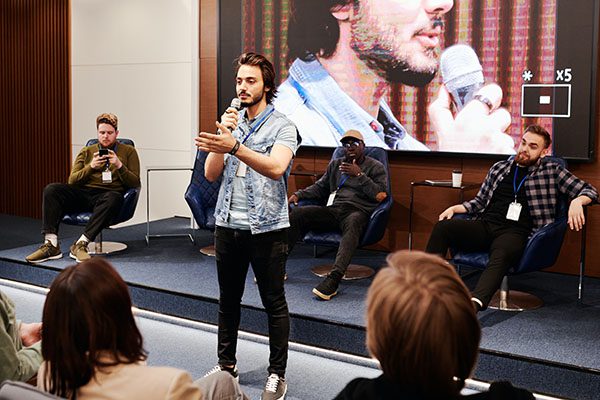
Exceptional Stories: The key to explaining complex concepts is not to throw information at your audience but to tell a story that provides context and structure.
One of the biggest things I learned from that was the importance of having a coach, listening to a coach and following the advice of someone who’s been there before, plays that trunk and knows how you can move forward. Something I’ve carried over into my business and in work life is that when someone who has more experience than the expert says, “Here’s what I recommend you do,” I don’t assume I know better than them. I’ll take that advice in him and apply it. It’s been a huge help.
I also think about racing someone else. I performed better, pushed to do more and achieve more. There is a sense of competition between someone else, not necessarily looking at them but you know they’re in the lane next to you. You’re both going for that wall and trying to get their first competitor in practice assuming against yourself. It’s hard to be super motivated when you can tell that someone is going for the same goal.
When you interact with that person, there’s a level of a relationship there. It makes an effort easier to find than dig deep and trying to achieve that goal first because there was a competition there. One of the things I’m trying to do with my company is going to build a community of people that are all going for the same goal, what I’m calling Collabetition. They know each other exist and they can share some ideas. I don’t want to say patent. They are not going to be giving away treats.
By knowing they’re going after the same goal and being in the same space, they’ll be pushed to do even greater things because they are not competing as each other. Instead of being super siloed and swimming in their own pools at their own pace, it’s getting in a race against someone else where you’re a little more aware of where they are and stuff. That way, everyone achieves the goals quicker.
The tweet for that is when competition and collaboration meet, everybody wins. You’re telling that story of a coach. When I was selling advertising for a fashion magazine called Speedo down in Southern California, I convinced them to advertise with me because I came up with a solution that they had not thought of with a fashion show around a hotel swimming pool of the sportswear and treating it like fashion.
They brought Michael Phelps in since he was on the payroll during the Olympics. I went up to him and I said, “Everyone says you’re so successful, Michael, because your feet are like fins and your lung is bigger than most. I’m guessing there’s something else.” He said, “Yes, John. When I was younger, my coach said to me, ‘Michael, are you willing to work out on Sundays?’ ‘Yes, coach.’ We got 52 more workouts in a year.” I thought, “If we want to be at the Olympic level of what we’re doing, the question becomes, “What are we willing to do that other people aren’t?” I’m imagining you have a story around something like that in what you do that other people in animation aren’t doing. Do you have something that you can share with us on that?
[bctt tweet=”When competition and collaboration meet, everybody wins.” username=”John_Livesay”]
What amazed me when Phelps is winning all the medals and breaking the records in the Olympics season where he kept racking up gold after gold was there’s a behind-the-scenes documentary style video they did showing what his routine was, his training regimen, and how much he had to sacrifice and give up to be that good at swimming. His life was wake up, eat, swim, eat, sleep, wake up, eat. He would eat thousands of calories because he’d burn them all off in the next three hours of the swimming session. Seeing that story behind what made him be able to achieve all those medals in the Olympics is what humanized him and made the difference between the person and the icon. The icon is standing on the podium with the gold medals or is on promoting Speedo. You can’t relate to him until you see the story and see what allowed him to get to that point.
One thing that makes my company different is that we focus on the story, not just the animation. The animation does have the icons, the logos and the graphics, but if it’s not telling a powerful story, no one’s going to relate to it. It’s the story that makes people resonate with the message, the animation, and follow the call to action. People have an animation about this on my homepage. People don’t invest in animation because it’s an animation. They invest in something because it gives them the desired result.
Animation is a tool to tell a great story. The story is a great tool to inspire people, to follow a call to action or to respond a certain way. When we’re making animations for a client, the first thing we start with is, “What are you trying to achieve? Who is your target audience? What story is going to inspire them to do the thing you want them to do? How can we connect you from where you are to where you want to be through those key points?” Creating any content and throwing it up online doesn’t work anymore. You have to have that high-quality story and custom content to get the results.
You’ll agree with me that good stories show the hero having some vulnerability. Michael Phelps did a documentary called The Weight of Gold, where he talks about his battle and another Olympic athlete’s battle with depression after the Olympics is over. Who are you after the parades are done, all the adoration is over and you’re not an Olympic athlete anymore, especially if you’ve been doing it for ten or more years like he was? It is a crisis of identity. That made me connect to him even more that he was vulnerable enough to share that. I love to hear the story of origin. You’ve got a great one of the purpose of Squash & Stretch. Can you explain a little bit about what that is and how that became the name of your company?
I’ll touch on Michael Phelps, the crisis of identity and depression. I see him as a spokesperson for an online mental health service, which is perfect. The times ruin the importance of mental health and people being so aware of it. It’s perfect because you have that whole pressure. Your life is the one thing that you stopped doing and then you’re like, “What do I do?” I agree there. The Squash & Stretch name is homage to Disney because when we were starting the company, that’s Disney Studios, which is his second studio. His first business failed, which is a testament to not giving up for any entrepreneurs out there.
Back then, there wasn’t a best practice for animation that had been established. If you look at the content made around then, it’s pretty bad by standards. He sat down with his animation team and they came up with twelve animation principles that if their work is going to be considered good, complete, done and have these twelve aspects to it. Number one on that list is Squash & Stretch. If you take any one-on-one animation class, the first thing you learn on day one is the same twelve principles. The tools have changed a lot since Disney’s day, but what makes animation work is still based on the same twelve principles. It’s homage to the giants who shoulders anyone who animates standing on. Whenever other animators see my business name, they’re amazed and everyone else goes, “What?”

Exceptional Stories: Focus on the story, not just the animation. It’s a story that really makes people resonate with the message and the animation.
Let’s talk about how you use this in healthcare. Give us a story of a healthcare company that’s very detailed if you’re talking about bloodstream or something. Sometimes, they have a product to sell. It’s complex, and yet they want to get it across quickly and ideally in a story. Do you have an example of a healthcare company that you’ve helped?
We’ve done some work for a company that helps place people in clinical trials that can qualify participants. We made up some animations explaining the clinical trial process for a few of their trials. One of them had to deal with premature babies with respiratory issues. You’re trying to explain to people. The new parents are freaking out because their kid has breathing problems. They’re going to try and see this type of test, if there is a nebulizer and this system to help improve the lung function of these premature babies. It’s trying to explain the risks and everything going on to people that are already emotionally stressed and beyond the normal amount of stress and lack of sleep of a new parent. These are the ones with the kid who has some health issues. Being able to clearly explain what’s going on with the study and get the information clearly is valuable.
Let’s talk about that because I haven’t heard anybody describe it quite like that. You did such a good job of painting the picture of you’re a new parent, you’re stressed out from your child not being well on top, the lack of sleep that new parents have anyway. Imagine that you, as a new parent, are trying to process information. That’s fairly complex about clinical trials in this case. You’re emotional and you’re exhausted. I know myself when my sister was diagnosed with ovarian cancer, she had to record what the doctor was saying because you are in a state of shock that you can’t even hear what they’re saying, let alone remember it or understand it. You’re solving that problem by being able to show people. We’re wired differently to hear information versus watch an animation and absorb a story like we do Pixar.
Part of our brain devoted to a sensory input analysis, 80% of that goes to vision. Also with animation, you get the audio and the visuals. The brain can engage and helps with recognition or memory and all that stuff.
You’ve also worked with tech companies. That’s a whole other very left-brain kind of thing, not necessarily related to technology and healthcare. My whole premise is that people buy emotionally and then back it up with logic, even for the most technical thing.
You might not be surprised to hear after the first story I told that I’m very interested in how the brain works. Reading a number of books on the subject, on the topic, we make decisions on the lower brain, which controls emotion and decision-making. Unless we’re presented with something that challenges our preconceived worldview or the way we see things. Our brains are lazy and designed to conserve energy as a survival mechanism. Unless we’re challenged by our worldview challenges information, you have a brain that isn’t even engaged when it comes to decision-making.
[bctt tweet=”Can you solve my problems?” username=”John_Livesay”]
The lower brain would take in something and think, “They’re not going to clash on what I think the world is.” We bounce it up to the upper brain, have the ratio and logic. Analyze this stuff and see if I can figure out how this will fit with my worldview. The brain kicks in, figures some stuff out and passes it back down to the lower brain when you make a decision. If you’re presented with something that doesn’t, can I call it to clash with how you see things? It doesn’t even kick in when it comes to decision-making.
When people are making decisions about all things, it’s 100% based on emotion and rationalized later if needed. That’s the reason why telling the stories is powerful and important, even for industries that are considering very left-brain and technical. Engineers often speak engineers. They don’t speak layman’s English. There’s one example of how we help a tech company. Early in 2021, we worked with a company called Enovix. They make next-generation lithium-ion battery technology.
They were spending about 45-minutes to 1 hour-long sales meeting trying to explain to other battery engineers how their technology can produce about twice as much energy and lasts about 30% longer than existing batteries. It’s about the same production process with a few drops in tweaks. We made this two-minute animation concisely explained the differences between their technology and the current technology and how they want to use this stuff. They loved it and they put it on their website for a while.
A couple of weeks after they posted it, they announced they’re acquiring a publicly-traded company and the valuation after the merger is $1.13 billion. Early in July 2021, they were awarded a $350 million contract with the US Army to make batteries for all the wearable tech soldiers wear. It saved them a ton of time and helped make their ability to explain the value of what their product does. It was two minutes instead of 45 minutes.
I have a premise that a good story should be clear, concise and compelling. With the steps that you’re using in your animation, it does all of that and more. When it’s compelling or you tug at heartstrings and people open the purse strings, people see themselves in the story and then they want to go on the journey with you. You talk about this in the steps about the appeal of a cartoon character has to correspond to what we would call charisma in an actor. Part of what people don’t realize is, “How am I being moved by a cartoon character? Why am I feeling something here?” Whether it’s Pixar or even something about the battery lasting longer than you would normally expect. If it’s helping save a life of a soldier, we’re involved emotionally. It’s no longer just, “That would be nice to have.”
It doesn’t have to be super cartoony either. There’s a ton of different styles in animation that are possible. When we’re picking a visual style for a client, we look at their existing brand, their target audience and figuring out what’s going to appeal to that audience and fit their brand. It’s popular and trending. It’s not all super cartoony. Things that are aimed at kids can be very sophisticated, more believable, realistic than other people would expect. You want to have the right characters because people empathize with characters on screen, empathize with people more than objects or concepts. You don’t even have to have a super detailed character, but as long as you’re talking about someone, you explain how they’re feeling and what they’re struggling with, what the conflict is and how they’re feeling about that, those situations or things that people can empathize with.

Exceptional Stories: Part of our brain is devoted to sensory input analysis. Around 80% of that goes to vision. Animation has audio and visuals, so the brain can engage at once.
If you’re trying to hook an audience, sorting your story with, meet this character, here’s what they care about, feeling, struggling with, people who share those feelings in situations are going to go, “I get this person. I want to see what happens to them.” If that’s your target audience of who you’re trying to reach, then showing them going through the experience of working with your business and how they’re going to feel during that experience and at the end, showing the results and how they feel afterward, how much their life is better because they hired your business for whatever you do, bought whatever product or whatever you’re trying to get them to do, showing that journey and that experience get people to be like, “I want that response.”
Once they have that and you share your call to action, that’s what inspires people to get off their butts and do something else. I’ll click on the computers because no one is going anywhere much. That story is powerful. A lot of people make the mistakes of not setting up the character right and not setting up the conflict right. Jumping right to what they do. Unless you establish why people should care in that first eight seconds or so, no one is going to watch the rest. All they talk about themselves too much is huge, companies talking about themselves too much on their websites and other content is about them. People only care about two things, which is to share my values, “Are you here to help me?” The weird thing our brains do when we’re presented with something new is subconsciously ask, “Is this going to kill me?”
It’s the leftover survival mechanism from back on the Savannah days if there’s a rustling bush in the distance. If you weren’t afraid there was a lion and when there was a lion, you got eaten. All the people that survived ran away when it rustled, even if it wasn’t a lion. You still have to provide enough information about your business that makes sure people know they can trust you and that you share their values. If they show, “Can you share my values? Can you solve my problem?” Then go right back to talking about the clients that they’re experiencing, how you’re going to help them improve the quality of life that they’re looking for. Most people talk about themselves too much, and people don’t care.
You gave us some real value bombs there. Let me highlight a few of them. What I heard you say was the better we describe a problem someone’s having before we jump into what our solution is, the more people are involved in this story. The other key element that I teach everyone when I’m teaching them how to tell stories as a sales tool is you must have a resolution to the story. The story doesn’t end when you say what your solution is. We fix the problem. We need to know what life is like after the problem has been fixed. We see it in classic stories like the Wizard of Oz. Imagine if that movie ended when she got in the balloon to go back to Kansas. There wasn’t that great scene of her with all those insights about no place like home and all that stuff.
This concept of once we feel safe and that people share our values is, “Can you solve my problem?” The big unspoken question everybody has when they watch a video, listen to someone present or pitch is, “Will this work for me?” They might trust you and like you but if they don’t think it’s what you have to offer will work for them, then they’re not going to buy.
[bctt tweet=”Exceptional stories can change the world. ” username=”John_Livesay”]
The magic of storytelling is you pull someone into the story enough where they are in the journey with the character and they go, “This person is like me. If it worked for them, I guess it will work for me.” Until that journey and that embodiment of who you’re taking on the journey unless you’re in the story is left-brain analytical, “Nice for them that that happened, but I don’t think it’s going to happen for me.” There’s where the big gap is between why people aren’t closing more sales or getting more people to understand what they’re doing. It’s because they’re not seeing themselves in the story.
They’re talking about themselves too much. When you’re telling a story like that, the clients are the hero, the company is the guide and helping them along the way. It’s not about you. When you show the results, it’s about the results for the other clients and how much better their lives are. I love that example of the balloon. It’d be funny to see a compilation of famous endings of films to cut them all off before that’s a complete entity. Triggered people get anxious or annoyed if they didn’t see the entire resolution.
That open loop is very annoying. It’s big to have explainer videos on websites. People don’t want to read. They want a short little video. It’s much more impactful if there’s some animation, music and all that versus just a talking head. What is the best way for someone to reach out to you?
They can visit www.SquashAndStretch.net. We also offer a free story assessment service on the website. There’s a five-point assessment we go through for their website and give them a report that shows where they can improve. We offer them some next steps that will help them close the gap themselves, or they can do a gap assessment and figure out how we could work together to make sure that their storytelling on their website and their other media is as optimized as possible. They can check me out on LinkedIn. Search for Karl Pontau and reach out that way.
Karl, thank you so much. Many people are drowning in the sea of sameness. There are many other people that do what we do, whether it’s insurance, coaching or whatever it is. With your skillset of animating and bringing your story to life that’s going to cut through the clutter and make people stand out and become memorable, a lot of people are going to be interested in exploring how you can help them do that.
Thank you.
Important Links
Get more business storytelling tips and exclusive deals directly to your inbox. Join the Squash and Stretch Productions Community!
https://www.bit.ly/SnSP-JoinCommunity
Wanna Host Your Own Podcast?
Click here to see how my friends at Podetize can help
Purchase John’s new book
John Livesay, The Pitch Whisperer
Share The Show
Did you enjoy the show? I’d love it if you subscribed today and left us a 5-star review!
- Click this link
- Click on the ‘Subscribe’ button below the artwork
- Go to the ‘Ratings and Reviews’ section
- Click on ‘Write a Review’
Love the show? Subscribe, rate, review, and share!
Join The Successful Pitch community today:
- JohnLivesay.com
- John Livesay Facebook
- John Livesay Twitter
- John Livesay LinkedIn
- John Livesay YouTube
LinkedIn Wealth And Impact With Marcus Bell
Posted by John Livesay in podcast | 0 comments


If there is one platform that has proven to be helpful for businesses and individuals to connect at a professional level, it would be LinkedIn. But how do you really get started on it? Marcus Bell—an American music producer, songwriter, multi-instrumentalist, singer, social media influencer, activist and entrepreneur—joins John Livesay in this episode to share with us what they are working together geared towards helping entrepreneurs create a more positive impact as they build wealth: LinkedIn Wealth and Impact Bootcamp. They give us a peek into the tools they can offer at your disposal that will help not only yourself but also others to live their dream of doing something that is impacting the world. Follow along to this conversation and discover the possibilities for wealth and impact, all within LinkedIn.
—
Listen to the podcast here
LinkedIn Wealth And Impact With Marcus Bell
Our guest on the show is Marcus Bell, who was a child prodigy in music and has worked with every imaginable star, including Beyonce. Find out how he has taken his skills in music to conduct and create an entrepreneurial journey that allows people to monetize their LinkedIn profile even if they’re not looking for a job. When you figure out how to create content that is as meaningful as a hit song, you become irresistible. Enjoy the episode.
—
Our guest is Marcus “Bellringer” Bell, who is an American music producer, songwriter, multi-instrumentalist, singer, social media influencer, activist and entrepreneur. He’s marketed, promoted, produced, remixed, written for, mentored and developed some of the world’s superstars and brands. His list of credits include Nicki Minaj, Snoop Dogg and Beyonce, as well as Discovery Network, Amazon and Warner Bros., just to name a few.
He published on Amazon a number one bestselling book titled Bellringer Branding Bible: The 5 Musician Branding Principles for Singers, Rappers, DJs, Music Producers, Composers, Writers, and Recording Artists and all kinds of people, not just those in the world of music. He has an amazing background being the son of a National Tennis Champion. His father was an entrepreneur so we’re going to ask him to take us on that little journey. He, along with Daniel Burrus created the show called LinkedIn Wealth and Impact Bootcamp, which I’m very excited for you to know about what we’re all doing to help other people. Welcome to the show.
John, thanks for having me on. It’s so good to be here with you, being able to share stories with you and share some value for your audience.
One of the things that you say when people ask you, “Tell me about yourself,” has to do with dignity and compassion. Let’s start there. How did that come about for you as your stake in the ground of who you are?
The thing that is so important to me is my activity of life coming from a foundation of what I truly value for myself and others. I stand for dignity and compassion for myself, others, the planet and all of humanity. There are these isms that create tension in the world. I’m up to transforming those conversations around ageism, sexism, racism and all of that because if one holds dignity and compassion for another, then the isms start to disappear. That’s important to me.
I wake up every day with that on my mind. How can I be more compassionate towards the people I care about, love and don’t know that aren’t like me? People that have a different worldview and different frame that they’re living their lives from? How can I hold compassion for who they are as human beings? Not so much necessarily all the things that they do but who they are as beings.
That goes back to your youth and your parents. I want to hear the story of how you were in high school and led a demonstration to prevent the demolition of your high school.
[bctt tweet=”LinkedIn secrets revealed.” username=”John_Livesay”]
I had an unusual high school experience. I went to three high schools at the same time. The first high school was called Churchland High School in Portsmouth, Virginia. That high school had advanced placement courses. I would go in the morning to that high school to get those advanced placement courses for college and then I would leave that high school. Someone would transport me before I could drive and then when I could drive, I would drive myself to the predominantly African-American high school which Missy Elliott, people like Ruth Brown and other well-known people in the world went to because it was the only African-American high school that was pretty much there and the only option in that area.
When I was a sophomore, I became the youngest student government president of the school. On my watch, the city decided that they were going to close the school down. That school is I.C. Norcom High School in Portsmouth. The alumni association, my mother and my uncle went to that high school. They were tennis champions at the high school. A lot of historic greatness came from that high school. We held press conferences and pulled the community together to support saving the school and its history. Sometimes decisions get made inside of city governments that don’t necessarily take into account the history and the stories that exist that somehow has to be preserved.
Fortunate for us, the city decided to do the opposite of closing it down and investing and building a new building. They spent over $2 million on maintaining I.C. Norcom High School. Every time I’m in Virginia and I drive by that school, I feel overwhelmed with gratitude that we were able to pull together enough support. If I think about the work that you do, John, in crafting story, we had to sell the story of the school and why it was important, meaningful and necessary to keep it in existence. There are many different places that we can apply storytelling.
A good song is a story that touches your heart. A good song like a good story is memorable. There are lots of overlapping here of your passion and the kinds of people that you have gotten to work with and produced. We know you have had this amazing career in the music business but I want to jump ahead to 2012 when President Barack Obama was running for reelection and you get this call to do a song for flash mobs. What was that like? How did that happen?
Someone from his campaign reached out to me and said, “We’re planning to do all of these different culturally relevant actions to get people involved in the campaign and make it exciting.” That’s the thing about Obama’s campaign. They were using a lot of innovations in terms of how they were reaching the public, galvanizing and organizing. I played a small role in coming up with a song that was used for flash mobs across the country. It took on a life of its own.
I would imagine there may be some people that have not heard of flash mobs but behind the scenes, there’s a video put together to music with the choreography and then different people, whether it’s the general public, learn the routine and organize in a public place. They may rehearse somewhere else, go to that public place and pretend as though nothing is going on. They’re acting businesses as usual and then all of a sudden, music happens out of nowhere and then people start dancing doing the routine. In this case, people will come up with the Vote for Obama signs at the end of it.
Everyone whips out their cellphone who’s not involved because they’re so shocked, feeling like they’re part of something that looks spontaneous but lots of hours in rehearsal went into it. We jumped from one interesting part of your story to another, which is if I’m doing the chronological order, wasn’t it around 2018 when Beyonce was doing the On the Run II Tour and she ended up performing one of your songs that you produced. How did that happen?

LinkedIn Wealth: If one holds dignity and compassion for another, then the ism starts to disappear.
I have to take it back years before. I’ve been in the music industry my entire life. I started playing piano when I was two years old. When I was nine, I produced my first song for money. It was $120. I’ll never forget. Someone gave me $120 for replaying a Whitney Houston song that they couldn’t find a karaoke for. In that moment, I said, “I can make money.” $120 was a big deal for a nine-year-old, even now, that is the case. They can buy a lot of toys and so forth. For me, I was more about buying instruments than anything else.
In terms of my music journey, I’ve been producing and started a record label when I was twelve years old. When I started that record label, I started hiring my teachers to be my backup musicians. I had a bit of a child prodigy upbringing. I ended up going to Berkeley College of Music in Boston. Around early 2000, I got a call from Jam Master Jay from Run-DMC. They said, “Is this Bellringer?” That’s my artist-producer name. I said, “Yes.” He’s like, “This is Jam Master Jay.” I was like, “What?” He’s like, “I’m here to listen to your music. Did you produce all of this? Did you write these songs? I want to bring you out to New York to work with me.”
I fly to New York and start doing work with Jam Master Jay. This was around the time that I was working with him. He had done a label deal with Virgin Records. I was in a studio with him frequently. He wanted to throw me on everything that he was working on just because I’m a multi-instrumentalist. I can work in a lot of different genres. I can vocally produce and engineer. Someone can come to me and get everything done. I work very quickly because I’ve been doing it for so long. In four hours, we can go from nothing to the radio and that’s happened.
One day, I decided to go and visit my family in Virginia. When I was on that trip back home, I get a call saying, “Marcus, where are you at? Jay just got murdered.” At that moment, I decided, “I think I’m cool on hip-hop for a second. I’m going to take a pause in the hip-hop community.” I started doing country music and went down to Nashville. I started doing some gospel things and a lot of international work.
Inside of the international work, I went to India and I spent six months there with an artist named Shakti. When I was in India, I was working with a lot of Bhangra music and Carnatic music. We were using all these different instruments. It was the world of that. I immersed myself into the culture as well as did a lot of collaborations.
One day, I get a call from someone saying, “I’m in the Beyonce concert and I’m hearing your music inside of the performance.” They had combined Baby Boy with this Indian song I had done back in the early 2000s. That’s how that came about. They found a way to integrate some music I had done and some world music that I was involved in. It was a hip-hop Bhangra music and that ended up on that tour. That’s the origin of that one.
You’ve taken all this incredible experience and impact into being an entrepreneur with a lot of success in your businesses, as well as a huge social media influencer, which has led to you creating an experience for certain kinds of entrepreneurs that want to learn how to have wealth and impact in their careers, especially that you partnered with Dan and invited me to be part of this concept where LinkedIn becomes the core platform as a launching pad. Can you describe what gave you and how you reached out to Dan? Tell us a little bit about who it’s for and how it all started.
[bctt tweet=”How to reach for something bigger.” username=”John_Livesay”]
I’ve been an entrepreneur since I was nine. I’ve gone through the entrepreneurial journey on the music side. I have a company that supports 450 writers, producers and artists, getting music placed in TV and film as a sync licensing company. I’ve been in the entrepreneurial spirit. For many years, I’ve been supporting as a mentor, advisor, coach, celebrities, music celebrities, as well as politicians and CEOs of companies. I decided some years back to start doing a group of people because I wanted to be able to impact more people at once. I started the Wealth and Impact Bootcamp for that purpose to take some of the distinctions that I’ve learned around building wealth, entrepreneurship and make an impact with your message and the thing that you care most about.
The way the LinkedIn Wealth and Impact Bootcamp came about was I was in a conversation with Daniel Burrus, who is a New York Times bestseller and amazing entrepreneur as well. He said, “We’re six successful businesses and exits.” He consults the LinkedIn C-Suite as well as the Microsoft C-Suite. He and I have been buddies for several years. We were thinking about how we could create an offer of value that was unlike anything in the marketplace. The low-hanging fruit, which people don’t understand how important and the opportunity that exists for is on the LinkedIn platform.
We both have large social media followings but Dan amassed over 1.2 million followers on LinkedIn. Not only that, he has been doing upper six figures on LinkedIn since week two that he was on the platform. When we were in conversation around that, I said, “Let’s help people with that and have an offer of value that is helpful for a group of people that are about uplifting the planet. Let’s train them in how to use the LinkedIn platform to better communicate and articulate the offers of value in the marketplace, monetize their missions and make the impact and difference that they want to make.” That’s how the LinkedIn Wealth and Impact Bootcamp idea got cited.
Who is it designed for? Is it designed for people in the music business, someone who is a coach or a financial advisor? Do you have a particular ideal person that this works best for?
Coaches, entrepreneurs, wealth financial advisors, people that have companies, offer book, authors, speakers and not just music artists. There is a way for everyone, no matter what their offer is, to find their ideal customer on LinkedIn.
Normally, you either have to pay advertising on Facebook or you wait for referrals but you’ve created a way for people to create content that’s engaging. Certainly, with your music experience and background in producing, that’s part of the secret sauce. It’s creating relevant content that other people want to share.
There’s a secret sauce inside of our LinkedIn Wealth and Impact Bootcamp system. You’re a part of the secret sauce, John. The other way that’s a unique way we’ve designed this is we’ve reached out to people that we love, care about and have a relationship with like you, who have specialized knowledge in areas that are important for the success of the participants. You are the master storyteller.

LinkedIn Wealth: The key to success is confidence. The key to confidence is preparation.
As we know and as you say, “The sale is in the tale.” That’s a piece of the secret sauce. If the secret sauce was a mixture, it will be a mixture of your distinctions, my distinctions, Dan’s distinctions and other collaborators’ distinctions. We’ve also invited some guest appearances and superstar guests like you to come in, contribute and bring their specialized knowledge, whether it’s understanding the algorithm, sales strategy or video content creation. All of these things coming together create the opportunity for someone to create wealth and impact using LinkedIn specifically.
A lot of people say, “If I need help in this area, my branding, I’ll go to this person. If I need help with my storytelling skills, maybe I’ll work with John.” What I see here, which is so fascinating, is that your success as a producer for so many years requires a lot of skills and a lot of talent being pulled. You need the best person on drums and horns. You need the best process for people to go through and they’ll show up on time, the promotion of the music and the packaging of it all. You have created a one-stop-shop for people who’ve already created something that knows people are willing to pay for and they need. They’re just missing this secret process because no one else has done it the way you’ve done it.
They’re like, “If I need help in this, I have to go keep finding all these individual people who have expertise in something but then I’m still stuck on my branding.” You have assembled much like a music producer. This world-class group of talent that allows people to be shepherded through first, will fix this and then once you’re there, it will smoothly go into the next level. That’s the whole experience of getting someone to become aware and engage with you. If you’re helping people with their brand so that they stand out and then create the content, which then would ideally generate people wanting to have a conversation with them, that’s where I would enter in and say, “Let’s make sure you’re telling the best possible story that makes people want to buy or hire you.”
You’ve anticipated every single problem that people have or maybe don’t even have an offer yet but they want to do something entrepreneurial. You even can help them with that. It is comprehensive. That’s why I was so impressed with the thought and the strategy that went into it to help people go, “I can take a breath. I’m in good hands.”
I’m ringing the bell on you because that is the best articulation of how I think about things. There’s an orchestra. You have an aim and this song that you want to create is called wealth and impact in your life and in the world. Each section has a melody and it connects harmonically with all of the other sections. What happens is people want to create this great piece of music but they’re missing the drums, the timpani or the xylophone or they have the drums, xylophone, tuba section and French horns but they’re missing the strings. The strings are what pulls at the heartstrings.
When you learn how to tell a story that tugs at people’s heartstrings, they open the purse strings. There’s another analogy to the music part.
The way I view the LinkedIn Wealth and Impact Bootcamp, everything that I’ve put together in terms of courses and things like that, I look at it from that lens like, “What is this piece? What is needed for this piece to be a harmonious, beautiful piece of music for someone’s life?”
[bctt tweet=”The sale is in the tale.” username=”John_Livesay”]
Let’s paint the picture for people who say, “This all sounds really interesting.” Is there a little story of how this has worked for someone? What is their life like that they have all this tuned up, that everything’s in sync, on the right song page and working together? What happens for people when they’ve got the right song, brand and message at the right time but they’re not spending a lot of time wondering why the ads aren’t working or they’re struggling to get people to understand what value they have when all that gets fixed?
The name of it is LinkedIn Wealth. Obviously there’s money, but I want to also hear about the impact part. It’s not just you’re making a lot of money for yourself but you get to help people live their dream of doing something that’s making an impact in the world. That’s what differentiates what you’re doing and who you are as a man as well. It’s all so heart-centered and therefore, this is for heart-centered people.
There’s a participant and her name is Sharon. Her cause is around diabetes and educating people around that. She’s taking some of the principles that I’ve shared with her that’s a little piece of what’s in the LinkedIn Wealth and Impact Bootcamp program. She’s creating these events and being called on to platforms to talk about Type 2 Diabetes. She’s sharing her specialized knowledge as a nurse that supports people in that area.
There’s Brazos, who’s one of the participants in LinkedIn Wealth and Impact Bootcamp. From a wealth standpoint, he’s inside of my programs, done over $500,000 increase in his net worth but he also has a movement around longevity and living to be 120 years old. His mission is to help bring forth that narrative that it is possible for you to live longer in a healthier lifestyle. He’s bringing that forth into the world. As he does that, he’s making a tremendous impact because he’s been able to attract more people into what he’s discovered.
What you’re also helping people become are thought leaders. If they’re already a thought leader, you take them up another level where the authority is there. Let’s say if you’re a speaker and you’ve got X number of followers but after this whole experience, people are going to find you and hunt you down, instead of you having to pitch yourself to get hired as a speaker. With the content you’re creating and the impact it’s having, they’re going to want to say, “That’s the kind of speaker we want to have come and speak here.” All of that is full circle and dovetails together again much like a great song that people go, “I can’t wait to share this song with my friend.” It helps things get shared. When that happens, then you’ve got more money and the offers coming in than you could’ve ever imagined.
Across the board, I see people getting requests for speaking engagements, being part of book projects, hired for their services and asked to come on television. I’ve seen all kinds of things and movements start to get created for each person. Every business different and everyone’s aim is different. What I see is people being able to use the tools. The tools are values neutral. Any tool can be used for good or for other purposes. What we do is provide a way to use the tools that are available that a lot of people don’t know about that exist on LinkedIn.
I’ve seen you and Dan share some of these tools and you’re like, “How did I not know this was possible?” If you want to be perceived as a thought leader, you have to be at the forefront of using new tools. You want to have that wow factor. As a virtual speaker, I use ECAM and special effects. It gives people a little bit of a wow factor. Arthur Ashe, who I know is near and dear to you with your mom’s connection as a professional tennis player, is always talking about the key to success is confidence and the key to confidence is preparation. What you’re doing in this bootcamp is the preparation that an athlete does to be successful.

LinkedIn Wealth: Help people be successful, but also have significance.
Maslow, who’s the famous therapist that came up with the hierarchy of needs, has this great quote, “If the only tool in your toolbox is a hammer, you tend to go around looking for nails to hit,” which from a selling standpoint, if you only have a hammer and you’re trying to get people to buy from you, then you’re hammering away. “Do you want to buy?” When you have all these other tools at your disposal, such as storytelling and the quality of the content that’s engaging people to come to you that are already pre-sold, that’s where it all comes together in this beautiful song.
I want to underscore something that you mentioned and that is thought leadership. There are a lot of people that have thoughts but don’t necessarily embody leadership. There are a lot of people that are successful but what we’re aiming to do is help people be successful but also have significance. Inside of that significance, there’s a bigger context. The words that Dan Burrus likes to say is, “Talk about the bigger big.” There’s something bigger for your life. The thing that you think is big is not your bigger big. There’s something bigger. We’re operating the LinkedIn Wealth and Impact Bootcamp program on the bigger big level. What is it that you can create that does way more than what you’ve been doing?
If people want to find out more about you and this LinkedIn Wealth and Impact Bootcamp, where should they go?
They go to Wealth and Impact Academy. That’s the best place to go for the LinkedIn Wealth and Impact Bootcamp.
Marcus, thank you so much for bringing all of your talent, kindness and compassion to the world and to this episode. It’s been a pleasure.
John, thanks so much for having me. It’s been a pleasure interacting and sharing some value with you. I’m excited about you being a part of this LinkedIn Wealth and Impact Bootcamp.
Here we go. Success and significance, everybody.
Important Links
- Marcus Bell
- Bellringer Branding Bible: The 5 Musician Branding Principles for Singers, Rappers, DJs, Music Producers, Composers, Writers, and Recording Artists
- Daniel Burrus
- LinkedIn Wealth and Impact Bootcamp
- Wealth and Impact Academy
- http://www.WealthAndImpactBootcamp.com
- Better Selling Through Storytelling Method Online Course
Wanna Host Your Own Podcast?
Click here to see how my friends at Podetize can help
Purchase John’s new book
John Livesay, The Pitch Whisperer
Share The Show
Did you enjoy the show? I’d love it if you subscribed today and left us a 5-star review!
- Click this link
- Click on the ‘Subscribe’ button below the artwork
- Go to the ‘Ratings and Reviews’ section
- Click on ‘Write a Review’
Love the show? Subscribe, rate, review, and share!
Join The Successful Pitch community today:
- JohnLivesay.com
- John Livesay Facebook
- John Livesay Twitter
- John Livesay LinkedIn
- John Livesay YouTube
Be A Professional Human Being With Rajan Nazran
Posted by John Livesay in podcast | 0 comments

We’re all born with a brain and not a calculator. That is why it’s so important to tell stories and connect with people emotionally because that is what drives business. This is what journalist and entrepreneur Rajan Nazran believes in. Calling himself a professional human, he explains on today’s show with John Livesay how being one is all about taking a deeply human approach to deal with whatever situation is on hand. They also talk about the art of storytelling, what the human experience is all about, and so much more. Rajan has travelled to over 58 countries, taking on some of the biggest conversations and covering stories from around the globe the Global Indian Series, an immersive platform that provides original and exclusive content based around the lives of people of Indian origin.
—
Listen to the podcast here
Be A Professional Human Being With Rajan Nazran
Our guest on The Successful Pitch is Rajan Nazran, who talks about the fact that we’re all born with a brain and not a calculator, and why it’s so important to tell stories and connect with people emotionally. He said conflict resolution is a silent orchestra, that you have to interpret what the notes are. Enjoy reading how he’s done this around the world.
—
Our guest is Rajan Nazran, who is an award-winning explorer, content producer, entrepreneur and over the last couple of years, traveled to 58 countries, building networks and building Global Indian communities through his mediums. As a result, he is a highly established network and has brokered many deals independently. His network extends to heads of states, ministers, CEOs, entrepreneurs, and he’s the Senior Partner of NazranRoth and Chief Explorer for the Global Indian Series. He’s also an International Chairman for the Center for Leadership Development in Africa and an Executive Member of The Kenya Society. He’s the International Sports Director at the Corinthians Football Team of Malta, and he sits on the board for the Mental Health Change Working Group of England. Rajan, welcome to the show. That is quite the bio.
One does try. That was pretty good.
I always like to ask my guests to take us to their own story of origin and you decide how far back you go. It could be your childhood or school because you said to me earlier, you consider yourself a professional human, which I’ve never met anybody who’s put those two words together. A lot of us are focused on the awareness of being as opposed to doing. The concept that we can be professional at being human and make money typically is what the word professional means, you’re an expert at it. That alone is fascinating. I’m curious to see how that all came about, this urge to travel and this urge to make such an impact in so many ways?
First and foremost, John, it is a deep privilege to be on your show. I’m humbled for the fact that I’m here, especially amongst your guests that are far greater than I. It’s a nice place. How far back do you go? Being of Indian origin, we believe incarnations or reincarnation, going back too many lives. To give a brief background, my mother was born in the Philippine Islands in Cagayan. My father is born in Punjab, India and I’m from the UK. I am pretty much 50 shades of brown that automatically is the Indian community.
In fact, we’re the karaoke singers of that. Growing up was slightly different for me. I got to see the world in a different light because culturally, you don’t know where you belong to but you get this perception of identity that comes in. My mother was an entrepreneur. She set up a working group for Asian women in mental health. She became an artist and did incredible tapestries in museums now in the VNA. My father is incredibly hard-working from becoming a bus driver towards setting up the factory, then going to cars and they both work hand in hand.
I grew up around this series of passion, which is saying everything we do we do it because we believe that we’re making a difference. Whether it is to help and support Asian women or if it was to say, “What can we do to help support the country that we could have then,” which was the UK. From there, I went to university and this urge came in, which was saying, “I want to explore the world. I want to see where I fit into it all.” As every young person comes through, I did what you normally do, which is door-to-door sales, thinking, “That’s how I’m going to get my financing together.” I did that and went to university.
I was fortunate that I was at the right place at the right time. There was this whole Erasmus Scheme that took us to Italy where we could study abroad. I was there and I happened to be there when the Italian Olympic team was there. I did quick courses in NLP and hypnotherapy. I pitched my way into the Indian team and became their first youngest ever mental coach. That’s where I first started from.
I was there doing things with athletes in the interim. I got headhunted. It’s the right place at the right time. I got to go to Israel for P3 Consideration work. I went to the Middle East working with this great guy. He took me under his wing and told me about the weird and wonderful world of the media so I was getting aboard with him. My story has been one of either the constellations coming together or downright stupidity at times of saying, “What if,” and ending up in places. That’s how it all clicked off.
I want to double click on this background you have on what you called practical soft skills, the neuro-linguistic programming because I wrote a blog about soft skills that make you strong. A lot of people think, “I’m an architect. These are my hard skills.” Soft skills are not something that’s that important and of course, now we realize that soft skills are defined as empathy, listening, storytelling, EQ, emotional intelligence, not only your IQ.
So many entrepreneurs forget that as a key element of their success, whether it’s to get funded or to get the right people to join their team and eventually, you have to create a way to convince people to buy whatever it is you’re selling or download an app, etc. I want to hear and I know that you’ve incorporated this into the NazranRoth offerings of what kinds of things have you’ve done. What do you notice across countries? This ability to connect with an audience and everyone processes things differently is a starting point. Can you tell us a story about using soft skills to help companies in different countries?
[bctt tweet=”Conflict resolution is a silent orchestra you have to conduct.” username=”John_Livesay”]
I’ll continue an even better story than that and I’ll get to that. You probably know that I’ve been held hostage in Eastern Europe, so I have to use my words to get me out of tricky situations. I’ve been to 58 countries. Being held hostage. I was in Syria during the Ebola crisis, and at that moment, I came across a family who unfortunately lost somebody. The police were saying that they’re going to arrest me as a part of it. I was there. The power of soft skills is not left to the wells of business. This is who we are as humans, which is what I say a professional human. This is our faculties to be able to speak, understand and absorb.
Taking that to the wonderful world of internationalization, we work with a lot of clients to help them develop their own narrative, their own story, especially countries towards forging a way for them to get FDI, Foreign Direct Investment. It’s like what you say, everyone looks at this and your first notion is one has to be incredibly strong. You have to be academic and tell people the numbers. The numbers are what make things happen. There are only so many numbers you have for a country.
What we do is we reach out to that and say through the product offerings we have with the Global Indian Series, “Why don’t we showcase a softer form of public diplomacy. Let’s tell the stories that connect human beings together, not with each other but with a country.” We’ve done that with, for example, Portugal. We did this massive pitch in Portugal and we brought together some amazing individuals and we took a massive spin saying, “Rather than focusing on the economic support, let’s focus on the human interest of Portugal.” That feature that we created reached out to over 40 million people.
We did an event at the end of that and brought over $3 billion in private net worth to that event. We brought together people who are interested in the stories and human response to the businesses that showcase their humanity. Lo and behold, business takes place and that’s basically real-life practical soft skills. It’s not about getting people to vote for you. It’s about a country embracing who they are, that living organism of identity and culture. Allowing that to go through the narrative, the tonality of their words, the way that people view them to be. In that sense, we’ve helped.
In corporate, we’ve done the same thing. Some companies get some tricky situations that they need a bit of help and support with. Rather than going down the normal, typical legal route, we help them shape themselves and have those softer conversations with people that have a lot of empathy, emotional intelligence, and intercultural communications. To get them to connect powerfully with people that gets the end result on people saying, “I’m prepared to give you ten minutes of my time to listen to you. Let’s take it from there.” That’s the type of stuff that we get involved in again, comes back to the professional human element saying, “We’re all born with a brain, not a calculator.” If it is emotive beings, John, like you, you’re emotive. You wear your personality and your heart on your sleeve. That’s who we are as human beings. It’s common sense that’s what drives businesses.
I love that because it’s so visual. It brings it to life in a completely different way. The global business partner that you offer companies is what allows them to achieve real-world success because there are differences in culture. I know from my advertising background that certain campaigns don’t translate. I remember Body by Fisher for sportswear translated in Spanish to Corpse by Fisher. A car here in the States was called Nova and of course, in Spanish, that means no go. That’s not probably the best name and that’s the tip of the iceberg from an advertising standpoint of the need to translate what you’re doing from one culture to the other.
Is there anything that you see that’s consistent? For example, we’re all wired for stories, no matter what culture we come from and things like that? I would say, since you’ve been to so many countries, that you might say, “We have more things in common than you might expect. If you’re a global company already, and/or wanting to go global, here are a couple of things you might want to keep in mind.”
Coming into that tone there, the art of storytelling is like what you do. You’re an alchemist. You bring together these remarkable emotions, and you connect them together. If we were to put you in robes, we’ll call you guru, in that sense. The art of storytelling is this since time immemorial. Before TVs, what did we do? We stood around a fire and we told stories. We looked at the stars, and we conjured up images of how the gods or goddesses of our choices created the world. We forget about it. We try to make everything so robotic in nature. We forget that it’s the human element that makes us do things so some of the commonalities are down.
In the story alone, people know that the second thing for companies that do go global is that intercultural competence. One needs to know, as you said, that it goes beyond the notion of words and linguistics, but also the way that business is done in emerging markets. Who do you know? How do you know them? How well can you navigate through the policies and procedures to get the end results? Not everything is clear and the same.
One of the biggest obstacles a lot of international companies have is that they take the month of what they think the world is and they go to those countries and they don’t realize the world is different there. Therefore, we help them navigate those spots with that silent guardian that supports their journey because we can open up the doors where they need to be bearing in mind, I’ve got a footprint in over 58 countries that I’ve been to and I’ve got a lot of exposure there. Also, at the same token, we help them and practically assist them towards speaking to the relevant people because we know what those political landscapes are.

Professional Human Being: We do everything we do because we believe that we’re making a difference.
The other thing that I’ll say that’s a common tonality that I see is yes, “We’re all similar,” but the way we interpret our coaches is dissimilar in those markets. In the US, it is direct and straightforward. In Britain, we have the James Bond attitude of the globe, where if we take them to certain markets like Ethiopia, it doesn’t translate well. You need to be more aware of what takes place. What are their cultures? What are their stories? What defines them? How do they want to be treated?
I know that one of your expertise in NazranRoth is the national branding and PR, so it seems to me that what you’re offering is the ability to have the right message to the right person through your network at the time. When all those things align, then results start an act, people start taking action and wanting to partner with you. If one of those things is off and you don’t have the right person, you’re not in the right room, or you don’t have the right story it’s this recipe for success basically. You’ve got all of these pieces from all of these different experiences and countries, that a lot of people need you as the International Sherpa. That’s how I would phrase it.
The other thing that I’m fascinated about is what you’re doing under human excellence is conflict resolution. That is something that can destroy a start-up faster than anything, is a conflict between founders and it’s a big red flag for potential investors. It’s also a conflict within big companies. People say that they don’t leave their job, they leave their boss. The way conflicts are resolved from country to country is quite different. If you’re interacting with people from Japan, from what my study has been, they hate conflict. You never hear stories of people screaming at each other and they also don’t like to say no.
It’s almost like this silent orchestra that you have to read between the words to understand. It is a sign of orchestra. Conflict resolution, when you go and deeper, as you rightly say, it can be from person to person. Business to business. Communities to communities and nations to nations. It all starts off with understanding what are the core deliverables of human behavior. Why do people behave in a certain way? It goes even deeper into this whole notion of purpose and integrity. That’s how our viewpoints are formed. We’re fortunate, so when it comes to countries, we got four former heads of state on our advisory committee for NazranRoth. That helps because they’ve been through all that and they’ve been to some of the most challenging times you can ever imagine.
Donald Ramotar, the President of Guyana, was there at the most complex trading of Venezuela and Guyana of oil. He was there. He had to navigate the shores amongst the other guys across Africa. The way we normally deal with it is that we take a deeply human approach and that is the common core of the professional human. What is currently taking place, and how does it have a human-based impact? Regardless, if you’re head of state, get your person to the ground on the verge of being destitute, we all have emotions, that EQ that you named it to be.
Once we start taking that approach, and we realize as a species of human beings, we have this common denominator of behavior, it’s a lot easier for us to come in and deal with the situations on hand. It gets slightly difficult and murky is when you got large boards on the brink of almost killing each other along those lines. That’s when we have to deal with multiple personalities. Our secret there is, is there any magic to the toolbox to have a look at what is the human response to this? We need to understand what are the words behind the words. We’ve only got there like you creating incredible work that you’ve been doing over 300-plus podcasts. We’ve only got there because of the years of dedicated travel of experience and practically going to the countries and feeling it, blood, sweat, and tears. There’s no real genius behind it. It’s literally the experience I’ve been able to build up.
I see that some of your clients include Deloitte, which I find fascinating that you’re both well-respected advisors and consultants and yet even a company as big as Deloitte needs your expertise. Is there a story of what they engaged you for? Was it navigating some of that?
I can’t go into too much detail there but you’ve done your research. We worked with Deloitte, BP, SR, and Maersk, the big shipping lines. They sent me to Congo to the DRC to work with their people here and that was onboard a ship. That’s real conflict resolution. There are a lot of things happening. It’s because we know the markets, we know the people and we know how human behavior rates, we’re not in competition with anybody. We got the collaborative approach. If companies see that we can help and support them, we come in and we do that. We have large-scale clients to small start-ups. It makes no difference. We’re all humans on our own voyage of life. If we can be of help, we help out. It’s not an issue.
The takeaway is, no matter how big a company is, the smart ones still engage others to help them, especially in an area that they may not have all the expertise. If we can look at that and incorporate it into our own mindset of not trying to go it alone and think that, “That must mean I’m weak.” It’s flipping it on its head. Soft skills make you strong, collaboration and having other people partner with you makes you stronger. All of that has now led to one of your flagship services, which is the Global Indian Series, where you are everywhere and have some amazing stories there. Can you share with us the origin story of how that came about and what people might want to explore?
Absolutely. The story came from pure and utter frustration like everything else. When one travels, you go to all these countries, you meet with the people and you realize, forget about the flag of India. As people of similar type of origin, we’re everywhere but we don’t know about each other. That has a huge impact because politically and economically, it has an impact, victims of society and identity. Once you start to realize, with every country, everyone defined this notion of indigenous like this white elephant in the room. Some people held the tail, others the trunk, others the legs.
[bctt tweet=”An emotional connection breaks through the noise and clutter.” username=”John_Livesay”]
Everyone’s holding on to the same notion, but we’re different descriptions towards it and that has a huge impact for generations. Some people then take this historical route of, “Our traditions are set in stone. Women behave like this and men behave like that.” Others take it as a fluid part. I thought, “Let’s change this. There’s a lot of misconceptions. Let’s build an active living encyclopedia, a bridge that connects us all together and say, “We are brought up into an identity though, let’s face it, we’re all born into this planet out of luck, an agenda out of luck and in the country out of luck. Any form of wisdom out of luck.” It’s this identity thrust upon you that you have to live and die towards.”
You don’t understand what that identity is because if you don’t it controls you. That’s where we kicked it off. we did not create features. I was physically traveling to these places prior to COVID not in a hazmat suit. All of a sudden, COVID kicks in and you’re thinking, “What do I do next?” That’s when we kicked up from the digital side. We bring the podcast in and now what you hear is this living encyclopedia of the human experience of people.
We’ve had kings on that, heads of state, billionaires, people dealing with alcoholism, nations from around the globe, people there are coming together in a spirit of being a human being and saying, “We’re unmoored from what we thought was normal.” That’s been the beauty of it. It’s something I’m passionate about. It is part and parcel of one’s life mission to understand what is a brief fabric of humanity and is a common core there that we can learn from each other with.
One of the things that fascinated me was the fact that you talked about there are over 70,000 people of Indian origin that call Portugal home. That’s why that partnership made such sense, where you created this whole print feature that was viewed over 30 million times and you were able to get sponsors who wanted to target that audience. I thought it would be interesting for people who might be wondering, “How does a podcast go global and how does tapping into a specific country appeal to the sponsor?” In this case, it was the family hotel and resort. You might want to talk a little bit about that.
We had JLL that supported us. We had PLMJ, a massive law firm. We had Nova Business School in Montana. We’ve got loads of different companies that came together. The whole notion of what we do is a sentimental journey of the human spirit of us and bringing that up all together. What we turn around to our sponsors is, “In this world, there’s a lot of noise.” That’s the reality. You get 1,500 pieces of info thrown at you, bashing for attention and saying, “Listen to me.” What do we all want to know? What we want to know about people like us and the stories that mount our own hearts because that’s the person that gets our attention.
We created and part of what we design in integrity is, “We’re going to cover the story. If I don’t get any sponsors in, I may be bankrupt, homeless, and my wife may be annoyed at me but this is a commitment I have made to me and the high purpose of being, so I’m going to do it.” Lucky for me, the sponsors would rather you do not jump off a cliff, we will help you as well. They got involved with us and what they got out of it was a meaningful connection with not only India, not only with their global audience in Portugal, but they got to be part of the history books on what makes us a living encyclopedia.
They realize quickly at the end of that, that has a lot of collateral because not only now are their responses, the hearts, and minds of a community, the hearts and minds of a community that is across the globe. People that have both wealth and experienced know-how but also community is hard to reach. That’s why they jumped on board with us because there’s a bigger play here like us and like we did with Malta.
The government of Malta supported us and we had big organizations there. We did stuff across the Caribbean. All the large organizations said, “We get you. We understand you,” because now they realize that what we offer is an emotive outreach to the world’s biggest community. What our community realizes is we’re no fluff. We do this without fear or favor. We have no political sides and we say, “Let’s showcase a road as it is not as we are.” That’s a powerful medium for us.
I love what you said here that when you offer emotive outreach, it breaks through the clutter and that’s why sponsors are hungry for that. Every good marketing and advertising is all about good stories about emotional connection. If people don’t have an emotional connection to a story, they don’t remember it but when they do, they share it and tell others about it. That’s what everybody in marketing’s dream is. It’s having something that is so good that people want to tell others and become brand ambassadors for you and that is the magic of what you’re doing.
It doesn’t surprise me that you’re getting all kinds of high-level government officials and high net worth individuals together because it’s your passion that’s driving this. The big takeaway for the readers here is, people buy your energy. I remember once being interviewed for a speaking engagement and my agent wrote back and said, “They picked you. They liked your energy.” I thought, “They said that not, ‘They liked your book or they liked your topic, or whatever you proposed.’” It was, “They liked your energy.” The more we remember that, then the more we transcend all the differences we have with each other.

Professional Human Being: One of the biggest obstacles many international companies have is that they take the mindset off what they think the market is.
If you think of money as energy and action, it’s not such a leap of faith to go, “I am so committed to this.” My passion is so strong, that I know that will attract the right energy, aka money, to support this because it’s giving them real value, which is that laser focus. People are going to as I say, “When you tug at heartstrings, people open their purse strings.” You do that well. I’m excited to see the continued global impact you’re going to have. Is there any last thought you want to leave us with?
It does, doesn’t it? What you said there, we owe it to ourselves to understand who we are as human beings. Your business is your life. Everything you do goes towards a repertoire of your human experience on this planet. Therefore, for us to almost compartmentalize and say, “That is the business side of me now. That is the parental side of me. That’s the lover of me,” is crazy. In the bigger image, if you were to take that 50,000, 60,000, and 70,000 view from above the heavens, then you realize that we are all living in this fragility that is called the human experience.
Everything we do has to drive out who we are internally. Your readers, for example, if they’ve got a business and it’s successful, but they don’t feel happy, that’s a showcase to them saying, “This is your life. Do not waste it.” Likewise, if they’ve got this pursuit of something that they’re going for the finances for, there is a small, narrow-minded existence, because that doesn’t go with them. It’s only going to be who we are, that emerges to the greatest out of there. For me, that is my final thought there. It’s saying, “We owe it to ourselves to become professional humans.”
Whenever we speak, we never speak about money, we never speak about what’s in it for you and what’s in it for me, we speak from the integrity that holds in true of what it means to be human, the species that interacts with each other. That’s what makes me alive. That’s why I’m so drawn to the work that you do, John, because there’s none of this preconceived idea of saying, “This is what I know.” You’re that medium that executes a perfect unionship between people that says, “Let’s have a look at what is that inner yearning that we all have one-on-one together and where are we heading to together as a community of people, not only an individual?”
You’re transcending the concept of having transactional relationships with people, including ourselves. When that happens, everything lines up and your purpose, your meaning and you’re not so it’s a disjointed person going, “Is this all that there is. I thought if I got all these achievements and accolades, I’d be happy and I’m still not happy,” and vice versa, “Why can’t I do what makes me happy as a living and be a professional human being?” What a great way to end and if you want to know more, you can go to the Global Indian Series, the podcast is the same name and also NazranRoth. Thanks so much for sharing your passion and all these wonderful stories.
Thank you. This has been fun. It’s been cool.
I loved it too and I’m sure our readers will as well.
Important Links
- Rajan Nazran
- NazranRoth
- Center for Leadership Development in Africa
- The Kenya Society
- Soft Skills Make You Stronger
- Podcast – Global Indian Conversations
- Better Selling Through Storytelling Method Online Course
Wanna Host Your Own Podcast?
Click here to see how my friends at Podetize can help
Purchase John’s new book
John Livesay, The Pitch Whisperer
Share The Show
Did you enjoy the show? I’d love it if you subscribed today and left us a 5-star review!
- Click this link
- Click on the ‘Subscribe’ button below the artwork
- Go to the ‘Ratings and Reviews’ section
- Click on ‘Write a Review’
Love the show? Subscribe, rate, review, and share!
Join The Successful Pitch community today:
- JohnLivesay.com
- John Livesay Facebook
- John Livesay Twitter
- John Livesay LinkedIn
- John Livesay YouTube