

Investing Legacy With Sal Buscemi
Posted by John Livesay in podcast | 0 comments

With so much information out there, it can be so easy to get confused about what investing is. Sifting through the right ones can put any budding investor off from being in the industry altogether. And what a waste of potential wealth-building avenue that could be. Not to worry because this episode’s guest has compiled years-worth of wisdom around investing that will help your journey. Salvatore Buscemi, the CEO and Co-founder of Dandrew Partners, shares with us his latest book, Investing Legacy: How the .001% Invest. He gives us a fresh view of what legacy means and where stories matter. Plus, Sal also discusses some of the mistakes people make when raising capital and the importance of being relational rather than transactional. Join this conversation and find out more about investing and leaving a legacy.
—
Listen to the podcast here
Investing Legacy With Sal Buscemi
In this episode, our guest is Sal Buscemi, the CEO and Cofounder of Dandrew Partners, a private family investment office. He has managed money successfully for several years through the creation of multiple portfolios on various cross-asset platforms. This includes Dandrew Partners, Encore Ventures and many more.
In 2008, Sal launched two separate successful distressed credit platforms that were backed by a $2 billion New York City-based asset manager and a $1 billion commercial real estate investment manager. He is also the author of several books on investing. Two of them are Making The Yield: Real Estate Hard Money Lending Uncovered and Investing Legacy. Sal, welcome to the show.
John, how are you? Thank you. It is a pleasure and a privilege. This will be a lot of fun because we are going to have a lot to talk about as far as pitching deals.
I always love when I do a little dig into someone’s background and when I find mutual friends. Even though we don’t live in the same cities, you are in Miami and I’m in Austin. I see that you were in LA at one time, where I used to live and were interviewed by the wonderful Rob and Aaron Haskell. Those are both very good friends of mine from my days in LA.
That is a great way to kick off this interview because you are in the business of warm introductions and building trust. Before we do a deep dive into how important that is and how you do it, I love to hear a little bit about your background, childhood, college and wherever you want to take us, which led you to where you are. Did you grow up as a young lad going, “I’m going to be involved in helping people invest their money?” How did that all happen?
It is different from that. I was following the lead of people whom I respected at the time growing up who were doctors. It turned out that during the late ‘90s, one of my father’s friends sent me a book. It was Confessions of a Medical Heretic written in 1977. This is 1992. I read it the summer before going to college. I convinced myself I didn’t want to do this anymore but you have that epiphany. I was 22 and I graduated.
I was thankful that my parents paid for my brother and my education, which worked. There was nuance there where I learned how he did that by clipping but at the time, we called zero coupon bonds. He was investing it safely so that we can go to college to do that. I didn’t want to take that for granted. At an early age, I was networking for this surgeon in New York at Beth Israel Hospital shortly after I passed out holding a fibula in the cadaver room. I was like, “This isn’t going to be something for me.”
Sure enough, because of all the hard work I had done for this one doctor, he said to me, “I agree with you. I want to support you. Call my brother. He made partner with Goldman Sachs.” After that, it became learning real quickly that it is not the grades that you get. It is the reputation and network that you have.
I wrote a book about that and continued on all the technical fun stuff, running to institutional funds, now the multifamily office and investing in life sciences earlier stage successfully, especially during a time when tech is dying on the vine. A lot of these more emerging but lower barrier-to-entry businesses like tech are dying on the vine.
We are with the best in class we can around people who have had lots of successful exits because we bet on people, not on ideas. I wrote a book on this because this has been the topic of several conversations you have not just on your esteemed show with your audiences but also on a one-on-one with investors. I will probably be telling the same story at a cocktail party at Faena, meeting some other people. I will go with it over and over.
What I did was I decided to write a book about it. I like to sell the book but we are going to talk about other things. What happened is that a lot of people have gotten confused, especially as it relates to investing. What we have seen, especially over the past several years, is that your status is defined by your wealth and what your assets are. Tell me what you own and I will tell you who you are. That is the whole genesis behind that.

Making The Yield: Real Estate Hard Money Lending Uncovered
Tell me what you own and I will tell you who you are. That is going to be a great quote for you in a tweet. We are going to get into that because it is a nice twist on, “Look at the five people you spend the most time with and I’ll tell you who you are.”
Think about it. There are all these doctors. They are all trading in the same meme stocks and cryptocurrency. None of them get ahead. They like to think they are smarter than the rest but they never evolved because that is all they know. They are hearing, “So and so made $20,000 flipping the stock.”
The other thing you said about when you were in school and interning is, “It is not the grades. It is the network you have.” I want to double-click on that, Sal, because that is an insightful comment. Many of us identify our self-worth by our grades in school, “This is where I went to school. This was my GPA.” We get out of school, college or university. We substitute grades for net worth.
I love to help people get off what I call the self-esteem rollercoaster, where they only feel good if they are winning or they feel bad if they are down. What you are doing for your clients is realizing that things go up and down. You cannot identify your self-esteem or even the performance of someone like you based on a month or quarter.
You have to be easy on yourself, especially if you are a Type-A person like I am. It is very easy to go over the top and commiserate. You have to understand self-pity is probably the lowest form of thinking you can have. You got to reframe it because it is a luxury if you think about it. I think of it as not having the luxury to be able to do that. Make course corrections and move on accordingly.
Let’s get into some of your incredible, valuable insights, especially for people who are founders. You see a lot of deals. One of your criteria and why you are successful is you like to see successful exits under the belts of founders. I have worked with people on their pitches to investors like yourself. I tell them, “If you have that, you need to bring that up upfront. Don’t make them go through slide 7 or 8 to find that out.” In journalism, it is called bearing the lead. You invest in the team more than the idea. We have heard that with the horse and the jockey on all those wonderful analogies. I would love to hear you describe some mistakes people make when raising capital, even if they had a successful exit.
I have moved to Miami and I have been involved in this VC ecosystem. I was involved through a law firm I know well to go to a conference. I got a free ticket to a $2,000 Florida Venture Conference. I was going around and all these guys came to you. It is like if you are wearing a red bat that says, “Investor out here.” I’m like a French fry. What happens when you throw a French fry on the beach? All these eagles come. Even at the urinal, it is awkward. They are like, “You are an investor.” I’m like, “You know I am. Otherwise, you are going to be standing next to me.”
There is a loss of bedside manners. If you look at crypto and go back to Jim Cramer, when people think of investing, they make it much more transactional and it needs to be relational because people are investing in you. They don’t know anything about the idea. They don’t care about the idea. I don’t mean to sound rude but a lot of people think might understand numbers with real estate and you will be surprised how many people don’t understand that. If you communicate it in a way they can understand and tell their spouse, it is an entirely different thing.
It was difficult for me to learn because when you leave the institutional world and you go to the family office world, not a lot of them are real estate or life science families. You have to be able to communicate in a way where you are holding their attention because their attention is that currency. People pay more for attention than they do a barrel of oil on a relational scale.
It is about relationships, not your idea. What I see founders making as a big mistake is they treat investors like a client.
No, like an ATM. It is transactional. It is like, “Do you have money? Let’s talk.” We were joking before you hit the record button but Miami is the land of the next gens and second generations. They are still partying hard but they don’t have any bedside matters. They go around and pitch. Just because you know someone or you are someone who has the discretion to be able to invest, it is almost like an awkward date. It’s like asking for marriage on the first date. I don’t understand how you build a relationship around that. It becomes a turnoff.
I don’t care how successful this kid’s parents were. I call him a kid, he is 37 but if you look at him, he looks like he hasn’t evolved since he was 17. At one point, I had to hold my tongue. I’m like, “Do you want me to take you seriously?” I don’t. New York style can say that. Miami style can’t say that. More or less, the feeling you get is that people are so pushy. It comes across as being desperate.
[bctt tweet=”Self-pity is the lowest form of thought. ” username=”John_Livesay”]
I wrote a little guide that is called Calling the Capital: 20 Ways to Incorporate Urgency Into Your Capital Raise. It is on Amazon but also CallingTheCapital.com. It is real stories and case studies in about 26-page booklet that talks about how we were able to do things credibly without sounding cheesy. I wrote it because all these guys had no bedside manners. I went home and was bored. I like to write so I put this together. It saved a lot of people from embarrassment and humiliation who might not have gotten into becoming an entrepreneur or a founder at first because they didn’t know how to ask someone for money without sounding needy or desperate.
I’m hearing two things. Don’t treat investors like ATMs. Build a relationship and don’t be pushy. Third, as I was alluding to, they think if I treat you like a user of my software, let’s say they have an app and start pitching you how this could make your life better, you are like, “No, my criteria for whom I invest in is very different from a customer’s criteria for whether they are going to use your product.” That is what I meant about the mistake I saw made and I’m getting confirmation from you that it is a mistake you see people make sometimes.
John, think about it. Asking someone to part with their life savings is the highest calling of sales in the land. It has been like that since biblical times. This is nothing new. It is that there has been a lot more money around since Genghis Khan. People still are, for lack of a better term, moist robots. They want to be taken care of. They are carbon-based beings. They want a relationship with someone. They blame it on social media and the lack of depth there. If you want to get into this business, you have to have a relationship with your investors. If you don’t have a relationship with your investors, find other people to build a relationship with to be your investors.
In addition to startup founders with successful exits reaching out to you, you also have to walk your talk, which you do when you are wooing families who have generational wealth, who are looking for someone to invest their wealth, that they should pick you versus another family office. Give us a little sense of what that looks like.
There is a lot more charisma that goes into it. That sounds like a bad term but I will give you an example. You got to treat people like they are all the same. I had one family that wanted to invest in a multifamily deal that was value-added, meaning that he would not get paid unless a lot of good things happened. This is how I explained it to him.
Is it the social impact you are talking about?
No, it is even better. You got to understand. A lot of investors read risk like a wine list over to the right and down. If you have the highest return, you are the smartest guy because you found the best investment. That is like doctor and dentist investing. That doesn’t work and it leads to lots of failure and losses. When we were talking to this one investor, he was fixated on the point that this one guy was going to offer him 15% but in my class industrial facility, he was only going to get a 7.5%.
He couldn’t understand why. He thought I was not that smart for even talking about it. I said to him, “This isn’t about credit-adjusted quality or MBA terms. Do you want people poorer than you paying your rent for you and your family? Should you pass on or not? The reason why wealthy people put their money in here is that they are not looking for the last dollar and chasing the highest return. They want to save it and continue it for generations with seven-year leases with people who have been bid business for 200 years like Carrier Air Conditioning and Milwaukee Tool.”
At that point, it crystallized in his head that it wasn’t about the numbers. It was more or less about credit risk. He had a crash course in credit risk. He invested and was very happy because when the pandemic happened, all his other investors got wiped out. All his other investments with that one particular company went bust too. It is all about status. We are working on a deal and it is our second deal. It is with a 2018 Nobel Prize winner, Dr. James Allison, for physiology and medicine. People want a dog pile on top of that because there are smart families in that deal. When you look at like a cap table, that is the soul of the asset.
If you have good strong families there, especially in life sciences, you are going to have a lot of success there. If it is a bunch of fragmented doctors and dentists at 2,000, the denominations would only trigger desperation for a guy looking at it. It doesn’t become appealing. What you have to look at is showing them the strong points for their safety, certainty and narrative format rather than the idea of what could happen for your board of advisors, which doesn’t do anything anyway to anyone.
Many people spend a lot of time and money giving away equity to have these prestigious names on the board. If it is a name only and they are not consulting, it is not valuable.
I’m raising any money. They are not consulting. They are sitting there and they get all these options, which is hope certificates because if it is the founder’s first deal, it is not going to go well. Why wouldn’t they do that? I don’t do that because it is not something I do but you got to look at it from the standpoint and who are the other smart people who are in there. Do they like this guy because money always has a voice?
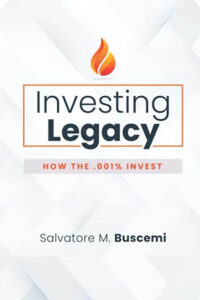
Making The Yield: Real Estate Hard Money Lending Uncovered
You toggle back and forth. Many people, after the pandemic, are in this hybrid work. Everyone is going back to the office. I work with a lot of architects who are dealing with this new way of working. People are like, “Is commercial real estate as good of an investment as it was pre-pandemic? Do you see all the tech companies in Austin still building these highrise towers?” Is that still going to continue, do you think?
It is going to be much more on a specialized basis. Austin is coming into its own because you have Tesla. There is a lot of industry there. You don’t have that much land-ground rock. That is going to be built up. I could see areas like that that are pro-business and pro-growth being good for areas like offices like that. Texas, Florida, where I am and you are familiar with that.
In cities like New York, what is going to happen is you are starting to see the ephemeral of offices. It is hard. I don’t think it will happen all at once but people are reticent to return to the office because they are lazy by nature. Certain industries do require office space, especially in financial services because you are learning a trade like anything else and you need to be around bosses to do that.
There are a lot of businesses that said, “We don’t need to do this. It is already costing us too much money to keep our employees already.” You will see a lot of these beautiful buildings get condos into residential units. That is what I think. Everybody is worried about the office building. It is going to be replaced with housing. That is the wave of the future. From my context in New York, that seems to be the prevailing tailwind that is happening as a result of the pandemic.
You got your expertise in real estate and life sciences. A lot of companies like Honeywell that make the fans in the operating rooms or Olympus, the camera company, have a whole medical division that makes the equipment. I have spoken to their sales teams about trying to take these very technical speeds and feeds and turn them into some stories that make hospitals and doctors connect. Do you see successful founders in the healthcare space? The ability to get customers, grow and scale is what you are looking for, in addition to all the other tenacity, grit and successful exit backgrounds they have. Do you see storytelling as a skill that you are looking for?
If they are talking to doctors, the doctors are going to worry more about the data rather than the story. There is a doctor they are pitching to. I pitch to other investors. They are going to be more focused on the story and have their friends look at the data. The problem is that a lot of people, when they are entrepreneurs, try to brand themselves around data or IP and say, “This is great.”
I’ve been to so many rubber chicken lunches where I have been pitched like some doctor wants to buy IP. He is at a point in his life where he is bored with his job. He was angry at his wife. He is looking to be an entrepreneur and swing for it. He has no experience except for an ego. I have seen this. He wants us to fund the IP. I’m like, “What are you going to do with the IP?” They were like, “We got to raise money to do research.” This is at the Harvard Club in New York. I said, “This is the difference between a novice and a professional.”
I got up and walked and the guy learned an important lesson. Before you do this with your attitude, you should understand. Don’t ask people for you to do the research and development. You should have an understanding of this. Anybody can go out there. John, you can go out there and buy Medical IP if you want. Whatever you want, it is available. There are IP brokers that do it. What do you do with it? That is the whole point of it. Anybody can have it but what do you do with it afterward?
We are in the middle of closing a huge investment we made into a company called Thrive Bioscience. It will be the CEO’s 15th exit and 8th unicorn. We like that. He has prominent families leading this other than us. One of the things I like about it is he is replacing microscopes around the world. That is a powerful hook for a lot of people, especially doctors. Doctors do not like working with microscopes. It has been around for many years. They have to pull cultures out. They can’t see cells in real-time. His whole thing is, “Uber knows more about ourselves than we know about ourselves.”
We understand there is a need here. It gets into digitization and people can get their heads around that, especially doctors. We don’t have a lot of doctor investors, to be honest with you. If I did have to talk to a doctor, I would be a little heavier on the data but also do a good lead-in, which is what this is, rather than, “Let me talk to you and set up a call. Hold on.” You got to know what it is and study what it is before you talk to someone. Otherwise, you’re losing credibility. I have been known to lose Wi-Fi in stable spaces.
Let’s talk about your book Investing Legacy. Who was this written for when you were sitting down to write this? Is it for people who have generational wealth and trying to avoid mistakes in it?
There is a lot of thought that went into this because this was my third book. Books take a lot of time. It is one thing to write a book but it is an entirely different thing to sell a book. One of the things I noticed over my career is I was receiving a lot of phone calls from women my age who were receiving a lot of money through inheritance or an exit through options. They would read my investment letters, John. They would be like, “Sal, I read your letter. Congratulation, it sounds like things are going great.” I have no idea what the hell any of that means. They were like, “I like to talk to you a little bit. You mentioned something about a friend of yours in California that opened a library and their names are on the side of it. What about that?”
[bctt tweet=”People have made investing much more transactional when it needs to be much more relational because people are investing in you.” username=”John_Livesay”]
You peel back the onion a little bit. What it comes down to is affluent households and there are TV shows about this. Women have most of the discretion when it comes to investment decision-making. Whereas if you also look at it, women are also 70% of book buyers. I narrated my book because a friend named Mel Robbins told me to because it would be more catchy. I met her in the studio when I recorded it. That is when I was doing other media things. I was trying to impress her. I was telling her, “I was going to hire someone to do it like I did my other book.” She said, “No.” I spent two weeks in a studio and there is an Audible version for you as narrated by the author, which means a lot.
When I narrate my book, you have to break it down into chunks. You don’t sit down and record the whole thing in six hours.
Two hours at a time, after the gym, when I was fresh and ready to go in it. We went with a female publisher because I wanted to prove the point that this was for females. Guys go on Reddit. The guys ate in the stocks. They are much more speculative and women aren’t. This was a book for women published by a female, Andrea Albright of Beverly Hills Publishing. She runs a fantastic global firm over there. She has a lot of international clients and does a lot of publishing for them.
As a result of that, it has been easier to create relationships with people I would not have been able to create relationships with. It is a book that I wrote in my voice because I like to write but it is not anything that I ghostwrote or hired anyone to do. There is a lot of what we call silos things in there, which we learn and statement assets.
Those are terms used in the industry. It helps get people familiar to say, “Is this something I want to do? It is making me think about my life.” The hook for that is, “How do you want your kids and grandkids to think of you when you are done? When you die, do you want to be known as the crypto day trader that spends all his time in front of monitors or trading weed stocks? Do you want to be known as someone who is like, ‘Grandma and grandpa did something different and that is why we have a legacy now?’”
A lot of people have been focused on legacy because it is a form of immortality when you think about it. That is why people go to space and our families want to develop cures. They don’t need an extra zero but they need the legitimacy of saying, “Grandma and grandpa also invested in this drug or this therapy.”
That is such an undervalued premise that people think, “We want to get richer.” That is why those people keep working. It is about the legacy you leave behind. You have tapped into it. I have never heard anybody say the way you did, Sal, which is, “In some way, your legacy is what keeps you going on. It is a little form of immortality.”
Legacy and immortality are not always connected like that. That is the emotional connection that makes people make a decision to invest in something and pick you over another family office. I’m a big believer that when we connect and tug at heartstrings, people are willing to go forward and make a choice to pick us versus somebody else.
You always remember the story. You never remember the data. In a post-pandemic election world, people don’t believe facts and figures anymore.
It can all be manipulated. If people want to reach out to you, what is the best website to do that?
They can go to SalvatoreBuscemi.com. If they want to email me, they can email me at [email protected]. If they want to buy an autographed book, they go to InvestingLegacy.com/book. If you go to InvestingLegacy.com, it will take you to where you get a report on horror stories of how people lost all their money. If you want to buy the book, that will come after. You can also get that too on the SalvatoreBuscemi.com site.
Any last thought or favorite quote you have?

Investing Legacy: You always remember the story. You never remember the data.
There is a funny movie that comes to the heart. One of my friends in Chicago reminded me of it and it is corny. I’m not a big movie person but in the movie Ferris Bueller, he takes the day off. One of the things he said is, “You can never go too far.” One of my friends I was talking to in Chicago was like, “Sal, you are like Ferris. You could never go too far.” There are a lot of things that you can do. You just got to put your mind to it. Things will come. You will have some difficult times and great times but it is the effort you put in and being confident enough to do it. That is going to bring you a little more joy later on.
Long-term vision, not immediate gratification. This is my takeaway.
I agree with you there. John, thank you so much,
Thank you for sharing your story and wisdom.
Important Links
- Dandrew Partners
- Making The Yield: Real Estate Hard Money Lending Uncovered
- Investing Legacy
- Confessions of a Medical Heretic
- Calling the Capital: 20 Ways to Incorporate Urgency Into Your Capital Raise
- CallingTheCapital.com
- Thrive Bioscience
- Beverly Hills Publishing
- SalvatoreBuscemi.com
- [email protected]
- InvestingLegacy.com
- https://SalvatoreBuscemi.com/About-Sal/
Wanna Host Your Own Podcast?
Click here to see how my friends at Podetize can help
Purchase John’s new book
John Livesay, The Pitch Whisperer
Share The Show
Did you enjoy the show? I’d love it if you subscribed today and left us a 5-star review!
- Click this link
- Click on the ‘Subscribe’ button below the artwork
- Go to the ‘Ratings and Reviews’ section
- Click on ‘Write a Review’
Love the show? Subscribe, rate, review, and share!
Join The Successful Pitch community today:
- JohnLivesay.com
- John Livesay Facebook
- John Livesay Twitter
- John Livesay LinkedIn
- John Livesay YouTube
I Am No Limits With Brian Bogert
Posted by John Livesay in podcast | 0 comments

There’s a sleeping giant in every human. To awaken this giant, we need to help them grab what they believe is out of their grasp. Brian Bogert is the person that does just this. Brian is a passionate performance coach on a mission to help people prevail over the limits they’ve set for themselves. Brian disrupts the normative approach on how to create sustainable growth personally and professionally. He joins John Livesay in this episode to talk about his philosophies on how to embrace the pain to avoid suffering. Listen in as Brian shares his own story and how overcoming his triggers helped him acknowledge his limitless potential.
—
Listen to the podcast here
I Am No Limits With Brian Bogert
Our guest on the show is Brian Bogert, who talks about how we need to get unstuck by moving and that moved people move people and when you embrace pain, you avoid suffering. Find out what he means. Enjoy the episode.
—
Our guest is Brian Bogert. There’s a sleeping giant in every human. Brian’s purpose in life is to awaken giants within and turn them into legends by helping them grab what they believe is out of their grasp. Brian is a heart surgeon without a blade. He does not start outside with what you need to do. He instead starts inside with who you are. In a world that is disconnected, Brian is revolutionizing how individuals, leaders and entrepreneurs deeply connect with their authentic selves to achieve the best version of themselves.
As a human behavior and performance coach speaker and business strategist, Brian disrupts the normative approach on how to create sustainable growth and lasting change personally and professionally. His philosophies on how to embrace the pain to avoid suffering, people before profits and who before what has helped individuals and companies discover and activate their limitless potential. Brian’s team have in led with intentionality as they are driven by their vision to impact one billion lies by 2045. We better hurry up and help him do that. Brian, welcome to the show.
I need all that I can get, so yes, please. Let’s hurry up. We got to do that impact quickly. I’m happy to be here with you, John. Thank you.
We had the pleasure of hearing you speak at an event virtually. I was so compelled by your story. Let’s go back to your story of origin before you had this intense inciting incident as we describe it in the world of storytelling on our hero’s journey. Did you know you wanted to be different, make an impact or get into the world of helping people perform better? How did all that start?
I have always had a deep desire to serve and impact people, but I didn’t necessarily know the vehicle that was going to get me there. As with anybody, I have done a variety of different things, thinking that what I wanted and chasing was going to be the path to realize later in life that it was who I was that was going to be that vehicle.
It’s there that I’ve realized that I’ve got greater power to influence others by allowing my truth to give them permission to live theirs. I have always had a deep intellectual curiosity for people, human connection and human behavior. Though I did not start out saying, “I’m going to be a speaker, coach and entrepreneur to do these things,” I always had that drive and desire. I just didn’t know how I was going to get there.
Sometimes we hear a speaker, read a book, or someone introduces us to a concept of professional growth or have a wake-up call. For some people, it’s a health challenge. Your situation is a little different. Why don’t you take us right to that part in your story?

No Limits: Storytelling is a way to connect with people and get them to be in their bodies, experiencing it as their own story. That’s when you most effectively move people.
When I was seven, my mom, brother and I went to our local Walmart to get a 1-inch paintbrush. As we were heading back to the car, getting to go on with our day, I had to wait for my mom and brother to catch up to the car so she could unlock the doors. This was back in the day before there were key fobs. She had to put that physical key in the door and turn it so that we could get on and go with our day.
As I was standing there waiting, a truck pulled up in front of the store. The driver and middle passenger get out. The passenger to the right felt the truck moving backward. He did what any one of us would do and scooted over to his foot on the brake. I always imagined in my head that he scooted it over and gingerly, put his foot down calmly.
In reality, when you’re in a vehicle moving and there’s no driver in the seat, there’s probably panic setting in. He probably had his knee way up to slam it down on the brake pedal, but he missed. He hit the gas pedal. All that force went right into the gas. He threw himself up on the steering wheel and dashboard. Before you know it, he’s catapulting 40 miles an hour across the parking lot, right at us with no time to react.
Fortunately, my mom and brother were still a few feet behind me. By the time he got there, I was holding onto the handle. The truck went up and over the tree in the median, hit our car, knocked me down, ran over me diagonally, leaving a tire track scar on my stomach, tearing my spleen and continued to sever my left arm from my body. It was August 10th, 1992, 115-degree day, 6:10 PM. I’m, all of a sudden, laying in the parking lot. My mom and brother look up and see my arm lying 10 feet away.
Fortunately for me, my guardian angel also saw the whole thing happen. I always have to tell this story and she always has to be a part of it because I’m forever indebted to this woman for choosing to go into action versus go on with her day. When she walked out of the store, she saw the literal life and limb scenario in front of her. She rushed immediately over to stop the bleeding on the main wound and save my life.
She also instructed some innocent bystanders to run inside, grab a cooler and fill it with ice to get my attached limb on ice within minutes. If that did not happen, I either wouldn’t be here with you or I certainly wouldn’t have an arm be reattached because that arm was cooking like hamburger on a 115-degree day on the parking lot.
What I know in all this time, John, is that I’ve got a unique story. It’s not one you hear every day. What I realized through everything we’ve done, the more I’ve done it, is that every single one of us all has unique stories. What’s important is not to look at the extremity of anyone else’s stories but to start with your own and realize, “How do we become aware of the lessons we can extract from our stories? How do we become intentional with how do we apply them in our lives?” We all can do that and tap into the collective wisdom of other people’s lessons to shorten our curve to learning. I’ll share with you two quick lessons and we’re going to go from there.
The first one is I learned very early not to get stuck by what has happened to me but instead get moved by what I can do with it. What I’ve realized through many years of seeing this is that when you get moved, moved people moved people. That approach to impacting one billion lives is only going to happen with several moved people pulling in the same direction. That’s what I call collective impact.
[bctt tweet=”If we don’t feel, we don’t heal.” username=”John_Livesay”]
The second lesson is this concept that I didn’t quite understand until later in life. At 7, 8, 9, 10, 11, 12 years old, I was in a fog. Although I was the one having surgeries done to me and all these years of therapy, I was being guided through the process. My parents, however, were not. They were intimately aware of the unceasing medical treatments, years of physical therapy.
The idea of seeing their seven-year-old son grow up without the use of his left arm was a source of great potential suffering for them. They willed themselves day in and day out to do what was necessary, what was tough and embrace the pains required to ultimately strengthen and heal me. What they did, whether intentional or not, was ingraining me in this philosophy and way of living, which is to embrace the pain to avoid suffering. When this is done correctly, it’s also where we gain freedom.
Let’s unpack some of these things. I first want to go back to why you’re a good storyteller for people who might want to think about improving their storytelling skills. My mission is to help as many people as possible to embrace storytelling and get better at it. When I have a master like you here, I like to take them behind the curtain a little bit.
Part of what you did so well was the descriptiveness of it. We know exactly where you are, how hot it is, how old you are, how a few seconds, one way or the other, would’ve changed everything. Your whole intent of going on that trip was for something as insignificant as a 1-inch paintbrush. I thought to myself, “It doesn’t get smaller than that.”
Suddenly, the three of you are on that trip that’s seemingly an innocent everyday experience. The other thing you said that was so clever is about losing an arm and extremity. Then you talked about, “Everyone’s got stories, but let’s not look at the extremities of those stories.” It’s a clever play on words. Was it intentional or is that something that I’m the only one to notice?
There are not many things I do at this point in life that aren’t somewhat intentional. That was intentional. I’ll tell you that part of that is I’ve had to learn to normalize my story because it is so extreme. Extremities and the play on words connect with people because that’s the truth.
It’s clever.
Thank you. I’m impressed at the little elements that you picked up on that I have learned to embed in storytelling, which are ways to root and connect with people and get them to be in their bodies, experiencing it as their story. When we do that, that’s when we move people the most effectively.

No Limits: The things that keep us stuck are either stuff that’s in the past or fear of a fabricated future that hasn’t happened yet.
There’s a craft to this, honing of words, editing out and consciously choosing things. When it lands to the audience, that’s true artistry. “Was that intentional? It seems so spontaneous, yet that’s the cleverest thing.” I never thought of the clever use of that word on that. That’s a childhood incident that is going to either inspire you or take you down. It’s one or the other. It’s not going to be like, “I forgot about it a few years later.”
In this first lesson you talked about, we need to keep moving and not stay stuck in the past is so challenging for so many people or they get paralyzed by a fear of the future that gets them stuck. They don’t know what to do in their business, career or personal life. Either something happened in the past that is so terrifying, horrifying and traumatic, I can’t get past it like, divorce, death of a loved one or I’m playing out a horror movie in my head of what this future’s going to be either in my career or the world.
Therefore, I’m not even sure I want to bring a child into the world. All of these are things that cause people to not take action. I’ve seen it where people were like,” I was so devastated by the death of my pet. I will never have another pet.” I thought to myself, “That is a big choice to not be willing to feel that pain again because it was too traumatic the first time.”
I remember when my dog died, I was devastated and extremely sad. A friend of mine said to me, “Knowing this amount of pain, would you still choose to have a dog?” For me, the answer was yes. There were years of joy and all that. I was shocked that that’s not the choice everybody makes. You seem to be a real expert in this concept of, “Move again, get another dog, get up from the life knocking you down and embrace the pain to avoid struggling.”
That phrase alone, people go, “What? It’s like putting my hand on a hot stove and taking my hand off the stove to prevent the pain. What are you saying, ‘Embrace the pain?’ How does that help me avoid suffering?” Our brain makes you stop and think because your brain’s going, “They seem like opposites. I want to avoid both pain and suffering. How can I embrace one and avoid the other?” Can you give us an example of that maybe not tied to the accident that you help people look at that?
I can. You did a very solid job of articulating the things that keep us stuck. It’s either stuff in the past or a fear of a fabricated future that hasn’t happened yet. At the root of both of those are the things that keep us stuck. Those are situations or timelines that allow us to experience the world in a different way, either in the past or in the future, both are existing in a way that’s not right here. One of the things that I want to talk about is that so many people think that they are stuck and seek strategies and tactics to solve the problem.
If I get a new program, a new leader, switch companies, make more money, buy that car, that house, remove this spouse or whatever the case may be, then all of a sudden, I’m going to be free of either the confines of the past or the fear of the fabricated future. What we’ve learned in working with some of the world’s highest performers is that it’s not the stretching tactics to keep us stuck. It’s a combination of emotional triggers, behavioral patterns and environmental conditioning that keeps us perpetually repeating the same patterns in our lives.
That feeling of being stuck is because we haven’t unrooted and dealt with the emotional trigger that’s tied to it. You talked about the dog example. Being around other dogs and the idea of having another dog is triggering a person into a place of pain and not allowing them to see everything else that’s right in front of them, all the joy, freedom and fulfillment that comes through that experience. It’s the singular trigger.
[bctt tweet=”Moved people move people.” username=”John_Livesay”]
If we pull out that root that’s connected to that trigger, that’s when people can move. I had to hit on that point because you articulated it so well. It’s important to understand that it’s not about putting yourself into pain intentionally. I will break down and answer that question. It’s about understanding the dynamics that keep us stuck are not what we think they are.
It’s the emotional triggers that cause a certain behavior, then there’s a third element to that?
Environmental conditioning is also a dynamic of that. It’s these things that get so deeply ingrained in us. An example of the triggers is when your spouse gets on you about loading the dishwasher incorrectly. It has nothing to do with your spouse or the dishwasher. It has everything to do with how your grandma looked at you when you were four. That’s a point I had to hit on because of this idea of move, we have to understand the only way we can move is to uproot those triggers so we can see ourselves and the current situation more clearly.
Does it help people get over their addictions, whether it’s an addiction to food, smoking, money or getting likes on social media? Some of that seems to all be trigger, especially in young people, an addiction to getting people’s approval of how many likes and shares.
Validation, worth and all those things are tied to this thing. Those are all triggers that create these types of patterns that we tend to numb ourselves through so that we can experience the world or seek to connect more deeply either with ourselves or the outside world in some form or fashion. It’s not the things that fill us. You’re spot on, but this is an important place to say, “What is the difference between pain and suffering?” Often we’re seeking validation to fill a void. We have to understand in pain and suffering the definition of both.
First, we have to understand the narratives of the world, which is to reduce, eliminate or avoid pain at all costs. We see seek comfort, safety and protection. The world is wrong. It makes sense why we have this tendency because it’s a natural evolutionary response to survival. You cut your leg 100 years ago, you could die. That’s not the reality that most people in the world live in.
If we understand that pain is defined as short-term, intermittent, a direct cause from something and alleviated once that direct cause is removed, what do we do as human beings? We tend to screw it up by throwing other adjectives in front of it like we screw up so many other things. We say, “Acute pain and chronic pain.” Acute maintains the definition inherently, but chronic changes it because it implies that it’s no longer short-term and doesn’t heal after that direct cause is removed.
Let’s stop calling that chronic pain because it changes the definition of pain and call it what it is, suffering. We don’t want to admit suffering exists, particularly when it’s a direct result of our choices. Often we are blind to the fact that it’s even there because it creeps up on us so much so that we don’t even notice the effects of it sometimes until the point, it’s irreversible, whereas pain gets lots of attention because we feel it, so we want to react to it and eliminate it at all costs.
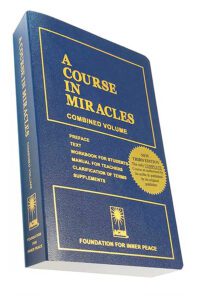
A Course in Miracles
Let’s use an example. Let’s say someone’s parent dies and they get addicted to either drinking or eating too much to eliminate that pain. They can’t imagine a life where they are not in that much pain. They can’t zoom out and say, “Years from now, I’m going to still miss my parent, but I won’t be this sad. This is going to be this much pain or forever. I’m numbing myself whenever I’m at.”
There are consequences to that behavior. You get diabetes. It’s not like some genetic diabetes. This is years of eating too much sugar and then you’re in this endless circle. Your premise for all of us is if you embrace this pain of, “I’m so sad. I feel so lonely and rejected,” whatever the feeling is that you don’t want to sit with, that causes you to numb it. If you can embrace it, you will avoid the long-term suffering as the consequences of acting out in a way.
If we don’t feel, we don’t heal. To give you a couple of other examples, we can embrace the pain of hitting the gym for 30 minutes a day to avoid the suffering of aches and pains of a sedentary lifestyle. We can embrace the pain of difficult conversations with a spouse or loved one to avoid the suffering of being stuck in a loveless marriage that’s going to end in divorce or wanting a divorce and not being able to escape that dynamic.
We can embrace the pain of the fit our kids are sure to throw by having them put down their mobile devices at the dinner table to avoid the suffering of years of lost connection and conversation that will never get back. As business owners, we can embrace the pain of firing our top salesperson who’s contributing the most to top-line growth to avoid the suffering of losing all our other top talent because they were the greatest cancer in our culture.
The list goes on in every category of life. It’s important that we have to acknowledge the suffering we wish to avoid. We can identify the pains we tend to avoid and learn to embrace them to establish them as a habit in all areas of our lives. You had heard this, “Get comfortable being in the discomfort.” What I’m suggesting is discomfort is the 5K to pains marathon.
It goes deeper than that. If we need to truly avoid suffering and have joy and freedom and film it holistically in our lives, we must understand that the small decisions that compound over time leads to suffering. Seeking validation externally online is filling a void and worth that likely was the inability to give or receive love effectively as a kid to know how to connect at that deepest level. When we tend to numb ourselves, it makes sense as well.
One of the first things we want to do is feel safe. The human experience is rooted in four areas. We all seek the desire to feel safe, protected, seen, understood and connected. Seen, understood and connected don’t happen unless the first two do. When we don’t feel safe, we put protect ourselves. Our armor goes up. We guarantee at that moment that that impenetrable force, nobody’s going to see and understand us through that.
On one side, we can’t project who we are clearly, nor can they see through it, which means we won’t connect. We’ve got to embrace the pain of lowering our armor and convincing ourselves that we’re safe, wrapping an element of protection around either who we’re with or the environment we’re in so that everyone can feel safe, protected, seen, understood connected. That’s what effective leaders do.
[bctt tweet=”To have the power to influence others, you have to allow your truth and give them permission to live theirs.” username=”John_Livesay”]
It reminds me of a quote from A Course in Miracles which says, “In my defenselessness lies my safety.” Most people go, “What? I’m going to lower my defenses and put my weapon down?” You’re like, “If you’re thinking you need to be in fight or flight mode all the time, you’ll burn out.”
True strength hides behind vulnerability.
With this concept of the outcomes of feeling a little bit of pain, years ago, the trainer I was working with said, “I want you to do some deadlifts.” I said, “Who cares what the back of my legs looks like?” He calmly said, “Have you ever seen some elderly men in their 80s who may be in the shower? They don’t have any muscles in the back of their legs, so their butt has dropped.” I go, “Yes.” He goes, “If they had done deadlifts, that wouldn’t have happened.” I’m like, “How many do you want me to do?”
It’s true. When you understand what you want to avoid, it’s much easier to embrace the pains in real-time.
I’m like, “I don’t see the back of my legs. Who cares?”
You’re like, “There’s no way an 80 is having no butt that hangs.”
I didn’t even know that was preventable. I’m in. I thought that’s gravity. That’s sad. I wanted to lighten it up a little and then we’ll go back into the intensity of this. We need to ease it people and out a bit. When I was working in media sales, some personalities were running certain publications that were tyrants. They were top producers, so they got away with horrible behavior. They were making so much money and getting away with anything. There were drugs involved. There’s all that drug behavior that causes people to scream, yell and be horrible.
I’m so happy to see people saying, “The culture’s more important than one person’s bottom-line performance.” If you are afraid of losing a top performer or a top client and you put up with the abusive behavior or you’re in an abusive relationship, that’s not coming from a place of abundance. When your message is, “No, let’s shift. The ends do not justify the means.” Therefore, if we create a wonderful culture, we’ll attract the right clients and people who can perform.

No Limits: People don’t want to admit that suffering exists, especially when it’s a direct result of their choices.
There are 2 dynamics to what you said that hit on 2 very strong elements. You focused on the pain piece. We need to embrace the pain because the culture is going to supersede any individual. Recognize that what you said is, “If you are afraid to get rid of a top performer or an abusive spouse, the individual and the leader that can remove that person, the one to embrace the pain also has to recognize that their hesitancy is rooted in an emotional trigger. If they’re afraid to lose it, that scarcity is tied to something deeper.”
There are two things to pay attention to. If you’re in a position where you are not able to freely move when things are out of alignment in your world, pay attention to, “What do I need to address internally?” A guy by the name of Alex Charfen has one of the greatest quotes that I’ve heard. I’ve always said for a long time that everything begins and ends with you.
He says, “If you’re constantly putting out fires in your life and business, there’s a good chance you’re the arsonist.” Not only do you have to learn how to embrace the pain to avoid the suffering and protect the people in your environment and your culture but recognize that if you have any hesitancy to do that when something’s out of alignment in your culture, it’s probably something you need to deal with first.
This is so valuable for entrepreneurs who are reading, who maybe are in the first few years of their new business. They have a client who is not paying on time, never happy, never going to give them a referral, and making their lives miserable. There are no boundaries. If you need every dime for your cashflow needs, it’s hard to fire that client or even to say no at the beginning. My whole thing is, “Who you say no to is more important than who you say yes to.” Ironically, the more you keep your boundaries of, “I don’t do that for that price. This isn’t working out,” we’re always teaching people how to treat us in our personal and business lives, but if we have these emotional triggers still there, then we’re reacting and not coming from a place of choice.
That’s one of the things that we talk about around emotional triggers. Triggers cause you to react versus respond. When you react, you create damage. When there’s damage, you need to create repair to neutralize and diffuse the energy and connection with everybody involved. Whereas if you respond, you can realize that what you’re reacting to internally likely has nothing to do with the situation right in front of you. You can move through it without creating damage and eliminating the need to create repair, which takes more energy, time and attention.
People are always focused on speed. How many things are slowing you down? When you have resistance and energy drain because of a bad relationship, a bad client, somebody who’s not paying on time or you’ve created damage that you’ve got to create repair, how much energy does it take to move through that? If you’ve responded in the first place and seen it clearly, you would’ve eliminated 75% of the drain from that experience.
When people hire you to be a speaker, who’s your ideal audience? Is it sometimes salespeople need some insights on resilience? Is it more of a leadership people looking for ways to become a better leader or both?
I would say both because of the direction in which we take things. We will do very strong leadership and culture development-type themed talks. We will do one to be able to help people move through those blocks that are limiting them from living at the level they’re capable of living. People with variable incomes identify on that side very deeply. They start to recognize when there’s hope and desire that they can lean into if they address the stuff they need to. Their performance, their teams’ performance and the organizations are raised.
[bctt tweet=”Do not get stuck by what has happened to you, but instead, get moved by what you can do with it.” username=”John_Livesay”]
As a speaker, generally, individual organizations hire me to fit into 1 of those 2 buckets. I also speak at a lot of conferences, though. My ideal audience in that space is on the entrepreneurial side because where we engage with organizations typically beyond the stage is at the top level of leadership. These are large organizations we’re working with C-Suite and executives, mid to small-sized organizations and even large ones that are true entrepreneurs. We hit on two different areas. It only depends on the way that we enter the world.
Tying back to your goal on your mission to impact one billion lives by 2045, how are you tracking that? What can people do to assist that?
It’s being tracked in a couple of different ways. What I largely recognize is it’s going to be untrackable to a large degree. I have a genuine belief that if I chase impact, income always follows and everybody else gets to be moved so they can move other people. Collective impact is something that we talk about. If you hear one thing for me that you’re like, “That’s in my life,” whether you pass it on or not, you’re part of the billion.
What often happens when people hear something that moves them is they move it through the world. They’ll pass it on to somebody else or say, “I heard this great quote,” as I did with Alex Charfen. The ripple effective impact is significant but that’s also why for myself. I typically am working with the leaders of these organizations. If we permeate them, there’s also a trickle-down effect through the culture and everybody in that organization can have an impact if the leaders change.
That is a philosophy, at least in the speaking and coaching stuff. We’re in four different businesses, all rooted in the who, helping people discover who they are, who they’re doing this for, who they’re doing this with and who they’re going to impact. Each one of our entities has different ways that we’re tracking impact and how that is translating.
We’ve got a movement over on the side that’s going to be launched. There have been months of foundational stuff, but the movement is called I am One Billion. It’s going to be something that we’re going to have as collective energy to move things forward. I’m less concerned about tracking and more concerned about focusing on the day-to-day individual or mass aggregate impact we can have. Over the next years, if that happens and we stay regular and consistent in it, one billion’s going to be behind us before we know it. I don’t say that arrogantly. I just believe in the added benefit of the compound effect and collective impact of people.
We’ve seen things go viral. Once you start going global, it goes fast. Brian, if people want to find out more about how they can discover to let go of these emotional triggers and embrace some pain so they don’t have to suffer, where should they go?
If you’re on social media, it’s @BogertBrian on any channel. If you are perusing the web, go to BrianBogert.com. Those will both be great entry points. We realized to impact 1 billion lives that 99.99% are never going to pay us $1. We are very okay with that. We do have a free resource as well that we put a lot of time, energy and attention into. It’s a free course with over 30 minutes of video dialogue to help individuals evaluate these concepts themselves.
If you go to NoLimitsPrelude.com, that’s a place where you can get that. I always get full disclosure here. Do you exchange an email to get it? You do. Will you get some emails throughout the experience? You will. Will you get four emails after you’re done with it? You will because we want you to have other opportunities to do so but there are big unsubscribe buttons on there every single way. This is not a way to funnel you. This is a tool and a gift we want to give you to hopefully elevate and empower you.
Thank you for that gift and for being you. I am so grateful to be able to know you and help in some small way, get your message out through this show and share what you do on social media. I love it. It’s needed and you’re the right person to be doing it.
Thank you so much for building a platform to give me the ability to serve your audience and pour my soul into the world. You are a part of the collective impact. It’s not lost on me who you are in this world and I’m grateful as well.
Thanks so much.
Important Links
- Brian Bogert
- A Course in Miracles
- @BogertBrian – Instagram
- NoLimitsPrelude.com
- Better Selling Through Storytelling Method Online Course
Wanna Host Your Own Podcast?
Click here to see how my friends at Podetize can help
Purchase John’s new book
John Livesay, The Pitch Whisperer
Share The Show
Did you enjoy the show? I’d love it if you subscribed today and left us a 5-star review!
- Click this link
- Click on the ‘Subscribe’ button below the artwork
- Go to the ‘Ratings and Reviews’ section
- Click on ‘Write a Review’
Love the show? Subscribe, rate, review, and share!
Join The Successful Pitch community today:
- JohnLivesay.com
- John Livesay Facebook
- John Livesay Twitter
- John Livesay LinkedIn
- John Livesay YouTube
Sharing Our Stories: Tales Of Resilience And Renewal With Rick Gilbert
Posted by John Livesay in podcast | 0 comments

Sharing our stories is one way that people communicate. Stories bind people to one another, and stories are a way to understand others. In this episode, John Livesay talks to storyteller extraordinaire, Rick Gilbert, on the art of telling your story. Rick shares how his business was born of the need to help and how he started on the path of the storyteller. Full of insight and learning, this is one episode you shouldn’t miss.
—
Listen to the podcast here
Sharing Our Stories: Tales Of Resilience And Renewal With Rick Gilbert
Our guest is Rick Gilbert from Let ‘er Rip Productions. He is the Retired Founder of PowerSpeaking Inc., one of Silicon Valley’s most successful communication and training companies. Prior to founding that in 1985, he was a psychologist and held management positions at Hewlett-Packard and Amdahl. Rick is an author of several books such as Speaking Up, which is a how-to book on speaking to senior leaders. He performs one-man shows. His latest book is an audiobook, Sharing Our Stories, featuring interviews with 65 people, including people like Gloria Steinem and Daniel Ellsberg. Welcome to the show, Rick.
John, thanks for having me. It is a pleasure to be here.
We’ve got a little inkling of what an impressive background you have. Would you mind taking us back to your own story of origin, childhood, college, wherever you want to start? How did you get involved with teaching people how to be better communicators?
I started out always liking to be on stage. I was always in the school plays. In college, I majored in Psychology. As I got into my first jobs, I began to realize how much trouble people speaking are. It was terrible. I thought, “This is easy for me. Why don’t I go into business and help people learn how to do this?” I was active in Toastmasters for a long time and the National Speakers Association. I saw how many people were calling Toastmasters wanting help with this. I thought, “Why don’t I start a company?” That was many years ago.
The company has grown from me in the bedroom to 35 trainers worldwide and doing hundreds and hundreds of programs every year. The one that might be most interesting for your readers is something called Speaking Up: Surviving Executive Presentations. We found out that whenever people went up to the C-level in their organizations to make a presentation, whatever they did with their own team did not work. The audience was so different.
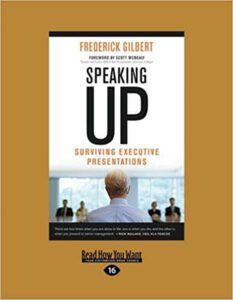
Speaking Up: Surviving Executive Presentations
What you said is so crucial. I have seen it time and again where somebody is a great salesperson and they get promoted to be a Sales Manager, Director, VP of Sales, not even at the C-level suite. They think, “Everyone has to sell the way I have sold.” Everyone has their own style. That alone is an example of just because you got a promotion does not mean the skills that got you there are not the skills that will keep you there.
Let’s take a composite person. A 45-year-old has 10 or 15 people on his team, making a lot of money and doing well at a certain level, whether VP or Executive Senior Manager. They get a chance to go to the C-level. Maybe they have to do it once a year to give a report. They use the exact same techniques they used with their own team. For some reason, they bomb and do not know why. It is because the audience is so different. It can be a tragedy for their career and team. Most of all, even for a product that needs to be funded, we had some people that we had been working with that did very poorly at the senior level.
I started interviewing CEOs to find out what was wrong with it. How come these guys are bombing? What we learned became that book, Speaking Up, and a program that we have been doing now for many years. It is very successful where thousands of people have taken this program. It shows middle managers, even though you are very successful, you are good, and you have an MBA, you’re great. The audience at the top level are different. We thought, “How are they different? What do they want?” We found out things that people can say that will make their career golden.
I will give you an example. The guy I was describing was 45 years old and a head of some big department. He goes into the CEO and the founders of the company. Here is what he or she can do to open up to be successful. The starting line is, “Good morning. I know how valuable your time is. We have 30 minutes on the agenda. I can get through it in 20 minutes.” You are giving me back some time. The second sentence out of that person’s mouth should be, “What I want from you today is a $10 million increase in our budget for marketing in Europe.” They know right up front what we call first line bottom line.
As a Sales Keynote Speaker myself, I know how important that first 90-second opening is. You’ve got to grab people’s attention. What I found works is a story that pulls people in right away, not this, “Thank you for the opportunity. I am excited to be here,” stuff. No one cares that you are excited. We go right into the story. It takes people a while, especially if they are not professional speakers, but just presenting.
[bctt tweet=”Stories energize all of us.” username=”John_Livesay”]
I worked with an architecture firm who was presenting against three other firms on who was going to get this billion-dollar project to renovate an airport. I said, “That opening line goes right into your story.” When I was 14 years old, I saw a drawing and I thought, “What is this?” That is what made me become an architecture buff. They are off and running as opposed to all the trite things, people, and the filler words.
This bottom line is a great soundbite. It is to let people know what you are asking for upfront. Otherwise, they are wondering, “What is to ask here? Where are we going?” I learned that when I gave my TEDx Talk, Be The Lifeguard of Your Own Life, the coach I had said, “What do you want the audience to feel, think and do?” Once we had the answers to that, the talk was built from the back end up in order to get those things. I am guessing you have found that similar type of strategy works.
I would make one suggestion to what you said. This is the thing about starting with a story. At the top level, you have the CEO, COO and CFO sitting around the table. They are making $13 million a year and their hourly rate is absolutely huge. This whole thing started when I was coaching this guy to start with a story and he did. They tore him to shreds and said, “Why are you taking up our time? What is your point? Get to the point.” We found that with the very top level, the stories are very difficult. The bottom line is they want data. If you are going to use a story, it should be extremely tightly focused on a customer experience. They are very numeric people.
A lot of the people I work with are in tech and healthcare. When I speak to that audience, they are convinced that people buy logically and back it up with emotion. I say, “Even the most sophisticated person is buying emotionally first and backing it up with logic.” Just pushing out facts and figures will not change anyone’s behavior. They are not going to remember it.
If I am speaking of an audience of CEOs, I always say, “XYZ CEO said to me or found that this was the number one thing that increased his bottom line. Here is the story to back it up.” Hence, if you have a story that can include a little ROI in it about someone that they relate to, they are a little more willing to go into the story.
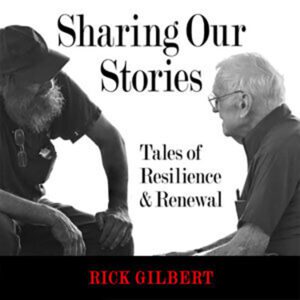
Sharing Our Stories: Tales of Resilience & Renewal
The guy that got criticized, our client, wandered the story, and took too long. They were so, “Let’s go. I have got another meeting.”
You can’t bore people. That is for sure. You have to be compelling. Stories need to tug at heartstrings to open purse strings. How did you come up with this audio book, Sharing Our Stories, about resilience and renewal?
I had retired years ago from the company that I founded, PowerSpeaking. I started a blog right away. Part of my blog was interviewing people. I love to do interviews, plus when I did the Speaking Up book, I had interviewed about 50 C-level executives in Silicon Valley. I had all of this choice of video and audio well-done and well-recorded. I thought, “Wouldn’t this be interesting to pull this together somehow?” A friend of mine said, “Why don’t you do an audiobook?” It popped for me.
I thought, “I love audiobooks. I have hundreds of them on my phone. It would be easy to do. I have all this stuff right here.” It was not easy. I worked on it for a year and a half. I am pulling it together and asking the data, “What does this mean? What is the data telling me?” Finally, it all came together and the title, Sharing Our Stories: Tales of Resilience and Renewal. I am a “spaghetti against the wall” guy. I said, “What is the pattern here?” That was the pattern that seemed to come out of all these interviews.
I ended up using 65 different people in this book. The purpose of it is to look over our lives from childhood, adulthood and elderhood. As a psychologist, there were 1 million different theories about development. I thought, “They are all too complicated. I like mine about childhood and elderhood. Elderhood is easy.” That was the format for it.
[bctt tweet=”At the very top level, stories are very difficult. Typically they want the bottom line. They want data, and if you’re going to use a story, it should be extremely tightly focused on a customer experience, or something like that.” username=”John_Livesay”]
The other thing that was critical about it was I wanted something to be entertaining. I wanted something that would be a page-turner, even though there were no pages. I would hope that people would sit in their cars and listen to this and be late for meetings because they want to find out how the story turned out. That is what I have produced here. It is an amazing contribution.
One of the things I learned from this that I did not know going into it was how powerful stories could be to change lives. It is not just telling our own story. We all like to tell our own stories, but how can I, as a person who cares about somebody else, encourage them to tell me their stories and give them the airtime and space to do it? Magic could happen. Magical things are incredible.
How did you get someone as famous as Gloria Steinem to agree to be interviewed?
I have a friend who runs a writers’ conference in San Miguel, Mexico. Gloria was coming down there to be the big keynote. It is a three-day conference. She was going to be the main event. My friend, Susan Page, told me about this and said, “You should come down and see if you can interview Gloria.” I wrote up a proposal that went to Gloria’s office. There were a lot of people in Mexico that wanted to interview her. I said, “I am interested, but I am not going to interview you about your career and the politics of what you have done. I want to know more about you as a person, what you have struggled with, and succeeded doing.”
They came back to Susan and said, “We want Gilbert to do this interview.” Nobody else got to talk to her. It was just me. You can see the entire interview on my webpage. Spending an hour with Gloria Steinem, she is like the Dalai Lama. I was in the same room with this woman. Here is the thing, John, you will love it if you watch the entire thing. I had watched some stuff of hers earlier that she had done. She had been a tap dancer in high school.

Sharing Our Stories: As a person who cares about somebody else, encourage them to tell their stories and give them the time and the space to do it.
At the end of our interview, I said, “We are wrapping up now. I am wondering whether you might be willing to do a little tap dance for us.” I put on my wide angle lens and pulled back. She said, “I do not know. I do not have any music.” I said, “I have music.” I sang, “You are my sunshine, my only sunshine.” She starts tap dancing in this hotel room. That was the end of my interview. It was more fun. She is a hoot.
There are a lot of takeaways there. One, you figured a unique angle that would appeal to her, so talk about knowing your audience. Two, that personal story of origin and the preparation, having a great closing is also equally important as a great opening and the playfulness of once a tap dancer, always a tap dancer.
I listened to that interview. One of the things that resonated with me was when she gets frustrated, aggravated, or a little down, she is able to remember a story of the impact she has had. She told this wonderful story of a woman who came to her book signing who had been in prison and changed her life. She became a lawyer. That arc of that person’s story energized her. I thought, “How great is that? Stories can energize all of us, even if they are not our story.”
When I asked her about moments that were extraordinary for her, she talked in general terms, like meeting people on the street. I said, “I want something more specific than that.” I burrowed in a little bit and said, “Can you give me a specific example of something that happened?” She told that story about the woman who went from prison to being an attorney and said to her, “I thought you would like to know.” Gloria says, “That keeps you going for months.”
There is a takeaway for the readers. Don’t take the first response someone gives you, whether you are interviewing them or if you are in sales and ask an open-ended question to try and find out what someone needs, and they give you the top line answer. You will understand this as a therapist. It is known when couples come to therapy and say, “Our sex life is in the toilet.”
[bctt tweet=”Active listening is the gold standard for interviewers.” username=”John_Livesay”]
That is the presenting problem. It is not the real issue. The same thing is true sometimes in sales. When you say to someone, “What is your biggest struggle? What is your biggest challenge?” They will give you a top line answer. You need to dig down a little bit like you did with Gloria. “What specifically does that look like or feel like?”
I learned that from Terry Gross on NPR. She is one of my favorite interviewers, and she always digs a little deeper. It has been very valuable for me as an interviewer when I am trying to get people to tell these stories.
Let’s face it. If you are in sales, and we all are selling ourselves all the time, you had to sell yourself to get Gloria to say yes. We need to ask deeper questions and build up some rapport that people are willing to answer those questions.
My background is in Psychology. Being a therapist, one of the takeaways from that part of my life was something called active listening. For an interviewer, that is the gold standard. Instead of trying to tell them your side of the story or direct them in some other way, you listen and say something like, “That must have been a real struggle for you at that point in your life,” and shut up.
I was fortunate enough to become friends with Elaine Gordon, who was married to Tom Gordon at the time, where they wrote Parent Effectiveness Training. That turned into Leader Effectiveness Training and that whole concept of not reacting to what someone says and reframing what you think you heard, so that you are listening to the right question.

Sharing Our Stories: One of the main things is going to be encouraging people to get the people in their lives to tell their stories.
I still use that technique when I coach people because sometimes, after they make a sales presentation, there is a Q&A. You can lose the sale in the Q&A if you are not listening to the question and you give them an answer that they did not ask because you are nervous or you did not hear it. They think they are talking to a politician and get frustrated.
It is like peeling an onion. You said it beautifully that people come for therapy. The sex issue is not the real problem. You start peeling away, but they will only tell you if you show empathy for what they are saying.
Tell us another favorite of the people that you interviewed on that book, another story from there of either how you got it or one of the things they said that surprised you.
One of the chapters is on risk-taking. I have interviewed some iron workers who talk about what it is like being 10 stories up on a 4-inch beam. One of the most interesting interviews I did was with a guy called Don Garlits. Don Garlits is the Founder of drag racing. He started racing after World War II on abandoned airstrips in Florida. I was doing a class at San Francisco State called the Psychology of Drag Racing. We went out to the drag races and interviewed these guys. Here was Don Garlits, the World Champion of this thing, and we got to interview him.
While I was interviewing, he said something had happened to him. Remember, this is danger and risk taking. He said, “I had a 2,000-horsepower dragster. I was coming off the line and two seconds into the thing, the car flew apart.” In those days, the driver sat behind the engine and transmission. When the car came apart, it also took off half of his right foot.
[bctt tweet=”Customize your presentation to your audience.” username=”John_Livesay”]
He ended up in the hospital for a long time recovering. In the hospital, he designed the rear engine dragster. At first, it was a real oddity and then it started winning races. Every time you see one of these dragsters that go 300 miles an hour in a quarter mile, the engine is behind the driver. I feel so proud of that fact that I got to hear that from the master, the guy that made that all happen, Don Garlits.
This concept of resilience and renewal, I have created something called the 555 Method. “Will this matter 5 minutes, 5 hours, or 5 days from now?” It is helping so many people to not stay in the loop where they keep replaying what somebody said that insulted them or hurt their feelings or in sales, you are getting a rejection. You have got to get back up fast.
Speaking of sales, there is a CEO I interviewed from Silicon Valley. His name is Steve Blank. He tells this story about what he learned and how he crashed and burned as a sales guy. He had a master sales guy come with him. When they went into this company, they were going to sell computers. Steve started out by telling them how stupid they were, how great his company was, and how wonderful their computers were. He said, “We were escorted out of the building.” This master sales guy said, “Let me do it this time.” In the next sales, the guy starts talking about the, “How are your kids? How about the high school football team? How are they doing?” Steve is sitting there, “When are we going to get to the sales part?”
Finally, the sales guy says, “I am embarrassed to be here because you guys are so smart. If your management had let you invest in the way that we have, you would have left us in the dust.” The customer says, “Now that you understand that, we are ready to hear what you have to offer.” It was a consultative sales masterpiece. Steve Blank tells this story so well of what he learned from a master sales guy who could understand from the client’s point of view.
I boil that down when I give my storytelling keynote speeches into, “The better you describe the problem, the better somebody thinks you have their solution.” We have time for one more, either story of someone you have interviewed or an overall reason why you would want someone to get the audio book.
[bctt tweet=”People will only tell you their issues if you show empathy for what they’re saying.” username=”John_Livesay”]
One of the main things is encouraging people to get the people in their lives to tell their stories. I am 82, so you can imagine a lot of my friends are getting up there in years. I have two friends who are going down very hard. One is in her early 90s. She is delusional. She has had a horrible life, round-the-clock care. Another guy is in his mid-80s. He can’t remember where he is. He gets lost in his own house, round-the-clock care.
The stories of these people are so sad. Both of them trust me though. I went with my iPhone recorder. It was very simple. I wanted an audio, and sat down with both of them separately. I got the woman who was delusional to talk about her career as a speech therapist in the school district. She spun out this wonderful story about a student that she helped. It was inspirational. Back in her mind is what she has done in life. It was so wonderful for me to be able to get her to tell that story.
It was the same with the guy who was so dimensional. He started talking about being on the swim team in high school. He starts telling these stories and it all comes back and is coherent. It makes them feel good about themselves. Their families love it because they are hearing it. “This is wonderful. This is the Jerry that I knew. This was the Tim that I knew growing up.” I want to encourage people to pull out that smartphone, sit down in a quiet place, use active listening, and listen. You will hear some magical things.
Rick, what is the best way for people to get to your audiobook?
Look for the audiobook, Sharing Our Stories: Tales of Resilience and Renewal. Thanks again, Rick, for sharing your story.
Thanks for having me. It has been fun.
Important Links
- PowerSpeaking Inc.
- Speaking Up
- Sharing Our Stories
- Toastmasters
- National Speakers Association
- Be The Lifeguard of Your Own Life – TEDx Talk
- Susan Page
- Gloria Steinem
- Terry Gross
- Parent Effectiveness Training
- Leader Effectiveness Training
- Don Garlits
- Steve Blank
- RickGilbert.net
- Better Selling Through Storytelling Method Online Course
Wanna Host Your Own Podcast?
Click here to see how my friends at Podetize can help
Purchase John’s new book
John Livesay, The Pitch Whisperer
Share The Show
Did you enjoy the show? I’d love it if you subscribed today and left us a 5-star review!
- Click this link
- Click on the ‘Subscribe’ button below the artwork
- Go to the ‘Ratings and Reviews’ section
- Click on ‘Write a Review’
Love the show? Subscribe, rate, review, and share!
Join The Successful Pitch community today:
- JohnLivesay.com
- John Livesay Facebook
- John Livesay Twitter
- John Livesay LinkedIn
- John Livesay YouTube