

Mr. Persuasion, Jeff Tippett
Posted by John Livesay in podcast | 0 comments

Episode Summary:
The success of your business depends on how well you persuade. Sharing his mastery on the art of persuasion is Mr. Persuasion himself, Jeff Tippett. As the founder of the award-winning PR firm, Targeted Persuasion, Jeff gives great insights on what it takes to successfully do a pitch, whether you are a new client, someone who wants to get hired, or looking for funding. He talks about what captures people’s attention and, at the same time, how to be consistent with your brand and messaging. Believing that everyone has this superpower to persuade, he suggests ways on how people can tap into that. Jeff also reveals the steps to building trust, crafting a call to action, and storytelling.
—
Listen To The Episode Here
Mr. Persuasion, Jeff Tippett

Unleashing Your Superpower: Why Persuasive Communication Is The Only Force You Will Ever Need
I have Jeff Tippett, who is known to many as Mr. Persuasion. He’s a subject matter expert on persuasive communications. He speaks to international audiences through keynotes and seminars and helps everybody become more effective and he has some secret tools to share. His book is called Unleashing Your Superpower: Why Persuasive Communication is the Only Force You Will Ever Need. His bold statement is that we all live or die based on our ability to persuade. He founded Targeted Persuasion, an award-winning PR firm and has worked with big brands like Airbnb and League of Women Voters. He’s an expert on how to get your heart and soul into an emotional story. Jeff, welcome.
Thanks for having me on. I’m excited for us to talk a little bit.
Tell me a little bit about your own story of origin. I know in your book, Unleashing Your Superpower, you have that. I’d like to go back to your high school days.
My first experience as a kid was founding what I thought was a company at the time that I called Snoopy’s Yard Club. At Snoopy’s Yard Club, I would go out and I would knock on doors. In the summertime, I would get gigs mowing grass. In the fall, I would get gigs raking leaves and pine straw. I would hire my friends to come and fulfill those contracts for me so I could go on to then securing the next job. Being an entrepreneur is in my DNA. I grew up this way. It’s who I am. I’m excited that we can talk especially with entrepreneurs to help them better themselves when it comes to persuasion and moving their audience.
You not only sold the job but then you hired other people to do the job. In your book, you talk about the importance of capturing people’s attention. What is the biggest mistake you see people make when they open a pitch, whether it’s to get a new client or to get hired or to get funding for their startup?
The mistake that people often make in capturing their attention is crafting that message. Understanding what it is they’re trying to say to people. We have so much content all over the place and we haven’t figured out how to narrow that content down. Make that content user-facing, make it user-friendly, and speak to the needs of the other person within that content. Once we have this great content out there, it is extremely important to capture people’s attention early especially in today’s world. We have many things that are bombarding us and are out there trying to capture our attention. Ralph Waldo Emerson said it this way, “Sometimes a scream is better than a thesis.” What can we do to be out there to capture people’s attention, but at the same time being extremely consistent with our brand and the look and the feel that we put out there for ourselves?
[bctt tweet=”Trust is the foundation to success.” username=”John_Livesay”]
I made a huge mistake in this at one point and here’s what I did wrong. I have a congenial type personality. I love to affirm people. I love to encourage people that match who I am. I love to see people succeed. However, when I look especially on social media and I see people make these little snarky posts and it seems to capture so much attention, they all of a sudden have 500 likes on their posts. I have to admit. I had this little jealousy, a little envy here of what other people were doing to capture attention. I tried it and I wrote a blog post. I sent it out on email, put it out on social media and it created a storm fire of negativity. The subject matter here was, “Your Social Media Sucks, But You Know That.” What I was trying to do here was to give people some great tips of what they could do to capture attention on social media and make things stand out. People took it personally because they know how much I care for people. They thought I had gone to look at their social media and I was upset. I spent days doing damage control over my brand because I tried to capture attention but I didn’t do it incongruity with my brand standards.
That’s a great distinction that it’s not just any attention you want to capture. You want to capture the right attention.
We all have to go through the phase of know, like and trust us. We’re dealing with new clients, pitches, whatever that looks like. We have to go through those phases and sometimes we’ve tried to push the envelope a little bit too much to gain more attention and it can backfire on us as it did for me.
One of the things you are an expert on is helping people unleash their superpower. You talk about that in your book and you say that everyone has this superpower which is to be able to persuade people. Can you tell us what you suggest people do to try and tap into that?
My bold statement in the book is that I believe that we all live or die based on our ability to persuade. That doesn’t matter if we’re a CEO moving a company forward, if we’re in sales, if we’re a sales manager, if we’re an entrepreneur. Maybe we’re pitching for funding. Maybe we’re trying to attract the right type of talent to help our company move forward. Maybe it’s attracting the right type of clients, the customers that we’re looking for. What I help people do is I go through the early stage of messaging, “How do you craft the message?” I talk about the audience and the importance of making that connection with the audience. We’re going to talk through how we position and how we structure a call to action. I talk a little bit too about trust and the importance of trust and building trust with our audience as well. I like to walk through all of those phases with people to help them understand and give them their cape of superpower to persuade others.
Let’s double-click on trust. Everybody knows it’s important to have it and get it. What shortcuts or ideas or must-have on a checklist do you come up with to give people some instant takeaways from the book, as well as your keynote and seminars on how to be better at building trust faster?
[bctt tweet=”In sales, it’s not just any attention you want to capture. You want to capture the right attention.” username=”John_Livesay”]
When I was finishing up my book, I got a note back from my editor. My editor said, “Jeff, you’ve talked about trust in every single chapter of your book. You haven’t hit this head-on, expounded and gone deep into the topic of trust. Is trust important to you? Is trust important to your message?” It was like a ton of bricks hitting me, “I really haven’t done this,” and here’s the point. Trust is the foundation. Without trust, every other chapter of my book you might as well shred it and put it into recycling. It’s of no value whatsoever. You can have the best message in the world. You can capture people’s attention. You can find ways to make your message stick. You can do all of those things, but if you don’t have the trust of your audience it’s not going to matter and you’re not going to go anywhere. In the book, I walked through ten tips that users can use to help them get trust with their audience. The first one is being consistent. That’s all areas of our life. Brand messaging, our imagery, our response, everything we do we have to create this consistency.
Sometimes especially with our online, we’re all over the place. People don’t even understand who we are. They don’t understand what they’re doing. How can they trust that? Be consistent day in, day out in every single aspect of our business. The second one is to deliver as promised. If we say that we’re going to get a proposal out by 5:00 PM on Friday, it needs to be there by 4:00 PM on Friday. People are watching every small move that we make, making sure that whatever we say that we exceed expectation. That we deliver as promised. This is one that we often don’t think about, but being open and being authentic with our audience. Sometimes we feel we have to have this fake facade of who we are and create this impression. We can gain more trust from our audience if we are open and we are authentic with them. When I’m on stage, people love to hear about my failures, which is great. I have many of those failures. I can be open about them. The fourth one is show confidence. If you believe that your product is the right solution, is a great solution, have confidence in your message. Have confidence in what it is that you’re doing. Be truthful with people.
Number six is to make people feel safe in our presence. That makes them feel safe with the things that we’re doing with them. If they’re on our website, make them feel safe. All aspects of interaction with people, making them feel safe. Number seven, saying no sometimes especially entrepreneurs. We want a break in the money or saying, “Yes.” Sometimes telling people no and say, “No, I’m not a good fit for what you’re doing here. However, let me tell you about my friend X or my friend, Mary, or my friend, John. That person would be perfect.” We can gain trust for them. When things do align in the future, they’re more likely to come back to us if we’ve been honest and we’ve said, “No, we’re not the right fit. No, this isn’t the right solution for you.” Being open to feedback, listening to what our audience has to say, and bringing value to what they’re saying to us. Making time for people sometimes in our busy schedule, we’re all over the place and we’re making things happen. We’re clicking but we forget the people portion of this. Making sure we make time for people. The last one that I talk about is being reliable in our relationships.
Talk a little bit about how you define reliability? The second one I sum up is integrity, doing what you say you’re going to do. You meet a deadline. Is that kissing cousins to reliability or is there a distinction between reliability and integrity for you?
Reliability for us is similar to some of these other aspects there, but what sets us apart is making sure that in whatever it is that what we’re agreeing to with our audience. Whether it’s through an email response or whatever it is. That without being reliable, the trust isn’t going to be there for our audience. Making sure that we’re following through, that we are the expert in this space, that they can count on us and they’re not questioning at any point, “Is Jeff going to show up? Is Jeff going to be on stage on time? Is Jeff going to return my email on time?” That reliability is there in every aspect.
The way to build that is through number one, the consistency. I love how there’s a thread that one of these characteristics supports the other, which is the overall vibe of at the end of the day, people trust you. I personally resonate with feeling safe and the biggest compliment I can ever give someone or get is that I feel safe enough to be myself in your presence. I can take down the mask, be open, and authentic. If you do that first, then when you’re giving your keynotes and you are open and authentic, that makes the audience feel like, “I can trust this guy. He’s not pretending like he never makes a mistake and therefore I can’t relate to him.” That’s a key takeaway for everybody in our audience.
[bctt tweet=”Without your audience’s trust, a good messaging and marketing is not going anywhere.” username=”John_Livesay”]
The foundation here is trust and we have to gain the trust of other people. Everything else is important. It all matters. This is the real foundation. We don’t even understand why, but if we were to get feedback from our audience, maybe they do not trust us for one reason or another.
I love saying no sometimes and how I don’t think I’ve heard that concept before. The clearer you are on what your product or service, who it’s for and who it’s not for, the better people can self-identify with, “He’s not trying to be all things to all people,” or “The brand isn’t trying to be all things to all people.” This willingness to say no is a huge differentiator if people are saying, “Suddenly, your trust factor in my book went up ten notches because you said, ‘No, I don’t do that. I’m not a specialist in blockchain or whatever it is. I know tech but not blockchain tech. I know sales but if you want marketing expertise, then that probably should be Jeff and not me,’” or whatever it would be. I always say that the riches are in the niches. Your niche is so clear that it’s persuasive communication. That could be for salespeople, but it’s a much broader use there because you’re doing deep dives in people’s culture from the work you’re doing. For example, with hospitals where everyone who’s not a salesperson somehow still needs to be working on customer satisfaction, which is different skillsets than selling skills. Correct?
Absolutely. When my editor first read this section on saying no, I got a little pushback from my editor and he was like, “Jeff, your whole book is about getting people to say yes. Does this fit in? Are you sure this fits because you’re giving them an out in this?” I was like, “Absolutely not about giving them an out and absolutely yes this is staying in.” This is extremely important. If someone comes to us and we know it’s not in our niche area, we know it’s not what we do too well, but we take it because we want the money, or we think we need it. We don’t perform well because it’s not what we do. We’re going to lose their trust versus handing this to someone else and saying, “No, I’m not good at crafting an exact pitch. I need to hand you over to my friend, John, because that’s his specialty,” and great. John makes the money. John gets the contract. They do the work there, but then that person will remember me and they’ll trust me because I didn’t lead them astray.

Targeted Persuasion: Sometimes, we’ve tried to push the envelope a little bit too much to gain more attention, and it can backfire on us.
This plays out into all areas of our lives. I’m thrilled to hear you say this about the message and the audience because that was my intent. I want to be a specialist. I am a specialist. I want to continue pushing that in persuasive communications. Does it play out in multiple fields? Absolutely. As an entrepreneur, does it play out? Yes. For healthcare professionals? I do a lot of work for healthcare professionals. Does it matter? Yes, because they have to work toward compliance. Sometimes they struggle a little bit in helping patients understand why this should be taken to the next step with them and what that looks like, but also satisfaction. Hospitals are graded by patients. Even now, a single tweet at times can create multiple havocs for us. It can span to go into the media. It can go all over the place if we haven’t had that customer satisfaction. Persuasion is around that as well.
One of your niches is how to craft a call to action that users can’t resist. Is this call to action something that’s on a website? Is it something a salesperson’s saying? Bring that to life for us.
The answer is yes. That’s what’s beautiful about this book. You could take the topics that are here and you can apply them to an email that you’re going to send. You can apply them to a face to face conversation with a person. You can apply them to a landing page that you’re creating. You could apply this to a regular website that’s part of your product. These tools apply across multiple platforms. They’re not media-specific. You can understand these tools and play them across a variety. Let’s talk a little bit about a call to action. I put thirteen tips in here to help people understand how to craft a call to action that users can’t resist. The first one is to make your ask clear. How many times have you read an email or left a meeting? You walked out scratching your head saying, “What exactly do they want me to do next?” Hang up the phone and like, “Am I supposed to do something?” What’s happening next in this whole thing? Making sure that our ask is clear.
[bctt tweet=”The riches are in the niches.” username=”John_Livesay”]
The second one is making sure that there are strong action verbs in the ask as well. We don’t want a passive voice. We want strong action verb in there. The third one is to make it personal. I encourage people to put the word you or your early in our communication, in our language, in our conversations. What it does is it pulls the person in. It helps them understand that this message is for them. This isn’t a generic message where it could apply to anyone. This is for you. This is for your success. This is for your results. When the user hears that or when they read that, they feel connected and they feel that what you’re offering is specifically for them. The fourth one is to communicate value. This is extremely important on the landing page. We’re asking people to give up something personal, oftentimes it’s their email address. What value are they getting in return? Making sure we clearly put in front of people, “This is the value,” and sometimes it’s affixing a number. Sometimes it’s an outcome. It can vary, but understanding, “What is the value that you’re offering? Have you clearly put that in front of the user?”
The fifth one is to be clever but don’t be tried in all of this. You’ve got to find a way that’s a little bit different, a little bit unique. It needs to adhere to your brand standards, but you’ve got to find some little way to stand out in all of this. Number six is emotion. We know that people buy for emotion, not logic, as Zig Ziglar has taught us. Making sure that we understand like, “How do we pull out the emotion in the person that we’re working with? How do we speak to that emotion?” The seventh one is to create a sense of urgency. Number eight is to create a singular call to action. Sometimes we have a call to action and there are five things that we’re asking people to do. They don’t know which one to do first, which one to do second. Am I supposed to do all five? Does number three fit me or is it number four? They look at all that and you know what they do? They do nothing. They take no action. I will admit, sometimes we do need people to take multiple steps with us to get somewhere but give it to me in a linear path.
Give me the first one. Get me to say yes. Get me to, “I bought into what you’re doing, and then take me to the second ask or the third ask.” That’s extremely important on landing pages and things of that nature, making sure there’s a singular call to action. I encourage people to use strong, punchy language when they’re asked to have the call to action there. “You were invited. Reserve your seat now.” Give us some strong, punchy language there. Number ten is to reduce the risk. Psychologically, when we look at this offer, we are analyzing the risk. What are the downsides? What bad could happen? Is this worth the money? How do we reduce the risk that’s there? Can we offer a 30-day money back guarantee? Can we offer three days? What can you do there? What risk are your users thinking of? What’s concerning them? How do you reduce the risk? Number eleven is scarcity. Pull back. Don’t have all of it out there. Create some scarcity. Number twelve is the social proof using the power of a crowd. The last one is make it easy, especially if it’s something online. If you make it too complicated, users are going to drop. You’re going to lose them. What is the easiest path forward for your user? Make it extremely easy. That’s my thirteen tips to craft a call to action that users cannot resist.
It’s similar to the steps you gave us on how to build our trust, in that a lot of these coexist. The sense of urgency is created by the scarcity. The clarity is connected to only talking about one thing to do next so you’re not confused. One of my favorite lines is, “The confused mind always says no.” People won’t even tell you that they’re confused, they’ll just say no. What I love is this emotional connection too. A lot of people intellectually know it and then forget it. That’s why I love storytelling so much because one of the best ways to have an emotional connection with people is to tell them a story. I know you have lots of great stories. Can you pick one? You can pick anything you want that gives people, “Intellectually I should have an emotional connection in what I’m doing. I’m going to remember the story Jeff told me about his personal life or whatever it is.” Maybe it’s your own journey of you can train at the same time, manipulation versus persuasion. What’s the story there? That’s an emotional hook.
I have a whole chapter in the book on making a connection and in that chapter, I’ll walk through five ways to make a connection with your audience, to make a connection with the other person. Number four is storytelling is extremely important. Early on when I’m on stage, I tell the story of going through an international adoption of where I brought a baby from the country of Haiti to the United States to be my daughter. It wasn’t a situation where I had a lifelong dream of adopting a baby or going to Haiti to bring someone here. It was not part of my thought process whatsoever. My father went over to do some humanitarian relief in Haiti. While he was there, he struck up a relationship with a translator who happened to be a ninth grader who was in an English-speaking Christian school and she happened to get pregnant. The school gave her a choice. They said, “Here’s what you’re going to do. You’re either going to give up your baby or you’re going to drop out of school because we’re not going to allow you in our Christian school as an unwed single mother.”
I can’t even imagine what was going through her head or heart to realize that she has to give up this baby in order to continue in school. I don’t know that I could even make a decision like this, but she did. She decided that the best for her was to be able to finish school. She wanted to graduate from high school. At the same time, she felt like if she could find a home that could take care of her baby, it would be the best for her baby. I looked at the picture of this unclothed baby being held there by her mom. For whatever reason, I knew in my heart that I was supposed to adopt her. I didn’t know what was going on in Haiti. At that time, Presidents Aristide’s government was collapsing. There were riots going on between his supporters and his detractors, happening all over the country. I had no idea. This was the first time in my life that I had a gun held at my head. Imagine what she would do with the machete held at your neck? Having to flee the city and jump in the back of a pickup truck to get out of the city because the college students are creating these riots and you feel unsafe. It was the first time I experienced anything like that.
[bctt tweet=”Sometimes, we do need people to take multiple steps with us to get somewhere.” username=”John_Livesay”]
The lowest point of my adoption was I was back in the States and my Haitian attorney sent me a note and he said, “Jeff, this governmental office that needs to sign this next document for you is closed. We don’t think it’s going to open. We don’t know if it’s going to open. At best, you should consider your adoption on hold. At worse, you need to accept the fact that this adoption may be over and you may not finish this adoption. You may never be this girl’s father.” I was devastated. I had already been there. I’d held her. I had kissed her on her cheek. I was in love with this baby. I flew over the next morning and he was my mode of operation. Every morning I got up and I walked with my translator from my attorney’s house to this government office that I needed the signature. I went every day, optimistic. I thought I was going to get it signed, only to walk back totally deflated, devastated the person didn’t show up.
About two weeks of doing this, finally the person showed up. You can imagine what’s happening in my head. I had all these emotions. All this stuff was happening in me. I didn’t have any English-speaking people around me to start with. I hadn’t had a chance to talk to a lot of this. I’m scared. I’m frightened. I’m afraid. I lacked hope for the future. I started talking to him and I’m going off. For 30, 60 seconds I’m expressing all this stuff. I looked at him and he looked at me. I asked if he would sign it. His response was, “No, I’m not going to sign this.” I had to figure out what was going on. I only had seconds to do this because the life of this girl, she was in an orphanage at this point. She didn’t have anyone take care of her. She didn’t have money. No promise of hope. Nothing was happening. I had to turn this around.
I had limited knowledge of Haitian culture, but what I knew was this. They loved their babies and they loved their children. They love family and they view them as jewels in their life. I turn this around because what I found was I had been using words like I, me and my in all of my ask. I was twisting his arm. I was forcing. I turned it around and I looked at him and I said, “I know you love children. I know that Haitian children are valuable to you guys as a culture. Here’s what’s happening with his girl. She doesn’t have a home. She doesn’t have anyone to love her. She doesn’t have anyone to provide an education, to provide hope for her. I’ll do that. I’ll offer that but I need you to sign this document to help me take care of this beautiful Haitian daughter.” In ten minutes, he signed it. I started walking back trying to figure out what happened in that. Here’s what I realized. I realized that I was manipulating. I was making this all about me using I, me and my instead of persuading. That was this a-ha moment that clicked for me when I began to understand what’s the difference in persuasion and manipulation? How is persuasion of value where manipulation is not? That was that a-ha moment for me that started this journey of persuasion and persuasive communication.

Targeted Persuasion: The clearer you are on what your product or service is and who it’s for, the better people can self-identify with them.
The stakes aren’t always that high but the lessons from that story resonate with us all. I totally get that I need to learn how to become more persuasive. I understand I need to build trust. I know I need to have a clear call to actions and I need to stop manipulating and use persuasion by shifting my language. Is there anything else to put it all together for us?
Let me leave with a conversation with this. I finished the adoption. We fly out of Port-au-Prince and I make it back to Miami. I’m in the Miami terminal. I make it through customs and all that. I’m standing in the terminal and I’m holding this baby. She’s whimpering. She had screamed the whole way. It turns out she had double ear infections and lots of things happening inside of her body. I hold her and I’m looking down at her as she was whimpering. I do feel accomplishment. I’m proud of myself that I did this in a few months during this devastating time in the country’s history. I’m proud. I’m excited. As quickly as that comes, it goes out of the window when it leaves. I looked down at her and I start wondering about her life. I began to wonder like, “What’s she going to be? Will she be a doctor and heal people? Will she become a humanitarian and relieve suffering? Will she become a teacher and impact hundreds of students that could then impact thousands of lives?” While I couldn’t answer any of those questions, what I understood at that moment was the adoption wasn’t over. This wasn’t something that was completed. This is only the beginning, like tossing a pebble into a lake or pond. We toss it in. We hear that thump that goes in. What happens next? We see those rings. They go out, the ripples that continue from that stone being tossed in.
My adoption was that stone being tossed in. I have no idea the lives that my daughter is going to positively impact because I took that step. Here’s what I do know is that she will impact lives that I will never know. People that will far exceed even her life because of the actions that I took and the lessons that I learned. Oftentimes in business and being entrepreneurs and running our companies, we can get so much into returning emails, going to meetings, doing our pitches. Going to mixers, trying to shake the next hand, meeting people, we get into all of that. Sometimes we forget that this is even bigger than these business transactions. Things like growing our companies so that we can hire people, which mean that a person can then put food on the table for his or her child. Maybe we grow the company and someone gets a promotion and they get more money. Now they can afford to tutor for the kid. The kid can then expand the knowledge there and maybe can get into a different type of college or maybe have a whole different future. This is much bigger than we think it is. It’s much bigger than the transactional elements. If we lift our heads up, we can be encouraged that our actions can live well beyond us and impact many lives.
[bctt tweet=”If we lift our heads up, we can be encouraged that our actions can live beyond us and impact many lives.” username=”John_Livesay”]
Jeff, thanks again for being such a great guest.
John, thanks for the opportunity. Thanks for being a gracious host and allowing me to share. I appreciate it. I’m grateful.
Links Mentioned:
- Jeff Tippett
- Unleashing Your Superpower: Why Persuasive Communication is the Only Force You Will Ever Need
- Targeted Persuasion
- https://JeffTippett.com/
- Quantmre.com
Wanna Host Your Own Podcast?
Click here to see how my friends at Brandcasting You can help
Get your FREE Sneak Peek of John’s new book Better Selling Through Storytelling
John Livesay, The Pitch Whisperer
Share The Show
Did you enjoy the show? I’d love it if you subscribed today and left us a 5-star review!
-
- Click this link
- Click on the ‘Subscribe’ button below the artwork
- Go to the ‘Ratings and Reviews’ section
- Click on ‘Write a Review’
Courage, Compassion And Rescue with Marty Brounstein
Posted by John Livesay in podcast | 0 comments

Episode Summary:
Urging leaders to make a positive difference wherever they are, Marty Brounstein talks about doing the right thing when you find yourself in a situation where it’s fear-based. As a master storyteller, he discusses the power of using stories as a way to teach people, not only engaging them but getting themselves imagine being in it. He shares his book, Two Among the Righteous Few: A Story of Courage in the Holocaust, about a young Christian couple out of Netherlands who saved the lives of over two dozen Jews during World War I. Highlighting the three key takeaways of courage, compassion, and rescue, he relates all that into the present day and ties them into how to be a better leader.
—
Listen To The Episode Here
Courage, Compassion And Rescue with Marty Brounstein
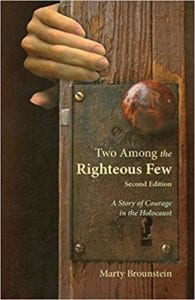
Two Among the Righteous Few: A Story of Courage in the Holocaust
Our guest is Marty Brounstein, who is a master storyteller. He’s the author of Two Among the Righteous Few: A Story of Courage in the Holocaust. It’s a true story of courage, compassion and rescue involving a young Christian couple out of the Netherlands who saved the lives of over two dozen Jews during World War II. Marty has been on an unexpected journey himself and sharing the story of how non-Jews and Jews involved in the resistance and rescue during the Holocaust. Delivering storytelling presentations that audiences have found educational and inspirational as any good story does. This is in the eighth year where he’s been speaking about this. He’s based in San Francisco. It’s great to have you on the show. We love storytelling experts. Welcome, Marty.
Thank you very much.
I always ask my guests to tell their own story of origin. Can you go back and tell us a little bit about your own childhood, high school or college? However far back you want to go where you started becoming enthralled with storytelling.
I grew up in the Chicago area, which is why now I live in California. The winter’s got me. Early on, I always had an interest and fascination with history. In my early professional life, I was a history teacher. Part of what made history come alive for students is the ability to tell stories. As my career evolved as a Human Resources Executive over 25 years, I ran a management consulting business dealing with leadership development and performance effectiveness. We deliver seminars and even executive coaching. Stories are always part of how you teach. It’s a great way to make examples come alive. In essence, it hit me early on and now I realize it more. The journey with this story is all about storytelling at its best.
Let’s double-click on what you did as the leadership development consulting. What lessons did you learn that the audience could take away so that they can become better leaders?
One of the biggest things was engage your audience in whatever you’re teaching them, whenever you’re talking to them rather than talking at them. Part of even now when I do storytelling, but even when I did training, I’m often throwing questions to the audience to get them to be thinking about what’s going on. How would they handle it? What do they know about these kinds of situations or this history? Often as much as when I did the training, having them get involved hands on to practice what we were teaching. All of that engagement, the interactive nature of it is what gets, especially adult learners, but even children, far more involved and far more learning than if they’re just sitting back and receiving.
[bctt tweet=”Help can be as simple as asking, What can I do for you?” username=”John_Livesay”]
When you’re engaging an audience, telling a good story is one way. Getting people to imagine themselves in the story is what I found is the key, especially when you’re giving a case study of someone else you’ve helped and you’re trying to paint a picture as opposed to just presenting a bunch of stats of what you’ve done for somebody else. Can you describe what you have done in your leadership consulting around storytelling as a sales tool?
Quite often in the sales side of it is where I’m meeting a prospective client, as I did many times, I would share stories of what I had done with other clients. It wasn’t just telling him, “This is what I can do for you, but here’s an example of it of how this client took this service and made something good happen.” Those always resonated for people. In teaching of the activities, the skills and the lessons that are a form of sales because you’re trying to get people to sync, open up and learn new behaviors, the power of stories is very helpful to get people to relate. Often, I would tell people, “Do you know where I get the stories from that I’m sharing with you? They came from other managers and executives just like you, who put into practice these skills.” You’d get some nods around the room going, “This is real.” Part of the power of stories is that these aren’t fictional stories. These are always real stories that I’ve told and still tell now with this one on Two Among the Righteous Few.
The phrase that you said there, “Leaders just like you,” is a real great takeaway for the audience to start incorporating into their storytelling so that people can see themselves in the story. One of the questions people have when they listen to a story is, “That’s great for that person, but would that work for me?” If you can paint that picture that they were just like you, they were struggling, they had some challenges, then they overcame those struggles. I was their mentor or Sherpa up a mountain and together, we were able to get them to a place now and that things are great. Do you have some thoughts on the structure of what makes a good story?
This journey with the special story I’m doing, Two Among the Righteous Few, I had a public storytelling presentation event. I had some audience members come up afterwards and going, “I don’t know if I could have done it with Frans and Mien Wijnakker, but I was thinking about it.” It’s the whole idea of putting people inside the story. I’m so excited when I hear that, and I often say it’s not whether you would have, hopefully you never face with the life and death risk they were, but the idea that you were thinking about that, wonderful. Then you’re showing that you have an awareness and an openness. That’s the real key.
To your question about the structure of a story. A story is similar to any good presentation. There’s an opening to get the audience attention. Then you relay, “Here’s what happened,” and then you’re doing some wrap-up. Especially with stories, whether it’s in a sales situation, a teaching situation, as you do that wrap-up, you’re connecting it back to the people right there. How do you apply this? What does it mean to you? It’s relevant. Stories are somewhat like jokes in the same way. When you tell it and it doesn’t fit into the context of what we’re talking about, it falls flat. Nice story, but big deal versus there’s a point to it at the end that connects to people and that’s always the key part.
Otherwise, it’s interesting information but it didn’t emotionally connect with them.
It has to make sense to them that it’s relevant to what we’re dealing with here.
How did you come up with the idea to write this book? What inspired you to write it?
I often tell people, this is a story I stumbled into by accident on a trip to the Netherlands with my wife in May of 2009. The story is about this young Dutch Christian couple named Frans and Mien Wijnakker. During World War II when their country was under the brutal occupation of Nazi Germany, they got involved but most did not. In the end, they saved the lives of over two dozen Jews from a certain death. It’s a story of courage, compassion and rescue. I had heard of their name and the keyword in the book title is the word, righteous. They received a heroic honor called Righteous Among the Nations, which is the honor from the Holocaust museum in Yad Vashem, Israel for the non-Jews like Oskar Schindler. For those Jews who risked their lives to save the lives of Jews in the Holocaust. Not many did it that’s why the title is Two Among the Righteous Few and not Two Among the Righteous Many. Out of curiosity of my wife who has an element into this story, I got to meet the five Wijnakker children. Frans and Mien are not alive, but their five children are.
In that meeting by accident creates the sparks as once I knew of that honor, when I found out that that’s what their parents had received, I was blown away. I understood what that meant. You don’t get that for showing up, something heroic happened. One thing led to another and eventually, not only did I write a book. Early in my eighth year, was my event number 646. It’s taken over our lives but in a very positive way.
Let’s talk about each one of these three words: courage, compassion and rescue. Let’s take each one and describe your definition of it and then pull something from the story that showed unexpected courage.
[bctt tweet=”Listen without judgement” username=”John_Livesay”]
Courage, bravery are in simple terms, the ability to stand up for what you believe or they see the need for help when it may not always be easy. It certainly may not always be popular and there may be risk involved. Certainly, for Frans and Mien Wijnakker, if you’re going to get involved because the consequences were dangerous to deadly. The Nazis didn’t kid. If you got involved to try to help the people they are most after, Jews, you had the same consequences, “We’re going to send you to the concentration camps,” or in some cases, executes you. Compassion, that’s the ability to care for others beyond yourself. I do workshops out of this story in workplaces under the title, The Courage and Compassion to Do the Right Thing: A Lesson in Making a Positive Difference. We have people apply the lessons from the story in their jobs and compassion is one of those things that we look at to what you’re asking.
I often say, “If you could sprinkle the powder of compassion on everybody you come into now and it would forever be their behavior, what a wonderful country we have.” It’s so easy to think about yourself or maybe those near to you, but to be able to show that you care about others beyond yourself is powerful. Frans and Mien did that to the highest degree. All these people that they helped, they knew none of them. They had never met a Jewish person in their lives before they were Catholic and yet they thought that you should care for people in dire need. That teaches a wonderful lesson. The word rescue, and this is to the highest degree, was helping people to be safe, helping people to escape danger. At the height of this, they often had ten Jewish refugees in their own home with their four little children. They created a rescue network in the little towns of their countryside area where they would place Jews with people there. Over two dozen got saved because of their courage, compassion and rescue efforts.
Since you’re doing workshops on this, do you have an example or a story on an actual company where they’ve learned these lessons of courage and compassion? How does it relate? Does it relate to the culture of the company or does it relate to how they treat their clients and customers?
What’s neat about the workshop is I’m going to give you an example that happened with a company. The theme of making a positive difference is I let them take that theme that’s relevant to them. For some of them it’s their core values they want to reinforce. For some, it’s the client service they want to reinforce. In other cases, their leadership. It’s a diversity and inclusion. Sometimes, it’s all those aspects that are important to them. I did a company as an example. They had a management retreat, so I was there working with the management team of 25 or so that they had there and often we have bigger groups. After the storytelling, which they certainly were very inspired, “How do you apply the lessons of the story into your leadership practices on the job?” then we let them draw those conclusions and apply it. In the end, they have to put down a commitment to go forward. The discussion was so rich. It was neat to see the things that came out and we even took it a little deeper because they wanted to do more than that.

Better Leader: We know it’s not easy, so recognize that but don’t let it eat at you.
We looked into leadership behavior that makes a positive difference. We examined some things with them about that that you could just see people in their comments and in their discussions in the small groups, very reflective. Including as we were closing to share some reflections, the general manager, so the top executive in this group speaks up. It was so neat to see and talk about some of her own behaviors, the things that she does, and the things that she has to be more aware of to make her leadership even more have a positive difference. I couldn’t have paid somebody better than that comment at that time as we were getting ready to close. You could see what the power of this was doing for them, and so it was wonderful to see the reception we got from it all.
A lot of people in the business world think that the only way they can motivate, let’s say their sales team is fear-based, if you don’t make your numbers, you’re going to get fired. It is pressure. The opposite of fear is courage. What lessons or advice do you have for people that might find themselves in a fear-based results only driven place of employment to find the courage to not let fear overtake their life in their career?
If you’re in that environment, now you probably have more choices if you have those skills and experience. If you’re sticking it out, it’s not to lose focus on what you’re here to do your job for. If it’s sales, sure you’re there but sales is more than just driving numbers. It’s about giving the clients and customers that quality service. If you say that’s your focus, more than likely the numbers will come with it anyway. Sometimes you have to block that out. One of the strategies when I was doing my management consulting business that still comes up in this workshop too as advice is nod and smile, which is the whole idea. Let them rant and rave, nod and smile. Go back and do what you know is the right thing to do, but stay focused on doing the right thing. Don’t use it as a de-motivator to say, “What’s it going to matter anyway?” You have to do it for yourself because sometimes you’re not getting the positive reinforcement you wish. Don’t let it stop you.
I want to ask you about compassion for yourself when you’ve had a bad day or you’re getting discouraged and then compassion for other people, whether it’s your coworkers or clients. Tell us what tips you have on how we can be more compassionate with ourselves as a starting point.
[bctt tweet=”Let go of negative self-talk, turn the corner” username=”John_Livesay”]
There’s the, “Be kind to yourself.” Sometimes in our heads, we can get all that negative self-talk going if we’re running through some rough patch or people are frustrating. Then you’re browbeating yourself and that doesn’t get you up. There’s that recognition, “What’s going on?” Sometimes a phrase I use is, “Turning the corner.” Put those things aside, go around the corner, stay positive, stay patient. We know it’s not easy, so recognize that but don’t let it eat at you and get you down because that will show. The other part is compassion with their team members. To me, it starts with if you’re a professional as you do your job and it’s also recognizing these people I work with, some I’m going to like more than others. I don’t have to bring any of them home. I need to have good working relationships. If I’m taking steps to consistently treat people with respect, to listen to where people are coming from and not be quick to pass judgment and I’m there when we have challenges to focus on problem-solving. You show that you have compassion then. You show that you can care for people. You show that you can work with people of all types. That’s when you’re performing at your highest level as well.
The third one is rescue. I gave a TEDx Talk called Be the Lifeguard of Your Own Life. Unlike in a hurricane, no one’s going to come and rescue you if you don’t evacuate. What are your thoughts on rescue in the corporate world?
In essence, we don’t have life and death situations in terms of the rescue people may think of. I look at it more of the willingness to help. If you see others in need, whether they’re asking for it or not, it doesn’t mean you go and pose it. If you can do things to cooperate, to lend an extra hand, sometimes help is very simple. You responded to somebody’s email rather than leaving them wondering did you even get it. You can say, “I can introduce you to such and such source who could be the best one to help you with your situation or thank you for opening that door.” Help can be often done in simple ways. When you ask that question, people often say, “How can I help you?” Mean it. Sometimes people say it and it’s like, “Yes,” because you were trained to say the words, but you have no meaning. There’s no sincerity and you don’t want to be bothered. If I need to put something down to come over to help you and do something to get it done, it makes it easier if I need to ask you for helping me. It’s all about building that win-win relationship.
Help can be as simple as asking, “What can I do for you?” It’s so profound yet simple and yet often overlooked unless it’s this grand lifesaving rescue we don’t think any little bit of help makes a difference, but it seems to me you’re saying it does and that it’s cumulative.
I find one of the most simple and powerful forms of help is their willingness to listen to others without judgment. Sometimes what people most need is somebody who’s supportive. Somebody that I can bounce ideas off to vent a few frustrations and it doesn’t come back to haunt me. That’s very helpful when you can do that for people.
I’ve seen it in action myself when I’ve helped clients win that clients they’ve lost because the client feels like, “They didn’t listen to me and things went off track. Now, this project isn’t done on time. I’m mad. I’m not going to work with you anymore.” The ability to listen without judgment, to let them vent, understand, put your empathy hat on as I call it from their perspective of how frustrating it was to not feel like anybody was listening to the warning signs before it was too late, it allows you to be compassionate, rescue the account and save it from being lost. The other big takeaway that you’re talking about here is emotional IQ. Do you have any thoughts around this whole courage, compassion and rescue as it relates to having emotional intelligence?
It does relate as you’re getting it very well there because there’s the intellectual intelligence. You have a good knowledge but do you have, in simple terms, people’s skills? Do you have the skills to get along? Can you understand where other people are coming from? Can you accept the differences and not see them as flaws or things that run from? All of that shows the emotional intelligence. The big part of that is the self-awareness of your own behavior to put yourself in check, to tune in to cues that are happening, both verbal and nonverbal, so that you’re consistently respectful with people. When we listen in the news, the political things happening and the #MeToo Movement, you get that emotional IQ was very low, but the thirst for power was very high to take advantage of people. We don’t need any of that and certainly not in workplaces. We need professional positive environments and emotional IQ was key for making those kinds of environments become real.
What I love about what you did there was take something that happened in World War II and you brought it out into present-day situations of courage and rescue, and the courage it takes to say something to someone who’s powerful. Then it becomes cumulative again. Where there’s one, there are usually many. You’re not the only one, but at the time you think you’re the only one. In your book, were they aware that other non-Jews were helping the Jewish people stay safe or do they think they were the only ones taking that risk?
[bctt tweet=”To be able to show that you care about others beyond yourself is powerful.” username=”John_Livesay”]
Initially, Frans and Mien Wijnakker got involved in this rescue effort by accident, not by design. Frans was doing his black-market business. He’s a risk-taker already because if you get caught, you’re thrown in jail. This is under the Nazi occupation in World War II. This doctor, acquaintance who was a customer he had done business with before, before he leaves the meeting, the doctor says, “Would you be willing to help?” In the end, as the doctor explains, “This young girl, could you take her home to where you live in the countryside for three weeks? She happens to be Jewish. Would you be willing to help?”
Frans was that helpful kind of guy. He always viewed himself that way. He acted that way and here’s the call for help. He doesn’t quite recognize the dangers he’s just taken on and his wife, Mien, when he brought her home right with him, was saying, “Then let’s help.” Then one thing led to another and it built over time. As things built and they got involved with a resistance group that helped them build this rescue network, then they realized there were others doing it but not a lot. They didn’t have awareness of what’s going on in the country. If anything, their awareness grew of how dangerous this was and how careful they had to be because those stories were coming. The Nazis were brutal to any form or resistance, but even more so to those helping hide Jews and yet they didn’t turn away.`
That simple question, “Would you be willing to help?” I also find that when you ask people, “Would you be willing to give me your opinion on something or your advice on something?” It’s amazing how that opens the door to have a conversation that’s collaborative and productive.
The power of questions, which fits well into stories. I start my storytelling presentation on this story, by asking my audience three questions to get them thinking, and that puts them into the story. If they want to go into it, it starts. I have people at the very end as they come up to visit afterwards often say, “Those three questions made me keep thinking through your whole presentation.” I’m like, “I’m glad you were thinking. I’m glad it sparked that awareness.” Luckily, we don’t have to make those kinds of decisions about life and death. You make those decisions and translate it into your behavior.

Better Leader: Do not turn a blind eye to misconduct. If one could get away with it, more will do it.
That’s what I’m doing inside school classrooms to when I take these workshops to organizations and professional conferences. We get past the storytelling and apply the lessons. Especially when I’m dealing with a management group and we talked about applying the lessons, I emphasize if it hasn’t come up, do not turn a blind eye to misconduct. We hear that always in the news. The managers would look at the other way and then here’s this problem manager, the executive that everyone knew about, but nobody ever said or did anything about it. You cannot afford that. That’s what creates these toxic environments. If one could get away with it, more will do it. The idea of when you have a very professional environment, you have far more ability to be a productive one. Sometimes it takes the courage to step up and say, “That’s wrong. We’re going to get it addressed.”
What are those three questions? You’ve got us all intrigued with an open book?
Question one, would you be willing to help others whose lives are in great danger? I pause and say, “Think about that,” because that’s a tough question. Question two, would you be willing to help others whose lives are in great danger knowing if you got involved, you would probably put your life in great danger? Would you still help? Question three, would you be willing to help others whose lives are in great danger knowing if you’ve got involved you’d probably put your life in great danger, when these people who most need the help, everybody else wants to hate them or be indifferent to their plight, would you still get involved and help? I pull it together. Two Among the Righteous Few: A Story of Courage in the Holocaust is a true story of a Christian couple that answered their definite yes to three of those questions in a time period when most said, “No.” They are true heroes.
[bctt tweet=”The opposite of fear is courage.” username=”John_Livesay”]
What I find fascinating about the third part of that question is when other people are either hating them or at best indifferent to them, there’s no obvious social acceptance of, “We have to help them.” It reminds me a lot of what’s going on with certain refugees and things, “I don’t necessarily hate them, but I’m indifferent to their plight. It’s not my world.”
During one of my presentations, that comes up from the audience sometimes. They relate these things to the present day.
It’s a fascinating way for us to take lessons from history, apply it to how we’re reacting to what we see in the news and decide which side of the right thing to do we are on and what we can do to take action. Any last thoughts you want to leave us with, Marty, about your book or how we can be more courageous or compassionate?
If you take all of that seriously and we’ll talk in the context of wanting to do your job, especially if you’re a leader in your role, managed positions are viewed as leadership roles, although not all people in those roles act as leaders. Every day, if I approach my job, I’m here to make a positive difference whether I’m in sales, service, whatever role you’re tearing, you then have the right focus. Then you’re going to be always thinking about how do I best work with people? How do I best treat people? How do I best get my job done to get the results that I need? It’s all about making a positive difference and that’s what this story has all been about.
How can people follow you on social media?
I have a website, www.MartyABrounstein.com and there’s a Facebook page for the book under my name as well. When you put the link in my email, I don’t mind people contacting me directly, so I welcome that. I hope to see them at some of my presentations or maybe these are the people who will invite me to come to their organization to share this special story. At the very end of the story, I have a very meaningful personal connection to this story and its heroes as well. I always reveal that at the very end. When they read the book, they will find out. I always close every presentation with, “Thank, God, for the courage and compassion of Frans and Mien Wijnakker.”
Thank, God, for your inspiration, courage and compassion to take this message out into the world. Thanks, Marty, for being on the show.
Thank you so much for having me, John.
Thank you, John.
Links Mentioned:
- Marty Brounstein
- Two Among the Righteous Few: A Story of Courage in the Holocaust
- The Courage and Compassion to Do the Right Thing: A Lesson in Making a Positive Difference
- Be the Lifeguard of Your Own Life – John Livesay’s TEDx Talk
- #MeToo Movement
- www.MartyABrounstein.com
- Marty Brounstein Facebook page
- https://www.Amazon.com/Two-Among-Righteous-Few-Holocaust/dp/B005XHMX96/ref=sr_1_1?ie=UTF8&qid=1538155403&sr=8-1&keywords=marty+brounstein
- Quantmre.com
Wanna Host Your Own Podcast?
Click here to see how my friends at Brandcasting You can help
Get your FREE copy of John’s latest eBook Getting To Yes now!
John Livesay, The Pitch Whisperer
Share The Show
Did you enjoy the show? I’d love it if you subscribed today and left us a 5-star review!
-
- Click this link
- Click on the ‘Subscribe’ button below the artwork
- Go to the ‘Ratings and Reviews’ section
- Click on ‘Write a Review’
Stop Hoping: Start Hunting with Jennifer Hill
Posted by John Livesay in podcast | 0 comments

 Episode Summary:
Finding your dream job may not be what most people expect. For some, their dreams are only realized after life has thrown an unexpected curve ball. They find that they are on to a different path than what they had planned. Keynote speaker Jennifer Hill says its okay. She shares her own personal experience when she took a different route that later on led her to become a successful president of a recruitment company. Jennifer gives some great tips on how to go about pursuing your dream job and getting hired. She also gives entrepreneurs advice on going public and taking that step to selling their companies, stressing the importance of perspectives, integrity, and the value of storytelling.
—
Listen To The Episode Here
Stop Hoping: Start Hunting with Jennifer Hill
I have Jennifer Hill who is the President and also a Speaker of a company called JHill’s Staffing Services. She began recruiting back in 2003 and she’s recruited for top-tier law offices and she’s appeared on all kinds of major news outlets. She opened her own staffing company and it was recently sold in 2018. She remains on as the President. She hosts a weekly radio show on LA Talk Radio called Get Yourself the Job with over 30,000 listeners a month where she interviews experts and authors about landing your dream job. Jennifer, welcome to the show.
Thank you so much for having me, John.
I always like to ask my guest to take us back to their story of origin. When did you start to say, “I want to help people get their dream job,” or did you see other people, maybe your parents not having one? How did it all get started?
My parents were inspirational. My mom has been a nurse for 35 years and my dad was a captain at the Fire Department for over 30 years in North County, San Diego where I grew up. My origin story was probably more along the lines of when I graduated high school, I took the GED to go straight to college when I was sixteen. I get bored easily. I have Squirrel Syndrome, which means I like to have a lot of balls in the air and a lot of things going on. I went to college and I graduated college early. The few years, a year and a half or so that I was in high school, all I took was advanced placement classes. I’ve got a phone call from my college after I’d walked and graduated.
It was about two or three months after graduation and I was planning to go to law school. I was studying for the LSATs and this phone call comes in, “Is this Jennifer Hill?” “Yes. What can I do for you?” “This is Susan in admissions over at UC Irvine. We wanted to let you know that you didn’t graduate. You’re missing a class from high school, US History 101.” I cannot even make this up. I had reoccurring nightmares about this for about ten years afterwards. It turned out because I had taken advanced placement European History in lieu of US History 101 in the brief time I was at high school that that didn’t count.
The lovely admissions or counselor, whoever it was, called and said, “Jennifer, we’re going to give you two options. Option number one is that you come back to school for a semester, take the class and pass it. Option number two is that you take a thousand-page book on US History 101. Memorize as much as you can, and take a two-hour oral exam with the Dean of Social Sciences. Pass or fail.” I opted for the latter. I was fortunate that I did pass the two-hour oral exam, but because of rollover applications for law firms, I could not apply to law school that year. It was the best gift that ever happened to me.
I do a lot of motivational speaking. I did a talk with a lot of interns at a company yesterday. One of the things I tell them is sometimes in your career you think you’re going to go left. The universe is like, “No, you’re going to go right. Make a U-turn. Go backward.” You circumvent the direction you thought you were going to go, but it was the best gift that ever happened to me. In lieu of going to law school that year, I posted my resume on Monster and I got three job offers. One of which was to become a recruiter, which I didn’t even know what that was. Lo and behold, here I am running my own company for ten years, having sold it and having worked for some of the top corporations and law firms around the world. I feel fortunate to do what I do.
[bctt tweet=”To land your dream job, one has to feel that there’s a purpose besides making money.” username=”John_Livesay”]
Both of your parents are in the service caregiver/EMT world. You grow up in this environment of when you have a career, your career should be saving lives in one form or another. That seems to be the theme.
I never put two and two together on that. That’s a good observation.
I’m looking at your early influences of making a difference in your career, especially under the theme of landing your dream job. One has to feel that there’s a purpose besides just making money. You certainly had that modeled for you. The other irony in your story is here you are thinking you’re going to law school. The most core fundamental issue of US History and knowing the Constitution was something that somehow slipped between the cracks. If you were going to go do anything else besides a lawyer, of all the things to not have, that’s the prerequisite.
In all the years I’ve told those stories, I don’t think anybody has ever keyed in on either of those points.
The other part that’s fascinating for me is if we can have people who are reading realize that you’re in the situation, in my case, I got laid off after being at Condé Nast for fifteen years. In your case, you didn’t get to go to law school when you thought you were going to. All those things that we think are bad news with some perspective in your rearview mirror, you can see, “That was the right thing for me.” When the next thing that happens to us is something that we don’t think we want or like, maybe we can, while we’re in the moment, not hit the panic button so much.
There’s a talk that I do that’s popular on empowerment and perspective that I do around the country. One of the topics that we discuss is when we’re dealing with the subject of perspective. If you’ve ever studied neuro-linguistic programming or if you’re familiar at all with neuroscience, the way the human brain works and our perception works is moment by moment, we are bombarded with billions of bits of information, sights, colors, sounds, smells, touch and etc. However, our brain at any given moment is only paying attention to a couple thousand of those bits of information. What does this mean? It means what do we perceive? What happens to the rest of those multibillions of bits?
This is the analogy I like to use to help people better understand it. It’s like that Jennifer Hill, as a human being, is in this huge, black warehouse. It’s pitch black, you cannot see whatsoever. The only thing that I have is a headlamp on my forehead. That headlamp, depending on which direction I’m going to turn my head, is going to directly impact what it is I’m seeing or not seeing. That is our perspective. You have to keep in mind that you have multitudes of things to choose to look at all around you. For example, in your case with the layoff at Condé Nast or in my case, when I couldn’t go to law school, if you focus on how unfair it is that the world is unfair and that you’re a victim, you’re going to find evidence to prove that right because that’s where your headlamp is pointed. However, if you choose to look at, “What a great opportunity. I wonder where this is coming from and why this is the lesson I’m supposed to learn in this,” then you have access to a whole different path that you can take through life at the warehouse.

Pursuing Your Dream Job: If you focus on how unfair the world is, you’re going to find evidence to prove that right. But if you choose to look at the great opportunities it has to offer, you will have access to a whole different path.
A lot of people who are reading are entrepreneurs. One of the entrepreneurs’ dreams is to go public or sell their company for a nice exit for themselves and investors. You had that happen to you. Can you tell us a little bit about that story?
It’s a great story because it all came to fruition this exact time on my own radio show which is called Get Yourself The Job. I interview experts from around the world about how to be successful, whether you’re an entrepreneur or a job seeker, to get up every day and do what you love. The guest’s name was Gary Douglas, multi-bestselling author, 25 books. He joins me on the show. He tells me about this game called How Does Life Get Any Better Than This? Basically, the premise of the game is every time something good happens, you say out loud, “How does it get any better than this? How does life get any better than this?”
He gives us a great story of a woman who walks out of his program in New York. As she walks out of the program, she comes across a dime. She yelps with delight. Instead of walking by, she says, “How does it get any better than this?” She walks another twenty feet, and she comes across a $10 bill. She says again, “How does it get any better than this?” She realized that she has enough money to make it home in a cab rather than walking home in New York. She raises her hand, gets a cab immediately, and is saying out loud, “I don’t understand, how can it get much better than this?” She gets out of the cab, finds a diamond tennis bracelet with nobody around to claim it.
You can imagine, I started playing this game. Three weeks later, on the nose, I was not looking to sell my company. I had been playing this, How Does It Get Any Better Than This, game for three weeks straight. I’m just being grateful, appreciative and again, turning my headlamp towards whatever was wonderful in my life. Out of the blue, a company reaches out and says, “We want to buy you.” I said, “I can’t quite say I’m for sale. I’m certainly open to negotiations.” Six months of M&A attorneys later, here we are. I’m lucky that the company that acquired me is great. It’s been a wonderful opportunity to partner with them on everything we’re doing. The power of perception, what you focus on expands.
What do you think it was about you and your company that made the company that bought you wants to buy you in the first place?
I have to say it’s my brand equity. We’re one of the few staffing firms. If you search for my company, we have five stars. I’m lucky that I’ve spent the last ten years working on myself as an individual. The latest talk that I’m working on is called I’m a Recovering Asshole, because I am. Everybody who knows me from earlier in my career from about when I was 18 to 23 will definitely concur with that statement. I went from being a complete jerk, whatever you want to call me, to transforming myself into somebody who had integrity, who you could count on. If I give my word to something, you can guarantee that I’m going to do it. I was able to create a foundation for a successful company based upon that.
From there, some of the top talent in the industry kept approaching me and saying, “Please, can we come and work with you?” They told me outright, “We’re buying you.” When I came up with the company name of JHill’s Staffing, it was a joke. It was a gag. I did not mean when I opened my company in 2009 to actually build a company and sell it. I feel fortunate that I follow the leads of the universe. I allow things to be in the flow. Whenever I’m meant t to close one chapter, another one opens and I step through that door.
You also wrote a book which is great branding called Stop Hoping. Start Hunting!: A Job Seeker’s Guide To Finding A Dream A Job. You were able to get on Conan O’Brien with it. Tell us that story.

Stop Hoping. Start Hunting!: A Job Seeker’s Guide to Finding Their Job
It was in the middle of my book tour. I was lucky from a young age I had a wonderful PR guy, Richard Berman, who did all my PR. He was getting me TV appearances long before I even had written a book. When my book got launched, I was flying around the country doing different TV appearances. I had bought my mother-in-law tickets to see Conan O’Brien for her and her niece. We go to go see Conan, but that day I stopped by my office first. One of my colleagues, Scott, says to me, “JHill, grab a copy of your book.” I looked at him, I’m like, “Scott, I’m not appearing on Conan. It’s not my book tour. I’m going there as a guest.” He gives me side-eye and he says, “You never know. It might be a funny gag to sign the book for him and say, ‘Good luck one day finding your dream job,’” if he’d been fired from The Tonight Show. I signed the book to Conan. We get to the show. I talked to one of the PAs and I said, “As a gag, I brought a copy of my book for Conan. Here’s a copy if you want to give it to him. It’s a gag since he just lost his job.” The PA was nice and she said, “Conan’s sweet. Oftentimes after the show, he’ll come into the audience and greet the guests or greet people in the audience. If he does, give him the book then or give it to one of us at the end of the show. If he doesn’t, then we’ll give it to him then.” I said, “Okay, great.”
Five minutes and 55 seconds into Conan’s show, and we all know this because it went viral, Conan started doing a joke about oral sex. If you know anything about the legal industry, it is a conservative industry. Most of my clients are AM 100 Law firms, Fortune 500 companies. Conan starts doing this joke about oral sex and I laugh. I have an uproarious, loud laugh. It’s who I am. The camera pans to me. I see myself on the screen laughing about Conan’s joke. I tried to cover my face. All of my clients are going to fire me over this. I try to cover my face and then Conan’s like, “Somebody wants to talk about this.” We go back and forth. Everybody thought it was staged. I was mortified at that moment. I thought I was going to be fired by every client I’ve ever worked with.
Conan starts playing with me, doing this whole bit about it. When he comes up into the audience unexpectedly to hug me, I’m like, “Conan, it’s on. You damaged my professional reputation. I am totally promoting my book.” I hugged him with my book cover to the camera. Out of that, I handed him a book. It turned into a two-and-a-half-minute bit on Conan’s show called The Sex App Joke & The Audience Lady. I’m affectionately known. I have one million views on Conan’s website for that. It was great because as my PR guy said, “No publicity is bad publicity,” and it got me a lot of clients rather than losing them.
How wonderful would have it been if you had not listened to the person going, “You never know, just bring your book?” All of that happened because you were in this mindset of, “How does life get any better? I don’t have any expectations that my book’s going to be on the show.” Yet, if you didn’t have it there for that moment, that would be amazing.
It was fortuitous. That’s why I say, “You’ve got to be in the right place at the right time.” I’m a spiritual person. Since I’m a recovering A-hole, I spent about an hour of meditation every morning to make sure that I don’t fall back into my reactive ways. I call it the Red Mist. Some people have the Hulk. I turn into the Red Mist if I’m not balanced and thoughtful in my daily actions. I have to be responsible for that.
What’s up for you next?
What I’m doing is I’m partnering with the organization that bought me called Marcum Search. We’re looking to expand throughout California. It’s amazing how much you can do when it’s not your money. We’ve hired three people for the new company in the last three months. I love it that they fully support me. The company sponsors my new radio show. They support my speaking engagements. I get to have the best of both worlds. I get to grow a company, still be an entrepreneur, do what I love every day, and still help people by speaking and hosting a radio show.
You’re running this company, you’re hosting a radio show and you’re also giving keynotes. Who is your ideal audience to hear you speak?
Executives and staff. Some of the most popular talks that I’m doing is the How To Deal With An Office A-Hole talk is one I’m rolling out in Phoenix that everybody’s excited about. The How to Create An Empowered And Empowering Environment is popular among leadership teams. How do we empower our teams? How do you create a team that wants to continue working with you? Sometimes I lead a version of that program to people who are staff at different corporations of how to be empowered and indispensable to their employers. It’s a two-way street. It’s about helping to empower the managers and the leadership teams because it is a top-down phenomenon. At the same time, it’s also about empowering the staff who works there and making sure it’s a great culture that people want to stay in.
[bctt tweet=”Play the game and ask yourself, How does life get any better?” username=”John_Livesay”]
One of the things that I saw when I was in corporate and I still see it as an outsider is the cost of turnover. As a startup, in particular a small company, you’ve got to have something to grab people with talent to come to join your vision and your team, especially if you don’t have competitive salaries up front. How do you keep talent? Do you ever get asked that question? Do you have any insights there? Whether you’re a big company or small, that would be interesting for people.
That’s definitely something we talk about in the empowered, empowering environment and how you manifest that. What’s there is understanding the dichotomy basically of the two types of employees that you have. You have the traditional employee. I’ve written a white paper on this as it relates to the legal secretary, which is similar to all other industries. You have in the white paper I call a traditional legal secretary, or for the purposes of this discussion, we would call a traditional staff person. That would be somebody like my mom or my dad, who stayed at their job for ten, twenty years. They’re loyal. For them, the main motivating factor is stability, safety, good benefits. You have what I call in the white paper the legal secretary of the future. You could insert whatever job title there you’d like, the admin of the future, the broker of the future, whoever it might be. He or she is going to be much more motivated by change, upward mobility, appreciation, and also by having opportunities for growth both monetarily as well as titles.
There was a great guest who I’ve had on my show twice because I love the subject so much. It’s Dr. Paul White, The 5 Languages Of Appreciation In The Workplace. He explained to me on the show that out of the five types of appreciation, only 50% of the population responds to words of affirmation, which is, “Good job.” “Go, get them.” “Great job.” Only 50% of people respond to that. You’re appreciating your employees often in the wrong way unless you understand what their modality of appreciation is. I mix it up with my own staff. Whenever I travel, I bring them gifts. Whenever I go in the office, I give people high-fives, I’d give them verbal affirmations or I spend one-on-one quality time. I’ll ask anybody new who works with me, “What is your preferred method of appreciation so that I can appreciate you and make sure you feel known and respected?”
One of the things that you and I have in common is this concept of storytelling and asking the right questions. When I was being interviewed on television recently about how to have a great story to get a yes, the host asked me, “How do people do this when they’re trying to get a job?” I said, “When you get asked the question at the end of the interview, “Do you have any questions for us?” This is when the magic time happens as opposed to, “What are my benefits? When do I get a vacation?” It’s like, “What would it look like if I was to exceed your expectations in this job?” That one question helped one of my clients get hired. The person already saw this person as somebody who is thinking above and beyond the minimum. I know that shows an employer that this is the dream job for them. What are your thoughts on that?

Pursuing Your Dream Job: Storytelling is a critical element in success.
That’s brilliant advice because storytelling is a critical element in success. I had the Chief Diversity Officer of Randstad in my show. She said from a diversity standpoint, storytelling is tricky because the brain is designed to remember stories better. You might have candidate A who goes in and has the perfect qualifications. It might be a more diverse candidate. You have candidate B who goes in. He or she tells a better story. They will go with candidate and B because the brain sees stories as more sticky and will be more likely to remember that candidate even if they’re not the best candidate for the job. If you become adept at storytelling throughout the duration of the interview, not just at the end, but also look for opportunities to weave stories throughout your whole interview.
I’ll never forget when I was sitting with the CEO of Marcum. We were having breakfast at The Peninsula before the acquisition happened. He looked at me and I was sharing with him a story of what made me a successful recruiter. He says, “Jennifer, you’re good at this. You really know what you’re doing when it comes to interviewing.” I looked at him and I said, “Jeff, I better. I wrote a book on it. This is what I teach candidates.” It’s the same thing whenever somebody works with someone in my office, we train and develop people on storytelling and on making a positive impact in the interview so that they are the most memorable candidate in a positive and not a negative way.
[bctt tweet=”Get up everyday and do what you love.” username=”John_Livesay”]
Are there any last thoughts or ideas you would like to share?
Just to tie-in to your last point, one last thing to leave your readers with. Remember, if you ever have an important business meeting or if you have an important meeting for a potential interview, you want to write down your top five attributes. It might be that you’re detailed, have integrity, or organized. You want to come up with a story that illustrates what we call PEP: Productivity, Efficiency or Performance. Those are your five key talking points in any meeting that you walk into or in an interview. If you always weave to those points throughout the whole interview or meeting, you will be the one who is most memorable in a positive way.
What’s the best way for people to follow you on social media?
If people want to follow me, they can find me on LinkedIn. I have about 10,000 connections out there, under Jennifer Hill on LinkedIn. People can also find me on Instagram as well, under @JenHillJHCCS. I think I have a YouTube channel with some old interviewing tips on it, as well as Jennifer K Hill on Facebook. I post a lot of content on there as well. The radio show, Get Yourself The Job, which people can download on iTunes. Get Yourself The Job is live every week on LA Talk Radio and converts to podcast format after the show.
Jennifer, thanks again for being such a great guest. It’s been a fascinating conversation on how to get our dream job and get and keep top talent.
Thank you so much, John. It’s been a pleasure.
Links Mentioned:
- JHill’s Staffing Services
- Get Yourself the Job
- Gary Douglas on Get Yourself The Job radio show
- Stop Hoping. Start Hunting!: A Job Seeker’s Guide To Finding A Dream A Job
- Marcum Search
- The Sex App Joke & The Audience Lady – video
- The 5 Languages Of Appreciation In The Workplace
- Dr. Paul White on Get Yourself The Job radio show
- Jennifer Hill – LinkedIn
- Instagram – @JenHillJHCCS
- YouTube – Jennifer Hill
- Jennifer K Hill – Facebook
- Get Yourself The Job – iTunes
- Quantmre.com
Wanna Host Your Own Podcast?
Click here to see how my friends at Brandcasting You can help
Get your FREE copy of John’s latest eBook Getting To Yes now!
John Livesay, The Pitch Whisperer
Share The Show
Did you enjoy the show? I’d love it if you subscribed today and left us a 5-star review!
-
- Click this link
- Click on the ‘Subscribe’ button below the artwork
- Go to the ‘Ratings and Reviews’ section
- Click on ‘Write a Review’