

Brain+Trust With Tim Hayden
Posted by John Livesay in podcast | 0 comments

In today’s fast-paced world overrun by technology, understanding how the human brain behaves, works, and reacts is an important aspect of digital consumption. John Livesay delves more into this topic with Tim Hayden, the founder of Brain+Trust and chief business strategist at The Next Practice, by discussing how empathy and getting a full grasp of audience emotions can result in a compelling marketing strategy. Tim also explains how data science is being applied to COVID-19 trials as well as the concept of sonic gardens.
—
Listen to the podcast here
Brain+Trust With Tim Hayden
Our guest is Tim Hayden, who is the Founder of Brain+Trust, which is an agency that helps companies use empathy and technology to anticipate how to get inside their customer’s head. He’s also involved with a company called The Next Practice, which is about anticipating what’s coming around the corner. We go into things like how to tend to your sonic garden, a consent management platform, what’s happening in the world of AI, and consent and data privacy. All through a lens of how do we make the world better. Enjoy the episode.
—
Our guest is Tim Hayden, who has many years of marketing and business leadership experience. He’s been the founder of new ventures and a catalyst for transformational progress with some of the world’s largest brands. He is a strategic business executive, studies human behavior and how media and mobility are reshaping all of the business. From operations to marketing and customer service, he assembles technology and communications initiatives that lead to efficiency and revenue growth. He’s an investor and advisor to technology startups. He actively works with entrepreneurs and ventures to capitalize on opportunities and shifts across many different industries. Tim, welcome to the show.
John, thanks for having me. I appreciate that introduction.
Tell us your own story of origin and take us back a little bit. You can go back to childhood. You can go back to your days at Texas State. How did you get interested in being involved in startups in general? It seems to be a part of your path.
Growing up, my mom was a school teacher and later on, she became an executive with several nonprofits including The Hurst Euless Bedford Chamber of Commerce, right in the middle of the Dallas-Fort Worth. My dad on the other hand was in software. That’s probably what made me acutely aware of what was happening with technology and how it was iterating as time went along. Technology got faster. It got better. My dad, I wouldn’t say it was cumbersome, but he was absent for a lot of my formative years because he was working for somebody else. That’s the easiest way. I’ve always thought if I could wake up on Monday mornings knowing that the world is on my shoulders to win, to survive, or to do whatever else, that’s the path I’m going to take. That’s even been the case when I’ve gone to work for a large corporation or somebody else. I’ve always tried to be entrepreneurial in my approach.
Doing my research in preparation for this is, you have a fascination with human behavior and that’s why we’re looking forward to getting to talk with you because I share that passion from my advertising background. That’s what made me get into advertising was, what motivates people to change their behavior or buy one product over another. The same concept to persuade one person doesn’t necessarily work for another. You have certainly done a deep dive into that. Let’s start with what you’re doing at a company where you’re the Chief Business Strategy at The Next Practice? I find that concept fascinating “unlocking what’s next?” This premise that we all have to find what’s coming around the corner, we can’t stay in our comfort zone is what I get from what you’re doing there.
I’ve worked across a number of industries. You take municipalities and state local governments. This comes from even me sitting on the board of the Austin Chamber of Commerce at one time. The art of economic development is always being able to look 5 to 10 years in the future to understand what do you need to do to develop an infrastructure, the systems, the processes, and the environment for business to be conducive for a long period of time. That’s one part of it, but at The Next Practice, we’re all about doing that in terms of marketing customer experience and communications. We think that without calling it digital transformation, how can we help organizations with their endeavors be able to realize revenue growth, find new customers, and experience repeat behaviors from the customers that have already bought from them?
[bctt tweet=”Going on the next level by having empathy is what every entrepreneur should keep in mind.” username=”John_Livesay”]
How can we do that and always be ready for how behavior is going to change? That’s the important takeaway there is that, as the world becomes more automated as immediacy. During COVID, we can buy anything and have it delivered to our house in a matter of minutes, hours or days. That’s been a reality for some time, but we all know it way too well and we expect the rest of the world to be that way. At The Next Practice, we’re about being always on the next level if we can. It doesn’t mean that we’ll overshoot what needs to happen, but it means that we’ll have an understanding or maybe empathy with where things need to go from here.
You were very involved with the Austin Chamber of Commerce. Let’s give a shout-out to Austin and what an amazing community. I live here myself. I’ve been impressed by the friendliness, openness and collaboration that everyone finds here. A lot of people are moving from Silicon Valley here. The city has been voted the number one place to live for a couple of years in a row. There’s so much that it has to offer. From your perspective, both with your experience at the Chamber of Commerce and being an entrepreneur here, what is it that makes Austin special for you?
I went to school in San Marcos about 30 miles South of here. In the early and mid ‘90s, I was exposed to a lot that was happening with Austin. My wife went to UT. Neither one of us grew up here. She grew up in East Texas. I grew up in the DFW area. It’s the vibe that Austin has built on the edge of the Hill Country with a river running through it. It’s between the University of Texas and Ohio State, which has the largest public university in the country. Lots of young people live near the middle of town. You put a state government in the middle of it. The state government that leans a different way than the local government leans. It makes for an interesting mix of developments in terms of culture and business. That’s why Austin is the place for a creative class and for people whether they want to start new companies or they have fresh new ideas, this is a wonderful Petri dish to do that in.
You add in how green it is with an aquifer, the beauty of all the parks, amazing food, and live music. There are many special sauces to it that companies, even Tesla are coming here. It continues to attract and see what makes it unique. The thing you said that resonated with me, Tim, is as it relates to The Next Practice is this concept of empathy. Can you define for everyone reading what empathy is from a business standpoint? How is that a great tool to anticipate what’s coming next?
We look at it through the lens of design thinking about being human-centered, customer-centered in business is to understand exactly the preferences, needs and disposition of your audience. You said it first, “No two people have the same behavior traits, no two people have the same wants and needs, or have that same disposition.” When you talk about empathy, it’s about putting yourself in someone else’s shoes as best as you can. That’s a tall order. It’s an impossibility to do at scale, but thanks to the way we’re connected digitally these days and more so every day, we have the beauty of data turned into insights. That helps us understand how people behave, what their preferences are, what they imply and state, and maybe how they respond to questions we put in front of them.
It’s always about understanding and being customer-centric. That goes for internal communications, as well as understanding teams and business units, how can they better share information, how can they be on the same page having a true north of insight on that customer behavior. We believe at The Next Practice and Brain+Trust partners, that’s the remit for companies that want to not just survive, but want to succeed and grow over the next decade.

Brain+Trust: Being customer-centered in business is to understand exactly the preferences, needs, and disposition of your audience.
Let’s take some companies, maybe Kodak or Blockbuster. They had a little more empathy and been able to take a look at what’s coming. Maybe they would have seen that the business model that they had relied on for so long wasn’t going to stay either because the technology was changing and customer preferences were changing. The hassles of back in the day going to a store. Imagine young people today, they don’t know how to even operate a rotary phone. Let alone the concept of you had to wait for a movie to be returned before you could see it. All that is fascinating to me. You touched on Brain+Trust. As I said, you are busy in many projects. Tell us your role at Brain+Trust and what the story of origin was there?
In 2016, I was in the process of moving back from the Bay Area in California to Austin. I was out there in the Bay Area for two years. I had a couple of colleagues that I knew who had come from large global digital media roles with major companies. We all had a conversation and said, “There’s a wave of new technology coming into the market.” Artificial intelligence, machine learning, automation, not to mention what was happening with social media. Not to mention what’s happening in mobility in the automotive space with cars getting smarter. Some cars are able to drive themselves. All of this and the speed at which it’s happening is extremely confusing to decision-makers and leaders.
We built Brain+Trust, first and foremost, to be a sage counsel and at least a resourceful guide to be able to help business leaders roadmap where they need to make investments and decisions for investing in the future, whether that’s new process and operations or new technologies. Thanks to the pandemic in one way, it accelerated the need for companies in light of customer data privacy laws. In terms of the imminent threat that companies like Amazon and others pose to certain verticals, is to build a direct and personalized experience with your customers and to operate on their terms, which brings us back to empathy. Understanding your customers in their needs and serving those needs, that’s what businesses must focus on.
I spoke at the Coca-Cola CMO Summit and it was the CMOs of all of their quick-service restaurants that serve Coke. I was speaking to the CMO of Domino’s Pizza. He was explaining that their philosophy was creating the perfect pizza experience. Meaning you have a thought, “I’d like a pizza,” and it magically appears and fast. He and his team created that app that tracks the thing. I want to ask you about that whole thing of transparency and that people feeling part of the process is a new behavior. They’re using artificial intelligence.
That’s one of your areas of expertise. They said, “If you tend to order the same pizza at the same time every day, and you open the app or pick up the phone, the AI notices it and says we’re going to take a risk the odds or whatever. Put the pizza order in before you finish completing what you want on it to try and shave off a few seconds of the delivery time.” The bigger picture is the perfect pizza experience, and that’s where I’m fascinated to get your insights on because technology is great. Unless we’re connecting it’s feelings and emotions. What’s coming next and have this overall vision of in this case. I think about a pizza and it shows up and then using AI to make that happen without the customer even knowing it is something that you’re talking about.
We used to call that surprise and delight. KLM Airlines does this in several airports in Europe, where if you put up a signal, if you tweet or back in the days when everybody’s to check in on Foursquare. If you let the world know you’re at the airport and KLM has got their ducks in a row from a technology standpoint. They sense that you’re at the airport because you said you were. They already know what flights you’re on, what gates you’re on. They’re going to surprise you with a gift. They’re going to surprise you with something. We’re going to see more and more of that. What’s fascinating though is that because of the choices that consumers have, in terms of where they can get the goods and services they need. The way they can go about discovering new flavors, new products, and new brands. We got to be careful.
[bctt tweet=”Understanding your customers in their needs and serving those needs—that’s what businesses must focus on.” username=”John_Livesay”]
We need to know that it’s okay when I call my local pizza. I order from East Side Pies a lot here in Austin. If I call them up, I’ll ask, “What did I order last time?” They tell me what I did. I said, “Let’s do it again.” I don’t have to tell them my name. Because of caller ID, they knew who I was. That’s good but understanding that maybe shaving a few seconds off the delivery doesn’t mean that you have to preempt the consumer. Let’s allow our customers to be in control as much as we can. Let them opt-in. You’re required to do that because of data privacy laws that are popping up in 27 states. The bottom line is let’s make sure that they’ve consented, they’re opting in, and they’ve given you the green light to do that thing.
Which leads me to an article you wrote about, “If you can’t give a customer a cookie.” You talk about this premise of Consent Management Platform or CMP. Tell us what that means and how that can help businesses do better marketing.
Most people that are reading this are going to be aware of websites, especially news websites that they visit. That has a little banner that comes up and says, “Will you accept these cookies?” Most of those outlets will allow you to click on a different link and be able to see how your information is used. That’s how global data privacy regulations in Europe, which started a few years ago. That’s how that spelled out and how you’re supposed to do it. That’s how the California Consumer Privacy Act, which went into effect here in the United States. That’s what it says you need to do. What’s happening is Google is no longer going to support third-party cookies, which empowers brands to do so much from tracking a customer from a search result to the website. Maybe to the mobile app, to an eCommerce store, to a physical location and to do so on their terms, not Google’s.
Google is saying no longer will they support third-party cookies or use them in terms of how they do everything from rank searches and guide people to your doorsteps. You’re going to see probably more of investment directly with Google that will be required to leverage the behavior that’s there within Google. Apple at the same time has come out with a new operating system, iOS 14, which puts the customer in total control of who gets access to their data. Who gets to understand where they go with that device, whether an iPhone or an iPad or a Mac. What is consumed on that device, where has it been used, maybe what speed were you going, what direction you were going back to your place. Your point about predictive pizzas, “Does he drive by here every day?”
What we’re seeing is twofold. One, commitments to customer data privacy. That’s what we see there, but we’re also seeing that Apple, Google and others are doing all they can to be able to compete with Amazon. They understand that in Apple’s case with maybe Apple News before but with Apple TV plus, they’re getting more minutes of the day and more hours of the day with you in their ecosystem. You’re consuming media that flows from Apple. You already have the devices. You carry Apple with you all day that, how do we get more of your time while you’re in at home, your vehicle, and other environments. That’s what’s going to be fascinating over the next few years, as we see that shake out alongside more scrutiny to customer data and customer data privacy.
The other thing that I was interested in and impressed by was your Brain+Trust partners are a member of The Next Practice Group and you’re working with the Johns Hopkins University on their trials during the COVID. Can you explain how you’re helping all of that effort that everyone is concerned about?

Brain+Trust: The flip side of understanding consumer human behavior is how to get on the other side with behavior change.
I can’t tell you everything, but I can tell you that we’re employing data science to be able to identify audiences and opportunities to have people enroll in the trials. This is for convalescent plasma. This is a partnership between Johns Hopkins University, UCLA and several other universities. It’s about helping them as quick as possible as the trial needs to run, because with COVID, it’s a race for everybody to get the best possible treatments in place. The best possible vaccines through the approval process and trials. It’s a treatment with convalescent plasma and it’s not different than a company that’s trying to get to market as fast as they can before their competition does. In this case, their competition happens to be a virus.
It’s always a race and this case, the stakes are very high. How wonderful that you and your team have the technology that you used, crafted and honed to help companies have successful launches and anticipate what’s around the corner and play all scenarios out of imagining. What could go right, wrong and how can we mitigate those to help us all lead happier and healthier lives again without this fear hanging over us. There are some to going back to the empathy thing. There’s a toll that we all feel over time that we’re going to start to look at. What is the toll of isolation, depression, and all these other things that are separate from the fear of getting sick? I was talking to people at assisted living and how much longer it’s taking to get people to put their parents in an assisted living home because of those fears. Not being able to visit the parents and all those issues come up into play. You’re at the cutting edge of anticipating what’s going to be needed to help people get through what could be seen as a post-traumatic syndrome situation when this is finally over.
That’s the flip side of understanding consumer human behavior is how do you get on the other side of it with behavior change. How do you be able to temper expectations because there are many statements being made some by the government, some by brands companies that purport to have solutions, whether that’s vaccines, it’s more hospital beds, or it’s certain types of treatment or medicines. In terms of the fear that hangs over us, it’s intimidating or even worse than that it creates anxiety. There’s the associated things that happen there if going to the office was the only time you socialized with others. I think is the case for a lot of people.
There are some problems that can occur in terms of depression and isolation. How do we manage this in terms of a much calmer approach to educating people on how to stay safe. Educating people on when there may be changes to certain protocols, whether that’s businesses reopening, schools reopening, or new types of testing being available in the market. There’s much in the way that we can all learn from this experience on how we should go about education, which is a communications remit. Not only understanding behavior, but helping change results in better outcomes for certain populations or the population at large.
I have to ask you about your concept that we all need to tend our sonic garden. First of all, nobody loves words and can appreciate good writing as much as I do with my advertising background, speaking and helping people become storytellers. That’s what sticks is when our brain goes, “I know where the garden is. I know what sonic waves are. What is a sonic garden?” You have the skill of pulling people in with your words crafts. Tell us what you mean by tending a sonic garden.
People talk about elevator pitches. There are certain tones that when you’re on your couch, in your home, and a TV spot comes up of your favorite fast food restaurant or an automotive brand, you can tell within the first few seconds who that is. Even without looking at the screen, you usually can tell. The same thing with jingles, for shows tones like for Intel Inside, these are all pieces of us at Brain+Trust. I need to give all the credit in the world to my business partner, Tracy Arrington. She comes from years of advertising and has always looked in audio, especially with radio, satellite radio, and podcasting. The opportunity to build more trust with an audience and to do with certain sounds, audio cues, messaging, and the narrative you put forth.
[bctt tweet=”How to forge better relationships with your audience and catch their interest? Understand their needs and emotions first.” username=”John_Livesay”]
Back in the day, television shows used to have a theme song and then they got so frenetic about every second costing money. They’re like, “Can we cut that out and have a show without a theme song, friends, and all that stuff?” A song that people would hear that and they smile. Now because they want more time for ads, they have cut that out. If people want to know more about Brain+Trust or The Next Practice, any other way you want people to follow you? I see you’re big on Twitter.
I don’t know that I’m big on Twitter. I’m @TheTimHayden on Twitter. I always doing a podcast or anything like that would say, “If you had about anything we talked about or want to challenge me on it, please do it out in public. Bring it on Twitter.”
Any last thought or quote you want to leave us with, Tim?
We have a number of things that are going to greatly reshape how the country and our cities and our states are run because of all the different positions and different referendums that are up. The sun is going to come up tomorrow. Saddle up. Know that there’s always a new day.
Thanks so much, Tim.
You got it, John. Thank you for having me.
Important Links
- https://Braintrust.Partners/
- https://NextPracticeGroup.com/
- @TheTimHayden – Twitter
- Better Selling Through Storytelling Method Online Course
Wanna Host Your Own Podcast?
Click here to see how my friends at Podetize can help
Purchase John’s new book
John Livesay, The Pitch Whisperer
Share The Show
Did you enjoy the show? I’d love it if you subscribed today and left us a 5-star review!
- Click this link
- Click on the ‘Subscribe’ button below the artwork
- Go to the ‘Ratings and Reviews’ section
- Click on ‘Write a Review’
Love the show? Subscribe, rate, review, and share!
Join The Successful Pitch community today:
- JohnLivesay.com
- John Livesay Facebook
- John Livesay Twitter
- John Livesay LinkedIn
- John Livesay YouTube
Data Fluency With Zach Gemignani
Posted by John Livesay in podcast | 0 comments


Even as we get bombarded with so much data today, many still don’t know how to use it for their business. It is time to change that and start to become data fluent before it is too late. In this episode, John Livesay interviews the founder and CEO of Juice Analytics, Zach Gemignani, about the need for data fluency, learning the language of data and turning it into an empathy tool that will set you apart from your competitors. More importantly, Zach highlights the role of taking action. After all, data without implementation is wasted money. He shares the ways we can present and use it effectively in our business in providing analytics and solutions that can positively impact people most.
—
Listen to the podcast here
Data Fluency With Zach Gemignani
Our guest is Zach Gemignani, the Founder Juice Analytics. We talked about the need to be data fluent. It is a language that if you can take data and turn it into an empathy tool, it will set you apart from your competitors. He said, “The last mile that people have to go to make data something that people take action from is the secret sauce.” Enjoy the episode.
—
Our guest is Zach Gemignani, who is the Founder and CEO of Juice Analytics, which is the company behind Juicebox. Zach is passionate about helping organizations present their data in ways that allow them to show it and not just tell it. He’s focusing on using some visualization solutions with his platform Juicebox. He focuses on advertising, media, healthcare, and research. They work with companies like Cablevision, HealthStream, and the University of Notre Dame. Zach has many years of experience in design analytics and data visualization. He’s also the coauthor of Data Fluency. Zach, welcome to the show.
John, I am happy to be here.
Our own little story of origin is quite interesting because I love the story of origins. We connected because we’re both passionate about storytelling. I work with sales teams on how to turn boring case studies into case stories. What you do is you’re turning relatively boring data into stories. That’s what made us want to connect and help clients with a combined solution. Before we get into that, let’s talk about your own story of origin. You can take us back to childhood or school wherever you want. Were you always somebody who loves numbers?
I was someone who was into math early. One of the interesting bits about my origin story comes from my parents. It helps inform a little bit about what we do at Juice and what I’m passionate about. I grew up in a family where my father retired from his job early so he could become an artist. There were a whole bunch of lessons in there for me, both around learning about art and visual representation, but also about pursuing your passion. That was an important lesson growing up for me. My mom was an educator. She’s a teacher. There were things about her passions that I’m sure I picked up in our interest in teaching people about how to communicate data better and doing that visually.
I often think that those two things tied together. As a company, Juice was founded many years ago. I started the company with my brother, Chris. We got to a point in our careers that we wanted to do something together and get out of the corporate world and strike out on our own. We knew we wanted to do something with data. He has a great computer science and data background. He’s the technologist and I am not, but we wanted to do something together. We decided we’re going to start this company. We didn’t quite know what we wanted to do, except that we wanted to do something with data. We found this passion in data visualization and around communicating data. This is a problem we saw long ago, and it’s a problem that organizations deal with still a lot these days. In fact, almost every organization we run into struggles with the fact that they’ve collected a lot of data, but they aren’t great at finding ways to present and share that data in ways that are impactful and useful to the people who should be looking at that data.
Give us an example of a company that you worked with or worked for where you see a lot of time and money is spent collecting data and the whole purpose of collecting that data was to allow management to make better decisions. Otherwise, it’s a stab in the dark of, “Should we do this or that? What do people want?” What happens when you present a bunch of data in a way that’s overwhelming and too hard to consume for top-level management decisions?
[bctt tweet=”Data without implementation and interpretation is really wasted money.” username=”John_Livesay”]
That is the standard mode. People present data in lots of charts and in complex reports. I will often go back to one of our first clients. This is where we found our passion. We were working with a client in the online schooling space. They wanted to understand better their customers and students who were unenrolling and the journey that customers were going through as they were working with this company. We had done a bunch of analysis and put together some results. I remember it was a day before our presentation to be able to share that data. At the time, we were working in my basement because we were just a startup.
Chris and I started to think about how we could share this data in a way that was going to be far more compelling that would capture the imagination of the executives. It’s hard to take a bunch of dry data, get people to understand it, and have an emotional connection with it. What we did through that night was we created an animated movie out of the data that presented how students came and left the schools, where they went, and things that happened to them. We got excited about this and we felt like this was a way to try to hook our audience and help them have more of a visceral connection with the data.
We presented that the next day a little tired having stayed up the night. We were younger then and it did have a great impact. That was the jumping-off point. That was the epiphany for me. If you can get creative with data and visually show it in ways that are going to be far more engaging, you can open up the minds of your audience so that they start to understand what’s going on with that data. That’s what’s going to get them closer to doing something about it. You need to make that human connection and that emotional connection with data.
I love what you said because it’s the same thing that I talk about, which is stories allow us to be compelling, capture our imagination, and have this emotional connection. Everybody buys products and services or changes their behavior emotionally first and then backs it up with logic. The challenge is data are traditionally left-brain analysis where decisions are made. Behavior changes are done on the right side of the brain, which is where imagination lives and all of that potential lives. You bridge that gap. I would say that what you’re doing here is the data without implementation and interpretation is wasted money.
This is something that a lot of organizations don’t necessarily look at or understand, but it’s a fact of a lot of situations where companies have spent a lot of money on gathering data. There’s been a lot of investment in big data and data warehouses, and getting all that information together. There’s no value created out of that data. In fact, that data should be considered a cost up until the point that it is delivered to people who make decisions and those people start to make better decisions based on the data. It’s a concept that we’ve talked about for a long time that we call the last mile of data. It’s that last step of how do you present data in ways that are going to be easy enough for your audience to understand what it means and how it ties to things that they can do in their job?
What actions can they take based on what they’re seeing so that they can make a better outcome for their organization? It’s that last step that a lot of companies struggle with. I’ve theorized that people ran out of energy, in a way. They get the ball to the 2-yard line and they’ve exhausted the resources. If the data part of what you’re doing has been driven by a technology organization that feels like the job is done by simply making the data available, that is also not a success. We’re trying to get people across that finish line or into the end zone so that people are using that data. That’s the key.
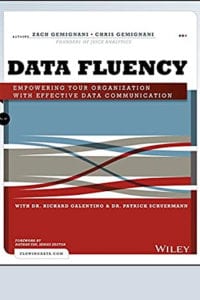
Data Fluency: Empowering Your Organization with Effective Data Communication
It’s a great tweet, “Go the last mile with your data so people can make better decisions.” There’s a book called 212: The Extra Degree and it’s all about water doesn’t start boiling until it hits 212 degrees. When it comes boiling, it creates steam and the steam could move the train engine, let’s say. Many of us get all the way to 211 degrees and then we dial down the heat. This analogy holds up going the last mile. If you’ve got all this time, money, effort, and you’re exhausted, and you’re like, “It’s good enough. We got the Excel chart, let them figure out how to make this mean something.” It’s that extra degree of effort that you’re bringing.
To go back to our combined origin story and talking to you about storytelling, it’s a skillset that a lot of people haven’t yet learned. They need to learn of combining both the understanding of the data, but then how do you connect that to your audience and to people. It’s a mix of skills there that combines understanding the psychology of your audience, what they do in their job, and what does it take for them to be more successful, which is a sales attitude. If you’re in sales, it’s instinctual to understand your audience and what makes them successful. If you’re in a reporting role or a data analyst or something that is not instinctual, it ties to data visualization, which we’re experts at of thinking about what is the best way to present data, and how do you make it intuitive? It ties to the structure of storytelling. A lot of what we think about at Juice is how do we take the concepts of storytelling and bring that into how you present data?
What you described that you are turning this data from the online school into an animated movie, you were taking data and turning it into an empathy tool, which is the key to storytelling and sales? I tell my clients all the time, “Put your empathy hat on. The better you can describe a problem, the better people think you have their solution.” There’s all of that storytelling journey of painting a picture of who, what, where, and when. This is the moment in time that you took and collected the data, and then here’s the problem we discovered.
If you are telling case stories, for example, you tell the solution and then the secret sauce that’s similar to that last mile. What most people don’t use when they’re telling stories whether it’s a case story, their own story of origin, or even an elevator pitch is what is life like after these changes have been made. When you’re telling that story of the online school and seeing the animated film, they then could have empathy for the students and knew what they needed to change to keep students from dropping out or to get the students to give them more referrals, something along those lines.
You touched on a couple of things that are important themes in data storytelling. One is setting those stakes is something that people don’t do. A great story has high stakes. This is why every action movie is about how do we save the world? They’re always cranking up the stakes, but whatever story you’re telling has to matter to people. It has to connect to why is this important to you. This is something that often you’re never going to see in a traditional dashboard or some Excel report. No one’s setting up why this matters, why it’s important, and why if you make that change, something good is going to happen. We do try to incorporate that into the data stories that we created. It’s setting that stage and those stakes, and showing what actions you take. If you take those actions, what the value is.
The other piece that I love to connect to storytelling is the specifics. Data has this nature to it that is an abstraction. Data is taking a bunch of things that are happening in real life and turning those into numbers. Often, we are rolling up, averaging, or summing up those numbers in a way. You get separated from the real thing that’s happening on the ground that you’re measuring. An event that’s related to that is the COVID pandemic. We’re always talking about the numbers and how big those numbers are, but those are real deaths. We talk about 180,000 deaths in the United States. Those are real people.
[bctt tweet=”Whatever story you’re telling has to matter to people; it has to connect with them.” username=”John_Livesay”]
The ability to combine both the big picture, the analytics and the numbers, but also be able to bring in the specifics that are way more likely to create those emotional connections that you’ve talked about. It’s hard to connect to a big number, but if you bring it to a person and you have a human face on something, that’s something where you start to build that bond with your audience and they start to feel what you’re expressing through the data. One of my favorite quotes is, “Specificity is the soul of narrative.” It’s by John Hodgman, another well-known podcaster. He likes to say, “When people tell stories, you want to bring in the specifics because that’s where you do connect with people.”
I work with people all the time when they’re telling a case story of that exposition. I said, “Was this last year, six months ago? Where was it? What city are we in?” Give your client a name. Don’t say, “My client or my customer.” Nobody wants to be thought of as a customer. You don’t want to be thought of as a vendor. If you want to warm things up, give this person a name, say where they work, describe their pain point in such a way that people can see themselves in the story. That’s where the magic happens is when that empathy comes in. Storytelling allows people to change behavior without being pushy because when we tell a good story visually and with some structure to your case stories, people see themselves in it.
Imagine you’re telling another online school or even a major university that had to go online in ways they never expected before and they’re struggling to try and figure out, “How do we justify our higher fees that we have for live classes?” That is much like I’ve had to do as a speaker. What value am I bringing to a virtual keynote that might make it even more impactful than in person? You have to think like that and have that story ready to go so that if you’re struggling to justify your prices as a Harvard or Pepperdine or whoever it is.
Imagine the journey of what this person’s life is like and get specific. If you look at the data, I know a lot of major universities have people from foreign countries coming here to become educated. If that’s not possible and they have to do it virtually, the more specific we get into one person’s journey, then it applies. It’s the same thing when I work with nonprofits. I go, “Don’t tell us about how many meals you deliver. Talk about one person’s story of why they needed a meal delivered in the first place and what would happen to them if they didn’t have the food coming.”
You can zoom out and be like, “That’s happening a thousand or a million times.” You can then multiply that out and it’s powerful if you can connect that stuff to a dollar figure, so people relate to that. Those are great places to start in the stories. One of the things that I’m curious about and that I’ve been surprised by is how much bringing data storytelling can be valuable in the sales process. While we work with lots of clients who are building data products to deliver value to their customers, the customers they already have, and had this data conversation with our customers.
There are many scenarios where it feels like bringing data into the sales process in a way that ties the storytelling can be powerful. It’s the combination of telling those compelling stories of the value of what your product delivers and being able to back that up with often interactive data so that you can have a customized story that creates that foundation of like, “This is a compelling message in our sales.” There’s also this foundation, a solidity to data that some people react to. I’m curious in your experience, how much bringing data have been valuable in the sales process?

212: The Extra Degree
The key mistake most people make when they’re selling is, they start with data. For example, one client was saying, “Our equipment makes surgeries go 30% faster. That’s what we’re opening with. Do you think that’s a good hook?” That’s data. I’m like, “There’s no story there.” I zoomed out and I said, “What is it? Paint the picture. What are they doing? Without your equipment, how long is the typical surgery?” They said, “It is 2.5 hours.” I said, “If we do the math, what’s 30% faster?” “Only 1.5 hours.” You could try and make a case for the doctors. They could do one more surgery and make so much more money, but a much more compelling story was, “Imagine how happy Dr. Higgins was at Long Beach Memorial using our equipment. He could go out to the patient’s family in the waiting room, where every minute is like an hour, and tell them an hour earlier than expected that their loved one did not have cancer.”
It’s the same data point, but it’s wide and that data point matter. That’s what you’re emphasizing.
The visuals that could go with that could be anything. Imagine this person’s telling that story and they have an image of a clock and every minute feels like an hour. If you’ve ever been in a waiting room waiting for a loved one to come out of surgery, you know that’s the truth. That shows empathy. Who you have in your stories? That’s the real secret that we bring to the party. It is the characters that a lot of people don’t even think about. They don’t think about the patient and the doctor. They hadn’t even considered telling a story of what the patient’s family was going through. The doctor then says, “That’s why I became a doctor, for those moments where I could give good news and earlier than expected makes me a hero.” When the salesperson tells that story to another potential doctor, that doctor sees themselves in that story.
It’s bringing humanity and empathy into the equation. I’m sure people in sales struggle with that case. I might argue it’s even more of a challenge in the data world where there’s this separation. People think of things like data and they often create this separation from the people who are on the other side of that data. It is often like, “Go ahead.”
You mentioned something about interactive data. Tell me more about what does that look like to people?
This is fundamental to what we do. We have this technology platform called Juicebox, which is a self-service tool for being able to build interactive data stories, which is a more compelling way of presenting data than traditional dashboards and reports. When we think about data stories, we’re not thinking about a static collection of slides that you might be familiar with a number of charts on it. We’re thinking about giving your audience the ability to navigate through the data in a guided and narrative-driven way. The solutions that we create with Juicebox allow the users of that data to walk through the data where we’re explaining what’s going on with the data, why it’s important, all the things we’ve touched on. We are giving them specific examples. We’re also giving them the power in that interactive data story to be able to choose things that matter to them.
[bctt tweet=”When people tell stories, you want to bring in the specifics because that’s where you really do connect with them.” username=”John_Livesay”]
As the user, everyone who comes to a report or data is going to have their own needs or things that they care about. They’re coming from the perspective of, “I care about this product or this region or these types of customers.” They have their own needs. You’re trying to meet them in a place where you’re telling this guided story through the data, but the user is also empowered in that process to be able to select where they care about. The data is going to change as they select things or as they explore the data. It makes the story relevant to that audience member, which is important. You want people to see themselves in the data or see what’s most relevant to them so that they can understand what they should do about it.
CFO cares about something different than the CMO would care about.
We can argue their stories, there will often be a number of different metrics you’re looking at that are the key metrics for your organization, but a CFO is going to want to drill in on cost-related things. A CMO is going to be worried about leads that are being generated or revenue side things.
“What if we raise our price by X percent and keep selling the same? What would that do?”
You’re mixing. In our data world, we want to be able to have this balance of letting someone explore and customize based on their needs, but in a way that it doesn’t require them to be a data analyst or to be super familiar with the data. It’s a challenging balance to find, but it’s what people want when they’re working with data.
We all are familiar with Excel sheets, which allow you to change one variable and see what the differences are. If you don’t have to be the first person that manually goes in and changes it and then still looks at a chart, but can click to change one thing and then see the visuals of sales going up or down. That’s to me is more engaging than considering looking at an Excel spreadsheet, which is you’re solving a problem.

Data Fluency: Almost every organization you run into struggles with the fact that they’ve collected a lot of data, but they aren’t great at presenting and sharing it in an impactful and useful way to the people who should be looking at that data.
If you send someone an Excel spreadsheet, the chances of them opening it up and wanting to get in there and deal with it are a little low. Making your stories attractive, intuitive, and easy to get started with is important. We’re focused on the design and the user experience so that we can give people data in ways that feel a lot more like the mobile apps that we work with or the modern website experiences we have, rather than feeling like, “I’m opening up a spreadsheet. I got to go figure this out.” Attention spans are short.
You’re like a Sherpa. If you look at the data of climbing Mount Everest, you’re trying to tackle it, get up there by yourself, and you get frustrated and maybe lost even. If you’re the Sherpa who’s been up this mountain many times and knows the shortcuts, you guide them through this data. It almost reminds me of some video games that let you create your own ending. If you click on this, then that completely changes how the story ends.
To go back, I will often think about those old Choose Your Own Adventure books. A data story can be a little different than a traditional narrative that has a clear sequence and gets you to a single ending. In an interactive data story, there’s an opportunity for the reader to decide what they care about and to make some choices in the paths. It should be as compelling as a regular story, but you’re giving that user some amount of autonomy and control of what they’re seeing.
What’s where the title of your book comes from. Data is fluent. There’s a fluidity to it, as well as it being a language. Are you fluent in data as you are fluent in Spanish or something? It’s a clever play on words of thinking of it not being the solid piece of ice, going back to the 212-degree thing, that can become steam and move things if you have fluidity and understand that language in a way that encompasses visuals.
We wrote that book because we saw a lot of organizations gathered a lot of data. They’re trying to figure out how they get value out of that data. They want people in their organization to be data-driven. We hear this a lot, but organizations struggle with how to make that happen. There are a lot of skills and changes in mindset that need to occur to get to this point where you’re using that data. You’re incorporating it into how you do your work, how you make decisions, and how you talk to each other. It’s language-based. You’re trying to teach people both the language of data, but also how to express yourself using data. Talking about it with you, it’s not just about data.
People need to understand that we can talk about data-driven, but that shouldn’t mean that the data tells me something and therefore I do something. Humans are an important part of this. It’s not dictatorial. We don’t want that. We all know where that ends up. It’s the combination of being able to incorporate data into how you think and how you have conversations with clients and so forth, but bringing that human aspect into it. You are recognizing that people are driven by emotion and you need to connect to what’s important to people. All that stuff needs to be in the mix. It’s the combination and it’s powerful.
[bctt tweet=”The magic happens when empathy comes in, and storytelling allows people to get others to change behavior without being pushy.” username=”John_Livesay”]
How did you come up with the name of your company and the product?
Juice Analytics is the name of that company. When Chris and I were thinking about naming the company, we were thinking about how do you extract value from data. We had this concept of extraction and squeezing things out of it, creating the essence of it. That’s how we got to the word juice and we were attacked on analytics that people think we’re making juice. We get a lot of emails for people wanting to sell us juicing equipment.
It sharpens a lot of strange SEO outcomes, I’m sure.
The product itself that we are selling as a self-service platform is called Juicebox. That was a natural extension of taking all of our best practices and thinking about how do you tell data stories and putting that in a box so other people could use it.
Who would you say is your ideal client? Who needs this platform that when they find it, they’re happy?
It’s a broad range. There are a lot of people in organizations. I’ll give you a few examples of people who are working with data. They have an important audience that they’re trying to influence with that data and yet, they struggle with bridging that last mile. Marketing professionals and marketing analysts who are running campaigns and measuring their performance of those campaigns, the most important thing that they need to do at the end is to define what has been the impact of that campaign and how do we improve it next time. Packaging that up, extracting the message, and communicating that to the people who have the budget is critical. Whether that’s a marketing agency or that’s an internal person, that step of showing the value that you delivered and how you can do better or tune it is a common use case for us.
Nonprofits who want to tell their story of what they’re doing is delivering an impact. Sometimes, that’s done in a public way. They want to put it on their website and show that they’ve served an audience and it’s delivering a lot of value. That’s another example. Anyone who’s done consultants and people who do research, done a survey, or gathered a bunch of data, they now need to show the results in a way that is going to demonstrate the value of what they’ve done, and the messages and the conclusions that they’ve reached. We get deep into this because we talked a lot to organizations. It’s hard not to find organizations and people who at some point, don’t need to take some data that they have and have a much better way of being able to deliver that so that they can reach the audiences who should be looking at that data.
The company name is Juice Analytics and the website is JuiceAnalytics.com. The book that Zach co-authored is called Data Fluency. Do you have any last thoughts or quotes that you want to share with us?
I don’t have a quote, but I do appreciate your emphasis on creating those emotional stories. I hope that we continue to work together to learn more about that. That’s a piece that we would love to incorporate even more into how data analysts, and people working with data can make the connection to people and change their minds. It’s been a real pleasure.
Thanks for coming to the show, Zach, and sharing your brilliance.
Important Links
- Juice Analytics
- Data Fluency
- 212: The Extra Degree
- Choose Your Own Adventure
- Juicebox
- Better Selling Through Storytelling Method Online Course
Wanna Host Your Own Podcast?
Click here to see how my friends at Podetize can help
Purchase John’s new book
John Livesay, The Pitch Whisperer
Share The Show
Did you enjoy the show? I’d love it if you subscribed today and left us a 5-star review!
- Click this link
- Click on the ‘Subscribe’ button below the artwork
- Go to the ‘Ratings and Reviews’ section
- Click on ‘Write a Review’
Love the show? Subscribe, rate, review, and share!
Join The Successful Pitch community today:
- JohnLivesay.com
- John Livesay Facebook
- John Livesay Twitter
- John Livesay LinkedIn
- John Livesay YouTube
Compete Every Day: What You Can Do Differently With Jake Thompson
Posted by John Livesay in podcast | 0 comments

There’s so much that goes into actually becoming competitive—in sports, in business, throughout your industry. But the best place to begin is by sorting yourself out, and making sure you’re ready to get where you want to go. Jake Thompson is the Founder and Chief Encouragement Officer at Compete Every Day, a lifestyle brand that helps leaders stay motivated, and reach their career, fitness, and life goals. Jake sits down with John Livesay, and gets into the nitty-gritty of what makes you a more competitive individual, and what makes your business ultimately more competitive. Hint: It’s all in you, all the time.
—
Listen to the podcast here
Compete Every Day: What You Can Do Differently With Jake Thompson
Our guest is Jake Thompson. Jake teaches people how to compete every day so they can reach their full potential. He’s got experience as an athlete, an entrepreneur and a speaker, and he’s learned how to change a few choices that everybody makes so that they can be closer to the career, health and life that they were created to reach. The world’s most successful display of a specific mindset and the five traits of a winning competitor is what allows everybody to overcome the challenges we all face in life. He’s got book called Compete Every Day, the seven things leaders do differently so that they can win both in their career and in their life. Jake, welcome to the show.
John, thanks for having me. I’m excited to be here.
I want to ask you like I do most of my guests to take us on your own story of origin. You can go back as far as childhood, high school, college, whatever it was, how did you get to be you?
I grew up in a small town out in East Texas, Piney Woods. For anyone that’s ever seen or are familiar with Friday Night Lights, that is Texas small-town football through and through. We’re about 12,000 to 13,000 people. The town shuts down and packs into the stadiums on Friday nights. I grew up with a massive love for football, sports and competition. I left East Texas and came to the Dallas-Fort Worth Metroplex for college fully with the intention of being a sports agent. I was passionate about staying in that career. It was a competitive industry. I found love working at an internship for a few years. I got my Master’s degree. Then getting into that space and spending a few years in there, I realized that wasn’t what I wanted to do with the rest of my life.
I read a book about the importance of story, ironically enough and how the actions we take, the things that we do, tell others what we believe not only about ourselves, but about the world around us. If we’re constantly pursuing things that only take care of ourselves, that are only padding our own bank account, if we’re not doing anything to make impacts beyond us, then we’re selling ourselves short. We’re selling our story short. I was challenged at that point in my early twenties to evaluate what I had been focused on, what I was telling everyone was important versus how my actions were showing others what was important.
I started going down this path that led me to the idea of Compete Every Day and this brand has started. I came up with the brand message at the end of 2010 while I was doing marketing consulting with a number of companies in the Dallas-Fort Worth area. Eventually, it led me to putting some money into a few boxes of t-shirts and tank tops and selling them out of the back of my car back in 2011 as a side hustle with the one message that, “I believe you’ve got what it takes to show up, compete against your own previous best and I want to remind you of that and motivate you to keep doing that every day.”

Becoming Competitive: You burn yourself out and exhaust your energy by focusing on things outside your control.
There are a couple of things I want to click on that. First of all, this concept of only competing with yourself versus other people. I used to be a competitive swimmer. They’d line you up in heats and you have this race and I remember there’s always a guy that beat me. In breaststroke, you pull your head up out of the water and you take a breath and put it back down and then they measure your time to the thousandth of a second at the touchpads, and I beat him by less than a second. I said, “How did that happen?” They said, “You stay focused on the wall and he turned his head to the right to see if he was ahead, and that half a second of looking caused you to win.” I went, “I wonder if that’s true in life and in business, staying focused on our own progress.” It’s easy for us to start comparing ourselves to other speakers, other companies, “What are they doing? Maybe I should change.” Let’s talk about your insights on how you help people take those lessons from athletics, into the business world where we’re not competing with anybody else but ourselves.
That example is beautiful. I love that. If you haven’t seen that swimming example as well, there’s a wonderful picture of Michael Phelps in one of his Olympic Trials swimming. You see the competitor looking into the lane to his left and Phelps ended up winning that race beggarly and they show the importance of comparison. For all of us, it’s easy, all around us. There are other speakers, companies, and people doing what we’re doing or what we want to do. We need to look everywhere. We need to do exactly what they’re doing. In all reality, what that causes us to do is be like a track star swimmer who’s facing and going toward the finish line straight ahead. Anytime you turn your shoulders or your head, turn your focus off, you slow down. Your body is not designed to go at peak speed forward if you’re looking at somewhere else or if you’re twisted. The same applies to our life, we burn ourselves out and exhaust our energy, honestly, by focusing on things outside of our control.
[bctt tweet=”Being responsive is a competitive advantage.” username=”John_Livesay”]
A lot of my work is talking to people about how do we not only turn the focus inward? What do we control? Every day we control our actions, attitudes and efforts. Those three things regardless of what life has our attitudes, actions, and efforts are always up to us. It’s our choice every day, what attitude we’re going to have. It’s our choice what efforts we’re going to give and it’s our choice what actions we take or we don’t take. For us, once we start to understand it, then we look at what we’re going to do. One of the examples I love using with sales teams is this idea of three yards and a cloud of dust. If you’re familiar with football, it’s the old 1920s, ‘30s South football before they ever threw the ball. A snap and run three yards downfield. You can go from your own one yard line all the way down the field to the opposite end zone and score by doing that. However, it’s not sexy.
No one is putting you on SportsCenter for highlight reels because you didn’t make this crazy, amazing play. However, that’s ultimately what success is. It’s putting your head down, it’s doing one little thing every single day consistently moving that ball that gets us down the field toward our goals. You can’t do that if you’re looking everywhere else. What are we controlling every day? What’s the 1 to 3 things that we’re doing to advance that ball that are on us? We’re not waiting on someone else to make a decision. In sales, this is a perfect example of prospecting, putting out content, contacting people. It takes a second person to make that sale but it’s 100% on you, how many much outreaches you’re doing, how many things you’re creating, how much help and stories are you telling the world to help drive inbound sales as much as you are doing the outbound.
I like what you said there about, “Let’s focus on what we can control, not what we can’t control.” You and I are both keynote speakers. We get typically called in, they like our video, our agent has got us an interview, we do our best to tell them what we’re going to do and then we wait. Anybody who’s been in sales, you go in, you make a presentation, they have other people they have to see, there are a lot of people that have to make it. Their timeframe is different than our timeframe, 9 times out of 10. Getting that job, that sale is our number one priority and then making a decision is not their number one priority. I would love to hear what you do to follow up without being pesty or pedantic like, “Checking in to see if you’ve made a decision.” As if they forgot to tell you one way or the other. If we could give that to the readers, that awareness of, “I can’t control when they make the decision, but how I interact with them, I can control.”
You 100% can. One of the things that I’ve learned or trained myself in this area is the idea of a quick response. If someone were to immediately reach out to you about a gig, sometimes you’re like, “I’m not going to pick up the phone and call them right now or email them back right now, that’s going to make me look I’m desperate.” I’ve switched that thinking to where you can say, “I’m effective and I’m going to be efficient in my time. If you’ve reached out on your computer, I want to jump on this opportunity to help you.” It’s getting that limiting belief out.
From a follow-up, when we get off the phone immediately, the first thing I’m going to do is send an email with a recap of everything we talked about and a personalized video. I’m going to pull out my phone, shoot a quick video talking to you. Especially as a speaker, someone that’s in sales, I want to add some energy, some color, some commentary to the conversation we had on the phone by showing you my face, by showing how I’m going to present to you in person, that I’m excited about it and feel like, “I’ve got this cool video in an email that is personalized, it’s not some standard thing.” It’s going to help you tell that story a little bit better about what you do and how you stand out.
I’ll set a follow-up. When we’re on the phone I’m going to ask, “When would be a great time on your timeline to touch base with you?” You’re going to use like, “Give me that ballpark.” What I’ll do is I’ll shoot them a note on the day, “Following up as promised on this date. I’m going to touch base with you at this point.” If I haven’t heard back, it’s usually about three days later, I’m going to give them a call at that point. I’m going from email, touching base as I promised, following up with a phone call that’s going to allow us to have that conversation on your timeline. Then if we need to, let’s hop on another call, video call and whatnot.
[bctt tweet=”What is the best attitude, action and effort?” username=”John_Livesay”]
For me, it’s always that personalized touch of, “Let’s hop on a call and then let me send you a video with that email follow up.” If it’s someone of, “The timing is not right now.” For us, it’s a timing game on speaking and it maybe 6 months or 8 months from now before we’re ready or perhaps in a month or two, it’s already off their plate, it still may be our top priority but it’s not theirs. I’m going to send them a little packet in the mail, “Here’s some information about one of my programs. Here’s a note.”
What’s always helpful is if you’re someone that will go above and beyond and you’ll find these people on Facebook, on LinkedIn and Instagram and what they’re talking about, what they’re doing, then you have a talking point. If you’re a big sports fan then I can say, “Congrats, your team won. Their state rival wanted to send you this information so your team is set up to win the same way this year.” Something that’s not pestering them but you’ve also touched them in multiple different ways to tell that story, not only, “Here is how I can help you, here’s how I talk about these certain things, teach these certain things. I want you to see how I behave in our interactions that reinforce I’m someone that’s accountable, gritty, persistent, all the same things I want to teach your company how to behave.”
There are several things you said there that are great. In fact, we’re going to tweet this out, “Being responsive is a competitive advantage.” Unlike in the dating world where you might be seen as needy, “I’ll call you back after the date three times,” it’s the opposite here, and that’s fantastic. Also, I like the concept of personalizing something. I always tell people, act as if you already have the job. When I was up for a speaking job at Redfin, which is a real estate company, I thought, “I’m going to call and pretend I’m selling my place and see how they treat me. I’m going to call a competitor and see how I get treated before the interview.” They went, “What did you find out?” You say, “If I do that much preparation for the interview, imagine how much I’ll do if you pick me.” You connect those dots for people.
The other thing you said that I love is, “I saw your team won, congratulations. Let’s help your team and business.” You connect those emotional dots of winning, which is what your brand is all about. I’ve done the same thing, if I’m going to be speaking to a client, I’ll look them up on LinkedIn and say, “I see you worked in San Francisco, China, and now you’re in Europe. That’s an impressive career.” Some little thing that lets them know that you’ve taken a minute to know something about them personally is strong.
How many invitations do we get on LinkedIn or by email of people that’s a standard copy and paste, there’s no awareness of what we do? I laugh because the company name is Compete Every Day and I get all of this email about, “We own gyms and fitness professionals.” They’re selling me equipment if you’re a gym owner, and I’m like, “You didn’t even look at my profile.” A little bit of research, even the tiniest bit helps you stand out and tell the story that you’re invested in this process, this relationship. It’s not a, “Wham bam, thank you, ma’am. Quick, let me get you sold and out the door. Next person up.” You care about continuing on that story.

Becoming Competitive: Great players in sports aren’t so wrapped up in their failure. They immediately decide their next play.
How did you come up with the name, Compete Every Day, for your book and website?
The brand, ironically, took a few different iterations. I always was a competitive guy. I was a smaller kid in sports. For me, a competition was the opportunity to prove I belonged, more than anything I wanted to show I could outwork you and outsmart you, no matter what your talent was. The older I got, the more I started to realize the comparison game we all play is exhausting. There’s always someone ahead of you. There’s always someone behind you. If you’re constantly competing against everyone else, not only you’re going to burn yourself out, but you’re going to be lost because your identity is tied up in every single one of those head to heads, versus saying, “Who was I yesterday? How am I going to show up better in my work today? How am I going to show up more focused, more present with my coworkers, my family? How can I compete?”
[bctt tweet=”Your attitudes, actions, and your efforts are always up to you.” username=”John_Livesay”]
When I started exploring this path, it was the idea of looking at all areas of your life, your health, your relationships, and your career. What would happen if someone were to show up and compete to be their best in every single area? Honestly, I laughed, the first iteration of the company I called Stacked and I was like, “That’s a terrible name.” It had the core philosophies of the idea of stacking them on top of each other and pursuing greatness. Genuinely, I was on a ski trip with two friends and tinkering with designs and sketching things and I said, “What about Compete Every Day?” Both guys were like, “That is you. That fits your personality. You’re the most competitive driven person we know, run with it.” That was December of 2010. It took 6 to 7 months to try to play with things to figure out, what is the best fit for this message?
You referenced Michael Phelps and when I was selling advertising, I had Speedo as a client. They invited him to an event because he was on their payroll as a spokesperson and I got to ask him. As a former competitive swimmer, you can imagine what a thrill that was as an athlete yourself, “I’ve got to meet Tom Brady or something.” What would you ask them? I said, “Everyone says you’re a great swimmer because of your physique. You’ve got these big lungs and your feet are like fins. I bet there’s something else.” He said, “Yes. My coach asked me early on if I was willing to work out on Sundays and I said yes. We’ve got 52 more workouts in the near competition because everybody takes Sundays off.” I thought of that story for you when I saw your brand name, Compete Every Day, because I went, “Most people don’t think of competing. We certainly take Sundays off.” I thought, “What a great little nugget of that for you and your world of athletes.” Is there a professional athlete that you have met or want to meet? What would you ask them if you haven’t met them yet?
Probably, I have a laundry list that I would want to meet. Michael Jordan, obviously, being one of the greatest. I’m fascinated by the stories I’ve heard about him. We’ve all heard the story that he was cut from his high school varsity, and then everybody’s like, “He’s just Michael Jordan. He’s the greatest player ever.” He wasn’t always, he was a good player. In college, he did extra work. The Carol Dweck mindset profiles that if he didn’t follow shots to the basket during games, he would force himself to run sprints after the game, do extra practice. When he got to the NBA, he still was not the greatest player of all time. He was good. It was only by going through the adversity of the Detroit Pistons three years in a row, that he changed his workout routine. He changed how he trained, how he bulked up, how he played the game, encouraged more of his teammates to step up their game from a mental perspective and then went on the run of two different three-peat.
[bctt tweet=”The difference between nervousness and excitement is your preparation. ” username=”John_Livesay”]
He would be someone I would be fascinated to learn how he approached the idea of his habits. What did he see? How did he create the habits he created? What held him accountable to it? He has one of the greatest work ethic drives that we’ve ever seen and it was too much for a lot of people to deal with. I’m curious how he built those. What fires stoked him to develop the right habits and then how he’s stuck to it. A lot of us have habits we want to start. We have things we consistently want to do, but we don’t have that resolve to stick with it for years.
Speak to the level of lessons you learn from sports as it relates to confidence in business. For example, if you’re a baseball pitcher, you’re not going to be perfect and yet do you lose your confidence for the next pitch? They don’t say, “No. I remember who I am.” What lessons have you learned in athletics that can help people with their confidence in business?
There are two areas to that question. The first is, “What’s the next play?” That’s the terminology I use with athletes of asking, “What’s the next play?” There is going to be a bad play that happens in sports, you’re going to throw an interception, you’re going to get a home run hit off of you, just the same as you’re probably going to give a presentation. That sucks. You may lose a deal. Something bad is going to happen. At that point, it’s behind you, and great players in sports aren’t wrapped up on, “I do an interception. I missed the shot.” They’re taken out of the moment. If they’re like, “That happened. What did I learn? What am I going to do differently? What’s the next play?”
For us in life, it’s an idea of getting out of our own head. Most of us, like we talked about when we’re swimming, if we look into the left and the right at everyone else we slow down. The same applies when you’re trying to look behind you at what has already happened in the past, you slow down, you’re taken out of the present. For us, something bad is going to happen but at that moment, you have to say, “What’s the lesson and what’s the next play?” Get your eyes back to the present moment. The second thing is the difference between nervousness and excitement is your preparation. Simply done is preparation. The best way to prepare is by getting your reps set.
You build confidence one choice at a time, one day at a time. It’s like getting your reps. A pitcher is going to throw thousands and thousands of fastballs throughout the course of their career. A quarterback is going to make many passes. All of these basic drills that we see athletes do, they’ve done them time and time again, which makes them good at them in the middle of the game. The same, a lot of us go into sales meetings and presentations and we’re like, “We’re going to wing it.” What that does is it creates more nervousness in us, we’re trying to pull from things and our presentation isn’t as sharp.
[bctt tweet=”The preparation allows you the opportunity to improve.” username=”John_Livesay”]
If we put in the reps of preparing, just like we do when we speak, I had someone talk to me about the presentation, she’s like, “That looked natural.” I’m like, “That 45-minute talk, I’ve given twenty hours’ worth in the last year. All of those little bits, I’ve told those for hours and hours. That’s 60, 70 hours’ worth of content that you saw. The reason I’m able to do that is because I’ve done all the prep, I’ve got all the rep.” The only way we get better at work is by getting our reps in. Most of us are concerned about what we’re going to look like in the beginning. I don’t want to look like, “I’m at this certain level and my company, I can’t look like I don’t know what I’m doing or I’m trying to learn something new. That would look bad on me.” No. Successful people are saying, “I don’t care if I look like a rookie. I don’t care if I look a little bit foolish trying something new. I want to get better.”
Athletes, actors, everyone practices and rehearses and yet sometimes salespeople who’ve been doing it for a while, “I don’t need to practice my presentation.” It’s not going to be customized in and they might stumble and they might confuse people, they aren’t doing the work, especially when the stakes are high and there’s a big potential win. It shows when people have put the preparation in it and when they haven’t.
The preparation allows you the opportunity to improve in the moment. If you think about football, when a play breaks down and a quarterback has to scramble and improvise on the fly, they still know where everybody is on the field. They may have to change where they are, where they’re rolling to, but they still know. When you get up to do a talk or you give a presentation, you know all your story, you know your bit, but then something can happen in the audience, or the client does something and you’re like, “That’s a perfect analogy for this.” You can use that in the moment to tie it in and still continue to flow through the conversation because you’ve rehearsed, you have those reps and you’re well-prepared. Otherwise, if you saw that, you would see it and dismiss it and you would lose the opportunity to tie something in immediately on hand and on purpose.

Becoming Competitive: Grit is the ability to really go get your goals, but more than anything it’s the decision you’re going to put forth 100% effort every single day regardless.
Good actors will do that all the time, they’ve done all that rehearsal and then when the cameras are rolling, there’s a moment where they say something or react something that’s authentic because they’ve done all the prep. Arthur Ashe, the famous tennis pro said, “The key to success is confidence and the key to confidence is preparation.” It’s full circle back to you, Jake. I love your message and what you’re saying and how you let us apply it in our everyday lives. You talked a little bit about grit and I know that’s a big foundation of your talk and your book. Tell us what we can do if we don’t think of ourselves as someone who has grit and how do you define it?
Angela Duckworth does a phenomenal job in her book of defining grit as the ability to pursue goals with relentless inner fire. It’s that propensity to pursue it, that no matter how long it takes, how hard the road is, you’re willing to endure. Duckworth does a good job in her book of showing that talent will factor into success, there’s talent in all of us. You put effort and how much effort you put forth is twice as important, which is why there are people in sales that are incredibly talented communicators and storytellers that are lapped by people with less talent, less natural communicative abilities, but far greater effort. They’re putting in the effort to improve their communication, how they tell their story, how they prepare for their presentations. Effort is a big deal.
For me, grit is the ability to get your goals, but more than anything, it’s the decision that you’re going to put forth 100% effort every single day regardless of how you feel from day one until the day you get there. What that looks like from day-to-day is going to vary, but it’s going to go back to you maintain your grit when you’re focusing on what you control which is today, my attitude, actions, and effort. I’m not worried about tomorrow. I’m not worried about six months from now. I’m only focused on what I’m doing today.
We all get demotivated. We all burn out when we start saying, “I’ve been working on prospects for a month, two months, I’m not getting the leads.” What you don’t see is you’ve been planning some good seeds that are taking more time to develop. A lot of people are going to quit right then instead of saying, “What have I learned from the process? How do I keep planting seeds this year? How do I keep cultivating those relationships so when the opportunity arrives, I’m ready for it?”
Grit is relentless inner fire. You have one of those comments on the t-shirts that you sell on Compete Every Day, outwork your talent. To me, that’s what you define grit as.
It doesn’t matter how good it is that you’re born with, what talents and natural abilities you’re born with, what matters is what you do with them and what you choose to build. That’s a core tenet. One of the chapters of the book is all-around effort and how successful people I’ve seen aren’t as reliant on what they’re born with but continually build it. Even if they were born with unworldly talent, they still choose to outwork it, which has made them legendary in their field.
It’s been fascinating and inspiring. I can see why you’re a great speaker. The book, I can’t wait to get my hands on Compete Every Day. Any last thought or quote you want to leave us with, Jake?
The biggest one that I always go back to is the fact that our careers and our lives are worth competing for. If you’ll be someone that would commit to yourself, not anyone else but just to yourself, to start showing up every day doing the little things and writing the story that you want for your life, success awaits you. It may not be immediate, it may not be a year from now, two years from now but over time, it will start to develop the story that you leave behind on this earth is the one that matters and the one that you wanted.
What a great place to end. Thanks again.
Thanks for having me.
Important Links
- Jake Thompson
- Compete Every Day
- Angela Duckworth
- Better Selling Through Storytelling Method Online Course
Wanna Host Your Own Podcast?
Click here to see how my friends at Podetize can help
Purchase John’s new book
John Livesay, The Pitch Whisperer
Share The Show
Did you enjoy the show? I’d love it if you subscribed today and left us a 5-star review!
- Click this link
- Click on the ‘Subscribe’ button below the artwork
- Go to the ‘Ratings and Reviews’ section
- Click on ‘Write a Review’
Love the show? Subscribe, rate, review, and share!
Join The Successful Pitch community today:
- JohnLivesay.com
- John Livesay Facebook
- John Livesay Twitter
- John Livesay LinkedIn
- John Livesay YouTube