

Just Say Yes With Jim Palmer
Posted by John Livesay in podcast | 0 comments

“Just say yes!” is Jim Palmer‘s battle cry. Get ready as the internationally acclaimed business coach shares valuable insights into building a business. John Livesay interviews Jim as he lets us have a look at how you can build your dream business. Jim also gives us a glimpse of his work mindset and why you need to take action. Tune in and learn more from a master of the craft and build your dream today.
—
Listen to the podcast here
Just Say Yes With Jim Palmer
Our guest is Jim Palmer and he talks about how the fear of perfection kills people launching their business idea. He gives us some insights as to what is behind this fear of perfection and how to overcome it. We also talk about his book Just Say Yes and Stick Like Glue, which cannot only apply to keeping customers but also keeping employees. Enjoy the episode.
—
Our guest is Captain Jim Palmer, who is the Founder and Creator of the Dream Business Mastermind and Coaching Program, the creator of the Dream Business Academy and the host of the Dream Business Radio, a weekly podcast based on his unique brand of smart marketing and Dream Business building strategies. His other business includes No Hassle Newsletters, Success Advantage Publishing and How to Sell from the Stage Like a Pro. He’s also the developer of the Cashflow Conversation Code as well as the acclaimed author of several books. In 2016 after raising four kids and leading his predictable life, he and Stephanie sold their home in Philly and live full-time and travel on their yacht called the Floating Home. Welcome to the show, Jim.
John, how are you doing? Good to see you and hear from you again.
Likewise. What a little adventure and creative third act you have created. I love it, and especially during a pandemic, I imagine there were a lot of advantages to that.
We were in Cocoa Beach in March 2020. Stephanie and I used to be by ourselves unless we wanted to go out and mingle on the docks or meet other people, but our life did not change that much. Other than the town that we were staying in, the marina was void of anything. If you remember it, it was a ghost town. It was a good situation because we were already used to being together 24/7 in a small space.
Some people were in a small home or apartment and had not planned on having to be there 24/7, but you had already planned your life in a space that did not require a lot of changing of location or trying to make things work because you already had set it up.
You mentioned a small adventure. We called it our big adventure. When we sold the house, we bought this boat, intending to do this for one year to go do something crazy. We live the typical, safe, predictable life like, “Let’s do something adventurous and exciting.” We moved on the boat. About six months in, we looked at each other and go, “This is way too much fun.” This is the fifth time that we have traveled down the coast from the Chesapeake Bay. We are in the Keys as you and I are talking.
It’s Gilligan’s Island, in a good way.

Just Say Yes: When you grow a business, you’ve got to be all in.
We are still on top of the water. We did not have any holes in the boat.
Why don’t you take us back to your story of origin? You can go back to childhood or college, wherever you want to start, when you started thinking, “I’m good at helping businesses grow or I want to get into the business world.” Any little nuggets that you could point to as the starting point of all this.
When you start getting a little older, you start looking backward a little more than forward. It’s amazing the clarity you have. Amongst the different jobs I had, I was the Head of Marketing for a training company. I spent ten years helping to grow a franchise. I was the lead trainer and the main support person for these brand new franchise owners, which is very much like I do, helping business owners market and grow their business, but who knew. It was July of 2000. My position was eliminated with that company and I thought, “I’m going to go get another job.” I have always worked for entrepreneurs. I’m very entrepreneurial.
I knew I would probably have my business someday, but Stephanie and I have four children. It never seemed to be the right time to make that leap. God had other plans because he made it like, “There’s no job here. Start a business.” One year into my what was then almost a year and a half of unemployment, I got cancer. It was a whole kerfluffle of circumstances that said, “Once you reach rock bottom, there’s only one way you can go in that’s up.” I started my first business and was very excited. I was a business owner. I had my cards that said, “President of my corporation.” It took me a full year to get my first paying customer. I did some part-time work.
That took off. I grew it to about $300,000 in five years and then I learned about internet marketing. That’s when somebody introduced me to Dan Kennedy and the whole GKIC world. I started learning direct response copywriting. I started my first internet company called No Hassle Newsletters and we grew that about 1,200 small business owners in 9 countries. It was a monthly membership where I created content and done-for-you newsletter templates.
I created a mail program so that we could print their newsletters. I started writing books, training programs and Success Advantage Publishing. We have published about 50 books for my books and my clients. We help my coaching clients get their books done. When we bought this boat, that was a decision I made. I did not want to work five days a week anymore. I restructured my schedule. I do coaching with my clients on Tuesday, Wednesday, Thursday and then Stephanie and I wish we could travel Friday through Monday. We’ve got to be at a Marina where we have some decent Wi-Fi and then if we want, we can travel again or do whatever we want.
Is there a common mistake you see a lot of entrepreneurs making that prevents them from growing their business? Are they wearing too many hats or is it like, “I read your great blog about all the what-ifs that we can what if ourselves in all kinds of horror stories?”
It’s all of these things like the what-if fear of perfection. Perfectionism is a big business killer. People don’t want to launch until it’s perfect. That all stems from not wanting to be criticized. As I say, “The biggest battle you will ever face as an entrepreneur is right between your ears and having the courage to play, win and not simply play, not to lose.”
[bctt tweet=”Stick Like Glue. ” username=”John_Livesay”]
A lot of the folks that I helped are not 22, starting full of pitch vinegar expression, on their second career, might have a home or had some responsibilities. Some of them would say something like, “I want to grow a business, but I don’t want to disturb what I have here.” When you grow a business, you have got to be all in. Whether that’s in marketing, free Facebook posts, LinkedIn articles, working with a coach or joining a mastermind, whatever that is, the people who grow the fastest in most cases, the highest are those that go through the fences every day.
I love this line that you gave us. “Fear of perfection kills launches.” Let’s double click on what you said. What’s behind most people’s fear of perfection?
Nobody’s perfect. I became familiar with this at a real gut level because I have written 6 books and my first book took 18 months. In reality, it took about under 1 year to write but it took me about 6 or 7 months to get the courage to publish it because then everybody would find out how challenged I am with the English language, what blew by him and my name is on the cover. There was a lot of fear about being criticized because who am I to be an author?
I went through that myself when I wrote my first book. I realized that negative self-talk of, “Who am I to be an author or a speaker,” can trigger imposter syndrome. Do you see that as something you help your clients with?
Yes. It’s interesting. A lot of my clients are in the 6-figure to multiple 6-figure ranges. The largest guy that I helped start a coaching program was doing $34 million. He had a very large business and wanted to do events. I used to put on events called Dream Business Academy. He wanted to do that. What I learned from working with startups, people in that mid-six-figure range, and him, everybody has imposter syndrome. Nobody feels good enough. He even said to me, which helps cement my belief that imposter syndrome is real, “I never finished college.” It almost feels like you are going to be found out that you are not all that your marketing says you are.
It is a real thing. As far as perfection, one of the things that helped me, you said when you wrote your first book, you were concerned as well, was that I was so afraid somebody was going to find an error or a mistake. I must have proofread that thing 500 times. Of course, me proofreading it does not guarantee anything. Somebody did reach out in 60 days. This was before on demand. We had to order 3,000 books or something like that. That’s when you had to print the books in 2009.
Somebody said, “There’s an error on page 34. You have a dangling participle.” I’m like, “What is a dangling participle? I have no clue.” I sat in my chair, reading this email. My heart was probably racing and my palms were sweating like, “I knew this was going to happen.” I responded and said, “Thank you for letting me know. I’m going to tell our editing team and we will fix it for the next printing.” I hit a comment. I said, “How did you like the book?”
This guy, who pointed out my dangling participle loved my book. “I know why you need a newsletter, the type of content to use, the ratio of content to pictures and paper to use.” He loved my book. Thankfully, I was smart enough to recognize that my imperfect book was getting customers for me and providing. What I tell my clients when they struggle with this is, “You make a decision. You choose to be judged on the quality of the content, the training and the service you provide and not the imperfect way in which you provide it because it will always be imperfect.”

Just Say Yes: Choose to be judged on the quality of the content, training, and service you provide and not the imperfect way in which you provide it because it will always be imperfect.
For anyone who is working on a book, I have learned a valuable lesson around proofing, which is to record the Audible of the book before it goes to print because you will probably find typos that you and your copy editors missed when you read it out loud. My book The Sale Is in the Tale is 40,000 words. That took four 90-minute sessions to read that, which you would not normally do to prove a book, but if you know it’s being recorded for Audible, then you go, “Wait a minute. There’s a typo or that does not make sense. How is it that nobody caught that?” Hopefully, that’s a little nugget for everybody.
Let’s go to your book Just Say Yes. This concept of not letting the fear of perfection or criticism. I can’t circle that and underline that enough for everybody. I hear a lot of people talk about the fear of perfection, but I don’t think anyone’s dug down to where you were like, “What’s behind that not? Can I tolerate somebody criticizing me?” If you can heal that and let go of what other people think, the judgment or the constant pressure of, “Did you make the New York Times bestseller list yet?” You are like, “That’s not my criteria of how I judge success,” then you are a lot freer in life. Hopefully, we don’t have to wait until we are in our 60s to get that. That’s why you and I are out there preaching to people who are younger than we are saying, “If you can let this go early, you are going to be much happier and be able to say yes more often.”
My last three books were written and published in 60 days. Bill Glazer used to be partners with Dan Kennedy back in the day and I heard him say once, “My imperfect book is getting me customers and serving some customers while your perfect book is still in your word processor.” There’s an old term word processor. I’m like, “That’s right.”
You mentioned New York Times bestseller. What I often tell people is, “How are we going to get this to be a bestseller? There are strategies to do that but let me check in with you why we are writing the book.” I will share my viewpoint because they hire me. I’m sure they are interested in what I say. I don’t know this for sure, John. Maybe you do, but you have got to sell 10,000 books in a short period to even be considered for a list like that.
I said, “Do I want to sell 10,000 books using some tricks, strategies or whatever, get to that scoreboard and you can then hold the badge ‘I’m a New York Times bestseller,’ or with Jim Palmer rather than sell 200 books to prospective customers and have 20 of those people become coaching clients? I will go for the twenty coaching clients.” My ego is, “I’m not about the badge. I’m about my business.” I’m about to be able to afford diesel fuels so I can get back to the North in the summertime.
Another one of your books that’s one of my favorites, because I love the title and the colors, is Stick Like Glue. It’s about creating this bond. This was an interesting question I have been working on for you in our interview. We know how important it is to get our customers to stick and return so we don’t have to keep spending money to get new ones. During this time of The Great Resignation, where so many people are leaving their jobs, I’m wondering if your principles of getting your customers to stick could be applied to small business owners or big companies who want to get their employees to stick?
It’s interesting because I interviewed somebody who’s an expert on workplace staff changes, all the things that we are talking about. She’s a client. We are helping her write a book, Workplace Detox or Detox the Workplace. It’s all these companies, large, small and everything in between have become toxic for several reasons. It goes to all these different things where there’s no trust. It’s my way or the highway. There’s no communication. People don’t see the vision.
Her name is Julie Barcus. The one thing she said to me is, “Have you ever been behind a semi-truck going down the highway and you can’t see around it, so you don’t even know if it’s safe to move out of it?” I said, “Yeah.” She says, “That’s what employees feel like. The boss has the vision. He’s got the view. He knows where you are going, but the people behind them have no clue and meanwhile, you are in the big office going, ‘I have got staff. I’m paying them well. Do their job. Everybody’s happy,’ that’s not the case.”
[bctt tweet=”When you start getting a little older and looking backward a little more than forward, it’s amazing the clarity you have.” username=”John_Livesay”]
It’s The Great Resignation that’s a great term, but to me, it’s like, “How could anybody stop working? There are probably ways to do it.” There’s a big surge in entrepreneurship. People going, “If I’m going to work 80 hours, I might as well do it for myself and have some shot at future.” It was the ‘40s or ‘50s when there was this giant blackout in New York City. Nine months later, babies came as well. As a result of the pandemic, this great reset and everything else, small business owners are popping up left and right.
You said something there that one of your clients has a book titled Detox the Workplace. When you frame something from your personal life and put it into a work situation, our brain loves that because it’s connecting dots that have not been previously connected. One of my most successful soundbites as a sales keynote speaker is, “Are you stuck in the friend zone at work?” People say, “I know what friend zone dating is. What’s the friend zone at work?”
I say, “It’s when they say they are interested and you never hear back.” Everyone laughs. If someone is thinking of creating the name of a book, a business, a newsletter headline and anything that you help people with, try to craft it in such a way that you are combining something that people know what it is and put a little spin on it that grabs people’s attention and you are so good at helping people do that. Tell us about your mastermind.
I want to go back to something you said that was very important. I don’t lose chance on the mastermind but whether it’s a headline on a sales page, website, squeeze page or a book title, the headline and the title are made to grab your attention. It should make sense to somebody when they see whatever it’s 1, 3 or 5 words. The subtitle or the sub-headline cement the whole thing. That’s a big part of what I do.
One of the things I help my clients in the mastermind is I said, “There’s going to be a big shift in your income through the revenue of your business, but your income will go up dramatically when you focus more on who you are and not what you do. I guarantee you, no matter what you do, 10,000 other people also do what you do.”
People are connected to people who they believe have the best chance of satisfying them and want hope in certainty. It’s more about who you are. That’s why I take so much. When I branded myself the newsletter guru years ago, I never went to school for design or writing. I know how to do great newsletters and people took to the fact that I’m the newsletter guru. I must know what I’m talking about.
When I started coaching, I did not want to be Jim Palmer Small Business Coach. I created the whole Dream Business brand. The mastermind is virtual. I was talking with a guy that I have known for a long time. I started my mastermind in 2009. I was traveling, going to a lot of conferences and other entrepreneurs were talking about different masterminds, but they all required you to get on a plane once a quarter or something.
Whether you fly to Chicago, Illinois, Las Vegas, California, sometimes you go to Cancun or whatever, but it’s always like a day of travel, mastermind for 1 day or 2 and then travel for 3 or 4 days. I got the idea. “What if we did it virtually and we all got together virtually?” I don’t think I invented virtual masterminds, but I’m one of the first to make it popular and that’s how I started in 2009. I’m still virtual. We meet once a month on my private conference line. We mastermind through some of our members and some of the challenges or questions they have and then I do private coaching with the members on Tuesday, Wednesday and Thursday.

Just Say Yes: The biggest battle you’ll ever face as an entrepreneur is right between your ears and having the courage to play to win and not simply play, not to lose.
That’s great because you are not learning from yourself, but you are also learning from the other people who are successful enough. Things that have worked for 1 person in 1 industry can be transferred to not have to reinvent the wheel for every single part of your business.
What I love most about our group calls is that I have what’s called profit seats. Sometimes people call them hot seats. I call mine profit seats. On a given call, we might do five profit seats and we could talk about marketing, what’s an idea and how you connect with these people. In a very safe zone, almost every somebody will get transparent. We had our call and one of our ladies in the group, a very tiny, petite person and she has a high, squeaky voice goes, “I have a voice like Minnie Mouse.” I’m like, “My clients are usually men. I feel like I’m not being taken seriously. Many people chimed in about Mike Tyson being a boxer but got a voice like Minnie Mouse.” We gave a lot of love and support.
That’s one of the best things about our group and there are so many other things about that like, “I’m afraid to grow. I have this idea. I want to write a book.” I said, “I got this one.” “What if the book sucks?” There is so much comradery, accountability, and everybody pushing each other during the group calls and the work that I do with them privately on our coaching calls. It’s a wonderful experience.
When you are talking about the need to have even a good subtitle that grabs someone’s attention and breaks through the clutter, I talk about it in terms of most people are drowning in a sea of sameness. “I’m an accountant, lawyer, architect, financial planner.” Everyone thinks, “There are so many of you out there. You are all the same. Are you not? Real estate people on and on.” The need to have something that makes you stand out and that people can put a hook on like, “John is the pitch whisperer. Jim is the newsletter guru. What he does is he builds an iron fence around your business,” that’s a visual.
We know what a fence is and the fact that it’s made of iron. It’s not going to blow over in the wind and you think, “How can a newsletter make something an iron fence that people can’t see in my clients? I’m so intrigued. I need to know more.” That’s what the goal is. You want to have the conversation of, “Do people even read newsletters?” Our brain is going into 100 million. At a time when people are not reading newsletters, that’s the time to do one because you are going to stand out and on and on.
We are talking about print and mail, paper and ink newsletters, not the email newsletters, which only get read by about 6% of your customers at best. We have known each other for a long time. I used to go around the country speaking about newsletter marketing. In a large way, that’s how I grew No Hassle Newsletters. I never marketed my talk as a newsletter talk. It was all about retention-based marketing. How smart companies take more of their energy, effort and resources and don’t figure about new customer acquisition. It’s about how do I get and keep the customers I have longer. We know that customers that stay connected with you longer, spend and refer more, which is pretty much the title of my second book, Stick Like Glue.
Once people understand the relationship between faster growth, higher profits, more referrals and repeat business, then I come in and say, “The newsletter is the best and most effective way to do that. Every month they are seeing you in their mailbox, learning about some tip.” You don’t even have to be about what you do. Maybe it’s about how to keep your car running. It could be anything, but as long as they see your name and the masthead at the top, they get your newsletter every month and you stay top of mind. When they are ready to buy or refer again, they will remember your name.
If people want to find out more about you, they go to GetJimPalmer.com.
[bctt tweet=”Perfectionism is a big business killer. People don’t want to launch until it’s perfect, and that all stems from not wanting to be criticized.” username=”John_Livesay”]
That is the home base. Everything stems off there. I probably got five at this point that I have pared down. GetJimPalmer.com is where people can connect with me. I can say one more thing looking backwards. One of my longtime mastermind members, Dr. David Phelps, wrote a book called What’s Your Next?. One of the chapters was about building your legacy. I know what a legacy is and I thought, “I’m so young. I want to think about my legacy. Maybe I will go down to two days a week because I love my lifestyle,” but I felt conflicted that I’m supposed to be helping more entrepreneurs the skills and the gifts that I have.
I said, “How can I do that if I only want to work two days a week?” I decided to make all of my six books free in the digital download. I found a way. I’m not going to share it here. My Kindle books are free. Not for a ten-day promo. You can go to Amazon and type in Jim Palmer. That will get you an old Baltimore Orioles pitcher. Type in one of the titles of my book and you will see my author page. You can download all six books for free. They are in the iBookstore and also at BarnesAndNobleBNN.com, but you can get all my books for free.
Jim, thank you so much for helping so many people live their dreams because a lot of people have given up on their dreams and people like you help keep them alive.
I appreciate it, John. Thanks for having me on.
My pleasure.
Important Links
- Just Say Yes
- Stick Like Glue
- Dream Business Mastermind and Coaching Program
- Dream Business Academy
- Dream Business Radio
- No Hassle Newsletters
- Success Advantage Publishing
- How to Sell from the Stage Like a Pro
- Cashflow Conversation Code
- Blog – What If It DOES Work?
- The Sale Is in the Tale
- GetJimPalmer.com
- What’s Your Next?
- Jim Palmer – Amazon Author’s Page
- BarnesAndNobleBNN.com
- Better Selling Through Storytelling Method Online Course
Wanna Host Your Own Podcast?
Click here to see how my friends at Podetize can help
Purchase John’s new book
John Livesay, The Pitch Whisperer
Share The Show
Did you enjoy the show? I’d love it if you subscribed today and left us a 5-star review!
- Click this link
- Click on the ‘Subscribe’ button below the artwork
- Go to the ‘Ratings and Reviews’ section
- Click on ‘Write a Review’
Love the show? Subscribe, rate, review, and share!
Join The Successful Pitch community today:
- JohnLivesay.com
- John Livesay Facebook
- John Livesay Twitter
- John Livesay LinkedIn
- John Livesay YouTube
Sharing Our Stories: Tales Of Resilience And Renewal With Rick Gilbert
Posted by John Livesay in podcast | 0 comments

Sharing our stories is one way that people communicate. Stories bind people to one another, and stories are a way to understand others. In this episode, John Livesay talks to storyteller extraordinaire, Rick Gilbert, on the art of telling your story. Rick shares how his business was born of the need to help and how he started on the path of the storyteller. Full of insight and learning, this is one episode you shouldn’t miss.
—
Listen to the podcast here
Sharing Our Stories: Tales Of Resilience And Renewal With Rick Gilbert
Our guest is Rick Gilbert from Let ‘er Rip Productions. He is the Retired Founder of PowerSpeaking Inc., one of Silicon Valley’s most successful communication and training companies. Prior to founding that in 1985, he was a psychologist and held management positions at Hewlett-Packard and Amdahl. Rick is an author of several books such as Speaking Up, which is a how-to book on speaking to senior leaders. He performs one-man shows. His latest book is an audiobook, Sharing Our Stories, featuring interviews with 65 people, including people like Gloria Steinem and Daniel Ellsberg. Welcome to the show, Rick.
John, thanks for having me. It is a pleasure to be here.
We’ve got a little inkling of what an impressive background you have. Would you mind taking us back to your own story of origin, childhood, college, wherever you want to start? How did you get involved with teaching people how to be better communicators?
I started out always liking to be on stage. I was always in the school plays. In college, I majored in Psychology. As I got into my first jobs, I began to realize how much trouble people speaking are. It was terrible. I thought, “This is easy for me. Why don’t I go into business and help people learn how to do this?” I was active in Toastmasters for a long time and the National Speakers Association. I saw how many people were calling Toastmasters wanting help with this. I thought, “Why don’t I start a company?” That was many years ago.
The company has grown from me in the bedroom to 35 trainers worldwide and doing hundreds and hundreds of programs every year. The one that might be most interesting for your readers is something called Speaking Up: Surviving Executive Presentations. We found out that whenever people went up to the C-level in their organizations to make a presentation, whatever they did with their own team did not work. The audience was so different.
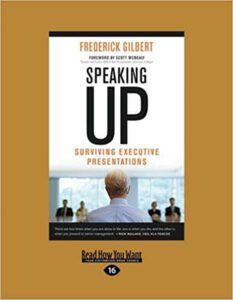
Speaking Up: Surviving Executive Presentations
What you said is so crucial. I have seen it time and again where somebody is a great salesperson and they get promoted to be a Sales Manager, Director, VP of Sales, not even at the C-level suite. They think, “Everyone has to sell the way I have sold.” Everyone has their own style. That alone is an example of just because you got a promotion does not mean the skills that got you there are not the skills that will keep you there.
Let’s take a composite person. A 45-year-old has 10 or 15 people on his team, making a lot of money and doing well at a certain level, whether VP or Executive Senior Manager. They get a chance to go to the C-level. Maybe they have to do it once a year to give a report. They use the exact same techniques they used with their own team. For some reason, they bomb and do not know why. It is because the audience is so different. It can be a tragedy for their career and team. Most of all, even for a product that needs to be funded, we had some people that we had been working with that did very poorly at the senior level.
I started interviewing CEOs to find out what was wrong with it. How come these guys are bombing? What we learned became that book, Speaking Up, and a program that we have been doing now for many years. It is very successful where thousands of people have taken this program. It shows middle managers, even though you are very successful, you are good, and you have an MBA, you’re great. The audience at the top level are different. We thought, “How are they different? What do they want?” We found out things that people can say that will make their career golden.
I will give you an example. The guy I was describing was 45 years old and a head of some big department. He goes into the CEO and the founders of the company. Here is what he or she can do to open up to be successful. The starting line is, “Good morning. I know how valuable your time is. We have 30 minutes on the agenda. I can get through it in 20 minutes.” You are giving me back some time. The second sentence out of that person’s mouth should be, “What I want from you today is a $10 million increase in our budget for marketing in Europe.” They know right up front what we call first line bottom line.
As a Sales Keynote Speaker myself, I know how important that first 90-second opening is. You’ve got to grab people’s attention. What I found works is a story that pulls people in right away, not this, “Thank you for the opportunity. I am excited to be here,” stuff. No one cares that you are excited. We go right into the story. It takes people a while, especially if they are not professional speakers, but just presenting.
[bctt tweet=”Stories energize all of us.” username=”John_Livesay”]
I worked with an architecture firm who was presenting against three other firms on who was going to get this billion-dollar project to renovate an airport. I said, “That opening line goes right into your story.” When I was 14 years old, I saw a drawing and I thought, “What is this?” That is what made me become an architecture buff. They are off and running as opposed to all the trite things, people, and the filler words.
This bottom line is a great soundbite. It is to let people know what you are asking for upfront. Otherwise, they are wondering, “What is to ask here? Where are we going?” I learned that when I gave my TEDx Talk, Be The Lifeguard of Your Own Life, the coach I had said, “What do you want the audience to feel, think and do?” Once we had the answers to that, the talk was built from the back end up in order to get those things. I am guessing you have found that similar type of strategy works.
I would make one suggestion to what you said. This is the thing about starting with a story. At the top level, you have the CEO, COO and CFO sitting around the table. They are making $13 million a year and their hourly rate is absolutely huge. This whole thing started when I was coaching this guy to start with a story and he did. They tore him to shreds and said, “Why are you taking up our time? What is your point? Get to the point.” We found that with the very top level, the stories are very difficult. The bottom line is they want data. If you are going to use a story, it should be extremely tightly focused on a customer experience. They are very numeric people.
A lot of the people I work with are in tech and healthcare. When I speak to that audience, they are convinced that people buy logically and back it up with emotion. I say, “Even the most sophisticated person is buying emotionally first and backing it up with logic.” Just pushing out facts and figures will not change anyone’s behavior. They are not going to remember it.
If I am speaking of an audience of CEOs, I always say, “XYZ CEO said to me or found that this was the number one thing that increased his bottom line. Here is the story to back it up.” Hence, if you have a story that can include a little ROI in it about someone that they relate to, they are a little more willing to go into the story.
Sharing Our Stories: Tales of Resilience & Renewal
The guy that got criticized, our client, wandered the story, and took too long. They were so, “Let’s go. I have got another meeting.”
You can’t bore people. That is for sure. You have to be compelling. Stories need to tug at heartstrings to open purse strings. How did you come up with this audio book, Sharing Our Stories, about resilience and renewal?
I had retired years ago from the company that I founded, PowerSpeaking. I started a blog right away. Part of my blog was interviewing people. I love to do interviews, plus when I did the Speaking Up book, I had interviewed about 50 C-level executives in Silicon Valley. I had all of this choice of video and audio well-done and well-recorded. I thought, “Wouldn’t this be interesting to pull this together somehow?” A friend of mine said, “Why don’t you do an audiobook?” It popped for me.
I thought, “I love audiobooks. I have hundreds of them on my phone. It would be easy to do. I have all this stuff right here.” It was not easy. I worked on it for a year and a half. I am pulling it together and asking the data, “What does this mean? What is the data telling me?” Finally, it all came together and the title, Sharing Our Stories: Tales of Resilience and Renewal. I am a “spaghetti against the wall” guy. I said, “What is the pattern here?” That was the pattern that seemed to come out of all these interviews.
I ended up using 65 different people in this book. The purpose of it is to look over our lives from childhood, adulthood and elderhood. As a psychologist, there were 1 million different theories about development. I thought, “They are all too complicated. I like mine about childhood and elderhood. Elderhood is easy.” That was the format for it.
[bctt tweet=”At the very top level, stories are very difficult. Typically they want the bottom line. They want data, and if you’re going to use a story, it should be extremely tightly focused on a customer experience, or something like that.” username=”John_Livesay”]
The other thing that was critical about it was I wanted something to be entertaining. I wanted something that would be a page-turner, even though there were no pages. I would hope that people would sit in their cars and listen to this and be late for meetings because they want to find out how the story turned out. That is what I have produced here. It is an amazing contribution.
One of the things I learned from this that I did not know going into it was how powerful stories could be to change lives. It is not just telling our own story. We all like to tell our own stories, but how can I, as a person who cares about somebody else, encourage them to tell me their stories and give them the airtime and space to do it? Magic could happen. Magical things are incredible.
How did you get someone as famous as Gloria Steinem to agree to be interviewed?
I have a friend who runs a writers’ conference in San Miguel, Mexico. Gloria was coming down there to be the big keynote. It is a three-day conference. She was going to be the main event. My friend, Susan Page, told me about this and said, “You should come down and see if you can interview Gloria.” I wrote up a proposal that went to Gloria’s office. There were a lot of people in Mexico that wanted to interview her. I said, “I am interested, but I am not going to interview you about your career and the politics of what you have done. I want to know more about you as a person, what you have struggled with, and succeeded doing.”
They came back to Susan and said, “We want Gilbert to do this interview.” Nobody else got to talk to her. It was just me. You can see the entire interview on my webpage. Spending an hour with Gloria Steinem, she is like the Dalai Lama. I was in the same room with this woman. Here is the thing, John, you will love it if you watch the entire thing. I had watched some stuff of hers earlier that she had done. She had been a tap dancer in high school.

Sharing Our Stories: As a person who cares about somebody else, encourage them to tell their stories and give them the time and the space to do it.
At the end of our interview, I said, “We are wrapping up now. I am wondering whether you might be willing to do a little tap dance for us.” I put on my wide angle lens and pulled back. She said, “I do not know. I do not have any music.” I said, “I have music.” I sang, “You are my sunshine, my only sunshine.” She starts tap dancing in this hotel room. That was the end of my interview. It was more fun. She is a hoot.
There are a lot of takeaways there. One, you figured a unique angle that would appeal to her, so talk about knowing your audience. Two, that personal story of origin and the preparation, having a great closing is also equally important as a great opening and the playfulness of once a tap dancer, always a tap dancer.
I listened to that interview. One of the things that resonated with me was when she gets frustrated, aggravated, or a little down, she is able to remember a story of the impact she has had. She told this wonderful story of a woman who came to her book signing who had been in prison and changed her life. She became a lawyer. That arc of that person’s story energized her. I thought, “How great is that? Stories can energize all of us, even if they are not our story.”
When I asked her about moments that were extraordinary for her, she talked in general terms, like meeting people on the street. I said, “I want something more specific than that.” I burrowed in a little bit and said, “Can you give me a specific example of something that happened?” She told that story about the woman who went from prison to being an attorney and said to her, “I thought you would like to know.” Gloria says, “That keeps you going for months.”
There is a takeaway for the readers. Don’t take the first response someone gives you, whether you are interviewing them or if you are in sales and ask an open-ended question to try and find out what someone needs, and they give you the top line answer. You will understand this as a therapist. It is known when couples come to therapy and say, “Our sex life is in the toilet.”
[bctt tweet=”Active listening is the gold standard for interviewers.” username=”John_Livesay”]
That is the presenting problem. It is not the real issue. The same thing is true sometimes in sales. When you say to someone, “What is your biggest struggle? What is your biggest challenge?” They will give you a top line answer. You need to dig down a little bit like you did with Gloria. “What specifically does that look like or feel like?”
I learned that from Terry Gross on NPR. She is one of my favorite interviewers, and she always digs a little deeper. It has been very valuable for me as an interviewer when I am trying to get people to tell these stories.
Let’s face it. If you are in sales, and we all are selling ourselves all the time, you had to sell yourself to get Gloria to say yes. We need to ask deeper questions and build up some rapport that people are willing to answer those questions.
My background is in Psychology. Being a therapist, one of the takeaways from that part of my life was something called active listening. For an interviewer, that is the gold standard. Instead of trying to tell them your side of the story or direct them in some other way, you listen and say something like, “That must have been a real struggle for you at that point in your life,” and shut up.
I was fortunate enough to become friends with Elaine Gordon, who was married to Tom Gordon at the time, where they wrote Parent Effectiveness Training. That turned into Leader Effectiveness Training and that whole concept of not reacting to what someone says and reframing what you think you heard, so that you are listening to the right question.

Sharing Our Stories: One of the main things is going to be encouraging people to get the people in their lives to tell their stories.
I still use that technique when I coach people because sometimes, after they make a sales presentation, there is a Q&A. You can lose the sale in the Q&A if you are not listening to the question and you give them an answer that they did not ask because you are nervous or you did not hear it. They think they are talking to a politician and get frustrated.
It is like peeling an onion. You said it beautifully that people come for therapy. The sex issue is not the real problem. You start peeling away, but they will only tell you if you show empathy for what they are saying.
Tell us another favorite of the people that you interviewed on that book, another story from there of either how you got it or one of the things they said that surprised you.
One of the chapters is on risk-taking. I have interviewed some iron workers who talk about what it is like being 10 stories up on a 4-inch beam. One of the most interesting interviews I did was with a guy called Don Garlits. Don Garlits is the Founder of drag racing. He started racing after World War II on abandoned airstrips in Florida. I was doing a class at San Francisco State called the Psychology of Drag Racing. We went out to the drag races and interviewed these guys. Here was Don Garlits, the World Champion of this thing, and we got to interview him.
While I was interviewing, he said something had happened to him. Remember, this is danger and risk taking. He said, “I had a 2,000-horsepower dragster. I was coming off the line and two seconds into the thing, the car flew apart.” In those days, the driver sat behind the engine and transmission. When the car came apart, it also took off half of his right foot.
[bctt tweet=”Customize your presentation to your audience.” username=”John_Livesay”]
He ended up in the hospital for a long time recovering. In the hospital, he designed the rear engine dragster. At first, it was a real oddity and then it started winning races. Every time you see one of these dragsters that go 300 miles an hour in a quarter mile, the engine is behind the driver. I feel so proud of that fact that I got to hear that from the master, the guy that made that all happen, Don Garlits.
This concept of resilience and renewal, I have created something called the 555 Method. “Will this matter 5 minutes, 5 hours, or 5 days from now?” It is helping so many people to not stay in the loop where they keep replaying what somebody said that insulted them or hurt their feelings or in sales, you are getting a rejection. You have got to get back up fast.
Speaking of sales, there is a CEO I interviewed from Silicon Valley. His name is Steve Blank. He tells this story about what he learned and how he crashed and burned as a sales guy. He had a master sales guy come with him. When they went into this company, they were going to sell computers. Steve started out by telling them how stupid they were, how great his company was, and how wonderful their computers were. He said, “We were escorted out of the building.” This master sales guy said, “Let me do it this time.” In the next sales, the guy starts talking about the, “How are your kids? How about the high school football team? How are they doing?” Steve is sitting there, “When are we going to get to the sales part?”
Finally, the sales guy says, “I am embarrassed to be here because you guys are so smart. If your management had let you invest in the way that we have, you would have left us in the dust.” The customer says, “Now that you understand that, we are ready to hear what you have to offer.” It was a consultative sales masterpiece. Steve Blank tells this story so well of what he learned from a master sales guy who could understand from the client’s point of view.
I boil that down when I give my storytelling keynote speeches into, “The better you describe the problem, the better somebody thinks you have their solution.” We have time for one more, either story of someone you have interviewed or an overall reason why you would want someone to get the audio book.
[bctt tweet=”People will only tell you their issues if you show empathy for what they’re saying.” username=”John_Livesay”]
One of the main things is encouraging people to get the people in their lives to tell their stories. I am 82, so you can imagine a lot of my friends are getting up there in years. I have two friends who are going down very hard. One is in her early 90s. She is delusional. She has had a horrible life, round-the-clock care. Another guy is in his mid-80s. He can’t remember where he is. He gets lost in his own house, round-the-clock care.
The stories of these people are so sad. Both of them trust me though. I went with my iPhone recorder. It was very simple. I wanted an audio, and sat down with both of them separately. I got the woman who was delusional to talk about her career as a speech therapist in the school district. She spun out this wonderful story about a student that she helped. It was inspirational. Back in her mind is what she has done in life. It was so wonderful for me to be able to get her to tell that story.
It was the same with the guy who was so dimensional. He started talking about being on the swim team in high school. He starts telling these stories and it all comes back and is coherent. It makes them feel good about themselves. Their families love it because they are hearing it. “This is wonderful. This is the Jerry that I knew. This was the Tim that I knew growing up.” I want to encourage people to pull out that smartphone, sit down in a quiet place, use active listening, and listen. You will hear some magical things.
Rick, what is the best way for people to get to your audiobook?
Look for the audiobook, Sharing Our Stories: Tales of Resilience and Renewal. Thanks again, Rick, for sharing your story.
Thanks for having me. It has been fun.
Important Links
- PowerSpeaking Inc.
- Speaking Up
- Sharing Our Stories
- Toastmasters
- National Speakers Association
- Be The Lifeguard of Your Own Life – TEDx Talk
- Susan Page
- Gloria Steinem
- Terry Gross
- Parent Effectiveness Training
- Leader Effectiveness Training
- Don Garlits
- Steve Blank
- RickGilbert.net
- Better Selling Through Storytelling Method Online Course
Wanna Host Your Own Podcast?
Click here to see how my friends at Podetize can help
Purchase John’s new book
John Livesay, The Pitch Whisperer
Share The Show
Did you enjoy the show? I’d love it if you subscribed today and left us a 5-star review!
- Click this link
- Click on the ‘Subscribe’ button below the artwork
- Go to the ‘Ratings and Reviews’ section
- Click on ‘Write a Review’
Love the show? Subscribe, rate, review, and share!
Join The Successful Pitch community today:
- JohnLivesay.com
- John Livesay Facebook
- John Livesay Twitter
- John Livesay LinkedIn
- John Livesay YouTube
Command Your Brand With Jeremy Slate
Posted by John Livesay in podcast | 0 comments

Doing business involves trial and error, and some mistakes are bigger than others, but that shouldn’t stop you from striving for the top. Today’s guest is entrepreneur, media expert, author, host of the Create Your Own Life Podcast, and CEO/Co-Founder of Command Your Brand, Jeremy Slate. In this episode, he joins John Livesay to share what it takes to pave your path to success. Jeremy shares his journey and the major mistake that led him to success. The two also discuss how to grow a business and differentiate public relations, marketing, sales and how these three should interact to help you succeed. Plus, he talks about how he got into podcasting and why it’s the next big thing. Get valuable business insight and life advice as Jeremy shares insight from his upcoming book, Unremarkable to Extraordinary: Ignite Your Passion to Go From Passive Observer to Creator of Your Own Life. Stay tuned!
—
Listen to the podcast here
Command Your Brand With Jeremy Slate
Our guest is Jeremy Ryan Slate, who’s an entrepreneur, a media expert, author, CEO, and Founder of Command Your Brand. He studied Literature at Oxford University and is a former champion powerlifter that helps visionary founders to impact the world and better mankind through podcasting and new media to create trust and opinion leader status. He has experienced some of life’s toughest challenges will certainly get into, including a routine surgery that led him into receiving last rights from a priest.
A few years later, his mom had a massive stroke which left her with permanent disabilities. Professionally, he’s tried it all, from teaching and network marketing to selling life insurance but he’s good at creating debt and not paying bills. He had an idea to start a podcast. Rock Your Life was the first one that didn’t do so well.
I love that part of the story because everyone thinks the first thing you try is always going to be a hit. He launched another one called The Create Your Own Life Show, which saw 10,000 listens in the first 30 days, which has led him to speaking to many of his heroes and on stages globally. Jeremy, welcome to the show.
Thanks for having me. I’m stoked to hang out.
You have done a lot in a short amount of time because your podcast literally took off, and you were named one of the top Millennial influencers by Buzzfeed. A lot of people in that generation are still thinking, “I’m not quite sure what I want to do with my life. I haven’t had my big break yet.” You are like, “I have probably lived three times than what most people have lived.” You also have a book, Unremarkable to Extraordinary, that we want to get into as well. Let’s go back to your own childhood or in college. Where did you get this tenacity? Was it from sports or this concept of, “I’m going to create my own life and not follow everyone else’s path?”
It was more of frustration at the life I had. My parents are both two hardworking, blue-collar people, neither of which went to college. They always thought college was that thing that was always imprinted on me like, “You’ve got to do that because that’s going to help you get that career and go wherever it may be.” For me, I created a lot of debt. I basically became a professional student. I’ve got a Master’s degree in Ancient History. It’s not a very usable skill in the world of getting jobs but I have always loved to learn. I have always enjoyed that. At the same time, it was a frustration with the world we are in.
Interestingly, you mentioned in your intro a lot of people in my generation are still trying to figure it out like, “What does that look like?” One of the main problems with that is they’re not willing to try things and fail at them to find the thing they want to do. You’ve always got to keep moving forward, trying things, and working. There’s this weird idea. I don’t know where it came from. “If you find your purpose, you’re never going to work a day in your life.” The first part of that is key, and that’s to find your purpose.
You’ve got to do some stuff to find your purpose. That’s one of the biggest things that has been a key guider in my life. I have worked hard on a lot of different things. Some were right, some were wrong for me but all of those experiences have helped me to become the person I am now. When I look at being back in college at that point in time, I came out in 2011 with a Master’s degree in Ancient History in a bad economy, which is funny looking at now, this economy. We’ve lost 20% of the value of the dollar of that day versus now.
There weren’t a lot of jobs for coming out of school at that point in time, especially for somebody that has a Master’s degree because it’s like, “What are you working, in a museum? What do you do?” I came out and ended up working for a house painter during the day. This is old school, by the way. We did everything by hand, hand scraping, 40-foot wooden ladders. It was wild.
No electric sanders for you, right?
No, we did all old Victorian homes where everything was supposed to be done by hand and things like that. I did that during the day from 7:00 AM until 5:00. I had come home. I had dinner and showered quick, and I had had to be at the gym at 6:00 where I had worked as the nighttime Manager from 6:00 to 11:00, and then I would be sleeping in between that. I ended up running into a priest friend of the family. He’s like, “The Catholic school I used to teach at is looking for teachers. You don’t need any requirements other than a college degree.” I’m like, “I’m in.” For me, it was going through and realizing like, “This isn’t what I wanted to do with my life.”
[bctt tweet=”PR is the cornerstone to growing your business. ” username=”John_Livesay”]
When my mom had a stroke when I was 24, it made me look at a lot of what I’m doing and realize like, “There’s got to be something more than this. You don’t work and be miserable until you are 65 and then end it. What’s the point?” From there, I took that jump to entrepreneurship and tried a bunch of things. It didn’t work. You’ve got to try some things and find out what you like. That’s how you find your purpose.
One of the things that fascinated me about you when I was preparing for this interview was this wonderful combination of intellect and physical fitness. The two are not known to be going together. In other words, there’s the “stereotype of the dumb jock” or “the nerdy skinny intellectual” that studies history all the time. You, right off the get-go, have blown that stereotype out the window.
That are the diametrically opposed parts of my life. I was always the guy sitting in the front asking way too many questions, unable to fit in my shirt.
The biceps are bursting. The assumptions that people make about you, either way, is interesting in terms of your potential because you are now working on this remarkable, extraordinary. Where are the book and the journey? Are you still interviewing people?
The podcast is still always an ongoing thing. We started it back in 2015. That was where the bulk of the conversations that I have had that are in the book came from. We are launching on June 7th, 2022. The advanced reader copy came in. We’ve got the cover design going. We are setting up media, waiting up to the launch. It has been an interesting experience to do that. I have learned a lot, even in the process of putting it together, even that formative process can change you as a person.
To get people at the level that you’ve gotten to be agreed to be on your podcast, you are having to sell yourself. There’s a lot of trepidation that would be worth going through because as both of us being podcasters, launching and wanting the big names or at least somebody with this incredible story, for me, there was the fear of rejection.
If I asked somebody from Shark Tank, especially at the beginning, when you don’t have a lot of episodes under your belt or the fear of rejection, the fear of failure, nobody listens, and then the fear of the unknown of like, “How do you do all this?” You go to school and learn how to be a good host, let alone all the tech stuff behind it. Can you walk us through your process of how you dealt with those three fears, launching your podcast? It’s relevant to launching anything. The first one is, do you ever struggle with the fear of rejection? If so, how do you handle it?

Command Your Brand: You’ve got to try some things and find out what you like. That’s how you find your purpose.
I sold life insurance for a year. That will solve your fear of rejection. The biggest transformative thing in my life was selling life insurance for a year because you’ve got to make 50 to 100 phone calls a day. When you first start, that phone is heavy. Once you realize that people, maybe, will verbally assault you but they cannot physically assault you through the phone, that’s a big freedom point, frankly. For me, that willingness to keep going, I’ve got a lot of that of selling life insurance.
I feel like anybody that’s willing to go get a commission-only sales job or anything like that will learn so much from that experience. You will become better at accepting rejection because of that. To me, you’ve got to do things where you are willing to fail and realize the estimation of effort. That’s the other biggest thing. A lot of people reach out to 1 person or 2 people, they don’t hear anything, and they are like, “I will quit.”
When you realize you’ve got to reach out to 50 to 100 people, whatever it may be, to get what you want, that’s all the difference. I would say for most people, get yourself a commission sales job and an internship where you are good at. Do something like that, and you will find that rejection doesn’t hurt much when you have been rejected a lot.
For me, my whole thing is I never take it personally. No now is a no forever. I’m not so freaked out by getting a no or rejection, I go into the fear of failure. You touched on that a little bit but it’s a separate fear in other words, “I’m going to keep calling people to sell insurance or I sell whatever it is I’m doing.” In this case, getting a great guest on the show.
I remember for myself, when Larry King interviewed me, I was like, “Game on.” I never dreamed that was ever going to happen. I’ve got to be prepared. I don’t want to blow it when I have the amazing opportunity. When you are interviewing somebody, the kinds of people you have had on the show, that could be a little intimidating for someone. I’m not saying it was for you but how do you handle that? What advice do you have around that?
It’s gradients. When I first started, I was afraid of a microphone. I was afraid of those conversations. The first conversations I had is I took a look at people I knew locally that had successful businesses. I went to their houses, and we recorded it on my MacBook, which I did not know how to do audio mapping or anything at that point in time.
The sound quality wasn’t good but it allowed me to have those first conversations with people I was comfortable with and people I know. That’s one of the biggest things. It’s something that I have talked a lot about in the book. It’s consistency, doing things over and over again, and continuing to do it until you get better at it.
[bctt tweet=”Focus on what you can control when dealing with fear. ” username=”John_Livesay”]
That’s how, for me, how you get more comfortable at either reaching out to a guest or that’s how you get more comfortable with doing an interview with somebody. As you mentioned, being on the other side of the mic, even from somebody that’s well known. You have to have more conversations and be willing to handle that. If you do it on your first time, it may not go as well for you because you need to be get used to that. It is that continue doing it. At first, I started in people’s homes, then I went to doing it on Skype, without video, by the way, because I was too nervous to talk to people that I didn’t know with the video on.
We moved from there to then doing it on Zoom. I’m like, “They can see me now. I’m okay with that.” Now I look at where we are at several years later, we do a full video show on YouTube, Rumble, and all those places. We are talking to some great people but I could not do the show now like several years ago. It had to get through, continually showing up and improving every day.
One of the tweets is, “Consistent practice delivers excellence and not being frustrated that you don’t hit a home run in your first time at-bat.”
There’s an Abraham Lincoln quote around that, too. I don’t remember exactly what it is but it’s something like, “I will prepare my day will come.” That’s one of the biggest things. I’m a huge football fan. One of the things that is a big deal is something I like to call a Mo Lewis moment. Mo Lewis was a former linebacker for the Jets. In 2001, he hit the quarterback of the New England Patriots, Drew Bledsoe. He almost killed him, by the way.
After that hit, in walks a little-known guy named Tom Brady. Tom Brady became the starter of the New England Patriots for many years, won six Super Bowls with them and another one with the Bucs. Had he not prepared every single day for his moment to come? There’s no Tom Brady. What you have to look at is you don’t know when that moment or opportunity is coming but you always need to be preparing in the background.
I also find it fascinating that you, as a professional power lifter, and that is all about being seen, and little clothing usually, that you would still have situational confidence almost. To get in front of the camera with your clothes on is still a whole new trip. That’s why as a sales keynote speaker, I always go on the stage the night or the morning before the audience comes in so that my brain does not say, “We have never been up here before. What’s happening?”
I do that same thing, by the way, because you’ve got to feel the room. You’ve got to be able to sense the back of the room, the front of the room, see how big or small the room is, because at the same time, how you show up in that space is going to be vital to how you understand that space.

Command Your Brand: When you let go of that stress, a lot of good things start happening.
Let’s deal with that third fear that I have experienced. This is so valuable for everyone reading. Try and fail until you find what you love to do. Realize that progress is in steps, not leaps. Where you will be a year or three years from now is not even possible now. Don’t even compare it to that. This almost stopped me from doing it is the fear of the unknown. For my solution, don’t go it alone. I have somebody produce the show for me. Let’s face it, we have all been through a pandemic. There’s so much unknown going on in the world now, even after the pandemic is starting to not be such a threat but the fear of the unknown is not going anywhere.
We don’t know what shoe’s dropping next.
How do you, as an athlete, as a successful business person, and running a team of people and ideally inspiring people of all ages but in particular your own niche, I always think that, “You are old. You figured it out but I’m still going to have ten years of being afraid of the unknown.” Some people never stop being afraid of the unknown. What is it that you do, Jeremy, that you think could help people around that?
The thing to take a look at in this situation is you look at what things you can control. “Can I control what John’s doing? No. Can I control what my kids are doing? Sometimes. Can I control what my animals are doing? It depends how well-trained they are.” The only thing you can control is yourself and your reaction to things. Frankly, the biggest thing that I try to make a major thing that I do every day is making sure my fitness, the way I eat, and the way I go through my routine is taken care of.
At the same time, even looking at situations and saying, “How can I manage myself in that situation?” We’ve got some rough situations. If you come at that situation with a head of steam, you are going to make it worse. The only thing you can control is yourself and your reaction to things. When you do that, you can change the game a lot of times. It’s interesting.
I’m thinking where sometimes you get your stressful days. It is what it is. I had one of those days where you say, “Whatever. What comes, comes. I’m going to continue to prepare and keep going in the right direction.” You find when you let go of that stress, a lot of good things start happening because you are not focused on the stress you have loosened and opened up. That’s what you have to take a look at. You can control yourself and your reaction to things. That’s it.
What I’m hearing is when you have a system in place, a structure, and a routine, we all know our children likes structure.
[bctt tweet=”You’ve got to do things where you’re willing to fail and realize the estimation of effort.” username=”John_Livesay”]
Mine doesn’t.
Even our pets like structure. They need to know where they are getting fed at a certain time. Even if a child says they don’t like structure, they really do. They might fight the bedtime. We have seen a lot of parents struggling with the lack of structure with the kids being homeschooled, totally throwing off the routine of kids, interacting with themselves, and having trouble waking up since it’s just a Zoom call, it’s not leaving the house. All that stuff was stressful on a lot of levels.
You need to keep your fitness up no matter what’s going on. It’s a baseline, let’s say, and then the eating, so that you are prepared for whatever surprises because if you are not rested and on a sugar plunge, you are not nearly as equipped to think clearly. Your success on how you help other people become successful, tell us a little bit about what your business model is.
We believe that podcasting is the next great frontier. It is that place where incredible conversations can happen. It’s the direction the media is going. The incredible thing about it is, it’s user-driven. You look at why people watch Netflix and Prime. It’s because they can decide what they want to watch. The same thing with podcasts. People are making the decision to spend time with us and listen to it, their leisure.
That’s an important thing to think about. It’s because of that we have decided that we help people to tell stories on the podcast medium. We have been doing this back since 2016, where we help people to tell a better story. We find the right podcast for them. We helped them get booked in those shows because we see this as the new world PR play to be telling your story on the podcast.
There have been all kinds of research that the number one thing that sells books for new authors are podcasts. Not TV, being in The Wall Street Journal or whatever. Part of it is behavioral. If you are listening to a podcast on your iPhone or whatever, and you go, “That sounds like a good book. I like what that person said in the interview. I probably would like the book,” you are a click away from ordering the book. Whereas if you are seeing somebody on TV, you are like, “Maybe I should get that book.” You’ve got to go find your phone as opposed to the phone being in your hand when you are listening.
That’s even if you watch TV. I don’t even watch TV anymore. I listen to podcasts and that’s it. That’s where I find everything anyway.

Command Your Brand: Public relations should always be the first thing you’re doing because it should be something where you create that “know, like, and trust” factor.
This is part of my background and one point of your niches, there’s a right combination to public relations versus marketing versus sales. First, let’s do a quick definition for people who might not understand the distinction of paid versus unpaid exposure. Let’s start with PR. Most people have a sense of it but what’s your definition of PR?
Public Relations is how you relate to your public but the public, in this way is a type of audience. It’s the people that you want to know you. You may say, “My public is business owners. My public is CEOs.” It’s basically how you want to be known and seen by those people. There are different types of public relations within that. There could be crisis public relations. “If the ships are burning down, you’ve got to figure out how to bail it out.” There could be an awareness campaign or a launch campaign but it’s how you relate and create a relationship with your public or your audience. That’s Public Relations.
Also, it’s not paid for. Whatever you are creating, the content you are creating is newsworthy in some way, shape, or form.
It’s made newsworthy too because the positioning of it and how you position it can make it seem newsworthy.
Versus marketing, which for the most part is paid advertising. Some things can go viral, and then you get unpaid exposure. Part of PR can be seen as part of marketing. For the readers who are entrepreneurs, understanding one is paid, one is non-paid. Marketing and sales sometimes in big companies can butt heads, and the salespeople are demanding.
The sales guys were like, “Those marketing guys stinks.” The marketing guys were like, “Sales guys can’t close all the leads I’m getting.”
What is the right combination if you are a business owner, do you think?
[bctt tweet=”You don’t know when that moment’s coming, you don’t know when the opportunity is coming, but you always need to be preparing in the background. ” username=”John_Livesay”]
It’s all three. I look at it this way. If your sales aren’t working, you take a look at marketing. If marketing isn’t converting, you take a look at public relations. Public relations should always be the first thing you are doing because it should be something where you create that know, like, and trust factor. You could have a great marketing program but if a lot of people are landing on your site and never heard of you, they are not going to convert. They need to know who you are, like you, and trust you. That’s why I look at it as the combination of things. You always work it backwards. If sales isn’t working, you take a look at marketing. If marketing isn’t working, take a look at public relations.
You can work it back the other way now, public relations create the things for marketing to now promote because they are creating the pieces where that can be seen as trustworthy and create that opinion leader status for you. Now you promote those things, and you get them out there, and either paid traffic, a social media campaign or something like that, to then get somebody in front of you to sell. When you look at it that way, you can work it back and forth, and you can find out what’s wrong in your organization if one of those things isn’t working well.
A lot of people think, “I don’t even need PR. I’m going to focus on spending ads. That should drive people to my funnel, and then I will close them.” You are like, “You forgot a big part of that ingredient there.”
There’s a misconception in that too, John because a lot of people will say, and this happens in sales conversations for us, “I’m going to wait until people find me.” To me, that tells me that you don’t quite understand how the media world works. When you understand how the media world works, they are not looking for feel-good stories all the time because they are more interested in telling you about, “Something on the news at 10:00 could scare you and buy our products.” They are 24 hours a day trying to fill a new cycle of things that do get eyeballs and attention. For you, you have to be the one willing to get out there, tell your story and get it in front of people because they are not going to be looking for you.
Let’s close up our interview with a happy story, not a sad story or a scare you story, of how you were able to make your brand grow 71% in the economy, and what other people can be doing to get those same kinds of result.
Frankly, the biggest thing that we did was the whole COVID situation, we have been a digital company since 2015 or 2016. We had that foot above. What we did is when companies started laying people off, we started hiring. That was the biggest thing we looked at. Now there is a talent pool of people that were not available to me a year ago or a month ago or whatever it may have been. We started hiring because we are like, “You can work from home. You are incredibly talented. We are excited to have you.” We focused on hiring. The next thing we focused on was our training. Our company training was okay but now if we are going to hire all these good people, we need to train them better.
We focused on having better company training. That was vital. The other thing we focused on is better processes. Especially since we are hiring and training more people, you need a better-written process. When we write our processes, we call them hats. It’s the hat you wear to do a job. Within that, it’s, “How should that person be? What should they be doing on a daily basis? What is every single step to what they are doing every single day?” Our job descriptions are like little books. There’s so much to them. Focusing working on our business rather than in it was one of the biggest things that helped us to growth because we were able to locate the right people, put the right processes there, and focus on how can we train them better. When you do that, everything else you are doing works better.
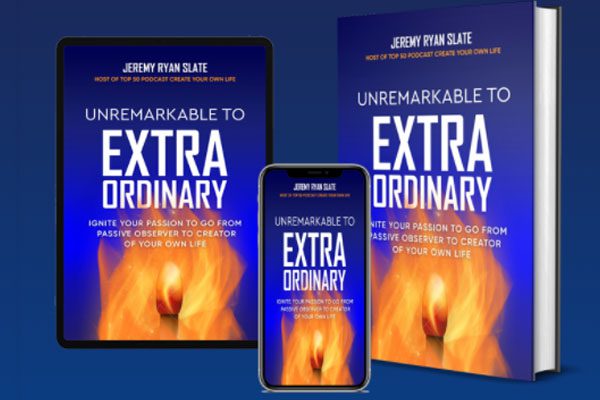
Unremarkable to Extraordinary: Ignite Your Passion to Go From Passive Observer to Creator of Your Own Life
That’s a huge takeaway. Most people don’t spend the time training people. They figured, “I’m hiring you. You should be able to hit the ground running.” We don’t even talk about our culture and whether you are a fit or not.
That’s a huge misconception.
If you don’t have clear expectations or boundaries like we were talking about with children and pets, for the employees, they don’t know. “Is it okay if I come in at 10:00?” “Not really.” “Nobody told me.” I can set up a problem right off the get-go. “Here’s what we do. This is our workday. We are totally flexible. As long as you get the work done, you can come in what time you start.” Everyone is different. That training as a speaker who gets hired to sometimes also train after the keynote and help people get a new skill because the skills you have are not enough. You have to constantly be learning new skills is my experience.
That’s one of the things. If you are not growing, you are dying. You always need to be growing and working on what you are doing. That goes back to what we have been talking about all through this conversation. It’s about incremental improvements and consistent improvements. You have to be thinking about the same thing for your team. They should be training weekly, whether it’s on some sort of new process, some process you have been running for all, whatever it is, they need to be improving as much as you do because that’s how you keep your organization growing.
If people want to listen to your podcast, it’s called Create Your Own Life. If people want to learn how you can help them with their branding, they should go to CommandYourBrand.media.
CommandYourBrand.com or CommandYourBrand.media, either one will get them to us.
Any last thought you want to leave us with?
I would encourage people to go out and grab my book, which is now in pre-order. It’s going to be released on June 7th, 2022, which distills down a lot of what we talked about and brings that into something that you can bring into your life to make some huge improvements and find your extraordinary. It’s Unremarkable to Extraordinary. They can get that over at GetExtraordinaryBook.com.
Jeremy, thanks again for inspiring us all to put a little structure in our life and get some practice in.
John, thanks so much for having me. It’s a lot of fun.
Important Links
- Command Your Brand
- Create Your Own Life Show
- Unremarkable to Extraordinary
- YouTube – Jeremy Ryan Slate
- Rumble – The Create Your Own Life Show
- CommandYourBrand.media
- Larry King – YouTube, Larry King interviews Sales Keynote Speaker John Livesay
- Better Selling Through Storytelling Method Online Course
Wanna Host Your Own Podcast?
Click here to see how my friends at Podetize can help
Purchase John’s new book
John Livesay, The Pitch Whisperer
Share The Show
Did you enjoy the show? I’d love it if you subscribed today and left us a 5-star review!
- Click this link
- Click on the ‘Subscribe’ button below the artwork
- Go to the ‘Ratings and Reviews’ section
- Click on ‘Write a Review’
Love the show? Subscribe, rate, review, and share!
Join The Successful Pitch community today:
- JohnLivesay.com
- John Livesay Facebook
- John Livesay Twitter
- John Livesay LinkedIn
- John Livesay YouTube