

Winning Is Better With Bob Wiesner
Posted by John Livesay in podcast | 0 comments

“Winning is better” has got to be the slogan of many companies and businesses. The question is, how do you start winning? We tackle this question and more as John Livesay and Bob Wiesner of The Artemis Partnership grapple with the mechanics of persuasion. We take a deep dive into Bob’s book, Winning Is Better, to look at building trust, leveraging the non-technical aspects, and positioning yourself for success. Tune in to learn more from the masters in pitching.
—
Listen to the podcast here
Winning Is Better With Bob Wiesner
In this episode, Bob Wiesner talks about his new book, Winning is Better, and how to stop coming in second place. We talk about how important it is to build trust and how to do it fast. Finally, he talks about making a win room instead of a war room. Find out what he means. Enjoy the episode.
—
Our guest is Bob Wiesner, who has always been fascinated with how people make decisions. Even as a kid and a huge baseball fan, he was more interested in the operations of the front office than in action on the field. He studied Psychology as an undergrad and graduate student and went into advertising, where his focus on decision making shifted to the advertiser.
After several years where some of the biggest ad agencies like BBDO and McCann Erickson, he shifted focus again from the mass persuasion of advertisers to the individual persuasion of a seller relative to a buyer. He is all about this practice. People know him as the Pitch Doctor. As the Pitch Whisperer, I would like to welcome the Pitch Doctor to the show.
Thank you, and thank you for not whispering as well. We can talk out loud. I appreciate it, John. I’m glad to be here.
This premise of a whisper of anything, we horse whispers, dog whispers, we also go to the doctor for them. We trust them and ask a bunch of questions to figure out what is going on specifically. Before we get into how you came up with being known as the Pitch Doctor, take us back to what inspired you to be interested in how people get persuaded, I know for myself. I watched a TV show called Bewitched, where there was a character that worked for an ad agency. I thought, “That looks like a cool job.” What was the initial thing that pulled you into? I want to learn how people get motivated to change their minds.
It was not a lot unlike yours, John. I stumbled my way into advertising by accident. I graduated college, and before I decided to go to grad school, I was looking for a job, and I did not know what to do. I had a buddy who worked for a large ad agency. I asked him, “What did you do? It sounded interesting. Do you need special training or education for that?” He said, “Anybody could do it.” I said, “Sign me up.” I did find a job in agency life and enjoyed it.
What I liked about it was a combination of a couple of things. First of all, it was about persuasion. I found that getting an undergraduate degree in Psychology, there is nothing remarkable about that but the whole idea about how people think about things and how they perceive things, they perceived the impact of those things on themselves was something that I had studied, and it was interesting. I loved the creative aspect of it.
[bctt tweet=”Show you have a deeper understanding to build trust.” username=”John_Livesay”]
Here we were creating things for a reason. We were creating them to be different yet to be purposeful, to have an objective at the end of the day, which was to sell and soak. That was something I wanted to know more about. I stayed in the agency business in total for eighteen years with some graduate school mixed in there and focused entirely on mass persuasion, how advertisers who spend tens of millions of dollars persuaded millions of people. Later, I realized, I wanted to get a little bit more personal about it and turn my attention to how individuals are persuaded by other individuals.
What were you doing at the agency? Were you media account services selling the agency to win new business, or were you the creative team?
Yes and no. I started in media planning and buying. I moved over into account management. I spent some time in a new business. I forget what the 4th one was but not creative but I touched on all different facets of the agency. To this day, I feel like I do understand how agencies do their thing and how they persuade people.
You now are morphing into instead of trying to convince the masses to prefer one brand over another. Let’s get into helping one person persuade another person to pick a client, to hire them, whether it is a speaker or an architecture firm, you have several clients in several different industries. I love what you say in your book, Winning is Better: The Journey to New Business Success. Can people look at the roster of clients that you are now working with and say, “That does not seem to have a lot in common?” Yet, at the end of the day, there is one thing that is in common with all of them, and you say, “We are all people, and people are wired pretty much the same.”
Before I started Artemis, which is only two years old in 2022, I was doing this for other firms and doing this on my own since the mid-’90s. What fascinated me was that a decision-maker is a person. They are not a role or a job description. They are human beings. As human beings, while there are obvious differences from person to person, they are also predictable aspects about how they think. It does not matter whether they are thinking about advertising, accounting or management strategy. They are still a human, and they still have needs, desires, and mechanisms for processing information.
I don’t think that as a rule, a lot of professional services firms like advertising, architecture, and accounting understand that aspect of the person that they are pitching to. My goal since I’ve got into this part of the business is to help my clients get a deeper understanding about how decision-makers perceive their offers and use that understanding to differentiate their offers from their competitors.
One of the things you talk about in the book that is counterintuitive for many people is, “Don’t pitch everything.” Especially for me, coming from a sales background, we were told the old way of selling is to throw as much as you can up on the wall and hope some of it sticks, which is a nightmare. It is not targeted and strategic. You have a much more strategic approach to let’s define who your ideal client is and the work you love to do. In the book Winning is Better, you talk about how sometimes you can take a bid to get something, and you even win it. If it is not something you love, the win is a chore. It is not a joyful experience. I thought, “What a great distinction.”
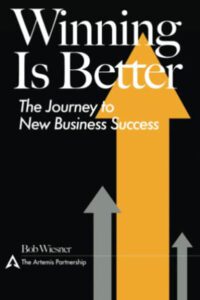
Winning is Better: The Journey to New Business Success
That is something that is easily overlooked by sales organizations and by business development professionals. It is the price of winning or the cost of winning. It is one thing to rack up numbers to get your percentages up. It is one thing even to get your revenue up but what is the impact of that win on my organization both short-term and long-term?
We define a chore as something that we are capable of doing that people will pay us to do but that nobody gets any leisure from doing. We are competent at it but that is far as it goes. You start layering a lot of that stuff into an organization, and people start turning off to it. Your workers start to shrug their shoulders and say, “Not again. Do I have to do another bathroom design? Do I have to design another landing page on a website? I would like to do something more exciting, interesting, meaningful, purposeful.”
John, everyone now knows about the Great Resignation. Is that even contributing to the Great Resignation? The fact that you are. “We are a successful company. We are growing and winning new business left and right,” your people have to do stuff they do not enjoy doing. Now, maybe they do not even want to stick around to do it.
Without people sticking around, the cost of turnover, and consistency, you are selling the team’s ability to work well together. If all that goes out the window, you are a commodity.
You have got this short-term impact of, do people want to be doing this work, and you get the long-term impact, which is if it is the work I do not love to do if people are not sticking around to do it, and if it is a commodity exactly as you say it, where is the growth opportunity going to come later on? How is this client going to turn into a bigger client down the road if the initial work that I won is one where I’m churning out a product without any passion, excitement or cultural lift from it?
Let’s double click on that word, that phrase without any excitement. I have a belief that people buy your energy. I know for myself, as a sales keynote speaker, I often have to compete. I get interviewed like big companies when they are in the final 2 or 3. I remember getting an email from the speaking bureau saying, “Congrats, they picked you. They liked your energy.” Rarely, it’s that specifically called out. I then talked to the person and they said, “You made us feel good. We figured you could make the whole ballroom full of people feel the same way.”
That energy you bring to the 45-hour however over your timeframe is presentation or interview, whatever you want to call it is important that people are going, “How do we feel? Can we see ourselves enjoying this journey if we are going to hire you to work with us?” In the case of an architect, sometimes 4 to 6 years on renovating an airport or something. People forget that that is a key part of you can’t give away anything you do not have. If you are burnt out from doing all these bathroom jobs of designing bathrooms, and you want to be designing a whole airport, you are not bringing your best energy to the room.
[bctt tweet=”Listening and empathy create chemistry.” username=”John_Livesay”]
What people lose sight of is not only that, and I’m not diminishing the importance of it but from a decision-maker standpoint, that is our thing. It is about the buyer. They are comparing you as the potential speaker to seven other people they are interviewing to be potential speaker. It is not your energy level in the absolute sense that they are looking at. It is you relative to everybody else.
How do you differentiate yourself from other people? Your content may be awesome but their content may be pretty good too. They might not be able to tell the difference between the topic you are going to speak about and the topic someone else is going to speak about. If it comes to your energy, passion, commitment, drive or what you might more broadly call the cultural fit, that could be the differentiator that wins you the business way more important than any topic or content that you might be proposing to them. That is what competing firms lose sight of is the importance of the non-technical aspects of their pursuit.
We talk about the importance of trust, and most people will go, “Yes, I know trust is important.” You have a formula for how people can be better at building trust that you reference here. I thought it was clever that trust is not just, “You are safe to be within the room. You’ve got a good referral. That is maybe 1/3 of it.” Can you walk us through what companies can do if they are walking into a room cold and have to present to build some trust?
The trust will worthiness equation was first identified by David Maister, Charles Green, and Robert Galford in a book called The Trusted Advisor, which alongside Winning is Better: The journey to New Business Success should be on everybody’s bookshelf. What they articulated was that trust has four components. It has credibility, reliability, transparency, and self-orientation.
One area that every sales organization blows consistently when it comes to building trust is this area of self-orientation. In other words, they always seem to be selling something. They seem as if the relationship that they are attempting to build with the buyer, again, buyer perception maybe not be a reality but it seems like all they want to do is talk about themselves, products, and price and try to extract money from the buyer.
All that torpedoes trust faster than anything you can possibly do. You layer onto that, whether they are credible in the space, deliver on their promises or are open and honest. All those factors together influence whether you are viewed as being tried trustworthy. Our point of view is that when initiating a conversation with a prospect, regardless of what stage you are in the sales journey, think about how are they perceiving your trustworthiness and what are you doing to build it up or diminish it?
Sometimes, part of it is being a little bit vulnerable and not pretending that you have all the answers all the time.

Winning Is Better: When initiating a conversation with a prospect, regardless of what stage you are in the sales journey, you have to think about how they perceive your trustworthiness and what you are doing to either build it up or diminish it.
That is what Maister, Green, and Galford called intimacy, which I don’t think is a 2022 word. I prefer the word transparency but being honest with people about, “Here is what I’m capable of doing. I’m good at it, and here is what I’m not so capable of doing. I’m not going to take on the project if it is not directly in my area of expertise and brilliance.” A lot of buyers appreciate that.
Let’s close that open-loop I did at the opening. How did you become known as the Pitch Doctor?
In the firm that I was working for at that time, the part of our practice that focused on helping our clients as you are doing now, John, is helping them be more effective with pitching. Not everybody in my firm back then liked doing that work. It was high-pressure work. Unlike the usual training and development stuff that the firm was doing back in the ‘90s and early 2000s, this one had results attached to it, either you win the pitch or you do not.
I loved that. That fits my personality and my motivation for working perfectly, so I raised my hand. I said, “I want to learn more about how to do this. I want to take our principles that we were training and apply them in real-time to actual new business pitches.” I did that. I worked on dozens of them for ad agencies, IPOs, and management consulting firms for an Olympic bid. I became the go-to person within the US operation when there was a client who wanted help on a specific pitch, so I became known as the Pitch Doctor.
When I talk to people who say, “We are so tired of coming in second place.” I know on The Artemis Partnership, that is one of the things that you are solving because, unlike in the Olympics, there is no medal for second place that will say, “Did you ask why you came in second place?” Oftentimes, they will say, “We were too salesy.” It goes back to what you were saying earlier, “You are too self-absorbed about bragging about how big your company is, and it has nothing to do with them.” Those kinds of things. Are you seeing a current consistent reason why people do come in second place that you are able to fix?
If someone tells you that you came in second because you are too salesy, that is great feedback, and it is better feedback than most organizations are either seeking or able to get. There are a couple of factors here. First of all, a lot of companies do not get accurate feedback at all, which makes it difficult for them to understand why they come in second.
That is a whole separate chapter of the book because it is important to get that good feedback. We hear this more from the buyers than we do from the sellers. Buyers will tell us that they did not select a firm because they did not trust them, did not connect with them, and did not provide any additional reason for why they should be hired. They followed the RFP. They met the minimum standards.
[bctt tweet=”What competing firms lose sight of is the importance of the non-technical aspects of their pursuit. ” username=”John_Livesay”]
The firms that win always have gone beyond what was initially accepted. Now the beyond could be defined emotionally. I knew you used the word energy before. We hear the word passion a lot, commitment, drive, and dedication. We also hear buyers say, “I selected that firm because they showed a deeper understanding of what I was looking for. They answered the questions in the RFP but they went beyond that to show that they understood what we looked for and they cared about it.” What is interesting is that a lot of losing firms wind up losing because they did what was asked of them but whereas the winning firms did what was asked of them and did more.
This is so insightful and valuable. For everyone reading, take that in, that it is not enough to answer the questions. You need to show the person making the decision that this is not another client or checklist for us to do. I have a philosophy. It sounds like you agree with this. The better you can describe someone’s problem and put it into words that they have not even used before, they think, “You get us that feeling of you understand us, the fact that you can express our challenges and what keeps us up in the middle of the night. Therefore, I trust you to have our solution because you understand our problem well, even if it is beyond what we described in a proposal.”
We see that manifested in a few different ways but the firm that stands out from others is a firm that shows a better understanding of the challenges of the problem. It could be the upside, a better articulation of the opportunity. That absolutely matters. That takes us back because everything is connected to a point you made earlier in our conversation, John, which is about the importance of pitching less or chasing fewer opportunities.
I cannot get the depth and the information that will help me win if I’m chasing everything. I do not have the time, bandwidth or energy for it. Whereas if I’m more selective about what I chase, I can get more depth and more understanding. I can have that diagnostic that you mentioned that deeper understanding of the problem because I took more time to do it. Everything goes hand in hand. The buyer gets that right away. They can distinguish the 6, 10 or 16 firms they are talking to. They can tell the 1 or 2 of them that took the time to get to know them from the other fourteen that did an autopilot and submitted a proforma response even if it answered all the questions.
You and I, as authors and being on a show, it is evidently clear within the first five minutes if the host has read your book or not, versus reading through some provided questions from the publicist. Going back to this concept that if you can go beyond the expectations and show a deeper caring than the come-up competition. I want to give people an example of what that looks and sounds like.
When I was working with an architecture firm on the presentation, we were having dinner the night before the practice. One of the guys said, “As an architect working in airports, I travel over the world and gets to move wherever the job is but this is my hometown. If we win this, this is a hometown game for me. The whole point of this airport is to reflect the new version of this city.” I go, “That is what we are going to be saying on the team slide. This isn’t another job for you.” That personal connection to the city for the people making the decision of what firm is going to redesign the city’s airport came through time and again. That is what you were talking about as an example.
I want to get into your wonderful pie chart on the truth about decision-makers here. You are helping people have empathy for what they are thinking about. The first part of this is people go, “You win or lose business based on what your solution is, and you say no.” That is only 28% of the decision. Let’s talk about what the other three quadrants are.

Winning Is Better: If you’re going to be a politically unsafe choice, compensate for that by pumping up some of the other parts of your sales initiative recommendation. But if you are going to be politically sound or even advisable, then leverage the heck out of it.
The next one up, which ranks higher than the solution, is the understanding me. We have touched on that. I want to get people the full fork pieces of the pie. If you have your solution, we can see that it would work. Now 31% of my decision is going to be based on how well you show me you understand me. That goes above and beyond my problems.
I’m glad that you emphasized the word me because decisions are made by individual people. They are not made by anonymous groups using groupthink. Each decision-maker is going to judge the options in front of them based on, “Did this team or organization understands what I personally was looking for, what my concerns were, what my fears were, what my hopes and dreams were, and what my own personal decision criteria are,” which might be completely different than anything published in an RFQ or RFP.
Each decision-maker, person, and influencer needs to know that the pitching team was addressing their individual needs. Sometimes, you have to be nuanced or careful about how you articulate them but you still have to make it clear that you heard them and that you’ve got it. Now that is distinguished from understanding my company or the project, which is important. They are both necessary but they are not sufficient to win. You have to go deeper, get to know the people, and show you understand the individuals.
The other part of it is chemistry. We know chemistry is with dating, and we know whether we have chemistry when we watch a movie. Although, those actors did not have the chemistry that does not work. The script is great. The chemistry in the business scenario is, “Do I want to work with you? Is this somebody I want to go have a drink with after work? Is this somebody who would have my back or would they throw me under the bus?” All those things come into play.
It is all of those but it does not necessarily have to go that deep. It depends, frankly, on whether or not I have spent enough time with you to even know that you have my back. In the first meeting that you will have with people, long before they reach the conclusions that you accurately pointed out, they are going to be able to perceive, “Do we communicate on the same wavelength? Do we use the same language? Do we waste each other’s time with irrelevant facts? Do we cut to the chase? Do we seem to care about each other as people? Are we listening well? Are we showing empathy?”
These are all factors that go into this idea of chemistry. They are easily represented even in a Zoom meeting, and they set you up for then getting to know the person even better. By the end of the process, I will believe that you and I are simpatico, we will look out for each other, I will enjoy having you around my job site for the next five years or having you auditing my books for the next three months. I would not say I would enjoy having you auditing my books but I will enjoy having you around my office. Those things will look eventually get there. I want people to understand that the chemistry is evident from the first conversation that you have with people, and it carries on from there.
Finally, chemistry is 25%. That leads a remaining 16% to the category of politics, which most people feel uncomfortable and hazy about, “Do I want to get involved with the company’s politics? Is it being aware that there is politics involved? If 16% of the decisions are based on politics, help me, Bob, how do I navigate that?”
[bctt tweet=”Competing firms lose sight of the importance of the non-technical aspects of their pursuit. ” username=”John_Livesay”]
You may not be able to but you at least have to be aware of what it is now. Internal politics are about, “What do decision-makers care about internally? Who evaluates them? Who needs to approve their decision? How will they look to these other stakeholders, that could be their bosses or colleagues? If you are selling into a marketing department, how will the marketing people feel when they go to the sales department and say to the sales guys, ‘We hired this firm to do our social media?’ Are they going to like it, or are they going to hate it?”
If you are a large organization, maybe you are publicly traded. You’ve got to worry about the shareholders. How will they feel about things? This information is not easily discovered but it is findoutable. If you can at least know what it is, you can anticipate how important it is. If you are going to be a politically unsafe choice, you can compensate for that by pumping up some of the other parts of your sales initiative. If you are going to be politically sound or even advisable, leverage the heck out of it.
If you say we have picked this social media company or we picked John as a speaker, we are going to have the Pitch Whisperer come to speak to us, give them some ammo to present why you are the good choice to get somebody excited with, especially if they are not involved in the choice. If you are an architecture firm pitching to redo an airport renovation, realize all the taxpayers and city officials that are involved in giving opinions on this as it goes along that is way more than the eight people in the room listening to the presentation. Before I let you go, I want to talk about your wonderful book at the end here, the pursuit field manual, where you have a win room. You are all about winning is better, focused on the winning more than the selling. What is a win room and how can people start to create their own?
Many people in sales and business development are familiar with the term war room. We prefer to call it a win room because we want to be more optimistic about what the purpose of the room is. The typical war room that I have seen, and John, you have probably seen it as well, is oftentimes constructed around what our offering is going to be. It is like, “What is our strategy? What is our weaponry out? How flank the other guy is? Where are we going to put our battalions? What about us?”
The win room is about the buyers. Not surprisingly, as we have been talking about. The win room is built around how much information you have about decision-makers and influencers. You probably do not have enough. How do you get more? It becomes a formula for how do I convert these inputs, which is the information you have about decision-makers and influencers, and convert that into outputs, which is your messaging.
Messaging that differentiates you from your competition persuades the buyer that you are not just viable but you are an optimal choice for them and seals the deal in your final proposals and your pitches. The win room differs from the war room, not in name or attitude but while war rooms are much more product and firm centric, the win room is entirely prospected centric and builds all of its efforts around that.
Before the show started, you and I had a little chat, and we talked about how you need to keep your flexibility at the moment. If you get feedback right before you are about to go present that a client checked your references, find out what the reference was asked, and possibly use that as part of their criteria that might not have been in the proposal to open up your messaging, you are playing at optimizing things in the win room.
[bctt tweet=”Pitching and winning isn’t about having the best product and solution, but how you position and offer it up.” username=”John_Livesay”]
One of the interesting things about the win room is that you never close your win room. It has never been done. You continually input right up until the last minute because every little nugget of information you get could make the difference.
The book again is called Winning is Better. You can get it on Amazon. People can also find you at TheArtemisPartnership.com.
Connect with me directly on LinkedIn. They are both effective.
Any last thought or quote, you want to leave us with Bob?
This has been a great conversation. I loved it. We are like-minded because we both believe that pitching and winning are not about having the best product and solution. It is about how you position it and how you offer it up. Your readers will do well to follow your advice on selling and storytelling. They would also want to read some that we have to say about the overall strategic approach to pitching, and you put these combinations together. You will be a powerful force in the market, and your competitors will be trying to figure out what the heck you are doing. That is driving them crazy.
Thanks again, Bob.
John, it was a pleasure. Thank you.
Important Links
- Bob Wiesner
- Winning is Better
- BBDO
- McCann Erickson
- The Trusted Advisor
- LinkedIn – Bob Wiesner
- Better Selling Through Storytelling Method Online Course
Wanna Host Your Own Podcast?
Click here to see how my friends at Podetize can help
Purchase John’s new book
John Livesay, The Pitch Whisperer
Share The Show
Did you enjoy the show? I’d love it if you subscribed today and left us a 5-star review!
- Click this link
- Click on the ‘Subscribe’ button below the artwork
- Go to the ‘Ratings and Reviews’ section
- Click on ‘Write a Review’
Love the show? Subscribe, rate, review, and share!
Join The Successful Pitch community today:
- JohnLivesay.com
- John Livesay Facebook
- John Livesay Twitter
- John Livesay LinkedIn
- John Livesay YouTube
Easier: 60 Ways To Make Your Life Work For You With Chris Westfall
Posted by John Livesay in podcast | 0 comments

Chris Westfall is a sought-after speaker, consultant and author who has helped hundreds of clients achieve transformational results. Chris knows that there is an easier way to make things work for you. This is what John Livesay and Chris get into as they look into how you can transform your business. Chris looks at leadership, storytelling and connecting with people as ways of transforming your business. Tune in and learn more from Chris as he delves into storytelling and sales.
—
Listen to the podcast here
Easier: 60 Ways To Make Your Life Work For You With Chris Westfall
Our guest is Chris Westfall, the author of Easier. He talks about the best way to make things easy is to realize you always have a choice. Just because the train goes by does not mean you have to ride that train. We talk about storytelling and how important it is to make sure that you are not the hero of all the stories you tell. Make people want to see themselves in your stories and go on the journey with you. Enjoy the episode.
—
Our guest is Chris Westfall, who’s one of the most sought-after business coaches and sales keynote speakers in the world. He has helped launch over five dozen businesses and has appeared on every network out there. He’s a regular contributor to Forbes, and worked with thousands of leaders at Fortune 500 companies, nonprofits, and high-tech startups. A coach to entrepreneurs and executives around the world, his clients have appeared on Shark Tank, Dragons’ Den, and Shark Tank Australia. He regularly consults with top-tier universities, and is the author of three other books, but the one we are here to talk about is Easier. Welcome to the show, Chris.
John, thank you so much for that introduction. It’s great to be here.
You and I both share a passion for storytelling. You were all about whoever tells the best story wins, and I have a modern version of whoever tells the best story gets the sale, depending on what yours is a broader concept of what winning is. As storytelling keynote speakers, we love to help people tell better stories.
You would find this true too that it not just helps people’s careers but helps them in their personal life. With that said, let’s go into your personal life a little bit and tell us your story of origin. How did you get to be who you are? You can go back to high school or even earlier if you want, wherever you want to start.
[bctt tweet=”Things become easier when you realize you don’t have to hop on every train that passes.” username=”John_Livesay”]
I’m going to start in junior high. I’m in eighth grade, and my English teacher approaches me. She says, “I want you to give the speech at eighth-grade graduation.” I was not valedictorian and anything special. I was just a guy that got approached about giving a speech. I said what I have been saying my entire career, which is, “Yes.” I agreed to do it. That was the very first time that I stepped in front of a group and gave a presentation. There were probably 1,000 people in the audience. It’s a pretty large class of mine in junior high.
That was at age fourteen where I started as a speaker. I went on and lived my life, graduated from various schools, had a career, and all these things. I would always be pulled in front of audiences during my career to speak. I always fought it. I was always like, “This isn’t who I am.” It was a quest to come back to that place of realizing who I am, realizing the person that stepped on that stage at age fourteen is still inside of me.
To recognize that identity and step into it has been something that I have come to realize in my later life has been the most fulfilling part of my career. When you talk about storytelling and particularly storytelling in sales, it’s not just a part of my career. It’s part of my history. It’s something that I grew up with.
Look how far you have come in several years. You have been running a very successful consulting firm, and you speak at these different things. Who is your favorite client to give a talk to?
My client is typically frustrated. They are successful but they want more. My client asks themselves this question, “Is this all there is?” When organizations are looking for more and trying to access a greater market share, sales opportunities, places to make an impact in their careers, and employee engagement, these are a number of things that I touch on but ultimately, there’s a frustration. We know we can be better. We just need to understand how to get there.

Easier Life: Personal or general data protection, privacy law concept
It sounds like you give them a roadmap of how to get there no matter where they are on the frustration line.
A big part of the work that I do is to show people that while I may have a roadmap, they have an internal GPS. I’m going to speak about human nature. We all have inside of us that internal GPS. We have the ability to reroute when our thinking settles down. Even in the midst of very difficult circumstances, if we allow ourselves to see things in a new way, we can take new action.
From my point of view, that new perspective is always available. There’s always a new perspective, no matter what you are going through. It doesn’t matter whether you are going through a divorce or trying to hit a quota that is impossible. There’s always a fresh way of going about whatever it is that you are up against. That’s the premise behind Easier. There is always an easier way, even when life isn’t necessarily easy.
One of the things that stood out to me when I was reading it was not giving up on the concept that there’s an easier way to do something when it seems completely not easy. You feel stuck, and you don’t even ask yourself the question because it seems impossible. The first takeaway I’ve got from the book was, “I need to open my mind up to the possibility that there might be an easier way to get this sale, this funding for the startup, whatever it is I’m doing.”
Part of your background is that you have been helping people get funding and judging at Southwest some pitch contests. The show is called The Successful Pitch. I would certainly be remiss if I didn’t ask you some tips or thoughts on what makes a good pitch. Let’s talk about it in the framework of Shark Tank, where you are pitching investors since that’s part of your expertise.
[bctt tweet=”An Olympic swimming coach is out of the water to gain perspective.” username=”John_Livesay”]
You and I line up on one particular aspect of what makes an effective pitch. Your pitch is not a superhero story, where you stand up and beat on your chest and talk about your experiences. Not only is that insufferable but nobody wants to hear that. The story that people want to engage with is the story where the audience is the hero. Maybe you can’t make your investor or customer your hero, but it’s a good idea to start trying now, and taking your attention off of yourself will help you to create a greater connection in the sales conversation, investor conversation and in every conversation.
When you take that attention off of yourself, you are not going to forget your product knowledge and lose your ability to sell, compel or be engaging. That’s never going to be taken. Like the song says, “They can’t take that away from me.” The point is when we take our attention off of ourselves, what shows up? Here’s what I know from speaking on thousands of stages. You tell me if you see this too.
There are two questions you never want to ask yourself when you are in the middle of a high-stakes presentation. That’s a sales presentation or a presentation in front of 500 salespeople. The first one is, “Who am I?” The second one is, “How am I doing?” It’s a self-awareness that points towards self-consciousness. When you are focused on yourself, do you know what you are not focused on? It’s the sale and everything that matters.
I fell into that trap a few years back when I was hired by Coca-Cola to speak at their CMO Summit. The night before, they gave us a little program of all the speakers for the next 2 or 3 days. I’m like, “Harvard graduate, New York Times bestseller. What am I doing here? How did I get on the stage? The person who hired me is going to get fired.”
I had to talk myself off the ledge of, “Do I care how many books the speaker has sold?” No. “Do I care where they went to school?” No. I care about how they make me feel. If you don’t trust yourself at the moment, maybe you trust the person who has been at Coca-Cola for over twenty years that she knows what she’s doing and saw something.

Easier Life: You got to keep your eye on the ball. It means keeping your eye on the customer, on the client and focusing intently on how you can serve them more deeply, more fully.
I think for myself that I had to focus on, “How do I not fall into that trap,” because that’s the worst mindset in the world before you get on stage the next morning. For me, the minute I start comparing myself to other people, I say, “Cut. Stop.” It’s like a movie. The gateway drug to Imposter syndrome is comparing yourself to other people, “He’s more handsome, taller, leaner, and smarter.” It’s endless. That’s in the dating world, let alone the speaking world. I would love to know if you have any tips for people on how to avoid that horrible Imposter syndrome besides not comparing yourself.
I will tell you a story that a coach of mine shared with me. It starts with a weird question, “Do you have to be an Olympic-level swimmer to coach someone who is swimming in the pool?” In other words, do you have to be an Olympic-level swimmer to be of service to someone who is swimming in the pool? The answer is no.
As a former lifeguard, I would say no.
How do we all know that it is True, not where it’s a matter of belief for a faith that someone on the side of the pool can coach someone in the pool? It is not because of their experience, height or color of their swimsuit. It is because of their perspective. The thing that you bring that is powerful is your perspective. That guidance and wisdom for your audience is a function of your experience but there’s more to it than what you have done over the course of your career. The experience that is so valuable when you speak to sales audiences is the experience you create for the audience.
It’s the same thing for salespeople. If you think, “I don’t carry enough quota to be in this room. I have not sold enough to be in this room,” that’s the wrong question to be asking yourself. The question is, “How is your client doing? How is the person in the pool?” Look at them. That’s where your attention needs to be. It’s because of your perspective, not because of your quota, experience or where you went to school, but because of your perspective. You can share and serve, and if you get out of your own way, you can sell.
[bctt tweet=”We know we can be better. We just need to understand how to get there.” username=”John_Livesay”]
What a great solution to that because I have taught everyone from infants how to swim. You are in the water, and we are having them blow bubbles and stuff to being coached in competitive swimming. If the coach is in the water, he can’t see if your elbows are at the right height. He’s eye level with you, not above. I love this concept of zooming out and getting a perspective.
The second problem you said or question we should never ask ourselves is, “How am I doing?” Whether it’s a talk or sales pitch because it takes you out of the moment. You are not listening anymore. You are worrying about whether people like you or not, which is always the kiss of death. We start making up stories in our heads. If someone gets distracted, “I lost them. They are on their phone,” or they went to the bathroom, or whatever is going on. It may not even be true but we are making it up, and we are not in the moment.
It’s like a field goal kicker in a football game. The reason I think of it like this is that my dad kicked field goals. He was a field kicker in college. He used to say to me, “When I’m kicking a field goal, where do you think my attention should be? Should it be on how I am doing? Should it be on what the coach told me last week? Should it be on the fans and the crowd? Should I be thinking about how I’m going to be the hero of this game if I make it through the uprights or how I’m going to be the absolute bomb if I don’t?”
He would say, “Chris, none of those things matter. You’ve got to keep your eye on the ball.” In this case, keeping your eye on the ball means keeping your eye on the client and focusing intently on how you can serve them more deeply and fully. If you think you can do that by putting your attention on yourself and worrying about your likability factor, you are looking at the wrong place.
I imagined a professional baseball player at home plate, getting ready to swing. As the ball is coming, he suddenly looks up at the crowd and goes, “Do you all like me?” He misses the ball. It’s like, “Strike.” That analogy holds up. I see that you’ve got this great testimonial from a mutual friend of ours, Brant Pinvidic, who wrote The 3-Minute rule. He has been on the show. I have been on some adventures with him. He’s quite the cool guy.

Easier Life: It’s not about controlling your mind. It’s not about controlling your thoughts.
He said that your book, Easier, is unlike any other coaching guide he has ever read. What is it that makes this book so unique? What’s an outcome someone can get? I can share mine, and Brant can share his but I love to ask the author. What was your intent? This book is for people who are frustrated and somewhat stuck and know they can do better but after reading Easier, they are not only going to ask themselves, “Is there an easy way to do this?” but fill in the blank.
The power behind Easier is the power of storytelling. Whatever people take from this book and the uniqueness that Brant is talking about, I would like to think that it comes from the story that unfolds. There are two ways to share information. One is to come down like Moses off a mountaintop and say, “Here are the Ten Commandments. Do these ten things, and the right results will follow.” The other way to tell it is via a story. What people will take away from Easier, whatever it is that they gleaned, the subtitle promises 60 ways.
I was going to get to that. It’s the old Kenny Rogers song, 50 Ways to Leave Your Lover. You came up with 60 ways to make your life easier.
The way that those discoveries are made is through a story. If you find the story engaging and see yourself in the characters represented and the challenges that they have to overcome, that is where the lessons are learned. It’s not so many lessons learned. That sounds like school. It’s more like the discoveries are made if you are looking for a way to blow your quota out of the water to create a deeper market share and an impact on your customers.
I’m not going to say that training is not valuable but those discoveries you make when you are in front of your customer, when you are looking in the mirror and considering the ability to serve, that’s inside of you are much more powerful than these Ten Commandment-type lessons. Training is valuable. You have to understand how things work. You have to be onboard. You have to understand how you create connections, ask intelligent questions, and all those things. My question for the folks reading, and it’s a question in the book is, who are you when you aren’t on your mind?
[bctt tweet=”When you’re focused on yourself, you’re not focused on sales, on everything that matters. ” username=”John_Livesay”]
It’s very much like screenwriting. I took a course that years ago, and they said, “If you want to show a particular character is honest, don’t say it in dialogue. Show it in a situation where they could steal something and not get caught, and they still don’t do it.” You tap into this. It’s Chapter 4 where we are talking about, “Am I the person that eats all the Oreo cookies or am I the person that saved someone’s life? Which self do I put on the shelf? How can I integrate all the different parts of my personality that I’m judging? One aspect of my personality where I am decisive and able to not be afraid, why doesn’t that show up consistently?”
That’s an example of why this fable is so engaging because you start to think of yourself that rare is not the same all the time. Wayne Dyer, back in the day, who was a motivational speaker, used to say, “When you squeeze an orange, you always get orange juice. It doesn’t matter what time of day, in the middle of the room and the corner. What happens when somebody squeezes you, and you get stressed out? Do you get orange juice or do you get anger and fear?” That metaphysical question is my sweet spot of, “Who are we? How can we be more authentic? Why are we, at our best, not at others?” If you could speak to that a little bit and how easy it takes people on that journey of self-acceptance.
It is a journey of self-acceptance. You are right. One of the things that I have accepted in my career once upon a time, which I now reject, is this idea that peak performance comes from mindset and the idea that our minds are set is false. I anticipate that on any given day, we have between 6,000 and 60,000 thoughts running through our brains. Our minds are not set. If we try to set our minds, we are trying to stop the wind or waves from hitting the shore.
What makes things easier is when we realize that we’ve got some thinking going on at all times around a particular subject, and here’s the realization that has shown up for me that has been so powerful. Just because a train of thought shows up, you do not have to ride that train. It’s not about controlling your mind and thoughts and thinking about one thing all day long. That’s not sustainable. That’s not how thought and minds work.
When we get in concert with the way we work, we show up differently. We stop burning cycles trying to rope the wind or stop the waves. Instead of trying to stop the waves, we get on a board, get out in the waves, and start surfing. We start writing and understanding that there is a power inside of these thoughts that can lead us to new realizations and perspectives but we have to step back and stop spending our energy trying to grit and grind things out when there is an easier way.

Easier Life: Storytelling is always selective and sales is selective, and selecting the words that are going to help you most is the key to creating that compelling conversation.
I can relate to that because this concept of not having to respond immediately to something that somebody says or sends you in an email, sometimes, no response is an answer. A lot of people get all triggered. The front of our brain gets hijacked, and we are in fight or flight mode. We are like in that concept of sleeping on it. Get back to perspective, “Is this going to bug me five years from now? Probably not. Why am I letting myself get so upset?” All of that is a key lesson to learn about. Just because somebody says, “Let’s play tug of war,” doesn’t mean you have to pick up your end of the rope.
Many times, we zoom in on things, and it activates the front part of our brain. All of a sudden, we create these stories that don’t serve us, stories around our obligations and duties. The deadline is the deadline but isn’t there a way for you to relate to those deadlines, obligations, that email that you’ve got that can shift your perspective? That’s what you are talking about.
One of the things that I share in the book is a simple strategy. I call it the YAHOO strategy, which is not about the search engine but YAHOO stands for, You Always Have Other Options. If you are struggling in sales and wondering, “Why can’t I crack this customer? Why can’t I get in front of the people I need to get in front of?” You always have other options. What are those options? Thomas Edison said it best, “There is a way to do it better. Find it.”
Keep looking until you find it. As someone who writes books as we do, usually, our first idea is not the best. We go, “Is there another way I could say that? Is there a better way to say that? Is there a way to say that it’s easier for people to understand?” That’s where I see so many people in sales going down the rabbit hole of, “Let me prove how smart I am with all these acronyms and get into the complexity of everything as opposed to.” The simpler you make it to understand, the more likely you are to get someone to say yes. Just because you are making something easy to understand doesn’t mean you are not smart. That, to me, is a big takeaway from your book. It’s the reverse. The smarter you are, the easier you make things.
If sales is about proving how smart you are, that doesn’t sound very smart to me. Do you want to be smarter or do you want to be richer? Do you want to instruct or do you want to inspire? Do you want to describe or do you want to compel? Are you just there to relay information about the product or are you there to relay information so that your customer can take action, step toward you, and say, “Tell me more,” and continue the dialogue that leads to the exchange that is the transaction you are looking for? That’s so important, John.
[bctt tweet=”Training is valuable. You have to understand how things work. You have to be on board and you have to understand how to create connections and how to ask intelligent questions.” username=”John_Livesay”]
Otherwise, we are trying to impress other people as opposed to making that emotional connection that you understand their problems. That’s why you and I both decided to write fables because, through the lens of storytelling, people are not so analytical in a story like they are a movie or any other fiction that they are learning without realizing they are learning, and that sometimes sticks a little bit better.
I know you are interviewing me but I have to ask you a question. Why did you choose to write a fable? What was it that appealed to you about creating a story around The Sale Is In The Tale?
The thing that motivated me to write The Sale Is In The Tale was I kept thinking to myself, “I have given people the steps on how to tell a good story, and with my coaching, they are able to get better.” Having taken the screenwriting class years ago, they are always about show and don’t tell. I thought, “What if I did create a fable where I showed somebody going through this frustration of not making their quota, losing a big sale, not getting a promotion, and all the things that happened to people in their lives but made somebody see themselves in the story?”
You and I talked before the show that the gold standard of whether somebody takes action is if I see myself in your story, I’m going to buy, say yes or change my behavior. That’s what the motivation of, “Let me see if I can do it.” It was a stretch. I have never written a screenplay or anything that had characters in it, distinguishing that, and painting the picture and setting it here in Austin using real places that I enjoy going to and making that come to life. Having moved here years ago, the book is a love letter to Austin too.
We both set books in Austin. That is so fascinating to me. It’s Austin and Dallas for mine. What I take away from your story, and hopefully people take it away from mine as well, is that there’s an emphasis on relatability. That relatability is what makes stories compelling and engaging. Maybe not necessarily that you see yourself in the story but you see the circumstances and identify with what people are going through. That is certainly my hope, and it sounds like it’s yours as well.
[bctt tweet=”It’s no secret that sales is a people business. It’s where business gets personal.” username=”John_Livesay”]
That is the power of storytelling. Bringing that storytelling aspect back to the sales conversation and focusing on the sales folks who are reading this that are looking in the direction of relatability and receptivity. In other words, how open is the customer? Relatability and receptivity are not there. You are never going to get to slide 47 or if you do, they are looking at their phone.
One of the outcomes for us as sales keynote speakers is that people who have read the book are going to want to have us come speak because they are going to want to ask questions about the story like, “How did you come up with this idea? How did you decide to set this? I related to what you wrote in this book, which is different than other books you have written, which are some instructional tips on how to be better at sales, leadership or whatever it is.”
I heard Elizabeth Gilbert speak about her book around creativity, Big Magic. I was completely into the stories that she was talking about her own journey of creativity. It was very different than reading a book on how to be more creative because there were stories in there. The other outcome is it will get us engaged with the audiences before we even show up if they have discovered our fables.
The questions they may want to appear into the discoveries they might want to make on a personal level because it’s no secret that sales are people’s business. It is where business gets personal. To be able to share that perspective with an audience and give them an opportunity to ask you questions and gain the insights of the author, that level of personalization, from my perspective, I certainly welcome it. I’m early in this process. The feedback that I’m getting and the way people respond to this book are fascinating to me.
For us as sales keynote speakers, the key thing to remember is that aspect of connection with the customers, audience, and in a story that goes from point A, point B, to point C that takes you through on a journey that is realistic. That is not to say that it’s completely chronological like, “Let me tell you my life story from birth up until yesterday.” Nobody wants to hear that. Storytelling is always selective, and sales is selective. Selecting the words that are going to help you most is the key to creating that compelling conversation that doesn’t just describe or inform, it’s the conversation that compels. That’s the conversation that I’m here for, and you are too.
You have so many great quotes in your book. Everything in the past, from anonymous to a quote about being lazy from Bill Gates. Can you end this wonderful interview you gave us with a favorite quote of yours, either 1 of those 2 or something else that you like?
Here’s what I’m going to share with you, “Never confuse a single defeat with a final defeat.” That’s from F Scott Fitzgerald. Those are the words to live by. I don’t know about you but I have gone up in my head. This customer called it and went, “The way that I wanted it in is the end of the world. I’m going to get fired.” That’s a little extreme but we go there because we want to win and do well. I can relate. Me too, but never confuse a single defeat with a final defeat because, YAHOO, You Always Have Other Options. The battle is not over. As long as we live to fight another day, the story goes on.
If people want to find you to hire you as a speaker or as a coach, where should they go?
First of all, if they want to hire me as a speaker, I want to say they have excellent taste. My website is WestfallOnline.com. If you head to that website, you will see in the lower right-hand corner a little Contact button. You can send me an email or you can also set up a time to talk and chat for 30 minutes. If you’ve got objectives that you are trying to achieve, sometimes it’s better to parse that out in a conversation. I’m always happy to create that conversation, whatever that might look like. You can also find me on YouTube, Instagram and Twitter, @WestfallOnline. That’s where you can find me at all of those places. You can also find me on Facebook as well.
Thanks, Chris. It has been a delight. What a joy to share a passion for storytelling, fables, and connection with people.
I’m grateful for the connection with you, John. Thank you so much for having me.
It’s my pleasure.
Important Links
- Easier
- The 3-Minute rule
- Big Magic
- WestfallOnline.com
- YouTube – Chris Westfall
- Instagram – WestfallOnline
- @WestfallOnline – Twitter
- Facebook – Chris Westfall
- Better Selling Through Storytelling Method Online Course
Wanna Host Your Own Podcast?
Click here to see how my friends at Podetize can help
Purchase John’s new book
John Livesay, The Pitch Whisperer
Share The Show
Did you enjoy the show? I’d love it if you subscribed today and left us a 5-star review!
- Click this link
- Click on the ‘Subscribe’ button below the artwork
- Go to the ‘Ratings and Reviews’ section
- Click on ‘Write a Review’
Love the show? Subscribe, rate, review, and share!
Join The Successful Pitch community today:
- JohnLivesay.com
- John Livesay Facebook
- John Livesay Twitter
- John Livesay LinkedIn
- John Livesay YouTube
The Power Of Playing Offense With Paul Epstein
Posted by John Livesay in podcast | 0 comments

How do you execute purpose-driven leadership? Today, organizations everywhere are struggling and looking for ways to thrive. When you’ve lost motivation, how do you spark the hope and light within you so you can continue making a difference? Learn about the power of playing offense with Paul Epstein. Paul became the go-to fixer for NBA teams, NFL franchises, and league executive offices because he mastered the come-from-behind win. He recognizes that victory comes from the inside. In this episode, he dives into his book The Power of Playing Offense and how you could use this to develop your leadership skills fully. Tune in to this episode to listen to his deep insights on leading with purpose and how to win big.
—
Listen to the podcast here
The Power Of Playing Offense With Paul Epstein
Our guest is Paul Epstein, the author of The Power of Playing Offense. He talks about how people can go from having a job to a career to even having a calling. The through-line of all of his work is helping people find their purpose and he shares his own story of how he discovered his purpose that will tug at your heartstrings. Enjoy the episode.
—
Our guest is Paul Epstein, who I met at a speakers boot camp. To understand how he has become a leading speaker and thought leader in the world of purpose-driven leadership, you have to begin with the path that brought him to finding his why. He has been in the sports industry since his career began, serving in the NFL League, a lot of national sales campaigns for Super Bowls and managing a record-setting sales organization at the San Francisco 49ers.
He’s also been very involved with saving New Orleans, which was once at the bottom of the league attendance and they were in danger of being relocated before he helped rally the city to save their now beloved team. Before all that, we’re going to hear about his own story of origin, where he was working in an entry-level sales position for the LA Clippers, making $7 an hour on a four-hour shift with no promise for growth.
He went on to lead the New Orleans Pelicans, named the Hornets. This development team as they struggled to stay relevant in a football focus region. He realized that sports are a lot more than just sports. It’s a civic pride thing but as big as a leap of faith was to come years later when he discovered his own personal why, which we’ll be certainly asking him about. Welcome to the show, Paul.
Hi, John. I’m fired up to be here. Thank you, my friend.
It’s always fun for me when some of my previous guests know each other and we were talking about Gary Sanchez, a previous guest on my show with the WHY Institute and you’re all about the why. Let’s go into your own story of origin. You can start with making $7 an hour, or you can go even further back on how you’ve been passionate about sports all the time? Do you get that from your dad or how’d that all come about?
[bctt tweet=”From a job to a career to a calling.” username=”John_Livesay”]
Why don’t we start at the $7 because maybe the more compelling part of how you land on $7 is to imagine leaving six figures to make $7? Not a lot of people do that, but in my case, I was one of the crazy ones. It was because prior to that, the six-figure opportunity fresh out of undergrad at USC, I was working for a Fortune 10 organization.
Everything was great. It was rolling and I still remember the story, where for those that are sports fans reading and maybe the name Mel Kiper rings a bell. He is known as the top NFL Draft Guru. He’s a very high-energy type of guy, a fiery personality like I’m talking right now. I’m driving around in my minivan, which was a company provided at 21 years old in ESPN Radio and Mel comes on. He says, “Have you ever wanted to work in sports? Have you ever wanted to work in the NFL, NBA, NHL?” I’m driving. I’m speeding down. “Yes.”
The call to action at the end of the commercial was call 1-877-SMWW-NOW. SMWW stands for Sports Management World Wide. I gave them a call and took their online course. Their promise was if you’re one of the top students, we will open up our Rolodex and network to you in the sports industry. Not only is there a happy ending to this story, it’s the biggest no-brainer in my life to go from six figures and comfortable, but having not feeling a purpose in what I was doing. It was just the paycheck to now. I would have done it for free.
When I think about the things that are best in life, I know we have a great sales audience reading in. What you do if there were no money on the line? Whether it’s a check someone is cutting to you, or it is you as an entrepreneur. Would you sell, whether it’s yourself, product or service, if there was no economic gain in it for you?
When you can answer, not only yes, but hell yes, that’s when there’s a deeper burn in a belief, passion and purpose because that’s how you matriculate from job to career to calling. I went through that journey and transformation. People always ask me, “How do you know?” I always bring it back to when you’re not chasing something. When it feels like, “I would do this for free every day.” I felt blessed that they even paid me $7.
I love what you said there, how to go from my job to a career to a calling. We’re going to tweak that out. That’s great. That’s the ultimate hero’s journey. Now you also wrote a wonderful book called the Power of Playing Offense, which is a playbook for leaders, not team transformation but personal transformation. Let’s dive into the story of origin around that. How’d you come up with the title? Let’s start there.
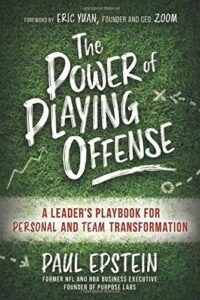
The Power of Playing Offense: A Leader’s Playbook for Personal and Team Transformation
Spending fifteen years in the NFL and NBA, the apple doesn’t fall far from the tree. When you think about the mentality, that in my words, I like to attack each day with a mentality of playing offense, that is this all gas, no brakes type of approach, where we all know there are two types of people in the world. As I spent fifteen years in a high-performance environment like sports, I clearly see the delineation and there are two groups.
I want to ask the readers, think of these people in your life. You know folks on both sides of the fence. One always seems to play on their toes. The other is seemingly always on their heels. One has a mindset where it’s always, “Let’s not lose.” They play not to lose. They’re never going to fail big but they’re never going to win big versus the other feels like, “I’m blessed to have this house money and I am playing to win every day.”
The first group, market, external circumstances always seem to dictate their terms, but the second group operates on their terms. I like to describe that as the first group plays defense, the second group plays on offense. When you play offense, you not only play with purpose and passion, you take control of your future. That is the spirit of how I landed on the Power of Playing Offense.
When you talk about leadership, this was the playbook that I never had because I did positional leadership has all called for a decade and a half. Everyone taught me how to hit goals, metrics, numbers and KPIs. Nobody taught me how to lead people. To me, that’s the secret sauce of business and life. I said, “What is the book that I needed a decade ago and it never came?” I had to fail, fall, pivot, reinvent and go through all of these things and I have no regrets. I’m happy that I didn’t have the book. I wanted to make sure that people in the future didn’t experience some of the same pain.
You’re tapping into a big struggle. I was working with the healthcare tech company and they’re not the market share leader. They want to be, but they’re not. One of the reps said, “We’ve got to stop playing defense because every sales pitch is us defending against the leader of, why aren’t you doing this? They are, whatever the issues are.”
This concept of offense or defense in terms of presenting your content, message or story against someone who has bigger leadership is your area of expertise because you told me before the show that you’ve been selling the underdog your entire career. Let’s transition from top playing defense and start playing offense even if you’re the underdog. How does someone do that?
For context and backstory, I did fifteen years in the industry and for those that are sports fans, if you root for any team for fifteen years, you’re going to make the playoffs, 5, 6 maybe 10 times, if you’re lucky. How about in fifteen years, I enjoyed the playoffs once. I sold a playoff team, 1 out of 15 years, whether I was directly in a sales seat or I was leading the entire sales enterprise.
Now you talk about an underdog. It was a joke in the industry that I was the black cat, wherever I went on the corner of the field of the Is. They’re saying they are going to be a lot of Ws. The first one was the LA Clippers. This is not the Clippers of nowadays, where now they are winning. They were in the shadow of Kobe and Shaq, Lakers. ESPN called us the worst brand in sports and Sports Illustrated said, “You are the worst franchise in sports history.” We had to sell that.
[bctt tweet=”Choice is when your fingerprints are on the blueprint.” username=”John_Livesay”]
I shared this story of the underdog to say that even from a recruiting perspective, if you want to talk about the pitch, what’s the pitch to get somebody to come work for the Clippers at that time. That’s the situation that I found myself in every single day. Over time, we couldn’t house enough people that wanted a bite at the apple because the pitch which came from the heart was, this is not for everybody. A tribe either needs to attract or repel you.
Imagine you’re in the boardroom right now and Paul is the hiring manager. I said to the group, “My job is to hire the best talent. Your job is to control the controllable. I’m not even putting pressure on you to sell.” It was the opposite of what everybody in the industry says, “Where it’s about metrics, goals, numbers and KPIs.” I said, “No. That’s my part. Let me remove that pressure from you, but here’s the hard hat and here’s the lunch pail. I need you to show up with every single day.”
There are three components, work ethic, positivity and coachability. You give me those three things. I’ll take care of you for the rest of your career. This was for a job that had a 6 to the 9-month runway, 10% usually made of the promotion to a senior role. I had what I called the constitution, which was on a whiteboard in my office and everybody could see it. I had them sign. I put the date of 6 to 9 months from their hire date.
I had them sign it and said, I made it sound like a constitution, “I will commit to the values of work ethic, positivity and coachability.” I would sign it right under them. I said, “You give me those three things and in that three-month span, 6 to 9 months from now, I got you and take care of you, not only for that first promotion but for the rest of your career.” That is how we pitched it, fulfilled it, delivered on it and I’m still fulfilling those promises to this day, years removed from the sports industry.
Instead of trying to get people to work at a place that might be seen as, “I’m working here because I didn’t get any other offers.” It became, “This is my first choice because the culture cares about me and it’s a fit with my mindset. I’ll feel proud of working here as opposed to embarrassed.” By taking the external judgments of what you decide, whether something’s good or not. Flipping it internally is what I’m hearing.
I’ll piggyback on that because years later, as I’m recruiting for the 49ers Academy, which I was the proud founder of. This is a decade gap in between stories to show you the matriculation of how this surfaces. At the time of my Clippers story, I didn’t know the difference between extrinsic and intrinsic motivation. Those terms had not entered my vocabulary.

Playing Offense: Anybody interested in more of the research, scienceofpurpose.org is a massive accumulation of how purpose connects to the bottom line and to individual performance.
For everybody reading, into a simple way of thinking about it is, carrots and sticks are the extrinsic motivators. If you do something, I will give you a bonus. If you don’t do something, I put you on a performance plan or you lose your job. That’s a carrot and stick. The intrinsic motivation is, are you motivated from the inside out? Is there a level of internal success, significance, happiness, fulfillment and purpose that you feel in work? Me, as your boss, don’t need to hold you accountable. You hold yourself accountable because you believe in the place, me as a leader, the team and the culture, all that.
I had four cornerstones at the 49ers Academy, the same type of pitch at a time where not a lot of folks were wanting to come to the organization. It was after the honeymoon period, the first 2 to 3 years of Levi’s Stadium. Here are the commitments we make to you. There are four cornerstones, purpose, choice, progress and impact.
Purpose, we will create an environment where the why is greater than the what. Crossed us that we can guide you on the how and as Nietzsche once said, “When your why is strong enough, the how will take care of itself.” We focused entirely on purpose as the foundation and then choice. Rather than saying, “Here’s the playbook, go execute.” It became, “What kind of plays do you want to run?”
Now I’m giving everybody a voice, even as a recruit to say, “What’s the environment that you thrive in? What leader do you love? Just because Paul is wired a certain way, maybe you want some tweaks to that and I’ve got to have some empathy. I’ve got to listen to that. Otherwise, I’m not going to have you maximize your potential.” That was choice. The way I describe choice was your fingerprints will be on the blueprint and people take more ownership when their fingerprints are on the blueprint.
The third cornerstone, progress, I’m a massive believer that if you can make a commitment that when somebody leaves the office, they are better than when they showed up that day. They will keep coming back. Whether you’re the underdog or the market leader, it is equally effective because now it’s not about the paycheck. It’s not even about the company, brand, product or service. It’s about me as a person.
When Paul feels that my company and my leader care about me enough, that they’re going to invest in my development and I’m going to be better when I left than when I showed up, I’m going to keep coming in and grinding. The blood, sweat and tears are going to be organic and authentic, and that’s the third one.
The fourth one is impact. My firm belief is that everybody in life wants to make a difference and feel they matter. They want to do what matters and make a contribution. That impact is the driver of all things good. Whether you’re the Clippers, the 49ers or anybody in between, I said, “Purpose, choice, progress, impact.” If that is you, this is your tribe. It wasn’t for everybody and thanked God it wasn’t, but the people that wanted it made leadership so easily.
[bctt tweet=”Every day is a pitch like life, life is a sale. If you’re not living and leading with purpose, then you’re building your house on quicksand.” username=”John_Livesay”]
They felt like they had found the water in the desert, I’m sure because most players aren’t that clear on what the culture is. You don’t know what you’re signing up for. This concept of intrinsic versus extrinsic motivation is worth double-clicking on. I first came upon that concept when I was selling advertising and Lexus was launching here in the states.
They said, “We compete with BMW and Mercedes. We have done all these studies that certain people buy the BMW like if you’re an agent in Hollywood, you have to wear the Armani suit and drive a BMW because that’s external motivation. I want to impress people with my labels and country club, whatever.”
There’s a whole group of people that buy BMW and Mercedes that are internally motivated. They aren’t trying to impress anybody. They want the car to be well-made and that’s who we have to target because we don’t have the history of branding. Once you have that awareness of it’s not a recruiting tool, it also becomes a marketing and branding tool.
I couldn’t have said it any better and case in point because I’m a big sucker for stats, especially when you’re talking about something like purpose, as much as I do. I think there are a lot of folks that feel like, “It’s a little up in the clouds and that doesn’t connect to performance or the bottom line.” Anybody interested in more of the research, ScienceOfPurpose.org is a massive accumulation of how purpose connects to the bottom line and individual performance.
One of my favorite stats and it ties to what you said is that we’re trying to switch consumers. You’re trying to take somebody that’s not participating or engaging with your brand, product or your service. You’re trying to get them on board with your team. Purposes, one of the greatest drivers, there is about a 73% clip of global consumers that will pivot and change brands based on connecting with the purpose of the brand.
That to me is that intrinsic piece because it’s not the bells and the whistles. I could watch a commercial and I got that. It’s why do you exist as a company, as a person? Are you communicating with your purpose? Are you communicating to the outside world? What your intrinsic motivation is because that will create a pull effect versus in sales. It’s often a push effect.

Playing Offense: If you’re trying to switch consumers, you’re trying to take somebody that’s not currently participating or engaging with your brand or your product or your service. You’re trying to get them on board with your team’s purposes.
As I think about pulling, that’s intrinsic and what’s fascinating about this when I saw the stat of 73% in purpose-driven brands. That’s how global consumers shift. I thought, “This is bigger than branding a company.” You are the brand. We are all our own brands. How we show up each day is how we represent our brand. If we’re not showing up with purpose, we’re going to miss the mark on 73% of the market.
Your book is talking about these five pillars of playing offense that we lead ourselves, others and then, of course, what the future can be as some legacy. The through-line that I see is it all has to start with purpose, especially in certain industries like sales or lawyers, known for being extremely competitive within the same company. That doesn’t work on a sports team and yet in business, you’ve got people who are supposed to be on the same team and yet there is so much infighting going on. Do you think part of that’s because there is no through-line of a bigger purpose?
I think there are two sides to the coin, transactional or transformational. The more that we walk through life and sift through life in a transactional mindset, that’s where the whole scarcity versus abundance piece came from. Here’s a real example. We’re both speakers and we both speak about sales. Do I view you as competition in the sense of is there only so much food to eat that I shouldn’t be coming out on your show? I share it with my audience and now more folks are going to say, “John is pretty awesome. We want to hire him as a speaker.” That’s a scarcity mindset. Versus abundance is there’s enough for all of us and not just enough. We can grow the size of the pie when we support each other. I think that’s the real win.
Here’s the piece on sports and I’ll go back to offense-defense. Everybody loves to be on a winning streak and when there are blue skies. The weather is perfect and I can do no wrong. In that case, the purpose is an inspirational thing. I think the purpose is more effective in a storm. It is more effective when the defense is pushing back.
Take the pandemic as an example, very unexpected and unanticipated. Depending on our age, it was something that most of us had never seen and experienced. The fear, risk, uncertainty and anxiety, defensive elements in life, a lot of them not only external but also in our mind, we housed a lot of those negative thoughts, emotions and feelings. My piece is how deeply do you believe in what you do and why you do it? That’s the purpose and the greater your purpose will be the fuel of your eventual resilience.
In other words, if I believe in what I’m doing, I’m going to continue to get up off the mat because it’s not about a single day, a moment or a transaction. It’s about this long game. The job career calling transformation, as I said earlier, that’s what this is all about. It works on the field, court or ice. It works in the boardroom or the sales trenches. Having that deeper belief and purpose can keep you on the treadmill, especially on the days you want to get off.
[bctt tweet=”One has a mindset where it’s always, let’s not lose. They play not to lose. So they’re never going to fail big, but they’re never going to win big. ” username=”John_Livesay”]
We can all relate to that. There are certain days you feel like exercising and certain days you don’t. You don’t feel like exercising even if you get yourself on the treadmill. You might go, “Just ten minutes. I’m not doing the full 30 or whatever it is.” There has to be some bigger purpose to get you to do something when it’s so easy to stop doing it.
The purpose is to hit a certain goal of your weight, body fat or whatever, like certain goals of hitting a certain sales quota. That’s not nearly as impactful or it doesn’t have the longevity as, “I’m doing this I can live to see my grandchildren.” If you’ve been diagnosed with something or it’s a bigger purpose to why you want to get healthy versus vanity. It suddenly becomes, “We’re speakers. We have to have some endurance on changing time zones and fleet. We got to show up fully present.”
Nobody expects a Broadway star or an athlete to show up on the field, not being in training, rested, ready to go and practice, yet a lot of us show up in our own lives going, “Swing it when I get there. I lost my voice.” Whatever the issue is. There are so many things that we take for granted when we see a professional perform, whether it’s an actor, athlete or a speaker.
I think that all of these things that you’re talking about explain what it is that makes you so successful as an expert on helping people find their purpose so that they can lead others to success, whether it’s in sales or any other endeavor. I want to ask you, as we wrap it up, to give us a story about your own purpose. How did you find your purpose?
I’ll explain what’s more important, which is the color and the background of it. The statement is my purpose is to inspire purpose in others so they can play offense in life and we’ve appreciated the context to this conversation of what those things mean. The Latin definition of inspire is to breathe life into. I’m here in this world to breathe purpose into others.
My purpose is to help you find your purpose. My mission is to help you not only have a mission statement but to be on a mission. My cause is to help you find your cause. That is how I breathe life into people, teams and organizations. I found it at an offsite leadership retreat with the 49ers and frankly, it’s what led to my eventual Jerry Maguire leap out of an industry that I never thought I would leave. I thought I would still be here decades later and be riding the sexy train of the sports business. It was an amazing ride.

Playing Offense: What your intrinsic motivation is because that will create a pull effect versus in sales, it’s often a push effect.
Once I tapped into purpose and I started to understand my core values and my biggest value is impacted. I asked myself a simple question, “Can I create more impact inside of the walls of this team, this industry or beyond those four walls?” When I evaluated the decision like that, I knew that I had to leave and take a leap, but the reason and part of the purpose discovery process is you have to do a lot of life reflection to tap into your authentic purpose.
The biggest memory for me comes from the biggest pain in my life and often, for those reading, your greatest pain can often be tied to your greatest purpose. For me, the greatest pain was losing my dad at nineteen. As an only child and I still remember picking up the call where I got the word that I picked up as a boy, and I hung up as a man. My mom went from a parent instantly to a partner.
What I got to appreciate over the years, because I don’t know if somebody is reading and maybe this will resonate, but I’ve learned more from my dad since the day he passed than when he was alive. It’s because of the stories that I’ve heard from his former students. By trade, my dad was an educator at a continuation high school. For those that are not familiar with continuation high schools, it’s typically a kid’s last chance. They’ve been kicked out of traditional schools. They landed a continuation and there is no next step. The next step is no school will take you.
In a lot of situations where you come from a broken home, you’ve been given up on, disadvantaged backgrounds, the hope and the prayer is that you don’t become a statistic on the street. That’s the environment that my dad chose teaching. Years after he passes, I’m at a barbershop, a few blocks away from the school that he taught at. I’m sitting in the barber’s seat and walks in a 7-foot-tall man, tattoos on every square inch of his body and his face. If you saw it in a dark alley, you are running the other way.
He and I locked eyes and he’s coming right at me. I saw his hand go up and I fully expected that a fist was about to impact but instead, I opened my eyes and I saw a finger that was pointing right at me. He says, “Are you Mr. Epstein’s son?” I said, “Yeah.” He said, “I wanted to come over to say thank you because your dad was the first person that ever believed in me. I’ve had a job for two consecutive months now, and that may not sound like much to you, but it means the world to me.”
John and everybody reading this next part is what got me. This gentleman said, “Your dad gave me a reason to think that tomorrow was worth it.” When I heard that, it changed my entire vision and meaning of life. I understood the impact that he made on people’s lives. That’s why impact is so important to me. It’s not a core value. You asked me what my whys and I gave you the marketing answer along to inspire purpose in others so they can play offense in life. You know what it is, the spirit under that because there’s always a why under the why? The deepest why that I have is to make my dad proud.
[bctt tweet=”The intrinsic motivation is, are you motivated from the inside out? Is there a level of internal success and significance and happiness and fulfillment and purpose that you feel in the work? ” username=”John_Livesay”]
It’s heartwarming. As I say, when we tug at heartstrings, that’s what gets people to open purse strings and gets us the emotional connection that we need because people buy emotionally. If people want to find out more about you, that your website is PaulEpsteinSpeaks.com. The book title again is the Power of Playing Offense. You have something relatively exciting and new to share with us in terms of a partnership you’re doing with the WHY Institute. Why don’t you tease that out a little bit for us?
It’s pretty hot off the press and I’m now as Senior Advisor for the WHY Institute. I know Gary Sanchez, who’s a dear friend. He’s also been a guest on your show. He’s an amazing human being and on a mission. It came from Simon Sinek’s old work and the Golden Circle why, how, what. The problem with the why are most people cannot directly explain it.
Imagine the magic that’s possible when you not only know your why but you know the why of every person on your team and in your organization. I see this tool being able to unlock all of our potentials because we have so much greater empathy when we understand how to speak the other person’s language. That’s what the WHY Institute and the assessment does.
From the heart, that once you can tap into your why, the world starts to become a lot clear, there’s a lot less burnout, fatigue, and you’ll start to feel alive. That’s the closing piece that I’ll share with everybody is a simple thing to share is when you’re living on purpose and life is no longer happening to you. It’s because you’ve activated and aligned your head, heart and hands. When your head and heart are on board, your hands will follow. That is the equation to living and leading on purpose. Align your head, heart and hands, game over, lights out.
Thank you so much for sharing your passion, your why, your stories. I think it’s going to be something that’s going to help a lot of people. Thanks again, Paul.
John, thank you so much.
Important Links
- The Power of Playing Offense
- Paul Epstein
- Gary Sanchez – Previous episode
- WHY Institute
- 49ers Academy
- ScienceOfPurpose.org
- Better Selling Through Storytelling Method Online Course
Wanna Host Your Own Podcast?
Click here to see how my friends at Podetize can help
Purchase John’s new book
John Livesay, The Pitch Whisperer
Share The Show
Did you enjoy the show? I’d love it if you subscribed today and left us a 5-star review!
- Click this link
- Click on the ‘Subscribe’ button below the artwork
- Go to the ‘Ratings and Reviews’ section
- Click on ‘Write a Review’
Love the show? Subscribe, rate, review, and share!
Join The Successful Pitch community today:
- JohnLivesay.com
- John Livesay Facebook
- John Livesay Twitter
- John Livesay LinkedIn
- John Livesay YouTube