

Dig Deep To Fly High With Karl Staib
Posted by John Livesay in podcast | 0 comments


The real key to success lies deep within ourselves, embedded in our goals, emotions, and desires. Aiming to help entrepreneurs achieve a boundless mindset and use their struggles as stepping stones is Karl Staib and his Dig To Fly technique. He shares how a simple concept born out of grief from his father’s death led to a life of gratitude, which Karl wants to impart to every business out there. To explore it even further, John Livesay turns the table and lets Karl interview him according to the Dig To Fly technique. They go deep into John’s desire to gain more momentum in his speaking stints, where he wants to grow, and how meditation can help achieve his goals.
—
Listen to the podcast here
Dig Deep To Fly High With Karl Staib
What I like to think of it is we have these diamonds inside of ourselves and they’re rough. They’re caked with dirt. You don’t realize that they have energy trapped inside of them. When we dig down and we start to uncover them, we start to see the energy come out because we bring them to light, and we see the shine and the sparkle.
—
My guest is Karl Staib, the Creator of the Dig to Fly Method. In this episode, he literally walks me through a particular challenge I’m having and uses his method to uncover new ways to look at it. When we change our mindset and come up with actionable ways to move the needle away from anxiety and into some sense of focus and comfort, it’s quite something. You’re going to enjoy this. You can start to see yourself in this episode where you can say, “I’d like to be a little more patient. I’d like to stop comparing myself to other people. I’d like to become a little more comfortable with the unknown.” If any of that resonates for you, this episode is for you.
—
My guest is Karl Staib, who is the Founder of the Dig to Fly Method. He trains people to use this method to find opportunities in their struggles. He’s been featured by Forbes and National Public Radio and has worked with great companies like Phillips Global and Southwest Research Institute. He has speaking chops. He’s spoken to Fortune 500 companies about using their struggles and turning them into stepping stones. He has a passion for improving the mindset that has no bounds. His real expertise is helping small business owners get a new mindset. When that happens, their business starts to take off. Welcome to the show, Karl.
Thank you. I’m excited to be here.
I always love to ask my guests to tell their own story of origin and you can certainly take us back to childhood or school or when you had your own struggles with health issues or your father passing, wherever you want to start the story.
There are many different spots because a lot of it stems from childhood. How we connected was because my father was passing and you connect with that story because your father passed a few years ago as well. It’s important when we go through a struggle, like a passing of a loved one, dying of a business that we dig into these thoughts and emotions. My son watched a little video that my older son created. It was these animated little characters. You do still frame. One came into the frame and made fun of the other, then the other’s shoulder slumped and he sulked out of the room.
My youngest started crying. A lot of empathy. I was like, “That’s great.” After crying, he’s like, “Can I watch something?” It was a way to soothe himself because he didn’t want to feel these feelings. I was like, “It’s okay to be sad. It’s all right.” When I was growing up in the late ‘70s, ‘80s, the boys were like, “No. Dust yourself off, get back out there. Don’t feel these things.” Our world is changing a lot. When we do feel these things and when my father was passing, we can either ignore it or we can soothe ourselves with alcohol, video games, TV, sex, whatever but we’re not paying attention, and not tuning in. When my father passed, it was this fork in the road of like, “What am I going to do here?” I knew a gratitude journal is one of the best ways to help process things. That’s what I did. That started me on the whole Dig to Fly journey. I went all in and now I have this method that I help small business owners with.
You have a book called Bring Gratitude: Feel Joyful Again With Bite-Sized Mindset Practices. I know we’ve heard the importance of gratitude, but I’ve never heard anybody use it as a way to deal with grief in particular. That fascinated me because I thought, “How wonderful to have another tool in our toolbox.” Gratitude does many things and your process certainly does that. Let’s talk about what your issues are about? How does someone find gratitude when they’re going through a crisis, whether it’s a business or a personal crisis?
When I first started on this journey back in 2016 when my father went into the hospital, I’ve done research in the work happiness space. Back in 2008, I started a website called Work Happy Now. I spoke and I trained people around work happiness. It was hard. People didn’t get the concept and in 2020, things are shifting. In 2021, we are becoming more empathetic and we are becoming a more compassionate culture. That’s amazing because back in 2008, I would reach out to companies and my employees are lucky to have a job. What are you talking about? Now years later, it’s a big shift. What’s amazing about this opportunity is we have these tools like gratitude but we then can say, how do we apply it?
[bctt tweet=”When you dig deep, you remove the dirt off the diamond that is you. Ask yourself the questions you don’t know the answers to and watch your business take off.” username=”John_Livesay”]
That’s when I came up with the Dig to Fly Method, because I realized it wasn’t just gratitude that I was using. I was digging in underneath these thoughts. I had testicular cancer and one of the things that you have to do with testicular cancer, or if you’ve ever had skin cancer or know somebody that has, you can’t take that piece of cancer. You have to go around it because it will metastasize. There are these little hairs that keep going. You have to go even further around it. That’s when I was like, “I need to not be just grateful for things. I got to understand where these feelings are coming from that I’ve been so afraid to think about and process.” I noticed when I started doing that, I reduced my procrastination. I was happier. I was taking on bigger challenges because I wasn’t as afraid. That’s when I was like, “This is something powerful.” Would you like to try the Dig to Fly Method?
I’d love to. Let’s jump in and show people what it is.
Do you have a current struggle that you’re dealing with right now?
I would think the big struggle I have sometimes is a lack of patience. I expect things to happen faster than they sometimes do. Whether it’s, “I thought I’d be booking more speaking engagements than I am now. Why is this taking so long? It seems like everybody else is able to speak more frequently than I am. What’s the missing ingredient?” That’s all tied together. The biggest struggle is getting comfortable with the unknown of when the next gig is coming.
I love it because a lot of people struggle with this. On a scale of 0 to 10, zero being, “This isn’t a struggle at all,” and ten being, “This is overwhelmingly the biggest struggle I’ve ever dealt with in my life.”
Seven.
Why is this a struggle?
Bring Gratitude: Feel Joyful Again With Bite-Sized Mindset Practices
Because I love doing it. I have gotten such great feedback that I have a wonderful impact on helping people become storytellers, and how it enhances their career in their life. It feels like this is what I’m supposed to be doing. When it’s not happening as frequently as I would like it to, it is a struggle because I get frustrated thinking, “Am I not doing something right?” I’ve gotten past the not feeling good enough, which used to be part of the struggle. Now the struggle is, how do I create momentum?
Why do you want to create momentum?
I know there’s a great book about the tipping point. I remember somebody saying, “The more you speak, the more you speak.” I thought, “What does that mean?” Now I have had an experience of it where someone will be in the audience that will hear me speak. They’re like, “My wife works at XYZ Company. I’m going to tell her they should talk to you.” That is what I mean by momentum happening. Your confidence level continues to go up the more you speak. Your skills are finely tuned and you have stories ready to go about how you gave a great talk and how it gave everybody a great impact. That’s why momentum is powerful. It helps our energy and our confidence.
You said the word impact. Another reason why you want to make an impact on these people, could that be another reason too?
Yes, because the more momentum I have, the more people I’m reaching, the more impact I have. Ultimately, that’s what we’re trying to always do, create some legacy.
What are your expectations? Where do you expect to be at this point?
I stopped setting goals for myself around this because I was always under pressure for many decades in Corporate America with sales goals. You have to sell this month this X number, in this quarter, in this year to hit these goals. My intent is to align my intentions and allow the right people to find me without having to beat myself up if I’m not hitting certain numbers. As with any business, you have to invest quite a bit of time and money. As a speaker, you invest time in your website, your video, getting that edited, all that. In my case, I also have a course that goes with the talk. Your expectations are mine anyway of this is an investment in me. I know my work ethic and my skillset. I’m willing to put this money in.
[bctt tweet=”When we go through a struggle, like the passing of a loved one, we must dig into our thoughts and emotions.” username=”John_Livesay”]
As with anything, there’s no promise that it’s going to take off. At one point, you break even, and then when does it become profitable, and then when does it become something more than, “I love doing this. No, this is an actual career that you’re getting to do.” The big shift for me leaving Corporate America was realizing, “If I make $100,000 as an entrepreneur versus $100,000 as an employee, they’re very different.” I hadn’t realized that. First of all, it’s probably not going to come in a steady two-week paycheck, ups and downs. Also, there will be expenses that you have to pay, your insurance, websites and things like that. $100,000 as an entrepreneur is not necessarily the same lifestyle as an employee.
You want this to grow quicker because you’re like, “I have certain expectations money-wise, expectations of how I want to affect people and impact them,” and your legacy. This is where we need to start making some shifts here, some mental 180s. What are you grateful for about this situation?
I’m grateful that I have a wonderful speaking agent named Shawn Ellis. I don’t take that for granted ever. I’m grateful that I have had the opportunity to speak and get selected. I am grateful for the response. I gave a talk to Anthem Insurance and someone came up to me afterward and said, “How long have you worked in healthcare?” I’m like, “I haven’t. I took the time to customize my talk to your industry.” When you get a standing ovation and you see tears in people’s eyes, and you realize that you’ve touched their heart, and/or the feedback of, “That was beyond our expectations.” Those are all the things I’m grateful for.
The last part of this is, where are the opportunities that are within this struggle that you can dive into?
I’ve started the concept of focusing on healthcare and tech companies because I love that industry and I have several experiences with it. One of the things I’m looking at is I updated my LinkedIn profile, narrowing in on that particular industry. Sometimes people think, “That’s limiting yourself.” The irony is I’m still getting offers to speak at other industries because they want to hear about what’s going on in healthcare and tech, and how it could apply to them. It may seem like you’re cutting yourself off if you just niche. It has turned out to be the opposite experience.
What other opportunities have you noticed?
Sometimes speakers refer me when they can’t do a gig or other speaking bureaus, I’ve gotten on their radar enough to get referrals that way. Sometimes people find me by Googling storytelling and sales. I’ve spent some time and money on my search engine optimization. That’s always exciting when that works. That was unexpected. I had the belief that I was going to have to convince companies of the value of storytelling to grow their business. Many companies now have after the book Better Selling Through Storytelling came out.
The Tipping Point: How Little Things Can Make a Big Difference
It wasn’t the book but I wrote the book without having that expectation. When it first came out, I was definitely having to convince people of how it makes you memorable and magnetic, people buy emotionally and not logically. Now the last few inquiries had been, “We want someone to teach our sales team how to be a storyteller.” It’s specific to what I do that’s an unexpected opportunity to have. Other people speak about storytelling and do it in different ways, which is fine. I don’t need to be the only expert on storytelling. That’s been fun to say, “Let’s keep making sure the SEO stuff works.”
Also, with external opportunities, there are also internal opportunities. What internally have you noticed going on that you could shed some light on?
I noticed that the more I speak, the more confident I am every time I have to go up and be interviewed for the next talk. I’m still on a high from the feedback from the recent one. Also internally, I remember I was up against 1 or 2 other speakers and the agent called and said, “They picked you. They liked your energy.” I thought, “How great?” The person said, “I felt inspired and motivated by your passion and energy, I assumed you’d make my team feel the same way.” Sometimes I can get stuck in my head internally going, “I need to explain to them all the details of how this is going to work.” At the end of the day, money and what you take away from a speaker is all energy. People are buying my energy as much as they are my expertise
What opportunities are out there that maybe you haven’t worked on to reach more people to make this bigger impact?
That I’m not sure I have an answer for because I’ve been digging as deep as I know how anyway. I’m exploring all the different channels, whether it’s how people can find me agents, referral, search engine, Google search. There is that tipping point that I’m doing press. You get some momentum that way of people started hearing about you. Posting on social media is another big way not to be attached to someone having to respond from one particular post. I did get somebody that reached out to me blindly on LinkedIn who goes, “I like your videos. I’m interested in talking to you about a talk that we have coming up in six months.” I thought, “Which videos? I need to know which ones are resonating.” I thought it doesn’t matter. It’s the consistency of it.
I’m going to read these back to you. I’m going to play it back to you in story form. I want you to listen, and then what we can do over the next 30 days to help you reduce this struggle and get more of these opportunities. The big struggle is a lack of patience. You want things to happen faster, more speaking opportunities. You see other people getting these opportunities and you wonder why you haven’t. The big part is the unknown. As you build this, you’re not sure what is going to happen next. I asked you to rate the struggle and you said it was a 7 out of 10. That’s manageable. If people say a ten, I’m like, “You’re not quite ready for this yet,” but it’s a seven, so you know there’s wiggle room there. There are things that you can improve. You have the motivation. If it’s a 1 or 2, there’s no motivation there to make any change.
Why is this a struggle? You love speaking. You love how it makes you feel but you’re not doing as much as you’d like, and you’re wondering, “Am I missing something?” You want to reach this tipping point and you want to make a big impact in the world. The expectations you have is you want to be able to reach more people. You expect more people to realize that you are good at this and that you can help them. One of the things you realize is you stopped setting goals. When you stopped setting goals, maybe there are some opportunities there of like, “Is there a hybrid model?” Maybe not the goals that Corporate America was setting but something that you can set that makes you feel more comfortable.
[bctt tweet=”Anxiousness is just a form of being stuck.” username=”John_Livesay”]
You realize too with your expectation of, “I’m going to start this business. When I earn $100,000, it’s not the same as earning $100,000 working for a corporate job.” We started that shift of gratitude. I could see it in your face. You started talking about the wonderful speaking events that you speak at healthcare. You have a wonderful agent, Shawn Ellis, which is amazing and you’re lucky to have him. The responses that you get, you’re blown away by how people feel, and how you can emotionally affect them through your words. You’re amazed that as you’ve been able to do more of this work, you don’t need to convince them that they need a storyteller. This didn’t happen ten years ago. This wasn’t a thing.
Opportunities, you want to focus on healthcare and tech. This is something that you realize like, “Yes, I’m niching myself, but I realized I’m also still getting jobs in other industries.” There are opportunities for more speaking referrals. Confidence, as you do this and people you’ve realized is they love your energy. Maybe how can we play off that? If there are these videos out there that they are attracted to, how can you showcase more of these? Where can you do this? I noticed social media seems like a good opportunity for you. I want to do internal and external goals. What actions can you do to reach out to others and then internally, help you process this. Let’s start with the external. What could you do over the next 30 days once a day or maybe Monday through Friday but every single day for 15, 20 minutes?
I could probably reach out to the people that I’ve spoken to in the past and check in on how they’re doing and the impact that it’s having. That might lead to a referral.
Can you do that every single day? Can you add some other people that might have been in the crowd that you’ve talked with? Maybe 1 or 2 people a day, when can you do that? What time of day? How can you add that to your routine?
I probably like to do it after lunch like 2:00.
Can you put that on your calendar?
Yes.
Better Selling Through Storytelling: The Essential Roadmap to Becoming a Revenue Rockstar
Keep it short, like 10 to 15-minute block you, and then once you have that email, you can copy and paste portions of it like your talk. It’s the core there. I love that. Now, internal.
I know that when I definitely booked time to meditate, I’m much happier.
Why is that? How does that help?
I’m not as reactive. I don’t get as stressed out and frustrated as easily.
When can you do that for once a day over the next 30 days? When’s best for you?
8:00 AM.
How long are you going to do it for?
I had this guided five-minute meditation.
[bctt tweet=”We need to be our own greatest advocate.” username=”John_Livesay”]
I love it short because whenever you’re like, “I’m going to do it for 30 minutes,” no. I know me. I do fifteen minutes max, and then I want to do something now. I heard what you’re going to do at 2:00 PM. You’re going to reach out to people, past clients, people you’ve spoken with. You’re going to get to understand a little bit deeper of how they liked it, get some feedback. Can you get maybe even quotes or testimonials while you’re doing It?
That’s a great idea.
You have a guided meditation that you can use and help you become less reactive. That’s why it is so important. The key thing and what I like about that is you’re already starting to think of how you’re going to be grateful for these things. You’re less reactive and you know you’re going to be calmer. How do you feel now on a scale of 0 to 10?
It’s like a three. It’s amazing putting a plan in action and not feeling overwhelmed. Part of it is this Dig to Fly Method is giving me a sense of control about something that’s felt out of control.
An important part of this is the sequence. You create some emotional space when you start putting a number on it, and then you’re already like, “That’s not terrible.” You start working your way through it. You dig down and then you start to do that 180. You can start getting out of that hole and start flying. I love it. Seven to three, that’s fantastic. Good job.
How great is that, you were able to show and not just tell what the method is. When you said, “Think of it like a story,” that’s the way I’m wired. Suddenly, I’m not listening to just my own stuff. I’m literally seeing a character in a story. Our protagonist is struggling with patience and comparing himself to other people and getting comfortable with the unknown. I’m like, “That’s a story I want to see how it turns out.” That part of it was interesting. Also, the willingness to ask questions that I’ve never asked myself. I could see how this would help small business owners in particular, but anybody, gets unstuck or get less anxious. Anxiousness is a form of being stuck. Maybe you’re still taking action but you’re anxious about it. That’s not the energy you want to put out into the world either.
What I like to think of it is we have these diamonds inside of ourselves. They’re rough and they’re caked with dirt. You don’t realize that they have energy trapped inside of them. When we dig down and we start to uncover them, we start to see the energy come out because we bring them to light, and we see the shine and the sparkle. We start to take away the dirt and the grime, and we start to chisel it away. We see how beautiful it is when we take the time to dig into this stuff and surface it because then it’s like, “Yes, I see what’s holding me back,” and then you can move forward. That’s the thing. It’s this murky darkness. You’re like, “I don’t know which way to go,” and then you slow down and go through the process.

Dig To Fly: Dig out of your hole, start to feel better and grateful, and then realize the opportunities that you have.
Everybody in the audience, after this is done, I have a one-sheet and they can print it out. They can do it themselves. That’s what I try to train people to do. Therapists are great counselors but we need to be our own greatest advocate. I want people to do this because I do this if my son’s acting like a little jerk or whatever and he’s in a cranky mood. I’ll be like, “How bad is his struggle?” I’m like, “Where did that question come from?” Subconsciously, now it starts popping out and I’ll do this method in 30 seconds. I’m like, “Where are the opportunities for?” Talking about my son crying, probably the older me from five years ago would have been like, “Come on. It’s just a little movie.” Now I’ll sit down and I’ll walk him through it because I want him to have this inner voice to be positive and talk him through things instead of being like, “Shove it aside, buddy. You’re fine.” It’s so interesting.
If people want to get your free steps and questions, they go to DigToFly.com.
Right there on that homepage is a little email sign up and they’ll get the Dig to Fly worksheet. I also have a recording of another Dig to Fly session so they can listen to somebody else. She was struggling with a friend. She has a reaction on there. She’s like, “Oh my God.” It’s funny. It hit her like a ton of bricks. It’s cool to hear.
I felt like you were running the interview instead of me hosting. I’m a big believer of show, not just tell something. We certainly showed how it can work in real-time and hopefully, people can imagine themselves going through it like I did. Any last thoughts you want to leave us with, Karl?
If people don’t even do this Dig to Fly Method, it’s important for them to pause, take a breath and say, “What is bothering me and why is it bothering me?” That why is so important because once you understand why, then you can start to come dig out of that hole. That’s when you can start to feel better and grateful, and realize the opportunities that you have.
Ask yourself, “Why am I so upset? Why is this bothering?” Nine times out of ten, we’re taking something personally. At least that’s my experience or we’re coming from a place of fear. One of those two whys can help us dig out and become the diamonds we were meant to be and be dirt free. It’s Dig to Fly Method. Thanks again, Karl, for sharing your expertise with us and inspiring us all to remember that we have the resilience inside if we ask these questions.
Thank you. I had a blast. Great job.
Important Links
- Karl Staib
- Bring Gratitude: Feel Joyful Again With Bite-Sized Mindset Practices
- LinkedIn – John Livesay
- Better Selling Through Storytelling
- https://www.Amazon.com/dp/B07DBT1L76/ref=rdr_kindle_ext_tmb
- Better Selling Through Storytelling Method Online Course
Wanna Host Your Own Podcast?
Click here to see how my friends at Podetize can help
Purchase John’s new book
John Livesay, The Pitch Whisperer
Share The Show
Did you enjoy the show? I’d love it if you subscribed today and left us a 5-star review!
- Click this link
- Click on the ‘Subscribe’ button below the artwork
- Go to the ‘Ratings and Reviews’ section
- Click on ‘Write a Review’
Love the show? Subscribe, rate, review, and share!
Join The Successful Pitch community today:
- JohnLivesay.com
- John Livesay Facebook
- John Livesay Twitter
- John Livesay LinkedIn
- John Livesay YouTube
Millionaire Secrets With Jeff Lerner
Posted by John Livesay in podcast | 0 comments

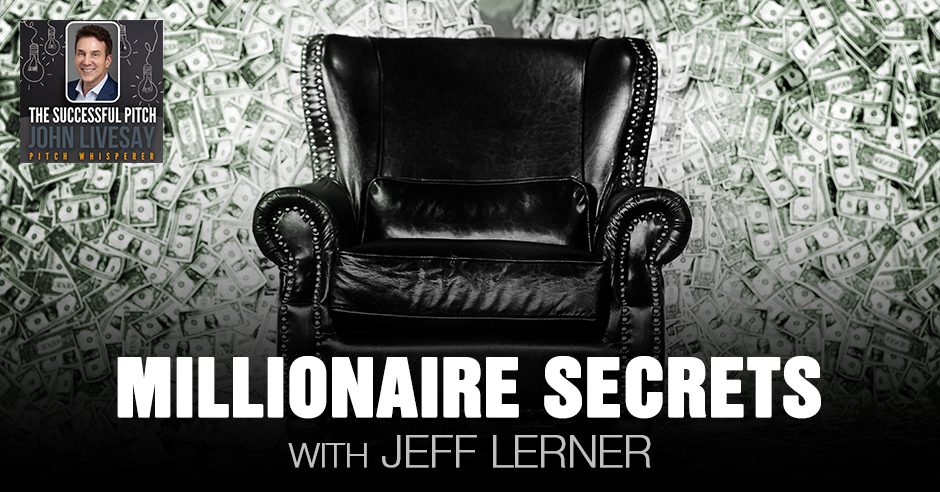
Getting to the top is not worth it if you are not doing what you love, or you still feel empty despite having everything. True professional success is all about indulging in your passion, keeping a healthy body, and having a deep connection with others. John Livesay is joined by the Cofounder and CEO of ENTRE Institute, Jeff Lerner, in discussing the secrets of attaining worthwhile business success, from taking care of your body to knowing the right way to eliminate money-related problems. Jeff looks back on his life that led him to become the entrepreneur he is today, starting from his piano performing days, getting divorced twice, and being a father figure of an integrated family.
—
Listen to the podcast here
Millionaire Secrets With Jeff Lerner
Our guest is Jeff Lerner who shares the 3P’s to success, physical excellence, personal excellence, and professional excellence. He does a deep dive on what the word professional means to him as well as what the word desire means. You’re going to want to listen to how he’s completely turned his life around and figured out how to be successful. More importantly, how you can too. Enjoy the episode.
—
Welcome to the show. Our guest is Jeff Lerner, who is the Cofounder and CEO of ENTRE Institute. He is a serial entrepreneur, speaker, author, and musician. He’s a native of Houston, Texas where he spent most of his twenties attending university by day while working nights at one of the top piano players, a gig, which found him playing in the homes of billionaires and business owners. This is what triggered his interest in entrepreneurship. In 2008, when he was only 29, after multiple failures, during a restaurant franchise that left him with over $400,000 in debt, he found his calling as a digital marketer and paid that debt off in eighteen months. Jeff, welcome to the show.
Grateful to be here, John. I appreciate you having me.
Let’s start with your own little story of origin. You can start by playing the piano. I love that story of seeing how successful people who are entrepreneurs got to live and being in the entertainment and saying to yourself, “What’s the secret sauce here?”
That was a powerful transformative experience for me. I’ll set it up by backing up a little bit. I’ve had one job in my life and it’s when I was sixteen years old. I worked for three weeks in the office supply room at a major law firm. That meant that I worked for legal secretaries. I don’t know what big five legal firm culture is now but I can tell you that in the mid-‘90s, legal secretaries were not the happiest bunch of people. As they say, they got what rolls downhill.

Professional Success: When you start screwing stuff up, and it involves kids, it’s a whole other level of carnage and negligence.
It rolled downhill from the attorneys to their secretaries. They paid it forward down to me in the lowly supply room and like, “I need a print cartridge. My boss has a deposition due at 2:00 and if he doesn’t have it, it’s going to be your ass.” I’m like, “I’ll bring you a print cartridge. Take a chill pill.” Three weeks was all the abuse I can handle. I managed to get myself fired. Apparently, I was disrespectful to a secretary. I’m sure she was being very respectful to me though. I was like, “I’m never doing that again. I better figure out something that I can do so I can make a living and make a life in this world without having to ever take that again.”
I became a musician. It was a very strategic decision. It wasn’t like I had some deep longing to express myself through the creative arts. It was more of like, “What do I know already that I’m good at it and I can develop into a tangible, monetized skill?” I went hardcore into piano. I didn’t start seriously playing piano until I was seventeen years old but I had played guitar previously. I knew I was a good musician, but the problem with guitar is if it’s acoustic, it’s not loud enough to play by yourself. If it’s electric, nobody’s going to hire you without a band for the most part.
Generally, you don’t get to keep all the money. A lot of times you get booked to show up, there’s already an instrument there and you get to keep all the money. Especially if you learn to sing, you can make decent money. Again, it was very pragmatic. I was like, “I’m going to learn the piano. I’m going to start learning to sing. I’m going to learn the Great American Songbook. I’m going to learn contemporary, radio hits, and I’m going to go get jobs.” It was a little harder than that. It took me three years to get good enough to play professionally.
I dropped out of high school at seventeen. I was like, “High school holds nothing for me. That’s going to graduate me to learn how to go get a job. I don’t want to do that so there’s no point. How to navigate that with my parents?” It was interesting. They knew me. They’re like, “If he decides he’s going to do something, there’s no stopping him. We can either make our home life miserable because he’s going to be pissed off all the time because we’re fighting him or crazy as it sounds, we can support him in becoming a professional piano player.”They bought me a piano. They said, “You better practice your ass off, son.” I did. It took three years. I practice 8 to 10 hours a day as much as I could. The only days I took off were because my hand was so stiff, I couldn’t move my fingers. In three years, I became good enough to get a scholarship at the collegiate level and start getting hired for gigs. It ended up taking me almost ten years to finish college but I did graduate with a degree in Jazz, Piano Performance, and Music Composition and a minor in Finance which is most notable because I had dropped out of high school.
[bctt tweet=”Physical, personal, and professional excellence are all needed for success. Stop trying to take shortcuts.” username=”John_Livesay”]
I still managed to get into college on a music scholarship. That was the musical part of the plotline but what was transformational for me were few things. One was, I did get to experience what it’s like to make a living doing something that you love. Once you’ve experienced that, it’s hard to ever imagine going away from it. I was hooked at that point that I had made the right decision even though life was hard and I did not make very much money. I tried to get married twice in my twenties and blew it both times. I was twice divorced by the end of my twenties. There are two classes of people that are hard to be married to.
One is startup entrepreneurs. The other is aspiring musicians. I was both. God bless my ex-wives. I don’t necessarily fault them for their second choice. The first choice to marry me, I questioned that but the one to divorce me, that makes some sense. The biggest thing in my twenties was as a gigging piano player, it’s not hard to get the elite gigs that pay the best. You have to get a suit that fits and not smoking. If you do smoke, do it in such a way that it doesn’t make you stink like cigarettes. You have to be on time and respectfully carry on a polite conversation but not over-talk because the clients don’t want you chatting up the guests. You have to know a lot of songs, and be a decent piano player. Since I was one such person, I got in with this good agency. They started booking me.
I played in the homes of Tilman Fertitta who owns the Houston Rockets, Jim Crane who owns the Houston Astros, Bob McNair who owned the Houston Texans. He passed away in 2017 but I played in his home, and Andy Fastow, the CFO of Enron. I played in some big billionaire mansions and I got a real taste of how much money there is out there. I was in a unique position because I would always get to the gigs early so I could warm-up, set up, play the piano, and feel the keys. Whenever I could, I would try to corner these guys for at least a minute or two of conversation.
Usually, I would frame it as like, “Do you have any favorite songs? How loud do you want me to play? What mood do you want me to set? By the way, you’re successful. Do you have any tips? You got a lot of zeros in your bank account. Anything you could share with a broke musician?” I started hacking my way into billionaire mentorship from some of these guys and got a real strong vision of what my life could look like. They frankly alienated me from my musician peers because they’re all about struggle and the art, and I was a jazz musician.

Professional Success: You can change who you are through cognitive restructuring, even though it can be brutally painful and exhausting.
There’s a real lore in jazz around the struggle. I was like, “Screw this. I want to be rich. I want to take care of people. I want to bless the world. Honestly, I want to be able to make music someday on my terms.” I heard a story about how Prince built this whole recording studio in his house. He started his own record label. He could release his albums and do all his recording. He answered to no one. I was like, “If I’m going to be a musician, I want to be a musician like that.” I realized I was never going to get there for me through playing piano so I tried to start businesses.
All through my twenties, I rattled off on the last interview I did, it was nine businesses that I failed at. Fast forward to 2008, the Great Recession destroyed the economy. In 2006, I had gone through the funding and application process for two franchise restaurants. I own these two sandwich shops. I thought I was going to be a traditional American franchise millionaire dude, instead it all went out of business with the Great Recession. In 2008, I was $495,000 in debt. I couldn’t afford my apartment. I ended up moving in with my estranged and soon to be ex-wife’s parents, living in their spare bedroom, dodging creditors who were calling their house so you can imagine how popular I was.
The hard thing about owing that much money on those types of loans is of the $495,000 in debt, $330,000 of it was to the US Treasury because these were SBA bank loans that are backed by the US government. It’s no different than owing $300,000 worth of taxes. You don’t disappear from that unless you die. I was hiding from the US government in my ex-wife’s parents’ house trying to figure out how the hell I was going to get my life back on track. That’s when I discovered in 2008, I remember it clear as day, it was Monday of Thanksgiving week, November 2008. Three days before Thanksgiving, for $395, I bought a course on affiliate marketing. It turned out that I was good at a keyboard whether it was a piano keyboard or a computer keyboard as it turned out. Mostly, I had the ethic to practice. I knew how to sit there and grind for 8, 10, 12 hours a day leaning in, deciphering complex musical passages.
You do the work and you give it time. As a musician, I know how long it takes to develop competence. It’s something that is sophisticated. Years, thousands of hours, and that’s how I approached internet marketing. Thankfully, I was a quick study. I had a great training course, a good mentor. In eighteen months, I paid off $495,000 in debt. I’ve been doing some form of new economy entrepreneurship ever since. I’ve done real estate, Shopify stores, affiliate marketing. I had a digital agency, I create my own courses online. You name it, I’ve done it.
[bctt tweet=”Always solve the money problem first to prove to yourself that money wasn’t the problem.” username=”John_Livesay”]
The thing that stands out for me, besides the wonderful metaphor of the keyboard from a piano to the keyboard of the computer, is the lessons you took from learning and becoming a professional musician, not from an artistic standpoint but driven money-making, “I don’t want to work for anybody else,” mission of discipline to practice, being on time. I can’t emphasize that enough to anyone. Since you make a virtual appointment, it doesn’t mean you get to be late, especially if you’re pitching to a client or an investor. How you do one thing is how you do everything. I’m wanting to tap into that, Jeff, because that’s one of the things that made me want to have you on the show. Finally, not talking too much. We both are comfortable in selling things and selling ourselves.
The biggest mistake I see a lot of people making is they talk too much about the features. They bore people. They’re not telling stories, and the worst mistake ever is after someone says bye, but they keep talking. When you brought that up, I thought, “I don’t hear a lot of guests talking about that being one of the keys to their success.” In this case, as a piano player. When you transfer that to an entrepreneur, a salesperson, and having a successful pitch, the exact same three things, discipline, be on time, don’t talk too much, that’s like table stakes. If you’re doing it and most people are only doing 2 of the 3 or only 1 of the 3, you’re already ahead of the game. In my mind, if you can tell better stories, which clearly you’re great at, because music is a story. Each piece of each song tells a story so you have the ability to transfer so many of those skills to that.
You’re doing at the ENTRE Institute these ways of excellence and you have three of them. There’s a personal one, a professional one, and a physical one. Many times, people sacrifice 1 of the 3. We see all these wealthy people that are one beat away from a heart attack. You’re like, “You’re walking commercial of what that looks like.” It’s because the physical is not a priority or the sleep deprivation is a badge of honor and all these crazy behaviors or the multiple divorces and miserable life. You had said you have some insights for people. I bet a lot of people are going to lean in now of you can show us how to be excellent in all three. Please start with the personal. What tips do you have for people on having an excellent personal life while being an entrepreneur?
What’s funny is this is the one that I thought I had figured out because I’ve always been a reasonably fast, smooth talker. I thought that meant I was good with people. I was a train wreck of a listener like, “I got to stop talking and let other people talk.” I was an only child. I thought I was the sun and everyone else was a planet. I thought that my personal skills were well-developed. It wasn’t until my mid-30s, I realized how truly terrible they were. I’m jumping ahead in the story but in my early 30s, I started making money but I’m still not happy even though I’m out of debt. I came off of another interview, but this was what we ended up talking. It’s important to solve the money problem so that you can prove to yourself that money wasn’t the problem. As long as you have a money problem, it’s easy to make that your problem.

Professional Success: Professionalism is an intentional profession of faith, belief, testimonial, and value.
I solved it in my early 30s and I was still miserable. I was a divorced bachelor living in New York City, trying to live a cool Manhattan bachelor life which was such a façade and a distraction. I met this wonderful woman who lived in St. George, Utah, a little town I’d never heard of. She was a widow. I met her at an event that her dad was hosting, and I was the guest because I’d been an affiliate for his company. We hit it off. She had three kids and her youngest was two at the time. I went and visited. It didn’t click with the concept of a dad. It wasn’t like, “You’re not my dad,” because she’d never had a dad. It was like, “Who’s this guy?” I came out a few more times. I was head over heels in love with this woman.
I was like, “This is the woman I want to like to hang out with. There’s no one like this in New York.” I’m flying out to Utah every weekend from New York. It’s 4, 5, 6 weeks into that process, then all of a sudden, she’s like, “Daddy.” Suddenly, my girlfriend and I are like, “What happened?” We didn’t plant or suggest that. In fact, we’ve been very careful. Here’s the thing, I pretended to be mortified. I was so happy. Something came over me and I was like, “This is it. This is what I want for the rest of my life.” Within a month after that, I had exited everything else I was doing in New York City. I had loaded up a U-Haul, I was driving out to Utah, and I’ve been here ever since. The reason I’m telling you this in terms of the personal excellence, personal relationships, communication, connection, all that good stuff.
Now I was the father figure in an integrated family. She had two boys and a girl and the stakes are high here. I’ve been through a divorce. It sucks when adults screw things up. When you start screwing stuff up and involves kids, it’s a whole other level of carnage and negligence. It was like, “Let’s go get therapy. Let’s go get help. Let’s do this right.” She’d been divorced. I’d been divorce. That’s what changed my life. Early mid-30s, I go get in with a good family counselor. I thought I was going for a couple months to follow instructions, put the Legos together, and it was all going to be grand. I spent 2,000 hours in therapeutic environments over the next five years.
It doesn’t surprise me because you’re focused on the number of hours you put into learning how to play the piano, you’ve taken that ability to focus and commit to making your personal life as good as it can be.
[bctt tweet=”Excellence must always center on how you connect with people and how you manage energy in conversations.” username=”John_Livesay”]
Here’s the thing, I love it. You talk about listening. It’s stop talking, responsive listening. I say those two words together or people are like, “I should listen and be more responsive.” There’s an art to responsive listening like empathy. I got tested in the early days of therapy. My empathy on a scale of 0 to 100 was a 4. I’m an only child. I don’t need to hear about other people’s problems. I don’t walk out on anybody’s shoes. Years later, I figured out what if I retook the test. It was up to an 80. You can change. Not what you think and what you do. You can change who you are.
It’s a process called cognitive restructuring. It is brutally painful and exhausting. To this day, my therapist says, “You two are some of the only people I’ve had that were willing to do the work.” In ENTRE, when I talk about personal excellence, I’m talking about how you relate, how you connect with people, how you manage and control the energy in conversations. I’m talking about power dynamics. We teach something called nonviolent communication. One of the most important skills in life is making it so that every time somebody finishes a conversation with you, they feel good.
Wouldn’t it stand to reason that would be a useful skill? There’s a way to do it. Study transactional analysis, non-violent communications, Adlerian psychology. There are actual ways that you can become excellent in relationships that not only make your personal life better, not only make your relationship with yourself better. Honestly, they’ll make you a crap load of money. We’re here to talk about pitching and selling. Let’s say I’ve made millions. These skills added a zero.
Let’s dive into that. Be professional excellence, especially around the world of affiliate partnerships. For those who may not know 100% what that is, it can be everything from someone selling a course or a training program and people promote it for you and they get a percentage of what your revenue is. What’s happening in my perspective, of course I want to hear yours, is transferring of trust. The skills that you learned, empathy and listening, are what allows people to want to partner with you and then have those people who are following them say, “If Jeff trusts John, then I can trust John.” That’s the foundation for then seeing of whatever John is offering wouldn’t even be something but at least the ears are open. “If Jeff has vetted him in this, then this is a safe email to open,” or whatever it is.

Professional Success: Money is the last indicator of health. It must always start in the body.
Affiliate marketing is technology applied to referrals. We’ve had referrals as old as time, “John, you’re in Austin. You got to check out that pizza place on MLK.” Imagine if I said, “Make sure when you go in there to give them my name so they know I sent you. They might even give you a discount but also they’re going to know I sent you so they’re going to send me $1 for the referral.” Affiliate marketing is that, only it’s all tracked through digital links. That is what I started with in 2008. I was a full-time dedicated affiliate marketer from 2008 to 2012. I did well with that and I paid off my debt.
At the end of the day, it’s all about communication. I have a very specific definition of the word professional. It’s the 3P’s, Physical, Personal, and Professional excellence. Admittedly, I like it because it starts with P. It fits the pattern. I could say financial excellence, business excellence, or value excellence. Professional is a very specific word, very intentional to profess something. A profession of faith, belief, testimonial, value, or whatever.
There’s so much more to change the way we view business as how we make money or change our career. The way we view our career is how we make money. What are you professing every day through the work that you do? It’s important to change the way we view the business that we do or the career that we have. It’s not how we make money. It’s what we stand for in the world. It’s the profession of our faith, our belief and our identity.
I love that because the basics of being a professional, one of the things is showing up on time which we talked about at the beginning. What’s more than that because it’s energy of your passion that you profess your company in such a way that is not something you’re doing. It’s something bigger and there’s a bigger purpose behind it. Therefore, you’re able to profess your belief in it and that’s what is attractive to people.
[bctt tweet=”Say yes to success by saying no to everything that isn’t success.” username=”John_Livesay”]
You could rate somebody’s career satisfaction by saying, “Is their profession consistent with their profession?”
Finally, the physical element of it. For those who aren’t able to see you in person, you obviously keep in great shape. Whether you’re an entrepreneur, a musician, or an athlete, there is something to be said that your health is your biggest asset. Without it, you’re tying one hand behind your back. Any thoughts you have about the importance of sleep and exercise and all that to be successful?
When I draw the physical, personal, and professional excellence model on a piece of paper or a whiteboard, I draw it as concentric circles and physical is at the center. By the way, I always say them in that order, physical, personal professional from first to last. Money is the last indicator of healthy, sustainable, non-destructive growth. I personally believe it starts with the body. The body is the fuel cell. You cannot power a life, an engine, or a machine if you do not have a charged fuel cell. The way I look at it is, your physical is your fuel cell. It’s the energy source.
When energy projects from your life, what’s the first thing it hits? It hits the people right around you. Your points of impact, those are your personal relationships. I would argue, if you’ve got an energy that positively suffuses the people around you, do you even deserve to have a lot of professional success? If you’re saying, “No, I want my energy to skip my family. I want it to land in the market so I can make a lot of money. I don’t even want to have to have good, healthy energy. I’m going to neglect my body and my family. Hopefully, there’s this peripheral ring of professional, whatever that sends me a bunch of money.” That’s irresponsible. That contravenes the universal law of effort and value.
Millionaire Secrets
We need to stop taking shortcuts or trying. The shortcuts don’t exist, but they’ll work for a while and then they’ll call our bluff. We need to stop trying. Take care of your body and the people around you. Again, use the word deserve. The place that you serve from. If you’re serving from the right place, you’re professing something that’s aligned with who you are, you believe in, and it gives value to the world then you deserve professional rewards. That’s how I look at the world. I’m a simple person from the standpoint of when the going gets tough. I can only remember one thing. It’s easy to sit here, you and I can have this coffee shop talk, be intellectual, cerebral, and have all these great ideas.
I’ve got a bookshelf right here. I can pull a book off and read. If I’m in a firefight or if I’m $495,000 in debt, my ex-wife is leaving me, I’m stuck living in her parents’ house, and I have a month to try to figure out how I’m going to generate $40,000 or $50,000 a month or else, I’m going to lose everything. I’m going to have to end up in debtor’s prison or whatever. In those circumstances, when the stress has ratcheted it up, I’m not smart enough to remember all the fancy stuff. I got to have so simple heuristics that I can glom to. The three PS is at the center of my mental universe because it’s always there for me, physical, personal professional. Jeff, where are you faltering? You don’t have the money you want.
Are you taking care of the people you love you? Are you taking care of your health? There’s the problem. It always proceeds in that sequence for me. As far as an execution, there’s only 24 hours in the day. How do I get to have it all? By the way, this is a podcast so people can’t see this, but I’ll show you and you can speak to it. This is my schedule. People will say, how do I do it? I get up at 3:30. I do my morning routine. I practice piano for an hour. I go to the gym for 90 minutes. I have an hour of family morning and breakfast and take my daughter to the bus. It’s 8:00 and I start work. There’s no way around it. Get your butt up, do the work, and be balanced. Here’s the key, you say yes to success by saying no to everything that isn’t success. I got time to do that because I make no time for anything else.
I believe that you might have a free gift for the readers.
I absolutely do. I have an eBook that I wrote. It’s called The Millionaire Shortcut. I am privy to all the studies on human attention spans and how much they like to read long books so I didn’t write one. I wrote a very short book, very big print. It’s even got some pictures, and it’s twenty pages long. You can read it in fifteen minutes. It’ll teach you the fastest way to become successful in the new digital economy. You can get that at MillionaireSecrets.com/JohnL. It’s a special landing page we set up for this episode. I invite you to read it. On that page, you can also subscribe to my YouTube and listen to my show if you’d like.
Jeff, thank you so much for sharing your passion about how we need to show up for ourselves so we can show up for the family and then make the impact in the world that we want with our finances. It’s been great. Thank you for sharing that great eBook. I’m sure lots of people are going to take you up on learning that. I love your story from the discipline of the piano keyboard to the keyboard of your life at this point.
Thanks, John, for having me.
Important Links
- ENTRE Institute
- MillionaireSecrets.com/JohnL
- YouTube – Jeff Lerner
- Better Selling Through Storytelling Method Online Course
Wanna Host Your Own Podcast?
Click here to see how my friends at Podetize can help
Purchase John’s new book
John Livesay, The Pitch Whisperer
Share The Show
Did you enjoy the show? I’d love it if you subscribed today and left us a 5-star review!
- Click this link
- Click on the ‘Subscribe’ button below the artwork
- Go to the ‘Ratings and Reviews’ section
- Click on ‘Write a Review’
Love the show? Subscribe, rate, review, and share!
Join The Successful Pitch community today:
- JohnLivesay.com
- John Livesay Facebook
- John Livesay Twitter
- John Livesay LinkedIn
- John Livesay YouTube
Profit Factory With Tim Francis
Posted by John Livesay in podcast | 0 comments

Are you just operating your business, or are you an actual business owner? Today’s guest is someone who can transform you from the former to the latter. John Livesay sits down with Tim Francis, founder of Profit Factory, where he helps entrepreneurs figure out what they are not doing correctly that’s causing them to not be profitable. Reevaluating why you became an entrepreneur in the first place, Tim talks about the ways we have been misled to chase fame and fortune instead of truth and mastery. He explains why we should seek to improve our businesses and help everyone because that way, the fame and fortune naturally follows. Furthermore, Tim also discusses what it actually means for you to be a creator of content in comparison with someone who just consumes it. Learn how to become profitable and more as Tim shares with you his Know Your Numbers workshop and his other company, Great Assistant, where he highlights the importance of how virtual assistants help you save time.
—
Listen to the podcast here
Profit Factory With Tim Francis
Our guest is Tim Francis, who is the Founder of two companies. The first one is the Profit Factory and the other one is the Great Assistant. His niche is helping entrepreneurs figure out what they’re not doing correctly that’s causing them to not be profitable. Great Assistant says, “What it is in its name, getting you a great virtual assistant so that you can save time.” His income himself when he got a great assistant more than doubled, and that’s what he helps other people do. We go into a deep dive about truth and mastery and what it means in terms of, are you someone who is a creator of content or just consuming it? The whole concept of looking at fame and fortune is like a cat. If you chase it, you won’t get it but if you sit still and let it come to you, it might jump on your lap. Enjoy the episode.
—
Our guest is Tim Francis. He’s an award-winning entrepreneur from Canada and the Founder of Profit Factory and Great Assistant. He is a graduate of the University of Alberta, and back in 2010, he was blindsided by a rare illness that left him unable to walk for three months. He nearly went bankrupt and was forced to restart. He promised himself that he’d never be a burnt-out entrepreneur again, which is a driving motivation, which led to the creation of Profit Factory. Entrepreneurs who are chronically stuck working in their business turned to Tim to achieve the freedom and control that made them want to be an entrepreneur in the first place. He helps entrepreneurs go from operating their business to being a business owner. He helps them arrange things, delegate, and zero in on their sweet spot so they can have time off to enjoy life. Tim, welcome to the show.
Thank you for having me. It’s nice to have you here in Austin as well.
I’m thrilled to be living in the same city that you have taken by storm. You are the person that makes the city desirable to move to because while people may not know you, they know someone like you is living here, which is making a positive impact on the world. It causes Austin to be voted one of the best places to live and creates this whole community of startups. You’re open. You’ve got many successes going on that people want to be around that energy. Our mutual friend, Billy Bross, who has also been a guest on the show, connected us. I was blown away. I thought, “If Tim is a sample of the quality of the people that are in Austin, no wonder this place is thriving.” One of the things I want to ask you about is your story of origin. One of the easiest ways to do it would be to have you described what you have on your wall, which in this photo montage of amazing moments from your life. Take us on the journey of some of those pictures that give us a little story of the origin of you.
It’s funny when we host dinner parties here, people usually have 1 of 2 reactions to the photos on the wall because it’s my life in fifteen pictures. Some people say, “That’s clever. It enriches all the stories that are shared.” Other people say, “You’re a raging narcissist.” It’s a matter of opinion, and we host a lot of dinner parties, so I get lots of feedback.
[bctt tweet=”Know your numbers.” username=”John_Livesay”]
It’s your house. If you’re not going to have pictures of yourself up, where are we going to do that?
I can’t wait for the opportunity to have you at our dinner. It’s going to be great. We’ve hosted 44 of those dinners and we’ve got people flying from all over North America to come to attend. It’s going to be fantastic to have you out to one of the dinners soon. I grew up in Canada. One of the pictures on the wall is of me riding a little tricycle with a little Canadian flag on it. It’s one of my favorite pictures of myself. It’s purity and innocence in that passion that we all have when we start. As I was growing up, I knew that I’d be an entrepreneur. Another picture of my wall is me in front of a painting truck because it was my first ever business when I was nineteen. I was also a varsity athlete and I loved the experience of competing when I was in college and whatnot.
Around that time is when I started my first ever business and I realized quickly that business is a little bit harder than expected. When you’re out there competing, you’re not just competing against your peers, but also people that have significantly more experience. I became an entrepreneur fairly quickly after university and I was broke. I had three roommates help me pay the rent. I had a home that I owned and I called it the Entrepreneur Academy. It was me and three other friends who all live there. I thought that I was going to be a millionaire by the time I was 25 or 30. I had big aspirations. I was a touring drummer at that time, which is another picture on the wall of me playing in a small arena. While we were on the road, I would also study real estate investing DVDs, how to acquire houses with no money down, and how to raise money?
I got a little bit of traction and I ended up getting four houses. I thought I was in great shape, so I thought that I would get rich and famous with rock and roll in real estate. In 2010, things changed. The crisis hit in ‘10, a little later in Canada than it did in the USA. I ended up losing $100,000, mostly of other people’s money, which was crushing. My residence went upside down by $100,000, so I was down at a couple of $100,000. I also had a mentor who ended up being 1 of the 2 leaders of a $12 million Ponzi scheme and his business partners convicted in court given a $250,000 fine, banned from Holding Securities for 25 years. His partner more or less, fled the country. It’s stressful and I ended up developing an illness because of the stress and exhaustion called Erythema Nodosum. For three months, I couldn’t walk.

Profit Factory: Businesses are a bit harder than expected. You’re out there competing not just against your peers, but also people who have significantly more experience.
I would have gotten double bankrupt in my business and my personal finance had I not had an amazing family to take care of me. My mom paid my mortgage for me for three months to cover me. I’m indebted to my parents for how they raised me and have given me so much stability that I could take risks outside of the home because I knew the home is always safe. There’s this moment in February of 2011 when I was laying in bed in month number two, where I felt the warmth go through my body and I felt some tingling like it never felt before. I heard a voice that said, “Tim, is this what you want?” At that moment, I don’t know if a second went by, a minute, or an hour, but time stood still. One of those pivotal moments in life. I heard another voice that was quiet and weak, but it was clear. It said, “Yes, entrepreneurship. Yes, this is what I want.”
John, at that moment, all these dominoes started to fall cascading realizations through my head, heart, and soul. I realized that I’ve been chasing fame and fortune when what I needed to be chasing were truth and mastery. Ever since then, I promised myself that I’m going to get a little bit better with entrepreneurship with every week that goes by. That’s been my mantra since the beginning of 2011. Here we are, every little bit has built on top of the one before. In my personal finance, I was able to pay everything off, which was great. My health is fantastic. I’m the healthiest I’ve been since I was a college athlete, which is fantastic. I don’t know if many people in their late 30s can see that. I’m proud of that. Not that it’s a comparison game, but it’s what I want, and I’m proud and fulfilled by that.
I’ve helped save multiple companies from bankruptcy and my own company. We’ve got two companies. One of which, I do consulting to entrepreneurs. I’ve sat on 139 different board meetings. I’ve looked at their financials and helped 70 companies, which has been fulfilling. Every day, there is such a precious opportunity to learn new things. I find fame and fortune interesting. It’s like a cat. If you go after it, it runs away but if you sit quietly and you focus on doing your work one step in front of the other, it’ll come and jump on your lap. I remember the shock that I had one day in Dallas. I was invited to speak in Dallas for a group of entrepreneurs and I’ve never given this particular talk before. The night before the presentation, I spent fifteen hours practicing in the condo that I’d rented.
You could go back to my Facebook feed. If you went far enough back, you would see this post that says, “Forbes Inc. and Entrepreneur Magazine had better all be in the audience tomorrow because I spent fifteen hours preparing this presentation and I’m bringing the heat.” I say that. There’s a picture of this dark room with a single pendant light. It almost looks like an interrogation room, illuminating this laptop at the end of a long night of working. I was astounded the next day to give the presentation. There are probably 150 entrepreneurs in the room. I got this wonderful ovation and about 30 people came up to shake my hand at the end, I’m busy shaking hands.
[bctt tweet=”Navigate the cash crunch.” username=”John_Livesay”]
The second last person extends their right hand to shake mine and extends their left hand with the business card in it. On the business card, it said, “Forbes Entrepreneurship Editor.” Forbes is there and asked me to be a regular contributor to Forbes. That was one of those unbelievable moments that I was joking when I made that statement on Facebook the night before, and here they are. It’s been an incredible journey. The more I know, the more I don’t know and I’m constantly reminded of that and do my best to help everyone that I can along the way.
First of all, I’m going to tweet out, “Fame and fortune are like a cat. Let it come to you and jump on your lap.” It’s great. Arthur Ashe, the famous tennis pro, said, “The key to success is confidence. The key to confidence is preparation.” When I gave my TEDx Talk, it was about twelve minutes and they said, “You should practice an hour for every minute you’re speaking.” Most people go, “I’m not going to practice that much.” Clearly, you practiced fifteen hours for a talk, and you should be able to start it in the middle and start at the end. You know it well that you’re no longer having to think.
Like an actor does when they get on stage or in front of a camera to do a movie, they’re not wondering what the next line is. It’s in them so they can be completely present. In this case, as a speaker, we do that with our audience, whether it’s in person or via Zoom calls. You also said something about truth and mastery, which is something that you’ve learned from all of this experience and journey you’ve been on. What can people do to figure that out? Maybe if you explain a little bit about what you mean by truth and mastery, and then how someone can figure out how that could apply to their life as a takeaway?
Maybe a couple of quick points on that is I’d read a book it’s called Millionaire Fastlane. It’s a hype-y title, but it had an incredible perspective and it talked about, in our lives, we can be producers or we can be consumers. If you look at your life through the lens of consumption, it’s like, “I want to buy that purse and that trip.” The production mindset is more of, “What could I create? How can I help?” One time, I was listening to some Jim Rohn. What a classic guy that he is. He’s both a brilliant mind and a poet. Jim Rohn said something like, “If a farmer walks to a field and yells at the field, give me food because I need it, the field will look back and say, who is this clown? I’m not interested in your need, but I’m interested in your seed.”
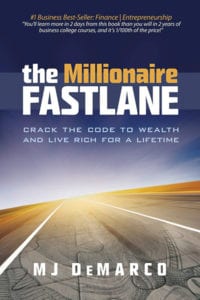
The Millionaire Fastlane: Crack the Code to Wealth and Live Rich for a Lifetime!
If we’re ready to show up and sow seeds of knowledge, effort, passion, and contribution, then all of our needs will be taken care of. If we’re in a dire situation or in a crisis environment, there are some exceptions there. There was a point when I was a couple of $100,000 upside down and I had no way to work because I couldn’t walk, stand, and even use my hands to type because the swelling in my elbows was painful. As soon as I could start to move my elbows again and sit up, I started studying like, “How do I get better at marketing?” Maybe I can’t go to meet clients. Keep in mind that this was many years ago, things were not as online as they are now. It was the next single thing that I could do that would tell the universe that I’m ready to take on more, receive more abundance, and be a steward of the gifts that are handed to me in the future because I’m being a steward of the gifts that I have right now.
I interviewed Rob Angel, the creator of the game Pictionary. He tells the story of how he created the game by saying, “What’s the one easy first step I can do to create a word list?” He took a piece of paper, pen, and dictionary, opened it up, and wrote down the word Aardvark. That became his whole metaphor. “What is your Aardvark?” It’s fantastic. You have done the same thing. This is what I love hosting the show because I get to connect the dots, lessons learned from different guests, and then introduce the guests to each other on top of it and say, “Do you want to hear Tim’s aardvark story?” His version of that was when he said, “What’s the one simple thing I can do as I’m getting well to start to get out of debt?” It was, “Start to learn and start to figure out what my seeds are.” I invite all the readers to think to themselves what they might feel overwhelmed from one thing or another, whether it’s a debt or a situation in their career issues. What’s the one thing I can do to start being a creator and not a consumer? It would be my takeaway there.
I’ve been hyped up, John, to study the ultra domination method so that I can retire in 60 seconds. When you’ve got no money and you’ve got little to work with, you realize, “I can’t operate in the land of one day, someday, wishing, hoping, and praying.” It’s more like, “I’m standing in a kitchen. I can’t go to the grocery store. What can I make from the ingredients that are in my fridge and in the pantry?” I looked into my environment and it turned out that one of my friends was an entrepreneur and he had a business on the internet. I said, “How do these credit cards appear and give you money? Who are these people? How do they find you?” He said, “Google AdWords.” I started studying a book by Perry Marshall. After that, he said, “Great.”
I clearly have time because I don’t have much else going on. How can I take this new skill that I’m learning, Google AdWords? How can I apply that? I looked into my environment again and my dad had a company. I went to my dad and said, “Can I practice this thing I’m learning in your business?” He said, “Sure. Sounds good.” I can’t remember if I even asked him for any money. I wanted the experience. I got some success there. I looked in my environment and said, “Who else is around me and how can I help?” Piece by piece, even if it was a humble skill and a humble opportunity, instead of being above it or instead of thinking it wasn’t big enough, I took it. It created momentum, confidence, experience, and track record. Interestingly, opportunity comes almost like, you’ve heard that expression, “When the student is ready, the teacher will appear.” At the same time, when the entrepreneur is ready, sometimes the opportunity appears. It’s that classic story of, 74% of millionaires are broke or worse off within five years of winning the lottery.
[bctt tweet=”Are you a creator or a consumer?” username=”John_Livesay”]
They don’t know how to manage it.
I call it The Seven Pillars, Skillset, Mindset, Coaching, Community, Tools, Strategy, and Environment. The cup was only big, if $1 million got poured into maybe a $100,000 to air mindset or a $50,000 to air mindset, the water spills out and the money’s gone.
It’s almost like a comfort zone. We don’t have the consciousness to be a millionaire. It’s comfortable. That’s why for some guys, it’s hard to make more money than their dad if they have that belief that they can never do it.
I love to give credit where credit is due, but someone said that “Our content cannot exceed our context.”

Profit Factory: If we’re ready to show up and sow seeds of knowledge, effort, passion, and contribution, then all of our needs will be taken care of.
This is the story of the Profit Factory. It’s what you’re telling us. The story of the origin of how you decided to help be of service. You saw a big problem that entrepreneurs were completely consumed with being busy all the time and not focused on profit, sounds like.
Coming out of my illness, I had a small internet marketing agency because it was the next skill on my path of mastery to becoming an entrepreneur. What I realized from doing it for a number of people, everything from websites to online advertising or whatnot, I was better at the operations of marketing than the actual creativity of marketing or inventing crazy new exciting headlines or campaigns. My friends and clients are asking me more for help on, how do I create nice SOPs or an onboarding process for team members?
For those reading, is SOP Standard Operating Procedure?
A checklist or something, yep Operations came effortlessly to me. I almost couldn’t believe that people didn’t know how to do it, but it isn’t the truth. Our greatest strengths sometimes are six inches in front of our nose and we don’t appreciate it because it’s not hard. We think it’s got to be hard to be a skill.
[bctt tweet=”Fame and fortune are like a cat. If you go after it, it runs away, but if you sit quietly and focus on your work, it’ll jump on your lap.” username=”John_Livesay”]
It’s not hard for us, but it’s hard for everybody else. That’s the big a-ha moment to figure out, “This might be something that’s my genius.” You have something called the Blueprints, correct?
Yes. We’ve got a Cash and Clarity Blueprint. What that is, I looked at my process. On my journey of mastery, which I’ll be until the day I die, I learned a lot about marketing, operations, finance, and about selling as well. I can’t forget that. This gets back to truth and mastery. I realized that because I hated math, and accounting, I would avoid my bookkeeper’s emails, and would never answer the phone when my accountant called. All of that, that’s like trying to run a business. Imagine you’re getting onto a plane, John. Let’s say that there are 250 people on this plane. It’s a big Boeing commercial plane. You walk on, everyone’s turning to the right to find their seat and then you turn left. You walked into the cockpit because that’s where your seat is. You’re the pilot of this thing. Imagine looking at all the dials and saying, “What is all this?”
The people on the plane could be your employees, clients, and audience. If we as the leaders don’t know how to understand the dials or worse, we say, “I don’t like that,” and then we close the door as if it doesn’t exist. I spent four years and around $100,000, crisscrossing the continent, attending different workshops, seminars, including night school at the University of Alberta, to learn about how to lead by the numbers. There are parts of it, John, I hated every single second of it but one of the biggest things I learned was that 98% of accounting, we do not need to know. We can leave that to our accountants. There’s only about 1% or 2% that we need to know. That’s what inspired me to create a three-day workshop called Know Your Numbers and then inside of that, especially given the 2020 pandemic, I created this clarity and cash roadmap.
What that roadmap does is it helps any entrepreneur, who for any reason, is in a cash crunch. Whether it is because of some global event like a pandemic or whether it’s a new competitor in town or struggling with a new business to get it off the ground. You can use that clarity and cash roadmap to make sure that you don’t run out of money and you can get out of a sense of panic, splashing around in the water, trying to keep your head above the air. Let’s give you an edge of the pool that you can hold on to that allows you to reallocate your energy from survival to evaluation. You can say, “I can be calm for a second. What’s in my environment? What opportunities are here? What threats are in my environment? What do I need to avoid?” Now that I can be a little calmer, I can get clear on what I need to do. I’m confident in my next steps, which allows me to get back to being creative, to create new opportunities.

Profit Factory: Entrepreneurs do not need to know 98% of their accounting. They can leave that to their accountants.
You’re such a good storyteller. I want to point out to the readers so that they can become better storytellers. When you describe turning left instead of right because that’s your job, you’re the pilot and then deciding, you don’t even want to go into the cockpit and that’s how some people run their business, they don’t even want to look at their numbers, it’s a great analogy. When you also describe the sense of feeling like you’re drowning and you need a minute to hold on to the edge of the pool and get your bearings, it’s another great analogy.
I don’t even know if you’re consciously doing it or not, but you’re doing it and that’s what makes you such a great speaker. For anybody reading to say, “How can I become more persuasive or better at pitching anything?” Storytelling is the whole premise of why I’ve created this show. When a guest like you shows it, it’s my job to underline it, circle it, highlight it, and double click on it, whatever you want to say, so that people go, “I heard somebody do it twice naturally. What can I do to start doing that?” We’re clear on who you help and what problem you solve, which in my definition is what a great pitch is.
We’re clear that you’re helping people who are struggling with areas they don’t want to do. What happens if they don’t fix these problem courses, business goes underwater. When you get to know your numbers, you are free and confident and once you’re confident, back to the Arthur Ashe example, that’s when the creativity comes back. That’s what caused you to start your business in the first place. Speaking of creativity, here’s my transition statement. How did you come up with the idea to start Great Assistant and not Okay Assistant or some so-so Assistant?
Thank you for your kind words about my ability to tell stories. It means a lot coming from you. You’re the pro. I feel knighted. I feel like there’s a knight’s sword. It’s not enough, I’m creating another story by creating that analogy. In the process of providing consulting to entrepreneurs on operations and finance and these are the backstage of business. I don’t teach, coach or consult on the front stage of business. I don’t help with marketing and selling. There are other experts who can help us with that. Being the backstage guy also means I end up in the back rooms and boardrooms. I see what’s going on. I’ve been privy to see a ton. I’ve worked with dozens of clients. One thing I realized over and over again was that entrepreneurs were too often stuck in the minutiae of their business.
[bctt tweet=”Our content cannot exceed our context.” username=”John_Livesay”]
It was almost like if you imagine crabs in a bucket, it’s the entrepreneur would start getting some traction where they’re starting to climb up and they’re getting more clients. They’re feeling excited. The other crabs are not other people, but it’s getting dragged down by your email inbox or by maintaining a website, plugins, by having to deal with invoicing, administration paperwork, or something. The entrepreneurs like, “They can see the top rim of the bucket and they know that there’s a big world out there at the next level, and they keep getting drugged down.” When I saw that the first couple of times, I was like, “That’s interesting.” Along the way, I had tried hiring assistance overseas. It was a total train wreck for me and I tried many different countries and many different pay rates.
What I finally decided was I needed to bear down and I needed to get my own North American based virtual assistant. I was someone coming out of corporate or professional America who was looking to work from home. I went on a website called HireMyMom.com, which is a fun name, and I ended up hiring someone by the name of Sarah. She was a paralegal leaving the legal field because she wanted to be home with her kids and her husband. She ended up being my greatest assistant for six years. This happened before I ever realized that it was a common issue. In the twelve months before getting my great assistant, I made $39,000. In the twelve months after getting my assistant, I made $107,000.
That’s the ultimate outcome of a story. If you read nothing else and you were thinking of, “Can I afford it?” The real question becomes, “Can you afford not to have a Great Assistant?” If you’re okay overworking yourself and getting caught up in the minutiae, Godspeed and God bless. If you want to double, maybe even triple your income and get back to the creativity and your sweet spot, your genius, if you will, then Great Assistant can be your solution. Since you’re not the crab being pulled back into the bucket. There’s your elevator pitch. That’s how you explain, everybody, who you help? What problem you solve, and what life is like after that problem is solved?
That’s the resolution that most stories don’t have and we’ve known Tim’s resolution. Remember, if you’re pitching to an investor or you’re a salesperson pitching to win a new client, the better you describe the problem and show empathy for the problem. In Tim’s case, he has complete empathy because he himself experienced the problem. Much like when I was coaching Olympus Medical, I said to those salespeople, “I’ve been in your shoes. I know what it’s like to have a quota. I know what it’s like to compete on price by the pressure that is. I understand your challenges.” They went, “You get us.”
[bctt tweet=”Our greatest strengths are sometimes six inches in front of our nose.” username=”John_Livesay”]
When people say, “You get us,” they’re pulled in. In this case, “Tim gets us. He knows what it’s like to be an entrepreneur and get stuck in the details. He was stuck. He figured out a way to not only fix it for himself but he’s now got this huge, great team of North American based assistance that is going to help me be productive. On top of that, he can also help me be more profitable. Please, what is his number? I need to get him on speed dial.” That’s a great lesson. You also mentioned to me before that you might have a free gift for the readers, but before we get to that and how people can find you, follow you, and all that good stuff, is there any last thought, quote or book you want to recommend?
Thank you for the opportunity to bring the final thought to the table here. It goes all the way back to when I was recovering in bed. After I had that epiphany moment, I saw a quote and it said, “Hell is meeting the man I could have been.” I resonate with that still to this day. When it’s like, “I don’t feel like working out now.” If I asked myself, “What would it be like to meet the Tim that did work out? I don’t feel like learning this skill. What would it feel like if I met Tim that did learn the skill?” The idea of opportunity cost is something that entrepreneurs rarely think about, even human beings. We often don’t think about it. We think about the immediate pain or pleasure, which is natural.
That’s how we’re wired. Oftentimes, we’re not thinking about the other side of the coin, which is, “What is the opportunity cost? What am I giving up to do this? What am I not getting?” To your point on, let’s say, a micro level, for the entrepreneur, what does it cost me to not get an assistant? At a macro level, what does it cost you in your life if you’re not taking advantage of every single day? I get it that we all have challenges and frustrations, and some days are better than others. I encourage everyone to acknowledge the gifts you do have rather than the gifts you don’t have, and how can you combine those for maximum effect so that tomorrow is a little better than now.
What a great place to end. Focus on what you do have instead of what you don’t have. Tim, what is the free gift you have for everybody?
[bctt tweet=”Acknowledge the gifts you do have rather than the gifts you don’t have.” username=”John_Livesay”]
If anyone’s feeling any crunch financially or even if you’re not, but if you want to get some clarity around where you’re at financially, we’ve got this great training. It’s called Navigate the Cash Crunch. It’s at NavigateTheCashCrunch.com. There’s a simple and complimentary 90-minute training there. In that training, you’ll learn The Clarity and Cash Blueprint. It’s the three-point plan to be able to make it through any cash crunch, whether it’s due to a global pandemic or some miss targets in business or whatnot. It is the edge of the pool that we can hold on to buy ourselves a few breaths of air and the buyer ourselves some time to be able to reposition ourselves and make sure that we’re clear, calm, and confident when we get back to being creative.
The company name is GreatAssistant.com or ProfitFactory.com. If people want to follow you on social media, what’s the handle?
On Instagram, it’s @RealTimFrancis. I thought FakeTimFrancis would be far funnier, but it would not be well suited for situations like this. On Facebook, it’s Facebook.com/ModernBusinessOwner. It’s the full name and you’ll see I’m in a tuxedo, feeling sharp in all my pictures.
You’re the James Bond of entrepreneurship. You have your teams on coming. I’m sure. Tim, I can’t thank you enough for being a great guest and sharing with us a vision of the person we want to be versus the person that will show up if we rely on what feels good in the moment.
Thank you.
Important Links
- Profit Factory
- Great Assistant
- Billy Bross – Past episode
- TEDx Talk – Be The Lifeguard of Your Own Life!
- Millionaire Fastlane
- Google AdWords
- Know Your Numbers
- HireMyMom.com
- NavigateTheCashCrunch.com
- @RealTimFrancis – Instagram
- Facebook.com/ModernBusinessOwner
- Better Selling Through Storytelling Method Online Course
Wanna Host Your Own Podcast?
Click here to see how my friends at Podetize can help
Purchase John’s new book
John Livesay, The Pitch Whisperer
Share The Show
Did you enjoy the show? I’d love it if you subscribed today and left us a 5-star review!
- Click this link
- Click on the ‘Subscribe’ button below the artwork
- Go to the ‘Ratings and Reviews’ section
- Click on ‘Write a Review’
Love the show? Subscribe, rate, review, and share!
Join The Successful Pitch community today:
- JohnLivesay.com
- John Livesay Facebook
- John Livesay Twitter
- John Livesay LinkedIn
- John Livesay YouTube