

How To Get Co-Workers To Like Each Other With Jason Treu
Posted by John Livesay in podcast | 0 comments

Growing a company is not all about generating revenue. It also means honing your employees to work alongside each other to reach a growth goal. On today’s show, John Livesay interviews Jason Treu on the importance of having a harmonious workplace. Jason is the bestselling author of Social Wealth and a TEDx Talk speaker. He teaches on building relationships and shares some tips on how to get co-workers to like each other. He also talks about his free downloadable game called Cards Against Mundanity, a game which builds deep, meaningful relationships with anyone in minutes.
—
Listen to the podcast here
How To Get Co-Workers To Like Each Other With Jason Treu
Our guest is Jason Treu, who’s an Executive Coach. He works with executives and entrepreneurs to maximize their leadership potential and performance. He also helps them build and execute their career blueprint. He’s the bestselling author of Social Wealth, a how-to guide on building extraordinary business relationships. He was featured at the TEDxWilmington where he debuted his breakthrough team-building game, Cards Against Mundanity. Finally, he’s the host of the podcast Executive Breakthroughs, bringing game-changing CEOs, entrepreneurs and experts that share their breakthroughs and breakdowns. Jason, welcome to the show.
Thanks for having me on the show and speaking to your fantastic tribe.
I always like to ask my guests to take us back to their own story of origin. You can go back to childhood, high school, college, wherever you’d like that you could say, “This is when I started to figure out my path.”
It was back in high school and college when I had the foresight to start getting involved in organizations, volunteering and serving other people. Through that, I started to see the glimpses of when we can work together, we can do great things. Also, the opposite when we can’t, we can do little at all. It’s how do we get the best out of other people and then get the best out of us. I even thought to myself about all my teachers that I had and I loved. It was because they could reach me and bring the best out of me so I could get more engaged. Vice versa, you also give them a lot of energy and enthusiasm because of how you show up to their class. Early on, doing all those things manifested in me doing more and more things externally. Even though I’m an introvert, I found a lot of my energy was working with other people.
[bctt tweet=”The magic of building relationships is in groups, not one on one. ” via=”no”]
It’s good to figure that out. That’s a great takeaway. Just because you’re an introvert doesn’t mean you don’t have a career working with other people. It doesn’t mean you have to be in an office doing accounting or something and never talking to anybody.
A lot of times when you talk to introverts, and I’ve been doing this quite a bit, the biggest challenge and biggest gap is they want to have as many conversations as extroverts. It’s the path getting there that is exhausting for them so they hung out. I’ve done this over the last couple of years as a pet topic. If you could instantly have deep vulnerable conversations that mattered to you, would you have considerably more topics around that? Almost everyone said yes. What they don’t like is the small talk and the other things that’s required to get there so they are opt-out. It’s too much work for them mentally and how they’re built in order to get to that point. If they could be transported there, that would be a whole different subject. That’s an interesting thing that people leave out when they talk about the difference between introverts, senile, ambiverts and extroverts.
How did you come up with the title of your TEDx Talk? I know you talk about that every leader needs to show some vulnerability. If there’s anything I’ve learned from giving my own TEDx Talk, which happens to have been at the same location you did, is the need for vulnerability. It’s a different talk than being an inspirational motivational speaker.
A hundred percent, because you’re having to give a speech in a little short amount of time that you have to convey a significant amount of information, meaning entertainment, which is the hardest thing to do. I look at a 45 to 60-minute talk that is much easier because you have a lot of leeways and you can try a lot of things. That’s great but when you’re having a short talk, you can’t. You’re not practicing this and giving this 100 times. You’re doing it once or in front of a small number of people ahead of time. You don’t know what a bunch of strangers are going to think about what it is that you ended up saying.
When I started on the journey doing the talk, one of the things I was looking at doing was to stand out or do something different like a how-to speech. One of the challenges doing TED Talks is because there are so many of them, it’s hard to use it as a solely branding thing. I wanted to do it that it would force me to create something along with it and people could walk out of it doing something with it. That’s the other thing that’s frustrating me with TED Talks. They’re inspirational, motivational and they’re at a higher level or whatever it is they’re trying to convey. The problem is when you do stop listening to it, what do you do with the information? I feel that’s always a shortcoming. It’s the same thing at a conference or anything else you go to. How you make it real is the bottom line.

Building Meaningful Work Relationships: The thing about a group of people is that you have to get them all working together.
That helped me think through how was I going to make it actionable and then I look back to the biggest challenges. My clients, my friends or anyone that I was talking and coming in contact with was about their ability to get the most out of the people that were working around them. Either they were managing their coworkers or managing up, it didn’t matter. I felt that was the problem to tackle because that’s where they felt most out of control. It pretty much controlled a lot of their success, existence, happiness and fulfillment, but they were unsure of how to do it on a consistent basis and how to build the relationships with people, individuals, groups and external however you want them to gather and make that work.
The title of your TEDx Talk, How to Get Coworkers to Like Each Other, is the surprise there because it would be, “How do I get coworkers to like me,” or, “How do I get along with coworkers?” You’ve got an interesting and unique twist here of not trying to get them to necessarily like or get along with me because we’ve had a lot of content on, “How do I get along with somebody I don’t like.” Yours is more focused on, “How do I get coworkers to like each other?” Speak on what’s one of the big takeaways from your TEDx Talk on that.
The thing about a group of people is, you have to get them all working together. At the end of the day, we’re dependent on groups. We talked about this before. You have a podcast team behind your podcast. Getting them to all work together and bought in, thinking strategically, adding in ideas can help you or make your show significantly better. Their relationships with each other are hugely dependent on your success. When you can facilitate that, it’s the key. If you’re with a group of people, which typically happens, or a team working in a company of any size, there are usually some people who get along and some people don’t. You never get to be in that place where you’ve created something great.
I always like to tell people, “Think about a time in your life when you accomplished something that was significant and you were with a group of people that you felt invincible around, either personally or professionally. It happened to all of us at least once in something that we had done. Even if it’s a brief flash, it could even be like a school sports team or something as small as that. Not even having to do with work. If you could recreate that feeling, emotion, communication and success into every single team you are on, imagine what success that would be in your life and what it could do for you.” I thought to myself, “That’s one of the holy grails that people struggle with.” It’s not your relationship with other people. You could have great relationships with all the people you work and interact with but if they don’t have it with each other, you end up having to do significant work. You’ll never be able to do the things that you could do if they had them independent of you.
That leads to what is something that leaders can do because they all get stuck and maybe even hit rock bottom. I wrote an article about going from Rock Bottom to Revenue Rockstar when I got laid off. That’s what my TEDx Talk is all about, how do we pick ourselves back up? You talk about that in terms of uncovering our blind spots
[bctt tweet=”What is your biggest blessing in disguise? ” via=”no”]
One of the things I’ve found when I’m doing any work with a group of people or anything is it comes down to your level of self-awareness. When I’m doing conflict resolution work with people, to take that as an example, you have to stem this trust and build trust. The challenge comes in when you can see your blind spots and the challenges that you have. It’s hard to come to the table and be vulnerable and put them out because that’s what other people see in you, but you can’t see yourself. When you can identify and communicate that to other people, they know that change is real and they know that you’re committed to it, but that’s the problem. We can’t see our own blind spots the way our brain is organized for survival patterns and other things when we’re able to have a deeper conversation.
That becomes the problem because those are the things that hold us back the most. That’s the problem with almost every leader. The data is 95% of people think they’re self-aware but only 10% to 15% are. You can look at all studies and it’s pretty close to that. That’s the problem. The higher you get, the more you overestimate your abilities because you don’t have people around you that are willing to tell you the hard truth because of risks and other things. You never get to the point where you’re constantly iterating and getting better and hearing the truth. We all need to be able to do that. The thing is, you have to look inside yourself and you need to get help from the outside in order to figure that out because we can’t see that. When you can, you can take a massive leap forward because a lot of this stuff has to do with past patterns, things that you grew up on and the blueprint of you seeing the world.
Self-awareness to me is not about all the things I’m not doing well. A lot of that is pattern recognition. Recognizing the things that you’ve been doing that may, in a lot of instances, have helped you. I’ll work with salespeople that are good at dealing with objections because they don’t hear them. They don’t hear no; they hear yes. The problem is when you start being successful. When that happens, you can’t do that in managing people. You become horrible at it and you’re unable to get the best out of other people because you’re not listening to them. You’re trying to direct them to the answers that you think they want or you believe they do.
A lot of that’s illuminating those things for people and sharing things. Perhaps you grew up in a family of six people and you would yell over your siblings to get your parents’ attention. You grew up early on valuing and knowing that listening was not a good thing because if you listened, you would never get hurt and nothing ever would happen. You used to talk over other people. The problem is in business, if you stop listening and asking questions, the higher up you go in, the more successful you want to be. That’s a significant blind spot but it’s not a thing you did on purposely. It’s something you learned because you had to.
Let’s talk about how that comes to life with this free game that you created for everybody. How’d you come up with the name, Cards Against Mundanity?

Building Meaningful Work Relationships: Self-awareness is about recognizing the things that you’ve been doing that may, in a lot of instances, have helped you.
I did a little twist on Cards Against Humanity and I talked to a lot of people. One of the things out of my TED Talk was I wanted to figure out a way to help people build a high level of trust and to get deep conversations with people to move it forward. Essentially, take a complete stranger and be able to have a conversation that you could only have with the closest people in your lives and feel comfortable doing it. I found this research by Professor Arthur Aron. I was looking at a New York Times article and I read about a woman falling in love and going to a bar, asking a guy 36 questions and they end up getting married.
I was like, “That’s pretty interesting.” She had asked him many questions in a bar? I clicked on the study and essentially what he did was he asked vulnerable questions and have complete strangers do it. Over the course of 45 minutes, what happened is 30% of the people created the closest relationship in their lives. To me, it is pretty incredible. To think that that would be possible for someone to do that. They replicated this study so many times with different people and geographies that I wondered if it would work in a group.
The first time I ended up doing it, I took his questions and got together people at a restaurant on a Saturday night and had someone else organize it. I didn’t do it. I found an acquaintance of mine and I asked them to bring people that I didn’t know on Facebook or LinkedIn. I asked the first twelve questions he had. I figured that for an hour I test it out and see what’s going to happen. After an hour, the people were sharing things that I thought it was like in a reality TV show. I’m watching these things and you think to yourself, “I can’t believe these people are sharing all these things with other people.” Some of these people knew each other, but some of these people did not. They didn’t know me at all. I wanted to leave and I said, “Thanks for showing up.” People grabbed me and I couldn’t go. I joke at people who are saying, if I ever had to go to prison, knock on wood or be arrested, I would know how it feels because I couldn’t leave. They wanted to know what the other 24 questions were.
I sat there for three hours and I went through these things. They were getting more excited as you were going along. I did this two more times to see if it was real. At that point, I realized that the magic of how you build great relationships isn’t necessarily one-on-one, it’s in groups. Through groups, the sharing is insulated and you’re protected because if you share it with anyone outside of it, all these people know. It stops you from doing it because you’ll be a pariah. You find connections with at least a couple of people who have similar experiences and emotional experiences about things when you answer the same question. That’s the key. They have to be deep questions such as, “What’s the most important lesson you learned in the last year? Tell me about the person you’d like to thank who helped you become the person you are. Tell me about your biggest blessing in disguise.” When you start to get to that with a group of people, that’s where the magic starts. You can break the trust curve and the relationship-building curve.
Also, “What is your biggest blessing in disguise?” Not your biggest blessing, but for me, what makes that question interesting is because it’s in disguise. When it’s in disguise, people can’t go to the cliché answers like, “The biggest blessing is getting married,” “My kid,” or whatever they might say. If they have to think about what is it that’s in disguise where they’re like, “Getting laid off,” it doesn’t look like a big blessing, but it turns out like it did become a blessing. I’m fascinated by this whole concept. One of the connection questions you haven’t heard, “If you could pick a year of your life to do over, what would it be and why?” I bet people have a lot to say about that.
[bctt tweet=”A big challenge among introverts is having as many conversations as extroverts. ” via=”no”]
People say it honestly. The other thing I’ll have a small percentage of people say, “I wouldn’t do anything over because I got here the way I am.”
That’s a good insight too.
You’ll see a small percentage of people that will mention and say something like that. These can be taken in many different ways with people that every group organically goes in a different direction with it. The other thing that happens too, which is pretty magical and which I didn’t realize until I started doing this in large groups is if you do it in a room with hundreds of people or you could dive in for thousands, but close to that is everyone treats everyone like they’re in their groups. The magic in a group like that is they extend it everywhere because they’re in that moment and they know everyone else did it and they want to talk to them so they treat everyone differently. There’s a complete mind shift in a group when you do this. When you look at good speakers, they do similar type things to this in the entire group. They take variations of this and that’s what they do to build more trust, rapport, likability and other things with other people and great salespeople too.
The best salespeople do this in a different form. In essence, what it does is it allows people to see how you do that at the highest level. Once you get there, like any other tool, you can modify and use it and make your own strategies and implement it the way that works for you. You can use it in a multitude of stuff where you could ask a couple of questions. You can do it in a group, use it for hiring and onboarding. Fifty thousand applications building rapport and sales engagements. I call it like a Swiss Army knife. There’s a place I start off with. At the end of the day, building trust, relationships, teamwork, communication and all these things that he does exceptionally well are the foundation points of every single thing we do in our business and personal lives.
The core to this is psychological safety that people feel they’re not going to be judged, won’t be shared out of the group if they share something confidential and you set that criteria up so everybody has an agreement on the matter.

Building Meaningful Work Relationships: Networking per se is not just the people you’re meeting, it’s the people behind them. The indirect network is really the goal and how successfully you can mine that.
You do, and there’s also a group implicit thing. I’ve gone back with people and I’ve never heard it happen. I follow up with people all the time because the group insinuates it. If you do it one-on-one and you share something, you don’t know whether you get a buy in or not and you don’t know the rest of what was said. If you’re getting 5, 6, 7 people and they’ve all heard it, you have a lot harder time explaining why you shared something in confidence. All those people will self-police because you’ll be so scared of the ramifications for doing that in a group like that. There are some cases that someone could do it somewhere, but we’re talking about the minuscule chance of all the people I’d done it and gone back and doing it right.
I’ve counted at least 25,000 people who have done this so far. I would say probably a little estimate. It’s hard for me to track everyone, but I’ve never gone back and asked for all the groups of people and speaking where it ever occurs. Physiological safety is absolutely a critical thing and people don’t understand the value of that. That’s the higher-level place where magic has gone, especially in business. That’s where the great ideas, innovations and breakthroughs start to happen. You can co-create that with other people in the group or team or organization.
In your book, Social Wealth: How to Build Extraordinary Relationships, you talk about something called your Social Wealth GPS. We all know what a GPS is in terms of getting us from point A to point B. We all know about wealth, money and building tips but you’re talking about something different here. You’re talking about social wealth. What’s a social wealth GPS we can use?
It’s your relationship capital. At the end of the day, it is about having a group of people and networking per se. It’s not only the people you’re meeting, but it’s also the people behind them. It is an indirect network. It’s the goal and how successfully you can mine that is pretty significant. It’s hard too. These are things that are a lifelong thing that you have to put in but at the end of the day, the capital that you have with other people is the most valuable form of capital in the world. They’ll do anything for you and vice versa.
When you can create those relationships that aren’t like a bank account in terms of give and take, but in terms of unlimited resources either way, that’s where you can create a massive level of social capital both professionally and personally. It’s something that once you understand how it works, you can do it successfully. The problem when engaging with people is you don’t know where you’re going to find them and you don’t know whether you’re going to find a giver, a matcher or a taker, like Adam Grant mentions, in any engagement that you have with someone. You have to operate the boundaries and know how to give without attachments. Once you start understanding a blueprint of all this stuff, it’s much easier to operate and to build those types of relationships that you ultimately want and have usually in short supply. You can have them in a significant way. You only have to understand how to do it.
[bctt tweet=”Being curious and learning is what life’s all about. ” via=”no”]
That’s one of my favorite parts about hosting this podcast. It’s the relationships I get to start and create with my guests. I’m sure you have examples and stories yourself of either being a guest on the show or having someone on your podcast and how that’s led to multiple things because you’re in a situation where you’ve got some social wealth starting where you’re saying, “How else can I help you and how else can you help me?” You’re already helping them by having them on your show or whatever. They tend to say, “Who else can I introduce you to as a guest?” or whatever it is that you need at that particular moment.
As a keynote speaker, people will often say to me, “You were great. Do you have any other speakers you can recommend?” There are all kinds of ways that people can give back to you once they have you on their radar, have a rapport with you and feel comfortable about knowing who you are and what you do to help people. They go, “This team could use the card game because you’re having some trouble with the people not getting along and I know the guy.” That’s an example of that coming to life.
This is a long-range thing when you’re building this too. The short-term opportunities is for you all the time but if you keep doing it, partly the greatness is you don’t know who you’re going to need when they need them and you don’t know what someone is going to do 5, 10 15, 20 years from now, especially in a world of social networking. For the first time in the history of doing anything, you can track people because before, you could never do that unless you kept in touch with them. You would never know. If you lived in San Francisco and someone lived in New York City, how would you keep track of them? Before the advent of social, you couldn’t.
Networking, business relationships, and relationships in general, we’re entering a new phase where having a lot of them is more important because you’re going to ebb and flow in your life. You will have something that’s at least somewhat of a warm lead or relationships or at least it’s not completely cold like an introduction where you don’t know anyone. There are a lot of things I don’t think we don’t fully understand because we haven’t gone through a full cycle of someone’s life where they’ve had access to this from start to finish or at least from early adulthood onwards.
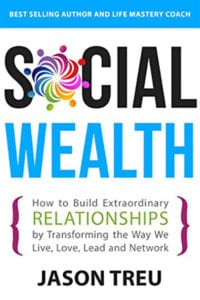
Social Wealth: How to Build Extraordinary Relationships By Transforming the Way We Live, Love, Lead and Network
Before I let you go, I want to ask you about your comment that curiosity is a requirement for long-term success and not short-term success. Can you give us the story around that?
One of the things I found in life is when you’re curious, you start asking questions. One of the things I saw was when I was speaking at a huge HR conference for the State of Maryland, one of the guests there was Buck Showalter who used to be the manager for the Baltimore Orioles when they were better. One of the things that he said that helped him manage, be successful, stay in Major League Baseball and do the things he did was he kept asking questions from people. He was curious on how things had to work.
When he went to Baltimore as a manager and the team wasn’t doing well, he brought them into the corporate office and showed them the ticket sales, walked in and said, “Everything that you do is connected. These people have to eat and feed their families. The phones aren’t ringing. If you don’t play on the field well and when you don’t care, look what happens to this as an entity. You have a responsibility to think bigger.” That’s because he got curious and he always talked about how he asked questions to other people in his managers, leaders and team before he jumped to a lot of conclusions.
When he was going to go recruit baseball players, he would go and meet their parents, their family and ask questions to other people about their character and other things even before the baseball questions came along. He said, “Today’s world of people is obsessed with analytics and everything else.” The difference isn’t there anymore. The difference is in the people, relationships and getting the most out of them and being curious. That’s something that can serve us all well. It’s consistently be curious and learn because that’s what life is all about.
What a great way to end. Jason, let people know how they can find you and your wonderful game card.
You can go on a website. It’s JasonTreu.com. You can get the cards at CardsAgainstMundanity.com and my books on Amazon and through the website. Coaching, teamwork, team building services and other things are on the website too.
You’ve inspired us to figure out new questions to ask and new ways to stay curious.
Thanks.
Important Links
- Jason Treu
- How to Get Coworkers to Like Each Other – Jason’s TEDx Talk
- Social Wealth
- Cards Against Mundanity
- Executive Breakthroughs – Jason’s Podcast
- TEDx Talk – John Livesay TEDx Talk
- Rock Bottom to Revenue Rockstar – John Livesay Article
- New York Times – Article
- Better Selling Through Storytelling Method Online Course
Wanna Host Your Own Podcast?
Click here to see how my friends at Podetize can help
Purchase John’s new book
John Livesay, The Pitch Whisperer
Share The Show
Did you enjoy the show? I’d love it if you subscribed today and left us a 5-star review!
- Click this link
- Click on the ‘Subscribe’ button below the artwork
- Go to the ‘Ratings and Reviews’ section
- Click on ‘Write a Review’
Love the show? Subscribe, rate, review, and share!
Join The Successful Pitch community today:
- JohnLivesay.com
- John Livesay Facebook
- John Livesay Twitter
- John Livesay LinkedIn
- John Livesay YouTube
Breakthrough Reinvented: Bridging The Gap Between Technology And Innovation With Sterling Hawkins
Posted by John Livesay in podcast | 0 comments

History has proven time and time again that the breakthrough of yesterday simply becomes a necessity of today. As people of the present, the responsibility of reinventing and reimagining the modern age falls to us. Internationally-recognized thought leader and top-rated keynote speaker on innovation, Sterling Hawkins, joins John Livesay in this episode and to share how he got started in the industry in a non-traditional way. Sterling explains the struggles of coming in blind in the industry, and provides some tips and strategies on what to prepare and focus on for you to gain firm ground. He discusses the different aspects needed to be considered in breaking through and how household companies overcame the challenges in their industries.
—
Listen to the podcast here
Breakthrough Reinvented: Bridging The Gap Between Technology And Innovation With Sterling Hawkins
Our guest in this episode is Sterling Hawkins, who is an expert at innovation specifically in the retail space. He said, “Your breakthrough potential is connected to your tolerance for risk and that change is happening at such a pace that we don’t know how to cope with it.” He’s got some insights into how he personally copes with it. Finally, he said that discomfort is needed for innovation.
—
Our guest is Sterling Hawkins who is out to break the status quo to create what’s possible for humanity in our time. He spent his career igniting new views and inspiring people to act on them. His journey has been nontraditional right from the beginning. Sterling grew up a fifth-generation retailer, having to master the intersection of human behavior and technology under extreme competition. In 2004, Sterling cofounded, launched and sold his first tech company, Convena, where he developed innovative approaches to beat the competition, handle high growth, and achieve performance no matter the obstacles.
He went on to be involved with the launch, growth or investment in over 50 companies. Sterling reviews over 1,000 new technology companies every year, further refining the keys to realizing breakthrough innovation. He gives back that experience as a mentor to leading entrepreneurs working through financial growth. He is the Founder of CART, which is a platform to drive the adoption of emerging technologies of Fortune 500 companies. He speaks and runs workshops around the world for Samsung and many other companies, including the United Nations. Welcome to the show, Sterling.
Thanks, John. It’s great to be with you.
I always like to ask my guests to tell their story of origin. We hinted at it with you being a fifth-generation retailer but take us back as far as childhood or school where you started to say, “I want to do something unique and nontraditional.”
I grew up in my family supermarket. I remember being 5, 6, 7 years old passing out cookies to people who were waiting in line for things and grabbing whatever we wanted to eat when we were kids. The selection is endless, especially the child. There was this defining moment for me at fifteen. I didn’t enjoy the life of a supermarket kid. My dad says to me, “You’re going to work here and we’re going to start you out at night crew this summer.” I’m like, “We don’t just get free food all the time and hang out whenever I want?” It’s a real awakening for me like, “This is work and this is how retail operates.” Looking back on it, it’s such a tremendous experience to be exposed to that level of things where I was doing everything from sweeping and mopping the floors to stocking the shelves. I worked my way up through managing most of the departments, which was a blast. It informs everything that I’m doing now because it was people-oriented.
You had that experience and your first real-life job was getting into marketing and branding, right?
[bctt tweet=”It’s very difficult to start a company without a lot of experience. ” username=”John_Livesay”]
I wouldn’t recommend this to people but my first “job” was I started a company with my dad. It was called Convena and we said, “We’ve got a store to test things. Let’s develop some software and create a company that can deliver a personalized message to everybody shopping with us.” We built it together. We launched it in our family store. Long story short, we sold it to a group in the Bay Area, which brought me out to California and this is probably 2005 or so. It was quite a journey. We got acquired by a much larger company that went on to raise $550 million.
What’s one thing that you wouldn’t recommend doing? Is it because it was with your dad?
No. It’s difficult to start a company without a lot of experience. I tell people with entrepreneurship in general, which I’ve done a lot of. For a lot of people, I wouldn’t wish it on them because it is hard to get up every morning, making the bread, getting it done, selling it and marketing it. In fact, I’ve never had a real job in my life. You’re a jack of all trades and you get it at a point where you’ve got some support and help and you’re scaling things. You’ve got to be ready for that because there’s the sexy allure of the “entrepreneur” now. It is a phenomenal opportunity to create something new in the world. You just got to enter into something like that, acknowledging the risks you’re taking on and which you can step into.
I once heard somebody say, “You have a choice. You can work for somebody else for 40 hours a week or yourself for 80.” You’re also involved with this Virtual Reality/Augmented Reality Association. People would love to learn what’s going on in that world. When I was speaking at Coca-Cola, they were talking about using virtual reality to allow people to imagine what the coke machine would look like before it got installed in their store. That’s the baby steps of it. What do you see happening in that world?
We’re looking at over 1,000 new tech companies every single year and virtual and augmented reality is a major part of that. It’s one of these situations where the sky’s the limit and there are some great applications of VR but they’re niche. For example, a store owner being able to see a store stand or a new coke machine and what it looks like if you were to buy it. There’s a lot of gaming and I don’t think it’s reached quite that critical mass to get it in the market. It’s a lot of what I talked about, which is the turning points of innovation or the difference between the linear trajectory that most of us are on and most technologies start on and without exponentially possible.
Waze is now sending notifications like, “You’re within three miles of Domino’s Pizza. Here’s a coupon.” Google and Coca-Cola have partnered up so while you’re in the grocery store, they can tell you’re walking by the display in a grocery store and send you a coupon. That is all part of retailing, isn’t it?
That’s right. We live in a day and age now where technology is accessible to many people and it’s changing quickly that it becomes a new normal for us. A good example of that and most people are familiar with this. There used to be this massive industry called the taxi industry. The whole generation wouldn’t think twice about calling a cab. That’s what you would do in New York and other cities when you want to get somewhere without a car. They’ve spent a lot of years improving the taxi industry. They are going to take credit cards and then they’re going to improve the gas mileage and then they’re going to improve where taxis are around the city, state or wherever they are. They weren’t thinking about what’s exponentially possible and then along comes Uber. Whenever I was flying to a new city and there’s not an Uber there, I’m confused about what I’m supposed to do.

Breakthrough Strategies: It is a phenomenal opportunity to create something new in the world. Acknowledge the risks you’re taking on and which you can step into.
It’s like taking you back in time with a rotary phone or something. You’re like, “What’s a taxi stand?”
I’m like, “There’s no Uber in the city, how do you get to the hotel?” Within five years, it has become this new normal for most of us. That’s the world that we live in now where a technology that launched several years ago is almost expected by everybody a couple of years later.
We’re the perfect person to ask this question about because we’re both living in Los Angeles. You watch what’s happening when you get off the plane. LA was probably one of the first cities to have Uber. You had a choice as a passenger getting off a plane. You could go down the stairs and wait in line to get a cab the traditional way, or you could go upstairs like you were checking back in and wait with a group of people in mass ordering Uber and Lyft. It was a bunch of traffic but it was still cheaper than the cab downstairs. It probably would take you longer than a cab would because they weren’t all lined up and people had to get there so you had to wait up.
Convenience and price saving are worth having to wait longer than it would be faster just hopping in a cab. Now, the game has changed again. Everyone has to take a shuttle or walk a mile into a location with your luggage. That’s the last thing you want to do in the rain and the line for the shuttle is worse than any taxi line ever was. You get there and you have a choice. You can order the Uber on your phone while you get there and they give you a code or you wait and you get in the line to get a cab. I got to the Uber and I said to him, “Why would anyone ever take a cab?” Because there’s no longer a savings of time. The whole thing is even disrupted yet again.
Or money in a lot of cases.
Uber is still cheaper so I don’t understand why somebody would unless you didn’t want to deal with your phone. To your point, it keeps changing and it goes, “Eventually, in a few years, we’re going to build some way to get you here faster than the shuttles.” In the meantime, we’re trying to eliminate the traffic so this concept of how we move people and how we move product whether it’s an Amazon drone delivering your food to you now. Overnight is not fast enough anymore.
“I need it in an hour or 30 minutes.”
[bctt tweet=”Your breakthrough potential is equivalent to the amount that you put on the line. ” username=”John_Livesay”]
Domino’s Pizza is doing this. They are using artificial intelligence to anticipate your pizza order to try and shave 30 seconds off the delivery time. People’s expectations keep going up and up. Let’s talk about what you’re doing at the Center for Advancing Retail and Technology or CART. Tell us what it does and what trends you see coming.
CART operates on this premise of most businesses, especially legacy businesses that have been around for 20, 30, 50, 100 years, they’re good at what they do. They’re good at getting toothpaste on the shelf or getting gasoline to the stations then into your car. They’re optimized for that and not much else. They’re condemned in a lot of ways to this linear trajectory of, “How can I fix, adjust and change something that I already have?” There’s nothing wrong with that. We have to do that as humans and as business people especially. The risk is the same thing that happened to the taxi industry where somebody comes in from the left-field and totally rethinks, reframes or solves a problem that you thought was cutting the cost of doing business.
What’s happening is if you overlay on that linear growth that we’re on, technology is on this exponential growth curve. There’s this new normal pace of change increasing every single day. The only way to future proof your business is to develop a culture, a group of people that can create and embrace change at a faster rate. CART is designed to do exactly that with a lot of the companies that we work with. We not only can work with them to accelerate the pace at which they make decisions and will do it by moving them through transactions, discussions and processes. They get to decisions about eleven times faster than they do otherwise but we also bring them new technology and tools that step them further into that innovation gap and gives them a chance to get a piece of what might be exponential growth playing with a virtual reality implementation or an autonomous vehicle. Maybe even 3D printed food or things. As they can connect to some of those technologies and they can do it faster, it positions them much better for the future.
“Because you need to be more agile than ever,” is what I’m hearing. With technology changing fast, you have to make faster decisions. How do you de-risk someone’s fears of making the wrong decision by making a fast decision? That’s traditional thinking. Don’t rush into any decisions and yet, you don’t hold on to that model in your head anymore if the technology is changing fast. Am I painting the picture of the gap accurately that you’re solving?
You are. What’s fascinating to me is that humans, you and I, are not built for that kind of change. Our biology, our feeling and even our thinking are tuned towards tomorrow being a lot like now. We feel a lot of anxiousness or anxiety or fear when it comes to presenting us or confronting us with something new, especially if it’s going to potentially, dramatically transform something or it’s going to cost a lot of money. The key with our clients and for everybody is your breakthrough potential is equivalent to the amount that you put on the line. If you put a little bit on the line, there will be a little benefit. If you put a lot on the line, it could be much more beneficial. To your point, you’ve got to balance those two things to say, “We’ve got enough skin in the game to make a small enough decision that if we were to lose it, we don’t lose everything. At the same time, it’s meaningful enough and inspiring enough that we’re going to work towards the potential breakthrough that this thing is going to bring.”
Do you have a story of one of your clients you’ve worked with at CART?
There are many stories. It’s funny because innovation, like entrepreneurship, can be very sexy especially as a consumer innovation, “I want the latest virtual reality goggles, watches and everything else.” It’s easy to do at an individual level, especially when you pay $100 to get one of these cool devices. For a company which is one of the biggest food manufacturers in the world, it’s a little bit different for them because they’ve been around for more than 100 years, at least some of their subsidiaries. They’ve gotten good at what they’ve done. To talk about implementing new technology, selling their products in a different way or getting them to the consumer in a different way. It totally contradicts because what they’ve always done has worked. I was working with them and we were looking at some social media tools, especially TikTok. Have you done a TikTok yet, John?

Breakthrough Strategies: Technology that was released five years ago has become normal and expected by the people of today.
I’m familiar with it, but there should be an age limit. There are certain clothes I shouldn’t wear and I should not be on TikTok. Let the kids have that one thing, but I know what it is. It’s going to be the next Instagram.
It’s taking over. Older generations are on it and companies are putting a lot of money into it. We’re having this discussion about this brand stepping into doing a campaign on the platform. They do some other things on social media. When you’re talking about it as possibilities like, “We could do this. We could do that. We could do something else,” it’s exciting and inspiring. There’s a lot of conversation in the room. As soon as you get to that critical point where you say, “Of all those possibilities, let’s pick one. Let’s pick a possibility and let’s start framing up the contract for what that is going to look like.” At that point, you’ve got to put something on the line. In their case, it was a little bit of money. It’s not bad and it’s not wrong. It just becomes a little more serious when you sign on the dotted line to say, “We’re going to commit to doing this.” That’s the only way to realize new possibilities, which is to put yourself on the line.
Would you say that your breakthrough potential is connected to your risk tolerance then? Would that be accurate?
Yeah.
One of the things that you touched on is we’re not built to take on this much constant change. It’s stressful on our bodies and our own brains. The growth and change at an exponential rate that’s never been experienced before can take a real toll on people’s mental health, stamina and physical health. You are someone who is working on your own self-development and growth. You’re teaching yoga. Can you share the importance of that as someone who’s traveling the world speaking and the stamina that’s required for that at any age? You had literally, from my observation, Sterling and why I respect you so much, is you’re walking your talk. You’re modeling for people how to embrace this disruption and constant innovation and still stay physically centered and calm. Any thoughts on that?
It looks better than it feels on a day-to-day basis. It does take a significant amount of effort, will and everything else. To some degree, discomfort is necessary for any innovation. For myself and for people, we can grow from the level of discomfort. I might be worried about a $500 decision but if I get comfortable there, then maybe I can stretch it and make a $5,000 decision a couple of weeks from now. What we’re doing is we’re acclimating to more levels of stress and faster change. Biologically, what’s happening is the cortisol that gets into our blood when we get nervous, anxious, confronted or excited in some shape or form is it starts to go away as you acclimate to these levels of endurance or performance.
What I try to do is continually push that edge of what I can acclimate my body and myself to be comfortable with. Inevitably, it’s going to push me right up against things where I’m uncomfortable. I do these crazy things like skydiving, shark diving and any physical activities where I’ll get confronted. By choosing that discomfort, being able to step into it and grow from it gives me the capacity to not only do all the things that I’m doing now but expand the difference that I can make in the world. I’m not special. It’s the human capacity that everybody’s got the ability to do.
[bctt tweet=”Innovation, like entrepreneurship, can be very sexy. ” username=”John_Livesay”]
This concept of, “As soon as I get into a comfort zone, I’ll be comfortable,” and it is counterintuitive but that is not the case. Your comfort zone is like being in a velvet rut. You get depressed because you’re not stretching and challenging yourself to tolerate something new. Students who think, “As soon as I get out of school, I never have to read another book or learn anything new,” are in for a rude awakening. You’ve posted on Twitter and things that you’ve spoken at the Technology Innovation Gap and spoken with leaders of a supermarket called Hy-Vee.
It’s a great group of people out in Des Moines, Iowa.
Can you share what’s going on in that huge supermarket world? What gaps are there between technology and innovation that was going on at that event?
I can’t share specifically. Supermarkets are one of these legacy businesses in often cases that have gotten good at sourcing products, distributing them out to their stores and creating decent experiences to shop those stores. What they’re confronting is, almost cliché at this point, Amazon and everybody that are selling things online as well as with these different delivery mechanisms whether it’s drone delivery, autonomous vehicles or anything else. Retail, especially when a lot of industries are under this huge pressure, Hy-Vee included reinventing the experience, what the store means, and how to satisfy the consumer’s wants and needs. One of my favorite parts about retail is it’s at the heart of most societies, satisfying our wants and needs, feeding us, getting us clothes and everything else and reveals part of most everything.
Do you remember the time when you could not pump your own gas?
I do remember that.
When they started asking people to do self-service or full service and you have to pay more, people were mortified. They’re like, “What? I’m paying someone to pump my own gas so I don’t have to get smelly gasoline on my hands.” We’re starting to see that in grocery stores where they’re not incentivized. What I find fascinating is you’re not saving any money by bagging your own groceries. Supposedly, it saves you time if you do it faster is the reason to do it but I’m thinking to myself, “There’s no financial incentive like there was with gasoline.” It’s like, “Help us save overhead and bag your own groceries and bring your own bags, by the way, too.” “Why don’t you pick up lettuce while you’re at it?”

Breakthrough Strategies: A human’s biology, thinking, and feelings are tuned towards tomorrow being a lot like today. That’s why we get anxiety and fear when there’s something new.
It’s a notoriously low margin business, especially supermarket retail. As they get crunched by more people buying some of their products online, they’re looking for, “Where can I save pennies?” That leaves us bagging our own stuff in a lot of cases.
What do you think about Amazon’s test? There are still a lot of hotels. You go into the hotel, there’s a minibar, you pick up a drink and you go, “I don’t want it.” You put it back and say, “Sorry.” You picked it up and you buy it. They figured out technology-wise to be able to let somebody pick something off a shelf in a grocery store and read the label and say, “I’m not buying that.” It puts it on your phone as a purchase and takes it off when you put it back in. To me, that is revolutionary. That’s a huge leap of, “I can pick touch something and not be committed to buying it.” We are eliminating union paid jobs of thousands of people who’ve been checking people out of grocery stores for decades. Do you think that’s going to take off?
I do. It’s a brand new experience and a good one. By the way, have you been into any of these stores?
I would love to.
Whenever you’re around once, check it out because whenever I’m in there, you go in, you take the products off the shelf and you just walk out. I have this sinking feeling that I’m stealing and it’s uncomfortable.
It is because we’re trained that way, “Where are the handcuffs?” “John, can you come to bail me out? You’re my one phone call.”
It’s still funny because I’m walking out with the product visible in my hand like, “I’m not trying to take something here. I’m doing it by the book.” As soon as you get used to that, a couple of things happen. One is you’re now rooms for shopping in most other places because you can walk into stores and you have to wait in line. It creates this new normal as Uber did. Secondly, it doesn’t feel like you’re buying anything. People tend to buy more things. The same thing happened with credit cards, by the way. As soon as you don’t have to take cash out, you spend a little more money.
[bctt tweet=”The heart of companies is what they stand for, who they are, and what they believe in. ” username=”John_Livesay”]
The same is true with me. I’m like, “Did I order that on Amazon? What in the world is in this box?” I’ve already forgotten I’ve ordered it and you do a little more impulse shopping with Amazon.
What was fascinating about Amazon is how they’ve gone from a company that sold books online to now they’re doing everything. The heart of companies is what they stand for, who they are, and what they believe in. Amazon has got this great mantra that says, “Day one.” Whether you’re on the first day on the job or you’ve been there for 7, 8, 9 years, you walk in like it’s your first day. The genius of it is on your first day of a job, you’re looking for how to do things differently and why they do those things. You’re questioning things, you’re looking for where you can add value and you’re a little bit uncomfortable. They created an entire culture of people that go in every day looking at things new and asking questions like somebody is starting out. It’s given them this fantastic growth in arms into everything.
It sounds like they’ve got a great culture where it’s safe to ask questions and you’re not going to hear, “This is the way we’ve always done it. Therefore, we don’t even discuss it.” That’s the opposite. I’ve talked about this when I give keynotes. It’s focused on “one thing first” and people forget Amazon just sells books. Many startups want to boil the ocean like, “Look at all the things we’re doing.” Imagine if Amazon launched with all the products they have now. People will be completely overwhelmed by buying toilet paper and books. They were known as an inexpensive way to get books. First, you got the social proof before they started expanding. That lesson is true, whether you’re an entrepreneur or not. Be known for one thing first and then you can expand beyond that, but it doesn’t, in any way, shape or form diminish the fact that they still sell books and they’re now selling everything else. As a speaker, anytime at branding, you’re more known for one thing first and then you can speak to other things. The easier it is for people to go, “This is who Sterling helps and what problems he solves for them.”
Apple has done a good job at that as well. Their mantra for a lot of years was, “Think Different.” That’s certainly uncomfortable if you’re the one person in the room that thinks differently than everybody else. They’ve built the whole culture that your point started with one thing and has mushroomed into all sorts of different devices and industries that they’ve disrupted.
You give a lot of different keynotes around innovation thinking and the innovation gap. What I love about your takeaways on the innovation gap is, “You have to first let go of everything you think you already know,” which is so Zen. I love that.
It is difficult to do.
It’s because you’re like, “What?” and that’s our entire identity into our knowledge. Only when we let go of what we think we know can we discover what’s possible. You have to take the audience on a journey because they’re already resisting letting go of what they know before you can start getting them to imagine new ways of doing things.

Breakthrough Strategies: Retail is under a lot of pressure to reinvent the experience of what the store means and how to satisfy a consumer’s wants and needs.
It is a blast every time. Speaking is one of my favorite things in the world to do and to step in front of a group of people that more often than not tends to be cynical about whatever it is that they’re doing and rightly so, the world is a hard place. To break through that force field to discover some new things is a blast.
How can someone reach out to you? If someone wants to hire you as a speaker, find out about CART or even have you come in and do a workshop, what would be the next step for them to explore?
SterlingHawkins.com is the best place. CART’s website is AdvancingRetail.org. I’m searchable on most social media except TikTok. I’m not there yet.
Any last thoughts, a quote or a book you want to leave us with?
It was great spending some time with you, John. I know we go back several years now but then having this conversation, I appreciate being on your podcast, who you are and the difference you’re making out there in the world.
Thanks a lot. That’s Sterling Hawkins, everybody, breakthrough innovation. If you want to watch somebody walk their talk, follow him on social media and explore having him come and speak at your next event.
Important Links
- Sterling Hawkins
- CART
- Virtual Reality/Augmented Reality Association
- Hy-Vee
- Better Selling Through Storytelling Method Online Course
Wanna Host Your Own Podcast?
Click here to see how my friends at Podetize can help
Purchase John’s new book
John Livesay, The Pitch Whisperer
Share The Show
Did you enjoy the show? I’d love it if you subscribed today and left us a 5-star review!
- Click this link
- Click on the ‘Subscribe’ button below the artwork
- Go to the ‘Ratings and Reviews’ section
- Click on ‘Write a Review’
Love the show? Subscribe, rate, review, and share!
Join The Successful Pitch community today:
- JohnLivesay.com
- John Livesay Facebook
- John Livesay Twitter
- John Livesay LinkedIn
- John Livesay YouTube
Compete Every Day: What You Can Do Differently With Jake Thompson
Posted by John Livesay in podcast | 0 comments

There’s so much that goes into actually becoming competitive—in sports, in business, throughout your industry. But the best place to begin is by sorting yourself out, and making sure you’re ready to get where you want to go. Jake Thompson is the Founder and Chief Encouragement Officer at Compete Every Day, a lifestyle brand that helps leaders stay motivated, and reach their career, fitness, and life goals. Jake sits down with John Livesay, and gets into the nitty-gritty of what makes you a more competitive individual, and what makes your business ultimately more competitive. Hint: It’s all in you, all the time.
—
Listen to the podcast here
Compete Every Day: What You Can Do Differently With Jake Thompson
Our guest is Jake Thompson. Jake teaches people how to compete every day so they can reach their full potential. He’s got experience as an athlete, an entrepreneur and a speaker, and he’s learned how to change a few choices that everybody makes so that they can be closer to the career, health and life that they were created to reach. The world’s most successful display of a specific mindset and the five traits of a winning competitor is what allows everybody to overcome the challenges we all face in life. He’s got book called Compete Every Day, the seven things leaders do differently so that they can win both in their career and in their life. Jake, welcome to the show.
John, thanks for having me. I’m excited to be here.
I want to ask you like I do most of my guests to take us on your own story of origin. You can go back as far as childhood, high school, college, whatever it was, how did you get to be you?
I grew up in a small town out in East Texas, Piney Woods. For anyone that’s ever seen or are familiar with Friday Night Lights, that is Texas small-town football through and through. We’re about 12,000 to 13,000 people. The town shuts down and packs into the stadiums on Friday nights. I grew up with a massive love for football, sports and competition. I left East Texas and came to the Dallas-Fort Worth Metroplex for college fully with the intention of being a sports agent. I was passionate about staying in that career. It was a competitive industry. I found love working at an internship for a few years. I got my Master’s degree. Then getting into that space and spending a few years in there, I realized that wasn’t what I wanted to do with the rest of my life.
I read a book about the importance of story, ironically enough and how the actions we take, the things that we do, tell others what we believe not only about ourselves, but about the world around us. If we’re constantly pursuing things that only take care of ourselves, that are only padding our own bank account, if we’re not doing anything to make impacts beyond us, then we’re selling ourselves short. We’re selling our story short. I was challenged at that point in my early twenties to evaluate what I had been focused on, what I was telling everyone was important versus how my actions were showing others what was important.
I started going down this path that led me to the idea of Compete Every Day and this brand has started. I came up with the brand message at the end of 2010 while I was doing marketing consulting with a number of companies in the Dallas-Fort Worth area. Eventually, it led me to putting some money into a few boxes of t-shirts and tank tops and selling them out of the back of my car back in 2011 as a side hustle with the one message that, “I believe you’ve got what it takes to show up, compete against your own previous best and I want to remind you of that and motivate you to keep doing that every day.”

Becoming Competitive: You burn yourself out and exhaust your energy by focusing on things outside your control.
There are a couple of things I want to click on that. First of all, this concept of only competing with yourself versus other people. I used to be a competitive swimmer. They’d line you up in heats and you have this race and I remember there’s always a guy that beat me. In breaststroke, you pull your head up out of the water and you take a breath and put it back down and then they measure your time to the thousandth of a second at the touchpads, and I beat him by less than a second. I said, “How did that happen?” They said, “You stay focused on the wall and he turned his head to the right to see if he was ahead, and that half a second of looking caused you to win.” I went, “I wonder if that’s true in life and in business, staying focused on our own progress.” It’s easy for us to start comparing ourselves to other speakers, other companies, “What are they doing? Maybe I should change.” Let’s talk about your insights on how you help people take those lessons from athletics, into the business world where we’re not competing with anybody else but ourselves.
That example is beautiful. I love that. If you haven’t seen that swimming example as well, there’s a wonderful picture of Michael Phelps in one of his Olympic Trials swimming. You see the competitor looking into the lane to his left and Phelps ended up winning that race beggarly and they show the importance of comparison. For all of us, it’s easy, all around us. There are other speakers, companies, and people doing what we’re doing or what we want to do. We need to look everywhere. We need to do exactly what they’re doing. In all reality, what that causes us to do is be like a track star swimmer who’s facing and going toward the finish line straight ahead. Anytime you turn your shoulders or your head, turn your focus off, you slow down. Your body is not designed to go at peak speed forward if you’re looking at somewhere else or if you’re twisted. The same applies to our life, we burn ourselves out and exhaust our energy, honestly, by focusing on things outside of our control.
[bctt tweet=”Being responsive is a competitive advantage.” username=”John_Livesay”]
A lot of my work is talking to people about how do we not only turn the focus inward? What do we control? Every day we control our actions, attitudes and efforts. Those three things regardless of what life has our attitudes, actions, and efforts are always up to us. It’s our choice every day, what attitude we’re going to have. It’s our choice what efforts we’re going to give and it’s our choice what actions we take or we don’t take. For us, once we start to understand it, then we look at what we’re going to do. One of the examples I love using with sales teams is this idea of three yards and a cloud of dust. If you’re familiar with football, it’s the old 1920s, ‘30s South football before they ever threw the ball. A snap and run three yards downfield. You can go from your own one yard line all the way down the field to the opposite end zone and score by doing that. However, it’s not sexy.
No one is putting you on SportsCenter for highlight reels because you didn’t make this crazy, amazing play. However, that’s ultimately what success is. It’s putting your head down, it’s doing one little thing every single day consistently moving that ball that gets us down the field toward our goals. You can’t do that if you’re looking everywhere else. What are we controlling every day? What’s the 1 to 3 things that we’re doing to advance that ball that are on us? We’re not waiting on someone else to make a decision. In sales, this is a perfect example of prospecting, putting out content, contacting people. It takes a second person to make that sale but it’s 100% on you, how many much outreaches you’re doing, how many things you’re creating, how much help and stories are you telling the world to help drive inbound sales as much as you are doing the outbound.
I like what you said there about, “Let’s focus on what we can control, not what we can’t control.” You and I are both keynote speakers. We get typically called in, they like our video, our agent has got us an interview, we do our best to tell them what we’re going to do and then we wait. Anybody who’s been in sales, you go in, you make a presentation, they have other people they have to see, there are a lot of people that have to make it. Their timeframe is different than our timeframe, 9 times out of 10. Getting that job, that sale is our number one priority and then making a decision is not their number one priority. I would love to hear what you do to follow up without being pesty or pedantic like, “Checking in to see if you’ve made a decision.” As if they forgot to tell you one way or the other. If we could give that to the readers, that awareness of, “I can’t control when they make the decision, but how I interact with them, I can control.”
You 100% can. One of the things that I’ve learned or trained myself in this area is the idea of a quick response. If someone were to immediately reach out to you about a gig, sometimes you’re like, “I’m not going to pick up the phone and call them right now or email them back right now, that’s going to make me look I’m desperate.” I’ve switched that thinking to where you can say, “I’m effective and I’m going to be efficient in my time. If you’ve reached out on your computer, I want to jump on this opportunity to help you.” It’s getting that limiting belief out.
From a follow-up, when we get off the phone immediately, the first thing I’m going to do is send an email with a recap of everything we talked about and a personalized video. I’m going to pull out my phone, shoot a quick video talking to you. Especially as a speaker, someone that’s in sales, I want to add some energy, some color, some commentary to the conversation we had on the phone by showing you my face, by showing how I’m going to present to you in person, that I’m excited about it and feel like, “I’ve got this cool video in an email that is personalized, it’s not some standard thing.” It’s going to help you tell that story a little bit better about what you do and how you stand out.
I’ll set a follow-up. When we’re on the phone I’m going to ask, “When would be a great time on your timeline to touch base with you?” You’re going to use like, “Give me that ballpark.” What I’ll do is I’ll shoot them a note on the day, “Following up as promised on this date. I’m going to touch base with you at this point.” If I haven’t heard back, it’s usually about three days later, I’m going to give them a call at that point. I’m going from email, touching base as I promised, following up with a phone call that’s going to allow us to have that conversation on your timeline. Then if we need to, let’s hop on another call, video call and whatnot.
[bctt tweet=”What is the best attitude, action and effort?” username=”John_Livesay”]
For me, it’s always that personalized touch of, “Let’s hop on a call and then let me send you a video with that email follow up.” If it’s someone of, “The timing is not right now.” For us, it’s a timing game on speaking and it maybe 6 months or 8 months from now before we’re ready or perhaps in a month or two, it’s already off their plate, it still may be our top priority but it’s not theirs. I’m going to send them a little packet in the mail, “Here’s some information about one of my programs. Here’s a note.”
What’s always helpful is if you’re someone that will go above and beyond and you’ll find these people on Facebook, on LinkedIn and Instagram and what they’re talking about, what they’re doing, then you have a talking point. If you’re a big sports fan then I can say, “Congrats, your team won. Their state rival wanted to send you this information so your team is set up to win the same way this year.” Something that’s not pestering them but you’ve also touched them in multiple different ways to tell that story, not only, “Here is how I can help you, here’s how I talk about these certain things, teach these certain things. I want you to see how I behave in our interactions that reinforce I’m someone that’s accountable, gritty, persistent, all the same things I want to teach your company how to behave.”
There are several things you said there that are great. In fact, we’re going to tweet this out, “Being responsive is a competitive advantage.” Unlike in the dating world where you might be seen as needy, “I’ll call you back after the date three times,” it’s the opposite here, and that’s fantastic. Also, I like the concept of personalizing something. I always tell people, act as if you already have the job. When I was up for a speaking job at Redfin, which is a real estate company, I thought, “I’m going to call and pretend I’m selling my place and see how they treat me. I’m going to call a competitor and see how I get treated before the interview.” They went, “What did you find out?” You say, “If I do that much preparation for the interview, imagine how much I’ll do if you pick me.” You connect those dots for people.
The other thing you said that I love is, “I saw your team won, congratulations. Let’s help your team and business.” You connect those emotional dots of winning, which is what your brand is all about. I’ve done the same thing, if I’m going to be speaking to a client, I’ll look them up on LinkedIn and say, “I see you worked in San Francisco, China, and now you’re in Europe. That’s an impressive career.” Some little thing that lets them know that you’ve taken a minute to know something about them personally is strong.
How many invitations do we get on LinkedIn or by email of people that’s a standard copy and paste, there’s no awareness of what we do? I laugh because the company name is Compete Every Day and I get all of this email about, “We own gyms and fitness professionals.” They’re selling me equipment if you’re a gym owner, and I’m like, “You didn’t even look at my profile.” A little bit of research, even the tiniest bit helps you stand out and tell the story that you’re invested in this process, this relationship. It’s not a, “Wham bam, thank you, ma’am. Quick, let me get you sold and out the door. Next person up.” You care about continuing on that story.

Becoming Competitive: Great players in sports aren’t so wrapped up in their failure. They immediately decide their next play.
How did you come up with the name, Compete Every Day, for your book and website?
The brand, ironically, took a few different iterations. I always was a competitive guy. I was a smaller kid in sports. For me, a competition was the opportunity to prove I belonged, more than anything I wanted to show I could outwork you and outsmart you, no matter what your talent was. The older I got, the more I started to realize the comparison game we all play is exhausting. There’s always someone ahead of you. There’s always someone behind you. If you’re constantly competing against everyone else, not only you’re going to burn yourself out, but you’re going to be lost because your identity is tied up in every single one of those head to heads, versus saying, “Who was I yesterday? How am I going to show up better in my work today? How am I going to show up more focused, more present with my coworkers, my family? How can I compete?”
[bctt tweet=”Your attitudes, actions, and your efforts are always up to you.” username=”John_Livesay”]
When I started exploring this path, it was the idea of looking at all areas of your life, your health, your relationships, and your career. What would happen if someone were to show up and compete to be their best in every single area? Honestly, I laughed, the first iteration of the company I called Stacked and I was like, “That’s a terrible name.” It had the core philosophies of the idea of stacking them on top of each other and pursuing greatness. Genuinely, I was on a ski trip with two friends and tinkering with designs and sketching things and I said, “What about Compete Every Day?” Both guys were like, “That is you. That fits your personality. You’re the most competitive driven person we know, run with it.” That was December of 2010. It took 6 to 7 months to try to play with things to figure out, what is the best fit for this message?
You referenced Michael Phelps and when I was selling advertising, I had Speedo as a client. They invited him to an event because he was on their payroll as a spokesperson and I got to ask him. As a former competitive swimmer, you can imagine what a thrill that was as an athlete yourself, “I’ve got to meet Tom Brady or something.” What would you ask them? I said, “Everyone says you’re a great swimmer because of your physique. You’ve got these big lungs and your feet are like fins. I bet there’s something else.” He said, “Yes. My coach asked me early on if I was willing to work out on Sundays and I said yes. We’ve got 52 more workouts in the near competition because everybody takes Sundays off.” I thought of that story for you when I saw your brand name, Compete Every Day, because I went, “Most people don’t think of competing. We certainly take Sundays off.” I thought, “What a great little nugget of that for you and your world of athletes.” Is there a professional athlete that you have met or want to meet? What would you ask them if you haven’t met them yet?
Probably, I have a laundry list that I would want to meet. Michael Jordan, obviously, being one of the greatest. I’m fascinated by the stories I’ve heard about him. We’ve all heard the story that he was cut from his high school varsity, and then everybody’s like, “He’s just Michael Jordan. He’s the greatest player ever.” He wasn’t always, he was a good player. In college, he did extra work. The Carol Dweck mindset profiles that if he didn’t follow shots to the basket during games, he would force himself to run sprints after the game, do extra practice. When he got to the NBA, he still was not the greatest player of all time. He was good. It was only by going through the adversity of the Detroit Pistons three years in a row, that he changed his workout routine. He changed how he trained, how he bulked up, how he played the game, encouraged more of his teammates to step up their game from a mental perspective and then went on the run of two different three-peat.
[bctt tweet=”The difference between nervousness and excitement is your preparation. ” username=”John_Livesay”]
He would be someone I would be fascinated to learn how he approached the idea of his habits. What did he see? How did he create the habits he created? What held him accountable to it? He has one of the greatest work ethic drives that we’ve ever seen and it was too much for a lot of people to deal with. I’m curious how he built those. What fires stoked him to develop the right habits and then how he’s stuck to it. A lot of us have habits we want to start. We have things we consistently want to do, but we don’t have that resolve to stick with it for years.
Speak to the level of lessons you learn from sports as it relates to confidence in business. For example, if you’re a baseball pitcher, you’re not going to be perfect and yet do you lose your confidence for the next pitch? They don’t say, “No. I remember who I am.” What lessons have you learned in athletics that can help people with their confidence in business?
There are two areas to that question. The first is, “What’s the next play?” That’s the terminology I use with athletes of asking, “What’s the next play?” There is going to be a bad play that happens in sports, you’re going to throw an interception, you’re going to get a home run hit off of you, just the same as you’re probably going to give a presentation. That sucks. You may lose a deal. Something bad is going to happen. At that point, it’s behind you, and great players in sports aren’t wrapped up on, “I do an interception. I missed the shot.” They’re taken out of the moment. If they’re like, “That happened. What did I learn? What am I going to do differently? What’s the next play?”
For us in life, it’s an idea of getting out of our own head. Most of us, like we talked about when we’re swimming, if we look into the left and the right at everyone else we slow down. The same applies when you’re trying to look behind you at what has already happened in the past, you slow down, you’re taken out of the present. For us, something bad is going to happen but at that moment, you have to say, “What’s the lesson and what’s the next play?” Get your eyes back to the present moment. The second thing is the difference between nervousness and excitement is your preparation. Simply done is preparation. The best way to prepare is by getting your reps set.
You build confidence one choice at a time, one day at a time. It’s like getting your reps. A pitcher is going to throw thousands and thousands of fastballs throughout the course of their career. A quarterback is going to make many passes. All of these basic drills that we see athletes do, they’ve done them time and time again, which makes them good at them in the middle of the game. The same, a lot of us go into sales meetings and presentations and we’re like, “We’re going to wing it.” What that does is it creates more nervousness in us, we’re trying to pull from things and our presentation isn’t as sharp.
[bctt tweet=”The preparation allows you the opportunity to improve.” username=”John_Livesay”]
If we put in the reps of preparing, just like we do when we speak, I had someone talk to me about the presentation, she’s like, “That looked natural.” I’m like, “That 45-minute talk, I’ve given twenty hours’ worth in the last year. All of those little bits, I’ve told those for hours and hours. That’s 60, 70 hours’ worth of content that you saw. The reason I’m able to do that is because I’ve done all the prep, I’ve got all the rep.” The only way we get better at work is by getting our reps in. Most of us are concerned about what we’re going to look like in the beginning. I don’t want to look like, “I’m at this certain level and my company, I can’t look like I don’t know what I’m doing or I’m trying to learn something new. That would look bad on me.” No. Successful people are saying, “I don’t care if I look like a rookie. I don’t care if I look a little bit foolish trying something new. I want to get better.”
Athletes, actors, everyone practices and rehearses and yet sometimes salespeople who’ve been doing it for a while, “I don’t need to practice my presentation.” It’s not going to be customized in and they might stumble and they might confuse people, they aren’t doing the work, especially when the stakes are high and there’s a big potential win. It shows when people have put the preparation in it and when they haven’t.
The preparation allows you the opportunity to improve in the moment. If you think about football, when a play breaks down and a quarterback has to scramble and improvise on the fly, they still know where everybody is on the field. They may have to change where they are, where they’re rolling to, but they still know. When you get up to do a talk or you give a presentation, you know all your story, you know your bit, but then something can happen in the audience, or the client does something and you’re like, “That’s a perfect analogy for this.” You can use that in the moment to tie it in and still continue to flow through the conversation because you’ve rehearsed, you have those reps and you’re well-prepared. Otherwise, if you saw that, you would see it and dismiss it and you would lose the opportunity to tie something in immediately on hand and on purpose.

Becoming Competitive: Grit is the ability to really go get your goals, but more than anything it’s the decision you’re going to put forth 100% effort every single day regardless.
Good actors will do that all the time, they’ve done all that rehearsal and then when the cameras are rolling, there’s a moment where they say something or react something that’s authentic because they’ve done all the prep. Arthur Ashe, the famous tennis pro said, “The key to success is confidence and the key to confidence is preparation.” It’s full circle back to you, Jake. I love your message and what you’re saying and how you let us apply it in our everyday lives. You talked a little bit about grit and I know that’s a big foundation of your talk and your book. Tell us what we can do if we don’t think of ourselves as someone who has grit and how do you define it?
Angela Duckworth does a phenomenal job in her book of defining grit as the ability to pursue goals with relentless inner fire. It’s that propensity to pursue it, that no matter how long it takes, how hard the road is, you’re willing to endure. Duckworth does a good job in her book of showing that talent will factor into success, there’s talent in all of us. You put effort and how much effort you put forth is twice as important, which is why there are people in sales that are incredibly talented communicators and storytellers that are lapped by people with less talent, less natural communicative abilities, but far greater effort. They’re putting in the effort to improve their communication, how they tell their story, how they prepare for their presentations. Effort is a big deal.
For me, grit is the ability to get your goals, but more than anything, it’s the decision that you’re going to put forth 100% effort every single day regardless of how you feel from day one until the day you get there. What that looks like from day-to-day is going to vary, but it’s going to go back to you maintain your grit when you’re focusing on what you control which is today, my attitude, actions, and effort. I’m not worried about tomorrow. I’m not worried about six months from now. I’m only focused on what I’m doing today.
We all get demotivated. We all burn out when we start saying, “I’ve been working on prospects for a month, two months, I’m not getting the leads.” What you don’t see is you’ve been planning some good seeds that are taking more time to develop. A lot of people are going to quit right then instead of saying, “What have I learned from the process? How do I keep planting seeds this year? How do I keep cultivating those relationships so when the opportunity arrives, I’m ready for it?”
Grit is relentless inner fire. You have one of those comments on the t-shirts that you sell on Compete Every Day, outwork your talent. To me, that’s what you define grit as.
It doesn’t matter how good it is that you’re born with, what talents and natural abilities you’re born with, what matters is what you do with them and what you choose to build. That’s a core tenet. One of the chapters of the book is all-around effort and how successful people I’ve seen aren’t as reliant on what they’re born with but continually build it. Even if they were born with unworldly talent, they still choose to outwork it, which has made them legendary in their field.
It’s been fascinating and inspiring. I can see why you’re a great speaker. The book, I can’t wait to get my hands on Compete Every Day. Any last thought or quote you want to leave us with, Jake?
The biggest one that I always go back to is the fact that our careers and our lives are worth competing for. If you’ll be someone that would commit to yourself, not anyone else but just to yourself, to start showing up every day doing the little things and writing the story that you want for your life, success awaits you. It may not be immediate, it may not be a year from now, two years from now but over time, it will start to develop the story that you leave behind on this earth is the one that matters and the one that you wanted.
What a great place to end. Thanks again.
Thanks for having me.
Important Links
- Jake Thompson
- Compete Every Day
- Angela Duckworth
- Better Selling Through Storytelling Method Online Course
Wanna Host Your Own Podcast?
Click here to see how my friends at Podetize can help
Purchase John’s new book
John Livesay, The Pitch Whisperer
Share The Show
Did you enjoy the show? I’d love it if you subscribed today and left us a 5-star review!
- Click this link
- Click on the ‘Subscribe’ button below the artwork
- Go to the ‘Ratings and Reviews’ section
- Click on ‘Write a Review’
Love the show? Subscribe, rate, review, and share!
Join The Successful Pitch community today:
- JohnLivesay.com
- John Livesay Facebook
- John Livesay Twitter
- John Livesay LinkedIn
- John Livesay YouTube