

Lingo – Discover Your Ideal Customer’s Secret Language With Jeffrey Shaw
Posted by John Livesay in podcast | 0 comments

Understanding your audience is at the core of creating a successful business in today’s fast-paced world. It’s become easier and easier for audiences to move on if they feel that a brand doesn’t really try to understand what they need. Jeffrey Shaw, the author of LINGO: Discover Your Ideal Customer’s Secret Language and Make Your Business Irresistible, joins John Livesay about this essential element of catering to your audience. Businesses can’t grow if they don’t find ways to keep up with their audience. Let Jeffrey take you through how you can best work towards creating a full-fledged understanding of what your audience wants from you.
—
Listen to the podcast here
Lingo – Discover Your Ideal Customer’s Secret Language With Jeffrey Shaw
Our guest is Jeffrey Shaw. One of the reasons I’m excited to have Jeffrey on the show is he’s going to help us figure out how to stop wasting time on customers that will never appreciate us. For more than three decades, Jeffrey’s been one of the most sought-after portrait photographers in the US. His portraits have appeared on The Oprah Show, People Magazine, and have been even seen at Harvard University. Jeffrey’s going to share with us about how to make your customers feel seen, heard and understood like a photographer sees their subject. When that happens, you’ll attract and retain your ideal customers by learning to speak their LINGO, which happens to be the name of his book. When he’s not hosting waffle Sundays at his home in Miami, then he is a Brand Consultant, the host of the Creative Warriors podcast and a TEDx speaker. His book is called LINGO: Discover Your Ideal Customer’s Secret Language and Make Your Business Irresistible. Welcome, Jeffrey.
John, I’m thrilled to be here with you.
You are a keynote speaker, photographer and author. There are many great things about you that the readers are going to love knowing about. Let’s start with your own story of origin. I’d like to know the story of how you became interested in becoming a photographer.
My original interest was it seemed like the ideal thing to do as a young kid that I’m afraid of the world. I was a shy child until my twenties. In my teen years, that seemed like the ideal hobby because there’s a thing. There’s this box between you and the world. Of course, back in the day, a lot of the activity involved a darkroom, which I loved because you could isolate yourself in the dark. The darkroom was my survival technique through high school. I was fortunate that my father enjoyed photography as a hobby. We had a darkroom in the house, so that introduced me initially to the chemistry. Up to this day, I’d love to bake and I love to landscape. A common denominator with all these things that I am passionate about is the chemical interaction between art and science. That’s the root of the passion. That’s something I picked up as a teen and have been doing ever since.

Understanding Your Audience: You have to believe there’s an audience of people out there who will value what you do. It’s your job to find them.
An interesting hook that I wasn’t anticipating as part of your answer is the chemistry, this whole combination of a catalyst that triggers the reaction. I vividly remember that in school and being fascinated by something being a catalyst. Of course, in the business world, whether you have chemistry or not with your team or with your customers, it’s that vibe of, “Does something click or not?” In the dating world, I remember reading that when you kiss somebody, you’re smelling them. The chemistry between two people in a romantic situation has to do with pheromones and there is actual science to it. Let’s talk about chemistry as far as what you’ve learned being a portrait photographer and how important it is to have chemistry with the people you’re photographing.
It’s such an intimate experience photographing. On my job, I did all portraits on location. I was going to their homes, beach or second homes. Most of my clients have multiple homes. It’s such an intimate experience, not just being photographed, but also gaining the trust of our customers in a way of having them open up their lives and their homes to prepare for a portrait session. It’s almost more intimate than the actual act of being photographed because people are going to ask you, “What do you think I look best in? How do you think I should dress?” People are opening themselves up in a vulnerable way asking for your input into what’s going to bring out the best in them. I always appreciated that. I loved being a photographer.
There were things that I loved about it, but at the end of the day, the camera was my vehicle to have amazing relationships with people. I have found that to be a common denominator for one amongst successful photographers, we used to call it the dirty little secret in the industry, which is those of us that were the most successful in the industry tended to see what we did as a vehicle for something bigger. It wasn’t that we were photography nuts. We weren’t the people that were going to conferences with cameras on our neck. We were the ones that were there to allow the people we are interacting with to help us grow and be bigger at what we were doing. At the end of the day, the camera was just a vehicle. I find that to be true of some of our most purpose-driven entrepreneurs.
[bctt tweet=”You need to speak the same lingo as your customers in order to be successful.” username=”John_Livesay”]
How did you go from having a special place in your home to develop photography, to becoming known for getting relatively successful, even sometimes famous people to agree to hire you? There are some lessons here in a landscape full of photographers and especially now, everyone thinks they’re a photographer because of the iPhones. What did you do to get yourself to stand out as a place where people can trust your taste level and take the best picture of them?
I grew up in a small country town. It’s a couple of hours in North of New York City in New York State. I grew up lower to the middle class. That’s the reality of it. I had no expectations. I would ultimately be a family photographer for the most affluent families in my country. What changed everything for me was going back to my hometown after I went to a photography school. Quite honestly, I went to photography school because I had no guidance from my parents. Some people have helicopter parents. I had parents that forgot that I lived at home from the age of fourteen and on. I was the youngest, which is okay. I was the youngest of three boys and I was easy. I was the kid that nobody ever had to worry about. I never got in trouble. I was quiet.
I was left on my own and I didn’t have any guidance. University College wasn’t something I thought about. I went off to photography school. It was during that one year, I gained the confidence that this is potentially a career, although I couldn’t imagine what it could be. I returned to my hometown and that was the pivotal moment. I went back to this hometown with big aspirations, not that I was going to be super successful, but big aspirations that I felt being a photographer was important. Therefore, I commanded what I felt was a high price, certainly for that area.
The problem was three years in, it was a complete failure. I go through all the things like, “Am I not good enough?” My biggest fear was this is all I knew. I’ve been into this business for years and the only education I have is being a photographer. The real reason it wasn’t working is why I wrote my book LINGO. The turning point moment when I realized that the reason my business wasn’t working is I was not speaking the same lingo of the people that I was trying to serve. It was such a big division. The reason photography is valuable and important is because it’s something we hand down from generation to generation.
Being the youngest of three boys to this day, I have found one photograph of my childhood. I know that it emotionally drove me to feel it was important to have the moments of our lives preserved. These are the ideas I was promoting to these potential clients in my hometown that they should invest in photographs to hand down from generation to generation. They should invest in preserving their children’s memories. The problem was this is a community that’s struggling to get by a month every month, so investing isn’t part of their lingo. Responsibility for their children’s future is not part of their lingo. That was when I realized why I was failing.
It sounds like you were a little too high up on the Maslow hierarchy about self-actualization and legacy for someone who was still at the bottom rung of getting basic needs met.
I don’t know if you feel this way, but sometimes I wonder, “How does that happen?” This is where I was born into the world in that place to this family. To your point, I came into the world at a higher level of that pyramid. I had a completely different value system than my family because they said it was a lower-middle-class economic scale. Why did I have such value? I don’t know and I find that compelling and interesting, but I find that to be true because I work with creatives. I’ve taken surveys and I’ve asked people, “How many amongst us feel like we were the black sheep of our family?” Every hand goes up.
Surely, these cannot be my parents. It must have been some mistake at the hospital.
We prayed to find out that we were adopted, but to me that is a universal truth. The world needs that because we need people born into those situations to take everyone to the next level.
In LINGO, you talked about that your understanding of the affluent market came from watching Bing Crosby’s Christmas specials, so you weren’t in-sync. Did you change your language to the people in your town? Did you move to a town that cared about legacy and investing?
At the moment that my business was failing, I realized that it was the big question. Do I change everything about who I am, what I value and believe in to adapt to the market or do I fundamentally believe? I almost had no reason to believe this except in my absolute soul of soul and my gut. There’s an audience of people out there that will value what I do. They’re already out there and it’s my job to find them. The most tweeted moment on any of my keynotes is when I put up a slide that says, “It is not your job to prove your value to anyone. It is your job to find the people who already value what you do.” That shifts everything from a world of selling and convincing to taking on the higher-level responsibility of marketing and branding so that we put ourselves out in the world.
Also, the way that the people that we’re meant to serve to see us. That’s what I chose to do. I chose to say, “Instead of changing who I was, there must be people whose values were aligned with mine.” Ultimately, I realized that in order for their values to be aligned with mine, they had to have discretionary income. That’s how I led my way into the affluent market. Believe me, I had no experience or knowledge of what it meant to be affluent at that point in my life, but their value system was more closely related to mine. If you have the money, you can plan for the future. You invest. It’s part of your lingo.
Let’s talk about one of the stories that you shared with me about one of your clients, Stephanie Seymour, and why she wanted to have you photograph her family.
She’s definitely one of my most treasured clients and experience. Stephanie Seymour was one of the original supermodels with Christie Brinkley and Cindy Crawford. There’s even a portrait of them altogether. They were the models that even coined the term supermodel when models became a household name. She was Victoria’s Secret’s first breakout model. Everybody back in the ‘80s knew who she was. She was a recognizable and absolutely beautiful woman and inside as well. What most people don’t realize, she went on to have four kids in her life. She would hire me annually for many years to photograph her family.

Understanding Your Audience: Businesses that take the time to get the audience they want to reach will achieve their goals.
She’s been photographed by the world’s most famous photographers in the world. To have someone like you instead of Bruce Weber, Richard Avedon or whoever she’d been photographed by, is a huge deal. It completely ties into, “You spoke her lingo.”
I would walk into her bedroom helping her choose what to wear and there’s a nude portrait of herself by Richard Avedon in the bedroom and she’s hiring me. I asked her once, “Why me?” She said, “You have a way of seeing my family.” I had a way of seeing herself as a mom that these other photographers didn’t. Think about your experience as a well-known model. You must’ve come to wonder if anybody sees you for who you are because everybody’s just seeing the exterior. That was the difference. She was used to having been a model from her teen years. She was used to being seen for what the world saw on the outside. I saw something more. I saw a mom of four kids. I saw the relationship between her and her kids. I saw the relationship between the siblings and her husband. I saw all the relationships and I captured them. That’s why she felt that I saw her in a way that no other photographer had. That’s what she wanted to be portrayed in her family, photographs that she would share with her family and friends.
[bctt tweet=”You need to stand out to the right people.” username=”John_Livesay”]
What makes you special? What makes you picked to be the portrait photographer when people at her level have a lot of other relationships and choices? The takeaway here is that you have a way of seeing her that others don’t. As an entrepreneur, people hire you to come in to help them be better at attracting their ideal customers or clients. How are those lessons from a portrait photographer of helping people feel seen transferable to the entrepreneurial world? How does that lead to people hiring you as a speaker?
I love this part of the conversation because honestly, I’ve been spending years trying to unpack that. Sometimes, we don’t see the through-line where we come from and how it serves us today. For me, there are many layers to it. One is as a photographer, I’m used to not only seeing people and making them feel seen, but I’m also helping them see something in themselves. When you see someone gained confidence, it’s usually that they’re finding something in themselves that they didn’t see before. If I could be the facilitator of that, that’s an amazing thing. That applies as a photographer, brand consultant and speaker. As a speaker, there’s hardly anything more satisfying than seeing attendees of an audience in front of you get something you’re saying. You can see the visceral change in their expression and it’s more than just a nod of the head. You know when you’ve helped them see something in themselves that they didn’t see before.
Tell us about one of your ideal audiences where they had that a-ha moment that you’re referring to.
My ideal audience is a combination. My heart will always be with entrepreneurs because I love the entrepreneurial journey and how much heart entrepreneurs put into their businesses. At this stage of my career in business development and branding, I’m excited about working with companies and leaders because I like to see them have that same reaction. I’m beginning to see these walls being broken down between the whole B2B and the B2C world. I don’t even get it anymore. I’m embedded as an entrepreneur and has been a B2C type of business. What I’m seeing is the B2B world opening up to learning the entrepreneurial spirit and mind. Somehow, B2B has thought they are different. With the leaders that I speak in front of and I do workshops with, I’m seeing their eyes opening up to realizing that they’re B2B customers are just like B2C because, at the end of the day, we’re all humans.
Instead of thinking it’s all artificial intelligence talking to artificial intelligence. Jeffery, you have this wonderful coffee creamer story as part of your keynotes. It ties into making someone feel seen. Can you share a little bit about that story with us?
I love that you relate so much of your work to dating because I’ve always found that to be a useful tool as well. I was on a date and I observed that he took cream in his coffee and I drink my coffee black. At a later date, we had a casual diner. The waitress brought over the metal creamer and set it down in the middle, but almost a little bit more towards me. I immediately slid the creamer across the table and it was much an expression of, “This is for you,” because I had already observed that he took the cream and I did not. It was such an interesting reaction as his eyes were watching the motion of the creamer, but then he looked up with this look in his eyes like, “You get me.” It was the smallest gesture, but those are the ones that are always the most meaningful.
That’s what happens. We take that behavior into the business world where if you are having trouble standing out against a sea of competitors, the one that people are going to use and more importantly, stay loyal to are people who feel like, “You get us. That brand gets me. Therefore, I’m staying loyal to that brand,” whether it’s a hotel, a particular department store or whatever product or service you might be using. You have so many choices of stories to go to, whether it’s the Venice water taxi or Bergdorf Goodman. Tell us one of those, if you would.
Making your customers feel like you get them is the differentiator today. It’s only going to become more so because, with today’s technology-driven way of doing business, we’re often going to feel more distant. With my own concerns about businesses and how they use technology, which can be an incredibly useful tool, but the question I like to pose businesses is, “Using technology, will you make your customers feel like one in a million or one of a million?” The choice is yours and it’s going to make a difference as to whether you succeed or not.
Hopefully, it’ll only be the businesses that make their customers feel like one in a million that succeed. To understand the lingo of your ideal customers is to understand not just their values, behavior, and lifestyle, but these intimate ways in which they function. At the end of the day, if I looked at all my affluent clients, my photography clients, there are certain traits. We don’t want to judge people, stereotype people or put people in big buckets. However, there are certain behaviors that one can attribute to certain places of how they see themselves in the world.
Most affluent people are particular and detailed. They’re surrounded by a lot of staff and supportive people that can help them live their lives in a certain way. What I realized is that at the end of the day, the thing that was most important to them was being responsible because if you have money, money’s not an excuse. They can’t put two of their kids to Ivy League schools and the third one to community college. They can’t answer that. They can’t address that. I realized that their main lingo was the lingo of responsibility. Everything I did in my business spoke to the lingo of responsibility.
For example, one thing we did is we would produce these beautiful high-end holiday greeting cards. We’re talking about cards that were $10 apiece, and these are clients that are sending out 600, 700 or 1,000 of these cards. Big investment in holiday cards and my photographs would be on the front. Back in the old days, there were photographs mounted on the front and then when digital printing came along, the photographs were printed on the outside and maybe multiple photographs on the inside, all custom done. The smallest detail like the creamer of coffee would include in the box of cards and a pen that was a soft calligraphy nib, which the ink of the pen was as close as we could get to the recolor of the return address ink on the back of the envelope.
What I know of their lingo is that perfection is a big part of it and there’s no way they’re going to address or have someone else address the envelopes in black ink if the return addresses red, blue or green, which doesn’t match. We would give them that pen, it was a $2.50 pen and their faces, especially the first time they experienced it, would light up because of the amount of attention to detail. What I knew I was doing is helpful. I was saving them time from having to run around town to find that pen that I know that would be important to them. More than anything, it was the saving of time that I gave them. It was way more valuable than the pen. It saved them time and that meant the world to them.
Let’s share the story about the Venice water taxi because when you speak to someone’s lingo, that causes you to stand out.
At the time, it was funny how it stood out to me as an event in my life, but I wasn’t doing what I do in branding. It didn’t have the correlation, but it was one of those life moments that stood out. I was in Venice with my three kids and my kids were young at the time. It was our first European trip as a single dad and it was a big undertaking. I’m alone with three kids going to Europe and I don’t speak Italian, but this was the country you wanted to go to. We’re in Venice and we’re cruising down the Grand Canal in a crowded water taxi. If you’ve ever been in that experience, they’re packed and not all Europeans believe in deodorant.
[bctt tweet=”It’s your job to find the people who already value what you do.” username=”John_Livesay”]
It’s an intense environment and everyone around us is speaking Italian, which to my American ears sounds like white noise, a buzz. All of a sudden, someone on the taxi spoke English and my head whipped around. We made eye contact with that person with a smile. John, to this day, I would swear that the person’s voice was louder than everyone else. It was crystal clear to my English-speaking ears and I realized this is often how I even demonstrate what it means to speak someone’s lingo in the world. Because that person spoke my lingo, my native language, they stood out crystal clear. In today’s business world, standing out is not enough. We’ve been hearing that as an objective because we can stand out as being louder.
We can stand out by being dramatically different, but what’s the point of standing out if you haven’t taken the time to make sure it’s standing out to the right people and your ideal customers? That person could have stood out by speaking Italian louder, but they spoke out to me because they spoke my lingo. That is what makes lingo the most important strategy today because it’s a big world full of a lot of noise and a lot of messaging. Businesses will experience exponential growth in their businesses if they know who their ideal customers are. Who they’re meant to serve, who will love what they have to offer and learn to speak their lingo. That’s what cuts through the noise and raises a louder volume.
You have a lot of different keynote topics and I want to touch on a little bit on two. One is Life is an Everything Bagel: How to stop choosing between things and choose to have everything. What does this concept of having it all versus failure mean? Give us a little snapshot of who would want to hear that and one of the takeaways.
It’s a fun keynote for me. I was originally hired to give that keynote by an organization that wanted me to do to be the closing keynote. What they were looking for was how to inspire an audience to take action on what they had learned. I’d love it as both an opening and closing keynote because it’s one of the humorous because life is an everything bagel. The reason I use everything bagel as the metaphor is I envisioned what it must have been like when someone was in a kitchen and decided they didn’t want to choose between poppy seed, sesame seeds, raisins, garlic, and onion instead of saying, “I’m going to put everything in me in the batter.”
The creation of this talk came from when I was moving from New York to Miami because I was going through such trauma about not being a New Yorker and I realized, “Why do I feel like I’m being forced to choose? Why can’t I have everything? Why can’t I still be in New York or living in Miami? Why can’t I consider New York home and visit it often?” I don’t love how I tested this theory. I went to a burger joint once, a casual burger place like a lot of burger places, they had an endless number of different kinds of fries.
The waitress came over and I ordered my cheeseburger and she said, “What fries would you like with that?” I said, “What kinds do you have?” She said, “We have waffle fries, steak fries, curly fries, spicy fries, regular fries and sweet potato fries.” I said to her, “I’d like a little bit of all of them.” She goes, “You can’t do that.” I said, “I’m not asking for more fries. I just want a sampling of each of them.” She nervously responds like, “No, you can’t do that.” I was like, “Ask the chef. Maybe it’s possible. I bet you can do it.”
I wanted to pump her up a little bit. I wanted her to get this philosophy in life like, “Why am I being forced to choose? Why can’t I have everything?” Sure enough, a little while later, she came back and she was grinning from ear to ear giving me this burger with a little bit of a sample of all the fries. Let’s face it. They’re all premade. That is what this talk is about. It’s about learning to realize that in this black and white world, constantly forcing us to make a choice between things, when we stopped choosing between things is when we choose everything.
That’s important in business because many entrepreneurs have this experience as a roller coaster that we’re on. Often, the root of that roller coaster is because they’re unknowingly deciding, “Right now, I’m choosing to put all my attention and money towards my business. I’m neglecting my personal life and then I’m going to put all my attention towards my personal life, but my business is taking a slide. I’m putting all my attention towards the volume and not the price of services. I’m going to put all my attention to the price of services.” This is the route of why we experience this roller coaster and my philosophy is, “Why not choose to have everything instead of limiting your own thoughts?”
We understand now that speaking the right lingo is going to attract the right people and to help us stand out, but you have another keynote about how to attract and retain dream employees, not just customers and clients. That’s such a challenge for a lot of companies, especially the Millennials and younger. What is it that someone can do to speak the lingo of a Millennial versus someone else?
One of the key lessons in businesses today is about pivoting, but there’s a deeper level to pivoting. It’s paying attention to what needs you. When I wrote LINGO as a branding strategy, I joke about it in my HR keynotes that I have never had a job and I’ve never received a paycheck. Here I am speaking to HR, but I’m bringing this branding perspective into HR, which they desperately need. Every generation has had its differences and has misunderstood the generation following them. Honestly, I don’t know that there’s ever been such a dissonance between the generation that is typically doing the hiring and the generation of today’s workforce, which are the Millennials.
There are such huge misperceptions of Millennials and I have to have three of them as well. I’m a little more sensitive to this. It’s a key problem in HR because they’re not speaking of lingo. I’ll give you one example and it’s the recruiting process. Many companies recruit in such an old-fashioned way. It’s a lack of communication and this formal interview process. Even if a candidate gets in front of HR, there’s a lack of communication. There’s this old style of doing it. I go into companies and I refer to it as creating a frictionless recruiting process because the generation you’re speaking to, their lingo is frictionless.
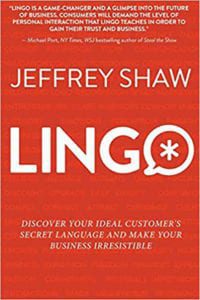
LINGO: Discover Your Ideal Customer’s Secret Language and Make Your Business Irresistible
We turn to Uber and Lyft, and the whole business model of technology is to create a frictionless experience. HR is like the fax machines of business practices and it’s a big problem in HR. If they want to get their dream employees, they need to develop the process itself to be more frictionless or more technology-driven. If they want the dream employees of today’s workforce, they need to think like them. They need to speak their lingo.
The takeaway I have is if you’re trying to target a tech Millennial and your application process, your whole interaction with them is a pleasant user experience as they call it in the tech world. It’s seamless and there’s not a lot of bumps. It’s easy to use and it’s intuitive. They think, “They’re speaking my language. They want me to do this, but they already arrived. I’m going to come here. These people already understand the importance of what is important and therefore, I’m intrigued to possibly pick them versus another company trying to woo me.”
You will stand out competitively. If you were that candidate or potential employee, wouldn’t that also mean to you what the experience of working for that company was likely to be like?
I was speaking at a Coca-Cola Summit for CMOs who carry Coke instead of the other brand. One of them was the CMO of Domino’s Pizza and I said to him, “What’s your biggest marketing challenge?” He said, “Attracting tech people.” I said, “Really?” He said, “Yes. We’re competing against a lot of other tech companies because we’re promoting this app that tracks your pizza from the time you ordered it online, how fast it’s getting there and who’s doing it. We used to say we’re a pizza company that uses tech to try to attract this top tech talent. Now we say we’re an eCommerce company that happens to sell pizza.” I thought, “You’re speaking their language because eCommerce company happens to sell insert books. It sounds a lot like Amazon, but you’re just inserting pizza.” That’s another example of what you’re talking about speaking the right lingo to recruit the right people.
I’m working with a company that layout offices. They get the furniture and they design it. It’s an integrated system that they offer and they’re big on what they refer to as resimercial design, which is this blend between residential and commercial design. In redoing their branding where you’re leveraging that as one of the key distinguishable properties that they want to promote to potential customers as to how they can attract their ideal employees. Many companies are having a problem attracting a good workforce. Designing their offices in resimercial styles are attractive to today’s workforce because it’s a cooler atmosphere. I even dig deeper and I was like, “There’s also an added psychological benefit here. In all our lives, the lines are blurred between work and in our personal lives. There are almost no lines.” Therefore, in the workplace when you soften those lines, it’ll feel like that. You increased productivity because it’s not like you’re going to take the hour and go down to the cafeteria. You’re going to sit in a café and keep working while you’re having your sandwich.
At least have a casual conversation with people you work with and collaborate on brainstorming ideas in a new space. I’m a big believer in that as well. Any last thoughts or a quote you want to leave us with?
Philosophically, I believe that businesses, whether they’re businesses seeking their ideal customers or their dream employees, those that take the time to get the audience, get them. They get the audience they want to reach and achieve their goals. Companies that are willing to get their customers will get better customers and companies that are willing to get today’s workforce will get their dream employees. It starts with having a willingness to understand the lingo of the people that you want to attract. I look at lingo as the evolution beyond buyer personas and avatars, which at best scratches the surface. It’s an attempt. Buyer personas and avatars is an attempt to understand that you have to go further than that today because all the companies that are producing buyer personas and avatars are all going to compete with one another. If you want to stand out, go beyond the buyer persona and avatar and find out what emotionally moves the audience that you’re trying to attract.
People can find you if they want to hire you and have a conversation about having you as a speaker at JeffreyShaw.com. Jeffrey, thanks for being such a great guest and sharing your secrets on lingo.
John, thank you for having me. I appreciate it.
Important Links
- LINGO: Discover Your Ideal Customer’s Secret Language and Make Your Business Irresistible
- Creative Warriors
- JeffreyShaw.com
- Better Selling Through Storytelling Method Online Course
Wanna Host Your Own Podcast?
Click here to see how my friends at Podetize can help
Purchase John’s new book
John Livesay, The Pitch Whisperer
Share The Show
Did you enjoy the show? I’d love it if you subscribed today and left us a 5-star review!
- Click this link
- Click on the ‘Subscribe’ button below the artwork
- Go to the ‘Ratings and Reviews’ section
- Click on ‘Write a Review’
Love the show? Subscribe, rate, review, and share!
Join The Successful Pitch community today:
- JohnLivesay.com
- John Livesay Facebook
- John Livesay Twitter
- John Livesay LinkedIn
- John Livesay YouTube
Humor That Works: The Value Of Humor In The Workplace With Andrew Tarvin
Posted by John Livesay in podcast | 0 comments

How do you manage the stress of working 90,000 hours in a lifetime? In this episode, Pitch Whisperer, John Livesay, shares more than a few laughs with Humor That Works author, Humor Engineer, speaker, and facilitator, Andrew Tarvin. Andrew reveals how being forced to join an improv comedy group started it all. He teaches us the value of humor in the workplace to increase satisfaction, engagement, and manage stress. Andrew also lets you in on the secret of humor MAP, how you can be a humor curator, and how you can communicate in a way that people will listen and respond to, and have fun with at work.
—
Listen to the podcast here
Humor That Works: The Value Of Humor In The Workplace With Andrew Tarvin
Our guest is Drew Tarvin who is the world’s first humor engineer, teaching people how to get better results while having more fun. As a speaker, he’s delivered more than 500 talks in front of 35,000 plus people with organizations like Procter & Gamble, GE, Microsoft, PepsiCo, and many others. As an author, he’s written three bestselling books, including Humor That Works: The Missing Skill for Success and Happiness at Work. He is also the primary contributor to the Humor That Works blog and has written more than 400 posts on business topics such as humor, leadership and decision-making garnering over one million page views every year. As a thought leader, Drew has been featured in The Wall Street Journal and Forbes best company and had been a guest for more than 40 podcasts. He has a social reach of more than 25,000 followers. The most impressive to me is his TEDx Talk that has been viewed over four million times. Drew, welcome to the show.
Thank you for having me.
[bctt tweet=”Get a humor habit-one smile per hour. ” username=”John_Livesay”]
Would you take us back to your childhood? Were you always somebody who is funny or were you more the engineer?
I’ve always been an engineer. I was born in engineers to the standpoint that I was born three weeks early. Even in the womb, I was ready for efficiency. I was like, “We don’t need a full nine months. We can go right now.” I went to my high school reunion not too long ago and people found out that I did comedy and I talked about humor. They’re like, “You’re not funny.” I was not the life of the party or the class clown. In my senior year, in my Senior Superlatives, I was voted the teacher’s pet. I’m much more engineering-minded, academic-minded and socially awkward a little bit. It wasn’t until college that I discovered improv and stand-up.
I’ve seen some of your improvs. It’s hilarious and it’s funny. How did you marry the two? You talk about dating a lot in your improv that I saw.
I talk about all the topics. When you do improv and stand-up a little bit more, you start to develop a persona or a point of view. I’ve realized that my point of view is an engineer’s point of view on the world. Not only think of things like productivity and communication but also things like dating or emotions. For me, as an engineer, emotions are just data, which I have learned is the wrong thing to say when someone is crying. You find that perspective and persona. I went to Ohio State University and got a degree in computer science and engineering. While I was there, my best friend wanted to start an improv comedy group. He needed people and forced me to join. That started my journey of improvisation.
A year later, a bunch of us in the improv group started doing stand-up comedy as well. That began the journey of learning about humor. What was interesting to me is by the time I graduated, I was working at Procter & Gamble as an IT project manager. I was drawing a lot from what I learned from improv and stand-up as a way to be more effective in the workplace. I was communicating in a way that people listen and I was sending emails that people read and responded to. I had fun in my own work. That’s where that discovery started to happen a little bit.
What motivated you to write your book?
People ask me, “How long did it take you to write the Humor That Works?” In some ways, it’s like, “About six months of sitting down and writing,” but the real answer is about ten years. I have been filling in the corporate humor space for the last several years while I was still working at P&G. It was really to say, “How can we provide one cohesive guide for the people that are out there that are like, ‘I do want to enjoy my work a little bit more. I am interested in getting a little bit better results. I want to look forward to going into the workplace or going into this meeting of this pitch that I have. I want to be excited about it instead of dreading it.’” I wanted to create a resource for people to be able to do that.
[bctt tweet=”Be a humor curator versus a humor creator. ” username=”John_Livesay”]
You talk about in your book, Humor That Works, that there are three ways that humor helps. The first one is it helps us beat stress. Can you talk about that?
There are 30 benefits backed by research case studies and real-world examples in terms of how humor helps in the workplace. One of the primary ones is beating stress. As I’m sure many of your readers know and you know that stress by itself isn’t a bad thing. The stress of a pitch coming up or the stress of a meeting that you have with a client that you’ve been working with or the stress of additional roles overall improves your capacity. It forces you to get better as a presenter, as a speaker and as an employee. You’re getting more efficient and all of that. Stress by itself isn’t a bad thing. It’s how we grow. Chronic stress, when we don’t relieve that stress, that’s when we see an increase in muscle tension and blood pressure and a decrease in the immune system, all the negative effects of stress.
It’s much like when you’re working out. When you grow, it’s not when you’re working out, it’s when you rest. It’s when you refuel and recharge your body and that’s something that we don’t do as well when it comes to our work capacity stress. Humor is a great way to relieve stress and all the negative effects of stress. If you start laughing or if you’re smiling and you have the release of endorphins that comes with appreciating humor, you see an increase in blood flow and an increase in the immune system. You see a decrease in blood pressure and muscle tension. Laughter and humor can be a great counterbalance to the stress that we deal with every day.
They’ve done the research that can even help people heal who are dealing with illnesses in the hospital and stuff watching comedies and things like that. You talk about how humor can help engage employees and it unites us in a way. What if the person who’s managing a team says, “I would love to be funny with my team. I’d love to use humor to beat some stress, but I am not funny or I can’t tell a joke to save my life.” How can you help them with your book and your talks?
It’s a great question because a lot of people have this worry. A lot of people think that the ability to use humor is innate. That it’s something that you’re born and able to do. The reality is that it’s much more of a skill. It’s much more of cooking where you grew up in a household where one of your parents cook and you learn from there, you picked it up. You might feel like you have a little bit of natural talent. There are certainly some things that come into play, but you probably got better over time. If you’re like me and you start cooking a little bit later in life, which I’m still not good at, I can at least follow a recipe. I can follow a guideline and I do get better over time. I’m an engineer, so when you’re like, “Add a pinch of salt,” I’m like, “How much is a pinch?” I don’t want to just wing it. I need to know.
Humor is a similar skill that can be learned. It’s something that you can learn some of the general techniques and improve. What we say in our programs is that we can make anyone funnier, not necessarily across the board funny where you’re going to get a Netflix comedy special as soon as you’re done with a workshop. We can take you from wherever you are and improve. That improvement comes from a couple of key things. Maybe one of the most important things for people to recognize listening is to use humor effectively in the workplace. You don’t have to be a humor creator, instead, you can be a humor curator. You can find interesting humor that you like.
If there’s a Ted Talk that you like, you want to share that out. If there is an image that you come across online that you find funny or a gift that you want to respond to in a text, you can share those things. You didn’t have to be the one that created it, but instead, you can curate it and put it into a context that makes sense. Not only does it make people laugh, but it also gets a result that you’re going for. It makes people pay attention because you have an interesting image at the beginning of your presentation that makes people laugh and draws them in a little bit more.
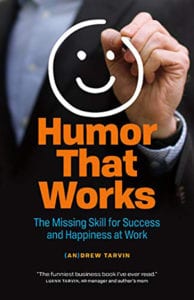
Humor That Works: The Missing Skill for Success and Happiness at Work
I like that because it takes off some of the unknown fear of, “Is this going to land?” If it’s somebody else’s content that’s been proven time and again, a cartoon or whatever it is from the New Yorker, odds are it’s going to get a smile. We’re going to tweak that out as a quote from you, “Be a humor curator, not a humor creator.”
That’s a great starting point for other people or after you get more comfortable with that, you might move to like, “I do want to create some. I want to tell my own story. I want to come up with an image myself.” Do you want to craft a joke? Those are all things that you can learn as well and it takes a little bit of time. It takes practice like any skill but it is something that people can learn for sure.
Besides being a humor curator, is there something else that you were going to give as a tip for getting people funnier?
One key is recognizing, “I can be a humor curator. The other thing to recognize is that the goal of using humor in the workplace is not to be funnier. It’s not to be funny and it’s not to be seen as the class clown or to get people to be like, “You’re hilarious. You should do stand-up comedy.” The goal is to be more effective and to get better results. When you look at the broader definition of humor, it is defined as a comic, absurd or incongruous quality causing amusement. One of the keys is to think less about, “How do I be as funny as possible?” and more about, “How do I make things a little bit more fun?” It goes back to that point that you said that humor can be helpful to engage a team or engage an audience. I’ll ask you a dumb question, but I still want an answer to this dumb question. The dumb question is, “Would you rather do something that is fun or not fun?”
Fun, please.
It’s a dumb question, but that stands to reason that if you were to make your pitch a little bit more fun, do you think people are more likely to pay? If you were to make your own work a little bit more fun, would you be more likely to stay engaged with it longer? If you were to make your commute even a little bit more fun, would you be a little bit less stressed about it happening?
Is there an easy step that someone can make to make something more fun like a commute or just a presentation?
That brings us to the third big tip that helps people. It’s understanding what we call a humor map. Your humor map stands for your medium, your audience and your purpose. Your medium is, “How are you going to execute the humor?” Is it to yourself sitting in a car? Is it to a potential client in a pitch meeting? Who is the audience? Is it just yourself? Is it people that you’ve worked with for years? Is it members on your team that you’re trying to engage more? The final piece is your purpose and this is the most important one. Why do you want to use humor? It’s not about just to be seen as funny. This is why some people were like, “Didn’t Michael Scott in The Office try to use a lot of humor and wasn’t even more of a client?” It’s like, “His reason for using humor was more about seeking validation,” which is not a great reason.” Your reason might be, “I want to use humor. Maybe I’m going to start this presentation with a story that has some humorous moments to it. Not only do I get people paying attention because it’s not a boring presentation, but rather get them interested in the story and that story sets up the thesis of what I’m going to talk about.”
[bctt tweet=”Keep a humor diary creator. ” username=”John_Livesay”]
What you said that I love is that humor is a skill like cooking because often, I give talks on how to be a better storyteller. People often say to me that I’m not a good storyteller and I said, “It’s a skill you can learn.” I want to get into your expertise as a keynote speaker because a lot of people think, “If I had to give a talk, I have to open up with something funny or show a funny cartoon.” I was giving a talk and I was more concerned with telling a story. I was running that story by a friend and I said something that made the friend laugh. I wasn’t consciously trying to be funny. I was just being myself and I thought, “I wonder if I said that in front of a crowd if it would work,” and it did.
Let me tell you what I said and you, as the humor expert, might be able to say why that works. I was opening the talk and I said, “The first thing I do every morning is taking a freezing cold shower. Research has shown that it helps fight depression, burns fat and trains your brain to tolerate discomfort and get out of your comfort zone. The research had me at burns fat,” and that got a laugh. I was saying the three steps of what the research said and then I said it to my friend as an aside because he’s fit. “That’s why we need that thing to get me doing it.” What makes that funny without consciously knowing what I did that made that funny?
There are a couple of things that make it compelling. One, it started a talk with something interesting rather than jumping into content right away, you’re talking about starting this. Immediately upon sharing this story, you’re putting people in their head of taking a cold shower, “Would I do that?” There are some people that are going to be for it and some people that are against it. You’re giving reasons and justifications, which are great. What are the three reasons again?
It fights depression, burns fat and teaches your brain to tolerate discomfort.
[bctt tweet=”Stress by itself isn’t a bad thing. It forces you to get better as a presenter, speaker, or employee. ” username=”John_Livesay”]
You think about like you hear that and you think about, “It burns fat. It’s interesting.” Maybe the more of teaching your brain to go against discomfort or being used to it. That’s the best benefit. That’s the primary one. Burns fat seems like the least important one of those three qualities that it provides. The fact that you then come back to it and say, “You had me at burns fat.” Whether it helps you be more comfortable in discomfort, I don’t care about it, but this applies and there’s this interesting skill that you have. Part of the skill of humor is your ability to create humor. Part of it is your sense of humor. It starts with their sense of humor on what do you find interesting. Part of it is your ability to create and there’s this concept that comes from UCB, which is an improv school in New York and LA that says, “If this is true, what else is true?”
You can even extend that joke a little bit further where you can say, “You had me at burns fat. If this is true, what else is true? If standing and taking a cold shower burns fat, what else could be true?” It could be like, “I have stopped working out. Now I just take three cold showers a day and that’s my workout.” You can extend that, but it can be a surprise. This is where humor is interesting and why I love it as a problem solver and as an engineer is you never know what’s going to work. One, when you make other people laugh as you said, this started in a conversation and you make them laugh, that’s a great thing to take note of. What most comedians would do is they’ll have a humor notebook and the humor notebook is simply a repository where they write down funny things, interesting thoughts or anything that they’re curious about.
You put that in a humor notebook and that way, later when you want to add humor intentionally to something rather than starting from scratch. Rather than be like, “Something funny happened a few weeks ago. What was it that could work?” You just go to the notebook and then copy that down. The fact that that trigger of someone laughing got you to think about it. You could put that in a notebook and then you’re like, “If it made someone laugh in conversation, maybe it will laugh in the stage.” From that, there are things that you can iterate and you could play with like, “Is it funnier for burns fat to be first, second or third in that list?” Maybe it’s funnier for it to be first because it’s a little bit more of a surprise when you bring it back. That way, you don’t care about the two other ones or maybe it’s funnier if that’s the third thing and it creates what we call a comic triple.
There are certain devices within comedy. One of the most common they made that is the simplest explanation is a comic triple where you give a list of something. In that list, the first two things are normal expected things in that list and then the third thing is something that’s a bit unexpected and that will create a laugh. It might be like, “Maybe burns fat and the comment about burns. That’s the most important one to me. Maybe that comes last.” I can’t say for sure, but that’s where the practice and iteration come from of like, “The next time you do it, you might tweak it.”

Humor That Works: The goal of using humor in the workplace is not to be funnier. It is to be more effective and to get better results.
What we’re giving everybody are real-life examples of how they can start to play around with starting a humor map and starting a humor journal. The other reason I was excited to have you on, Drew, is because we’re both speakers. When I was hired by Anthem Insurance to give a keynote to their audience on how to be better storytellers to sell, they said, “In the end, we’re going to have an improv session and the audience is going to shout out objections. Some of the people are going to pretend to be doctors and some are going to pretend to be Anthem people.” I offered to stay, be on stage and whisper in people’s ears if they got stuck. I would say some things from the keynote to keep the conversations going because for those who don’t know, improv is all about “yes, and.” I’m sure you have some stories of how you have taken some of your lessons and expertise in improv and applied it to the business world.
A large part of the way that we train, less so in the keynote setting, although every single one of my keynotes almost always incorporates some applied improv. Applied improv is simply taking concepts, ideas or exercises from the world of improv and applying them to something else like communication skills, leadership skills, problem-solving and innovation. Our workshops are often heavily steeped in applied improv and that’s because it’s an effective way to train. Rather than me talking about communication. If I get you doing an activity about it, you’re going to have the a-ha moment yourself. There’s going to be some team building that goes along with that and you’re going to remember it a little bit longer while you’re practicing this skill. We use a lot of it.
You mentioned the core fundamental principle of improvisation of “yes, and,” even that explains the humor in the workplace because the average person will work 90,000 hours in their lifetime. That’s a long time. That’s longer than everything that’s on Netflix as far as I know. “Yes, and” is a mentality. It is not about being a yes person. It’s not about blindly saying yes to everything and being Pollyanna optimistic about all of that. It’s about seeing a situation and deciding to build on it as opposed to talking about all the things that are wrong. It is about picking one thing that you do like and building on it. The “yes, and” mentality of using humor is, “Yes, I’m going to work 90,000 hours and I might as well enjoy them. I might as well find ways to make the work that I do a little bit more fun.”
Even that mentality is fundamental to how we do things. There are principles to applications from improv that you apply. One of the things that I like about improv is the idea of not present with an apology face. I’m sure you talk about what storytelling you’re with. Pitching is where you present an idea and you discount the idea yourself before you’ve ever even heard it. You’re like, “I’m thinking of this and it’s dumb. It’s probably not good at all.” When you see it, you’re like, “Is this okay maybe?”
[bctt tweet=”Rather than being innate, humor is much more a skill. It can be learned. ” username=”John_Livesay”]
The other thing I work with people on is don’t open your presentation to win a new client with, “I’m excited to be here now.” Nobody cares that you’re excited. It’s not about you. What you are also doing that I have not seen anyone else do and this is valuable is humor reducing turnover. People don’t realize how expensive it is to leave a job open, the time required to interview and check references. I spoke to an executive search firm and they’re constantly talking about, “We don’t even get our commissions if the person doesn’t stay in the job for two years.” If humor can help solve that problem, it’s going to be a huge takeaway for you. I keep thinking to myself, “If I have a job to do and I’m having fun with the people I work with, even if the job may not be exactly glamorous or fun. I get another offer for slightly more money, but no one there looks like you’re having fun, I might just stay where I’m having fun. The time will go faster if nothing else.”
They’ve done studies to show this. Once you get to a certain salary level and I think at least in the US, as of a couple of years ago, it was $75,000. The increase in pay from $75,000 does not move employee satisfaction. If people similar to you and other jobs at other companies are making $500,000 and you’re making $75,000, there might be a difference there. In general terms, money isn’t going to have a huge change in terms of your satisfaction score if it’s somewhat comfortable. An increase of say $5,000 a year may not move the needle, but enjoying your work absolutely will. One of the things that they have found is that 31% of employees leave their company because of their manager. They like what they do, they like the project that they work on and the company, but if they don’t like their manager, it’s not that they’re like, “It’s just a manager. Let me find someone else.” They’re like, “I’m just going to leave.” If you can, as a manager, find ways to not only make work more fun for yourself but make it a little bit more fun for your direct reports, that’s where you see an increase in engagement and retention and a decrease in turnover because it’s a cultural thing.
One of the things that people say about P&G all the time is the reason why they stayed or the thing that they miss the most if they did leave was the caliber of people. It’s partially the culture that exists. I’m one of those people that agree with that although it’s not seen as a funny culture, it’s not like seeing Southwest, Zappos or anything like that, it was a culture of empowerment. I proclaimed myself the corporate humorist at P&G and no one stopped me from doing that. They embraced it and they allow me to be who I was and leverage my own strength. Those types of benefits certainly helped to reduce turnover.
[bctt tweet=”Laughter and humor can be a great counterbalance to the stress that we deal with every day. ” username=”John_Livesay”]
You have many great tips on your website, Humor That Works. One of them is this concept of giving a pirate name to people. Did you do that at P&G?
Yeah. We had all types of fun with our project, simple things. We did prior names early on, but then we switched to one of the things that I liked doing. It was giving personality assessments to my team rather than Myers-Briggs or other ones we would do like, “Which Disney princess are you?” “I am a Pocahontas.” We would have nicknames based on Disney princesses, Star Wars characters and that stuff, any fun thing where you can create camaraderie for sure.
Let’s talk about your TEDx Talk. How did you come up with the name? How long did it take you to prepare for that?
I’ve had the fortune of doing two TEDx Talks. The first one, I did at Ohio State and was all about humor in the workplace, the general idea and the concept of it. I was approached by TEDxTAMU because I’ve done some guest lectures there. They were looking for speakers and they reached out. I shared with them a couple of different things that I was working on. I had wrapped up being a nomad and traveling all 50 states in a year, speaking and performing at all 50. I was like, “I can talk about that or I can talk about this other thing.” What I’m realizing is that one of the things holding people back from using humor in the workplace is that they do believe it’s this innate thing. My thing was like, “No, humor is a skill and it can be learned.” They’re like, “That’s new to us. We thought that it was natural. If we weren’t funny, then we were just out of luck.”
That’s where the premise of this skill of humor came. As far as prep goes, as the engineer in me, I wrote up a blog post all about it. I have a personal blog that went into it, but I did a ton of work for it. I knew that it had the opportunity to potentially get in front of a number of eyes and to help a lot of people. I did a ton of stand-up shows to prep for the talk. I did a number of speaking engagements where I rearrange the outline of the talks that I could do the full eighteen minutes of the talk nonstop just to learn because I iterate. That’s how I learn what’s funny, what doesn’t work and what does work. I did a tremendous amount of additional research for it, so I don’t remember the exact numbers, but I have a blog post detailing the whole thing. It was quite a bit of research to get it to that point that I was like, “This is something that I’m proud of.”
It’s important to share that behind the scenes preparation with people because a lot of people will say, “You’re a natural speaker. You’re a naturally funny person.” You don’t realize that it comes across naturally because I prepare. If you try to get up and give a talk, be funny or do anything in your career without the preparation, odds are it’s not going to land the way you think it will. Many people are not a big fan of preparation, but it sounds like you and I are on the same page with that.

Humor That Works: ‘Yes, and’ mentality is not about being a yes person. It’s not about blindly saying yes to everything, but it’s about seeing a situation and deciding to build on it.
There’s something that tends to resonate with a lot of the engineering groups and IT people that I speak with. There is a big difference between being efficient and being effective. It might be more efficient for you to wait until the last minute to plan your presentation to throw into. It might be more efficient to add a bunch of texts to your slides so that you don’t have to memorize what you’re going to say. It might be a little bit more efficient to not memorize it and read from notes, but it’s not going to be long-term more effective. You put in the hours for that rehearsal and that practice. Over time, one, it doesn’t take nearly as long. If you have a Patriot presentation skill and you’re building those skills over time, there might be things that you can reuse. If they talk with you and work on a story, it’s not like that story can only be used once. They can use it multiple times as they go through and every time they answer the question, “What do you do?” Every time they start a presentation by giving the background of why they started and whatever it is that they started. It becomes efficient in the long-term because it is effective in the long-term.
This has been fascinating to learn that humor is a skill that can be learned like cooking and that we can be a humor curator versus just a humor creator. The concept of efficiency and effectiveness is fascinating to me. Are there any last thoughts you want to leave us with including how people can hire you as a speaker, buy your book and all that good stuff?
If people are interested in learning more about humor in the workplace, we have a ton of resources on HumorThatWorks.com. It’s free blog articles and a free newsletter. There’s a link to the book there. There’s information about our workshops and our coaching. If they’re interested more in using humor, that website is a great place to go. If they want to connect with me personally or have specific questions, they can find me at Drew Tarvin on all social media. Whether that’s LinkedIn, Instagram, Twitter and Facebook, they’re all under that same handle.
The thing that I would say for the readers if you’re thinking like you’re an engineer, “What do I do differently after having read this?” The one thing that we encourage is simply to start thinking one smile per hour. Think about what’s one thing that you can do each hour of the day that brings a smile to your face or the face of someone else. What that does is it starts to develop a humor habit. You’ll start to notice small, subtle ways, “I’m on this commute. How can I make it a little bit more fun?” I’m saying, “Maybe I’ll bring up John’s podcast and listen to a couple more episodes as I’m driving. Maybe I’ll have a concert and rock out to some Hamilton in the car.” If you start to do that, you’ll develop a humor habit. You can build your skill, whether as a curator or a creator as you go. Hopefully, each day you’ll get a little bit funnier and have a little bit more fun.
Thanks again, Drew.
Thanks for having me.
Important Links
- Drew Tarvin
- Humor That Works: The Missing Skill for Success and Happiness at Work
- Humor That Works blog
- First one – Drew Tarvin’s TEDx Talk
- TEDxTAMU – Drew Tarvin’s TEDx Talk
- Drew Tarvin – LinkedIn
- Instagram – Drew Tarvin
- Twitter – Drew Tarvin
- Facebook – Drew Tarvin
- HumorThatWorks.com
- Better Selling Through Storytelling Method Online Course
Wanna Host Your Own Podcast?
Click here to see how my friends at Podetize can help
Purchase John’s new book
John Livesay, The Pitch Whisperer
Share The Show
Did you enjoy the show? I’d love it if you subscribed today and left us a 5-star review!
- Click this link
- Click on the ‘Subscribe’ button below the artwork
- Go to the ‘Ratings and Reviews’ section
- Click on ‘Write a Review’
Love the show? Subscribe, rate, review, and share!
Join The Successful Pitch community today:
- JohnLivesay.com
- John Livesay Facebook
- John Livesay Twitter
- John Livesay LinkedIn
- John Livesay YouTube
Ask! : The Bridge from Your Dreams to Your Destiny With Mark Victor Hansen and Crystal Dwyer Hansen
Posted by John Livesay in podcast | 0 comments


There is only an answer when there is a question. In life, there are times where we are held back from the things we want because we are just so scared of asking. In this great episode, John Livesay talks to not one but two amazing guests. He is with Mark Victor Hansen—the co-author of Chicken Soup for the Soul—and his wife, Crystal Dwyer Hansen—entrepreneur, certified life coach, and wellness nutrition expert. Together, they share about the power that is in asking through their new book called Ask!: The Bridge from Your Dreams to Your Destiny. Mark and Crystal tell us the seven roadblocks we have to overcome before we can start asking ourselves and other people and even God for help. We are literally made to be each other’s resources, and that whoever asks the most questions becomes more likable. They share the essential questions that will make you masters of asking and lead you out of just dreaming into your destiny. Tune in to today’s show!
—
Listen to the podcast here
Ask! : The Bridge from Your Dreams to Your Destiny With Mark Victor Hansen and Crystal Dwyer Hansen
I have not one, but two amazing guests: Mark Victor Hansen and his wife, Crystal Dwyer Hansen. They are the co-authors of a new book called Ask!: The Bridge from Your Dreams to Your Destiny. Mark, you might know as that Chicken Soup for the Soul guy, which started back in the 1990s. He and his business partner, Jack Canfield, created what Time Magazine called the Publishing Phenomena of the Decade with over 110 million Chicken Soup for the Soul books sold worldwide. Crystal is an entrepreneur and certified life coach and a wellness nutrition expert whose personal coaching, speaking, CD and video programs have helped people all around the world. Her expertise is in the field of human potential. People who have worked with her have a profound and lasting transformation in all areas, relationships, careers, health and wellness. Her book, Skinny Life: The Real Secret to Being Physically, Emotionally, and Spiritually Fit is also available. Mark and Crystal, what an honor. Thank you both for coming. Welcome to the show.
It’s our delight. We’re excited because we know the secret that will make everybody infinitely better off if we go through this talk with you.
Let’s know what the secret is and then we’ll get into your own backgrounds a little bit more. You’ve teased us so much. What is the secret? Everyone’s on the edge of their seats.
[bctt tweet=”The most important questions we ask are the ones we ask ourselves. ” username=”John_Livesay”]
What happens is we travel so much that we meet people that are wonderful, fabulous, successful, professional, intelligent, but they don’t quite fulfill their potential. We said, “What would it be that they need to do to fulfill their potential?” What they’ve got to do in our impression is to become masters of asking. You say masters of irresistible storytelling and pitching.
I’m sure the audience is very interested to know a little bit about your own personal stories of origin and then how you two met. Crystal, tell us a little bit about how you became such an expert in all of these areas of nutrition and relationships. Go back as far as you want like childhood, school or whatever.
I was raised in an unusual situation where my mother was way ahead of her time, organic gardening, naturopathic medicine and those types of things. I was raised that way. Later on in life, I was in the business world. I was in real estate and loving what I was doing, but I’ve always found that whatever I was doing, whether it was modeling or selling real estate, I would connect with people very easily and people would open up to me. I seem to find an easy way to help them with their issues. My sister came to visit me. She has been a smoker since she was fifteen years old. My cabinet-maker was there that day. He was redoing one of the cabinets in a house that I was doing and he lost weight. I said, “Tony, you were great. Why do you look so good?” He goes, “I stopped smoking, I lost weight. I got hypnotized. I went to a hypnotherapist in 30 days. I’m back. I’m better than ever.” I was so intrigued. I said, “Stephanie, we need to get this. I’m going to take you over to this hypnotherapist and let’s do this.” I was astounded that she could break this impossible addiction, lifetime habit in that much time.
I became obsessed. I enrolled in the largest holistic college in the country. I became certified in American Board of Hypnotherapy. I became certified in life coaching and I started helping people. I opened a practice in Scottsdale, Arizona. I was almost astounded at the results people were getting. People were coming to me who had been depressed their entire lives. I got a note from a woman one time. She said, “I am so thankful I heard you that day on the radio. You were my last hope. I’ve been depressed my entire life. After five appointments with you, I can honestly say I am entirely free of the crushing depression I’ve experienced my entire life. I can wake up and have a bad day. It’s not the end of my world.” I became addicted to helping people. I love it. I connect with people and that’s the work I was doing.
When Mark and I had met, I had written my first book, Pure Thoughts for Pure Results, and I went to an event he’s speaking at called Author 101. He saw me, I saw him. We ended up in the VIP room together at the reception. A woman spilled a glass of red wine on my white pants and Mark came over to my rescue and said, “I know where the club soda is.” It was that kind of moment because I was talking to a speaking coach and he was surrounded by an entourage. I wasn’t bothering him. He must’ve been looking because he saw this happen. He came scooting over to me, held my hand, pulled me out of the room and said, “I’m sorry this happened. Let me help you find some club soda.” We started talking and we haven’t stopped talking.

Dreams to Your Destiny: There are two kinds of people in the world, those of us that ask and those who don’t.
Mark, I know that Chicken Soup for the Soul has been a huge success. You have a lot of other books, The One Minute Millionaire, Cracking the Millionaire Code, How to Make the Rest of Your Life the Best of Your Life. You have had so much success in so many areas. What is it that caused you and Crystal to say, “There’s still something out there that the two of us combined can put out into the world,” which is the secret of ask?
She tells me that I’m the master asker of all time. I’m the ninja of asking, maybe even a triple ninja. My parents were Danish immigrants and didn’t have any money. I started buying my clothes at nine years old and learning how to do stuff. I was a Boy Scout and I read the Boy Scout Life Magazine. You could sell greeting cards on consignment. I looked up in my little dictionary what consignment meant. It means I didn’t have to put up any money so I could afford that. I started learning to ask. I asked more neighbors than anyone else. I sold more greeting cards than anyone else. I became the number one ingredient card salesman in America at nine years old. Forty years later, I’m back with the same company, Gibson greeting cards. We sold 897,000 boxes of Christmas cards a year through grocery stores. It’s an amazing full cycle thing. There are two kinds of people in the world, those of us that ask and those who don’t. Most people are afraid and they get stifled and stop toward asking.
It’s an energetic thing that you talk about, that there are three different channels. Let’s talk about the three channels and then let’s talk about those roadblocks to asking. Because if people can walk away from those three tools that the two of you have given, everyone’s going to be making a mad dash to buy the book because it’s just the tip of the iceberg. Would one of you share with us the three channels through which we can ask?
Each one of these is important in and of itself. The three channels are: ask yourself, ask others and ask God. Some of the most important questions you’ll ever ask are the ones you’ll ask herself. When you’re sitting there depressed or have anxiety that’s shutting you down every day or you’ve through a divorce or you’ve lost your job. All of these places, times where we need to start over and often, we don’t see the way to do it. You start with the question and it’s that question you ask yourself that causes an answer. We did a lot of research for this book. There is research done that it ignites the critical thinking part of your brain. When you ask a question of yourself, your brain has to engage in a different way. All of a sudden, you have a new illumination, you have a new solution, you have a new insight, you have a new breakthrough, a different understanding of something. Those self-questions, asking yourself, that is one of the most important parts of the asking journey.
[bctt tweet=”Ask more questions if you want people to like you. ” username=”John_Livesay”]
One of the things I work with people on is if you’re in sales selling yourself or a product, you have to feel that you’re worthy and believe what you’re doing. I tell people, “Start a question off with, “What if?” I believe it taps into our imagination. Do you have an example or a story of someone of a good question we should all be asking ourselves?
We have a friend who we think the world of, Jim Stovall. He was slated to be an NFL player. He had the size and speed. They’d recruited him, he was ready to go. They send them to the medical and they say, “You’re going to go blind.” He’s going blind and can’t do it what his heart’s desire was, and he is in a little 9×12 room with three things. A radio, a television and a telephone and he’s going stir crazy. He goes to the first blind meeting recommended by his parents and he sits next to a woman and he said, “I watched TV in the old days. I love action movies, thrillers but I can’t see something, and now I can’t see the action. I wish somebody would do something about it.” That’s the pivotal question because the lady next to him, also blind, leaned over and said, “Jim, you and I are somebody. Why don’t we do something about it?” They created a business that you and I wouldn’t know as sighted people, but they have fourteen million people watching narrative TV that shows a guy throw a right hook or whatever it is, tire squealing away.
He’s becoming an enormous business guy and very successful because of one question she asked. “We’re somebody, why don’t we do something about it?” He says, “I now write books,” and he wrote a great book that I did the foreword to. He says, “I know write books that I can’t read and I make movies that I can’t watch because Mark told me to make that book a movie.” He wrote three books entitled The Ultimate Gift, The Ultimate Journey and The Ultimate Life. He’s amazing, but he’s a big football player size, blind. He says, “I write books that I can’t read and I make movies that I can’t see.”
We get the power of asking ourselves these potential questions of what could be possible, and then we have to somehow find the courage to ask others to help us, to brainstorm with us to see the best in us. What do you think, Crystal, would be an example or a story of asking other people and overcoming some fears we have of coming across maybe as too pushy or something?
The research shows that people are more than willing to step up and help you, but they don’t help unless you ask. People are wired to connect. We’re wired to help each other. We’re wired to jump in, but people often feel they’re nosy or they don’t want to intrude unless you ask them.

Dreams to Your Destiny: Couples that stay together pray out loud at night and in the morning before they go and do whatever they can do together.
Do you have a story of a time that somebody asked others for either help or insight or support that they had to overcome their own fears of being rejected or feeling pushy?
One of the stories that we tell is, and it’s one of those amazing lessons, one of our friends, Rita Davenport, she’s a journalist. She was a superstar in the network marketing industry. She had created this amazing concept where it was a cooking show. She had this idea to scale it up and she knew what she needed to do. She had the answer. She knew it was successful at a small level. She went to ask the person who would make the decision ultimately and he said no. She lost out on a $3 billion enterprise by not stepping up because somebody else went forward and did the business.
It’s one of those lessons where she found out later, all she had to do was keep going through the channels and keep asking to get her dream. It was heartbreaking for her because there was no way around it. She went to the gentleman later who ended up taking her idea and running with it. She said, “The very least you could have done was shared this with me.” He admitted that it was her dream and her idea, but she was too polite. She was too worried. She thought she had to take no for an answer. The thing about asking is you have to be a fearless asker and keep asking.
What I’m getting is not take rejection personally or be so afraid of rejection that you can’t even ask.
[bctt tweet=”People are more than willing to step up and help you, but they don’t help unless you ask. ” username=”John_Livesay”]
One of the greatest examples of that is our friend, Bob Proctor. We use him as an example of completely transforming from being a very unworthy person. He was raised in poverty and had nothing. Mark probably knows the story better than I do.
He’s told that he’s not good enough. He comes out of the Navy, goes in and becomes a fireman. As a fireman, he was making $4,000 a month. He was married and had three kids. He owed $6,000 a month. Every night after going to the fire department, they went in sat and drink. He looks around the bar and says, “These guys aren’t going anywhere. I need to ask some new questions.” He goes to the richest guy he knows and asked him, “How do you do that?” He says, “If you wanted to be rich, healthy, and successful, you’ve got to ask yourself better questions because better questions are going to get better results.” Fast forward, Bob Proctor, his wife asked him a question because he is in the self-improvement business and one of the giants. I’ve owned two companies with him and I love this guy. I have no idea how wise Socrates and Plato looked, but Bob looks wise when I look at him and listen to him. His wife said, “Bob, what would you do to make $1 billion?” He said, “I never thought of it. I will start sketching on a yellow pad.” He came up with it and he said, “I think we’re going to do it.” He’s 85 years old young.
We ask ourselves, ask others and then we ask God. Whatever that means to people, I think this concept of asking God, people go, “That’s what a prayer is maybe.” I bet the two of you have an opinion and a belief system that we need to ask God, the universe, whatever you want to call it for assistance, guidance or insights, not just at times of crisis or emergencies. I would love either one of you to give me your insights.
When Crystal and I are commencing our dating, we lived in Newport Beach, California. We’d go to a restaurant called Mother’s Market at Costa Mesa. We’re having this great meal and deep, wonderful conversation because we start everything by asking. We inundate each other with questions. The guy sitting at the next table was a white-haired gentleman of some renown, which we didn’t know at the time. He leans over and says, “You guys look like such a delightful a couple. Can I tell you, if you’re going to get married, which I hear you talking about, how to make sure your marriage works forever?” I said, “Yes. Let me ask you, how do you make a marriage work perfectly?” He says, “My whole life I’ve spent with the Billy Graham Organization and we did all the research. Here’s what we discovered. One thing and one thing only. Couples that stay together pray out loud at night and in the morning before they go and do whatever they can do together. They pray for each other. They pray for their family, they pray for their city, their county, their business and then the world.”
I was like, “I don’t know if I can do that.” It seems crazy because I prayed for my whole life. I prayed alone and I prayed in groups at church, but I thought, “I’ve never prayed with my significant other.” I thought, “Can I do this? It seemed awkward,” but it was amazing when we started doing it because it allowed us to come to the same place and put it on all on the line spiritually together. One of the most beautiful things about our relationship is that we do have a deep spiritual belief and practice that we share. We meditate and pray every day. It’s our morning meeting. We start off the day that way. We asked each other what are the most important things that we think we’re going to do with our day will be. We ask each other if there’s anything that’s bothering either of us, things that we need to work on together and work on with our business. We decide together what’s important to us spiritually. We ask for guidance because you can have all the tools and techniques in the world and they’re all wonderful, but sometimes you get to that place where you feel small and alone.
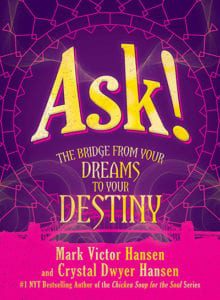
Ask! The Bridge from Your Dreams to Your Destiny
Everyone feels this way. I don’t care how successful you are. You’re stuck, you don’t have another place to go. Doesn’t it make sense to go to the Creator of the universe? Whatever your spiritual belief is, there is a Creator of everything beautiful. The same being the creative eyelids, eyelashes, flowers and every color, trees, plants and all the planets in the universe. There’s so much intelligence and wisdom. When you start tapping into that and asking, you feel things changing in your life. Part of that is believing in your question and believing that you deserve an answer, and that’s the faith part. They talk about faith, but you have to have that belief that I am a part of creation and I deserve to ask this question. I deserve the answer and it’s out there for me. Be open to it.
What I know you say, Mark, was it’s not just praying together with your significant other about what you two need and what’s going on in your life, but then the community and the world. It keeps zooming out bigger and bigger. Anyone I’ve ever met who’s had any level of success, every time, it’s consistent. They care about more than what’s going on within their world. You certainly do that. You’re both very involved in a lot of charitable organizations, trying to solve world problems with pollution and all kinds of other things. Thank you, Crystal, for sharing your own hesitation to do that because you’re being true and vulnerable. You let other people think, “I’m not alone in my internal thoughts. This is something I do privately. This is a whole other level of intimacy that I hadn’t even realized.” We’ve touched on some of the roadblocks to asking questions and one of them is the fear of rejection is one. You want to quickly go through what some of those roadblocks are that we might not have talked about yet?
One of the most interesting ones that we found is naiveté. Sometimes we don’t ask because we don’t conceive of what is available to us. We don’t know what’s out there for us. That’s why we encourage everybody to be very curious about the environment around them and about everyone you meet. We all make judgments about everything. We do it because of the efficiency of our brain, we’re trying to get through our day sometimes. Sometimes if we stopped doing that and be intentional about being curious, about things we’re not aware of, other things, other people. The real magic happens and opportunities open up for you that otherwise wouldn’t. I tell a little story about mangoes. It seems like a silly thing, but when my children were young, I hired this lovely Filipino woman to help me. She loved cooking these delightful meals for our family and it was so much fun to have her there with us. One day she’d show up with these fun little groceries and she cut it up and it was this juicy fruit and orangey colored. I was like, “What is this?” She said, “It’s a mango.” I tasted it. I thought it was worldly, but I had never tasted a mango.
I was like, “This is amazing.” I probably wouldn’t have tasted that if she hadn’t brought it to our family. That’s such a little thing, but it’s a small example of a greater principle. That is when we get stuck in our own track and we stop looking, being curious about others, what they do, some of their traditions, what’s out there for us? We cut ourselves off from the resources because we are one another’s resources. That’s why asking is important. It’s funny because there are several studies that show that asking makes you more likable. It seems counterintuitive because we think you don’t ask or be nosy.
[bctt tweet=”Whatever your spiritual belief is, there is a creator of everything beautiful. ” username=”John_Livesay”]
Some people are afraid to ask because they think they’ll be perceived as stupid, uninformed or that they don’t know enough. That’s the opposite. It shows that you have humility, being able to ask a question. Being willing to ask a question shows that you’re humble enough to do so. The other part of that is people feel like they’re honored. They’re honored sometimes that you’ll ask them. They’re honored you’re even asking them to do a favor. People feel honored that you would want their opinion. Another study showed that by asking, you’re more likely to get asked out on another date in a dating scenario.
I asked her to marry me a lot of times before she did. At our wedding, one of our dear friends, Matt Ferry, wrote a great song for us.
It was called Say Yes Again. It was the funniest thing because when he interviewed us because he wanted to write this song about our wedding and he said, “How did you ask her?” Mark said, “I’ve asked her a whole bunch of times.” He’s like, “Why do you keep asking her if she already said yes?” He said, “I want to hear her say yes again.”
He’s not a famous singer because he does another business. He spontaneously offered it and it was wonderful. When Crystal and I met, she gets done with the wine on her white pants. I said, “Have you eaten yet?” She said, “No.” I said, “Me either.” It’s 9:00, I said, “I can’t stay here because there are 1,000 people that all want two minutes with me at least. That’s not going to work. We’re at a dysfunctional get-together. Can I drive you off the property?” We go to the top restaurant in Hollywood, which you would know, and the line was still long and I thought, “$100 wouldn’t get us in.” We walk up and Crystal is ravishingly beautiful. The guy says, “I give up. Who is she?” Being a good butt-crusher, “You don’t recognize her?” He says, “No. Who is she?” I said, “She’s the queen of Denmark.” He said, “She’s the queen of Denmark? She is. Who are you?” I said, “Who travels with the queen.” That fast, we had the best table in the house.
The book is called Ask!: The Bridge from Your Dreams to Your Destiny, written by two powerful loving people that have put their energy into this book to make an impact in the world. I want to encourage everyone to get it. Thank you both for being a guest.
[bctt tweet=”Sometimes, we don’t ask because we don’t conceive of what is available to us. ” username=”John_Livesay”]
Thank you. If they want, we’d like to give them a free gift of an audiotape I did, which is the most listened audiotape in the world. Originally by Earl Nightingale, updated 50 years by me called The Strangest Secret. If they go to MarkVictorHansen.com, it just says, “Click here,” and you’ll have it. We’d like everyone to have it.
What a great generous gift. You keep giving. That’s in MarkVictorHansen.com. Get your free gift right there. Go to Amazon and order, Ask! by Mark and Crystal Hansen.
John, we thank you for asking us to be here.
We appreciate it.
It was a big ask and you said yes. Thank you both.
Important Links
- Ask!: The Bridge from Your Dreams to Your Destiny
- Mark Victor Hansen
- Crystal Dwyer Hansen
- Skinny Life: The Real Secret to Being Physically, Emotionally, and Spiritually Fit
- Pure Thoughts for Pure Results
- The One Minute Millionaire
- Cracking the Millionaire Code
- How to Make the Rest of Your Life the Best of Your Life
- The Ultimate Gift
- The Ultimate Journey
- The Ultimate Life
- Rita Davenport
- Bob Proctor
- Better Selling Through Storytelling Method Online Course
Wanna Host Your Own Podcast?
Click here to see how my friends at Podetize can help
Purchase John’s new book
John Livesay, The Pitch Whisperer
Share The Show
Did you enjoy the show? I’d love it if you subscribed today and left us a 5-star review!
- Click this link
- Click on the ‘Subscribe’ button below the artwork
- Go to the ‘Ratings and Reviews’ section
- Click on ‘Write a Review’
Love the show? Subscribe, rate, review, and share!
Join The Successful Pitch community today:
- JohnLivesay.com
- John Livesay Facebook
- John Livesay Twitter
- John Livesay LinkedIn
- John Livesay YouTube