

The Bruce Lee Of Revenue Generation With Erik Luhrs
Posted by John Livesay in podcast | 0 comments


Erik Luhrs is known as the Bruce Lee of Revenue Generation and is the Creator of Revenue Kung Fu. He works with entrepreneurs, experts, leaders, and founders, helping them move beyond whatever holds them back so they can rapidly grow their business and achieve their desired outcomes. Erik joins John Livesay on today’s show in a discussion about the importance of being happy and the connection between our mind, body, spirit, and wallet. He also walks us through the four levels of going from living to lifestyle to legend to legacy.
—
Listen to the podcast here
The Bruce Lee Of Revenue Generation With Erik Luhrs
Our guest is Erik Luhrs who is the Kung Fu Revenue Generator. We talk about the importance of being happy because that’s what freedom is and that’s what people want. There’s mind, body, spirit and wallet connection. He walks us through the four levels of going from living to lifestyle to legend to legacy. Enjoy the episode.
—
Erik Luhrs is known as the Bruce Lee of Revenue Generation and is the Creator of Revenue Kung Fu. He works with entrepreneurs, experts, leaders and founders who are driven by a purpose, mission or vision that far exceeds their current level of success. He helps them to move beyond whatever holds them back so they can rapidly grow their business and achieve their desired outcomes. Erik, welcome to the show.
Thank you for having me.
Let’s start with some journey. You get to pick childhood or school. What made you decide that you wanted to brand yourself as Revenue Kung Fu and martial arts?
I’ve studied about eleven different martial arts. I have several different black belts. Martial arts has been a large part of my life. I got the nickname The Bruce Lee In Revenue Generation. It originated with a client years ago. He gave me the nickname The Bruce Lee of Sales, which I sat on for a year because I said, “I’ll try to have the confidence to back that one up.” After a year, I put it up on LinkedIn and doubled my connections in about 1.5 weeks because I had stuck to The Bruce Lee of Sales. It evolved as I evolved. First, I created The Guru Selling System and evolved into lead gen. I developed Subconscious Lead Generation. I’ve evolved to positioning. I developed Peerless Positioning and all these different systems.
[bctt tweet=”People buy happiness because it represents freedom.” username=”John_Livesay”]
My nickname evolved from the Bruce Lee of Sales to the Bruce Lee of Sales and Lead Generation to the Bruce Lee of Sales & Lead Generation & Positioning. I was like, “That’s far too many ampersands in this nickname.” I shortened it to Revenue Generation. I’m like, “I’m done. That’s it.” I’ll probably change it but for now, that’s what it is. Revenue Kung Fu came out of all that because Kung Fu means a skill acquired through perseverance. It doesn’t mean kicking butt. The people that I work with, their discipline is to increase the revenue for themselves and their company at least initially.
There’s something in martial arts that’s about being aware of your energy and your spirituality. You mentioned something when you’re talking about all your other creations and iterations that involve some subconscious things. To me, this is what makes you stand out from other people that say, “I have a system to help you generate leads.” Let’s go there because I love to go there. My first book years ago was all about how to take metaphysical principles and apply them to selling like not taking rejection personally, like The Four Agreements, don’t take anything personally, not being attached to results. Many of us and sales are attached to the results. Staying in the moment and out of your head, and all those things. Nobody was trying to connect those dots many years ago. It’s fun to meet a kindred spirit who is bringing that in proudly and not sneaking it in. My question to you is, how do you help people? Do you start with mindset stuff? Are you able to help people figure out what their blocks are even if they don’t consciously know what they are?”
I studied a lot of different things. I’ve studied Neuro-Linguistic Programming and was a master practitioner level and mind control. I’ve read up on Psychology and studied other behavioral systems, towards the metaphysical, multiple forms of meditation, self-hypnosis, self-discovery and all of that. When you initially meet people, their initial fallback is to put up a facade instantly.
We have our masks. We don’t feel safe.
It’s what I want you to see me as. Most of the time they’re failing miserably, they just don’t realize it.
“You look scared and petrified.” It’s those kinds of things.

Revenue Generation: When you let people go into themselves and open the space for them, they will verbally and energetically give you an idea of where they are.
A narcissist is perfect or somebody like a conman. Everybody else is like, “I’m like a god right now.” You’re like, “This guy sounds like a wet bag of kittens.” When you let people go into themselves and if you open the space for them, they will verbally and energetically give you an idea of where they are. Ultimately, what people want is to feel better. They want to be happy. As Abraham Hicks said, “Everything you want, you want because you’ll be happier.” Ultimately, everybody wants happiness.
When I’m speaking with somebody, I have the subconscious piece. You and I spoke before that I have the psychic piece going on too, so there’s that aspect that I’m picking up. I’m picking up their unconscious, subconscious and superconscious pieces. My entire desire is to simply say, “Here’s what I’m getting from you,” and putting that back to them. A lot of times when you hit people, they will be saying, “Here’s what I want. Here’s the mission I’m on.” I’ll say, “Okay.” The more you talk, all I keep seeing is this knot that’s tying itself tighter and tighter. I feel constricted as if all of these ribbons that are tying themselves are limiters.
That’s what I’m picking up and what that means to you. All of a sudden, when you give them that mirror they didn’t look in this morning. They look at the rose-colored mirror and, “Here’s the real mirror.” They go, “I do feel like this thing I’ve been selling for five years isn’t what I’m into anymore.” They will start talking. They will verbalize the ribbons. That’s when it’s like, “We’ve deconstructed what you’re putting out there. Where do you want to go with that?” I could say, “It’s been 30, 45 minutes. You have this epiphany of yourself.” Sometimes people are like, “I’ll go back and read some more Eckhart Tolle or something.” “Have fun.”
Other people are like, “I still have six years of therapy that I paid for so maybe I’ll double up on those sessions.” The people I work with are the people who have a much bigger vision of what they want to be, do, have and experience in the world, in life as far as beyond where they are. Those are the people that I’d like to help. They’re committed, motivated, action takers and implementers. They give into that. They’re like, “I see that there’s more to me than this physical stuff. I want to dive into that because I want to experience myself as opposed to trying to create a Facebook-worthy life.”
You’ve touched on a couple of things I want to go into. One is a Facebook life is another form of a mask. All the research has shown that you get more depressed the more time you spend on social media looking at people’s posts because your brain doesn’t constantly remind you, “This is a moment in time. This is the best of the best of their day. Their whole day is not this happy.” You look at all the things they’re doing that you’re not doing.
[bctt tweet=”Go from living to legacy.” username=”John_Livesay”]
Good marketing has the ability to make people feel you’re in their head. The way I talk about it is when you tell a story that other people see themselves in, they’re pulled in. Your ability to create a metaphor describing a feeling you’re getting from someone, in this case, the ribbons, people can then describe what that means to them. It’s a door that allows them to open up and say, “Now that I have a metaphor and visual to what I’m feeling, that helps me figure out those feelings and express them in a way that without them metaphor, I didn’t even know where to start.”
Whether it’s intuition or starting a revenue plan, because you’re also into systems, you toggle back and forth between the feeling and the analytical part, if you can help someone figure out what their mission and purpose are and figure out a way to express that in such a way that it resonates with potential people who need that, that makes perfect sense to me why you would earn the title of being The Kung Fu of Revenue. If we zoom out and think of money and revenue as energy, Abraham Hicks certainly talks about that. Most people don’t realize that.
I remember being interviewed to give a sales talk to a company. It was between me and two other speakers they were interviewing. A couple of days after, I got an email from the speaking agent and said, “Congrats. They picked you. They liked your energy.” Rarely do you see it that clear. That’s what we’re selling, our energy. We think it’s our book, the content, the structure or whatever else it is. At the end of the day, it’s always energy. The woman said later, “I felt good talking to you in the interview that I figured if you made me feel this good, you’d make all 300 people in the audience feel that good.
That’s what you’re also offering through a systematized lens from people who are like, “That’s too woo-woo for me.” You’re like, “It’s okay and here’s how to apply it to a system so there is some structure to it.” From an awareness standpoint, I thought that alone is how I describe what you do to people. That’s why you got many requests to connect because the subconscious is seeking it out whether we’re consciously seeking it out or not.
You opened up a rabbit hole. Because everybody wants to feel happy and we’re in physical form, we get pulled to search for a solution in physical form. Nobody ever goes on the internet and says, “I need a guy to help me get in touch with my beingness so I can become a billionaire.” If that was the case, my phone would never stop ringing. People go on online and they say, “I’m looking for a great Facebook or LinkedIn strategy or get more leads in my pipeline,” the generic things. The power of a story or a persona, because you’re talking about selling, the energy piece is that you weren’t even selling. What you were doing was compelling because for the person who is going to say, “I liked your energy,” you were an avatar.
They saw something in you that they lacked and truly desired. They couldn’t give voice to it because it’s not something that’s shown to them as, “Go look for this solution.” They simply sat there and some primordial beneath the surface part of them said, “I don’t know what the hell this guy is doing but I can’t look away. I can’t stop listening. I can’t take my eyes off him.” That person is aligned with their source. They’ve aligned their source with their beingness and their real-world and physical-world pursuits. That alignment makes you so much more powerful than any would-be competitor. You don’t have a competitor because everybody else is coming in there and they’re doing the five tactics for a great speech BS.

Revenue Generation: The people who have a much bigger vision of what they want to be, do, have, and experience far beyond where they are the ones who are committed, motivated, action takers, and implementers.
You come in there and you’re like, “I’m going to be me,” like a beacon. All of a sudden, it’s like the sun walked into this conference room. Even though I’m going to go blind, I can’t look away. What kind of money that person can make is unbound. Very quickly, it goes beyond money because money then becomes effortless. You make money by showing up. These people throw money at you and they don’t even know why. They’re like, “I will keep paying money to be around you.” It’s because you’re at a higher state of evolution. You’re in a state of freedom that they don’t possess yet. They hope that by buying your products, services and time, and being in your vicinity that they will become you. They want to be what you are.
The beauty in what you’re doing is true leadership because nowadays influencers are like, “I’m on YouTube and I’m on Instagram. I’ve got 1.2 million followers. Here’s Happy Dappy Energy Soda. I made $120,000 for showing this candy.” That’s not leadership. That’s pitching people. Anybody can be pitch people. You can pimp yourself enough, beef up and have followers. The people who make a difference in this world are true leaders. A true leader ultimately wants to free people from their limiting beliefs. When they see you living that higher energy, that freedom, their subconscious puts 2 and 2 together instantly, “I want freedom.” That’s what everybody wants. Happiness is freedom. They look at you and say, “He’s happy. He’s free. I want to be him. Whatever he’s selling, I’ll buy it.”
Sometimes freedom is the ability to be spontaneous at the moment and connect with whoever you’re talking to. One of the things I do is help fix people’s elevator pitches in five minutes. I have a process to do that. More than most people, you could relate to this. People have said to me, “How do you know what to say? How are you able to listen to someone and describe what they do, and then turn it into a two-minute or little story that taps into the pain points of the people they’re helping or what life is like after?” I don’t have an answer for them.
I get out of the way and all the training and whatever comes up, I’m able to say whatever it is or intuitively pick up on, “I’m guessing this is what your clients are feeling and thinking, and why they need what you do base on what you said to me.” If you say it that way, then people will be intrigued to ask you questions and want to know more. I’ve had an experience of that multiple times. The more it happens, the more we trust it. The same thing is true of coincidences as well. We can go, “That was a freak coincidence,” versus, “Maybe this is something I should look at and change in the way I’m living my life or how I’m approaching things.”
That’s serendipity.
[bctt tweet=”Ultimately, everybody wants happiness.” username=”John_Livesay”]
A lot of people don’t want to give any credence to that. You have this wonderful phrase about mind, body, spirit, wallet. I love it because it creates an unexpected little twist, which is what storytelling always has. What is it that you see people make the mistake when they’re trying to grow their business? Is it they don’t feel worthy enough or smart enough to charge a certain fee? Do they compare themselves to other people and feel less than or they don’t have a big enough reason besides making money to do it? I’ve seen all of that going on but I’m fascinated to hear your perspective on this because this is your niche. You’re dealing with all of it. Maybe everyone has a different challenge. Do you constantly see that the baseline is the mindset and then we fix other things from that?
In my construct, there are four levels of people from the past. Level one is living, which is getting from $0 to $100,000. The $100,000 to $1 million is what I call lifestyle. You’re changing and improving your lifestyle. $1 million to $10 million is a legend. You now want to experience more in the world and have more fun and impact. $10 million and up is what I call a legacy. You still got all three behind you but now it’s like, “What am I going to leave behind?”
Nobody loves alliteration more than I do. Let me just repeat it for everybody, living, lifestyle, legend, legacy.
That’s your evolution. It all depends. Most people reading this will fall somewhere between living and lifestyle. In living, those people need to focus on strategies and tactics. They need to get something going. A lot of times, they don’t even know what they’re trying to do. It’s clarity on what you’re trying to do, then going out there, taking some action, getting your bruises and making mistakes. Once you get past the living piece and say, “I’m in the lifestyle,” what I see as the biggest mistake is that lifestyle people will go back and they’ll go straight to the tactic level. They’ll still go online and look for, “Scale your business with better Facebook Ads. Grow your list with YouTube videos.” These are all viable and valuable tactics, strategies and applications. You will do them.
What’s happening is that those people have a hidden evolution point, which is effort. They get to that low return on investment and diminished returns. They’re saying, “The harder I try, the less stuff happens and I’m getting diminishing returns.” Once you achieve that level, the clarity that should come through at that point is no longer about effort. Look at the Math, “Every hour I busted my ass, I used to make $500. Now I bust my ass, I make $250. If I pull back, I can make $500 and I’m making more than if I try harder. I need more than 40 hours a week and I do 60. Something’s wrong here.” At that stage, it’s no longer about effort, it starts to move into existence. Who am I being? It’s this be, do, have.
The living people are all about, “What do I do?” If you keep trying to do more, the universe will happily give you more crap to do because you’re asking for it, “What do I do now?” “Here are YouTube stuff you can chase. Here are LinkedIn strategies you can chase. Here are networking strategies you can chase.” When you turn around, slow down and say, “Who am I trying to be? Who do I want to be? Am I evolving towards that vision of myself or am I trying to grow a smaller vision of myself that can’t fill the next stage of me?” I’ve reached the end of stage one, which is tennis ball size. Stage two is volleyball size. What got you to tennis ball size is not going to get you to volleyball size.

Revenue Generation: The person who is aligned with their source, beingness, real-world and physical world pursuits is so much more powerful than any would-be competitor.
Sometimes in Corporate America, people get promoted and they have no training on how to be a leader. They try to act like a salesperson still and it doesn’t work. That’s valuable to realize that you can’t keep pushing as hard as you were when you’re at another level and expecting the same outcomes. The awareness is the first step, “This isn’t going to work anymore and yet I haven’t a clue what to do that will work.” That’s where you come in.
Few people have gone and started doing the work necessary to evolve themselves. They need outside guidance of some sort. I’ve acquired it. To be honest, it wasn’t even that I went out looking to acquire it. I was trying to figure out what was wrong with me for years. I was successful but I’m not getting the results that I wanted. I fussed around and I studied all these different modalities. That’s why I went from sales to lead gen because I thought, “This will be the thing.” I mastered lead gen. I was like, “It’s still not moving the needle the way I want to. I better go learn positioning.” I’m mastering these things and creating these systems.
Finally, it wasn’t until I stopped. I was about to go do a brand position because that was the next step up. I said, “I’ve done sales. I’ve done lead gen. I’ve done positioning. I guess branding is next.” I was looking at my clients and the ones I had created miracles with but I was also looking at myself. I said, “When was I accelerating and the happiest?” It was when I was doing this deep work. “When was I making the most impact in life, income, joy and everything for my clients?” It was when I was working on the deep stuff. What’s the deep stuff? It’s beingness. The light bulb went on and as quickly it was like, “Oh, crap, how do you market beingness?”
It’s like, “I’m going to teach you how to breathe unless you’re in a yoga class.”
Ultimately, as you’ve discovered, you learn the tangible. People need a physical outlet for it. That’s where Revenue Kung Fu came from. I agonized because it was like, “How do I fit this into something that people can wrap their head around and be desirous of at the same time?” I was like, “They want the revenue.” In Kung Fu like in the Shaolin Temple, which is where Kung Fu which is Wushu came from, the monks studied martial arts not because it was an aspect of Buddhism. Before they studied martial arts, they were fat and out of shape and they fell asleep every time they tried to meditate for longer than 30 minutes.
[bctt tweet=”You make money by showing up.” username=”John_Livesay”]
When they started studying martial arts, they got healthier. All of a sudden they’re like, “I could meditate longer. I can have more enlightenment.” They put even more effort into the physical and they got these incredible results. They started doing these superhuman things like jumping 10 feet in the air, doing split kicks and knocking two people off horses. They were things that most human beings can’t do physically. Why? Conversely, it’s eight hours a day of martial arts, but then it’s eight hours a day of meditating. The deeply they went into themselves in the nonphysical, the more the physical expanded.
It’s the same thing for revenue. The deeper you go into yourself, the Kung Fu inside you, then the Kung Fu of your revenue expands as well. It’s that duality and that synopsis. That’s basically what it’s all about. You say, “How does something as vain as revenue mix with something as deep and meaningful as Kung Fu?” You have to do something in the physical world to embody what you’ve been doing in the metaphysical or your internal world.
If you want to have things clear, clear your mind through meditation or whatever and don’t live in a cluttered environment so it all matches. It’s another way of saying that. Do you sometimes see people that have some clarity and they’re well on their way to going from living to lifestyle, they’ve got some momentum, they’re having month after month of progress and all of a sudden, nothing seems to work and they haven’t changed anything? They’re getting a lot of noes all of a sudden or things that were going to happen fell out, and nothing new is coming in. It’s like, “What happened?”
Logically, it’s confusing because it’s not like lead gen. Things changed or something. It’s more of an energetic thing. First of all, I want to check in and go, does it happen often? A lot of people fear, “This can’t last forever.” You have a belief system and that scarcity can be part of it. Is it something that the person is subconsciously fearing that’s causing that to suddenly get a bunch of noes everywhere they look? Have you seen that happen? What do you think is 1 or 2 reasons usually?
The way that this works is if you can visualize. Coming from your highest level, you’re connected to the source. Let’s paint a picture. The source is at the top. That funnels down into you and your beingness, your mindset, your brand, your positioning, your go-to-market and your sales. You’re using all this energy. All this powerful energy is focused on creating all of these sales. We look at it as a funnel. It’s funneling all the energy down to this point of creating the sales and all of a sudden, “Now I have exploding sales.”
The fact of the matter is that it’s not like that because after the sales start expanding, the piece that a lot of people let go of or don’t even initially adapt is at the bottom or beneath this spiral or this funnel is another step, which is trust. That trust would circle you all the way around back to the beginning, to the source. What happens is when you start getting more money in the bank, your amygdala, that little thing at the top of your throat, right at the bottom of your brain, will get excited for a minute. It goes, “More money is coming in. What if it stops coming in?”

Revenue Generation: The deeper you go into yourself, the Kung Fu inside you, then the Kung Fu of your revenue also expands as well.
You had a few hours, a few days or a few months of happiness and you ignored it long enough, but it gets a moment. The amygdala’s only job is to terrify the crap out of you because it was designed to save you from saber-toothed tigers, bears and stuff when we were primordial humans. Now it’s bored. It can’t watch Netflix. It doesn’t have cable or internet. It doesn’t have anything else to entertain it and it’s only got one button in it and that button says, “Scare the crap out of you.” It keeps pushing that button because there’s no bear. There’s no car swerving in front of you to kill you. It’s got nothing else to do. We revert back and the amygdala takes over and it’s going, “You’ve got to put money away or you better close this deal. You were talking about buying that next house. You haven’t put it into your 401(k).” It will pull everything that it can to throw at you.
“Interest rates are going up.”
It’s anything. It’s like, “Your ex-girlfriend is doing better than if she would have married you. You suck.” It’s the stupidest crap. It will throw everything and it’ll say, “I’m just being logical.” You buy that BS. All of a sudden, your trust in your true self, in your source in this unbound energy gets hijacked. That’s why they call it an amygdala hijacking. You can look it up. This little, 1 x 0.5-inch piece of flesh in your skull takes over and makes you think that the sky is falling. It will cloud your entire concept of reality. When it does that, you begin to lose faith in your source, which means you begin to lose faith in yourself. The amygdala couldn’t be happier because the amygdala thinks it’s helping you. That’s the sick part of this. It’s like a fatal attraction that’s stuck in your skull. It thinks it’s trying to help you because it is. It was designed to save you, but because it doesn’t have Netflix, it’s like, “I’ve got to save you from whatever you perceive.”
I’ve never heard anybody say it quite like this. You’re talking about sales funnels, loops, and all the paths to keeping energy moving, whether it’s Abraham Hicks, focusing on what you want, not what you don’t want. Of all those things in a funnel or a loop, trust is the most important part of it to keep that energy circulating. That trust gets shaken, scared or unfocused. That makes total sense because you start to get a little confident, a little cocky, and the internal self-critic pipes up, “Who do you think you are?” You go, “Maybe I am the source of all this and that’s scary,” as opposed to trusting being part of the source. It all gets wobbly from there. It’s what I’m hearing. That’s so helpful.
Let’s sum up what it is you are offering the world. It’s a new way of thinking of success, figuring out where you are on that alliteration from living to legend to legacy, and how the skills for one need to go to another place. Your awareness of money being energy, and what’s holding you back that you’re not seeing for yourself. You’re able to hold up a mirror to people. You’re able to meet them where they are and get them where they want to be. Would that be a fair assessment?
[bctt tweet=”The people who make a difference in this world are true leaders.” username=”John_Livesay”]
Bruce Lee said, “It wasn’t the daily adding to. It was the daily stripping away or hacking away the nonessential.” Inside of you is the brilliant human being you desire to be. All I want to do is help you to hack away the limitations because when you were born, you were still connected to the source. Ultimately, if you can get back to that childlike nature, you can manifest anything you want in this world because you could. When you were a baby, you could manifest anything. You didn’t want anything because you were part of the uterus. Getting to that and stripping away so that you can have that in your business, life and energy. My job is to help you facilitate that.
If people want to reach out and find you, Erik, what’s the best way to connect?
You can go to my website, ErikLuhrs.com. If you want to find more testimonial, information, all my videos and such you can go to LinkedIn and type in my name or type Bruce Lee of Revenue Generation. I’m also on Instagram, YouTube, Facebook, the usual suspects. Last but not least, if you Google me, I come up all over the place.
Congratulations on having a brand that is memorable and that people want, that also allows them to equally understand what you do and who you help. I am excited to continue to watch you soar and watch you help others. Thanks for being on the show.
Thank you.
Important Links
- Erik Luhrs
- The 7 Most Powerful Selling Secrets: Soar Your Way to Success With Integrity, Passion and Joy
- LinkedIn – Erik Luhrs
- Instagram – Erik Luhrs
- YouTube – Erik Luhrs
- Facebook – Erik Luhrs
- The Four Agreements
- https://www.Amazon.com/Erik-Luhrs/e/B004SNT0X8%3Fref=dbs_a_mng_rwt_scns_share
- Better Selling Through Storytelling Method Online Course
Wanna Host Your Own Podcast?
Click here to see how my friends at Podetize can help
Purchase John’s new book
John Livesay, The Pitch Whisperer
Share The Show
Did you enjoy the show? I’d love it if you subscribed today and left us a 5-star review!
- Click this link
- Click on the ‘Subscribe’ button below the artwork
- Go to the ‘Ratings and Reviews’ section
- Click on ‘Write a Review’
Love the show? Subscribe, rate, review, and share!
Join The Successful Pitch community today:
- JohnLivesay.com
- John Livesay Facebook
- John Livesay Twitter
- John Livesay LinkedIn
- John Livesay YouTube
Who’s In Your Room? With Dr. Ivan Misner
Posted by John Livesay in podcast | 0 comments


When times are tough, you have to hold on to your network and build it like you have never done before. How mindful are you about who you let into your life and career? In this episode, Dr. Ivan Misner, the author of Who’s in Your Room, joins John Livesay to talk about curating the people you associate yourself with. Get to know Ivan’s story of origin as he shares his journey and how he started his whole process from his Brody moment to the success he has achieved so far. John and Ivan discuss the importance of serving your customers first before pitching and how networking can carry you through tough times. Tune in and learn how you can leverage your network more than ever and turn your fear into hope and focus.
—
Listen to the podcast here
Who’s In Your Room? With Dr. Ivan Misner
Our guest is Dr. Ivan Misner, the author of Who’s In Your Room? He said, “We let a lot of people into our room or our life without curating who’s in there.” He also talks about the importance of when you’re networking, don’t pitch people, serve them first. Finally, he said, “You either get frozen by fear or focused by it.” Enjoy the episode.
—
Our guest is Dr. Ivan Misner, the Founder and Chief Visionary Officer of BNI, which is the world’s largest business networking organization. It was founded back in 1985. Now, it has over 10,000 chapters around the world. It’s generated over 11.5 million referrals which results in over $16 billion worth of business for its members. Dr. Misner is from the University of Southern California and a New York Times bestselling author. One of his latest books and also one of my favorites is Who’s In Your Room? He’s been called the Father of Modern Networking by both Forbes and CNN. Welcome to the show.
Thanks, John. I’m glad they’re not calling me the grandfather yet.
I’ve had the Father of Corporate Culture on, Larry Senn. There’s a lot to be learned from people over a certain age with a great experience.
That’s where I am. I’m over that certain age. I’m totally gray-haired. I’m okay with that. I’m just glad I still have hair.
There’s always something to be grateful for. I like to ask my guests their own stories of origin. You can go back to childhood or school. Were you always somebody outgoing, friendly and liking to make friends? How did you start this whole process?
I’m an introvert who is a situational extrovert. In and of itself is a long story. I was not necessarily outgoing in school. I grew up in a low middle-class income community. I was able to get a 50% scholarship to Occidental College, but I couldn’t afford the other 50%. I went to community college and then I went to a state university in California. I did my graduate school both my Master’s and Doctorate at USC. All three schools were very good. Anybody that wants to learn community college can be fantastic. It was good for me. I have a lot of great experiences from that. That’s what led me into the business world.
You decided to get your PhD in Organizational Behavior. What was it about the way people behaved in either networking or hierarchy or any of those that intrigued you the most? There’s so much out there now about this concept of research on this. I’m fascinated that you were one of the forefront of looking at this.
[bctt tweet=”When times are tough, that is the worst time to abandon your network. You need your network today more than ever. ” username=”John Livesay”]
My two areas of focus were Organizational Behavior and Leadership. Warren Bennis, who was the world’s leading expert on leadership in his days, was on my doctoral committee. If you’re ever going for a doctoral degree, don’t put the world’s leading experts on your panel because no matter what your answer is, it will never be acceptable. I did learn a lot from Warren. He was an amazing mentor.
I know that he’s a mentor of Dr. Mark Goulston, who’s also been a guest on the show that connected us.
He and Mark are good friends. I met Mark at an event with Warren Bennis. It was a storytelling event done by Peter Guber, who wrote a book on storytelling. Mark, Warren and I were there along with many other people. I enjoyed my education and I learned a lot about Organizational Behavior. I had a couple of jobs and became a business consultant. I found that you can’t get business through advertisement. It has to be referrals and word of mouth. I created one networking group. I had this vision of an international organization, but I just wanted one group. I wanted to give referrals to my friends and I hope that they would be willing to do the same and we did. In BNI, we only take one person per profession.
Someone came to me in the first couple of months and said, “This is amazing. I can get a ton of business. Would you help me open up my own group?” I said, “No, this isn’t what I do. I’m a business consultant. I don’t run a network.” She said, “This is kind of consulting. You’re helping me build my business.” That’s a stretch. I opened the second group. We had two people who couldn’t join because we only take one person per profession and the professional was represented. They said, “This is great. Would you help us to open up a chapter?” I said, “No, this isn’t what I do.”
They kept pulling you in.
They did. At the end of that year, I had twenty chapters without trying. That was my Brody moment. Do you remember the movie Jaws? Brody was the sheriff. There was a point where he’s on the boat and he looks to the captain and says, “We’re going to need a bigger boat.” My Brody moment was in December between Christmas and New Year’s. I always take time off to reflect and to look to what I want to do in the future. That’s when I realized this was going to be a lot bigger than I expected. You have pushed marketing where you’re pushing and trying to make sales. You pull marketing where you’re getting pulled through the marketplace. I was being pulled through the marketplace and I recognized it. That’s when I decided to create a plan to scale the organization. We now have over 10,000 chapters in more than 70 countries around the world. We pivoted through COVID and moved 10,000 in-person weekly meetings to 10,000 weekly online meetings. It saved the company. More importantly, it saved hundreds of thousands of businesses because we did $16 billion in business during the middle of COVID, which is amazing to me.
Do you find that with a virtual world and quarantine and all those things, that the need to network is even more important than ever?
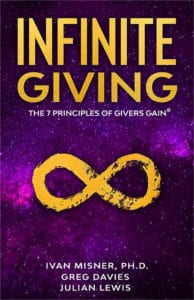
Who’s in Your Room: The Secret to Creating Your Best Life
You need your network now more than ever. When times are tough, that is the worst time to abandon your network. I saw people do it, “These are tough. I’m going to step out.” What’s wrong with you? This is when you need your network more than ever. There are people who are joining BNI now because they haven’t built a network and need to expedite the process of building their network. When times are tough, you need your network more than ever. I’ve been through multiple recessions. I had started this in ‘85. I have found over the years that people either get frozen by fear or focused by fear.
We’re going to make that a tweet. Either you get frozen by fear or focused by it.
We live in fearful times. The ones who get focused by fear are the ones who succeed. That begins with having hope. Hope is more powerful than fear. Hope plus a plan and action will lead you to success. That’s what we try to do in BNI. We start with giving people hope, a plan and helping them take action so that they can generate business during crazy times like we live in now.
Is there one mistake that you see a lot of people making? Ivan, I specialize in helping people tell stories and even an elevator pitch to me is a small story. I see a lot of people making mistakes on that as part of a networking thing. It’s not having a good elevator pitch story, whatever you want to call it. I’m also curious to see all the experiences you have. Are there some things that people should avoid doing when they’re networking?
Let me bifurcate that question into things that I see businesses do wrong in general, and then talk about the elevator pitch. If you want to be successful in business, you have to do 6 things 1,000 times, not 1,000 things 6 times. All too often, I see business people who are doing 1,000 things 6 times. They keep chasing bright, shiny objects instead of doing what they know works because they have mentors. They’re listening to shows like this where there are people who are giving them advice and they don’t listen to it. They jump around. Find things that resonate with you, and then do 6 things 1,000 times. It doesn’t have to be 6, it could be 5, 7, but it’s doing a handful of things and doing them 1,000 times. If I have any superpower at all as a business person, it is that I am a dog with a bone. I am incredibly persistent. I’m a real believer in doing 6 things 1,000 times. That’s the biggest mistake I see.
My best advice for people in terms of doing an elevator pitch is don’t pitch, instead serve. It may mean don’t sell them something instead, help them make a referral or a connection. I believe it’s better to be a master connector than just having a good pitch for your business. If you’re a master connector, you’ll be able to do your pitch. First, you invest in social capital. It is a lot like financial capital. Banks have this crazy idea that you have to put money in an account before you write a check. Social capital is very much the same. What happens is people try to make a withdrawal without making any investment. The thing to do is to first serve. Find a way to help someone, then you can tell people what it is you do, and they’re much more willing to listen and help you.
You make yourself memorable because you understand enough about their story and their business to be able to give their elevator pitch for them to make those meaningful master connections.
Especially if you’re networking up. When you’re talking to successful people, everybody and their mother pitches them. Don’t be one of the crowd. Instead, find a way to help them. I’ve been lucky enough to meet Richard Branson on a number of occasions. I’ve spent a week on Necker Island three times. I’ve been there multiple times, which is his private island. The last two times I was there, I wanted to do a video with Richard for my blog, but I didn’t want to be one of those guys that went, “Richard, would you do a video with me please?” What I did was I went there prepared, looking for things that he was interested in.
The first time we did the video I found that he was talking a lot on social media about The B Team, Business Team. The business can make a difference. The business can be noble or the business should be about people, planet and profit. When I saw him, I said, “Tell me about The B Team. I find that interesting. I read some of your stuff on the internet.” He lit up. He was excited talking about The B Team. I then said to him, “Richard, how can I help you get the word out for this concept? I think it’s brilliant.” He’s like, “You’ve run this network. Maybe you can let your members know.” I’m like, “I’d be happy to. Would you like to do a video? Would that help you?” He said, “That would be great.”
[bctt tweet=”When networking, serve, don’t pitch. ” username=”John Livesay”]
It’s a different angle. Instead of what’s in it for you, “Would it be helpful for you, Richard, if I did this video promoting what you are passionate about?” That’s such a huge distinction, Ivan.
It is and he could have said no.
He could have said, “I don’t need that,” or start quizzing you on how many people are going to see this. The fact is at that level, they’re not trying to prove anything to anybody else, nor are they trying to put anybody else on the spot and make other people feel less than for the most part.
I’ve spent enough time with him and that totally defines him. He is an amazing human being. I thought he would say yes, but he could have said no. The bottom line was I wasn’t pitching him anything. I was willing to serve. Another one when I went back in 2020, we did it again on a different topic. It was all about promoting him and his stuff, which didn’t hurt me but it also served him.
You’ve got momentum. Once you get in the door, the first video, then the second video, the precedent has been set as they say and they trust you, like you and all that good stuff.
We did a third video and you’ll crack up with this. I did a video with Jordan Adler who’s with SendOutCards. He is the main guy there.
I know that company well.
Jordan is a wonderful guy. We asked Richard, “Richard, would you be willing to walk behind us as we’re doing an interview like you just walk by?”
It’s like the cameo like, “I don’t expect to pull into the video.”
He said, “I’d be happy to do that.” If you go to my blog and look for Jordan Adler, you’ll see a video of Jordan and I. We’re talking very animated. Richard Branson walks by, looks at the camera, turns and continues to walk. It was a total setup. Jordan and I were like, “Was that? No.”
People love that kind of stuff because it’s a good story. That unexpected element is what makes a good story. An unexpected element like Richard Branson walking by makes people pull in and then share the video. It’s very clever that it gets to be playful at that level. I love that willingness for someone to give an unspoken endorsement by agreeing to be at it, but it’s his whole brand. I was fortunate enough to be able to fly Virgin to a friend’s wedding in South Africa. You go from LA to London and down there. You cannot believe the attention to detail, from notepads in the lounge to showers and giving massages. I’ve never experienced anything like it all done through a playful lens. It’s not taking itself too seriously, which he doesn’t do either as a person. That’s what is a real big takeaway on this concept that you’re talking about is you need to be your brand to some level and you need to be authentic. You can’t be this stuffy, boring person, and then try to create a brand full of fun and adventure if you’re not like that. He is like that.
I think it backfires on you. When your ego enters the room before you, that catches up with you. His does not.

Network Building: People either get frozen by fear or they get focused by it.
I remember the first time your wonderful book came on my radar and I was riveted. First of all, the concept of the name, Who’s In Your Room? It made me step back and think what an amazing question. I’ve never thought of it like that. My first question is, how did you come up with this title? I know books go through all kinds of choices of titles and book covers. What’s the story of origin on the title of Who’s In Your Room?
That was the first title. It was obvious to us that that was the title. Stewart Emery, my co-author, came up with that title. It was the perfect title. For those of you who haven’t read it, imagine you live your life in one room that has only one door. That one door is an enter-only door so that when people come into your room or into your life, they’re there forever. You’ll never get them out. Luckily, it’s a metaphor, but if it were true, John, would you be more selective about the people that you let into your life?
Yes. After all of us going through quarantine, we have a sense of what that is. We’re much more aware of who’s in our room.
Here’s our argument. We believe it’s more than a metaphor. If you’re reading this, I want you to think of someone you got out of your life. People say to me, “It’s not true. You can get people out of your life.” I want you to think, John, of somebody that you got out of your life. If you’re reading this, I want you to think of somebody that you got out of your life. I’m not going to ask you to name who it is, John, but I want you to think of somebody and why you wanted them out of your life. What was it that they did that made you angry? Do you have a name in your mind?
I do indeed.
I want you to think of a situation that made you angry with that person. They’re still in your head. They’re still in your room and they will be for the rest of your life. For those of you who are reading this, I want you to take your right index finger, put it on your right temple. Your left index finger, put it on your left temple. Your room is everything in between. It’s your head and the relationships that you have. We interviewed Dr. Daniel Amen who’s a psychiatrist and neuroscientist. He said, “When you have a personal or professional relationship with somebody, their fingerprints are all over your brain for the rest of your life.”
Why do we give them free rents? That’s another way of looking at it.
The whole book is about how you need to be more selective about the people that you let into your life. How do you deal with the people that have come into your life before you understood this concept or the people that you had no choice over like family members? It’s very hands-on. Here are specific things that you need to do in order to create the room of your dreams, to curate your room.
[bctt tweet=”Social capital requires deposits. ” username=”John Livesay”]
When I was younger and I would get a call from a recruiter or another company like, “We’d like to interview you.” My ego was so flattered that I would be like, “Really?” Even if it may not be the right job for me, and sometimes people have come into my life going, “I like to be your friend.” I’m like, “Really?” There wasn’t a lot of curating going on. You realize, “Wait a minute.” The whole premise was not curated properly. It’s not that we become defensive or hard to get to know or any of that. It is a sense of defining what the criteria is and earn the space to get into the room.
That space is about your values. You need to get good with your values and know what they are. When I ask people, “Give me your top seven values,” it’s deer in the headlights. They’re like, “Honesty.” “That’s great. Give me six more,” and they’re stumped. You’ve got to get good with your values. Your values don’t have to be the same as someone else’s, but they can’t be dissonant and incongruent. In the book, we have an instrument that you can use to determine your values, but there’s a lot of stuff online as well that comes to grips with what your values are, but the place to start is with deal-breakers.
It’s like dating, “I don’t date a smoker,” or whatever.
I am going to put you on the spot with this because it’s an easy one. Give me a deal-breaker of yours that you have in terms of a business or a professional relationship with somebody. What’s a deal-breaker that you don’t do business with them?
If they don’t have integrity.
That’s a great deal-breaker. For me, it was drama. People who are dripping in drama. We all have drama. I and most people have drama. I mean people that are dripping in drama.
It’s like, “You’re standing in those lanes.”
When Stewart was talking to me about this concept and I thought that drama was mine, I realized I had several people in my room who were full of drama. I knew they had drama but I let them in because I thought I could deal with the drama, but I didn’t recognize that other people didn’t want to deal with that. Even though they were qualified to do it, other people didn’t want to deal with it. It created chaos in my organization. Now that I understand deal-breakers and values, I’m much more careful about who I allow into my room.

Network Building: If you want to be successful in business, you have to do six things 1,000 times.
Do you think our values get formed at a very young age? For me, this concept of growing up in the Midwest of if you say you’re going to do something, you do it and show up on time. All of that stuff was modeled for me by my parents and everything I have. That’s how I operate. That’s my operating system. When I see people who don’t do that, it’s not only surprising, but that’s what’s made it a deal-breaker. I realized that isn’t the case for everyone. They say they’re going to do something but if something else better comes along, then they’ll blow you. I’m like, “What?” There are lots of ways to be out of integrity. You can see it in the business world. If you promise something and you don’t deliver it, it goes on and on. Do you think our values have formed at childhood or do we make them up as we get older?
Many of them are formed in childhood. We do acquire others as we grow older. Some of us rebel against the values or the modeling that was given to us. My father is a great example. His father was not a good father. He would physically hit people. My father rebelled with that. He said, “I am not going to be that man.” He was in the Army. He was behind enemy lines. He had done hand-to-hand combat. He was very good with physical strength and ability, but he refused to be like his father.
Sometimes, someone’s a great role model of what not to do.
That was my point is that you do acquire a lot of your values when you’re young by saying, “Yes, I like that. That resonates with me,” or “No, that’s not who I want to be.” It could go either direction. The problem is it’s modeled and people think that’s the only way they have to be.
With the onslaught of social media, I don’t think a lot of people think of that in terms of the room. As you said, between our fingers is our brain and we are deciding what newsfeeds and who we’re following and all that stuff. That’s also part of who’s in our room.
It’s a huge part and people don’t understand that. One of the things I’ve been saying for more than a year is micro-dose the news. The news is no longer the news. When I grow up, Walter Cronkite would give you the news. When he was giving you his opinion, there would be this thing across the bottom of the screen that said, “This is the opinion of the host.” Now it doesn’t matter what station you go to. What you hear is the opinions layered in between with the news. If you watch one news station, you get a completely different perspective than watching another one. I tell people to micro-dose the news. I no longer watch the news. I use news apps. I will pull up an app and I will look at what I want to see. Generally, I go to a conservative page and a liberal page, then international, BBC. Between the three, I get a sense of what the reality might be. I don’t watch the news anymore because it’s all the opinions, not the news.
Any last thoughts or words of advice you have for us on how to live a better life. Who we let into our room is a big secret to living a better life, having our values defined, giving before taking, there are so many great nuggets you gave us. I thought if there’s any last one thing you want to leave us with.
Do you want to know the secret to balance in life because this is in a book? Forget about balance. We look at the balance, like scales, our business has to be in balance with our personal life, spirituality, and health. I don’t think balance is possible, but I’ll tell you what I think is possible. We can have a life of harmony and that’s different than balanced. Even the graphic for harmony, the yin and the yang are out of balance if you pull them apart. You can have a life of harmony. I have not led a life of balance, but I have led a life of harmony. I’ll give you two techniques to use for harmony. One is be here now. Wherever you are, be there. Don’t be at work thinking about the fact that you didn’t spend time with the family. Don’t be with the family thinking about that project that has to be done at work.
The second one is you have to learn to both let go and hold on. Contrary to popular belief, you can’t have it all. You have to learn how to let go of things that aren’t part of your values. If it’s not congruent with your values, let it go. Those things that are congruent with your values, hold on to for dear life. There are 4 or 5 other techniques that help create a life of harmony. Just looking at it that way makes a lot of business people feel like, “I can do that.” I may not have a balanced life, but I can have a life of harmony. I have led a life of harmony.
What a great statement to make about your life at any age. The book is Who’s In Your Room? The author of the wonderful Dr. Ivan Misner. Thank you so much for joining us and for bringing your wonderful insights and energy.
Thanks, John.
Important Links
- Who’s In Your Room?
- BNI.com
- Larry Senn – Past Episode
- Dr. Mark Goulston – Past Episode
- Better Selling Through Storytelling Method Online Course
Wanna Host Your Own Podcast?
Click here to see how my friends at Podetize can help
Purchase John’s new book
John Livesay, The Pitch Whisperer
Share The Show
Did you enjoy the show? I’d love it if you subscribed today and left us a 5-star review!
- Click this link
- Click on the ‘Subscribe’ button below the artwork
- Go to the ‘Ratings and Reviews’ section
- Click on ‘Write a Review’
Love the show? Subscribe, rate, review, and share!
Join The Successful Pitch community today:
- JohnLivesay.com
- John Livesay Facebook
- John Livesay Twitter
- John Livesay LinkedIn
- John Livesay YouTube
Connecting Investors With Startups With Hall T. Martin
Posted by John Livesay in podcast | 0 comments

Startup businesses must gather all the support it can in order to thrive, especially on the financial side. That’s why fundraising projects such as crowdfunding are an incredible venture every entrepreneur must try. However, without pitching to the right investors, all of these strategies would have been for naught. John Livesay sits down with Hall T. Martin, CEO and Founder of TEN Capital, to share how they guide startups in building their brand and finding the right investors for them. He explains what makes up an enticing pitch as well as the most engaging way to deliver it. Hall also discusses the power of convertible notes and how to build a good growth story.
—
Listen to the podcast here
Connecting Investors With Startups With Hall T. Martin
This episode’s guest is Hall Martin, who’s an expert at connecting investors to startup founders. He’s all about looking at the next thing and not the last thing. He said, “It’s important that you’re solving a big problem that people are willing to pay for.” There’s a growth story he’s looking for when he decides he’s going to help a startup. What are their sales like? What’s the team like? What’s the product like, and where are they in the fundraising process? The biggest mistake he sees people making is not following up and not executing properly. Enjoy the episode.
—
Our guest on The Successful Pitches is Hall Martin, who is the Founder and CEO of TEN Capital and the host of Investor Connect podcast program. He launched the firm as the Texas Entrepreneur Networks in 2009. In 2021, TEN Capital has over 12,000 investors in its network and has helped startups raise over $900 million. Mr. Martin serves as the Vice-Chair of the Baylor Angel Network and he previously led the Central Texas Angel Network as its first Executive Director.
Martin is also the host of the Investor Connect podcast and the Founder and Director of Investor Connect, which is a 501(c)(3) nonprofit dedicated to the education of startup investors. Hall is also a Founder and initial Managing Director of SKU, which is an incubation station and a consumer products good accelerator based in Austin, Texas. He also is the Adjunct Professor for the University of Texas, leading the Idea to IP program, which fosters startups.
—
Hall, welcome to the show.
John, thank you for having me. I’m looking forward to this.
Yes, me as well. As we were saying, having moved here to Austin is exciting to get to speak to someone who’s been here for so long and made such an impact in the city and in the community. I know that you got your MBA here at the University of Texas. Before that, you were a Major in Computer Science. I remember those days in the ‘80s where it was all on cards, and you had to have punch cards and make them spit out. If you had one hole in the wrong place, it didn’t work. I would love to hear your own personal story. You can start anywhere you want. You can talk about childhood or when you started college. How did you get interested in the world of startups?
I went to undergraduate at Baylor from ‘80 to ‘84. That’s when the PC came out. I looked at the PC, and I said, “That’s going to be big.” Indeed, it was. I switched my career from being a Journalism major to being a Computer Science major because I wanted to be a part of that world. I always had an affinity for emerging technologies. I was always looking at the next thing, not the last thing. That’s the way I worked. When I graduated, I came to Austin to go to UT graduate school. I got an MBA there. I thought that was a great time to do it because the market wasn’t so hot just yet and I decided I’d get that done. That’s how I got to Austin back 30 plus years ago. I graduated and didn’t quite have a job yet, so I went backpacking in Europe for a month. I got a call from my family saying some company in Austin found your resume in a book and they want to hire you.
When I got back, I went and talk to them. They were a small company that was growing fast. It was entrepreneurial, and so I said, “This is what I want to be a part of.” I signed up, I joined them, and I was there for 25 years. It was a tech company that later went IPO in 1995. It had a big blowout and it’s great, and I kept working with that. Because the company went IPO and I was employee number 93, I started doing angel investing after that.
We had an angel group in Austin called the Capital Network that ran from ‘95 to 2002. They were tied to the dot-com world. When that went away, they went away with it. I made one investment through the group, I lost all my money and started to realize that startup investing is not as easy as it looks, but I was still interested in it. I started doing some angel investing on my own around Austin at that time. About 2006, the city did a restart and they called it the Central Texas Angel Network. I was the first member to sign up for it.
When you’re the first member to sign up for an angel network, you are automatically on the board in charge of membership. It’s a great honor. There’s no pay, but it’s great. I did that for two years. Two months into that, our director left, and so I stepped in and became the director of the group for the first two years that we ran it. We put in the processes, got it going, had a great time, got a 40X return for the investors. It was a lot of fun.
My undergrad at Baylor called me up saying, “We want an angel network out of our Alumni Association, can you help?” I said, “Okay, I’ll do that.” I stepped out of the CTAN role, and I went to help my alma mater help put their program up and running. I showed them how you do the membership, recruiting, and how you build the deal flow and all the usual things that go with an angel group. I got that up and going, and it became part of the Alumni Association where it’s about the student experience and about job placement.
[bctt tweet=”Be sure to follow up to get funded. Startups fail in the execution of their idea.” username=”John_Livesay”]
That’s one thing I learned in working with universities. It’s not about the money. I remember when I started CTAN, I went to the University of Texas to talk to the alumni director and said, “We ought to start an angel network here.” They were interested in that. Stanford and Notre Dame had one, but they didn’t have one. In the end, they had too many other things going on, but the big mistake I made was I walked in alone. You never walk in alone.
You walk in with a business school professor that’s going to be your sponsor. He’s going to own this thing. He’s going to keep you on the straight and narrow. You also walk in with five check writing alumni. If you bring those things, you can then build it. I learned the hard way that didn’t work. When we went to Baylor, that’s what we did. We got five check writing alumni and a business school professor, and we’re able to kick it off. Now, there are several 100 angel groups at universities around the country because there’s a real affinity between an investor and their alma mater.
What you’ll find is the why is not about making money, the why is about providing a give back to the university. You’ll find that people stay in those groups for a long time compared to the others. I started a third one in Williamson County, North of Austin. We were holding a deal flow in Round Rock, and it was a lot of fun as well. I saw the challenge that startups had in raising funding. What I saw was people coming in and they didn’t have the documents ready. They didn’t know how to pitch, and almost nobody followed up. Some did but the vast majority did not.
I started a company called Texas Entrepreneurs Network. After 25 years, I was ready to move on to my next career. I retired from my day job, and I started Texas Entrepreneurs Network. We were helping those startups raise money from Texas Angel Networks. We were helping them pitch, get their docs ready, and coach them. We did a funding forum series around the state. We got all the way out to Lubbock to El Paso and all the way around the state.
I had a theory that for every 10,000 people in the city, there was one angel investor. Lubbock had 100,000 people. There were ten angels, voila, there you go. We got out to the second-tier cities to do that process. There was one problem. It’s a big state and we’re driving everywhere. We decided to put everything online in the form of a funding portal because crowdfunding was starting to come into its own.
We did a portal style for a while and learned how that worked as well. We had an interstate license and did a whole bunch of breweries and wineries. That was a lot of fun to work with those guys because breweries have a real community flavor to it. We helped a group in Georgetown raise funding. They had almost 2,000 people come out to the opening, and I asked this guy, “Why are there 2,000 people at a microbrewery opening in Georgetown, Texas?” He said, “This is a German community. In 100 years, there’ll be two things left standing, the brewery and the bank. I want to be a part of the brewery because I want to leave a legacy here.” That was a neat vibe that went with crowdfunding breweries and so forth. We did a bunch of others as well.
After a while, we realized that crowdfunding didn’t help the tech companies and the healthcare companies. We wanted to get back into that. We hung up the portal, went back to working with the credit investors. About that time, we started getting calls from outside of Texas. I was getting calls from Seattle, Chicago, and the Bay Area saying, “I’ve talked to everybody in my area. I need more investors. I want access to investors. How do we do this?” We then changed the name to TEN capital and started running our program around the country instead of just around taxes. It kept growing ever since. Now, we have 12,000 investors. We’ve helped companies that went on to raise over $900 million over the years that we’ve been doing this, and we continue to grow and expand.
That’s quite a story. I love it. What I find interesting about what you’re doing with TEN Capital Network is you offer people the ability to figure out which program works best for them. You’re typically working with people who have some revenue, I would say, and have some experience. The biggest problem that I have seen and I tested this a little bit. I’m curious to see if you find this. Investors typically fund about 1% of the pitches they hear. They hear about 2,500 in a year and fund maybe 25, 24 of those 25 are from warm introductions typically.

Startup Businesses: Crowdfunding came up strongly during the pandemic because it was all online and becoming more and more accepted.
The biggest challenge is that the founders are in the wrong room. They’re pitching to people who don’t fund what their industry is, or they don’t have the warm intros. They then have a bad pitch. I remember talking to one investor, and she said, “We listened to this doctor go on and on for twenty minutes, and we still didn’t know what he did. Finally, I asked him some questions, and I said, ‘You fix holes in people’s hearts. Is that what you’re saying?’” “Yes.” “Okay.”
That need to be clear and concise is so important in a pitch. Few people know how to do it. In order to get in that 1% Club, you have to get the right pitch in the right room and then be able to answer some questions, as you said, the paperwork, and have everything ready to go to get the next meeting. You alluded to one of the mistakes you see people making, which is not following up. Having a sales background, that blows my mind, that they would not be organized enough to check back in or give you an update on what they’re doing and things like that. Let’s zoom out a little bit and start with, what do you look for when you hear a pitch?
The first thing I look for is, do they have a real market for it? Are we solving a real problem? The old painkiller versus vitamin test, are we solving something that we’re going to put money down for? It’s hard to get people to pay for it. They have to be needing that. The next thing is, like you said, I try to figure out exactly what they’re doing. I always coach them, “In five words or less, tell me what you do,” and I’ll state that at the beginning of your presentation.
If I don’t know what they’re doing, I don’t have context and it’s hard to focus. My mind is always wandering around wondering, “If they’re in health care, that would make sense.” You have to state that. I once read a business plan with 85 pages. I went through it twice. I went back to the guy and said, “This is great. What is it? What do you do?” They never actually stated it. They kind of talk around it. They have what’s called that curse of knowledge. They’re so close to it that they think everybody knows that when we don’t. There’s that aspect of it.
The thing I look for is a complete plan. They’ve got a complete team, they’ve got the team ready that can take it all the way through because the team is a key part of it. Have they put together a strong team is a big part. We look at post-revenue companies because I had too many people coming by with an idea, they would mess around with it for a while, and then they would drop it in. They need to be a little bit further along before they engage with my ambassadors. I look for some revenue because I want product validation and market validation. If the product works, then somebody will pay for it.
If you get into that stage, you’re ready for post family and friends fundraising. I do see a lot of people doing crowdfunding in that early stage and doing well with it. Crowdfunding came up strongly during the pandemic because it was all online and it’s becoming more and more accepted. The key thing there is, the average investment is anywhere from $100 to $500, so somebody’s transactionally putting in a bit of money off their credit card and it’s no big deal.
When they take the next step forward and they go to the angels or the venture capital, these guys are writing $25,000, $50,000, $100,000 checks. There’s a lot more due diligence that’s going to go on this thing. It has to be a little bit more solid. What I look for is what I call the growth story, which is sales, team, product, and fund raise. The core four are moving up into the ride because when I ran those Angel Networks, the ones who did raise money, 10% of them would come back and give us updates and reminders. Tell us more about it.
It’s part of building a relationship. That’s a little bit of it. You got to get to know people a little bit. Also, they were demonstrating that I’m meeting milestones. I’m clicking forward. It’s in the area that counts. Many startups want to talk about their forecast or they want to talk about how a competitor fell down or how big the market is. Those are things you’re not in control of. What you are in control of are the sales, the team, the product, and the fund raise. Intellectual property could be in there as well.
[bctt tweet=”If you don’t have a lead investor, start with convertible notes.” username=”John_Livesay”]
Investors are looking at how you’re making progress on those things that you’re doing. It took about four of those touches before investors would say, “I know what’s going on here. I can make a decision.” They say it takes seven touches to close a sale, so it takes seven touches to close an investor. That’s what we’re looking for. Do they have a growth story going? Can I see momentum going in the right direction here? There’s that aspect of it.
Let me break down what those are again. The growth story is how are the sales going, is the team strong and is it steady?
Is the product moving forward, and then the fund raises? Those are the core factors that go into driving a startup. You have to be moving your way through the beta to the MVP, through getting out there to generate some revenue. Has anybody put money down for this? It makes a big difference if they do. Team, have you built the right team? Are you adding more with affiliates, partners, board, and other people? Product, if you’re going from beta to MVP, version one, version two, and things are moving forward. Fundamentally, they’re execution level metrics because that’s where most startups fail. It’s not that they didn’t have the right idea or whatever. They just didn’t execute.
Can you execute? That’s the number one reason besides no follow-up.
You’re watching how these guys do before you write the check because afterward, it’s going to be hard. It’s going to take time, and can they execute afterward? You’re looking for a sense that these guys are making good decisions, they’re getting things done, and they can move forward. They are working on the right things at some level. They all make mistakes. Everybody makes mistakes. Nobody worries about that, but fundamentally, are we progressing?
That’s what I look for, the growth story. That’s what investors are trying to see. The last question is, do I want to be in the game with these people for a period of time? It’s because of the team. Do they have the right team? Are they smart and making good decisions? You do spend a lot of time with them. I once wrote a blog post that says, “Are you ready to get married?” At the time, I had found that people were in their startup investment longer than they were in their marriage on average.
About seven years is the divorce thing. You’re in a relationship with your investors longer than that.
In some cases, you are. I saw people doing variations on that theme in other ways. It’s a big decision. That’s the thing that most people don’t get about angel investing. People are in these deals for a long time. They are careful about getting into them, unlike crowdfunding where you’re putting in money and maybe it works, maybe it doesn’t, but you’re not in there working with them or helping them in many ways.

Startup Businesses: Startups must focus on the things within their control: sales, the team, the product, and the fundraiser. Intellectual property could be in there as well.
I’ve heard series A and series B is defined as how much money you’re raising? “We’re revenue, and we’re trying to raise $5 million, does that make a series A or series B?” From what I can see on TEN Capital Group, you look at it through a different lens of tell me how much money in revenue you have, and then we’ll decide whether that’s a series A or B? Is that accurate?
The challenge is everybody counts series A or series B differently. If you’re on the west coast, that’s one thing. If you’re in the Midwest, it’s another. I had one guy say, “Mom gave me a check and dad gave me a check so I must be on my series B now.” It’s the non-standardization around the nomenclature. What I tried to do is go back and say, “Where exactly is the business on the curve, so to speak?” When I go to investors, then I’ll be able to level-set them. “They got $1 million of revenue. They’re in their series A.”
How much does that range? Is that $1 million to $5 million typically, series A, or is it $3 million to $5 million?
Series A’s are typically $1.5 million to $5 million. Seed are $500,000 to $750,000. Pre-seed are $250,000. You don’t raise anything less than $250,000 because it looks funny. Series B is usually $5 million to $15 million, but you have $3 million of revenue. If you get back to what the revenue is, you can start to get a little bit back to how you might relate that to other deals you’re seeing because, by themselves, it is all over the map.
Let’s talk about valuation and convertible notes a little bit. Here’s the mistake I hear a lot. I don’t know if you hear this too. People overvaluing their company so they’re giving up little equity. It’s not based on anything. “Because the competition is this kind of valuation, even though we don’t have that revenue, we should be at that same level of valuation.” What are you looking for? Let’s talk about a convertible note so we don’t have to lock in a valuation based on raising, let’s say, $5 million, and figuring out what percentage of that is going to be. I’m curious to hear what your thoughts are around that, because again, it’s all over the map, right?
I always coach people, “We start with convertible notes if you don’t have a lead investor.” Some people want to come in and artificially set the price. I tell them that’s going to be hard to sell to other investors down the road if you don’t have a real lead investor or someone that put in. My definition of a lead investor is somebody that’s going to put in $100,000, $150,000, and they want equity. They’re going to sit down and take the time to properly value this, look at comps, the status of the business, and be able to make the case that it is what it is because you’ll need to sell that to other people.
We start with convertible notes because there’s a whole bunch of investors that are not going to take the time to do that. What you do is go out and start picking out $25,000, $50,000 checks from people that just want to be in the deal and rolling close. The money comes in and goes into business the next day so you can start to build the business. You’re looking for the right lead investor. When that guy comes in, you say, “I already have $300,000, $400,000 raised.” That’s great validation, there’s something there.
The lead investor says, “Good, I don’t have to raise the rest of it. There’s some interest in this already so I got a sanity check on this deal.” That’s why we start with convertible notes but with the idea that we’ll move to a price round when we find the right lead investor but you don’t know if that’s the 1st, 5th, 25th, 75th investor to walk through the door. I know many companies that live off of convertible notes for several years.
[bctt tweet=”Most people were in their startup investment longer than they were in their marriage on average.” username=”John_Livesay”]
You can raise too much convertible note money. Some people treat it like a credit card. “I need money,” go pull out the note and go and raise money. When you get to series A, that birdie comes home to roost because the series A investor wants 20% of the deal. If you’ve given away too much, it can be a tough time in that case. That’s the idea behind it. It starts with a convertible note. Even when you’re at series A or B, you start with a convertible note. Get out there and start talking to people. What you’re doing is setting up a flow of investors until you find the right lead investor and have that discussion with them as opposed to everybody that walks by because most people don’t want to do it.
Are there specific industries that you at TEN Capital like to invest in? Is it virtual reality or augmented reality? Is that artificial intelligence? Is it healthcare? Is it social media, or are you completely agnostic?
Generally, we like most businesses, half of our investors are tech-enabled. There’s a good section in there for health tech, FinTech, and EdTech. Most investors are tech-enabled businesses. They do look for recurring revenue platform-based businesses, the usual things. Twenty-five percent are healthcare specific. It is a big space with a lot of money and a lot of big exits out of it. We have done devices, therapeutics, diagnostics, as well as digital health. The therapeutics can be a tough space for angels and many VCs given the amount of money that goes into it, but the other spaces are fairly straightforward. Consumer product goods, there’s a tremendous amount going on in the CPG space with brand development, food and beverage innovations, and so forth.
That’s here in Austin, right?
Yes. I started an incubation station called SKU. It was an accelerator here in Austin. It still is. Most people are coming to Austin because they wanted to sell to Whole Foods. It was the premiere, it still is, in many ways. We were repackaging, rebranding them, and putting them into the brick and mortar channel, either Whole Foods or H-E-B in this area. Since then, it has shifted to be direct-to-consumer, there’s a lot going on in that space as well. Those are popular ones for us.
We are seeing more cleantech deals and climate change deals coming through, but those can be out of the range for angels pretty fast. We’re angel, VC, family office, and early-stage funding, so it covers a number of different areas that are out there. Every three years, you get a new type of startups, AR/VR, now you have mobility. Everybody’s got an eBike and a different way of getting people around, different methods for mobility.
There are other things coming out. Cybersecurity is a hot topic once again because of all the hackings that are going on. I learned in cybersecurity, every 3 to 5 years, you have another dozen devices you have to monitor, control, and measure. Now, they’re working on IoT, cars, and those types of things to protect. It’s great to be in the startup world because you get to see all these great new technologies going on. We try to work as much as we can across the board with all of them.
If somebody wants to explore working with TEN Capital Network, the website is so clear about who it’s for and who it’s not for. I thought I’d ask you to sum it all up for people to see if this is a fit for what they want to do.

Startup Businesses: Get out there and start talking to people. What you’re doing is setting up a flow of investors until you find the right lead investor.
Come to our website and we have a Click the Stars button and you go to our company page which shows what we offer. At heart, we’re investor relations and introductions. We’re not a broker. We’re not charging back-end fees. Back when I started Texas Entrepreneurs Network, I looked at becoming a broker/dealer, get a FINRA license and do that, but I found I had such a large network of angel groups and venture capital firms. Most, if not all, don’t allow brokers to be in the deal.
I went the non-broker route. We charge a monthly retainer. You look at the different levels that we have there, set up a call with us and we’ll talk to you about if your deals a good fit for our network. There’s no signing up online. You have to talk to us first because we want to make sure it’s a good fit and nobody is unaware of how it goes. That’s how we work. Sign up on the website for a call and then we’ll discuss your deal and look at it.
The TEN Capital Network is quite an impressive thing. What do you see that you’re excited about for the future? You mentioned a few new industries but is there any particular category that you are jazzed about?
The pandemic has given us a whole new set of care abouts. I’m excited about supply chain manufacturing and reshoring. We’re going to see a lot of hardware come back to the US. We’re going to see a lot of things with blockchain going after supply chain systems. I’ve never talked to a supply chain manager who didn’t just jump up and down on the table wanting blockchain because this is what he needed. It’s going to do well there.
The stock market is at an all-time high. In fact, the stock market is at an all-time high at least once a week these days. It’s a good market. There’s a lot of money coming out. I have investors coming in saying, “I have all this cash. What do I do with it?” If you’re ever going to start a startup, now is the time because you have a whole new startup cycle forming after the pandemic. You have money available to go after it. The ‘20s are going to be a great decade for innovation and moving things forward because the pent-up demand is going to explode across the landscape. The world is ready for something new and different. You feel that in the air. It’s great to be at the beginning of these cycles because that’s where you see some of the great startups form.
What an optimistic, wonderful way to end the episode. Hall, thanks so much for joining us. If anybody’s interested, check out TEN Capital Network.
Thanks for having me, John.
Important Links
- TEN Capital
- Hall Martin – LinkedIn
- Investor Connect
- Baylor Angel Network
- Better Selling Through Storytelling Method Online Course
Wanna Host Your Own Podcast?
Click here to see how my friends at Podetize can help
Purchase John’s new book
John Livesay, The Pitch Whisperer
Share The Show
Did you enjoy the show? I’d love it if you subscribed today and left us a 5-star review!
- Click this link
- Click on the ‘Subscribe’ button below the artwork
- Go to the ‘Ratings and Reviews’ section
- Click on ‘Write a Review’
Love the show? Subscribe, rate, review, and share!
Join The Successful Pitch community today:
- JohnLivesay.com
- John Livesay Facebook
- John Livesay Twitter
- John Livesay LinkedIn
- John Livesay YouTube