

Relationship Selling With Jim Cathcart
Posted by John Livesay in podcast | 0 comments


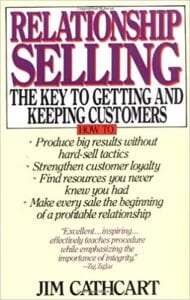
Selling is more than just pitching your product. John Livesay’s guest today is Jim Cathcart, a professional speaker, Hall of Famer, and author of Relationship Selling. In this episode, Jim explains how effective selling combines the elements of storytelling and relationships. Did you know that consumers are guided by their feelings when they purchase? That’s right! So if you’re empathetic to your customers and you have a relationship with them, efficient selling becomes easier for you. Want more strategies on relationship selling? Join in!
—
Listen to the podcast here
Relationship Selling With Jim Cathcart
Our guest is Jim Cathcart, a giant and a Leader of speakers and salespeople. He is the author of Relationship Selling. He has spoken to over 3,000 different events over many years and has been to China over 73 times, speaking to those crowds. We talk about the will to win requires the will to work. When you go for creating a story that people feel they are in, that is a success story. Enjoy the episode.
—
Our guest is Jim Cathcart, who has for many years written over twenty books and had over 3,300 paid speaking engagements, including 70 plus engagements in China. He has been selected as one of the top five speakers on sales and service. He has delivered many talks in many countries that he is an industry leader. His clients span all industries. He is listed in the Professional Speaker Hall of Fame. He is the author of twenty books but one of the big ones is Relationship Selling. I’m so thrilled and honored to have him on. Jim, welcome to the show.
Thank you, John. It’s great to be with you.
Your TEDx Talk has over two million views. Congratulations. That’s the power of a good story.
We are in your line now.
Relationship Selling
You talk about your story of origin in your TEDx Talk. That is one of my favorite questions to open the show with. Would you share with us how you’ve got into the speaking business, how hearing one person sometimes can change your life and who that was for you?
There may well be someone or multiple ones reading this, who get an idea from what we are saying. Nothing necessarily that it’s our idea but that they have an idea because of what they hear. The direction of their life starts to change and becomes profoundly more meaningful and fulfilling than ever before. It certainly happened for me. I grew up in Little Rock, Arkansas. I was born in 1946. It’s the beginning of the Baby Boom. My dad was a telephone repairman. My mom was a housewife taking care of me, my little sister and my invalid grandfather and grandmother who were with us.
I expected a normal, ordinary unremarkable life. I was not a superior student. I was a good student but not on the honor roll. I never was an athlete. I had not been encouraged to go for the gold ring, try to do a big deal and make my life an epic success. I just figured I grew up, be a nice guy, have an ordinary home in an ordinary neighborhood, be a middle manager at the phone company, retire at 65 and die at whatever the statistical date was for my gene pool.
One day, in my twenties, newly married, no college degree, no money in the bank, 50 pounds’ overweight, two-pack-a-day smoker, new baby at home, I’m working for a government agency, the Housing Authority. I was an assistant to the loan specialist, which was just above entry-level. He didn’t need an assistant. I was bored to tears. I was making $500 a month and had nothing to do most days. One day, I was sitting there. I had read all the books on urban renewal for the Housing Authority. That didn’t interest me so I had read the Bible cover to cover at work in three months.
[bctt tweet=”Nurture your nature.” username=”John_Livesay”]
In the next room, there is a radio playing. The voice I heard was not John Livesay, it was Earl Nightingale, the Dean of Personal Motivation. That day in 1972, he said something that has stuck with me and changed the direction of my life, “If you will spend one hour extra every day studying your chosen field, in five years or less, you will be a national expert in that field.” I thought, an hour a day, five days a week, 50 weeks a year, that is 1,250 hours.
If I studied one narrow subject for that, not one subject like medicine but one like skeletal structure, bone surgeon orthopedist, at five years, take longer than that to get my Medical degree but five years of study only on orthopedics, I would be a very knowledgeable person on orthopedics. I wasn’t interested in medicine. I was interested in what the guy on the radio was doing. I said, “I want to do what Nightingale is doing but I didn’t know what that was. I knew it was the field of human development. This was at the beginning of what became later known as the Human Potential Movement.
There were no such thing as professional speakers. They existed but nobody had categorized them as such. There weren’t many of them. The National Speakers Association hadn’t yet been formed. The self-help section of the bookstore or the library didn’t exist. There were a couple of books, Think and Grow Rich, How to Win Friends and Influence People, The Power of Positive Thinking, end of the category. Now, the entire sections of a bookstore would be devoted to that. I didn’t know how to get into his field nor what it meant. I decided to take his advice. I dedicated myself to a one-hour minimum, usually 2 or 3 hours, every day I could, studying what the scientists call applied behavioral science, how to be successful. I read those books I mentioned. I met people who had read those books and that started more collaboration. I heard records, a large disk that has a little hole in them. Kids don’t even know what the records are in a lot of cases. I listened to long play records of Earl Nightingale, Napoleon Hill and W Clement Stone. This was even before Zig Ziglar. I heard audio cassettes. I became fanatical about the field of personal development.
Within a couple of years, I was leading group discussions on goal setting and interpersonal skills, things like that, in the Jaycees, the Junior Chamber of Commerce for free after working on weekends. After a year or so of that, I’ve got a job leading training courses other people had written. I then was able to go out on my own. Sure enough, five years later, I was a full-time trainer and speaker, teaching courses, at first other people’s courses, and then my own. I bought a psychological research firm. I did my own original research and now I have written twenty books and done more things than I ever dreamed of doing back in the day. There is more to that story if you want to explore it.

Relationship Selling: If you spend one hour extra every day studying in your chosen field, you’ll be a national expert in that field in five years or less.
There is so much to unpack there. Every speaker has an intention, goal and objective of making an impact. To hear a story of somebody well known making that impact, totally changed the trajectory of your life. Think of all the people that have now had that ripple effect. That is part of the reason why I love that story so much and the willingness to do the work.
I co-authored a book with Brian Tracy in 2020 called The Will to Win. My chapter was the theme chapter, the will to win, positioned his first and mine last. Other co-authors did chapters in between. Mine was the will to win requires the will to work, the will to show up, the will to endure the pain, the will to be embarrassed and humiliated from time to time by failing, the will to persist when you feel like there is no hope. Somewhere there is an answer. There are lots of will tools that total up to the will to win. The desire to win is useless. The will to win is a whole bunch of other things that combine.
We are certainly going to make that one of the tweets from the episode, “The will to win requires the will to work.” Nobody loves that alliteration more than I do, Jim. I like that on so many levels. One of your more famous books, certainly something that had a big influence on me is this concept of Relationship Selling. I heard you in another interview talking about there is no such thing as a natural-born seller.
There are natural-born talkers. It’s like your specialty is storytelling. There aren’t natural-born storytellers but there are people who have a natural ability to quickly learn storytelling. Some people find that very difficult to learn but can. Once you understand story structure, concept, how to interact with people, how to articulate a particular story in a way that makes it both emotionally and intellectually appealing, that’s learnable. I went to my 30th high school class reunion some time ago. I remember talking with one of my old classmates who said, “What are you doing now?” I said, “I’m a professional speaker.”
[bctt tweet=”The best story is one where people feel they are in it.” username=”John_Livesay”]
He said, “What do you speak about, just anything?” I said, “Sure. They just pay to hear my voice.” He said, “Did what?” I said, “No. Of course, not. I have a specialty. That is what I focus on. It’s sales and human development.” This guy said to me, “You always were a good storyteller.” I said, “What? I was?” He said, “Yeah.” I said, “I wish somebody told me.” John, I didn’t know I was a good storyteller. I grew up in a family of storytellers, in a culture in the South, where storytelling was commonplace. I’ve got a kick out of doing it. I enjoyed performing so I had a little flair to it. It was starting to develop even back in high school.
It’s so funny sometimes I will get off the stage, back in the day, literal stages or even virtual talks, people say, “You are a natural.” I used to go, “What? I worked on this.” Now I just smile and say, “Thank you.” That is a very high compliment because you can’t see the word behind it that is struggling.
Let me interrupt for a second and complete the answer to your earlier question, natural-born salespeople. There are eight stages in the sales cycle, preparation, targeting the right people, connecting with them so that you gain their trust, assessing their needs and wants, solving their problem, convincing them to commit to buying, assuring that they are satisfied, managing yourself and managing your sales career. That’s a different skillset. You might be natural at 1 or 2 of those. For the others, you are going to have to learn or buy resources or subscribe to something that will provide that for you.
I’m so glad you went through all eight. For me, the bookends are the two of the most important ones. Let’s start at the end. This is the one I think most people do not even have an awareness of let alone do, which is managing your career and your own persona as a professional and continuing to learn, refining your skills and not being so dependent on anyone’s job to be at that mercy. At the beginning of it is the need for preparation. One of my favorite quotes is from Arthur Ashe, the tennis pro, “The key to success is confidence. Key to confidence is preparation.” I know in my sales career, that was always the key to my success. I was willing to prepare for every single call. Most people, “I have been doing this long enough. I will just wing it. I will see what comes to me in the moment or whatever.”
Think and Grow Rich: The Landmark Bestseller Now Revised and Updated for the 21st Century (Think and Grow Rich Series)
It’s like the person that gets up to give a speech and they say, “I had these notes,” but tear it up and they wing it. Afterward, it just makes me want to go up to them and say, “You could have been so much better.” It’s not that you need to read this. It’s just that if you don’t do that, organize everything and then follow some format, then we are not going to be in on it. What is going on for you?
Do you think Clint Eastwood gets in front of a camera without rehearsal? No. Do you think Tiger Woods doesn’t practice? Of course, he still does. Yet somehow some people think they don’t have to do that. The other thing you talked about is storytelling and selling is those little details. In your TEDx Talk about How to Believe in Yourself that has over two million views for a reason. It’s because you paint a picture in such detail that people see themselves in it. One of the phrases you talk about is going to McDonald’s regularly, getting a relationship going and then everyone’s worst nightmare. You get the audience to describe what that is. I’m going to let you pick the story up there. I think you know the detail. I’m looking for people’s mindset is as opposed to just being a crowd.
I had the habit of going to breakfast alone every morning for many years. I would do that because that was when I would get focused. That is when I would do the business side of selling, which was my first book and that was with Dr. Tony Alessandra. That was the managing sales part of that and managing your career. I went to McDonald’s every morning. I would not take a stack of work. I would take an empty pad. I would write goals and work on them. This is with McDonald’s for the first several years. When I found a cool coffee shop in La Jolla, California, I upgraded a bit on the cuisine.
At McDonald’s in Tulsa, Oklahoma long ago, I went there every morning. One morning, I pulled up and saw what you would hate to see at McDonald’s, which is empty buses in the parking lot. The way I set that up with an audience is I tell them about this habit of breakfast alone. One morning, I saw the sign of my restaurant in the distance and I do the little golden arches. They snicker and then I tell them, it’s McDonald’s. I say, “In that morning when I’ve got to the parking lot, I saw the danger sign.” Now in a McDonald’s parking lot, if you want to eat there, what would be the danger sign to you? Someone always yells out, “A bus.” I pause, I just do the gesture, “Two” and I say, “Two buses empty and a McDonald’s parking lot equals what in the lobby?” They start thinking and I say, “45 people per bus, you got 90 head ready to graze in the lobby of this McDonald’s. I’m about to add one to the mix.” When I’m telling the story, I do it this way, “I squeezed through the door into the crowd. I’m looking for the line that moves the fastest, the one that will always stop if you get in it.” Sure enough, that happened.
[bctt tweet=”The will to win requires the will to work, the will to show up, and the will to endure the pain.” username=”John_Livesay”]
I heard my name, “Mr. Cathcart.” I look around like I’m there again, “Mr. Cathcart” and I look up at the front. It’s the woman that works there. Grandma is her nickname. Her name is Marilyn. I said, “Yes?” She said, “Your breakfast is ready.” I’m leaving out some parts of the story that set that up. She knew me from seeing me every morning and me always ordering the same thing. When the crowd was there, she got my order, fulfilled it and set it off to the side. She said, “Mr. Cathcart, your breakfast is ready,” and went on serving other people. After I have told this story and had some laughs, I go back to the audience and analyze the scene. I say, “What did it cost her to do that?” They tell me it’s the cost of the breakfast. I said, “No.” It took her fifteen seconds of extra time. Since she said the breakfast was free that morning, she didn’t charge me. It took her the net cost of that breakfast. The revenue loss is the gross cost. What do they get? Six years of customer loyalty while I was in Tulsa, followed by 45 years of free advertising, including the ad that I just gave.
You talk about the big takeaway for everyone is we do the majority of things in our life, buy things, return as loyal customers based on how it makes us feel.
We do the things we do to achieve the feelings we want, the feeling of being correct, strong, successful, safe. The feelings we want, not just to attain the things we need.
That is one of my favorite insights into human behavior, which if you understand yourself, that completely changes how you sell. From there, people can have relationships, as you said in your book.
How to Win Friends & Influence People
It also helps you be a better listener and a better empathetic person in selling because if you understand that all people, self-included, do the things we do to achieve the feelings we want then it begs the question. I’m about to make a sales presentation to John. What does he want? What feelings does he want from the things I represent as a product or a service? Does he want the feeling that he is going to be more successful with me because there is a higher margin of profit? Does he feel like he is going to be able to relax a little bit more because I’m saving him time, money and effort? Does he want to be admired more because he is the first on his blog to have one of my products? There is a feeling behind it. If you understand the feeling, everything else will commit to working.
Would you agree then based on what you just said that people buy emotionally and then back it up with logic?
People say, “They buy with logic.” No. They analyze with logic, rationalize, justify and then they make the decision. Do I want it or not? Yeah. Is that enough information? Yeah. That one, just a calculator going, “Do, do, total.” That was a shift from logic to feel. That moment of decision occurs at the feeling level but we get there through the logical passage.
What do you think makes a good story when someone is telling a story either as a speaker or as a salesperson?
[bctt tweet=”We do the things we do to get the feelings we want rather than just the things we need.” username=”John_Livesay”]
They feel they are in it. I have never given that an answer before because I have never had anybody asked me that way, not a fellow storyteller like yourself. The number one element of a story is they feel the moment has been suspended. They are now in the story. I was on my motorcycle. I pull up to the intersection. This guy looks over at me. He hadn’t decided yet, whether I’m a jerk and an idiot for driving a motorcycle or I’m cool. I give him my best Fonzie. He goes, “Hey.” I know I have made it. I just made that up on the spot while we were talking. Didn’t you feel like you were there at the intersection?
I visualized you in a leather jacket. I visualized the Fonzie. I visualized everything. I loved how it was so binary, the choices, it’s very funny. What advice would you have for someone who either wants to get into speaking or wants to grow their speaking career?
I have had a lot of people especially in China put you on a pedestal over there. “Teacher, “Master, what do I need to do to become a great speaker?” First, become a great person and then agree to speak. I’m serious about that. That is not just a flip and answer. If you are not a good person, then your speeches are going to be data dumps or performances. They are not going to be a real sharing between people. If you want to become great at something, figure upfront. You’ve got to become a great person. To achieve and sustain, there is the keyword, sustain great things. Anyone who came by accident hit a homerun one or a homerun once but you are not going to repeat that or even get close to repeating that unless you have got it all together.
How do you become a great speaker? You become a better and better person every day of your life, a more understanding, caring, disciplined, professional, knowledgeable, skilled, practice, structured, playful and interested person. Do you want people to be interested in you? Be interested in them. Like my son, when he worked at a mailbox when he was in college, he said, “Dad, you know how to get a lot of mail? Send a lot of mail.” How do you become an interesting person or get people to be interested in you? Take an interest in them. As a speaker, how do I get rid of my nervousness? Stop thinking about yourself. Think about the message you want them to receive and about how they might best receive it. Forget yourself and your nervousness will disappear.
The Power of Positive Thinking
Stop thinking about yourself and start thinking about them.
Only about them and that takes a lot of learning to do. Also, if you want to be a good speaker, go speak 100 times for no pay in any circumstance that you can find, in a basement of a church, in the summertime, in the South with no air conditioning at 160 degrees and 100% humidity. Go speak on the bay of a fire station to five people that didn’t want to be there and you have got them for half an hour, speaking on behalf of the local civic club. Go speak in somebody’s living room with kids running around and distractions and they didn’t turn off the TV. Go speak in front of a bunch of people that hate being there and resent you and would rather beat you up. Speak in a bar when there is too much noise and the jukebox is playing and people are yelling. I’m talking about giving speeches, not conversation.
Also, never speak to an audience that you can’t bring something valuable. It’s not about making a sound with your mouth. It’s about making sense with your mind and theirs, making that connection. They say, “I’m a good speaker.” Are you a good speaker when someone dies in the audience? Are you a good speaker when the building catches on fire and the rooms got to be evacuated? I have had all these things happen. I have had emergent medical emergencies. Luckily, no one died in the audience. Are you a good speaker when they announced that the founder of the company passed away this morning? Now, here is our guest speaker. Are you a good speaker when the room is four degrees and everybody is just dying to go somewhere warm? What about when they are all drunk? People say, “I’m a good speaker.” Prove it. Let me choose the circumstances. You choose the audience, I will choose the circumstances.
I see so many similarities between what you said about speaking and actors. I finished listening to Matthew McConaughey, his Greenlights book. He is a fascinating, interesting person separate from his acting career.
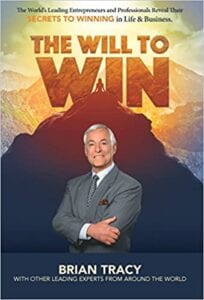
The Will To Win
He was a student of Og Mandino, one of my former friends. He has passed away now. He is one of my all-time heroes.
Actors are willing to work off-Broadway for very little money or no money to practice their craft. There are a lot of similarities there. I think it’s the willingness to see yourself almost as an artist, which actors tend to do. I don’t know that a lot of speakers see themselves that way. That is what my big takeaway is from what you described.
I went to a meeting in Santa Barbara one time. I was all dressed in a suit looking lovely. I remember the client was a company you never hear about anymore. I don’t know if they exist in that form, Wang computers. Wang was a big corporation back in the day. I arrived at this resort in Santa Barbara. I’m in the meeting room. I’m there early because I’m the keynote speaker. The meeting room was set up completely wrong. It’s set up in a tunnel, like a board meeting for 60 some odd people. That is like speaking in a railroad car. I said to the houseman, “Excuse me. The room is all set up wrong. It needs to be classroom style.”
He said, “Do you want to change it? You change it yourself.” It’s just a few minutes before the people started arriving. I made a snap decision. I said, “Leave my room.” He said, “What?” I said, “Go,” because it was clear he wasn’t willing to help. He left the room and I locked the door. I took off my suit, tie, shirt and stripped to the waist. I reset the whole room. I then went to the restroom. I cleaned up a little bit. I put the suit back on. I unlocked the door. I said, “John, welcome to the meeting. Come on in.” All the people came in. We went on with business as usual.

Relationship Selling: If you want to be a good speaker, go speak 100 times for no pay in any circumstance that you can find.
Doing what it takes, people. That is a great story to leave and on. That is such a visual and a willingness to do what it takes to make it right, not just for the audience but for yourself. Let the audience put you on a pedestal. Don’t put yourself on a pedestal. I know you have been on a pedestal and you have earned that. In China with thousands of people coming to clamor like a Tony Robbins experience. I can’t thank you enough for sharing your passion, wisdom and most of all your humor with us.
You are very welcome. I’m enjoying our new friendship. Since we live in the same area, we’ve got to make plans to get together. I look forward to that. This will be the first of many occasions like this.
If people want to find you, where should we send them? What website?
Send them to Jim Cathcart anywhere on the web. I’ve got Cathcart.com, Wikipedia page, LinkedIn, Facebook, YouTube. Most all of it is free so dig in and enjoy. Send me a message.
Thank you so much. Thanks again, Jim.
It’s my pleasure. Take care, John.
Important Links
- https://Cathcart.com/
- Relationship Selling
- Think and Grow Rich, How to Win Friends and Influence People
- The Power of Positive Thinking
- The Will to Win
- Wikipedia – Jim Cathcart
- LinkedIn – Jim Cathcart
- Facebook – Jim Cathcart
- YouTube – Jim Cathcart
- How to Believe in Yourself – YouTube
- Greenlights
- Better Selling Through Storytelling Method Online Course
Wanna Host Your Own Podcast?
Click here to see how my friends at Podetize can help
Purchase John’s new book
John Livesay, The Pitch Whisperer
Share The Show
Did you enjoy the show? I’d love it if you subscribed today and left us a 5-star review!
- Click this link
- Click on the ‘Subscribe’ button below the artwork
- Go to the ‘Ratings and Reviews’ section
- Click on ‘Write a Review’
Love the show? Subscribe, rate, review, and share!
Join The Successful Pitch community today:
- JohnLivesay.com
- John Livesay Facebook
- John Livesay Twitter
- John Livesay LinkedIn
- John Livesay YouTube
Bulletproof Selling With Shawn Rhodes
Posted by John Livesay in podcast | 0 comments

Take your sales career to a skyrocketing improvement when you learn the secrets of bulletproof selling as told by a war correspondent-turned international expert in improving teams’ pipeline and performance. Shawn Rhodes is a Tampa-based TEDx speaker published in news outlets like CNN, TIME, BBC, and Forbes. He joins John Livesay to share what he knows about the sales industry and the secrets that made him who he is today. For Shawn, his experience in the military jumpstarted his love for sales. He made use of it to continue excelling in the world of business by understanding the whole sales process around pipeline improvement. Uncover the methods to become a successful salesperson, as Shawn outlines what one must understand when making sales in the industry.
—
Listen to the podcast here
Bulletproof Selling With Shawn Rhodes
My guest is Shawn Rhodes, the author of Bulletproof Selling: Systemizing Sales For the Battlefield Of Business. Imagine if any objection or rejection would bounce off you like a bullet. He has got a great way of reframing how you look at things and creating a pipeline that will keep generating leads for you so that you can come up with a bulletproof offer. Find out how to do this and trim hope from your sales strategy.
—
My guest is Shawn Rhodes who’s leveraged his former life as a war correspondent to become an international expert in how the best teams continuously improve pipelines and performance. He’s a Tampa-based TEDx speaker and his work studying teams in more than two dozen countries, in some of the most dangerous places on the planet. He has been published in news outlets like TIME, CNN, NBC and Forbes. His clients have included Deloitte, Coca-Cola and dozens of similar businesses. He’s a nationally syndicated columnist with the business journals and author of a book, which I am a big fan of, Bulletproof Selling: Systemizing Sales For the Battlefield Of Business. That is a ton of alliterations. No one loves literation more than I do. Welcome to the show, Shawn.
It is a pleasure, John. Thanks for noticing all the alliterations.
It is just golden, the battlefield of business. It’s a really interesting place to start because people talk about the war, The Art of War, and all these other things. Are you in fact in a battle when you are in a sales situation or has the buyers become more sophisticated? I like to think of it as you are more of a co-pilot as opposed to behind enemy lines. We are going to get to how you came up with the title because before the show, you and I were talking about how we spend so much time and care crafting even with the cover image is going to be, let alone with the title and subtitle are. I want to have you start your story at the beginning. I’m going to give you complete freedom to start that story anywhere. Childhood, college, wherever you want that you were like a lot of kids grow up going, “I see they are covering the war on TV. I want to go there and do that.” How did that even happen?
This is something that a lot of entrepreneurs will recognize. In high school, I had a lot of potentials but really no outlet for it. I knew that if I went to college right after high school, I was going to do a lot of drugs, probably make a lot of bad life decisions and potentially waste that opportunity. Talking with mentors and friends, I realized I just didn’t have some life skills that I might need like self-discipline, integrity, ambition, the ability to define a goal and then plan the steps out to achieve it. Things that make us successful as adults and successful in the world of business.
The choices for me were to wander the country with a flute-like Caine in Kung Fu. That was an option for me. The other choice was to join the military. It’s polar opposites if you will. The military seemed like it would be more regular meals and maybe a place to sleep every once in a while, so that’s the choice that I made. I started looking at the branches because each branch, you will get this as a marketer, they have a very specific pitch. They are looking for a very specific type of recruit. The Army is all about travel. The Air Force, wants intelligent people to work with technology. The Navy, also about travel, got to love the water and being on the ocean. The Marines were the only ones that were communicating this warrior ethos as a recruiting pitch. Honor, courage, commitment, the few, the proud, these tag lines that we really become familiar with, especially the United States and uniform, obviously can’t be beaten.
As I started talking to the Marines, they took a look at my test scores because you take a test to find out where you might belong in the military. Every job you could do as a civilian, they have it in the military. They said, “Shawn, you failed everything, except for verbal comprehension. On that account, you are off the charts.” They looked at all the jobs and they said, “You would fail as an infantryman so we are not going to let you do that. You would not be a good engineer. Everything you built would fall apart immediately so you are not going to do that.” They went down the list of jobs. The one that they had that would be a good fit for verbal comprehension was as a journalist, writer, photographer, broadcaster, what they called a combat correspondent.
[bctt tweet=”Improve your pipeline with a bulletproof offer.” username=”John_Livesay”]
For your readers that have ever seen the old Stanley Kubrick movie, Full Metal Jacket, the 1970s, 1980s movie about the Marines in Vietnam, I was Joker, running around on the battlefield with a camera and a notepad, just capturing the stories like old school. It was so much fun. I’ve got to travel the world. I did two combat tours in Iraq. I was there for the initial invasion in ‘03 and went back for the battles of Fallujah and Ramadi in ‘04. I’ve got to meet a lot of amazing human beings. It really prepped me for the work that I do now because I saw these men and women achieve the impossible every single day.
For those who are reading right now that aren’t familiar with urban combat, it got about a 50% mortality rate. If 50 people go into a building to clear it and there are bad people in there waiting to take them out, only 25 are expected to walk out of that building under their own power. Those are the statistical averages. You think the entrepreneurs that are trying to factor what their conversion rate might be for customer conversion or pitch 50% expected loss. That’s pretty steep, especially when it’s your life on the line. Yet, these Marines and Navy SEALs, Army Green Berets and Air Force Air Rescue men, I’ve got to work with the best to the best. They all had an incredible rate of coming out alive. The military wanted to know how they were able to do that. We recognized it wasn’t because they were hoping that they were going to be successful like so many entrepreneurs do. You think about the high failure rate of small businesses, it’s one lack of conversion, lack of sales, lack of revenue but the underlying issue is so many of us are just hoping that we are successful. We are not taking the time to train, plan, prepare, map out our strategy and then break it down into time-bound tasks that we can execute.
In addition to taking a look, I made that pitch. I’ve either got the funding or I didn’t. I’ve got the customer or I didn’t. What went right? What went wrong? How can I do better next time? These Marines that I was studying every day, that was their life because their life was on the line. They made sure after every mission to debrief and to take a look at how we could get better. What did we encounter that was unique? How do we share that with our sister units as fast as possible so they don’t have to learn the hard way? Look for that tripwire in that particular location, for instance. That allowed me to really begin taking what I have learned and saying, “How can I apply this into something that I’m in love with, which is the world of sales, the world of business?” That’s where the battlefield of business came from. Bulletproof Selling is all about building those types of systems into your sales process so that you can remove hope as a strategy as well.
That’s a great tweet. Hope is not a strategy. This concept of debriefing after every call whether you win or lose, I think that’s where a lot of people think, “We don’t have to take a look at why we won. We won, who cares?” You are missing a huge opportunity there to figure out why you won so you can repeat that process. I guess we’ve just got lucky. Doctors do this when they lose a patient. They have an M&M thing where they literally sit around and talk about, “Was there anything we could have done that we don’t make that same mistake again or was this person terminal regardless?”
I can walk your readers through that process if you would like as it applies to a pitch for instance.
I think that would be incredibly valuable. I have had over 300 episodes, no one has offered that, so, please.

Bulletproof Selling: Systemizing Sales For The Battlefield Of Business
Whether you get off of a call or you are pitching your company for some funding, whatever that looks like, there are three places that you need to debrief after a sales meeting. We will just lump those all in the term sales meeting for ease of use here. The first thing you want to do is debrief yourself as the salesperson. What that looks like is, what could I have, knowing what happened, I know all the questions that were asked, I know what my responses were or were not if they ask a question, I couldn’t answer and that tainted, what was that situation. Debrief yourself. Knowing what you know now, what could you have researched, prepared, studied, done going in? What objections might you have really benefitted from in studying? I don’t have enough money or it doesn’t sound like you’ve got enough recurring capital. Your model is not sustainable. Whatever objections you’ve got that either got you the solution you want or didn’t, debrief yourself.
The second thing you want to debrief is your prospect. Debrief the customer on the other side of the call. Knowing what you know about them now, what would have been valuable to have to go in there? What pieces of knowledge do you know at the end of a call where they went to school? Where they live? How many family members they have? What interests they have? What challenges their company is going through? How much budget they do or don’t have for the product or service that you are offering? All of that might have been valuable to know going into you now know. Capture that. You are not going to be able to replicate it because you don’t have a crystal ball. Knowing what questions to ask earlier on in the sales process may be what comes out of debriefing your prospect.
The third thing and this is especially applicable if you work with anybody else, or you work for someone else, debrief your company. What could your company have provided to you in the way of samples, in the way of pricing sheets, in the way of training, in the way of anything that is really the company’s job to provide to you? If you are a team of one, like a lot of us are, that ball is back on you again. If you work for somebody else, what could they have done, provided to you or taught you that would have made a difference? Even if you close that sale, getting a larger margin on it, not having to negotiate down so much or being able to cross-sell, upsell or down-sell into different areas of the organization that you just now have as a customer.
Debrief yourself, your prospect and your company, after every what you might consider a major sales call. If you are an inside sales rep and you are making 200 calls a day, that’s not the process for you. If you are using those calls to drive into sales meetings that do make a difference because money is on the line and maybe half of your calls or a dozen a day or whatever that looks like for you, very valuable process. Debrief those three things after every call.
I really want to double-click on the one you are talking about debriefing the company. Having worked in big companies myself and now speaking to a lot of them and their sales teams, there’s this competition, a little rivalry and resentment between marketing and sales a lot. Sales are like, “We need better whatever. The leads are bad. We need a discount. We need this,” and marketing is like, “We’ve got a brand to protect. We are not going to give you a discount. We legitimately do want to give you some tools but we don’t see you using the tools.” I think that is one big thing if marketing and sales could debrief together without finger-pointing as to why, “Your idea wasn’t good enough, that’s why they didn’t buy. You did a horrible job presenting that.” We can get a place where they are not pointing fingers at each other.
You’ve tapped into what I see and I can’t wait to hear your opinion of this, it’s one of the biggest problems in big companies is that everything is siloed. That lack of cross-selling causes the marketing department to pull their hair out because they’ve got to start from scratch every time. There are no introductions between departments, whether it’s a law firm or a medical firm. They don’t even know what to say or they are suddenly afraid of rejection or ruining their existing relationship. There are so many problems. I would love to hear your thoughts and observations and how you help them solve those problems with Bulletproof Selling, with this debriefing process.
[bctt tweet=”Debrief your sales calls.” username=”John_Livesay”]
I will take you a couple of steps back even before this book because the first book that I ever wrote was called Pivot Point: Turn On A Dime Without Sacrificing Results. It was the story of a mission that we ran in Fallujah with former Secretary of Defense James Mattis. This is back when he was a General of Marines rather than a Secretary of Defense. Briefly, the reason we were in Fallujah with him at all, we were having a lot of trouble in that city. If you know anything about the war in Iraq, Fallujah was a big hotspot. Every time we had to send a patrol in there, we were getting shot at. That didn’t allow us to bring in humanitarian aid to turn the water on. People were just living in bad conditions. Sanitary conditions were just awful for the population of 300,000 human beings. They deserve the same stuff that we have, basic health, sanitation, all that. To bring the parties to the table, we have politics in America where we have to create something big to bring the parties to the table to talk, General Mattis shut it all down for the city. He shut down water, electricity, sewage. He said, “Your tribal leaders need to talk with us because we are not going away anytime soon. If you want your stuff turned back on, we need to be able to access your city without getting shot at, let’s meet.”
The tribal leaders being the smart people that they were said, “We are happy to do that General, but we need you to be the one at the negotiation table. You are not going to have more than three Marines in that room with us. You are going to have a small patrol to bring you into the city of 300,000 very angry Iraqis.” General Mattis is a smart guy. He’s a strategist. He knew that this was an invitation for him to be kidnapped, like Blackhawk down was waiting to happen. The patrol that he was on, they called it the Dead Man’s Patrol because they didn’t expect anybody to come back alive. They needed somebody to cover it on the off chance that everybody survived this thing. I was the journalist that they tapped. It was me and maybe a dozen vehicles in the middle of a city of 300,000 by ourselves.
Just to be clear on your story. Journalists don’t get to have the big red cross on their back that people like, “Don’t kill that person because they are medical.” They don’t know the difference between you and anybody else.
There are civilian war correspondents on the battlefield, Rolling Stone, Esquire, GQ, and all that. They normally wear stuff that identifies them as such. It doesn’t keep them from getting hurt, unfortunately. For me, I was a full battle guard with a rifle because I was trained as a Marine. I had a rank and all that stuff. I was in the Marine Corps. We get into the city. The reason I bring it up to answer your question is that you think of this patrol going into the city as the sales team. They were the marketing team, the planning team, the logistics team, the operational team, the warehouse to ask to deliver the product or service, the sales team and selling. All that stuff is happening back at the home base. If the sales team just decides to get a wild hair and take a patrol in the middle of Fallujah without letting anybody know or getting any kind of support, their chances of success are very slim, even if they are the best sales team in the world.
We learned this a long time ago so we definitely were practicing it in Iraq. They had to get together before a big mission like this before a big sales call so to speak and get the input, advice and assistance of anybody that might help them become more successful. Instead of building their plan in a vacuum, which is what I see marketing doing a lot of companies and the same sales team doing in the same company, also building in a vacuum. The planning table involved all the parties that were going to be involved, not just the patrol going in but the artillery, the tanks, the air support, even the intelligence community. What have they noticed there in the last couple of weeks that might be helpful? What routes to take, not to take?
Everybody was at the table so that the Marines that were on the line going in, the sales team, had all of the assistance, advice and preparation they could possibly have to do everything to stack the deck in their favor. If companies began coming to the table like this with a singular goal and objective and letting sales be the tip of the spear but understanding, there are a lot of the spear beside the tip. There are all this stuff going on that really has to come into play, like marketing, operations, delivery, customer service, we would do a better job of solving that problem where people are pointing fingers due to lost sales.

Pivot Point: Turn On A Dime Without Sacrificing Results
The other thing that intrigued me about Bulletproof Selling is this concept of the danger with sales improvement program. It’s not that the information is used once and forgotten. It’s the people who forget what all the salespeople are saying. If you are someone who’s just pushing out facts, figures, and feeds or whatever you want to call it and wondering why no one is remembering anything you say, that is not a good strategy.
No. I think it comes from not putting a client-centric focus on your messaging. I made this mistake for a long time before it was finally pounded out of me due to a lot of lost sales. I was talking about me. Everything that you mentioned in my bio, that’s pretty sexy. It’s not the average person can put a claim to being a war correspondent doing all this cool stuff. I learned to never open my sales calls trying to leverage my uniqueness because nobody cares how unique I am or what a special snowflake I can be. I say that tongue-in-cheek.
What you have said is so valuable. I want to circle and highlight it. If I hear one more sales presentation opening with the cliché, “Thanks for inviting us. I’m excited or we are excited to be here,” I think I’m going to scream. It’s what you just said. No one cares that you are excited to be there. It’s the most boring opening to every sales presentation ever. People don’t put the thought and effort into coming up with something unique. The fact that you are talking about you have this amazing, unique thing and you are not opening it and still not making it about you, how much more interesting your bio is that I’m excited to be here? Still, you don’t use it. That’s what I wanted to take a pause there. You are not using that and other people are falling back to that, “I’m excited to be here,” opening. Maybe somebody should really think about what their opening is going to be now.
I would advise you, just try it differently. Do a split test. If you get to do enough of these types of pitches, open it up the way you have been opening. Maybe even embellish your company, its history, the specifications of your product or service, how many gigabytes of RAM it can pull through in a minute or whatever kind of sexy tech specs you’ve got. Try that. On the other side, try something different. Ask yourself, if someone buys my product or service and they use it, they really get 100% of use out of it, not just lip service but they put it to work in their company or their lives, how are their business and their lives different? What changes for this person on a personal and professional level? Whatever your first answer is, go a level deeper and ask, “Why is that important?”
An example, you are selling an efficient solution to a widget manufacturer. What’s that going to allow them to do? Produce more widgets efficiently? I’ve got more widgets on hand, why is that important? I can sell more widgets. What happens if you sell more widgets? I might be able to hire more people in my community. Put some underprivileged kids to work out of high school. Get a nice pipeline in from the technical college. I could make an impact in my hometown. I’m not selling the efficiency of widgets. If I know that going into a sales meeting, I’m going to do everything I can to highlight that person’s hometown, the impact that it would have if they were able to hire more people. I’m just going to happen to build the bridge to the widget efficiency product or service somewhere in the sales pitch. It’s not going to leave there and end there because that’s not what that person cares about. They care about the end result.
We take the time to learn what that end result is, what the actual mission objective is or what we are trying to sell, it’s going to be amazing. How many more conversations we get in because people are going to be more interested in talking with us because we are talking about what they are concerned with, not what we think they are concerned with. They are going to just pretty much open the treasure chest of all the information that we would have had to pry out of them otherwise. If you can help me reach a big goal I have had in my life, all I’ve got to do is reveal some sensitive stuff, like how much budget I might have for it. I still don’t have to cut you a check if I don’t like it but now, we are talking about stuff I’m interested in. What do you need to know? That’s the attitude I hear. We have tracked this across more than 10,000 sales calls. The data holds up pretty consistently.
[bctt tweet=”As a salesperson, you have to break through the noise until you discover what’s your prospect’s preferred method of communication.” username=”John_Livesay”]
You also talk about a bulletproof offer. I’m sure a lot of people would think, “I know what a bulletproof vest does.” What in the world would be inside a bulletproof offer?
We learned this by studying how car dealerships work. We saw it play out over the military and great salespeople. Let’s say you walk into a luxury car dealership, John. If you ever had that experience, Lexus, BMW, Acura, whatever that might look like, you walk in there, they are not going to ask how much money you planned on spending that day. They might not even ask what kind of car you think you are interested in. They are going to say, “Welcome to the dealership. Here’s a nice cup of espresso if that’s your jam. Let me walk you over to our brand new car. It just got in yesterday.” It’s inside the dealership, nice and air-conditioned. Let’s play around with everything just to get you a feel of this brand. Assuming you didn’t walk in and say, “I need to see this car from this year,” You are just here to look around. That’s how they are probably going to treat you.
When you get done looking at this beautiful car and it’s got everything, the Corinthian leather, the claw that comes out and scratches your head in traffic, the autopilot Tesla features, all that good stuff. They are then going to say, “What do you think? Would you like to dig a little deeper into the financing? What else?” Your questions are going to probably be, “How much is that going to cost? What’s the cost to take this baby home?” “This car with the package you are looking at right now is $85,000.” If you are not planning on spending $85,000, what they are not going to do is ask how much you were planning on spending. What they are going to do is say, “What can you live without that we have shown you? What is a non-essential item in this vehicle?” “I don’t need the Corinthian leather. The claws are creepy. It would probably cause me to get into some accidents.” They might take you outside the dealership to maybe the next model down in the line. They will show you that one. They will keep playing this game with you until you settle on something that’s probably going to be above what you plan on spending going in.
I have seen this happen with homes as well. You don’t have the view and pool, and the grade school system. What are you willing to give up? I worked with Infinity and they renamed it. Instead of test drives, they would say, “Would you like to go on a guest drive?” Trying to get people to feel like you were a guest in their home for the essence of what that brand would be. That bulletproof offer is completely reframing it.
Any salesperson can use it. What most salespeople are doing and this is endemic in our industry, John, with our three-tiered packages, you want to hire me to speak at an event? I’ve got the gold, the silver, and the platinum level package. Tell me which one you want. Everybody’s leaving so much money on the table by doing that. What we learned how to do that really made the difference for us, we studied other salespeople that are doing this. They strip away everything that is frivolous. They build a massive singular package, an all-inclusive offer, you might call it. What is your platinum offer? Somebody had an unlimited budget, unlimited time to implement, they just wanted the full effect of your product or service.
What can you sell them? You build this massive package, dozens of items, training, implementation, online courses, the whole thing. Anything you could possibly throw in there because they are paying for it? Why not offer that out of the gate? All they can tell you is, “That’s too expensive.” Your response can be, “What on that list can you live without?” By the end of it, they might have thought they were going to spend $5,000 on your product or service. They will scrape together every bit of budget they can if you can explain how the items on the list that are leftover help them achieve their strategic outcome to our earlier conversation.

Bulletproof Selling: Take the time to learn what the end result is, what the actual mission objective, or what you’re trying to sell. It’s going to be amazing.
What is the difference it’s going to make in their lives, $5,000? If I can spend $12,500 and get twice the amount of impact, twice as fast, I will take out a loan if I care enough about what I’m trying to buy. All-inclusive offer, we wrap it in the terms of bulletproof offer because it’s bulletproof. The sexy thing, John, is if, at the tail end of one of these conversations, you can ask the debrief process again. Debrief yourself, the prospect, the company to say, “We sold a $12,500 package. It came in wanting $5,000, we made $7,500. How could we have gotten more? How could we have delivered more value?”
Continue to ask those questions even on a great close like that, that’s a bulletproof offer because the economy is going to change. The next pandemic might come along. I pray it doesn’t but I can’t tell the future. I want to learn from every sale that I close or don’t close and shift how I’m selling the language I’m using and the offers I’m putting out to my prospects to make sure that I’m staying ahead of my competition. Do you know what our competitors are not doing? Improving after every single call. They are hoping they remember what happened last time that worked well.
It’s like looking at your footage after a talk like an athlete does. They go, “Maybe that pause there really worked or didn’t work.”
“That joke really pulled off. I would never have said it before. It just seemed funny at the moment,” and now you build it in as a joke in every single speech.
“That works in live events but not so much virtually,” or all those little nuances. Let’s hear a little bit more about your ideal audience and some of your keynote topics.
Bulletproof Selling, the idea behind it is that could encompass a whole host of things inside of the sales process but it’s really around pipeline improvement. We find so many salespeople, so many entrepreneurs are treating their prospecting, their outreach, their closing situations out of a funnel. They are using a funnel to do this. The definition is, “I’m going to reach out to 50 people, maybe I will get in five conversations and close one of them.” That’s a simple funnel. The challenge is, if you are qualifying the people going into that funnel and you only close 5, 45 people are going to buy something that you are selling but it’s not going to be from you and it’s not going to be now. The idea behind creating a real pipeline, you can do this inside of a CRM, a spreadsheet if you are savvy but CRM is built to handle this, any CRM. You can set up multiple stages, multiple funnels so that if someone doesn’t convert out of one funnel, they don’t leave your view, your pipeline. They just go to the next stage in the pipeline, the next funnel and you reach out again.
[bctt tweet=”Let’s start removing hope as a sales strategy.” username=”John_Livesay”]
Which is like what you were describing with the car. “If you can’t afford that, you might want this.” It’s the opposite where someone does buy something and then you upsell them after that. It funnels up and funnels pricing down. I love that you have such a specific niche. When people don’t realize, if you don’t have a niche, “You are a sales speaker, Bulletproof Selling, I get it. I know a lot of speakers that talk about selling.” “No. My expertise is pipeline improvement.”
Suddenly, I think to myself, “That’s not my niche.” My niche is helping people on the actual pitch, tell a better story at that moment. I don’t have anything to do with getting them in the room to give that. I’m all about what story you are telling to be memorable. You are all about, “Let me get you to that point.” Of course, you have great strategies and systems to analyze but you are almost, “Let’s look and see what you said and did that work.” I’m like, “I don’t do that either.”
I know five clients that I have spoken to that I can send or I have clients telling me, “In healthcare, during a pandemic, our team never in their career had to make an appointment. They are used to dropping by the office or catching the doctors between. Any suggestions on how we can even get to the place where we can tell the story?” I have a few ideas but again, not my area of expertise. Now, I know, you should talk to Shawn Rhodes. That’s a pipeline problem. That’s getting in the virtual door problem. Amazingly, a whole generation of people has never had to develop that skill but they didn’t. It’s not just one company. It’s the entire industry.
You have heard the saying, “You’ve got a niche to get rich.” I refuse to niche inside of industry but I love niching inside of expertise because I don’t just want to work with healthcare, manufacturing or services. I love working with all of them. If I only had to work with one, I would probably just get out of the business because I do enjoy being challenged learning new things and that helps me really apply a singular skillset to a lot of different customers. Ask any salesperson or any entrepreneur. If you are an entrepreneur and you are reading this, you are a salesperson. Welcome to the club. I encourage you to look outside of your industry for a potential customer basis to ask yourself, “I do sell to this type of person now but who else is also challenged with their problems that could benefit from my product or service. Maybe it was specifically built for financial services and that’s who I have been selling to but who else is akin, who else is in kind of the network of financial services as an industry that could also use this?” Now you can expand from playing in this little, tiny puddle to now being in a pond. Eventually, you can open it up to a whole ocean.
I have a lot of experience in the healthcare industry but there’s a whole, “Does that really include insurance?” Not necessarily. I have architects saying, “We would love to hear what you have learned from healthcare.” That applies here. If you can connect the dots for people, it allows you to play a bulletproof game.
You mentioned outreach is being a big challenge. I will give you three Ms to remember in outreach. This is something that took me years and years and thousands and thousands of lost sales to be able to figure out. The first thing you’ve got to track with your outreach is movement. We are talking about pipeline movement. Many salespeople enter the conversation, not knowing what pieces of information are missing about the prospect they are about to reach out to. Do I know who the decision-maker is in the company, what the budget is when they are buying my product or service if it is time-based? If you don’t know any of those things, now you know what to ask. If you know a few of them, then you know to focus on the missing pieces to get that person closer. To either let’s get a proposal out now, a quote, whatever that looks like for you or if it can’t happen now, reach out in October. You put that in your CRM for follow-up. Without knowing movement, you are just throwing stuff at the wall and hoping you hit something.

Bulletproof Selling: So many business owners are just hoping to be successful. They are not taking the time to plan, map out a strategy, and then break it down into time-bound tasks that we can execute.
The second piece you need to understand is the type of platform you are on the method of outreach. Many salespeople will revert to their most comfortable form of outreach, email, LinkedIn. Even old-school salespeople will rely on the phone, yet I hear tons of times that old-school salespeople are now selling to a generation of Millennials and Generation Y-ers that won’t pick up the phone. They don’t know what to do. You’ve got to expand your outreach. It’s not to say that you need to only use this new thing that’s out like only try to prospect through TikTok. No, mix it all up. Use the phone, email, LinkedIn, social media, direct mail still and alternate how you are reaching out. That’s the method of outreach. You’ve got to break through the noise until you discover what that prospect’s preferred method of communication is.
You’ve got movement and pipeline method of outreach. The third one, this is the one that you are an expert at, John, is the message. The way that I term it is, what is the client-focused story that I need to tell in my outreach that will drive them to the table to want to have a conversation? How can I educate them? How can I engage them? How can I more specifically find out what they are challenged with that’s within my skillset to help?
The movement, the method and the message. Another alliteration. It makes it memorable, doesn’t it? Also, groups of three, lots of techniques that people may not be aware of and they try to just jam so much information out. They don’t group it. They don’t think of a clever way to package it. They are not aware of even what somebody else’s method is. You have given us a lot to think about. The book again, Bulletproof Selling. If someone wants to reach out to you by your book, they can go to Bulletproof-Selling.com and find out how to get you to come to speak to their audience, how to get the book, there’s a podcast. The whole theme, everything is the same font, the same color scheme because somebody cares, people. Any last thoughts or a quote you might want to leave us?
On that website, if you would like essentially a free chapter of the book, we stood up a five-minute sales assessment. It will ask you to choose between 60-plus different pieces of the sales cycle, then you choose the one that’s most important to you. It will reach into the book, pull out that chapter and deliver it to your email. We made standalone resource pages for every single one of our chapters in that way. If you would like to test the book out, take it for a guest drive, as you said, John. That would be a great way to do it. Other than that, let’s start removing hope as a sales strategy. It works in a lot of areas in life. I love hope. I’m a spiritual guy. We could do a whole other show on that. In my sales and my business, I like to fall back on certainty so that I know I can leave my office and go be with my family without having to hope that things work out in my business. Let’s make selling bulletproof.
Thank you, Shawn. I couldn’t agree more. What a treat. What a great gift, not just a gift but a free customized gift. People, look at all those details. That’s a professional in action right there. Thanks again, Shawn.
Important Links
- Bulletproof Selling: Systemizing Sales For The Battlefield Of Business
- Pivot Point: Turn On A Dime Without Sacrificing Results
- Podcast – Bulletproof Selling
- Better Selling Through Storytelling Method Online Course
Wanna Host Your Own Podcast?
Click here to see how my friends at Podetize can help
Purchase John’s new book
John Livesay, The Pitch Whisperer
Share The Show
Did you enjoy the show? I’d love it if you subscribed today and left us a 5-star review!
- Click this link
- Click on the ‘Subscribe’ button below the artwork
- Go to the ‘Ratings and Reviews’ section
- Click on ‘Write a Review’
Love the show? Subscribe, rate, review, and share!
Join The Successful Pitch community today:
- JohnLivesay.com
- John Livesay Facebook
- John Livesay Twitter
- John Livesay LinkedIn
- John Livesay YouTube
Sales Sidekick With Dan T. Rogers
Posted by John Livesay in podcast | 0 comments


Everyone wants to be a superhero, but if you’re prepared, being a sidekick can be just as rewarding. Sales Sidekick is the brainchild of this episode’s guest, CEO Dan T. Rogers. As he says on their company website, “Your customer wants to be a superhero. You become their sidekick.” Together with host John Livesay, Dan explores what he calls “The Sidekick Mentality” We get a look at what experiences Dan drew on when he built his company. We also get their insights on sales and why Dan calls it a transfer of enthusiasm.
—
Listen to the podcast here
Sales Sidekick With Dan T. Rogers
Our guest on The Successful Pitch is Dan Rogers, who’s the Founder of Sales Sidekick and also the CEO and Founder of Point to Point Transportation. Dan talks about that every superhero needs a sidekick and that sales is an energy transfer with an informed worldview. He also has a phrase about mistakes at full speed. Find out what he means. Enjoy the episode.
—
Our guest is Dan T. Rogers, who’s achieved monumental success by helping others realize their dreams. “The best way to get ahead is to help others get where they want to go,” he says. He’s been on the Inc. 5000 list for seven years as the CEO of a Seattle-based company, Point to Point Transportation. “It’s easier and more fulfilling to help someone with their plan than to convince them to be part of mine,” he said. The mindset and mission are part of Dan’s company, Sales Sidekick, which captures his decades of sales and entrepreneurial experience and translates it into actionable steps for leaders to take and grow their own business. Dan, welcome to the show.
Thank you for having me.
I love this wonderful sidekick mentality that most people think, “Sales is all about me.” Before we get into that, take us back to this concept of, what’s your own story of origin? Were you always artistic as a child? You can start the story anywhere you want.
I come from modest means, so 5’7″ guide built to barrel-load. I’ve worked through high school and I did primarily manual labor jobs and settled in as a furniture mover. Quite frankly, the mentality started where we would help people get to where they wanted to go. Based on my frame and everything, I was good at transporting things. I don’t know how long that would have lasted, but it lasted for a little bit. I was wired. First, it was just household moving, moving people across town.
I worked for a fairly successful moving company and Seattle was exploding at the time. This is in the late and early ‘90s. We started doing big office moves. I was part of the crew that moved Microsoft into their first building on campus. This is where the physical became abstract. On a regular basis, we would move folks in and double them up in offices, and then come back a couple of weeks later and then move them. We saw this churn of new furniture, desks, and boxes. I’m going to approximate but it’s close to this. We move them off of what was their building negative zero into Microsoft building one that’s still on their campus now. That building was roughly twice the size of what we moved them out of.
Buildings 1 and 2 were both that same size. Buildings 3 through 6 were both twice as big as 1 and 2. Buildings 5 through 8 were twice the size of the previous. I saw that doubling of building, people, desks, and boxes firsthand for about eighteen straight months. It was a thing to watch. That crossover of seeing how we physically transport somebody. It’s been incredibly profitable for the greater Seattle area to be a sidekick to companies like Amazon, Microsoft, Costco, and Starbucks. I’ve been a benefit of proximity. A huge part of my success story is I didn’t move out of Seattle.
Those are all choices we make. I moved to Austin from LA. Where we live has a big influence in who we meet. I often thought when I was in college, “What if I picked a different school?” I would not be having any of these experiences. You’re being a little humble because there’s a lot of people that live in Seattle that weren’t able to capitalize on Microsoft and Amazon. Even a moving company has to pitch themselves.
[bctt tweet=”Sales is a transfer of enthusiasm. Don’t push people, pull them in.” username=”John_Livesay”]
One thing that I was fortunate and I haven’t thought about this a long time, but I was a mediocre football player in high school. Another mediocre football player I played in high school with, we went to high school together. When I was moving furniture out at Microsoft, he was working for Microsoft facilities. These are the actual numbers. I thought I had one over on him because I was making $7.50 an hour and he was making $7. I’m not going to mention his name. As of a couple of years ago, he was still there and his stock options added up a little faster than my $7.50 an hour.
What I saw in that was exponential growth a couple of years later when I was trying to graduate college and I ended up taking a part-time job to accommodate my school schedule at a small little burrito chain. We have three stores and it started with eleven employees. One of the owners took me under his wing and sold me the vision. He’s like, “We want to be Subway with burritos.” I was like, “I’ve worked at Subway before and I can help you recreate that.” I dropped out of college and never did get the degree to roll burritos.
In the next 2.5 years or so, I ended up opening at least four dozen restaurants. I wrote an operations franchise manual, helped them set up a central commissary and figured out how we delivered all the food. That was a firsthand experience of demystifying what business was. These guys were hardworking and they’re honorable about it. They were willing to do anything to be successful. That demystified because what I saw at Microsoft was magical stuff. I didn’t understand what computers are and what Bill Gates was doing.
The three owners were generous and gracious enough to let me in. I got to participate in all the conversations and see that we made decisions with incomplete information or we made decisions that we weren’t sure of, but we had to decide which way to go. In those 2.5 years, I got to see what it was like to run a business. I was done at that point and I was like, “I have to do this at some point in my life.” That was what solidified it for me. As good fate or fortune would have it, by the grace of the universe, they didn’t offer me any equity. The moving company that I used to work for offered me a job in sales. The unlimited conditions were certainly alluring, but the idea that I could go run my own thing and I understood how shipping worked and all that. We moved off of burrito rolling onto sales and specialized shipping. That’s where it all got started.
I love that you say on your LinkedIn profile that your definition of sales is a transfer of enthusiasm. I was up for a speaking engagement against two other speakers and they interview us. We give a pitch and present what our thing is. My agent emailed me and said, “Congrats. They picked you. They liked your energy.” I thought, “What a great reminder that’s what we’re selling.” Not our content, book, course, or whatever. It’s our energy. Money is energy and people respond to that. Later, I was working with him and he said, “You made me feel good. I figured if you could make me feel good on a Zoom call, you’d certainly make 300 or 400 people feel good as well.” They want to learn something and have an ROI, but it all starts with that, doesn’t it?
Absolutely. This is all in the rearview mirror. I have some restraints I try to live by and one of them is mistakes at full speed. I’m talking as if I figured it out in the ‘90s. It’s more looking back and it is systematizing and eventually, we got there. As I settled into sales, what I realized was I was good or bad, right or wrong. I was an expert in this narrow, but deep pool and that was my deep water. If I approached it in an act of service, I could help them uncover for themselves what they were looking for and do that with some enthusiasm. Enthusiasm looks different with different types of people. You want to hit them where they are or whatever.
I was having the same conversation over and over again. I don’t put it on LinkedIn because it’s a little too much information without all the context, but my full definition of sales is it’s the transfer of enthusiasm around an informed worldview. If we think of our product or service or expertise as one thin slice of worldview, what I’m hoping salespeople would do in a selling situation is like, “Are you aware of what your worldview is in this space? Does it serve you? Are you happy with it? Does all this other stuff align to that worldview?” If it does, that’ll lead to happiness and effectiveness. It may or may not turn out that what we do fits into what you what you’re trying to build here, but that’s what it was. One of my other restraints is if you’re bored, you’re boring. Life is 100% optional. It’s like, “If we’re going to do this and it’s not a good time, it’s probably on me more than them.” That’s a little bit of the transfer of enthusiasm as I see it.

Sales Sidekick: What Sales Sidekick tries to do is to hold businesses to a higher standard and say, “Look, you’ve got it almost right.”
That’ll make a great tweet, “Sales is a transfer of enthusiasm with an informed worldview.” You’ve touched on something briefly, so I want to go back because I love this concept. You’ve come up with eight restraints and one of them is mistakes at full speed. I can guess what that means. I’m not being afraid of making a mistake, but I’d love to know how did you come up with the concept of it being restraints?
There’s a sidekick framework that we have. We’re somewhat in the middle of it, which is fine. A restraint is a self-imposed constraint. The way that I would define a constraint for the purpose of this context is a constraint is imposed upon us by the universe or by forces beyond our control. A restraint is my leaning in, learning about it, processing it with some knowledge, getting some understanding, and then based on that understanding, and imposing my restraints.
Good or bad, right or wrong, I have this brain that functions considerably better with guardrails. I talked about it as if I figured it all out. This is all in the rearview mirror. Folks that I worked with or that we worked together in the early 2000s are like, “Dan used to call these Dan’s rules and there were five of them and now he’s calling them restraints and there’s eight of them.” I’ve been working on this for a while. It’s my habit to be effective. I’m not proposing that other people take mine unless they work for them, but they’ve definitely served me well.
For example, I’m talking to a nutritionist and they said, “The kitchen is closed at 8:00 in your house.” You’ll not eat after 8:00. That’s an example of a restraint that you put on yourself.
You got some information and you found out that too many calories are a bad thing, so it’s like, “I’ll self-impose.” That’s a perfect example. To give you a little bit of how my brain works, restraint number eight is you can always add one. How I try to filter that is first, the recognition of good or bad, right or wrong, you can always add one. The boss is super generous. You can think of the largest number you can think of. You can add one and do it again. You can do that forever.
Let’s be careful and intentional about adding one. Are we past diminishing returns? Are we doing this because we’re avoiding doing something else or does adding one make sense? Mistakes at full speed is the bonus restraint. “See restraint eight,” you can always add one. Mistakes at full speed don’t go as fast as you can because that’s irresponsible or maybe even potentially harmful. It’s the idea that going slower will not prevent mistakes that will slow down learning.
That is so powerful. I want everyone reading to imagine that you’re climbing Mount Everest or going on a hike that you’ve never been on before. You think to yourself, “I got to step gingerly every little step because I don’t want to make a mistake and step in dog poo,” or whatever it is. Yet, no matter how slow you go, you might still fall or whatever. Yet, we don’t want to run rapidly without looking around us, so there’s a happy medium here.
[bctt tweet=”It’s actually way cooler to be a link in the chain than it is the tip of the spear.” username=”John_Livesay”]
I use the word mistakes, but I don’t think I process that word the same way that most people do. To me, it’s just all reference points and I want a strong reference. I don’t enjoy big mistakes. I’m certainly an inelegant learner. My face turns red and there are some f-bombs along the way for sure. The reality is I get uncomfortable if I hit too many home runs in a row. I’m probably playing in the wrong league. I want to get too deep into it because it’s not part of the show, but I come from fairly modest means. At one point, I wasn’t the best personnel in the world. I certainly am not now, but I’ve tried serving myself and it was a miserable existence.
Rolling burritos at $6 an hour was an absolute joy and a huge joy. It was just serving the rest of God’s kids. The abundance that’s been provided in my life when I asked the boss, “Why me? What am I supposed to do with this?” I’ve gotten a consistent answer for over 25 years. The answer is, “You’re right, you don’t deserve it, but you get it anyways. Do me a favor. Go make the most of it that you can, share it with the rest of my family, and show everyone how cool I am.” That’s the answer that I’ve gotten. The answer that I’ve gotten is, “You’re right. I’m the luckiest guy in the room.” You can be as lucky as me, but I’ve never met anyone luckier than me.
That’s a huge part about the sidekick mentality. I tried aligning to the universe, trying to get with me on top and it occasionally worked. I’m not saying that I’m proud of what I achieved when it worked, but it does work. You can’t do it. I don’t like the feeling that it generates inside me, the residue that it leaves in my life, but you can do it. When I focus up on things bigger than me about how I can serve those or how I can align myself or how I can align my team, my company, or whatever into something bigger that serves something bigger, it’s a heck of a lot easier to do and it’s so much more rewarding.
Before I bought the company, I won the sales awards and all that other stuff and got to cruises. It was good for half a second, but some of my greatest accomplishments that I would brag about is when I was part of something that was substantially bigger than what I contributed. I was just one of many that made that happen. It’s way cooler to be a link in the chain than it is the tip of the spear. Being a link in a highly functional chain is as good as it gets as far as I can tell. I’ve yet to meet anybody that’s experienced that doesn’t agree with that. There’s a bunch of people that have never tasted it, but I’ve met people that have tasted it and we all look at it the same way.
I didn’t invent the sidekick mentality. It existed long before I got here, but it served me well to serve others and it doesn’t make any sense. It’s like, “How can this be so good for me aligning to other people?” When you think about it, I can’t think of an example. When I tend to share my opinions and my experience, facts are valuable and scientific research is valuable. This is more of my own common sense and my own practical experience. I cannot think of one single example of an honorable individual who’s achieved any success in any walk of life that first didn’t pour substantial value into the marketplace before they began to take deposits out of the marketplace. You can look at athletes, artists, business people, or whatever. There’s this massive pay in and then you produce such value that people cross the room to work with you.
Knuckleheads look at it and go, “That person got this or this.” It’s like, “No, you missed.” Malcolm Gladwell tells us 10,000 hours or whatever. I don’t know what the math is. I just know that substantial value, you put it in. My point is we all understand that as individuals, but then we design companies and we get a bunch of individuals together and we forget the rule. The rule is you put more in than you take out. That’s how you get wealthy. You spend less than you make. We understand that, but we’re thinking too narrowly. Part of what we’re trying to do with Sales Sidekick is hold businesses to a higher standard and say, “You’ve got it almost right. We just need to expand our vision about what value we can produce.” We’ve totally figured out how much value we can take. We don’t need any more work on that. We need more work on what’s the value that we can produce in the communities that we serve.
You and I are so aligned because I talk about when you tell a story of another client that you worked with, you’re not the hero of the story. Your client is. You and Sales Sidekick talk about it in terms of, you become the sidekick and your client is the superhero. It could be the salesperson is Yoda or the Sherpa. That’s what you’re saying here. Here’s the big thing that I love that you have. Every superhero needs a sidekick. That is something that is unique. I’ve not heard anyone say that before. We all know Batman has Robin and all those kinds of things, but I don’t think that we automatically say to ourselves, “I’m the client and I’m the superhero in the story.” I’m like, “Where’s my sidekick? Is it my team or is it an outside person coming in?” Talk a little bit about that because it’s so near and dear to what I talk about.
Sales Sidekick: The rule is you put more in than you take out. Like that’s how you get wealthy. You spend less than you make.
We’re definitely working on the pitch. Restraint number five is copy off the smartest kid in the class. I reserve the right to learn more on this show than any of the readers or you. You’re the pitch guy, so I’m definitely taking notes on how you read packages for us. One test is like, “If you want to be a superhero, do you have a sidekick? If you don’t, then you’re probably not a superhero.” That’d be the first thing. I’m a spiritual person and that’s not for everybody. I’m totally fine with that. There’s a practicality to what we’re offering up.
If we say forget all the woo-woo non-stuff, whatever abundance, reporting to the boss, and all that crazy stuff that Dan talks about. Let’s just look at business like my MBA and all that. Everybody nowadays wants to be a superhero or a social media influencer. If that’s what everyone wants to do, then you can make a ridiculously handsome living supporting that. They can come and go and you can continue to be a sidekick to that.
In Seattle, in the early ‘90s when I was selling specialized transportation and everyone else was in the dot-coms, they were all about their hot technology, all of which is completely irrelevant later. Eventually, we won’t need truck drivers, but we’re going to need trucks until they figure out teleportation. I was like, “It’s not terribly sexy but it’s got some serious staying power.” I’ve always been looking at the foundational piece. Forget all the woo-woo stuff. There’s good, practical common sense to being in a support or a foundational role and taking that perspective. It’s better business to align up than it is down. It’s magnitudes of scale. You get all that largeness working for you instead of trying to create it for yourself.
One of your other restraints is pull, not push. I talked about that with stories, pull people in. My whole thing is when you tug at heartstrings, people open the purse strings. We buy emotionally and back it up with logic. Most people keep pushing out information. How do you help people reframe that as a sidekick? Give me a story of someone that you saw pushing and you went, “We’re going to start pulling people in now.”
I agree with everything that you said. That aligns completely with what I’m going to say. It might not sound like it initially, but we’ll definitely get there. You mentioned the constraints before these things that are imposed upon us. This is an opinion. Physics would support this, no degrees on the wall, but from my vantage point, the universe is 100% pull. That’s how it works. You don’t have to like it. Somebody asked me one time, “Dan, give me an example of that.” I gave some awful examples.
He then said, “What about gravity?” I’m like, “Yeah, that’s exactly it. Gravity is a straight pull.” Not recognizing that as a fundamental source of how the universe works, it’s a bad idea to go against reality and the universe. It’s not a super good strategy. That’s the first part of it. The second part of it is, I have a level. It’s not that I’m Mr. Humble Guy. My arrogance is so other level that I want people to want what we’re doing. I want them to pull it in. That says we have to have such a compelling offer for such a small fraction of people because you can’t have a compelling offer for a bunch of people. You can have iPhones for a few years, but no one lines up for iPhones anymore. Sooner or later, you have to serve a small sliver and work for them, so they want what you have.
We eat our own dog food at Sales Sidekick. We’ve got a couple of folks that we’d love to work with. We’ve made a proposal and we don’t follow up. We’ll follow up after we agree to work together, then we’re working together in a relationship, but we leave every conversation at Sales Sidekick, “The ball’s in your court.” I hope this translates. I’ve mentioned it a bunch of times, so it’s okay to put it out there. I’ve talked to people and I said, “I want to be helpful. I reserve the right to learn more in this conversation than you. I frequently do. If you want me or our team to think about you in between the phone calls, you have to pay us. If not, you can schedule time with us, and we’ll try to be helpful. We could be a lot more helpful if we track on it.” Not frequently track on it, but that’s what it is. It’s 100% pulled.
[bctt tweet=”It’s not about us. It’s about them.” username=”John_Livesay”]
I’ve had people ask me, “Why aren’t you worried about people fill up your calendar?” I’m like, “If that’s what somebody wants to do, God bless them.” That’ll take care of itself. That’s how the pull works for me. I’m not suggesting that you do that stuff, John. I’m still a student of yours, but the stuff that I’ve digested so far, we’re in complete alignment here. Traditional sales is backwards. It’s a lazy premise followed up with some lazy habits, and then the only way to make that work is to push hard. Whereas if we hold ourselves to a little bit more disciplined premise with similar disciplined habits, then we can have people crossing the road to do work with us.
It’s hard to do. You got to first get your business to be viable. You got to get your offer to be viable and all that, and you don’t want to minimize that, but after you get to viability, then you’re silly not to make a 100% pull. I learned this one the hard way. Early in sales, I had way more success than I was supposed to because I accidentally closed people that didn’t want what we had. I had such enthusiasm for what we’re doing and I had such credibility because I knew how to move the stuff that we’re doing so they would buy from us, but they didn’t want what we had. We then had to keep reselling them.
I got to a place, and I won’t use her name, but we had a team of incredible customer service people. One of them, it was like, if this person’s going to upset her, they’re not our customer. She was not difficult, but she was such an embodiment of what we were doing. It’s like, if you don’t jive with her, you don’t jive with us. I then started looking, “Is there a good fit with what we’re doing?” That’s where it got a little bit more nuanced. You’re serving them too. It’s harder.
I have a friend who has a successful business. It’s been around, it’s multigenerational, and he’s the CEO. In order for him to do an estimate for what they offer to the marketplace, he has to have a conversation with the other CEO of the other company. I thought I was wacko. I was like, “Holy smokes.” He’s like, “I want to make sure that our leadership is in alignment because they’re going to enter into my system.” I was like, “Wow.” At first, I thought he was crazy, and now, like everything else, I think he’s brilliant.
It’s a difference between auditioning to get someone to hire you versus them auditioning to work with you, is what are you saying?
Yeah, I’m a happy client. A strategic coach, Dan Sullivan, has got a concept of ABC, always be the buyer. I’ve learned plenty, and he’s got a bunch of great thinking models. There’s some of the stuff that I accidentally or just did prior to becoming a strategic coach client. One of those, before I bought the company, when I was actively selling, I can say unequivocally for the years that I was active, I was far more qualifying them than they were qualifying me. There’s no doubt in my mind that I had gotten to a place that I’m so systematic in how I approach stuff that it was completely me evaluating them.
Which is the opposite of the old way of selling, which is to throw enough stuff up against the wall like spaghetti and see what sticks, that causes a lot of frenetic behavior, and the emphasis is on the quantity of calls instead of the quality and all of that stuff that nobody likes. If you’re being pushed so hard internally, then, of course, that causes the behavior to push potential buyers. The Sales Sidekick is desperately needed. Congratulations on launching it. I can’t wait to be cheering you on and being, hopefully, a part of it and letting people understand these new framework/restraints that are going to make a huge difference not only in the culture but also in their outcome. If people want to find you, there’s a wonderful website. Why don’t you share that with us?
Sales Sidekick: Everybody nowadays wants to be a superhero or a social media influencer. Well, if that’s what everyone wants to do, then you can make a ridiculously handsome living just supporting that.
What we’re doing for simplicity’s sake is everything starts at my LinkedIn profile. If you go to Dan T. Rogers on LinkedIn, that’s a great starting point. There is the website on SalesSidekick.com. You can see some stuff there. We’re also proud of P2Ptransportation.com, Point to Point. As the entire corporate event industry has been impacted by a Coronavirus, we’re fortunate that it’s still a viable entity. That’ll give you a little bit of an idea of what this looks like in real life. Sales Sidekick’s website is a little light purposely, but if you want to see what it looks and feels like and how we did it in reality, P2Ptransportation.com gives you an idea.
One of the greatest compliments that we would get, what we do there is we support corporate events. We were sitting on all these planning meetings and people with ridiculously expensive glasses and incredible haircuts say, “I’m going to deliver a marketing experience.” I’m thinking, “No, we’re going to deliver,” but whatever. Occasionally, when we would get put together, they would look at our website and they would say, “I want to be sure. You are a shipping company, right?” I’m like, “Yeah, we are.” They’re like, “Your website doesn’t look like any other shipping company.” You look at ours, we look like a creative agency website because that’s who our customers are. It’s not about us, it’s about them.
You’re speaking your language. You’ve got superheroes. You’ve got gorgeous graphic colors. You’re pushing the features. You’re selling the emotion of it. I love it.
It’s like, “Do people want to see pictures of warehouses and trucks? Will that make you feel better? We can take some pictures of the warehouse if you want.” As two sales guys, we got to do a couple of sales things. This is where people don’t think it all the way through. I don’t think I’m going to share anything new here. I don’t know who originally said it. Sales 101, people buy benefits, they don’t buy features. They don’t buy drills, they buy holes in the wall. We all understand that. We all agreed to it, but then we violate it everywhere we go. I’m preaching to the choir here. Your whole approach about telling the story and all that, they’re such honor. You’re telling the story to try to connect with the customer in a way that makes sense to this customer, that’s going to bring value to the customer. I enjoyed the conversation, but I don’t think I’m telling you anything that you haven’t already put in play here.
I do love this concept that every superhero needs a sidekick. That’s new. It’s new in bringing it to the awareness. When you think about that, you go, “Yes, of course,” but I haven’t heard it enunciated or framed that way. I love watching that. As a kid, you just take. This is the world you’re in. You don’t analyze that Batman needed Robin. You assumed they figured it out but the keyword there is need, not, “It would be nice to have. He could do it on his own if he needed to, but he’s lonely,” or whatever. It’s way more than that.
In the spirit of being a sidekick, I would also throw out there that sidekicks and superheroes have a lot in common. One thing that they have in common is they both need to story.
Everyone has his own story of origins.
It’s been a lot of fun.
Dan, thanks for sharing your wisdom and your insights on how we can start reframing our perception of ourselves as Sales Sidekicks instead of pushy salespeople.
Important Links
- Sales Sidekick
- Point to Point Transportation
- Dan T. Rogers – LinkedIn
- Better Selling Through Storytelling Method Online Course
Wanna Host Your Own Podcast?
Click here to see how my friends at Podetize can help
Purchase John’s new book
John Livesay, The Pitch Whisperer
Share The Show
Did you enjoy the show? I’d love it if you subscribed today and left us a 5-star review!
- Click this link
- Click on the ‘Subscribe’ button below the artwork
- Go to the ‘Ratings and Reviews’ section
- Click on ‘Write a Review’
Love the show? Subscribe, rate, review, and share!
Join The Successful Pitch community today:
- JohnLivesay.com
- John Livesay Facebook
- John Livesay Twitter
- John Livesay LinkedIn
- John Livesay YouTube