

Command Your Brand With Jeremy Slate
Posted by John Livesay in podcast | 0 comments

Doing business involves trial and error, and some mistakes are bigger than others, but that shouldn’t stop you from striving for the top. Today’s guest is entrepreneur, media expert, author, host of the Create Your Own Life Podcast, and CEO/Co-Founder of Command Your Brand, Jeremy Slate. In this episode, he joins John Livesay to share what it takes to pave your path to success. Jeremy shares his journey and the major mistake that led him to success. The two also discuss how to grow a business and differentiate public relations, marketing, sales and how these three should interact to help you succeed. Plus, he talks about how he got into podcasting and why it’s the next big thing. Get valuable business insight and life advice as Jeremy shares insight from his upcoming book, Unremarkable to Extraordinary: Ignite Your Passion to Go From Passive Observer to Creator of Your Own Life. Stay tuned!
—
Listen to the podcast here
Command Your Brand With Jeremy Slate
Our guest is Jeremy Ryan Slate, who’s an entrepreneur, a media expert, author, CEO, and Founder of Command Your Brand. He studied Literature at Oxford University and is a former champion powerlifter that helps visionary founders to impact the world and better mankind through podcasting and new media to create trust and opinion leader status. He has experienced some of life’s toughest challenges will certainly get into, including a routine surgery that led him into receiving last rights from a priest.
A few years later, his mom had a massive stroke which left her with permanent disabilities. Professionally, he’s tried it all, from teaching and network marketing to selling life insurance but he’s good at creating debt and not paying bills. He had an idea to start a podcast. Rock Your Life was the first one that didn’t do so well.
I love that part of the story because everyone thinks the first thing you try is always going to be a hit. He launched another one called The Create Your Own Life Show, which saw 10,000 listens in the first 30 days, which has led him to speaking to many of his heroes and on stages globally. Jeremy, welcome to the show.
Thanks for having me. I’m stoked to hang out.
You have done a lot in a short amount of time because your podcast literally took off, and you were named one of the top Millennial influencers by Buzzfeed. A lot of people in that generation are still thinking, “I’m not quite sure what I want to do with my life. I haven’t had my big break yet.” You are like, “I have probably lived three times than what most people have lived.” You also have a book, Unremarkable to Extraordinary, that we want to get into as well. Let’s go back to your own childhood or in college. Where did you get this tenacity? Was it from sports or this concept of, “I’m going to create my own life and not follow everyone else’s path?”
It was more of frustration at the life I had. My parents are both two hardworking, blue-collar people, neither of which went to college. They always thought college was that thing that was always imprinted on me like, “You’ve got to do that because that’s going to help you get that career and go wherever it may be.” For me, I created a lot of debt. I basically became a professional student. I’ve got a Master’s degree in Ancient History. It’s not a very usable skill in the world of getting jobs but I have always loved to learn. I have always enjoyed that. At the same time, it was a frustration with the world we are in.
Interestingly, you mentioned in your intro a lot of people in my generation are still trying to figure it out like, “What does that look like?” One of the main problems with that is they’re not willing to try things and fail at them to find the thing they want to do. You’ve always got to keep moving forward, trying things, and working. There’s this weird idea. I don’t know where it came from. “If you find your purpose, you’re never going to work a day in your life.” The first part of that is key, and that’s to find your purpose.
You’ve got to do some stuff to find your purpose. That’s one of the biggest things that has been a key guider in my life. I have worked hard on a lot of different things. Some were right, some were wrong for me but all of those experiences have helped me to become the person I am now. When I look at being back in college at that point in time, I came out in 2011 with a Master’s degree in Ancient History in a bad economy, which is funny looking at now, this economy. We’ve lost 20% of the value of the dollar of that day versus now.
There weren’t a lot of jobs for coming out of school at that point in time, especially for somebody that has a Master’s degree because it’s like, “What are you working, in a museum? What do you do?” I came out and ended up working for a house painter during the day. This is old school, by the way. We did everything by hand, hand scraping, 40-foot wooden ladders. It was wild.
No electric sanders for you, right?
No, we did all old Victorian homes where everything was supposed to be done by hand and things like that. I did that during the day from 7:00 AM until 5:00. I had come home. I had dinner and showered quick, and I had had to be at the gym at 6:00 where I had worked as the nighttime Manager from 6:00 to 11:00, and then I would be sleeping in between that. I ended up running into a priest friend of the family. He’s like, “The Catholic school I used to teach at is looking for teachers. You don’t need any requirements other than a college degree.” I’m like, “I’m in.” For me, it was going through and realizing like, “This isn’t what I wanted to do with my life.”
[bctt tweet=”PR is the cornerstone to growing your business. ” username=”John_Livesay”]
When my mom had a stroke when I was 24, it made me look at a lot of what I’m doing and realize like, “There’s got to be something more than this. You don’t work and be miserable until you are 65 and then end it. What’s the point?” From there, I took that jump to entrepreneurship and tried a bunch of things. It didn’t work. You’ve got to try some things and find out what you like. That’s how you find your purpose.
One of the things that fascinated me about you when I was preparing for this interview was this wonderful combination of intellect and physical fitness. The two are not known to be going together. In other words, there’s the “stereotype of the dumb jock” or “the nerdy skinny intellectual” that studies history all the time. You, right off the get-go, have blown that stereotype out the window.
That are the diametrically opposed parts of my life. I was always the guy sitting in the front asking way too many questions, unable to fit in my shirt.
The biceps are bursting. The assumptions that people make about you, either way, is interesting in terms of your potential because you are now working on this remarkable, extraordinary. Where are the book and the journey? Are you still interviewing people?
The podcast is still always an ongoing thing. We started it back in 2015. That was where the bulk of the conversations that I have had that are in the book came from. We are launching on June 7th, 2022. The advanced reader copy came in. We’ve got the cover design going. We are setting up media, waiting up to the launch. It has been an interesting experience to do that. I have learned a lot, even in the process of putting it together, even that formative process can change you as a person.
To get people at the level that you’ve gotten to be agreed to be on your podcast, you are having to sell yourself. There’s a lot of trepidation that would be worth going through because as both of us being podcasters, launching and wanting the big names or at least somebody with this incredible story, for me, there was the fear of rejection.
If I asked somebody from Shark Tank, especially at the beginning, when you don’t have a lot of episodes under your belt or the fear of rejection, the fear of failure, nobody listens, and then the fear of the unknown of like, “How do you do all this?” You go to school and learn how to be a good host, let alone all the tech stuff behind it. Can you walk us through your process of how you dealt with those three fears, launching your podcast? It’s relevant to launching anything. The first one is, do you ever struggle with the fear of rejection? If so, how do you handle it?

Command Your Brand: You’ve got to try some things and find out what you like. That’s how you find your purpose.
I sold life insurance for a year. That will solve your fear of rejection. The biggest transformative thing in my life was selling life insurance for a year because you’ve got to make 50 to 100 phone calls a day. When you first start, that phone is heavy. Once you realize that people, maybe, will verbally assault you but they cannot physically assault you through the phone, that’s a big freedom point, frankly. For me, that willingness to keep going, I’ve got a lot of that of selling life insurance.
I feel like anybody that’s willing to go get a commission-only sales job or anything like that will learn so much from that experience. You will become better at accepting rejection because of that. To me, you’ve got to do things where you are willing to fail and realize the estimation of effort. That’s the other biggest thing. A lot of people reach out to 1 person or 2 people, they don’t hear anything, and they are like, “I will quit.”
When you realize you’ve got to reach out to 50 to 100 people, whatever it may be, to get what you want, that’s all the difference. I would say for most people, get yourself a commission sales job and an internship where you are good at. Do something like that, and you will find that rejection doesn’t hurt much when you have been rejected a lot.
For me, my whole thing is I never take it personally. No now is a no forever. I’m not so freaked out by getting a no or rejection, I go into the fear of failure. You touched on that a little bit but it’s a separate fear in other words, “I’m going to keep calling people to sell insurance or I sell whatever it is I’m doing.” In this case, getting a great guest on the show.
I remember for myself, when Larry King interviewed me, I was like, “Game on.” I never dreamed that was ever going to happen. I’ve got to be prepared. I don’t want to blow it when I have the amazing opportunity. When you are interviewing somebody, the kinds of people you have had on the show, that could be a little intimidating for someone. I’m not saying it was for you but how do you handle that? What advice do you have around that?
It’s gradients. When I first started, I was afraid of a microphone. I was afraid of those conversations. The first conversations I had is I took a look at people I knew locally that had successful businesses. I went to their houses, and we recorded it on my MacBook, which I did not know how to do audio mapping or anything at that point in time.
The sound quality wasn’t good but it allowed me to have those first conversations with people I was comfortable with and people I know. That’s one of the biggest things. It’s something that I have talked a lot about in the book. It’s consistency, doing things over and over again, and continuing to do it until you get better at it.
[bctt tweet=”Focus on what you can control when dealing with fear. ” username=”John_Livesay”]
That’s how, for me, how you get more comfortable at either reaching out to a guest or that’s how you get more comfortable with doing an interview with somebody. As you mentioned, being on the other side of the mic, even from somebody that’s well known. You have to have more conversations and be willing to handle that. If you do it on your first time, it may not go as well for you because you need to be get used to that. It is that continue doing it. At first, I started in people’s homes, then I went to doing it on Skype, without video, by the way, because I was too nervous to talk to people that I didn’t know with the video on.
We moved from there to then doing it on Zoom. I’m like, “They can see me now. I’m okay with that.” Now I look at where we are at several years later, we do a full video show on YouTube, Rumble, and all those places. We are talking to some great people but I could not do the show now like several years ago. It had to get through, continually showing up and improving every day.
One of the tweets is, “Consistent practice delivers excellence and not being frustrated that you don’t hit a home run in your first time at-bat.”
There’s an Abraham Lincoln quote around that, too. I don’t remember exactly what it is but it’s something like, “I will prepare my day will come.” That’s one of the biggest things. I’m a huge football fan. One of the things that is a big deal is something I like to call a Mo Lewis moment. Mo Lewis was a former linebacker for the Jets. In 2001, he hit the quarterback of the New England Patriots, Drew Bledsoe. He almost killed him, by the way.
After that hit, in walks a little-known guy named Tom Brady. Tom Brady became the starter of the New England Patriots for many years, won six Super Bowls with them and another one with the Bucs. Had he not prepared every single day for his moment to come? There’s no Tom Brady. What you have to look at is you don’t know when that moment or opportunity is coming but you always need to be preparing in the background.
I also find it fascinating that you, as a professional power lifter, and that is all about being seen, and little clothing usually, that you would still have situational confidence almost. To get in front of the camera with your clothes on is still a whole new trip. That’s why as a sales keynote speaker, I always go on the stage the night or the morning before the audience comes in so that my brain does not say, “We have never been up here before. What’s happening?”
I do that same thing, by the way, because you’ve got to feel the room. You’ve got to be able to sense the back of the room, the front of the room, see how big or small the room is, because at the same time, how you show up in that space is going to be vital to how you understand that space.

Command Your Brand: When you let go of that stress, a lot of good things start happening.
Let’s deal with that third fear that I have experienced. This is so valuable for everyone reading. Try and fail until you find what you love to do. Realize that progress is in steps, not leaps. Where you will be a year or three years from now is not even possible now. Don’t even compare it to that. This almost stopped me from doing it is the fear of the unknown. For my solution, don’t go it alone. I have somebody produce the show for me. Let’s face it, we have all been through a pandemic. There’s so much unknown going on in the world now, even after the pandemic is starting to not be such a threat but the fear of the unknown is not going anywhere.
We don’t know what shoe’s dropping next.
How do you, as an athlete, as a successful business person, and running a team of people and ideally inspiring people of all ages but in particular your own niche, I always think that, “You are old. You figured it out but I’m still going to have ten years of being afraid of the unknown.” Some people never stop being afraid of the unknown. What is it that you do, Jeremy, that you think could help people around that?
The thing to take a look at in this situation is you look at what things you can control. “Can I control what John’s doing? No. Can I control what my kids are doing? Sometimes. Can I control what my animals are doing? It depends how well-trained they are.” The only thing you can control is yourself and your reaction to things. Frankly, the biggest thing that I try to make a major thing that I do every day is making sure my fitness, the way I eat, and the way I go through my routine is taken care of.
At the same time, even looking at situations and saying, “How can I manage myself in that situation?” We’ve got some rough situations. If you come at that situation with a head of steam, you are going to make it worse. The only thing you can control is yourself and your reaction to things. When you do that, you can change the game a lot of times. It’s interesting.
I’m thinking where sometimes you get your stressful days. It is what it is. I had one of those days where you say, “Whatever. What comes, comes. I’m going to continue to prepare and keep going in the right direction.” You find when you let go of that stress, a lot of good things start happening because you are not focused on the stress you have loosened and opened up. That’s what you have to take a look at. You can control yourself and your reaction to things. That’s it.
What I’m hearing is when you have a system in place, a structure, and a routine, we all know our children likes structure.
[bctt tweet=”You’ve got to do things where you’re willing to fail and realize the estimation of effort.” username=”John_Livesay”]
Mine doesn’t.
Even our pets like structure. They need to know where they are getting fed at a certain time. Even if a child says they don’t like structure, they really do. They might fight the bedtime. We have seen a lot of parents struggling with the lack of structure with the kids being homeschooled, totally throwing off the routine of kids, interacting with themselves, and having trouble waking up since it’s just a Zoom call, it’s not leaving the house. All that stuff was stressful on a lot of levels.
You need to keep your fitness up no matter what’s going on. It’s a baseline, let’s say, and then the eating, so that you are prepared for whatever surprises because if you are not rested and on a sugar plunge, you are not nearly as equipped to think clearly. Your success on how you help other people become successful, tell us a little bit about what your business model is.
We believe that podcasting is the next great frontier. It is that place where incredible conversations can happen. It’s the direction the media is going. The incredible thing about it is, it’s user-driven. You look at why people watch Netflix and Prime. It’s because they can decide what they want to watch. The same thing with podcasts. People are making the decision to spend time with us and listen to it, their leisure.
That’s an important thing to think about. It’s because of that we have decided that we help people to tell stories on the podcast medium. We have been doing this back since 2016, where we help people to tell a better story. We find the right podcast for them. We helped them get booked in those shows because we see this as the new world PR play to be telling your story on the podcast.
There have been all kinds of research that the number one thing that sells books for new authors are podcasts. Not TV, being in The Wall Street Journal or whatever. Part of it is behavioral. If you are listening to a podcast on your iPhone or whatever, and you go, “That sounds like a good book. I like what that person said in the interview. I probably would like the book,” you are a click away from ordering the book. Whereas if you are seeing somebody on TV, you are like, “Maybe I should get that book.” You’ve got to go find your phone as opposed to the phone being in your hand when you are listening.
That’s even if you watch TV. I don’t even watch TV anymore. I listen to podcasts and that’s it. That’s where I find everything anyway.

Command Your Brand: Public relations should always be the first thing you’re doing because it should be something where you create that “know, like, and trust” factor.
This is part of my background and one point of your niches, there’s a right combination to public relations versus marketing versus sales. First, let’s do a quick definition for people who might not understand the distinction of paid versus unpaid exposure. Let’s start with PR. Most people have a sense of it but what’s your definition of PR?
Public Relations is how you relate to your public but the public, in this way is a type of audience. It’s the people that you want to know you. You may say, “My public is business owners. My public is CEOs.” It’s basically how you want to be known and seen by those people. There are different types of public relations within that. There could be crisis public relations. “If the ships are burning down, you’ve got to figure out how to bail it out.” There could be an awareness campaign or a launch campaign but it’s how you relate and create a relationship with your public or your audience. That’s Public Relations.
Also, it’s not paid for. Whatever you are creating, the content you are creating is newsworthy in some way, shape, or form.
It’s made newsworthy too because the positioning of it and how you position it can make it seem newsworthy.
Versus marketing, which for the most part is paid advertising. Some things can go viral, and then you get unpaid exposure. Part of PR can be seen as part of marketing. For the readers who are entrepreneurs, understanding one is paid, one is non-paid. Marketing and sales sometimes in big companies can butt heads, and the salespeople are demanding.
The sales guys were like, “Those marketing guys stinks.” The marketing guys were like, “Sales guys can’t close all the leads I’m getting.”
What is the right combination if you are a business owner, do you think?
[bctt tweet=”You don’t know when that moment’s coming, you don’t know when the opportunity is coming, but you always need to be preparing in the background. ” username=”John_Livesay”]
It’s all three. I look at it this way. If your sales aren’t working, you take a look at marketing. If marketing isn’t converting, you take a look at public relations. Public relations should always be the first thing you are doing because it should be something where you create that know, like, and trust factor. You could have a great marketing program but if a lot of people are landing on your site and never heard of you, they are not going to convert. They need to know who you are, like you, and trust you. That’s why I look at it as the combination of things. You always work it backwards. If sales isn’t working, you take a look at marketing. If marketing isn’t working, take a look at public relations.
You can work it back the other way now, public relations create the things for marketing to now promote because they are creating the pieces where that can be seen as trustworthy and create that opinion leader status for you. Now you promote those things, and you get them out there, and either paid traffic, a social media campaign or something like that, to then get somebody in front of you to sell. When you look at it that way, you can work it back and forth, and you can find out what’s wrong in your organization if one of those things isn’t working well.
A lot of people think, “I don’t even need PR. I’m going to focus on spending ads. That should drive people to my funnel, and then I will close them.” You are like, “You forgot a big part of that ingredient there.”
There’s a misconception in that too, John because a lot of people will say, and this happens in sales conversations for us, “I’m going to wait until people find me.” To me, that tells me that you don’t quite understand how the media world works. When you understand how the media world works, they are not looking for feel-good stories all the time because they are more interested in telling you about, “Something on the news at 10:00 could scare you and buy our products.” They are 24 hours a day trying to fill a new cycle of things that do get eyeballs and attention. For you, you have to be the one willing to get out there, tell your story and get it in front of people because they are not going to be looking for you.
Let’s close up our interview with a happy story, not a sad story or a scare you story, of how you were able to make your brand grow 71% in the economy, and what other people can be doing to get those same kinds of result.
Frankly, the biggest thing that we did was the whole COVID situation, we have been a digital company since 2015 or 2016. We had that foot above. What we did is when companies started laying people off, we started hiring. That was the biggest thing we looked at. Now there is a talent pool of people that were not available to me a year ago or a month ago or whatever it may have been. We started hiring because we are like, “You can work from home. You are incredibly talented. We are excited to have you.” We focused on hiring. The next thing we focused on was our training. Our company training was okay but now if we are going to hire all these good people, we need to train them better.
We focused on having better company training. That was vital. The other thing we focused on is better processes. Especially since we are hiring and training more people, you need a better-written process. When we write our processes, we call them hats. It’s the hat you wear to do a job. Within that, it’s, “How should that person be? What should they be doing on a daily basis? What is every single step to what they are doing every single day?” Our job descriptions are like little books. There’s so much to them. Focusing working on our business rather than in it was one of the biggest things that helped us to growth because we were able to locate the right people, put the right processes there, and focus on how can we train them better. When you do that, everything else you are doing works better.
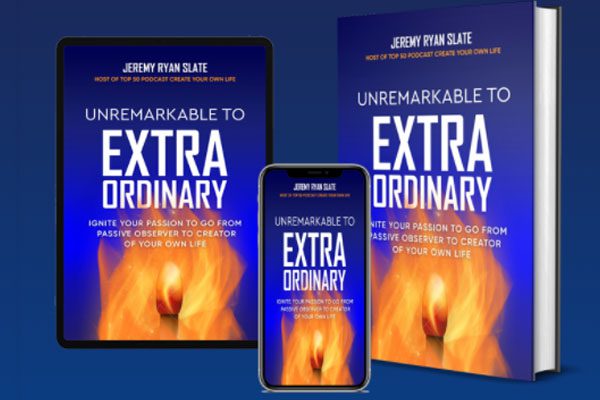
Unremarkable to Extraordinary: Ignite Your Passion to Go From Passive Observer to Creator of Your Own Life
That’s a huge takeaway. Most people don’t spend the time training people. They figured, “I’m hiring you. You should be able to hit the ground running.” We don’t even talk about our culture and whether you are a fit or not.
That’s a huge misconception.
If you don’t have clear expectations or boundaries like we were talking about with children and pets, for the employees, they don’t know. “Is it okay if I come in at 10:00?” “Not really.” “Nobody told me.” I can set up a problem right off the get-go. “Here’s what we do. This is our workday. We are totally flexible. As long as you get the work done, you can come in what time you start.” Everyone is different. That training as a speaker who gets hired to sometimes also train after the keynote and help people get a new skill because the skills you have are not enough. You have to constantly be learning new skills is my experience.
That’s one of the things. If you are not growing, you are dying. You always need to be growing and working on what you are doing. That goes back to what we have been talking about all through this conversation. It’s about incremental improvements and consistent improvements. You have to be thinking about the same thing for your team. They should be training weekly, whether it’s on some sort of new process, some process you have been running for all, whatever it is, they need to be improving as much as you do because that’s how you keep your organization growing.
If people want to listen to your podcast, it’s called Create Your Own Life. If people want to learn how you can help them with their branding, they should go to CommandYourBrand.media.
CommandYourBrand.com or CommandYourBrand.media, either one will get them to us.
Any last thought you want to leave us with?
I would encourage people to go out and grab my book, which is now in pre-order. It’s going to be released on June 7th, 2022, which distills down a lot of what we talked about and brings that into something that you can bring into your life to make some huge improvements and find your extraordinary. It’s Unremarkable to Extraordinary. They can get that over at GetExtraordinaryBook.com.
Jeremy, thanks again for inspiring us all to put a little structure in our life and get some practice in.
John, thanks so much for having me. It’s a lot of fun.
Important Links
- Command Your Brand
- Create Your Own Life Show
- Unremarkable to Extraordinary
- YouTube – Jeremy Ryan Slate
- Rumble – The Create Your Own Life Show
- CommandYourBrand.media
- Larry King – YouTube, Larry King interviews Sales Keynote Speaker John Livesay
- Better Selling Through Storytelling Method Online Course
Wanna Host Your Own Podcast?
Click here to see how my friends at Podetize can help
Purchase John’s new book
John Livesay, The Pitch Whisperer
Share The Show
Did you enjoy the show? I’d love it if you subscribed today and left us a 5-star review!
- Click this link
- Click on the ‘Subscribe’ button below the artwork
- Go to the ‘Ratings and Reviews’ section
- Click on ‘Write a Review’
Love the show? Subscribe, rate, review, and share!
Join The Successful Pitch community today:
- JohnLivesay.com
- John Livesay Facebook
- John Livesay Twitter
- John Livesay LinkedIn
- John Livesay YouTube
Restoring The Soul Of Business With Rishad Tobaccowala
Posted by John Livesay in podcast | 0 comments

The business world is changing, with AI and data-driven systems becoming more common. With these changes happening all around us, how do we keep the soul of business alive? John Livesay teams up with Rishad Tobaccowala, the author of Restoring the Soul of Business, to gain insight on how businesses can survive and thrive on these changes. Rishad discusses how to use storytelling to sell your services or products and why your vision can’t be captured using just numbers. Tune in for more on using your tools to capture the soul of your business.
—
Listen to the podcast here
Restoring The Soul Of Business With Rishad Tobaccowala
This episode’s guest is Rishad Tobaccowala, the author of Restoring the Soul of Business. He talks about when you combine the spreadsheet with the story, you have success and how your vision cannot be captured in a number. Enjoy the episode.
—
This episode’s guest is Rishad Tobaccowala, who is an author, speaker, teacher and advisor with decades of experience specializing in helping people, organizations and teams reinvent themselves to remain relevant in changing times. He specializes in unleashing talent and turbocharging productivity by delivering perspectives, points of view, provocations and plans of action, but no PowerPoints.
His bestselling book, Restoring the Soul of Business: Staying Human in the Age of Data was published globally by HarperCollins and focuses on helping people think, feel and see differently about how to grow their companies, their teams and themselves in these transformative times. The Economist Magazine calls it perhaps the best book on stakeholder capitalism and Strategy Magazine named it among the five best business books and Marketing Book of the Year. His weekly Thought Letter, The Future Does Not Fit into the Container of the Past, is read by over 25,000 leaders every week. I’m one of them. Welcome to the show.
Thank you very much. It’s great to be here.
You have such an impressive scope and understanding of data and generosity. I call it the toggling back and forth of soft and hard skills. I find it very rare that one person is an expert in both. That’s one of the reasons I was so excited to have you share these abilities to connect dots in a way that I haven’t heard anybody else do it before. Before we get into all the wisdom that you have and your wonderful book, let’s go back in time a little bit to your own story of origin. You can go back to childhood, school or wherever you want. How did you get into this concept that someday, you’re going to be a thought leader on the soul of business?
The good news or the bad news is I had no clue when I started this journey and where it would end up. If I had started saying, “I’m going to be a thought leader on the soul of business,” my sense is people would have put me in a crate and shipped me in an inhabited continent saying, “What a mad person.” I grew up in Bombay, India, which is now known as Mumbai, India. I got an undergraduate degree in Advanced Mathematics. I came to the University of Chicago to get an MBA in Finance and Marketing, which is a quad school. I joined Leo Burnett, which was an advertising agency.
I love that agency. I knew them well in Chicago. They would have apples in the lobby.
I joined them in 1982 and worked there under the Leo Burnett name until 1994, and then, for the first time in their history, I convinced them to take the name off the door to launch a new type of company which they own 75% of. I remained a Leo Burnett employee until it was called Giant Step. It was one of the first interactive agencies and then, based on that, I also helped spin-off their media company into a company called StarCom. We merged with a couple of other companies and then in 2002, we got bought by a publicist group.
For the next 15 or 17 years, I did a lot of different things inside various companies. We purchased big companies like Digitalis, Sapient and Razorfish. We merged different companies and ended up having at the end of this journey about 80,000 employees, the United States’ largest media buying and planning company.
Some of the most forward-looking digital assets include Epsilon, big creative brand names and in the last few years, I ran strategy globally or some combination of those two. I then started a second career where I had always wanted to be a writer when I was young, but my parents suggested that I needed to have something to say. They were not exactly sure a writer could make any money, so they said, “Go do something else.”
[bctt tweet=”Your vision can’t be captured in a number.” via=”no”]
I started a second career, which led to my book and I started this writing, speaking, educating and advising career. I’m fortunate that one of the companies I advise is my whole place of work, where I’m still very close to which is the Publicis Groupe. I work with a lot of other companies, a lot of startups, a lot of private equity, a lot of young entrepreneurs and now, a company of one. I’ve gone from a company of 80,000 to a company of one.
It’s exciting and interesting in its own way, but in many ways, what I’ve done is I’ve combined the two things. I’ve combined what I call the spreadsheet and the story. The spreadsheet is the digital, the data and the left brain. The story is, which you understand only too well, which is the sale is in the tale, is that you win people’s hearts and minds with stories and then you use the numbers to justify what they did.
Most people want to lead with the numbers and I think that’s a mistake. People buy emotionally and then back it up with logic.
It’s the only way to share your vision because your vision can never be captured in a number. If you think your vision is captured in the size of an addressable market, that’s not a vision. That’s numeric.
You’ve given us two great soundbite tweets already. Combine the spreadsheet and the story and your vision can’t be captured in a number. Every once in a while, I still have to convince people of the power of opening with a story. I would love your take on this. I was consulting with a group of architects who were pitching against three other firms to win this big renovation. They were only given 45 minutes and eight of them had to speak.
I recommended and worked with them on a 30 to 45-second story of origin like, “I was eleven years old. I played with Legos. That’s what got me into this.” One of the engineers who wasn’t even presenting in the room said, “We’re wasting time. We’re talking about ourselves.” I thought, “In order for us to get picked and to explain our vision, they have to know, trust and like us that we can all do the work or we wouldn’t be in the final four. Now, it’s about giving a little flavor of who we are. It’s not a waste of time at all.” The people who brought me in agreed. I stayed in, but I thought, “Wow.” I was so shocked that I still have to justify that sometimes.
The issue is this. Many of us are very proud of all the work we’ve done to create an answer and we often believe that the way we work is what is the differentiator. I believe it is not the way we work. It is who we are and what we do, but we are confused by thinking it is the way we work and what we have. It is the way we work and what we have.
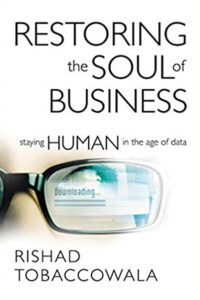
Restoring the Soul of Business: Staying Human in the Age of Data
Many companies talk about their history, not the individual’s history. They talk about the history of the company. They talk about their tools, methodologies and techniques. I remind people that it’s like trying to explain how your colon works. When people want to see cool stuff, don’t talk to them about how your colon works. Show them the cool stuff.
They always say, “You’ve got a few minutes to make a first impression.” I think it was Jerry Maguire in You Had Me at Hello. The reality of it is, in many cases, a pitch is won or lost in the first ten minutes. The first ten minutes have to set up an intrigue. Intrigue is also not something that mathematics can set up. You have to set up two things. You want to intrigue and you want a sense of inquiry. It’s a sense of like, “What is this?”
“Tell me more.” We have a Q&A session after that. I was doing the very same thing. I was using the concept of an open loop in a story. Plant the seed like, “Be sure to ask us about this in the Q&A for more details because you don’t have enough time to get into it all,” and they said that worked well. In the actual presentation and Q&A.
What you want to do is in the beginning, you want to set up with intrigue where they say, “Who are these people? What are they saying? Why are they saying what this is?” That’s intrigue about you and then inquiry from them. Those are what I call the two first Is. It’s intrigue and inquiry in the first ten minutes. They say, “That’s interesting.”
Then, you very quickly follow with three other Is, which are ideas, insights, and imagination. You provide them with insights about either their market or themselves. You provide them with the imagination of what is possible, and you provide them with specific ideas. That eventually ends you with the last two Is, which is they get inspired and you ask for an invitation.
Those are my seven I processes. You start with the two Is. The whole stuff is like, “These people are intriguing. Therefore, I would like to inquire more.” That’s getting you at hello. Very quickly, you’re starting to show your cool stuff, which is ideas, insights and imagination. You end with inspiring them so that you can get invited back.
Many times, especially when you’re pitching for funding, it’s about the second date or getting back. In this particular situation, they had already made all the final cuts, so this was the last chance. The invitation’s going to be, “We picked you.”
What happens is you simply say, “What exactly do we want to be invited to?” Sometimes it’s, “I want to be invited to the next meeting.” Sometimes it’s, “To win the pitch.” Once you do that, you notice this is all about storytelling, but along the way, you’re bringing in the math and the numbers to support the facts that you are stating. To me, the math is like the spinal cord of what you’re doing and nobody gets attracted to spinal cords unless you’re a dinosaur where a spinal cord is all that’s left of you.
How did you come up with the title of your book? I know as an author myself, that’s a lot of ideas and also what the image is going to be, especially from you coming from a media buying agency and working with so many big clients, Staying Human in the Age of Data is so strong.
What happened is I did not come up with the combination of a title. When I wrote my book, I wrote my book under the working title of The Story and the Spreadsheet, but when I wrote my book proposal and everything else, I was fortunate that I got myself an agent. My agent got HarperCollins as well as Penguin Random House interested. I talked to them. HarperCollins said, “We think this is a great idea. We are going to give you an advance, but we would like to tell you that we do not buy the title at the current time, so we are going to work with you to brainstorm titles.”
[bctt tweet=”Too much math creates too little meaning.” via=”no”]
What we did were brainstorm titles. They ended up with a title, which had Restoring the Soul of Business. I had something about human and data somewhere. They combined it and a few other titles, which included my own, which was The Story and the Spreadsheet. Because they’re a big company, they did research. They put out the titles with different people. What came back strong was this combination of Restoring the Soul of Business and Staying Human in the Age of Data.
There’s an unspoken fear for most people, and some people have spoken about the fear of AI taking over.
At that time, there was all that AI taking over, etc. For me, it was like, “It’s not anti-data. It’s not that the world isn’t becoming data-driven, but how do we include the human into looking at an extracted meaning from the math.”
A lot of people may have a great title, and then sometimes, the chapters are not intriguing. I can see why your book has gotten such rave reviews because, as someone who loves this topic of integrating soft skills and hard skills, Too Much Math, Too Little Meaning is one of the best sound bites I’ve ever heard. I have to give you so much kudos.
Thank you. In fact, there were two other things that we did which were very unusual. When someone reads my book and they start with the opening, they say, “It’s very interesting,” where I say why should you read this book. It’s because you are going to be spending the most amazingly valuable asset you have, which is time. I make the case, but then I say, “I’m going to make this easier for you. The book is not a book of essays because there’s a connecting spine as such, which is the story and the spreadsheet, the math and the meaning, but you can read any chapter in any order you want because they’re all freestanding.”
People love that.
You can go to what you want to read, and then, each chapter stands out with titles. Like Too Much Math, Too Little Meaning, there’s a chapter called Have More Meetings.
I was going to ask you about that because it’s so counterintuitive. The last thing people want is another meeting.
There’s also a chapter called How to Upgrade Your Mental Operating System or another chapter that is everyone’s favorite is The Turn on the Table.
It goes back to what you were saying about don’t talk about your colon. Let’s talk about the schedule more meetings. I’m so intrigued because again, this is such a great takeaway for everyone reading this. When you say something, write something and present something, your brain goes, “Wait a minute. I thought the opposite was true.” For example, as a sales keynote speaker, I often find myself saying, “Whoever tells the best story gets the sale and not who has the best product or the best price.” Most people go, “What are you talking about? That can’t be right.”

Soul Of Business: You win people’s hearts and minds with stories, and then you use the numbers to justify what they just did.
It’s the reverse. This book was written before COVID. My belief is I say the reason we don’t like meetings is that most of the meetings are not meetings. They’re stereothons. What we do is we go to a room and we look at a big screen with a PDF or an Excel spreadsheet while also then looking at a laptop or a tablet on our desk while we are surreptitiously looking at the other one, which is our phone on our knees. We have that as a meeting, which is I’m in a room staring at screens. My basic belief is a meeting is when you look at somebody and you have no technology involved. You have a sheet of paper if you need numbers and you talk to each other and interact. That’s a meeting.
You have four wonderful workshops. There’s more than that, but the four that grabbed me, I’m guessing those are also the subject of a keynote if someone wants to hire you just to talk and not a workshop.
You hear something about words and selling, which I think your audience will find particularly intriguing and why you’re right that the sale is in the tale. I first created four things where I could help people learn. My original four were simply called, The Future Doesn’t Fit in the Containers of the Past, which is how to think about the future, How to Manage Change, so it Sucks Less, How to Upgrade Your Mental Operating System and How to Lead with Soul. Those are things that came from my book. I call that learning and that was the tab on my website.
One fine day, I changed it. Instead of calling it learning, I call it workshops. I then ran counter to all these masterclasses and I said, “This is live, interactive, customized and not taped one way and completely non-customized.” This is much better than any masterclass, especially now when people do not want to watch. They need something live and interactive when they’re sitting at home or spread out wherever they are.
It took off like a rocket by changing that, the workshop and reframing it. The next four became much more about doing versus even thinking. One was simply called and as we’re talking about selling, it’s How to Sell Better. That’s about writing presentations in different ways. I also had one, which is how do you manage talent and how do you motivate talent in this particular area that we live in? Those became very popular.
I want to double click on the selling one and the other one about managing change, so it sucks less. Coming back from the talking workshop I gave, it was the first time these people have been in a room since COVID. Nobody has been in the office. There were people in a conference room, which used to be the norm, but now, everyone’s like, “My behavior of sitting this long in a conference room, brainstorming and practicing something is out of whack.”
Even the simplest things like, “Where’s the whiteboard and the easel? The markers have run out of ink. They’ve dried up over years.” There is also all this dusting stuff off. Regardless of where you are on the whole concept of vaccines, there’s still a lot of anxiety about coming back to the office. I would think that this managing change workshop would be so huge because it’s a big change to come back.
I’ll give you an idea and it’s very odd. I’m starting to travel again, which I was doing in October, November, December 2021. There were less of it and it’s back again, but I’m doing two presentations and they’re more or less on the same topic. I have 1,000 to 2,000 people in an organization on How To Manage Change So It Sucks Less and then across the continent of Africa to 3,000 people on How To Look Ahead and Not Look Behind.
I know you have four questions about how things change. Is there a little snippet you can give us or a little hint of one of the takeaways from this workshop for people who are reading and don’t have the privilege of hearing you talk about it in detail?
Absolutely. Here’s a very simple thing. The big thing coming out of How To Manage Change So It Sucks Less is to recognize that there are six things that everybody has to do in order for their company to succeed in changing, but most of us only do three of them and because we don’t do the other three, we have a problem. The three we do is put together a strategy for change. We then either go buy a company or hire additional talent to fill in things we don’t have. The third is we reorganize around either that company or the talent we purchased or got. That’s what I call the strategy reorganization in M&A/acqui-hire parts.
[bctt tweet=”Everybody’s got a plan until they get punched in the face.” via=”no”]
At that particular stage, we put out a press release, “Make balloons and have a party.” It doesn’t work because I remind people like Michael Tyson supposed to have said, “Everybody’s got a plan until they get punched in the face,” I believe that every leader and every board has a plan until people get in the way. I have 4, 5 and 6 are these questions. Number four is why it is good for the people. Don’t say, “Why it’s good for the company?” Number five is how will you change their incentive plan so they will change their behavior. The last one is how will you provide them with training so they can learn how to do the new things you’re claiming they need to do.
We forget. We don’t invest in training, changing incentive plans or communicating why it’s good for them and then we’re surprised when these things don’t happen. That’s fundamentally there. I then go deeper down into including solutions on how people can solve what is called the biggest disease of all, which is IDD. IDD is Inner Dinosaur Disease. Each of us has this inner dinosaur disease inside us and how to approach it. That is what that presentation is about.
You got so much good stuff here, but let me jump to the other one because this is my wheelhouse. I happen to be an amateur photographer and collect it as art. When I saw that you’re helping salespeople solve problems by leveraging photography, I thought, “I have hit the lottery,” because I’ve never seen anybody do that.
I love the concept of lenses, how you’re zooming out or jumping in and all that good stuff. What are we focusing on? The world that you’ve taken us into this concept of filtering things with quality control. I remember when I took Photo Journalism in college many years ago, the professor said, “Photography is painting with light.” “I can’t paint, but if I can paint with light with pictures, I’m in.” Give us a little snapshot of how the photography analogy can help salespeople.
The reason I use the photography analogy is that now, every one of us is a photographer because of our smartphones. Therefore, I’m using terminology that every one of us does. The reality of it is regardless of what equipment you use, I’m an amateur photographer but I’ve done a lot of it. Over time, what happens is there are three key things that matter and everything else doesn’t or matters very little.
The three things that matter is how do you frame and what do you look at. That’s the B to C in framing a picture. The way you frame makes a very big difference. The second, as your professor said, it’s about light, which is how do you illuminate and expose. You framed and you’ve taken the picture with the right light. The third one is about how you edit the solution, which is cropping, filtering and all of those kinds of things. In effect, I remind people that if you’re going to sell, what you’re selling is a solution. People don’t buy products and services. They buy solutions. If you are selling a solution, wouldn’t it be great if you could help someone frame the problem?
Framing is important. You frame the problem and that’s by focusing on what the problem is and making sure that the problem is discreet enough that your product or service can solve it. That becomes framing. The second is how do you illuminate and expose and that is everything from how do you bring in data because data is a form of light.
That becomes the second part of it. The final thing is how do you edit the solution. How do you make sure you don’t say too much in a meeting and say what’s necessary? You customize it. How do you filter it? How do you display it? One of the displays is how you do the seven Is to display what you did.
I remember one of the things when taking photography class was changing the angle whether you’re shooting down on something and standing on a table or you’re crouching down if you’re shooting animals like a dog running and you get down to their level.
In each of these, I mentioned three things that everybody can understand. You have to focus on the right problem. What you mentioned is my second one, which is points of view are incorporated. Points of view mean looking at things from a different point of view like you did from up and below as well as getting different people to look at the problem.

Soul Of Business: We often believe that the way we work is the differentiator. It is not. It is who we are and what we do.
My whole premise is, “Whoever describes the problem the best and shows empathy and can describe that, then people think, ‘You get us. You expressed our problems in a way that’s even clearer than we do internally, so you must have our solution if you understand our problems that well.’”
Most of the people who are reading this being successful as they are will recognize they have done this one particular thing, but they may not know that they did it, so I will tell them what they did. Often, all I do is reveal to people their own brilliance, and as a result, they think I’m smart, because, in effect, they say, “That’s what I did. You must be smart,” which is what they’re saying is, “I’m smarter. You figured it out, but because you told me, I think you’re smart too.”
It goes full circle to your expertise in advertising and marketing. When a marketer can put a headline or a commercial that says what people are thinking and they feel like, “You’re in my head, so this must be the right fit for me.”
Why that happens is even now, when I do some advisory work, a lot of people will call me and say, “Do you think you can help me with this problem?” I remind people, one, I’m limited in time and I’m not going to try to solve problems that I have no clue on how to solve. In some particular cases, they say, “Can you learn how to solve it? We would rather have you learn how to solve it and share how you’re learning how to solve it than get somebody who claims they have the answer.”
I’m not putting it as a pause on the future of the internet, so I know how to describe what’s going on with Web 3.0, metaverse and crypto better than most people because big companies asked me to study it for them and explain it to them how I was studying so they could understand what was going on versus me coming like a huckster and saying, “Buy an NFT. Do this. Do that.” As a result, they said, “Show us what you’re doing and how you’re doing it.” I was paid to learn to teach.
It’s like, “I can give you a fish, or I can teach you how to fish.” They were like, “We’re going to pay you to teach us how to fish.”
They’re also like, “We like the fact that you’re learning how to be a fisherman.” I told them, “I’m not even a fisherman and you’re asking me to teach you how to fish.” They’re like, “Go learn how to be a fisherman because nobody knows, and then teach us what you’re learning, including who else we should go and learn from.”
You’re curating everything for them. They trust you.
They trust me, so it allows me to say, “I don’t know.” It allows me to go to lots of world-class people and bring them in. I’m not competing with anybody, so I’m saying, “I’m trying to work on this project.” In effect, what many of your audience will find is often a client may ask and say, “Can you help me solve this problem?”
I sometimes say, “I’m going to turn your question around like this,” and often, I’ve been hired because I changed the question. I said, “I don’t think you’re asking the right question. I think this is what you’re really asking.” I have a piece that turned the opposite part, which is the problem of asking the wrong questions. I wrote a piece called The Problems of Asking the Wrong Question.
[bctt tweet=”People don’t buy products and services; they buy solutions.” via=”no”]
There’s so much good content. Thank you for sharing this incredible framework of the Is, the concept of photography and framing things from a sales perspective and combining the spreadsheet with the story is the way to get through all the noise that’s out there or, as I say, get out of drowning in a sea of sameness. If someone wants to find out more about you and hire you as a consultant, workshop or keynote speaker, the best place to send them is to your website, which is your name.
It’s RishadTobaccowala.com and there, you will find pretty much everything, including what my workshops are. If you click on where it says Thought Letter, you’ll find a lot of the stuff that I’ve talked about. As any good salesperson does, I give away the crack for free, so hopefully, people will buy the cocaine.
My Sunday Thought Letter, which is what you read and which is now read by 25,000 people, including entrepreneurs and CEOs, is completely free. That’s Rishad.SubStack.com. A lot of that content is on my website under Thought Letter, but instead of you having to go there every Sunday, it can come to you and it’s completely free. Not only is it free of no charge and no upcharge, but it’s also free of advertising, affiliate marketing and data harvesting. It’s a gift because, as I wrote, you build goodwill through generosity.
There are visuals that go with it, so you’re not just reading the text.
Also, each Sunday, I introduce a new artist, new sculptor or new photographer. There’s a new artist, sculptor, and photographer every Sunday. It’s a read that shouldn’t take more than five minutes of your time and the idea is that at the end of that five minutes, you will see, think and feel differently about the topic.
Especially generosity, that’s one of my favorites. The book again is called Restoring the Soul of Business. We certainly need that now more than ever. Thank you so much for writing the book and for putting out all of your knowledge and for inspiring all of us to be a little more human in our interactions with each other in the business world. Thanks again.
Thank you very much and thanks to everybody who read this.
Important Links
- Restoring the Soul of Business: Staying Human in the Age of Data
- RishadTobaccowala.com
- Thought Letter
- Rishad.SubStack.com
- Better Selling Through Storytelling Method Online Course
Wanna Host Your Own Podcast?
Click here to see how my friends at Podetize can help
Purchase John’s new book
John Livesay, The Pitch Whisperer
Share The Show
Did you enjoy the show? I’d love it if you subscribed today and left us a 5-star review!
- Click this link
- Click on the ‘Subscribe’ button below the artwork
- Go to the ‘Ratings and Reviews’ section
- Click on ‘Write a Review’
Love the show? Subscribe, rate, review, and share!
Join The Successful Pitch community today:
- JohnLivesay.com
- John Livesay Facebook
- John Livesay Twitter
- John Livesay LinkedIn
- John Livesay YouTube
Selling From The Heart With Larry Levine
Posted by John Livesay in podcast | 0 comments

Salespeople usually focus just on the product or service that they’re selling. But really they should try selling from the heart. As a salesperson, people skills is a very important trait to learn. You need to know how to sell your memories and experiences with your customer. Join John Livesay as he talks to Larry Levine on how to sell properly through relationships. Larry is the bestselling author of Selling From The Heart: How Your Authentic Self Sells You! He is also the co-host of the Selling from the Heart Podcast. Join in the conversation to learn how to grow your business by knowing more about your client.
—
Listen to the podcast here
Selling From The Heart With Larry Levine
If you’re looking for new ways to be authentic when you sell something and make authenticity a lifestyle and not a light switch you turn on or off, then this episode Selling From The Heart is for you.
—
Our episode’s guest is Larry Levine, who is the best-selling author of Selling From The Heart and the cohost of the Selling From The Heart Podcast. With decades of in-the-field sales experience within the B2B technology space, he knows what it takes to be a successful sales professional. In a post-trust sales world, Larry Levine helps sales teams leverage the power of authenticity to grow revenue, grow themselves and enhance the lives of their clients. He’s coached sales professionals across the world from tenured reps to new Millennials entering the salesforce. They all appreciate the practical, real, raw, relevant, relatable, and street-savvy nature of his coaching. He is not shy when it comes to delivering his message. Welcome to the show, Larry.
John, what’s going on? I can already tell we’re going to have a blast.
Tell me about your story of origin. You can go back to childhood or college, wherever you want to start where you got your first inkling of either being an entrepreneur or the concept of being a heart-centered person.
I hated everything about school. To me, high school was a blur. I didn’t like anything about school. I went to college to appease my parents and I double majored in college. My cumulative GPA by the time I graduated was 2.1 out of a 4.0 scale. The school wasn’t the gig for me but I went because I wanted to make my parents happy.
That’s the thing, growing up with a father who was a rocket scientist. That’s what I did. I’m a big believer in this. You don’t wake up one day and say, “I think I’m going to be a salesperson.” You fall into sales somehow. Here I am with a degree in Marketing and Health Science going, “Now what?” I was getting married. No pressure and no job. I had this little voice inside my head saying, “You got to pull your head out of you-know-what pretty quick because life has been thrust upon you.”
It’s going back to the late ‘80s. I opened up the yellow pages and saw the largest ad in the office technology space because my father had said, “If you could last one-year selling copiers, you’re worth your weight in gold in the sales world.” I took it for what it’s worth. I picked up the yellow pages, the largest ad, called up, asked for the owner of the company and got a job.

Selling From The Heart: You don’t wake up one day and say, I think I’m going to be a sales person. Sales doesn’t work like that, you fall into it. You fall into sales somehow.
A week later, I find myself in a room watching a bunch of videotapes and getting trained and so forth. I’m sharing all this with you because the backstory behind all of this translates into my entire career selling copiers. My first year was 1988. It was the worst year and the best year of my life. I made $18,000 selling copiers in my 1st year.
Was that commission only, I’m guessing?
It was a draw against the salary and it was tough. I had to do 50 cold calls a day. I couldn’t come back until I had 50 cards. Once I came back, I had to start knocking down phone calls. I share all this with everybody because I believed what I learned in my first year carried me my entire career in the office technology space. I’m a big believer in this. We all have five senses and we all know what those are but I have no scientific proof behind the sixth sense, though we all have a sixth sense. My sixth sense when I was 24 years old was I have a keen awareness of bull crap.
It’s the BS meter if somebody’s wasting your time or not when you’re prospecting them.
[bctt tweet=”If you can last one year selling copiers, you’re worth your weight in gold in the sales world.” username=”John_Livesay”]
It’s not only that. I say this for a reason. I had this sixth sense of being keenly aware of what was going on in my surroundings, how salespeople are treating customers and what they were doing. I was going on sales ride-outs and so forth. I saw that the customer and commission were the centers of everything. It took me a while to figure this out because I was mirroring and mimicking everybody in my surroundings. It started to mess with me and I knew that wasn’t me. I remember I made my very first sale. I asked him, “Why did you buy from me? Besides, you felt sorry for me because it was my first sale.”
They said something to me that got me to start thinking, “You did something that completely was the polar opposite of what everybody else did. You made it about me, my company and how you can help. You didn’t make it about your products, your company and yourself.” I still remember that. I went on a very inquisitive rampage throughout my entire career. That curiosity led me to always ask questions. The more questions I asked about what was going on inside their heads, their perception of salespeople and experience, I took all of that and that’s how I marketed myself. For many years, I spent my entire career in one sales channel that was selling copiers.

Selling From The Heart: The best way to define authenticity in the sales world is congruency. Does your walk match your talk?
You talk about in your book, Selling From The Heart, the importance of authenticity and getting trust when trust is low. A lot of people are aware that they have to be curious and ask some questions as opposed to just talking. What I want to have the readers learn from you is how do you earn the right to even ask the questions? The fact that you’re curious, if someone doesn’t trust you or think you have their best interests at heart, they’re like, “Tell me what you’re here for and I’ll make a decision. I don’t need to talk to you or for you to quiz me.”
Doctors can ask patients questions because assumed expertise and trust are going on there. Let’s dig a little deeper because you have so much experience. That’s the table stakes. Don’t be somebody who just talks. Ask questions. Let’s assume that more than half the people reading know that but are looking for another way to earn that trust, to be authentic so that potential buyers are even willing to answer the questions.
I’m going to dance on authenticity for a moment and the equal business stature. There are a couple of key things there. I believe we’re all authentic human beings. First and foremost, John, I’m going to get that out on the table. To me, authenticity is a lifestyle. It’s not a light switch. We’re all authentic human beings. I have no PhD or Doctoral in any of this, neither Master’s in Psychology and so forth. This is street smarts through decades of getting the you-know-what beat out of me, what works and what doesn’t work.
I bring up authenticity for a reason. The best way to define authenticity in the sales world is congruency. Does the walk match the talk? We can say the BS meters are at an all-time high with people. How you build trust and credibility happens in the first five minutes of a conversation with somebody. This is what I know is going on in their head. John is saying to himself, “Does Larry have the goods? Is this somebody that I can trust, open up and share my business secrets with the things that are going on in my office? Can I trust him? Is he credible? Can I believe what he says?”
I bring this up for a reason because that’s what I was keenly aware of. There are two words that I held myself accountable for my entire career. It’s how can I connect and relate to somebody? The faster you can do this and the faster you can make somebody feel comfortable with you, the faster they will become comfortable enough to share uncomfortable things going on in their office. It’s those uncomfortable things that are gold. Those are the things that you will need to help them solve their issues, challenges, goals, initiatives, dreams and aspirations.
[bctt tweet=”Sell memories and experiences.” username=”John_Livesay”]
I play so much emphasis on how I opened up meetings because I knew if I opened these up correctly and I shared a bit of me, John would share a bit of him. The missing link is we don’t spend enough time on the first five minutes. The first 5 to 10 minutes in most sales situations are product-centric dumps, company-centric dumps, the buyer knows it and the insert name of decision-maker knows it. They know what’s happening and they‘re prepared for it.
I was talking to an optometrist. Salespeople are calling him all day long and he said, “It’s gone from they could bring lunch into we could have a conversation. With the pandemic, you can only talk to me for ten minutes between patients.” What are people doing? He said, “They all say the same thing. ‘Our product is the best. Let us give you all the data and scientific facts to back it up.’” Something he could read on his own.
They’re not saying one thing about themselves or anything that they might have as an idea to help his practice. It’s like, “I only have ten minutes then I got to talk about all this stuff.” There’s no “time” to build rapport or ask a question. He said, “The opposite is true. When you have less time, relationships are even more important to build. Not less.”

Selling From The Heart: Know how you can connect with somebody? And how you can relate to somebody? The faster that you can do this, the faster they will be more comfortable to share things with you.
I’m a big believer that we all can achieve equal business stature. Let’s say I’m talking to a chief financial officer, chief information officer or human resources. It doesn’t matter. I don’t have to be as highly educated as them but I need to understand the language they speak and bring it to the table in a very quick amount of time that I understand their world.
In other words, in the very beginning, if you want somebody to feel comfortable with you, start speaking their language and sharing like, “John, these past days, I’ve worked with four chief financial officers just like you. These are the three issues that we’ve been working on deeply to help them solve, issues 1, 2 and 3. I’m curious, do any of these hit home with you?” You can roll that out but what it shows somebody is you’re working with people and using verbiage like them. You’re living in their world. Talk about making somebody feel comfortable, they’re going to go, “What just happened?”
Back to the optometrist because I love stories and I’m always trying to take your words of wisdom and make them relevant through a story, the optometrist said he likes this company that he works with because of their innovation. The problems people have with their eyes in that are not what they’re having. With the pandemic, everyone’s coming in complaining about their eyes being dry, wearing contacts more than six hours because they’re looking at Zoom calls and phones way more than they used to.
Enter a product that makes your contacts less dry after 6 hours and can go for 8 or 10 hours. That ability to stay current and make the doctor look like the hero by having the product that solves the problem is what a lot of companies didn’t use to do. I remember computer companies. They’re like, “We’re going to make something and then it’s up to marketing and sales to get people to want it as opposed to asking, ‘What are your problems? Let’s make a product to solve it.’”
Here’s my challenge to the sales world. We think we sell products. Ask any salesperson, company, sales leader or most people on what they sell. They go right to their products, solutions, service, all company-centric stuff. When I learned this decades ago, it was a monumental shift in everything. I learned to sell memories and experiences. You use storytelling. This is where all of this ties together.
[bctt tweet=”Authenticity is a lifestyle, not a light switch.” username=”John_Livesay”]
In sales, we all live in a commoditized world. I’m here to throw this out there. I came out of the copier channel. There wasn’t much difference between one copier and another. Highly commoditized sales channel. The difference was my ability to articulate how I was able to help them do better business and the experience they would get with me, not my company. The big key is the competitive differences in the company. The competitive difference is you. When I learned how to capture stories and how to repurpose stories, I’m the biggest believer that the best storytellers are story collectors.
I’ve worked with companies who realize that if the rep’s repertoire or tools are only the sales they’ve made and they don’t know anybody else’s success stories to share, they’re walking around with one hand tied behind their back. If somebody else has multiple stories like a playlist or a jukebox ready to go, even if they’re not their personnel, they can say, “So-and-so in another office had somebody in a similar situation to you.”
They tell that story. If that’s the one that resonates the most, then that’s what’s important, even if it’s not necessarily your story. As long as it’s a true story that somebody else in the company did, that’s how you start breaking down silos and growing existing clients. The secret there is not just telling stories but figuring out a way to share the stories across the department.

Selling From The Heart: Ask any salesperson what they sell. They’ll go right to their products, services, and other company-centric things. Instead of doing that, learn how to sell memories and experiences.
This is game changer stuff for those that are in sales. Let’s think about this collectively for a moment. Salespeople have golden opportunities to capture all of this. You’re having conversations with your customers daily. You’re in sales situations daily. You have opportune and monumental times to capture these stories. This is why amusement parks such as Disneyland, Magic Mountain or the sports entertainment world do a massively good job at capturing memories and experiences. There are no price negotiations.
It keeps going up every year. You don’t go to Disneyland and say, “I’ll have four tickets,” and the person at the window says, “That will be $1,500.” The next word out of your mouth goes, “I’ll tell you what. I’ll give you $1,250 for it.” It doesn’t happen so why do we allow this to happen for those that are in sales? The reason why I believe it happens is that people have lack confidence.
They may not believe in themselves or their messaging. They have low self-worth. When all of this happens, it’s hard to capture these memories and experiences. To be able to have a heartfelt human conversation with somebody with clarity, they get somebody to go, “I get it.” The faster you can tug on somebody’s heartstrings, the faster they will open up.
They open up the purse strings, not just their needs because we buy emotionally and back it up with logic. In your book, Selling From The Heart, you’ve got a whole wonderful visual of someone who is authentic and that there are three parts to around the heart. There’s selling, client management and prospecting, all done through the lens of authenticity. Let’s start with how does somebody prospects authentically? What does it look like when someone isn’t being authentic in their prospecting?
I have a different viewpoint on this because you started with prospecting. It triggers them. Most companies start their training with prospecting and building the pipeline. I’m all for it. I write about it in Selling From The Heart. If you want to have an ever-flowing sales funnel, you must build an ever-flowing relationship funnel. Here’s where I believe companies missed the mark. They start with prospecting first. I start with client management first.
I see monumental growth with this and it ties into authentic prospecting. When sales leaders and sales professionals understand what it’s like and they can comprehend how to build authentic relationships and bring meaningful value to their current client base, this fuels them and will propel them to authentically prospect for new opportunities. I’m all for new business growth and prospecting. It’s 100% non-negotiable.
[bctt tweet=”If you want to have an ever flowing sales funnel, you must build an ever flowing relationship funnel.” username=”John_Livesay”]
It’s a fascinating way of looking at it because I’ve come at it from a different perspective but the outcome is the same. When I was training speaking to a sales team of luxury car salespeople, Jaguars and Range Rover, I said, “You’re going to get noes.” People think, “If you’re selling a luxury car, you don’t get rejected.” Yes, you do. There’s a competitive set for every price point. I said, “What you need to do after the no calls someone you recently sold a car to. Not to try and sell them anything else but to remember what a happy client sounds like.”
When the next person walks into the dealership or rings on the phone, you have that in your head and not the no. It’s like a sorbet in between courses. I hear you saying before you start prospecting, get in the mindset of the current clients and why they’re happy so that you’re authentically sharing that message.
I fought with sales managers inside the world that I grew up in, which is the copier channel. We were always benchmarked on outdated KPIs, Key Performance Indicators. “How many calls you made now? How many appointments did you go on?” Things that are still alive and well drive me bonkers. I would get into severe arguments then they would say something like this, “Larry, you’re spending way too much time with the current customers. You got to go out and grab some new business.” However, I drove more new business sales in a company year over year than any other salesperson but yet spent the most amount of time with my current customers.

Selling From The Heart: If you want to grow your business, know that the more you know about your clients, the more you’ll grow with your clients. And, the more you learn about your clients, the more you’ll earn from your clients.
Were you getting referrals?
It was referrals but here’s where I learned this. I self-taught myself to power the networks. I knew that when I went high, wide, deep and built authentic relationships inside my customer base, I was one degree of separation from all of their peers, friends and people like them in other businesses with the same titles. I will be the first one to throw up both hands high in the air and say, “I hated cold calling.” I would rather find any other excuse out there than to cold call.
What I did enjoy was prospecting through my current customers. If leaders and salespeople can latch onto this, they will monumentally grow their business. It was simple as this. It’s a silly rhyme but I’ve made this up a long time ago. I stuck to it forever. “The more you know about your clients, the more you’ll grow with your clients. The more you learn about your clients, the more you’ll earn from your clients.” I held myself to these non-negotiable standards that every single day, I was going to generate new conversations, new connections and build new relationships inside my customer base.
I was going to intentionally pour myself into my customers. In turn, they would pour themselves into me. In doing so, I would ask for people like them that I can go out and talk to. Pretty soon they were repurposing stories and sharing experiences. I was driving more new business inside my company than anybody else. That’s why I’m a big believer that we have to flip prospecting on its head. I’m all for a new business but not at sacrificing the relationships with your current customers.
You have taken all this expertise and turned it into a book and a podcast. You also are available for personalized coaching for teams or individuals. You have some sales training available.
This is where this forced entrepreneurship came in because at 50 years old, I was fired. That was my exit out of the copier channel. I had to decide real quickly what to do. I can go back to what I knew or I could try something different. I doubled down on myself. I put 100-pound weights on my ankles into the entrepreneurship world. What I’m bringing is what I believe is sorely lacking. There are great sales skills training and product training out there.
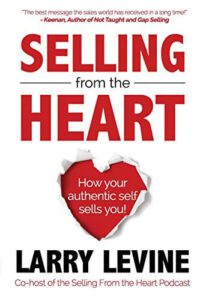
Selling From The Heart: How Your Authentic Self Sells You! By Larry Levine
What’s not enough of is people skills and relational skill-building. To me, that’s the missing link in sales. Some might call it soft skills. I say soft skills, yield hard dollars. People skills are human nature. It’s how we connect, relate and create these personal relationships. Everything that we do on our side of life, I believe transfers to the professional side of life. That’s what I coach sales leaders and sales teams to do. They might be going, “Where’s my ROI on this?”
Do you have a particular niche that you’d like to talk to? Is it people who are selling equipment?
What’s been interesting is to see where Selling From The Heart has taken me. It’s taken me into tons of vertical markets and industries. Industries are where relationships matter. You might be saying, “Larry, that’s about every place.” The whole message in the book and the movement around Selling From the Heart attracts like-minded and like-hearted leaders.
It eliminates the dirtbags that are out there that are transactional-oriented salespeople and sales leaders. Nothing wrong with that, you can grow your business that way. If you want to continue year over year to grow your people, you have to transform yourself, your sales team, the conversations and the relationships you have with your customers.
It all comes from developing people skills and relationship skills with your team. I’m a big believer in this and this is why we’re seeing such growth with this. Leaders who lead with their heart and lean into their sales team will soon develop a team that goes out there and leans into their customers and sells from the heart. That’s what we’re all about.
There’s a great way to end the episode. If people want to find out more about you, the book or the podcast, they can go to SellingFromTheHeart.net. Any last thought or quote you want to leave us with, Larry?
Your clients and your future clients would rather do business and connect with a sales professional who sells from the heart as opposed to a sales rep who is an empty suit.
Thanks for being someone who sells from the heart and shows us all how to do it in that wonderful way as well. Thanks, Larry.
Important Links
- Selling From The Heart
- Selling From The Heart
- Selling From The Heart Podcast
- Better Selling Through Storytelling Method Online Course
Wanna Host Your Own Podcast?
Click here to see how my friends at Podetize can help
Purchase John’s new book
John Livesay, The Pitch Whisperer
Share The Show
Did you enjoy the show? I’d love it if you subscribed today and left us a 5-star review!
- Click this link
- Click on the ‘Subscribe’ button below the artwork
- Go to the ‘Ratings and Reviews’ section
- Click on ‘Write a Review’
Love the show? Subscribe, rate, review, and share!
Join The Successful Pitch community today:
- JohnLivesay.com
- John Livesay Facebook
- John Livesay Twitter
- John Livesay LinkedIn
- John Livesay YouTube