
Profit Factory With Tim Francis
Posted by John Livesay in podcast | 0 comments

Are you just operating your business, or are you an actual business owner? Today’s guest is someone who can transform you from the former to the latter. John Livesay sits down with Tim Francis, founder of Profit Factory, where he helps entrepreneurs figure out what they are not doing correctly that’s causing them to not be profitable. Reevaluating why you became an entrepreneur in the first place, Tim talks about the ways we have been misled to chase fame and fortune instead of truth and mastery. He explains why we should seek to improve our businesses and help everyone because that way, the fame and fortune naturally follows. Furthermore, Tim also discusses what it actually means for you to be a creator of content in comparison with someone who just consumes it. Learn how to become profitable and more as Tim shares with you his Know Your Numbers workshop and his other company, Great Assistant, where he highlights the importance of how virtual assistants help you save time.
—
Listen to the podcast here
Profit Factory With Tim Francis
Our guest is Tim Francis, who is the Founder of two companies. The first one is the Profit Factory and the other one is the Great Assistant. His niche is helping entrepreneurs figure out what they’re not doing correctly that’s causing them to not be profitable. Great Assistant says, “What it is in its name, getting you a great virtual assistant so that you can save time.” His income himself when he got a great assistant more than doubled, and that’s what he helps other people do. We go into a deep dive about truth and mastery and what it means in terms of, are you someone who is a creator of content or just consuming it? The whole concept of looking at fame and fortune is like a cat. If you chase it, you won’t get it but if you sit still and let it come to you, it might jump on your lap. Enjoy the episode.
—
Our guest is Tim Francis. He’s an award-winning entrepreneur from Canada and the Founder of Profit Factory and Great Assistant. He is a graduate of the University of Alberta, and back in 2010, he was blindsided by a rare illness that left him unable to walk for three months. He nearly went bankrupt and was forced to restart. He promised himself that he’d never be a burnt-out entrepreneur again, which is a driving motivation, which led to the creation of Profit Factory. Entrepreneurs who are chronically stuck working in their business turned to Tim to achieve the freedom and control that made them want to be an entrepreneur in the first place. He helps entrepreneurs go from operating their business to being a business owner. He helps them arrange things, delegate, and zero in on their sweet spot so they can have time off to enjoy life. Tim, welcome to the show.
Thank you for having me. It’s nice to have you here in Austin as well.
I’m thrilled to be living in the same city that you have taken by storm. You are the person that makes the city desirable to move to because while people may not know you, they know someone like you is living here, which is making a positive impact on the world. It causes Austin to be voted one of the best places to live and creates this whole community of startups. You’re open. You’ve got many successes going on that people want to be around that energy. Our mutual friend, Billy Bross, who has also been a guest on the show, connected us. I was blown away. I thought, “If Tim is a sample of the quality of the people that are in Austin, no wonder this place is thriving.” One of the things I want to ask you about is your story of origin. One of the easiest ways to do it would be to have you described what you have on your wall, which in this photo montage of amazing moments from your life. Take us on the journey of some of those pictures that give us a little story of the origin of you.
It’s funny when we host dinner parties here, people usually have 1 of 2 reactions to the photos on the wall because it’s my life in fifteen pictures. Some people say, “That’s clever. It enriches all the stories that are shared.” Other people say, “You’re a raging narcissist.” It’s a matter of opinion, and we host a lot of dinner parties, so I get lots of feedback.
[bctt tweet=”Know your numbers.” username=”John_Livesay”]
It’s your house. If you’re not going to have pictures of yourself up, where are we going to do that?
I can’t wait for the opportunity to have you at our dinner. It’s going to be great. We’ve hosted 44 of those dinners and we’ve got people flying from all over North America to come to attend. It’s going to be fantastic to have you out to one of the dinners soon. I grew up in Canada. One of the pictures on the wall is of me riding a little tricycle with a little Canadian flag on it. It’s one of my favorite pictures of myself. It’s purity and innocence in that passion that we all have when we start. As I was growing up, I knew that I’d be an entrepreneur. Another picture of my wall is me in front of a painting truck because it was my first ever business when I was nineteen. I was also a varsity athlete and I loved the experience of competing when I was in college and whatnot.
Around that time is when I started my first ever business and I realized quickly that business is a little bit harder than expected. When you’re out there competing, you’re not just competing against your peers, but also people that have significantly more experience. I became an entrepreneur fairly quickly after university and I was broke. I had three roommates help me pay the rent. I had a home that I owned and I called it the Entrepreneur Academy. It was me and three other friends who all live there. I thought that I was going to be a millionaire by the time I was 25 or 30. I had big aspirations. I was a touring drummer at that time, which is another picture on the wall of me playing in a small arena. While we were on the road, I would also study real estate investing DVDs, how to acquire houses with no money down, and how to raise money?
I got a little bit of traction and I ended up getting four houses. I thought I was in great shape, so I thought that I would get rich and famous with rock and roll in real estate. In 2010, things changed. The crisis hit in ‘10, a little later in Canada than it did in the USA. I ended up losing $100,000, mostly of other people’s money, which was crushing. My residence went upside down by $100,000, so I was down at a couple of $100,000. I also had a mentor who ended up being 1 of the 2 leaders of a $12 million Ponzi scheme and his business partners convicted in court given a $250,000 fine, banned from Holding Securities for 25 years. His partner more or less, fled the country. It’s stressful and I ended up developing an illness because of the stress and exhaustion called Erythema Nodosum. For three months, I couldn’t walk.

Profit Factory: Businesses are a bit harder than expected. You’re out there competing not just against your peers, but also people who have significantly more experience.
I would have gotten double bankrupt in my business and my personal finance had I not had an amazing family to take care of me. My mom paid my mortgage for me for three months to cover me. I’m indebted to my parents for how they raised me and have given me so much stability that I could take risks outside of the home because I knew the home is always safe. There’s this moment in February of 2011 when I was laying in bed in month number two, where I felt the warmth go through my body and I felt some tingling like it never felt before. I heard a voice that said, “Tim, is this what you want?” At that moment, I don’t know if a second went by, a minute, or an hour, but time stood still. One of those pivotal moments in life. I heard another voice that was quiet and weak, but it was clear. It said, “Yes, entrepreneurship. Yes, this is what I want.”
John, at that moment, all these dominoes started to fall cascading realizations through my head, heart, and soul. I realized that I’ve been chasing fame and fortune when what I needed to be chasing were truth and mastery. Ever since then, I promised myself that I’m going to get a little bit better with entrepreneurship with every week that goes by. That’s been my mantra since the beginning of 2011. Here we are, every little bit has built on top of the one before. In my personal finance, I was able to pay everything off, which was great. My health is fantastic. I’m the healthiest I’ve been since I was a college athlete, which is fantastic. I don’t know if many people in their late 30s can see that. I’m proud of that. Not that it’s a comparison game, but it’s what I want, and I’m proud and fulfilled by that.
I’ve helped save multiple companies from bankruptcy and my own company. We’ve got two companies. One of which, I do consulting to entrepreneurs. I’ve sat on 139 different board meetings. I’ve looked at their financials and helped 70 companies, which has been fulfilling. Every day, there is such a precious opportunity to learn new things. I find fame and fortune interesting. It’s like a cat. If you go after it, it runs away but if you sit quietly and you focus on doing your work one step in front of the other, it’ll come and jump on your lap. I remember the shock that I had one day in Dallas. I was invited to speak in Dallas for a group of entrepreneurs and I’ve never given this particular talk before. The night before the presentation, I spent fifteen hours practicing in the condo that I’d rented.
You could go back to my Facebook feed. If you went far enough back, you would see this post that says, “Forbes Inc. and Entrepreneur Magazine had better all be in the audience tomorrow because I spent fifteen hours preparing this presentation and I’m bringing the heat.” I say that. There’s a picture of this dark room with a single pendant light. It almost looks like an interrogation room, illuminating this laptop at the end of a long night of working. I was astounded the next day to give the presentation. There are probably 150 entrepreneurs in the room. I got this wonderful ovation and about 30 people came up to shake my hand at the end, I’m busy shaking hands.
[bctt tweet=”Navigate the cash crunch.” username=”John_Livesay”]
The second last person extends their right hand to shake mine and extends their left hand with the business card in it. On the business card, it said, “Forbes Entrepreneurship Editor.” Forbes is there and asked me to be a regular contributor to Forbes. That was one of those unbelievable moments that I was joking when I made that statement on Facebook the night before, and here they are. It’s been an incredible journey. The more I know, the more I don’t know and I’m constantly reminded of that and do my best to help everyone that I can along the way.
First of all, I’m going to tweet out, “Fame and fortune are like a cat. Let it come to you and jump on your lap.” It’s great. Arthur Ashe, the famous tennis pro, said, “The key to success is confidence. The key to confidence is preparation.” When I gave my TEDx Talk, it was about twelve minutes and they said, “You should practice an hour for every minute you’re speaking.” Most people go, “I’m not going to practice that much.” Clearly, you practiced fifteen hours for a talk, and you should be able to start it in the middle and start at the end. You know it well that you’re no longer having to think.
Like an actor does when they get on stage or in front of a camera to do a movie, they’re not wondering what the next line is. It’s in them so they can be completely present. In this case, as a speaker, we do that with our audience, whether it’s in person or via Zoom calls. You also said something about truth and mastery, which is something that you’ve learned from all of this experience and journey you’ve been on. What can people do to figure that out? Maybe if you explain a little bit about what you mean by truth and mastery, and then how someone can figure out how that could apply to their life as a takeaway?
Maybe a couple of quick points on that is I’d read a book it’s called Millionaire Fastlane. It’s a hype-y title, but it had an incredible perspective and it talked about, in our lives, we can be producers or we can be consumers. If you look at your life through the lens of consumption, it’s like, “I want to buy that purse and that trip.” The production mindset is more of, “What could I create? How can I help?” One time, I was listening to some Jim Rohn. What a classic guy that he is. He’s both a brilliant mind and a poet. Jim Rohn said something like, “If a farmer walks to a field and yells at the field, give me food because I need it, the field will look back and say, who is this clown? I’m not interested in your need, but I’m interested in your seed.”
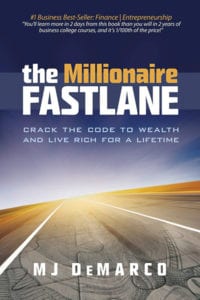
The Millionaire Fastlane: Crack the Code to Wealth and Live Rich for a Lifetime!
If we’re ready to show up and sow seeds of knowledge, effort, passion, and contribution, then all of our needs will be taken care of. If we’re in a dire situation or in a crisis environment, there are some exceptions there. There was a point when I was a couple of $100,000 upside down and I had no way to work because I couldn’t walk, stand, and even use my hands to type because the swelling in my elbows was painful. As soon as I could start to move my elbows again and sit up, I started studying like, “How do I get better at marketing?” Maybe I can’t go to meet clients. Keep in mind that this was many years ago, things were not as online as they are now. It was the next single thing that I could do that would tell the universe that I’m ready to take on more, receive more abundance, and be a steward of the gifts that are handed to me in the future because I’m being a steward of the gifts that I have right now.
I interviewed Rob Angel, the creator of the game Pictionary. He tells the story of how he created the game by saying, “What’s the one easy first step I can do to create a word list?” He took a piece of paper, pen, and dictionary, opened it up, and wrote down the word Aardvark. That became his whole metaphor. “What is your Aardvark?” It’s fantastic. You have done the same thing. This is what I love hosting the show because I get to connect the dots, lessons learned from different guests, and then introduce the guests to each other on top of it and say, “Do you want to hear Tim’s aardvark story?” His version of that was when he said, “What’s the one simple thing I can do as I’m getting well to start to get out of debt?” It was, “Start to learn and start to figure out what my seeds are.” I invite all the readers to think to themselves what they might feel overwhelmed from one thing or another, whether it’s a debt or a situation in their career issues. What’s the one thing I can do to start being a creator and not a consumer? It would be my takeaway there.
I’ve been hyped up, John, to study the ultra domination method so that I can retire in 60 seconds. When you’ve got no money and you’ve got little to work with, you realize, “I can’t operate in the land of one day, someday, wishing, hoping, and praying.” It’s more like, “I’m standing in a kitchen. I can’t go to the grocery store. What can I make from the ingredients that are in my fridge and in the pantry?” I looked into my environment and it turned out that one of my friends was an entrepreneur and he had a business on the internet. I said, “How do these credit cards appear and give you money? Who are these people? How do they find you?” He said, “Google AdWords.” I started studying a book by Perry Marshall. After that, he said, “Great.”
I clearly have time because I don’t have much else going on. How can I take this new skill that I’m learning, Google AdWords? How can I apply that? I looked into my environment again and my dad had a company. I went to my dad and said, “Can I practice this thing I’m learning in your business?” He said, “Sure. Sounds good.” I can’t remember if I even asked him for any money. I wanted the experience. I got some success there. I looked in my environment and said, “Who else is around me and how can I help?” Piece by piece, even if it was a humble skill and a humble opportunity, instead of being above it or instead of thinking it wasn’t big enough, I took it. It created momentum, confidence, experience, and track record. Interestingly, opportunity comes almost like, you’ve heard that expression, “When the student is ready, the teacher will appear.” At the same time, when the entrepreneur is ready, sometimes the opportunity appears. It’s that classic story of, 74% of millionaires are broke or worse off within five years of winning the lottery.
[bctt tweet=”Are you a creator or a consumer?” username=”John_Livesay”]
They don’t know how to manage it.
I call it The Seven Pillars, Skillset, Mindset, Coaching, Community, Tools, Strategy, and Environment. The cup was only big, if $1 million got poured into maybe a $100,000 to air mindset or a $50,000 to air mindset, the water spills out and the money’s gone.
It’s almost like a comfort zone. We don’t have the consciousness to be a millionaire. It’s comfortable. That’s why for some guys, it’s hard to make more money than their dad if they have that belief that they can never do it.
I love to give credit where credit is due, but someone said that “Our content cannot exceed our context.”

Profit Factory: If we’re ready to show up and sow seeds of knowledge, effort, passion, and contribution, then all of our needs will be taken care of.
This is the story of the Profit Factory. It’s what you’re telling us. The story of the origin of how you decided to help be of service. You saw a big problem that entrepreneurs were completely consumed with being busy all the time and not focused on profit, sounds like.
Coming out of my illness, I had a small internet marketing agency because it was the next skill on my path of mastery to becoming an entrepreneur. What I realized from doing it for a number of people, everything from websites to online advertising or whatnot, I was better at the operations of marketing than the actual creativity of marketing or inventing crazy new exciting headlines or campaigns. My friends and clients are asking me more for help on, how do I create nice SOPs or an onboarding process for team members?
For those reading, is SOP Standard Operating Procedure?
A checklist or something, yep Operations came effortlessly to me. I almost couldn’t believe that people didn’t know how to do it, but it isn’t the truth. Our greatest strengths sometimes are six inches in front of our nose and we don’t appreciate it because it’s not hard. We think it’s got to be hard to be a skill.
[bctt tweet=”Fame and fortune are like a cat. If you go after it, it runs away, but if you sit quietly and focus on your work, it’ll jump on your lap.” username=”John_Livesay”]
It’s not hard for us, but it’s hard for everybody else. That’s the big a-ha moment to figure out, “This might be something that’s my genius.” You have something called the Blueprints, correct?
Yes. We’ve got a Cash and Clarity Blueprint. What that is, I looked at my process. On my journey of mastery, which I’ll be until the day I die, I learned a lot about marketing, operations, finance, and about selling as well. I can’t forget that. This gets back to truth and mastery. I realized that because I hated math, and accounting, I would avoid my bookkeeper’s emails, and would never answer the phone when my accountant called. All of that, that’s like trying to run a business. Imagine you’re getting onto a plane, John. Let’s say that there are 250 people on this plane. It’s a big Boeing commercial plane. You walk on, everyone’s turning to the right to find their seat and then you turn left. You walked into the cockpit because that’s where your seat is. You’re the pilot of this thing. Imagine looking at all the dials and saying, “What is all this?”
The people on the plane could be your employees, clients, and audience. If we as the leaders don’t know how to understand the dials or worse, we say, “I don’t like that,” and then we close the door as if it doesn’t exist. I spent four years and around $100,000, crisscrossing the continent, attending different workshops, seminars, including night school at the University of Alberta, to learn about how to lead by the numbers. There are parts of it, John, I hated every single second of it but one of the biggest things I learned was that 98% of accounting, we do not need to know. We can leave that to our accountants. There’s only about 1% or 2% that we need to know. That’s what inspired me to create a three-day workshop called Know Your Numbers and then inside of that, especially given the 2020 pandemic, I created this clarity and cash roadmap.
What that roadmap does is it helps any entrepreneur, who for any reason, is in a cash crunch. Whether it is because of some global event like a pandemic or whether it’s a new competitor in town or struggling with a new business to get it off the ground. You can use that clarity and cash roadmap to make sure that you don’t run out of money and you can get out of a sense of panic, splashing around in the water, trying to keep your head above the air. Let’s give you an edge of the pool that you can hold on to that allows you to reallocate your energy from survival to evaluation. You can say, “I can be calm for a second. What’s in my environment? What opportunities are here? What threats are in my environment? What do I need to avoid?” Now that I can be a little calmer, I can get clear on what I need to do. I’m confident in my next steps, which allows me to get back to being creative, to create new opportunities.

Profit Factory: Entrepreneurs do not need to know 98% of their accounting. They can leave that to their accountants.
You’re such a good storyteller. I want to point out to the readers so that they can become better storytellers. When you describe turning left instead of right because that’s your job, you’re the pilot and then deciding, you don’t even want to go into the cockpit and that’s how some people run their business, they don’t even want to look at their numbers, it’s a great analogy. When you also describe the sense of feeling like you’re drowning and you need a minute to hold on to the edge of the pool and get your bearings, it’s another great analogy.
I don’t even know if you’re consciously doing it or not, but you’re doing it and that’s what makes you such a great speaker. For anybody reading to say, “How can I become more persuasive or better at pitching anything?” Storytelling is the whole premise of why I’ve created this show. When a guest like you shows it, it’s my job to underline it, circle it, highlight it, and double click on it, whatever you want to say, so that people go, “I heard somebody do it twice naturally. What can I do to start doing that?” We’re clear on who you help and what problem you solve, which in my definition is what a great pitch is.
We’re clear that you’re helping people who are struggling with areas they don’t want to do. What happens if they don’t fix these problem courses, business goes underwater. When you get to know your numbers, you are free and confident and once you’re confident, back to the Arthur Ashe example, that’s when the creativity comes back. That’s what caused you to start your business in the first place. Speaking of creativity, here’s my transition statement. How did you come up with the idea to start Great Assistant and not Okay Assistant or some so-so Assistant?
Thank you for your kind words about my ability to tell stories. It means a lot coming from you. You’re the pro. I feel knighted. I feel like there’s a knight’s sword. It’s not enough, I’m creating another story by creating that analogy. In the process of providing consulting to entrepreneurs on operations and finance and these are the backstage of business. I don’t teach, coach or consult on the front stage of business. I don’t help with marketing and selling. There are other experts who can help us with that. Being the backstage guy also means I end up in the back rooms and boardrooms. I see what’s going on. I’ve been privy to see a ton. I’ve worked with dozens of clients. One thing I realized over and over again was that entrepreneurs were too often stuck in the minutiae of their business.
[bctt tweet=”Our content cannot exceed our context.” username=”John_Livesay”]
It was almost like if you imagine crabs in a bucket, it’s the entrepreneur would start getting some traction where they’re starting to climb up and they’re getting more clients. They’re feeling excited. The other crabs are not other people, but it’s getting dragged down by your email inbox or by maintaining a website, plugins, by having to deal with invoicing, administration paperwork, or something. The entrepreneurs like, “They can see the top rim of the bucket and they know that there’s a big world out there at the next level, and they keep getting drugged down.” When I saw that the first couple of times, I was like, “That’s interesting.” Along the way, I had tried hiring assistance overseas. It was a total train wreck for me and I tried many different countries and many different pay rates.
What I finally decided was I needed to bear down and I needed to get my own North American based virtual assistant. I was someone coming out of corporate or professional America who was looking to work from home. I went on a website called HireMyMom.com, which is a fun name, and I ended up hiring someone by the name of Sarah. She was a paralegal leaving the legal field because she wanted to be home with her kids and her husband. She ended up being my greatest assistant for six years. This happened before I ever realized that it was a common issue. In the twelve months before getting my great assistant, I made $39,000. In the twelve months after getting my assistant, I made $107,000.
That’s the ultimate outcome of a story. If you read nothing else and you were thinking of, “Can I afford it?” The real question becomes, “Can you afford not to have a Great Assistant?” If you’re okay overworking yourself and getting caught up in the minutiae, Godspeed and God bless. If you want to double, maybe even triple your income and get back to the creativity and your sweet spot, your genius, if you will, then Great Assistant can be your solution. Since you’re not the crab being pulled back into the bucket. There’s your elevator pitch. That’s how you explain, everybody, who you help? What problem you solve, and what life is like after that problem is solved?
That’s the resolution that most stories don’t have and we’ve known Tim’s resolution. Remember, if you’re pitching to an investor or you’re a salesperson pitching to win a new client, the better you describe the problem and show empathy for the problem. In Tim’s case, he has complete empathy because he himself experienced the problem. Much like when I was coaching Olympus Medical, I said to those salespeople, “I’ve been in your shoes. I know what it’s like to have a quota. I know what it’s like to compete on price by the pressure that is. I understand your challenges.” They went, “You get us.”
[bctt tweet=”Our greatest strengths are sometimes six inches in front of our nose.” username=”John_Livesay”]
When people say, “You get us,” they’re pulled in. In this case, “Tim gets us. He knows what it’s like to be an entrepreneur and get stuck in the details. He was stuck. He figured out a way to not only fix it for himself but he’s now got this huge, great team of North American based assistance that is going to help me be productive. On top of that, he can also help me be more profitable. Please, what is his number? I need to get him on speed dial.” That’s a great lesson. You also mentioned to me before that you might have a free gift for the readers, but before we get to that and how people can find you, follow you, and all that good stuff, is there any last thought, quote or book you want to recommend?
Thank you for the opportunity to bring the final thought to the table here. It goes all the way back to when I was recovering in bed. After I had that epiphany moment, I saw a quote and it said, “Hell is meeting the man I could have been.” I resonate with that still to this day. When it’s like, “I don’t feel like working out now.” If I asked myself, “What would it be like to meet the Tim that did work out? I don’t feel like learning this skill. What would it feel like if I met Tim that did learn the skill?” The idea of opportunity cost is something that entrepreneurs rarely think about, even human beings. We often don’t think about it. We think about the immediate pain or pleasure, which is natural.
That’s how we’re wired. Oftentimes, we’re not thinking about the other side of the coin, which is, “What is the opportunity cost? What am I giving up to do this? What am I not getting?” To your point on, let’s say, a micro level, for the entrepreneur, what does it cost me to not get an assistant? At a macro level, what does it cost you in your life if you’re not taking advantage of every single day? I get it that we all have challenges and frustrations, and some days are better than others. I encourage everyone to acknowledge the gifts you do have rather than the gifts you don’t have, and how can you combine those for maximum effect so that tomorrow is a little better than now.
What a great place to end. Focus on what you do have instead of what you don’t have. Tim, what is the free gift you have for everybody?
[bctt tweet=”Acknowledge the gifts you do have rather than the gifts you don’t have.” username=”John_Livesay”]
If anyone’s feeling any crunch financially or even if you’re not, but if you want to get some clarity around where you’re at financially, we’ve got this great training. It’s called Navigate the Cash Crunch. It’s at NavigateTheCashCrunch.com. There’s a simple and complimentary 90-minute training there. In that training, you’ll learn The Clarity and Cash Blueprint. It’s the three-point plan to be able to make it through any cash crunch, whether it’s due to a global pandemic or some miss targets in business or whatnot. It is the edge of the pool that we can hold on to buy ourselves a few breaths of air and the buyer ourselves some time to be able to reposition ourselves and make sure that we’re clear, calm, and confident when we get back to being creative.
The company name is GreatAssistant.com or ProfitFactory.com. If people want to follow you on social media, what’s the handle?
On Instagram, it’s @RealTimFrancis. I thought FakeTimFrancis would be far funnier, but it would not be well suited for situations like this. On Facebook, it’s Facebook.com/ModernBusinessOwner. It’s the full name and you’ll see I’m in a tuxedo, feeling sharp in all my pictures.
You’re the James Bond of entrepreneurship. You have your teams on coming. I’m sure. Tim, I can’t thank you enough for being a great guest and sharing with us a vision of the person we want to be versus the person that will show up if we rely on what feels good in the moment.
Thank you.
Important Links
- Profit Factory
- Great Assistant
- Billy Bross – Past episode
- TEDx Talk – Be The Lifeguard of Your Own Life!
- Millionaire Fastlane
- Google AdWords
- Know Your Numbers
- HireMyMom.com
- NavigateTheCashCrunch.com
- @RealTimFrancis – Instagram
- Facebook.com/ModernBusinessOwner
- Better Selling Through Storytelling Method Online Course
Wanna Host Your Own Podcast?
Click here to see how my friends at Podetize can help
Purchase John’s new book
John Livesay, The Pitch Whisperer
Share The Show
Did you enjoy the show? I’d love it if you subscribed today and left us a 5-star review!
- Click this link
- Click on the ‘Subscribe’ button below the artwork
- Go to the ‘Ratings and Reviews’ section
- Click on ‘Write a Review’
Love the show? Subscribe, rate, review, and share!
Join The Successful Pitch community today:
- JohnLivesay.com
- John Livesay Facebook
- John Livesay Twitter
- John Livesay LinkedIn
- John Livesay YouTube
The Repositioning Expert With Chala Dincoy
Posted by John Livesay in podcast | 0 comments

With the ever-changing marketing landscape, it’s getting harder to grab the consumers’ attention. You would have to make shifts in your business to capitalize on what the market wants. Chala Dincoy, a marketing strategist who helps B2B service providers accelerate their growth, joins John Livesay on today’s show to talk about super niching and repositioning your message to rocket-fuel your business. Don’t miss this episode as Chala and John double down on the importance of niching down into an industry.
—
Listen to the podcast here
The Repositioning Expert With Chala Dincoy
Our guest on the show is Chala Dincoy, who’s an expert at helping people get a great elevator pitch. She has specific examples and stories in this episode of how she’s helped companies with boring, bland, and confusing elevator pitches find their niche and differentiate themselves from the competition. You’re going to want to read and learn how you can stand out by finding the right niche. Enjoy the episode.
—
Our guest is Chala Dincoy, the CEO and Founder of The Repositioning Expert, which is a division of coach tactics and a marketing strategist who helps professional service companies change their messaging to attract more decision-makers. In her former life, she was an award-winning marketer at places like Pepsi and Pizza Hut for many years. Now, she is the author of Gentle Marketing: How to Gently Attract Loads of New Customers! and How to Win Friends the Way Apple Wins Customers. Welcome to the show.
Thank you.
I’m going to ask you to take us back to your own story of origin. You can go back as far as childhood. How did you start becoming aware of your passion for marketing and storytelling?
It’s weird that you asked that because I spoke at NASDAQ in 2019. Have you ever spoken at NASDAQ?
I was scheduled to speak at NAB on storytelling, which is the entertainment industry’s trade show, helping people who create TV shows and movies tell their story of how to get it sold. That was one that I was looking forward to that got canceled with the quarantine. The NASDAQ is a whole other ring the bell experience.
They didn’t let me do that, but they do put you on the jumbotron in Times Square. If you go to Repositioner.com, which is my website, that’s what you see. What they asked for that audience was to tell the ugliest, the scariest, disgusting childhood story that you would never tell anybody. You think of why. I dare you to tell that story, so that’s what I told the story of how we were immigrants and my mom was a lawyer, my dad was an engineer, but they come from a poor country called Turkey. When they immigrated, my mom was a coupon lady. We had no money. My dad was restructured. That’s the story that I told that I always had this scarcity mentality and they said, “Chala, you have to study hard, go to school and work for these large corporations.” I worked for Pepsi, Frito-Lay, all those large corporations. Have you ever worked for a large corporation that restructured you?
That’s part of my TEDx Talk called Be The Lifeguard of Your Own Life.
That was the reality. That mentality always kept my business from being able to grow faster. Imagine if my dad was Warren Buffett. I don’t know if your dad was Warren Buffett, that’s such a difference. That’s what I was able to overcome to be able to get to the level that I’m at, the success that I’ve had. It’s always overcoming a devil. That’s all it is. Now, I’m overcoming a new devil like you and I have lost our stages and our conferences. You less so because how many years have you had this show?
I’ve been doing this for over five years.
You’re one of the ancients, that’s what I mean. I am a baby compared to this online world. During COVID, that’s what I’m doing is I’m using that whole resilience mindset from my childhood to port all of my channels over. Have you done that?
Yes. In fact, I launched an online course based on my book that I now provide as part of a package when people hire me to give virtual keynotes and workshops. It works out perfectly that it’s all seamless and virtual, that people can hear me give a virtual talk and then give a virtual workshop and then they can all take an online course to reinforce what they learned.
[bctt tweet=”Be known for one thing. Don’t confuse people with your elevator pitch.” username=”John_Livesay”]
You’re one of the pivots success stories that are going to come out. In a couple of years, it’s going to be like, “Who was able to pivot and who wasn’t?”
Part of it for me, I want to hear your story is I started the online course back in September 2019. It was ready to launch in 2020 and some people are scrambling to do it. It’s like a book. You can’t just throw something together in 30 days and have it good. The same thing is true with an online course. That’s why I’m happy. This is what I want to speak to you about. Do you think of yourself as a stock and that you invest in yourself?
Yes, and I’ve invested. That’s the mindset I had to shift because when I told my parents that I invested what I invested in my first coach, their eyebrows disappeared off the phone. We were FaceTiming. They’ve been supportive even though they’re scared for me, but my mom, the coupon lady, gave me seed money to give to that coach. We’re talking about 5, 6-figure coaches here. This is not chump change. I did not go into those group online programs. That’s such a part of my story that I was able to invest in.
The thing that wowed me and why you’re the perfect guest for the show is you have a topic around elevator pitches that wow buyers. Let’s jump right in and start giving some value to everybody. What tips do you have around that?
Have you ever been to a procurement conference? What they do is they have these buyers from a giant corporation like Pepsi, Staples or Walmart. They have ten suppliers sitting around that person, then each person has 30 seconds to pitch them. Have you ever been into that?
I’ve been in a version of that. It’s not pleasant.
I’m a part of a diverse organization called WBENC. It’s for women business owners, but there’s every kind of diversity conference going on. We used to be every single day now virtual for African-Americans, Latinos, veterans, gay, lesbian. There is every single kind of diversity and these are procurement conferences and there are thousands of people, John. You’ve never seen many women in one. You’ve never seen many of one diversity in one room. I started to sit at those tables. Do you do something well and then you are watching someone doing it badly? Is there something like golf or something like that? How does it make you feel?
You feel inept.
You want to help them. They’re screwing it up badly and you’re a pro, so that’s what started happening. That’s how I got into it. They were like, “I want it to poke my eyes out.” Listening to these women trying to introduce themselves and they would continually make a laundry list of all the different industries they serve and all the different services they have. It would be confusing, long and boring. Most of them were saying the same thing. Not one buyer at the table said, “Can I have your card or an appointment?”
I tell people the whole goal of an elevator pitch, especially when it’s got a time constraint on it, is to intrigue people enough to say, “That’s interesting. Tell me more.” The biggest mistake I see, and I would love your thoughts on this, is that everybody tries to boil the ocean. Amazon sold books first. They were known for books. You’re known for one thing. Don’t tell everybody everything you do or can do. What do you think about that?
I love that. That is wonderful. The whole idea is to niche. When I try to say I’m a niching coach, people thought I was a knitting coach and they kept asking me questions about pearling and knitting. All joking aside, when you’re niched in either the industry or interest group that you help and/or the pain point that you’re an expert in, that’s magic. That’s when people are hooked in. You can sell them anything you want after that. That’s what you’re talking about is you hope that you have hooked their interest.

Repositioning Your Message: When people are hooked in, you can sell them anything you want after that.
Get me intrigued enough that I want to know. For me, I say I’m The Pitch Whisperer. Our brain goes, “I know what a dog whisperer is. I know what a horse whisperer is. What’s a pitch whisper?” That’s my niche. It’s true with salespeople, there are lots of different training and speakers in sales, but my niche is teaching people in sales how to turn a boring case study into a compelling case story. When that happens, they win more business. That’s a short elevator pitch.
Let me give you an example of some elevator pitches that I’ve fixed. I have a podcast about this. I don’t know if you’ve seen it, the first portion is five minutes. It’s called Polish My Pitch. People come on the show, they do 30 seconds and then the rest of the five minutes I fix them. Twenty minutes we go deep dive what you’re doing. I’m sure you’ve met ad agencies. This one said, “We’re an ad agency who does strategy and design.” When we did the research and we niched them into this, we help get leads online for foodservice manufacturers ten times faster than your sales staff. That was one. Here’s another one. This was a translation company. This was literally what they were saying. We’re a translation company that works with governments and agencies and all industries. That was it. When we niched them, this is what it sounded like. Do you know when marketing agencies need a fast translation of other languages such as Punjabi or Cantonese? We translated it in a week rather than a month like the industry. They became niched in other languages because it turned out from the research, 75% of the world speaks a language other than English.
What I love about what you did there was it’s specific as well as a frame of reference. The norm is a month. We do it in a week as opposed to saying something like, “We save you time.” That doesn’t mean anything to me if I don’t have a frame of reference.
That is true because I speak in CEO groups and I do a pre-survey about this. I say, “What is your differentiator?” Let me tell you, CEOs, a little bit of ego there. First of all, every single one of them says they have a differentiator because they know its death not to. Can you try to guess what are some of their differentiators?
It’s going to be these cliché things like, “We have strong values and celebrate diversity,” or something.
One is we have a lot of experience. First of all, nobody cares that you’re old. They don’t. The second one is they go for service. One client that I was talking to wrote a book called The Extra Scoop and he thinks like, “That’s the differentiator.” Everybody’s saying it, hence it’s no longer a differentiator. Everybody’s trying to say that they have a better price. It’s not sustainable. Somebody could undercut you the next minute and it’s not defendable. It’s not differentiated because everybody’s saying it. You see the conundrum here.
A lot of companies whether they’re law firms, ad agencies, tech companies, executive search firms, everybody architects. They all go through the same process. They get a request for a proposal. They send it in. They’re in the final 2 or 3, and then they get invited to speak for an hour. I had to do that when I sold advertising. It was Media Day and I was talking to some CEOs and they said, “We hope we can go last because whoever goes last is memorable.” I said to them, “If that’s your strategy, I hope you go last when you can’t control the order you present. That you’re not saying anything memorable, there’s a problem here.”
Did they hire you?
They did. When you tell a good story, it doesn’t matter what order you go in. You’re memorable. You talk about winning your competition and why many buyers can’t tell the difference between the vendors. They all say the same thing. It all blurs together. What is twinning your competition?
I don’t know if you knew this, but this is scary. Eighty-six percent of buyers can’t tell the difference between the two suppliers.
They’re not saying anything to differentiate them or be memorable.
[bctt tweet=”70% of human beings purchase on problems. If there’s no problem, there’s no sale.” username=”John_Livesay”]
I used to sell vodka. I worked for Smirnoff. I don’t know if you knew this. I don’t know if you’re a drinker, but it doesn’t have an odor or a taste.
It’s generic. It’s right up there with lipstick.
That’s the whole deal is we had to differentiate them. That’s what you are as a product. If you don’t differentiate, you’re just a bottle with clear water or just water. Guess what people start to do? They price shop you. That’s what happens and people don’t even understand, “Chala, I don’t know why. No one’s getting back to me or they want me to cut my price more,” because you are not giving them a reason why you’re different. Let me share with you some of the ways that we’ve made some companies differentiated. The way to differentiation is through super niching. You will love that word from me because that’s all I’m about. An IT support company, have you ever met any IT support companies, like a million of them?
We fix your computer.
Managed services, that’s exactly what their problem was. They said, “We can’t get into meetings because everybody either has one or they are not interested because there are a million of us.” We super niched them into something you will never believe. We would never have guessed until we did the research because we don’t dictate the super niche. I don’t let the client dictate. The market tells us. They super niched in healthcare call centers where they now reduce wait times. Can you believe it? They have a sub-brand called On-Hold Rescue.
It tells you exactly what it does. I love that title.
You’re the one-liner guy. I love it. Here’s another one, a generic marketing strategy company. With the research, we super niched them into helping food manufacturers. The lady that makes the cookies, the sauces, the soups get listed and stay listed in grocery stores. That guy, his URL became FoodDistributionGuy.com and he went from zero sales, new, non-organic to sixteen new contracts in the next year. At the age of 61, he asked his girlfriend to marry him, invited me to the wedding, put me in the speech. I sat at the kids’ table by myself, but it was lovely. Don’t ever go to a wedding by yourself.
You sit around the kids’ table and you think, “Who don’t I know to get this table?” I remember being the usher at my sister’s wedding and I got tired of saying, “Are you a friend of the bride, a friend of the groom?” I figured if I don’t know you, you’re a friend of the groom. It was like, “I can’t keep saying the same thing over and over again.” It drives me crazy. I think this concept of super niching is a powerful takeaway for everyone to differentiate yourself. The more specific you get, even with my online course I was laser-focused on, I’m going to help anyone in tech sales because tech people are notorious for not telling stories and only talking about the tech stuff. I then started getting people in who were productivity experts wanting to learn how to shorten the sales cycle and get people to say yes faster. If storytelling can do that, then that’s a big outcome for our clients who want to learn how to be more productive. That became an unexpected niche. You’re smart to advise people to listen to what the market is saying your niche is as opposed to you thinking, “This is who’s bought it so far.” Sometimes these unexpected niches, once you have 1 or 2 productivity experts endorsing the course and getting it, then it becomes easy to get others to join.
The way that you went about it is a smart business person who is along the way listens and makes shifts in their business that they can capitalize on what the market wants. I’ve gone one step further so that in two weeks, I can give it to you. Within the two weeks, we go out and ask the market. We figure it out in two weeks so that if you’re launching, you don’t have to course correct. You already know where the sweet spot is.
The other thing that I love doing, and I want your insights and I’m sure you have a story around this, is I’m an avid listener not only to my guests, but also to clients. When they tell me a pain point, I turn it into a marketing copy. I’ve had people say to me, “We are tired of coming in second place when we pitch for new business. Are you tired of coming in second place?” I had the CEO of Sugar Mountain Foods, which makes this delicious cheese up in Seattle. He had salespeople that have to call on the stores to put it not just on the shelf, but eye-level on the shelf, there are many things. How the whole line versus part of the line and he goes, “Can you teach my team how to be persuasive and not pushy?” There’s another trigger, sound bite. Literally listening to what their challenges are that become your solution so the people go, “Are you in my head?” I am a firm believer that once you’ve said something that registers for one client and you want more of that client, then other people start going, “That’s what we struggle with.”
That’s me, and in fact, I don’t know if you knew this stat and you’re already doing this, but 70% of human beings purchase on problems. If there’s no problem, there’s no sale. Only 30% purchase on improving something or adding value. In fact, the super-niche is based on pain. That’s what we do in the research. We research, we dig out pain points. For example, there are 1.5 million leadership coaches and none of them are differentiated. When we did the research, have you ever worked for a manufacturing company like a small one, 300 people around?

Repositioning Your Message: A smart business person listens and makes shifts in their business so that they can capitalize on what the market wants.
I’ve sold multimillion-dollar mainframe computers against IBM. I’ve sold advertising space for Condé Nast. I’ve sold advertising agency, creative services, turning movies into commercials. I’ve had a wide variety of things.
You’ve probably met some manufacturing companies along the way.
I’ve been on the tours of all the Guess jeans and Lucky jeans. Talk about jeans and trying to differentiate what makes your jeans better than another. There’s a whole trade show on that called Magic in Vegas twice a year. That’s all denim.
Do you know the biggest leadership problem in a manufacturing firm? Not the big ones like you’re talking about, but a midsize one or small to midsize. Can you give us?
I would guess that the biggest challenge in leadership is getting people to feel like they’re part of the team, that they don’t understand what the vision is.
You went way further. They’re not even there. This is pedestrian and primitive. They can’t make decisions. The mid-level managers cannot make decisions and they don’t know how. They don’t feel powerful enough and they don’t know how. It’s a process and it’s a $1.4 billion problem for that industry.
An analysis paralysis.
There you go. What happens to the line of jeans or whatever is on that line is it slows down because there’s no decision. It’s all managed by fire and I don’t mean firing people but trying to put out fires.
“They need this order. Do we have to cut back on the quality control?” “I don’t know. Get it done.”
You get it. We super niched her in decision-making. She became a decision-making coach. She couldn’t even get CEOs to take any phone calls with her and now they try to get into her executive roundtables.
They’re like, “This is us. We see ourselves in that.” I had a high-tech medical company say to me, “We have to call on doctors in between surgeries and we feel like an annoying pest.” I’m like, “Would you like to be seen as a welcome guest instead of an annoying pest?” “Yes.” People always have time for a good story. Not for you to dump off a bunch of product information between surgeries. Listening to what people’s pain point is and turning it into marketing copy, you and I are completely on the same page there. What are the big mistakes you see people making in their messaging?
[bctt tweet=”The way to differentiation is through super niching.” username=”John_Livesay”]
One is not niching. It’s too generic. Most people are terrified of niching down into an industry. The secret is that there are some channels that are not developed enough, like podcast channels. They’re not developed enough to have enough presence in one industry. I get that. If your entire funnel is podcasting, I get that there isn’t healthcare, 500 healthcare podcast. You can be a little more generic for that, but in general, they’re terrified of going deep into an industry and using language in their marketing on their website for that industry. They’re like, “I can’t turn it off because what if other industries want to purchase?”
They can still purchase but there are many benefits to being known in that industry, because you know the whole 7 to 12 touchpoints. If you’re in the same industry, you can touch them all day long, every day in the same circles. There’s the word of mouth that keeps going faster and faster. Those are the things people are afraid of. They don’t know or understand how to niche in one facet of a pain point. They don’t understand that they don’t get it. People like you understand it, but you’re a strategist. Most businesses don’t understand how to differentiate and how to niche.
You talk about in your books, Gentle Marketing, How to Win Friends the Way Apple Wins Customers. Tell us what you mean by that.
Those are two different books, but it’s everything. Every time I opened my mouth or wrote a book, it’s all the same concept about getting focused. I wrote the Apple book because of my TV tour. I would go on TV and I’d bring a shelter dog and they get adopted on the air, but it was all part of the story that what Apple does is when they used to be open, we’re in Toronto. We’re still closed, but they had the geniuses. You would walk in and they would treat you like gold. They would greet you as a dog would greet you. If you ever treated any human-like that, they’d become a friend for life. Those are some of the metaphors, but it’s all true for business too because you have to get specialized. Apple’s not for everyone. They started with the creative text and then they went on.
Think different and go against the stock. It went from the original Super Bowl commercial all the way through to, “If everything you buy is Apple, we’ll make it all work.” That alone, that Genius Bar, nobody else has that. That one-on-one attention and we’ll train you how to create a PowerPoint or whatever it is, I’m in.
If you treat your friends like that, if you’re there for them, you greet them. You’re not everybody’s friend, but you spend more time with them. These are all things that I teach for businesses is that whole focus, talking about their language and being there for them.
Retail, in particular. First, it had to shut down during the quarantine. They opened back up only to have to shut down again with protests and rioting. What do you think are some of the hardest challenges ahead for businesses like that after this all opens up again?
Anything that has humans in large numbers is going to be that. People are scared of going there and going back. It’s going to take a while for them to lose that fear, to see that people are interacting normally. They’re going to open up. Some brave conferences are still going to have them in the fall, but I’m curious to see how many of those 5,000 people that I’m used to seeing are going to be there because I certainly won’t be.
Who wants to be the first?
I’ve developed a much more superior model. I’m going to say I quadrupled my business during COVID and never had to get on a plane again as long as I lived. Don’t you want to say that?
That road-warrior thing can get old for people. The joke with speakers is we speak for free. They pay us to travel.

Repositioning Your Message: One of the biggest leadership problems in a manufacturing firm is they don’t understand how to differentiate and how to niche.
It’s how I felt.
Any last thought or quote that you want to leave us with?
I want people to let go of the fear and it is a fear of scarcity and it is a fear of being different. Don’t do it by yourself. Hire someone like you or me, a professional. You don’t ask your contractor or your gardener to draw up a blueprint. The city wouldn’t even give you a permit to build if that was the case. In business, they do that all the time. They go to SEO. They go to ad agencies who put lipstick on the pig or they go to anybody and everybody to ask them to do a blueprint for their structure of what their communication strategy needs to be. These people are not the architects of such a thing. Stop doing that. That’s my biggest. Ask the market and you don’t know how to do that. Ask the strategist to show you how to ask the market and then do something around that. Don’t be afraid of the advice that they give you because it’s all going to be around getting small to get big.
You’re known as The Repositioning Expert. That’s your Facebook profile and Repositioner.com is your website. How else can people get in touch with you?
I’m open to people who are 6 and 7-figure businesses who are looking for this super niching help and they could reach me at Repositioner.com/schedule. You’ll be able to book a call with me if you’re in that process of looking at your super niche and if you’re interested in going further on that, I’d be more than happy to talk to you. There’s a lovely video there too, John.
If you don’t use your expertise and you aren’t super niched, you will waste a lot of time and lose a lot of clients. There’s the need to take action now. Thanks for being on the show and sharing your wisdom.
Thank you. I never thought I’d meet anyone like you, John, somebody who thought like me about niching, pitching, and all that.
Important Links
- Chala Dincoy
- Gentle Marketing: How to Gently Attract Loads of New Customers!
- How to Win Friends the Way Apple Wins Customers
- Be The Lifeguard of Your Own Life
- WBENC
- Polish My Pitch
- The Extra Scoop
- FoodDistributionGuy.com
- The Repositioning Expert – Facebook
- Repositioner.com/schedule
- Better Selling Through Storytelling Method Online Course
Wanna Host Your Own Podcast?
Click here to see how my friends at Podetize can help
Purchase John’s new book
John Livesay, The Pitch Whisperer
Share The Show
Did you enjoy the show? I’d love it if you subscribed today and left us a 5-star review!
- Click this link
- Click on the ‘Subscribe’ button below the artwork
- Go to the ‘Ratings and Reviews’ section
- Click on ‘Write a Review’
Love the show? Subscribe, rate, review, and share!
Join The Successful Pitch community today:
- JohnLivesay.com
- John Livesay Facebook
- John Livesay Twitter
- John Livesay LinkedIn
- John Livesay YouTube
The Art Of Charm With AJ Harbinger And Johnny Dzubak
Posted by John Livesay in podcast | 0 comments


If you’ve ever struggled with feeling awkward at a social gathering, hating small talk, or feeling like an imposter in your own body, then this episode is for you. AJ Harbinger and Johnny Dzubak from The Art of Charm, Inc. share their secrets, backed by science, on how to become more comfortable, showing how building stronger connections with people and expressing yourself are indeed an art form. They talk about their separate histories, AJ being in science and Johnny in music, and how it eventually brought them together to form The Art of Charm. Together, they share about the things most people are struggling with, along with the importance of body language. Through their years of coaching experience, AJ and Johnny help everyday people learn how to become higher performers, better spouses, partners, and co-workers. Join them as they dig deep into human behavior, the science behind it, and figure out what we do and why we do it.
—
Listen to the podcast here
The Art Of Charm With AJ Harbinger And Johnny Dzubak
If you’ve ever struggled with feeling awkward at a social gathering, you hate small talk, or have even dealt with feeling like an imposter, this episode is for you. I interview the hosts of the Art of Charm podcast, AJ and Johnny. They share their secrets backed by science on how to become more comfortable, stronger connections with people, and expressing yourself is an art form. Enjoy the episode.
—
I am honored to have two people I call friends that host their own amazing podcast called Art of Charm. There’s not one problem a guy can have that these two guys, AJ Harbinger and Johnny Dzubak, can’t solve. Let me give you a snapshot of who these guys are. Johnny said that his mission is to help guys overcome disruption in their lives, whether it’s in their relationships or their careers. AJ said he bought into that concept that hard work is what determines success. He has a scientifically-proven field-tested technique to show men the quickest path to success by building all kinds of relationships that last. Together, they have got everybody covered. Guys welcome to the show.
Thank you.
Thank you for having us.
You are quite an impressive duo. AJ, we’ll start with you. Give us a little more of the background that caused you to shift from, “Hard work is not enough. There are some other ways I can be successful.”
Growing up in a blue-collar household with a single dad, who instilled in me that hard work and education were the two paths that you had to cross for you to reach success. My dream, from a young age, was to become a doctor to check both of those boxes for my dad to make him proud. I found that I loved science. I soaked it up as a kid. When I got to college, I was excited to start pre-med and become a doctor. I got my first job in a hospital, I realized that I hated it. I did not feel comfortable interacting with people, I had some social anxiety being forced into a high-pressure situation, having to deal with patients and family members, and of course, all the type As that go into medicine. I felt like a fish out of water.
I didn’t want to let my dad down, but I didn’t feel like this was the correct path for me. After graduating from college, I decided to take a year off and try to figure out what it was that I wanted to do with that biology degree of mine. My dad told me, “You need to get a job. That’s numero uno important because you’ve just got your degree. You’ve got to put it to work, you’re going to be left behind in the workplace.” As much as I wanted to travel, I followed my dad’s advice. I got my job at a college as a researcher. As a junior researcher, you’re toiling away in the lab trying to get results for your boss so that you can publish that paper and get some credit. After about one year working on this cancer biology project, we were excited, both me and my boss, to get some fantastic results around head-neck cancer stem cells and publish. Of course, the benefits to my boss was this was going to put him on a tenured track as a professor. For me, I was hoping that this could springboard my career in science.
[bctt tweet=”Don’t focus on your words. Focus on your body language. Go from small talk to smart talk.” username=”John_Livesay”]
Unfortunately, I got some bad news that Stanford had scooped us and I’d actually never even heard that term. I was such a junior researcher. I didn’t know how articles were published. Essentially, Stanford’s lab reached the same conclusions as us but they were a little bit more successful at that point. They were able to get the results into the hands of a top-tier journal before us to be published. Of course, that put my boss into a tailspin. He was nervous about his career. He reached out to Stanford and made a deal to combine our results. In the process, I got zero credit for all the hard work I put in. That was my first major disappointment where that lesson of hard work that my dad told me was going to make me successful, didn’t pan out. I was distraught.
My dad cautioned me, “This happens, stick with it. Keep on this track of hard work and you’ll breakthrough,” but I did not see it that way. I was incredibly disenchanted with science at that point, not realizing that part of this was the fact that my lack of social skills was holding me back. I wasn’t persuasive enough. I didn’t have a voice to stand up for myself in this situation. Of course, I got trampled. My boss could sense that I was devastated. His idea was to have me apply for a PhD program at the University of Michigan. He was going to help me get in to make it up to me. I was cautious about this whole idea of a PhD. I wasn’t sure about science at this point, but he and my dad both said, “This is a great path for you.” I took the plunge. When I got to graduate school, it is not at all what I thought it was going to be.
When you talk about graduate school, you talk about students who have a passion for that, so much so that they want to continue with school. With me wavering internally, I developed a solid case of imposter syndrome. I felt like I didn’t belong. I felt like everyone there was smarter than me, and my social anxiety shot through the roof. That’s essentially when I decided to start working on myself to try to figure out to unlock the social skills and the voice that I needed to get ahead in my career. I started the podcast with Johnny more than a decade ago, documenting that journey, how to understand the science behind building confidence and those social skills that you need to advance your career, to have better relationships in. I was also worried about my dating life. Looking at all of that launched what we call the Art of Charm podcast back then, and it turned into the training company that we have.
It’s become a movement from my perspective, and thinking of all the people that you’ve helped so much. Johnny, you have a little different story of origin with a little music background. I’d love to have you tell us about that.
I’m much like AJ. I was born in a blue-collar background. My dad was a factory worker, my mom was a hairdresser. My house was liberal, it was an arty house. My dad played in bands on the weekend. I had grown up watching them prepare and get ready, get all dressed up every Friday, Saturday night for this ritual of seeing my dad perform. Of course, as any young man, I gravitated towards that. They rehearsed in the basement, the instruments were always there. It was an easy thing for me to start tinkering around with music. The more I did, the more I was encouraged and I got a lot of positive reinforcement from performing and playing.
My value through that intrinsically got wrapped up in that action. As I have gotten older, I set off on a career in music growing up. Growing up at that time, where we’re talking about leaving the ‘70s into the ‘80s, that whole scene and then the ‘90s, more of the DIY college rock boom was going on. I wanted to be a part of that. At 21 years old, I had an opportunity to move to North Carolina, Chapel Hill, where that college music scene was taking off. I got to be in the presence of a lot of musicians and bands that I had grown up listening to. That was great. That was a lot of fun. I learned the industry through that place and that time as a talent buyer, club manager. Going on the road with my band and spending all of my waking moments in that world.

The Art Of Charm: As a junior researcher, you’re toiling away in the lab trying to get results for your boss so that you can publish that paper and get some credit.
This is about the early 2000s. We’re out of the ‘90s. We’re moving to the 2000s and the music industry is changing. It’s unrecognizable to what I grew up with wanting to be a part of. It was rapidly changing and no one knew what it was going to be. You have to remember at this time, it was Napster. It was LimeWire. There were no streaming services yet. No one even saw that coming. The world that I wanted to be a part of, it didn’t exist anymore. You could make the argument that that industry and everything that I had worked for up until that point was basically pulled out from under me. The decision and the question were, “Do I want to continue working in a career that is unrecognizable from what I wanted to be a part of?” Along with the fact of, you don’t even know what it’s going to become. Everything that I was interested in, that just seemed passé. It was not there anymore.
I turned inward to do some work on myself to start asking those hard questions because I was going to need some hard answers of which direction was I going to go? It was at that point that I had chosen self-development as an opportunity to rediscover myself because I never spent much time on myself before. I had known what I wanted to do from an early age. When the obsession of music went into the obsession of self-development, I started implementing these little ideas that I had read about that infinitely and definitely changed my life to such a degree.
The joy and happiness that I was feeling, I was like, “I want more of this.” That dive into self-development, self-improvement, social skills, pitching, mindset shifts, and all these things were new, interesting, and fun that led to getting a job in self-development and meeting AJ. Seeing our paths crossing at that point and deciding that we were both interested to such a degree that it was worth venturing into business together and starting some work together. Building something that was bigger than both of us.
Like any good story, oftentimes, whether it’s a romantic comedy, or two people starting off in business, and you see, “Those guys worked well together.” Whether it’s Steve Jobs and Wozniak, there are many examples. Sometimes, in your particular case, you didn’t like or didn’t get along that well. Who wants to tell that story?
It’s funny when Johnny and I first crossed paths, I was in this podcast journey. I just started the podcast and started to realize that there was even a coaching opportunity in front of me. As the podcast started, it was more of a hobby to document my journey into developing my social skills, getting more confidence in my dating life, and ultimately upping my game, so to speak. As the podcast took off in popularity, we started to get an influx of listeners asking for coaching from me. I was still in graduate school at the time.
Hopping on the phone and coaching on the side, it was not sustainable, but the demand was there. We were trying to figure out if I couldn’t do the coaching, who else could do the coaching? Maybe we could refer some of these listeners to another company who does self-development work and coaching. I was invited to see Johnny in action down in DC. It’s funny because when people meet us, they always ask the same question. “I love everything about the Art of Charm and what you guys are about, but how are you two connected?” Not only do we look fairly different, but our personalities are also pretty different. When we first met, Johnny being rock and roll and me being a little bit more buttoned up and stiff at that time, I wouldn’t say that I made the greatest first impression on Johnny and vice versa.
[bctt tweet=”People put too much emphasis on the words and not enough emphasis on their body language.” username=”John_Livesay”]
What did stand out to me after that weekend of hanging out with and seeing Johnny in action was how much he cared about the clients. He was in a role that wasn’t the best fit for him. A company that wasn’t the best fit for him. What I took away from that weekend spent in DC was how much Johnny cared about the transformation that everyone was there hoping to accomplish. When we got back to Michigan and we were talking about, “What do you think,” comparing notes, that stood out to me. I remember that to this day vividly about him going above and beyond. When it came time to actually hire a coach to join the team and work on this amazing project together, Johnny was the first guy that I thought of, and we ended up striking a deal. Johnny moved out to New York to start our first location.
There are so many things the two of you have said that resonates with me. The feeling you had, AJ, of being an imposter and that imposter syndrome. The thing that I love about what you guys offer is you’ve been in the people’s shoes. You know what it feels like to be an imposter. I would say almost everyone, myself included, I’ve ever met has experienced that at multiple points in your life. It’s not like you handle that and you never feel like an imposter again. Johnny, when you were talking about finding your passion and you get to the point where you’re saying to yourself, “I want more of that.” What a great combination of, “I feel like an imposter to the journey of how can I get to the place?” “No, I want more of that. I deserve this and I want to be there.” Let’s dive into some of the big challenges that you see over and over again with people who may be great at their careers. The technical part, I call it the hard skills, but the soft skills of being a good listener, showing empathy, knowing how to feel comfortable in a company party, or something like that comes up over and over again. AJ, what’s the number one thing you see guys struggling with that you have figured out how to help them?
The number one thing that we see time and time again, is that they put too much emphasis on the words and not enough emphasis on their body language. That side of what we communicate when we enter a room can be far more impactful than the words we choose to start that conversation. We often get in our heads that it’s the icebreaker or the opening line that matters the most. What science shows is actually, it’s two things that stand out in our memory. It is the high point when there’s the biggest burst of emotion, and the conclusion. When we talk about first impressions and conversations, many of us are focused on the wrong area. We’re not paying attention to the big win, which comes from that nonverbal communication.
How about you, Johnny?
There’s certainly a lot of over-analytical and problem-solving thinking when it comes to our careers. A lot of us have been to school where we have gotten good at critical thinking. When we look at problems, we’re able to figure out how to make things work if given enough time. When that lens gets turned on to ourselves, or that lens gets used in social situations, it all goes awry. The reason that it does is because socialization, self-expression is an art form. It is not an analytical, critical thinking issue.
What happens is, if that lens of critical thinking, analytical problem-solving puts clothes on your back, allows you to put food on your table, affords you a beautiful home, you know it works. You continue to double down on that lens that has worked well in all these other areas. All it does when it comes to art is it gives you more problems because that’s not the right tool for the job. Because you’ve been successful, it’s difficult to let go of that tool and learn a brand new one that you will be making mistakes with, that is going to be uncomfortable, and quite frankly, you’re going to fumble around with it. However, with the Art of Charm, it was our obligation and it was our duty to give the guys a safe environment in which they could use these new tools. Get some victories, start to feel good in using them that when they leave, they have everything that they need to continue developing the skills with them.

The Art Of Charm: You have to be able to see yourself where you are and work on your problems for the way that they are, rather than trying to come at them through a complex web of excuses.
It reminds me of when my dad would take me to the parking lot that was deserted outside the church to practice my driving skills. When you drive stick shift for the first time, usually, it’s not smooth sailing. These new tools that you’re teaching about something out of people’s comfort zone, it’s not the same critical thinking that they’re used to using in social connections and interactions. You have to be willing to not be perfect out of the gate. That vulnerability issue must come up a lot. Do you see people struggling with the need to be perfect a lot, AJ, when they first come to you?
Absolutely. As Johnny was saying, that helps us in our career and it hurts us socially. When we set up the curriculum to train people in-person on the soft skills, the entire goal with the training is to get you outside of your comfort zone. That includes your hometown where failure has a social impact for you. Your reputation can take a hit. A lot of us, not only are we afraid of failing, we don’t want to do it where we live. We don’t want our friends and family or neighbors to see that happening as we’re trying to build out our charisma and supercharge our social skills.
For us, the goal as Johnny said is to create an environment that’s safe, like that church parking lot to practice in, to learn the lessons that a lot of us didn’t get in school. School oftentimes creates an environment that doesn’t allow the introverts to learn the social skills necessary. It caters more to the extroverts taking the lead. If you don’t have a lot of experience in this area, it can become daunting when your career demands social skills, leadership, and your communication to get that team to complete the project to get the results that your boss is after.
I want to add to that quickly. When you fail in using the tools that have gotten you the house, the car, and the nice bank account. When that tool does not work in these other areas, out comes the excuses that soften the blow of why you can’t figure this out. That needs to be detangled. The smarter you are, the more elaborate and complex these excuses become.
You become like a lawyer defending your excuses.
All of that needs to be detangled and be able to see yourself where you are and work on these problems for the way that they are, rather than trying to come at them through these complex webs of excuses. All of that needs to be deconstructed.
[bctt tweet=”People don’t remember what you say or what you do. They only remember how you made them feel.” username=”John_Livesay”]
Not to sound scary and daunting. The fun part about this as well is in this group environment experience of learning and working on these skills together, you are seeing and hearing from strangers how you appear in the world. You’re getting that unfiltered feedback. Many of us have friends and family members who cuddle us and protect us, “You’re good enough. You’re smart enough. You’re a good-looking guy.”
They’re not telling us the hard truth. “You cross your arms, you furrow your brow, you talk down to people, your tonality is off.” There are many of these little signals that are completely driving people away from us that we are unaware of. The people in our life that matter oftentimes either look past them because they love us, or they themselves don’t have the tools to communicate them.
I have seen you guys in action. If someone asked me, “What does the Art of Charm Bootcamp do, or what is it that people get?” I go, “They teach people how to go from repelling to becoming magnetic in social situations,” because when you described all those things that we’re unconsciously doing that repel people, and you turn that off. Suddenly, their natural magnetism comes out, and hence, the charm that everybody’s talking about. Does that resonate with you?
Absolutely.
There are two things I want to ask before I let you go. One is this concept of, is it possible that you can teach people how to enjoy small talk who absolutely hate it? AJ, would you mind answering that and then we’ll jump to Johnny’s insight.
The key here is that many of us when we are in small talk, we are paying attention and listening to the wrong details and information. That’s why we feel like we are stuck in small talk. The best conversationalist can listen at a deeper level than just the surface level information that often gets exchanged in small talk. They can read the other person’s emotions. They can recognize emotional bids that actually open up the conversation so that deep enthralling, exciting, compelling conversation that we’re all looking for.

The Art Of Charm: The best conversationalist can listen at a deeper level than just the surface level information that often gets exchanged in small talk.
We’re stuck focused on these minute details that don’t matter. We get bogged down in the weather and what someone does instead of what enlivens them. What are they passionate about? What excites them? Those are much more interesting conversation topics but when we feel a little nervous. When we feel a little judged or uncertain, or we’re worried about putting out our best first impression, we often play small. We often focus on details that don’t matter in that conversation.
We’re focusing on the wrong things. My question for you, Johnny, is it possible that when people attend your Art of Charm Bootcamp that they can go from being the kind of guy that their wife or girlfriend has to babysit at a party to being somebody that doesn’t have to be worried about that? They can actually engage with strangers.
Absolutely. First of all, get people comfortable using these new tools. It’s almost as if you’ve unchained these people who have been imprisoned by this lack of skills for so long. All of a sudden, now that they’ve been unchained, they’re able to see this progress. Not only are they full pedal to the metal then because this is a new world to them that has been opened up. They get excited about all the brand-new opportunities that they have never been able to partake in before. Those new opportunities all lie socially. You’re not making the excuses about having to go to this party where your girlfriend is going to know everybody. You have an opportunity to get excited, open the doors to new opportunities. Be somebody that she’s going to be more excited to be with when she sees you holding court, owning the room, and chatting people up.
It reminds me of life before Art of Charm Bootcamp is the black and white Wizard of Oz experience. You’re dragging yourself through and how everything’s bland. After people attend your Bootcamp or take your online classes, suddenly, everything comes into color. They can’t wait to explore things that they’ve avoided because they didn’t have the tools. How can people find out about this magic recipe that you offer that’s proven and backed up by science, and I’ve seen work firsthand?
First and foremost, thank you so much for having us on the show. We have a podcast as well that is the best place for all of your followers to check out and learn these fundamentals of social skills. We have special episodes called our Toolbox Episodes where we go deep into the science of the soft skills that were not taught in school. If you’re interested in any of our coaching or Bootcamp programs, you can check those out at TheArtOfCharm.com.
I can’t thank you both enough. Is there one last thing each of you want to leave the readers with? A word, a quote, a book that you like?
[bctt tweet=”We owe it to ourselves and to the people who are around us to be at our best.” username=”John_Livesay”]
The one that jumps out at me is that people don’t remember what you say. People don’t remember what you do. They only remember how you made them feel.
You’ve certainly made me feel both on this interview and in-person when I’ve had the opportunity to be with you, excited, passionate, and happy. Johnny, what about you?
We all know what we need to do to be at our best when it comes to eating, sleeping, and exercise. When we’re at our best, our lives are better. When our lives are better, the people’s lives around us are better. We owe it to ourselves and to the people who are around us to be at our best. Anything that you can do to enhance your performance to be at your best, it is your obligation.
What a great note to end on. If we’re at our best, it’s not just for us, it’s for the people that we care about. When we show up being our best, not only do we bring out the best in other people that we care about and our friends, but we are able to make a bigger impact in the world. You are certainly doing that. AJ and Johnny, thank you for being on the show.
Thank you for having us, John.
Thank you, John.
Important Links
- Art of Charm – Podcast
- Toolbox Episodes
- TheArtOfCharm.com
- https://www.managinghappiness.com/
- Better Selling Through Storytelling Method Online Course
Wanna Host Your Own Podcast?
Click here to see how my friends at Podetize can help
Purchase John’s new book
John Livesay, The Pitch Whisperer
Share The Show
Did you enjoy the show? I’d love it if you subscribed today and left us a 5-star review!
- Click this link
- Click on the ‘Subscribe’ button below the artwork
- Go to the ‘Ratings and Reviews’ section
- Click on ‘Write a Review’
Love the show? Subscribe, rate, review, and share!
Join The Successful Pitch community today:
- JohnLivesay.com
- John Livesay Facebook
- John Livesay Twitter
- John Livesay LinkedIn
- John Livesay YouTube