
Never Fly Solo With Waldo Waldman
Posted by John Livesay in podcast | 0 comments

Every day of our lives, whether in our personal lives or in our careers, we work our way towards conquering fear. Conscious or not, conquering fear is an essential part of paving our path toward success because if we live our lives continually held back by fear, we never truly accomplish anything. Keynote speaker and leadership expert Waldo Waldman is the author of the New York Times and Wall Street Journal bestseller, Never Fly Solo. Waldo joins John Livesay to talk about the critical importance of conquering fear and choosing passion in our lives. Let Waldo and John help you choose to put passion before fear.
—
Listen to the podcast here
Never Fly Solo With Waldo Waldman
Our guest is Lieutenant Colonel Waldo Waldman, who is a decorated fighter pilot and expert on leading through crisis, a Hall of Fame keynote speaker, an executive coach, and a New York Times bestselling author. He has amazing stories of how he took his childhood dream and challenges of both being afraid of heights and claustrophobia that still allowed him to become a pilot in an F-16. He talks about the need for appreciation for being the fuel of performance and how we can all start using that to fuel our life. He talks all about what it takes to become a wingman and how we all need one. Finally, he said that passion trumps fear. Enjoy the episode.
—
Our guest is Lieutenant Colonel Waldo Waldman and he’s been inducted into the National Speakers Association, the Speaker Hall of Fame. He’s also known as the Council of Peers Award for Excellence. The award that honors those who have reached the top echelon of platform excellence. It’s been bestowed in less than 200 speakers worldwide since 1977, including Colin Powell, Zig Ziglar, and Ronald Reagan. Waldo is also a certified speaking professional, the highest earned designation recognized in the professional speaking industry. At least 7% of the professional speakers hold this exclusive designation. He’s a decorated fighter pilot where he’s led missions worldwide. He then went on to earn an MBA. His leadership and real-world business experience provided him the insights and skillset to consult with the largest and most diverse companies in the world. Waldo, welcome to the show.
It’s great to be here, John.
You and I met through some mutual friends, which we’ll get to in a bit but you’re known as The Wingman. Growing up in your family, who was the general? Who was the wingman between your mom and dad?
My dad was the Flight Lead and my mom was the General. She cracks the whip, was the enforcer, and sets the standard in the family. I grew up in an old-school, conservative New York household. My dad was a mechanic. My mom raised me and my identical twin brother, the ultimate wingman, and then my older brother and sister. We’re a tight family but blue-collar. My parents didn’t go to college, old school ethics, morals, conservative upbringing, hard work, integrity, get an education, and differentiate yourself. That’s what my parents always preached because they grew up poor. My grandparents were from Poland and Russia. They came over during World War II and experienced a lot of poverty. My parents worked their way up and were fortunate to have four crazy kids running around.
You have an amazing story of origin about this a-ha moment you had when your dad took you and your twin brother to the airport. Would you tell us that story?
My dad was a mentor in many ways to my brother and me and the family. He’s a workaholic. That’s why my mom tips the rain and doing a lot of the home disciplining and all that. My dad always spends time at work. One day, he took me and my twin brother, Dave, to Kennedy Airport on the first tour. We’d never been there. I’ve never been on a plane before around ten years old or so. I jumped onto that tarmac and heard the rumble of the jet engines. I watch those floating 747 in the sky. I smelled that JP-4 jet fuel and I was hooked. It was a defining moment. When it’s time to get on the flight line, he’d popped my twin brother and me into the jet 747. We sat in the cockpit. I remember it like it was yesterday, John. I’m sitting there and playing with the throttles, the switches, and making fake radio calls on the headset. I said, “Dad, what is this place for?” He said, “It’s the cockpit, Rob. It’s where the pilot flies the plane.” At that moment, I knew that I didn’t want to fix the planes like my dad, who was the mechanic on them. I wanted to fly them. There’s a lot more to that. He said, “Rob, you’re afraid of heights, it’s probably not the best career choice for you.”
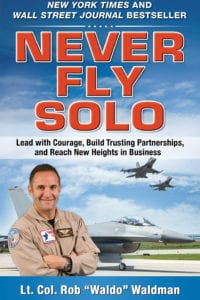
Never Fly Solo: Lead with Courage, Build Trusting Partnerships, and Reach New Heights in Business
You have this amazing story of one of the things that you have to do is jump off a high diving board with a 35-pound bag strapped to you. Tell us about that moment because you’re talking about overcoming your fears.
I always grew up afraid of heights as a kid but I had this maniacal passion for becoming a fighter pilot. I wanted to be in the air. What forced me to think about what I needed to do with regard to my education, my relationships, and working hard at school because we all know that being a pilot is not easy. I wanted to go to the Air Force Academy. To get into the Air Force Academy, you needed to have high grades, top of your class, well-rounded fitness, X, Y, and Z. It pushed me. That goal compelled me to stay focused and work hard. Unfortunately, the culture of my family was they embrace that environment.
It was relatively easy to have that guidance to stay on that path. I got accepted to the Academy, freshman year, I show up, everything is going great until we go to swim class. That swim class was this 33 feet high fiving board stare me down. I looked to the instructor and I said, “Excuse me, sir, do I have to jump off that thing.” He said, “As a matter of fact, Mr. Waldman, you do.” You don’t even graduate the Air Force Academy unless you complete the water survival training and jump off that diving board with a 35-pound pack on your back. I remember thinking as my mouth got parched dry and I freaked out that this was not in the marketing brochure.
That reminds me of Goldie Hawn when she’s in the movie about getting into the military and she’s like, “Where’s the glamour? Where’s the resort? Where’s the spa?” That little bait and switch sometimes when you think you’re getting into the one thing and it turns out to be something else. That happens a lot to people when they take a job, for example, or they get into a business relationship with somebody that wasn’t “in the brochure” or that’s not in my job description. Waldo, I want to double click on that because what you said there is worth so much for everybody reading. At that moment, you have a big decision. You can get mad, take your toys, and go home or you can reframe it and get back to your original purpose of how maniacally passionate you were to have your goal.
Passion trumps fear. When you look at what’s going on in your life, if we’re dealing with the economic downturn with COVID-19, the turbulence, challenge, stress, we’re facing 33 feet high diving boards, every single day. We’re facing missiles, headwinds, and turbulence. When I got into the F-16, I wasn’t jumping off diving boards, I was in the war in combat being shot at every single day. The fear was there but the key to peak performance, which is what I discussed, being that wingman and a trusted partner, realizing that you’re not flying solo and realizing that people depend on you. They’re not dependent on your philosophy as much as your performance, not your attitude as much as your actions. We, as leaders, emulators of excellence, partners, parents, friends, or whatever, we have to say, what is it that I need to do to jump? How am I going to step out of that comfort zone and realize that life is not in the brochure that on the opposite side of fear is growth? This was the key that I learned at an early age and it stayed with me. We could talk about my claustrophobia, combat, and all the turbulence.
Before we get into that, you mentioned that your dad said, “Rob, this is the cockpit, but you’re not good for this because you have a fear of heights.” How did you get to be called Waldo if you were born with the name Rob?
[bctt tweet=”The opposite side of fear is growth. ” username=”John_Livesay”]
My last name is Waldman. You could see the correlation there but every fighter pilot gets a call sign. You use it as a differentiator, as a brand builder. My brand was built in the Air Force when I finished pilot training. They said the great Waldo and I had a couple of nicknames as well but Waldo Waldman stuck. When you’ve been in combat and war, you normally get to choose your call sign. In the Air Force, there are a couple of other etiquette things you have to follow. It usually involves a lot of drinking and public embarrassment for you to earn that call sign. I’ve been called other things but I got the cool call sign or the one that I liked. It’s a cultural thing and you’ve got to earn that call sign. You’ve got to earn the respect of your peers, your wingman, your trusted partners, the men and women who you work with every single day. It happens in business and in life every day. We may not have a call sign, but our brand, name, reputation, how we show up, how we care, and prepare our critical assets and attributes to winning these days.
How we care and prepare because I am a big proponent of preparation, especially in the world of pitching and selling. In this story, we’ve got a picture of this determined young man who’s got a fear of heights overcoming that. From listening to one of your talks, it’s extremely competitive, not only to get in but to get that one slot. You said somebody else had slightly higher grades and that slot was taken. You have those key life-turning moments like the hero’s journey, you’re a hero. What’s going to happen next? Do you give up on your dream or do you say, “I’m going to go do something else and figure out a way to make still my dream happen.” In your journey, you did teach. Tell us what that was like.
For people that may not have context on it, when I graduated the Academy, I was fortunate enough to be ranked high enough to go to pilot training and there’s a wash-out-rate for all these training like at work but 33%, 1 out of 3 people normally wash-out or fail to make it through any of the higher-end aviation programs in particular and route to being a fighter pilot. Pilot training is competitive and stressful, as you can imagine. I graduated number two in my class. The number one pilot, Andy Toast, got the fighter slot and I wanted the fighter. He got the slot but I got my second choice, which was to be an instructor. That’s going to be teaching men and women how to fly in pilot training. I didn’t want to fly a big transport plane, the big cargo jets, tankers, and big Boeing. I wanted to be an aerobatic, high-G maneuverable aircraft. The next best thing was to be an instructor. I was high enough in my class to be an instructor.
What happens is we compete after the 3 or 4-year instructor toward duty for the next assignment. The higher you are ranked amongst your peers, the better your chances of choosing the jet that you want. For me, I wanted that F-16 and there were few slots. I made a commitment to work hard and be the best instructor I could. When it came time after 3 or 4 years to compete, I would maximize my chances. What happened was what happens in life en route to any journey that’s compelling and worthy of achieving is I almost died in a scuba diving accident. What does that have to do with flying? Long story short, I went scuba diving for the first time right towards the end of my last 6 or 8 months of my instructor tour and I almost died, 35 feet under the water, I had a panic attack, and the lungs filled with water. It was the first time I’d ever done.
I wasn’t well-trained and I freaked out. For those that are reading that ever had an anxiety or panic attack. I don’t know if you’ve ever been there, John. It’s an enlightening and fearful experience. I got out of the water and said, “I’m never doing that again.” A few days later, I’m back in Oklahoma, where I was an instructor, flying a training mission, the weather was terrible, and socked into the clouds. I couldn’t see the sun and the ground and I had that same panic attack that I had a few days prior. Instead of being 30 feet under the water, I’m now 30,000 feet in the air. I realized in a moment of terror that I had claustrophobia. That’s not the best thing for a pilot to have when they’re flying.
You had to overcome a fear of heights that you knew about, and then from a scuba diving experience, you realized you might have a little panic attack claustrophobia going on, which two big things that are heights and claustrophobia in that small cockpit. The thing that impresses me about your story and who you are as a man is a way you handle rejection. Number two, you have this choice. It’s no now but not no forever if you’re willing to put in the work for 3 to 4 years. A lot of people get to know in sales, particularly like, “I’m out.” It’s going to take you not to give up and keep going back. It might even take some time but you were committed. You’re like, “I’m going to be the best instructor ever so that I get another shot and had my dream coming true.” To me, that’s one of my favorite things about you and your story, because that is what inspires me to go, “If I’m committed like Waldo, then the no now doesn’t mean no forever.” You have a story to back it up.

Conquering Fears: Passion will always trump fear, no matter what’s going on in your life.
We all deal with rejection. We all have a dream. A jet we want to fly. A goal and something is going to bump into us. It’s going to be a headwind. It’s going to be a situation. It happens in our marriages, every day in sales, and it’s going to happen in your relationships, whatever it is. What I talk about is finding your why before you fly, the meaning to your mission. You’ve got to tap into what that passion is. What’s on the edge of that diving board? What’s at the end of that 3 or 4 years of training that’s going to compel you to keep stepping out of your comfort zone, to keep evolving and growing as a human being, as a parent, as a partner, and as a business person?
If we look at what’s going on with COVID-19 and the pandemic going on, the fears, and issues or maybe in your personal life. Also, some people reading have had cancer or went through a divorce, dealt with some intense rejection, going through some health issues, trying to lose weight, or whatever it is. You’ve got to have that compelling why and we’ve heard this before. It’s about taking action, investing, earning your wings, and saying, “I’m going to commit and grow.” It may not be now but I’m going to earn it. I’m not going to put my jet in the hanger and fall away in fear. I’m going to stay airborne. I’m going to keep getting in the cockpit of my life and eventually go for my dreams and hopefully have another shot, which I did at the end of that pilot training.
You talk about those moments of stress that sometimes we have to push up on the throttle when all of our instincts and our fears are saying, “This is a time to pull back.” Tell us an example of that in one of your combat situations. You’re good at taking your own story and then telling us how we can apply it in our own life. You’re trying to lose weight or you’re trying to whatever, and this situation that we’re all-in, how do we find that inner strength to push up on throttle when we want to carry our head in the cover sometimes?
It goes back to that passion, drive, and that innate goal that you have, a compelling goal that’s keeping you moving forward. If you’re an entrepreneur or if you’re in sales and want to get that big promotion, you’re vested in a relationship and want to take it to the next level, or you’re entering a bodybuilding competition and you say, “I want to overcome this insecurity.” Whatever it is, you need that to push you forward. I want to get back to the story about choosing my next aircraft because this was the first combat story for me. It was almost done and scuba diving, which was PTSD, Post-Traumatic Stress Disorder, and some of that Post-Traumatic Sales Disorder after dealing with rejection or whatever. When it came time for me to finish that assignment and we compete for that next slot. I’ll never forget what my commander said, “Waldo, you did great. Congratulations. You’re at the top of your class. You can choose anything that you want.”
A big heavy tanker, C-17 transporter, brand new plane, four engines, big roomy cockpit, be bored out of your mind flying eight-hour missions and cool spots but that’s not what I wanted. I wanted to be challenged. He also said, “By the way, you can choose your F-16, Mach 2, weapons and sensors, going fast and breaking the speed of sound, getting shot at in combat on nine-hour night combat missions.” I chose that F-16 but it was difficult for me because I had to look and say, “I’ve been dealing with these panic attacks.” Because for people that don’t realize, I would jump into a plane and have these panic attacks for a minute or two at first, that I’d breathe through it. I got focused and had to overcome this claustrophobia, this anxiety that held me back. I got used to that discomfort and chaos. I built resilience in that cockpit in the trainer, where it was one-hour missions over Oklahoma.
I knew I would be stretching by volunteering that next assignment to fly that jet, but I didn’t want to have to look back on my life and say, “To my future wife or my son, your dad played it safe. He quit on his dream when things were right in front of him.” I chose that F-16 knowing well that I was going to be going into the tiger’s mouth, face my fears in combat, fly eight-hour night combat missions, deal with my claustrophobia, crush it and defeat it. That’s what I did. There’s a long story behind that because I don’t think your fears and anxieties ever go away. The noise of fear must be drowned out by the music of your life. Your relationships, wingmen, partners, friends, fitness, what you read, what you ingest into your ears and eyes every day, especially when we’re dealing with those combat missions and now with COVID-19 and the uncertainty of the day.
[bctt tweet=”The music of your life drowns out fear.” username=”John_Livesay”]
Part of the message that I want to share with you people and guys like you because you and I have spoken, you have such amazing experience, top sales, travel, this and that, and now you’re getting into this amazing niche that you’re in. Doing these shows, creating Zoom webinars, becoming a coach, building revenue, and more significance in your life is what pandemics and fears force us to do. That’s the key. When you get up out of bed, choose the F-16 or hit the snooze button. When you got a donut or a green smoothie, choose the green smoothie. When you’ve got the opportunity to have a truthful, loving, heartfelt conversation or a board and say, “I’m going to hold off on another day.” Choose the road less traveled. Don’t take the easy way out, which is what my dad always used to say. You’ve got to go deep in your life to find out that meaning and not give up on your dreams because regret is a big poison in people’s motivation.
You talked about the choices we make and all kinds of things, flying the dream or not, the green smoothie or the donut. Everyone knows that to be a pilot, you have to be top fit because of the demands flying all night. You got to be ready to respond and defend yourself. You’ve kept this fitness. You could hop in that jet with your fitness level. Do you have tips that are transferable from the same discipline and focus that has allowed you to keep your fitness almost like an Olympic athlete that stays fit even after their Olympic career is over?
I’m a driven person. I’m a performance consultant and coach. It’s how you’re performing. That’s the true metric. Once again, it goes back to why. You need a reason to lose the way and reinvent yourself. You need a reason to have the conversation, jump out of bed early, sacrifice, hit the gym, and watch your fitness. For me, a huge component of it helps me deliver my best as a person. It helps me create. When I’m in the gym, I get creative. My heart’s pumping, I feel good, and when I’m done, I come out with ideas. I’m inspired. I want to serve other people. I’m more energized for the day. I can be an example to my son and wife. It’s not just about fitness, feeling good, and living a long life. I want to be in an environment where I can give and be my best. If you’re slacking off, not in shape, and losing that energy, other people, your clients, family members, or your friends may be impacted by that in a negative or positive way. A contagious example. The example that you said is contagious. We had ended energy or fitness or whatever.
This concept of appreciation being the fuel of performance which is such a great visual. How important is it for people to feel appreciated that keeps them going? How do you recommend people incorporate that concept of yours?
When I overcame my fears and became a peak performer, I realized a lot of the time that I was going up was that my fee was able to dissipate because I knew I wasn’t flying solo. When we went up in the to combat, I knew there were men and women on my wing supporting me, having my six, or checking my blind spots. I needed them, they needed me, and we were able to create this collaborative culture of mutual support like, “This is how we are able to win together.” Part of the key to being a peak performer, building resilience, and courage in life is to realize that others need you. You commit more for others than you likely do for yourselves. Any parent that’s reading or anybody who truly loves another human being, you know that you would jump off the 50-foot diving board for somebody that you love, whatever it takes because you’re not thinking of yourself. This was how I was able to be a great instructor pilot and a solid fighter pilot.
I wasn’t a great fighter pilot. I was good. I was a great instructor because it was always about focusing on my team, wingman, who needed me, who can I support and help? When I distracted myself from myself, I got out of my head. When we distract ourselves from our fears, anxieties, panics, and just say, “Who needs me? Who can I help? Who can I serve?” Now, we’re no longer selfishly thinking about ourselves and worried about our anxiety. We’re just in service mode, that’s how we can be fully present in life. That’s why you’re such a great communication pro and storyteller because it’s truly putting yourself in the hearts, minds, souls, that drives people. Back to the appreciation, it’s the fact that you can have your team and support them but what I learned is that what happens on the ground is just as important or even more important than what happened in the air.

Conquering Fears: It always goes back to whether or not you have a compelling goal that will keep you moving forward.
I wouldn’t say abusive but not kind and appreciative of all those other wingmen, the maintenance officers, the backend people who were in my squadron who I needed to get my jet airborne and be a part of the squadron. I learned a lesson about chewing out a young airman about appreciation. I’d be happy to share that story briefly but realizing that we have to appreciate our teammates and all those other men and women who fly with us. When we do that, we lift each other, we make them want to be around us more and make them feel good about who they are, and then they’re going to give more in return. I learned a hard lesson because I was a butthead as a fighter pilot, I was great with my fighter pilot buddies but I took for granted all those unsung heroes in my squadron.
After your military career, you went on to get an MBA and you went into sales management for big companies like UPS and Panasonic. You took some of that appreciation as well as this wonderful phrase here about, “Lose sight, lose the fight.” I’m sure that applies in selling because if salespeople don’t have a vision of who they want and what their goals are, they’re never going to make their quotas. What were you able to take from being a fighter pilot around this losing sight, losing fight into your career in business?
You always had to stay visual with your wingmen when you were flying. Part of mutual support is always having your eyes on your teammates, on the target, your eyes were everything. If you lost sight of each other, you would lose mutual support. The key to flying constantly was staying visual. In combat and a lot of scenarios, I would mess up or my flight leads will mess up. It was common because there are many moving parts literally and figuratively. It was difficult to stay visual, but when you had the visual, when you had the support, you were unbeatable. If you apply that concept in life, keeping visual of your teammates. If you’re a sales manager of those people who was working with you and for you. If you’re in a relationship, keeping visual, and keeping sight of your partner, your children, what do they need, listening, connecting, finding out what other people’s goals are. Also, staying visual about what you want, what your compelling goals are, what’s driving you forward is so important, especially when chaos happens, missiles come, and you’ve got headwinds.
My challenge for the people reading is to continuously keep your radar sweeping for those key elemental relationships that are not just important in business but in your personal life. We all know that our comrade of courage, our wingmen, the men and women in our life who lift us up rather than dragging us down who see the good that we have, the greatness in us, especially when we’re feeling deflated and out of fuel we’ll appreciate us for our gifts. That’s how we can come out of a tough situation by staying visible with them, communicating with them, checking in with them, and truly creating this context of support. Stay visual and I write down my goals every day. I’ve got items on paper. I want to stay visual with it. If you lose sight of your goals, key relationships, the people who need you, you’re going to lose the fight. It’s not easy to do. You got to be diligent and intentional with those key relationships and key drivers in your life and stay focused on them.
You’ve given us so much to think about in terms of accountability, what’s our personal commitment based on our why, executing and taking action, whether it’s getting fit or being a good wingman for the people in our lives. I wanted to recap it. You’re in great demand for companies wanting to have you come in and teach this whole concept of never flying solo. When we find the inner courage to be our best selves, we transform the way things get done. You’re also working with certain executives and one-on-one coaching. Who’s the ideal coach that you do your best client that you do your best work for?
We all know that when you’re strapped into a cockpit flying Mach 2 and pull 9 Gs, it’s difficult to see the big picture all the time. We all have blind spots, we have insecurities, things that were unfamiliar with, and we’re innocently ignorant with certain areas. A wingman builds our picture and improves that perspective. We call it checking six in the fighter world. Check six means if you can imagine, if you’re strapping into your jet, we’re sitting in our seat and 12:00 is out front, behind you is the 6:00 position. That’s the spot that’s vulnerable. It’s where the missiles come. It’s where the enemy sneaks up on you. In an F-16 strapped in, barely able to move, you can’t see that spot but if your wingman or wing ma’am is at your left 9:00 or right 3:00, if they’re a beam U, they can look over your shoulder, look behind your jet and see what you can see. Tell you to take action and hopefully, you’ll be approachable and coachable enough to take that action necessary to avoid getting shot down.
[bctt tweet=”Lose sight, lose fight.” username=”John_Livesay”]
That’s a metaphor with life and why people need a coach, mentor, or good friends who are brutally honest with them, not a yea-sayer who’s going to say yes to everything, but somebody who’s truly going to tell you what you need to hear and not what you want to hear. I coach sales leaders, transitioning managers, or going into executive positions, high potentials, and some CEOs who are looking to have somebody tell them what they need to hear and not what they want to hear. Create insights, give assets and tools on how they can be better than they were yesterday. That’s what drives me more than ever.
I love coaching people because I’ve invested in a lot of coaching myself because you can’t see the picture while you’re in the frame. You can’t see the missiles while you’re in the jet. It’s important to have that either formally or informally. You can hire a coach, you can invest in a coach and get training but there are also a lot of great coaches out there on the web. You can read shows like this. You’re their wingman or coach. They’re investing in this time by listening to us. We can finish on this note with regard to coaching is that I believe your coaches should be your friends in life and your mentors should be your friends. I have a saying, “Make your friends your mentors and your mentors your friends.”
You’ve got that mutual respect going on. If people want to reach out to you for either coaching or booking you as a speaker, what’s the best place for them to go to?
My website is YourWingMan.com or Google Waldo Waldman. You’ll find me there and I’m also all over social media, Waldo Walden. As far as coaching, if you want to email me at [email protected], even me or my assistant will get it. We can have a conversation. I want to give a gift to your audience. My book Never Fly Solo was in the New York Times and Wall Street Journal bestseller. It’s $20 on Audible, the audiobook, but I’m going to give it to you for free to your guests in particular during the pandemic. People need some good fuel, energy, and passion. If they go to YourWingMan.com/NFS, put your name in there, I’ll send you an audiobook, and you’ll also get six videos on building resilience in life. I’m creating trusting relationships and partnerships with people so that when you strap it to your jet and a missile comes, you won’t quit. You’ll stay resilient. You’ll keep pushing it up and serve those who need you and love you.
Thank you, Waldo. What a generous gift. I can’t wait to listen more and watch all those incredible videos. I want to thank you on behalf of the whole country for your service and for being such a great guy.

Conquering Fears: People need a coach, a mentor, or good friends who will be brutally honest with them instead of being “yaysayers.”
Thank you, John. It’s been a pleasure and I’m thrilled to be your wingman and develop a relationship with you as well.
Thanks.
Important Links
- Lieutenant Colonel Waldo Waldman
- Waldo Walden – Facebook
- [email protected]
- YourWingman.com/NFS
- Better Selling Through Storytelling Method Online Course
Wanna Host Your Own Podcast?
Click here to see how my friends at Podetize can help
Purchase John’s new book
John Livesay, The Pitch Whisperer
Share The Show
Did you enjoy the show? I’d love it if you subscribed today and left us a 5-star review!
- Click this link
- Click on the ‘Subscribe’ button below the artwork
- Go to the ‘Ratings and Reviews’ section
- Click on ‘Write a Review’
Love the show? Subscribe, rate, review, and share!
Join The Successful Pitch community today:
- JohnLivesay.com
- John Livesay Facebook
- John Livesay Twitter
- John Livesay LinkedIn
- John Livesay YouTube
Game Changer With Rob Angel
Posted by John Livesay in podcast | 0 comments

From a simple idea to a bestselling board game, Rob Angel is a success story. On today’s show, John Livesay chats with Rob who is the creator of the iconic board game Pictionary and the author of Game Changer. Using a few simple tools, a Webster’s paperback dictionary, a No.2 pencil, and a yellow legal pad, Rob created the phenomenally successful and iconic board game. Today, John and Rob talk about aligning with your goals and the importance of valuing your vision over money. They break down the components of Rob’s motto with the acronym OPEN (opportunities, possibilities, energy, and now) and discuss how this brings you to achieving your goals.
—
Listen to the podcast here
Game Changer With Rob Angel
Our guest is Rob Angel who happens to be a personal friend of mine as well. In 1985, Rob was a 26-year-old waiter from Seattle. Using a few simple tools of Webster’s paperback dictionary, a number two pencil, and a yellow legal pad, he created the phenomenally successful and iconic board game, Pictionary. He had no manual to turn to. He relied on his intuition, hard work, and that unwavering entrepreneurial spirit that we love so much here at The Successful Pitch to turn Pictionary into a global powerhouse. He put together the first 1,000 games by hand in his tiny apartment. He mastered all the needed business components including sales, marketing, and distribution. For the next seventeen years, he shepherded the distribution in 60 countries and 45 languages with over 38 million Pictionary games being enjoyed by people from all around the world before he sold it to Mattel in 2001. Rob has all kinds of insights to share on what he realized about resilience, persistence, and focus. Rob, welcome to the show.
Thanks for having me.
I love this story of origin. Usually, I ask my guests to start but your introduction gives us and paints that great picture of you with your dictionary, a piece of paper, and a pencil. You think, “To start a company, I need all this money and resources.” You figured out a way to do it without all that. Can you take us back to when you first had the idea? I know it wasn’t this straight linear, “I’ve got this idea. Where’s the paper?” and off you’re running. There were a few challenges in there that would be helpful for people to know about, a little procrastination perhaps or maybe some other things.
Nothing is in a straight line as you say. When I was a young man who graduated from college, I’d seen my dad as this businessman. He ran this company and I thought, “That’s what I want to be when I grow up.” I wanted to be with my dad, and he got fired. All of a sudden, my worldview of who I was and what I wanted to be was gone. I decided at that moment that I was going to work for myself. I was going to be my own boss and in charge of myself. That was the backdrop. A couple of years later, I moved in with three roommates. One of them said one night, “Do you want to play this game?” We played it in college called charades on paper. We get words out of a dictionary. I was always looking for an opportunity. At this moment, the opportunity was to have fun. I didn’t see it as a job or anything. We stayed up all night long playing this game. There’s my a-ha moment. “I’m going to turn this into a board game.” That was it. It was a simple activity. That was the genesis. It didn’t go quite so smoothly, but that’s how it all got started.
Clearly, it was your friends or other people who were playing this game. What do you think it is about you that made you think this could be an actual thing? A game that people would play and grow that other people didn’t see. They just thought, “We’re just having fun.”
[bctt tweet=”When overwhelmed, take a time out. What is an easy first step you can take? ” username=”John_Livesay”]
It was my mindset. I’ve always been looking for an opportunity. I was always looking to create. I’m always looking for something. I wasn’t sitting back and waiting. When it came, it was put out to four different guys. I latched on to it. I said, “This is in my wheelhouse. This fits what I’m looking for.”
This concept of you having the best opportunity in the world presented to you and if you don’t have the mindset of, “I’m looking for something,” versus “I’m just going to keep floating along, see what happens, and not figure out how to make my own way in the world,” is the key. Did you ever feel a little bit of what’s known as the imposter syndrome? You’re a 26-year-old waiter, how are you going to take this and make this such a big success? Did you always know you could do it?
I had no confidence that I could do it. I had the idea for Pictionary. I’m going to work on it but then I panic. The negative self-talk. The “I can’t do it. I’m just a waiter” talk. “I don’t have a plan. I don’t have the skills,” all these negative things got into my head and I bought into them. I bought into these silly ideas. I shut down. I did not start making Pictionary. I didn’t have the mindset to continue forward. I had to get it so I took a time-out. I took time away from Pictionary. I went to the movies. I did whatever except for thinking of it. When I came back to it a couple of weeks later, I broke it down. The big picture scared me with all the marketing plans in the business. I go, “What is the simplest and easiest first step that I can take?” That was the word list. The words drove the game. I thought, “I can open up a dictionary. Everything I need is right there in front of me.”
I got a pad of paper, a pen, and a dictionary. I went to the backyard. I opened up the dictionary and scanned it. The first word that came to me was aardvark. That was it. I got excited about the word aardvark because in that one shiny moment, I was no longer a waiter. I’d become a game inventor. That’s all it took. I’m sweating and going, “This is great.” I’ve taken my first step in creating Pictionary. I still didn’t have a plan, dream or goal. I wrote a 2nd word, and a 3rd, and a 4th, and it built from there. That’s how Pictionary got started. Not with this plan of selling 38 million games. It started with writing down one simple word, aardvark.
You said a couple of things here that is important for the readers, which is to ask yourself, “What is the easy first step I can take?” Also, this concept of a time-out to get a fresh perspective is something that’s important. There’s been all this research that our brain can only function for 45 to 50 minutes. We’re supposed to take ten-minute breaks and set a timer. That makes us much more productive. You gave yourself permission to take a time-out so you could re-approach that. What I love most about your story so far is, “At that moment, I was no longer a waiter, I was a game inventor.” It’s our identity that we get to define at any moment. We don’t need someone else to say you’re a game inventor. When we own it, it becomes our reality.

Pictionary: Being in the same vision with your partners makes it easier to come up with decisions.
People should stop waiting for acknowledgment or a certain amount of success or, “As soon as this happens, then I could call myself this.” You said, “I wrote my first word, I’m a game inventor.” I love it. It’s valuable for people to wrap their heads around your advice because it’s not advice in a vacuum. It’s advice that works. There are a lot of people that are entrepreneurs. Oftentimes, getting a business off the ground does not have the same skillset to grow a business. Can you talk a little bit about what skills you developed or that you didn’t even know you needed when you first started in order to get the game to be so big that companies would want to eventually buy it?
I like to say that I’m the smartest guy you know because I know I’m not the smartest guy. I know this. I know my limitations. I know what I’m good at but I also acknowledge what I’m not good at. I have this idea for the game but I don’t know graphics well. Even though I have a business degree and I could, but I don’t want to run a business. It’s not my forte. It’s not something that interests me. I got a couple of partners to fill in the blanks. We got together to keep Pictionary going. I have to say something about that. They weren’t just partners to fill in the blanks. The key component was that we had the same vision. We were aligned, not just with the vision but with our hearts, spirit, and with who we were as humans. The decisions became easier. When something came up, we didn’t argue over personalities. We argued over the product, “What was best for Pictionary?” That was the most liberating thing you can imagine. You’re not covering yourself when you’re having an idea.
You’re not wasting time worrying about backstabbing, gossip or any of that.
When we had a lot of decisions to make, we were on the same page, not always but for the most part.
Let’s fast forward to when it’s gotten bigger. A little company by the name of Milton Bradley comes along and says, “We’d like to give you a lot of money for this.” What happened there?
[bctt tweet=”Value vision over money.” username=”John_Livesay”]
That’s the whole alignment thing I talked about. Here I am at 26, 27 years old and Pictionary became so big so fast that to scale it, we had to license it. We just couldn’t get the capital to take it to where it needed to be. Milton Bradley came to us and said, “We are going to do some things for you.” They showed us this box. It was this piece of something and we were not sure what it was. We said, “What’s this?” They said, “We’re going to change the graphics, words and rules. We’re going to make it better. We’re going to sell more games.” No, they’re not. We come to an agreement though financially. They give us the biggest royalty they’ve ever given any game inventors before. I’m making $500 an hour. I’m driving a beat-up car. I don’t have any furniture. All I have to do is sign that piece of paper and I’m a millionaire. I wouldn’t sign it. Milton Bradley’s ideas and vision were not the same as ours. They did not align with ours. I was willing to say no. As Simon Sinek calls it, a just cause. We were willing to sacrifice everything for our just cause. That was the integrity of the game that we developed. We said no with no plan B. It was the right decision.
The story gets even more interesting. We’re reading about this story where you’re the hero. We’re saying, “You’re too young. You don’t realize how hard it is to get these offers. You’re not going to have other chances. That’s it. You blew it.” What happens? Is it just a few weeks or a few months after that, unbeknownst to you?
Things happen for a reason. About three weeks later, unbeknownst to us, there were two companies that wanted to license Pictionary. They formed a joint venture and came to us with an offer which included a bigger royalty rate and all the controls we wanted. They couldn’t touch Pictionary unless we approved. If we had not said no, if we had not stood up to what we believe is right and stayed true to our vision, I would not be here talking to you. It wouldn’t have turned out that way.
Staying true to your vision and that’s what artists do. There are examples of this. People forget Mark Zuckerberg turned down $1 billion from Yahoo when they wanted to buy Facebook. Dolly Parton was offered by Elvis Presley’s manager to have Elvis sing the song if she would sell him 50% of the rights. She said, “I don’t do that.” Elvis didn’t sing the song. Decades later, Kevin Costner comes knocking and buys the rights for Whitney Houston to sing it in The Bodyguard. She makes way more money than she would have had she given away 50% to Elvis Presley’s estate. It’s important for people reading this to realize, “Rob is Rob. He’s got more guts. He’s more fearless than I am.”
Whether it’s Mark Zuckerberg or Dolly Parton, what all three of you have in common besides incredible success is this commitment to your vision and belief in yourself. When that is your guiding light as opposed to money, in the long run, even if you can’t see it, it will more likely than not pay off. From this experience is where you were able to come up with your own motto which has this great acronym. That acronym is OPEN. Let’s open each one of those letters. The first one, O, is opportunity. What do you mean by that? You partly touched on it about when you had the right mindset to find this opportunity when it first came. There’s probably something else here.

Pictionary: OPEN means opportunity, possibility, energy, and now.
That is part of it. The world is filled with opportunities, big and small. They’re not all Shark Tank moments. When my roommate said, “Do you want to play a game?” “Sure.” The opportunity was fun. It wasn’t a business. The more opportunities you have, the more things you’re going to learn and the more opportunities you’re going to have to be successful. I say yes to a lot of things. That’s my opportunity to meet people, start businesses or do whatever.
We go to the letter P.
That’s possibility. Don’t judge the opportunities. We have proclivities to like this and not like that, which keeps us in our boxes. When my roommate asked if I wanted to play a game, I didn’t say, “I like games,” or “I don’t like games.” I didn’t judge it. When somebody has an opinion of something, you don’t know what’s going to come with that. Don’t judge and block things from coming in. You don’t have to like it. You don’t have to agree with it. It doesn’t have to become your mantra but don’t judge. The more that comes in, the more opportunities you’ll have.
We go to E.
That one is for energy. That’s your intuition and gut feeling. We all have our intuition and gut feelings. Your a-ha moment says, “Yes, this is it. I’m going to work on Pictionary. I’m going to try that new book. I’m going to talk to that person. I’m going to start that business.” It’s that feeling where it’s overwhelming and you say, “I’m going to do this.”
[bctt tweet=”The more opportunities you have, the more things you’re going to learn.” username=”John_Livesay”]
When you were describing writing down aardvark and how excited and energized you got, you even started breaking into a little bit of a sweat, that’s energy in action. That’s a little physical response. If we’re open to paying attention to what our body is telling us, at the same time things are coming in that we’re not judging, and you’re like, “I’m energized by this, I might be onto something,” that has enough passion to keep us all going. Of course, the last letter in OPEN is Now.
That’s the hardest and that’s the most important. That is taking action based on the first three. If you don’t, you’ve just got this idea rattling around in your head. You’ve got to take action. For me, the action was simply writing a word. It’s not like you have to change the world in a moment. You don’t have to build the house in a moment, find a brick to build the house, write down one word. Start small but you’ve got to take action and don’t be overwhelmed. You have to have a goal, plan, and dream, but if you think too far in the future, you may not take that first step.
Wise advice for all of us in any situation in our life. We can get so overwhelmed by, “What’s the future going to be? How long is this going to take before this or that happens?” We’re not enjoying the present time. Do you have a favorite story of someone playing Pictionary where they don’t know that you were the creator of it? They happened to be telling a story about how much fun they had playing it.
It’s not necessarily the funniest story but it’s one of those poignant ones for me. When I invented Pictionary, my vision was to create a game and replicate the excitement, fun, and joy I had with my roommates. That was it. That was the vision. It wasn’t overly complicated. When all these people started telling me these stories and I heard these things, it’s overwhelming. I was in a restaurant and the waitress came up. She finds out I invented Pictionary and she starts to cry. She said that she was a foster child. She came into the house and the three kids wouldn’t accept her. Mom and dad tried all these things but they would not accept her into the family. One day, they brought out Pictionary. She can draw. Mom and dad against the kids, guess who won? All of a sudden, the kids go, “I want to be on your team.” They’re all fighting to be on her team. Pictionary created this family. Because of that, she had the family she never knew over a game of Pictionary.
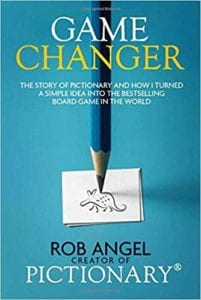
Game Changer: The Story of Pictionary and How I Turned a Simple Idea into the Bestselling Board Game in the World
One thing can be your key to getting in. Your book is called Game Changer. How did you come up with the title?
It’s a little bit of a double entendre but it was an obvious choice for me. I not only changed my life with Pictionary but we changed the game industry as well. What we did, how we marketed it, and what we did early on changed a lot in the industry. It was a good fit.
You have this great quote from a senior executive at Mattel that if Tom Hanks in the movie Big had been an inventor, he would have been you with your fun-loving, boundary-pushing, and creativity. How important was that? The second part of that question is, how are you able to keep that fun-loving creativity alive?
I just keep going. I have fun, whatever that looks like. It keeps my creativity going when new experiences are being open. I have these new things that are coming in all the time and it keeps me creative. Not every idea is great, let’s be honest. That’s okay. I go down a lot of paths to get to the ones that work. I enjoy life and what I’m doing. If I’m not enjoying it, I’ll go somewhere else and do something else. It sounds simple but it’s not. In reality, it works. If I keep up the mindset that I’m having fun, people are having fun, I’m enjoying my life, I’ve taken care of responsibilities, and I’m doing good things in the world, but I like having fun.
It’s certainly been fun interviewing you. Is there any last thought or quote you’d like to leave us with?
Don’t be afraid to try new things. In this current environment and with everything that’s going on, I don’t know what’s going to happen from one day to the next. We’re all in that boat. Try new things. See what resonates and what doesn’t. See what can happen in your life.
That’s great advice. The book is called Game Changer by Rob Angel, the inventor of Pictionary. Thanks again, Rob.
Thank you, John. Take care.
Important Links
Wanna Host Your Own Podcast?
Click here to see how my friends at Podetize can help
Purchase John’s new book
John Livesay, The Pitch Whisperer
Share The Show
Did you enjoy the show? I’d love it if you subscribed today and left us a 5-star review!
- Click this link
- Click on the ‘Subscribe’ button below the artwork
- Go to the ‘Ratings and Reviews’ section
- Click on ‘Write a Review’
Love the show? Subscribe, rate, review, and share!
Join The Successful Pitch community today:
- JohnLivesay.com
- John Livesay Facebook
- John Livesay Twitter
- John Livesay LinkedIn
- John Livesay YouTube
The Productivity Zone With Penny Zenker
Posted by John Livesay in podcast | 0 comments

Throughout our lives, our relationships with many important concepts shift. While all of these relationships are important, our relationship with time determines a lot of what our lives will be like down the line. Our relationship with time informs the way we work and if, ultimately, we can put ourselves in the right zone for productivity at the right times. John Livesay is joined by Penny Zenker, an international keynote speaker and the author of The Productivity Zone: Stop the Tug of War with Time. Penny and John delve into how our relationship with time also affects the way we live our lives and the way we work. Take your first step to rethinking your relationship with time and reaching the productivity zone today!
—
Listen to the podcast here
The Productivity Zone With Penny Zenker
Penny has high energy and interactive keynote presentation and workshops that inspire and challenge you to think differently, be more purposeful, and more strategic, which allows you to be your best. She’s an international female keynote speaker, business strategy and executive coach, and the best-selling author of The Productivity Zone: Stop the Tug of War with Time. As a Master NLP Practitioner, she integrates the elements of thought, communication, and behavior to provide strategies that allow us to make positive changes in our life. Penny, welcome to the show.
Thanks for having me.
[bctt tweet=”What are three words that describe your relationship with time? ” username=”John_Livesay”]
I always like to ask my guests to take us on their own stories of origin. You can go back to childhood, high school, call it wherever you want. How did you become fascinated with helping people stop this tug of war with time?
Part of it is that we teach what we have challenges with. I’ve always been a little bit here and there, excited about new things, and easily taken off track. At the same time, I’ve always been somebody who loves to take something that exists and make it better. Interestingly enough, my first job was as an auditor. Everybody hates the auditor. I was the least favorite person who would go in and people would not talk to me. They would do everything they could to avoid having a conversation or telling me anything. It was like pulling teeth. What it did for me was it made me naturally curious. I was always interested in mindset strategies and other types of skills of looking at how to make things better and smarter in the way that we approach something. When I was growing up, I felt like I wasn’t smart enough. My brothers were always smarter than me. I never thought about this so you’re bringing this out in me.
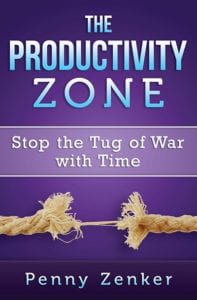
The Productivity Zone: Stop the Tug of War with Time
Working smarter came from, “I’ll show them. I can do this.” I wasn’t book smart. That could be where that came from, combining the idea of being easily distracted and involved in new things, but also looking to make things smarter. As that auditor, I’d be curious. I’m wanting to see how they could do it smarter and finding where things were distracting them or causing errors. I’m not judging it but seeing what could be done to make it better. Everybody thought that I was judging them because they think that that’s the role of an auditor but it’s for the ultimate productivity of the company. I love that aspect of the role of being able to look at things and stepping back. You see it from a different perspective because I’m not in it. There are a lot of other stories going forward but originally, that’s where my story began of me constantly stepping back, looking at the big picture, and looking at how to work smarter.
How did you come up with this great concept of having a tug of war with time? It’s the name of your podcast. It’s part of your book title. I love the consistency, branding-wise, by the way. Congrats on that. Did you say something? Was it a personal experience that said, “I feel like I’m in a tug of war with time?”
It was a personal experience. It’s looking for how we feel because that’s what connects with people. It’s what connected with me the minute that that came up. I had my first technology business that I started and built up from just me to a multimillion-dollar business and I sold it to a public company. From the outside, it looked amazing. It was killing me from the inside, from that tug of war with time, and from my own expectations that I piled on myself. The difficulty of delegating as you grow a business, I’m sure many entrepreneurs can appreciate that. It’s hard to let go of control. I didn’t have kids at that time. Now that I have kids, I understand another level of tug of war with time. That’s what we feel. That’s what I felt and that’s where that came from.
You talk about ten drivers of productivity that impact us. One is the mindset. Can you talk a little bit about how we can learn to improve our mindset around time?
What I like to do is challenge people. Here’s a little thing that they can do to see what their current relationship with time is. Say, “Time is,” and then give three words that come to mind what time is for you.
Let’s play with that. That’d be fun. Time is limited, I would say. Time is precious. Time is valuable.
Think about it. How you live your life and how you interact with time is based on those words. We label everything. Even though it’s unconscious, we have this label for how we perceive and interact with time, just the same as we do with money. These are interesting relationships because we never think about them but they’re some of the most important relationships that we have. That gets you thinking about it and then you think about it if you are utilizing time in the best way. Precious is good in the context that it can create productivity. You’re going to look at your time and look to do what’s most important if it’s precious to you. You said valuable so if you value your time and know the value of your time, you’re going to interact with it differently than if you’re not conscious and purposeful with that. What about limited? For most people, all three are unproductive. One is limited, scarce, or farce. The question is, having limited as one of those aspects, how does that hold you back psychologically in your relationship with time?
That’s fascinating. I’ve had this done. There are a lot of subconscious things that are going on that come out when you say those three words. In your book, The Productivity Zone, you’re talking about this concept of where your arrow will fall and how overwhelmed and stressed out you were as a businessperson. As you said, entrepreneurs are notorious for never stopping work. There’s always something to do. How do you help people who are overwhelmed with feeling like they can never get enough done?
One of the things that I do is to get people more conscious of their relationship with time and where they are operationally spending their time. I don’t go into this in the book because some of the content was developed later and that I use in events. If we think of the Pareto Principle, and that’s the 80/20 Rule. Part of that is understanding that 20% of the tasks and activities that we do are going to get us 80% of the results. I like to help people get clear because it’s freeing when you find out that, “If I spend time on this 20%, the rest of it doesn’t matter as much.” I’m not saying it doesn’t matter at all. It doesn’t matter as much. If we know that we’re focusing our efforts on the most important things, then there’s a sense of satisfaction with that. In that aspect, I have a number of different things that I do with them to help them get clear on that 20%.
I’m fascinated by this concept because from a personal standpoint, I launched an online course on storytelling and sales. There are many details and you can get bogged down in one. Someone said, “The sound is not perfect on your recording.” I said, “You’re a sound engineer. You care about that stuff.” For 99% of the people that buy the course, it was professionally recorded. It’s just not perfect.
That last 20% is what costs us the most time and money. We have to decide what the cost is. You’re going to piss off two people and they’re not going to continue with the course.
[bctt tweet=”Stop having a tug of war with time.” username=”John_Livesay”]
I should be spending my time more on promoting it. The other challenge that I have been told from time to time, and I’ve heard other people say it, is you’re overthinking something. You also talk about perfectionism in your book. I’m big on trying to help people let go of being a perfectionist and become a progressionist and celebrate progress. For a lot of people, myself included, we have such a fear of not getting it perfect. It causes us to overthink something. We’re afraid of, “Should I do it this way or this way? Now, I’m completely overwhelmed. I’m not doing anything.”
We go to the other side and we procrastinate. They’re connected. That is a big issue and through the pandemic that we’re going through, one of my challenges or learning that’s going to come out of this is something that I’ve been challenged with. Part of this tug of war with time is the expectations that I have on myself. If we’re functioning on the expectations that we had before the pandemic, we have to change our expectations as situations and circumstances change. Otherwise, it’s not going to work. We’re either going to cause stress for ourselves because they’re unrealistic expectations or we’re going to remove the flexibility that we need in order to get to our solution more optimally. That’s where expectations can be quite a limiting factor. I know that I have that a lot because I want to deliver value. When I go on stage, I go, “Is this going to deliver value for that audience?” I am looking at their expectations and the expectations of myself. Sometimes, we want to curl up into a little ball with all those expectations and binge for the weekend and not think about it.
When the quarantine started, I saw people saying, “You should be learning a foreign language.” I’m like, “The pressure. Can’t I take a minute and process what happened? I have to come out of this knowing another language.” That seems crazy to me, the expectations of what we should be doing with our time.
It’s an assumption that everybody’s sitting around with nothing to do. I had more to do. I’ve now placed upon myself, in terms of expectations, where I need to be, should be, and all the things we do to ourselves. They’re coming from where they are, where they might feel that they don’t have a lot to do so they could feel that. It’s great but we’re all in a different place. Greg Reid has this great saying. I don’t know where he got it from. Whenever people give us advice, and even maybe in their expectations, we can consider it sand in our hands. Whatever doesn’t fit, we can allow the granules to slip through our fingers that don’t make sense for us. It’s not a fit. It causes stress for us. If it makes sense and it’s something for us to think about, it’s a good question to ask ourselves, then we can do that. Don’t get too caught up in things that aren’t a fit for us. Let them go.
I had a live event scheduled to be a keynote speaker at a tech healthcare company. They said, “We’re going to shift to virtual.” That required a lot of new learning. Upgrade your Zoom so you can accommodate 300 people and figure out how to do breakout rooms. “By the way, we’d like you to train some of our salespeople on how to become better storytellers. Could you call on them to make it interactive?” The amount of time that it took to do a virtual keynote and workshop was much more than it did showing up. They still do a lot of time in preparation but this was probably at least double the amount of time preparing for something. We weren’t sure if it’s going to work. There are new technologies to learn.
It’s different being in a room with people versus how to hold someone’s attention for 1 hour, 1.5 hours on Zoom calls. You have to rethink what you’re doing and this concept of time, especially when you’re trying to keep people’s attention via the camera versus in person. It takes on a whole new meaning. The interesting thing that I think was fascinating, Penny, is they also asked me to train their outside salespeople on how to sell better on camera. That’s how they’re interacting with the doctors now. You think, “This is a bad thing. It’s taken away my precious fascination. I travel for many hours to have that hour with the group. Now, there’s another need that came up because of this.” We need to pause as opposed to judging something right away. Some people are like, “I’m not willing to put in the time to do a virtual talk.” I’m like, “Okay.”
I’m surprised. I’m also primarily a public speaker and now we’re doing this online. It’s a huge opportunity that’s not going to go away in the future. It will come back eventually, whatever it is 3, 6, or 9 months. Why not have both? Why not have the flexibility of being able to do it from your home?
This particular person was such a perfectionist that he couldn’t control everything. I have to admit, you’re on and everyone’s on mute. You’re putting all this energy out and nothing’s coming back until you wait for that feedback when you’re done and people start talking and putting in the chat. All through the lens of our time and how that comes back. What I love about what you’re talking about on this championship psychology in your book is, “What is our purpose?” If we keep going back, our purpose as speakers is to inform, inspire, engage people, motivate them, and give them some new tools that we can be a little flexible on the platform. You talk about language. It’s an interesting conversation, “Do I change my language? Do I have more or less pauses virtually versus in person?”
It’s telling a good story. The basis is the words that people are going to connect with, that are going to convey the energy of what you’re trying to talk about. I find that the language piece is huge. The words we say to ourselves and how it impacts our productivity, but relating it back to storytelling paints a picture. That’s what gets people engaged in your story, those little details that you’re able to bring across.

Productivity Zone: We have labels for how we perceive and interact with time, just like we do with money.
That’s what makes us memorable. The worst thing in the world is to give a talk and then people don’t remember what you said. The opposite is true with stories. The third element of championship psychology is physiology. Can you talk about what that is? I’m not sure a lot of people think about that.
When I talk about it, I put it in terms of self-care. For a lot of people, physiology is about our body, the physical element. The mind and the body are connected. It’s about how we eat, sleep, and move. We need to sleep. There are a lot of studies that Arianna Huffington and more are talking about how important sleep is. A champion athlete sleeps a large number of hours. Martina Hingis sleeps ten hours a day when she’s performing because it’s important as part of their performance. We need to make sure we’re getting enough sleep. Most people don’t get enough sleep. Because we’re stressed, we breathe more shallowly. We need to put a more conscious focus on taking those deep breaths. Perhaps meditation isn’t for everybody. If you get your heart moving, like doing some quick walking, it’s almost like a meditation. I find exercise is like meditation. I used to mountain bike. I used to live in Zurich, Switzerland. There were serious mountains. I felt like I was meditating because I was focused on my breath to get up the hill.
It gets out of your head, doesn’t it?
It makes you present and at the moment. Everything else washes away. I do some great exercises when I’m live with people. I’m figuring out how to do them online. If you’re standing there and you’re thinking of something that’s stressful, you’re off-center. Somebody could push you over. As you take a couple of deep breaths, it grounds you. You see the people can put twice, three times the pressure on that spot that used to push you over but you’re completely grounded. That affects everything that we do. When we can take care of ourselves or self-care physically, we’re going to be in a much better mental position to handle stuff like we’re dealing with. For example, the pandemic and the stresses that we had as entrepreneurs, wearing all the hats and doing all the things that we do.
The fourth area is the focus. What is your tip on how we can allow ourselves to be more focused?
A great mentor of mine once told me that sometimes when you want to be focused or make a decision, look at what’s in the way first. We want to be more focused and we know that. Let’s take something totally different. You want to eat healthier. You know what to do, we just don’t do what we know. I could give you ten tips on how to focus but maybe we still don’t do it. First, identify what’s in the way. What’s distracting us, and getting clear on that. I have some exercises that I do around that. We can take in those strategies once we break all those other habits or patterns of thinking or things that are in our way. We can then put these new strategies into place.
[bctt tweet=”We teach what we’ve had challenges with.” username=”John_Livesay”]
Is there something that’s common that distracts us like being obsessed with our phone and not turning it off?
What do you think?
I’m guessing that’s probably one of the big ones.
It’s the number one thing. We all know it. Many people still have notifications coming on their phones or computers. I call them gatekeepers. Sometimes we need to put gatekeepers in place in order for us to be purposeful. For instance, I want to make sure that I have a great relationship with my boyfriend or husband. Why do you think the date night came up? Date night came up because it’s a gatekeeper. It’s a structure or process. It’s something that we can put in place that reminds us and makes us follow the intention and the purpose that we want. If we’re not purposeful and put those things into place, then day after day we’re in this automatic mode. We never connect. We’re just running around dropping kids in different places and all the day-to-day stuff. It’s the same in every area of our life. We have to not only have an intention for something, a goal, and a purpose but then we have to put accountability measures or these gatekeepers in place to help us to be accountable to what’s important to us.
Who’s your favorite kind of audience to speak to? What kind of company?
It’s hard because I speak to many different companies. I’ve spoken across from logistics which I thought I didn’t know that I’d be welcomed with high energy. It’s a different type of atmosphere. That was great. I deal with a lot of sales teams and leadership groups because I talk about innovation and communication. I don’t have a specific group that I love to talk to.
I can see the need. In sales, I remember when I lived in Southern California. My territory was everywhere from Los Angeles all the way down to San Diego, which is a 2.5-hour drive. There’s Orange County, which is in the middle. I remember someone else selling another product and having the same territory. He was getting yelled at by his boss when he drove all the way to San Diego in the morning, came all the way back to LA, and then drove back to Orange County. He was like, “Why didn’t you make that appointment on your way back up?” There’s a lack of time management of planning out your day. It’s like, “Whenever they see me, that’s where I go.”
It’s not being purposeful. All of us do that. We go from thing to thing without sitting down and taking ten minutes to plan it out. One of the things that I do with sales teams, which makes that show-up and pop out is time studies. For two weeks, we’ll have them track their time in specific tasks and categories that are set up for them. That’s one of the ways to see where we’re operationally showing up. We have to measure it. We have to track it, even though I know most people would rather have a root canal than track their time.
A nutritionist asks you to write down everything you eat, but I get it.
It works because it makes us hyperfocused and attentive so that we recognize and we get the lessons. At a high level, you step back and see, “On direct sales, I should be spending at least 30% of my time and I’m only spending 9% of my time. Something is off.”

Productivity Zone: When we take care of our physical wellbeing, we’re in a much better mental position to handle all the stuff we’re dealing with.
The thing that sucks up many salespeople’s time is paperwork. They’re using the prime time to be in front of the client to do their expense report, for example. The reports of where they’ve been that the boss wants to see. It gets overwhelming and they’re staying up all night to get it done. That causes a lack of sleep problems. It’s all because they’re not managing their time and they’re not productive. The whole point is to be productive. You are offering a valuable solution and help for people’s mindset. Not to burn out is where I see the big a-ha moment, not to mention productivity.
There are things that the employee can do for better time management but there are also things that the employer can do to help their people to be more productive. I don’t think that there’s enough of that going on. There’s not enough responsibility from the corporate perspective of saying, “I could set these things in place to make it easier for people.”
Your book is called The Productivity Zone. If people want to hire you as a speaker, where can they find you on social media?
They can go to my website, first of all. It’s PennysKeynote.com. There, they can find all the links. I started a YouTube channel as one of my pandemic projects. I’m getting some videos and things up on YouTube so they can find me there. Also, I’m on Facebook, PennyZPerspective, or just look for Penny Zenker. Twitter and all those kinds of places but I’m not a big tweeter.
Any last thoughts or quotes you want to leave us with?
Dwayne Johnson has a quote about focus and effort in being successful, that those are the two keys. He’s saying that both of them are within our control. In any situation that causes stress for us is because we try to control something that we can’t control. If we focus on the things that we can control, we will move the needle, be more fulfilled, create more meaning in our life, be happier, reach that goal, and whatever it is we do. We do have a lot more control than we think we do on certain things and to focus on those.
[bctt tweet=”Employers have to help make their employees more productive.” username=”John_Livesay”]
Thank you, Penny, for sharing your wisdom, kindness, and insights on how we can be better managers of our own time and start to take a look at our relationship.
Thank you, John.
Important Links
- The Productivity Zone: Stop the Tug of War with Time
- Podcast – Take Back Time
- YouTube – Penny Zenker
- PennyZPerspective – Penny Zenker’s Facebook
- Twitter – Penny Zenker
- https://PennyZenker360.com/presskit/
- Better Selling Through Storytelling Method Online Course
Wanna Host Your Own Podcast?
Click here to see how my friends at Podetize can help
Purchase John’s new book
John Livesay, The Pitch Whisperer
Share The Show
Did you enjoy the show? I’d love it if you subscribed today and left us a 5-star review!
- Click this link
- Click on the ‘Subscribe’ button below the artwork
- Go to the ‘Ratings and Reviews’ section
- Click on ‘Write a Review’
Love the show? Subscribe, rate, review, and share!
Join The Successful Pitch community today:
- JohnLivesay.com
- John Livesay Facebook
- John Livesay Twitter
- John Livesay LinkedIn
- John Livesay YouTube