
Forged In The Fires With Rob Verhelst
Posted by John Livesay in podcast | 0 comments

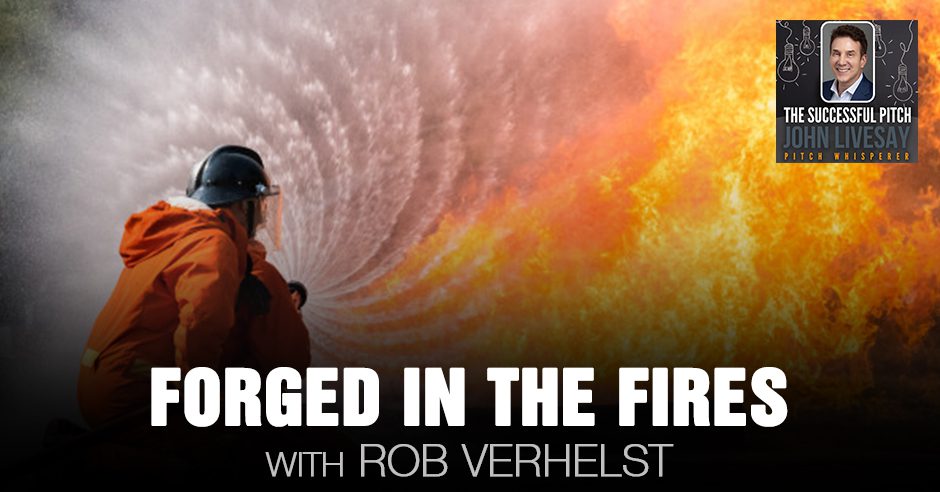
The mental strength that is required to be an athlete or a fireman is just as important as physical strength. In this episode, John Livesay interviews “Fireman Rob” Verhelst who has a book out called Forged In The Fires. Fireman Rob goes over the seven catalysts that are going to allow everyone to ignite their life in a big way. He also takes a deep dive into the emotional control that’s needed and he had to learn while being a fireman as well as being in the Air Force. Learn his heroic stories of being part of the rescue efforts at 9/11 and how he believes there is no such thing as balance. You just have to prioritize your values. Enjoy the episode.
—
Listen to the podcast here
Forged In The Fires With Rob Verhelst
My guest is Rob Verhelst, not just Rob, but Fireman Rob. He’s a dynamic storyteller with a unique iconic story that brings audiences to life when he’s a keynote speaker. He inspires the global community through his work as a fireman, but he also competes in Ironman races with 50-pounds of firefighter gear on him. He breaks world records like it’s people having breakfast and as if that’s not enough, he also delivers bears to children in hospitals throughout the globe. I’m not making this up. This is a real person. He is an impact leader and a speaker trainer. He impacts lives by showing how to believe that there are no challenges or fears that cannot be overcome with the power of purpose and a strong mindset. His clients have ranged from Fortune companies like 3M, Southwest Airlines, Timex and Kraft. The stories that connect him to audiences, they are always looking for a unique, genuine and down-to-earth presentation. That’s driven by his desire to have a positive impact on lives. He has a book coming out that I’m excited to talk about. It is all about Forged In The Fires: The Seven Catalysts to Ignite your Life. Rob, welcome to the show.
That was a lot. I’m already tired. Thank you for having me.
You have endless energy because you run with gear on. If anybody can handle that intro, it’s you because you’re living it.
It’s a great thing to be able to have a purpose and that’s what drives me forward every day. If you don’t wake up, if you don’t have the alarm clock telling you’ve got to do something.
You have such a strong purpose. You don’t even need an alarm clock. You’re excited to get into the day. That’s a whole other story. Tell us your own story of origin. Were you a little boy saying, “What’s that? I want a fire truck for Christmas,” or “I to want to be a fireman?” When did that journey start?
I’ve been in sports my entire life. I played basketball. My dad was my coach in high school. I played water polo and basketball in college. I’ve always been around those dynamic, physical activities as well as the mental side of the game. It wasn’t until I was in college, playing basketball and water polo that I was like, “I like education. I like learning, but this may not be for me.” I finished my degree, but I also went to the Fire Academy and got my firefighters certification. I was like, “This is what I want to do.” It’s the ever-changing environment that makes me excited to be able to do that.
You were a fireman. Are you not a fireman anymore?
No, I am.
[bctt tweet=”Hold on tight, everything’s going to be all right.” username=”John_Livesay”]
You’re juggling at this job, speaking and writing.
Like you always say, I have to get a better story. The more experience you have in life, the more stories you’re able to tell and correlate to what you’re talking about.
Let’s talk about you being the 9/11 rescue worker. I’m sure there’s a story there. Take us back to that day.
When I was 23 years old, I had gotten on the fire department. I was about a year in the fire department. I was working a shift in the morning. We had gotten back from a fire. This was back when radios were in the shower rooms. You had the old radios, not the XM radios. I was listening and I heard that the Trade Tower had been hit. I went down to the kitchen and we were watching on the TV. The second Trade Tower had been hit. Immediately after shift, I called on my rescue team and drove out there. We got there two days after the towers had fell because I’m driving from Wisconsin in my purple Saturn, it was a long drive. I didn’t know what to expect.
I’m 23 years old. I’d only been in the fire service for one year. You get out there and it’s a surreal experience. The best way I can say is it looked like a Hollywood set because they had these huge lights up. You couldn’t understand the vastness of it and the number of people that were on the pile that we were searching for. The amount of emotion that went into that part of my life is immense. It changed my life forever and it continues to change my life from the little things that I remember that I had to change into positives to be able to continue to go. I didn’t know that I had developed PTSD from that and from my time in the military and the fire service.
There are a lot of things in my past and I wouldn’t change a single thing. I have medical problems from 9/11, but at the same time, I have a lot of positives that I took away. Everybody that day was working towards a common goal. It didn’t matter whether they were the welders that were crawling into holes that had never done it before, but they were cutting off the rebar, firefighters that were working together from all different counties on bucket brigades to clear out areas to be able to search for people. It was a commonality that I don’t think we’ve seen. You could go back to even D-Day when many different people came together from many different venues of life and didn’t matter what the differences were. All they saw was the objective and they worked together to find a positive of it.
Let’s complete that picture a little bit. Were you in the military before you became a fireman?
I sold the correlation so I went into the military after 9/11. It’s a lot of twists and turns. It’s choosing your own ending.
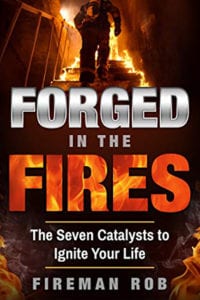
Forged In The Fires: The Seven Catalysts to Ignite your Possible, Accelerate your Potential & Extricate your Best Life
Normally people would go out of college or instead of college, go in the military, and you became a fireman. That’s the normal storyline we are used to. You became a fireman and 9/11 happened. You were involved in that you decided to join the military so you gave up being a fireman while you were in the service?
That’s correct. I came back to the fire service that I was in. It’s not a straight path. What people can relate to in my story is that I don’t have clear objectives. I’ve been married three times. There’s been a lot of failures in my life. At the same time, there are a lot of directional changes that have impacted it. You can’t always go back and say, “I wish I didn’t do that,” or “I wish it didn’t do that,” because if you didn’t do that, it wouldn’t lead you to where you are now.
You had mentioned PTSD, Post-Traumatic Stress Disorder, from both 9/11 and the military. Did you start at 9/11 and what branch of the military were you in and for how long?
I was in the United States Air Force. I was in for a couple of years. There’s a common misconception with Post-Traumatic Stress Disorder that it’s not like a cold. You get it and then it accentuates. You can get numerous different things that’ll trigger your PTSD. That’ll trigger it, but at the same time can add to it. That’s the hard thing is in the fire service, we see a lot of individuals that are seeing traumatic situations and it’s compiling it. We always say it’s like putting boxes in your closet. You have round boxes, square boxes and oblong boxes.
Initially, when you start off in the service, you’re putting every box in the closet. You’re not caring which one’s on top of the other to make sure that it stays in there. Eventually, that closet gets so stacked with boxes that every time you open it, it collapses on you and that tears you down. You have to repack that closet and try to continue to move on with life. For myself, it’s continuing to make sure that the boxes are being stacked properly. That’s a daily process. It doesn’t go away. There’s no miracle cure. I always will have this within me. It’s part of my character.
What made you decide that you wanted to wear all this weight while doing all of these marathons? Usually, the marathon is more than enough of a challenge for most people. You’re like, “I want to carry 50 pounds of gear around me.” Was it a visual thing, a mental thing?
It’s a crazy thing partially. On top of it, I had been struggling for several years. I was not finding my purpose, not finding who I was. I was lost. On the tenth anniversary of 9/11, it landed on Ironman Wisconsin, and I’m from Wisconsin. I was like, “I want to do something that through my actions I can show people how powerful that day was to me and continues to be for me.” At that time, I wasn’t speaking about it. I wasn’t talking about the emotions of it. The best idea I came up with was to wear 50 pounds of fire gear after doing a 2.4-mile swim and a 112-mile bike.
The first time I did it, I did a trial run at Racine, Wisconsin. It was 110 degrees with the heat index that day that I did the trial run. I got onto the run portion. It was so hot that I kept questioning myself. I was going, “This is dumb. Who would ever do this?” I got out on about 3 miles in and I had a gentleman come over and gave me a hug. He said, “I’m an FDNY firefighter who retired. I want to thank you for being out here.” It’s moments like that when you put yourself out there and have other people show you that your purpose or your passion that you’re going after is valid. It’s something that you should keep going after even if you don’t see the finish line.
[bctt tweet=”Your strength is in your passion.” username=”John_Livesay”]
You’re all about resilience and that certainly is an example of that. What lessons do you have in your book from being a firefighter, being a 9/11 rescuer, and being in the Air Force? There must be some big a-ha that all of those experiences have taught you about resilience. Not giving up when it’s hot in this race, but is there an overall arching takeaway for the audience and people who read your book?
I always say your strength is in your passion. A lot of people look at passion as a soft topic. Realistically in the last few years, it’s become a hard topic because passion is what drives people and it’s personal. It’s what drives people to own up to their decisions or actions. It’s what drives people to make decisions. On top of it, you can be resilient if you have that budding goal of being passionate. I would say if your strength is in your passion, you have to go out there and live it. You can’t wait for somebody else to tell you this is what you should do. That’s the overarching message. I talk about seven different catalysts. It’s not like I created something brand new. I tell you about the stories of why these are important because I lived this message and it wasn’t something that I researched or anything like that. It was something that I lived. That’s more personal to people.
The audience is going, “John, ask him what the seven catalysts are.” Why don’t you tell us what they are? We might double-click on one and hear a story that goes with it.
The seven catalysts start with passion and purpose. That’s the beginning. It goes to ownership. It goes to decisions, emotional control, resilience, faith over fear and you end with mental strength.
Let’s talk about mental strength. Tell me a story about mental strength since you clearly have physical strength. How do the two relate?
When people say 110%, that’s when you have that mental strength. Your physical strength can only go so far because your body will tell you no. The story I was telling mental strength, my dad passed from cancer in June 2019 and he was my role model. He was my rock.
In fact, you have a quote from your dad. Let’s hear what your dad’s quote was to honor his legacy.
My dad said, “Control the controllables.” I live by that. It’s hard to live by that. It’s something we always try to control things outside of us because they stress us out or they make us not focused on what our angle is. Control the controllables, I used the year that I went for the world record of 23 Half Ironmans in one year. My dad was there for most of them. It was in the moment when pain is there and it’s always there and the dark moments. I’m out on those courses for eight hours on the Half Ironman. That’s a long time to be by yourself especially when you have demons in your head.

Forged In The Fires: Passion is what drives people to make decisions and to own up to their decisions or actions.
Remembering my dad’s quote to control the controllables, I was able to take a perspective. I had my wife do this when she did her first Ironman. I said, “Instead of focusing on what hurts, think about what doesn’t hurt.” Sometimes it’s only like your right eyelash or my left big pinky toe. It takes your mind off and makes you laugh for a second. You’re controlling what you can control. You can’t control the pain, but you control where your mind is going to go and the positivity that your mind can bring.
This quote you have in your book that your dad would always say you can’t control what someone else does, control what you do. Now you’re getting to be that. You have three children. What are you passing on to them?
The greatest thing to pass on to your kids is what you do through your actions. That’s one of the great stories. I help this charity called myTEAM TRIUMPH. What they do is they help disabled individuals to do endurance races because nobody has said that they were able to do it. You push them through the races. They’re called the captains. The people that help are called the angels. I had done a few races. My wife and I had done a few races where we were angels for a captain. My kids came up one time and they said, “We want to do one. We want to push.” I was like, “What?” They’re like, “Yeah, we want to push.” I found a race that we were able to do and all five of us helped push a little eight-year-old boy with MS through this race. It was then and there that I realized as parents we’ll say a lot of things to our kids. It’s truly what you do, your actions that will translate to their character, to what they do in the future and to how they act to other individuals.
One of the questions that come up for me that people might be wondering is you must have some time management skills. To be a fireman full-time, write a book, have a podcast, speak, run these amazing races and do charity work plus being a dad and husband, how does one do all of that?
It comes down to support. I have good time management skills. I’m a good calendar maker. A lot of the guys in the firehouse laugh at me because I do to-do lists and calendars all the time. It’s also the support system. I won’t be able to do this without my parents, without my wife and without my kids being okay with me finding myself by doing these races or helping others by going to speak and do seminars. The biggest thing for time management is life prioritization. A lot of people talk about balance. There’s no such thing as balance. You can’t do 100% of one thing and do 100% of another thing at the same time. It’s not tangible. You are making sure that in your life you have priorities and that you stick with those priorities. That’s the key to making sure that your present.
When you’re with your kids, you’re fully present. When you’re fighting fires, I’m assuming you’re fully present. Certainly, when you’re wearing a lot of gear, you probably are completely present when you’re doing a triathlon or whatever.
The hardest part with the triathlons, it’s interesting because it’s hard enough to do the triathlons and I add in the extra component. I realize why I’m out there. I’m out there to inspire and impact people. When somebody says that they want to tell me a story, it doesn’t matter if I’m tired. It doesn’t matter if I’m in pain or I don’t feel like hearing it. It’s one of those things where I have to be engaged at that moment. I have to be that person that’s bigger than the moment.
One of the other catalysts that I’m fascinated to ask you about is emotional control. We all get triggered from time to time. Somebody says or does something we think is unfair, unreasonable, or you name it and we get angry. What lessons have you learned that other people can learn about this emotional control?
[bctt tweet=”Life does not get easier, we have to get stronger.” username=”John_Livesay”]
One of the big things is that people have to understand those negative thoughts are inevitable. They’re going to happen. You’re going to feel those. What’s manageable is your reaction to those. Being present in the situation, understanding what the emotion is that you need is critical. I’ll tell you a story about a race that we did for myTEAM TRIUMPH. I was doing it in full firefighter gear and I was pushing an individual. It was in Green Bay, Wisconsin. It’s a marathon. It’s a great race. We got about halfway through. There are some police officers doing in full gear. It’s not as impressive because it’s lighter.
One of them was slower and so I said, “Why don’t you come with me? We’ll make it to the end.” Here it is. Picture this, a police officer, full uniform, firefighter, full uniform. He’s about thirteen years old in a stroller. We’re going down this street and this lady comes running down the street. She goes, “Where have you been?” I’m thinking, “Are you kidding me?” This is where I talk about emotional control because, at the time, I could have yelled at her and said, “Are you serious? It’s 90 degrees out. I’m in full gear. It’s going to take me a while.” I didn’t because you’ve got to be present at the moment. This lady continues to run up to us and says, “Where have you been? I called you an hour ago.”
If she has a fire emergency, she’s not criticizing you for running slow.
She called 911. She continued and says, “A squirrel fell out of a tree and broke his leg. We have them in a shoebox by the tree.” I don’t know where the disconnect of, “We don’t go in trucks and police cars anymore. We push people and run to the emergency.” At that moment, I had to have the emotional control to pun her off on the officer behind us so that Jacob could finish his first marathon ever being pushed. I talk about emotional control and the fact that you have to gauge a situation. What is your end goal? Is your end goal to argue? Is your end goal to be right? Is your end goal to listen?
Do we want to be right or do we want to be happy? I see many times in social media post, someone will say, “John, you’re moving to Austin. How come?” I said, “One of the reasons is there’s no state tax on income like there is in California.” That starts a whole conversation on social media, “The property tax is high.” Somebody says, “You should rent then.” I was like, “Why does everyone feel the need to be right? Who cares?” I’m not getting into a debate over state income tax. You see the backend of that. What’s crazy is two friends of mine who don’t even know each other are arguing about who’s right. It’s the theory of what’s a good place to invest in or live in. I’m like, “What is up with this need to be right?” That our egos are sensitive that we can’t say, “That’s your opinion, whatever,” and move on. Clearly, there’s self-esteem stuff going on. When you’ve got a life of purpose and you’re exercising and you’re getting out of your head, which exercise does for us, even if we’re not doing it at this extreme level you are. It allows us to be more present and to listen versus needing to be right. Who is the ideal audience you hope reads your book?
I would say the ideal audience is the individual. The perfect audience would be individuals who want to lead their own life. That’s a broad spectrum, but at the same point, it’s speaking to those people that go, “I haven’t found that path or I’ve found a path, but it doesn’t seem like the right one.” Reading this book, it’s one of those things that offer you reflection points and offers you action steps at the end of things. It’s short. I’m a fireman, I’m not a novel reader. I made it short. It’s short segments. There are stories that tangibly put it to understand what I’m talking about when I talk about passion, when I talk about ownership, and so you can put yourself in there. I tell people to write in my books. You’ve got to write in them because if you have ideas or things like that, this is your manifest to be able to figure out how to lead your life.
What’s the one takeaway you want an audience to have after they hear you give a keynote talk?
When I give a keynote talk, the one takeaway that I want people to understand is that their life doesn’t get easier. They have the opportunity to get stronger by following their passion and purpose.

Forged In The Fires: Negative thoughts are inevitable. What’s manageable is your reaction to those.
Our life doesn’t get easier. We have to get stronger through passion and purpose. The concept of our comfort zone, it’s one that’s like, “I’ll get to this level and then I don’t want to grow anymore,” and “Things aren’t easy. The plane is delayed,” or “I’m stuck in traffic,” and all the little things that happen. If you have the mindset that, “This is too hard. This is not easy,” then you’re never going to be happy, first of all, at the moment, let alone live your passion. You’re living an example of how we can all take these lessons without necessarily needing to be forged in the fires as you have, but we can learn from them. When we do face our own version of a fire, we’re now more equipped with these seven wonderful catalysts that you’ve given us so that we can ignite our best life.
I love that you said the fires in which we live in because when I put Forged In The Fires, I always say to sales groups, a salesperson is in a fire environment every single day when they go out to sell because it’s economics. You’re in a fire sale. You’re trying to get somebody to buy something.
Any last thoughts you want to leave us with either from your own book, your own talks or something else from your wonderful dad?
I’ll leave you with one more quote from my dad. I had it made into a tattoo. I also have a picture of him on that tattoo of him and me embracing at the end of Ironman Arizona. He usually was the guy that didn’t want to go to the finish line. He would be the guy that would be three miles from the finish, take me to a mile from the finish and that was his happy point. You take from that is that we can all boost somebody else up and let them have that great finish. This finish was with my dad and his quote is, “Hold on tight and everything will be alright.” If you hold on tight to your passion, if you hold on tight to your support crew, if you hold on tight to who you are as a person, everything’s going to be all right.
We’re holding onto our values, our passion and our focus. Rob, thank you for being you and serving the country in both a fireman and in the Air Force and now writing this wonderful book, Forged In The Fires. People can follow you on social media. Give us your social media handles.
It’s Robert “Fireman Rob” Verhelst on Facebook and also find me on LinkedIn, it’s Robert Verhelst. @FiremanRobStrong is on Instagram and @TeamFiremanRob is on Twitter.
Thanks, Rob. You’ve been a great guest.
Thanks for having me on. It’s been a pleasure.
Important Links
- Forged In The Fires: The Seven Catalysts to Ignite your Life
- myTEAM TRIUMPH
- Robert “Fireman Rob” Verhelst – Facebook
- Robert Verhelst – LinkedIn
- @FiremanRobStrong – Instagram
- @TeamFiremanRob – Twitter
- https://www.FiremanRob.com/
- https://www.Amazon.com/Forged-Fires-Catalysts-Accelerate-Potential-ebook/dp/B082RF3Y5M/ref=sr_1_fkmr0_1?keywords=forged+in+the+fires+robert+verhelst&qid=1579725511&s=books&sr=1-1-fkmr0
- Better Selling Through Storytelling Method Online Course
Wanna Host Your Own Podcast?
Click here to see how my friends at Podetize can help
Purchase John’s new book
John Livesay, The Pitch Whisperer
Share The Show
Did you enjoy the show? I’d love it if you subscribed today and left us a 5-star review!
- Click this link
- Click on the ‘Subscribe’ button below the artwork
- Go to the ‘Ratings and Reviews’ section
- Click on ‘Write a Review’
Love the show? Subscribe, rate, review, and share!
Join The Successful Pitch community today:
- JohnLivesay.com
- John Livesay Facebook
- John Livesay Twitter
- John Livesay LinkedIn
- John Livesay YouTube
How To Pitch To An Investor With Minnie Ingersoll
Posted by John Livesay in podcast | 0 comments

In the world of entrepreneurship, investing in people is crucial. Today, John Livesay interviews Minnie Ingersoll, the Co-founder of Shift Technologies Inc., host of LA Venture Podcast, and a Partner at TenOneTen Ventures. Minnie had an amazing career at Google and now works for a venture capital company in Los Angeles. She reveals how she looks at things and decide on which startup she’s going to fund. She also shares some insights on how you can keep going even in times when you don’t feel like it. Learn more about how you can pitch your ideas to an investor in this fascinating episode.
—
Listen to the podcast here
How To Pitch To An Investor With Minnie Ingersoll
Our guest is Minnie Ingersoll, who’s a partner at TenOneTen Ventures and the COO and Co-Founder of Shift. She’s also the host of her podcast called La Venture. Shift is an online marketplace for used cars. Minnie started her career as an early product manager at Google, where she founded the access team across functional product, policy, and engineering team that spun off Google Fiber. After more than a decade, she made her exit from Google to begin her entrepreneurial journey with Shift, a company she co-founded and scaled to over $100 million. She is a longtime Silicon Valley product leader and operations executive with experience building and scaling impact through elegant technical solutions and great teams. She’s moved back to Los Angeles after twenty-plus years in the Bay Area and we couldn’t be happier to have her on the show and in Southern California. Minnie, welcome to the show.
Thanks, John.
I would love you to tell us your own story of origin. You can go back to childhood, college, wherever you want, where you started thinking, “I like technology,” “I want to get into the startup world,” or when Google got on your radar. How did that happen?
I grew up in Southern California. I grew up in Pasadena. My parents are both academics and I was a nerdy kid but it was before it was cool to be nerdy. It was nerdy to be nerdy. I went to Stanford thinking I had studied math, but this is in the ‘90s. There was much going on in the computer science department. It was at the forefront of society and the changes that were happening. I studied computer science, which was a good move. In retrospect, I’m glad I did that. I joined a company in the IPO in March of 2000. Right before everything burst, so went to business school. We IPOed but weren’t profitable. That was a challenge.
I went to business school and I wanted to go back to startup life. I was sure after business school that I was not meant to be in the banking world or something. I was looking for a small startup. I ended up joining Google when they were 500 people. I thought it was huge at the time, but I joined when it was 500 and I stayed for several years. I stayed from 500 to 60,000 people. It was a crazy ride. The quick version of it is that’s how I got deep in Silicon Valley. It seems like a straight trajectory from Stanford computer science, but to me, it felt like a bumpy journey, but that’s how I got going before I started my own company.
What lessons did you learn watching Google grow from 500 to 60,000 to help people who want to scale like that? You’ve got growing pains, obviously.
I’ll give you the formula and you too can go to a $60,000 trillion company. There were many lessons. It sometimes depends when I zoom out and zoom in. The macro thing that a lot about is what our company’s role in society. That’s a challenge you have on your 60,000 or 100,000 people. I’m increasingly a believer that you have to build something that’s good in the world and you have to think about what’s best for the user. It’s become a trite expression but I do think that’s how you build things with long-term impact. It’s also one of the things that I look for now that I’m a VC.
[bctt tweet=”Are we making something good in society?” username=”John_Livesay”]
Fast-forwarding a bit, one of the things I look for is, “Are we building something good in society?” On the more practical side of things, I learned all sorts about operationally how do you hire well? How do you do 360-reviews well? How do you set up your HR department or OKRs? All of those things were valuable when I started my own company. I said, “I’m not going to try to think about how we should do OKRs, write snippets or do 360 reviews. Google had a whole infrastructure of people who analyze this and we’re going to copy from them.” That was on the tactical side, useful.
What are some of your insights? I know, as an investor, you’re always looking at the team. You got to see the importance of building a good team at Google scale and they have an in-depth process. I read once that it’s harder to get in Google than it is and Harvard, there are many people wanting to go in. Do you have any big picture tips for founders where they’re building a team or what you look for in a team?
I spend a ton of my time interviewing people both at Google and at Shift. Unfortunately, the biggest thing that I take away from that is that it takes a ton of time. Everyone says they want to build great teams and you should. It’s worth the investment, but realize that building great teams might be a third of your time or something. Think about that. It’s not an hour a day. It’s multiple hours every day to do it right. The other thing I believe is there’s no way of shortcutting the time but the time also needs to be spent upfront. There are times when you’re hiring twenty people like software developers and it’s all the same role but a lot of times, especially at a startup, you’re hiring twenty people into twenty different roles. Each role is a different role.
Having all of that alignment on what you’re looking for upfront and spending a lot of time more than you think identifying what success looks like in the role, and therefore what are the qualities that someone would have that would lead them to be successful in the role. Now, you know the qualities. You know what success looks like and thinking about what are the personas and going after identifying those people. A lot of times, in a startup, you’re being proactive, you’re not sorting through the resumes that come to you but you’re proactively seeking out the best engineering director for a company that meets your criteria. It’s someone who’s gone through hyper-growth that has a similar stage startup. It’s those things and going after those people proactively and relentlessly. There’s a lot of that that is all the upfront stuff.
I spoke at the Coca-Cola CMO Summit, which was connected to Google and Silicon Valley, who did the summit. The next day we went to Google because Google and Coca-Cola are extremely close and partnered together. One of the things that impressed me is the culture of Google. They said that they had someone come to speak about the importance of food and the quality of the food. “You feed the people you love,” was a line that was stuck with me. I thought, “What a great culture to create that you’re caring about the people enough to not only feed them free food, but we feed them quality food. The amount of time and effort that goes into feeding all those people around the world with different cultures and different needs.” That’s an interesting insight that it’s no longer a perk, but also part of a cultural mindset. Since we have you with your expertise there. Everyone’s heard KPI, Key Performance Indicators and OKR, Objective Key Results that Google uses. Are they the same or are there some differences for people to have in their heads?
I can’t say I’m the expert here. When I think about KPIs, I’m thinking about what are the key performance indicators that I need to measure on an hourly, daily, weekly, monthly, quarterly, or yearly basis. There are different things and they’re usually measurable metrics. They might be things that you do want to measure on a daily basis but there may be things you want to measure on a monthly basis, but you don’t want to measure on a daily basis. Figuring all of that out is an amazing skill but you don’t want to measure things too much at times.
You don’t want to measure things too little, but you also don’t want to measure things too much and figuring out all of that structure. The KPI doesn’t encapsulate the objective. The key thing about an OKR, which is an objective and key results is it’s about tying those OKRs, the key results back to an objective. The objective might improve our users’ happiness or something. I don’t know if that’s a great example, but figuring out what the key results are to tie back there. That’s usually done on a quarterly basis. Whereas your KPIs might have KPI dashboards that are measuring things on an hourly basis.
Since you now have your own investment company, what is it that you look for? Are there specific industries that you’d to invest in? What are you looking for within those industries besides a great team and making as we said something good in the world?

Hiring The Right People: One of the goals in having a first meeting is to get to a second meeting.
Google stuff is interesting. For every VC, the thing that I have heard the most is you look for people to invest in people, product and markets. We’re no different from that. It’s interesting to dig deeper into all of those and think about what do those mean. When I’m looking at people for me, there are a variety of different things. The meta thing that runs throughout it is I want people to think for themselves. I’m going to tell you what I’m looking for but what I care about is people who are thinking for themselves and not trying to reverse engineer the VC.
I’ll tell you what I’m looking for. When people come to me and tell me, “Here’s my TAM SAM SOM slide.” The little bubbles. There’s a bubble here a bubble there. I can’t remember what SOM stands for. The Total Addressable Market I know is the TAM. If they come to me because they’ve been told that that’s what they’re expected to do and they put that slide up front, I want someone who looks me in the eye and explains to me why this is an amazing opportunity. What this is a big opportunity. That’s what the TAM SAM SOM is supposed to be. This is a big opportunity. Explaining to me how big the industries are in a way that’s educating me, that’s interesting like putting it on a bubble that’s not.
You’re singing my song. Tell a story that turns the numbers into a story.
For me, I’m interested when I’m being educated that engages me. I’m a little less of an entertain me storyteller as much as educate me. That’s interesting to me if you’re educating me but be authentic. Figure out what it is that is authentically why you believe this is a big market and tell me that story. Make me believe this is a big market but don’t put it on some TAM bubble because someone has told you to. That’s one of the big things. One of your goals of having a meeting is to have me want to have a second meeting. That’s not necessarily educating me on everything you’re doing.
There’s a personal connection. I sit on panels all the time and people come up. They’re eager and they stand in line and they have 1 to 2 minutes to make some elevator pitch. They try to cram everything it is about their businesses as if I’m going to remember it in 2 minutes. Their goal should be finding another time to sit down and discuss things. It’s making that personal connection. There are times that I’m not all that interested in the investment but I want to make an investment in the person. I genuinely want to be helpful.
Introductions are everything. It reminds me of someone asking somebody to marry them on a coffee date. You don’t jump in like that.
In terms of the people side of things, I’ll use an example, I’ve got three kids and they all go to the same daycare and I can see that the daycare doesn’t have any technology that’s serving them in terms of their CRM or their marketing tools. I’m a developer, I know how I can build a better system for the daycare versus someone who tells me, “I run ten daycare franchises. I built up my software myself for my own business. I know exactly what is needed. I’ve been creating this for myself and this is what I’m going to do with the rest of my life whether or not you give me money.”
There’s a subtle difference there or maybe not that subtle. I’m looking for someone who deeply knows the business that they are building and not only came up with the idea of observing the world. They had one poor experience and they decided to solve it but this is their life work. They run ten daycares. They’re going to be continuing to build software for daycares because that’s what they’re going to be doing, regardless of whether this venture gets funded. They’re going to keep at it for the rest of their lives because this is their business and their thing.
[bctt tweet=”Investors want someone who looks them in the eye and explains to them why investing in them is an amazing opportunity.” username=”John_Livesay”]
What you said reminds me of the difference between casually looking at something and going, “Maybe I can fix that,” versus, “I’m immersed in this. It’s my life and I’m on the inside. I’m working with lots of different people and this isn’t a casual observation but more of an immersive experience. My perspective is different as a founder from that difference.”
We like big markets but we were looking for someone who’s spent their career in that market and had a unique insight. Sometimes in terms of a pitch, it’s less a pitch and more of maybe it’s educating us on the market. I don’t mean that to be exploitative, “I’m taking the meeting so I can be educated.”
I look at anybody who’s invested trying to get an investor like you and one of the things I always tell people is, “Do your homework. Look at the other companies that this venture capitalist has invested in to try and see some through-line,” I’m going to take a stab, I would say, “It’s not rocket science but, company’s name, data science and Interviewing.io. I would imagine that you like to invest in things and not only have a big market but also have a lot of technology behind it from looking at your portfolio.” Would that be accurate?
Yes. I was giving you a piece of generic advice about how I like to think about a pitch. At TenOneTen we tend to invest in engineers turned entrepreneurs or companies with deep engineering DNA to them. Software and data being our focus as opposed to hardware. There are other difficult things. I also host a podcast where I interview VCs and I asked one of my VC friends what he likes to invest in and he said, “A company that he feels that he could run.” I thought that was an interesting lens. That probably takes it further. I don’t feel that I could run someone else’s company. I’m investing in early-stage so into seed-stage companies. Most of them don’t have them fully built out executive teams. A lot of times there’s gaps and things they’re still looking for advice on. I want to invest in companies that I feel that I have some expertise in. For us at TenOneTen, I have two partners. We all have built software and data companies and gone through that hyper-growth of building software companies. That’s what tends to be what we look for where we feel kindred.
What a fascination that you and your partners you’re immersed in this. You know this business you’ve and you’ve been in the trenches. As a speaker, when I can speak to an audience, which is typically salespeople whether they’re tech salespeople or whatever it is they happen to be selling. I’ve been in their shoes and I know what they’re going through, whether healthcare or technology. That sales, mindset and objections. That gives you completely different credibility than, “We would imagine what it would to be in your shoes as a software person or a data person.” You’re like, “All three of us have done it.” Which I find completely fascinating.
To your point also, one of the reasons I do a podcast, one of the things I love about your show is there is something about doing your homework, which is what you’re saying. When you listen or when you read people’s blog posts, it’s a much easier way to improve approach someone intelligently if you’ve done your homework on what their investment theses are. Things like podcasts and reading their Twitter wherever someone is active. Read all of that allows you to do a much better pitch.
The customization or comment on the posts you make all that good stuff, you also have wonderful insights into what it’s like to scale an idea and turn it into a series D company. For those who may not be familiar with that alphabet dollar amount, would you share with us? People who have a sense of seed may be up to a million and series A is $3 million to $4 million. People don’t hear that much about series D. What is D? Let’s answer that first and talk about what it takes to scale an idea to get to that level.
I’ve been located in the Bay Area and seed, A, and everything’s gotten bigger. TenOneTen we’re in LA, we invest across the country, but are the typical size round that we’re investing into as a $2 million seed. As are more 10 on 40 or something, meaning a $10 million raise on a $40 million pre-money valuation. At Shift we raised $3.2 million seed, we raised a $20 million A, a $50 million B, a $30 million C and $120 million, depends how you counted something D. It’s something like that. I’m not sure I did exactly right.

Hiring The Right People: Podcasting is an easier way to approach someone intelligently.
That’s helpful. Thank you.
I left after we’d raised about $100 million. It was after our seed. Hopefully, my math there adds up approximately correctly. Since then we raised this other $100 million-plus D. It’s the grand total of about $200 million raised.
The biggest difference is seed because you don’t have any real revenue. By the time you get to a series A, you’ve got revenue coming in the pitch is quite different. It’s no longer, “We think this will work, we have some proof of concept, but not a lot.” As they go up in dollar value, do the pitches change dramatically once you’ve got revenue coming in between A and B? Does it stay fairly consistent in terms of more and more proof?
It definitely changes. It’s different things that different investors will be looking at. Even now that most people are doing a pre-seed, even at seed, most of the companies we invest in have revenue. Even at seed. There are still different lenses. Do you know what the rule of 40 is? If I get it correctly, but it’s a balancing act between your speed of growth and your profitability. To some degree, later-stage investors will be looking for that balance. If you’re not profitable, that’s okay because there’s a story that can be why you’re not profitable because you are launching many new markets and expanding so quickly. Each market takes you eighteen months to get to profitability but there’s a repeatable model. People will be looking at different things. It doesn’t have to be profits, but it has to be rocket ship growth. There are a lot of people who are sophisticated about what metrics to expect in different industries in different models.
You talked about when you were with Google and other companies the importance of spending time getting the right team and interviewing them. Now as a venture capitalist, you’re competing with other venture capitalists because everyone has their brand like a company does, to get the right deals as opposed to necessarily to get the right, “Team,” is still connected to a team. Are there certain strategies and tactics that entrepreneurs can use and learn that you’re doing as a venture capitalist to get your name aware and get to be people’s first stop, if you will?
It’s challenging because I want entrepreneurs who are not spending their time necessarily only going to conferences, meetups and having their name known. There is some of that but I want people who are building businesses. It’s the same thing with VC. I want to be building my business and helping my companies. Doing a raise is a tricky thing where you want to be hot as it when you’re raising. Some of that does have to do with timing. You want people to be aware of you, but you don’t want them to be aware that you’re raising and that you get stale. Build a great business and everyone will want to invest is the answer. I do see people who have been raising for 6 and 8 months.
They get a stale feeling and I don’t necessarily think that’s a good thing but I do think that investors will start to question, “You’ve been raising for six months and no one else has invested. Am I the sucker who’s investing after everyone else has passed?” I hope we can maintain our independent thought and deals on the face of them. If an entrepreneur can go out and say, “Let me get you excited about what I’m building but I’m not raising it.” You can’t get in now. Here I am I’m not raising money but I’m building something incredible and I can get excited but I still have to be patient. Be patient for three months and get excited to be like, “I hope he comes back to me and wants to raise money from us.” It starts to be a little too much. Let’s play the game too hard but there’s some reality to it.
It’s almost like selling a house and getting multiple offers versus a house that’s been on the market a long time and no one’s making an offer. It’s either priced too high, not in a great location and there’s something wrong. I like this concept of starting relationships before you start to raise and not being in such a needy place. That’s where it all comes down to. I’m also curious to ask your perception of being a woman in a traditionally male world. How do you navigate that? How can anybody who might feel an outsider for one reason or another that doesn’t fit this traditional, we went to Stanford, but you’re not a man. There are lots of different variations on not being that. Whether it is race, religion, different schools, sexuality choices, all those different diversity things all have a commonality. How did you navigate that? How can that maybe help us?
[bctt tweet=”Build a great business and everyone will want to invest. ” username=”John_Livesay”]
It’s a tricky one. I have an insider background in terms of computer science. I wear hoodies myself. I do. There’s one aspect which is I can’t say enough, which is the thing for yourself aspect which is I don’t want people to feel that they have to know the system, figure out the system and worry, “I don’t know exactly what it is you want to hear from me because I wasn’t part of the system,” or something. Therefore, they try to be someone they’re not. There are people who think that if you’re not part of the system, you feel that you’re missing the secret formula to how to build the slide deck that gets you a million dollars versus building something incredible that you know is the incredible thing that you were meant to build. It’s an easy thing for me to say, which is, I have two pet peeves. I have many, but one is people who tell me I’m not technical enough. I don’t have a degree in computer science. My degree in computer science was before the internet existed. It was. We didn’t have email. There was no client-server interaction. We were building programs in Pascal that ran on computers not on the internet.
I remember those cards you had to type.
I wasn’t typing cards, but my point is there are no aspects of what I learned in school now. There were no blockchains, product management, and daily stand-ups. To be relevant in tech, you have to be constantly reinventing yourself and learning what’s new. Don’t feel that because you didn’t have a degree in computer science, you can’t understand someone said, “I don’t know what an API is?” You can figure it out. There are inputs and outputs. Similarly, I went to business school, so I can say this with people who told me, “I can’t build a forecast. I don’t know what a model is.” I didn’t go to business school or learn this. Let’s say you’re some smart technical person who can figure out what an Excel spreadsheet does it. Don’t feel that you’re missing something because you’re not.
We have to be empowered that you may not have this specific training but get somebody on your team who does or figure it out yourself.
I’ll go one step further. I didn’t learn that much in either of those schools so you miss out on that.
Are there any last thoughts, quotes or a book you want to leave us with?
I have all these quotes that all come from my mother.
Besides, “Clean your room?”
She would say, “Chop wood, carry water.” Chop wood, carry water comes back to another one of hers which is, “Show up, tell the truth, and hope for the best.” Both of those come from the aspects of you don’t always have to enjoy doing the thing that you’re doing and many times you don’t enjoy it. From the outside have this lovely career and people are like, “Isn’t Google the greatest place to work?” The truth is it sucked at times. At times, I didn’t want to get out of bed. In multiple times my life, I’ve not felt like it. Now, I love what I’m doing. I love where I am but that has come from having to get up and put one foot in front of the other. It’s eighteen different expressions all in one but there are times you have to keep going because it is better on the other side at times. I like to remind people you have to do the thing and tell the truth and hope for the best.
What a great way to end. Thanks to your mom for that great wisdom that gets passed down, which is what we all hope for in some shape or form is some legacy. Thanks for being a great guest.
Important Links
- Minnie Ingersoll
- Shift
- La Venture – Minnie Ingersoll Podcast
- Interviewing.io
- Better Selling Through Storytelling Method Online Course
Wanna Host Your Own Podcast?
Click here to see how my friends at Podetize can help
Purchase John’s new book
John Livesay, The Pitch Whisperer
Share The Show
Did you enjoy the show? I’d love it if you subscribed today and left us a 5-star review!
- Click this link
- Click on the ‘Subscribe’ button below the artwork
- Go to the ‘Ratings and Reviews’ section
- Click on ‘Write a Review’
Love the show? Subscribe, rate, review, and share!
Join The Successful Pitch community today:
- JohnLivesay.com
- John Livesay Facebook
- John Livesay Twitter
- John Livesay LinkedIn
- John Livesay YouTube
Take The Icky And Scary Out Of Sales With Hugh Liddle
Posted by John Livesay in podcast | 0 comments


Sales has a bad reputation for being unpleasant while for those who do them, sales can be a terrifying task. Tackling those things in this episode through his book, Take the Icky and Scary Out of Sales, is guest Hugh Liddle. The sales wizard at Red Cap Sales Coaching and Elite Sales Academy, Hugh imparts to us his almost 50 years of experience in the field how we can create a brand that helps us stand out. He shares the right mental preparation you should be doing when having a sales conversation and gives his insights about why people buy based on what they want, not what they need. Allow Hugh Liddle to teach you how to become a great salesperson so you can sell with pride.
—
Listen to the podcast here
Take The Icky And Scary Out Of Sales With Hugh Liddle
Our guest is Hugh Liddle, who is the sales wizard at Red Cap Sales Coaching and Elite Sales Academy. We can learn to make selling easy, fun and profitable. He specializes in helping chiropractors and other service-oriented businesses dramatically increase their conversion ratios, sales, and revenues. Hugh’s sales training and coaching come from almost 50 years of in the field sales and sales management experience. You get real-life experience from his teaching, not something out of a textbook. He is the author of Take the Icky and Scary Out of Sales, which is available in paperback on Amazon. He’s also the radio talk show host of his show Sales Chalk Talk which is also available on iTunes. Hugh, welcome to the show.
John, it’s a pleasure to be here and thank you for that lovely introduction. You read it exactly the way I wrote it so that was good.
I always like to ask my guests to take us back to their own stories of origin. You can go back as far as you want. You can go back to where the red cap came from or something else that led you to your wonderful career.
I got out of the service out of the Air Force in 1970. I had 5 or 6 job offers and one of them was a sales job. I liked it the best because there was no ceiling on income. I thought I would laugh my way to the bank every week and everything is going to be great because I’m a good talker. What I found out is that there’s a lot more to it than being a good talker. It was a real process for me to learn what I needed to know in order to be successful. I’ve been selling for the last 50 years or so. Years ago, I decided it was time to start my own business and start teaching other people the things that helped me be successful after I learned them. Things have changed tremendously in selling over the years and especially in the last few years or so. There have been a lot of changes and I’ve never had so much fun in my life as I’ve had to teach other people how to sell.
The red cap is a fun story. I was in a networking group in Colorado when I first started my coaching business. I was going to people’s offices to coach and I wanted to have a little uniform so I had black slacks on a red or a black shirt with logos of opposing colors. I went to a networking meeting one day and there was a guy by the name of Santa George, who was another member there. Santa George who was a professional Santa Claus in season and a magician offseason. He was wearing a red cap and I thought that it would go great with my uniform. I said, “Santa George, where’d you get that hat?” He said, “At Estes Park, Colorado,” and I happened to be in Estes Park a little bit later that month.
[bctt tweet=”People buy based on what they want not what they need. ” username=”John_Livesay”]
I went to a couple of shops with my wife to shop and found a stack of red hats. I bought some and started wearing them all the time. About a month after that, another member of the networking group asked me to have coffee and he’s a marketing guy. He said, “If you showed up at a meeting with a different colored hat or no hat at all, nobody would know who you are. You need to take that red cap and brand it.” We renamed the business Red Cap Sales Coaching and I’ve worn the red cap ever since then. My wife makes me take it off when I go to bed but that’s about the only time I don’t have the cap on.
I never realized what a powerful brand that was until I went to a Get Motivated Seminar in Denver. There were 25,000 people in the Pepsi Center. People came up to me during the breaks. People I knew and I didn’t know were there but they walked up to me and said, “We saw you right away when we came in all the way across the arena and we could pick you out immediately.” If the purpose of marketing is to be noticed and remembered, the red cap is a real winner. It’s been a great brand for me and the only challenge is when I go out to speak someplace, sometimes people come up to me and they don’t recognize me, they recognize the cap. I have no idea who that is or who they are. Sometimes that’s a bit awkward.
One of the key challenges everybody faces in sales is, how do I become memorable? Especially when they’re pitching against other people. Sometimes it’s within the same day and the buyers start to blur together. There’s nothing memorable about the person or what they’re saying and they go, “I guess we’re going to go with the best price.” You’ve got this red cap to make you stand out against all the other people that are talking about how to take the icky, as you say, out of sales. You talked about in your book, “What if I am a salesperson and people can learn to sell with pride.”
So many people that I talked to, whether they’re architects or lawyers, they know they need to sell. Lawyers, in particular, is a relatively new thing for the industry for the last 10 to 20 years. They now have to sell and not only to get referrals. Many people don’t want to consider themselves salespeople and yet they need to sell. How do you help people like that? What is your philosophy of selling that allows people who are doctors, nurses, MBAs, or didn’t go to school to be a salesperson and yet have to sell?
The truth of the matter is that everybody on the planet is in sales. Everybody sells every day. They don’t know that that’s what it is but that’s what’s going on. In fact, if you stop and think about it, when you were a baby, as soon as you came out of your mom’s tummy, you started selling. You gave those people an opportunity to take care of and love that little person that they created together. When you were hungry, you cried. When you were wet, you cried. They took care of those challenges and they picked you up and they loved you. They made sure you had everything that you needed.
We’ve been selling since we were little babies. If you’re married, have children, work for somebody, somebody works for you or have friends, you’re selling all the time. You’re simply having conversations with people. You’re asking them to participate in some things that are important to you. Sometimes they say yes, sometimes they say no, but you’re always selling. I have to tell you the story about my wife, Priscilla. She would be the first one to tell you, “I’m not a salesperson. I don’t like sales and I don’t like salespeople.” How about that? I’m a sales coach and my wife doesn’t like salespeople.
She’s got the icky attached to it, doesn’t she?
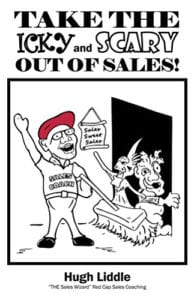
Take the Icky and Scary Out of Sales
Yes. She’s had the unfortunate problem of dealing with some icky salespeople in the past and that’s part of the reason she feels that way. My wife convinced me that it was a great idea to move from Colorado to Florida. I don’t like heat and humidity but she told me about all of the wonderful things that would happen when we moved to Florida. I wouldn’t have to drive in the snow anymore or shovel it. She’d make me a beautiful home down here and the weather would be nice. There would be green on your lawn and it would be awesome. She asked me for the sale. She said, “I’m moving to Florida. Do you want to go or not?” I said, “Yeah. I would like to go.” That is a good example of somebody who thinks they can’t sell and is awesome at it.
I love the assumptiveness of it, “I’m going.” There was no fear in asking that closing question there, was there?
Not a bit.
She also painted a picture of what your life would be like. She used storytelling a little bit about, “You won’t have to shovel snow. Imagine how great that’ll be.”
You asked me about my philosophy of selling and how I respond to people who said, “I don’t feel comfortable selling.” Here’s the philosophy. It’s not our job to get people to do what we want them to do. That’s not sales from my perspective anyway. Our job is to get people or help people do what they want to do. Selling is a process of asking people questions and finding out what they want. It doesn’t matter what they need. People don’t buy because of what they need. They buy because of what they want. They generally want a result of some kind. I always tell chiropractors that the only reason people are sitting in your office is that they want something in their lives that they don’t have yet. They do almost anything to get that thing or there’s something in their life that they don’t want at all and they do almost anything to get rid of it.
That’s true not only of chiropractors but of any type of business. Your customers or your clients have something that they want. It’s not necessarily even that they need it. In some cases, “I don’t need a new car. I’d like to have a new car. I want one.” If I went to talk to a car salesperson, they might talk to me about, “You need a new car.” My response would be, “I don’t need one because my car gets me where I want to go. It starts every morning, so I don’t need a new one. I’d like that new car smell, the new car look and I’d like the way it feels when I’m driving around. I’d like some of the new technology.” I want some things but I don’t need them. If we can find out what our prospects want and why they want it, sometimes you have to go a little deeper than I want this. Why do you want it?
Let’s talk about this in terms of chiropractors. Typically, I would assume most people go to a chiropractor because they want to get out of pain but they also need to get out of pain.
The chiropractors that I work with, most of them don’t treat symptoms anyway. They treat the underlying cause of the symptom so people can have optimal health where they function well, they feel good all the time, and they never anymore.
The difference would be, “I need to get out of pain now so I can turn my neck without pain, but I want to stay healthy. Therefore, that’s why I would keep coming even if I’m not in pain.”
[bctt tweet=”Be present with people to be successful. ” username=”John_Livesay”]
The want is more important than the need when it comes to the sales conversation.
You talk about that mindset is key to success. You have a chapter on it, Let’s Get Ready Preparing to Sell. What do you think is the right mental preparation you should be doing?
When you’re having a sales conversation, your focus needs to be 100% on the other person, what they think, feel, want, need, and their situation is, all of those things. The part of the middle of preparation is letting go of everything that’s been going on in your life before you show up to have that sales conversation. If you’re thinking about the disagreement that you had with your significant other before you left for work, that’s on your mind, that’s not where your focus needs to be. The focus needs to change. If you’re thinking about the stack of bills you have on your desk that you can’t pay and sales haven’t been that great this month, you’re thinking about that while having the conversation. One of my buddies who’s also a sales coach is Gene McNaughton and his favorite phrase is, “Your prospects can smell commission breath five miles away.”
I like that commission breath. I haven’t heard that before.
It’s absolutely true. Even if you’re thinking about after work, “I’ve got to go down and have a few with my friends down at the pub,” your focus is in the wrong place. Everybody that’s ever bought anything from a salesperson has had this experience at some point. The salesperson does a good job of explaining the product or service. It’s something that you want and the price point is okay. They ask you to buy and you get this feeling down in your gut, “There’s something wrong here. I don’t know what it is. I can’t put my finger on it, but I don’t feel comfortable. I’m going to tell him that I want to take a little while to think about it. I’ll call him if I decide I want to do it.” They’ll never call. What is almost always going on when that happens is the salesperson is focused on something besides helping the person get whatever they want. Their focus is someplace else. There’s an energy that passes between the salesperson and the prospect. If that energy isn’t clean, if they don’t feel like you want to help them and that you’re focused on their wants and their needs, they won’t buy from you.
It sounds like the fight or flight response has kicked in and it doesn’t feel safe. You don’t know why it doesn’t feel safe. Part of it is that person is not 100% present.

Sell With Pride: Selling really is a process of asking people questions and finding out what they want.
It’s important before you have the sales conversation to get your focus in the right place. I have a friend out in California who has an evergreen tree by his front door. He’s a great salesman. Every morning when he walks out of the house, he reaches out and taps the trunk of that tree. It’s an NLP thing. What it means to him is forget everything that’s gone on up until right now and focus on helping as many people as you can in the next eight hours. On the way back in the door, he taps the tree again. That’s his cue to forget everything that’s going on in the workday and focus on your family, resting, recreating and getting ready for the next day. I’ve had other salespeople that I’ve managed who actually had to sit in a room by themselves for 30 or 45 minutes to get themselves in the proper mindset to go out and sell. Most of us are between those two extremes. It’s not immediate. It’s not tapping the trunk of the tree and we’re ready to go. It’s not sitting around for 30 or 45 minutes to get ready. All of us need to go through that process before every sales conversation.
It’s some mindset or ritual, it sounds like it’s what you’re recommending. Hugh, do you feel that that’s the most important skill for a salesperson to develop? Is it being present or is it something else you recommend?
The answer to it is most people think that the most important skill that a salesperson needs to have is being able to talk, “She has the gift of gab. She could sell iceboxes to Eskimos. She’s great at talking. She’d be great at sales.” No, maybe not because the most important skill in selling is listening not only with our ears but with our minds and hearts. There’s more going on in a conversation than the words that are said. It’s the way the words are said, it’s the emotion behind what’s going on. I mentioned that there’s an energy that passes between a salesperson and a prospect. The salesperson has to be queued in to what that person is saying, how they’re saying it and what their body language is if they’re able to see them online or in person. The body language that’s going on, and the emotion that’s behind what those people are saying. If you can train yourself to listen carefully, if you can build that skill, people will feel appreciated. They’ll feel like you want to help them. They’ll buy from you if you’re a good listener. If you talk and talk, my wife would kick you out the door after about five minutes of that.
You and I are definitely on the same page about energy. When I was up for speaking engagements to speak to a sales team. The speaking agent called me back after they interviewed me and the other two speakers and they said, “Congrats. They picked you. They liked your energy.” People don’t realize that they liked your energy, enthusiasm and passion. It’s not the fact that you have a book. All those things got you into the final three. When it comes down to who do we want to spend time with? They feel good after hearing me talk and they assume that the audience is going to feel good. What you’re saying is so important. You talked in your book about how to not take rejection personally and not feel like you’re being pushy and aggressive. I’m guessing that’s one of the steps in the sales process you teach. I’m specifically interested in those two issues because many people do take rejection personally and feel pushy. Can you talk about how you help people with that?
First of all, it goes back to the mindset that you’re not trying to get people to do what you want them to do. You want to help them do what they want to do. That sets the tone as you go into the sales conversation. When you get to the point in the conversation, where you’ve asked questions and you know what they want and why they want it, you’ve explained to them that they can have what they want. They can have the result that they’re looking for. If they work with you, they can achieve that, they can have that result and you ask them for the sale. Your responsibility stops right there. If you’ve done all of the early steps in the sales process, you’ve done a great verbal agreement, asked good questions, done a good job of communicating value to them and you’ve asked them to buy, that’s the end for you. Unless an objection comes up, your job is to help them move past the obstacle that they’re seeing in their way to having your product or service.
[bctt tweet=”It’s our job as salespeople to get people do what we want them to do. Our job is to get people or help people do what they want to do. ” username=”John_Livesay”]
I love what you said there because I want to underline that and take a moment and make sure everybody got that before we go on. Many salespeople are afraid to ask for the order because they fear rejection. You gave us great insight. This is your job. If you were getting on a plane to fly from LA to New York, and the pilot makes the announcement, “We’re now landing.” No one stands up and goes, “What? We’re landing?” It’s expected that it’s his job to land the plane. I say it’s our job as salespeople to land the plane, also known as asking for the sale. You’re not doing your job if you’re not doing that. That is crucial what you said, I love it.
If you think about not getting people to buy, but offering them the opportunity to take advantage of what you sell, you’re offering them an opportunity. When you ask for the sale and if you do it the way that I teach it, you give them three different options that they have available to them and ask them which one they think is the best fit for them. Once you ask that question, you shut up. You don’t say anything until they respond. Your responsibility has ended there when you ask for the sale because it’s up to them to make a decision.
Do they want this product or service and the result that it’s going to give them or do they not? Are they willing and able to invest the time, energy and money that it takes to take advantage of the service or the product or do they not? It’s their decision. If they say, “No, I’ve decided I don’t want to do this. It’s too much money and it takes too much time. I want to think about it. I’m not going to even think about or consider making a decision right now.” That’s not anything that you’ve done wrong. It doesn’t make you bad.
If somebody tells you, “No,” it doesn’t say anything at all about your value as a human being, the value of your company, your product or service. It says volumes about the prospect. For one reason or another, they’re not willing to do what it takes to take advantage of your product or service. If you can keep that mindset that you’re offering this to them and not attached to the outcome, there are loads of people who want my product or service. If this person says no, that’s not the end of the world, and it’s not the end of my business.
One of my favorite things about your book is you said, “Stop saying we’re closing the sale because it means that something is ending.” Talk about that. Do you think that’s the most difficult step in the sales process, is closing? If that’s not it, can you tell us what you think is?
I don’t think it’s the most difficult thing. In fact, the easiest thing is asking for the sale, if you’ve done the first four things right, built rapport, done a good verbal agreement, asked good questions, and communicated the value and result that they can have. If you’ve done that, asking for the sales is like falling off a log. It’s easy. The hardest part is probably answering objections effectively. That probably is the most difficult part. The only reason that it’s difficult because the science of it is having a script and knowing what to say when you get a particular objection.

Sell With Pride: Stop saying we’re closing the sale because it means something is ending.
There’s an art to it, though. The art to it is, which question am I going to ask first? How am I going to proceed through this chain of questions that I asked when I get money or time objection? I want to think about an objection or I need to talk to somebody first objection. How am I going to respond to that? There’s a science and an art to being able to do that. That’s the hardest part. The idea of asking for the sale and the reason I call it that instead of closing is because the relationship with your prospect starts at the point where they tell you, “Yes. I want to take advantage of your product or service or no, I don’t.”
It’s not the end of the process no matter what they say. If they say, “Yes,” you’re going to deliver the product or service and you’re going to follow up, going to upsell, and you’re going to do a lot of different things there. If they say, “No,” you still want to follow up and stay top of mind because no doesn’t necessarily mean never. It means not right now. If you stay top of mind when they are ready, they’ll come back to you to buy. They won’t go someplace else. That’s why I don’t call it the close. I call it the opening, the commencement or the beginning, one of those words.
Speaking of an offer and a close because you’ve been generous, you said that anyone who’s reading can get a free strategy session with you about determining whether the Red Cap Sales Coaching could help them. You don’t even charge people. Certainly, people can tell from talking to you, there’s no pressure because you come from such a place of energy, respect, and confidence that what you have to offer is valuable. You’re not trying to pressure anybody into doing anything they don’t want. I can speak firsthand about how friendly and fun you are to talk to. Do you have any last thoughts you want to leave us with about how we can continue to get rid of the icky and scary part of selling?
[bctt tweet=”The most important skill in selling is listening, not just with our ears, but with our minds and our hearts. ” username=”John_Livesay”]
First of all, I want to clarify that the conversation that you mentioned, isn’t a sales conversation. It gives the people who have the strategy session, the opportunity to talk about their business, their sales and ask questions and get some tips, ideas, and strategies that will help them. It is a strategy session and they’ll find out whether continuing coaching after that. There’s no charge, there’s absolutely no pressure at all and no obligation to do anything. It’s a fun and friendly conversation. To answer your last question, the biggest thing that is important in having success in selling is to have a great script for each step of the sales conversation. To memorize, practice and role-play it until it’s a part of you, a part of the way you talk. Somebody could call you up at 3:00 in the morning and wake you out of a dead sleep and say, “Have a sales conversation with me.” You wouldn’t even have to think about it. You go with it. Everybody who sells has a script because you’re going to say pretty much the same thing every time you talk to somebody. It’s a matter of whether your script is effective or whether it’s not. Get a good script.
Hugh, it’s been a pleasure. Thank you so much for sharing your wisdom and your insights on how we can take the icky and scary out of selling.
John, thank you so much for having me on the call. It was fun.
Important Links
- Red Cap Sales Coaching
- Elite Sales Academy
- Take the Icky and Scary Out of Sales – Amazon
- Sales Chalk Talk
- iTunes – Sales Chalk Talk
- Bit.ly/wizard-strategy – Book in time for a free strategy session
- Better Selling Through Storytelling Method Online Course
Wanna Host Your Own Podcast?
Click here to see how my friends at Podetize can help
Purchase John’s new book
John Livesay, The Pitch Whisperer
Share The Show
Did you enjoy the show? I’d love it if you subscribed today and left us a 5-star review!
- Click this link
- Click on the ‘Subscribe’ button below the artwork
- Go to the ‘Ratings and Reviews’ section
- Click on ‘Write a Review’
Love the show? Subscribe, rate, review, and share!
Join The Successful Pitch community today:
- JohnLivesay.com
- John Livesay Facebook
- John Livesay Twitter
- John Livesay LinkedIn
- John Livesay YouTube