
Focus@Will With Will Henshall
Posted by John Livesay in podcast | 0 comments

A great part of what hinders our productivity is our tendency to become distracted and lose our focus on what we are supposed to do. Did you know that music can actually help you solve that problem? Focus@Will is a new neuroscience-based tool that uses sequenced instrumental music tracks to increase your attention span up to 400% when working and studying. The mind behind this incredible invention is Will Henshall, a musician, scientist, songwriter and technology inventor. After a successful seven-year run with Londonbeat, a British-American dance-pop band who scored two number one hits in the early 1990s, Will turned to entrepreneurship, starting a number of startups in the digital recording industry. Listen as he describes the amazing benefits of Focus@Will in this interview with John Livesay.
—
Listen to the podcast here
Focus@Will With Will Henshall
Our guest on The Successful Pitch is my friend, Will Henshall, the Founder of Focus@Will. He and his team have created a way for us to find the right music to play at the right time to make us all more focused. Not only does it make us more focused and gets us in the zone faster, but keeps us there longer and makes us happier. We do a whole in-depth conversation around how boredom at work stems from not feeling productive Focus@Will can help you solve that problem.
—
Our guest is Will Henshall, who is the Founder of Focus@Will, which is a new neuroscience-based web/mobile tool that especially uses sequenced instrumental music tracks to increase your attention span up to 400% when working and studying. Will is a musician, scientist, songwriter, technology inventor, working with audio to find the right music at the right place at the right time. He was the Founder of the British pop-soul band Londonbeat and had two Billboard number one hit records. He went on to found Rocket Network, a Paul Allen/Cisco-funded San Francisco company in 1995. Afterward, he created a professional audio media transfer system, DigiDelivery, which he sold in 2003. Will has achieved notable global success as a technical inventor. Will, welcome to the show.
Thank you, John. That was quite an intro. I was worried you were going to say, “It’s 400 times more productive.”
If your productivity is ten, we get you to 40% or something like that. I have always admired you. We’re personal friends. The concept of having you share your wisdom about entrepreneurship and, more importantly, about life in general. You’ve also had some certainly challenging obstacles, let’s say. We’ll leave that as an open loop. Would you mind taking us back to childhood a little bit? Many people have a dream of being a rock star, movie star, or author. You certainly were able to fulfill, in a big way, one of those dreams. I’d love to hear the story of when that dream started.
For me, it was not wanting to be a rock star. It was about wanting to be a composer and songwriter, and not even wanting to be because I was. I would have been 3 or 4 years old and I can remember sitting at my folks’ piano and playing the black keys. If you play the black keys, it’s a pentatonic scale. It sounded like something from the South Pacific. I remember doing that at the age of four and going, “This is nice.” That got me intrigued with the way that the sounds all fit together.
At the age of 4 or maybe 5, I remember thinking, “If I made each one of these notes go up one, does it sound the same?” I was playing a pentatonic scale in the key of G major. I’m now telling you, but at the time, I didn’t know. That’s what got me fascinated by the math of music. I was always fascinated with getting a sound and looking for a grid and a method and different instruments. I had many instruments as a kid. I got a trombone and I was like, “Here are the partials.” You play octaves. As soon as I learned something, I put it down and not want to do it anymore. Music is in the blood, 100%.
Did you come from a musical family?
No. I have no idea why that happened. I often wonder whether the Milkman was musical or not. My dad plays piano a little bit by ear. There’s nobody else in my direct family that plays. My grandfather on my mother’s side was an artist. He was a technical drawing artist. He wrote books on steam engines and did all of the photographs and pictures. He was a visual artist.
Even though you didn’t have dreams of performing in front of thousands of people, you still found yourself on stages.
I did. Was that a cue to do this? Here’s something I wrote. Here’s one I made. I was the founder and the guitarist in this band, Londonbeat. This was in 1990, 1991. It’s the most played song in the world on the radio by a British writer.

Focus@Will: You can play in your unconscious mind a music that soothes it, that makes it calm. It’s like having the kids in the backseat be quiet so you can concentrate on driving.
You wrote the song. You played the guitar on the song. I’ve seen a video of you singing as part of that.
I wish was. No. I co-wrote the song. I was the main writer, but I wrote the song with the three singers, who are African American living in the UK, in London. I’m playing everything on the record apart from the drums and some of the bass parts. I can sing well enough to do backgrounds, but no one would ever pay me to sing lead. I’m a songwriter. As long as I can go, “Da da da,” someone who can sing can make what I mean. It was an interesting collaboration. The guys were much older than I was. I was in my twenties. They were in their 40s. They were soul brothers from the ‘70s. They were American. I was British. They were black. I was white. It was this fascinating hybrid of British pop music and American soul. It was successful. We were together for seven years, signed to MCA Records and RCA Records outside of the states. We sold a lot of records.
How have you parlayed that experience and success into being successful as an entrepreneur as part of working for a startup that raised a lot of money? Tell us about that experience, some of the challenges, and the highs and the lows.
I tell people that I’ve done seven startups, which is true. The first real startup was the band. The band, Londonbeat, how it works is similar to starting up a startup. What used to happen has changed a lot in the last few years. What used to happen is you write some songs and you’d finish them and you’d demo them. You’d take those demo recordings to a label and then the label, if they’re interested, would either sign you to a development deal to write some more songs or they would sign you and then you would find a producer. They would fund your startup. What happens then is that you run this little intrapreneur business within the major labels.
I’d been running a recording studio in my early twenties. I got a handle on how to survive and pay the rent and to be self-sufficient. Forming the band, I was lucky. I was introduced to the Eurythmics Management, Sandra Turnbull. At the time, Eurhythmics was one of the biggest bands in the world, Sweet Dreams (Are Made of This), and so on. They were signed to RCA Records. I had these songs that me and the singers, Jimmy Helms, Jimmy Chambers, and George Chandler, had written. All four of us had careers where we made a living independently in the business. We understood what mattered. What mattered was being careful with the cash, testing the songs, testing the product, finding the direction. We were the first MTV Unplugged band. We were the number one.
We used to go out all the time with me playing acoustic guitar and these three guys singing and then I join in and do the background. We did that a lot promoting the records that we made. MTV called up and they said, “Would you come and do some of your songs without the band?” We’re like, “Of course, we will.” I said, “Yes, but I want you to make a big huge TV set. I want us to be on TV.” Bless them, they did. They made us this cheesy cartoon-like TV, a big one, and then we stood inside it. It was the early wacky days of MTV. That was with a guy called Ray Cokes, who was in the MTV Europe. Ray Cokes had a show called Most Wanted with Ray Cokes. He was one of the first shock jocks. He used to do a live show to 220 million people every night without a delay on it. No profanity delay or anything.
Let’s talk about that company you’re working with in Silicon Valley and what that experience was like.
After I was in Londonbeat, I got interested in digital recording. I’ve always been a recording engineer and back in the day, it was tape machines going round and round. You would record on multitrack. That was an early convert to digital recording, particularly with the Avid Pro Tools system, DigiDesign Pro Tools. With three other guys in 1995, we created something called Rocket Network, which was an audio collaboration system that allowed you to network recording studios. We got funded by Paul Allen, by Cisco, by a number of other investors back in the early days before there was an internet, and startup scene. It started in London, in the UK, and then moved it to San Francisco in the end of ‘96, early 97. We raised about $50 million. We created the technology, which is available in Avid as Avid Cloud Collaboration, the first iteration of that. We sold the company to Avid in 2003. That was a rapid and vertical lesson on how to manage and how to build and grow a company. I went from being a guitarist and a songwriter to being a Tech CEO almost overnight.
What was the biggest challenge during that? Managing people?
[bctt tweet=”Running a development team was like being in a band with fifteen drummers.” username=”John_Livesay”]
Yes.
Not the tech. That’s what’s always interesting.
It was the fact that many developers are socially awkward and that’s part of the reason why they end up as developers. I’m painting a broad stroke here, but it’s fair to say that most of the incredibly talented developers I’ve met have been atypical. I knew about that because drummers are similar. Drummers are atypical. We have a common friend, Kenny Aronoff, who’s one of the most famous drummers in the world. For a drummer, he’s a good guy. He strings a sentence together and he’s funny, but he’s still a drummer. I should say that many of my musician mates are professional drummers, Mark Schulman, and a bunch of them. They’re atypical. They think about different things. I found that running a dev team was like being in a band with fifteen drummers.
Interesting analogy.
It took me a while to figure that out.
Everyone is on their own rhythm. You have to deal with each one slightly different. There’s a reason the band usually has one drummer as opposed to fifteen. Herding cats, a little bit, could be a reference.
Herding drummers and herding cats are similar.
You’ve started Focus@Will, which is a play on words about willpower and your first name. It’s the story of origin of the company.
It wasn’t my idea to name it. We were looking for a name and one of my investors, Salim Ismail, came back and he said, “Focus@Will, that’s the name.” I was like, “Yeah.” Do you know how he sold it to me? It was not my name. He has a strong spiritual outlook on life, similar to my own, and he said, “Will is Prana. Prana is Will, which is the will to live. It’s the will and it also means universal source. It could mean God, too. It’s that thing that is outside of you.” I was like, “That makes sense because it’s a play on words in multiple ways.” It’s been successful. People like it and it makes sense.
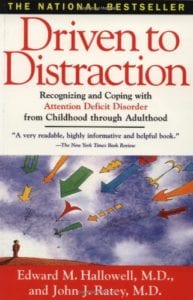
Driven to Distraction: Recognizing and Coping with Attention Deficit Disorder from Childhood Through Adulthood
The big problem you’re solving is that a lot of people have trouble staying focused, especially if they’re students and they’ve got many distractions going on. Most people don’t take regular breaks and their retention goes down the longer they try to retain things. That concept of solving that problem through music, you’re uniquely qualified to run it. What I find fascinating is a lot of businesses have a narrow niche, but this is for anyone who is both creative and logical. It’s not mutually exclusive. It’s for people who are students and entrepreneurs.
It’s not like you get out of college and you’re done, you still need to focus. Even if you’re a tech person or you’re someone who’s an artist, the need to focus on is something that changes throughout. The fact that you’re using science and math with music, which goes back to your childhood story, is something that I found fascinating when I took a deep dive into this. Would you mind describing some of the distractions? People might say, “I get distracted if my doorbell rings or there’s noise outside.” There are many other distractions that we may not even be aware of. Let’s talk about that.
You know how when you’re sitting down at work and, in theory, there’s no chainsaw outside and there’s no one distracting you and still, you can’t seem to get in the groove. You can’t get your flow going. There are two types of distractions. There are external distractions, which are the ones I talked about. By far, we are more limited by our internal distractions. We have two types of attention. We have our exogenous and our endogenous, our external and our internal. I learned a lot about this through the science team we have at Focus@Will.
Evolutionarily, our non-conscious minds pay attention to certain things that are keeping us safe. For instance, right now, if you smell smoke, you’re going to be like, “I need to check that. I need to pause.” If you smell burning, but it’s toast, you’re going to be like, “That’s toast. It’s not burned.” Your nonconscious attention, your exogenous attention, is constantly monitoring your surroundings. Your internal attention, which is me talking to you, you can concentrate and focus on what we’re talking about.
It was described to me beautifully by Dr. Ed Hallowell, who’s one of my science team. He’s a psychiatrist. He has written some bestselling books. Driven to Distraction that’s the one, which is about being distracted at work. He said, “Your nonconscious attention is like the kids in the backseat when you’re trying to drive somewhere and they’re like, ‘Are we there yet?’” What you can do is you can give them a book or put a video on or give them a Game Boy or whatever the kids are using these days. You can have them be quiet so that you can drive the vehicle.
If you think about, “I’m sitting on my computer and I have a spreadsheet. I have a piece of creative writing. I have some coding to do. I have to look at some QA on a science project.” What you want to do is have the kids in the backseat be quiet. What you’ve found you’re able to do is to play specific types of music. It has to do deal with how easily distracted you are, the types of music. You can play in your unconscious mind a music that soothes it, that makes it calm. It’s like having the kids in the backseat be quiet so you can concentrate on driving.
What a great analogy. One of the things you talk about on the website is that boredom is a distraction. If you’ve ever had to try and tackle something that you’re having trouble remembering, you don’t particularly it’s interesting and you’re like, “I’ve read this. I don’t remember a thing I read. How am I going to pass this test?” About blockchain, I was like, “This is not my idea of fun.” If we’re listening to the right music, science proves that even if something is boring to us, it somehow goes down like the Mary Poppins’ Spoon Full of Sugar concept.
There is a fascinating link between boredom and or lack of happiness. We did a survey with 25,000 of our most engaged users. We have a couple of million people on the system regularly. We asked these 25,000 and we said, “What is your single biggest challenge at work?” We’re like, “I know that’s something to do with productivity.” The answer came back from everybody first was happiness, “I am not happy at work. My challenge is being happy that work.” Second question is, “How do you manage that?” They say, “We like to listen to music when we’re working.” You’re like, “Why do you listen to music while working?” “It’s because it allows me to focus and concentrate and that makes me happy at work when I’m being productive.”
If I can turn around your question, is being bored a problem? It’s not being productive is the problem and that often creates boredom. If you’re able to manage this process, which is your non-conscious attention, it’s your limbic system. It’s the fight and flight reflex that’s spin all of our brains. If you can manage that response, what it gives you is this sense of peace and calm. It’s a flow state. Even if you’re doing something that is repetitive and is not particularly rewarding, if you’re able to get into a flow state doing that, you will find that there is a pleasure in it and you will be happy at work. Cue the music.
[bctt tweet=”Boredom is not the problem. Boredom comes from not feeling productive.” username=”John_Livesay”]
That’s going to be a great Tweet, “Boredom comes from not feeling productive or not being productive at work.” That’s a big a-ha moment for me, certainly. You also have a quiz that I took and I was fascinated. The question that made me laugh was, “Are you considered ADD or OCD?” I meant to check no and I checked yes and I was like, “I’m not exactly paying enough attention to the answer. That’s the wrong outcome. Let’s start the quiz over.” It asked a lot of different questions that I’ve never been asked before. I thought it was a fascinating process in that premise around distraction and focus and work and the combination of questions. You have twelve different options, at least.
There are 36 different options on the main because there are three flavors of each one.
They said, “You would be most productive listening to Electro Bach.” Since you know me, I thought, “Is that a surprise? Does that seem to be much in sync? Did I answer the questions wrong?”
Electro Bach is a unique channel that we created originally for a TV show called Genius on Nat Geo. It’s about Einstein. Einstein used to play the violin to get himself into a flow state. He had some specific pieces he used to play. The producers of the show said, “Is there a link between the pieces he used to play and the research that we’ve done in focus?” We said, “There is.” If anybody is reading and is musical, you’ll know there’s something called a sixteenth note. If the beat is going 1, 2, 3, 4, a 16th note is dividing each one of those up into fourths. You can see there’s a musician going, “Diga, 2, 3, 4 diga.” That is a pulse. Those pulses have been shown to help put you into a flow state. If you listen to Bach, in particular, any of the things that Einstein used to play, they are similar. Techno music is similar. Let me play a little burst of some of Electra Bach. This is what it sounds like.
Would this be something I would listen to on my phone while typing on my computer?
Yes. Listen to it on your computer while you’re working. Eighty percent of our users listen on their laptop because you’re working on your laptop and your phone is a distractor. I talked about the, “Diga.” There’s a pulse intrinsic in this.
How long does it take for the average person to hear that customized choice of music before they feel like they’re in a flow state?
There’s a timer on the app. Most of our users, the average session length is 80 minutes, which is a long time. That’s an hour and twenty minutes. That’s a long time. If you’re working without music that’s helping you focus, you can usually do about twenty minutes before the internal distractions kick in. The reason why we’re able to say that the Focus@Will system increases your focus state and your productivity by 400%, four times, is because instead of working in a twenty-minute chunk, you can work in 80-minute chunks.
Would it be fair to say that the monkey mind that we’ve heard about, conscious conversations with people, it’s quieting?

Focus@Will: If you’re working without music that helps you focus, you can usually do about 20 minutes before the internal distractions kick in. Focus@Will increases that time to 80 minutes.
It is.
The kids in the backseat are another way of looking at it. It’s the monkey mind of like, “I need to go. Am I hungry? Am I this? Why haven’t I heard back from that person?” Your mind starts going crazy.
All of the things that you’ve talked about are evolutionarily helpful to us as humans. You and I are in a cave back in the day and we’re drawing on the cave wall, doing some pictures of some tigers and stuff and we’re drinking a cave beer. Our backs would be to the entrance of the cave. What happens is there’s this timer in our brain that goes, “I can’t hear anything outside.” Your nonconscious attention is listening to the sound of the forest, the jungle. After a certain amount of time, you have this urge to check that there isn’t anything dangerous outside the cave.
It makes sense because you can’t assume that something safe now will be safe twenty minutes from now.
We all have this timer, about 20, 25 minutes. When that thing, in our brain, goes, “Did I lock the door? I think I left the oven on. I forgot to do that thing.” When you’re wired into a flow state, that timer is running. There is something called the Pomodoro Technique. You may have come across that. It’s a technique where you work hard for twenty minutes and you take five minutes off. Why is it twenty minutes? It’s called habituation. Our brains work with something called habituation and novelty. We’re always getting used to the sounds around us. If you’re interested in this, anybody reading, you can go to the Focus@Will site. There are articles about this.
You created a little bit of an open-loop saying there are three kinds of flavors once you’re inside a choice. What does that sound like?
It’s a little counterintuitive, but it makes sense if I quickly explain how this works. The quiz, that’s free, you can check it out and it’ll recommend a channel or a type of music that works well for your brain type. Our quiz, you said they’re weird questions. They’re based on a standardized psychological model called The Big Five. They’re weird questions. There are double negative questions in them after thinking them through. What we’re trying to do is to figure out, on your brain type, how easily distracted are you.
We’ve all got friends who are easily distracted. They are like hyper monkeys the whole time. Elon Musk, ADD. He’s not a friend of mine. You can see him and you’re like, “That guy is ADD.” Here’s another one, Jeff Bezos. Look at him. Steve Jobs. They’re all tech guys. What about Oprah? She’s got to be super hyper all the time. The more hyper you are, you might think, “I want to play someone some gentle music to calm them down.” That’s not going to work. It’s the opposite. The more hyper you are, the more energy you need in the music to calm you down.
This is similar to the fact that kids with ADD are often prescribed stimulants. You probably heard of Ritalin and Adderall, all the other drugs that kids are doing. Weirdly, if a kid is hyper, it calms them down. It’s to do with the way that your nonconscious mind is active if you’re ADD. The stimulants around you, including the music, are able to have you focus. Perhaps I should play you a little burst of this. There’s a channel on the system called ADHD Type 1. About 5% of our users listen to this and find it relaxing and they’re able to work.
[bctt tweet=”We are soul beings in human bodies.” username=”John_Livesay”]
I would not be in that percent.
Isn’t that crazy?
Yeah.
If you are ADD, that is good. It sets you on a groove and helps you get into a flow state. Most people in our system come up with either the Electro Bach or there’s a downtempo channel called Alpha Chill. Here’s a typical track from that. It’s like musical and easy going.
One of the things that I wanted to talk to you about before I let you go is you experienced a life-threatening heart attack and did a little bit of a recovery period. My first question is, what music did you listen to deal with the pain and the boredom of being in the hospital after your heart attack?
I had never been in a hospital before. In June 2018, I had an out of the blue widowmaker heart attack. I had no idea I was at risk. They said, “Look at your father.” My dad is in his late 80s and still causing havoc. I had this heart attack and then I woke up eight days later. My life was saved by my wife who gave me CPR and then the medics came, but I had no recollection of any of that. I started to regain consciousness over the next 8 or 9 days. The hospitals are noisy, pokey, prody. You can’t sleep. Every three hours, they wake you up. The music is awful, generally. They have music on the TV. I was in a hospital in Santa Monica, in California. The music that helped me was Baroque string music, Vivaldi, Four Seasons, music that I knew as a kid growing up. I trained as a classical musician so I had to learn some of this stuff.
Are you finding yourself more focused not just at work but being more present in life and not sweating the small stuff after this life-changing event?
I’m more still, generally, than I was. I found peace. I died and I described it as I shook God’s hand. There was no white light tunnel for me. Everything went off and I had a widowmaker heart attack experience. I was aware that there is this beautiful and loving energy. I was always coming back to consciousness. Every time you breathe in, you connect to this beautiful loving energy. It’s like loving awareness. It’s like a familiar love you have from your mother. It’s the love you have from people you know. It’s the love you feel when you see something beautiful. You see a beautiful nature scene or you’re in a forest. Every time we breathe, we connect to that. I was taken off the ventilator. You’re on this breathing tube, which is gruesome. The first breath I took after they took me off the ventilator was the sweetest, beautiful breath. I remember connecting to the source, to Universal Power, to God. Whatever you want to call it, there’s this loving awareness. There’s this beautiful, loving energy that we’re all part of. It’s simple. We are soul beings in human bodies.
Music is a way. Focus@Will is a way to get the right music to get us into that state as much as possible. That’s why you’re reinforced and you’re doing the right thing, even before you had the heart attack. It’s even a bigger mission for everyone. Will, I can’t thank you enough. If everyone wants to know more about you and Focus@Will, the website is FocusAtWill.com. Any other last thought you want to leave us with?

Focus@Will: The more hyper you are, the more energy you need in the music to calm you down.
The whole heart attack and coming back to life, it’s made me conscious of wanting to make a difference and be of service. Entrepreneurial Men’s Group based out of Los Angeles is called METAL International. It’s a group of entrepreneurial thinking, heart-centered men. We represent all kinds of men. I’ve become the CEO and co-leader of this group. Since I came back from the dead, a big part of my life has been wanting to serve and to make sure that the elders of the tribe are passing their wisdom down to the younger members who have a fresh and different view on it. Reply with the favor back. Men’s work and leading men’s work is an important part of my life.
That’s where we met, at that METAL organization. Now that it’s virtual, it’s global. It’s another wonderful way to get back and connect and learn. You’re certainly loved and admired as a leader. I’m honored to have some time to ask you some questions and get some insights into what makes you that we can all aspire to be the best version of ourselves.
Thank you, John.
I got a soundbite for you, you know how you’ve got special friends in your life and then any your special friends, you have someone else who accepts you and loves you exactly as you are? These are the special, few humans in my life and you, John Livesay are on that list. It’s a small list. Thank you.
I was honored to speak at your virtual wedding and have to visit me in Austin here. It’s likewise, equally, reciprocal. If you can find friends that become your family, you have a lot to be grateful for. That’s for sure.
Thank you.
Important Links
- Focus@Will
- Driven to Distraction
- METAL International
- Londonbeat
- Eurythmics Management
- Salim Ismail
- Better Selling Through Storytelling Method Online Course
Wanna Host Your Own Podcast?
Click here to see how my friends at Podetize can help
Purchase John’s new book
John Livesay, The Pitch Whisperer
Share The Show
Did you enjoy the show? I’d love it if you subscribed today and left us a 5-star review!
- Click this link
- Click on the ‘Subscribe’ button below the artwork
- Go to the ‘Ratings and Reviews’ section
- Click on ‘Write a Review’
Love the show? Subscribe, rate, review, and share!
Join The Successful Pitch community today:
- JohnLivesay.com
- John Livesay Facebook
- John Livesay Twitter
- John Livesay LinkedIn
- John Livesay YouTube
Financial Health Doctor For Female Founders with Jill James
Posted by John Livesay in podcast | 0 comments


Keeping yourself healthy is definitely worth the investment and in order to do that, your financial health has to be in tip top shape as well. The financial health doctor and CEO of SIF Industries, Jill James, joins this episode to share her knowledge about financial health. She goes into the details of what financial check ups can do for your business and what are at stake if you decide not to have your finances checked. In addition to this, she gives some amazing tips on how to pitch and get funding for a VC. On this topic, she also talks about having an exit strategy and what you need to prepare in order to justify a VC. In addition, she touches on how to be successful in a small business as she emphasizes the importance of knowing and understanding the economics of your business.
—
Listen to the podcast here
Financial Health Doctor For Female Founders with Jill James
Our guest is Jill James. She’s the CEO and Founder of SIF Industries, which is a consulting and coaching firm that puts women on the fast track from founder to CEO. She started her career in banking with JP Morgan but she got the startup bug while in the Chicago Booth for her MBA. She’s had roles in product management, marketing, sales, and C-level leadership at six VC backed startups with four exits. She holds a BA with Honors in Political Science and an MBA in Strategy, Entrepreneurship, and Marketing from the University of Chicago. She’s an advisor to Boutique Box and is on the board of many programs and she lives in Los Angeles where I am from. Welcome to the show, Jill.
Thank you, John. It’s great to be here.
Let’s dive into your own story of origin and bring that little intro to life. You can go back to childhood, college, high school, or wherever you want. You had some interest in entrepreneurship and marketing. You had that little a-ha moment that I talked about while you’re at Chicago Booth but if you want to go further back than that, feel free.
I’m originally from a small town in Wisconsin and when I say small town, I mean a small town with 1,000 people with no stoplights. We had a stoplight one summer. It was exciting. Everybody wanted to drive across the bridge and drive in the stoplight. I was there my whole life until I was eighteen and both of my grandparents had small businesses. I grew up going to Northern Wisconsin in the summer and working in my grandparent’s old-fashioned soda shop. From the time I was six years old, I would pull the candy. I love to make the hot fudge sundaes and we made sodas from scratch with the old-fashioned pump and the soda machine.
I grew up doing that and my other grandparents had a trucking business. I didn’t realize it until later in life, but it was interesting to see one that was a true family-owned small business and one that had a little bit more scale. It became a major employer in our area because of the scale of the trucking business. Foundationally, I think of myself being raised by teachers, but I do have a lot of small businesses in my family and a lot of my aunts and uncles have large families. A lot of them have their own businesses. It’s certainly something that was always around me, even though I was much more on academic, go to college, and gets a job track.
[bctt tweet=”You have to understand the economics of your business.” username=”John_Livesay”]
I didn’t know what I wanted to do going to college, but I had a chance to explore things at Chicago and I was lucky that I got some great internships and I accidentally applied for a banking job. I thought it was a consulting job. I don’t know how that happened but I ended up working at a bank. I took the job that was the most interesting to me. I got exposed to a wide array of how stuff works but also being from a small town, I had some personal challenges with the idea that the budget of my town was a rounding error for the people I was working with. That was hard for me. I thought we could put that money to better work in the world.
That was the start of my path to going smaller. I got in the tech boom. I went to a couple of tech startups and that was the first exit. We built a trading platform for domain names back when that was the start of that thing with the first opening of ICANN and that’s how I got out of banking. When that all crashed, I did operate back in banking again. That’s how I went banking but that time I went back and I was a financial advisor to individuals with small businesses.
That’s probably the most instructive in my career of learning how the tax system works, learning how personal finance works because as a banker, you don’t know any of that. You know how to make a lot of money on a large scale, but I would work with people who are doing that. They had no idea how the personal finance system worked and they had no idea how small businesses worked. That has been the best job I’ve had for my whole career because I had to learn to sell and I also learned how you make money and how being a small business owner can help you make more money than you may get in a job.
I know that the readers are going to be interested in the fact that you have been involved with six startups that are VC backed. Rarely do I see somebody who’s had that many. I can hear the audience going, “Please ask her what’s the secret to pitching to a VC to get funding?” Did you learn any tricks or tips that you could see that when we say this, they open their pocketbook? One of my sound bites is when you tug at people’s heartstrings, they open their purse strings. A lot of investors I’ve interviewed talk about, “We’re more interested in the team and the idea,” and things like that, but I’m sure you must have some insights.
I never pitched anything that was zero revenue or pre-revenue. For me, it was always, “We have some money. We need to get to the next round. We need to offer some services. We need to accelerate or I need to get this round of funding, but I need the financials and somebody who can help me talk to that side of the business.” What I’ve seen both in terms of they want to see the team, but you also have to understand the economics of your business. That is true, whether you’re VC backed or self-funded and it’s one of the biggest holes in our knowledge as business owners of understanding our unit economics. That’s the foundation of my business.

Financial Health Doctor: Look at the potential of the business, what’s it going to take to get there, and how many rounds before you can hit that profitability point or before the business could be self-sustaining.
That’s almost all I do with people, even though we have a lot of things that we call it but it’s helping people understand their unit economics and why that’s powerful. That to me is if you can show that you have the margins on the scale to justify VC, it makes it a lot easier for them to give you the money. If you have already shown that you can make sales without their help and you’re using the money to accelerate and get a better team that also de-risks by a lot. Being able to show that you already have that product market fit and preferably on something that you bootstrap especially for women where it’s harder to get funding, that goes a long way to help them say yes.
I interviewed Brian Smith, who’s the founder of Ugg, those wonderful boots. Once he got his messaging right, it was first sold to surfers. It wasn’t a fashion statement at all. It was only sold in surf shops, but then it took off and he needed all this money to scale so that’s an example of a business that had some proof like you’re talking about revenue. To scale and hit the orders that were coming in, you needed that money. I always tell people, if you want to get your startup funded, whether it’s a seed round or VC route, if you’re got revenue coming in, you need to know your story. You need to have a pitch and you need to know your numbers. One without the other is a no go.
Even if you have a great pitch and great story and you don’t know your numbers, when they ask you, “What’s the cost to acquire a new customer?” you’re like a deer in headlights. If you’re only about the numbers and you don’t have a story to tell people, what problem you’re solving in a way that is unique and what your secret sauce is and all that stuff that they can then repeat and be proud that they are investing in something. The secret sauce is combining those two things. The other question I have for you, because you’ve had four exits, how important is it to have an exit strategy when you’re trying to get VCs to fund?
It’s important for you as a founder to understand how much money it’s going to take before that looks attractive and what that means for your actual earning potential. In some cases, I’ve seen slips where you’d be better off being self-funded than taking a couple of Angel investors. By the end of the amount of dilution that you accept, you have to be a massive company in order to get any money for you, let alone the people wh work so hard for you and stock options. You should look at what’s the potential of the business, what’s it going to take to get there and how many rounds are you looking at before you can hit that profitability point or before the business could be self-sustaining?
Also, is there any off-ramp? Are there breakpoints where if you had to self-sustain at that level, it would be fine? That’s what people have gone through in 2020. It’s like, “There’s no more funding coming. We only have this many months of runway. We’re going to have to be self-sustaining and we were counting on two more rounds.” There hasn’t ever been a thought of, “If I had to do that, what would it look like?” It’s a different mental model of we’re going to grow as fast as we can and find this customer and we’re going to get repeat revenue, recurring revenue, and lock these people in for as long as we can.
[bctt tweet=”Part of the financial health checkup is finding the things in your business that are profitable at the scale that you need.” username=”John_Livesay”]
Before we started the show, we were chatting about one of your earlier customers. She’s like, “I can sell but I’m not great at making a profit.” That is your own little story of origin of you doing a financial health checkup and it’s so odd to me that most people don’t think they need this because we all know we need to take our car in for a checkup, an oil change, or whatever. We know we need to take ourselves for checkups. If you’re a parent, you take your kids for those too and you should be doing it as an adult too. Somehow with our finances, we don’t want to look under the hood. Can you speak to what the stakes are if people don’t do a financial health checkup?
It brings up your stress and anxiety. I see many people that I start working when I say, “What do you think you’re going to make this year?” They’re like, “I don’t even know what I’m going to make next week. There’s no predictability now. There’s nothing I can count on.” Part of the financial health checkup is finding the things in your business that are profitable at the scale that you need. At this point, I primarily work with self-funded founders so we’re looking for enough margins in their business that we can drive their growth goals and mostly use debt and conventional financing techniques in order to grow their business to where they want to go.
A lot of them are in businesses where they need to prove that they can be a certain size before they could get an investment around $10 million or $20 million and they’re more $100 million to $500 million but they have that potential. We have to figure out where are those margins in your business. Also, get smart about who’s on your team, both in-house and out of house, that extended source team or a professional team of people you need who have the expertise and have an operating budget.
You would not believe how many people have no idea, even with financial statements, what they are spending on their business, and what the required things are to make their business run. In the financial health checkup, we look at how do we stack your revenue in a way that gets you to where you want to go profitably, pay you what you want to be paid, have enough money left over in the operating budget for the stuff you have to pay for, and get you the people that you need so you don’t have to work 100 hours a week.
We talked about how the riches are in the niches a lot on this show and you’re focused, and it’s a great example that you target and work with female founders, who tend to be creatives or not have a lot of managerial backgrounds. If someone is like, “I’m great about animation. I’m a photographer or anything that’s at all creative. I don’t know anything about how to manage a business, let alone scale, hire people and all that stuff.”

Financial Health Doctor: Investing is about things that drive your growth forward and there are a lot of things that we do without intention that should be done with intention.
It’s clear and it makes it easy for people to refer you and that’s why I talked about having the importance of a great elevator pitch. You need to be able to have a soundbite and go, “Jill James, you’re a creative person and you’re a female founder. She could help you.” It makes it clear and that’s what makes everyone reading go, “Am I that clear on who I help and what problem I solve?” You’ve got that dialed in. I’m sure a lot of your business comes from referrals, is that correct?
Absolutely, and this is the first year I’ve ever done any real outbound marketing and that was only because I wanted to start an offer of a more scaled product. Part of my personal mission is each year to double the number of people that I impact. I hit a point where I could not double without offering some skilled service. That required some outbound marketing and or they define those people who are looking for more of a group planning approach, instead of my one-on-one clients, which come from great referrals from my past clients.
You’ve got some great content here about are we spending or are we investing? Can you distinguish it for us? For some people, they’re like, “I’m going to invest in myself and take this course and learn how to run ads on Facebook,” or whatever it is they’re doing. You’re like, “Are you spending money that’s not going to give you a return on investment?” How do you define the two? How does someone know whether they’re investing or spending?
Spending is the thing to have to do to run your business. Spending is taxes, keeping the lights on, and having internet. It’s those things when LA sends your nasty bill every February. Investing is about things that drive your growth forward and there are a lot of things that we do without intention that should be done with intention like our marketing budgets and investments. If we have inventory that’s an investment. Our branding is an investment and PR is an investment. Many people think of these things as cost centers, “How much is that going to cost me? I’m scared to spend it because it’s not guaranteed that you’re going to get it back.” At a certain point, you have to have a bit of faith and understanding of your business.
If you put $1 in, you can get $2, $3, or $4 out. If the spending has the potential to do that it’s investing. I tried to look at what are the things in my business that if I put $1 in, will I get more than $1 back within a certain amount of time? I make bets on those. I gradually stretch what my comfort zone is to make more and more investments in my business. What I’m going through now is a major rebrand. When I saw the cost, I had a heart attack and I was like, “How much money is this going to put me into this next tier in terms of investment?” This is the payoff over the next months. I wrote the check and I started doing it. Our spending mentality says, “This is scary. I don’t know if I should spend this money.” Our investing mentality says, “What are we going to get back and where will we go into this fuller vision?”
[bctt tweet=”In a small business you have to be high margin and high service. That’s the only way to be successful in a small business.” username=”John_Livesay”]
One of the things I love to do is help salespeople and we’re all selling. If we’re working for ourselves or our own business, we’re selling ourselves or selling ourselves to get hired or get clients or about getting funding. Taking what I call, boring case studies, I’m sure you have lots of those in your MBA days, banking days into case stories. Can you tell us a story, you don’t have to give the name if you don’t want to, of a client that came to you struggling? They didn’t have what you call a financial oxygen mask on first. We all know that story of putting the mask on yourself before your kid and most entrepreneurs don’t think like that. They’re like, “I’ve got to save the business and I’m not making any money. I don’t have money to pay my mortgage or whatever.” Is there a story or client that comes to mind that you could take us on this journey? The goal for every reader is, “I see myself in the story.”
Some of them I’m still working with. We’ve been working together for a few years. I met her at a conference. I sat down next to her at lunch and started asking her what her business was. She was reselling someone else’s product and I asked super financial questions off the bat. When I meet people, I’m like, “How much do you make? What is your margin?” It’s those comfortable lunchtime conversations you have when you sit down at a conference. We started to talk about this and she said, “I know my margins and they’re fine. I’m reselling somebody else’s products. There’s nowhere I can go with this.”
We did a financial health checkup for her and what we realized was with the connections and the book of business, and everything that she had and what she was adding is customer service. It was super valuable for that customer. She also had relationships with producers in the space so we started looking at first more comfortably, what would we white-label? We make a white label product for somebody else. We started to go down that road and as we looked at it, she said, “I could not get this under my own name. I could sell this directly.” We switched from a resale product that, given the shenanigans the company was playing was between 15% and 20% in growth margin to a product that’s more 60% of gross margin.
We tested it out. There was no harm in floating this new brand and it turned out that her book of business was hungry for it. They jumped on it and the business has taken off over the last two years, in a way I don’t think we even anticipated. When I said, “What would be a nice size of business for you?” That’s about 1/3 of what her business is now. I find it over and over if your margin and you focus on your customer, what they value about what you do, which is sometimes not the product sometimes the customer service making their life easy. There’s a lot of value to that, especially for people in services, anybody who’s running around trying to hustle for money. If it’s time for money exchange, anything you can do to make their life easier then that’s valuable to them. She tapped into that and had a great product that was easy to say yes to but then added customer service on top of it.
It’s been an incredible growth story and having those pillars every time we get into, “The sales are overwhelming. What should we do next?” We say it like, “Does it serve the customer that you want to have? Does this feed into your customer service mentality?” We go back to those pillars and it’s like, “Do this. Don’t do that.” We can have as a foundation and it instantly makes clear, “What’s the right thing to do? Where should we put the money? How should we build this in the next stage?” I loved that we randomly met at lunch and I asked way too personal questions about her business.

Financial Health Doctor: The world is going to change no matter what. You can lead. You can follow, or you can fight for the past.
One of my other guests, Judy Robinett, wrote a book called How to Be a Power Connector and she says, “Talk to strangers.” There’s a classic example of you talking to a stranger at lunch. You were randomly sat next to if you believe in random things, I don’t but I love that. There’s something else that’s important that you’re able to help your clients with is identifying who you say no to, in terms of clients. Are these the clients that are never going to be happy, want refunds, and demand more of your time than what they’re paying for? Can you speak to that a little bit?
One of the things that I believe in small business is we have to be high margin and high service. That’s the only way to be successful in a small business. When I find small business owners or potential customers who again, cannot wrap their heads around the difference between spending and investing, and what’s it all about. Their comparison point is, “What can I get on Upwork, or what can I get my cousin who’s in college to do it?” I can’t compete with that person but I also know that they have no value and expertise. The time and direct answers that I can get for you, I focus everything on my business. Let’s get to the value that you need as fast as possible and I have a price for that.
If on the first day there’s something that we can do, that’s great. I’m going to tell you. I’m not going to dance through and be like, “The punch lines coming in four weeks.” I want to work with my clients in a way that if we have a great answer, let’s go with that. Let’s do it. That’s the whole point. It’s not to do the process. I have the framework. The framework works but when you hit that moment in the framework. You take off, you run with it. There’s no reason to wait like what many consultants do have, “Let me give you the big report. Let’s get to the end of this.” I want to do everything in a way and I want to have the client and customer aligned, so the minute that we realize what the breakthrough is going to be for the business, we start doing it.
It’s almost like if someone’s going for a checkup and they’re fine but if someone’s coming into the hospital and they’re having a heart attack, nobody wants a process. They want, “Can you save my business? It’s financially running out of oxygen fast. If you see a solution, please don’t make me wait for it.” What a great takeaway. If anybody wants to reach out to you, they can go to SIFIndustries.com, or they can google you that way as well. Jill, are there any last thoughts or things you want to leave us with? A favorite quote or anything?
One of the things I like to say to my clients is, “The world is going to change no matter what. You can lead. You can follow, or you can fight for the past.”
Jill, thanks for sharing your wisdom on how we should all get financially healthy. I look forward to hearing more of your success case stories.
Thanks, John. It’s been great.
Important Links
- SIF Industries
- Boutique Box
- Brian Smith – Previous Episode
- How to Be a Power Connector
- Judy Robinett – Previous Episode
- Better Selling Through Storytelling Method Online Course
Wanna Host Your Own Podcast?
Click here to see how my friends at Podetize can help
Purchase John’s new book
John Livesay, The Pitch Whisperer
Share The Show
Did you enjoy the show? I’d love it if you subscribed today and left us a 5-star review!
- Click this link
- Click on the ‘Subscribe’ button below the artwork
- Go to the ‘Ratings and Reviews’ section
- Click on ‘Write a Review’
Love the show? Subscribe, rate, review, and share!
Join The Successful Pitch community today:
- JohnLivesay.com
- John Livesay Facebook
- John Livesay Twitter
- John Livesay LinkedIn
- John Livesay YouTube
The Influencer Code With Amanda Russell
Posted by John Livesay in podcast | 0 comments
Influence is attention plus trust. Without trust, you’re just making noise. This is what Amanda Russell, the author of The Influencer Code, believes. Amanda is a strategist, speaker, and professor of marketing. She said when we shift from focusing on transactions and focus on relationships, that’s when we build something long-term. It’s all about shifting how we think about what influence is. On today’s podcast, John Livesay interviews Amanda about her running career and how it’s a metaphor for her marketing expertise. Tune in to learn about her specific tips on what you can do to become more influential.
—
Listen to the podcast here
The Influencer Code With Amanda Russell
How To Unlock The Power Of Influencer Marketing
Our guest is Amanda Russell, the author of The Influencer Code. She talks about that influence is attention plus trust. Without trust, you’re just making noise. She said when we shift from focusing on transactions and focus on relationships, that’s when we build something long-term. It’s all about shifting how we think about what influence is. Finally, we hear a story about her running career and how it’s a metaphor for her marketing expertise. She gives you specific tips on what you can do to become more influential. Enjoy the episode.
—
Our guest is Amanda Russell. She was an influencer before the term even existed. When brands like Lamborghini, Cedars-Sinai and Lion’s Gate wanted to better understand influencer marketing, they call one person, Amanda Russell. Amanda is an international brand strategist, speaker, educator and entrepreneur who’s been at the forefront of digital marketing and social media revolution from its infancy. Amanda created UCLA’s influencer marketing, the world’s first fully accredited program and influencer marketing. She teaches the program along with marketing, branding and business strategy at UCLA and UT Austin. She advises some of the top companies in the world on influencer marketing and how they interact with their customers.
Her new book, which I’m proud to own, is called The Influencer Code, where she teaches brands. We’re all a brand whose collaboration is to grow and scale their business. The Toronto Star calls her the real-life Iron Woman and the ultimate go-getter. Amanda is here to help all of us understand what influence is and what it is not, and how to collaborate more effectively with influencers, and how to use influence marketing to build our brands and grow our business. Amanda, welcome.
Thank you for having me. It’s always funny and awkward when somebody reads your bio. It’s like, “How do you respond to that?” Thank you.
Luckily for me, you’re one of my first friends here in Austin. I’ve got to know you on a much more personal basis before I had an in-depth understanding of your incredible influence and expertise. Now you have this amazing book, The Influencer Code and the subtitle, which I love just as much is How to Unlock the Power of Influencer Marketing. From my advertising background, it takes me to the visuals of you’re a locksmith and there are all these locks. You’ve got the keys that you can take to each brand and show them how to turn that knob. If it’s that kind of lock, here’s the key to unlock that.
That imagery is powerful for me, but I want people to get a sense of who you are as a person first, because that’s a big part of your charm and your ability that pulls people in your energy and your passion for life in general. It’s just bar none. I know you started in Canada. You can take us back to childhood, school, where you started. I know you have this amazing fitness story to share but take us back. You start the story wherever you want about where you started to realize, “I’m going to make an impact in the world.”
Let me try to give you the nuts and bolts of it. John, you are observant of human characters as well. It’s been a pleasure to get to know you and get your feedback on all of this as well. I started from a small town in Northern Canada, not exactly a town where big dreams are born to say the least. I learned about the world through movies. I had never left a 3, 4-hour square radius in my hometown. It’s fascinating that I look back now and I see how the lens of my world was incredibly limited. The fact that I remember seeing New York City, which for me was my love at first sight when I saw it on Home Alone 2. I was seven years old and Kevin McCallister walked into The Plaza Hotel and I thought that was what heaven was.
When I learned it was a place called New York City, I thought it was something make-believe in the movies. I didn’t realize that this place actually existed. The United States of America, the name to me was something so foreign. I couldn’t even imagine what that was. It was some teachers in high school that changed my life. There was not the level of organized sport that there is here, especially in my hometown. Their options were not a lot, but the one sport that was popular in my high school was basketball. I badly wanted to be on the basketball team. I practiced like nobody’s business. When it came time to trying out for the team, the coach told me in the most eloquent way possible that I was not coordinated enough to be a basketball player and I didn’t have the size. They said that a small, uncoordinated, young woman like me would have more luck trying running.
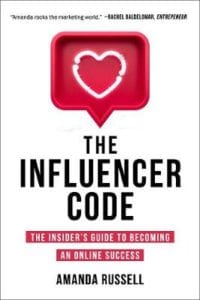
The Influencer Code: How to Unlock the Power of Influencer Marketing
Running was the sport that is the reject sport. Meaning that it was the sport that the only team that you didn’t have to make. It was the one where everybody that had nowhere else to go went, but it was free. My family didn’t have the resources to put me in any fancy sport either. My dad said, “It’s free. This is a life sport, Amanda. You can do this anywhere. You don’t have to rely on anybody. You don’t have to drive to a place. You don’t have to have fancy equipment. As long as you have your body, you can run.” I ran and I remember when it was the high school Physical Education coach that said to me, “Amanda, there are these things called scholarships. They exist in the United States in which they will pay for you to go to the school. They will pay for your whole education and you will get to compete in NCAA track and field.”
The idea of that was exciting. What was more impactful to me was that this teacher believed enough in me that I would be possibly capable of being able to do something like that. That was life-changing for me that I ran and ran. The one thing about running, which is different than marketing and sales and a lot of different fields is that it is not subjective. Meaning the time on a track is a time on a track. There is no judgment needed. If you can run a time, you are the fastest. There were no recruiters coming to my small hometown, but I knew that if I could hit certain times that I could write my ticket, so I did. There are teachers at that high school and people in my town who will still tell stories of seeing me running and creating my own practices in the middle of snow storms like, “School was canceled that day, but Amanda is out on the streets running.” This is in Northern Canada before school. This is not a place where anybody exercises before work hours.
I created my own practices. I then found an NHL hockey coach who was training NHL players. One thing we had there was hockey cultivation. His name is Larry Shepherd. I asked him if he would coach me. He told me to wait so I can be stronger. At one point I was training 2 to 3 times a day, creating my own training mechanisms. That became everything to me. I got my Division I scholarship. With that, it became my identity and my career. I didn’t follow a passion. For those of people that are like, “I followed my passion,” I’m like, “How do you even know what your passion is? You don’t even know unless you’ve tried everything.” It shocks people to hear when I say, “I hated running.” They’re like, “What?” The idea of running mile after mile sucks. It’s not comfortable. I’m not like, “That was so much fun.” Getting up at certain hours and pounding out in the pouring rain, in the freezing cold, in the hot weather was not fun, but I was passionate about it.
I was passionate about what it made me, how it made me feel, where it got me, how it created this bigger world, the identity and the confidence that it built. I think that with greatness, it’s not always easy. It’s not like you get up in the morning and you’re like, “I’m so excited. I’m passionate.” There are a lot of hard times. I tell the story to you, John, not because this is directly related to marketing, but because running was literally my life and career. It ended up serving as the most metaphorical career of my life. When I hung up the shoes, when I was forced in a tragic accident to end my career abruptly, it was the death of who I was. I was so lost and I didn’t know what I was going to do next. I didn’t have a US visa anymore. I didn’t have the confidence. I didn’t have a team around me. I trained for four years and all of a sudden, the Olympics we’re not going to happen. That then served as the foundation of what would become the theme of my life.
I think the concept now that running is a metaphor, and there have been movies made about it, the founder of Nike and Forrest Gump. We both share a passion for love of movies and the storytelling around that. When we zoom out a little bit and look at our own life as far as it is as a movie, and showing grit, determination and resilience, as opposed to just telling someone you have it, is the power of storytelling. This concept of doing something because it gets you somewhere and there’s outcomes, not because it’s easy and fun is the first takeaway. That to me is the ultimate metaphor in marketing. You’re “running a campaign.” It’s either working or it’s not. Therefore, you have to decide, “This campaign is hard. Do I want to keep doing it?” Yes, because my purpose is, and hopefully you believe in the brand, I’m getting that message out, even if it’s not a slam dunk the first time you test something.
I think there are a lot of lessons to be learned there. Let’s dive into how you started Fit, Strong and Sexy back in New York City, which was this online fitness and lifestyle community. It had over 80,000 subscribers, over 5.5 million views, and you got all kinds of press. It originally was a business school project that made you very popular and certainly put your stake in the ground. There must have been some lessons learned along that road of what it’s like to start a business, get publicity and make it successful. Anything you want to share about that journey?
That’s where the stereotypical term influencer sticks onto my name. That’s where most people seem to think that I got attracted to influencer marketing. That was one small part. The fitness YouTube channel was something that I did start in business school. Fit, Strong and Sexy is no longer. I sold that company in 2018. I started it as a project with the thesis that you can have the best product, service or idea in the world but if you don’t have an audience that cares and trusts you, it doesn’t matter. At the time, YouTube was in its infancy. It was mostly Dumb and Dumber style comedy, music and entertainment and no respect associated with it, no rhyme or reason.
[bctt tweet=”Everybody gravitates to Lamborghini. That’s how sexy the brand is.” username=”John_Livesay”]
I became fascinated with how some of these YouTubers were attracting these tuned-in and engaged audiences that want to know everything about these people’s lives. I decided to start my own channel, and this was before cell phones had cameras. I bought a flip cam at Best Buy and I used my New York apartment as my studio. I became the talent because I didn’t have resources. I didn’t have capital. I wasn’t going to hire somebody. The term influencer gives me nails on a chalkboard, which is ironic. This is why I’m passionate about the subject. I never set out to become a YouTube influencer or a fitness influencer. I use myself because that’s what I had access to.
I did fitness because that was the thing that was most integral in my own life and I think that shows through. If you are into interior design, then that comes through in everything that you do. People ask you about it, you learn more about it, and you venture into new areas. It’s got to be authentic to you. For me, it was fitness because I had spent the past several years rehabbing myself from having to walk again, back to being in shape. I had created this program for myself. That was like, “How do I get into shape literally like an elite athlete without being able to walk any miles or put any impact on your body?” That became my program.
Quickly, we became one of the fastest growing channels on YouTube. I created it like it was a television show. I would say, “Every Wednesday at 9:00 AM.” Even though with YouTube, we all know that it doesn’t matter when it goes live. My philosophy was to create like a show so people could count on it. I was so intrigued by the community and specifically my target was women that would ask all these questions. I would spend hours answering all of their questions and becoming invested in the community. By doing that, I became an expert at my audience. I could name the five different profiles and I knew exactly which one everything spoke to.
As I was speaking, they were like my friends. You can’t fake that. The more invested that I got, the more invested that they got and the more that it grew. At the end of the day, you don’t own anything on a social media platform. My thought upon leaving business school was instead of going back to my consulting firm, I would love to do this as a business, but I need stability, I need longevity, and I need to be able to scale this and own it. I thought that the way to do it was to drive to something that I own. I had this idea of a subscription model. I know that sounds so trivial, but this was before this existed.
This was before people even put their credit card information on the internet to buy a product they were going to physically get, let alone a series of online content that’s not even tangible. It was a bit of a leap of faith, but I had this audience that I knew trusted me enough. I even changed the name because I didn’t want it to be my name anymore. I pulled my audience. Fit, Strong and Sexy was not a name that I came up with. It was a name that my community came up with. It hurt me a little bit because I built it on my name and I switched it. My whole long-term goal was to back out of it. I didn’t want to be the talent anymore. In building a subscription model, I partnered with Trium Entertainment. The pitch of my lifetime was partnering with them. They are old-school television production company.
Mark Koops, one of the partners at Trium was the founder behind The Biggest Loser and Amazing Race, and everything entertainment meets fitness. I learned a lot about pitching through this, which was, “I’m not going to go ask them to help me, ask them for the capital, ask them to produce my channel. I need to figure out how to position this for them.” I knew that they needed to get into digital. They had been doing television for 25 years and they needed to pivot to digital. I had a dedicated audience. I could be their guinea pig if they would be my 50% business partners, and they did. Together we built out the subscription model. It was one of the hardest things. No widgets were built, there was liability, customer service and crashing. We definitely say that it was a stressful endeavor but we learned so much along the way.
That’s where my idea came. I was like, “I want out of this. I don’t want to be the talent.” No one knows what we’re doing. We can’t hire anybody because no one’s gone through it before. Having going through it and everybody I work with is now going through it, all of these companies are going to start to have to meet people. I wanted to start an agency that did that. LiveStrong.com started creating content and Women’s Health Magazine, FabFitFun and Shape. My agency specialized in doing a lot of the strategy, planning and content creation of that. That’s how the whole buildup began and came to fruition. I’ve been seen on every side of it from being the “stereotypical influencer” that’s doing product placement, which is the social media advertising to working with companies to have to scale their business, using collaboration, identifying the factors that are influencing their audience, and how do you become partners with those factors.

Influencer Marketing: At the end of the day, you don’t own anything on a social media platform.
Speaking of partners, you’re now on the Board of Advisors for Lamborghini. That all grew out of your success at this agency. To go from fitness to Lamborghini, it’s a fast car. They must have seen something. It’s on the cover of your book. The CMO had said that this is a great look at how to make either yourself or a brand influential. What was it that Lamborghini needed that you were able to give them around influence? They’re well known and yet I know you well enough that in three years, I’m sure you are responsible for at least one good story of how you have guided them.
All the different things that I do, everybody always gravitates to Lamborghini. That’s how sexy that brand is. I sit on a few different boards and whatever, but Lamborghini gets so much attention. Kudos out to the brand. The interesting part about Lamborghini is that they consider themselves the brand influencer, which I love. That is true. It’s exactly how you brought this up. You said people will answer my call sometimes, or they will pick up that book because they see the name Lamborghini on it. That holds weight. Lamborghini does not use influencers in the stereotypical sense. They don’t use celebrities. They don’t use social media stars. Even when celebrities post about their car, they don’t repost it. They are the influencer themselves.
What Lamborghini has done so well is they understand and work with influencer marketing in the same paradigm that I do, which is that this is not about social media advertising. This is not transactional. They don’t do anything transactional. Everything is built on true relationships. They never pay somebody to do a product placement. They nurture the whole person. They provide an experience and they call it a family. Those are things that you cannot mandate. For example, one of the big initiatives that Lamborghini has done in the past few years and done a great job at is they have taken note that a new market for a sports car is powerful female leaders. Women are in a place now where they’re not just buying fancy purses and handbags. Women of power are now buying real estate, boats and fast cars.
Rather than do some campaign with a bunch of women driving sports cars, what they did was they cultivated a community for these women, providing companionship and network of them. At every major country, they’ve got part of this community of women that can access these fancy Lamborghini lounges. They will send them cars if they want to try a new car experience with no pressure on them to buy a car. It’s more about how can Lamborghini support these women leaders. By nature, what happens? When they’re asking nothing in return and they are this asset in life, what happens is that you become their biggest ambassador ever. It’s true influencer marketing in the way in which I view it.
You said a couple of things that I love. Influencer is built on relationships, not money. The more you invest in your clients, the more they invest in you.
The best influencer relationships often never involve a single transaction of a dime.
One of the things you talk about in The Influencer Code is some of the biggest misunderstandings around influence, that popularity does not equal influence. That stands out to me because a lot of people might even think that they are synonymous. I’m going to let you explain that so that people don’t make that mistake.
[bctt tweet=”The best influencer relationships often never involve a single transaction of a dime. Influence is not universal.” username=”John_Livesay”]
That’s probably one the biggest misconceptions. Even if people say they understand that’s not this case, yet they still go, “For our next campaign, we want to get engagement at this level.” They give some definition of how they’ve decided to determine engagement, or they still are asking about certain impressions, conversions, metrics and all of these things. Not that these are not important, but by focusing on that as attention, buzz and popularity, you’re forcing the wrong metrics. Why? You can be popular all day long. People could love you. You could get attention and engagement off the charts. Let’s say that engagement is the most stereotyped version, which is not comments, but engaged comments, shares and all of these things. If it doesn’t tie back to the desired action, it doesn’t matter.
I use this example of if you took a video of your neighbor’s new kitty cats, and the video goes viral of these kitty cats playing in the living room. If that doesn’t have anything to do with your desired bottom line, it doesn’t matter. Some of the biggest brands in history have made this error. A great example is Kate Upton and Bobbi Brown Cosmetics. On the surface, it would look like Kate Upton would be a prime ambassador or influencer because she’s this beautiful model that was known for being a real woman, real curves. Bobbi Brown hired her, and she got all kinds of engagement, but the people following Kate Upton were not women. They were majority straight men in their 30s and 40s. Straight men don’t buy a lot of makeup.
Kate Upton might be an influencer. In some respects, she was not an influencer for Bobbi Brown Cosmetics. She could get all the engagement, all the attention, all the popularity, and she was popular. She had celebrity status, but it doesn’t equate to influence. It goes along with another fact, which is influence is not universal. This is later proved by when she was then hired by a video gaming company. She was hired by them and she’s killed it off the charts. Why? Because her audience was a lot of men in their 30s and 40s, and that was more in the ballpark of their audience. She had influence in that space. Having her beyond these video games was like “woo” for these guys.
I would boil it down to one simple line and that is influence must be relevant. You talk about that in one of your chapters.
Relevant and resonant. It must resonate.
We’ve all heard about smart goals. You take it one step further and talk about smart objectives. You have this example here about which would we prefer, a salesperson who’s going to increase sales by 5% every month leading to 30% increase in half a year, or somebody who says they’re going to increase traffic by 15%, but don’t have a deadline. Reveal to us what the right answer is and what the rationale is.
I think the right answer is intuitive. It’s like, “What would you rather?” It’s like somebody says they’re going to lose 10 pounds. Are you going to lose 10 pounds in five weeks or in ten years? Are you going to gain 20 pounds first before you lose your 10? What does that mean? That’s step one of the codes. That goes back to the running analogy too. It all ties together because the first thing that we need to do and it’s simple, yet it is the most overlooked even by the biggest brands on the planet, especially in the marketing sales advertising realm. It’s that if we are a for-profit business, we need to start that our goal is almost always the same, which is revenue or market share. The rest are objectives.

Influencer Marketing: Shifting how you think about influence will change everything from your personal life to your professional life. It’s not about transactions; it’s about people and relationships.
Things like awareness, impressions and signups, all these things are great but they’re objectives. We need to start with the end goal first and work backwards. It’s the same reason that Pepsi lost market share to Diet Coke in 2010 when they did the boldest social campaign of all time. They stripped their Super Bowl ads for the first time ever in history in favor of a social media campaign that got so much attention, so much engagement. The problem was that all of the interaction pushed a behavior that was people voting for their favorite charities. It had nothing to do with buying Pepsi.
What happened there? The advertising agency could win awards, but the marketing director is going to be fired because brand buys loses market share. Why? Because they didn’t start with the goal of the company. They started with the excitement over buzz, over popularity, over attention. You’ve got to start with the goal and not everybody is for-profit. Nonprofit, what is their goal? It might be to raise a certain amount of money or getting a certain number of homestead or whatever that is. You got to start with the end goal first, and stop confusing goals with objectives.
One of the things that’s helpful in your book, The Influencer Code, is the tactical step-by-step things that anybody can do who has any kind of website. As an example, you talk about a customized landing page. You might think to yourself, “That’s a real estate that I haven’t customized.” Our mutual friend and a previous guest on the show, Erik Qualman, you show his example. When he was launching his book, he had a customized landing page with a very clever image of his face and about focus. It’s a great checklist for people to say, “Am I doing everything I can?” You have gone through a comprehensive list. That’s why I can tell you’re such a good teacher. You think you’re good at marketing. You think you’re good at influencing other people, but if you want to be a black belt in it, I highly recommend that you take a look at getting The Influencer Code into your library. It’s going to up your game. Any last thought or quote you want to leave us with, Amanda?
In terms of the book, one of the biggest easiest takeaways is to shift how you think about influence. It will change everything from your personal life to your professional life because it applies to both. It’s not about transactions. It’s about people and relationships. When you approach things that way, you’re always going to win. It’s the long game. It’s not a quick fix, but that investment when people think, “It’s so much time up front. It’s so much more money,” it’s not because it’s a quick fix or a transaction. That’s a blip that goes nowhere. You would rather build the infrastructure and the foundation. In order to understand influencer marketing, you must first understand influence. That formula is attention plus trust, because attention without trust is just more noise.
What a great way to end. Thank you so much for sharing your wisdom and this wonderful new book, The Influencer Code.
Thank you so much.
Important Links
- The Influencer Code
- Fit, Strong and Sexy
- YouTube – Amanda Russell
- LiveStrong.com
- https://AmandaRussell.co/
- Erik Qualman – Past episode
- Better Selling Through Storytelling Method Online Course
Wanna Host Your Own Podcast?
Click here to see how my friends at Podetize can help
Purchase John’s new book
John Livesay, The Pitch Whisperer
Share The Show
Did you enjoy the show? I’d love it if you subscribed today and left us a 5-star review!
- Click this link
- Click on the ‘Subscribe’ button below the artwork
- Go to the ‘Ratings and Reviews’ section
- Click on ‘Write a Review’
Love the show? Subscribe, rate, review, and share!
Join The Successful Pitch community today:
- JohnLivesay.com
- John Livesay Facebook
- John Livesay Twitter
- John Livesay LinkedIn
- John Livesay YouTube