
Big Fun Is Serious Business
Posted by John Livesay in podcast | 0 comments
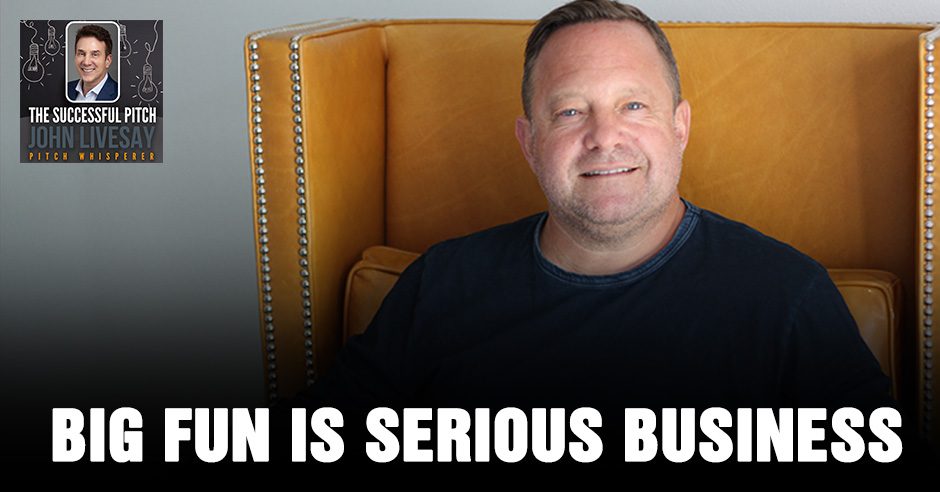
Attending events can be so fun yet, the amount of work put behind the scenes to make them successful is no joke. Take it from the founder of Eventmakers, Guy Genis, who said that big fun is, in fact, serious business. In this episode, he joins John Livesay to share how he is working with huge clients to create memorable and immersive events. He taps into the power of storytelling, taking people from beginning to end with events, and making connections that help propel your business. Guy also talks about interior design, working with clients, and balancing that fine line between giving them what they want and keeping it within the constraints of what is going to look best.
—
Listen to the podcast here
Big Fun Is Serious Business
My guest is Guy Genis, the Founder of Eventmakers, which has been in business for over 30 years, working with huge clients like McDonald’s on creating memorable events in multiple different places. When we describe some of the events that he’s created, the experiences and how immersive they are, you’re going to feel like you’re right there. We talk about the power of storytelling and how that makes events memorable. He said that big fun is in fact serious business, and that you’re only as good as your connections. Enjoy the episode.
—
My guest is Guy Genis, the President and CEO of Eventmakers. He founded Eventmakers back in 1990. He’s produced over 1,000 events in his 30 years and his knowledge and expertise in event creation and execution clearly speaks for itself. Before Eventmakers, he charted and planned events on luxury yachts in partnerships with the Ritz Carlton hotels. When he’s not doing that, he’s busy with Guy Genis Designs as an Interior Design Expert, which is all part of the experience he creates for his events. Guy, welcome to the show.
Thank you.
Let’s talk about your own story of origin. Before the show, we were talking about you have a history with your mom and your grandmother in the world of design. Is that true?
That is true. It’s an interior design dynasty. It’s grandmother. Mother was a successful interior designer for multiple celebrities including DeNiro, Marlon Brando and Rod Stewart. My sister, in her own right, is successful and works with my mom. Now, I’m collaborating with my sister on interior design projects all over. We did a 6,000 square foot home in Kona, Hawaii overlooking the Four Seasons golf course. We did a 12,000-square-foot home in Newport Coast. That’s when I’m not doing producing events.
How did you get into this 30-some years ago? Did you say, “I want to take my passion and skills from creating beautiful spaces for homes and started an event company?”
No, it dates back and I didn’t even know I was doing it. I was the Social Chairman of my fraternity at University of the Pacific. I never knew I would end up for a living producing events. I was an actor when I graduated. I was on a bunch of TV shows. I played a nerd name Earl on Saved by the Bell on a couple of episodes. I was a day player on Coach and Dear John and Anything But Love with Jamie Lee Curtis. It’s amazing when you’re acting and to be on a 3, 4 camera shows is incredible. When you’re not working like all actors know and going on auditions and not getting them, it’s a little depressing. My father was in the film industry. I came from a creative background. My dad produced the special effects for Star Wars with Lucas. He created those iconic titles that went off into space.
[bctt tweet=”If you enjoy what you’re selling, you could sell anything.” username=”John_Livesay”]
Let’s take a moment. I think any person that has any creative aspect in their life dreams of creating something that iconic and that will live on long past their life. To grow up around that, you have a sense of anything is possible, I would think.
It was a great combination of one parent being on the creative scientific end and the mother could be creative in the interior design.
You are the mix of science and creativity. When those things come together, magic happens. It reminds me of the story of Jonas Salk down in La Jolla wooing Francoise Gilot who was with Picasso in the ‘40s. She’s like, “Why do I want a data scientist? I’m an artist.” He used the architecture of the Salk Institute. He said, “Architecture is the bridge between art and science. I want to have artists here as well as someone like Francis Crick working on DNA.” You’re the only other person I’ve ever heard connect those dots like that. What I think is interesting around what your dad was doing with Star Wars is there’s a lot of creativity, obviously creating something that’s still the iconic opening, the once upon a time storytelling, but there’s some science behind it too. He wasn’t a graphic design person, correct?
That is correct. I drifted away from your question. The real answer is how I got into it is I went to my dad who had a post-production company and they were doing the audience reaction spots for Disney. I said, “Dad, I’m bummed out. I’m not getting these auditions.” He says, “Go to work for the company that plans our events.” I ended up for a low salary and a high commission going to work for this boutique company in Marina Del Rey, California chartering yachts for the Ritz Carlton. We would do these extravagant corporate events. I ended up the cold call king. I knew if I enjoyed what I was selling, I could sell anything. My acting partner, when I would go on auditions, this female happened to own a McDonald’s.
She said, “You are crazy if you don’t call the regional office in Woodland Hills and try to get a meeting or an event.” After thirteen cold calls, they said, “You’re bothering me. Come in.” I ended up closing a holiday party for 1,000 guests for McDonald’s. Flash forward 30 years later, my twin brother and I produced the majority of owner-operator meetings throughout the country for McDonald’s. That’s where I think you, as a motivational speaker, when I learned about you and selling and storytelling could be perfect for our McDonald’s clients as well.
Also, I want to zoom out for everyone because you had a story of persistence. You had a friend saying you’d be crazy not to try something, but you’re used to rejection like salespeople are. An actor’s life and a speaker’s life are very similar. We can’t take rejection personally. Yet when you are creating content, and in my case it’s creating a show and interviewing great people like you, I happened to interview a mutual friend of ours, Amber Allen. That’s how we met because you knew Amber. You’d worked with her when she was at Warner and Disney and you did events for her. You heard me interviewing her about her virtual reality company, Double A Labs.

Events Business: More than anything, you can’t sell your style to a client. You have to listen first and make sure that you understand where they’re coming from.
You reached out to me. You never know how relationships are going to start and the connections and the need to keep creating something that’s valuable. You get into other people’s networks and other people’s worlds. I’m sure that’s how you have been able to grow Eventmakers where you’re working with not McDonald’s but Coca-Cola, American Express, Fox and many others. You get the trust transferred over is what I’m saying.
You are only as good as your connections. I would say Amber is a highly talented cutting-edge person producing these technological events where using augmented reality. That’s why she’s an innovator. She’s on the cutting edge and we all help each other. You can’t advance your company without having strong connections like this.
Also what I admire about you, Guy, is your multiple sources of income. It’s a basic business strategy. Yet a lot of event planners, a lot of speakers suddenly go, “If I’m not doing a live event that’s shut down for a pandemic, I don’t know how to else to make money.” You have the design business. You’re already planning months in advance for when live events come back. Have you been able to do any planning for virtual events to make those special?
Yes. As a matter of fact, McDonald’s has embraced virtual events. We’ve invested in a full studio in Orange County with one of our partners. We have full capabilities to stream. We have a green screen, we have Johnny on the spot custom to produce for a network, camera crews that go out and do interviews of these executives. We’re doing these virtual meetings for McDonald’s throughout the country.
Everyone knows about Tony, the famous motivational guy. He’s invested millions of dollars in having a virtual ability to connect with people. I think when a company like you creates a new way of doing something. Let’s talk about that. Over your 30 years of running Eventmakers, what other kinds of pivots or challenges have you had to face and how have you done it like Tony Robbins has done?
The interior design is the perfect pivot. It was right in front of my face, but yet it’s one of those things you have to come to a real realization that, “I’ve done this all my life.” It’s such an easy pivot and you’re already good at it. It’s a form of storytelling as well.
[bctt tweet=”You are only as good as your connections.” username=”John_Livesay”]
We were talking about one of your clients, GameStop, and how you turned a game into an experience in a specific location that was completely relevant to what the game was about. Can you tell us that story?
The end client was 2K. It’s a video gaming company based in Novato. The game itself was called Mafia 3. The backdrop of the game is about the mafia in New Orleans in the 1960s where the mafia started. The purpose was to sell 5,000 GameStop managers in three minutes, which is a challenge. How do you tell a story beginning, middle, and end, get the GameStop managers motivated and have them leave the arena with the intent of an excitement to sell this game through at a GameStop? We came up with the story of creating a real live New Orleans funeral where we had a cast of 50. We had the cast of 50 dressed by Emmy award-winning costume designers in those 1960s outfits. They were doing a real funeral procession down the aisles, pushing the caskets. The audience didn’t know that this cast of 50 was a world-class choir. They get up on stage and they come in and we have them led by a sixteen-piece jazz band singing The Saints Go Marching In like they would do in New Orleans.
They get up on stage and 25 peel off to the right on the bleachers and 25 peel off to the left and they begin the choral of Can’t Always Get What You Want by The Rolling Stones, which is the perfect song and lyrics to talk about the mafia. It was a big surprise in the audience didn’t know that this was a world-class choir, the Angel City Chorale from out of Los Angeles. They made it to the finals of America’s Got Talent. All of a sudden, after they start, I put together a world-class rock band led by Chester Bennington of Linkin Park, Dave Navarro. I had the drummer from Queens of the Stone Age. I had the bass player Scott from Weezer and they go into Can’t Always Get What You Want.
We outfitted every single GameStop manager with LED wristbands. We control the color of 5,000 in the audience and they went bananas. While this was all happening, we edited scenes from Mafia 3 above them on a 100-foot video screen. It was a full visceral, they were enveloped, sold on the game footage, a world-class band and choir. It was a full sensory emotional experience. They came out of there pumped up. Some people were crying from GameStop, the managers, and they said they’ve never seen anything like it.
For everyone reading, let’s break down what Guy told us. A story has to be three things: clear, concise and compelling. In three minutes, you have to tell this amazing story that pulls people in. I always say, when you tug at people’s heartstrings, they want to open their purse strings. When you learn a good story, craft it, make it concise and compelling, then it touches us on an emotional level. Any good story has a little bit of drama and unexpectedness to it. First, it’s cool enough that these people are dressed and carrying a coffin and wearing stylish period clothes. That alone pulls you in. The surprise is those people are professional singers. You keep escalating the wow factor.
You take it one step further. You were describing where it became interactive that they felt part of the story with the colors. If you’re trying to figure out, “How do I tell a story to get people to want to hire me? How do I tell a story to get people to join my team? How do I get to tell a story to get people motivated and re-energized?” Those are some real key tactics. What I love helping people do is take these examples like you gave and turn them into stories so that people see themselves so much in the story that they want to go on the journey with you. You did something I’m not even aware of that you did because you’re such a natural storyteller, which was you gave a resolution to that story. It was telling the story of the guy who runs it saying he was almost in tears and so was the audience. He’d never seen anything like it. That’s the resolution of that story.

Events Business: “Big fun is serious business.”
Imagine the Wizard of Oz if the movie stopped when Dorothy had gotten on the balloon to go back to Kansas. It wouldn’t nearly be meaningful, but we need that resolution of her back in her bed and all the lessons, there’s no place like home. All of that is what makes any movie a story compelling. You gave us a great example of it and how when we tell those stories, sales happen long after people keep talking about it. That’s the other wonderful thing about storytelling is it makes things memorable.
I might add one more thing that these three minutes was only an introduction to introduce the game developer. By the time the game developer comes on stage, they’re already sold. All he has to do is now show them all this great content that they haven’t seen yet. It was making his job easier, getting them excited and that’s storytelling at its best, I think.
One of my previous guests is Robert Cialdini, who wrote a book called Pre-Suasion. He talks about the power of edification. When you edify somebody before they come on stage or speak, it’s good intros, but you did a whole production to edify somebody. They’re already sold emotionally and then they’re backing up their decision with his own story hopefully if what the game is about and how fun it’s going to be to play. Storytelling as a tool to edify is something I like and have not heard people put those two things together. Thanks for that. I had to share that detail. When you get hired as part of your design expertise, what is it that you do that separates you from all the other people who do interior design?
Everybody has their own style. I would call myself a minimalist. I think listening to the client is important, but we tend to have a clean look. We also do a lot of research on the latest in furniture whether it’s already made or do we need to custom make it. It’s more of a custom-tailored approach to every single client. I think more than anything is you can’t sell your style onto a client. You have to listen first and make sure that you understand where they’re coming from. You also need to let them know if there are any limitations to what they want to do, which is important. You have to be able to direct them in the right way. It’s a fine line between what they want and what you think they should have.
It’s almost like an event. That’s why it’s similar. I’m trying to guide somebody. You want to give them something new, it has to be within a budget. One of the techniques that I use, and I’m curious to see if you do this, which is a future pacing somebody. You say, “Let’s imagine that it’s a week after the event. What would have to happen for you to feel happy that this was the best event ever? In the case of designing a home, let’s imagine it’s all done. You’ve had this amazing Thanksgiving dinner, inviting everybody to come see it. What would you think would be the wow factors in the house?” Those kinds of things help people start imagining the future with you even before they’ve hired you.
That is crucial, which is why I always start with what are their goals? Where do they want to be? They’re living in this house every single day. What’s going to make them the happiest? It’s like walking that fine line between giving them exactly or as much as they want, but yet keeping it in the constraints of what I think is going to look the best.
[bctt tweet=”People get bogged down with data and don’t pay attention.” username=”John_Livesay”]
The other thing I think you do for people is there’s a whole book called The Paradox of Choice. Too many choices overwhelm and maybe even depress us sometimes. Unless we have someone like you, Guy, that we trust your taste, your experience, and that you know what we like even before we see it. You’ve curated something for us. Instead of showing somebody 100 samples of floor coverings or window treatments, or color scheme, if you curate that down to here’s three choices, none of them are wrong. It’s let’s brainstorm together what’s the right one. That takes much stress off of people that you don’t even realize what a gift that is that you’re giving to people. It’s the ability to not overwhelm them by too many choices. That trust factor that you have and that’s what a good salesperson does too.
It all boils down to focus and you want to keep them focused on the goal of getting this done the best way and the most creative way possible. I’m also interested. I’m aware that you sold a major institutional interior design firm Gensler on a $1 billion project. I’m interested to go more in-depth on how you did that because it’s something that would help me in my interior design endeavors.
They hired me originally to speak to their team on storytelling for client relationships. We need to connect with our existing clients better. It became how do we tell better stories in our interviews when we’re competing against other firms. They didn’t understand what made a good story or how to structure a story. They weren’t telling stories. They were showing typically before and after pictures of work they’d done and hope that whoever had the best design would get the business. In this particular case, they were told, “You’re in the final three. All three firms could do the work. Otherwise, you wouldn’t have made it to the final three. We’re going to hire the people we like the most.” They said, “Let’s get John in here.” We don’t even know where to start with that criteria.
I flew to Pittsburgh with them for two days and worked with them. I said, “On this team slide here, what are you going to say?” They said, “If we run out of time, we might skip it even.” I’m like, “That’s the most important slide.” This is the secret, Guy. People hire you, and then the company, and then your designs in this case. Most people jump to the design. I said, “What are you going to say?” There are ten pictures of ten people that would be working on this that they got the job. “My name is Bob. I’ve been here ten years. This is what I do.” I said, “No, Bob. What made you become an architect?” “I played with Legos when I was eleven and now I have a son that’s eleven and I still play with Legos and bring that same passion.” “Sue, how about you?” “I was in the Israeli Army before I worked here.” I go, “You’re going to bring a lot of discipline and focus. Since you’re in charge of making sure this thing comes on time and under budget, you’re the perfect person.”
Each one of them had their own stories that they told that made them memorable and likable so that the clients said, “We get them. That’s who we’d like to work with for the next six years.” When we got to the part where they had to showcase studies, they had some beautiful before and after pictures, but no story. I taught them how to take those pictures and facts about square footage and things into a story. It sounds like this. “Two years ago, JetBlue at JFK hired us to come in and renovate that wing. One of the challenges we had during that four-year project was you had to rip off all the tiles in the middle of the night and rewire everything. We had to do it between 9:00 at night and 9:00 in the morning to make sure the stores could still open and not lose revenue. We had all our vendors on call in case something went wrong.”
“Sure enough, at 2:00 in the morning, a fuse blew. We got the vendor to fix it there in twenty minutes. At 8:59, the last tile went down and all the stores opened on time. Now a year later, sales are up 15% in those retail stores because we’ve designed a place that pulls more people in and causes them to spend more time shopping.” It’s a short little story, but it’s got the elements, the exposition. We know where we are. It’s JFK years ago. We know the story. The difference is most people make the mistake of saying, “We use critical thinking to anticipate problems.” That’s corporate-speak. I teach people how to tell a story. You see, I show them critical thinking by having all those vendors on call.
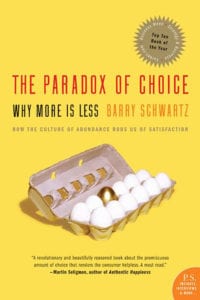
The Paradox of Choice: Why More Is Less
I read some of your literature and it says that people get bogged down with data and don’t pay attention. That is the main purpose for the story. Everyone loves a story.
The magic question then becomes, does that sound like the journey you’d like to go on? The people at the Pittsburgh airport saw themselves in this journey that they had done for JetBlue at JFK, they said, “Yes, that’s the journey we want to go on. We have an emotional connection to you from your story of origins. Now we have a case story that we’ve seen ourselves in that makes us want to pick you.”
It’s an excellent way to approach sales.
The awkwardness of do you want to buy? What do you think? I also work with people on having a great opening and a great closing. You know that from being an actor and designing things. When you’re going into space, you need that wow factor. You need a wow factor in your opening. Most people waste all that time with cliché statements like, “Thanks for this opportunity. I’m excited to be here.” I tell people, “First of all, it’s not about you. Nobody cares that you’re excited. We need to open up with something that’s going to grab their attention and make it about them. In this case, you’re a CEO tasked you with getting the airport ranked from 24 to 1 in five years because we’ve done it before for another airport.” That’s much stronger than, “Thanks for this opportunity, I’m excited to be here.”
The closing, when you’re going to a great party or an event, there’s usually some closing of the event whether it’s music or something that ends it. Unfortunately, without proper training, a lot of people end a meeting or a presentation or a pitch with, “That’s all we got. Any questions?” It’s bad. I train them on recap what you’ve said, “If this sounds like the journey you’d like to go on,” recapping what they need to get their ranking up and imagining the future. “We’d like to invite you to join us on this journey together.” That closing question is part of the story. It’s not pushy.
One of the things we haven’t touched on yet, which is such a big part of Eventmakers is the ability to tell a story through an exhibit. We are designing and producing exhibits in a great way to tell a story for one of our clients Starbreeze, which is a video game company based out of Sweden, is they had The Walking Dead license. We designed and produced The Walking Dead exhibit at E3 and it won by multiple press companies, best exhibit. We recreated the actual fort from the video game that is realistic with the seats that were tires. Things in The Walking Dead movie and TV show where they build things out of scrap junk. We made it come to life. The extra layer was hiring the actual makeup artists from The Walking Dead and having actors in clothes. We had eleven zombies walking around for both photo op. It was effective and it told the story.
The photo op, what a great example of making something memorable and then people post it on their social media and then the event memory, the experience lives on and on. That’s the takeaway that resolution part of it that people go, “I’m going to remember that.”
We had produced fake guts and the attendees and the press would eat the guts. They were in there with them. It was effective and fun.
The more senses we get involved, the more interaction we have going on, the more people are emotionally connected to any story. That’s why we were talking about the Madison Square Garden Sphere opening in Vegas. That’s going to be interactive where you can smell things and feel the wind in your hair like a Disneyland ride or something. The new way of creating events is to have it be completely immersive. The sound is as good in the first seat as it is in the back row. If you’re are showing an example of a concert or what it’s like to land on the moon, you feel like you’re in the story in a 360-degree experience. You’re certainly positioned as the right event company to make those experiences happen because you’ve already done it. Now, technology is catching up with your skillset and vision. Any last thoughts or quote you’d like to leave us with, Guy?
We always under-promise and over-deliver. The other one that I learned from a famous event planner, John Daley was, “Big fun is serious business,” because the more that the bigger the event, it is a serious undertaking. It’s a three-ring circus and you’ve got to go to the next level to make this immersive and impressive.
Guy, thank you so much for coming on and sharing your passion about storytelling, your own amazing history with your family and how you’ve been able to continually adapt and create new virtual experiences for people. I can’t wait to see what other amazing events and designs that you put out into the world.
Likewise, I look forward to working with you on some big motivational appearances.
Thanks.
Take care.
Important Links
- Amber Allen – Past episode
- Robert Cialdini – Past episode
- Pre-Suasion
- The Paradox of Choice
- Eventmakers.com
- https://www.GuyGenisDesigns.com/
- Better Selling Through Storytelling Method Online Course
Wanna Host Your Own Podcast?
Click here to see how my friends at Podetize can help
Purchase John’s new book
John Livesay, The Pitch Whisperer
Share The Show
Did you enjoy the show? I’d love it if you subscribed today and left us a 5-star review!
- Click this link
- Click on the ‘Subscribe’ button below the artwork
- Go to the ‘Ratings and Reviews’ section
- Click on ‘Write a Review’
Love the show? Subscribe, rate, review, and share!
Join The Successful Pitch community today:
- JohnLivesay.com
- John Livesay Facebook
- John Livesay Twitter
- John Livesay LinkedIn
- John Livesay YouTube
The Lucky Titan With Josh Tapp
Posted by John Livesay in podcast | 0 comments

Many entrepreneurs are successful enough to get to a million dollars in revenue, but struggle to figure out how to scale past that. Tapping into his personal experience in building strategic partnerships with industry titans, Josh Tapp, host of The Lucky Titan podcast, teaches people proven methods for entrepreneurs to scale without having to spend a lot of money on advertising. It’s all about leveraging the right kind of relationships with the right kind of people through joint ventures. Learn how exactly you can do this as he talks to John Livesay in this episode. Plus, listen to John as he helps Josh improve his elevator pitch so you can learn how to improve yours, too!
—
Listen to the podcast here
The Lucky Titan With Josh Tapp
Do you know how certain entrepreneurs are successful enough and they get to $1 million in revenue, but they struggle to figure out how to scale past that? Our guest, Josh Tapp at The Lucky Titan podcast, shares his proven method to get entrepreneurs to scale without having to spend a lot of money on advertising or getting frustrated reaching out to people that can’t help them. Find out how he does this. Learn how I helped him with his own elevator pitch so that you can learn how to improve yours too. Enjoy the episode.
—
Our guest is Josh Tapp, who’s the Founder of The Lucky Titan podcast. Josh has helped over 500 entrepreneurs scale their business through joint venture partnerships. Josh, welcome to the show.
Thank you. It’s going to be fun to be here.
Tell me a little bit about your own story of origin. How did you decide you want to even launch a podcast? You can go back to childhood or wherever you want to start your own journey of being an entrepreneur.
My story goes clear back to childhood. What it comes down to for me is I grew up in a family of a long line of entrepreneurs. My dad had a construction company and he started multiple different companies. We experienced the entrepreneurial cycle but growing up, I knew what I wanted to do. In our house, it wasn’t preached to go to college and get a good job. It was preached to start something, be a creator, and college could be a great vehicle for you to get there. For me, I didn’t even think about college until high school, but I remember my first entrepreneurial venture and how great it was.
My dad owned a construction company. I worked for him and he paid me money, and I hated the manual labor. If you want a great way to scare your kids out of having a job, be a contractor. Make them work construction. What it came down to for me was, “I can make money other ways.” I’m probably 8 or 9 years old and I decided to get a bunch of my stuff out of my room. I pulled it to the end of my parent’s street, which we lived in a rural community. There were maybe 25 cars passing every hour. I put up a sign and it was a big white poster, but I wrote on it in pencil and said, “Stuff for sale.”
Not exactly a niche to an eight years old.
I did not understand marketing one bit, but it was a cool lesson for me. I sat there for about three hours and nobody was stopping like, “What is this kid doing?” I didn’t have money for lemonade so I’m like, “I’ll just sell my crap.” One of my dad’s friends stopped and he bought this little polished rock from me, one of your treasures as an 8 or 9-year-old kid. He paid me $0.25. Most people will be like, “It sucks. $0.25 in three hours?” I was elated. I made money doing nothing and it totally sparked that entrepreneurial fire. From there, it went on to starting landscaping companies and moving on to virtual space digital marketing or what have you.
It led me to where I am. I love speaking with people. I love audio and video interviews, and getting to know high-quality people. For me, I found the people I resonate a lot with are entrepreneurs. That’s where the podcast came from. It was being able to meet people like John Livesay and all these people who are untouchable in the market. Being able to bring him into your world for an hour and to be able to interview him was amazing for me, and being able to “pick your brain” for an hour. That’s the kind of stuff for me that drove me towards podcasting in general and entrepreneurship as well.
[bctt tweet=”Luck is putting yourself into a situation where you have opportunities to win.” username=”John_Livesay”]
What made you name your podcast The Lucky Titan?
That one was an intentional play on words. Before this, we had a marketing agency doing Facebook ads for people and I was constantly struggling to get my own clients for that. The problem was I hadn’t built an audience yet. I didn’t have a following of people. I was just reaching out in my town saying, “I’ll do Facebook ads for you.” We could do good for them because they were a local business but generating leads for myself was difficult. I was in that constant wave of not being able to make money. During this time, I ended up hiring a coach, and that coach walked me through. He said, “You need to brand yourself.” He’s under the belief that you shouldn’t brand your name, but you should create a memorable brand. I know there’s a lot of back and forth on that. Both worked great. He’s like, “Start with creating a brand that’s memorable.”
My partner and I would play around with a lot of different names and imagery. We’re like, “Let’s base the podcast off of the people we want to interview. What’s something that would entice them and make them want to come on and give them something to identify with?” It ended up becoming The Lucky Titan because we were going with The Lucky Entrepreneur, but we’d get in trouble. Entrepreneur Magazine will sue you if you have entrepreneur in your title. Word to the wise, if anybody has entrepreneur in their title, make sure you’re prepped for a lawsuit. They have the trademark on the word entrepreneur, the copyright or whatever you have to have. I’m not versed in that stuff. My brother-in-law is a lawyer and he’s like, “Do not do that. Don’t put entrepreneur in there.” That was a good word to the wise. This is not legal advice. I’m going to disclaim that.
For us, we ended up being like, “We want to interview these industry titans and these amazing people who accomplish something great.” That’s where the title came from. We’re trying to get people that when they come on, we put the cape on them and making them feel like the Superman for the day or the Wonder Woman for the day. Our whole brand has stemmed around helping people feel that way and join the ranks of Titan is our whole game plan with the brand.
What about the concept of luck? That’s fascinating to me because a lot of people say, “Luck is where opportunity and preparation meet.” What is your definition of luck?
That was answered better by one of our first guests, Elaine Keltz. I don’t know if you’re familiar with Elaine, but she’s a successful lady. She’s like, “I don’t believe in luck.” People are waiting for the door to open for them. She’s like, “I found a hallway with a lot of doors and started kicking them down.” That’s my definition of luck. It’s putting yourself into a situation where you have opportunities to win. People call me The Lucky Titan and I’m lucky to be there. I’m happy to be there with people. That’s what it’s stemmed out of.
Let’s talk about who you help and what problems you solve. The old elevator pitch that I love to work with people on. What is your current elevator pitch? How are you telling people the answer to that?
This is a good one. John is going to pick this apart for me and he’s going to be mad at me because I haven’t done this well. John, I’m sorry. Our elevator pitch is that we help people to build joint venture partnerships and scale an audience of 1,000 raving fans. Our entire purpose with that is helping people to understand that they don’t have to go it alone. For me, as an entrepreneur, that’s where I was in my previous company. I was trying to do everything by myself and to grow. When we started this company, we decided we’re not going to run ads. We’re not going to run anything other than joint venture deals. We’re going to find successful people and partner our brand with theirs. We built our whole company around that and built our products around helping other people do that.

The Lucky Titan: Don’t brand your name. Create a memorable brand.
Let’s give an example. I know you work with online course creators. I have a course and we’re going to be doing a masterclass together. How do you help online course creators create joint ventures?
That one is a good example because course creators if you’re atypical, “I need to build a funnel with fifteen different steps. I need to have a bunch of Facebook ads and all this different stuff.” What it comes down to when you want to launch a course or a book or anything like that, it helps to have an email list of people. It also helps to have a group of people that you know you could reach out to and say, “Can I come on your show to launch this new thing? Can I come to your Facebook group to launch this new thing?” They’re coming to us and saying, “I want to launch this course.” My goal isn’t to nickel and dime them and charge them $1,000 to say, “Let’s get you on a podcast for $1,000.” A lot of people do that. For me, that should just be a given. That’s good networking, connecting people with high-level people.
The way we were able to grow quickly was because of a few strategic people who were great givers. They connected us with some amazing people and it grew from there. What we typically do is we put them in a room with anywhere from 5 to 10 other entrepreneurs who are non-competing entrepreneurs who have the same ideal customer. John, we both market to a lot of virtual entrepreneurs. Our products are non-competing, but they’re compatible. I’m not great at sales and John is good at the elevator pitches and helping people to build course and everything, and lock in their sales process. What it’s come down to for our company is we want to find people like John to partner with not just ourselves, but the other people in this room.
We try to facilitate that relationship for people so that they can build these partnerships while they’re in the room with one another and they can leave having some joint venture deal set up. One of our favorite ones is getting these long-term partnerships where it’s saying, “Next time I launch something, would you be alright if I come on your show and give an interview?” The problem I see a lot of times when people are trying to launch something is they’re trying to cash in relationships that they haven’t built yet. For example, you’ll join MatchMaker.fm or something to get on podcasts. “I watched this new product. I need 25 people to have me on their shows.” That’s the wrong way to go about it. The right way to go about it is to have these relationships built where you’ve got 100 people who’ve committed to having you on their show at some point. When you go to do a launch, you do 100 interviews in 30 days and you launch your product. That’s the fastest way to scale and grow joint ventures in my opinion.
You’ve got multiple podcasts airing all at the same timeframes is what you’re saying.
Right. I can give you a good example of this. If you’re familiar with Rachel Hollis, she wrote the book, Girl, Wash Your Face. It was the second bestselling book in the world in 2019. She was only beat out by Michelle Obama. That puts it in perspective. Rachel Hollis is one of those people where she had some influence. She was interviewed and this was something that solidified our theory in my opinion. She didn’t spend a single dime on ads, didn’t have a publisher or anything. All she did was she went and she had 180 of the top female influencers interview her on their podcasts, TV shows or whatever they had. She knocked it out in about 90 days right before the launch. She sold something like twenty million copies of her books, something crazy. That is the value of that.
How long did you have to work with her to get that all queued up?
No, she wasn’t a client of ours. That’s just a good example of that. A client of ours, one of the ones that we’ve seen that was cool. They ended up partnering in the travel sector. The vacation sector and the travel sector is being hurt because nobody can travel. This company was saying, “We’ve got to go back to the books and do something or we’re going to have to close our doors.” What we did is we partnered with them, two people who are travel influencers like the Instagram influencers who have big followings. We partnered with Volkswagen and a subsidiary company of Expedia.
[bctt tweet=”Sell through people, not to people.” username=”John_Livesay”]
Combined, we all had a list of about five million people with our reach. We were trying to grow our list and sell something out. We did a giveaway. We said, “All of us email our lists.” From that, we said, “There’s a free vacation giveaway. Come to this page.” Anybody who opted in, all five of us got their emails and it was legal. We had all the GDPR compliance and everything in place but the coolest thing happened with that. It took us a grand total of maybe twelve hours to get this whole thing put together and we got 50,000 emails off of it, each of us did. If you have any perspective of this like with Facebook ads, that would cost you anywhere from $50,000 to $150,000 to generate that through almost any other means. It cost us all a grand total of $400 each.
How do you find clients, Josh?
For me, honestly, I practice what I preach. My entire goal is to not ever have to spend Facebook ads for my own company. That might slow us down but for us, it hasn’t seemed to slow us down. We’ve been focusing 100% on building out these partnerships. I’m always going on podcasts and generating these relationships and bringing people onto mine or onto summits, building goodwill with people because one day, when I need to launch something and they’ve already committed to having me on their show, I can hop on and launch something. That has been the best way for us to generate clients. Our higher ticket masterminds, which is our core business, we typically get those all through referrals of these people that we know have a good following of people. Our lower ticket products and everything like that come through email joint ventures and our higher ticket products come directly through peer-to-peer referral.
You have some funnel. Can you walk people through what that funnel is and the timeframe? You have a relationship with someone and you invite them on your podcast. How do you figure out who you want to have on your podcast? Is that your potential ideal client?
I believe that podcast is not about the listeners overall. That is one piece of the puzzle. You do need to pay attention to who your ideal listener is, but you need to tailor your podcast or your show or what have you to make it the best possible platform for the people that you want to work with. For The Lucky Titan, our ideal customer is somebody who has made $1 million a year and plateaued. They’ve gotten stuck and they know, “I’ve gotten here by being a rainmaker. I’m good at sales and I’m good at closing deals, but I need systems and I need partners in place in order to scale.” That’s where we come in.
Our podcast, The Lucky Titan, what we do is we interview people about how they got to $1 million and how they were able to scale and grow. It opens up a sales opportunity for us every time. One of the things, and you might have even told me this, the sell-through people, not to people. I love that concept. What we do, and I didn’t realize I was doing it, was we bring them on. Instead of saying, “I want you to join my mastermind. Here’s the cost,” and it became this big sales pitch, I’m like, “We’re building this thing. We’re looking for people in this category. Who’s that one person that you know who would be a perfect fit for this that you could connect me with?”
I have to back up a little bit. I want to share the strategy with your people because this will be beneficial to them. I handpick these people from the start. I listen to podcasts all the time, almost all day while I’m working. If I’m not on a call, I’m listening to a podcast because I like to find the people who are the best in the industry. I’m listening to podcasts like Entrepreneurs On Fire and Marketing Secrets. I find these people who interview super high-level people. Mixergy, they bring on these high-level entrepreneurs and interview them. What we do is I look at their guests and handpick them, and then I outreach to all of them. This is something I do myself. I don’t outsource a lot of this because I want to make sure that they know I’m reaching out to them personally and it’s not some bots or paying somebody in the Philippines to build that relationship.
You’re taking a ticket, something they said on the podcast, and be specific about. I resonated with what you said to John Dumas on Entrepreneurs On Fire.

The Lucky Titan: You need to tailor your podcast to make it the best possible platform for the people whom you want to work with.
“The title of your podcast was about this. I loved exactly what you said in that episode on EOFire. Would you come on mine and share the same thing? I’ll promote you and XYZ.” Just to give you an idea when we outreach that way, we get about a 98% positive response rate and about 80% of them come to join our show.
It’s personalized. If you hear them on the other show and you think they look successful, they probably have $1 million in revenue, they might be a good fit. You compliment them and they say yes to be on your show. It’s a compliment, baby step, “Do you want to be on my show?” You build a relationship when they’re your guests. From there, you follow up and ask them if they might know somebody who might want to be in a mastermind.
There will be steps in there. I want to caveat too. If you do this correctly, if you do an hour-long interview and you only record for twenty minutes, that gives you 40 minutes of your time to get to know them. I spent about 10 to 15 minutes becoming friends with them. I will record for about twenty minutes. That gives us air from 15 to 20 minutes to ask this question. It’s the question I asked every single person. “How can I help you to expand your business today?” They’ll usually say, “I lost the podcast. This, that or the other.” The beautiful thing about that question is it’s almost like an open-ended question.
The human answer that you should be saying to that question is, “How can I help you?” They always ask that question back to you. I’ve not had somebody say that to me. Instead of saying, “How about you buy my stuff? I’m opening up this huge sales opportunity.” I’ll typically say to them, “This is the product we’re launching. This is the audience that we’re promoting to. Who’s one person that you know who fits that deal that maybe you could connect me with?” I’m like, “That’s the one thing you could do for me. I don’t need you to do a bunch of promotions for me or anything like this. I just need you to connect with one person.”
Just to give you an idea, John, typically what our numbers look like from this because I am not your typical salesman. I’ve never been trained in it. What I found is I’m good at the inviting side like, “Maybe it would be a good fit for you. Do you want to come to join us?” We’ll have about 10% to 20% of the people that I interview end up buying our products and the rest of them will typically refer me to at least one other person. That’s where the sales opportunities get opened up. You asked for timeframe. I’m listening to podcasts anyways. It takes me about fifteen minutes of research on the person to get maybe five people on my show. It’s an hour interview with each of them. I’m building content and getting all this great content from it but it also opens up all these sales opportunities. We end up closing typically, for ten people will close about 1 to 2 people who come on our show.
Do you have one mastermind or juggling a lot of masterminds?
We juggle quite a few masterminds because I like to put people with the right people. If you’ve ever been in a mastermind before, I personally pay for five different masterminds at any given time. I like to jump through them to do my research. I want to know what other people are doing and what’s working. The best ones that I’ve seen are not just entrepreneurs. It’s entrepreneurs who have generated a certain amount of revenue. For example, if you’ve generated $1 million in revenue, you failed dozens of times, so you know how to overcome problems. When you put them in a room together like that, everybody can solve anybody’s problem. On top of that, we put them in a room where they have the same ideal customer. I’m not going to put somebody who’s in the travel sector with somebody who’s promoting a course unless it’s in the travel sector because it doesn’t make sense for them to be in the room. They’re going to learn from each other but that partnership can’t happen.
We get what I call the networking effect, where it’s like the BNI groups where you go to the Chamber of Commerce and people are throwing their business cards around. Maybe we could work together someday. That’s not a great way to network. The best way to network is to give them a purpose, hand them partnerships, and give them the actual thing that they should be doing so there’s no question in their mind. They’re like, “We’re both in the room together so we can get on each other’s podcast. That’s why we’re in this room.” That then eliminates this awkward barrier. That’s the process in a large nutshell.
[bctt tweet=”Come in with a purpose, leave with a partnership. #TheLuckyTitan” username=”John_Livesay”]
What’s your secret sauce to your masterclasses that people who may have been in other masterclasses say, “I don’t need that,” or “That didn’t work for me?” What is it that makes yours unique besides it being customized, which is important?
The thing that people come to us for and that they beg for, and they’re like, “This is what I love most about yours,” it’s because I’m not selling me. I’m not that cool. I’m a young guy and I’m inexperienced, but I know a lot of cool people. They know that I’m going to get the right people in the right room and that they’re pre-vetted. I would say our secret sauce is we give them an actual reason to be there and a purpose for their networking instead of a woo-woo happy session. Those are great and they’re good for motivation, but they die quickly. Our secret sauce is helping people come in with a purpose and they leave with a partnership.
Now, I have enough information to give you a new elevator pitch.
Let’s do it.
A lot of entrepreneurs who have struggled to get that first $1 million in revenue feel maybe a little burnt out, but they’re happy they’ve made that much progress. Now, they don’t know how to scale. What we do at Lucky Titan is we create a place to let them find partners that help them scale with a proven system, which doesn’t require a lot of money or work on the entrepreneur’s part. When that happens, they are able to get their purpose out through partnerships in a way that doesn’t tap into their energy or their bank account.
You think you’ve done this a few times, John?
That’s the gist of it in a short, concise, compelling way, which is what everybody wants in a good elevator pitch. I took some of that pain point because we all know, the better you describe the pain of somebody, the more you have their solution. They’re proud of it but they’re exhausted. If you don’t tap into their bank account or their energy resources, and you can get them to scale, that’s where people are going to want to be intrigued to know more. The whole purpose of this is to get people to say, “How does that work? Tell me more,” and then you could go into a case story or of a case study of somebody that you’ve helped.
One of the things that came to my mind as you were talking about that was one of the biggest pain points for our audience is they all love masterminds. They love connecting but I don’t have time. I only have one hour a month allotted to masterminds. For us, that’s why we’re like, “It’s an hour-long mastermind.” There you go. It’s bringing it down to where it simplifies it. Thank you for that. I appreciate that.

The Lucky Titan: Lock in your platform and make sure you commit to it.
It’s like, “Give us an hour a month and we’ll give you 10% growth in six months or something.” It all depends on what the objection is, but you have to have multiple stories ready to go. There are three kinds of personalities. There’s the numbers person so you would have a numbers case story, “We had somebody just like you. They were accountant,” or “They were productivity experts.” Somebody else who’s feeling more like, “I’m awkward. I feel uncomfortable. I don’t like being pushy. I don’t like selling myself.” You’re like, “This is the perfect mastermind for you because you don’t have to sell yourself.” You get your own objections, “How do you know so many people, you’re only 26?” You have a story ready to go like that. “I understand. In fact, some of our best clients felt the same way.”
You’re like, “I’m listening to podcasts. I’m doing all the things you don’t have time to do such as listen to podcasts to find the right people for you. Think of me as a curator. It doesn’t matter how old you are. I have the time and the energy to curate the right people based on who you need, then I’m saving you tons of time. We all know your time is worth a lot of money.” They then go, “I need that.” You can even say, “Do you know how a virtual assistant can make you five times more productive and you get to do the things you love? A mastermind with the right people in it is a virtual assistant on steroids.” They then go, “Right. Got it. Yeah. Okay.” That’s the gist of it. Any last quote or thought you want to leave us with?
The last thing I want to leave everybody with is to think about the platform. What’s the platform that you stand on? I feel like the thing that made the biggest difference in our company is when I finally stopped trying to be everything and just highlight the other things that people want to share about, and building a podcast for me was the easiest way for me to do that. It allowed me to meet some of the most amazing people and networks and continues to do that for us. I’d say lock in your platform and make sure you commit to it.
You’ve gone full circle from being a little eight-year-old boy saying stuff to sell through realizing now the importance of having a niche. Thanks, Josh. It’s great having you.
I appreciate it. Thanks, John.
Important Links
- The Lucky Titan
- Elaine Keltz – Past episode on The Lucky Titan podcast
- MatchMaker.fm
- Girl, Wash Your Face
- Entrepreneurs On Fire
- Marketing Secrets
- Mixergy
- Better Selling Through Storytelling Method Online Course
Wanna Host Your Own Podcast?
Click here to see how my friends at Podetize can help
Purchase John’s new book
John Livesay, The Pitch Whisperer
Share The Show
Did you enjoy the show? I’d love it if you subscribed today and left us a 5-star review!
- Click this link
- Click on the ‘Subscribe’ button below the artwork
- Go to the ‘Ratings and Reviews’ section
- Click on ‘Write a Review’
Love the show? Subscribe, rate, review, and share!
Join The Successful Pitch community today:
- JohnLivesay.com
- John Livesay Facebook
- John Livesay Twitter
- John Livesay LinkedIn
- John Livesay YouTube
Own The A.I. Revolution With Neil Sahota
Posted by John Livesay in podcast | 0 comments


Do you remember when IBM’s Watson, their artificial intelligence, actually beat jeopardy? Meet Neil Sahota, one of the key people behind the team at IBM that made that happen. Like all great ideas, Watson was conceived at a bar where Jeopardy happened to be playing on the TV. On today’s podcast, Neil joins John Livesay to dive into the world of artificial intelligence and its many elements, including artificial empathy. Neil talks about how artificial intelligence can actually make us more human. Tune in to this episode to unpack this insight.
—
Listen to the podcast here
Own The A.I. Revolution With Neil Sahota
Do you remember when IBM Watson’s artificial intelligence beat Jeopardy!? Meet Neil Sahota, one of the key people behind the team at IBM that made that happen. You can only imagine the suspense and the stress they were under if it didn’t work. He also shares what it was like to live in China. He said, “It’s like the Stone Age meets the Space Age.” Find out what he means. Finally, he talks about how artificial intelligence can make us more human and there’s artificial intelligence for empathy. This is an episode you won’t want to miss.
—
Our guest is Neil Sahota. He is an IBM Master Inventor, United Nations Artificial Intelligence subject matter expert, and a Professor at UC Irvine. He’s got many years of business experience. He works to inspire clients and partners to foster innovation and develop next-generation products and solutions powered by AI. His work spans multiple industries, including legal services, healthcare, life sciences, retail, travel and transportation, energy, automotive basically everything.
He is one of the few people selected for IBM’s Corporate Service Corps leadership program that pairs leaders with NGOs to perform community-driven economic development. He lived in China when he was there. He also partners with entrepreneurs to define their products, establish their markets, and structure their companies. He’s a member of several investment groups like the Tech Coast Angels. He’s also served as a judge in various startup competitions. I’m thrilled to have you. Welcome, Neil.
Thanks for having me on, John. I’m excited to be here.
We didn’t even touch on all the other things you do. You have a book called Own the AI Revolution. There are many things going on, and you’re also a speaker. Tell us a little bit about your own story of origin. You can go back to childhood, school, or wherever you want, that gives us a sense of how it all started. Were you always interested in computers? Did you have a robot friend?
No, not at all. I was a kid from the Bronx that loved playing sports. I live a couple of blocks from Yankee Stadium. We’re playing stickball, basketball, and football. My mom got tired of me always playing sports. She felt like I need to be more well-rounded. She insisted to me to try to learn the piano or the violin. I wasn’t into that. One day, she’s like, “You have to do something else.” We had been walking by a little strip mall area and they were teaching computer classes in there. I told my mom as an eight-year-old kid, “I want to learn computers.” She’s like, “What? Seriously?” I’m like, “Yeah.” She marched me right in and signed me up for classes.
If it’s between that and piano, I understand. I took piano lessons. I like music. There’s a big connection between math and music. It’s quite interesting to see how one little choice like that can make such a difference in how that all transpired. There you are taking computers. You liked it and took to it, but they weren’t talking about artificial intelligence back then, I’m guessing. There’s more coding.
Yeah. I was learning. It was on Apple IIe to date myself here. It’s cool to say that I could write these little lines of code and stuff would happen. You could do a calculation and get some graphics, but you essentially are enabling people to be able to do something with the machine. I thought, “That’s creative because I dig that.” Fast forward a few decades there, I was working with a lot of the C-level execs and they’re like, “Business intelligence was taken off. It’s amazing what computers are telling us.” I’m like, “Computers aren’t telling us anything.” There are cool tools to collect tons of data, slice and dice it, and create nice looking reports but machines don’t tell us anything. Could a machine do that? That’s how I looked down this path going like, “I wonder if there’s a way a machine tells us something. Could a machine find insights?”
You spent this illustrious career over twelve years at IBM dealing with their Watson ecosystem. For those readers who may not know much about that, tell us what that was like from the beginning to twelve years later because things move fast.
The thing with Watson started at a bar with all great ideas. There were three IBM Distinguished Engineers. They’re some smart guys. We’re thinking about something cool to do and Jeopardy! happened to be playing on the TV. We’re like, “What if we could create a computer that could play on Jeopardy!?” Most people are like, “How hard could that be?” It’s like playing chess. Jeopardy! will be giving an answer and you have to figure out the question. You think about language. How hard is it to understand people when they talk?
[bctt tweet=”AI will actually make us more human.” username=”John_Livesay”]
If I say I’m feeling blue because it’s raining cats and dogs, everyone knows what I’m talking about. If you tell a machine that, it’s like, “You’re physically the color blue because small animals are falling from the sky?” That does not compute. These were the hurdles and we figured out how to do this. We had to commit to the Jeopardy! challenge two years in advance. At that point, we didn’t even know if we could do this or not. Chris was like, “Of course, we’ll make it happen.” It’s no secret that it’s 50/50 that Watson would work the night of the Jeopardy! challenge.
Nothing like a little drama in a story.
Everyone got the blackberries out and the recipes all ready to go.
It’s visible.
Watson did not start off well. These 6 of the first 7 questions, the execs are a few rows in front, and looking unhappy. Everyone’s like, “I might be in the market for a new job. We have lunch or something.” It’s a testament to how fast AI learns. Watson turned it around. It turned into questions right, applying the strategy, and then it won the whole thing. We’re like, “We did not expect that.”
I’ve read a lot about how it learns fast, even how to bid because it’s not just answering and coming up with the right question for the answer, but also, which thing to bid on and not bid on. It’s fascinating stuff. I’ve worked with quite a few founders in artificial intelligence and trying to work with them on crafting a story around it. For people who aren’t into the weeds of artificial intelligence, there’s this whole thing around structured data and unstructured data, and everybody zones out.
I use the analogy of the tip of the iceberg. What’s above the water is what you can see and that’s what’s structured. This whole premise of how can AI help understand what people are feeling and not just if it’s positive or negative information that you’re trending on social media, but what causes it. My favorite story around this was, you come home and you see your wife crying. You don’t know if it’s tears of joy because she got good news or tears of sadness because something bad happened, or she’s frustrated you left your socks on the floor again. Until we know why someone’s crying, it’s not enough to know if someone’s happy or not happy, especially when you zoom out and look at it from a standpoint of how a company should respond with all this data coming through social media channels. I’d love to have you speak a little bit about how AI has grown past, “Someone’s happy or not,” to “Here’s the reason they’re feeling this way.”
There’s a whole area called artificial empathy in AI. It’s exactly like it sounds like. The machine is trying to figure out the emotional state of a person and dynamically respond to that. People feel emotions. How the world is going to be empathetic?
There are some people that can’t do that.

AI Revolution: Machines can only do what we teach them to do; so far, we have not figured out how to make AI creative or imaginative.
People are like, “Can a machine do this?” The answer is yes. It doesn’t have to feel it. We can teach it things or clues to look for. It’s areas about psychology, kinesiology or body language, and neurolinguistics are clues. It’s things that we, as people, use subconsciously.
Your eyes go up or not. The whole Neuro-Linguistic Programming, you’re trying to remember something or your face gets flustered and you’re angry. It’s not just the computer responding to what you type in. It’s got cameras and can start to see body cues. Ironically, it’s probably better than a virtual world because, for many people during a pandemic, I can’t read body language like I could in person, but the computers are like, “No problem for us.”
That’s a huge advantage. You’re seeing a lot of people build tools to help people connect better in the virtual environment, as well as communicate better. In addition to empathy, the machine has a way to use neurolinguistics to deconstruct language. You learn, “Neil is an auditory learner and John is a visual learner. Neil cares more about the fun factor of a product while John cares more about the value of the product. This is the best way to engage.”
Even the words to use. “You should use these words with Neil and these words with John to help communicate.” A lot started as marketing and sales staff, people realize, “This is an AI communication coach.” If you want to connect better with your kids or you’re wondering why your wife is angry at you, it can help us do that now and respond back. Rather than like, “What’s wrong with you?” The AI is like, “No, don’t say that.” “I feel like something is wrong here. Did something happen today? Tell me.”
There are many questions around just this. I could spend so much time with you. Let’s do it through the lens of marketing and sales. I’m always a big studier of Neuro-Linguistic Programming. I remember that back in the day, that was completely revolutionary information. Especially speakers, you and I are both keynote speakers. When we get up in front of an audience, we know that some of those people are going to be visually-oriented, so you need to paint a picture. Some of them are going to be kinesthetic and some of them are going to be auditory.
My favorite example of that is when I say the car door slammed. Do you see it, hear it, or feel it? I’m always fascinated by the people who feel the door slamming and yet, those people, you can almost predict that they’re going to have an amazing sound system in their car at home and Sonos speakers or whatever. I remember being in a car with a friend of mine and she was driving us around. I just moved up to Northern California in Marin County. She was driving and taking us someplace she’d been before. She’s like, “This doesn’t feel like the right way. Neil, I lost my mind.” I said, “Are you telling me you’re navigating by your feelings? Where’s the map?”
That was my first introduction to not everyone processes the work the way I do. From a sales perspective and speaking perspective, we need to use language that doesn’t make people shift. You’re like, “That resonates with me now because you said it in visual terms or kinesthetic terms.” “Does it ring a bell? Does that feel like the kind of journey you’d like to go on with us?” All those kinds of things are what a good speaker does. Maybe it’s subconscious. If it’s conscious, it takes it to a whole other level. What do you think about all that? How do you use that in your speaking?
It’s about connections. We sometimes lose sight of that. What we’re trying to do is not just this call or making the sale that’s the ultimate thing. We want to be successful. It’s about building relationships and creating resonance. This is a good way to tap into that. People have told me I’m an engaging dynamic speaker and people charged up in a good way. People are like, “What’s your secret?” I’m like, “I don’t know if I have a secret. It’s just that I think about what makes the most sense for the audience. What are the outcomes and the experience that they need?” I’m not at that stage to hear myself talk. How smart I am, I don’t care about that. I’m there because I want to create value for those people so I have to find a way to try and connect with them. That’s why I’m sure you do the same thing I do, John. Every time you’re asked to give a talk, I’m going, “Who is the audience?” All those types of things.
“Let me talk to a couple of people before I get up in front of them.” I can reference that so that there’s some customization to it all. Salespeople do that before they go on a sales call. That preparation pays off. Computers can do way more preparation than we can. What advantage do you think we have over AI from a sales perspective? If they know what language to use and they can do more preparation than we can, what do we have going for us?
[bctt tweet=”The best way to predict the future is to create it.” username=”John_Livesay”]
Machines can only do what we teach them to do. So far, we have not figured out how to make AI creative or imaginative. How do you paint the right picture? How do you tell the right story? AI helps us make sure we’re using the best possible words but they can’t tell us how to craft the story.
Do you think that AI can be a replacement or a substitute for therapy? If people need empathy, someone listening to them, and they can search their database of diagnosis or whatever, “You’re depressed. You need to eat more. Get outside and exercise.” Is that one of the industries that’s probably at risk of being replaced?
I wouldn’t say replaced or substituted but I’d say augmented or supplemented. There’s a lot of focus on this because there are not enough therapists in the world and sometimes, people need outlets. I’m going to tell you something that might blow your mind, John. In Nairobi, Kenya, there’s a project going on called Loving AI. To all the audience, it’s not what you think right away. The goal of Loving AI is to solve the biggest illness in the world, which is loneliness. Before COVID, about 40% of the world suffer from moderate to severe loneliness and they wanted to give these people an outlet. They wanted to create an AI, whether it’s a chatbot or an avatar, or whatever. They want to teach AI, unconditional love. The thought was, “If we can do this, everybody, no matter what time of day or how afraid you are, would have a safe spot to go to.” A substitute for human relationships with a safe spot to go to, engage, feel like they belong to something, and build their confidence so they can go out and engage people. Here’s the mind-blowing part of this. As they try to do this, how do you teach unconditional love to an AI?
It hard enough to teach them empathy, let alone that next step.
The question is, what’s the difference between unconditional love and love?
I know. I have a family. “I love you if you get these grades or if you do that.”
That’s a good example. There are different kinds of love. There’s a love between two spouses, love between a parent and child, and love with your friends. They went from this grandiose idea, which they’re working on to realizing, “This is way more complicated than we thought. We can’t even quite define love. We have to figure out what love means and what conditional love is.” It turned to this deep exploration of what it means to be human. One of the big things that jazz me about AI is that machines, that AI will make us more human.
It does not just free up our time to do higher-value work or do yoga, or whatever. It’s forcing us to think about things. Because we’ve had to teach these concepts to a machine, it’s forcing us to think, “What do these things mean? What is this?” That turns this grandiose exploration and that’s helping us develop better therapists and better psychologists in turn because then we’ll understand some of these things on a deeper level.
That’s what a salesperson is on some level. Even a hairdresser is a psychologist on some level. Anyone who’s interacting with people where they feel like they need to vent their frustrations or open up and share their problems or their fears. Even something like a mortgage broker. You have to say, “Here are my financials.” There’s some level of trust that has to be built. Adweek interviewed me to analyze which Super Bowl commercials told the best stories and it was a fascinating exercise to analyze them all.

AI Revolution: The goal of Loving AI is to solve the biggest illness in the world, which is loneliness.
Google was one of the top because they did that whole thing about the older man losing his memory and using Google to replay their favorite songs of his dead wife and to keep that memory alive. Anytime a product is a Sherpa to help someone be more human. It’s not about the technology. It’s about, “This memory would be lost without it. It helps me grieve and helps me remember someone I love that’s not here. I’m using my own memory.” It’s memories within memories, and then they showed a movie clip, and then you’re like, “Oh my God.”
You’re into the sophistication of stories within stories within a short commercial. That’s what I live for, that kind of analysis, having an advertising background, and all that. What was it like being in China? We can’t let you go without asking a question for goodness sake. Different cultures and different values, your meeting in the world of AI for the common language, I’m guessing. I’ve had some people that live there and said, “We moved to LA to better air.” I’ve never heard of that before, but you probably can relate to that.
China was interesting. I enjoyed my time out there. I lived in a city called Ningbo, which is a small city with seven million people. It was my first time in China, people have always said, “The best way to describe China is the Stone Age meets the Space Age.”
They jump right over the Industrial Age?
You can’t explain the size and scale of China and how things work without experiencing it. That’s true because when I get to China, everything’s on a massive scale. There are many people. The university has 600,000 students. You can’t even fathom that here in the United States. The Space Age meets the Stone Age is, you’ll be in a part of the city and you’ll see these 1,000-year-old buildings. A little bit dilapidated maybe and maybe some wirings. Right next to it is this totally sleek, modern, Platinum LEED-certified skyscraper. It’s such a dichotomy, but you can see the mindset in China.
Living there was immersive. I live like a local and work like a local. I understood how they thought. The thing is they think in terms of long term and in terms of community goals. They’re thinking not so much about what they need to try to accomplish this week or this month. They’re thinking about, “Where does my organization need to be in 10 years or 100 years? What are the steps?” No matter how many small steps they have to take to get there. This has shaped the culture and the mindset out there. They have amazing food.
That takes us to where you’re teaching. What are some of the favorite things you like about teaching?
I never thought I would go down this path, to be honest, but I enjoy connecting with the students, have a chance to share my knowledge, and more importantly, my experiences so that they make new mistakes and not the same mistakes I did.
That’s one of my favorite questions. If you could go back in time to your younger self, what would you say? As a teacher in college, are you saying to them, “AI is the future. You’ve got to learn this and embrace this.” I heard somebody say reading, writing, and coding. When you’re not teaching your children all three, it’s child abuse, to be prepared for the new world.
[bctt tweet=”Entrepreneurs have to be willing to take risks and think differently.” username=”John_Livesay”]
I tapped into Wayne Gretzky. I tell my students out. If you’re not familiar with Wayne Gretzky, he’s probably one the greatest ice hockey player ever. People used to ask him, “Why are you good?” He said, “My secret? I don’t skate to where the puck is. I skate to where the puck will be.”
That’s why people hire you to be the speaker. You help them visualize what’s coming around the corner, even if you can’t predict the pandemic. Maybe they could because it happened 100 years ago. They’re like, “We’re due.” What advice do you give entrepreneurs so that they can be like Wayne Gretzky in their business planning? The traditional business plans from yesteryear don’t even make sense anymore.
Things happen too fast, change too fast. You probably hear the expression all the time, John, “Feel fast. Learn change.” It’s true even in regular business, not just entrepreneurship. I tell entrepreneurs, “You’ve got to be willing to take risks when you have to think differently.” It’s not just you have to have the great idea. You’ve got the idea, build the idea, own the idea and create the infrastructure around the idea. You’ve got to do all these things to be successful. I have a framework I called TUCBO, Think different, Understand different, Create different, Be different and Own different. If one focuses on the team, they think if I get the T, “I’m golden.” Idea by itself is not worth the whole lot if you’re not going to build it, create it, get the buy-in, and build the infrastructure.
I will share the story of Tesla. Why is Tesla successful in electric cars, where everyone else has failed for decades? They have some great technology and they made some great advancements in batteries. That’s not the selling point. They didn’t think differently. They didn’t create differently. One of the big edges they created was they took away the reasons to say no. Are you worried about finding a charging station? They have an app for it that will tell you where they are. Are you worried about infrastructure charging stations out there? We’re building that infrastructure. We’re out there negotiating with the shopping malls, retail centers, theaters and grocery stores to get prime locations for those stations for you.
That’s what the competitors weren’t doing. I remember there was another electric car company right around the time of Tesla. It was like, “That’s just for rich people. It can’t hold the charge to go from LA to Vegas.” “Somebody put a charging station in the middle?” I like that. That’s a great quote. “Take away the reasons for people to say no,” and that’s true whether you’re Tesla pitching. I would be remiss if I didn’t ask you for a tip since you judge and hear many pitches for investment. Any tips on how to give a great pitch to an investor? What mistakes to avoid? Either one, whatever you want to do.
You have to tell a relatable story. You’d love that, John. I’ve heard over 2,000 pitches in my life. You have to tell a relatable story and you have to connect with the investors in the room. I see people come in and they probably have a great idea and they got some traction going on. They’re saying, “Fourteen-year-old kids are going to love this.” If you look at the room, the average person in this room was 52. How are they going to connect with that? If you said, “Your fourteen-year-old kid is going to love this better.” You have to tell the story and have to make it connect and stick. Otherwise, they’re never going to get it.
Also, a good story makes you memorable. Think of hearing 2,000 pitches. You probably remember the ones that have amazing stories because that’s how our brain works and keeps things in our memory because we’re not AI where we can’t just pull all 2,000 up at one time. We’re going to remember the ones that have that emotional story that is not only relatable but hopefully, has some emotional hook to it. I know you’re involved in social causes as well as part of your own purpose and premise. What’s in the book, Own the AI Revolution? That’s the hint. How’s that for a transition? We have artistic intelligence as part of a play on words instead of artificial intelligence on top of artificial empathy. You’ve given us all kinds of great ways to reframe everything, which nobody appreciates that more than I do. What is in your book that can make people intrigued enough to want to go buy it?
My book Own the AI Revolution is geared around what would I call the three Es, Education, Empowerment and Enablement. It’s been for non-technical business leaders, specifically because most of the books were technical or too high-level, too theoretical, or too fearmongering. It gives you a little sense of what exactly is AI? What can it do and not do? The empowerment is to help you answer the question, how do I figure out something to do with AI? Everyone’s like, “I know I should do something but how do I figure that out?”
It empowers you and shares a framework, a set of steps on how to do that. When the enablement is showing you, how do you do it? How do you build a team? How do you go out and put the product to market? It’s woven in with a lot of different real-world stories. It’s non-technical people that have started new business units, new startup ventures with AI to show you that you don’t need to be a smart technologist to do something with this. Most successful ventures I’ve seen were non-technical people. How many technologists know how smart they are? Know the ground problems of a marketer or a doctor or an accountant?

Own the A.I. Revolution: Unlock Your Artificial Intelligence Strategy to Disrupt Your Competition
When I spoke at the Coca-Cola CMO Summit, I was talking to the CMO of Domino’s Pizza. I said, “Your team built the app that tracks pizza from order to delivery.” What I thought was fascinating, Neil, was their overall goal was to give people the perfect pizza experience. From that place, they said, “How can we use AI to cut down a few seconds on the delivery time for the perfect experience?” We have thought if you want a pizza and it comes faster, it’s almost boom. It’s a Space Age stuff.
If you order the same pizza at the same time every day or the same order week after week, then the minute you open the app or pick up the phone, AI goes, “Let’s go ahead and put the order in before they finish completing it. We’ll eat it if they change it.” Those few seconds of getting the pizza started before the order is completed, the predictiveness that might give the consumer a better experience and they may not even notice it. “My pizza is coming here faster,” but maybe they will. I don’t know. That to me was one of my favorite examples of it being used in a way that most people aren’t aware of.
We may not necessarily notice that. If you think they still do some more small changes like that.
“How are they getting those pizzas? They’re fast.” Any last thoughts you want to share with us? Tell people how to find you for speaking. Any last thoughts you want to have to us about what is coming around the corner that you can share, like the puck?
I will tell you there’s a lot of cool things going on but I know a lot of people are wondering, “How can I be in front of the curve?” The best way to predict the future is to create it. We all have a shot or a chance to be a driver but we don’t realize that. Think about something. Even a small thing, a pain point, or an opportunity or something tedious. There’s probably an opportunity there for you. Do something small or big and it’s worth exploring. If you want to learn more about how to do that, definitely come and check out what I have on my website, NeilSahota.com, or you can follow me on LinkedIn and Twitter. I’m always sharing stories or things about what people are up to or I’m doing. Hopefully, you’ll find some inspiration.
I know we will. You’re riveting and thank you for sharing your intelligence, real and artificial, with us all.
It’s my pleasure, John. I had a blast.
Important Links
- Neil Sahota
- Own the AI Revolution
- Wayne Gretzky
- LinkedIn – Neil Sahota
- Twitter – Neil Sahota
- Better Selling Through Storytelling Method Online Course
Wanna Host Your Own Podcast?
Click here to see how my friends at Podetize can help
Purchase John’s new book
John Livesay, The Pitch Whisperer
Share The Show
Did you enjoy the show? I’d love it if you subscribed today and left us a 5-star review!
- Click this link
- Click on the ‘Subscribe’ button below the artwork
- Go to the ‘Ratings and Reviews’ section
- Click on ‘Write a Review’
Love the show? Subscribe, rate, review, and share!
Join The Successful Pitch community today:
- JohnLivesay.com
- John Livesay Facebook
- John Livesay Twitter
- John Livesay LinkedIn
- John Livesay YouTube