

The Power of Positive Thinking & Being Present
Posted by John Livesay in blog | 0 comments

[vc_row][vc_column][vc_column_text]
Have you ever heard the saying: “You can’t give something you don’t have”?
When it comes to being present it’s especially true.
What if someone asked you for a cookie and you didn’t have any cookies? That’s just like if someone asked you to hear them but you were too preoccupied to listen.
You are the gift, or the “present”, when you are present for others.
But in order to be present for others, you have to be there for yourself first.
When we harness the power of positive thinking and being present, we begin to SOAR!
Let’s empty out yesterday’s regrets, toss out tomorrow’s fears, and be here NOW!
Tell yourself:
In this PRESENT moment, I give myself the gift of NOW.
Of course, we’re going to need a flight plan to SOAR—not just fly—our way to success.
Like any good flight plan, there is a check-list, and we have to make sure the equipment works before we start to taxi.
Your mind is the equipment.
We are going to tune it up and check and double check all our safety procedures—our thought processes and beliefs.
Positive thinking and being present.
How do you create your own reality?
How is it that some people are calm when they’re stuck in traffic while others fall apart?
How is it that two siblings from the same family can have vastly different outcomes?
Shakespeare said: “There is nothing either good or bad, but thinking makes it so.”
We are the judge of whether a situation is good or bad. We are the thinker having the thought.
When we know who we are and control our thinking, the thought does not think us.
Here are some of the most common negative thought defaults many of us face.
“What if this doesn’t work out?”
“What if no one likes me?”
“I lack” thoughts:
“There isn’t room for me to succeed.”
“Money doesn’t grow on trees.”
Self-doubt thoughts:
“There is someone better for this job than I am.”
“I have never been…” (fill in the blank):
- thin enough
- smart enough
- handsome/pretty enough
- talented enough
The “I’m not good enough” thought:
This feeling is at the root of so many issues.
Dr. David Walker wrote a book called You are Enough.
When you really think you are enough and believe it—regardless of job loss, financial setback, loss of a loved one or even your health—who you are is bigger than anything external that you can use to measure your self-worth.
“As soon as” thoughts:
I used to play the “as soon as” game in my head. Maybe you’ve done this too.
- As soon as I move to California, I’ll be happy.
- As soon as I get a great job, I’ll be happy.
- As soon as I get married, I’ll be happy.
- As soon as I have a six pack, I’ll be happy.
- As soon as I have a great new car, I’ll be happy.
- As soon as I have a new wardrobe, I’ll be happy.
- As soon as I have a book published, I’ll be happy.
- As soon as I win awards at work, I’ll be happy.
If you’re always thinking of what will happen “as soon as,” how can you really be present in the moment?
The real challenges start when you get what you think you want and you’re still not happy.
When you hold on to the fantasy that if you had X you’d be happy, you still have hope.
When hope is gone, you know outside things won’t fill the hole inside.
That’s when the real work begins.
I have an actor friend who had a part in a hit sitcom and rented a home in Malibu Colony. This was her fantasy, one shared by many other actors.
She was miserable.
The script wasn’t funny; she had to force herself to memorize it.
The beach was often foggy.
Worst of all, no one wanted to hear she was unhappy.
She had it all—what everyone in acting strives for. If she wasn’t happy, how could anyone be happy?
Another big fantasy regardless of your career: As soon as I make over X amount of dollars, I’ll be happy.
We all have this magic number in our head we think will make us feel secure.
“If I had $1 million in the bank or $2 million or $10 million, then I would feel safe.”
It could all go away with one bad investment.
What do successful people say to that?
“So what? I made it once, I can make it again.”
Those who don’t know the power they have live in fear of losing the money they have.
These fear thoughts go away when we take control of the cockpit of our mind with positive thinking.
Are you the pilot, or the passenger stuck in the middle seat in the back of the flight of your life?
- Don’t sell out your soul
- Don’t sell out your ethics
- Don’t sell out your integrity
When our “reality” is happening, it is easy to forget that somewhere behind this experience of good or bad (however we are labeling it or getting agreement on with our friends) is a thought.
How can we remind ourselves of this? By being present!
How many times have you said: “The economy is tough now,” or “the weather is always a problem when I fly.”
Sometimes people will agree with you to try and establish intimacy.
They might say, “I know what you mean. I’m always on flights that are delayed,” or, “yes, it is so tough to make money now.”
Hit the reset button with new knowledge around how to build rapport and intimacy, by being the pilot of our thoughts.
We decide how much power to give any one thought. You need to be present to do this.
Let’s assume you have this thought: “I am an honest person.”
When you are confronted with a choice to act honestly or not, you follow your beliefs about yourself and do the right thing.
If you perform these honest actions long enough they become second nature—a habit.
After a period of time, the habit of being honest becomes a character traits and embodies not only how you define yourself, but how others do as well.
A character trait is measured by how you behave when no one is watching.
If you’re in a position to steal something without getting caught, but you don’t do it, that is a manifestation of honesty.
In a movie, they don’t tell the audience a person is honest through dialogue, they show it by their actions.
When your thoughts become fully integrated into who you are, they become your new reality.
Taking this even one step further, how you treat the world is how the world treats you.
You are honest with yourself and honest with other people.
If you lose your wallet or purse, you believe that someone will return it because in your reality, people are honest.
In sales, when you are honest with your clients, you give them a fair rate.
Over time you get more referrals, because you’re viewed as someone who is a straight shooter.
You are someone who understands that good deals mean both sides walk away from the table with smiles on their faces. Clients buy from you even when you don’t have the best rates, because they know you treat them with respect and honesty.
The importance of positive self-talk.
What you say to yourself is more important than what you say to others.
Think about it.
The person we have the most dialogue with every day is ourselves!
Is that conversation:
- Loving
- Kind
- Patient
- Forgiving
- Gentle
- Encouraging
- Supportive
- Renewing
- Calming
- Reassuring
OR
Is it:
- Angry
- Impatient
- Unforgiving
- Relentless
Ask yourself:
- Do you express more negative than positive thoughts, about yourself, to yourself?
- Do you believe that what you think will come true?
- What would it take to shift your negative thinking to positive thinking?
- What would it take to get at least 51 percent of your thoughts headed in the right direction?
When we drive a car or when a pilot flies a plane, it is a series of small “error and correct” movements. When you start to veer towards the wrong lane, you make a slight adjustment on the wheel.
The same goes for your thoughts: adjust the focus.
Let’s go over some common things people say to themselves and see which sound familiar to you.
When you’re present and aware of what you’re thinking, it helps you choose between negative or positive thinking.
Negative versus positive thoughts.
Negative: It just won’t work.
Positive: The things that need to work out will work out. (My life is unfolding perfectly at all times).
Negative: I don’t have enough time.
Positive: I have plenty of time to think, plan and do.
Do you see how lack of time comes from the same mindset of scarcity that says you lack money or health?
Negative: I’m always late.
Positive: I have enough time to get where I need to be.
Once again is there a lack of time or an abundance? Are you hitting green lights or all the red?
Negative: I can’t seem to get organized.
Positive: Taking time to get organized is just as important as anything else I do.
For example: “When I organize my closet, I get ready faster in the morning because I can find what I need fast versus wasting time looking for a belt, etc.”
Negative: Today just isn’t my day.
Positive: There are good things that happened even on “bad” days.
You choose if a bad morning decides the rest of the day. Hit the reset button in your thoughts!
Negative: That really makes me mad.
Positive: Getting mad is okay.
Enough therapy has taught me it is okay to have my feelings. Getting over it is the key. Let go—why hold on to anger? Does it hurt you or the other person?
Negative: Another blue Monday.
Positive: Monday is a great day for a fresh start.
Negative: I don’t have the energy I used to have.
Positive: I have energy to do important things.
Think of it this way: You have a new puppy who has tons of energy. Will he have that much later? Probably not, but he will have enough to have fun, regardless.
Negative: I never have enough money.
Positive: Money is not the only definition of prosperity. I am generous and abundant.
Money is energy in action.
If you are stingy with expressing your feelings of affection, you are probably stingy with the tips you give. Guess what? The universe will be stingy with you because it is like the law of gravity. It applies to everyone the same at all times of the day.
Here is another big excuse:
Negative: Why even try?
Positive: All my efforts are rewarded.
Negative: That’s impossible.
Positive: Nothing is impossible (Break the word into I’m possible.)
Remember, we want to soar!
“You can’t get the gold medal for diving if you stay on the ground.” – Edwene Gaines.
And…
Nobody soars with excuses.
“He that is good for making excuses is seldom good for anything else” – Benjamin Franklin.
Can you imagine all the excuses he could have used if he couldn’t fly a kite to prove static electricity?
- My kite tail is too long.
- The wind is never right.
- The key on the end of this is not big enough.
There will ALWAYS be excuses. But when we harness the power of positive thinking and being present, we’re giving a gift to others and to ourselves!
I want to hear from you!
Write in the comments some of your own negative and positive statements and practice using two positive ones in your head and see how it impacts your day.
Click here if you’d like to hear more about why John is the #1 choice for organizations seeking a keynote speaker to enlighten their force on storytelling as a sales tool, being a revenue rockstar and winning back clients.
Did you enjoy this post about positive thinking and being present? Be sure to visit these articles as well:
Exactly What To Say For Influence And Impact with Phil M. Jones
Giftology: Make People Feel That They Matter with John Ruhlin
[/vc_column_text][/vc_column][/vc_row]
Mr. Persuasion, Jeff Tippett
Posted by John Livesay in podcast | 0 comments

Episode Summary:
The success of your business depends on how well you persuade. Sharing his mastery on the art of persuasion is Mr. Persuasion himself, Jeff Tippett. As the founder of the award-winning PR firm, Targeted Persuasion, Jeff gives great insights on what it takes to successfully do a pitch, whether you are a new client, someone who wants to get hired, or looking for funding. He talks about what captures people’s attention and, at the same time, how to be consistent with your brand and messaging. Believing that everyone has this superpower to persuade, he suggests ways on how people can tap into that. Jeff also reveals the steps to building trust, crafting a call to action, and storytelling.
—
Listen To The Episode Here
Mr. Persuasion, Jeff Tippett
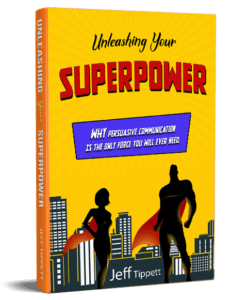
Unleashing Your Superpower: Why Persuasive Communication Is The Only Force You Will Ever Need
I have Jeff Tippett, who is known to many as Mr. Persuasion. He’s a subject matter expert on persuasive communications. He speaks to international audiences through keynotes and seminars and helps everybody become more effective and he has some secret tools to share. His book is called Unleashing Your Superpower: Why Persuasive Communication is the Only Force You Will Ever Need. His bold statement is that we all live or die based on our ability to persuade. He founded Targeted Persuasion, an award-winning PR firm and has worked with big brands like Airbnb and League of Women Voters. He’s an expert on how to get your heart and soul into an emotional story. Jeff, welcome.
Thanks for having me on. I’m excited for us to talk a little bit.
Tell me a little bit about your own story of origin. I know in your book, Unleashing Your Superpower, you have that. I’d like to go back to your high school days.
My first experience as a kid was founding what I thought was a company at the time that I called Snoopy’s Yard Club. At Snoopy’s Yard Club, I would go out and I would knock on doors. In the summertime, I would get gigs mowing grass. In the fall, I would get gigs raking leaves and pine straw. I would hire my friends to come and fulfill those contracts for me so I could go on to then securing the next job. Being an entrepreneur is in my DNA. I grew up this way. It’s who I am. I’m excited that we can talk especially with entrepreneurs to help them better themselves when it comes to persuasion and moving their audience.
You not only sold the job but then you hired other people to do the job. In your book, you talk about the importance of capturing people’s attention. What is the biggest mistake you see people make when they open a pitch, whether it’s to get a new client or to get hired or to get funding for their startup?
The mistake that people often make in capturing their attention is crafting that message. Understanding what it is they’re trying to say to people. We have so much content all over the place and we haven’t figured out how to narrow that content down. Make that content user-facing, make it user-friendly, and speak to the needs of the other person within that content. Once we have this great content out there, it is extremely important to capture people’s attention early especially in today’s world. We have many things that are bombarding us and are out there trying to capture our attention. Ralph Waldo Emerson said it this way, “Sometimes a scream is better than a thesis.” What can we do to be out there to capture people’s attention, but at the same time being extremely consistent with our brand and the look and the feel that we put out there for ourselves?
[bctt tweet=”Trust is the foundation to success.” username=”John_Livesay”]
I made a huge mistake in this at one point and here’s what I did wrong. I have a congenial type personality. I love to affirm people. I love to encourage people that match who I am. I love to see people succeed. However, when I look especially on social media and I see people make these little snarky posts and it seems to capture so much attention, they all of a sudden have 500 likes on their posts. I have to admit. I had this little jealousy, a little envy here of what other people were doing to capture attention. I tried it and I wrote a blog post. I sent it out on email, put it out on social media and it created a storm fire of negativity. The subject matter here was, “Your Social Media Sucks, But You Know That.” What I was trying to do here was to give people some great tips of what they could do to capture attention on social media and make things stand out. People took it personally because they know how much I care for people. They thought I had gone to look at their social media and I was upset. I spent days doing damage control over my brand because I tried to capture attention but I didn’t do it incongruity with my brand standards.
That’s a great distinction that it’s not just any attention you want to capture. You want to capture the right attention.
We all have to go through the phase of know, like and trust us. We’re dealing with new clients, pitches, whatever that looks like. We have to go through those phases and sometimes we’ve tried to push the envelope a little bit too much to gain more attention and it can backfire on us as it did for me.
One of the things you are an expert on is helping people unleash their superpower. You talk about that in your book and you say that everyone has this superpower which is to be able to persuade people. Can you tell us what you suggest people do to try and tap into that?
My bold statement in the book is that I believe that we all live or die based on our ability to persuade. That doesn’t matter if we’re a CEO moving a company forward, if we’re in sales, if we’re a sales manager, if we’re an entrepreneur. Maybe we’re pitching for funding. Maybe we’re trying to attract the right type of talent to help our company move forward. Maybe it’s attracting the right type of clients, the customers that we’re looking for. What I help people do is I go through the early stage of messaging, “How do you craft the message?” I talk about the audience and the importance of making that connection with the audience. We’re going to talk through how we position and how we structure a call to action. I talk a little bit too about trust and the importance of trust and building trust with our audience as well. I like to walk through all of those phases with people to help them understand and give them their cape of superpower to persuade others.
Let’s double-click on trust. Everybody knows it’s important to have it and get it. What shortcuts or ideas or must-have on a checklist do you come up with to give people some instant takeaways from the book, as well as your keynote and seminars on how to be better at building trust faster?
[bctt tweet=”In sales, it’s not just any attention you want to capture. You want to capture the right attention.” username=”John_Livesay”]
When I was finishing up my book, I got a note back from my editor. My editor said, “Jeff, you’ve talked about trust in every single chapter of your book. You haven’t hit this head-on, expounded and gone deep into the topic of trust. Is trust important to you? Is trust important to your message?” It was like a ton of bricks hitting me, “I really haven’t done this,” and here’s the point. Trust is the foundation. Without trust, every other chapter of my book you might as well shred it and put it into recycling. It’s of no value whatsoever. You can have the best message in the world. You can capture people’s attention. You can find ways to make your message stick. You can do all of those things, but if you don’t have the trust of your audience it’s not going to matter and you’re not going to go anywhere. In the book, I walked through ten tips that users can use to help them get trust with their audience. The first one is being consistent. That’s all areas of our life. Brand messaging, our imagery, our response, everything we do we have to create this consistency.
Sometimes especially with our online, we’re all over the place. People don’t even understand who we are. They don’t understand what they’re doing. How can they trust that? Be consistent day in, day out in every single aspect of our business. The second one is to deliver as promised. If we say that we’re going to get a proposal out by 5:00 PM on Friday, it needs to be there by 4:00 PM on Friday. People are watching every small move that we make, making sure that whatever we say that we exceed expectation. That we deliver as promised. This is one that we often don’t think about, but being open and being authentic with our audience. Sometimes we feel we have to have this fake facade of who we are and create this impression. We can gain more trust from our audience if we are open and we are authentic with them. When I’m on stage, people love to hear about my failures, which is great. I have many of those failures. I can be open about them. The fourth one is show confidence. If you believe that your product is the right solution, is a great solution, have confidence in your message. Have confidence in what it is that you’re doing. Be truthful with people.
Number six is to make people feel safe in our presence. That makes them feel safe with the things that we’re doing with them. If they’re on our website, make them feel safe. All aspects of interaction with people, making them feel safe. Number seven, saying no sometimes especially entrepreneurs. We want a break in the money or saying, “Yes.” Sometimes telling people no and say, “No, I’m not a good fit for what you’re doing here. However, let me tell you about my friend X or my friend, Mary, or my friend, John. That person would be perfect.” We can gain trust for them. When things do align in the future, they’re more likely to come back to us if we’ve been honest and we’ve said, “No, we’re not the right fit. No, this isn’t the right solution for you.” Being open to feedback, listening to what our audience has to say, and bringing value to what they’re saying to us. Making time for people sometimes in our busy schedule, we’re all over the place and we’re making things happen. We’re clicking but we forget the people portion of this. Making sure we make time for people. The last one that I talk about is being reliable in our relationships.
Talk a little bit about how you define reliability? The second one I sum up is integrity, doing what you say you’re going to do. You meet a deadline. Is that kissing cousins to reliability or is there a distinction between reliability and integrity for you?
Reliability for us is similar to some of these other aspects there, but what sets us apart is making sure that in whatever it is that what we’re agreeing to with our audience. Whether it’s through an email response or whatever it is. That without being reliable, the trust isn’t going to be there for our audience. Making sure that we’re following through, that we are the expert in this space, that they can count on us and they’re not questioning at any point, “Is Jeff going to show up? Is Jeff going to be on stage on time? Is Jeff going to return my email on time?” That reliability is there in every aspect.
The way to build that is through number one, the consistency. I love how there’s a thread that one of these characteristics supports the other, which is the overall vibe of at the end of the day, people trust you. I personally resonate with feeling safe and the biggest compliment I can ever give someone or get is that I feel safe enough to be myself in your presence. I can take down the mask, be open, and authentic. If you do that first, then when you’re giving your keynotes and you are open and authentic, that makes the audience feel like, “I can trust this guy. He’s not pretending like he never makes a mistake and therefore I can’t relate to him.” That’s a key takeaway for everybody in our audience.
[bctt tweet=”Without your audience’s trust, a good messaging and marketing is not going anywhere.” username=”John_Livesay”]
The foundation here is trust and we have to gain the trust of other people. Everything else is important. It all matters. This is the real foundation. We don’t even understand why, but if we were to get feedback from our audience, maybe they do not trust us for one reason or another.
I love saying no sometimes and how I don’t think I’ve heard that concept before. The clearer you are on what your product or service, who it’s for and who it’s not for, the better people can self-identify with, “He’s not trying to be all things to all people,” or “The brand isn’t trying to be all things to all people.” This willingness to say no is a huge differentiator if people are saying, “Suddenly, your trust factor in my book went up ten notches because you said, ‘No, I don’t do that. I’m not a specialist in blockchain or whatever it is. I know tech but not blockchain tech. I know sales but if you want marketing expertise, then that probably should be Jeff and not me,’” or whatever it would be. I always say that the riches are in the niches. Your niche is so clear that it’s persuasive communication. That could be for salespeople, but it’s a much broader use there because you’re doing deep dives in people’s culture from the work you’re doing. For example, with hospitals where everyone who’s not a salesperson somehow still needs to be working on customer satisfaction, which is different skillsets than selling skills. Correct?
Absolutely. When my editor first read this section on saying no, I got a little pushback from my editor and he was like, “Jeff, your whole book is about getting people to say yes. Does this fit in? Are you sure this fits because you’re giving them an out in this?” I was like, “Absolutely not about giving them an out and absolutely yes this is staying in.” This is extremely important. If someone comes to us and we know it’s not in our niche area, we know it’s not what we do too well, but we take it because we want the money, or we think we need it. We don’t perform well because it’s not what we do. We’re going to lose their trust versus handing this to someone else and saying, “No, I’m not good at crafting an exact pitch. I need to hand you over to my friend, John, because that’s his specialty,” and great. John makes the money. John gets the contract. They do the work there, but then that person will remember me and they’ll trust me because I didn’t lead them astray.

Targeted Persuasion: Sometimes, we’ve tried to push the envelope a little bit too much to gain more attention, and it can backfire on us.
This plays out into all areas of our lives. I’m thrilled to hear you say this about the message and the audience because that was my intent. I want to be a specialist. I am a specialist. I want to continue pushing that in persuasive communications. Does it play out in multiple fields? Absolutely. As an entrepreneur, does it play out? Yes. For healthcare professionals? I do a lot of work for healthcare professionals. Does it matter? Yes, because they have to work toward compliance. Sometimes they struggle a little bit in helping patients understand why this should be taken to the next step with them and what that looks like, but also satisfaction. Hospitals are graded by patients. Even now, a single tweet at times can create multiple havocs for us. It can span to go into the media. It can go all over the place if we haven’t had that customer satisfaction. Persuasion is around that as well.
One of your niches is how to craft a call to action that users can’t resist. Is this call to action something that’s on a website? Is it something a salesperson’s saying? Bring that to life for us.
The answer is yes. That’s what’s beautiful about this book. You could take the topics that are here and you can apply them to an email that you’re going to send. You can apply them to a face to face conversation with a person. You can apply them to a landing page that you’re creating. You could apply this to a regular website that’s part of your product. These tools apply across multiple platforms. They’re not media-specific. You can understand these tools and play them across a variety. Let’s talk a little bit about a call to action. I put thirteen tips in here to help people understand how to craft a call to action that users can’t resist. The first one is to make your ask clear. How many times have you read an email or left a meeting? You walked out scratching your head saying, “What exactly do they want me to do next?” Hang up the phone and like, “Am I supposed to do something?” What’s happening next in this whole thing? Making sure that our ask is clear.
[bctt tweet=”The riches are in the niches.” username=”John_Livesay”]
The second one is making sure that there are strong action verbs in the ask as well. We don’t want a passive voice. We want strong action verb in there. The third one is to make it personal. I encourage people to put the word you or your early in our communication, in our language, in our conversations. What it does is it pulls the person in. It helps them understand that this message is for them. This isn’t a generic message where it could apply to anyone. This is for you. This is for your success. This is for your results. When the user hears that or when they read that, they feel connected and they feel that what you’re offering is specifically for them. The fourth one is to communicate value. This is extremely important on the landing page. We’re asking people to give up something personal, oftentimes it’s their email address. What value are they getting in return? Making sure we clearly put in front of people, “This is the value,” and sometimes it’s affixing a number. Sometimes it’s an outcome. It can vary, but understanding, “What is the value that you’re offering? Have you clearly put that in front of the user?”
The fifth one is to be clever but don’t be tried in all of this. You’ve got to find a way that’s a little bit different, a little bit unique. It needs to adhere to your brand standards, but you’ve got to find some little way to stand out in all of this. Number six is emotion. We know that people buy for emotion, not logic, as Zig Ziglar has taught us. Making sure that we understand like, “How do we pull out the emotion in the person that we’re working with? How do we speak to that emotion?” The seventh one is to create a sense of urgency. Number eight is to create a singular call to action. Sometimes we have a call to action and there are five things that we’re asking people to do. They don’t know which one to do first, which one to do second. Am I supposed to do all five? Does number three fit me or is it number four? They look at all that and you know what they do? They do nothing. They take no action. I will admit, sometimes we do need people to take multiple steps with us to get somewhere but give it to me in a linear path.
Give me the first one. Get me to say yes. Get me to, “I bought into what you’re doing, and then take me to the second ask or the third ask.” That’s extremely important on landing pages and things of that nature, making sure there’s a singular call to action. I encourage people to use strong, punchy language when they’re asked to have the call to action there. “You were invited. Reserve your seat now.” Give us some strong, punchy language there. Number ten is to reduce the risk. Psychologically, when we look at this offer, we are analyzing the risk. What are the downsides? What bad could happen? Is this worth the money? How do we reduce the risk that’s there? Can we offer a 30-day money back guarantee? Can we offer three days? What can you do there? What risk are your users thinking of? What’s concerning them? How do you reduce the risk? Number eleven is scarcity. Pull back. Don’t have all of it out there. Create some scarcity. Number twelve is the social proof using the power of a crowd. The last one is make it easy, especially if it’s something online. If you make it too complicated, users are going to drop. You’re going to lose them. What is the easiest path forward for your user? Make it extremely easy. That’s my thirteen tips to craft a call to action that users cannot resist.
It’s similar to the steps you gave us on how to build our trust, in that a lot of these coexist. The sense of urgency is created by the scarcity. The clarity is connected to only talking about one thing to do next so you’re not confused. One of my favorite lines is, “The confused mind always says no.” People won’t even tell you that they’re confused, they’ll just say no. What I love is this emotional connection too. A lot of people intellectually know it and then forget it. That’s why I love storytelling so much because one of the best ways to have an emotional connection with people is to tell them a story. I know you have lots of great stories. Can you pick one? You can pick anything you want that gives people, “Intellectually I should have an emotional connection in what I’m doing. I’m going to remember the story Jeff told me about his personal life or whatever it is.” Maybe it’s your own journey of you can train at the same time, manipulation versus persuasion. What’s the story there? That’s an emotional hook.
I have a whole chapter in the book on making a connection and in that chapter, I’ll walk through five ways to make a connection with your audience, to make a connection with the other person. Number four is storytelling is extremely important. Early on when I’m on stage, I tell the story of going through an international adoption of where I brought a baby from the country of Haiti to the United States to be my daughter. It wasn’t a situation where I had a lifelong dream of adopting a baby or going to Haiti to bring someone here. It was not part of my thought process whatsoever. My father went over to do some humanitarian relief in Haiti. While he was there, he struck up a relationship with a translator who happened to be a ninth grader who was in an English-speaking Christian school and she happened to get pregnant. The school gave her a choice. They said, “Here’s what you’re going to do. You’re either going to give up your baby or you’re going to drop out of school because we’re not going to allow you in our Christian school as an unwed single mother.”
I can’t even imagine what was going through her head or heart to realize that she has to give up this baby in order to continue in school. I don’t know that I could even make a decision like this, but she did. She decided that the best for her was to be able to finish school. She wanted to graduate from high school. At the same time, she felt like if she could find a home that could take care of her baby, it would be the best for her baby. I looked at the picture of this unclothed baby being held there by her mom. For whatever reason, I knew in my heart that I was supposed to adopt her. I didn’t know what was going on in Haiti. At that time, Presidents Aristide’s government was collapsing. There were riots going on between his supporters and his detractors, happening all over the country. I had no idea. This was the first time in my life that I had a gun held at my head. Imagine what she would do with the machete held at your neck? Having to flee the city and jump in the back of a pickup truck to get out of the city because the college students are creating these riots and you feel unsafe. It was the first time I experienced anything like that.
[bctt tweet=”Sometimes, we do need people to take multiple steps with us to get somewhere.” username=”John_Livesay”]
The lowest point of my adoption was I was back in the States and my Haitian attorney sent me a note and he said, “Jeff, this governmental office that needs to sign this next document for you is closed. We don’t think it’s going to open. We don’t know if it’s going to open. At best, you should consider your adoption on hold. At worse, you need to accept the fact that this adoption may be over and you may not finish this adoption. You may never be this girl’s father.” I was devastated. I had already been there. I’d held her. I had kissed her on her cheek. I was in love with this baby. I flew over the next morning and he was my mode of operation. Every morning I got up and I walked with my translator from my attorney’s house to this government office that I needed the signature. I went every day, optimistic. I thought I was going to get it signed, only to walk back totally deflated, devastated the person didn’t show up.
About two weeks of doing this, finally the person showed up. You can imagine what’s happening in my head. I had all these emotions. All this stuff was happening in me. I didn’t have any English-speaking people around me to start with. I hadn’t had a chance to talk to a lot of this. I’m scared. I’m frightened. I’m afraid. I lacked hope for the future. I started talking to him and I’m going off. For 30, 60 seconds I’m expressing all this stuff. I looked at him and he looked at me. I asked if he would sign it. His response was, “No, I’m not going to sign this.” I had to figure out what was going on. I only had seconds to do this because the life of this girl, she was in an orphanage at this point. She didn’t have anyone take care of her. She didn’t have money. No promise of hope. Nothing was happening. I had to turn this around.
I had limited knowledge of Haitian culture, but what I knew was this. They loved their babies and they loved their children. They love family and they view them as jewels in their life. I turn this around because what I found was I had been using words like I, me and my in all of my ask. I was twisting his arm. I was forcing. I turned it around and I looked at him and I said, “I know you love children. I know that Haitian children are valuable to you guys as a culture. Here’s what’s happening with his girl. She doesn’t have a home. She doesn’t have anyone to love her. She doesn’t have anyone to provide an education, to provide hope for her. I’ll do that. I’ll offer that but I need you to sign this document to help me take care of this beautiful Haitian daughter.” In ten minutes, he signed it. I started walking back trying to figure out what happened in that. Here’s what I realized. I realized that I was manipulating. I was making this all about me using I, me and my instead of persuading. That was this a-ha moment that clicked for me when I began to understand what’s the difference in persuasion and manipulation? How is persuasion of value where manipulation is not? That was that a-ha moment for me that started this journey of persuasion and persuasive communication.

Targeted Persuasion: The clearer you are on what your product or service is and who it’s for, the better people can self-identify with them.
The stakes aren’t always that high but the lessons from that story resonate with us all. I totally get that I need to learn how to become more persuasive. I understand I need to build trust. I know I need to have a clear call to actions and I need to stop manipulating and use persuasion by shifting my language. Is there anything else to put it all together for us?
Let me leave with a conversation with this. I finished the adoption. We fly out of Port-au-Prince and I make it back to Miami. I’m in the Miami terminal. I make it through customs and all that. I’m standing in the terminal and I’m holding this baby. She’s whimpering. She had screamed the whole way. It turns out she had double ear infections and lots of things happening inside of her body. I hold her and I’m looking down at her as she was whimpering. I do feel accomplishment. I’m proud of myself that I did this in a few months during this devastating time in the country’s history. I’m proud. I’m excited. As quickly as that comes, it goes out of the window when it leaves. I looked down at her and I start wondering about her life. I began to wonder like, “What’s she going to be? Will she be a doctor and heal people? Will she become a humanitarian and relieve suffering? Will she become a teacher and impact hundreds of students that could then impact thousands of lives?” While I couldn’t answer any of those questions, what I understood at that moment was the adoption wasn’t over. This wasn’t something that was completed. This is only the beginning, like tossing a pebble into a lake or pond. We toss it in. We hear that thump that goes in. What happens next? We see those rings. They go out, the ripples that continue from that stone being tossed in.
My adoption was that stone being tossed in. I have no idea the lives that my daughter is going to positively impact because I took that step. Here’s what I do know is that she will impact lives that I will never know. People that will far exceed even her life because of the actions that I took and the lessons that I learned. Oftentimes in business and being entrepreneurs and running our companies, we can get so much into returning emails, going to meetings, doing our pitches. Going to mixers, trying to shake the next hand, meeting people, we get into all of that. Sometimes we forget that this is even bigger than these business transactions. Things like growing our companies so that we can hire people, which mean that a person can then put food on the table for his or her child. Maybe we grow the company and someone gets a promotion and they get more money. Now they can afford to tutor for the kid. The kid can then expand the knowledge there and maybe can get into a different type of college or maybe have a whole different future. This is much bigger than we think it is. It’s much bigger than the transactional elements. If we lift our heads up, we can be encouraged that our actions can live well beyond us and impact many lives.
[bctt tweet=”If we lift our heads up, we can be encouraged that our actions can live beyond us and impact many lives.” username=”John_Livesay”]
Jeff, thanks again for being such a great guest.
John, thanks for the opportunity. Thanks for being a gracious host and allowing me to share. I appreciate it. I’m grateful.
Links Mentioned:
- Jeff Tippett
- Unleashing Your Superpower: Why Persuasive Communication is the Only Force You Will Ever Need
- Targeted Persuasion
- https://JeffTippett.com/
- Quantmre.com
Wanna Host Your Own Podcast?
Click here to see how my friends at Brandcasting You can help
Get your FREE Sneak Peek of John’s new book Better Selling Through Storytelling
John Livesay, The Pitch Whisperer
Share The Show
Did you enjoy the show? I’d love it if you subscribed today and left us a 5-star review!
-
- Click this link
- Click on the ‘Subscribe’ button below the artwork
- Go to the ‘Ratings and Reviews’ section
- Click on ‘Write a Review’
How To Raise Successful People with Esther Wojcicki
Posted by John Livesay in podcast | 0 comments

Episode Summary:
In this day and age, we are faced with an epidemic of parental anxiety as more and more parents struggle on building a strong foundation for their children to be successful in life. Esther Wojcicki, author of How to Raise Successful People: Simple Lessons for Radical Results, is here to encourage parents and tell them to relax. Her book offers essential lessons for raising, educating, and managing people to their highest potential. Known to her friends as “Woj,” she is an educator, and author, and a journalist. Woj shares the significance of empowering children starting from home and why we need trust and show them they can do and figure things out on their own no matter what age they are. Moreover, she shares her secret to raising successful people – TRICK – which stands for trust, respect, independence, collaboration, and kindness.
—
Listen To The Episode Here
How To Raise Successful People with Esther Wojcicki
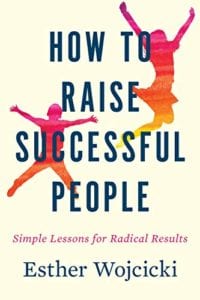
How to Raise Successful People: Simple Lessons for Radical Results
On this episode, my guest is Esther Wojcicki who has written a book called How to Raise Successful People: Simple Lessons for Radical Results. She is famous for three things, teaching a high school class that changed the lives of thousands of students, raising three daughters who have each become famously successful. One is the CEO of YouTube, one is the Founder and CEO of the 23andMe and a top medical researcher. The third thing is inspiring Silicon Valley legends like Steve Jobs. We’re going to ask her what these three things have in common and what she is talking about in her book that relates not just to parenting but to the business world in helping people, whether you’re an entrepreneur or working for a big company become more passionate using her tips. Esther, welcome to the show.
Thank you, John. I’m very excited to be here. Thank you so much for inviting me.
I always like to give people a little context. You and I met on a plane ride from Helsinki back to Silicon Valley where we were attending an event called Slush, which was all about having entrepreneurs come together from around the world. Part of the value of attending things like that is getting to meet people like you. Then we struck up a friendship and have kept in touch ever since. You have this wonderful book, How to Raise Successful People: Simple Lessons for Radical Results. Would you mind taking us back to your own story of origin, before you even had children? Did you always know you wanted to be a teacher?
No, I didn’t know I wanted to be a teacher at all. In fact, my parents didn’t expect me to work at all. Their goal for me was to be a mother. It is a very different goal. My parents were Russian immigrants and they came to America to try to live a better life. Unfortunately, they ended up here at the end of the depression and the beginning of World War II. They didn’t really get a better life. It probably was better than where they were in a Russia because if they would have been in Russia, they probably wouldn’t have been alive. They probably should have thought about that one or at least, I think about that. That was my humble origins. I grew up in a family where money was something we did not have.
Now you have evolved from that to being very involved with education. Tell us how you got from that humble background into becoming a teacher.
My goal after college was to see what I could do as a journalist. I started writing for a newspaper when I was thirteen, fourteen years old as a person writing that was not important and I continued all the way through high school. Then when I was in college, I also earned side money by being a local journalist on what was called the Berkeley Daily Gazette. From there, I went into teaching because teaching was an easier profession for women to enter in the 1960s and 1970s. It was hard to be a journalist for a woman in the 1960s and ‘70s because women were blocked. For example, I couldn’t get into the San Francisco Press Club because I was a woman. I thought, “I might as well be a teacher. That seemed to be a path that was open.” That’s how I ended up being a teacher, but it turns out that I was a very effective teacher. I didn’t realize how effective I was until I went into the classroom. The kids liked me and I like being with them. As a matter of fact, I love being with them. That’s why I’m still there in the classroom after many years.
You were a teacher first and then became a mother, is that correct?
Yes, but I was only a teacher for a short time, a year or two, then I became a mother and then I went back into teaching.
Were you able to take the lessons you have learned and implemented as a teacher into raising your three daughters?
Let’s put it this way. When I was a teacher, I was following the instructions I got in the schools of education. When I was home as a parent, I decided I was going to use an experimental system on my children because I wanted them to be as empowered and as independent as they could possibly be. That was not the goal of the school system. The goal of the school system was, “Can you make them learn as much of the material that we designed?” I didn’t have that goal as a parent. My goal as a parent was to make sure that they were as independent and as self-confident as they could be early on. I started very early, when they were born, to be honest. They were my little guinea pigs.
[bctt tweet=”Be vulnerable to get respect.” username=”John_Livesay”]
I know that your method is the opposite of helicopter parenting. You talked to infants as if they’re adults. There must be the same thoughts that people who are managing people could take away from the opposite of helicopter parenting. A lot of managers like to micromanage their team. For example, if someone’s a sales manager and they say, “Salespeople, here’s the exact script you must say a word for word,” instead of letting people put it in their own words. Would you say that’s a transitional skill that you’re talking about there?
That is an important skill that I am talking about there because all these managers, all these people in business want their employees to work as effectively as possible, be passionate about their job and produce great results. It turns out that the less respect and the less trust you have for your employees, the less likely it is that they’re going to be passionate about their job. They’re going to be doing their job because they want that paycheck. You don’t want them to want the paycheck. You want them to want to make a difference.
Let’s dive into some of the content in your wonderful book. The title is How to Raise Successful People: Simple Lessons for Radical Results. My first question is what’s a radical result for you versus just a result?
A radical result is an opposite of what you think you might get with the regular normal result. A radical result in changing parenting would be instead of having children where you have to take care of them all the time, tell them what to do all the time and control them all the time. The radical result would be you have self-empowered, ethical children that want to do some of the things that the family wants to accomplish without you as a parent, always being the one that is telling them what to do. How do you get to that point in your family? That’s what I’m addressing in the book, How to Raise Successful People.
How do we do that in our companies, which is also another version of the family? Especially what resonates with me, when you said not just self-empowered but ethical people. How can you teach your children or your employees to be ethical when no one’s watching?
One of the things you want to do is to model this yourself. It’s funny how people don’t realize that the model at the top carries incredible weight and people watch you. Sometimes it’s subconscious, they don’t even realize it. If the model at the top is unethical, if the model at the top isn’t kind or doesn’t collaborate well, then it’s hard for the people in the company to model on that behavior. They won’t collaborate well. They won’t be ethical or they won’t be kind. They do what they see and that’s true in the family too. What happens in your family is if you are always telling your kids, for example, “Don’t be on the phone at dinner or don’t be on the phone at meals and all that stuff,” and you confiscate their phone. Then you take out your own phone and there you are saying, “This is an important call. I can’t pass this one up. I have to do it.” What are you saying to your kids?
It’s that old parenting model that doesn’t work at all, “Do as I say, not as I do.” It doesn’t work in the family and it doesn’t work at the office either. You have this wonderful acronym called TRICK. I remember hearing about it when we first met before the book was out. It stands for Trust, Respect, Independence, Collaboration and Kindness. I want to double click on each one of those. Starting with Trust and you’ve already alluded to it a little bit, that without Trust and Respect, the first two in the acronym TRICK, there’s less passion for work. Let’s talk about Trust because this is the foundation for everything, any kind of relationship. Brands are always talking about, “How do we get people to trust us if they haven’t heard of us before?” What is your philosophy around building trust?
Trust starts early. It starts in the home and parents tend not to trust their kids. They think they know the best. The kid knows nothing. As a result, the kid doesn’t feel trusted and they are afraid to take any step where the parent isn’t there. Lack of trust means a lack of trust in yourself. When the child doesn’t feel like they’re capable, then they aren’t because it’s all mindset. It’s all what you think about, what you can do. It’s the same way in a company and it’s in the same way in a school. The way you think about yourself is the most important thing of all. There’s a woman at Stanford that talks about the mindset all the time and how you can change your mindset. It’s really important for people to realize that your mindset is very controlling.
Imagine if you were on a ski, I don’t know how many people ski, but if you get to the top of the hill and you say to yourself, “It looks terrible, I’m going to fall the whole way down.” That’s unfortunately what you usually do. That’s your reality. You need to think about the mindset in all areas of your life, in your home, your school and your business. Your mindset especially is so important in business because all these companies are trying to make a difference in one way or another. They have a product, they have a service. They have something that’s important. What you want to do is you want to model the trust. When you model it, what happens is everybody else follows and sees that you’re a trustworthy company. Everybody wants to be a trustworthy company.
You and I are singing from the same songbook, that’s for sure. We employers tell our employees, “We trust you not to cheat on your expense report, not to say you’re going to see X number of people a week,” or whatever it is you’re empowering them to do without having to. Some people are saying, “We don’t trust you so we’re putting a tracking device on your iPad and your phone to make sure you’re where you say you are.” All of that lack of trust causes so much resentment. This mindset that you were talking about with the skiing example, when I’m giving keynote talks to sales organizations, this need to be perfect and being a perfectionist and how that cramps your creativity. I tell people if you’re climbing Mount Everest and you’re halfway there, your choice is, you either look down and say, “Look how much progress I’ve made,” or you look up and say, “Look how much further I have to go.” That’s the same thing that happens in managing people and certainly parenting children is, “How do you help children let go of this need to be perfect?”

Raising Successful People: Show your children that they can do things no matter how old they are or how young they are.
You don’t get upset when they make a mistake. When you model it yourself, if you make a mistake and you get upset and your kid gets upset, you have to look at yourself. What did you do when something happened that wasn’t right? Every day we make mistakes. That is the way we learn. You learn by making mistakes. Your reaction to life is the only thing you can control. There is nothing else. You cannot control what happens, but you can control your reaction to what happens.
Imagine having a boss or a parent say to you, “You’re going to learn how to ride a bike. You’re probably going to fall down a lot. That’s how we learn by making mistakes. Don’t worry about it.” It takes all the pressure to be perfect the first time you try something new off the table. The concept of respect and I’m guessing it’s going to be a lot like trust you. You have to respect yourself before you can respect your children and you have to respect yourself before you can respect your co-workers. What is it that people can do in their family or in their workplace to increase the respect that they get?
They have to behave like a person that people want to respect. They have to be willing to be vulnerable too. It’s important for you not to be perfect all the time because no one’s perfect. We’re all hiding this from each other. If you can show that you make mistakes, you get hurt and you’re sad about this but you’re still continuing, you’re still working. You are controlling the way that it is you’re responding to life. You’re going to make it no matter what. You’re going to be as positive as possible. That is the key.
We move on from trust and respect to independence. You wanted to raise three independent daughters. Clearly, you’ve done that. What were some of the things that you did to make them feel confident and independent?
They were not being served in the house like a lot of children are. They actually had to participate. They had to help make dinner. They had to help set the table. When they were small, when they were eighteen months to two years old, they had to help clean up every day. I made it simple, but the concept was there. I bought a little plastic swimming pool. They’re available everywhere. The way that we cleaned up is every day they had to pick up their toys and put them in the plastic swimming pool and it worked really well. The next morning when they came out, all their toys were in one place in a plastic swimming pool. That’s an example of one thing that they were doing. They were also busy. If they could, they would mix things for dinner. I didn’t let them use a knife until they were maybe six or seven years old, but they were able to set the table and put things back. When they were little, they were doing things like helping me fold diapers. I made it into something that was fun. They all wanted to do it. What I was trying to do is show them that they can do it no matter how old they are or how young they are. Another thing I did is I taught them how to swim really young. They were twelve months old when they learned to swim. I know that sounds unbelievable, but small babies can learn to swim.
I used to be a lifeguard and I used to teach parents how to get their infants in the pool and blowing bubbles. The key is to make it fun. That leads right into collaboration, which I’m thinking is another key aspect of getting people to come up with good ideas and to work together well is if you can make it fun. Are there other tips you have around how to get collaboration in the workplace as in the home?
Collaborations were the hardest things to do because people usually want to do things by themselves and they take credit for having done it by themselves. What you want to do is make it cool and make it exciting for people to do things in teams. Team A and Team B could be two people together, but working together, the ideas bounce off each other. They do a better job when they’re working together in teams, even if it’s an individual thing. Even if you’re coding, you can talk to the person next to you who’s also doing something and you can be more effective. All the education research shows that people are much more effective when they interact than if they stay on a computer all day and try to learn. That’s not learning. That’s nothing. That’s entertaining.
While you were saying that comment, I can hear my friends’ children and remember my younger sister is saying to my parents, “I can do it myself,” and not wanting any help. This urge to get out of that childlike mindset of, “I want to do everything by myself and I want to take all the credit for it,” and get them into this collaborative concept is valuable. There are books about this, teams that collaborate together and share the credit are much more effective at coming up with innovative solutions that you can’t possibly come up with when you’re in your own head.
Google did this project called the Aristotle Project, where they were looking at what makes the most effective employees. It’s online you can go and find it. What it basically shows is the power of the group and the power of being supportive in a group. When little kids want to do it themselves, that’s usually like, “I want to put my clothes on myself,” which is not a problem. That’s a good idea. They usually put it on backward to start. Don’t let that bother you. As time goes on, they should be able to do things together. You can’t play a ball game by yourself. You could if you throw it up in the air and down and up in the air. All these team sports, they teach so much more than just how to catch a ball. You know how to lose and how to win, how to be part of a group or part of the team. It’s important for parents to encourage team sports. In a company, it’s a good idea to take that same coaching model. That model where there’s somebody there coaching the team to be as effective as it can be and realize sometimes you lose because teams don’t win all the time. That’s important for them to think about. That’s our collaboration and we need to learn it early and then practice it all through life.
The last letter of TRICK is Kindness. In a time when students are being bullied and there are a lot of issues around depression, especially for teenagers. What, if any tips do you have about teaching your children to be kind and how to respond when people are not being kind to them?
[bctt tweet=”Without trust and respect, there is no passion.” username=”John_Livesay”]
This is based on modeling. You personally have to show that you’re kind and kindness starts at home, kindness and compassion. You can read books to them about kind people. You could watch videos about it, you can talk about it and you can do it. That can be things like volunteering at a local homeless shelter or providing food for people that don’t have food. There are a lot of different things that you can do to be kind. Even saying hello to people. It’s shocking sometimes people walk by the custodians in the school on a daily basis and they don’t even say hello to them. These are human beings too. Be kind to everybody. How about saying hello? How about respecting other people? Their job might not be as prestigious as yours or vice versa, but we can all be kind to each other. It’s very important in the classroom for the teacher to model kindness because the minute that teacher does something mean or nasty to one student in the class, all other 30 students are like, “I don’t want that to happen to me.” The reputation of the class is, “This is a mean class.” You cannot do that.
The old way of selling when you were being trained how to sell was, “I’ll always be closing ABC.” I shifted that when I work with salespeople to ABK, “Always be kind” to the way you talk to yourself and then the way you interact with everyone, as you were saying. Some of these salespeople, I’m constantly trying to help them with their empathy skills, which I think is a next-door neighbor to kindness. From the moment you leave your home to you are in that room presenting, and if you’re rude to the receptionist, that person may not be the decision maker but they’re part of the team that is and vice versa. If you show empathy and are kind to everyone that you interact with, the energy completely shifts.
It’s important to be kind to everyone. There is not a religion in the world that does not teach kindness. Every single one does it and we should all respect that. There must be something in the importance of kindness if every single religion in the world teaches it.
One of your strategies and methods is allowing teenagers to pick projects that relate to the real world and their own passions as opposed to making everybody follow the same curriculum. How does that work in the business world do you think?
In the business world, what you want to do is something similar to the Google 20% time. I’m proposing that for the schools as well. You give employees or students an opportunity to work on a passion project of their choice that relates to your company or relates to your subject matter 20% of the time. Even if they don’t take you up on that, even if they don’t have a passion project, just the thought of having the freedom to have that project if you want it, that is liberating.
That concept of “What if?” is the way I talk about it all the time. Paint a picture for someone and help them discover their passions and you’re going to help companies retain their employees. There’s such a problem right now with Millennials being seen as not being loyal to companies. If they’re working for a place that has trust, respect, independence, collaboration, kindness and the ability to help them tap into their passions, you’re not going to have that turnover problem that’s existing. Don’t you agree?
That’s right. The reason the Millennials are leaving these companies is because they need a passion and they want to do things that make a difference in the world and make a difference in their lives. They don’t want to do a routine job. If you can give them that opportunity, even 20% of the time, they won’t go anywhere. They’ll stay there.
One of the things that you talked about is inspiring people like Steve Jobs. Do you have a Steve Jobs story that you can share?
Steve Jobs was a super kind person to me. I liked him. He helped me a lot at the beginning because he came into my class. That was a time when he was not at Apple and he wasn’t anywhere. He was in between all his projects and companies. He would come into class because his daughter was in a class and hang out. He would say things like, “That doesn’t work very well. Let’s see what I can do to help.” The next day help arrived in the form of a new computer, for example. He was a very kind person. He loved teachers. I know he was very demanding in other areas of his life, but I can say that in the education arena, he was great. He was totally focused on what he wanted to do and he could not be diverted. I remember him talking about the phone was going to be in your pocket. I remember being, “This is really far out, a phone in your pocket.”
It’s like talking about everyone going to the moon or something.

Raising Successful People: Millennials are leaving companies because they want to do things that make a difference in the world and in their lives. They don’t want to do a routine job.
It’s another story. He was very interesting to talk to about it because he had a laser vision about what it was that he wanted to do. He was extremely artistic. Those are some of the stories. He was a great person. All the parents had to supply food for the program that his daughter was in. He brought all organic food back before anybody was doing it. He and his wife were like, “This is what they’re going to have.” It was great food.
Is there a characteristic that you see that all three of your daughters are using now as successful business people? Is it the laser focus that Steve Jobs at or is it something else you see?
One is the laser focus, but it’s the other one that is really important. It’s their reaction to life, their reaction to setbacks. They don’t let it get to them. That is what I said earlier. The only thing you can control in life is your reaction to life.
Instead of letting something devastate you, you bounce back and say, “What else can we do to fix this?
You have to have a positive attitude. You can be devastated by some things that happened because some things are pretty upsetting. You can give yourself, “I’m going to worry about it, I’m going to get upset for a day but then after that, I’m going to move forward,” because the alternatives are nasty. The alternative is moving backward or losing your ability to think clearly because you’re so upset or getting your employees all upset.
[bctt tweet=”All you can control is your reaction to life.” username=”John_Livesay”]
As you said in modeling, if the boss gets upset whenever a big account goes away, then everyone else is devastated.
One of the things I realized as a teacher because sometimes we would have repeated fire drills. It wasn’t a drill, it was people pulling the fire alarm and that is completely upsetting to students. They’re like, “Not another fire alarm.” The teacher’s reaction to that false fire alarm, even if it happens two or three times a day, is the key to keeping those students focused. If the teacher gets upset, I can promise you all the students get upset.
The thing that strikes me about How to Raise Successful People, your book, is it’s not just being a parent or it’s not being a manager at a company. You are helping us parent ourselves by using the TRICK acronym.
The number one thing we have to do is to parent ourselves and to take care of ourselves. We have to treat ourselves with kindness. TRICK applies to us too. You have to trust yourself and respect yourself. We aren’t perfect and people get mad at themselves. Then they don’t know how to forgive themselves. You have to forgive yourself no matter what you’ve done because you cannot move forward unless you do that. It’s important.
Esther, that is such a great note to leave on. Forgive yourself, parent yourself and be kind to yourself. Get the book, How to Raise Successful People: Simple Lessons for Radical Results. I can’t thank you enough for being on the show.
Thank you so much and best of luck to everybody.
Links Mentioned:
- Esther Wojcicki
- How to Raise Successful People: Simple Lessons for Radical Results
- 23andMe
- Slush
- https://RaiseSuccessfulPeople.com/
- https://www.Amazon.com/How-Raise-Successful-People-Lessons/dp/1328974863/ref=sr_1_1?keywords=how+to+raise+successful+people&qid=1556048622&s=gateway&sr=8-1
- Quantmre.com
Wanna Host Your Own Podcast?
Click here to see how my friends at Brandcasting You can help
Get your FREE Sneak Peek of John’s new book Better Selling Through Storytelling
John Livesay, The Pitch Whisperer
Share The Show
Did you enjoy the show? I’d love it if you subscribed today and left us a 5-star review!
-
- Click this link
- Click on the ‘Subscribe’ button below the artwork
- Go to the ‘Ratings and Reviews’ section
- Click on ‘Write a Review’
- JohnLivesay.com
- John Livesay Facebook
- John Livesay Twitter
- John Livesay LinkedIn
- John Livesay YouTube