

Financial Health Doctor For Female Founders with Jill James
Posted by John Livesay in podcast | 0 comments

Keeping yourself healthy is definitely worth the investment and in order to do that, your financial health has to be in tip top shape as well. The financial health doctor and CEO of SIF Industries, Jill James, joins this episode to share her knowledge about financial health. She goes into the details of what financial check ups can do for your business and what are at stake if you decide not to have your finances checked. In addition to this, she gives some amazing tips on how to pitch and get funding for a VC. On this topic, she also talks about having an exit strategy and what you need to prepare in order to justify a VC. In addition, she touches on how to be successful in a small business as she emphasizes the importance of knowing and understanding the economics of your business.
—
Listen to the podcast here
Financial Health Doctor For Female Founders with Jill James
Our guest is Jill James. She’s the CEO and Founder of SIF Industries, which is a consulting and coaching firm that puts women on the fast track from founder to CEO. She started her career in banking with JP Morgan but she got the startup bug while in the Chicago Booth for her MBA. She’s had roles in product management, marketing, sales, and C-level leadership at six VC backed startups with four exits. She holds a BA with Honors in Political Science and an MBA in Strategy, Entrepreneurship, and Marketing from the University of Chicago. She’s an advisor to Boutique Box and is on the board of many programs and she lives in Los Angeles where I am from. Welcome to the show, Jill.
Thank you, John. It’s great to be here.
Let’s dive into your own story of origin and bring that little intro to life. You can go back to childhood, college, high school, or wherever you want. You had some interest in entrepreneurship and marketing. You had that little a-ha moment that I talked about while you’re at Chicago Booth but if you want to go further back than that, feel free.
I’m originally from a small town in Wisconsin and when I say small town, I mean a small town with 1,000 people with no stoplights. We had a stoplight one summer. It was exciting. Everybody wanted to drive across the bridge and drive in the stoplight. I was there my whole life until I was eighteen and both of my grandparents had small businesses. I grew up going to Northern Wisconsin in the summer and working in my grandparent’s old-fashioned soda shop. From the time I was six years old, I would pull the candy. I love to make the hot fudge sundaes and we made sodas from scratch with the old-fashioned pump and the soda machine.
I grew up doing that and my other grandparents had a trucking business. I didn’t realize it until later in life, but it was interesting to see one that was a true family-owned small business and one that had a little bit more scale. It became a major employer in our area because of the scale of the trucking business. Foundationally, I think of myself being raised by teachers, but I do have a lot of small businesses in my family and a lot of my aunts and uncles have large families. A lot of them have their own businesses. It’s certainly something that was always around me, even though I was much more on academic, go to college, and gets a job track.
[bctt tweet=”You have to understand the economics of your business.” username=”John_Livesay”]
I didn’t know what I wanted to do going to college, but I had a chance to explore things at Chicago and I was lucky that I got some great internships and I accidentally applied for a banking job. I thought it was a consulting job. I don’t know how that happened but I ended up working at a bank. I took the job that was the most interesting to me. I got exposed to a wide array of how stuff works but also being from a small town, I had some personal challenges with the idea that the budget of my town was a rounding error for the people I was working with. That was hard for me. I thought we could put that money to better work in the world.
That was the start of my path to going smaller. I got in the tech boom. I went to a couple of tech startups and that was the first exit. We built a trading platform for domain names back when that was the start of that thing with the first opening of ICANN and that’s how I got out of banking. When that all crashed, I did operate back in banking again. That’s how I went banking but that time I went back and I was a financial advisor to individuals with small businesses.
That’s probably the most instructive in my career of learning how the tax system works, learning how personal finance works because as a banker, you don’t know any of that. You know how to make a lot of money on a large scale, but I would work with people who are doing that. They had no idea how the personal finance system worked and they had no idea how small businesses worked. That has been the best job I’ve had for my whole career because I had to learn to sell and I also learned how you make money and how being a small business owner can help you make more money than you may get in a job.
I know that the readers are going to be interested in the fact that you have been involved with six startups that are VC backed. Rarely do I see somebody who’s had that many. I can hear the audience going, “Please ask her what’s the secret to pitching to a VC to get funding?” Did you learn any tricks or tips that you could see that when we say this, they open their pocketbook? One of my sound bites is when you tug at people’s heartstrings, they open their purse strings. A lot of investors I’ve interviewed talk about, “We’re more interested in the team and the idea,” and things like that, but I’m sure you must have some insights.
I never pitched anything that was zero revenue or pre-revenue. For me, it was always, “We have some money. We need to get to the next round. We need to offer some services. We need to accelerate or I need to get this round of funding, but I need the financials and somebody who can help me talk to that side of the business.” What I’ve seen both in terms of they want to see the team, but you also have to understand the economics of your business. That is true, whether you’re VC backed or self-funded and it’s one of the biggest holes in our knowledge as business owners of understanding our unit economics. That’s the foundation of my business.

Financial Health Doctor: Look at the potential of the business, what’s it going to take to get there, and how many rounds before you can hit that profitability point or before the business could be self-sustaining.
That’s almost all I do with people, even though we have a lot of things that we call it but it’s helping people understand their unit economics and why that’s powerful. That to me is if you can show that you have the margins on the scale to justify VC, it makes it a lot easier for them to give you the money. If you have already shown that you can make sales without their help and you’re using the money to accelerate and get a better team that also de-risks by a lot. Being able to show that you already have that product market fit and preferably on something that you bootstrap especially for women where it’s harder to get funding, that goes a long way to help them say yes.
I interviewed Brian Smith, who’s the founder of Ugg, those wonderful boots. Once he got his messaging right, it was first sold to surfers. It wasn’t a fashion statement at all. It was only sold in surf shops, but then it took off and he needed all this money to scale so that’s an example of a business that had some proof like you’re talking about revenue. To scale and hit the orders that were coming in, you needed that money. I always tell people, if you want to get your startup funded, whether it’s a seed round or VC route, if you’re got revenue coming in, you need to know your story. You need to have a pitch and you need to know your numbers. One without the other is a no go.
Even if you have a great pitch and great story and you don’t know your numbers, when they ask you, “What’s the cost to acquire a new customer?” you’re like a deer in headlights. If you’re only about the numbers and you don’t have a story to tell people, what problem you’re solving in a way that is unique and what your secret sauce is and all that stuff that they can then repeat and be proud that they are investing in something. The secret sauce is combining those two things. The other question I have for you, because you’ve had four exits, how important is it to have an exit strategy when you’re trying to get VCs to fund?
It’s important for you as a founder to understand how much money it’s going to take before that looks attractive and what that means for your actual earning potential. In some cases, I’ve seen slips where you’d be better off being self-funded than taking a couple of Angel investors. By the end of the amount of dilution that you accept, you have to be a massive company in order to get any money for you, let alone the people wh work so hard for you and stock options. You should look at what’s the potential of the business, what’s it going to take to get there and how many rounds are you looking at before you can hit that profitability point or before the business could be self-sustaining?
Also, is there any off-ramp? Are there breakpoints where if you had to self-sustain at that level, it would be fine? That’s what people have gone through in 2020. It’s like, “There’s no more funding coming. We only have this many months of runway. We’re going to have to be self-sustaining and we were counting on two more rounds.” There hasn’t ever been a thought of, “If I had to do that, what would it look like?” It’s a different mental model of we’re going to grow as fast as we can and find this customer and we’re going to get repeat revenue, recurring revenue, and lock these people in for as long as we can.
[bctt tweet=”Part of the financial health checkup is finding the things in your business that are profitable at the scale that you need.” username=”John_Livesay”]
Before we started the show, we were chatting about one of your earlier customers. She’s like, “I can sell but I’m not great at making a profit.” That is your own little story of origin of you doing a financial health checkup and it’s so odd to me that most people don’t think they need this because we all know we need to take our car in for a checkup, an oil change, or whatever. We know we need to take ourselves for checkups. If you’re a parent, you take your kids for those too and you should be doing it as an adult too. Somehow with our finances, we don’t want to look under the hood. Can you speak to what the stakes are if people don’t do a financial health checkup?
It brings up your stress and anxiety. I see many people that I start working when I say, “What do you think you’re going to make this year?” They’re like, “I don’t even know what I’m going to make next week. There’s no predictability now. There’s nothing I can count on.” Part of the financial health checkup is finding the things in your business that are profitable at the scale that you need. At this point, I primarily work with self-funded founders so we’re looking for enough margins in their business that we can drive their growth goals and mostly use debt and conventional financing techniques in order to grow their business to where they want to go.
A lot of them are in businesses where they need to prove that they can be a certain size before they could get an investment around $10 million or $20 million and they’re more $100 million to $500 million but they have that potential. We have to figure out where are those margins in your business. Also, get smart about who’s on your team, both in-house and out of house, that extended source team or a professional team of people you need who have the expertise and have an operating budget.
You would not believe how many people have no idea, even with financial statements, what they are spending on their business, and what the required things are to make their business run. In the financial health checkup, we look at how do we stack your revenue in a way that gets you to where you want to go profitably, pay you what you want to be paid, have enough money left over in the operating budget for the stuff you have to pay for, and get you the people that you need so you don’t have to work 100 hours a week.
We talked about how the riches are in the niches a lot on this show and you’re focused, and it’s a great example that you target and work with female founders, who tend to be creatives or not have a lot of managerial backgrounds. If someone is like, “I’m great about animation. I’m a photographer or anything that’s at all creative. I don’t know anything about how to manage a business, let alone scale, hire people and all that stuff.”

Financial Health Doctor: Investing is about things that drive your growth forward and there are a lot of things that we do without intention that should be done with intention.
It’s clear and it makes it easy for people to refer you and that’s why I talked about having the importance of a great elevator pitch. You need to be able to have a soundbite and go, “Jill James, you’re a creative person and you’re a female founder. She could help you.” It makes it clear and that’s what makes everyone reading go, “Am I that clear on who I help and what problem I solve?” You’ve got that dialed in. I’m sure a lot of your business comes from referrals, is that correct?
Absolutely, and this is the first year I’ve ever done any real outbound marketing and that was only because I wanted to start an offer of a more scaled product. Part of my personal mission is each year to double the number of people that I impact. I hit a point where I could not double without offering some skilled service. That required some outbound marketing and or they define those people who are looking for more of a group planning approach, instead of my one-on-one clients, which come from great referrals from my past clients.
You’ve got some great content here about are we spending or are we investing? Can you distinguish it for us? For some people, they’re like, “I’m going to invest in myself and take this course and learn how to run ads on Facebook,” or whatever it is they’re doing. You’re like, “Are you spending money that’s not going to give you a return on investment?” How do you define the two? How does someone know whether they’re investing or spending?
Spending is the thing to have to do to run your business. Spending is taxes, keeping the lights on, and having internet. It’s those things when LA sends your nasty bill every February. Investing is about things that drive your growth forward and there are a lot of things that we do without intention that should be done with intention like our marketing budgets and investments. If we have inventory that’s an investment. Our branding is an investment and PR is an investment. Many people think of these things as cost centers, “How much is that going to cost me? I’m scared to spend it because it’s not guaranteed that you’re going to get it back.” At a certain point, you have to have a bit of faith and understanding of your business.
If you put $1 in, you can get $2, $3, or $4 out. If the spending has the potential to do that it’s investing. I tried to look at what are the things in my business that if I put $1 in, will I get more than $1 back within a certain amount of time? I make bets on those. I gradually stretch what my comfort zone is to make more and more investments in my business. What I’m going through now is a major rebrand. When I saw the cost, I had a heart attack and I was like, “How much money is this going to put me into this next tier in terms of investment?” This is the payoff over the next months. I wrote the check and I started doing it. Our spending mentality says, “This is scary. I don’t know if I should spend this money.” Our investing mentality says, “What are we going to get back and where will we go into this fuller vision?”
[bctt tweet=”In a small business you have to be high margin and high service. That’s the only way to be successful in a small business.” username=”John_Livesay”]
One of the things I love to do is help salespeople and we’re all selling. If we’re working for ourselves or our own business, we’re selling ourselves or selling ourselves to get hired or get clients or about getting funding. Taking what I call, boring case studies, I’m sure you have lots of those in your MBA days, banking days into case stories. Can you tell us a story, you don’t have to give the name if you don’t want to, of a client that came to you struggling? They didn’t have what you call a financial oxygen mask on first. We all know that story of putting the mask on yourself before your kid and most entrepreneurs don’t think like that. They’re like, “I’ve got to save the business and I’m not making any money. I don’t have money to pay my mortgage or whatever.” Is there a story or client that comes to mind that you could take us on this journey? The goal for every reader is, “I see myself in the story.”
Some of them I’m still working with. We’ve been working together for a few years. I met her at a conference. I sat down next to her at lunch and started asking her what her business was. She was reselling someone else’s product and I asked super financial questions off the bat. When I meet people, I’m like, “How much do you make? What is your margin?” It’s those comfortable lunchtime conversations you have when you sit down at a conference. We started to talk about this and she said, “I know my margins and they’re fine. I’m reselling somebody else’s products. There’s nowhere I can go with this.”
We did a financial health checkup for her and what we realized was with the connections and the book of business, and everything that she had and what she was adding is customer service. It was super valuable for that customer. She also had relationships with producers in the space so we started looking at first more comfortably, what would we white-label? We make a white label product for somebody else. We started to go down that road and as we looked at it, she said, “I could not get this under my own name. I could sell this directly.” We switched from a resale product that, given the shenanigans the company was playing was between 15% and 20% in growth margin to a product that’s more 60% of gross margin.
We tested it out. There was no harm in floating this new brand and it turned out that her book of business was hungry for it. They jumped on it and the business has taken off over the last two years, in a way I don’t think we even anticipated. When I said, “What would be a nice size of business for you?” That’s about 1/3 of what her business is now. I find it over and over if your margin and you focus on your customer, what they value about what you do, which is sometimes not the product sometimes the customer service making their life easy. There’s a lot of value to that, especially for people in services, anybody who’s running around trying to hustle for money. If it’s time for money exchange, anything you can do to make their life easier then that’s valuable to them. She tapped into that and had a great product that was easy to say yes to but then added customer service on top of it.
It’s been an incredible growth story and having those pillars every time we get into, “The sales are overwhelming. What should we do next?” We say it like, “Does it serve the customer that you want to have? Does this feed into your customer service mentality?” We go back to those pillars and it’s like, “Do this. Don’t do that.” We can have as a foundation and it instantly makes clear, “What’s the right thing to do? Where should we put the money? How should we build this in the next stage?” I loved that we randomly met at lunch and I asked way too personal questions about her business.

Financial Health Doctor: The world is going to change no matter what. You can lead. You can follow, or you can fight for the past.
One of my other guests, Judy Robinett, wrote a book called How to Be a Power Connector and she says, “Talk to strangers.” There’s a classic example of you talking to a stranger at lunch. You were randomly sat next to if you believe in random things, I don’t but I love that. There’s something else that’s important that you’re able to help your clients with is identifying who you say no to, in terms of clients. Are these the clients that are never going to be happy, want refunds, and demand more of your time than what they’re paying for? Can you speak to that a little bit?
One of the things that I believe in small business is we have to be high margin and high service. That’s the only way to be successful in a small business. When I find small business owners or potential customers who again, cannot wrap their heads around the difference between spending and investing, and what’s it all about. Their comparison point is, “What can I get on Upwork, or what can I get my cousin who’s in college to do it?” I can’t compete with that person but I also know that they have no value and expertise. The time and direct answers that I can get for you, I focus everything on my business. Let’s get to the value that you need as fast as possible and I have a price for that.
If on the first day there’s something that we can do, that’s great. I’m going to tell you. I’m not going to dance through and be like, “The punch lines coming in four weeks.” I want to work with my clients in a way that if we have a great answer, let’s go with that. Let’s do it. That’s the whole point. It’s not to do the process. I have the framework. The framework works but when you hit that moment in the framework. You take off, you run with it. There’s no reason to wait like what many consultants do have, “Let me give you the big report. Let’s get to the end of this.” I want to do everything in a way and I want to have the client and customer aligned, so the minute that we realize what the breakthrough is going to be for the business, we start doing it.
It’s almost like if someone’s going for a checkup and they’re fine but if someone’s coming into the hospital and they’re having a heart attack, nobody wants a process. They want, “Can you save my business? It’s financially running out of oxygen fast. If you see a solution, please don’t make me wait for it.” What a great takeaway. If anybody wants to reach out to you, they can go to SIFIndustries.com, or they can google you that way as well. Jill, are there any last thoughts or things you want to leave us with? A favorite quote or anything?
One of the things I like to say to my clients is, “The world is going to change no matter what. You can lead. You can follow, or you can fight for the past.”
Jill, thanks for sharing your wisdom on how we should all get financially healthy. I look forward to hearing more of your success case stories.
Thanks, John. It’s been great.
Important Links
- SIF Industries
- Boutique Box
- Brian Smith – Previous Episode
- How to Be a Power Connector
- Judy Robinett – Previous Episode
- Better Selling Through Storytelling Method Online Course
Wanna Host Your Own Podcast?
Click here to see how my friends at Podetize can help
Purchase John’s new book
John Livesay, The Pitch Whisperer
Share The Show
Did you enjoy the show? I’d love it if you subscribed today and left us a 5-star review!
- Click this link
- Click on the ‘Subscribe’ button below the artwork
- Go to the ‘Ratings and Reviews’ section
- Click on ‘Write a Review’
Love the show? Subscribe, rate, review, and share!
Join The Successful Pitch community today:
- JohnLivesay.com
- John Livesay Facebook
- John Livesay Twitter
- John Livesay LinkedIn
- John Livesay YouTube
The Influencer Code With Amanda Russell
Posted by John Livesay in podcast | 0 comments
Influence is attention plus trust. Without trust, you’re just making noise. This is what Amanda Russell, the author of The Influencer Code, believes. Amanda is a strategist, speaker, and professor of marketing. She said when we shift from focusing on transactions and focus on relationships, that’s when we build something long-term. It’s all about shifting how we think about what influence is. On today’s podcast, John Livesay interviews Amanda about her running career and how it’s a metaphor for her marketing expertise. Tune in to learn about her specific tips on what you can do to become more influential.
—
Listen to the podcast here
The Influencer Code With Amanda Russell
How To Unlock The Power Of Influencer Marketing
Our guest is Amanda Russell, the author of The Influencer Code. She talks about that influence is attention plus trust. Without trust, you’re just making noise. She said when we shift from focusing on transactions and focus on relationships, that’s when we build something long-term. It’s all about shifting how we think about what influence is. Finally, we hear a story about her running career and how it’s a metaphor for her marketing expertise. She gives you specific tips on what you can do to become more influential. Enjoy the episode.
—
Our guest is Amanda Russell. She was an influencer before the term even existed. When brands like Lamborghini, Cedars-Sinai and Lion’s Gate wanted to better understand influencer marketing, they call one person, Amanda Russell. Amanda is an international brand strategist, speaker, educator and entrepreneur who’s been at the forefront of digital marketing and social media revolution from its infancy. Amanda created UCLA’s influencer marketing, the world’s first fully accredited program and influencer marketing. She teaches the program along with marketing, branding and business strategy at UCLA and UT Austin. She advises some of the top companies in the world on influencer marketing and how they interact with their customers.
Her new book, which I’m proud to own, is called The Influencer Code, where she teaches brands. We’re all a brand whose collaboration is to grow and scale their business. The Toronto Star calls her the real-life Iron Woman and the ultimate go-getter. Amanda is here to help all of us understand what influence is and what it is not, and how to collaborate more effectively with influencers, and how to use influence marketing to build our brands and grow our business. Amanda, welcome.
Thank you for having me. It’s always funny and awkward when somebody reads your bio. It’s like, “How do you respond to that?” Thank you.
Luckily for me, you’re one of my first friends here in Austin. I’ve got to know you on a much more personal basis before I had an in-depth understanding of your incredible influence and expertise. Now you have this amazing book, The Influencer Code and the subtitle, which I love just as much is How to Unlock the Power of Influencer Marketing. From my advertising background, it takes me to the visuals of you’re a locksmith and there are all these locks. You’ve got the keys that you can take to each brand and show them how to turn that knob. If it’s that kind of lock, here’s the key to unlock that.
That imagery is powerful for me, but I want people to get a sense of who you are as a person first, because that’s a big part of your charm and your ability that pulls people in your energy and your passion for life in general. It’s just bar none. I know you started in Canada. You can take us back to childhood, school, where you started. I know you have this amazing fitness story to share but take us back. You start the story wherever you want about where you started to realize, “I’m going to make an impact in the world.”
Let me try to give you the nuts and bolts of it. John, you are observant of human characters as well. It’s been a pleasure to get to know you and get your feedback on all of this as well. I started from a small town in Northern Canada, not exactly a town where big dreams are born to say the least. I learned about the world through movies. I had never left a 3, 4-hour square radius in my hometown. It’s fascinating that I look back now and I see how the lens of my world was incredibly limited. The fact that I remember seeing New York City, which for me was my love at first sight when I saw it on Home Alone 2. I was seven years old and Kevin McCallister walked into The Plaza Hotel and I thought that was what heaven was.
When I learned it was a place called New York City, I thought it was something make-believe in the movies. I didn’t realize that this place actually existed. The United States of America, the name to me was something so foreign. I couldn’t even imagine what that was. It was some teachers in high school that changed my life. There was not the level of organized sport that there is here, especially in my hometown. Their options were not a lot, but the one sport that was popular in my high school was basketball. I badly wanted to be on the basketball team. I practiced like nobody’s business. When it came time to trying out for the team, the coach told me in the most eloquent way possible that I was not coordinated enough to be a basketball player and I didn’t have the size. They said that a small, uncoordinated, young woman like me would have more luck trying running.
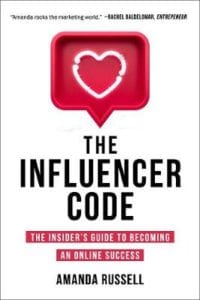
The Influencer Code: How to Unlock the Power of Influencer Marketing
Running was the sport that is the reject sport. Meaning that it was the sport that the only team that you didn’t have to make. It was the one where everybody that had nowhere else to go went, but it was free. My family didn’t have the resources to put me in any fancy sport either. My dad said, “It’s free. This is a life sport, Amanda. You can do this anywhere. You don’t have to rely on anybody. You don’t have to drive to a place. You don’t have to have fancy equipment. As long as you have your body, you can run.” I ran and I remember when it was the high school Physical Education coach that said to me, “Amanda, there are these things called scholarships. They exist in the United States in which they will pay for you to go to the school. They will pay for your whole education and you will get to compete in NCAA track and field.”
The idea of that was exciting. What was more impactful to me was that this teacher believed enough in me that I would be possibly capable of being able to do something like that. That was life-changing for me that I ran and ran. The one thing about running, which is different than marketing and sales and a lot of different fields is that it is not subjective. Meaning the time on a track is a time on a track. There is no judgment needed. If you can run a time, you are the fastest. There were no recruiters coming to my small hometown, but I knew that if I could hit certain times that I could write my ticket, so I did. There are teachers at that high school and people in my town who will still tell stories of seeing me running and creating my own practices in the middle of snow storms like, “School was canceled that day, but Amanda is out on the streets running.” This is in Northern Canada before school. This is not a place where anybody exercises before work hours.
I created my own practices. I then found an NHL hockey coach who was training NHL players. One thing we had there was hockey cultivation. His name is Larry Shepherd. I asked him if he would coach me. He told me to wait so I can be stronger. At one point I was training 2 to 3 times a day, creating my own training mechanisms. That became everything to me. I got my Division I scholarship. With that, it became my identity and my career. I didn’t follow a passion. For those of people that are like, “I followed my passion,” I’m like, “How do you even know what your passion is? You don’t even know unless you’ve tried everything.” It shocks people to hear when I say, “I hated running.” They’re like, “What?” The idea of running mile after mile sucks. It’s not comfortable. I’m not like, “That was so much fun.” Getting up at certain hours and pounding out in the pouring rain, in the freezing cold, in the hot weather was not fun, but I was passionate about it.
I was passionate about what it made me, how it made me feel, where it got me, how it created this bigger world, the identity and the confidence that it built. I think that with greatness, it’s not always easy. It’s not like you get up in the morning and you’re like, “I’m so excited. I’m passionate.” There are a lot of hard times. I tell the story to you, John, not because this is directly related to marketing, but because running was literally my life and career. It ended up serving as the most metaphorical career of my life. When I hung up the shoes, when I was forced in a tragic accident to end my career abruptly, it was the death of who I was. I was so lost and I didn’t know what I was going to do next. I didn’t have a US visa anymore. I didn’t have the confidence. I didn’t have a team around me. I trained for four years and all of a sudden, the Olympics we’re not going to happen. That then served as the foundation of what would become the theme of my life.
I think the concept now that running is a metaphor, and there have been movies made about it, the founder of Nike and Forrest Gump. We both share a passion for love of movies and the storytelling around that. When we zoom out a little bit and look at our own life as far as it is as a movie, and showing grit, determination and resilience, as opposed to just telling someone you have it, is the power of storytelling. This concept of doing something because it gets you somewhere and there’s outcomes, not because it’s easy and fun is the first takeaway. That to me is the ultimate metaphor in marketing. You’re “running a campaign.” It’s either working or it’s not. Therefore, you have to decide, “This campaign is hard. Do I want to keep doing it?” Yes, because my purpose is, and hopefully you believe in the brand, I’m getting that message out, even if it’s not a slam dunk the first time you test something.
I think there are a lot of lessons to be learned there. Let’s dive into how you started Fit, Strong and Sexy back in New York City, which was this online fitness and lifestyle community. It had over 80,000 subscribers, over 5.5 million views, and you got all kinds of press. It originally was a business school project that made you very popular and certainly put your stake in the ground. There must have been some lessons learned along that road of what it’s like to start a business, get publicity and make it successful. Anything you want to share about that journey?
That’s where the stereotypical term influencer sticks onto my name. That’s where most people seem to think that I got attracted to influencer marketing. That was one small part. The fitness YouTube channel was something that I did start in business school. Fit, Strong and Sexy is no longer. I sold that company in 2018. I started it as a project with the thesis that you can have the best product, service or idea in the world but if you don’t have an audience that cares and trusts you, it doesn’t matter. At the time, YouTube was in its infancy. It was mostly Dumb and Dumber style comedy, music and entertainment and no respect associated with it, no rhyme or reason.
[bctt tweet=”Everybody gravitates to Lamborghini. That’s how sexy the brand is.” username=”John_Livesay”]
I became fascinated with how some of these YouTubers were attracting these tuned-in and engaged audiences that want to know everything about these people’s lives. I decided to start my own channel, and this was before cell phones had cameras. I bought a flip cam at Best Buy and I used my New York apartment as my studio. I became the talent because I didn’t have resources. I didn’t have capital. I wasn’t going to hire somebody. The term influencer gives me nails on a chalkboard, which is ironic. This is why I’m passionate about the subject. I never set out to become a YouTube influencer or a fitness influencer. I use myself because that’s what I had access to.
I did fitness because that was the thing that was most integral in my own life and I think that shows through. If you are into interior design, then that comes through in everything that you do. People ask you about it, you learn more about it, and you venture into new areas. It’s got to be authentic to you. For me, it was fitness because I had spent the past several years rehabbing myself from having to walk again, back to being in shape. I had created this program for myself. That was like, “How do I get into shape literally like an elite athlete without being able to walk any miles or put any impact on your body?” That became my program.
Quickly, we became one of the fastest growing channels on YouTube. I created it like it was a television show. I would say, “Every Wednesday at 9:00 AM.” Even though with YouTube, we all know that it doesn’t matter when it goes live. My philosophy was to create like a show so people could count on it. I was so intrigued by the community and specifically my target was women that would ask all these questions. I would spend hours answering all of their questions and becoming invested in the community. By doing that, I became an expert at my audience. I could name the five different profiles and I knew exactly which one everything spoke to.
As I was speaking, they were like my friends. You can’t fake that. The more invested that I got, the more invested that they got and the more that it grew. At the end of the day, you don’t own anything on a social media platform. My thought upon leaving business school was instead of going back to my consulting firm, I would love to do this as a business, but I need stability, I need longevity, and I need to be able to scale this and own it. I thought that the way to do it was to drive to something that I own. I had this idea of a subscription model. I know that sounds so trivial, but this was before this existed.
This was before people even put their credit card information on the internet to buy a product they were going to physically get, let alone a series of online content that’s not even tangible. It was a bit of a leap of faith, but I had this audience that I knew trusted me enough. I even changed the name because I didn’t want it to be my name anymore. I pulled my audience. Fit, Strong and Sexy was not a name that I came up with. It was a name that my community came up with. It hurt me a little bit because I built it on my name and I switched it. My whole long-term goal was to back out of it. I didn’t want to be the talent anymore. In building a subscription model, I partnered with Trium Entertainment. The pitch of my lifetime was partnering with them. They are old-school television production company.
Mark Koops, one of the partners at Trium was the founder behind The Biggest Loser and Amazing Race, and everything entertainment meets fitness. I learned a lot about pitching through this, which was, “I’m not going to go ask them to help me, ask them for the capital, ask them to produce my channel. I need to figure out how to position this for them.” I knew that they needed to get into digital. They had been doing television for 25 years and they needed to pivot to digital. I had a dedicated audience. I could be their guinea pig if they would be my 50% business partners, and they did. Together we built out the subscription model. It was one of the hardest things. No widgets were built, there was liability, customer service and crashing. We definitely say that it was a stressful endeavor but we learned so much along the way.
That’s where my idea came. I was like, “I want out of this. I don’t want to be the talent.” No one knows what we’re doing. We can’t hire anybody because no one’s gone through it before. Having going through it and everybody I work with is now going through it, all of these companies are going to start to have to meet people. I wanted to start an agency that did that. LiveStrong.com started creating content and Women’s Health Magazine, FabFitFun and Shape. My agency specialized in doing a lot of the strategy, planning and content creation of that. That’s how the whole buildup began and came to fruition. I’ve been seen on every side of it from being the “stereotypical influencer” that’s doing product placement, which is the social media advertising to working with companies to have to scale their business, using collaboration, identifying the factors that are influencing their audience, and how do you become partners with those factors.

Influencer Marketing: At the end of the day, you don’t own anything on a social media platform.
Speaking of partners, you’re now on the Board of Advisors for Lamborghini. That all grew out of your success at this agency. To go from fitness to Lamborghini, it’s a fast car. They must have seen something. It’s on the cover of your book. The CMO had said that this is a great look at how to make either yourself or a brand influential. What was it that Lamborghini needed that you were able to give them around influence? They’re well known and yet I know you well enough that in three years, I’m sure you are responsible for at least one good story of how you have guided them.
All the different things that I do, everybody always gravitates to Lamborghini. That’s how sexy that brand is. I sit on a few different boards and whatever, but Lamborghini gets so much attention. Kudos out to the brand. The interesting part about Lamborghini is that they consider themselves the brand influencer, which I love. That is true. It’s exactly how you brought this up. You said people will answer my call sometimes, or they will pick up that book because they see the name Lamborghini on it. That holds weight. Lamborghini does not use influencers in the stereotypical sense. They don’t use celebrities. They don’t use social media stars. Even when celebrities post about their car, they don’t repost it. They are the influencer themselves.
What Lamborghini has done so well is they understand and work with influencer marketing in the same paradigm that I do, which is that this is not about social media advertising. This is not transactional. They don’t do anything transactional. Everything is built on true relationships. They never pay somebody to do a product placement. They nurture the whole person. They provide an experience and they call it a family. Those are things that you cannot mandate. For example, one of the big initiatives that Lamborghini has done in the past few years and done a great job at is they have taken note that a new market for a sports car is powerful female leaders. Women are in a place now where they’re not just buying fancy purses and handbags. Women of power are now buying real estate, boats and fast cars.
Rather than do some campaign with a bunch of women driving sports cars, what they did was they cultivated a community for these women, providing companionship and network of them. At every major country, they’ve got part of this community of women that can access these fancy Lamborghini lounges. They will send them cars if they want to try a new car experience with no pressure on them to buy a car. It’s more about how can Lamborghini support these women leaders. By nature, what happens? When they’re asking nothing in return and they are this asset in life, what happens is that you become their biggest ambassador ever. It’s true influencer marketing in the way in which I view it.
You said a couple of things that I love. Influencer is built on relationships, not money. The more you invest in your clients, the more they invest in you.
The best influencer relationships often never involve a single transaction of a dime.
One of the things you talk about in The Influencer Code is some of the biggest misunderstandings around influence, that popularity does not equal influence. That stands out to me because a lot of people might even think that they are synonymous. I’m going to let you explain that so that people don’t make that mistake.
[bctt tweet=”The best influencer relationships often never involve a single transaction of a dime. Influence is not universal.” username=”John_Livesay”]
That’s probably one the biggest misconceptions. Even if people say they understand that’s not this case, yet they still go, “For our next campaign, we want to get engagement at this level.” They give some definition of how they’ve decided to determine engagement, or they still are asking about certain impressions, conversions, metrics and all of these things. Not that these are not important, but by focusing on that as attention, buzz and popularity, you’re forcing the wrong metrics. Why? You can be popular all day long. People could love you. You could get attention and engagement off the charts. Let’s say that engagement is the most stereotyped version, which is not comments, but engaged comments, shares and all of these things. If it doesn’t tie back to the desired action, it doesn’t matter.
I use this example of if you took a video of your neighbor’s new kitty cats, and the video goes viral of these kitty cats playing in the living room. If that doesn’t have anything to do with your desired bottom line, it doesn’t matter. Some of the biggest brands in history have made this error. A great example is Kate Upton and Bobbi Brown Cosmetics. On the surface, it would look like Kate Upton would be a prime ambassador or influencer because she’s this beautiful model that was known for being a real woman, real curves. Bobbi Brown hired her, and she got all kinds of engagement, but the people following Kate Upton were not women. They were majority straight men in their 30s and 40s. Straight men don’t buy a lot of makeup.
Kate Upton might be an influencer. In some respects, she was not an influencer for Bobbi Brown Cosmetics. She could get all the engagement, all the attention, all the popularity, and she was popular. She had celebrity status, but it doesn’t equate to influence. It goes along with another fact, which is influence is not universal. This is later proved by when she was then hired by a video gaming company. She was hired by them and she’s killed it off the charts. Why? Because her audience was a lot of men in their 30s and 40s, and that was more in the ballpark of their audience. She had influence in that space. Having her beyond these video games was like “woo” for these guys.
I would boil it down to one simple line and that is influence must be relevant. You talk about that in one of your chapters.
Relevant and resonant. It must resonate.
We’ve all heard about smart goals. You take it one step further and talk about smart objectives. You have this example here about which would we prefer, a salesperson who’s going to increase sales by 5% every month leading to 30% increase in half a year, or somebody who says they’re going to increase traffic by 15%, but don’t have a deadline. Reveal to us what the right answer is and what the rationale is.
I think the right answer is intuitive. It’s like, “What would you rather?” It’s like somebody says they’re going to lose 10 pounds. Are you going to lose 10 pounds in five weeks or in ten years? Are you going to gain 20 pounds first before you lose your 10? What does that mean? That’s step one of the codes. That goes back to the running analogy too. It all ties together because the first thing that we need to do and it’s simple, yet it is the most overlooked even by the biggest brands on the planet, especially in the marketing sales advertising realm. It’s that if we are a for-profit business, we need to start that our goal is almost always the same, which is revenue or market share. The rest are objectives.

Influencer Marketing: Shifting how you think about influence will change everything from your personal life to your professional life. It’s not about transactions; it’s about people and relationships.
Things like awareness, impressions and signups, all these things are great but they’re objectives. We need to start with the end goal first and work backwards. It’s the same reason that Pepsi lost market share to Diet Coke in 2010 when they did the boldest social campaign of all time. They stripped their Super Bowl ads for the first time ever in history in favor of a social media campaign that got so much attention, so much engagement. The problem was that all of the interaction pushed a behavior that was people voting for their favorite charities. It had nothing to do with buying Pepsi.
What happened there? The advertising agency could win awards, but the marketing director is going to be fired because brand buys loses market share. Why? Because they didn’t start with the goal of the company. They started with the excitement over buzz, over popularity, over attention. You’ve got to start with the goal and not everybody is for-profit. Nonprofit, what is their goal? It might be to raise a certain amount of money or getting a certain number of homestead or whatever that is. You got to start with the end goal first, and stop confusing goals with objectives.
One of the things that’s helpful in your book, The Influencer Code, is the tactical step-by-step things that anybody can do who has any kind of website. As an example, you talk about a customized landing page. You might think to yourself, “That’s a real estate that I haven’t customized.” Our mutual friend and a previous guest on the show, Erik Qualman, you show his example. When he was launching his book, he had a customized landing page with a very clever image of his face and about focus. It’s a great checklist for people to say, “Am I doing everything I can?” You have gone through a comprehensive list. That’s why I can tell you’re such a good teacher. You think you’re good at marketing. You think you’re good at influencing other people, but if you want to be a black belt in it, I highly recommend that you take a look at getting The Influencer Code into your library. It’s going to up your game. Any last thought or quote you want to leave us with, Amanda?
In terms of the book, one of the biggest easiest takeaways is to shift how you think about influence. It will change everything from your personal life to your professional life because it applies to both. It’s not about transactions. It’s about people and relationships. When you approach things that way, you’re always going to win. It’s the long game. It’s not a quick fix, but that investment when people think, “It’s so much time up front. It’s so much more money,” it’s not because it’s a quick fix or a transaction. That’s a blip that goes nowhere. You would rather build the infrastructure and the foundation. In order to understand influencer marketing, you must first understand influence. That formula is attention plus trust, because attention without trust is just more noise.
What a great way to end. Thank you so much for sharing your wisdom and this wonderful new book, The Influencer Code.
Thank you so much.
Important Links
- The Influencer Code
- Fit, Strong and Sexy
- YouTube – Amanda Russell
- LiveStrong.com
- https://AmandaRussell.co/
- Erik Qualman – Past episode
- Better Selling Through Storytelling Method Online Course
Wanna Host Your Own Podcast?
Click here to see how my friends at Podetize can help
Purchase John’s new book
John Livesay, The Pitch Whisperer
Share The Show
Did you enjoy the show? I’d love it if you subscribed today and left us a 5-star review!
- Click this link
- Click on the ‘Subscribe’ button below the artwork
- Go to the ‘Ratings and Reviews’ section
- Click on ‘Write a Review’
Love the show? Subscribe, rate, review, and share!
Join The Successful Pitch community today:
- JohnLivesay.com
- John Livesay Facebook
- John Livesay Twitter
- John Livesay LinkedIn
- John Livesay YouTube
Marketing With Webinars With Tom Poland
Posted by John Livesay in podcast | 0 comments

One of the difficulties many businesses face is finding the perfect timing to pop the question and ask potential clients to take the leap. How do you make people have the confidence and trust to work with you? In this episode, multiple best-selling marketing author, Tom Poland, joins John Livesay to reveal his unique answer: webinars. Tom shares with us his book, Marketing with Webinars, to guide us into the key benefits of using this method and what you can do to successfully get people to your lane. What is the Goldilocks marketing? How can you become more relatable? What role does storytelling play in the process? Why is reciprocity the most powerful force in marketing? Tom gives the answers and more in this discussion.
—
Listen to the podcast here
Marketing With Webinars With Tom Poland
Our guest is Tom Poland. He’s a multiple best-selling marketing author. Over the past 41 years, he started and sold five businesses, taking three of them international. He has led teams of over 100 people with annual revenues of more than $20 million. In his book, which is called Marketing with Webinars, he reveals the unique method that has helped thousands of organizations globally enjoy the fulfillment and prosperity that comes with a weekly flow of high-quality inbound client inquiries. Tom, welcome to the show.
John, thanks for having me.
Let everybody know besides your accent, where are you located in the world?
Just a correction first. I don’t have the accent, the Americans have. I am in the center of the universe, which is little Castaways Beach in Queensland, Australia.
It’s such a beautiful country. I’ve been up to the Barrier Reef. I know it well and lucky to be in all that beauty. Tom, I like to ask my guests to take us back to their own story of origin. You can go back to childhood, school, wherever you want to start the story, your interest in communications or marketing. It’s always fascinating to hear those stories are rarely linear.
[bctt tweet=”We’ve got to give people an opportunity to get to know us before we even pop the question of maybe talking about working together.” username=”John_Livesay”]
If I went and clocked back 41 years, I started out as a young management consultant. As a 24-year-old setting up shop as an independent management consultant. I was competing against the likes of the big fours that were then, the PricewaterhouseCoopers and Coopers & Lybrand. Way back then also, if you didn’t have a brick and mortar office with a receptionist behind a typewriter, you didn’t have a business. I had the overhead of a brick and mortar office and I had mortgages, three of them. I had children and I was broke. It doesn’t take too long to figure out that if you’re going to set yourself up as a 24-year-old management consultant marketing in competition against some big brands, you better get bloody good at marketing. You better get good fast. I bought every book, I went to every seminar and put everything in place. It didn’t work. I was going broke. Long story, I survived. I ended up thriving, but it was because I figured out there was one vital difference between almost all the marketing information and teaching that I was consuming and what would actually work. That one vital piece of information could be summed up by me saying, “When you’re marketing services advice or Software as a Service, it’s far more like you’re proposing marriage in your marketing than it is selling a washing machine.”
I was learning from people that were selling cars, real estate or dry-cleaning services. I was suggesting that a prospect enters into a long-term relationship with me so that I could give them advice. That meant the direct mail letters and whatever else we use back then, radio ads, “Come and get it, call this number and we’ll give you one.” None of that worked because I had to set up a scenario where people could have a first date with me. Before I propose, we talk about business. That first night became the event. It became the seminar, the workshop, the conference. I found that was a tremendously effective way to get new clients in the door. I reflected on that and I thought about the oldest, most successful marketing method in the world, which is speaking to groups of people.
If you have any doubts about that, ask yourself how many clients Buddha, Christ, Muhammad have. There are billions of them. All those three guys did was speak to groups of people and often quite small groups but it produced billions of followers. They didn’t even write anything. How I got to marketing webinars goes way back to that origin story. We’ve morphed from physical events into webinars mainly because I’m lazy. I got sick of running around the planet. I did have 500 physical events over those years. You’ll hire a conference center, send out direct mail letters, give everyone tickets, fill a room and struck your stuff on the stage for a couple of hours, hand out feedback forms and pick up the clients. It works well but it’s complicated. Long story short, when you’re marketing services advice or development software, you’ve got to give your prospect, your audience an opportunity to get to know you, much the same way as if I said, my now wife, I could have proposed to her at first sight, but I didn’t. I was only smart enough to know that that wouldn’t work. I asked her out for a date. One thing led to another. I think that’s analogous to the consultant, the coach, marketing services. We’ve got to give people an opportunity to get to know us before we even pop the question of maybe talking about working together.
For those first requests, I have found that the smaller they are, the easier it is. You don’t go from, “Fill out this form.” Maybe say, “If you want this free PDF, give me your email.” It’s like a little baby step. The risk is low and the reward is hopefully some good content as a sample.
It’s a bit like Goldilocks marketing. It could be too hot, it could be too cold. It can be just right. The right part depends on where the prospect is at because some of them want to know, where do I order? Almost literally they buy more of my books. I’ve got webinars. “Do we have to go through a consult? I want to work with you.” Those are the hot ones, and this is about 3%. Not a lot, but if you have enough volume, it can become significant. We find about 12% want to explore deeply. These are 12% of the people who comprised our audiences who want to explore deeply. They’ll read every word on a sales page. They’ll delve say for every second of a webinar or so on. That is what I call the explorers.
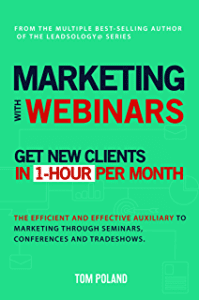
Marketing with Webinars
The 85% are the wanderers. They want to download the free PDF or the one-page blueprint. If you want to cater for the whole marketplace, you do need more than one marketing medium. The one I find that is the best, the Goldilocks. That’s about the right temperature is the webinar. If you align the title of the webinar with the benefit of working with you then you’re going to attract the right people. My webinars are about marketing with webinars. My book is about marketing with webinars, my program is about marketing with webinars and that’s an alignment. You think about this, we talked about how we’ve got to give people an opportunity to get to know us before we propose.
It’s like the first date. You can do speed dating. That’s not quite enough. That’s like social media. Six minutes and the clock goes, “Tell me all about yourself, I’ll do the same.” It’s not long enough to get to know someone. You could ask people to sign up for a six-week boot camp. It’s probably too much, but the webinars like the night out on the town. Let’s have dinner, let’s have a show, maybe have some coffee and we’ll go from there. They’ve got to register. It’s going to be an hour of their lives that they’re prepared to commit. If they’re prepared to put that much skin in the game, it’s about right for them at the end of that hour and 90 minutes, if everything’s clicked to reach out and book a time to talk with you about becoming a client. That’s why I call it Goldilocks marketing because we were hitting the sweet spot for the people that are ready to explore further.
I was doing one and somebody who’s a friend was listening, and he said, “Do you ever worry about giving away so much free good content that people might think?” I have my answer, but I would love to hear yours and I’ll share what I said to him. An open-loop we call that in storytelling. It’s creating a little suspense of, “I wonder what the answer is.”
My take on that is this. The simple answer is to give it all away, but there’s a caveat. I often start my webinars with a picture, a point of view photo of someone driving a beautiful car and you can see the dashboard and the screen, everything else. I said, “This webinar is going to be a bit like a test drive of the car.” Bringing them to the showroom. We can look under the hood and pop the trunk and fit you in the driver’s seat. We’re not going to build the car. We don’t have time to do that, but I can show you the car. If you want to build one together, we can talk about that later.
Don’t worry. You still going to get great value. You’re going to get lots of ideas and what to look like on a car. It’s going to be worthwhile. Please do understand that while some are paid to answer every single question, it’s not actually building the car. You will need help with that. If you want to work with someone else, work with me. I don’t mind. Please know that is a pivot to it. With that caveat, I’m happy to tell them everything.
[bctt tweet=”You don’t actually have to be smart to be successful. You only have to be smart enough to know how dumb you are.” username=”John_Livesay”]
The other thing to think about is what I say to my clients when they asked me this question, “Do you want to work with people who have the money to pay you and who are smart, or would you rather work with people that are broke or dumb?” It’s like, “It’s a no-brainer there, Tom.” If people are smart and they had the money having attended your webinar, they will want to work with you. If they don’t have the money, they can’t so give them lots of value because it’s good karma. I can help ignorant, but I can’t help stupid.
My response back to my friend who said that was, “I don’t worry about that because even if I show people step-by-step what to do, you still need help.” Everyone needs help. Crafting it, refining it, practicing it, honing it, whether you’re right. You’ve written a book, you need an editor. You don’t try to edit your own stuff. The same thing is true with everything. Reading a book on how to write a book, you don’t eliminate the need for the editor.
It’s like when we go out to the Australian Open watching Djokovic win it. I said to my wife, “I’m going to get his book because I’ve seen him play. I’ll go on the pro-tech.” I can see it how he’s done that. That doesn’t look too hard. I do always add that caveat, John, which is, this is not as easy as it might look.
I love that because you have to manage expectations. People either have one extreme or the other. They either think in the case of storytelling, “You’re either a born storyteller and I’m not so I can’t possibly learn it, or it’s easy for you because you are a born storyteller.” They don’t realize the skill, the training and the practice.
There are many subtleties and nuances to storytelling. To get to a level of professionalism, to get to a level of impact, you are going to need help from a specialist. It’s every other single specialization in the world, whether you’re a lawyer, an accountant or a software developer. It’s no good telling me how you do that. I’m not going to be able to do it. I would need your guidance. People that have money will want to reach out and work with you because they understand that.

Marketing With Webinars: If we can be humble enough to recognize that we only have to be smart enough to know how dumb we are, we can reach out and get help.
I took an Accounting class in school, but I certainly don’t want to do my own taxes. I watched somebody cut somebody’s hair, I’m not going to cut my own hair. It’s fascinating.
To finish this off, there’s a little-known secret of success. You don’t actually have to be smart to be successful. People think you’ve got to be like Bill Gates or Zuckerberg smart. You don’t. You only have to be smart enough to know how dumb you are. If you’re smart enough to know how dumb you are, then you get help. That’s what I’ve done for years. I’ve started trying to learn from the marketing masters because I knew I wasn’t good at it. I knew I was dumb at it. I needed to upskill on that. I think if we can be humble enough to recognize that we only have to be smart enough to know how dumb we are, we can reach out and get help.
That will be a great tweet. If you are smart enough to know how dumb you are, you get help. One of the things you talk about are these immutable elements. One is what you touched on about, you’re not Hugh Jackman. Most of us are not famous. Our brands aren’t famous and so forth. It’s a bit of hubris to act like we don’t need to flirt or date. That’s where we have these stages. You talk about these four Rs. Rapport, you get respect, relatability and reciprocity. Relatability, let’s double click on that word and we’ll go to the last one. What is something that someone could do to become more relatable, in your mind?
They should work with you and understand that the story is a great way for having an audience feel like you can relate to where they’re at, the before and after part.
Revealing some of your pain points and not coming across perfect is all a big part of that.
[bctt tweet=”Reciprocity is the least spoken about and yet the most powerful force in marketing full-stop.” username=”John_Livesay”]
You would know better than me.
This reciprocity factor, this concept of giving before you get is my definition of it. What does it mean for you?
It’s the before and after photo of the weight loss thing. You look at the photo before and think, “That’s me and I hate it.” You go to the after, “That’s what I want to be.” That’s a story I told you being a management consultant, having the overheads, going broke, reaching out for help, not working, and discovering, that’s part of my story. People go, “That’s where I’m at. I’m on a left-hand side of the Canyon.” I could see over the other side of the Canyon. It’s people who leads in and how do I get there? People can relate to that. The unpredictable nature of marketing, sometimes random acts of marketing, people can write to that. “I do that. I go run at a client, so I go to meetings and hope to get lucky.” Commercially wise. That’s the whole reliability thing. Somewhere early in the webinar, you want to be able to tell you the story in such a way that people can go, “He used to be where I’m at now and now he’s where I want to get to. I better listen up because he’s going to show me how to get there.” That’s a big part of relatability.
Reciprocity in my view is the least spoken about and yet the most powerful force in marketing full-stop. What is reciprocity? Let me tell you a story. A neighbor calls and I answer the phone, and they say, “Why don’t you come for dinner Friday nights?” “It sounds terrific. What time? What should we bring?” “Don’t bring anything,” she says. Me being a man goes, “She means what she said.” I said to my wife, “Are you up for dinner with Russell and Sally on Friday night?” She goes, “What are we bringing?” I said, “It’s okay. She said don’t bring anything.” My wife looks at me and she says, “Tom, are you so stupid? How old are you again? Eight.” It doesn’t mean don’t bring anything. We take wine. We take chocolates. We take flowers. Why? It’s because of reciprocity. Giving us a beautiful dinner, invite us into their home, but they’re going to clean the thing for half the day, if there is anything like my wife and so on.
She feels she needs to do something to even the score. The next morning, we wake up, on the front doorsteps there’s a pot plant because we went over the top and our neighbors have to even the score. This is like a perpetual giving machine. It never stops. That’s an example. Psychological reciprocity typically means it’s a fancy way of saying, “In our mind, we like to keep the score of giving even.” It is unconscious and it is powerful beyond belief. In the world of marketing, it means if I do something cool for someone else that’s genuinely helpful, they will feel unconsciously compelled to want to even that score up all other things being equal. If I have a Hitler youth party do something for me, I don’t want to even the score. When I say a lot of the things being equal. You’re interviewing me for your show, which is terrific. It’s a great example of reciprocity. At the end of the show, I would love to reach out and say, “How can I help you, John?” Reciprocity. It’s not going in with strings attached. It’s going in with extremely low expectations of a return on that giving, but a high expectation for the management of the giving.

Marketing With Webinars: Understand that the story is a great way for having an audience feel like you can relate to where they’re at, the before and after part.
The other thing you talk about is to be consistent in what you do. You alluded to that before. The book, your website, everything is about webinar marketing and consistency. I love it. Where I want to take you and the readers is when we get in a situation when someone asks us to do something for a famous company for a lot of money that’s not in our expertise, and you’re thinking to yourself, “Can I figure out how to do this? Can I suddenly become an expert in whatever it is that I am not an expert in so that I could shake and maneuver myself into this little box that they are describing, which I actually know somebody else who is good at that?” I was in that situation and I said to the event planner, “Here’s what I’m hearing you need. This, this and this. You want someone who’s comfortable entertaining people going out into the audience, 1,500 people and razzle, dazzling them, talking about customer service and getting into all of the nitty-gritty of operations and all these other things.”
I said, “My sweet spot is storytelling and an audience of salespeople, not people who run a quick-service restaurant.” I do know someone. That’s what they do, they perform, they’re an entertainer and they’re also a speaker. They’re getting everybody clapping. The irony was, they then started to change the parameters to fit my niche. “Maybe we could have you in a breakout room then.” I thought how funny. I’m like, “It’s not the number of people. It’s the audience and the topic that I was saying no to but, okay.” I’m curious if you’ve ever had people approach you going, “Can you also help us launch this product?” Whatever else they might ask you to do that you go, “I didn’t know how to do this well, but I’m not going to pretend I know how to do everything well.”
If I want the clock back 30 something years and you can have a look at my overdraft, and you asked me that time, “Can you do juggling on stage in front of 10,000 people for half an hour?” “Yes.” Realistically without wishing to seem too pure about it right now, I would say no to that request if someone asked me that exact same question. “Can you go through and make them laugh?” No, that’s not me. Call John. Way back when I was desperate for money, I probably would have said yes and figured out how to get paid and do the best job I can.
The yes-no response to that is dependent on how hungry I am. A beggar on the streets in Calcutta, if you ask them to do cartwheels for $10, they’d probably go, “Yeah.” I would say no right now because cashflow is pretty good. We’ve had a few years of successful business. I did have a friend of mine who did a lot of work on Twitter, LinkedIn and had millions of followers decided to focus on LinkedIn. She said she had a request to speak on Twitter a day after she made that decision to focus on LinkedIn. She turned down $25,000 gig. I would have said yes to that. She knew the subject. She had made a mental decision to make a break. That’s fine. Take the $25,000. You can deliver the value. It’s good money. It’s meat and drink for you. Go get them, girl. That’s what I would’ve done. People will draw the line in different places, but I have respected the decision all the same.
What I found fascinating with that, and I never tested it, was when you pull back and go, “I’m not sure this is for me.” Sometimes people pull in even, and they go, “I’m going to give you someone else.” “That’s the person we want is somebody who cares.” I phrased it in a way and I’m like, “I want you to be a success. If I’m not going to give you what you’re looking for, then I might not be the right person.” That takes a lot of awareness, confidence. You each decide, I heard Matthew McConaughey talking about his own career in these terms. That’s why I think it’s so relevant for everyone. Pick a niche, double down on it. He’d been known as the romantic comedy guy for years making all these movies with a shirt off making a lot of money. He decided he didn’t want to do that anymore. He’d made enough that he never had to work again if he didn’t want to. For six months he got more offers in that niche. He kept saying no and gets millions. He still said no. It was eleven more months for a total of twenty months before he finally started getting an offer for the serious roles that he’d always wanted to do. I thought, “We don’t all have that luxury,” but mentally it’s a great story in terms of consistency. If you’re in a box you don’t like to be in, it’s up to you to get out of it. It’s my takeaway from that story.
[bctt tweet=”You’ve got to make sure that the majority of your lead generation is in-house.” username=”John_Livesay”]
The big thing that helped him was the luxury of having millions of dollars in a bank account. That’s what I was referring to before. Years ago, my bank account was in overdraft. I was desperate. I probably would have said yes to about anything. These days you don’t have to. Where you draw the line might move. There’s a terrific book and I had a chance to have a preview of it. It’s the Greenlights, which is Matthew McConaughey’s book.
Your third element is, we must control our own oxygen supply. We’ve all heard that premise. If you are traveling with a child, put the oxygen mask on yourself first, not the child. It seems somewhat counterintuitive, but maybe even selfish if you think it through a bit. If you pass out, the kid doesn’t know what to do. In terms of business being leads, being a supply of oxygen, how do we help people make sure their lead supply doesn’t stop?
What I’m essentially saying there is that you’ve got to make sure that the majority of your lead generation is in-house. You can push the buttons and pull the levers. I’ve heard a lot, and it’s a tempting value proposition is, “Tom, if you could get me all the appointments, please. If you could set those up or if someone could do my marketing for me because I like to work with client,” which most of us do. The problem with that is if you outsource it to an agency, about 85% of the time, you will pay the money and they won’t get you the results. After 3 to 6 months you go, “I don’t want to keep doing that.” You write them the Dear John letter, “Dear John, I taught you, it’s me. I need to put this on pause for a while.”
Fifteen percent of the time would deliver results, you create a dependency. That dependency is dangerous. Someone once said the scariest number of businesses is the number one. One supplier, one client, etc. If you have one organization that you are totally financially dependent on for the supply of all your business and they go over or they sell, COVID hits, who knew? It’s like you’ve outsourced your oxygen supply. You wouldn’t outsource the oxygen supply to your body because if that third-party supplier fell over, you’re dead. The difference with the business is the death takes longer, but you’re still as vulnerable. By all means, if you have a great agency that can supply leads and they’re prepared to get started, especially if they’re prepared to give you a split of results that you pay them from a split of results, not money out upfront, do that. Make sure that they’re not supplying any more than 1/3 of your new business requirements. You’d have to have the rest of the house otherwise you’re vulnerable.
Any last thoughts or tips that you want to leave us with before we talk about how people can follow you? The book is called Marketing with Webinars.
The best thing people can do is buy the book, Marketing with Webinars because it’s the most prescriptive book I’ve ever written. It’s the sixth book I’ve written. It goes into the most detail. I go into all sorts of tech equipment to get and what not to get platforms. It will be going to things like titles and every single slide. When they get the book, they’ll have access to my 31 template slides, which is the same 31 slide template all my clients use. When I give it to my clients, I said, “When you bring it back, I don’t want to see 32 slides.” You can have any type of color font you would like, as long as it’s black, any background. It’s prescriptive. That’s what I’m saying.
They’re going to get a lot of value out of that, but other than that, I think the big thing is to make your strategic commitment to do your marketing and webinars. I do all of mine. It is the combination of the most efficient and effective marketing medium. It combines that oldest, most proven marketing message in the world, what I mentioned before, Buddha, Christ, Muhammad, billions of followers. I was speaking to groups of people with the world’s newest marketing medium, which is internet. It’s got the best blend of the old and the new in terms of marketing.
What’s the best website for people to find you?
Leadsology.guru, there are a lot of free resources there. There’s also LeadGenDemo.com because that’s where they can sign up for our monthly lead generation demo using marketing webinars. It’s completely free. People can come along. The website is a good place to start.
Tom, thank you for not only sharing wisdom but humor. What a fun way to have the medicine go down as they say. That’s why I’m sure you’re so successful. Thank you.
Thank you. All the best.
Important Links
- Marketing with Webinars
- Greenlights
- Leadsology.guru
- LeadGenDemo.com
- Better Selling Through Storytelling Method Online Course
Wanna Host Your Own Podcast?
Click here to see how my friends at Podetize can help
Purchase John’s new book
John Livesay, The Pitch Whisperer
Share The Show
Did you enjoy the show? I’d love it if you subscribed today and left us a 5-star review!
- Click this link
- Click on the ‘Subscribe’ button below the artwork
- Go to the ‘Ratings and Reviews’ section
- Click on ‘Write a Review’
Love the show? Subscribe, rate, review, and share!
Join The Successful Pitch community today:
- JohnLivesay.com
- John Livesay Facebook
- John Livesay Twitter
- John Livesay LinkedIn
- John Livesay YouTube