

You know the holiday song “Do You Hear What I Hear?” There is a lyric that asks, “Do you see what I see?” which encourages people to use their imagination and look up into the sky.
What a great metaphor to remind us to look up from our daily tasks and imagine what is possible beyond our limited thinking.
When we start off conversations with “What If?”, we invite our potential business partners to imagine new possibilities. One of the best tools to do that is to ask a question that allows people to visualize a future where the two of you are working together and how much better their life will be by using your solution to their current problem.
Active listening has always been a key factor in being successful in sales. (And we all have to sell ourselves — whether we have a sales title or not). That is why it is crucial to reframe and restate what you think you heard someone say before you answer them.
When people feel seen and heard, they connect with you.
Eyes Wide Open
When I interviewed Issac Lidsky on my podcast The Successful Pitch, he told his journey of losing his sight at 25 years old. He went through many feelings of grief around losing his sight. Once he reframed how he saw his blindness, he went on to become the first blind person to serve as a law clerk for the U.S. Supreme Court.
Now, as an entrepreneur, he told me that when he runs meetings with his staff and asks them for their input, he sometimes hears silence. He reminds them, “I’m still blind. Are you all nodding again?” Then he has people go around the table and speak their thoughts. This gives him more information than if he had just relied on “seeing” people nod their heads.
He has written a wonderful book Eyes Wide Open and inspires all of us to see in new ways.
When you learn how to tell a new story to yourself about what you need to be happy and successful, you are back to being the director of your own life.
The Three Cameras
We always have three cameras at our disposal:
-
- How we see things. What lens are we using? Is it a wide-angle or close-up lens?
- The choice to see things from others’ perspectives and show empathy for what they see and feel
- The ability to zoom out and see the big picture. Will this be important or stressful 5 minutes from now? How about 5 days or 5 years from now?
If you want to learn how to see and hear things from a different angle so you can create meaningful connections, then my Better Selling Through Storytelling course and ongoing support could be the missing tool you have been looking for!
Let’s go on a journey together to get people to see and hear what you see by telling them stories that tug at their heartstrings so they want to open their purse strings.
“Do You See What I See?”: Using Visualization to Close the Sale
Posted by John Livesay in blog | 0 comments
You know the holiday song “Do You Hear What I Hear?” There is a lyric that asks, “Do you see what I see?” which encourages people to use their imagination and look up into the sky.
What a great metaphor to remind us to look up from our daily tasks and imagine what is possible beyond our limited thinking.
When we start off conversations with “What If?”, we invite our potential business partners to imagine new possibilities. One of the best tools to do that is to ask a question that allows people to visualize a future where the two of you are working together and how much better their life will be by using your solution to their current problem.
Active listening has always been a key factor in being successful in sales. (And we all have to sell ourselves — whether we have a sales title or not). That is why it is crucial to reframe and restate what you think you heard someone say before you answer them.
When people feel seen and heard, they connect with you.
Eyes Wide Open
When I interviewed Issac Lidsky on my podcast The Successful Pitch, he told his journey of losing his sight at 25 years old. He went through many feelings of grief around losing his sight. Once he reframed how he saw his blindness, he went on to become the first blind person to serve as a law clerk for the U.S. Supreme Court.
Now, as an entrepreneur, he told me that when he runs meetings with his staff and asks them for their input, he sometimes hears silence. He reminds them, “I’m still blind. Are you all nodding again?” Then he has people go around the table and speak their thoughts. This gives him more information than if he had just relied on “seeing” people nod their heads.
He has written a wonderful book Eyes Wide Open and inspires all of us to see in new ways.
When you learn how to tell a new story to yourself about what you need to be happy and successful, you are back to being the director of your own life.
The Three Cameras
We always have three cameras at our disposal:
-
- How we see things. What lens are we using? Is it a wide-angle or close-up lens?
- The choice to see things from others’ perspectives and show empathy for what they see and feel
- The ability to zoom out and see the big picture. Will this be important or stressful 5 minutes from now? How about 5 days or 5 years from now?
If you want to learn how to see and hear things from a different angle so you can create meaningful connections, then my Better Selling Through Storytelling course and ongoing support could be the missing tool you have been looking for!
Let’s go on a journey together to get people to see and hear what you see by telling them stories that tug at their heartstrings so they want to open their purse strings.
The Influence Board With Jay Allen
Posted by John Livesay in podcast | 0 comments

Have you experienced being bombarded with cold calls and not knowing what to do with them? Especially when quarantine and social distancing have become the new normal, receiving these calls has probably been a lot more frequent that we just can’t find the time to answer them all. Introducing you to someone who has created a solution to that, John Livesay sits down with the founder of The Influence Board, Jay Allen. He shares with us the platform he has created that helped influential executives deal with cold calls and how he is letting people connect with the right decision-makers and make the world a better place.
—
Listen to the podcast here
The Influence Board With Jay Allen
Jay Allen is the Founder of the Influence Board. He noticed that a lot of influential executives were being bombarded with cold calls and they didn’t have time to do that. He created a solution for that. He helped build it with their input, which has allowed it to scale. Find out how he’s letting people get into the right decision-makers, while also making the world a better place.
—
Our guest is Jay Allen. He’s founded and managed six major networks of influential business leaders over the years with over 5,000 executive members from the major companies in the US and Europe. He has years of experience as an entrepreneur, strategic advisor, and executive leader. He is an influencer among private companies and large strategic corporations. He’s overseen strategic business development for a number of emerging technologies. He’s also the Founder of the Influence Board. Jay, welcome to the show.
Thank you. It’s great to be here, John.
Let’s go back to your own story of origin. You can go back to childhood or school. Tell us a little bit about how you got interested in business in general.
It all started with a passion for marketing. I went to college for international marketing and loved it. I grew up in the industry a little bit, but quickly discovered that the salespeople were making a lot more money than me. I transitioned at one point from marketing to sales. It was a tough transition. I’m a relationship person. The impact of rejection of cold calling was tough for me. I had a lot of anxiety about cold calling. I reached a point where I said, “Do I want to do this as a career?” I knew I needed to do something a little different. It was that inflection point in my life where I decided to take a slightly different trajectory. I ended up reaching out to ten executives I had never been able to get a meeting within two years of cold calling. I invited them to lunch to meet each other and I told them, “No vendors. You’re all going to pay for your own lunch.” I was shocked when all ten showed up.
I learned a valuable lesson that day that was a guide to everything I did after that. These influential people have a hard time growing their network of other valuable contacts. The networking events they get invited to aren’t high value because 80% of the people in the room want to sell them something or hand them a resume. The fact that I reached out and said, “These nine other executives want to have lunch with you. We’re going to get to know each other. No vendors. You’re buying your own lunch,” was a completely novel idea to them and something that was of high interest. Over the years, I went from a below-average salesperson that hated cold calling to one of the most connected people in Colorado by becoming a personal networking assistant to the most powerful and influential people in Colorado. That led me to do sales in a different way and continuing sales but not having to cold call the way I used to.
That is valuable for everyone reading. You’re solving a problem, which is what everybody has to put the lens on. The problem is that influential people have trouble growing their network without being inundated with a lot of other people pitching them things or wanting to hire them. They’re talking to their peers and learning from them without feeling like someone is trying to sell them something or get them to hire them. Smart executives realize the value of their network. You need it not when you have a job, but when you don’t have a job. They’re forward-thinking enough to realize, “This is a good use of my time. I might use something I could use in my job. Especially if it’s my peers, we probably have similar challenges.”
You and I were talking about some of the similar challenges that healthcare companies have with COVID. If a pharmaceutical company is talking to a manufacturing company and they’re both realizing, “We’re having trouble getting in the virtual door.” They might have some interesting conversations of sharing some things that are working. You were in that lunch even though they were all buying their lunch, but that’s not when you were pitching. I’m sure that’s the case. I want to reiterate for anyone who’s reading and going, “I’m going to try that.” It’s still not your chance to pitch. You’re just listening.
I coined a phrase, the law of two favors. My philosophy was if I have an ulterior motive or I’m trying to get in the door and close a deal with one of these executives and that’s why I reached out, I can’t tell them that until I’ve done them two meaningful favors. Once I’ve done them those two meaningful favors, I can bring that up and we can have a conversation. Selling to a friend is a much different experience than selling to a stranger. I wanted to establish that relationship of trust and friendship and cross the bridge of them knowing that regardless of the outcome of any transaction, we’re going to be friends. When I do the ask, they can say yes or no and have confidence that it’s going to have zero impact on our personal relationship.
Selling to a friend is different than selling to a stranger, that’s going to be one of our tweets from the episode. The problem I see with many salespeople is they’re short-term focused, “I’ve got my quota this month, this quarter. I don’t have time to make friends.” They’re not seeing the long picture. It’s like, “I’m moving on,” as opposed to maybe a no could be a yes down the road. That is not how you build a successful career, let alone a network. You have to invest. Those relationships are my big takeaway.
I’ll even give you an example. One of the executives in that first group of ten was the head of IT for a large technology company in Colorado. I had never been able to get past his admin. He had a brutal admin. He showed up at this lunch. One thing I discovered in the conversation over lunch is that he was engaged to be married. His fiancé was trying to land a job. I asked some more questions about what she was looking for. I made a few phone calls. I ended up landing her an interview. She ended up getting the job. The executive invited me to their wedding reception. We became fast friends.
I had an opportunity to sell into his company. When he changed jobs, I helped make some introductions for him to transition to a new job. I had some opportunities to sell into the organization that he went to at that time. He moved out of the country. When he moved back to the United States, years later, I was the first person he called and we reconnected and had an opportunity to sell to the new company that he moved into. It’s those long-term opportunities that made a difference in my career.
[bctt tweet=”Selling to a friend is a much different experience than selling to a stranger.” username=”John_Livesay”]
I remember when a client of mine in a healthcare company hired me to speak to their sales team. We had many conversations before and then we met face-to-face. He introduced me to his boss and all of that was the night before the event. He turned to me and he said, “I feel like I’ve made a friend.” I said, “You have.” That’s what you want to have. When you can make somebody look good to their boss or if I was calling on ad agencies and I make them look good to their clients, that’s when people know, “You don’t see me as just another job. You see me as a person.”
That premise of speaking and becoming friends with somebody at one company and they left and went to a competitor and they brought me with them. They’re like, “I want you to do what you did for me at the other company to this company.” Those warm introductions. When someone is hired, they obviously have a little honeymoon period going on. If they say, “I want to bring this speaker or trainer in,” it’s different. They go, “This is your first six months to show yourself and that’s why we brought you.” It’s a great example of all that.
I want to talk about your days at product development at American Express because I’m sure you learned some fascinating life lessons there working for such a big company versus working in other situations. When people get to work for a big brand like that, I know when I was at Condé Nast, you see things. Your resources, for one, are different from smaller situations. What was your big insight from being at American Express?
At American Express, like some of the other companies I was at, I was always part of a small entrepreneurial segment of the organization. Not all companies do that and do it well. American Express was one that did it well. They were interested in branching into a new space, which was the debit card or stored value card space for college campuses. The project I was on was, how do we develop both the platform and the marketing message to go to these college campuses, and provide them a stored value card that the parents could load up and would work at places that accepted American Express around campus? It was a great concept. The team there was entrepreneurial. You don’t often see that within a large company. It went well that that division ended up being acquired by Maritz, a performance improvement company out of St. Louis. I had the option of moving to St. Louis, which I didn’t take. I wanted to stay in the West.
What I find fascinating about you is you have your pulse on the zeitgeist. What I mean by that is like Wayne Gretzky’s quote, he aims his puck for where the puck is going and not where it is. You started the Influence Board years ago. Who could have predicted that the need to help people get appointments with key influencers would be at an all-time high during a pandemic when you can just drop it in office or see somebody between surgeries if you’re calling in the medical things? It’s almost like a relationship. You need to plant those seeds early on. You saw a need for this when you started it. Share with us how you came up with the idea and what it does.
What’s interesting is this concept has been attempted a couple of times in the past that I’ve seen and it has not succeeded. The reason it didn’t succeed is because it was being built from a salesperson’s perspective. I’m a salesperson. I want to access these influential hard to reach executives. I’m going to build a technology platform that allows me to donate to their charities. They build it and then they try and convince executives to come onto the platform. They’ve never been able to get traction. I had a completely different approach. I wanted the executives to build it. I wanted the executives to architect it and to solve the problems that they were having.
The problems they were having is they’re getting 30 calls and emails a day from vendors they’ve never heard, and trying to sell them stuff and get their time. They don’t have that much time. They can’t listen to all these people and figure out if there’s a fit. What they wanted was, “Can I forward all these emails into a system that can inform the vendor on my areas of interest and need? If they’re in the box, they can submit a meeting request. If they’re not, they know and they don’t have to waste their time.” That was part of it.
A lot of these executives are a little older and are at a point in their life where they want to make a difference in the world. They want to give back. They’re sitting on charitable boards. They want to make a difference. They wanted to weave in the ability to support charitable causes and make a difference in the world into the process that we’re building. It took us a long time. We’ve commercially launched just a few months but we have been working on this for years, testing different concepts. We tested an auction concept. We looked at different ways we could implement this and figured out what worked and what didn’t work.
We built it with all the tools the executives needed to meet compliance requirements and everything they wanted as far as the toolsets. When we rolled it out, we got immediate executive adoption because it was everything that they wanted with all the toolsets that they needed. We’ve been onboarding about 100 executives a month. We’re about 900 executives on the platform and that will accelerate. We’re going to see thousands of executives coming on board each month due to the interest level that’s been sparked.
My first big takeaway is when clients build something, they adapt to it quickly. As opposed to, the old way of doing things. An engineering standpoint is the engineers build this, and now marketing has to figure out how to sell it. We haven’t talked to a prospective customer. We don’t have any idea what they want or need or if they’re going to like this, let alone pay for it. You reverse engineered that mindset and that’s why it’s working and growing fast. I’m guessing there were some challenges in terms of the executives still having to answer to a board, even if you’re the CEO. The board is like, “Is this allowed?” It’s the compliance issues. Why is it your charity and not the company’s charity? Something along those lines. Can you get into any of the details of how you navigated that?
At the core of this platform is a means for an executive to offer an hour of their time for an exploratory meeting in return for a meaningful donation to a worthy cause of some kind. The money doesn’t go to the executive. It doesn’t accrue. It didn’t come to them. It’s not taxable to them. The vendor is paying the charity. We came up with a whole list of compliance capabilities and compliance guidance that we would give the executives as they came onto the platform. Things such as you’re not to use this platform for vendors involved in an active RFP. You wouldn’t use this platform for a meeting with a company that you’re already doing business with.

The Influence Board: At the core of The Influence Board’s platform is a means for an executive to offer an hour of their time for an exploratory meeting in return for a meaningful donation to a worthy cause of some kind.
We gave them tools. When they accept the meeting requests, they have the option of checking a box and waiving the donation if they want. If they feel there’s any conflict of interest, they could waive the donation. They can still take the meeting but there’s no donation involved. We recommend they commit 1 or 2 hours a month to this. It’s not a regular process. It’s 1 or 2 hours a month that they’re doing this. If they want, they can take their lunch hour to have the meeting so it’s not on company time.
You got that flexibility. You’ve thought this through.
I’ve been surprised. We got through compliance at Western Union and got greenlighted for their executives, a financial institution with a lot of controls around it. We’ve gotten a greenlight from compliance departments of municipalities, government organizations. We feel we’re on solid ground relative to giving the executives the tools they need to ensure they use the platform properly.
Now that you have some momentum, you’re in my sweet spot, which is turning these case studies into case stories. Also, being able to either post the case stories in written form or maybe even a video where someone’s saying, “I’m glad I took this meeting from the Influence Board. Now I have found a solution to a problem I couldn’t find without having to spend hours and hours of weeding through pitches and things.”
We’ve gotten some good stories from executives and vendors alike. I heard from a vendor that said that they landed a meeting with an executive they had been trying to reach for well over a year unsuccessfully. They were extremely happy. We’re seeing about a 20% to 33% median acceptance rate on the platform. If you submit ten meeting requests, you get 2 or 3 meetings. For this caliber of the executive to make ten cold calls once and get 2 to 3 meetings is unheard of. It’s delivering on the promise.
The other sweet spot for the Successful Pitch theme is on your platform, people have an opportunity to write into the reason for the meeting and upload some information for backup. The ability to pitch yourself and prove to the executive why your bid should be the one they pick, given everything is the same and that everyone’s giving the same amount of money to their charity of choice. To increase your odds, if you’re already getting 10% to 33% yeses, wouldn’t it be great if you knew how to be in that 30% or even make half your requests more irresistible? I thought it would be fascinating for us to brainstorm a little bit for anyone reading because it works for everything, but certainly for people on the Influence Board. What have you seen works and what hasn’t worked?
We standardized the format for submitting a meeting request on our platform. That was intentional. It came from the executives. We asked them, “What do you want the meeting requests to look like?” It came down to three things. Each one of the meeting requests has three parts. You get to make a 300-word bold claim. Tell me exactly how you’re going to solve my problem. Give me the metrics. What percentage improvement can I see? You don’t have to substantiate the numbers. Make the claims. Make a bold claim so that I know where you’re headed as far as solving my problems.
Part two is a video. What they want is a video of you talking to them. They get a sense of who you are as a person. People do business with people they know and like. This is an opportunity to make a human connection. The third part is the boring part, which is you can attach three documents that support the claims you made in your bold claim. Where we’ve seen the creativity is on the video. There was one person who shaved his COVID beard on the video saying, “This meeting is important to me. I’m cleaning up, finally.”
“I’m putting on long pants instead of shorts for this even though you’ll not see it on Zoom.”
There was another guy who knew that the executive played the guitar and was in a little band. He played the guitar on his video and he gave his pitch to music. We’ve seen some interesting creativity. We try and give guidance on best practices. John, you’re the expert at this. If any of your clients are doing it, I’m sure their bold claims are going to be fantastic.
Let’s talk about the two examples. Many of us have seen the Dollar Shave Club commercials. It’s a great use of humor. Humor works when it’s self-deprecating. Not humor at anybody else’s expense. It’s not about telling jokes. Be playful and get people a sense of who you are as a person by willing to be a little self-deprecating. One of my favorite quotes is from Arthur Ashe, the former tennis pro, “The key to success is confidence. The key to confidence is preparation.” The fact that somebody took the time to go find out what that person’s personal interests were and then customize the video through that music language is the extra effort that makes people stand out. Those techniques and then also the basics like have a good lighting and a good mic. Don’t film yourself on a video phone that isn’t professionally done because you still need to come across as professional. That’s the challenge of like, “I don’t need to spend a lot of money on it, but I need to spend some effort on it.” It’s this ability to speak in sound bites. One of my sound bites is when you target people’s heartstrings, they open their purse strings.
[bctt tweet=”Quite frankly, everybody hates cold calling.” username=”John_Livesay”]
One of the things that I would advise everyone who is creating a video for the Influence Board would be, do some research on the charity. Speak to how that charity resonates with you personally in your video, over and above the bold claim you’re making of why you should have the meeting. Those details are what’s going to make somebody trust and like you more and remember you more. Remember, you only have a few minutes. Some of them are probably not going to watch the whole video. You must have a strong opening. I know you and I are brainstorming on creating some basic, three mistakes to avoid. It’ll work for everybody, especially when the stakes are high. Do you ever get the objection from a vendor saying, “We don’t have budgeted money to donate to a client’s charity?” I’m guessing you’re saying, “You probably have a budget for travel and expenses that’s not being used at the moment.”
It’s interesting where people have found the money to do this, from a number of places. Their T and E budget has dropped dramatically. Instead of a $400 plane ticket, you can donate $400 to charity and get that meeting that you need to get. The other thing is a lot of them have stranded event sponsorship dollars because the events didn’t happen. They had budgeted for sponsorship and they see this as better use of funds. They were going to sponsor an event hoping that they would run into the right person at the event, and hoping they would have a conversation and it might turn into a meeting. For the same money, they could guarantee themselves a certain number of meetings on our platform.
At least your target is everything.
On our platform, you pay nothing unless someone says yes to the meeting. You’re only spending the money when you get the outcome that you want.
You’re making a donation to someone’s charity and you’re selling something of fairly high cost, the ROI is huge. Also, I want to take people behind the curtain a little bit of what I did there and what I want to encourage people to do on their videos when they’re creating them for the Influence Board. Anticipate an objection before the person voices it and answer it in your video. I haven’t been in Corporate America like you. We know the objections are we don’t have this budgeted. If you address that in your video, that’s not going to be the objection.
I gave an example of how you get clients. If you think someone has an objection like, “We’re happy with our vendor. You’re more expensive than what we’re spending now.” Address that in the video before you get to the meeting. It’ll make people think, “He’s in my head. He’s already anticipating what my concerns might be.” If you can address those concerns in the video, then they’ll think, “Maybe there is a reason to talk to you.”
That’s a great point.
Any last thoughts or advice you have for people who are struggling to get into the virtual room these days? How can the Influence Board help them?
We try to make it as easy as possible. It’s free to join the Influence Board and takes 30 seconds to create a profile. Once it’s created, you can download our entire database of executives into Excel. You can sort, slice, dice and figure out if there are some good targets for you in there. You could submit your meeting requests. It doesn’t cost anything to submit them. You only donate to charity when you win the meetings you want with the executives that are high priority for you. It’s a seamless process.
It’s fantastic. I’m sure you have wonderful case stories for both the vendors and the executives who are happy that they’re doing it.
We have some superuser executives that love the platform. It’s been fun to see them see this new way to manage the vendor cold calling dilemma. It’s turned into something that they hated. Quite frankly, everybody hates cold calling. The vendor hates making the cold calls. The executive hates getting them. This has turned the whole process into something fun and interesting and has renewed enthusiasm among the executives. When they get a meeting request, “Is the video going to be cool and inspiring?” It creates some intrigue and excitement that hasn’t been there in a while.

The Influence Board: People do business with people they know and like. This is an opportunity to make a human connection.
People like to be entertained, as well as informed and inspired. When we can encourage people to put their empathy hat on to what it’s like to be that executive, getting constant requests. The more you can put yourself in their shoes and think, “What a win this could be for them.” If I have something that can help make their job easier and better and they’re getting something for the charity, they’re going to be happy they took this meeting. If you can convey that emotion in your video, that’s what’s going to make people intrigued enough to want to hear more.
That’s great.
Thanks so much for joining us, Jay. If people want to find you and the Influence Board, where should they go?
InfluenceBoard.com and my info is there as well.
We’re going to look forward to continuing to watch this soar and scale much like you’re helping your clients who are on the Influence Board.
Thank you, John. It’s great to be here.
Important Links
Wanna Host Your Own Podcast?
Click here to see how my friends at Podetize can help
Purchase John’s new book
John Livesay, The Pitch Whisperer
Share The Show
Did you enjoy the show? I’d love it if you subscribed today and left us a 5-star review!
- Click this link
- Click on the ‘Subscribe’ button below the artwork
- Go to the ‘Ratings and Reviews’ section
- Click on ‘Write a Review’
Love the show? Subscribe, rate, review, and share!
Join The Successful Pitch community today:
- JohnLivesay.com
- John Livesay Facebook
- John Livesay Twitter
- John Livesay LinkedIn
- John Livesay YouTube
Big Fun Is Serious Business
Posted by John Livesay in podcast | 0 comments
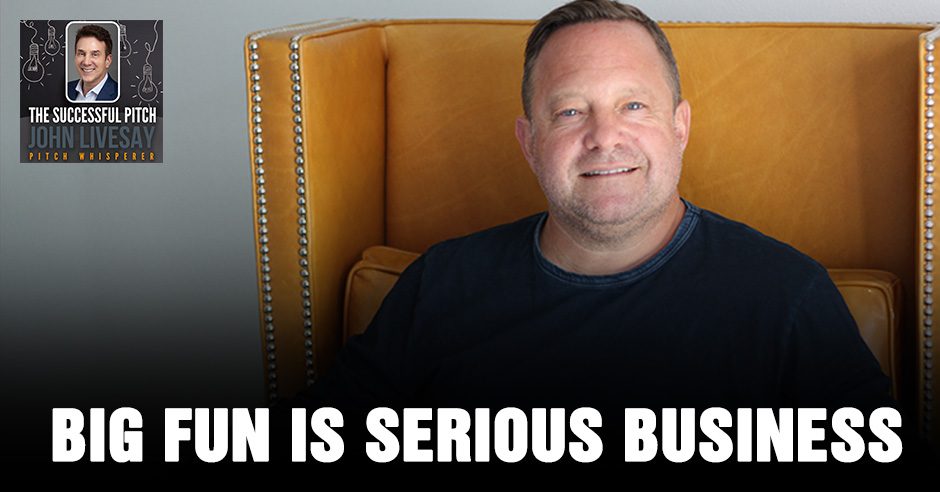
Attending events can be so fun yet, the amount of work put behind the scenes to make them successful is no joke. Take it from the founder of Eventmakers, Guy Genis, who said that big fun is, in fact, serious business. In this episode, he joins John Livesay to share how he is working with huge clients to create memorable and immersive events. He taps into the power of storytelling, taking people from beginning to end with events, and making connections that help propel your business. Guy also talks about interior design, working with clients, and balancing that fine line between giving them what they want and keeping it within the constraints of what is going to look best.
—
Listen to the podcast here
Big Fun Is Serious Business
My guest is Guy Genis, the Founder of Eventmakers, which has been in business for over 30 years, working with huge clients like McDonald’s on creating memorable events in multiple different places. When we describe some of the events that he’s created, the experiences and how immersive they are, you’re going to feel like you’re right there. We talk about the power of storytelling and how that makes events memorable. He said that big fun is in fact serious business, and that you’re only as good as your connections. Enjoy the episode.
—
My guest is Guy Genis, the President and CEO of Eventmakers. He founded Eventmakers back in 1990. He’s produced over 1,000 events in his 30 years and his knowledge and expertise in event creation and execution clearly speaks for itself. Before Eventmakers, he charted and planned events on luxury yachts in partnerships with the Ritz Carlton hotels. When he’s not doing that, he’s busy with Guy Genis Designs as an Interior Design Expert, which is all part of the experience he creates for his events. Guy, welcome to the show.
Thank you.
Let’s talk about your own story of origin. Before the show, we were talking about you have a history with your mom and your grandmother in the world of design. Is that true?
That is true. It’s an interior design dynasty. It’s grandmother. Mother was a successful interior designer for multiple celebrities including DeNiro, Marlon Brando and Rod Stewart. My sister, in her own right, is successful and works with my mom. Now, I’m collaborating with my sister on interior design projects all over. We did a 6,000 square foot home in Kona, Hawaii overlooking the Four Seasons golf course. We did a 12,000-square-foot home in Newport Coast. That’s when I’m not doing producing events.
How did you get into this 30-some years ago? Did you say, “I want to take my passion and skills from creating beautiful spaces for homes and started an event company?”
No, it dates back and I didn’t even know I was doing it. I was the Social Chairman of my fraternity at University of the Pacific. I never knew I would end up for a living producing events. I was an actor when I graduated. I was on a bunch of TV shows. I played a nerd name Earl on Saved by the Bell on a couple of episodes. I was a day player on Coach and Dear John and Anything But Love with Jamie Lee Curtis. It’s amazing when you’re acting and to be on a 3, 4 camera shows is incredible. When you’re not working like all actors know and going on auditions and not getting them, it’s a little depressing. My father was in the film industry. I came from a creative background. My dad produced the special effects for Star Wars with Lucas. He created those iconic titles that went off into space.
[bctt tweet=”If you enjoy what you’re selling, you could sell anything.” username=”John_Livesay”]
Let’s take a moment. I think any person that has any creative aspect in their life dreams of creating something that iconic and that will live on long past their life. To grow up around that, you have a sense of anything is possible, I would think.
It was a great combination of one parent being on the creative scientific end and the mother could be creative in the interior design.
You are the mix of science and creativity. When those things come together, magic happens. It reminds me of the story of Jonas Salk down in La Jolla wooing Francoise Gilot who was with Picasso in the ‘40s. She’s like, “Why do I want a data scientist? I’m an artist.” He used the architecture of the Salk Institute. He said, “Architecture is the bridge between art and science. I want to have artists here as well as someone like Francis Crick working on DNA.” You’re the only other person I’ve ever heard connect those dots like that. What I think is interesting around what your dad was doing with Star Wars is there’s a lot of creativity, obviously creating something that’s still the iconic opening, the once upon a time storytelling, but there’s some science behind it too. He wasn’t a graphic design person, correct?
That is correct. I drifted away from your question. The real answer is how I got into it is I went to my dad who had a post-production company and they were doing the audience reaction spots for Disney. I said, “Dad, I’m bummed out. I’m not getting these auditions.” He says, “Go to work for the company that plans our events.” I ended up for a low salary and a high commission going to work for this boutique company in Marina Del Rey, California chartering yachts for the Ritz Carlton. We would do these extravagant corporate events. I ended up the cold call king. I knew if I enjoyed what I was selling, I could sell anything. My acting partner, when I would go on auditions, this female happened to own a McDonald’s.
She said, “You are crazy if you don’t call the regional office in Woodland Hills and try to get a meeting or an event.” After thirteen cold calls, they said, “You’re bothering me. Come in.” I ended up closing a holiday party for 1,000 guests for McDonald’s. Flash forward 30 years later, my twin brother and I produced the majority of owner-operator meetings throughout the country for McDonald’s. That’s where I think you, as a motivational speaker, when I learned about you and selling and storytelling could be perfect for our McDonald’s clients as well.
Also, I want to zoom out for everyone because you had a story of persistence. You had a friend saying you’d be crazy not to try something, but you’re used to rejection like salespeople are. An actor’s life and a speaker’s life are very similar. We can’t take rejection personally. Yet when you are creating content, and in my case it’s creating a show and interviewing great people like you, I happened to interview a mutual friend of ours, Amber Allen. That’s how we met because you knew Amber. You’d worked with her when she was at Warner and Disney and you did events for her. You heard me interviewing her about her virtual reality company, Double A Labs.

Events Business: More than anything, you can’t sell your style to a client. You have to listen first and make sure that you understand where they’re coming from.
You reached out to me. You never know how relationships are going to start and the connections and the need to keep creating something that’s valuable. You get into other people’s networks and other people’s worlds. I’m sure that’s how you have been able to grow Eventmakers where you’re working with not McDonald’s but Coca-Cola, American Express, Fox and many others. You get the trust transferred over is what I’m saying.
You are only as good as your connections. I would say Amber is a highly talented cutting-edge person producing these technological events where using augmented reality. That’s why she’s an innovator. She’s on the cutting edge and we all help each other. You can’t advance your company without having strong connections like this.
Also what I admire about you, Guy, is your multiple sources of income. It’s a basic business strategy. Yet a lot of event planners, a lot of speakers suddenly go, “If I’m not doing a live event that’s shut down for a pandemic, I don’t know how to else to make money.” You have the design business. You’re already planning months in advance for when live events come back. Have you been able to do any planning for virtual events to make those special?
Yes. As a matter of fact, McDonald’s has embraced virtual events. We’ve invested in a full studio in Orange County with one of our partners. We have full capabilities to stream. We have a green screen, we have Johnny on the spot custom to produce for a network, camera crews that go out and do interviews of these executives. We’re doing these virtual meetings for McDonald’s throughout the country.
Everyone knows about Tony, the famous motivational guy. He’s invested millions of dollars in having a virtual ability to connect with people. I think when a company like you creates a new way of doing something. Let’s talk about that. Over your 30 years of running Eventmakers, what other kinds of pivots or challenges have you had to face and how have you done it like Tony Robbins has done?
The interior design is the perfect pivot. It was right in front of my face, but yet it’s one of those things you have to come to a real realization that, “I’ve done this all my life.” It’s such an easy pivot and you’re already good at it. It’s a form of storytelling as well.
[bctt tweet=”You are only as good as your connections.” username=”John_Livesay”]
We were talking about one of your clients, GameStop, and how you turned a game into an experience in a specific location that was completely relevant to what the game was about. Can you tell us that story?
The end client was 2K. It’s a video gaming company based in Novato. The game itself was called Mafia 3. The backdrop of the game is about the mafia in New Orleans in the 1960s where the mafia started. The purpose was to sell 5,000 GameStop managers in three minutes, which is a challenge. How do you tell a story beginning, middle, and end, get the GameStop managers motivated and have them leave the arena with the intent of an excitement to sell this game through at a GameStop? We came up with the story of creating a real live New Orleans funeral where we had a cast of 50. We had the cast of 50 dressed by Emmy award-winning costume designers in those 1960s outfits. They were doing a real funeral procession down the aisles, pushing the caskets. The audience didn’t know that this cast of 50 was a world-class choir. They get up on stage and they come in and we have them led by a sixteen-piece jazz band singing The Saints Go Marching In like they would do in New Orleans.
They get up on stage and 25 peel off to the right on the bleachers and 25 peel off to the left and they begin the choral of Can’t Always Get What You Want by The Rolling Stones, which is the perfect song and lyrics to talk about the mafia. It was a big surprise in the audience didn’t know that this was a world-class choir, the Angel City Chorale from out of Los Angeles. They made it to the finals of America’s Got Talent. All of a sudden, after they start, I put together a world-class rock band led by Chester Bennington of Linkin Park, Dave Navarro. I had the drummer from Queens of the Stone Age. I had the bass player Scott from Weezer and they go into Can’t Always Get What You Want.
We outfitted every single GameStop manager with LED wristbands. We control the color of 5,000 in the audience and they went bananas. While this was all happening, we edited scenes from Mafia 3 above them on a 100-foot video screen. It was a full visceral, they were enveloped, sold on the game footage, a world-class band and choir. It was a full sensory emotional experience. They came out of there pumped up. Some people were crying from GameStop, the managers, and they said they’ve never seen anything like it.
For everyone reading, let’s break down what Guy told us. A story has to be three things: clear, concise and compelling. In three minutes, you have to tell this amazing story that pulls people in. I always say, when you tug at people’s heartstrings, they want to open their purse strings. When you learn a good story, craft it, make it concise and compelling, then it touches us on an emotional level. Any good story has a little bit of drama and unexpectedness to it. First, it’s cool enough that these people are dressed and carrying a coffin and wearing stylish period clothes. That alone pulls you in. The surprise is those people are professional singers. You keep escalating the wow factor.
You take it one step further. You were describing where it became interactive that they felt part of the story with the colors. If you’re trying to figure out, “How do I tell a story to get people to want to hire me? How do I tell a story to get people to join my team? How do I get to tell a story to get people motivated and re-energized?” Those are some real key tactics. What I love helping people do is take these examples like you gave and turn them into stories so that people see themselves so much in the story that they want to go on the journey with you. You did something I’m not even aware of that you did because you’re such a natural storyteller, which was you gave a resolution to that story. It was telling the story of the guy who runs it saying he was almost in tears and so was the audience. He’d never seen anything like it. That’s the resolution of that story.

Events Business: “Big fun is serious business.”
Imagine the Wizard of Oz if the movie stopped when Dorothy had gotten on the balloon to go back to Kansas. It wouldn’t nearly be meaningful, but we need that resolution of her back in her bed and all the lessons, there’s no place like home. All of that is what makes any movie a story compelling. You gave us a great example of it and how when we tell those stories, sales happen long after people keep talking about it. That’s the other wonderful thing about storytelling is it makes things memorable.
I might add one more thing that these three minutes was only an introduction to introduce the game developer. By the time the game developer comes on stage, they’re already sold. All he has to do is now show them all this great content that they haven’t seen yet. It was making his job easier, getting them excited and that’s storytelling at its best, I think.
One of my previous guests is Robert Cialdini, who wrote a book called Pre-Suasion. He talks about the power of edification. When you edify somebody before they come on stage or speak, it’s good intros, but you did a whole production to edify somebody. They’re already sold emotionally and then they’re backing up their decision with his own story hopefully if what the game is about and how fun it’s going to be to play. Storytelling as a tool to edify is something I like and have not heard people put those two things together. Thanks for that. I had to share that detail. When you get hired as part of your design expertise, what is it that you do that separates you from all the other people who do interior design?
Everybody has their own style. I would call myself a minimalist. I think listening to the client is important, but we tend to have a clean look. We also do a lot of research on the latest in furniture whether it’s already made or do we need to custom make it. It’s more of a custom-tailored approach to every single client. I think more than anything is you can’t sell your style onto a client. You have to listen first and make sure that you understand where they’re coming from. You also need to let them know if there are any limitations to what they want to do, which is important. You have to be able to direct them in the right way. It’s a fine line between what they want and what you think they should have.
It’s almost like an event. That’s why it’s similar. I’m trying to guide somebody. You want to give them something new, it has to be within a budget. One of the techniques that I use, and I’m curious to see if you do this, which is a future pacing somebody. You say, “Let’s imagine that it’s a week after the event. What would have to happen for you to feel happy that this was the best event ever? In the case of designing a home, let’s imagine it’s all done. You’ve had this amazing Thanksgiving dinner, inviting everybody to come see it. What would you think would be the wow factors in the house?” Those kinds of things help people start imagining the future with you even before they’ve hired you.
That is crucial, which is why I always start with what are their goals? Where do they want to be? They’re living in this house every single day. What’s going to make them the happiest? It’s like walking that fine line between giving them exactly or as much as they want, but yet keeping it in the constraints of what I think is going to look the best.
[bctt tweet=”People get bogged down with data and don’t pay attention.” username=”John_Livesay”]
The other thing I think you do for people is there’s a whole book called The Paradox of Choice. Too many choices overwhelm and maybe even depress us sometimes. Unless we have someone like you, Guy, that we trust your taste, your experience, and that you know what we like even before we see it. You’ve curated something for us. Instead of showing somebody 100 samples of floor coverings or window treatments, or color scheme, if you curate that down to here’s three choices, none of them are wrong. It’s let’s brainstorm together what’s the right one. That takes much stress off of people that you don’t even realize what a gift that is that you’re giving to people. It’s the ability to not overwhelm them by too many choices. That trust factor that you have and that’s what a good salesperson does too.
It all boils down to focus and you want to keep them focused on the goal of getting this done the best way and the most creative way possible. I’m also interested. I’m aware that you sold a major institutional interior design firm Gensler on a $1 billion project. I’m interested to go more in-depth on how you did that because it’s something that would help me in my interior design endeavors.
They hired me originally to speak to their team on storytelling for client relationships. We need to connect with our existing clients better. It became how do we tell better stories in our interviews when we’re competing against other firms. They didn’t understand what made a good story or how to structure a story. They weren’t telling stories. They were showing typically before and after pictures of work they’d done and hope that whoever had the best design would get the business. In this particular case, they were told, “You’re in the final three. All three firms could do the work. Otherwise, you wouldn’t have made it to the final three. We’re going to hire the people we like the most.” They said, “Let’s get John in here.” We don’t even know where to start with that criteria.
I flew to Pittsburgh with them for two days and worked with them. I said, “On this team slide here, what are you going to say?” They said, “If we run out of time, we might skip it even.” I’m like, “That’s the most important slide.” This is the secret, Guy. People hire you, and then the company, and then your designs in this case. Most people jump to the design. I said, “What are you going to say?” There are ten pictures of ten people that would be working on this that they got the job. “My name is Bob. I’ve been here ten years. This is what I do.” I said, “No, Bob. What made you become an architect?” “I played with Legos when I was eleven and now I have a son that’s eleven and I still play with Legos and bring that same passion.” “Sue, how about you?” “I was in the Israeli Army before I worked here.” I go, “You’re going to bring a lot of discipline and focus. Since you’re in charge of making sure this thing comes on time and under budget, you’re the perfect person.”
Each one of them had their own stories that they told that made them memorable and likable so that the clients said, “We get them. That’s who we’d like to work with for the next six years.” When we got to the part where they had to showcase studies, they had some beautiful before and after pictures, but no story. I taught them how to take those pictures and facts about square footage and things into a story. It sounds like this. “Two years ago, JetBlue at JFK hired us to come in and renovate that wing. One of the challenges we had during that four-year project was you had to rip off all the tiles in the middle of the night and rewire everything. We had to do it between 9:00 at night and 9:00 in the morning to make sure the stores could still open and not lose revenue. We had all our vendors on call in case something went wrong.”
“Sure enough, at 2:00 in the morning, a fuse blew. We got the vendor to fix it there in twenty minutes. At 8:59, the last tile went down and all the stores opened on time. Now a year later, sales are up 15% in those retail stores because we’ve designed a place that pulls more people in and causes them to spend more time shopping.” It’s a short little story, but it’s got the elements, the exposition. We know where we are. It’s JFK years ago. We know the story. The difference is most people make the mistake of saying, “We use critical thinking to anticipate problems.” That’s corporate-speak. I teach people how to tell a story. You see, I show them critical thinking by having all those vendors on call.
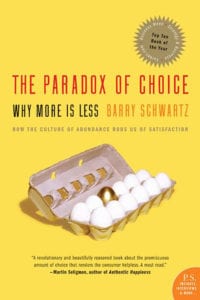
The Paradox of Choice: Why More Is Less
I read some of your literature and it says that people get bogged down with data and don’t pay attention. That is the main purpose for the story. Everyone loves a story.
The magic question then becomes, does that sound like the journey you’d like to go on? The people at the Pittsburgh airport saw themselves in this journey that they had done for JetBlue at JFK, they said, “Yes, that’s the journey we want to go on. We have an emotional connection to you from your story of origins. Now we have a case story that we’ve seen ourselves in that makes us want to pick you.”
It’s an excellent way to approach sales.
The awkwardness of do you want to buy? What do you think? I also work with people on having a great opening and a great closing. You know that from being an actor and designing things. When you’re going into space, you need that wow factor. You need a wow factor in your opening. Most people waste all that time with cliché statements like, “Thanks for this opportunity. I’m excited to be here.” I tell people, “First of all, it’s not about you. Nobody cares that you’re excited. We need to open up with something that’s going to grab their attention and make it about them. In this case, you’re a CEO tasked you with getting the airport ranked from 24 to 1 in five years because we’ve done it before for another airport.” That’s much stronger than, “Thanks for this opportunity, I’m excited to be here.”
The closing, when you’re going to a great party or an event, there’s usually some closing of the event whether it’s music or something that ends it. Unfortunately, without proper training, a lot of people end a meeting or a presentation or a pitch with, “That’s all we got. Any questions?” It’s bad. I train them on recap what you’ve said, “If this sounds like the journey you’d like to go on,” recapping what they need to get their ranking up and imagining the future. “We’d like to invite you to join us on this journey together.” That closing question is part of the story. It’s not pushy.
One of the things we haven’t touched on yet, which is such a big part of Eventmakers is the ability to tell a story through an exhibit. We are designing and producing exhibits in a great way to tell a story for one of our clients Starbreeze, which is a video game company based out of Sweden, is they had The Walking Dead license. We designed and produced The Walking Dead exhibit at E3 and it won by multiple press companies, best exhibit. We recreated the actual fort from the video game that is realistic with the seats that were tires. Things in The Walking Dead movie and TV show where they build things out of scrap junk. We made it come to life. The extra layer was hiring the actual makeup artists from The Walking Dead and having actors in clothes. We had eleven zombies walking around for both photo op. It was effective and it told the story.
The photo op, what a great example of making something memorable and then people post it on their social media and then the event memory, the experience lives on and on. That’s the takeaway that resolution part of it that people go, “I’m going to remember that.”
We had produced fake guts and the attendees and the press would eat the guts. They were in there with them. It was effective and fun.
The more senses we get involved, the more interaction we have going on, the more people are emotionally connected to any story. That’s why we were talking about the Madison Square Garden Sphere opening in Vegas. That’s going to be interactive where you can smell things and feel the wind in your hair like a Disneyland ride or something. The new way of creating events is to have it be completely immersive. The sound is as good in the first seat as it is in the back row. If you’re are showing an example of a concert or what it’s like to land on the moon, you feel like you’re in the story in a 360-degree experience. You’re certainly positioned as the right event company to make those experiences happen because you’ve already done it. Now, technology is catching up with your skillset and vision. Any last thoughts or quote you’d like to leave us with, Guy?
We always under-promise and over-deliver. The other one that I learned from a famous event planner, John Daley was, “Big fun is serious business,” because the more that the bigger the event, it is a serious undertaking. It’s a three-ring circus and you’ve got to go to the next level to make this immersive and impressive.
Guy, thank you so much for coming on and sharing your passion about storytelling, your own amazing history with your family and how you’ve been able to continually adapt and create new virtual experiences for people. I can’t wait to see what other amazing events and designs that you put out into the world.
Likewise, I look forward to working with you on some big motivational appearances.
Thanks.
Take care.
Important Links
- Amber Allen – Past episode
- Robert Cialdini – Past episode
- Pre-Suasion
- The Paradox of Choice
- Eventmakers.com
- https://www.GuyGenisDesigns.com/
- Better Selling Through Storytelling Method Online Course
Wanna Host Your Own Podcast?
Click here to see how my friends at Podetize can help
Purchase John’s new book
John Livesay, The Pitch Whisperer
Share The Show
Did you enjoy the show? I’d love it if you subscribed today and left us a 5-star review!
- Click this link
- Click on the ‘Subscribe’ button below the artwork
- Go to the ‘Ratings and Reviews’ section
- Click on ‘Write a Review’
Love the show? Subscribe, rate, review, and share!
Join The Successful Pitch community today:
- JohnLivesay.com
- John Livesay Facebook
- John Livesay Twitter
- John Livesay LinkedIn
- John Livesay YouTube