

The Lucky Titan With Josh Tapp
Posted by John Livesay in podcast | 0 comments

Many entrepreneurs are successful enough to get to a million dollars in revenue, but struggle to figure out how to scale past that. Tapping into his personal experience in building strategic partnerships with industry titans, Josh Tapp, host of The Lucky Titan podcast, teaches people proven methods for entrepreneurs to scale without having to spend a lot of money on advertising. It’s all about leveraging the right kind of relationships with the right kind of people through joint ventures. Learn how exactly you can do this as he talks to John Livesay in this episode. Plus, listen to John as he helps Josh improve his elevator pitch so you can learn how to improve yours, too!
—
Listen to the podcast here
The Lucky Titan With Josh Tapp
Do you know how certain entrepreneurs are successful enough and they get to $1 million in revenue, but they struggle to figure out how to scale past that? Our guest, Josh Tapp at The Lucky Titan podcast, shares his proven method to get entrepreneurs to scale without having to spend a lot of money on advertising or getting frustrated reaching out to people that can’t help them. Find out how he does this. Learn how I helped him with his own elevator pitch so that you can learn how to improve yours too. Enjoy the episode.
—
Our guest is Josh Tapp, who’s the Founder of The Lucky Titan podcast. Josh has helped over 500 entrepreneurs scale their business through joint venture partnerships. Josh, welcome to the show.
Thank you. It’s going to be fun to be here.
Tell me a little bit about your own story of origin. How did you decide you want to even launch a podcast? You can go back to childhood or wherever you want to start your own journey of being an entrepreneur.
My story goes clear back to childhood. What it comes down to for me is I grew up in a family of a long line of entrepreneurs. My dad had a construction company and he started multiple different companies. We experienced the entrepreneurial cycle but growing up, I knew what I wanted to do. In our house, it wasn’t preached to go to college and get a good job. It was preached to start something, be a creator, and college could be a great vehicle for you to get there. For me, I didn’t even think about college until high school, but I remember my first entrepreneurial venture and how great it was.
My dad owned a construction company. I worked for him and he paid me money, and I hated the manual labor. If you want a great way to scare your kids out of having a job, be a contractor. Make them work construction. What it came down to for me was, “I can make money other ways.” I’m probably 8 or 9 years old and I decided to get a bunch of my stuff out of my room. I pulled it to the end of my parent’s street, which we lived in a rural community. There were maybe 25 cars passing every hour. I put up a sign and it was a big white poster, but I wrote on it in pencil and said, “Stuff for sale.”
Not exactly a niche to an eight years old.
I did not understand marketing one bit, but it was a cool lesson for me. I sat there for about three hours and nobody was stopping like, “What is this kid doing?” I didn’t have money for lemonade so I’m like, “I’ll just sell my crap.” One of my dad’s friends stopped and he bought this little polished rock from me, one of your treasures as an 8 or 9-year-old kid. He paid me $0.25. Most people will be like, “It sucks. $0.25 in three hours?” I was elated. I made money doing nothing and it totally sparked that entrepreneurial fire. From there, it went on to starting landscaping companies and moving on to virtual space digital marketing or what have you.
It led me to where I am. I love speaking with people. I love audio and video interviews, and getting to know high-quality people. For me, I found the people I resonate a lot with are entrepreneurs. That’s where the podcast came from. It was being able to meet people like John Livesay and all these people who are untouchable in the market. Being able to bring him into your world for an hour and to be able to interview him was amazing for me, and being able to “pick your brain” for an hour. That’s the kind of stuff for me that drove me towards podcasting in general and entrepreneurship as well.
[bctt tweet=”Luck is putting yourself into a situation where you have opportunities to win.” username=”John_Livesay”]
What made you name your podcast The Lucky Titan?
That one was an intentional play on words. Before this, we had a marketing agency doing Facebook ads for people and I was constantly struggling to get my own clients for that. The problem was I hadn’t built an audience yet. I didn’t have a following of people. I was just reaching out in my town saying, “I’ll do Facebook ads for you.” We could do good for them because they were a local business but generating leads for myself was difficult. I was in that constant wave of not being able to make money. During this time, I ended up hiring a coach, and that coach walked me through. He said, “You need to brand yourself.” He’s under the belief that you shouldn’t brand your name, but you should create a memorable brand. I know there’s a lot of back and forth on that. Both worked great. He’s like, “Start with creating a brand that’s memorable.”
My partner and I would play around with a lot of different names and imagery. We’re like, “Let’s base the podcast off of the people we want to interview. What’s something that would entice them and make them want to come on and give them something to identify with?” It ended up becoming The Lucky Titan because we were going with The Lucky Entrepreneur, but we’d get in trouble. Entrepreneur Magazine will sue you if you have entrepreneur in your title. Word to the wise, if anybody has entrepreneur in their title, make sure you’re prepped for a lawsuit. They have the trademark on the word entrepreneur, the copyright or whatever you have to have. I’m not versed in that stuff. My brother-in-law is a lawyer and he’s like, “Do not do that. Don’t put entrepreneur in there.” That was a good word to the wise. This is not legal advice. I’m going to disclaim that.
For us, we ended up being like, “We want to interview these industry titans and these amazing people who accomplish something great.” That’s where the title came from. We’re trying to get people that when they come on, we put the cape on them and making them feel like the Superman for the day or the Wonder Woman for the day. Our whole brand has stemmed around helping people feel that way and join the ranks of Titan is our whole game plan with the brand.
What about the concept of luck? That’s fascinating to me because a lot of people say, “Luck is where opportunity and preparation meet.” What is your definition of luck?
That was answered better by one of our first guests, Elaine Keltz. I don’t know if you’re familiar with Elaine, but she’s a successful lady. She’s like, “I don’t believe in luck.” People are waiting for the door to open for them. She’s like, “I found a hallway with a lot of doors and started kicking them down.” That’s my definition of luck. It’s putting yourself into a situation where you have opportunities to win. People call me The Lucky Titan and I’m lucky to be there. I’m happy to be there with people. That’s what it’s stemmed out of.
Let’s talk about who you help and what problems you solve. The old elevator pitch that I love to work with people on. What is your current elevator pitch? How are you telling people the answer to that?
This is a good one. John is going to pick this apart for me and he’s going to be mad at me because I haven’t done this well. John, I’m sorry. Our elevator pitch is that we help people to build joint venture partnerships and scale an audience of 1,000 raving fans. Our entire purpose with that is helping people to understand that they don’t have to go it alone. For me, as an entrepreneur, that’s where I was in my previous company. I was trying to do everything by myself and to grow. When we started this company, we decided we’re not going to run ads. We’re not going to run anything other than joint venture deals. We’re going to find successful people and partner our brand with theirs. We built our whole company around that and built our products around helping other people do that.

The Lucky Titan: Don’t brand your name. Create a memorable brand.
Let’s give an example. I know you work with online course creators. I have a course and we’re going to be doing a masterclass together. How do you help online course creators create joint ventures?
That one is a good example because course creators if you’re atypical, “I need to build a funnel with fifteen different steps. I need to have a bunch of Facebook ads and all this different stuff.” What it comes down to when you want to launch a course or a book or anything like that, it helps to have an email list of people. It also helps to have a group of people that you know you could reach out to and say, “Can I come on your show to launch this new thing? Can I come to your Facebook group to launch this new thing?” They’re coming to us and saying, “I want to launch this course.” My goal isn’t to nickel and dime them and charge them $1,000 to say, “Let’s get you on a podcast for $1,000.” A lot of people do that. For me, that should just be a given. That’s good networking, connecting people with high-level people.
The way we were able to grow quickly was because of a few strategic people who were great givers. They connected us with some amazing people and it grew from there. What we typically do is we put them in a room with anywhere from 5 to 10 other entrepreneurs who are non-competing entrepreneurs who have the same ideal customer. John, we both market to a lot of virtual entrepreneurs. Our products are non-competing, but they’re compatible. I’m not great at sales and John is good at the elevator pitches and helping people to build course and everything, and lock in their sales process. What it’s come down to for our company is we want to find people like John to partner with not just ourselves, but the other people in this room.
We try to facilitate that relationship for people so that they can build these partnerships while they’re in the room with one another and they can leave having some joint venture deal set up. One of our favorite ones is getting these long-term partnerships where it’s saying, “Next time I launch something, would you be alright if I come on your show and give an interview?” The problem I see a lot of times when people are trying to launch something is they’re trying to cash in relationships that they haven’t built yet. For example, you’ll join MatchMaker.fm or something to get on podcasts. “I watched this new product. I need 25 people to have me on their shows.” That’s the wrong way to go about it. The right way to go about it is to have these relationships built where you’ve got 100 people who’ve committed to having you on their show at some point. When you go to do a launch, you do 100 interviews in 30 days and you launch your product. That’s the fastest way to scale and grow joint ventures in my opinion.
You’ve got multiple podcasts airing all at the same timeframes is what you’re saying.
Right. I can give you a good example of this. If you’re familiar with Rachel Hollis, she wrote the book, Girl, Wash Your Face. It was the second bestselling book in the world in 2019. She was only beat out by Michelle Obama. That puts it in perspective. Rachel Hollis is one of those people where she had some influence. She was interviewed and this was something that solidified our theory in my opinion. She didn’t spend a single dime on ads, didn’t have a publisher or anything. All she did was she went and she had 180 of the top female influencers interview her on their podcasts, TV shows or whatever they had. She knocked it out in about 90 days right before the launch. She sold something like twenty million copies of her books, something crazy. That is the value of that.
How long did you have to work with her to get that all queued up?
No, she wasn’t a client of ours. That’s just a good example of that. A client of ours, one of the ones that we’ve seen that was cool. They ended up partnering in the travel sector. The vacation sector and the travel sector is being hurt because nobody can travel. This company was saying, “We’ve got to go back to the books and do something or we’re going to have to close our doors.” What we did is we partnered with them, two people who are travel influencers like the Instagram influencers who have big followings. We partnered with Volkswagen and a subsidiary company of Expedia.
[bctt tweet=”Sell through people, not to people.” username=”John_Livesay”]
Combined, we all had a list of about five million people with our reach. We were trying to grow our list and sell something out. We did a giveaway. We said, “All of us email our lists.” From that, we said, “There’s a free vacation giveaway. Come to this page.” Anybody who opted in, all five of us got their emails and it was legal. We had all the GDPR compliance and everything in place but the coolest thing happened with that. It took us a grand total of maybe twelve hours to get this whole thing put together and we got 50,000 emails off of it, each of us did. If you have any perspective of this like with Facebook ads, that would cost you anywhere from $50,000 to $150,000 to generate that through almost any other means. It cost us all a grand total of $400 each.
How do you find clients, Josh?
For me, honestly, I practice what I preach. My entire goal is to not ever have to spend Facebook ads for my own company. That might slow us down but for us, it hasn’t seemed to slow us down. We’ve been focusing 100% on building out these partnerships. I’m always going on podcasts and generating these relationships and bringing people onto mine or onto summits, building goodwill with people because one day, when I need to launch something and they’ve already committed to having me on their show, I can hop on and launch something. That has been the best way for us to generate clients. Our higher ticket masterminds, which is our core business, we typically get those all through referrals of these people that we know have a good following of people. Our lower ticket products and everything like that come through email joint ventures and our higher ticket products come directly through peer-to-peer referral.
You have some funnel. Can you walk people through what that funnel is and the timeframe? You have a relationship with someone and you invite them on your podcast. How do you figure out who you want to have on your podcast? Is that your potential ideal client?
I believe that podcast is not about the listeners overall. That is one piece of the puzzle. You do need to pay attention to who your ideal listener is, but you need to tailor your podcast or your show or what have you to make it the best possible platform for the people that you want to work with. For The Lucky Titan, our ideal customer is somebody who has made $1 million a year and plateaued. They’ve gotten stuck and they know, “I’ve gotten here by being a rainmaker. I’m good at sales and I’m good at closing deals, but I need systems and I need partners in place in order to scale.” That’s where we come in.
Our podcast, The Lucky Titan, what we do is we interview people about how they got to $1 million and how they were able to scale and grow. It opens up a sales opportunity for us every time. One of the things, and you might have even told me this, the sell-through people, not to people. I love that concept. What we do, and I didn’t realize I was doing it, was we bring them on. Instead of saying, “I want you to join my mastermind. Here’s the cost,” and it became this big sales pitch, I’m like, “We’re building this thing. We’re looking for people in this category. Who’s that one person that you know who would be a perfect fit for this that you could connect me with?”
I have to back up a little bit. I want to share the strategy with your people because this will be beneficial to them. I handpick these people from the start. I listen to podcasts all the time, almost all day while I’m working. If I’m not on a call, I’m listening to a podcast because I like to find the people who are the best in the industry. I’m listening to podcasts like Entrepreneurs On Fire and Marketing Secrets. I find these people who interview super high-level people. Mixergy, they bring on these high-level entrepreneurs and interview them. What we do is I look at their guests and handpick them, and then I outreach to all of them. This is something I do myself. I don’t outsource a lot of this because I want to make sure that they know I’m reaching out to them personally and it’s not some bots or paying somebody in the Philippines to build that relationship.
You’re taking a ticket, something they said on the podcast, and be specific about. I resonated with what you said to John Dumas on Entrepreneurs On Fire.

The Lucky Titan: You need to tailor your podcast to make it the best possible platform for the people whom you want to work with.
“The title of your podcast was about this. I loved exactly what you said in that episode on EOFire. Would you come on mine and share the same thing? I’ll promote you and XYZ.” Just to give you an idea when we outreach that way, we get about a 98% positive response rate and about 80% of them come to join our show.
It’s personalized. If you hear them on the other show and you think they look successful, they probably have $1 million in revenue, they might be a good fit. You compliment them and they say yes to be on your show. It’s a compliment, baby step, “Do you want to be on my show?” You build a relationship when they’re your guests. From there, you follow up and ask them if they might know somebody who might want to be in a mastermind.
There will be steps in there. I want to caveat too. If you do this correctly, if you do an hour-long interview and you only record for twenty minutes, that gives you 40 minutes of your time to get to know them. I spent about 10 to 15 minutes becoming friends with them. I will record for about twenty minutes. That gives us air from 15 to 20 minutes to ask this question. It’s the question I asked every single person. “How can I help you to expand your business today?” They’ll usually say, “I lost the podcast. This, that or the other.” The beautiful thing about that question is it’s almost like an open-ended question.
The human answer that you should be saying to that question is, “How can I help you?” They always ask that question back to you. I’ve not had somebody say that to me. Instead of saying, “How about you buy my stuff? I’m opening up this huge sales opportunity.” I’ll typically say to them, “This is the product we’re launching. This is the audience that we’re promoting to. Who’s one person that you know who fits that deal that maybe you could connect me with?” I’m like, “That’s the one thing you could do for me. I don’t need you to do a bunch of promotions for me or anything like this. I just need you to connect with one person.”
Just to give you an idea, John, typically what our numbers look like from this because I am not your typical salesman. I’ve never been trained in it. What I found is I’m good at the inviting side like, “Maybe it would be a good fit for you. Do you want to come to join us?” We’ll have about 10% to 20% of the people that I interview end up buying our products and the rest of them will typically refer me to at least one other person. That’s where the sales opportunities get opened up. You asked for timeframe. I’m listening to podcasts anyways. It takes me about fifteen minutes of research on the person to get maybe five people on my show. It’s an hour interview with each of them. I’m building content and getting all this great content from it but it also opens up all these sales opportunities. We end up closing typically, for ten people will close about 1 to 2 people who come on our show.
Do you have one mastermind or juggling a lot of masterminds?
We juggle quite a few masterminds because I like to put people with the right people. If you’ve ever been in a mastermind before, I personally pay for five different masterminds at any given time. I like to jump through them to do my research. I want to know what other people are doing and what’s working. The best ones that I’ve seen are not just entrepreneurs. It’s entrepreneurs who have generated a certain amount of revenue. For example, if you’ve generated $1 million in revenue, you failed dozens of times, so you know how to overcome problems. When you put them in a room together like that, everybody can solve anybody’s problem. On top of that, we put them in a room where they have the same ideal customer. I’m not going to put somebody who’s in the travel sector with somebody who’s promoting a course unless it’s in the travel sector because it doesn’t make sense for them to be in the room. They’re going to learn from each other but that partnership can’t happen.
We get what I call the networking effect, where it’s like the BNI groups where you go to the Chamber of Commerce and people are throwing their business cards around. Maybe we could work together someday. That’s not a great way to network. The best way to network is to give them a purpose, hand them partnerships, and give them the actual thing that they should be doing so there’s no question in their mind. They’re like, “We’re both in the room together so we can get on each other’s podcast. That’s why we’re in this room.” That then eliminates this awkward barrier. That’s the process in a large nutshell.
[bctt tweet=”Come in with a purpose, leave with a partnership. #TheLuckyTitan” username=”John_Livesay”]
What’s your secret sauce to your masterclasses that people who may have been in other masterclasses say, “I don’t need that,” or “That didn’t work for me?” What is it that makes yours unique besides it being customized, which is important?
The thing that people come to us for and that they beg for, and they’re like, “This is what I love most about yours,” it’s because I’m not selling me. I’m not that cool. I’m a young guy and I’m inexperienced, but I know a lot of cool people. They know that I’m going to get the right people in the right room and that they’re pre-vetted. I would say our secret sauce is we give them an actual reason to be there and a purpose for their networking instead of a woo-woo happy session. Those are great and they’re good for motivation, but they die quickly. Our secret sauce is helping people come in with a purpose and they leave with a partnership.
Now, I have enough information to give you a new elevator pitch.
Let’s do it.
A lot of entrepreneurs who have struggled to get that first $1 million in revenue feel maybe a little burnt out, but they’re happy they’ve made that much progress. Now, they don’t know how to scale. What we do at Lucky Titan is we create a place to let them find partners that help them scale with a proven system, which doesn’t require a lot of money or work on the entrepreneur’s part. When that happens, they are able to get their purpose out through partnerships in a way that doesn’t tap into their energy or their bank account.
You think you’ve done this a few times, John?
That’s the gist of it in a short, concise, compelling way, which is what everybody wants in a good elevator pitch. I took some of that pain point because we all know, the better you describe the pain of somebody, the more you have their solution. They’re proud of it but they’re exhausted. If you don’t tap into their bank account or their energy resources, and you can get them to scale, that’s where people are going to want to be intrigued to know more. The whole purpose of this is to get people to say, “How does that work? Tell me more,” and then you could go into a case story or of a case study of somebody that you’ve helped.
One of the things that came to my mind as you were talking about that was one of the biggest pain points for our audience is they all love masterminds. They love connecting but I don’t have time. I only have one hour a month allotted to masterminds. For us, that’s why we’re like, “It’s an hour-long mastermind.” There you go. It’s bringing it down to where it simplifies it. Thank you for that. I appreciate that.

The Lucky Titan: Lock in your platform and make sure you commit to it.
It’s like, “Give us an hour a month and we’ll give you 10% growth in six months or something.” It all depends on what the objection is, but you have to have multiple stories ready to go. There are three kinds of personalities. There’s the numbers person so you would have a numbers case story, “We had somebody just like you. They were accountant,” or “They were productivity experts.” Somebody else who’s feeling more like, “I’m awkward. I feel uncomfortable. I don’t like being pushy. I don’t like selling myself.” You’re like, “This is the perfect mastermind for you because you don’t have to sell yourself.” You get your own objections, “How do you know so many people, you’re only 26?” You have a story ready to go like that. “I understand. In fact, some of our best clients felt the same way.”
You’re like, “I’m listening to podcasts. I’m doing all the things you don’t have time to do such as listen to podcasts to find the right people for you. Think of me as a curator. It doesn’t matter how old you are. I have the time and the energy to curate the right people based on who you need, then I’m saving you tons of time. We all know your time is worth a lot of money.” They then go, “I need that.” You can even say, “Do you know how a virtual assistant can make you five times more productive and you get to do the things you love? A mastermind with the right people in it is a virtual assistant on steroids.” They then go, “Right. Got it. Yeah. Okay.” That’s the gist of it. Any last quote or thought you want to leave us with?
The last thing I want to leave everybody with is to think about the platform. What’s the platform that you stand on? I feel like the thing that made the biggest difference in our company is when I finally stopped trying to be everything and just highlight the other things that people want to share about, and building a podcast for me was the easiest way for me to do that. It allowed me to meet some of the most amazing people and networks and continues to do that for us. I’d say lock in your platform and make sure you commit to it.
You’ve gone full circle from being a little eight-year-old boy saying stuff to sell through realizing now the importance of having a niche. Thanks, Josh. It’s great having you.
I appreciate it. Thanks, John.
Important Links
- The Lucky Titan
- Elaine Keltz – Past episode on The Lucky Titan podcast
- MatchMaker.fm
- Girl, Wash Your Face
- Entrepreneurs On Fire
- Marketing Secrets
- Mixergy
- Better Selling Through Storytelling Method Online Course
Wanna Host Your Own Podcast?
Click here to see how my friends at Podetize can help
Purchase John’s new book
John Livesay, The Pitch Whisperer
Share The Show
Did you enjoy the show? I’d love it if you subscribed today and left us a 5-star review!
- Click this link
- Click on the ‘Subscribe’ button below the artwork
- Go to the ‘Ratings and Reviews’ section
- Click on ‘Write a Review’
Love the show? Subscribe, rate, review, and share!
Join The Successful Pitch community today:
- JohnLivesay.com
- John Livesay Facebook
- John Livesay Twitter
- John Livesay LinkedIn
- John Livesay YouTube
Own The A.I. Revolution With Neil Sahota
Posted by John Livesay in podcast | 0 comments

Do you remember when IBM’s Watson, their artificial intelligence, actually beat jeopardy? Meet Neil Sahota, one of the key people behind the team at IBM that made that happen. Like all great ideas, Watson was conceived at a bar where Jeopardy happened to be playing on the TV. On today’s podcast, Neil joins John Livesay to dive into the world of artificial intelligence and its many elements, including artificial empathy. Neil talks about how artificial intelligence can actually make us more human. Tune in to this episode to unpack this insight.
—
Listen to the podcast here
Own The A.I. Revolution With Neil Sahota
Do you remember when IBM Watson’s artificial intelligence beat Jeopardy!? Meet Neil Sahota, one of the key people behind the team at IBM that made that happen. You can only imagine the suspense and the stress they were under if it didn’t work. He also shares what it was like to live in China. He said, “It’s like the Stone Age meets the Space Age.” Find out what he means. Finally, he talks about how artificial intelligence can make us more human and there’s artificial intelligence for empathy. This is an episode you won’t want to miss.
—
Our guest is Neil Sahota. He is an IBM Master Inventor, United Nations Artificial Intelligence subject matter expert, and a Professor at UC Irvine. He’s got many years of business experience. He works to inspire clients and partners to foster innovation and develop next-generation products and solutions powered by AI. His work spans multiple industries, including legal services, healthcare, life sciences, retail, travel and transportation, energy, automotive basically everything.
He is one of the few people selected for IBM’s Corporate Service Corps leadership program that pairs leaders with NGOs to perform community-driven economic development. He lived in China when he was there. He also partners with entrepreneurs to define their products, establish their markets, and structure their companies. He’s a member of several investment groups like the Tech Coast Angels. He’s also served as a judge in various startup competitions. I’m thrilled to have you. Welcome, Neil.
Thanks for having me on, John. I’m excited to be here.
We didn’t even touch on all the other things you do. You have a book called Own the AI Revolution. There are many things going on, and you’re also a speaker. Tell us a little bit about your own story of origin. You can go back to childhood, school, or wherever you want, that gives us a sense of how it all started. Were you always interested in computers? Did you have a robot friend?
No, not at all. I was a kid from the Bronx that loved playing sports. I live a couple of blocks from Yankee Stadium. We’re playing stickball, basketball, and football. My mom got tired of me always playing sports. She felt like I need to be more well-rounded. She insisted to me to try to learn the piano or the violin. I wasn’t into that. One day, she’s like, “You have to do something else.” We had been walking by a little strip mall area and they were teaching computer classes in there. I told my mom as an eight-year-old kid, “I want to learn computers.” She’s like, “What? Seriously?” I’m like, “Yeah.” She marched me right in and signed me up for classes.
If it’s between that and piano, I understand. I took piano lessons. I like music. There’s a big connection between math and music. It’s quite interesting to see how one little choice like that can make such a difference in how that all transpired. There you are taking computers. You liked it and took to it, but they weren’t talking about artificial intelligence back then, I’m guessing. There’s more coding.
Yeah. I was learning. It was on Apple IIe to date myself here. It’s cool to say that I could write these little lines of code and stuff would happen. You could do a calculation and get some graphics, but you essentially are enabling people to be able to do something with the machine. I thought, “That’s creative because I dig that.” Fast forward a few decades there, I was working with a lot of the C-level execs and they’re like, “Business intelligence was taken off. It’s amazing what computers are telling us.” I’m like, “Computers aren’t telling us anything.” There are cool tools to collect tons of data, slice and dice it, and create nice looking reports but machines don’t tell us anything. Could a machine do that? That’s how I looked down this path going like, “I wonder if there’s a way a machine tells us something. Could a machine find insights?”
You spent this illustrious career over twelve years at IBM dealing with their Watson ecosystem. For those readers who may not know much about that, tell us what that was like from the beginning to twelve years later because things move fast.
The thing with Watson started at a bar with all great ideas. There were three IBM Distinguished Engineers. They’re some smart guys. We’re thinking about something cool to do and Jeopardy! happened to be playing on the TV. We’re like, “What if we could create a computer that could play on Jeopardy!?” Most people are like, “How hard could that be?” It’s like playing chess. Jeopardy! will be giving an answer and you have to figure out the question. You think about language. How hard is it to understand people when they talk?
[bctt tweet=”AI will actually make us more human.” username=”John_Livesay”]
If I say I’m feeling blue because it’s raining cats and dogs, everyone knows what I’m talking about. If you tell a machine that, it’s like, “You’re physically the color blue because small animals are falling from the sky?” That does not compute. These were the hurdles and we figured out how to do this. We had to commit to the Jeopardy! challenge two years in advance. At that point, we didn’t even know if we could do this or not. Chris was like, “Of course, we’ll make it happen.” It’s no secret that it’s 50/50 that Watson would work the night of the Jeopardy! challenge.
Nothing like a little drama in a story.
Everyone got the blackberries out and the recipes all ready to go.
It’s visible.
Watson did not start off well. These 6 of the first 7 questions, the execs are a few rows in front, and looking unhappy. Everyone’s like, “I might be in the market for a new job. We have lunch or something.” It’s a testament to how fast AI learns. Watson turned it around. It turned into questions right, applying the strategy, and then it won the whole thing. We’re like, “We did not expect that.”
I’ve read a lot about how it learns fast, even how to bid because it’s not just answering and coming up with the right question for the answer, but also, which thing to bid on and not bid on. It’s fascinating stuff. I’ve worked with quite a few founders in artificial intelligence and trying to work with them on crafting a story around it. For people who aren’t into the weeds of artificial intelligence, there’s this whole thing around structured data and unstructured data, and everybody zones out.
I use the analogy of the tip of the iceberg. What’s above the water is what you can see and that’s what’s structured. This whole premise of how can AI help understand what people are feeling and not just if it’s positive or negative information that you’re trending on social media, but what causes it. My favorite story around this was, you come home and you see your wife crying. You don’t know if it’s tears of joy because she got good news or tears of sadness because something bad happened, or she’s frustrated you left your socks on the floor again. Until we know why someone’s crying, it’s not enough to know if someone’s happy or not happy, especially when you zoom out and look at it from a standpoint of how a company should respond with all this data coming through social media channels. I’d love to have you speak a little bit about how AI has grown past, “Someone’s happy or not,” to “Here’s the reason they’re feeling this way.”
There’s a whole area called artificial empathy in AI. It’s exactly like it sounds like. The machine is trying to figure out the emotional state of a person and dynamically respond to that. People feel emotions. How the world is going to be empathetic?
There are some people that can’t do that.

AI Revolution: Machines can only do what we teach them to do; so far, we have not figured out how to make AI creative or imaginative.
People are like, “Can a machine do this?” The answer is yes. It doesn’t have to feel it. We can teach it things or clues to look for. It’s areas about psychology, kinesiology or body language, and neurolinguistics are clues. It’s things that we, as people, use subconsciously.
Your eyes go up or not. The whole Neuro-Linguistic Programming, you’re trying to remember something or your face gets flustered and you’re angry. It’s not just the computer responding to what you type in. It’s got cameras and can start to see body cues. Ironically, it’s probably better than a virtual world because, for many people during a pandemic, I can’t read body language like I could in person, but the computers are like, “No problem for us.”
That’s a huge advantage. You’re seeing a lot of people build tools to help people connect better in the virtual environment, as well as communicate better. In addition to empathy, the machine has a way to use neurolinguistics to deconstruct language. You learn, “Neil is an auditory learner and John is a visual learner. Neil cares more about the fun factor of a product while John cares more about the value of the product. This is the best way to engage.”
Even the words to use. “You should use these words with Neil and these words with John to help communicate.” A lot started as marketing and sales staff, people realize, “This is an AI communication coach.” If you want to connect better with your kids or you’re wondering why your wife is angry at you, it can help us do that now and respond back. Rather than like, “What’s wrong with you?” The AI is like, “No, don’t say that.” “I feel like something is wrong here. Did something happen today? Tell me.”
There are many questions around just this. I could spend so much time with you. Let’s do it through the lens of marketing and sales. I’m always a big studier of Neuro-Linguistic Programming. I remember that back in the day, that was completely revolutionary information. Especially speakers, you and I are both keynote speakers. When we get up in front of an audience, we know that some of those people are going to be visually-oriented, so you need to paint a picture. Some of them are going to be kinesthetic and some of them are going to be auditory.
My favorite example of that is when I say the car door slammed. Do you see it, hear it, or feel it? I’m always fascinated by the people who feel the door slamming and yet, those people, you can almost predict that they’re going to have an amazing sound system in their car at home and Sonos speakers or whatever. I remember being in a car with a friend of mine and she was driving us around. I just moved up to Northern California in Marin County. She was driving and taking us someplace she’d been before. She’s like, “This doesn’t feel like the right way. Neil, I lost my mind.” I said, “Are you telling me you’re navigating by your feelings? Where’s the map?”
That was my first introduction to not everyone processes the work the way I do. From a sales perspective and speaking perspective, we need to use language that doesn’t make people shift. You’re like, “That resonates with me now because you said it in visual terms or kinesthetic terms.” “Does it ring a bell? Does that feel like the kind of journey you’d like to go on with us?” All those kinds of things are what a good speaker does. Maybe it’s subconscious. If it’s conscious, it takes it to a whole other level. What do you think about all that? How do you use that in your speaking?
It’s about connections. We sometimes lose sight of that. What we’re trying to do is not just this call or making the sale that’s the ultimate thing. We want to be successful. It’s about building relationships and creating resonance. This is a good way to tap into that. People have told me I’m an engaging dynamic speaker and people charged up in a good way. People are like, “What’s your secret?” I’m like, “I don’t know if I have a secret. It’s just that I think about what makes the most sense for the audience. What are the outcomes and the experience that they need?” I’m not at that stage to hear myself talk. How smart I am, I don’t care about that. I’m there because I want to create value for those people so I have to find a way to try and connect with them. That’s why I’m sure you do the same thing I do, John. Every time you’re asked to give a talk, I’m going, “Who is the audience?” All those types of things.
“Let me talk to a couple of people before I get up in front of them.” I can reference that so that there’s some customization to it all. Salespeople do that before they go on a sales call. That preparation pays off. Computers can do way more preparation than we can. What advantage do you think we have over AI from a sales perspective? If they know what language to use and they can do more preparation than we can, what do we have going for us?
[bctt tweet=”The best way to predict the future is to create it.” username=”John_Livesay”]
Machines can only do what we teach them to do. So far, we have not figured out how to make AI creative or imaginative. How do you paint the right picture? How do you tell the right story? AI helps us make sure we’re using the best possible words but they can’t tell us how to craft the story.
Do you think that AI can be a replacement or a substitute for therapy? If people need empathy, someone listening to them, and they can search their database of diagnosis or whatever, “You’re depressed. You need to eat more. Get outside and exercise.” Is that one of the industries that’s probably at risk of being replaced?
I wouldn’t say replaced or substituted but I’d say augmented or supplemented. There’s a lot of focus on this because there are not enough therapists in the world and sometimes, people need outlets. I’m going to tell you something that might blow your mind, John. In Nairobi, Kenya, there’s a project going on called Loving AI. To all the audience, it’s not what you think right away. The goal of Loving AI is to solve the biggest illness in the world, which is loneliness. Before COVID, about 40% of the world suffer from moderate to severe loneliness and they wanted to give these people an outlet. They wanted to create an AI, whether it’s a chatbot or an avatar, or whatever. They want to teach AI, unconditional love. The thought was, “If we can do this, everybody, no matter what time of day or how afraid you are, would have a safe spot to go to.” A substitute for human relationships with a safe spot to go to, engage, feel like they belong to something, and build their confidence so they can go out and engage people. Here’s the mind-blowing part of this. As they try to do this, how do you teach unconditional love to an AI?
It hard enough to teach them empathy, let alone that next step.
The question is, what’s the difference between unconditional love and love?
I know. I have a family. “I love you if you get these grades or if you do that.”
That’s a good example. There are different kinds of love. There’s a love between two spouses, love between a parent and child, and love with your friends. They went from this grandiose idea, which they’re working on to realizing, “This is way more complicated than we thought. We can’t even quite define love. We have to figure out what love means and what conditional love is.” It turned to this deep exploration of what it means to be human. One of the big things that jazz me about AI is that machines, that AI will make us more human.
It does not just free up our time to do higher-value work or do yoga, or whatever. It’s forcing us to think about things. Because we’ve had to teach these concepts to a machine, it’s forcing us to think, “What do these things mean? What is this?” That turns this grandiose exploration and that’s helping us develop better therapists and better psychologists in turn because then we’ll understand some of these things on a deeper level.
That’s what a salesperson is on some level. Even a hairdresser is a psychologist on some level. Anyone who’s interacting with people where they feel like they need to vent their frustrations or open up and share their problems or their fears. Even something like a mortgage broker. You have to say, “Here are my financials.” There’s some level of trust that has to be built. Adweek interviewed me to analyze which Super Bowl commercials told the best stories and it was a fascinating exercise to analyze them all.

AI Revolution: The goal of Loving AI is to solve the biggest illness in the world, which is loneliness.
Google was one of the top because they did that whole thing about the older man losing his memory and using Google to replay their favorite songs of his dead wife and to keep that memory alive. Anytime a product is a Sherpa to help someone be more human. It’s not about the technology. It’s about, “This memory would be lost without it. It helps me grieve and helps me remember someone I love that’s not here. I’m using my own memory.” It’s memories within memories, and then they showed a movie clip, and then you’re like, “Oh my God.”
You’re into the sophistication of stories within stories within a short commercial. That’s what I live for, that kind of analysis, having an advertising background, and all that. What was it like being in China? We can’t let you go without asking a question for goodness sake. Different cultures and different values, your meeting in the world of AI for the common language, I’m guessing. I’ve had some people that live there and said, “We moved to LA to better air.” I’ve never heard of that before, but you probably can relate to that.
China was interesting. I enjoyed my time out there. I lived in a city called Ningbo, which is a small city with seven million people. It was my first time in China, people have always said, “The best way to describe China is the Stone Age meets the Space Age.”
They jump right over the Industrial Age?
You can’t explain the size and scale of China and how things work without experiencing it. That’s true because when I get to China, everything’s on a massive scale. There are many people. The university has 600,000 students. You can’t even fathom that here in the United States. The Space Age meets the Stone Age is, you’ll be in a part of the city and you’ll see these 1,000-year-old buildings. A little bit dilapidated maybe and maybe some wirings. Right next to it is this totally sleek, modern, Platinum LEED-certified skyscraper. It’s such a dichotomy, but you can see the mindset in China.
Living there was immersive. I live like a local and work like a local. I understood how they thought. The thing is they think in terms of long term and in terms of community goals. They’re thinking not so much about what they need to try to accomplish this week or this month. They’re thinking about, “Where does my organization need to be in 10 years or 100 years? What are the steps?” No matter how many small steps they have to take to get there. This has shaped the culture and the mindset out there. They have amazing food.
That takes us to where you’re teaching. What are some of the favorite things you like about teaching?
I never thought I would go down this path, to be honest, but I enjoy connecting with the students, have a chance to share my knowledge, and more importantly, my experiences so that they make new mistakes and not the same mistakes I did.
That’s one of my favorite questions. If you could go back in time to your younger self, what would you say? As a teacher in college, are you saying to them, “AI is the future. You’ve got to learn this and embrace this.” I heard somebody say reading, writing, and coding. When you’re not teaching your children all three, it’s child abuse, to be prepared for the new world.
[bctt tweet=”Entrepreneurs have to be willing to take risks and think differently.” username=”John_Livesay”]
I tapped into Wayne Gretzky. I tell my students out. If you’re not familiar with Wayne Gretzky, he’s probably one the greatest ice hockey player ever. People used to ask him, “Why are you good?” He said, “My secret? I don’t skate to where the puck is. I skate to where the puck will be.”
That’s why people hire you to be the speaker. You help them visualize what’s coming around the corner, even if you can’t predict the pandemic. Maybe they could because it happened 100 years ago. They’re like, “We’re due.” What advice do you give entrepreneurs so that they can be like Wayne Gretzky in their business planning? The traditional business plans from yesteryear don’t even make sense anymore.
Things happen too fast, change too fast. You probably hear the expression all the time, John, “Feel fast. Learn change.” It’s true even in regular business, not just entrepreneurship. I tell entrepreneurs, “You’ve got to be willing to take risks when you have to think differently.” It’s not just you have to have the great idea. You’ve got the idea, build the idea, own the idea and create the infrastructure around the idea. You’ve got to do all these things to be successful. I have a framework I called TUCBO, Think different, Understand different, Create different, Be different and Own different. If one focuses on the team, they think if I get the T, “I’m golden.” Idea by itself is not worth the whole lot if you’re not going to build it, create it, get the buy-in, and build the infrastructure.
I will share the story of Tesla. Why is Tesla successful in electric cars, where everyone else has failed for decades? They have some great technology and they made some great advancements in batteries. That’s not the selling point. They didn’t think differently. They didn’t create differently. One of the big edges they created was they took away the reasons to say no. Are you worried about finding a charging station? They have an app for it that will tell you where they are. Are you worried about infrastructure charging stations out there? We’re building that infrastructure. We’re out there negotiating with the shopping malls, retail centers, theaters and grocery stores to get prime locations for those stations for you.
That’s what the competitors weren’t doing. I remember there was another electric car company right around the time of Tesla. It was like, “That’s just for rich people. It can’t hold the charge to go from LA to Vegas.” “Somebody put a charging station in the middle?” I like that. That’s a great quote. “Take away the reasons for people to say no,” and that’s true whether you’re Tesla pitching. I would be remiss if I didn’t ask you for a tip since you judge and hear many pitches for investment. Any tips on how to give a great pitch to an investor? What mistakes to avoid? Either one, whatever you want to do.
You have to tell a relatable story. You’d love that, John. I’ve heard over 2,000 pitches in my life. You have to tell a relatable story and you have to connect with the investors in the room. I see people come in and they probably have a great idea and they got some traction going on. They’re saying, “Fourteen-year-old kids are going to love this.” If you look at the room, the average person in this room was 52. How are they going to connect with that? If you said, “Your fourteen-year-old kid is going to love this better.” You have to tell the story and have to make it connect and stick. Otherwise, they’re never going to get it.
Also, a good story makes you memorable. Think of hearing 2,000 pitches. You probably remember the ones that have amazing stories because that’s how our brain works and keeps things in our memory because we’re not AI where we can’t just pull all 2,000 up at one time. We’re going to remember the ones that have that emotional story that is not only relatable but hopefully, has some emotional hook to it. I know you’re involved in social causes as well as part of your own purpose and premise. What’s in the book, Own the AI Revolution? That’s the hint. How’s that for a transition? We have artistic intelligence as part of a play on words instead of artificial intelligence on top of artificial empathy. You’ve given us all kinds of great ways to reframe everything, which nobody appreciates that more than I do. What is in your book that can make people intrigued enough to want to go buy it?
My book Own the AI Revolution is geared around what would I call the three Es, Education, Empowerment and Enablement. It’s been for non-technical business leaders, specifically because most of the books were technical or too high-level, too theoretical, or too fearmongering. It gives you a little sense of what exactly is AI? What can it do and not do? The empowerment is to help you answer the question, how do I figure out something to do with AI? Everyone’s like, “I know I should do something but how do I figure that out?”
It empowers you and shares a framework, a set of steps on how to do that. When the enablement is showing you, how do you do it? How do you build a team? How do you go out and put the product to market? It’s woven in with a lot of different real-world stories. It’s non-technical people that have started new business units, new startup ventures with AI to show you that you don’t need to be a smart technologist to do something with this. Most successful ventures I’ve seen were non-technical people. How many technologists know how smart they are? Know the ground problems of a marketer or a doctor or an accountant?
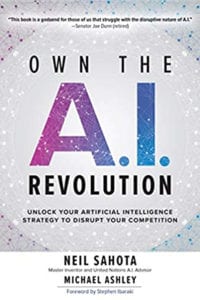
Own the A.I. Revolution: Unlock Your Artificial Intelligence Strategy to Disrupt Your Competition
When I spoke at the Coca-Cola CMO Summit, I was talking to the CMO of Domino’s Pizza. I said, “Your team built the app that tracks pizza from order to delivery.” What I thought was fascinating, Neil, was their overall goal was to give people the perfect pizza experience. From that place, they said, “How can we use AI to cut down a few seconds on the delivery time for the perfect experience?” We have thought if you want a pizza and it comes faster, it’s almost boom. It’s a Space Age stuff.
If you order the same pizza at the same time every day or the same order week after week, then the minute you open the app or pick up the phone, AI goes, “Let’s go ahead and put the order in before they finish completing it. We’ll eat it if they change it.” Those few seconds of getting the pizza started before the order is completed, the predictiveness that might give the consumer a better experience and they may not even notice it. “My pizza is coming here faster,” but maybe they will. I don’t know. That to me was one of my favorite examples of it being used in a way that most people aren’t aware of.
We may not necessarily notice that. If you think they still do some more small changes like that.
“How are they getting those pizzas? They’re fast.” Any last thoughts you want to share with us? Tell people how to find you for speaking. Any last thoughts you want to have to us about what is coming around the corner that you can share, like the puck?
I will tell you there’s a lot of cool things going on but I know a lot of people are wondering, “How can I be in front of the curve?” The best way to predict the future is to create it. We all have a shot or a chance to be a driver but we don’t realize that. Think about something. Even a small thing, a pain point, or an opportunity or something tedious. There’s probably an opportunity there for you. Do something small or big and it’s worth exploring. If you want to learn more about how to do that, definitely come and check out what I have on my website, NeilSahota.com, or you can follow me on LinkedIn and Twitter. I’m always sharing stories or things about what people are up to or I’m doing. Hopefully, you’ll find some inspiration.
I know we will. You’re riveting and thank you for sharing your intelligence, real and artificial, with us all.
It’s my pleasure, John. I had a blast.
Important Links
- Neil Sahota
- Own the AI Revolution
- Wayne Gretzky
- LinkedIn – Neil Sahota
- Twitter – Neil Sahota
- Better Selling Through Storytelling Method Online Course
Wanna Host Your Own Podcast?
Click here to see how my friends at Podetize can help
Purchase John’s new book
John Livesay, The Pitch Whisperer
Share The Show
Did you enjoy the show? I’d love it if you subscribed today and left us a 5-star review!
- Click this link
- Click on the ‘Subscribe’ button below the artwork
- Go to the ‘Ratings and Reviews’ section
- Click on ‘Write a Review’
Love the show? Subscribe, rate, review, and share!
Join The Successful Pitch community today:
- JohnLivesay.com
- John Livesay Facebook
- John Livesay Twitter
- John Livesay LinkedIn
- John Livesay YouTube
Focus@Will With Will Henshall
Posted by John Livesay in podcast | 0 comments

A great part of what hinders our productivity is our tendency to become distracted and lose our focus on what we are supposed to do. Did you know that music can actually help you solve that problem? Focus@Will is a new neuroscience-based tool that uses sequenced instrumental music tracks to increase your attention span up to 400% when working and studying. The mind behind this incredible invention is Will Henshall, a musician, scientist, songwriter and technology inventor. After a successful seven-year run with Londonbeat, a British-American dance-pop band who scored two number one hits in the early 1990s, Will turned to entrepreneurship, starting a number of startups in the digital recording industry. Listen as he describes the amazing benefits of Focus@Will in this interview with John Livesay.
—
Listen to the podcast here
Focus@Will With Will Henshall
Our guest on The Successful Pitch is my friend, Will Henshall, the Founder of Focus@Will. He and his team have created a way for us to find the right music to play at the right time to make us all more focused. Not only does it make us more focused and gets us in the zone faster, but keeps us there longer and makes us happier. We do a whole in-depth conversation around how boredom at work stems from not feeling productive Focus@Will can help you solve that problem.
—
Our guest is Will Henshall, who is the Founder of Focus@Will, which is a new neuroscience-based web/mobile tool that especially uses sequenced instrumental music tracks to increase your attention span up to 400% when working and studying. Will is a musician, scientist, songwriter, technology inventor, working with audio to find the right music at the right place at the right time. He was the Founder of the British pop-soul band Londonbeat and had two Billboard number one hit records. He went on to found Rocket Network, a Paul Allen/Cisco-funded San Francisco company in 1995. Afterward, he created a professional audio media transfer system, DigiDelivery, which he sold in 2003. Will has achieved notable global success as a technical inventor. Will, welcome to the show.
Thank you, John. That was quite an intro. I was worried you were going to say, “It’s 400 times more productive.”
If your productivity is ten, we get you to 40% or something like that. I have always admired you. We’re personal friends. The concept of having you share your wisdom about entrepreneurship and, more importantly, about life in general. You’ve also had some certainly challenging obstacles, let’s say. We’ll leave that as an open loop. Would you mind taking us back to childhood a little bit? Many people have a dream of being a rock star, movie star, or author. You certainly were able to fulfill, in a big way, one of those dreams. I’d love to hear the story of when that dream started.
For me, it was not wanting to be a rock star. It was about wanting to be a composer and songwriter, and not even wanting to be because I was. I would have been 3 or 4 years old and I can remember sitting at my folks’ piano and playing the black keys. If you play the black keys, it’s a pentatonic scale. It sounded like something from the South Pacific. I remember doing that at the age of four and going, “This is nice.” That got me intrigued with the way that the sounds all fit together.
At the age of 4 or maybe 5, I remember thinking, “If I made each one of these notes go up one, does it sound the same?” I was playing a pentatonic scale in the key of G major. I’m now telling you, but at the time, I didn’t know. That’s what got me fascinated by the math of music. I was always fascinated with getting a sound and looking for a grid and a method and different instruments. I had many instruments as a kid. I got a trombone and I was like, “Here are the partials.” You play octaves. As soon as I learned something, I put it down and not want to do it anymore. Music is in the blood, 100%.
Did you come from a musical family?
No. I have no idea why that happened. I often wonder whether the Milkman was musical or not. My dad plays piano a little bit by ear. There’s nobody else in my direct family that plays. My grandfather on my mother’s side was an artist. He was a technical drawing artist. He wrote books on steam engines and did all of the photographs and pictures. He was a visual artist.
Even though you didn’t have dreams of performing in front of thousands of people, you still found yourself on stages.
I did. Was that a cue to do this? Here’s something I wrote. Here’s one I made. I was the founder and the guitarist in this band, Londonbeat. This was in 1990, 1991. It’s the most played song in the world on the radio by a British writer.

Focus@Will: You can play in your unconscious mind a music that soothes it, that makes it calm. It’s like having the kids in the backseat be quiet so you can concentrate on driving.
You wrote the song. You played the guitar on the song. I’ve seen a video of you singing as part of that.
I wish was. No. I co-wrote the song. I was the main writer, but I wrote the song with the three singers, who are African American living in the UK, in London. I’m playing everything on the record apart from the drums and some of the bass parts. I can sing well enough to do backgrounds, but no one would ever pay me to sing lead. I’m a songwriter. As long as I can go, “Da da da,” someone who can sing can make what I mean. It was an interesting collaboration. The guys were much older than I was. I was in my twenties. They were in their 40s. They were soul brothers from the ‘70s. They were American. I was British. They were black. I was white. It was this fascinating hybrid of British pop music and American soul. It was successful. We were together for seven years, signed to MCA Records and RCA Records outside of the states. We sold a lot of records.
How have you parlayed that experience and success into being successful as an entrepreneur as part of working for a startup that raised a lot of money? Tell us about that experience, some of the challenges, and the highs and the lows.
I tell people that I’ve done seven startups, which is true. The first real startup was the band. The band, Londonbeat, how it works is similar to starting up a startup. What used to happen has changed a lot in the last few years. What used to happen is you write some songs and you’d finish them and you’d demo them. You’d take those demo recordings to a label and then the label, if they’re interested, would either sign you to a development deal to write some more songs or they would sign you and then you would find a producer. They would fund your startup. What happens then is that you run this little intrapreneur business within the major labels.
I’d been running a recording studio in my early twenties. I got a handle on how to survive and pay the rent and to be self-sufficient. Forming the band, I was lucky. I was introduced to the Eurythmics Management, Sandra Turnbull. At the time, Eurhythmics was one of the biggest bands in the world, Sweet Dreams (Are Made of This), and so on. They were signed to RCA Records. I had these songs that me and the singers, Jimmy Helms, Jimmy Chambers, and George Chandler, had written. All four of us had careers where we made a living independently in the business. We understood what mattered. What mattered was being careful with the cash, testing the songs, testing the product, finding the direction. We were the first MTV Unplugged band. We were the number one.
We used to go out all the time with me playing acoustic guitar and these three guys singing and then I join in and do the background. We did that a lot promoting the records that we made. MTV called up and they said, “Would you come and do some of your songs without the band?” We’re like, “Of course, we will.” I said, “Yes, but I want you to make a big huge TV set. I want us to be on TV.” Bless them, they did. They made us this cheesy cartoon-like TV, a big one, and then we stood inside it. It was the early wacky days of MTV. That was with a guy called Ray Cokes, who was in the MTV Europe. Ray Cokes had a show called Most Wanted with Ray Cokes. He was one of the first shock jocks. He used to do a live show to 220 million people every night without a delay on it. No profanity delay or anything.
Let’s talk about that company you’re working with in Silicon Valley and what that experience was like.
After I was in Londonbeat, I got interested in digital recording. I’ve always been a recording engineer and back in the day, it was tape machines going round and round. You would record on multitrack. That was an early convert to digital recording, particularly with the Avid Pro Tools system, DigiDesign Pro Tools. With three other guys in 1995, we created something called Rocket Network, which was an audio collaboration system that allowed you to network recording studios. We got funded by Paul Allen, by Cisco, by a number of other investors back in the early days before there was an internet, and startup scene. It started in London, in the UK, and then moved it to San Francisco in the end of ‘96, early 97. We raised about $50 million. We created the technology, which is available in Avid as Avid Cloud Collaboration, the first iteration of that. We sold the company to Avid in 2003. That was a rapid and vertical lesson on how to manage and how to build and grow a company. I went from being a guitarist and a songwriter to being a Tech CEO almost overnight.
What was the biggest challenge during that? Managing people?
[bctt tweet=”Running a development team was like being in a band with fifteen drummers.” username=”John_Livesay”]
Yes.
Not the tech. That’s what’s always interesting.
It was the fact that many developers are socially awkward and that’s part of the reason why they end up as developers. I’m painting a broad stroke here, but it’s fair to say that most of the incredibly talented developers I’ve met have been atypical. I knew about that because drummers are similar. Drummers are atypical. We have a common friend, Kenny Aronoff, who’s one of the most famous drummers in the world. For a drummer, he’s a good guy. He strings a sentence together and he’s funny, but he’s still a drummer. I should say that many of my musician mates are professional drummers, Mark Schulman, and a bunch of them. They’re atypical. They think about different things. I found that running a dev team was like being in a band with fifteen drummers.
Interesting analogy.
It took me a while to figure that out.
Everyone is on their own rhythm. You have to deal with each one slightly different. There’s a reason the band usually has one drummer as opposed to fifteen. Herding cats, a little bit, could be a reference.
Herding drummers and herding cats are similar.
You’ve started Focus@Will, which is a play on words about willpower and your first name. It’s the story of origin of the company.
It wasn’t my idea to name it. We were looking for a name and one of my investors, Salim Ismail, came back and he said, “Focus@Will, that’s the name.” I was like, “Yeah.” Do you know how he sold it to me? It was not my name. He has a strong spiritual outlook on life, similar to my own, and he said, “Will is Prana. Prana is Will, which is the will to live. It’s the will and it also means universal source. It could mean God, too. It’s that thing that is outside of you.” I was like, “That makes sense because it’s a play on words in multiple ways.” It’s been successful. People like it and it makes sense.
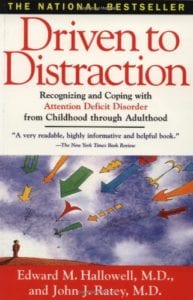
Driven to Distraction: Recognizing and Coping with Attention Deficit Disorder from Childhood Through Adulthood
The big problem you’re solving is that a lot of people have trouble staying focused, especially if they’re students and they’ve got many distractions going on. Most people don’t take regular breaks and their retention goes down the longer they try to retain things. That concept of solving that problem through music, you’re uniquely qualified to run it. What I find fascinating is a lot of businesses have a narrow niche, but this is for anyone who is both creative and logical. It’s not mutually exclusive. It’s for people who are students and entrepreneurs.
It’s not like you get out of college and you’re done, you still need to focus. Even if you’re a tech person or you’re someone who’s an artist, the need to focus on is something that changes throughout. The fact that you’re using science and math with music, which goes back to your childhood story, is something that I found fascinating when I took a deep dive into this. Would you mind describing some of the distractions? People might say, “I get distracted if my doorbell rings or there’s noise outside.” There are many other distractions that we may not even be aware of. Let’s talk about that.
You know how when you’re sitting down at work and, in theory, there’s no chainsaw outside and there’s no one distracting you and still, you can’t seem to get in the groove. You can’t get your flow going. There are two types of distractions. There are external distractions, which are the ones I talked about. By far, we are more limited by our internal distractions. We have two types of attention. We have our exogenous and our endogenous, our external and our internal. I learned a lot about this through the science team we have at Focus@Will.
Evolutionarily, our non-conscious minds pay attention to certain things that are keeping us safe. For instance, right now, if you smell smoke, you’re going to be like, “I need to check that. I need to pause.” If you smell burning, but it’s toast, you’re going to be like, “That’s toast. It’s not burned.” Your nonconscious attention, your exogenous attention, is constantly monitoring your surroundings. Your internal attention, which is me talking to you, you can concentrate and focus on what we’re talking about.
It was described to me beautifully by Dr. Ed Hallowell, who’s one of my science team. He’s a psychiatrist. He has written some bestselling books. Driven to Distraction that’s the one, which is about being distracted at work. He said, “Your nonconscious attention is like the kids in the backseat when you’re trying to drive somewhere and they’re like, ‘Are we there yet?’” What you can do is you can give them a book or put a video on or give them a Game Boy or whatever the kids are using these days. You can have them be quiet so that you can drive the vehicle.
If you think about, “I’m sitting on my computer and I have a spreadsheet. I have a piece of creative writing. I have some coding to do. I have to look at some QA on a science project.” What you want to do is have the kids in the backseat be quiet. What you’ve found you’re able to do is to play specific types of music. It has to do deal with how easily distracted you are, the types of music. You can play in your unconscious mind a music that soothes it, that makes it calm. It’s like having the kids in the backseat be quiet so you can concentrate on driving.
What a great analogy. One of the things you talk about on the website is that boredom is a distraction. If you’ve ever had to try and tackle something that you’re having trouble remembering, you don’t particularly it’s interesting and you’re like, “I’ve read this. I don’t remember a thing I read. How am I going to pass this test?” About blockchain, I was like, “This is not my idea of fun.” If we’re listening to the right music, science proves that even if something is boring to us, it somehow goes down like the Mary Poppins’ Spoon Full of Sugar concept.
There is a fascinating link between boredom and or lack of happiness. We did a survey with 25,000 of our most engaged users. We have a couple of million people on the system regularly. We asked these 25,000 and we said, “What is your single biggest challenge at work?” We’re like, “I know that’s something to do with productivity.” The answer came back from everybody first was happiness, “I am not happy at work. My challenge is being happy that work.” Second question is, “How do you manage that?” They say, “We like to listen to music when we’re working.” You’re like, “Why do you listen to music while working?” “It’s because it allows me to focus and concentrate and that makes me happy at work when I’m being productive.”
If I can turn around your question, is being bored a problem? It’s not being productive is the problem and that often creates boredom. If you’re able to manage this process, which is your non-conscious attention, it’s your limbic system. It’s the fight and flight reflex that’s spin all of our brains. If you can manage that response, what it gives you is this sense of peace and calm. It’s a flow state. Even if you’re doing something that is repetitive and is not particularly rewarding, if you’re able to get into a flow state doing that, you will find that there is a pleasure in it and you will be happy at work. Cue the music.
[bctt tweet=”Boredom is not the problem. Boredom comes from not feeling productive.” username=”John_Livesay”]
That’s going to be a great Tweet, “Boredom comes from not feeling productive or not being productive at work.” That’s a big a-ha moment for me, certainly. You also have a quiz that I took and I was fascinated. The question that made me laugh was, “Are you considered ADD or OCD?” I meant to check no and I checked yes and I was like, “I’m not exactly paying enough attention to the answer. That’s the wrong outcome. Let’s start the quiz over.” It asked a lot of different questions that I’ve never been asked before. I thought it was a fascinating process in that premise around distraction and focus and work and the combination of questions. You have twelve different options, at least.
There are 36 different options on the main because there are three flavors of each one.
They said, “You would be most productive listening to Electro Bach.” Since you know me, I thought, “Is that a surprise? Does that seem to be much in sync? Did I answer the questions wrong?”
Electro Bach is a unique channel that we created originally for a TV show called Genius on Nat Geo. It’s about Einstein. Einstein used to play the violin to get himself into a flow state. He had some specific pieces he used to play. The producers of the show said, “Is there a link between the pieces he used to play and the research that we’ve done in focus?” We said, “There is.” If anybody is reading and is musical, you’ll know there’s something called a sixteenth note. If the beat is going 1, 2, 3, 4, a 16th note is dividing each one of those up into fourths. You can see there’s a musician going, “Diga, 2, 3, 4 diga.” That is a pulse. Those pulses have been shown to help put you into a flow state. If you listen to Bach, in particular, any of the things that Einstein used to play, they are similar. Techno music is similar. Let me play a little burst of some of Electra Bach. This is what it sounds like.
Would this be something I would listen to on my phone while typing on my computer?
Yes. Listen to it on your computer while you’re working. Eighty percent of our users listen on their laptop because you’re working on your laptop and your phone is a distractor. I talked about the, “Diga.” There’s a pulse intrinsic in this.
How long does it take for the average person to hear that customized choice of music before they feel like they’re in a flow state?
There’s a timer on the app. Most of our users, the average session length is 80 minutes, which is a long time. That’s an hour and twenty minutes. That’s a long time. If you’re working without music that’s helping you focus, you can usually do about twenty minutes before the internal distractions kick in. The reason why we’re able to say that the Focus@Will system increases your focus state and your productivity by 400%, four times, is because instead of working in a twenty-minute chunk, you can work in 80-minute chunks.
Would it be fair to say that the monkey mind that we’ve heard about, conscious conversations with people, it’s quieting?

Focus@Will: If you’re working without music that helps you focus, you can usually do about 20 minutes before the internal distractions kick in. Focus@Will increases that time to 80 minutes.
It is.
The kids in the backseat are another way of looking at it. It’s the monkey mind of like, “I need to go. Am I hungry? Am I this? Why haven’t I heard back from that person?” Your mind starts going crazy.
All of the things that you’ve talked about are evolutionarily helpful to us as humans. You and I are in a cave back in the day and we’re drawing on the cave wall, doing some pictures of some tigers and stuff and we’re drinking a cave beer. Our backs would be to the entrance of the cave. What happens is there’s this timer in our brain that goes, “I can’t hear anything outside.” Your nonconscious attention is listening to the sound of the forest, the jungle. After a certain amount of time, you have this urge to check that there isn’t anything dangerous outside the cave.
It makes sense because you can’t assume that something safe now will be safe twenty minutes from now.
We all have this timer, about 20, 25 minutes. When that thing, in our brain, goes, “Did I lock the door? I think I left the oven on. I forgot to do that thing.” When you’re wired into a flow state, that timer is running. There is something called the Pomodoro Technique. You may have come across that. It’s a technique where you work hard for twenty minutes and you take five minutes off. Why is it twenty minutes? It’s called habituation. Our brains work with something called habituation and novelty. We’re always getting used to the sounds around us. If you’re interested in this, anybody reading, you can go to the Focus@Will site. There are articles about this.
You created a little bit of an open-loop saying there are three kinds of flavors once you’re inside a choice. What does that sound like?
It’s a little counterintuitive, but it makes sense if I quickly explain how this works. The quiz, that’s free, you can check it out and it’ll recommend a channel or a type of music that works well for your brain type. Our quiz, you said they’re weird questions. They’re based on a standardized psychological model called The Big Five. They’re weird questions. There are double negative questions in them after thinking them through. What we’re trying to do is to figure out, on your brain type, how easily distracted are you.
We’ve all got friends who are easily distracted. They are like hyper monkeys the whole time. Elon Musk, ADD. He’s not a friend of mine. You can see him and you’re like, “That guy is ADD.” Here’s another one, Jeff Bezos. Look at him. Steve Jobs. They’re all tech guys. What about Oprah? She’s got to be super hyper all the time. The more hyper you are, you might think, “I want to play someone some gentle music to calm them down.” That’s not going to work. It’s the opposite. The more hyper you are, the more energy you need in the music to calm you down.
This is similar to the fact that kids with ADD are often prescribed stimulants. You probably heard of Ritalin and Adderall, all the other drugs that kids are doing. Weirdly, if a kid is hyper, it calms them down. It’s to do with the way that your nonconscious mind is active if you’re ADD. The stimulants around you, including the music, are able to have you focus. Perhaps I should play you a little burst of this. There’s a channel on the system called ADHD Type 1. About 5% of our users listen to this and find it relaxing and they’re able to work.
[bctt tweet=”We are soul beings in human bodies.” username=”John_Livesay”]
I would not be in that percent.
Isn’t that crazy?
Yeah.
If you are ADD, that is good. It sets you on a groove and helps you get into a flow state. Most people in our system come up with either the Electro Bach or there’s a downtempo channel called Alpha Chill. Here’s a typical track from that. It’s like musical and easy going.
One of the things that I wanted to talk to you about before I let you go is you experienced a life-threatening heart attack and did a little bit of a recovery period. My first question is, what music did you listen to deal with the pain and the boredom of being in the hospital after your heart attack?
I had never been in a hospital before. In June 2018, I had an out of the blue widowmaker heart attack. I had no idea I was at risk. They said, “Look at your father.” My dad is in his late 80s and still causing havoc. I had this heart attack and then I woke up eight days later. My life was saved by my wife who gave me CPR and then the medics came, but I had no recollection of any of that. I started to regain consciousness over the next 8 or 9 days. The hospitals are noisy, pokey, prody. You can’t sleep. Every three hours, they wake you up. The music is awful, generally. They have music on the TV. I was in a hospital in Santa Monica, in California. The music that helped me was Baroque string music, Vivaldi, Four Seasons, music that I knew as a kid growing up. I trained as a classical musician so I had to learn some of this stuff.
Are you finding yourself more focused not just at work but being more present in life and not sweating the small stuff after this life-changing event?
I’m more still, generally, than I was. I found peace. I died and I described it as I shook God’s hand. There was no white light tunnel for me. Everything went off and I had a widowmaker heart attack experience. I was aware that there is this beautiful and loving energy. I was always coming back to consciousness. Every time you breathe in, you connect to this beautiful loving energy. It’s like loving awareness. It’s like a familiar love you have from your mother. It’s the love you have from people you know. It’s the love you feel when you see something beautiful. You see a beautiful nature scene or you’re in a forest. Every time we breathe, we connect to that. I was taken off the ventilator. You’re on this breathing tube, which is gruesome. The first breath I took after they took me off the ventilator was the sweetest, beautiful breath. I remember connecting to the source, to Universal Power, to God. Whatever you want to call it, there’s this loving awareness. There’s this beautiful, loving energy that we’re all part of. It’s simple. We are soul beings in human bodies.
Music is a way. Focus@Will is a way to get the right music to get us into that state as much as possible. That’s why you’re reinforced and you’re doing the right thing, even before you had the heart attack. It’s even a bigger mission for everyone. Will, I can’t thank you enough. If everyone wants to know more about you and Focus@Will, the website is FocusAtWill.com. Any other last thought you want to leave us with?

Focus@Will: The more hyper you are, the more energy you need in the music to calm you down.
The whole heart attack and coming back to life, it’s made me conscious of wanting to make a difference and be of service. Entrepreneurial Men’s Group based out of Los Angeles is called METAL International. It’s a group of entrepreneurial thinking, heart-centered men. We represent all kinds of men. I’ve become the CEO and co-leader of this group. Since I came back from the dead, a big part of my life has been wanting to serve and to make sure that the elders of the tribe are passing their wisdom down to the younger members who have a fresh and different view on it. Reply with the favor back. Men’s work and leading men’s work is an important part of my life.
That’s where we met, at that METAL organization. Now that it’s virtual, it’s global. It’s another wonderful way to get back and connect and learn. You’re certainly loved and admired as a leader. I’m honored to have some time to ask you some questions and get some insights into what makes you that we can all aspire to be the best version of ourselves.
Thank you, John.
I got a soundbite for you, you know how you’ve got special friends in your life and then any your special friends, you have someone else who accepts you and loves you exactly as you are? These are the special, few humans in my life and you, John Livesay are on that list. It’s a small list. Thank you.
I was honored to speak at your virtual wedding and have to visit me in Austin here. It’s likewise, equally, reciprocal. If you can find friends that become your family, you have a lot to be grateful for. That’s for sure.
Thank you.
Important Links
- Focus@Will
- Driven to Distraction
- METAL International
- Londonbeat
- Eurythmics Management
- Salim Ismail
- Better Selling Through Storytelling Method Online Course
Wanna Host Your Own Podcast?
Click here to see how my friends at Podetize can help
Purchase John’s new book
John Livesay, The Pitch Whisperer
Share The Show
Did you enjoy the show? I’d love it if you subscribed today and left us a 5-star review!
- Click this link
- Click on the ‘Subscribe’ button below the artwork
- Go to the ‘Ratings and Reviews’ section
- Click on ‘Write a Review’
Love the show? Subscribe, rate, review, and share!
Join The Successful Pitch community today:
- JohnLivesay.com
- John Livesay Facebook
- John Livesay Twitter
- John Livesay LinkedIn
- John Livesay YouTube