

Investing Legacy With Sal Buscemi
Posted by John Livesay in podcast | 0 comments

With so much information out there, it can be so easy to get confused about what investing is. Sifting through the right ones can put any budding investor off from being in the industry altogether. And what a waste of potential wealth-building avenue that could be. Not to worry because this episode’s guest has compiled years-worth of wisdom around investing that will help your journey. Salvatore Buscemi, the CEO and Co-founder of Dandrew Partners, shares with us his latest book, Investing Legacy: How the .001% Invest. He gives us a fresh view of what legacy means and where stories matter. Plus, Sal also discusses some of the mistakes people make when raising capital and the importance of being relational rather than transactional. Join this conversation and find out more about investing and leaving a legacy.
—
Listen to the podcast here
Investing Legacy With Sal Buscemi
In this episode, our guest is Sal Buscemi, the CEO and Cofounder of Dandrew Partners, a private family investment office. He has managed money successfully for several years through the creation of multiple portfolios on various cross-asset platforms. This includes Dandrew Partners, Encore Ventures and many more.
In 2008, Sal launched two separate successful distressed credit platforms that were backed by a $2 billion New York City-based asset manager and a $1 billion commercial real estate investment manager. He is also the author of several books on investing. Two of them are Making The Yield: Real Estate Hard Money Lending Uncovered and Investing Legacy. Sal, welcome to the show.
John, how are you? Thank you. It is a pleasure and a privilege. This will be a lot of fun because we are going to have a lot to talk about as far as pitching deals.
I always love when I do a little dig into someone’s background and when I find mutual friends. Even though we don’t live in the same cities, you are in Miami and I’m in Austin. I see that you were in LA at one time, where I used to live and were interviewed by the wonderful Rob and Aaron Haskell. Those are both very good friends of mine from my days in LA.
That is a great way to kick off this interview because you are in the business of warm introductions and building trust. Before we do a deep dive into how important that is and how you do it, I love to hear a little bit about your background, childhood, college and wherever you want to take us, which led you to where you are. Did you grow up as a young lad going, “I’m going to be involved in helping people invest their money?” How did that all happen?
It is different from that. I was following the lead of people whom I respected at the time growing up who were doctors. It turned out that during the late ‘90s, one of my father’s friends sent me a book. It was Confessions of a Medical Heretic written in 1977. This is 1992. I read it the summer before going to college. I convinced myself I didn’t want to do this anymore but you have that epiphany. I was 22 and I graduated.
I was thankful that my parents paid for my brother and my education, which worked. There was nuance there where I learned how he did that by clipping but at the time, we called zero coupon bonds. He was investing it safely so that we can go to college to do that. I didn’t want to take that for granted. At an early age, I was networking for this surgeon in New York at Beth Israel Hospital shortly after I passed out holding a fibula in the cadaver room. I was like, “This isn’t going to be something for me.”
Sure enough, because of all the hard work I had done for this one doctor, he said to me, “I agree with you. I want to support you. Call my brother. He made partner with Goldman Sachs.” After that, it became learning real quickly that it is not the grades that you get. It is the reputation and network that you have.
I wrote a book about that and continued on all the technical fun stuff, running to institutional funds, now the multifamily office and investing in life sciences earlier stage successfully, especially during a time when tech is dying on the vine. A lot of these more emerging but lower barrier-to-entry businesses like tech are dying on the vine.
We are with the best in class we can around people who have had lots of successful exits because we bet on people, not on ideas. I wrote a book on this because this has been the topic of several conversations you have not just on your esteemed show with your audiences but also on a one-on-one with investors. I will probably be telling the same story at a cocktail party at Faena, meeting some other people. I will go with it over and over.
What I did was I decided to write a book about it. I like to sell the book but we are going to talk about other things. What happened is that a lot of people have gotten confused, especially as it relates to investing. What we have seen, especially over the past several years, is that your status is defined by your wealth and what your assets are. Tell me what you own and I will tell you who you are. That is the whole genesis behind that.

Making The Yield: Real Estate Hard Money Lending Uncovered
Tell me what you own and I will tell you who you are. That is going to be a great quote for you in a tweet. We are going to get into that because it is a nice twist on, “Look at the five people you spend the most time with and I’ll tell you who you are.”
Think about it. There are all these doctors. They are all trading in the same meme stocks and cryptocurrency. None of them get ahead. They like to think they are smarter than the rest but they never evolved because that is all they know. They are hearing, “So and so made $20,000 flipping the stock.”
The other thing you said about when you were in school and interning is, “It is not the grades. It is the network you have.” I want to double-click on that, Sal, because that is an insightful comment. Many of us identify our self-worth by our grades in school, “This is where I went to school. This was my GPA.” We get out of school, college or university. We substitute grades for net worth.
I love to help people get off what I call the self-esteem rollercoaster, where they only feel good if they are winning or they feel bad if they are down. What you are doing for your clients is realizing that things go up and down. You cannot identify your self-esteem or even the performance of someone like you based on a month or quarter.
You have to be easy on yourself, especially if you are a Type-A person like I am. It is very easy to go over the top and commiserate. You have to understand self-pity is probably the lowest form of thinking you can have. You got to reframe it because it is a luxury if you think about it. I think of it as not having the luxury to be able to do that. Make course corrections and move on accordingly.
Let’s get into some of your incredible, valuable insights, especially for people who are founders. You see a lot of deals. One of your criteria and why you are successful is you like to see successful exits under the belts of founders. I have worked with people on their pitches to investors like yourself. I tell them, “If you have that, you need to bring that up upfront. Don’t make them go through slide 7 or 8 to find that out.” In journalism, it is called bearing the lead. You invest in the team more than the idea. We have heard that with the horse and the jockey on all those wonderful analogies. I would love to hear you describe some mistakes people make when raising capital, even if they had a successful exit.
I have moved to Miami and I have been involved in this VC ecosystem. I was involved through a law firm I know well to go to a conference. I got a free ticket to a $2,000 Florida Venture Conference. I was going around and all these guys came to you. It is like if you are wearing a red bat that says, “Investor out here.” I’m like a French fry. What happens when you throw a French fry on the beach? All these eagles come. Even at the urinal, it is awkward. They are like, “You are an investor.” I’m like, “You know I am. Otherwise, you are going to be standing next to me.”
There is a loss of bedside manners. If you look at crypto and go back to Jim Cramer, when people think of investing, they make it much more transactional and it needs to be relational because people are investing in you. They don’t know anything about the idea. They don’t care about the idea. I don’t mean to sound rude but a lot of people think might understand numbers with real estate and you will be surprised how many people don’t understand that. If you communicate it in a way they can understand and tell their spouse, it is an entirely different thing.
It was difficult for me to learn because when you leave the institutional world and you go to the family office world, not a lot of them are real estate or life science families. You have to be able to communicate in a way where you are holding their attention because their attention is that currency. People pay more for attention than they do a barrel of oil on a relational scale.
It is about relationships, not your idea. What I see founders making as a big mistake is they treat investors like a client.
No, like an ATM. It is transactional. It is like, “Do you have money? Let’s talk.” We were joking before you hit the record button but Miami is the land of the next gens and second generations. They are still partying hard but they don’t have any bedside matters. They go around and pitch. Just because you know someone or you are someone who has the discretion to be able to invest, it is almost like an awkward date. It’s like asking for marriage on the first date. I don’t understand how you build a relationship around that. It becomes a turnoff.
I don’t care how successful this kid’s parents were. I call him a kid, he is 37 but if you look at him, he looks like he hasn’t evolved since he was 17. At one point, I had to hold my tongue. I’m like, “Do you want me to take you seriously?” I don’t. New York style can say that. Miami style can’t say that. More or less, the feeling you get is that people are so pushy. It comes across as being desperate.
[bctt tweet=”Self-pity is the lowest form of thought. ” username=”John_Livesay”]
I wrote a little guide that is called Calling the Capital: 20 Ways to Incorporate Urgency Into Your Capital Raise. It is on Amazon but also CallingTheCapital.com. It is real stories and case studies in about 26-page booklet that talks about how we were able to do things credibly without sounding cheesy. I wrote it because all these guys had no bedside manners. I went home and was bored. I like to write so I put this together. It saved a lot of people from embarrassment and humiliation who might not have gotten into becoming an entrepreneur or a founder at first because they didn’t know how to ask someone for money without sounding needy or desperate.
I’m hearing two things. Don’t treat investors like ATMs. Build a relationship and don’t be pushy. Third, as I was alluding to, they think if I treat you like a user of my software, let’s say they have an app and start pitching you how this could make your life better, you are like, “No, my criteria for whom I invest in is very different from a customer’s criteria for whether they are going to use your product.” That is what I meant about the mistake I saw made and I’m getting confirmation from you that it is a mistake you see people make sometimes.
John, think about it. Asking someone to part with their life savings is the highest calling of sales in the land. It has been like that since biblical times. This is nothing new. It is that there has been a lot more money around since Genghis Khan. People still are, for lack of a better term, moist robots. They want to be taken care of. They are carbon-based beings. They want a relationship with someone. They blame it on social media and the lack of depth there. If you want to get into this business, you have to have a relationship with your investors. If you don’t have a relationship with your investors, find other people to build a relationship with to be your investors.
In addition to startup founders with successful exits reaching out to you, you also have to walk your talk, which you do when you are wooing families who have generational wealth, who are looking for someone to invest their wealth, that they should pick you versus another family office. Give us a little sense of what that looks like.
There is a lot more charisma that goes into it. That sounds like a bad term but I will give you an example. You got to treat people like they are all the same. I had one family that wanted to invest in a multifamily deal that was value-added, meaning that he would not get paid unless a lot of good things happened. This is how I explained it to him.
Is it the social impact you are talking about?
No, it is even better. You got to understand. A lot of investors read risk like a wine list over to the right and down. If you have the highest return, you are the smartest guy because you found the best investment. That is like doctor and dentist investing. That doesn’t work and it leads to lots of failure and losses. When we were talking to this one investor, he was fixated on the point that this one guy was going to offer him 15% but in my class industrial facility, he was only going to get a 7.5%.
He couldn’t understand why. He thought I was not that smart for even talking about it. I said to him, “This isn’t about credit-adjusted quality or MBA terms. Do you want people poorer than you paying your rent for you and your family? Should you pass on or not? The reason why wealthy people put their money in here is that they are not looking for the last dollar and chasing the highest return. They want to save it and continue it for generations with seven-year leases with people who have been bid business for 200 years like Carrier Air Conditioning and Milwaukee Tool.”
At that point, it crystallized in his head that it wasn’t about the numbers. It was more or less about credit risk. He had a crash course in credit risk. He invested and was very happy because when the pandemic happened, all his other investors got wiped out. All his other investments with that one particular company went bust too. It is all about status. We are working on a deal and it is our second deal. It is with a 2018 Nobel Prize winner, Dr. James Allison, for physiology and medicine. People want a dog pile on top of that because there are smart families in that deal. When you look at like a cap table, that is the soul of the asset.
If you have good strong families there, especially in life sciences, you are going to have a lot of success there. If it is a bunch of fragmented doctors and dentists at 2,000, the denominations would only trigger desperation for a guy looking at it. It doesn’t become appealing. What you have to look at is showing them the strong points for their safety, certainty and narrative format rather than the idea of what could happen for your board of advisors, which doesn’t do anything anyway to anyone.
Many people spend a lot of time and money giving away equity to have these prestigious names on the board. If it is a name only and they are not consulting, it is not valuable.
I’m raising any money. They are not consulting. They are sitting there and they get all these options, which is hope certificates because if it is the founder’s first deal, it is not going to go well. Why wouldn’t they do that? I don’t do that because it is not something I do but you got to look at it from the standpoint and who are the other smart people who are in there. Do they like this guy because money always has a voice?
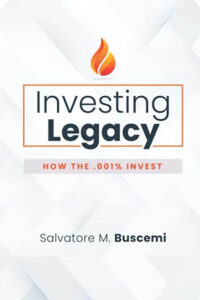
Making The Yield: Real Estate Hard Money Lending Uncovered
You toggle back and forth. Many people, after the pandemic, are in this hybrid work. Everyone is going back to the office. I work with a lot of architects who are dealing with this new way of working. People are like, “Is commercial real estate as good of an investment as it was pre-pandemic? Do you see all the tech companies in Austin still building these highrise towers?” Is that still going to continue, do you think?
It is going to be much more on a specialized basis. Austin is coming into its own because you have Tesla. There is a lot of industry there. You don’t have that much land-ground rock. That is going to be built up. I could see areas like that that are pro-business and pro-growth being good for areas like offices like that. Texas, Florida, where I am and you are familiar with that.
In cities like New York, what is going to happen is you are starting to see the ephemeral of offices. It is hard. I don’t think it will happen all at once but people are reticent to return to the office because they are lazy by nature. Certain industries do require office space, especially in financial services because you are learning a trade like anything else and you need to be around bosses to do that.
There are a lot of businesses that said, “We don’t need to do this. It is already costing us too much money to keep our employees already.” You will see a lot of these beautiful buildings get condos into residential units. That is what I think. Everybody is worried about the office building. It is going to be replaced with housing. That is the wave of the future. From my context in New York, that seems to be the prevailing tailwind that is happening as a result of the pandemic.
You got your expertise in real estate and life sciences. A lot of companies like Honeywell that make the fans in the operating rooms or Olympus, the camera company, have a whole medical division that makes the equipment. I have spoken to their sales teams about trying to take these very technical speeds and feeds and turn them into some stories that make hospitals and doctors connect. Do you see successful founders in the healthcare space? The ability to get customers, grow and scale is what you are looking for, in addition to all the other tenacity, grit and successful exit backgrounds they have. Do you see storytelling as a skill that you are looking for?
If they are talking to doctors, the doctors are going to worry more about the data rather than the story. There is a doctor they are pitching to. I pitch to other investors. They are going to be more focused on the story and have their friends look at the data. The problem is that a lot of people, when they are entrepreneurs, try to brand themselves around data or IP and say, “This is great.”
I’ve been to so many rubber chicken lunches where I have been pitched like some doctor wants to buy IP. He is at a point in his life where he is bored with his job. He was angry at his wife. He is looking to be an entrepreneur and swing for it. He has no experience except for an ego. I have seen this. He wants us to fund the IP. I’m like, “What are you going to do with the IP?” They were like, “We got to raise money to do research.” This is at the Harvard Club in New York. I said, “This is the difference between a novice and a professional.”
I got up and walked and the guy learned an important lesson. Before you do this with your attitude, you should understand. Don’t ask people for you to do the research and development. You should have an understanding of this. Anybody can go out there. John, you can go out there and buy Medical IP if you want. Whatever you want, it is available. There are IP brokers that do it. What do you do with it? That is the whole point of it. Anybody can have it but what do you do with it afterward?
We are in the middle of closing a huge investment we made into a company called Thrive Bioscience. It will be the CEO’s 15th exit and 8th unicorn. We like that. He has prominent families leading this other than us. One of the things I like about it is he is replacing microscopes around the world. That is a powerful hook for a lot of people, especially doctors. Doctors do not like working with microscopes. It has been around for many years. They have to pull cultures out. They can’t see cells in real-time. His whole thing is, “Uber knows more about ourselves than we know about ourselves.”
We understand there is a need here. It gets into digitization and people can get their heads around that, especially doctors. We don’t have a lot of doctor investors, to be honest with you. If I did have to talk to a doctor, I would be a little heavier on the data but also do a good lead-in, which is what this is, rather than, “Let me talk to you and set up a call. Hold on.” You got to know what it is and study what it is before you talk to someone. Otherwise, you’re losing credibility. I have been known to lose Wi-Fi in stable spaces.
Let’s talk about your book Investing Legacy. Who was this written for when you were sitting down to write this? Is it for people who have generational wealth and trying to avoid mistakes in it?
There is a lot of thought that went into this because this was my third book. Books take a lot of time. It is one thing to write a book but it is an entirely different thing to sell a book. One of the things I noticed over my career is I was receiving a lot of phone calls from women my age who were receiving a lot of money through inheritance or an exit through options. They would read my investment letters, John. They would be like, “Sal, I read your letter. Congratulation, it sounds like things are going great.” I have no idea what the hell any of that means. They were like, “I like to talk to you a little bit. You mentioned something about a friend of yours in California that opened a library and their names are on the side of it. What about that?”
[bctt tweet=”People have made investing much more transactional when it needs to be much more relational because people are investing in you.” username=”John_Livesay”]
You peel back the onion a little bit. What it comes down to is affluent households and there are TV shows about this. Women have most of the discretion when it comes to investment decision-making. Whereas if you also look at it, women are also 70% of book buyers. I narrated my book because a friend named Mel Robbins told me to because it would be more catchy. I met her in the studio when I recorded it. That is when I was doing other media things. I was trying to impress her. I was telling her, “I was going to hire someone to do it like I did my other book.” She said, “No.” I spent two weeks in a studio and there is an Audible version for you as narrated by the author, which means a lot.
When I narrate my book, you have to break it down into chunks. You don’t sit down and record the whole thing in six hours.
Two hours at a time, after the gym, when I was fresh and ready to go in it. We went with a female publisher because I wanted to prove the point that this was for females. Guys go on Reddit. The guys ate in the stocks. They are much more speculative and women aren’t. This was a book for women published by a female, Andrea Albright of Beverly Hills Publishing. She runs a fantastic global firm over there. She has a lot of international clients and does a lot of publishing for them.
As a result of that, it has been easier to create relationships with people I would not have been able to create relationships with. It is a book that I wrote in my voice because I like to write but it is not anything that I ghostwrote or hired anyone to do. There is a lot of what we call silos things in there, which we learn and statement assets.
Those are terms used in the industry. It helps get people familiar to say, “Is this something I want to do? It is making me think about my life.” The hook for that is, “How do you want your kids and grandkids to think of you when you are done? When you die, do you want to be known as the crypto day trader that spends all his time in front of monitors or trading weed stocks? Do you want to be known as someone who is like, ‘Grandma and grandpa did something different and that is why we have a legacy now?’”
A lot of people have been focused on legacy because it is a form of immortality when you think about it. That is why people go to space and our families want to develop cures. They don’t need an extra zero but they need the legitimacy of saying, “Grandma and grandpa also invested in this drug or this therapy.”
That is such an undervalued premise that people think, “We want to get richer.” That is why those people keep working. It is about the legacy you leave behind. You have tapped into it. I have never heard anybody say the way you did, Sal, which is, “In some way, your legacy is what keeps you going on. It is a little form of immortality.”
Legacy and immortality are not always connected like that. That is the emotional connection that makes people make a decision to invest in something and pick you over another family office. I’m a big believer that when we connect and tug at heartstrings, people are willing to go forward and make a choice to pick us versus somebody else.
You always remember the story. You never remember the data. In a post-pandemic election world, people don’t believe facts and figures anymore.
It can all be manipulated. If people want to reach out to you, what is the best website to do that?
They can go to SalvatoreBuscemi.com. If they want to email me, they can email me at [email protected]. If they want to buy an autographed book, they go to InvestingLegacy.com/book. If you go to InvestingLegacy.com, it will take you to where you get a report on horror stories of how people lost all their money. If you want to buy the book, that will come after. You can also get that too on the SalvatoreBuscemi.com site.
Any last thought or favorite quote you have?

Investing Legacy: You always remember the story. You never remember the data.
There is a funny movie that comes to the heart. One of my friends in Chicago reminded me of it and it is corny. I’m not a big movie person but in the movie Ferris Bueller, he takes the day off. One of the things he said is, “You can never go too far.” One of my friends I was talking to in Chicago was like, “Sal, you are like Ferris. You could never go too far.” There are a lot of things that you can do. You just got to put your mind to it. Things will come. You will have some difficult times and great times but it is the effort you put in and being confident enough to do it. That is going to bring you a little more joy later on.
Long-term vision, not immediate gratification. This is my takeaway.
I agree with you there. John, thank you so much,
Thank you for sharing your story and wisdom.
Important Links
- Dandrew Partners
- Making The Yield: Real Estate Hard Money Lending Uncovered
- Investing Legacy
- Confessions of a Medical Heretic
- Calling the Capital: 20 Ways to Incorporate Urgency Into Your Capital Raise
- CallingTheCapital.com
- Thrive Bioscience
- Beverly Hills Publishing
- SalvatoreBuscemi.com
- [email protected]
- InvestingLegacy.com
- https://SalvatoreBuscemi.com/About-Sal/
Wanna Host Your Own Podcast?
Click here to see how my friends at Podetize can help
Purchase John’s new book
John Livesay, The Pitch Whisperer
Share The Show
Did you enjoy the show? I’d love it if you subscribed today and left us a 5-star review!
- Click this link
- Click on the ‘Subscribe’ button below the artwork
- Go to the ‘Ratings and Reviews’ section
- Click on ‘Write a Review’
Love the show? Subscribe, rate, review, and share!
Join The Successful Pitch community today:
- JohnLivesay.com
- John Livesay Facebook
- John Livesay Twitter
- John Livesay LinkedIn
- John Livesay YouTube
Social Selling With Tim Hughes
Posted by John Livesay in podcast | 0 comments

Do you have a hard time driving more leads from your LinkedIn account? Are you spending most of your time on your social media accounts? In this episode, Tim Hughes, the co-founder and CEO of DLA Ignite, discusses the social selling strategy to influence buyers and change makers. People are looking for experts that can help them. Tim Hughes suggests three things to attract leads: Build a Buyer Centric Profile, Network, and Content. Learn more from these three things to attract leads for your business. Tune in to this episode now.
—
Listen to the podcast here
Social Selling With Tim Hughes
Our guest on the show is Tim Hughes, the author of Social Selling. We talked about how to build trust, how to use social media, and most importantly, how to create a buyer-centric profile. Enjoy the episode.
—
Our guest is Tim Hughes, who is universally recognized as the world leading pioneer and innovator of social selling. He’s ranked number one by Onalytica as the most influential social selling person in the world. In 2021, LinkedIn said he was one of the top eight sales experts globally to follow. Brand24 announced that he was the sixteenth most influential person in marketing globally based on measured social media influence.
He’s also the Cofounder and CEO of DLA Ignite, and the co-author of bestselling books, Social Selling: Techniques to Influence Buyers and Changemakers and Smarketing: How to Achieve Competitive Advantage through Blended Sales and Marketing. He has launched a second edition of Social Selling: Techniques to Influence Buyers and Changemakers, which that’s been completely updated. Welcome to the show, Tim.
Thanks for having me on and spending time with me. I’m really excited.
I think this topic of influence is always something someone’s so interested in. More brands now are saying these earned impressions, people’s recommendations, and word of mouth, coming from someone that people trust are even more valuable than paid impressions. Before we get into all of this and how you became this influential social selling person, I want to hear your own personal story of origin. Did you grow up going, even before the internet was created, “I’m going to conquer this world,” or were you just the young boy at college that you could convince everyone to go to your restaurant of choice versus others? How did that all begin?
I’m a salesperson. I didn’t actually even know what sales was until I was in my twenties. I got into a graduate program at a company like many computer companies that were around in those days. It doesn’t exist anymore. I was in a technical role because I did Electronic Engineering. I made the mistake that a lot of young people make, which is I saw these technical people who were amazing and I thought, “I’m never going to be like that because it’s going to take me so long.” What we always do is measure things by 0 to 100, and we see the experts who are 100, and what we need to do is go from 0 to 1.
I was looking around for something else, and I could see these people out in the car park who had company cars. In those days, they just had started having mobile phones. There were these massive big brick phones. I thought, “I quite fancy some of that.” I went and started working. I got a job working with sales teams. When I was doing that, I really enjoyed it. I then moved into sales. I have now been in sales for several years. That’s my background, new business sales. I’m always the person that goes out and finds new customers and builds trust really quickly.
Let’s dive into that. I have worked as a sales keynote speaker with lots of different companies. I usually get involved. When they are already invited, they have done the RFP, they are in the door, and it’s between them and a competitor. This building trust quickly, especially for those people who have to cold call, I don’t think a lot of people think about cold calling as still a thing. Whether it’s somebody knocking on your door saying, do you want solar panels on your home, to all the medical sales teams that have to cold call on doctors and dentists, to try and get their attention? Let’s start with that because that’s one way of getting new business, and then there’s the other way of getting new business where you fill out a proposal, and you are invited to present. You cover both, I’m guessing.
In the past, I have sold to government organizations where you fill in RFPs. What you are trying to do is actually influence that early, so you are going out and you are contacting people. I started selling back in the ’80s when there was no internet and mobile, and you are just given a printout and said, “Go and call these.” That’s how I started. It was about making sure what you are doing is being able to come across as being the expert.
I started off selling payroll systems. I didn’t know anything about payroll and its technicalities. What you start doing, you start learning about it. You start learning about the verticals that you are selling into and stuff. What you do is feed off one conversation and take it to the next one. You take one conversation and use that as a way of asking questions. It’s that organic thing that takes place.
[bctt tweet=”Make your profile buyer-centric. Social selling is not about you.” username=”John_Livesay”]
What do you think is the biggest mistake people make when they are trying to build trust?
I wanted to set the record straight. As an organization, we have never cold-called ever. We have not ever made one cold call. We have never ever sent a spam email. We don’t have an email database. We deleted it in 2018 to be GDPR compliance. We have never placed an advert. What we do is we are an organization that teaches social selling, and therefore we see ourselves as the highest watermark in the industry. People want to see what good social selling is. They come to people who work for DLA Ignite because we are the high watermark of that. What we are doing is, if you think about what I did in the ’80s, going out and having conversations with people, but I’m doing that on social media rather than necessarily using the telephone to get it.
That doesn’t mean that we are anti-telephone. Sometimes people think and say, “It doesn’t work for us because we can’t do all of our business on social media.” I totally understand that. This is about using social media as a platform for you to get conversations. In the past, I used a telephone as a way to get through to people and start conversations. What I sell and what most people reading this sell, require us to have a conversation. What I’m doing is I’m using social media, and that allows me to have conversations at scale rather than doing it what I did way back in the ’80s.
Let’s loop back to my question because I think it still is relevant, your social selling and reaching out to people of let’s say, LinkedIn. I see one of the big mistakes people make is they ask people to connect, and then they try to sell them something in the same conversation. I’m sure you have examples of other mistakes like that.
The issue that we have now is way back from the 1980s, what we have always done is that we have used interruption as a way of selling. To make a cold call, I interrupt you and pitch. When I send you a spam email, I interrupt you and pitch. When I place an advert, what I do is I’m interrupting your day and basically pitching. Everybody thinks, “Therefore, that’s what you do in sales, you interrupt people.” They go to social media, and what they miss is in the title, social media, which it’s media where you are social. What you will find is that you have got a lot of people, for example, posting brochures. You research shows that nobody comes to social media to read brochures.
Everybody I talk to, I say, “Do you ever do this with your LinkedIn timeline? Boring.” “That’s interesting. I love John’s podcast.” “What’s he doing in that?” Everybody says, “I do that all the time. Don’t the organization do boring?” What you are doing is that this is not about going to social media and posting, this is about going to social media and posting to get a conversation. That’s fundamentally different. In this show, you introduced me before you started recording, and showed me your website and what you do. All of what you do there is a mechanism to create conversations.
That’s probably the best way to build trust, which is to have conversations.
One of the things about trust, what happens is that you like people who are like you. The other mistake that people make on social media is they think it’s about them, it’s about their company. The thing is, I don’t know anything about you or your company. What happens is I’m actually not interested. I’m not interested in what you are selling until I actually know you, maybe like you, trust you, and at that point when I understand that I have a need. Right now, all you have is you. Everybody goes to the market exactly the same way. What they do is that they say, buy my product because I’m great.
My background is in selling accounting systems in IT. All of the accounting system vendors go to market in exactly the same way. SAP, Oracle, Sage, and Xero all say the same thing. As a buyer, you cannot differentiate. What you can do, because we are really clever at this as humans, I can differentiate and say, “I just spent three minutes with John before I came onto this show. I think that John’s a really nice person. If I went out for dinner, I think he would be really interesting to talk to.” We were talking for 3 to 5 minutes, and I came to the conclusion that you would be interesting to talk to during dinner. That’s because as humans, we are really good at that.
Social Selling: Social Selling is not about understanding LinkedIn. It’s about understanding social media and what it’s like to be social.
I was going to elaborate on that and say trust is transferred. The fact that Hesha Abrams, who’s been on this show before, introduced us that trust gets transferred, “I think this is someone that would be a good guest on your show.” I read your book and bio, and I go, “Yes,” and then we start bonding. That concept of trust being transferred is something I wanted the audience to take away from this interview because you are big on that. Those warm introductions cannot be beaten in terms of social selling. If somebody is liking and comments on a post that you have made and you happen to know that person who liked and commented, there’s an example of social selling in action.
It’s about building trust and building it at scale. One of the things that you get a lot of people saying that they don’t do or they don’t like is, for example, posting something personal. Now, if you think about sales and the way that we have solved it for years, you say to a salesperson. How is it that you get the salesperson to trust you? You say, “I took them to the Super Bowl. We went out for a meal.” I said, “Did you take some brochures?” They say, “Don’t be so stupid. Of course, I didn’t do that.” I said, “What did you talk about?” “I talked about the fact that we like barbecues. We go to France.” “You are talking about yourselves?” “Yeah.” That’s how we bond, we learn about each other.
LinkedIn is a platform where you can learn about each other. One of the sales guys that work for me basically has just posted the fact that he’s taken his dogs for a walk. He’s English, but he lives in France. Now, if you have got dogs that are similar to that, you are going to look at that and go, “That looks fantastic. I can see it’s French the way it looks. I love France.” All of a sudden what you are doing is that you are bonding with that person. I won’t bond with someone posting a brochure or some brochure warehouse, or saying how great their company is. What I do is bond with you because I see that you are a human being.
I have a story about that in action, and then I’m going to ask you to share a story either from the book or what you worked with companies on. I was up for speaking at the Olympus medical sales convention, their kickoff meeting, and it was between me and another speaker. During that process, I saw that one of their VPs at a division had reached out to connect with me on LinkedIn. I accepted the request, and then I started looking at some of the posts he’s made. I instinctively just started liking and commenting on a couple of things I resonated with.
Later he told me that when they had the big meeting and they looked at my book and the other speaker’s book, our videos, and all the other things that he raised his hand, and this is always what you want is somebody to be your inside brand ambassador saying, “I really think we should pick John because I’m trying to teach my sales team to like and comment on the doctor’s social media posts. He did it to me. He walks his talk if he comes in, and encourages our team to do that.” I thought, what an amazing story of social selling in action that got me a speaking job. I’m sure there are other examples of that human connection that you might have to share.
We have got lots of examples. One of those is one of my sales team posts a picture of him and his son on the beach. It happened to be during COVID. It was his son’s sixteenth birthday. There was a lockdown. His son wanted to be out with his mates getting drunk, but he, unfortunately, had to go with his boring dad and they live by the sea and he took some photos. I just wanted to get the figures right. Off that post that he posted, he got 165 likes, 37 comments, and 18,000 views, which is pretty okay, and you would have seen lots of things like that on LinkedIn, but the thing is that behind it is a methodology.
That methodology allowed him to harvest that post to get 124 leads, 6 C-level meetings, 2 proposals, and 1 purchase order, and it took him 10 minutes to do that. Now, there’s not one single piece of demand gen out there that allows you to get that level of traction and results by doing something in that shorter time. That’s just an example of where people are using social media as a mechanism to get meetings and conversations that turn into commercial interactions, so sales.
Now, I think a lot of people reading are going to be wondering, is that post on LinkedIn or Instagram, or does it matter?
That particular post was on LinkedIn. One of the things that we talk about is the need nowadays to understand how to walk digital corridors and have digital conversations. What you will find is that a lot of people will teach you about LinkedIn. It’s not about understanding LinkedIn, it’s about understanding social media and what it’s like to be social. What that allows you to do is to pick up that skill and say, “I need to get in contact with the head of human resources. They are not active on LinkedIn, but they walk their dogs, and they have got two Labradors, and I know that they are on Instagram.”
[bctt tweet=”It’s about building trust and building it at scale.” username=”John_Livesay”]
How do I go across to Instagram, and basically enable me to have a conversation, so I don’t go to the person and say, “Buy my product because we are great.” Everybody says that. It doesn’t differentiate you. What you need to do is to do something different. It doesn’t matter whether it’s Twitter, TikTok, or Instagram, it allows you to walk that digital corridor and have that digital conversation. That’s fundamentally different from, “How do I hack the algorithm on LinkedIn,” which actually doesn’t help you.
What I’m hearing you say is it doesn’t matter what platform you are using, be yourself on all of them. Would that be accurate?
What you are looking for is to be your authentic self. In a world where everybody goes to a market and says exactly the same thing. The only thing that differentiates you is your experience, who you are, and what you believe in. That’s the thing that differentiates you as a salesperson.
In our pre-chat, I was talking about you being in England and I have a King Charles Cavalier Spaniel. I shot a short video of me with a baseball cap on taking my dog out for a morning walk. As I was narrating that, I said, when I took my dog to dog training, the trainer asked me, “Are you walking out the door first or is the dog?” I said, “I guess he walks out first and I follow.” He said, “No, you are making a mistake. Dogs are pack animals. You must be the first person out the door to be the leader of the pack” I just had this thought of, “How gay am I, as an openly gay man, that my little King Charles dog is butcher than I am?” That was me being authentically myself.
Dogs actually like hierarchy. You going to need to be a butch, John.
This dog is butcher than I am because he’s walking out the door fast. That was two minutes, and it was a cute little video. That got so many other fellow dog lovers to comment and connect with me. There are lots of ways to be authentic. I thought you’d like that story.
For those that are reading this to understand, if you post pictures or videos about your King Charles Spaniel all the time, they are going to assume that you are a dog walker. The same as if you are posting pictures of yourself on the beach, they are just going to assume that you spend all the time on the beach. When someone comes to your LinkedIn profile, what they need to see is what you stand for. In the B2B space where I work, what they are looking for is an expert.
You may have read the Matthew Dixon book on The JOLT Effect. What people are looking for is an expert. They are looking for somebody that can help them. When they do that, they are looking to see, does that person have that experience. Also, they are looking to see that if they are going to buy something, they are going to build a relationship with you. How do they do that? There are three things that you need to look at, and this is what we do in terms of helping people. The first thing you need is a buyer-centric profile.
What do you mean by the word, buyer-centric?

Social Selling: HubSpot says that the average person spends 2 to 4 minutes on a website.
A buyer-centric profile is a profile that is attractive to your buyer. The mistake that we all make is that, especially in sales, we think it’s about ourselves, and we think, “We are great relationship builders. I have been to President’s Club 5 out of 6 times.” That isn’t what buyers want. What buyers want is, does that person understand my business? Does that person understand my business needs? Will that person sell something, and then disappear? What we are looking for is someone that’s going to help us. What we need to do is come across as that. Now, the more you share about yourself, and we have done research on this, the more people will walk toward you. This is transformation.
When you look over at LinkedIn and you see salespeople, the first thing you think is, “I don’t like you. I don’t believe a word you say. You are just going to try and sell me something I don’t want.” That’s what buyers are thinking. By becoming buyer-centric, people are going, “I think that person can help me.” We know now, because the research shows this, that people under 30 search more on social media than they do on Google. We actually do it at the same time.
Quite often though, we use Google because we know what we want. Give me the capital of Nigeria. Tell me about the best Italian restaurants in London. The problem with Google is if you go to Google now and put in, what is the best CRM system, it won’t tell you. What will happen is there will be loads of people buying that search.
What happens is that people come to social. Quite often, they don’t know what they want. It’s called discovery rather than search. What’s happening is that they come, and make that discovery. They are looking for people again. It’s about thinking about, how can I get people to come and find me. Now, I’m not saying that you sit at home hoping that people are going to find you. We are going to talk about prospects at the moment. For example, for one of our clients, Namos Consulting, we have taught them how to have buyer-centric profiles. The other thing that we taught them is about building a network. What you need is a wide and varied network as you can.
This is about connecting into the account, so not going to them and saying, “Buy my product because we are great,” actually, going to them and saying, “I’m really interested in what you are doing. I’d love to connect with you because I’d like to learn from you.” This is switching it around from me trying to pitch to you. If anyone comes to you and basically flatters you, you fall for it. What you are able to do is then turn that into conversations.
The way that LinkedIn works is as you build up that network, what you are trying to do is getting the people that you are trying to influence, the customers that you are trying to sell to into that network, and all the people that it may influence them. You are doing that because the way that search works on LinkedIn is that it’s based on your network.
You need to get people in that network so that when they start searching, they will find you. For example, Namos Consulting. We taught them 2 of those 3 things. What happened was that one of the buyers was online looking for what it is that they sell, which is Oracle Consulting. The buyer said, “You look like a person that’s interesting.” He walks towards the salesperson, and you just don’t get that. What happened was that turned into a $2.6 million deal. They have subsequently taken another $500,000 out of that customer. This is what I’m saying, this is where people are using social as a mechanism to get conversations, doing it at scale, and making significant money from it.
You said there are three things, have a buyer-centric profile, build a network, and the third one is?
The third thing is content. Content is important because one of the things that we do when we are buying is that we are looking for content and insight. We are looking to be told things that we don’t know. We are not looking for brochures. Brochures and brochureware sit on the website. If I want to see whether you exist as a company, I will go to your website. HubSpot says that the average person spends 2 to 4 minutes on a website. That’s it. “Okay, they exist. I’m back.” I’m looking for a solution to my problem. I know I have got to talk to a salesperson. What I’m looking for is someone that can help you.
[bctt tweet=”A buyer-centric profile is a profile that is attractive to your buyer.” username=”John_Livesay”]
If people are posting authentic content about themselves, in accounting, for example. I think that the top three things impacting telco companies are the three things. For example, I met the chief financial officer of Vodafone, which is our biggest mobile company. I met that person and said to him, “What are the 3 to 5 things that are impacting telcos?” He told me, “You could walk out of that meeting, and turn that into the content.”
You wouldn’t necessarily mention the person or the company, but you could say, “This is insight.” As people say, what do you think? That would create a discussion. What happens is that would then go through people’s networks. You would then find people finding you go, “This person seems to know about accounting in telcos. I think I need to talk to them.” They then start inviting you in.
As a storytelling keynote speaker, I’m constantly posting clips of my talks on my LinkedIn profile. Part of your job as a speaker is to get through the clutter of all the other speakers out there and get bureaus to want to represent you, so you have all ways to build relationships and all that good stuff. You hear occasionally these, what I was calling urban myths, like an actor being discovered at the Schwab’s Drugstore.
Every once in a while, someone will say, “Somebody reached out to me and wanted to represent me, or they heard me speak,” and I thought that would be amazing. I thought that was just for a very few people that I couldn’t imagine that ever happening. A-Speakers Bureau based in Denmark reached out to me on LinkedIn and said, “We have been following you on LinkedIn. We see your clips, and we think we would like to represent you.” I was surprised.
I can believe that story. We get inbound all of the time. Part of that is you set it up. For example, I spoke at one of Hewlett-Packard’s kickoffs. I had basically decided that Hewlett-Packard was one of my key targets, so I connected to a whole bunch of people at Hewlett-Packard. It’s like a source sitting there simmering on great visuals. They then come and contact you. Someone says, “I don’t believe this social selling works.” You say, “How do you think I have got this speaker gig?”
People forget speakers have to sell themselves.
I have sat in front of so many CEOs. They fold their arms and say, “I don’t believe this works.” I say, “How do you think I got this meeting?”
One of the things I want to ask you about your wonderful book, Social Selling: Techniques to Influence Buyers and Changemakers, is the future of personal branding. Everyone always is interested in the future. Since you have your pulse on the zeitgeist, what do you think the future of personal branding is?
I think personal branding is so important. The thing quite often with personal branding is that people see it as being, I see Kim Kardashian, Brian Solis, and these influencers, and think, “I could never be like that.” This is about them thinking I have got to go from 0 to 100, where really where they need to go is from 0 to 1.
Social Selling: Techniques to Influence Buyers and Changemakers is the future of personal branding
Part of that is saying, “First and foremost, I need to have a buyer-centric profile. I need to do the basics out there to have a profile that is at least attractive to my bias.” Quite often, people don’t understand how to create content. Again, it’s about going to the gym. When I first went to the gym, I thought all the weights were really heavy. After you have been there six months, you go, “These weights aren’t heavy enough.”
Creating content is like a muscle, you just get used to doing it. One of the things that we are still going through a process is getting leaders to understand that this is how you prospect now. Quite often, people think of going onto LinkedIn, changing their profile, and creating content and a network. I can’t be bothered to do it because I have got all these other things to do. This is how we prospect. This is how we as a business run. What people need to do is make that switch to say, “In 2023, we need to stop using 1980s sales methods, and we need to start using 2023 sales methods.” It’s making sure that leaders understand that switch.
I think what you are saying is exactly what I say the old way of doing it is to push out information, as you said, brochures. The new way is to tell stories, which I love to teach people how to tell stories, and you are teaching people how to use social selling. Both of those things pull people in. If your content is story, people remember it, repeat it, and share it. I think that’s really the secret to all of this new way of being magnetic instead of repulsing. You pull people in with social selling and storytelling. Thank you so much. If people want to reach out to you, what’s the best way?
Thank you so much for having me on. It’s been fantastic talking to you. The best place to get me is on LinkedIn. I’m Timothy Hughes on LinkedIn. The website is DLAIgnite.com. I’m also @Timothy_Hughes on Twitter.
Thanks, Tim.
Thank you so much.
It’s so great talking with you. Congrats on the huge success and influence you are having. I’m sure that buyers and sellers are embracing this because nobody wants to be pushy, and you have shown us a new way.
Important Links
- Social Selling
- Tim Hughes
- DLA Ignite
- Smarketing: How to Achieve Competitive Advantage through Blended Sales and Marketing
- Hesha Abrams – Past Episode
- The JOLT Effect
- @Timothy_Hughes on Twitter
- Better Selling Through Storytelling Method Online Course
Wanna Host Your Own Podcast?
Click here to see how my friends at Podetize can help
Purchase John’s new book
John Livesay, The Pitch Whisperer
Share The Show
Did you enjoy the show? I’d love it if you subscribed today and left us a 5-star review!
- Click this link
- Click on the ‘Subscribe’ button below the artwork
- Go to the ‘Ratings and Reviews’ section
- Click on ‘Write a Review’
Love the show? Subscribe, rate, review, and share!
Join The Successful Pitch community today:
- JohnLivesay.com
- John Livesay Facebook
- John Livesay Twitter
- John Livesay LinkedIn
- John Livesay YouTube
Centered With Steven Puri
Posted by John Livesay in podcast | 0 comments

There are more people who struggle with being consistent in their work than there are who don’t. We get distracted, tired, “lazy,” and just overall end up being unproductive. Ironically, it also gives us the feeling that our time is mostly consumed by work. That’s why in this episode, Steven Puri introduces Centered, an app that will finally help you get your life back by helping you finish your tasks twice as fast as you normally do. Steven shares the inspiration of Centered and talks about how its unique collaboration and competition can help you stay focused and motivated. Tune in to learn more about how you can use Centered to optimize your productivity and achieve your goals.
—
Listen to the podcast here
Centered With Steven Puri
If you’ve ever gotten frustrated at the end of the day that you didn’t get anything done that was on your to-do list, then this episode is for you. I interview Steven Puri, the Co-creator of an app called Centered, and he explains how competition and collaboration can coexist on Centered. Enjoy the episode.
—
Our guest is a personal friend of mine from way back when Steven Puri. His first jobs were as a newscaster interviewer for the number one youth news show in the DC Baltimore market, as a junior software engineer, and Thomas J. Watson Scholar at IBM. As you can see, he’s no dummy. He attended USC in Los Angeles, where we met. He fell asked backward into film production and produced computer-generated visual effects for fourteen movies. Eventually, selling his CGI company to the German media conglomerate Das Werk.
Steven then produced some indie films with friends and went studio side to develop and produce live-action features as a VP at Fox, and an EVP at Kurtzman-Orci at DreamWorks. He got back into building tech companies here in Austin and is the Cofounder of Centered, a Flow State app that provides focus music, distraction, blocking, and an AI-powered coach to get you into the zone and knock your workout. Welcome to the show.
That was a mouthful. Did you breathe air during that?
I’ve been told not to breathe when I’m doing it.
Noted. Thank you. It is great to be here.
Before we get into how wonderful Centered is and why we all need to be in the flow state, let’s go back to this fascinating world of yours known as your story of origin. You can start with USC or wherever you wanted to start the story of working in the movie business and how one thing led to another. Did you grow up knowing you wanted to be in communication or in the movies? If I remember the story, you wanted to be on camera at first. That’s why you were doing the newscasting and then you went, “I’m not sure that I want to be behind the camera.” Is that accurate?
Your memory is amazing. You are right. I stumbled accidentally into an audition in DC when they were looking for new newscasters. There was a youth news show on Channel 5, the Fox station, that was the top-rated youth show in the DC Baltimore market. I happened to be on there. My brother is a pianist and he was invited on as a guest. While I was there, I met one of the hosts. They had four hosts, all high schoolers, and did their own interviews. They wrote their own stories and said, “I’m leaving. They’re holding auditions. If you want to come back next Saturday, you can audition.” I tried it, I auditioned, and did the show. It’s super fun and USC found me. They had a very strong, and still do, broadcast journalism school.
Columbia might have a better print school and they were like, “If you want to be on-air talent, we’ve got a great program for that. We’ll take you now. Come.” Coming to Los Angeles, when we met, that was for me like, “I knew how to code. I was a software engineer at IBM and I’d done this TV show.” Suddenly, those worlds collided where it’s like, “You’re in LA long enough. Everyone you know is somehow related to the film.”
[bctt tweet=”AI coaching to keep you focused.” username=”John_Livesay”]
You also, at a very young age, had this wonderful DJ voice.
I was the voice of the AOL movie phone.
That’s what I used to tease people. My sister and her friends use it.
I know because you can do the AOL movie phone voice.
I can, but you do have a good speaking voice. I’m sure I’m not the first person to tell you that, especially for someone who can code. What was it like? That’s a very glamorous job being in charge of live-action features at a major studio, not 1 but 2. There are now these great movies about The Making of Godfather and you think to yourself, “That is not right. I would never want to be on it.” It’s one problem after another with actors walking off the sets, people threatening to fire actors, and money running out. It’s endless stress and you have no idea if the movie even going to be a hit or not. Is it that chaotic or is that a dramatization?
It’s an interesting question. I’ll give you three tidbits or thoughts. One is it is an amazing job because you can meet anybody if you are a senior executive at one of the motion picture studios. Maybe the shine is somewhat of that now but I’m talking about years ago before YouTube stars were bigger than movie stars. You’re talking about the ‘90s and early 2000s.
You could pretty much call anyone and be like, “We’re thinking of doing a movie about being president. Could we meet with the president? We were doing a movie about the Egyptian pyramids. I met the foremost experts on how the pyramids were made. We want to do a movie about the space shuttle. I met Commander Kelly and hung out.” “What’s it like?” You’ve got to call anybody because they’re like, “A movie studio called me. I have to go have a meeting.”
“This could be my big claim to fame.” Brian Grazer is known for this kind of curiosity.
Centered: The One Minute Manager by Kenneth Blanchard Ph.D. and Spencer Johnson M.D.
As a person, he’s amazing in that regard. As an assistant, he’s finding people for him to meet. I have so much respect for that. That was probably one of the most amazing parts. One of the worst parts is that it is your job to say no. People project onto you this massive ability to be like, “I shall make the next insert here.” In reality, your job is all year round to find some reason to say no. They hate you when you’re saying no. Once or twice a year, take your shot. If you’re my boss and chairman of the studio, 12 or 14 times a year, take a shot. You’re talking about hundreds of people coming at you and you’re going, “How can I say no to everyone except one?”
There are a lot of similarities to that between investors and startups, aren’t there?
I got to tell you it’s so interesting because there’s that big Northern and Southern California. there’s North Cal and South Cal division of like, “There are content people down there and all those tech people.” If you took some of those conversations, literally, they searched and replace venture capitalist studios, angel investors, and indie financiers.
This is the funny thing about the film. Going back to your question about chaotic behavior, this is my third point. Film is a fear-based industry. It is so irrational and hard to predict. It is like wildcatting for oil. You get Spielberg and Tom Cruise drill over there and they hit nothing. Two kids, you’ve never heard of drill for oil 50 feet away and they hit a gusher called whatever this year’s hit is. You’re like, “Interesting.”
Blair Witch Project for those of us who remember that.
Blair Witch is a great example. What that means is you don’t have people operating from a place of security because they don’t. Even very successful people from the outside don’t know if their next thing is going to hit or not. They’re neurotic and they take it out on their agents, managers, producers, co-stars, assistants, masseuses, therapists, and astrologers. It’s like you said. It’s a very connected business because it’s fear-based. You’re like, “What if my next one doesn’t work?”
We had a private conversation before the show about a particular actor that you worked with who will remain nameless, but the neurosis that you talk about. Do you see a lot of similarities between successful startup founders and successful actors? Let’s say that person A is this talented, attractive actor, and person B is also an attractive, talented actor, but one shows up on time, is easy to work with, reliable, and not so neurotic. The other one is the opposite. Same thing with the founder. They both have great ideas and tech skills. One is easy to work with. One can explain their concept to investors, but one cannot. Is there a correlation there? Can we take this metaphor or analogy one step further?
You’re right to draw a parallel there. I will say that sadly, the criterion that determines success is not about, “Do they show up on time or do they do this?” It is simply about, “Do they deliver to their audience?” Whether it is I need downloads of my mobile app, to use the service of my SaaS product, or people to tune into Netflix to watch my thing. In my experience, it doesn’t correlate between professional show up a time. The thing it’s interesting is you do get the people who are great salesmen. Sometimes to the point of being sociopathic like the Elizabeth, the Adams, and the Sam Beckman street, and all that, where they’re amazing in the room because they’re so into their own set of fiction.
[bctt tweet=”Go to sleep stress-free knowing that you got everything done.” username=”John_Livesay”]
They can pull you into that dream.
They believe so much.
Investors have said to me that I’ve interviewed on this show, “We invest in the jockey, not the horse, i.e. the people, not the idea.” You’re saying even then, it’s still a gamble. As you mentioned, Elizabeth Holmes was an example of, “We believe that she believed that this product would work.” It’s interesting.
Elizabeth Holmes is a stone’s throw from her to Adam Neumann where WeWork is an office rental company that Adam, through his charisma, made people believe, is a tech company. It’s office desks or office rentals. Andreessen is right behind him. He’s like, “I’m going to turn apartments into communities where people want to plunge their toilets because they love living in my apartment. $350 million from Marc Andreessen, he’s like, “I believe in this guy.”
How did you decide you wanted to get back into tech companies and specifically your own company now Centered? What’s the story of origin around Centered?
Centered is a good buddy. When I left Fox, I started a small tech company. A buddy of mine, Adam, created Siri. I asked him, “I needed an iOS engineer. You know iOS people.” He’s like, “There’s this fantastic guy who worked with me on Siri. I’ll introduce you.” I met him. He showed up. We were in Hayes Valley and went to a beer garden. He’s German. He shows up on his motorcycle with his leather jacket. We hang out and pretty close to the end of the meeting, it’s clear that he’s got his own startup he’s working on and he’s leaving Apple.
He’s all excited about this thing. It was fun when straight out of Silicon Valley and the TV show meetups. We’ve been friends for many years now. He had his own path. He was, a couple of years ago, engineering Postmates, optimized delivery runs to get your little food to you sooner before the Uber deal. He and I were hanging out at Sweetgreen down in the Marina, the one that’s right by Venice.
He was like, “I’m quitting Postmates.” I was like, “Good for you. That’s awesome. What are you going to do?” They talked about, “Why didn’t we go do a mindful to-do list?” I was like, “That sounds boring, AF. I got nothing. I got no passion.” It make me leap out of my chair onto the table and start screaming at people, “Why didn’t they use this mindful pitch?”

Centered: It’s like there is pride in saying, “I have this achievement. I would like you to know about it. I’d like to feel that you recognize how hard this must be and that what I did was valuable.” We built that in. The competition is sometimes fun if you’re in your group with a whole bunch of people.
If that’s a movie pitch, I would’ve said no.
Exactly. The reality is he’s a fantastic engineer and a very smart guy. He sent me a prototype right after Christmas. This is Thanksgiving, he said, “What do you think of this?” It is a great way to draw me in. I said, “This is so much cooler than you described. We could do a flow state app. Let’s think of it as helping people get into that state where they’re hyper-concentrated, they’re doing their best work, or they can block out Instagram and all that.” He’s like, “I don’t speak English as my first language. Maybe I could not explain it the way you’re talking about it, but that sounds cool. Let’s talk about it that way.” That’s how we started Centered.
Did you consider other names?
No. Centered is right out of the gate. Laura and I have a daily yoga practice and it’s felt very much organic to us and all.
For those people who haven’t checked out Centered, what is the elevator story? Who is this for and what makes it unique?
If you ever get distracted while you’re working, you ever think, “Where did today go? I didn’t get my stuff done,” or you have that frustrated feeling when you’re going to sleep at night like, “I’ll get up early tomorrow and I’ll get a jump on stuff I didn’t do,” that was me. If you’re like me, you have had that experience and you want to try a new path. Centered is your new path.
How many users are out there? What’s the percentage of people who feel like the day gets away with them and they don’t get done what they need?
I can count on my fingers. It’d be easier to count the people who don’t feel that way.
[bctt tweet=”Staying on track helps you finish your work twice as fast.” username=”John_Livesay”]
Interesting. Let’s go into, as we used to say in the sales world, the USB. What is the Unique Selling Benefit? There are other apps for meditation. That’s not what this is. There are either other apps that say, “We can help you be more focused. We’ll play the best music for your brain.” That’s also not what this is. I got to see this amazing demo video that you walk people through. From my experience of watching that explainer video, it says, “If you had your personal coach that was going to take all these things that are distracting you and integrate them all together.”
It’s like, “I get distracted by a phone call and social media. I’m late for a meeting. Even if it’s a Zoom meeting, I’m still late. One time, I’m in the zone. I lost track of time and that’s not a good thing. It’s either I’m constantly distracted or I’m in the zone, I’m still missing things and I come across as a total flake. I would like to get things done and be professional.” That’s my takeaway. That’s how I would describe Centered.
That’s a pretty good takeaway. I can do maybe a slightly shorter version of that because I’ve had to talk about it so much, which is there are fantastic focus apps out there that have some of the features. As you said, “This one is cool music. There are great Pomodoro timers. This one is this thing.” The thing that set us apart was we have these AI coaches. It means that when you start work, you can choose from a huge spectrum. If you have ADHD, we have ADHD coaches who provide their voices to our AI.
If you have engineering gurus, you’re like, “I’m a young JavaScript guy. I’m a young open-source acolyte.” We’ve got some of the best names in engineering, ADHD, productivity and life coaching, and fitness. We have yoga instructors and spiritual coaches and they all have their way of talking to you saying, “You press play right before you begin your work.” When you sit down on your laptop, hit play at Centered. Beautiful music starts. All your distractions are blocked and your coach says, “Let’s have a great session, John.”
What all this customization means to users is that it’s still not one size fits all. It’s this customization of if I’m someone with attention deficit disorder, then you think that the audience is needing something like this. If I’m not, this is still for me because the AI is customized that I can find the exact right breaks I want to take and I can constantly say, “I’m taking five-minute breaks every 30 minutes. I need this music because I’m in a different mood than I was yesterday.” It’s not, “Sorry. That doesn’t fit us.” You’re stuck with one size fits all. That’s not it at all. The ability to zig and zag with my particular moods or if I’m my ADHD is acting up, I can program that into the app and it’ll say, “Okay.”
You also get to choose your adventure. You may say, “I love that Steven Puri guy. I want him to be my coach. He’s semi-serious, semi-funny. He’s always got some yoga-like quote to start the day.” The next day, you very much say, “I want that guy who’s super serious, a productivity coach, and has three productivity principles in his framework that are going to make me adhere to his work.” Cassidy Williams is one of our coaches. She’s hilarious. She’s a great engineering influencer who is adorable and fun. It’s like, “Choose your adventure now. What feels good?”
If I was to compare it because I love a metaphor or an analogy. Imagine that you have a coach or a trainer for your workouts or the yoga teacher that you see every day. You might love them. They know you, they know your strengths and weaknesses, and they maybe adjust the workout on your mood and energy level, but it’s pretty much the same person. You’re like, “This day, I want a different coach and I’m not offending the old coach.” They’d be like, “Maybe I want to try a new hairstylist.” People feel loyal to their hair stylists. “I would love a new haircut. I’d like to experiment with something.” My guy is like, “No. That’s a dumb idea.” You’re like, “I’ll go somewhere else.” This is guilt-free customization of whoever you want your coach to be that day.
It is a fantastic metaphor because you’re right. Every time I sit down, you can look at the array of coaches like they’re lined up in a high school gym and be like, “Now I want you,” and they’re available 24 hours a day, 7 days a week. Start your session. They’re there with you. If you finish a task, they’re going to congratulate you like, “John, you finished that 20% faster than you estimated. Congratulations. You’re getting better at monotasking. You are on your phone during a session.” Cassidy Williams is like, “Do you need to be checking your Twitter now?” You’re like, “No.” At the end of the session, they congratulate you and show your hippy scores. You can see you’re getting better day over day, week over week. It’s sometimes nice having a companion there as you work.

Centered: Studies have shown that brain glucose peaks around the first 80 to 90 minutes of work and then starts to decay. You become less and less productive after those first two hours.
That speaks to so many things. The first thing that jumps out to me is the concept of we are brain craves progress, celebrating it and recognizing it. Without any tracking, you don’t track it or recognize it. Secondly, the need to not feel so isolated. If you’re a programmer or just somebody who works from home, you’re killing two birds with one stone there. Our brain is more likely to tackle something that we would like to be distracted from if we know the process might be a little fun. There are a lot of outcomes. Let’s learn what I call a case story instead of a case study of someone who has been using this for a while and how their life has changed, either in their personal or their professional.
What’s interesting is we have had some people who have been users and they have used it frequently. They approached us and said, “Could I now be a coach because I have a whole group of friends that I would love to do this with?” They may have come because they know Kent C. Dodds, who has hundreds of thousands of followers, and Cassidy Williams talks about us. Arianna Bradford, August Bradley, and Nir Eyal who wrote indestructibly books on social media addiction. He’s one of our coaches and he donated his voice. He’s like, “This is great. Every day I can help people in a way that’s way more engaging than they see a tweet for me every other day.” In ten seconds, they read something I wrote on Twitter.
I can sit with an infinite number of people at their table and be like, “I’m here with you.” Our original idea was its people. I have an audience like you John where you go, “I got 50,000 people that would love to hear my fun voice.” We’ve had a couple of radio DJs ask us to be coaches. The most interesting thing is we’ve had some users that every now and then, I’ll see them on the leader board or I’ll see them in a chat talking about it. They say, “I’m the CEO of this 40-person company. It would be funny if all my guys here and girls could hear me. Could I be the coach of my private group for my company?”
We’ve set that up. You can’t search for them. These are private now, so you can’t search for them in Centered. If you work at that company and you sign up with their domain, you get to go and hear like, “The John Livesay, CEO of your company give you all this fun.” They all have their different spin and personalities. One of the most fun things is seeing people rise up and be like, “I now want to lead productivity. I want to share this gift with others.”
I didn’t know this before the interview, so that is a huge milestone.
I have lots of surprises.
I know from interviewing investors that when customers or clients become brand ambassadors or sometimes even investors, that’s the tipping point when the momentum takes over. You’ve got people who are using, selling it for you, or taking it to another level without having to spend every dollar on marketing to get somebody new. That is huge. Let’s talk a little bit about this leaderboard because there are people who do fantasy football and all these other things. There’s the Fitbit tracker and you have your friends that you’re saying, “How many steps did you do versus me.”
I don’t think I’ve ever seen or heard of a focus productivity leaderboard. Maybe there are other people who do it. If we know our brain likes that progress and we have a little competitive nature in ourselves, and also we get encouraged by other people, let’s say you hit a certain score and it’s okay, but your friend is exceptional on that one particular day that they normally don’t have that time spent knocking something out.
[bctt tweet=”Everyone, even very successful people from the outside, doesn’t know if their next thing is going to hit or not.” username=”John_Livesay”]
How great would it be to get a text or smoke signal saying, “Steven, what did you do that made you so productive? I want to acknowledge it and maybe learn something.” How do you feel about getting that message from your colleague? I’m not in a bubble because if you’re in a corporate job or almost any job, you don’t get it. Maybe you get recognized every quarter, annually or bi-annually with some review, but not daily. You then are back to this wonderful book many years ago, One Minute Manager. Catch somebody doing something right even if it’s for a minute and acknowledge it. That is what you have done with this technology.
I appreciate you saying that. You brought up two competing concepts that are at the core of what we’re doing, competition and collaboration. As the Star Wars joke goes, “The force can be used for good or evil.” There are techniques that we use in Centered to help people compete and collaborate. They can be used to make you waste your life in Candy Crush Saga or Instagram or things like that. You’re competing for more likes and they can be used very productively. I know when I saw friends share their bike rides, Apple rings, or Strava things, they’re very proud to go, “Look at this. I rode a 3-hour 12-minute bike ride. I covered 16 miles and this many vertical feet.”
There is the pride of that going, “I have this achievement. I would like you to know about it. I’d like to feel that you recognize how hard this must be and that what I did was valuable.” We built that in. The competition is sometimes fun. If you’re in your group with a whole bunch of friends, you like to see, “Do you know who’s winning in the boardroom?” “I had a great session. I wasn’t distracted. I didn’t open up other apps. I got my tasks done. I got 1,600 points.”
You can also collaborate. In the group chat, we see people ask each other, “I’ve heard about these Pomodoro cycles. Does anyone use them? Do they work? How do you monotask because I have a hard time monotasking?” You see someone else step in and answer them. It’s almost like being in a good Reddit or something where people are stepping up to go, “Let me tell you how that works for me.” That is cool.
Would this be a good sound bite? Competition and collaboration can coexist in the Centered.
Yes.
I love alliteration so I am good to resist. If you look at behaviors, people used to brag back in the day about how little sleep they were getting by on. It was Arianna Huffington who was the tipping point to go, “I almost collapsed and killed myself doing that.” I used to work with people based in New York. They’d take the red-eye, hit the ground from LA, go right to the office, and brag about it. I would always get nauseous. I’m like, “I can’t do that.” Now, people are bragging about how much sleep they got and how they were in REM sleep. That’s helping their fitness and productivity. Things that we never used to measure like, “I know how many hours of sleep I got, but I sure don’t know the quality of it.” It is now being tied into what you’re doing here.
“This is how many hours or minutes you were productive and it’s more or less than yesterday, last week, and last month.” It’s for people who love data and who feel frustrated at the lack of productivity and the overwhelm by being late for things because they’re in the zone, they wonder why they’re not getting promoted or things aren’t making progress that they’re impatient. I would say to almost everybody I’ve met, “If they’re anything like me, I’m barely impatient for things to get done faster. Nothing is ever faster enough in my brain. Why isn’t that book out yet?” He’s like, “It takes a while to get a book published.”

Centered: When doing a task, you need to either be more realistic about what you’re going to get done or accept what you can’t finish in a session.
It’s very interesting what you’re saying, John, if I have to pick up on this because you are right that there was that badge of honor or culture of like, “I’m working harder. I’m sleeping at my desk.” That’s the Japanese Era. Now you have aura rings where people want to compare over their lattes at the blue bottle like, “What was your aura sleep measurement last night?” Something that we thought about with Centered is if we give you a productivity score, what’s the benefit to you? What we want is to say, “The benefit to you is not, ‘You worked longer. Go you.’ You don’t have a life. Your life is miserable but you got 18,000 points.”
Rather we did is we said, “There is established science. There is research on brain glucose levels on how long you can concentrate. We built the score around that. I’ll give you one example. One of the vectors in your productivity score is how long you work. It is not, the longer you work, the more points you get. It’s been shown that after about two hours, your brain glucose has peaked. Somewhere around 80 to 90 minutes in and it starts to decay. You start to become less and less productive after two hours. You don’t earn a single point for working longer.” We want to tell you, “It’s two hours. Go for a walk. Go get a glass of water. Go stretch. Go do something else. Recharge yourself.”
Before the pandemic, when everybody was being so micromanaged, they were afraid to even show that they were away from their desk to go to the bathroom, let alone take a five-minute walk.
We built the points for that one input. It’s not a bell curve but a shift to a bell curve that your brain peaks. In the first fifteen minutes, you’re not in flow. You’re still dropping in, like sleep. If you work for twelve minutes, you don’t get any score. We’re like, “You didn’t get into a flow state. In twelve minutes, you didn’t do that.” There’s some debate about whether people can do it in 15 minutes or 22 minutes. It’s in that zone.
We’re like, “If you work fifteen minutes, you will get a score. You’ll earn the most points per minute, around 80 or 90 minutes. After 120 minutes, you will not get any more points. We don’t want to reward you for sticking around. We want to reward you for taking healthy breaks. Did you schedule and take your breaks? You’ll get points for that.” That’s more we wanted to do.
It’s because when you reward behavior, you reinforce it. You have to measure it, you got to reward it, and then you get the habit.
That’s why we’re having a score. The benefit to you is it’s going to reward you for being healthy and you being healthy is going to be you’re more effective, you’re more efficient, and you have life.
Steven, is there a last thought, a quote, or a book you want to recommend before we say goodbye?
[bctt tweet=”Sometimes, it’s nice to have a companion as you work.” username=”John_Livesay”]
I wish I had premeditated. There were many inspiring quotes. Probably one that I would apply here is that quote from the Mahatma that was about, “Be the change, you want to see in the world.” I would apply that to yourself. I had that moment of, “Why am I going to sleep stressed out about what I didn’t get done and promising myself I’ll get up tomorrow and get a jump on it?” Be the change. Be the person who’s like, “I’m going to set it aside and I do. I block my calendar from 9:00 to 11:00 every day, and I will not talk to you. If you try to reach out to me, you’ll get back something at 11:00 AM.” I saw the phone ring, the WhatsApp goes off, and the emails come in. You’re like, “Where are you? I need to know.” Seriously, you make that commitment to be the change.
Once you become a parent, it’ll be fascinating to see if you can keep that.
Thanks, little Miss Sunshine.
I couldn’t resist. Where do people say, “I need to be Centered?” Where do they go? The app store.
It is free. All you do is go into your Chrome browser on your laptop. Pull out your laptop, open the clamshell, open up your little browser, and type the word Centered.app. That is it. Hit the red button. You’re in. No credit card. Enjoy.
It’s your gift to the world. You are a gift to the world. We’ve established that pretty early on.
John, you are a sweet talker.
Thanks for coming on. If people want to follow you in general, is it LinkedIn or Instagram? What’s the best place for you?
[bctt tweet=”“Be the change you want to see in the world.”” username=”John_Livesay”]
LinkedIn is great. I tweet from time to time about productivity and Centered and stuff like that.
Your handle is your name, I’m guessing.
It’s @StevenPuri.
Thanks for sharing your fun wisdom and helping us all be a little more centered.
I’d like to thank the academy and all the other companies. Thank you, John. This is super fun. Thanks a lot.
My pleasure.
Important Links
- Centered
- One Minute Manager
- LinkedIn – Steven Puri
- @StevenPuri – Twitter
- Better Selling Through Storytelling Method Online Course
Wanna Host Your Own Podcast?
Click here to see how my friends at Podetize can help
Purchase John’s new book
John Livesay, The Pitch Whisperer
Share The Show
Did you enjoy the show? I’d love it if you subscribed today and left us a 5-star review!
- Click this link
- Click on the ‘Subscribe’ button below the artwork
- Go to the ‘Ratings and Reviews’ section
- Click on ‘Write a Review’
Love the show? Subscribe, rate, review, and share!
Join The Successful Pitch community today:
- JohnLivesay.com
- John Livesay Facebook
- John Livesay Twitter
- John Livesay LinkedIn
- John Livesay YouTube