

Dream Business Mastermind With Jim Palmer
Posted by John Livesay in podcast | 0 comments

Creating a successful business is more than just financial gain; it’s about achieving a satisfying lifestyle by doing what you love and living life on your own terms. In this episode, we have Captain Jim Palmer, the Founder and Creator of the Dream Business Mastermind and Coaching Program. Jim shares his fascinating background and journey to becoming a successful entrepreneur and business coach. He shares his unique approach to creating dream businesses and how he has helped hundreds of entrepreneurs achieve their goals. He discusses his “big adventure” lifestyle, working only three days a week and spending the rest of his time renewing and doing what he loves. He also shares the challenges of living on a 50-foot boat during the pandemic, and how he and his wife overcame them. Jim shares his expertise in helping entrepreneurs get lucrative, high-ticket clients and his unique approach to handling objections. He also discusses the importance of empathy and understanding your audience when creating marketing materials. Tune in now and learn how to start creating your dream business.
—
Listen to the podcast here
Dream Business Mastermind With Jim Palmer
Our guest is Captain Jim Palmer. He is the Founder and Creator of the Dream Business Mastermind and Coaching Program. He is also the Creator of Dream Business Academy and the host of Dream Business Radio, which is a weekly podcast based on his unique brand of smart marketing and dream business-building strategies.
His other business ventures include No Hassle Newsletters, Success Advantage Publishing, and How To Sell From The Stage Like A Pro. He is the developer of The Cashflow Conversation Code™ and the acclaimed author of several books. In 2016, after raising four kids and leading a practical and predictable life, Jim and his wife, Stephanie, sold their home in suburban Philadelphia and are now living and traveling on their yacht. They call it the Floating Home. Jim, welcome to the show.
Thanks for having me on. I’m a big fan of your show.
I wanted to ask you your own story of origin before we get into this major decision you and Stephanie made. How did you get into learning about creating dreams for yourself and all these hundreds of entrepreneurs that you have helped?
Many people ask me, “Do you work three days a week?” I have for the last several years. Part of my backstory is I had cancer at 41. I was out of work at that time. It was a low point in my life. When I decided to start my first business for the next several years, as I’m sure a lot of entrepreneurs can attest, it was the old 80-hour-a-week nose to the grindstone.
After three years, I started doing okay. Five years in, I started learning about internet marketing from Corey Rudl. I got introduced to Dan Kennedy and that whole group. It took off from there. That is when I started No Hassle Newsletters and five other internet businesses. I started coaching in 2009, but somewhere around 2014 or 2015, things were great. A friend of mine said, “Are you ever going to buy a boat, or is that something you are going to talk about the rest of your life?”
[bctt tweet=”You grow faster when you take time off to renew.” username=”John_Livesay”]
It was my own words right in my face. We all have friend friends, but this is one of two people who know so much about me, my struggles, my bad money mindset, and all the different things. He is one of my personal mentors. We have mentored each other. He said, “You are much farther along than you said you wanted to be when you would get a boat, slow down, and start enjoying life.” I’m like, “My own words are coming back to bite me.”
I did buy a boat because I couldn’t face the prospect of being that wooz who talked a big game. We bought our first boat. Stephanie and I loved boating on the Chesapeake Bay on the weekends. It was a 30-foot boat. We could sleep on it. At that point, I loved it so much. I said, “I’m going to stop doing coaching calls on Friday so I will always have a three-day weekend.” About a year later, I liked that so much. I said, “I don’t wanna go back to work on Monday.” I took off Monday as well.
I made it sound easy, but it was not. It was a little scary. What is going to happen to my business? Over the course of a few years, John, I got clear on what I wanted the next several years of my business to look like. I didn’t want to keep working 80 hours a week. At that point, we had paid down debt. We were able to make some good decisions, but I got clear on what I wanted my personal life and business life to look like. I wanted to work three days a week. I thought that was amazing.
I did a little reverse engineering and figured out that if I’m busy on Tuesday, Wednesday, and Thursday and I have the right client mix, I have three different levels of coaching programs, I can earn what I need to earn to fund our lifestyle and keep the fund for retirement. This is how much I need. I figured it out, took that shot, and it works. Many people read the stories or hear them, or people that work and face plant on the desk.
The other big pivotal point for us was when Stephanie left her high-pressure job. I’m location independent, but she had a job to go to. When she stopped working, she said, “We should go on a big adventure. Kids are gone. Both of the girls are married. The two boys are on their own. Why don’t we do something fun and not wait several years?”
Long story short, we thought about a lot of different things and said, “Why don’t we live on a boat for a year?” We sold our house and 1 of our 2 cars. We sold the 30-foot boat and bought a 50-foot boat and moved on that boat in April 2017. I’m not having a lot of experience, and when I say not a lot, not having any experience driving a 50-foot boat in the ocean. Our first trip was from the Chesapeake Bay to Rhode Island.

Dream Business: Don’t charge based on the number of calls or the hours. Charge based on the transformation somebody is going to have.
How long did that take?
It is 330 miles. It was about a five-day trip. It could be longer if you have to stay in port due to the weather because being in the ocean could be a little rough. You have to wait for a calm day. Funny thing, John, we loved it so much, even the challenges and having the occasional pee-your-pants-with-fear. Our big adventure became our lifestyle. We did it for five years. Winter of 2022, we traveled down to the Keys and then back to the Chesapeake Bay. We sold the boat in July 2022 after 12,248 miles.
We are going to live for a year or maybe longer on land but in a stationary environment to be near the kids and grandkids. Stephanie’s dad passed away, but because we were here and close by, that was special. That is where we are now. I’m not rocking myself to sleep in the boat. We are on land now. Who knows what we will do? We are thinking of maybe a land yacht, like a big RV, and traveling the country. I would love to go out West, Midwest, Dakotas, Montana, and Wyoming. I would love to see all of that before it is unsafe for me to drive.
I love this line you said, “Our big adventure became our lifestyle.” What a great brand that is. Let me ask you a couple of questions. Do you find working 3 days a week and having 4 to renew and do what you love that you are somehow more refreshed, which makes you more productive on those 3 days that you are working?
That is part of it. When we were on the boat, one of my challenges was no matter where we were, I needed good Wi-Fi because your client calls unlike several years ago when it was Skype audio. It became Skype video and now it is on Zoom. That is data intensive. I’m not plugged in so I needed portable Wi-Fi. Other than that, I have to manage my energy level. Instead of having 5 or 6 calls in a day, you get a little break in between. I’m busy 2 of the 3 or maybe 3 days because you are compressing about a week’s worth of normal flow client calls into three days. By the end of it, I’m brain wary and probably shouldn’t do heavy math. Don’t take the boat off the dock when you are this tired because that is when mistakes happen.
I learned many years ago from another mentor of mine, Melanie Benson. She told me, “Jim, you are working way too hard.” I say, “I got to keep growing.” She says, “You will grow more if you would take time off.” She pushed me. She said, “Take the next 3 or 4 days off.” I took one. I shut everything down. I drove up to the Eagles training camp. It is something I have always wanted to do, and I did it. I thought about my work on the drive. I took my camera. I was doing videos at that time. I shot a video, but I was out of the office. There is something to be said for quieting yourself and getting refreshed.
[bctt tweet=”Sell the outcome not how you do it.” username=”John_Livesay”]
All of us were confined during the pandemic to spaces that we hadn’t planned on being confined to. In your case, it was a 50-foot boat. Were there any challenges like, “I wish we could have more space?” Did you find that you got on each other’s nerves being in a smaller space than you might have been used to before?
There are moments because of the lifestyle. Stephanie and I were together 24/7 for five years, other than when I would work. Sometimes she would explore and go off her bike ride. She got a paddle board. During the pandemic, almost our life didn’t change at all. We were in a marina. We were in Cocoa Beach, Florida, when that happened, and the town had shut down. We could go out for a walk or go bike riding. There are no cars. There’s nobody out. It was strange. We wanted to see the town, but every restaurant was shut down. This is the early two weeks to slow the curve. Everybody was inside.
I would be walking and somebody is coming the other way. Half a mile away, they see us and cross the road. I remember the early days when you didn’t know what the heck was going on. As far as our own life, it didn’t change. We didn’t leave the marina because they weren’t taking anybody in. If we had left, we would have had no place to go. We are not self-sustaining. I need to be plugged in. I have a generator but there are certain things. I have holding tanks. They eventually get filled. Generally, our life didn’t change too much.
Let’s dive into some of your expertise, which is helping entrepreneurs get lucrative, high-ticket clients. That is my background as well, which is selling. Everyone has the objection of, “I like to hire you and buy this program and course, but I can’t afford it.” You help people handle that objection in a fairly unique way. Can you give us a little hint of what that looks like?
There is an expression that Dan Kennedy said, and I love it to death. It was like, “Slow down the sale.” You don’t go, “I’m Jim. Do you want to buy my high-ticket coaching program?” On a blind date, you are like, “Do you want to get married and have kids?” It is very icky to do that. It is a whole strategy, but the big nub of it, John, is if you give people enough opportunity to get to know, like, and trust, that happens over time. People could take all of my books and read them in the next 30 days, but they still don’t know me well enough. They are going, “This is a good book.” It is a process. You have to get to a point where you are not cash-starved in every potential sale and make it or break it for your business. That is not what this is about.
The other thing which I’m a big fan of is stair stepping it. Don’t go right for the big sale. I have read a lot of books in my earlier life about mergers, acquisitions, selling businesses, and franchising. One of the things I learned in the MA world is that sometimes a company would be bought whole, and it has several divisions. The person would buy it, split up and sell the divisions for more than they bought the whole company for meaning it is worth more in its pieces.
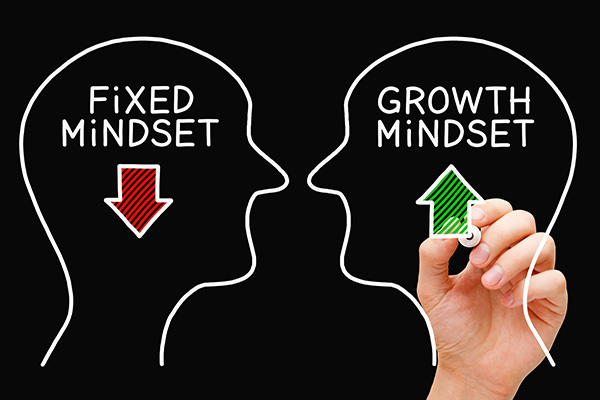
Dream Business: Every time you make a leap, it is a different mindset. You are making different decisions. You are making them faster. They are larger.
As I got more into coaching and started teaching other coaches, I said, “What you want to do is not sell them your annual program. Sell them something like a 90-day fast start.” That will be attractive for a couple of reasons. Number one, it is a lower threshold. It is only 90 days. I’m not making a year’s commitment. It is also going to be at a lesser price point. You just wow the you know what out of the whole 90 days and deliver so much value. They are going to be breathlessly saying, “What’s next?”
Not to be too crass, but the wallet will open up and say, “I don’t want to stop, do more.” This is the next step. That could either be two steps to fast start into a big program. There could be three steps to it. I’m not allowed to use some of their names. I have my mastermind, and people sometimes know who is in that I have some private clients. In one of the deals, some people know who they are, and they don’t want to say, “I’m getting coached.”
One of my private clients sells high-ticket coaching himself. When he came to me, he said, “I got a 60-day program, and I do pretty well. It is $7,500.” He can have a big smile on his face. I said, “That is good.” We started working together, and I’m like, “We got to start bumping that up.” He was telling me about what he does in that 60 days and, more importantly, what the value is or what the transformation is. I said, “Tell me everything you do for them.” His response was very much like a retail feature benefit. He was like, “They get this many calls. We do this. I help them with their cut.”
I said, “That is all stuff you do. If someone has a successful 60-day intensive program with you, can you tell me about one that worked out well?” He went, “I have a guy with a mortgage company. He makes $150,000 a year. In 60 days, I taught him so much about persuasion and the other thing. He is over $200,000. In 60 days, he is going to keep going.” I said, “Let me ask you a question. You took a guy and added $50,000. Potentially he is going to maybe be at $1.50, an increased personal take-home pay, and he paid you $7,500. Does that seem a good deal?” He goes, “No.”
What I’m saying is you don’t charge based on the number of calls or the hours. You charge based on the transformation somebody is going to have. He said, “What if we go to $15,000?” I said, “Let’s start there.” He doubled it. It didn’t slow him down. He made a couple of more sales at $15,000 for the same program. I said, “Let’s try something. Let’s make it a 90-day program. Whether you spread out the calls, add 2 more, or do 1 or 2 other things, you can put them in bullet form. Why don’t we try something like 23/5?” He sold it. He is now at 27/5 for the same program. He was selling for $7,500.
Here’s the exciting part. This client has been with me for several years now. He describes his big clients as whales, not in their personal size. He was like, “I got a guy. He got $1.5 million in revenue business.” He came to me and said, ‘I want to work with you for a year on these three things.’” He stated three big objectives. One of them being his own personal mindset. Even though he is doing great, I don’t care where you are. You got mindset hangups, Imposter syndrome, and money issues. He said, “I want to work on my executive team. I want to roll something out to the company. Give me a price for everything.”
[bctt tweet=”Don’t take the boat off the dock when you are too tired because that is when mistakes happen.” username=”John_Livesay”]
He goes, “Jim, how do I quote that? I think it is worth $50,000.” I said, “You are underselling yourself. First of all, do not quote an annual program. What is going to happen is if you quote them $50,000, it is a little more than I was thinking. What your natural thing is we will do a few calls.” You are starting to peel away all the good stuff and all those benefits of that beautiful car you wanted to try. The next thing is it is not the car you want so you are going to say no.
I said, “What you are going to do is pitch a 90-day fast start mindset program for him. Him being the leader first. When that happens, together, you guys will work with the executive team, and you will roll it out to the whole company. What I want you to do is price it at $7,500 a month.” It is $27,000 or $26,000 for the whole first 90-day program.
He said, “Why don’t I quote that?” I said, “No, quote $7,500 for the month for three months. As he likes that, you are going to say, ‘We are going to do stages 2 and 3.’ Even though it is a long time, I’m going to be more involved. We are going to keep the same $7,500 figure.” People get used to a monthly payment. It is usually the big number that freaks them out. He pitched it. He goes, “We are going to do you first. We got to get your mindset fixed. It is $7,500 a month. It will take us 90 days. We will do this and the other thing. That is the plan. Let’s get going.”
Ten months would be $75,000.
That’s $90,000. He closed this way. It was a ten-month program because I remember $75,000, but he thought $50,000 would be amazing. There are a few things about how to close high ticket items, slow down the sale, break it up into segments, and quote more than you want to quote like what is the monthly and not the total because the total will freak him out.
For people who don’t believe me about the total investment, let’s say you are going to buy a house for $300,000, but over 30 years, you are going to end up paying $680,000 with interest. The way you think about that, “I can have this $300,000 house and my house payment is only $2,200 a month. I can handle $2,200.” It is the monthly payment that people get fixated on. They don’t even think, “I’m paying twice as much for the house over 30 years.”

Dream Business: Life has taken over and they are busy. It is amazing how that simple thing of picking up the phone and talking to your customers can bring in more business without you having to sell.
It is the same thing as buying a car. I put solar on my home. It was like, “How much are those panels costing me?” Who is your ideal client, whether they are coaching with you or joining your mastermind, and is it the same person?
I have been doing it long enough. I know who that is. It is not people that are at the bottom at the beginning. A lot of my clients are somewhere around six figures to $200,000 a year. They have hit a plateau. My largest client was doing $32 million a year. I helped him learn how to sell from the stage. For the most part, the people in my mastermind are small business owners, entrepreneurs, and solopreneurs. Sometimes people got 2, 3, or 4 team members. I’m helping them get to that $250,000 to $500,000.
Every time you make a leap like that, it is a different mindset. You are making different decisions. You are making them faster. They are larger. There are decisions about investment and learning what ROI is and not the so-called cost of what it is. It is pretty much small business owners and entrepreneurs. I work with an awful lot of coaches and service providers.
As a sales keynote speaker, I tend to think of myself as a stock. When you are investing in a stock, you go, “I hope this is going to grow.” I have a sense of what the culture is, what problem they are solving, what the competition is, and what the team is like, even if you don’t know all the employees at Tesla or whatever stock you are buying.
If you think of yourself as a stock, and in my case as a sales keynote speaker, I was like, “I need to invest in getting my sizzle reel video that agents showed potential clients greatly.” That requires spending quite a bit of money on editing, shooting, and music. That might take me 2 or 3 talks to pay for. A lot of people struggle with investing in themselves like that. I can tell you from my own personal experience it is paid off. For me, the mindset is I know my work ethic and skills. I believe in myself as a stock that I’m investing in. What do you think of that mindset?
I learned many years ago. I was working for a chain of stores that started franchising. Franchising is incredibly expensive to get started. You have the registration and legal. Before you sell your first franchise, you are probably at $200,000. The owner of this company was bootstrapping it. When we started exhibiting it at International Franchise Association events, he had this beautiful booth made. He did everything first class. He knew that would pay off in the long run. I help people get books published. My private clients work with my designer, but somebody might say, “I can get that done on Fiverr.” They have a piece of clip art that has two hands shaking that have been used 52 million times. They got the green arrow going up the graph to show an increase. That makes you look like such a commodity.
[bctt tweet=”If you give people enough opportunity to get to know, like, and trust, that happens over time.” username=”John_Livesay”]
I applaud you because I know it is expensive putting those sizzle reels together, but yet somebody who doesn’t know you is going to make an assumption based on how they perceive that reel. I used to get into all kinds of arguments with one of my boys many years ago about wearing silly clothes to school. They were like, “What if you go for a job?” They need to understand who I am. They are not going to get past to know who you are until they see you are wearing these shorts that look like pajamas or something. I don’t know the exact thing.
Look at we do make assumptions. That is a lot of what social media is. We make assumptions based on what we see. If you have a great sizzle reel, they are going to make an assumption like, “This guy is out there speaking. He is good.” It is called marketing and positioning. If you try and cheap out, people will sense that. Fairly or unfairly, they are going to make certain decisions based on how they perceive whether you are good or not.
The analogy I use is if you think of speakers as all being diamonds, and you can go down to the diamond market, get a diamond for asking someone to marry you, or you can go to Tiffany’s and they give you the diamond that is more expensive because it comes in this beautiful blue box. The packaging does set you apart. This concept of mitigating the risk for the people booking you as a speaker. If you have that mindset, and that is what you do well with your clients from what I have heard from your stories, is you zoom out and say, “What problem are you solving here?” In the case of an event planner booking a speaker, it is, “If that speaker bombs, it is on me.”
What are you doing as a speaker to mitigate the risk of me hiring you? Showing me a video of you in front of hundreds, if not thousands, of people and testimonials, help mitigate that risk. If you don’t have that empathy and the ability to realize how they are making their decision, and more importantly, what their fears are and how you could solve that, you are making a video with no intention behind it.
As you say, “If that speaker bombs, it is on me.” You want to have a great relationship and understand what they are looking for. When I do my podcast now, and it is the tenth year, and you have been on the show a couple of times, I’m like, What would make this a great experience for you?” It is one of the questions I ask because I want to know, and you’ve done the same for me. Is there anything specific you want to talk about? It is good to know that.
A franchise consultant is like a real estate broker who makes a commission when the sales close. You are doing an awful lot of work upfront, hoping there is going to be a sale. We helped her publish a book. Of all the franchise consultants, most do not have a book. Her book has been out for less than 60 days. She has already resurrected three leads. Everybody that reaches out and they have a conversation, she is now shipping a signed book. People reach out. They were like, “Thanks for the book. I wanted to let you know I’m selling one of my other companies. In quarter 2 or 3, I’m going to be looking at this, and I will be sure to reach out.” She was off the chart excited.
[bctt tweet=”A franchise consultant is like a real estate broker who makes a commission when the sales close.” username=”John_Livesay”]
One of the things we do when we are trying to nurture these prospective client relationships is, how often do I reach out? What do I reach out to? Are you ready to go? This book is not only a positioning tool, but it is a reason for them to get back in touch with you. I told her, “Even if they never cracked the cover and read it, Kate is an author. She wrote the book on how to buy a franchise.”
One of my favorite things about being an author myself is when I realized that the word authority is the word author, even though you don’t hear it when you pronounce authority. It is subtle, “You are the authority on this topic.” You have to own that you are the authority on storytelling and sales, in my case, to even finish the book. Although you won’t let yourself finish it. There are all kinds of obstacles. I love that you are helping people with the mindset and stretching like, “Do I deserve to charge this much?” Being able to say that with confidence to someone is everything. If you don’t believe it, they are not going to believe it.
What is more important than if your prospective customers believe what you are saying is if you do. I realize that confidence comes from success. Success comes from being in activity, closing more sales, having them go well, and delivering a great experience. Everybody starts somewhere, but after a while, you got a track record. Keep thinking about reviewing that track record if you start feeling down. I used to have it in my home office picture and cards. People would send me things. When I’m having a bad day, I will look through there. I had even printed out emails because I didn’t want to lose them. I put them in the folder. I’m having an impact.
It eventually clicks on you, which sounds egotistical or chest-bumping, but I’m good at what I do. You need to believe that. Whether you are selling a product or a service, what your customers are buying is hope and certainty. They want to feel certain. They don’t want to think, “I think this might go well.” Based on your sizzle reel, books, and testimonials, whatever else you put out there, you want your customer to go, “This is going to be a great experience. I have a lot of hope that John is going to get me to where I need to be. I feel certain it is going to go well.” If you got hope and certainty, they would make the connection to move forward at some pace.
I compare it to being in a restaurant. Sometimes, if it is a fancy restaurant, they will bring you a sorbet to cleanse your pallet between courses. What we need to do as salespeople is cleanse our mind pallet. If you have a no, rejection, or you are not feeling like things are going well, I tell people to call up a client.
When I spoke at a luxury automotive sales dealership meeting, I said, “You know you get the rejections. Instead of staying in that mindset the next time somebody walks into the dealership or you get a phone call, you initiate a phone call to someone you sold a car to in the last 60 days. Check in and hear firsthand how happy they are driving their new Jaguar, Land Rover, or whatever it is you sold them. That puts you in a new mindset. It is great customer service. Sometimes you even get a referral from it, but you are not calling for that reason. You are calling to hear how happy they are with their decision. You can have that mindset the next time somebody comes in.”
[bctt tweet=”Social media is basically making assumptions based on what we see.” username=”John_Livesay”]
I firmly believe that if you make phone calls to your current or past customers without selling but to check in, “How is it going? What is working? What’s not working? Can I ask you if are we doing well? Where can we approve?” Whatever it is. It could be a 2, 5, or 10-minute call, but you are not there to sell. Invariably, I bet you 30%, 40%, and 50% of the calls, they’re like, “I’m glad you called because I have been meaning to call you.” Life has taken over and they are busy. It is amazing how that simple thing of picking up the phone and talking to your customers can bring in more business without you having to sell.
Our time has gone so fast. You are a great storyteller. I wanted to see if there is a quote or a book that you want to recommend, besides your own, for us, and we are going to talk about how people can get ahold of you.
I made the digital versions of all my books free. It’s my legacy-building program because I’m starting to get white on my face. Time is slipping. My books are free on Amazon as Kindle. If you are into Nook books, they are at Barnes & Noble. They are also in the iBookStore. They are free. If you want to connect and learn more about me, it is GetJimPalmer.com. The latest report I put out, which we talked about, is about how I work three days a week and how charging what you’re worth is the key to that. Work3DaysAWeek.com is where people can get ahold of that report and some good information in there.
Thanks for sharing your story, passion, and valuable takeaways on how to segment and price things in a way that gets people more money than they ever dreamed possible.
John, great to connect with you again. I know we have been on each other’s shows a few times now over the years. It is always a joy.
Important Links
- Jim Palmer
- Dream Business Mastermind and Coaching Program
- Dream Business Radio
- No Hassle Newsletters
- Success Advantage Publishing
- How To Sell From The Stage Like A Pro
- The Cashflow Conversation Code™
- Work3DaysAWeek.com
- Better Selling Through Storytelling Method Online Course
Wanna Host Your Own Podcast?
Click here to see how my friends at Podetize can help
Purchase John’s new book
John Livesay, The Pitch Whisperer
Share The Show
Did you enjoy the show? I’d love it if you subscribed today and left us a 5-star review!
- Click this link
- Click on the ‘Subscribe’ button below the artwork
- Go to the ‘Ratings and Reviews’ section
- Click on ‘Write a Review’
Love the show? Subscribe, rate, review, and share!
Join The Successful Pitch community today:
- JohnLivesay.com
- John Livesay Facebook
- John Livesay Twitter
- John Livesay LinkedIn
- John Livesay YouTube
Enthusiastic You! With Joshua Evans
Posted by John Livesay in podcast | 0 comments


We deserve a life of enthusiasm and passion. However, because the human condition is so fragile, it is easy for everyone to find discouragement and lose focus. In this episode, Joshua Evans, the #1 best-selling author of Enthusiastic You!, shares his thoughts on how you can provide meaning in what you do and succeed in your life. Bringing it to your organizational culture, he talks about how the team becomes passionate when your purpose is connected and identified. Joshua also dives into combating workplace traps and avoiding spreading toxicity, emphasizing that complacency leads to mediocrity, obscurity, and nothing. Tune in to this conversation to rediscover and reclaim your purpose!
—
Listen to the podcast here
Enthusiastic You! With Joshua Evans
Our guest is Joshua Evans who is also the author of Enthusiastic You. He talks about his model Is/Does/Means, how you can take an inanimate object and give it meaning, and how that allows you to find your purpose so you can rediscover and reclaim it in your career. Enjoy the episode.
—
Our guest is Joshua Evans. Joshua has quite a story to share with us. He has studied workplace behavior for over fifteen years. He’s a keynote speaker and a TEDx programmer. He’s the number one bestselling author of Enthusiastic You. He is an adventure seeker. He’s also the father of three. Welcome to the show, Joshua.
Thank you so much for having me, John. It is a pleasure to be here.
Let’s talk about how you got into what you’re doing. You can take us back to childhood and school. What was your first adventure or passion point that led you into being so enthusiastic?
I have always had a zeal for life, excitement, and palpable enthusiasm behind everything that I did. The way that I thought as a young child is how I continue to think as an adult. If you’re not willing to throw your entire self toward something, then why are you going to put in the effort at all? You need to do that. What’s funny is that enthusiasm was never a word that I used in my vernacular but it’s fascinating. I’ll give you how I got into what I’m doing now, and then we can even back up from there.
I was in Corporate America. I studied business and workplace behavior. I studied clients, conversations, and communications. I was in a technology company selling software and working with lots of dynamic teams. It was a very fascinating place for me to work. One day, I got into an argument with a guy that I work with. We had walked into a client’s office, and he came with me as a technical resource because I’m not a technical guy. We talked with a client and turned this small $100,000 deal through one conversation into something that was over $2 million for our company.
It was going to be a huge project. I was excited. You get happy ears as a salesperson. I’m thinking about the commission checks. I’m excited, “We’re about to solve all these problems. We’re going to make all this money. It’s going to be great.” My technical guy goes, “Why would you tell him we could do that?” I go, “We can’t do that. I didn’t lie.” He goes, “We can but it’s going to be so much work.” I was like, “That’s why we’re getting paid.” I was so frustrated with how despondent he was. That evening, I was home by myself because my wife was working late. This was before I had children.
I was having a scotch with my dog. I was like, “People should care about their work. They should be enthusiastic.” I started venting in dictation mode to my iPad. It grew to tens of thousands of words. By happen chance, I ran into a publisher. We started chatting. She goes, “I want to publish your book.” When she published it and it became a number-one bestseller, I said, “That’s it.” I quit my job. I put in my two weeks and said, “This is what I’m going to do full-time.” That’s how I jumped into the keynote-speaking world. It’s in my desire to bring passion back into the workplace and to get people to care about the things that they’re doing so that their lives can be much more fulfilling.
One of your topics that grabs me because I love soundbite and alliteration is Purpose or Perish. It’s so much in the news. Are people coming back to the office? Is it going to be hybrid forever? What is the future of work? How do we get top talent? You say that pay and benefits are no longer enough to keep people engaged. What is the missing link? How do companies figure out how to make people feel engaged?
Everybody starts with a deeper sense of purpose in their work. On the first day, when they walk into their jobs, they’re excited because nobody shows up on the first day like, “I can’t wait to be mediocre.” Over months and years within a role, we lose sight of why we cared in the first place. We get stuck in that day-to-day minutia. We’re staring at the KPIs, the unread emails, and the office politics. All those little things distract us from why we cared so much in the first place. We forget.
My goal with this idea behind Purpose or Perish is we have the decision. We can either choose to have a purpose in our work, or we’re going to perish, never having achieved that result. The interesting thing is if you can dig deep enough into anybody’s career or anybody’s job, as long as they’re not doing anything illicit, and if you can dig deep enough into what somebody is doing and follow the impact that their work has on somebody, you can show them that purpose was there the whole time. I love watching people rediscover it and reclaim it in the work that they’re doing. All of a sudden, this light bulb comes on, and they realize, “This whole time, I did have a purpose. I just didn’t realize it.”

Enthusiastic You!: How amazing would organizations be if we took those moments to tell people the amount of meaning their work has to us?
Rediscover and reclaim it. That reclaiming is where people feel empowered. You do workshops and retreats on this as well. Paint a picture for us of what that looks like in a workshop and a retreat.
When I work with companies that want to bring me in for one of their leadership retreats or a team retreat and workshop, my goal is to dive into their business. The more I can understand their business, the better I’m going to be at tailoring my messaging, tools, and methodologies that I share with them directly to the organization. I can give you a good example. I spoke to a medical company. They rent very high-end medical equipment to clinics, hospitals, and doctors that can’t afford to own that equipment. Because of this company’s efforts, people are now able to rent out these amazing lasers. They’re able to bring those to the underserved areas. Patients are now getting access to unbelievable technology they never would have had access to before.
We were talking with their team. The interesting thing is at a moment’s notice, they fly all over the country delivering these tools but they never have time with the patient. Because of HIPAA laws and all the sorts of governing factors within the medical industry, they don’t get to connect with a patient. They don’t get to see the impact of the work that they’re doing. They get to interact with the doctors. They will show up after the patient has been sedated, but they don’t get to talk with the patient afterward to see how they’re doing and how their life has changed because of the work that they did.
They have this disconnect. Not all of them but some of these people have started developing this disconnect between the work that they’re doing and what it means to the end user. A lot of us do that because it gets so comfortable to sit in what our role is and what somebody in our role does. It’s easy. Our role is our title. It sits in our LinkedIn profile. It’s on your email signature. It’s on your business cards if you still hand out physical business cards, but it’s not compelling. It doesn’t make me on Monday go, “I’m so excited. I have this title.” Nobody cares.
The next thing we’re good at is talking about what somebody in our role does. It’s comfortable. It’s all the tasks, functions, and responsibilities we have in our role like responding to emails, talking with clients, and the things that I have to do on my to-do list but then again, looking at a to-do list is also not compelling. The problem is most organizations stop there. Most employees stop there as well. Whether we’re talking about what our organization is and does or we’re talking about what our role is or does. We forget to go that extra step and talk about what it means. Here’s where the rubber meets the road. I can share a fun story about another organization that I work with.
I love a story.
I was brought in for a leadership retreat for one of the top five law firms in the United States. It was a leadership team. In this small conference room, we were going through this methodology that I have of getting to what it means. Going past Is and Does and moving to Means. While we’re walking through this, there’s one guy that is in this audience. He’s the manager of IT. His name is Joe. To understand, Joe in IT is at the table with the partners or the executive team of this firm.
You can tell that he feels a bit out of place. We’re going around the room and working through Is, Does, and Means. I get to Joe and say, “What is your role?” He goes, “I’m the IT manager.” “What does somebody in your role do?” He’s like, “What somebody in my role does is we manage the firewalls, make sure emails are working, and make sure people aren’t going on the wrong sites. That’s all I do.” I go, “What does the work that you’re doing mean to everybody else at this table?”
All of a sudden, Joe looked a bit crestfallen. He looked down at the conference table. He goes, “I don’t know. It just means the computers are working.” My heart broke for him. He can’t see the deeper meaning. He doesn’t see purpose in his work. He sees tasks to be completed and personalities to be managed. That’s such an abysmal place but the problem is most people live there.
I was about to say something. I would love to say something because I’m a speaker. I was about to jump in when all of a sudden, one of the senior partners at this firm stood up and said, “Joe, are you telling me what your role means to us? You don’t know that. You have no idea what your role means to us.” He went on almost a tirade but it was positive. He goes, “Two weeks ago, Joe, when our servers went down, you showed up on a Saturday to get things fixed. I can’t think of a single function in this office that isn’t dependent upon everything that you’re doing.”
[bctt tweet=”A company culture should be unique.” username=”John_Livesay”]
“Without the work that you’ve done and that you make sure continues to work, we would never talk to our clients. We wouldn’t be able to talk internally. We would have nothing. We would not have a firm without the amazing work that you’ve been doing. If I haven’t told you this before, I’m sorry. The work you’re doing means so much to me and every other partner at this table.”
What a great story.
Here’s the crazy part. It hung in the air. I’m observing at this point and taking notes so I can retell this story because it’s so emotional. Joe looked up. The smile on his face told me that he had rediscovered purpose in his work, but the tears in his eyes told me that he had never been told that before. How amazing would organizations be if we took those moments to tell people the amount of meaning that their work has to us?
It’s so rare that you see somebody smiling and also tears in their eyes at the same time. I love that you were able to notice both of those. It’s almost like the sun is up and the moon is up. That doesn’t happen at the same time. Every once in a while, you can see those phenomena but you put meaning to them. The smile told me he loved being recognized, and the tears told me no one had ever told him that before. It was very moving for him to rediscover.
It was such an emotional experience for me as an observer because the human condition is so fragile. We’re all humans that are based on these emotional situations. We don’t always allow ourselves to be that vulnerable or authentic but there in that room, something happened. Something deep and existential connected these people together. I guarantee you none of them viewed their work the same way after it.
I’m sure because everyone starts looking through that lens. You also give a keynote on the topic of building strong cultures and passionate teams. What I love about your work is that it all fits together like a jigsaw puzzle. If you have a purpose, and when that gets connected and identified, then the team becomes passionate again. You have a culture that is palpable. Would that be fair?
I’m of the opinion that not everybody should like your company culture. If you build a good company culture, it should be unique. There should be people like, “I don’t like that at all.” It should be like jalapeno basil strawberry ice cream. Some people are going to be like, “That’s disgusting. I want no part of it.” There are a few people that are like, “That sounds delicious. I want some of that.” Those people are going to be living purposefully within their work. They will drink the Kool-Aid. I’m a huge fan of if you make a good Kool-Aid, get your employees to drink it. I’m a huge fan of that but it needs to be unique. It can’t be a cookie-cutter off-the-shelf culture. We need to do it intentionally.
Do you have a story of a culture of a company you spoke at that you thought, “They have nailed this. They know who they are and who they’re not.”
It happens with a lot of organizations because a lot of organizations will want to hire somebody like yourself or somebody like me to come in. They’re already thinking about those things. I had a great client in Northern Michigan. They’re such a cool company. They have a slide in the middle of the break room. It’s a giant two-and-a-half-story slide. It’s metal. It’s so fast. They warned you before you get on it. I got to ride it.
You got to be this tall to ride the ride.

Enthusiastic You!: Complacency leads to mediocrity. Mediocrity leads to obscurity. Obscurity leads to nothing.
They have stand-up paddle boards because people take breaks to go to the lake right next to their office. All those things are great but they know that those are just perks or bribes to keep employees happy at the moment. They needed to do something deeper. Having become good friends with the HR leader in that organization, when COVID first hit, I called him, “What’s going on? You’re the CHRO. How are you handling this?” The laws in Michigan got very strict quickly.
Anybody without essential jobs had to go home. They’re a manufacturing company. You can’t manufacture stuff at home. They still have to be on the manufacturing floor but all the administrative pieces, sales pieces, and management had to go home. What do you do when an organization has no work-from-home policies in place? They have never allowed anybody to do that ever.
We have people with desktop computers wheeling them out to their cars on their office chairs. How can you get your team to stay cohesive? How do you build that collaboration when they are so remote? They were telling me about the things that they did. It’s about developing this collaborative sense that we’re all in this together. We’re all in the same boat, the same team, or whatever you want to call it.
What they ended up doing is on their Monday morning calls, they would have a few of their employees do a home office edition of MTV Cribs, “Show us your home office.” I got to see some of their videos. It was amazing because they had people like, “I’m in my kid’s playroom. I’m sitting in Play-Doh. There are a bunch of puzzles over there. I stepped on a Lego.” They would show somebody else. Their wife was unhappy with them working from home. They were stuck in their shed next to a lawnmower.
My favorite one was one of them had no room for an office in his house. He set up shop in his laundry room. Since he missed the stand-up desk that he had at the office, he was using his ironing board as his stand-up desk. It’s those little things that humanize us. They reconnect us emotionally to not just our goals within the organization but to the people that we work with and the people that depend on us.
You also have a third topic. It talks about combating workplace traps and how to avoid spreading toxicity. What is a workplace trap?
This is a big conversation. While that’s not a topic I’ve been given recently and I’ve moved on, that is something important to remember. We get stuck doing stuff with an organization using our preconceptions, knowledge, experiences, and how we have seen other people do it. Organizations have this problem too. Somebody comes into a role with an organization and starts reforming it how they have seen it done before. The problem is that makes people complacent. Complacency leads to mediocrity. Mediocrity leads to obscurity. Obscurity leads to nothing.
Now that you’ve written the book Enthusiastic You, you’re not only helping people rediscover their passion but you’re giving them tools that they can use. Give us a little sneak peek of what’s inside the book of a tool that you think that people could say, “I need to rediscover my passion before I can reclaim it. I don’t even know where to start.” What would be one thing inside Enthusiastic You that tells them they could start doing?
One of the simplest tools is the IDM or Is/Does/Means. I have people do an interesting exercise where they take an inanimate object and write down what that object is. I had them write down what that object does, and then I challenged them to talk about what that object means and to get as emotional as they possibly can. I was doing an event for American Express. I had a group of their management team. We walked through this exercise. I pitted these different teams against each other in sharing the most emotional way to describe their inanimate object.
The best one I got was sunglasses. I go, “What is it?” They go, “It is a pair of sunglasses. It has darkened lenses and frames. That’s what it is. It’s not compelling.” “What does it do?” “A pair of sunglasses block the sun. It can make me look cool. It’s shade. It’s a fashion statement. It’s still not compelling. That’s what a pair of sunglasses does.” “Tell me what a pair of sunglasses means.”
[bctt tweet=”Find the meaning in what you do.” username=”John_Livesay”]
This small group of leaders whispered to each other back and forth, stood back, and confidently went, “I’m going to be honest. What a pair of sunglasses means is that my eyes are protected to see the things in my life worth seeing.” He went deeper than that. He goes. “I can see the smile on my wife’s face. I can watch my daughter walk down the aisle. That’s what a pair of sunglasses means to me.”
Having never watched grown men cry in a group setting like that, it was pretty fun and emotional. That small or simple tool of using an inanimate object but somehow getting to a deeper piece of meaning or something very deep to it is so invaluable. If we can do that for an inanimate object like a pair of sunglasses, why can’t we do that with our role? Why can’t we do that with our company? We fail to follow the impact that our work has and the people that depend on the work that we accomplish. We had stuck thinking about the efforts, not the impact of those efforts.
If people are thinking, “This is great for my professional life to rediscover and reclaim my passion,” is there any of this that gets transferred to their personal life, whether it’s discovering their role as a parent or a loving spouse? I’m guessing there is. You might have an example of that.
Everybody starts from a place where they are engaged in any relationship, whether it’s a professional relationship or a personal relationship. It’s like a glass door. In the beginning, it’s so clear but over time, smudges begin to appear. It obscures and distorts our view of the role that we find ourselves in. We get stuck thinking about all the daily challenges and the minutia of our life. We forget. It happens in all of our roles, whether you’re the VP of X, Y, Z, or the Chief Blankety Blank Officer. It happens in our personal lives as well in the role of a parent, friend, or partner. We forget what doing a great job means to those that depend on us. We forget why we cared so much.
It’s easy for us to get stuck in the day-to-day minutia of who didn’t do the dishes, who forgot to pay that bill, or whatever it might be. We get stuck in that minutia. We forget the commitment that we had and the purpose that is underlying everything that we’re doing. If we can bring that back, all the small tasks, actions, and decisions we have to make are less significant because we have this underlying foundation of purpose within the work and lives that we live.
What I hear you saying is when we can figure out how to rediscover and reclaim our purpose at work, it can help us be better people, friends, spouses, and parents, and that it’s not this separate, “I’m one person at work. I’m another person at home.” It all gets connected to one big purpose. I love it. Before I let you go, do you have a favorite quote or book besides your own that you want to leave us with?
My favorite quote is by Virgil. It’s, “Audentes fortuna juvat.” It means fortune favors the bold.
What does that mean to you?
I’ve always been a very bold person. I’ve always been the person that people have told, “You’re being too loud. You need to settle down. You’re too enthusiastic,” but that quote to me means that I’m very content living my fullest being bold. It means to me that I shouldn’t apologize for living out loud like that because others are too afraid to do it.
Let’s go full circle to your story of origin. Did your parents encourage you to be bold?
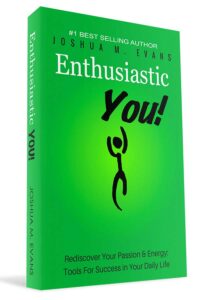
Enthusiastic You
Both my parents are very bold people. They’re loud people. They encouraged me along the way.
Are any of your three children bold?
All three of them.
If someone wants to buy your book or book you as a speaker, where should we go? Where should we send them?
Come on over to my website, JoshuaMEvans.com. You can check out my Reels there, buy my book, and book me to speak.
I love it. Thanks so much for sharing your enthusiastic and bold passion for living. You’ve got us all re-energized.
Thank you, John.
Important Links
- Enthusiastic You
- Purpose or Perish
- JoshuaMEvans.com
- Better Selling Through Storytelling Method Online Course
Wanna Host Your Own Podcast?
Click here to see how my friends at Podetize can help
Purchase John’s new book
John Livesay, The Pitch Whisperer
Share The Show
Did you enjoy the show? I’d love it if you subscribed today and left us a 5-star review!
- Click this link
- Click on the ‘Subscribe’ button below the artwork
- Go to the ‘Ratings and Reviews’ section
- Click on ‘Write a Review’
Love the show? Subscribe, rate, review, and share!
Join The Successful Pitch community today:
- JohnLivesay.com
- John Livesay Facebook
- John Livesay Twitter
- John Livesay LinkedIn
- John Livesay YouTube
Signature Leadership With Jamie Mason Cohen
Posted by John Livesay in podcast | 0 comments


If you have a challenge, how do you deal with it? How creative do you get to become productive? In this episode, we will dive into how our guest applies the skills and lessons he learned being in Saturday Night Live. Jamie Mason Cohen, the Host of The Signature Leadership Show, shares how you can become productive through smart work, not hard work. He explains his focus on “What’s your 11:30” is the problem you want to focus on and turn it into a possibility. Being still during chaos is key in dealing with challenges to help focus on finding a creative solution. Learn more about Jamie Mason Cohen’s signature leadership.
—
Listen to the podcast here
Signature Leadership With Jamie Mason Cohen
Our guest is Jamie Mason Cohen who worked on Saturday Night Live. Find out what he means when he says, “What is your 11:30?” He said that when you’re laughing, you are learning and you can also hear a story of how to be still during the chaos. Enjoy the episode.
—
Our guest is Jamie Mason Cohen. He is a leadership development and resilience expert. He integrates his experiences working at Saturday Night Live as a Dale Carnegie Business Training Award Recipient and as a Certified Leadership Coach with The Leadership Circle to help organizations thrive in change. He’s a keynote speaker and facilitator who’s been hired to teach resilience, wellness, leadership and communication at organizations like SunLife, Meeting Planners International, Broadway Video Entertainment, the Canadian Society of Association Executives and many others.
He uses a toolkit of unconventional virtual approaches to cultivating resilience through unique performance assessment. He has something impressive and a little bit frightening, according to Forbes and the power of a superhero in his TEDx where each person learns how their strengths may serve that organization in 60 seconds. His new podcast is called The Signature Leadership Show. He’s a frequent commentator on CNN and The Morning Show. Jamie, welcome to the show.
John, I’m thrilled to be here with you.
I have been a big admirer of your work and follow you on all these social media platforms. I see how audiences light up. You have this amazing skill of not only all the lessons you learned while being at Saturday Night Live. We’re going to do a deep dive into that but you also have this skill as an artist. I’ve seen some of your paintings and you also can analyze people’s signatures.
You did mine, which was mind-boggling how fast the insights come across depending on the angle of how I cross a T. I want to ask you, before we get into all these incredible things that you do and have done, your little story of origin. You’re Canadian so take us back to school. Where did you first discover your love of creativity? I would think that’s the overriding umbrella over all of your skills.
I trace it back to my mother. One of the things you mentioned was my love of helping people discover their authentic selves through their handwriting. I remember my mother who was an educator. One day I was in drama class. I was standing on stage when I was about twelve years old in Toronto where I’m from. I froze because I stuttered whenever I got up in front of people.
I came home to my mother and I was devastated. I told her what happened and she said to me, “Let me see your handwriting in your daily notes from school,” when we were handwriting regularly. I showed it to her and she saw what you said. She saw the T-bar. The T-bar in handwriting tends to represent your goals amongst other things. She said, “You also have fluency of thought in the way you write.” It’s almost a figure eight for those who know anything about hockey, our Canadian pastime.
You had it in yours too, John. It planted a seed that I could change and grow and that I could in a sense build my growth mindset, which is a fundamental component of all creativity. I went on this journey from twelve years old onward to exploring how my brain works but also about how my creativity and my ability to make these connections in the world between disparate ideas could come to fruition. That’s a short version of how that one moment when my mother turned a crisis or a problem that I was facing into an opportunity.
Did she know how to analyze handwriting? Is that why she asked for yours and then she taught you? From that insight, were you able to overcome the stuttering because you realized the stuttering was not a physical ailment but more of a fear thing?
The stuttering was something that I ended up getting some help and support from experts in that field. It also drew a new level of self-awareness in that I could overcome challenges in my life. Part of it was my mother believed in me before I believed in myself. Something like stuttering was something that I thought was forever at that moment. Is this going to be my future in terms of how I communicate? Many years later, I became a professional speaker and what my mother said about me, “One day, you’re going to write and speak in front of people,” ended up coming true. It was a prophecy that my mother planted in me at that age.
There are so many takeaways here starting with you’re a dad yourself. Whether you’re a speaker, a teacher or someone that you’re working in a situation with other people, the influence we have to see the greatness in someone else at specific times and plant that seed or believe in somebody when they maybe have forgotten the truth of who they are is such a gift.
To be a parent that can do that to a child, I don’t think there’s a greater impact or legacy. As a speaker, there’s no greater impact that you do. Before we jump into your incredible keynotes, I want to hear about this and the audience does too. We teased it. How in the world did you find yourself involved with Saturday Night Live? What was that all about?
I called Lorne Michael’s office 25 times before his assistant said, “What would it take for you to stop calling?” I didn’t know better at that age. I just graduated from school. I said, “Thank you for asking. Can I send him a letter? When it arrives, can you put it on the pile of letters he probably gets every day?” She said, “Fine, go ahead.” I did and heard nothing.
I was working part-time on films in Toronto. I was a clerk at a school and I was living in my parents’ basement after graduating from Western, which is in Ontario where I’m from. I get a call and it sounds like Dr. Evil’s voice which is Mike Myers and Lorne Michaels. I hear, “Hi. Is James Cohen in there, please?” I thought it was one of my buddies, John, because I told all my friends, “I’m going to work in New York for Lorne Michaels in Saturday Night Live.”
Everyone said, “Stop talking crap. Come on.” It was him. I ended up asking him in a few sentences. I know you’re the master of the pitch. This was before I knew how to pitch. I pitched him and something clicked. I ended up going and I was backstage at Saturday Night Live waiting for my few minutes with Lorne Michaels.
I hear a voice coming behind me and it was someone I had heard before growing up but I didn’t want to turn around because I was so self-conscious and nervous. He’s high-fiving people, “How are you doing? How’s everyone doing?” I said to myself, with the introvert in me, “Please don’t sit beside me.” He sat down right beside me and it was no other than the late great Chris Farley a few months before he would pass.
He said, “Who are you?” I said, “I’m no one. I’m here to see Mr. Michaels. I got an interview with him.” For the next twenty minutes, Chris Farley ended up listening to me, actively listening, engaged, leaning in with his body language, completely mesmerized by the little stories I was telling him. It lowered my anxiety.
Lorne Michaels, the king, walks in. Everyone addresses him. He walks in with his Armani and tailored suit. I end up going into the interview with him. We talked about books where I’m from in Toronto because he’s from Toronto. At the end of the brief time together, he said, “Why don’t you come work for me?” That was my beginning at working for Lorne Michaels on Saturday Night Live.
You’ve written a book called Live from Your Class. It’s so clever as everything you’ve learned about teaching from working there. Did you start as his assistant or an intern? Where’s the humble beginning here?
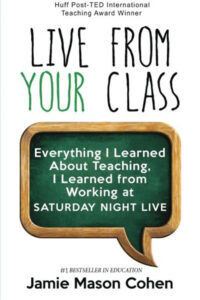
Live from Your Class: Everything I learned About Teaching, I Learned from Working at Saturday Night Live
I started as a little more than an intern. That is a broad company. That company produces TV shows, live shows and SBs. It goes on and on. I worked directly for Lorne Michaels in his orbit, Broadway Video Entertainment. This is his production wing. I worked for the show. I was young and I was more of a fly on the wall. I wasn’t an important player in that ecosystem but it allowed me as a young, ambitious and driven person to jump to different roles.
I learned things like how to pitch ideas because I was around people like Jim Sharp who ended up being one of the people who ran Comedy Central. I learned from several executives who pitched the TV, the film and as well as the show itself. I came out of there after a few years of having this behind-the-scenes but also this corporate understanding of how storytelling works and also where I might fit in the future.
How long were you there?
Four years.
There’s a great quote you have from Lorne Michaels that he would say that the show was not ready because it was finished. The show was ready because it was 11:30 on Saturday night and your whole focus is, “What’s your 11:30?” Can you explain to us how that relates to the audiences you speak to?
“What’s your 11:30,” is symbolic but in the context of Saturday Night Live, which is a metaphor that I use regularly in my talks, your 11:30 is that problem that you want to turn into a possibility or an opportunity. By the end of that week in Saturday Night Live, from Monday to Saturday, they have to have a show. There are people’s jobs on the line. Countless challenges come up. There are ratings they have to make sure they hit. Somehow this show has existed my entire life since 1975. This system works. Your 11:30 is, “How are you going to co-create a solution when you have a deadline in your timeframe that you need to make that happen?”
I’m sure there’s a story of, “We’re never going to make it,” or a celebrity going on after rehearsal. I’ve heard some stories. Whitney Houston was supposed to be in a skit and they didn’t think she was going to show and things like that. Do you have a story of the drama of last-minute people making a deadline or what you had to do when somebody didn’t show up?
I’ll pivot a little within that because what came to mind was someone who handled themselves so admirably and I learned so much from and how they dealt with that high-pressure situation when they had several challenges. That was Jackie Chan. I don’t know if he is the most famous or well-known movie star in the world.
Jackie Chan came on that show and I remember being backstage. That day, I brought my mom who came in from Toronto. She didn’t know who Jackie Chan was but when I pointed out who it was, she went, “He’s such a nice man. I can see he’s lighting up the room.” What Jackie Chan did so well was I watched him in the transitions between the commercial break and then coming out into the costume area where he had to change.
He never seemed to get perturbed or overly serious, which I do sometimes if I get stressed. My brow wrinkles and I look different. His energy with everyone was very balanced considering the situation. Jackie Chan also spoke English as a 2nd or 3rd language. I thought, “He’s going on live American TV in front of millions of people. There are no do-overs and yet, he’s running around backstage with a smile on his face, doesn’t look stressed even though 9 out of 10 even stars are stressed by that experience. He’s got this way of being still within the creative chaos.”
[bctt tweet=”Be still during the chaos.” via=”no”]
That was something where you asked almost the opposite. That was someone who walked into the fire and thrived. As a speaker, what can I take from that? That’s what you and I do. We spend a considerable part of our time standing in front of people, strangers and adults who might be judgmental based on where they came from. We have to somehow make them see something that can help them transform themselves. At that moment, Jackie Chan helped me see myself differently. If he can do that, maybe I can find that within me somewhere.
Isn’t that interesting that not even interacting but observing someone else staying calm and not panicking gave you hope that could happen for you?
It wasn’t his acrobatic brilliant stunts. The superpower he showed me at that moment was being quiet, staying calm, centered and present under pressure.
One of the things that intrigue me about your outcomes after people hear you speak is the difference between focusing on outcomes versus outputs. Can you give us a definition of what those two words mean to you and how that impacts productivity?
I heard this a lot before I started focusing on it. Companies would say, “We have a certain part of our workforce who works very hard and they want acknowledgment of how hard they work, not quite getting the outcomes that we need. How do we deal with that?” I look back on one of the themes in our conversation, Saturday Night Live or live TV as a metaphor for reaching outcomes on a deadline. You can’t hide. At the end of the week, there has to be that tangible show. The concrete sketch has to be turned into something real.
Nobody cares how many jokes were written if it’s not funny.
It’s how you show up. The way that I could simply define them and differentiate them is this. An output is a busy work. An output is an email. That’s important but is that getting you to whatever your ultimate outcome is to help your customers? Is that getting you toward the solution? It could be an email. It could be spending all day on ChatGPT, which I’ve loved doing. Just because I’m on ChatGPT, asking it to list five reasons for something, I’m impressed but it’s not necessarily helping me deliver my speech. It’s often busy work. It could be presentations.
Often, in companies, I found people think that a meeting is an outcome but a meeting virtually or in person, that’s an output unless it has a takeaway or something that’s going to directly move toward that solution. The outcome is the opposite of that. The outcome is solving a problem. The outcome is products. It is a service that helps someone solve their challenge or problem. You know if it’s an outcome because if you think of yourself or I think of myself, what value has the work led to that I am better off and my problem is solved? I have a solution that goes beyond the features.
It’s an actual solution that I’ve helped that person deliver. In some way or another, they are more evolved and less stressed. Whatever your promise is, that has led to that. That’s not to say we shouldn’t acknowledge the output. We need to acknowledge outputs in ourselves and others but we can’t stop there and say that’s enough. Smart work is ultimately more important than hard work.
I haven’t quite heard that before. I’ve heard, “Work smart, not hard,” but that smart work is more important than hard work is a great soundbite. There’s also a takeaway you have here about how to be creative on a deadline. Many people feel so stressed out when they’re given a deadline. Coming from the world of advertising, I was in advertising sales because I knew I was not the person that someone could come up to and say, “Give me twenty headlines by 5:00.” I would be deer in headlights.
I can come up with creative ideas when I’m not under deadlines typically or in the shower and middle of the night. A lot of people can relate to the challenge that my brain shuts down when I’m given a deadline to be creative. You saw that week after week for four years. Can you give us some a tip on what we can do if that’s our challenge?
Let’s go back to that Lorne Michaels quote and unpack that a little bit. Lorne Michaels said the show was not ready because it was finished. The show was ready because it was 11:30 on Saturday Night. What did he mean by that? What he meant by that is people will rise to the timeframe that you give them a task. If you and I said we have to produce this in the next 48 hours, we might not like it. We might kick and scream. We might resist it. Ultimately, if the stakes were high enough and it was urgent enough, we’ll finish in 48 hours.
Some of your readers might not like to read this but this is what the data shows us. There’s real data and organizational psychology that if you shrink your deadlines in half, your team will be more effective. You can take that as you want. People might disagree with that and that might not be popular to say. This is the outcome-based conversation that I like sometimes. If you are struggling with finishing something, give yourself a deadline where it’s cut in half.
[bctt tweet=”Shrink your deadlines by 50% and become more productive.” via=”no”]
Start anywhere. Start at the end if you have to. If you’re stuck at the beginning, find an accountability partner, which is the oldest thing in the book. As a matter of fact, I had someone on my podcast who is a three-time bestselling author and she’s the number one person in her field. She is ranked in several different studies I’ve seen. Yet she said that she is stuck and procrastinating on a passion project, something she wants to do. I told her on the podcast, “I will be your accountability partner. I am going to call you.” I’m going to remind her gently that it’s due. By the end of the day, she needs to take a step.

Signature Leadership: Find an accountability partner.
The other thing is to cut your deadlines in half because we rise to the timeframe. Find an accountability partner. This is not new and it sometimes almost becomes cliché because we hear it so often but what is your purpose? Why is it that you want to do this in the first place? If it’s not a priority, then the question I’d ask you is, “Is there a better project or goal to pursue now?”
I have two real-life examples of these deadline situations, having been in sales for most of my career and you schedule half an hour, maybe 45 minutes if you’re lucky to present. When I was speaking to a sales team in Canada, they said we’re given ten minutes. “The doctor will see you in ten minutes. You have ten minutes in between patients.” A lot of them are wasting those ten minutes by talking about facts and figures the doctor could look up for themselves.
It was my job to teach them how to tell a story or have something of value to intrigue them to want to keep talking. The same thing is true for a keynote speaker. I’m guessing this has happened to you because it seems to have happened to not only me but many of my friends who are in this keynote-speaking world. You’re booked for an hour.
Usually, if I’m the opening speaker, that usually works. Oftentimes, we’re the last speaker of the day. They’re running late and there’s a cocktail party that people want to get to, planes to catch or who knows what. They come up to you ten minutes before you go on stage and go, “Can you cut that down to 45 minutes?” There’s no time to edit the slides.
You talk about deadlines and creativity, first of all, your attitude and then your ability to not go through. Most people are like, “If I don’t have the time to rearrange my slides and cut slides, how in the world would I do that?” Anticipating those kinds of requests is the first step. I would love to hear your thoughts on this.
The question is what happens if this has happened to me as well? Even within that timeframe, you are asked to present. It could be as a professional speaker like we are or in a business meeting and your time is cut drastically at the last minute. What you said at the beginning is crucial. Your mindset going into it is, “I’m okay. I’m going to be okay.”
We’re coming full circle to Jackie Chan. I don’t know what to expect in terms of how they’re going to react to me. All I know is I can go out and deliver this presentation, talk or workshop because I prepared for it. I am ready because of what happened outside of myself that’s not in my control. The audience doesn’t know the difference. They’re not going to be upset.
They have somewhere to go after this. They probably can’t wait to go to lunch and it’s not personal. I am going to fit within the timeframe because my audience is also the event organizer and I want to build a relationship with them. You have two audiences. One is our event organizer. Like if you’re pitching, one is the executive and one is the customer and then there are the actual people in the audience.
Number one, if I make their life easy and I don’t pout and go or say, “Come on. I prepared for the last two months for this,” if I put all that aside and I have the Jackie Chan attitude, which is I’m going to smile, I’m going to go with it, I then will shift to, as a professional and say, “The number one goal here is to stay within my timeframe.” It depends on my structure.
I’ll give you one example. When I give my talk, it’s called Signature Leadership: Transform The Way You Lead. I look at the seven traits of renowned cultural icons and look at their handwriting. Get the audience to look at their handwriting. I then give strategies they can build into their work life to build more of these creative competencies or remove some of these barriers.
I won’t go through all seven. I will go through 4, not 7. I will make sure that my opening is not rushed. My opening is powerful. Like you’re the expert in, I’ll tell a story. At the end sometimes, I bring someone up on stage and I coach them or I do what I did with you. I’ll look at their handwriting and it will be the beginning or prompt for a short conversation about them.
If I have that opening and I have that end, do you think the audience is going to be asking, “Where are the other three traits? You only talked about four traits.” They don’t care. Yet I’m not rushed at the beginning. The beginning and the end are the most important parts of a talk. In the beginning, it’s like silly putty. I can move it or shake it and then we’re good.
That’s so helpful. Also in your book, Live from Your Class, you talk about the importance of laughter increases learning. Does that also apply outside of the classroom? Does it apply to corporate situations and corporate cultures? My question is, was there a lot of laughter in the process of creating Saturday Night Live or was everyone so stressed out? Did you see people who were nailing it, having fun during the week?
The theme of that book is when you’re laughing, you’re learning, which was by a public speaking coach and comedian in England named Jack Milner. When you’re laughing, you’re learning doesn’t mean you’re laughing all the time but there have been studies that show when you’re in a playful mood, you tend to be more creative, collaborative, easier to be around and a better leader.
[bctt tweet=”When you are laughing, you are learning.” via=”no”]
Laughing falls under the umbrella of play and joy. How do you feel when you’re laughing? You feel joyful and inspired. I don’t know about you. Even when I’m a participant on a Zoom call or Microsoft Teams or I’m speaking with groups of people, I’m not blaming them, I’m not judge judging, they’re looking down, they look sad and they’re not smiling. They are carrying a load of crap from the last meeting into this meeting. There’s heaviness.
People welcome appropriate humor, laughing and playing into situations. It’s surprising because it’s rare. I’m always looking for ways to help people within learning environments. I won this award, the TED Education, the TED Talk and International Award for Innovation. It was innovation around creating a curriculum for different levels of learning from kids up to adult education.
What I learned by applying what I had taken over twelve years of this study and application of building learning environments was if you can engage people on various levels on an emotional level, as you talk about, storytelling is part of it, on an analytical and appreciative level, you want to engage all aspects. Their brain and neural pathways are firing simultaneously. They will not only learn but they’ll have this emotional experience. The learning experience becomes an emotional unforgettable feeling that they take with them and they are more likely to apply it if they’re in that state.

Signature Leadership: If you can engage people on various levels, their brain and neural pathways are firing simultaneously. They will not only learn, but they’ll have this emotional experience.
Let’s go back full circle to the letter you wrote as a young man. Do you think there was some emotional state that you created when Lorne read that letter that made him decide to reach out, pick up the phone and call you or a lesson for someone who is trying to break through, whether it’s a prospect in sales or an event planner to get a relationship going for a speaking career?
We always are trying to grow our reach and network. When you look back at what you wrote to him, was it so heartfelt and authentic because you were that transparent and that he responded to it? Is there anything that you can see that you wrote that said, “I didn’t know I was doing it at the time but here’s what made him pick up the phone?”
Number one, it was short. I have found consistently that if you are at any age or level, if you’re attempting to reach out to people and cold calling especially but even if you have a distant thing, you’ve got to keep it short. Whenever I’ve gone against my instincts on that, I’ve been wrong. I have to explain my whole reason. Keep it short.
The next thing I did was I made sure that, without going over the top, there was a brief compliment specifically as to why I was reaching out. Not just why I’m reaching out but something about that person, even Lorne Michaels at his level, that inspired me. One thing I learned by being around some celebrities both then and in the years afterward was they do get bombarded with people who give them an almost superficial level of fandom.
There’s nothing wrong with that but, “I love you. I look up to you.” That doesn’t resonate as much as, “You did something years ago.” For him, I have to go back. I still have the letter in my journals that I’ve kept all these years. I talked about seeing him in the early days before he was on Saturday Night Live on a TV show on the CBC.
I saw reruns of that and I thought, “If Lorne Michaels started from where I grew up, maybe that’s something that I could aspire to on some level.” That’s not the usual introduction. It was authentic in how it was done and it was specific. Also, it’s getting to the point even in the form of a question to tell them what you want and if there’s a way that you can make it so that even if it’s 1%, it’s adding something of value to their life.
I’m improvising this because I didn’t know you were going to ask this question. It could be something like, “I noticed on your websites that you were looking to grow this area. You’re looking to hire someone who understands AI. I happen to be a graduate of Computer Science with a minor in AI. I have an idea that’s specific to solving that problem.” Most people don’t do that. Always end, if you can, with a quick question that’s confident. It’s not too aggressive but in some ways, you’re urging them a certain sense of urgency to want to get back to you. That’s hard but it’s doable.
Give them a compliment. Tell them why you’re reaching out to them in the form of, “I think I can help you with something,” not just, “I want coffee.” You and I, if I’m in LA or you’re in Toronto, if you’re around, I would expect you to say, “Do you want to have coffee,” because we have a relationship. If you don’t have a relationship with someone more successful than you, this is what a lot of people get wrong. I did the same thing.
Even successful people think, “I’m going to pick their brains.” Picking someone’s brain is coaching. It’s not fair to them to put them in a position where they have to ignore you, ghost you or say, “I don’t do that.” Most of them won’t say no. They just won’t respond. You want to flip that switch and offer them something specific to them.
It’s a two-way street. This has been so wonderful. I love that when we work smart, that is so much more important than hard work. It’s the distinction between outcomes and outputs, shrinking our deadlines by 50% and making us more effective, whether it’s in a team or individually. You gave us so many value wisdom bombs here. If people want to reach out to you to book you as a speaker by your book, where should they go?
My website. They could google me, JamieMasonCohen.com and I’d love to chat.
Thanks again for sharing your enthusiasm, your humor and most of all, your energy.
It’s my pleasure, John.
Important Links
Wanna Host Your Own Podcast?
Click here to see how my friends at Podetize can help
Purchase John’s new book
John Livesay, The Pitch Whisperer
Share The Show
Did you enjoy the show? I’d love it if you subscribed today and left us a 5-star review!
- Click this link
- Click on the ‘Subscribe’ button below the artwork
- Go to the ‘Ratings and Reviews’ section
- Click on ‘Write a Review’
Love the show? Subscribe, rate, review, and share!
Join The Successful Pitch community today:
- JohnLivesay.com
- John Livesay Facebook
- John Livesay Twitter
- John Livesay LinkedIn
- John Livesay YouTube